Located in Basingstoke, Hampshire
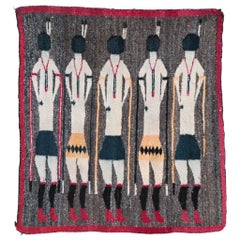
A Yei Navajo Figural double-sided flat woven wall hanging - circa 1930. Displaying five standing figures on an deep speckled grey ground, framed by a red border.
The Yei iconography is related to Navajo religious sandpaintings. Navajo religion has a reverence for nature and is based on maintaining a balance in the universe. It was believed that there was a sense of harmony needed to maintain a healthy life. Should an individual do something to upset this balance, then it was believed that an illness might befall them. Much like in the modern-day, a medicine man was hired to help regain this harmony. The remedy involved a combination of chanting, herbal medicines and a sandpainting ritual. Various coloured sands were sprinkled on the ground until they formed a specific Yei (holy person), based on the god he was trying to summon. When the sandpainting was completed, it was sanctified by spreading corn pollen over it.
Once the sacred sandpainting had served its purpose, it was erased. To save it or reproduce its imagery was dangerous and could bring serious grief to anyone who retained the image.
During the 1890s, the Navajos phased out blanket weaving in favour of rugs. There was strong demand from the vast migration of settlers, building homes by the thousands, who needed something to cover their floors. The first Navajo rug depicting holy people...
Category
Early 20th Century American Tapestries