Marcel Breuer B12 table, under Thonet license by “Wschód”, Zadziele, Poland
About the Item
- Creator:Marcel Breuer (Designer)
- Dimensions:Height: 21.66 in (55 cm)Width: 29.53 in (75 cm)Depth: 14.97 in (38 cm)
- Style:Bauhaus (Of the Period)
- Materials and Techniques:
- Place of Origin:
- Period:
- Date of Manufacture:1940s
- Condition:Wear consistent with age and use. The table is in good shape and structurally sound. Some slight signs of wear and age, scratches in the wood, only visible up close. These also add to its authentic character.
- Seller Location:EVERDINGEN, NL
- Reference Number:1stDibs: LU8096247123572
Marcel Breuer
The architect and designer Marcel Breuer was one the 20th century’s most influential and innovative adherents of modernism. A member of the Bauhaus faculty, Breuer — like such colleagues as the architects Walter Gropius and Ludwig Mies van der Rohe, and the artists and art theoreticians László Moholy-Nagy and Josef Albers — left Europe in the 1930s to champion the new design philosophy and its practice in the United States.
Born in Hungary, Breuer became a Bauhaus student in 1920 and quickly impressed Gropius, the German school’s founder, with his aptitude for furniture design. His early work was influenced by the minimalist Dutch design movement De Stijl — in particular the work of architect Gerrit Rietveld.
In 1925, while he was head of the Bauhaus furniture workshop, Breuer realized his signature innovation: the use of lightweight tubular-steel frames for chairs, tables and sofas — a technique soon adopted by Mies and others. Breuer’s attention gradually shifted from design to architecture, and, at the urging of Gropius, he joined his mentor in 1937 on the faculty of Harvard and in an architectural practice.
In the 1940s, Breuer opened his own architectural office, and there his style evolved from geometric, glass-walled structures toward a kind of hybrid architecture — seen in numerous Breuer houses in New England — that pairs bases of local fieldstone with sleek, wood-framed modernist upper floors. In his later, larger commissions, Breuer worked chiefly with reinforced concrete and stone, as seen in his best-known design, the brutalist inverted ziggurat built in New York in 1966 as the home of the Whitney Museum of American Art.
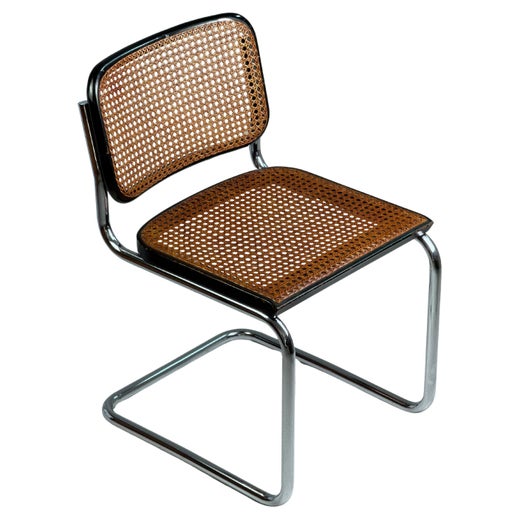
Breuer’s most famous furniture pieces are those made of tubular steel, which include the Wassily chair — named after Wassily Kandinsky and recognizable for its leather-strap seating supports — and the caned Cesca chair.
Breuer also made several notable designs in molded plywood, including a chaise and nesting table for the British firm Isokon and a student furniture suite commissioned in 1938 for a dormitory at Bryn Mawr College. Whether in metal or wood, Breuer’s design objects are elegant and adaptable examples of classic modernist design — useful and appropriate in any environment.
Find vintage Marcel Breuer seating, storage cabinets and lighting on 1stDibs.
You May Also Like
Vintage 1940s Czech Bauhaus Console Tables
Steel
Vintage 1930s Czech Bauhaus Console Tables
Steel
Mid-20th Century Czech Bauhaus Console Tables
Chrome
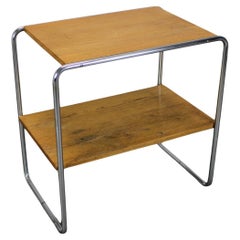
Vintage 1930s German Mid-Century Modern Console Tables
Chrome
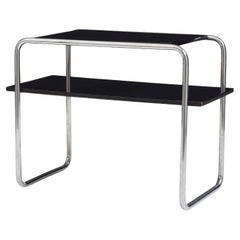
Vintage 1930s German Bauhaus Side Tables
Steel
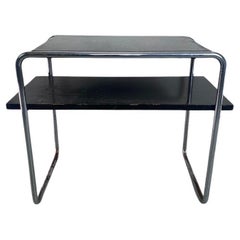
Mid-20th Century Czech Bauhaus Console Tables
Chrome
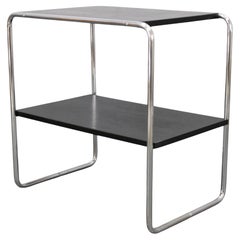
Vintage 1930s Czech Bauhaus Console Tables
Steel, Chrome
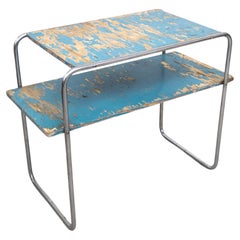
Vintage 1930s Czech Bauhaus Console Tables
Steel, Chrome
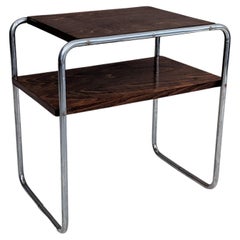
Vintage 1930s Austrian Bauhaus Nesting Tables and Stacking Tables
Steel, Chrome
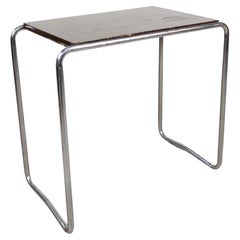
Vintage 1930s German Mid-Century Modern Side Tables
Metal
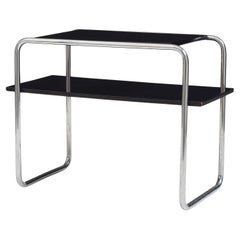
More From This Seller
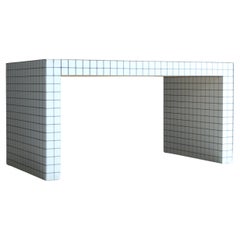
View AllVintage 1970s Italian Post-Modern Console Tables
Laminate, Wood
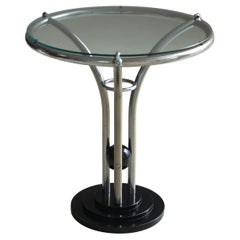
Vintage 1930s Dutch Streamlined Moderne Console Tables
Chrome, Steel
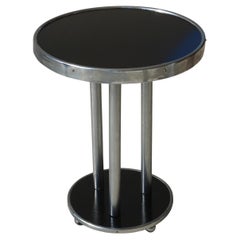
Vintage 1920s Dutch Bauhaus Coffee and Cocktail Tables
Metal
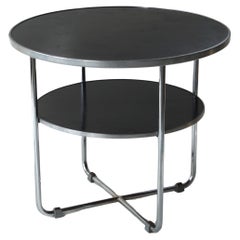
Vintage 1930s Dutch Bauhaus Coffee and Cocktail Tables
Metal, Aluminum
Vintage 1960s German Bauhaus Wall Lights and Sconces
Metal
Vintage 1920s Dutch Art Deco Table Lamps
Wood