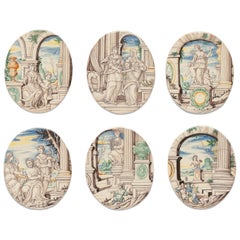
Piastrelle antiche in maiolica, Ambrogette, Manifattura Rampini, Pavia, 1693-1704
Sei ambrogette in maiolica (piastrelle)
Rampini manufactory, painter probably Siro Antonio Africa
Pavia, 1693-1704
a) 6.88 x 5.51 in (17.5 x 14 cm); 0.55 lb (252 g)
b) 7.08 x 5.70 in (18 x 14.5 cm); 0.51 lb (233 g)
c) 6.88 x 5.70 in (17.5 x 14.5 cm); 0.54 lb (245 g)
d) 6,81 x 5,51 pollici (17.3 x 14 cm); 0.50 lb (230 g)
e) 6.88 x 5.51 in (17.5 x 14 cm); 0.50 lb (229 g)
f) 7.08 x 5.70 in (18 x 14.5 cm); 0.51 lb (233 g)
Stato di conservazione: intatto.
Queste sei piccole "ambrogette" in maiolica fina appartengono a una famiglia di opere in ceramica considerate tra le più belle prodotte tra il XVII e il XVIII secolo. For a long time, this type of maiolica was attributed to the Venetian village of Angarano, but later it was definitively attributed to the pottery factories in Pavia. A fundamental study ascribed this production specifically to Pavia through an analysis of Lombard collections and a comparison with archaeological remains found near the two main manufacturing sites in the city. (E. Pelizzoni - M. Forni - S. Nepoti, La maiolica di Pavia tra Seicento e Settecento, Milano 1997).
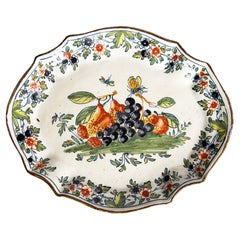
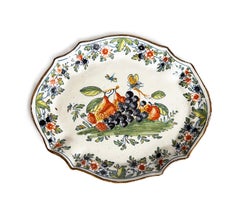
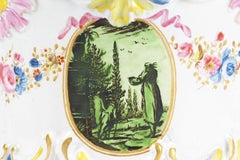
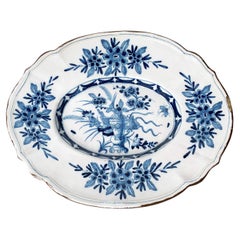
The six small oval tiles have rounded edges and are decorated with a historiated motif. They were created using high-fired polychrome technique, with a predominance of cool tones and a dominance of gray and blue, interspersed with manganese, citrine yellow, orange-yellow, and green. Le sei piccole "ambrogette" sono caratterizzate dagli stessi tratti stilistici, con un design decorativo simile.
The first tile (a) depicts a female figure, holding a stiletto and sitting near a pedestal supporting a relief-decorated baluster vase. Dietro di lei, un bambino tiene in mano un calice, mentre attraverso gli archi di un portico si intravede sullo sfondo un paesaggio montuoso. The female figure could possibly be Lucretia, an example of virtue in ancient Roman...
Categoria
Di antiquariato/d’epoca, Early 1700s, Italian, Barocco, Ceramiche