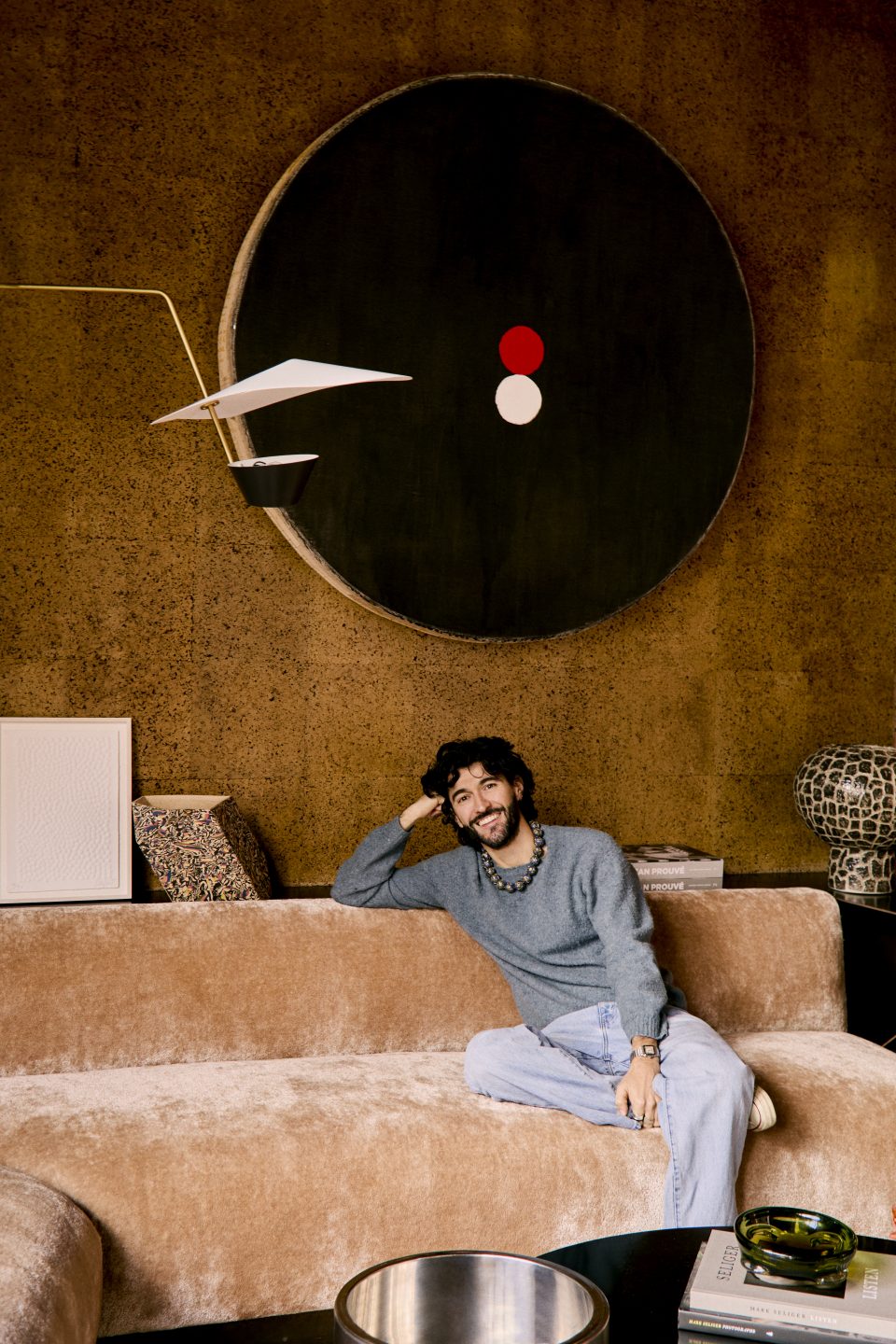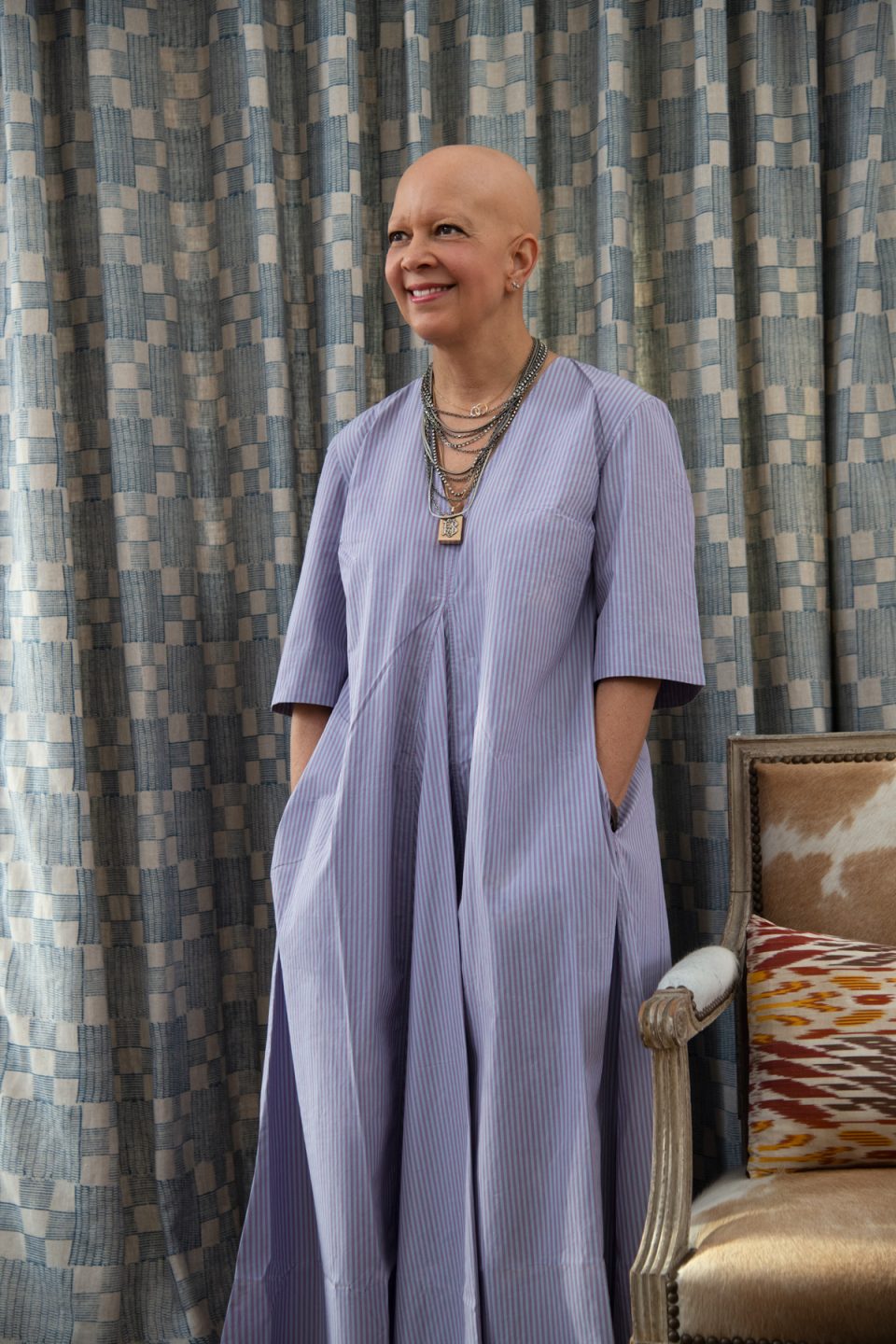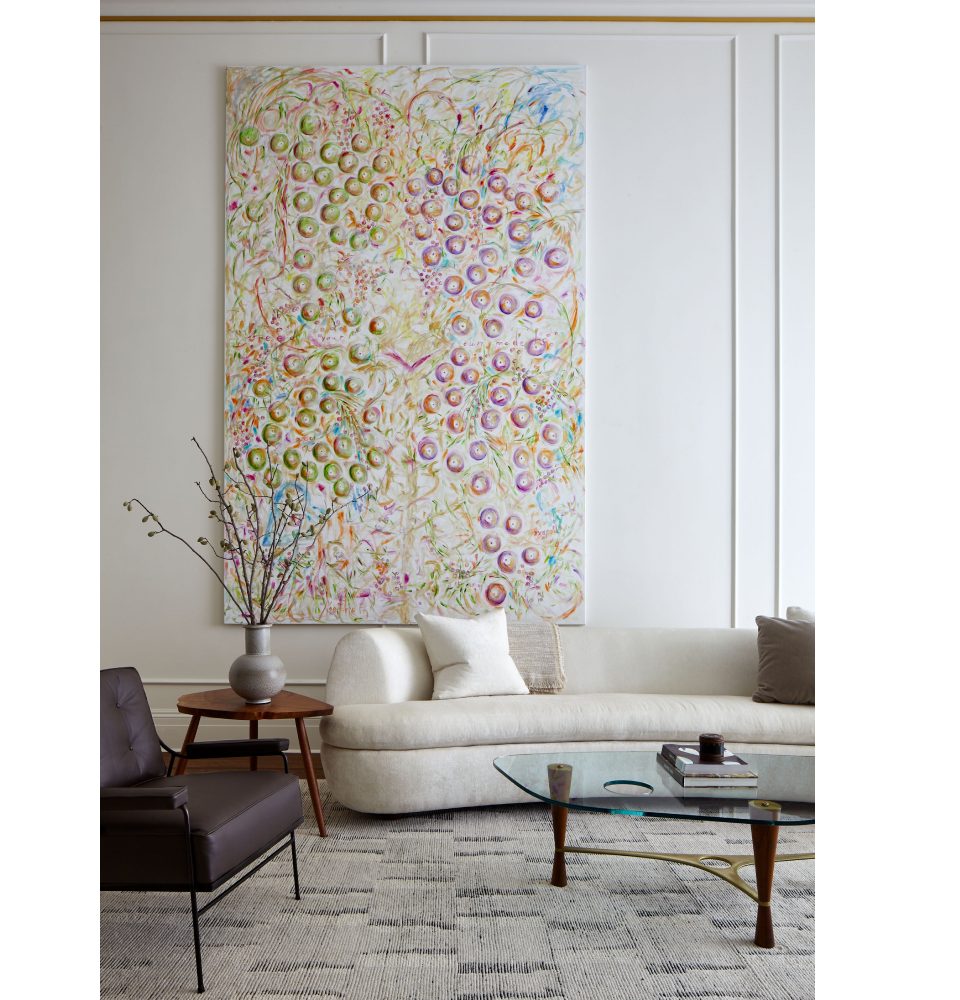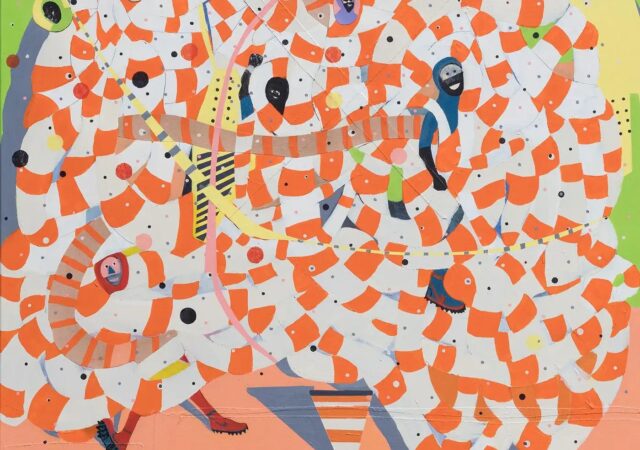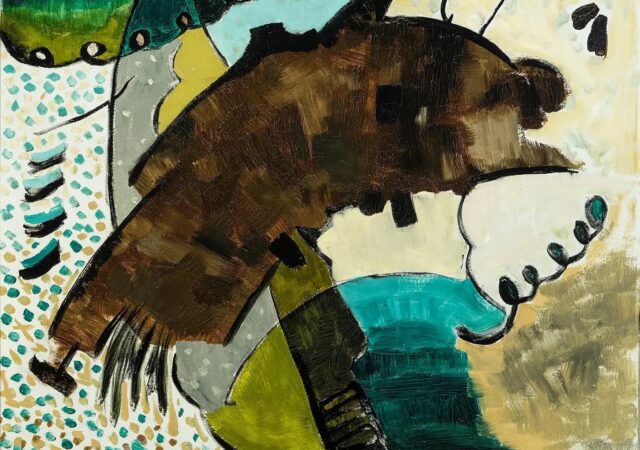

| The self-taught New York City–based artist Joseph Lapiana is inspired by everything from natural light to mathematics to movement. At age 45, Lapiana has gained the attention of the art world with his large-scale organic abstractions — photographs (he refers to them as “photonastic” pieces) that viewers often assume are paintings. The artist, who had a massive instillation at Art Basel last year with the Warhol Foundation and whose text-based project was on view in Venice in conjunction with this year’s Biennale, is represented by Robert Miller Gallery in New York. In May, Lapiana spread his wings even further and debuted a rug collection based on his paintings with Nying Zemo, a New York–based rug company, owned by Shalini Acharya and Simmy Pappachen, that is known for translating fine artists’ work into hand-knotted rugs. Here, Cator Sparks talks to Lapiana about his first buyer, why his friends are scared to text him and the pleasure of painting with pasta sauce.
Gives us the brass tacks. What is your back story?
I was born in Brooklyn and raised in Queens. I am first generation American. My parents emigrated from Italy. You should see their house, all plastic-covered furniture! It was hard growing up creative in our household. Their idea of being successful is not being an artist. Even now they ask, “So are you selling any of those pictures?” When they came to my first show at Robert Miller I think they got the impact but didn’t really understand.
Did you go to art school?
I am self-taught. I went to college for marketing since I never thought art could be my life. I really didn’t get going until my late 20s, and so many artists begin their careers earlier than that.
So how did you get your start as an artist?
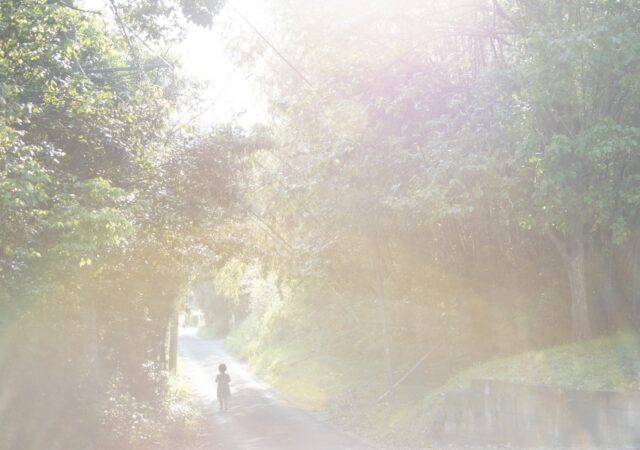
Since I was a kid I have been drawing, painting and even sculpting out of anything I could get my hands on, like paper clips and twigs. I would even make paintings with pasta sauce in the kitchen. Later I became more focused on photonastic work, the study of light formations. I would work with water in creeks, lakes, pools and the ocean. The light out in the Hamptons is amazing and that is where I made many of these early pieces and they are what I became known for. One day I was getting something I’d done framed and a woman at the counter next to me asked if I was an artist. I wasn’t really sure what to say. She told me I should call myself an artist and that I should sell her my work. She gave me a check for $350 — I never cashed it — and that was the moment I knew I could do it. I never saw her again.
That’s incredible. And then you started selling your work?
I started showing my work to friends and friends of friends. Finally I learned to trust someone else with my art and I went to Robert Miller.
Tell us a bit about your art practice.
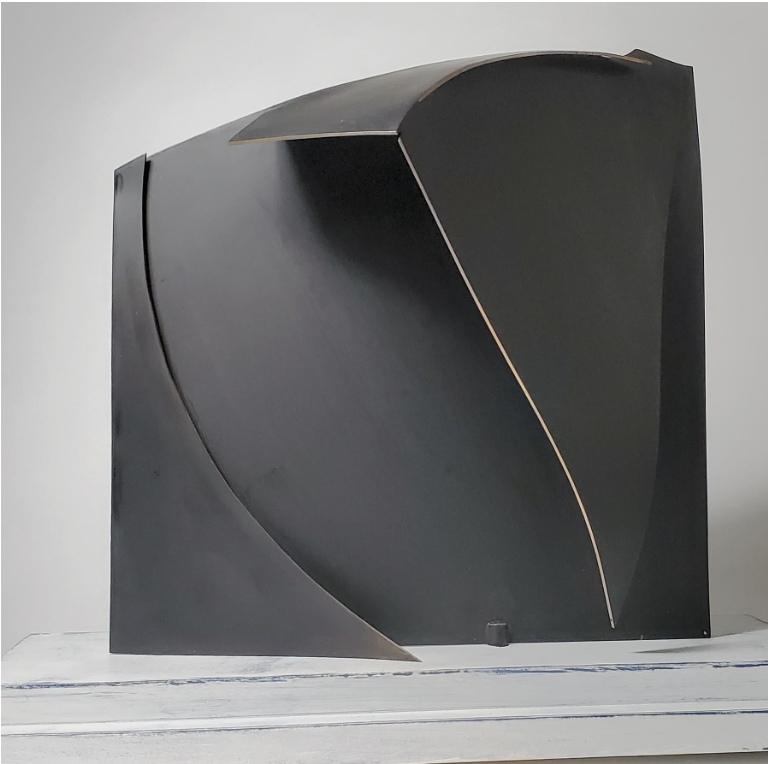
It always builds on itself. Although the various pieces may look different, it all has the same core. The light formations I first shot have been turned into sculpture. I go back to the earliest work and go from there. I definitely lean towards deconstructivism, making something unrecognizable and then rebuilding it. My photonastic pieces, refraction work and kinetic work all intermingle.
Benoit Mandelbrot [a French-American mathemetician] stated that, “no matter how you twist and turn a shape it will come back to its original position.” When I see one of my bodies of work I know where it comes from. Kind of like looking at a mother and daughter, there are details in each that tell you they are related.
What about your text projects?
I was so fascinated with texting with my friend Shamim Momin, the Whitney curator and founder of the LA non-profit arts initiative L.A.N.D, so I began breaking down the information we were texting back and forth. Are people more prone to be honest when they text? Are they more communicative when using a device to express their emotions? I really started exploring the dialogue. Friends were scared to text me thinking it would end up in my work.
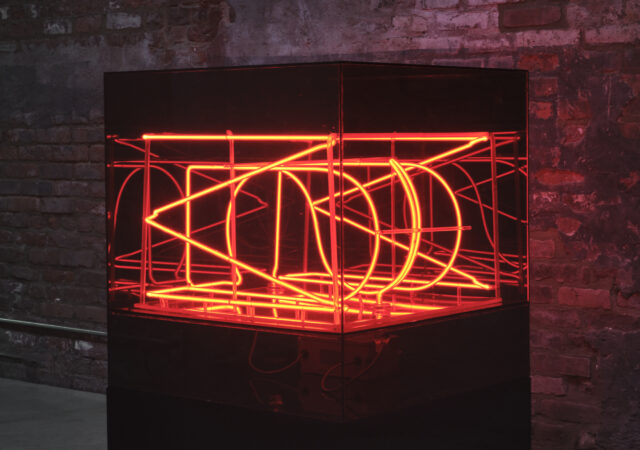
The way in which humans communicate is fascinating. I was interested in finding the perception of reality. How are people going to interpret this? What am I conveying? For my piece I showed at the Venice Biennale (presented by the Warhol Museum), there was an audio component of Walt Whitman’s Crossing Brooklyn Ferry and Allen Ginsberg’s A Supermarket in California whispering over one another. Trying to engage all of your senses was definitely a process I was curious about. Ginsburg was obsessed with Walt Whitman and Whitman was a fanatic about fonts — the size of it, the scale if it — and so I thought including them both in this piece made sense.
And how did the rug project come about?
At first I was really reticent about the whole thing. But I realized it is just exploring my work in another medium and is approachable for people who may not be into my art. Nying Zemo, the Tibetan rug company I’m working with, employs talented local artisans and there is a great deal of integrity in their smaller collections of hand-knotted and hand-dyed pieces.
What was the process like?
The launch of the rug collection happened very quickly. It was about a six-month turnaround. We decided to work together, and pulled pieces from my archive to use. We decided not to create anything new for this project since they already liked what I had. Within three months I received samples from Nepal. I’ve never used Skype so much! They would show me things on video and I went through each and every silk pom-pom sample they sent.
How did you like the results?
Picasso once said, “In order to create you have to have imagined it first.” I find that so true. Sadly, it’s not as exciting when I finally see the product since I have had it in my mind for so long. Who wants to know what his son looks like before he is born?
What’s next?
I’m working on both fashion and jewelry collaboration that I can’t speak about yet but will certainly be talking about soon. This may be the moment for my foray into fashion!
| |