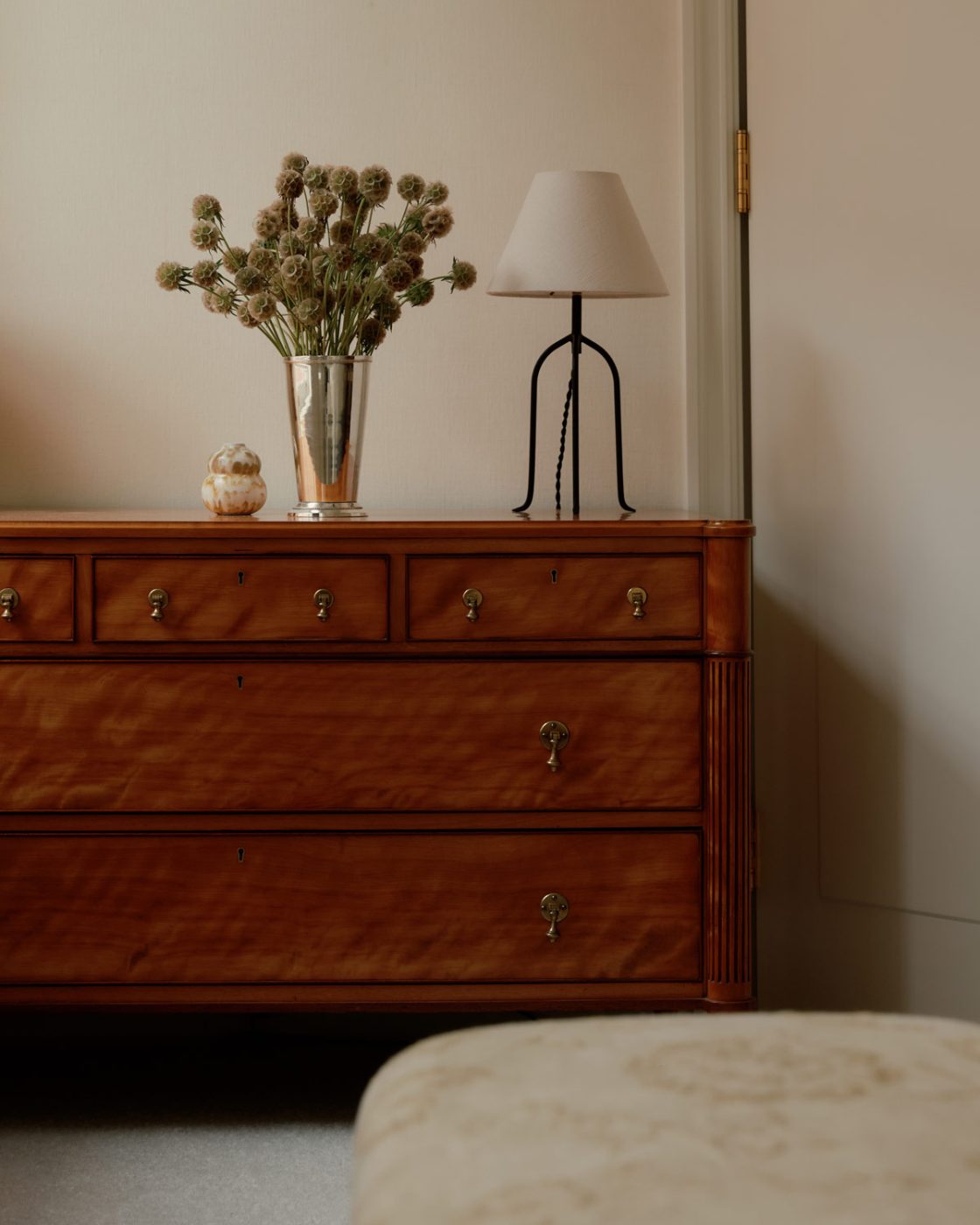
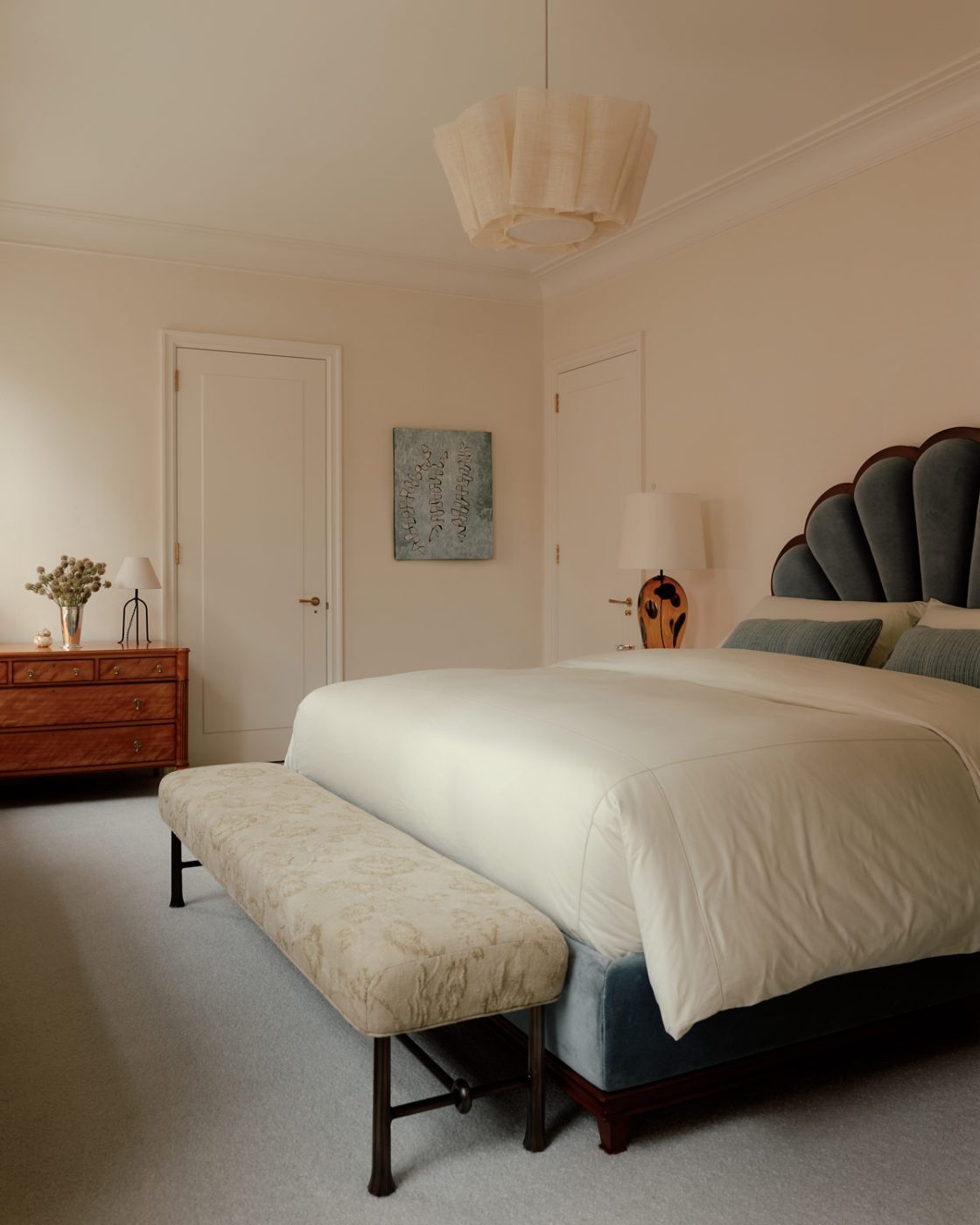
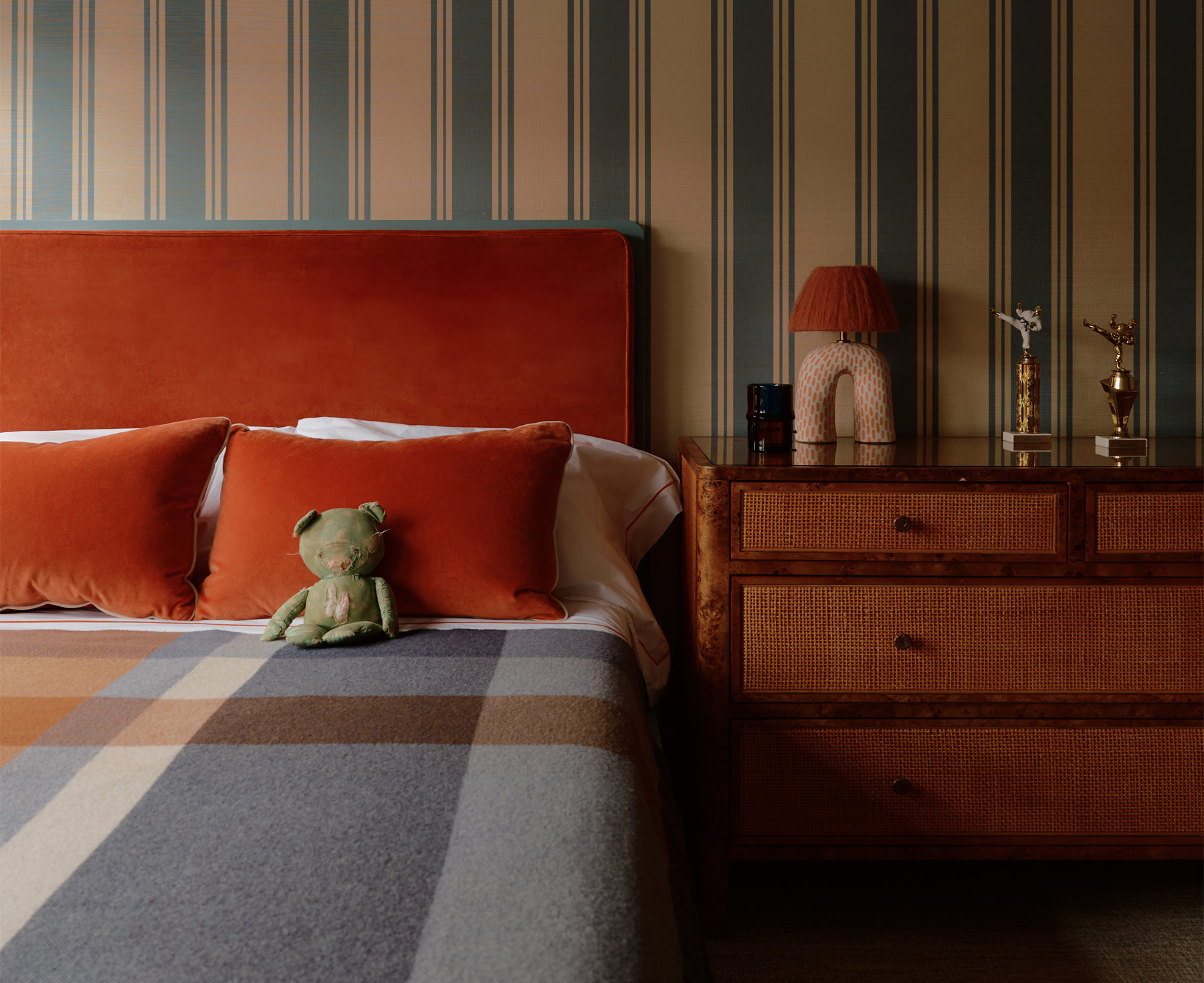
October 25, 2026In the primary bedroom of a Manhattan apartment decorated by Bryan O’Sullivan is a late-19th-century satinwood English chest of drawers, which he found on 1stDibs. The 4,300-square-foot duplex belongs to a couple — he’s a financier, she’s a full-time mom to their three children, aged three to eight — and this chest is not only the wife’s favorite piece in the home but also, for her, the one that best captures its spirit as a whole.
“I just love the wood,” she says. “It’s so unique and beautiful. I’ve never seen anything like it. It has this lacquer finish that is quite atypical and encapsulates what we wanted for the apartment — something rooted in tradition but also a little unexpected.”
The apartment is located in a 1909 Park Avenue building with an H-shaped plan that maximizes natural light. “There’s not a room where we don’t have tons of windows,” says the wife. The vast majority of the units are duplexes. The couple’s home consists of two duplexes that a previous owner combined, giving it two staircases — one at the front, the other at the back.
Besides this, the apartment’s layout displayed many peculiarities, particularly upstairs. The hallway had been transformed into closets, so, you had to walk through the primary bedroom to access the others. “With Bryan, we pretty much took everything down and redrew the floor plan entirely,” says the wife. “There are only a handful of walls over the two floors that weren’t touched.”
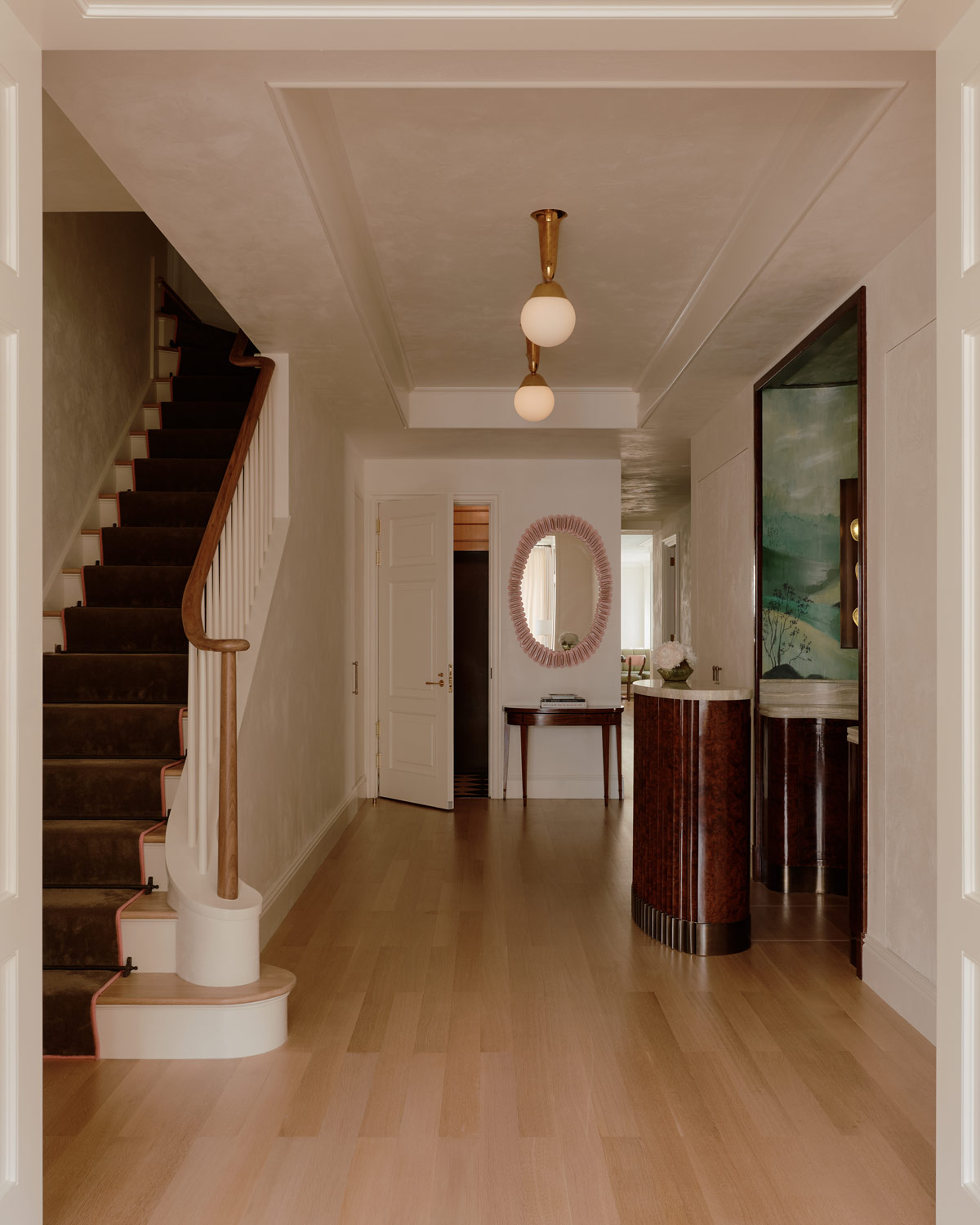
An exception to these changes was the extra-wide entry hall. “That was one of the things that drew us to the apartment,” says the wife. “When you walk in, it’s really wow! You immediately take in a lot of Park Avenue.”
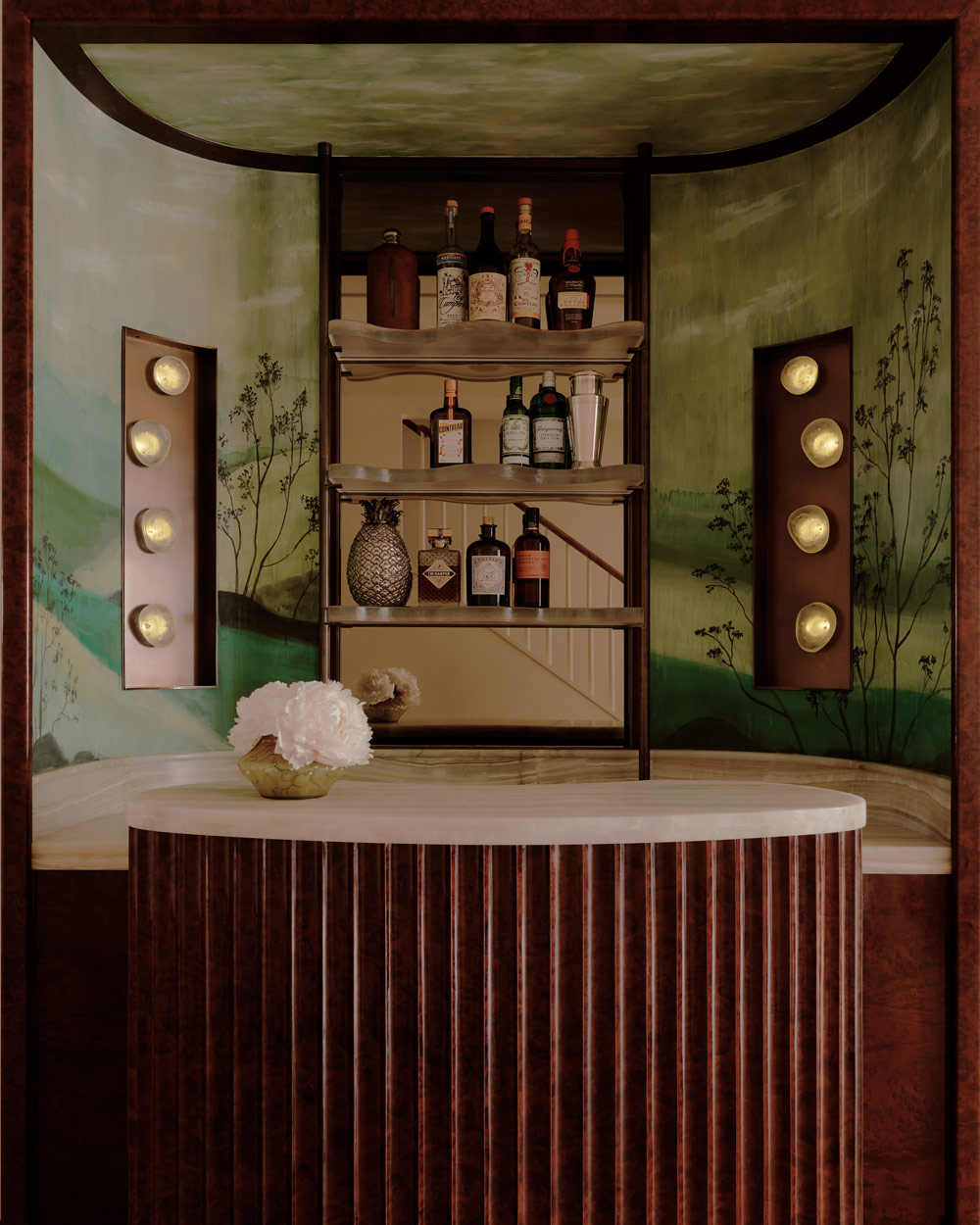
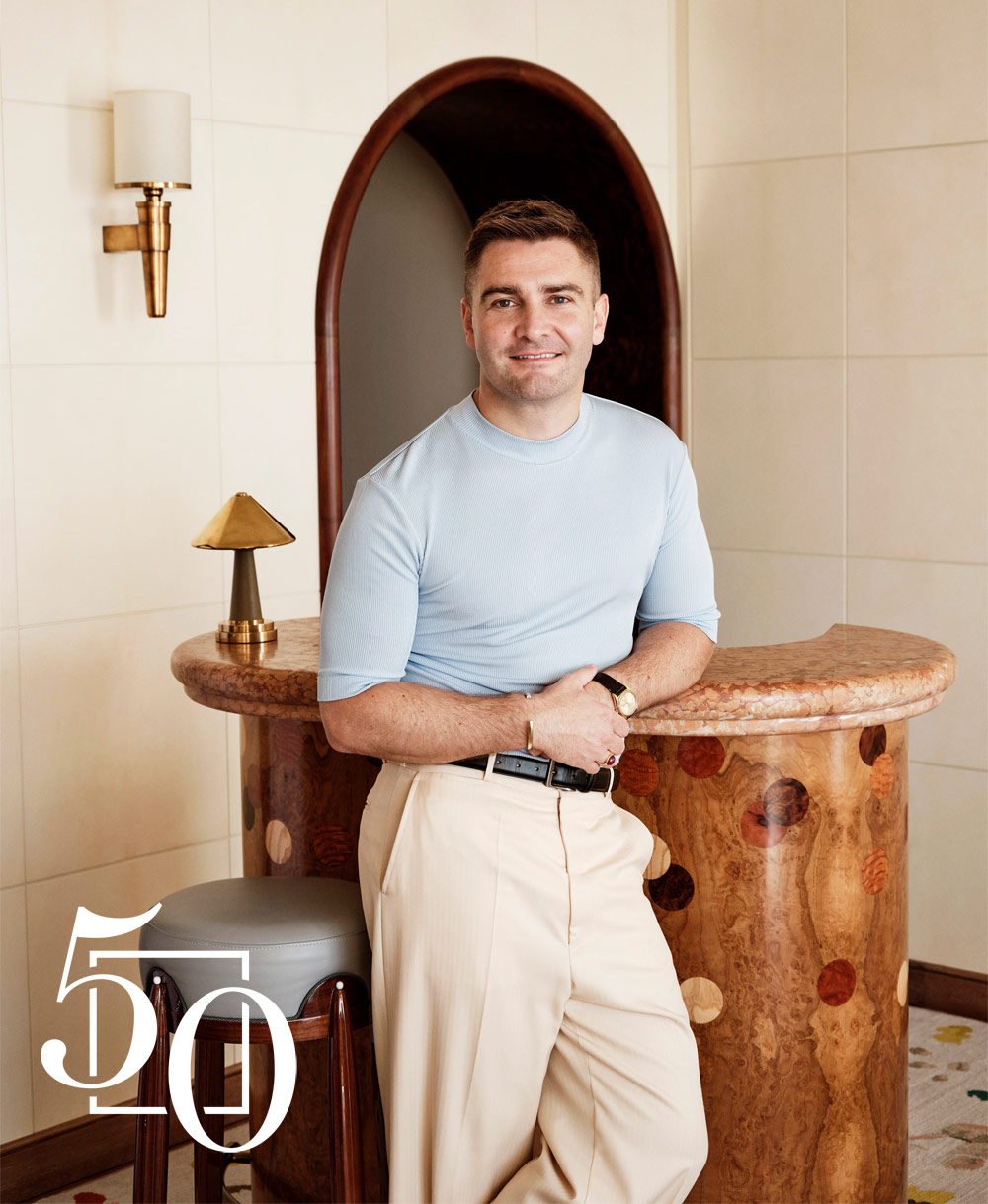
The question was how to use the space. Since the owners love to entertain, O’Sullivan — a member of this year’s 1stDibs 50 — installed a clever bar in a niche, with a track system in the floor that allows it to slide in and out. “When it’s pushed in, the shape of it fits perfectly into the negative space behind it,” he says. Its fluted design was influenced by the work of Gio Ponti and Osvaldo Borsani; the wall behind sports a landscape mural commissioned from Brooklyn-based decorative painter Matt Wilkas.
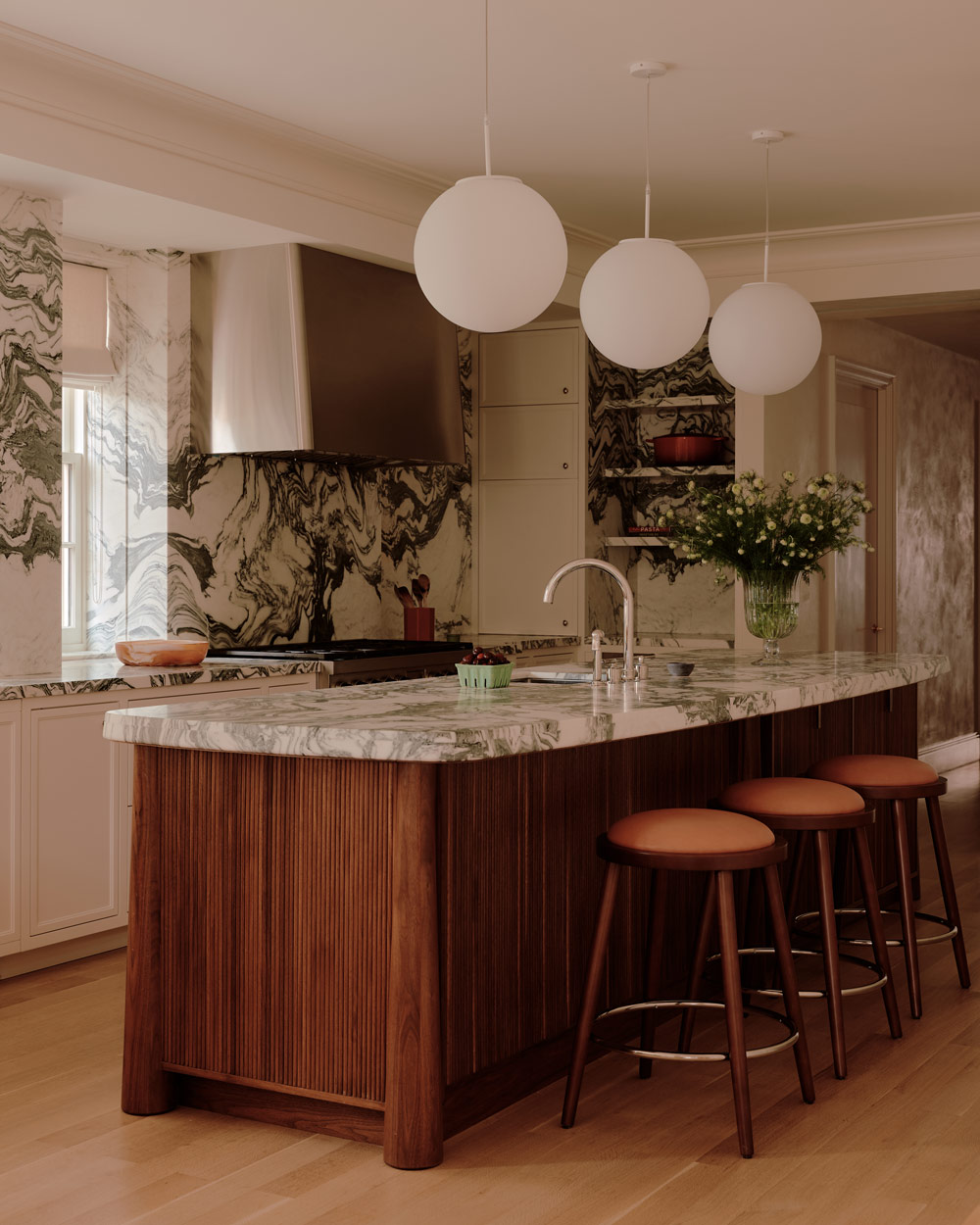
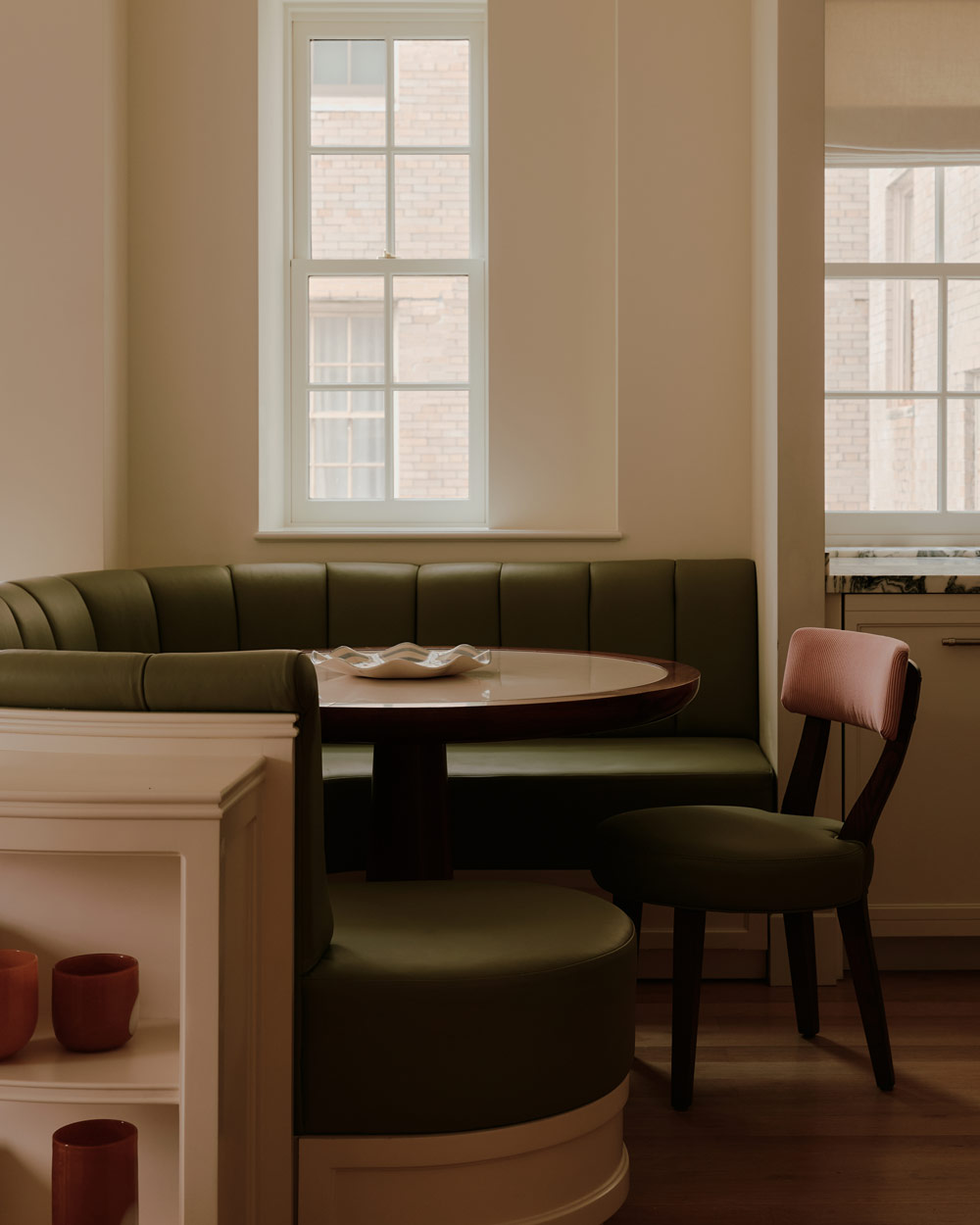
For the homeowners, working with the Irish-born, London- and New York–based O’Sullivan was a no-brainer. “I love everything he does, which I almost can’t say for any other designer,” says the wife, who first encountered his work through a mutual friend, aesthetic arbiter and entrepreneur Claire Olshan. “Each of Bryan’s projects is different, but there’s a common thread to each. He has this British classical touch to his work but also this immense playfulness and creativity.”
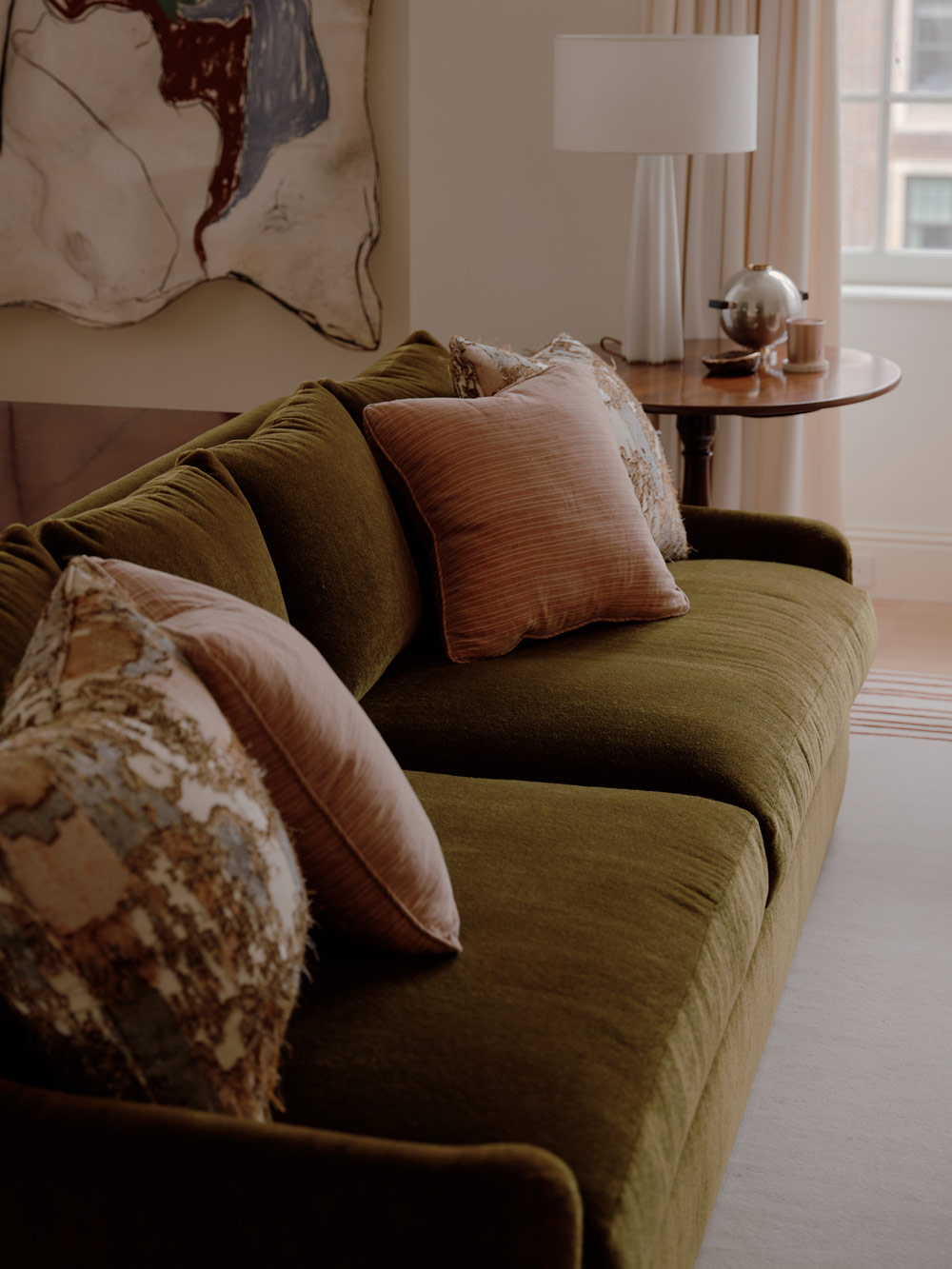
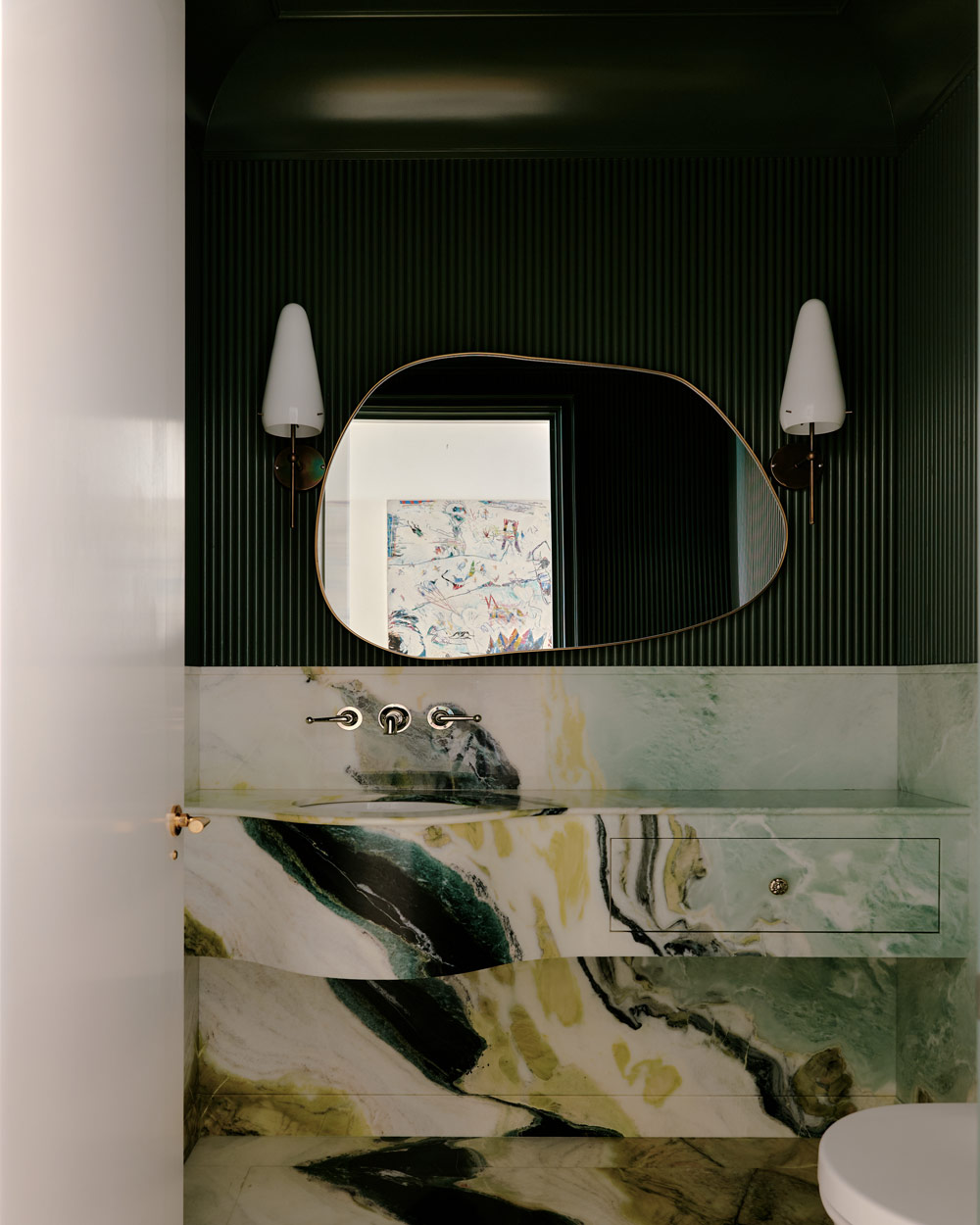
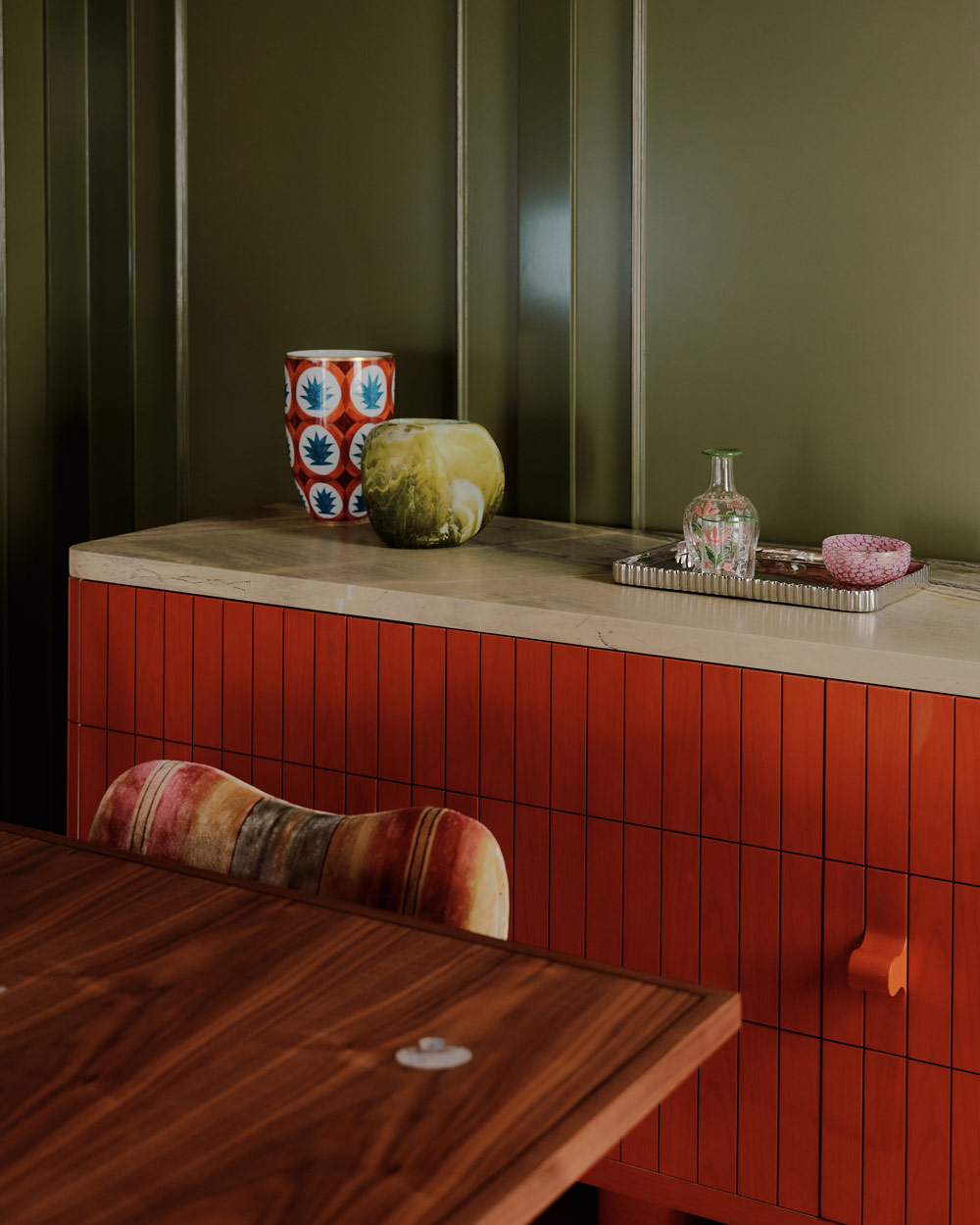
In addition to requesting a mix of the traditional and the unexpected, the clients asked that the apartment incorporate the color green (the wife’s favorite hue) and be durable. “With young kids, they didn’t want it to get trashed in a week,” says O’Sullivan, who has two children himself with his husband and business partner, James O’Neill. “The fabrics had to be hardier but still plush and elegant.”
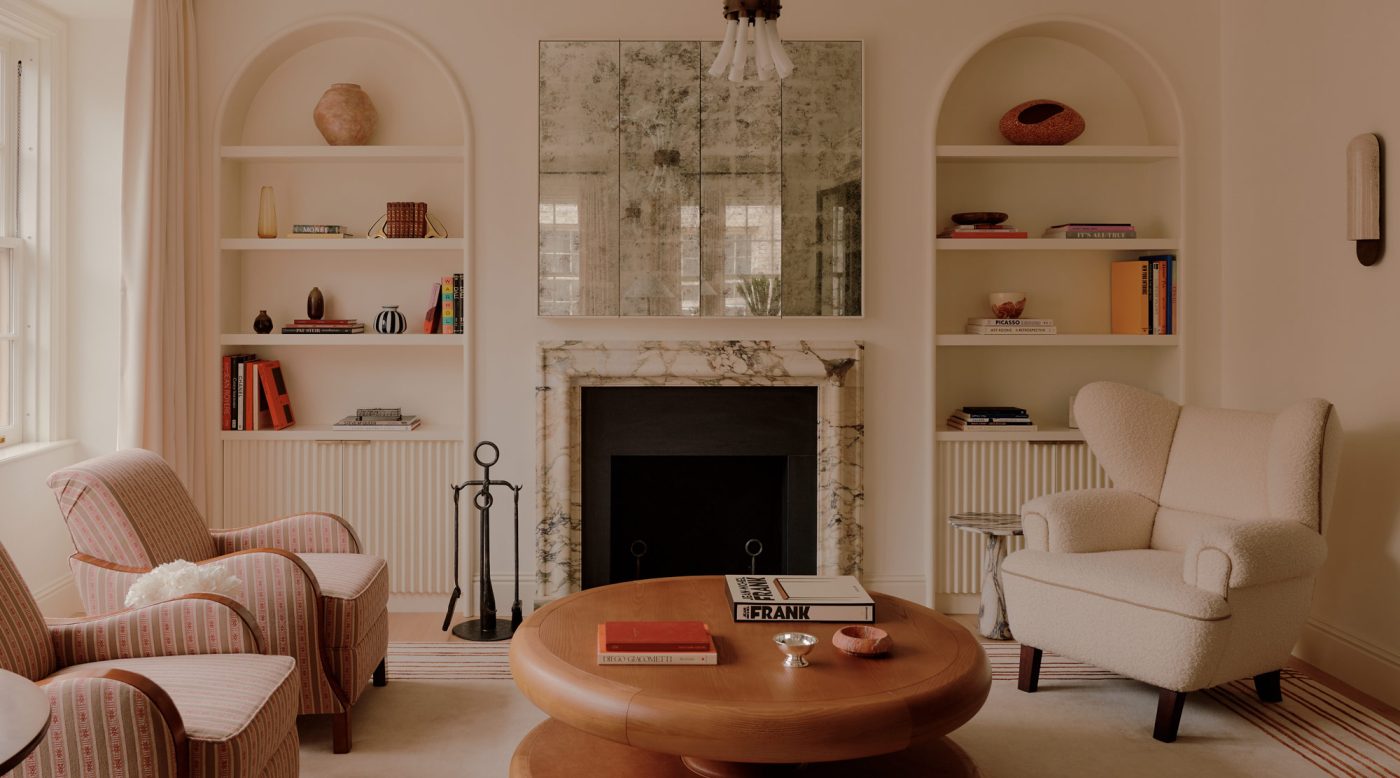
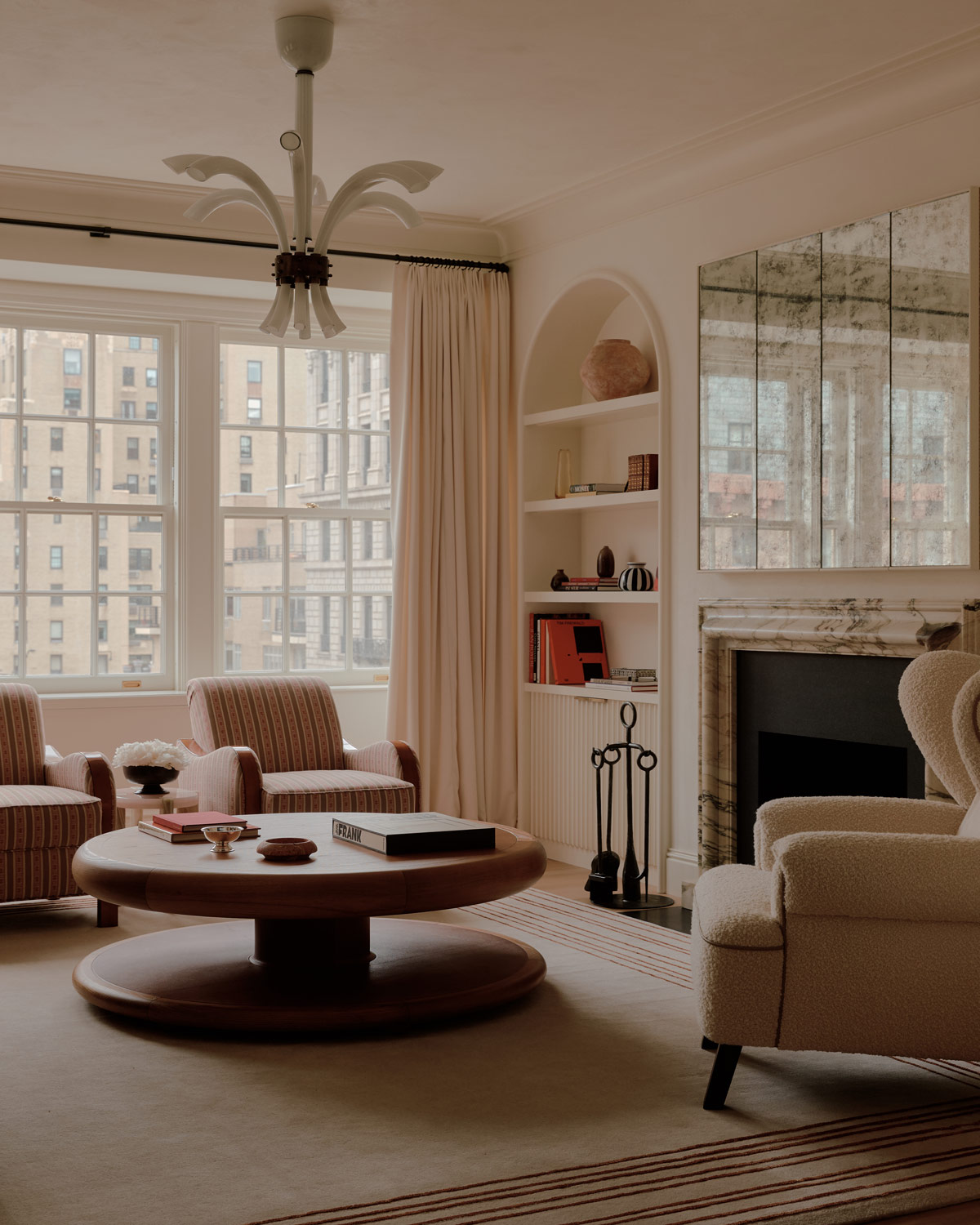
To get a sense of what might have been in the apartment had it not been stripped of its original interior architecture, O’Sullivan did extensive research on the design elements of prewar Park Avenue buildings. This led him to install cornicing in many of the spaces — albeit pared-down versions of century-old precedents — and to provide the living room’s fireplace with a Calacatta Viola marble mantel. In the same room, he also used one of his favorite materials — Marmorino plaster — on the walls. “It’s got this matte, chalky texture and reflects the light so beautifully without being over-polished,” he says.
Within this envelope, O’Sullivan placed a custom leather-topped coffee table inspired by a spinning top in front of a pair of Swedish Biedermeier chairs upholstered in a striped fabric. “I love stripes,” he says. “They help to layer a room, but in a subtle way without being overpowering.” He introduced the pattern as well in two of the children’s bedrooms, via wallpapers and curtain fabrics.
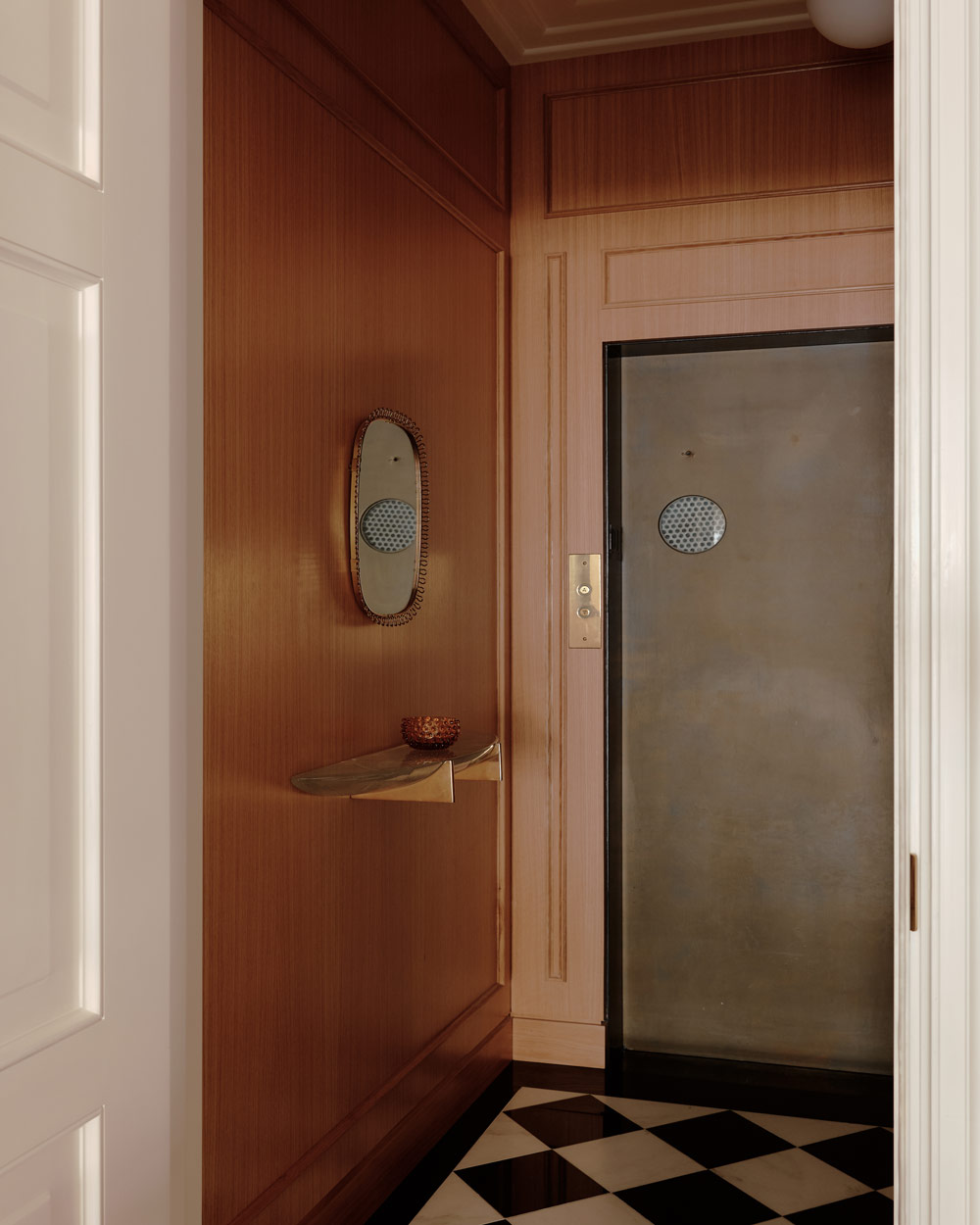
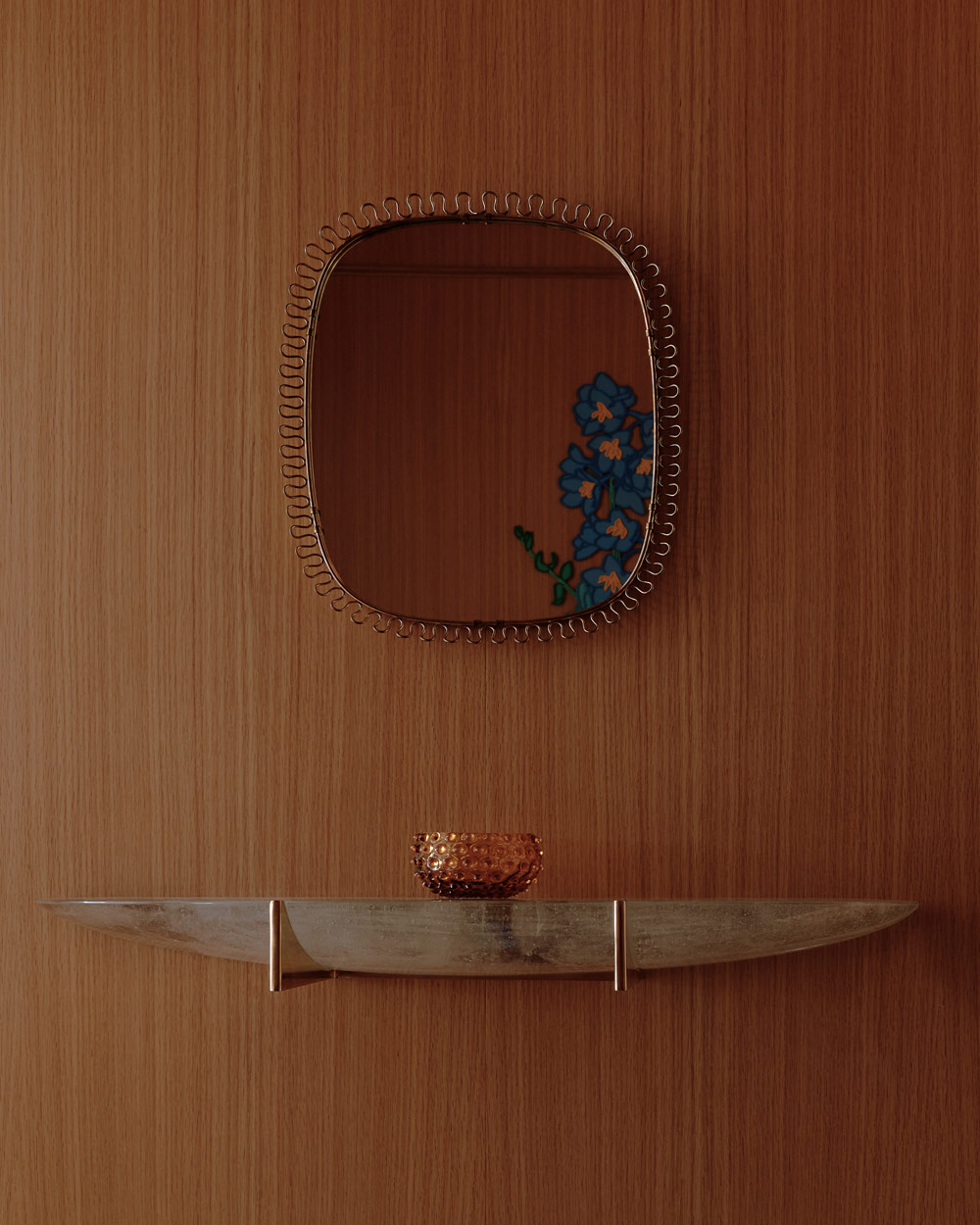
In the elevator vestibule, meanwhile, O’Sullivan replicated the black-and-white checkerboard design of the floor in the building’s lobby. And he hung a vintage Josef Frank mirror for Svenskt Tenn above a brass and cast-glass Lauderdale floating console from his own in-house furniture collection.
O’Sullivan likes to inject the unexpected into his projects. “People love a surprise,” he says. “It’s all about creating little moments, rather than having the same scheme that runs throughout.” He particularly favors turning up the aesthetic volume in dining rooms. “If they’re not inviting or fun, they just get forgotten,” he explains. “All of a sudden, you’ve got this room that sits there for twenty years and is used twice.”
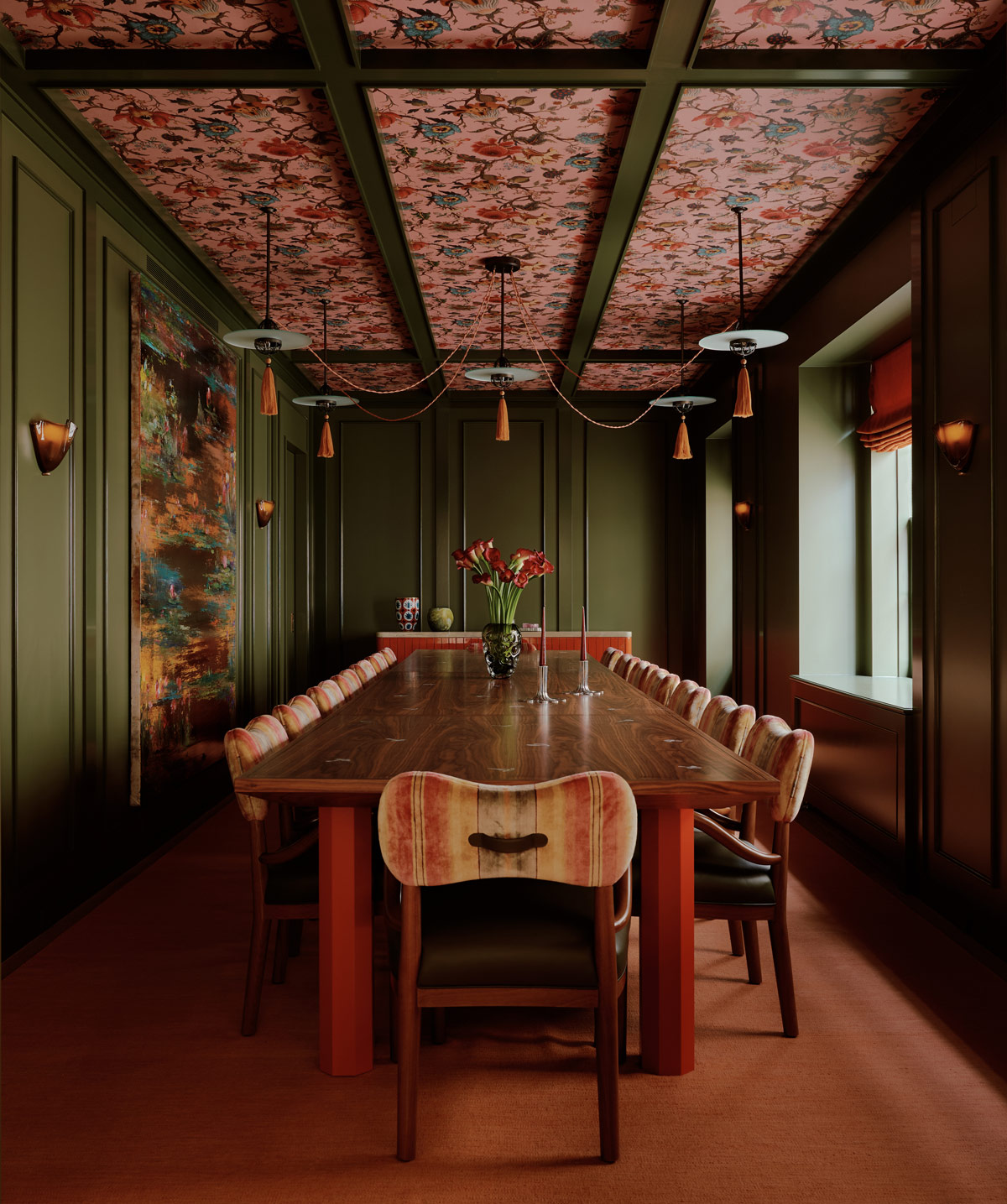
For the dining room here, he created a theatrical scheme that brings together two-tone green walls with a ceiling clad in a floral House of Hackney wallpaper, from which dangles a series of Cardinal Hat lights by Edwin Lutyens. These illuminate a custom version of O’Sullivan’s Harvest dining table, inlaid with mother-of-pearl and able to accommodate up to 18 guests.
To add even more pizzazz, his clients commissioned Olshan to produce a set of dishware inspired by the wife’s late grandmother. “She was a prolific hostess and very cool,” says her granddaughter. “On some of the plates and bowls, you can see a woman with curly hair — that’s her.”
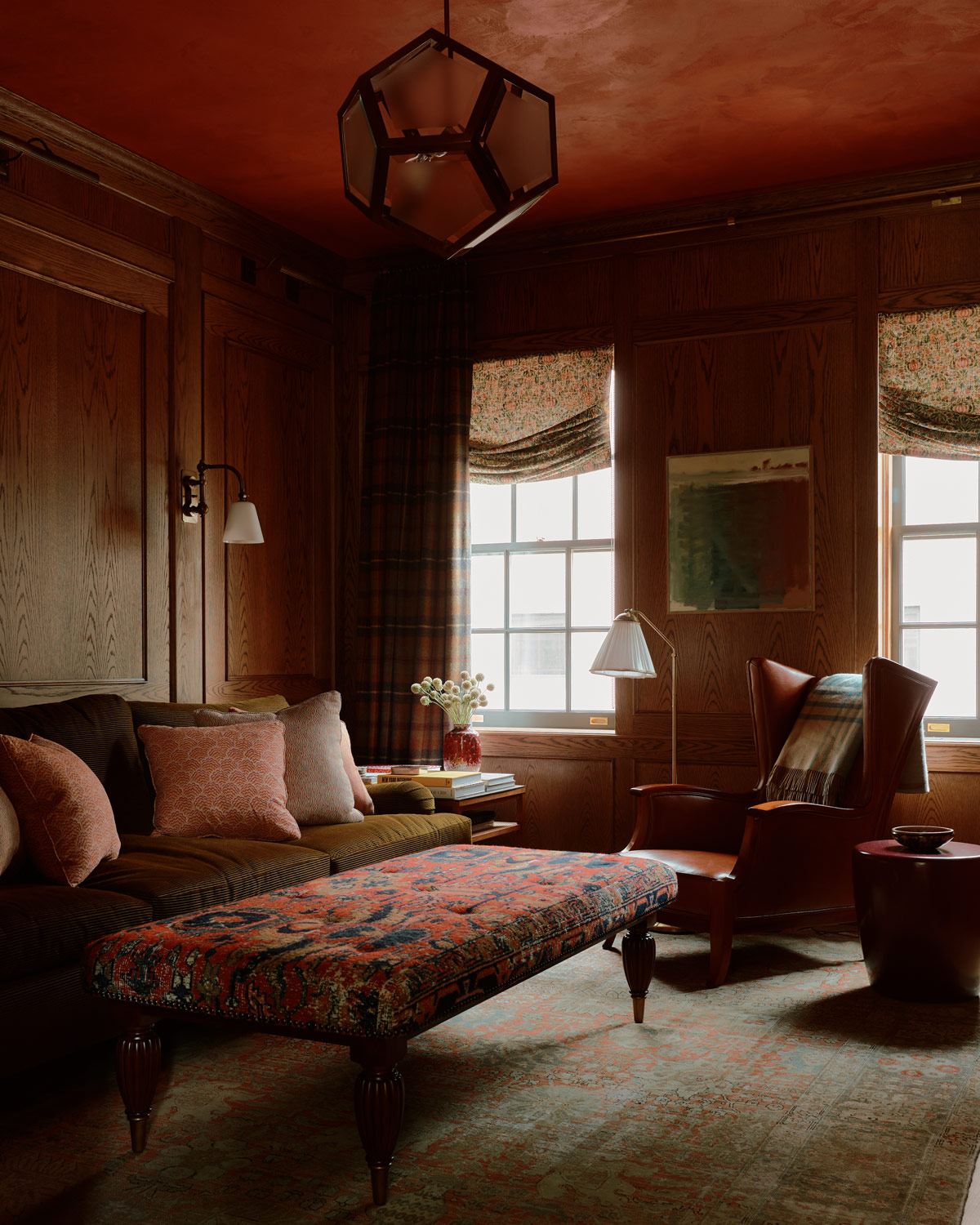
Another delightful surprise is offered by the library-cum-study, notable for its walnut-paneled walls, red ceiling and fireplace encrusted with white fossils. Here, O’Sullivan consciously evoked the world of Ralph Lauren — in particular the designer’s Polo Bar — combining a custom ottoman clad in a paisley fabric with a 1940s Swedish adjustable Böhlmarks floor lamp, as well as a wingback chair attributed to Frits Henningsen.
This is where the couple likes to hang out after their children have gone to bed, accessing it from the kitchen via a secret jib door in a bookcase. “It looks to all intents and purposes like normal millwork,” says the wife. “I can’t tell you the excitement and pride my children have showing it off when their friends come round.” A hidden passageway to a paneled room? It’s hard to get simultaneously more traditional and more unexpected than that.


