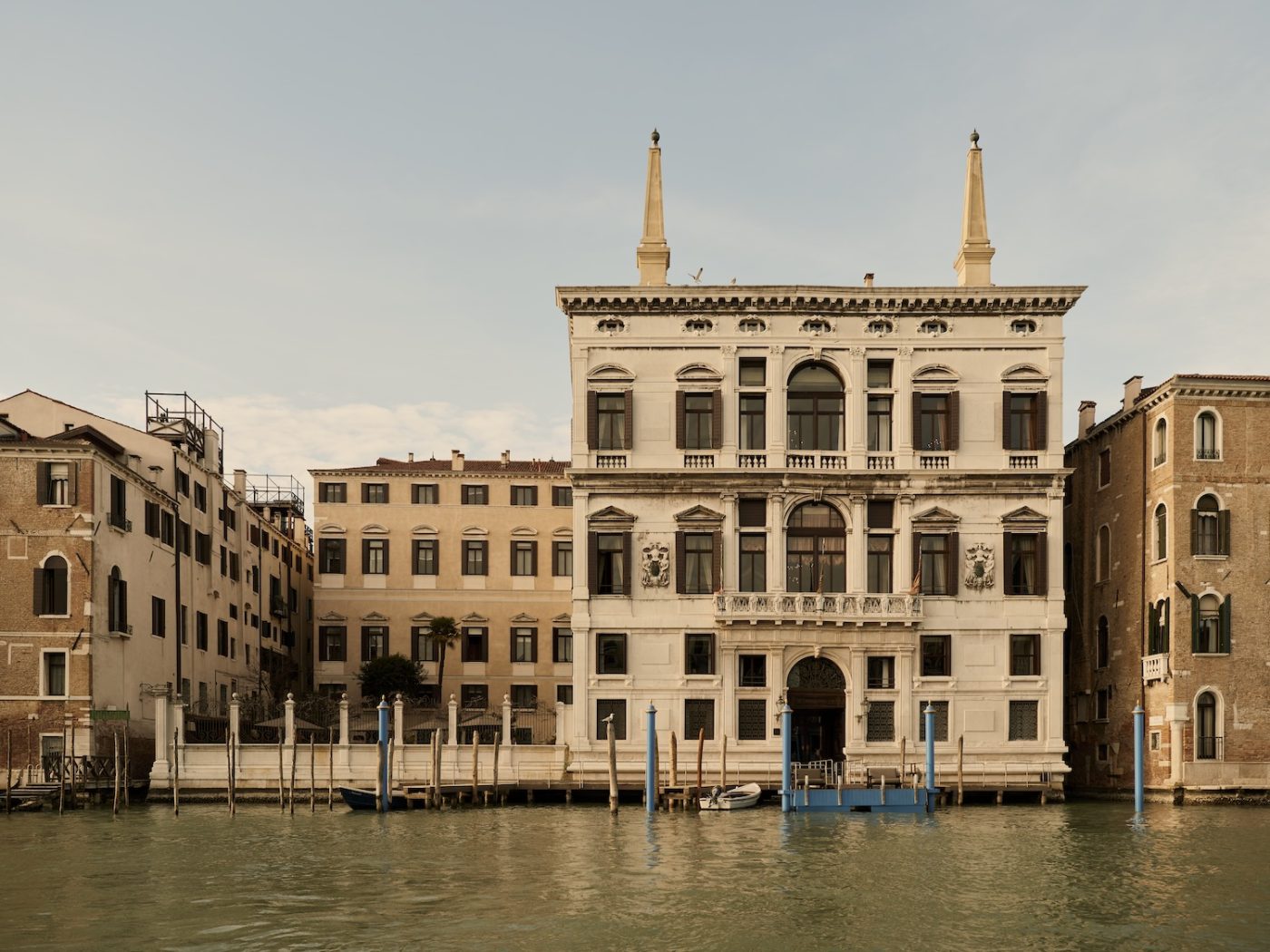
July 5, 2026Among the exceptionally monumental palazzi that line Venice’s Grand Canal is the one Giberto Arrivabene Valenti Gonzaga — a Venetian count, husband of Princess Bianca of Savoia Aosta and father of five — has lived in his entire life.
The Palazzo Papadopoli, a 16th-century Renaissance edifice whose piano nobile boasts frescos by Giandomenico Tiepolo and whose two private gardens distinguish it among the Grand Canal’s great houses, has been in the Arrivabene family for generations. Today, most of the structure is occupied by the Aman Venice, one of the world’s most celebrated hotels. Arrivabene and his family reside in the upper floors.
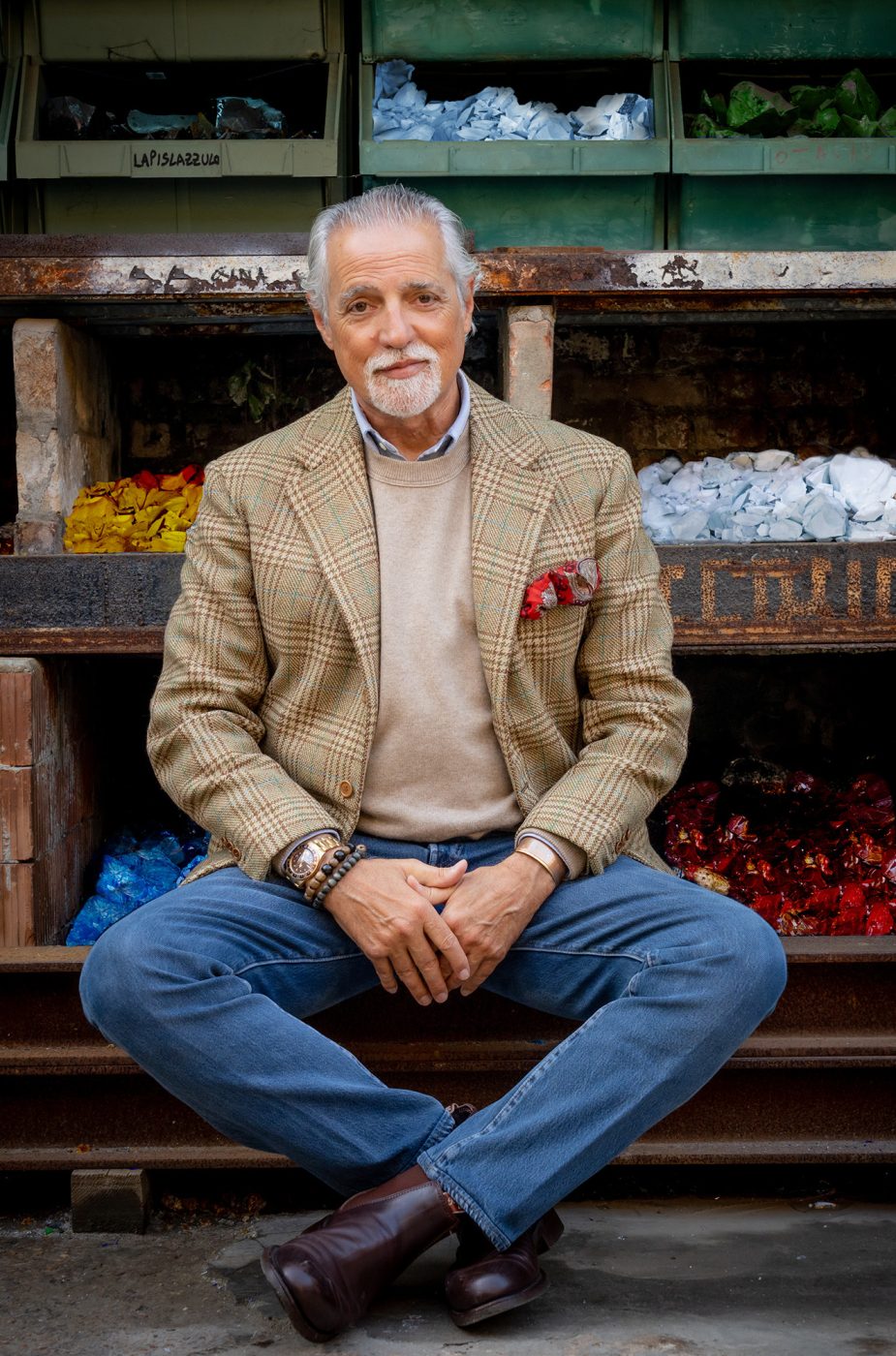
It is, by any measure, an extraordinary address. But Arrivabene wears it lightly and is quicker to speak about the logistics of keeping an ancient palazzo from falling to pieces than about the privilege of living inside one. His father died when he was nine years old, and the financial burdens of running the house eventually fell to Arrivabene as the only son. Furniture and paintings had to be sold, and the palazzo sat mostly empty for years as the debts accumulated.
In the end, a partnership with Aman founder Adrian Zecha saved the building, transforming the life inside it. “Everyone is in a good mood,” Arrivabene says of the hotel’s daily atmosphere. “Everyone is smiling.”
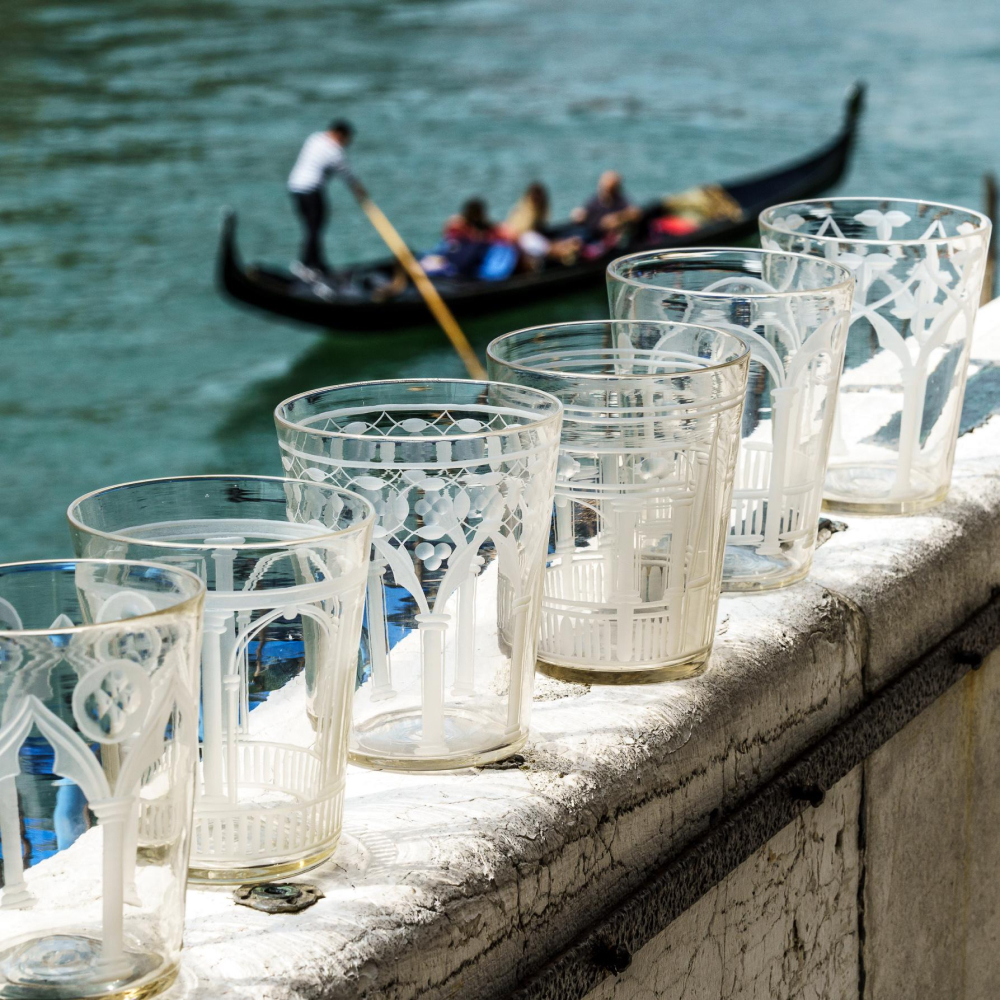
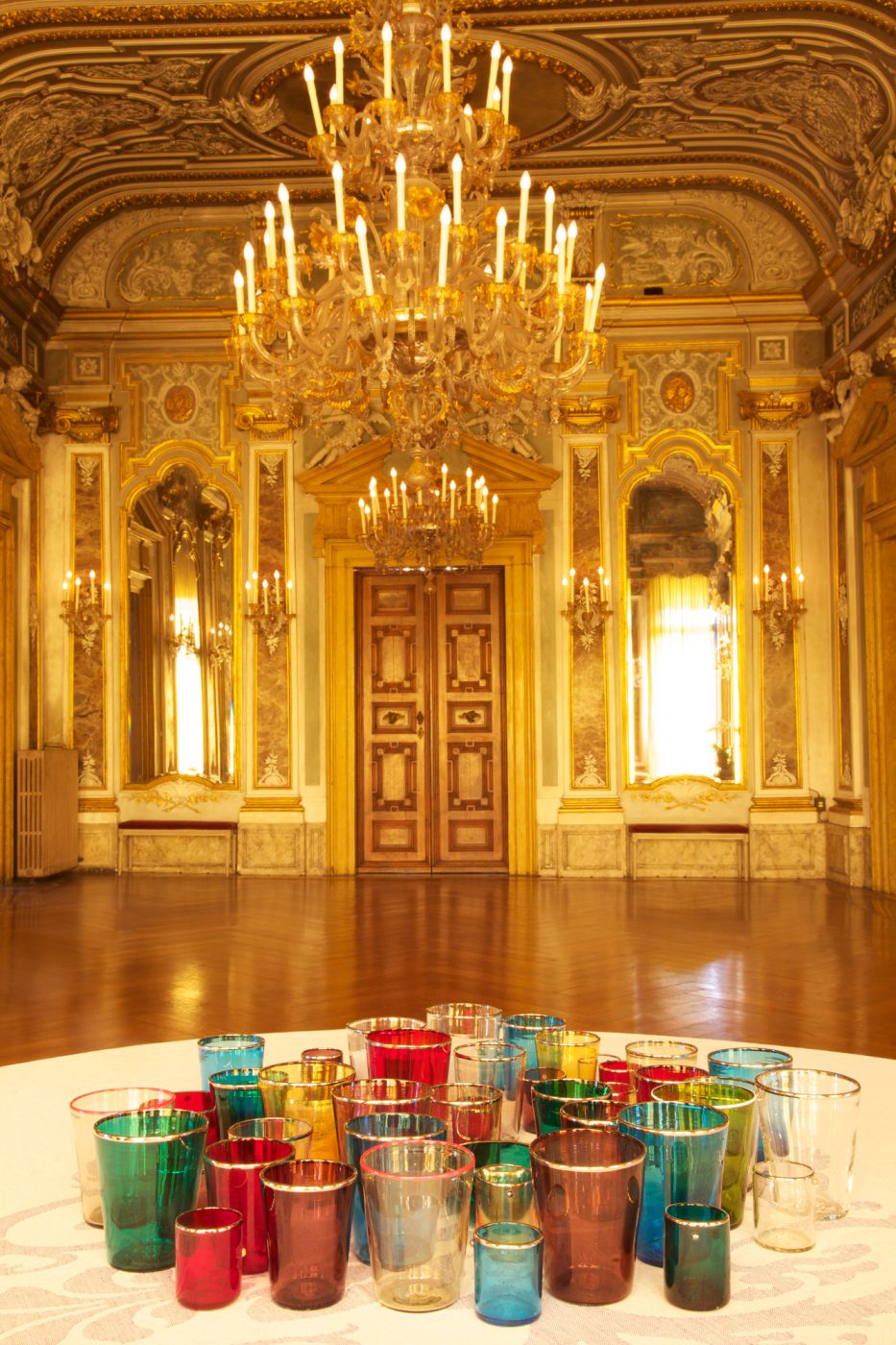
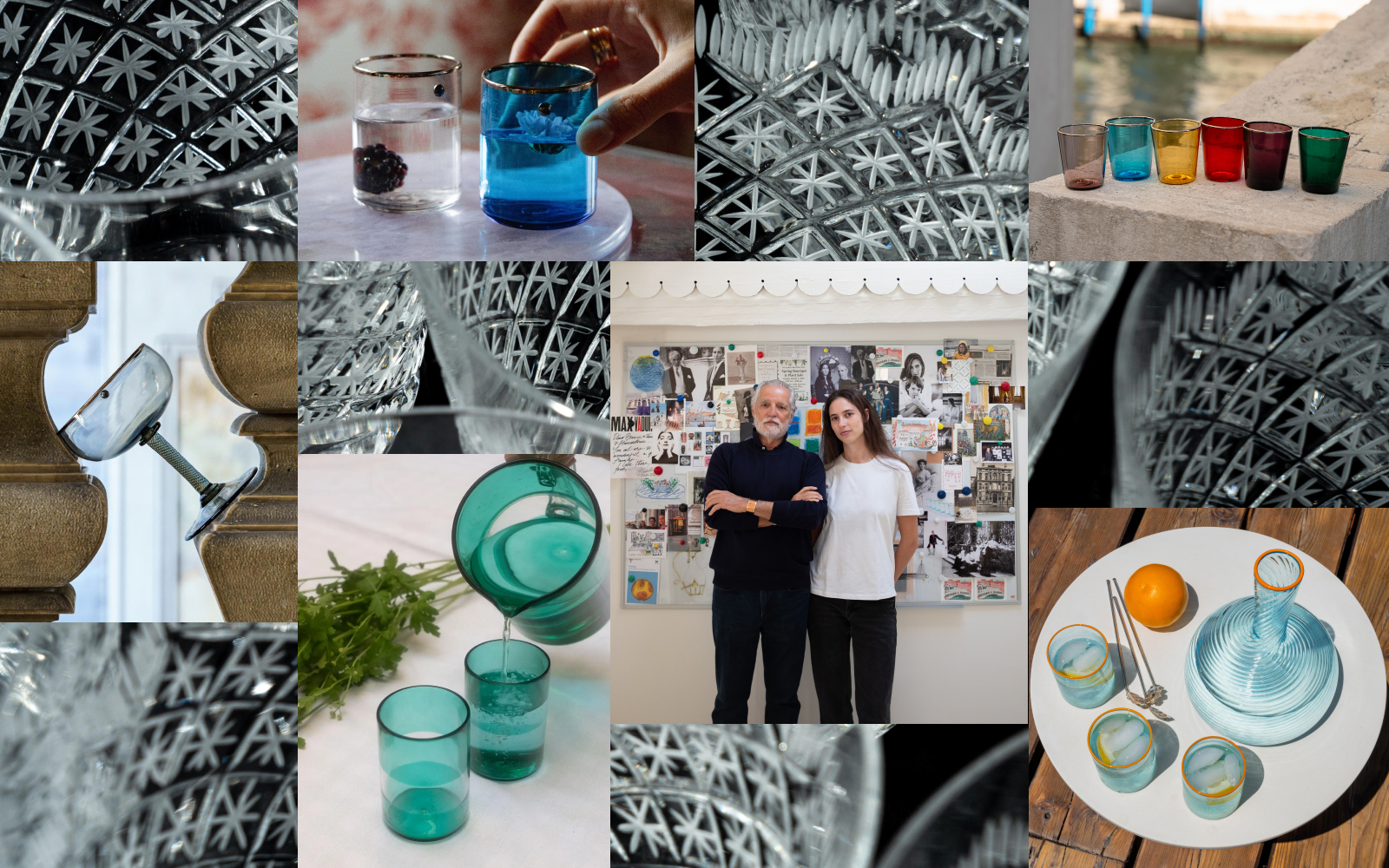
That same sensibility, of finding pleasure in beauty and in other people, characterizes Arrivabene’s business endeavors. About 20 years ago, he began designing glassware— first drinking glasses modeled on antique examples from the family’s collection; then vases, jugs, frames and decorative objects produced in collaboration with master artisans on Murano, the small island in the Venetian lagoon that has been the center of European glassmaking since the 13th-century.
The brand he built, Giberto Venezia, is now sold locally in a boutique at the Rialto Bridge and a flagship store inside the Aman, as well as internationally, including through a storefront on 1stDibs.
One of Arrivabene’s daughters, Mafalda Arrivabene Valenti Gonzaga, is head of the business’s collaborations and special projects. “Growing up in Palazzo Papadopoli, surrounded by my father’s passion for glass and the mastery of Murano artisans, deeply shaped my aesthetic sense,” she says. “Today, my goal is to honor this heritage by bringing the soul of Giberto Venezia further into an international context.”
Giberto has become one of the most distinctive exponents of Venetian design — its creations anchored in crafts traditions, shaped by personal memory and embodying the lightness, in every sense, that distinguishes the finest Murano glass.
Below, Arrivabene speaks with Introspective about growing up with those exquisite frescoes, the increasingly precarious state of Murano’s glassmaking tradition and why he finds it so emotionally challenging to sell his own work.
How did being raised in the Palazzo Papadopoli influence your decision to start designing objects?
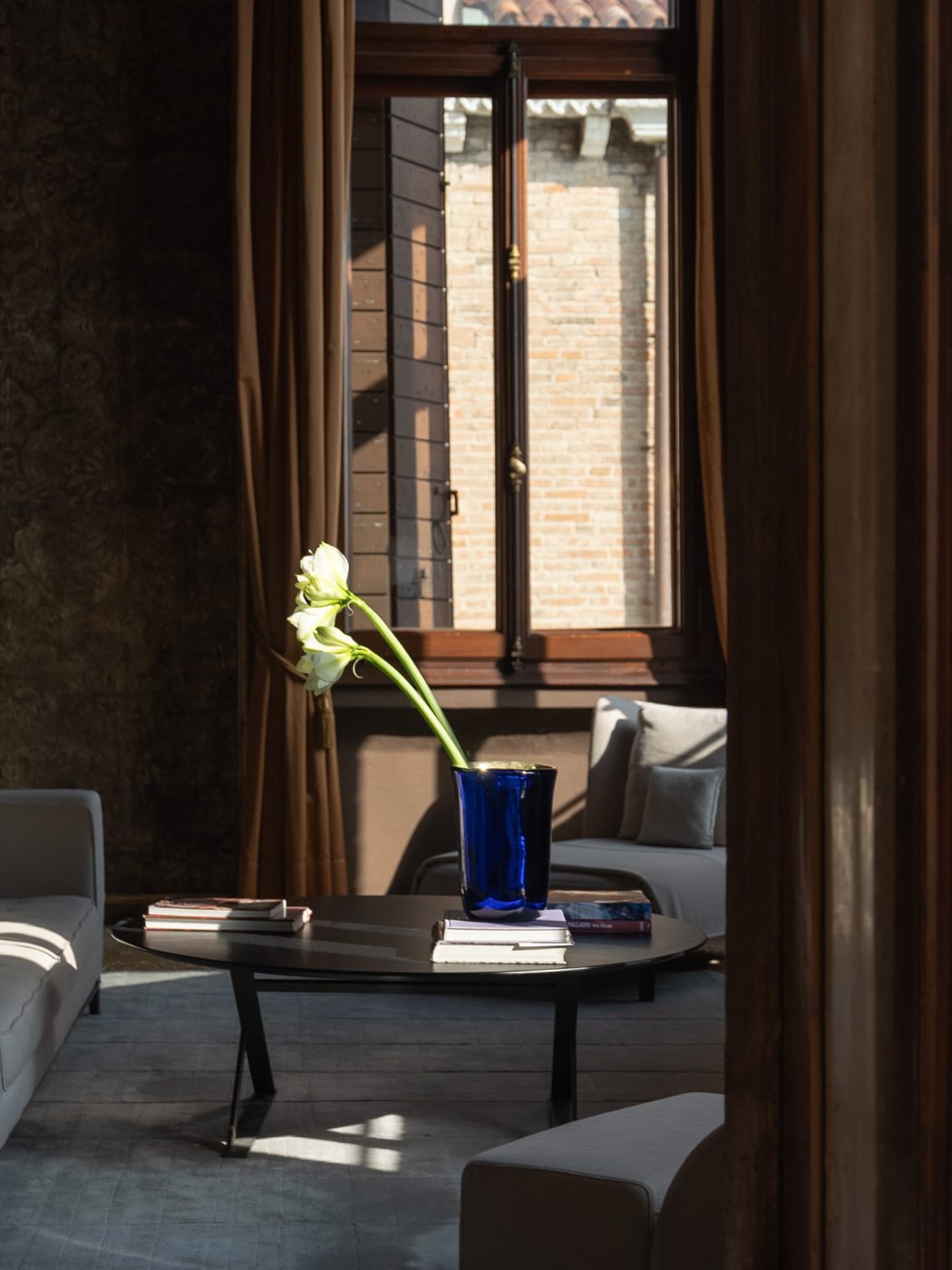
Growing up between Venice, Rome and the Italian countryside, you see beauty wherever you go, and we had a great many things in the house. But I never thought I would design glass. I started it almost as a game, about twenty years ago. I was in Venice a lot, and friends would phone and say, “I broke one of those glasses, how do I get more?” So I started going to Murano, designing glasses based on the old ones we had at home but with a more modern sensibility. And then, designing led to other things, and I began buying old silver boxes, adding stones to the tops, changing the nature of the object. I like to do different things. But glass was the beginning.
Is there a specific object or moment that crystallized what you wanted to make?
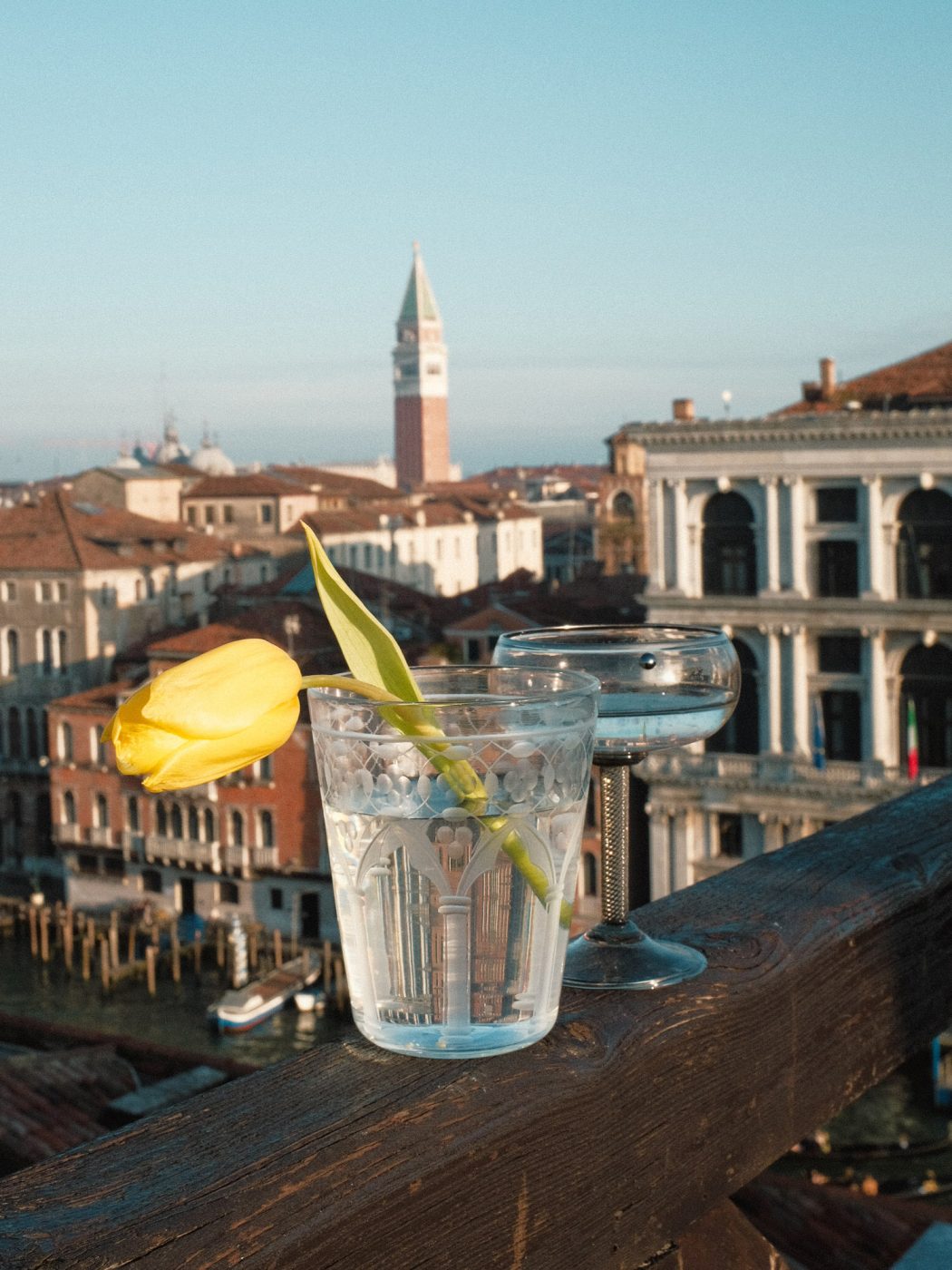
The first thing that comes to mind is a small eighteenth-century chocolate cup that belonged to my grandmother. Chocolate was like gold in that era, and the cup that held it reflected that. I still have it, and I made a version in glass. Then, there are the Palazzo glasses, which came to me when I was in Marrakech having tea served in glasses with golden architectural engravings. I thought, What if we did that engraving on Venetian crystal, each glass etched with the facade of one of the city’s great palazzos? And the martini glass came from [legendary Venetian cocktail spot and restaurant] Harry’s Bar — you put the glass in water and then the freezer, take it out, and the cold is locked into the vessel. That idea went directly into a design we developed with the head bartender at the Aman.
Venice has obviously had a great impact on every aspect of your life and work. How has the city changed since you were a child?
When I was young, there were two hundred thousand Venetians living in the city. Now, it’s around forty-six thousand — one in four have left. We didn’t have Airbnb, which has done terrible damage. The artisan shops are gone because the rents are impossible, and what replaced them sell things to people who don’t care about true Venetian craftsmanship. And it’s not only Venice. It’s Florence, Rome, everywhere. Opening our boutique at the Rialto is a small act of hope, a gesture toward restoring some of what that area used to be. When I was younger, the streets around the Rialto were full of craftsmen. We’re trying to bring that back, even slightly. My daughters have a shop there too, Vibi Venezia, making traditional Venetian furlane slippers. We need a miracle for things to improve significantly, but we are trying.
dramatically from soft gray to a striking green.
You’ve built Giberto Venezia around Murano glassmaking, but that craft is under serious strain. What worries you most? And what does the future look like for the artisans?
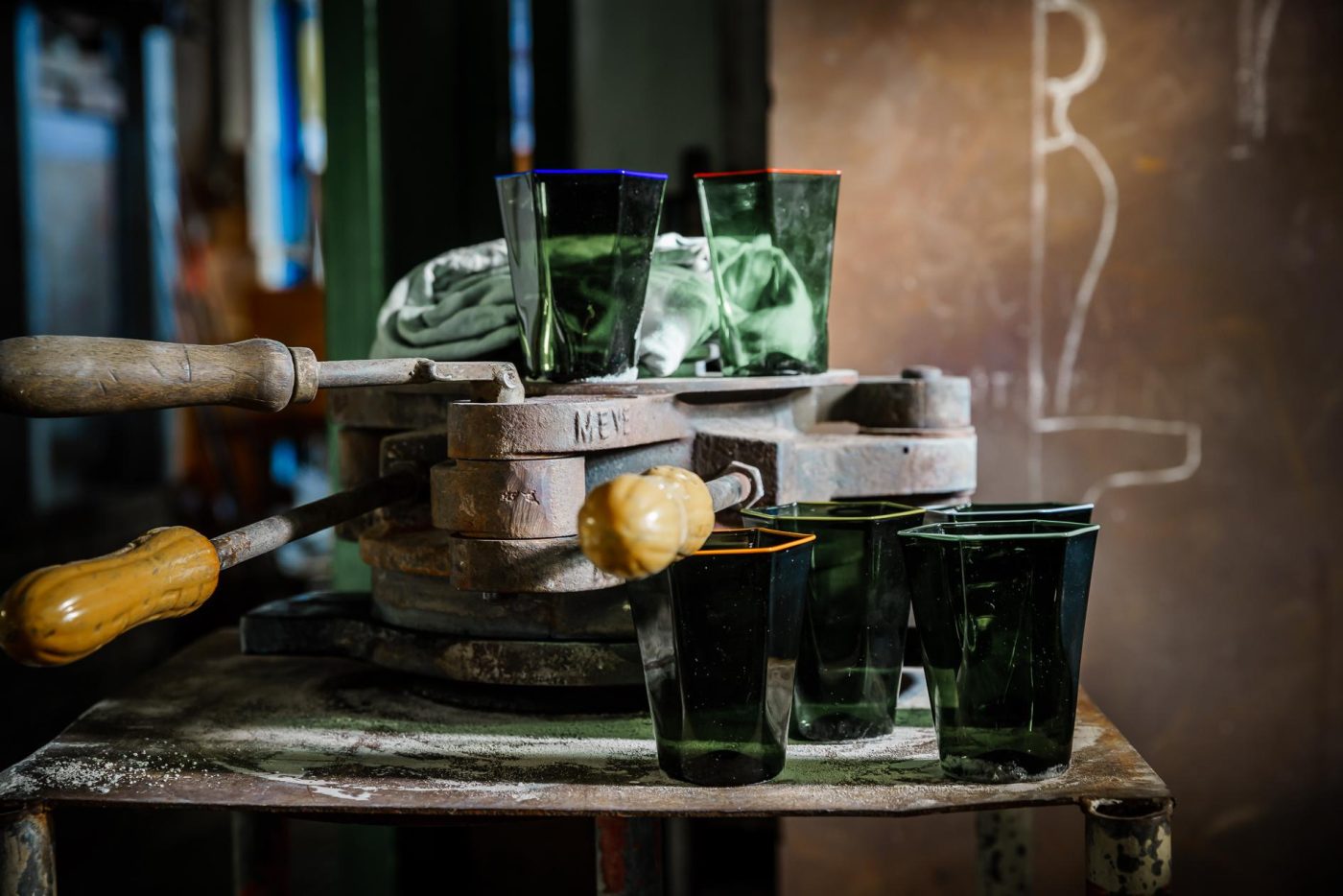
Working in Murano is more and more complicated. We don’t have enough maestros who can produce truly exceptional glass, because it is an extraordinarily difficult discipline. In the past, you could begin apprenticing at a very young age, spending decades in front of a furnace before you mastered the craft. That’s no longer possible, of course. You start as an adult now, working brutal hours in intense heat, and fewer and fewer younger people want to do it. Then, there was the pandemic, which forced the furnaces to shut down for the first time since World War II, halting months of production and closing about thirty percent of them permanently. The other problem is that customers often can’t distinguish real Murano glass from cheap imitations made elsewhere and sold in souvenir shops here. When someone doesn’t understand the difference between what a maestro produces and what comes off a factory line, it’s very hard to explain why ours costs what it costs. Lately, I have met younger people who have come to Murano to learn the craft, and that renewed interest from the next generation is our best hope — that it becomes not only a Venetian tradition but a living one that people travel to learn.
When you’re working with a maestro in the furnace, what does that collaboration look and feel like?
The most complicated thing in glass is to create something you have never seen before, or at least something that gives you an emotion you haven’t yet felt from a glass piece. We have been making glasses for centuries here. Everything has seemingly already existed. So, the conversation with a maestro is always about that edge: How do you push the form, the weight, the light, just far enough? The lightness of our glasses, in particular, is something I couldn’t find anywhere else. They are blown so thin that they feel almost weightless in the hand. That quality comes entirely from the maestro. My job is to know and envision what I want. Their job is to know whether it’s possible, and how.
Selling on 1stDibs means your work reaches buyers who may never come to Venice, never hold a piece before purchasing it. What do you think about communicating something so rooted in place through a digital screen?
The story behind each piece is very important to us, including where it comes from, why it has the shape it does, how it is made. When we put something on Instagram or on our website, there is always the object, its story and then the context: how it looks in the house, how the light moves through it. Glass changes completely with light and with the angle. We try to capture that. But I have to admit that I find it almost impossible, emotionally, to sell my own things. I need someone else to do it for me. I can sell your things, but not mine. I know too much about how they began, what they cost to make, why every detail is the way it is.
What can you tell us about your newest pieces?
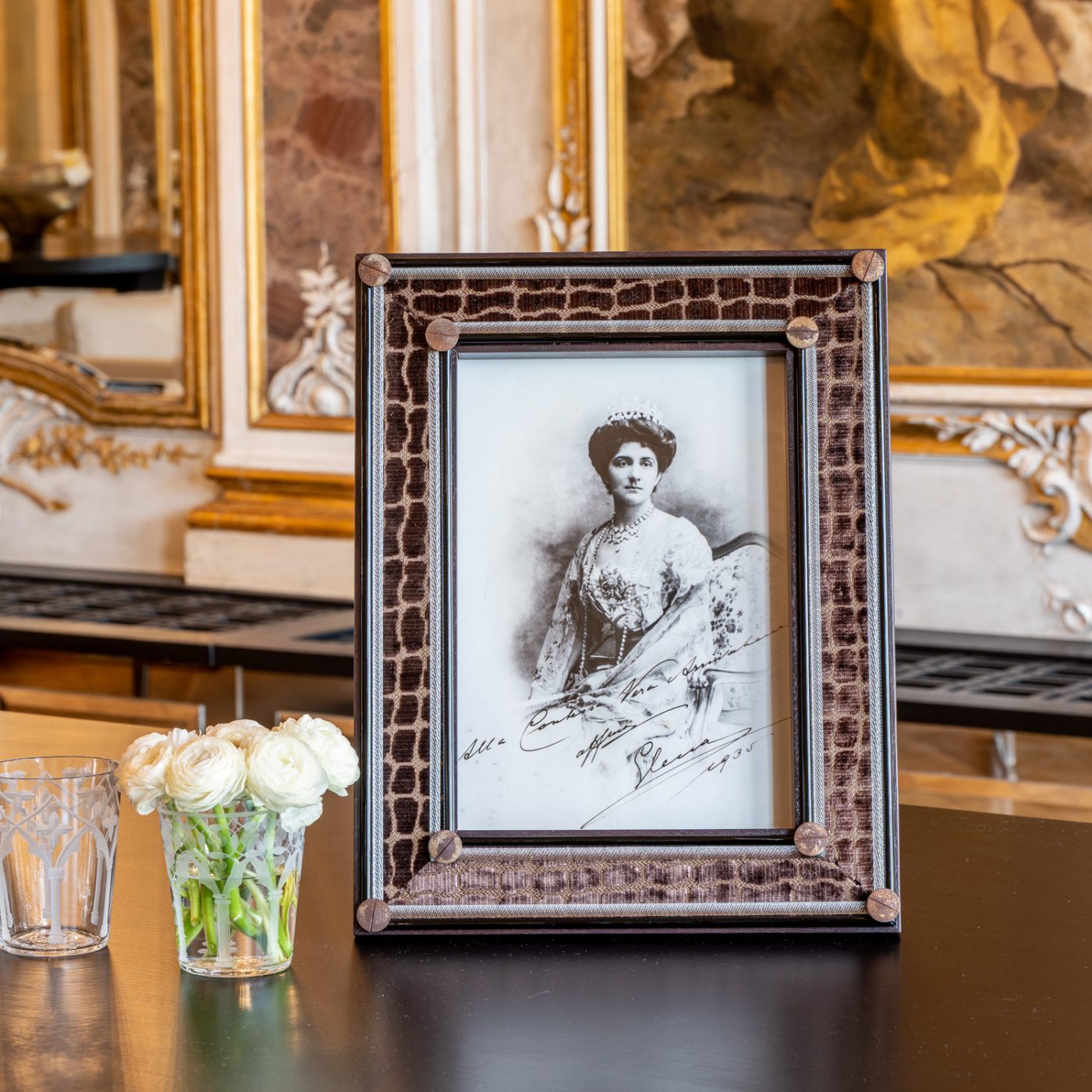
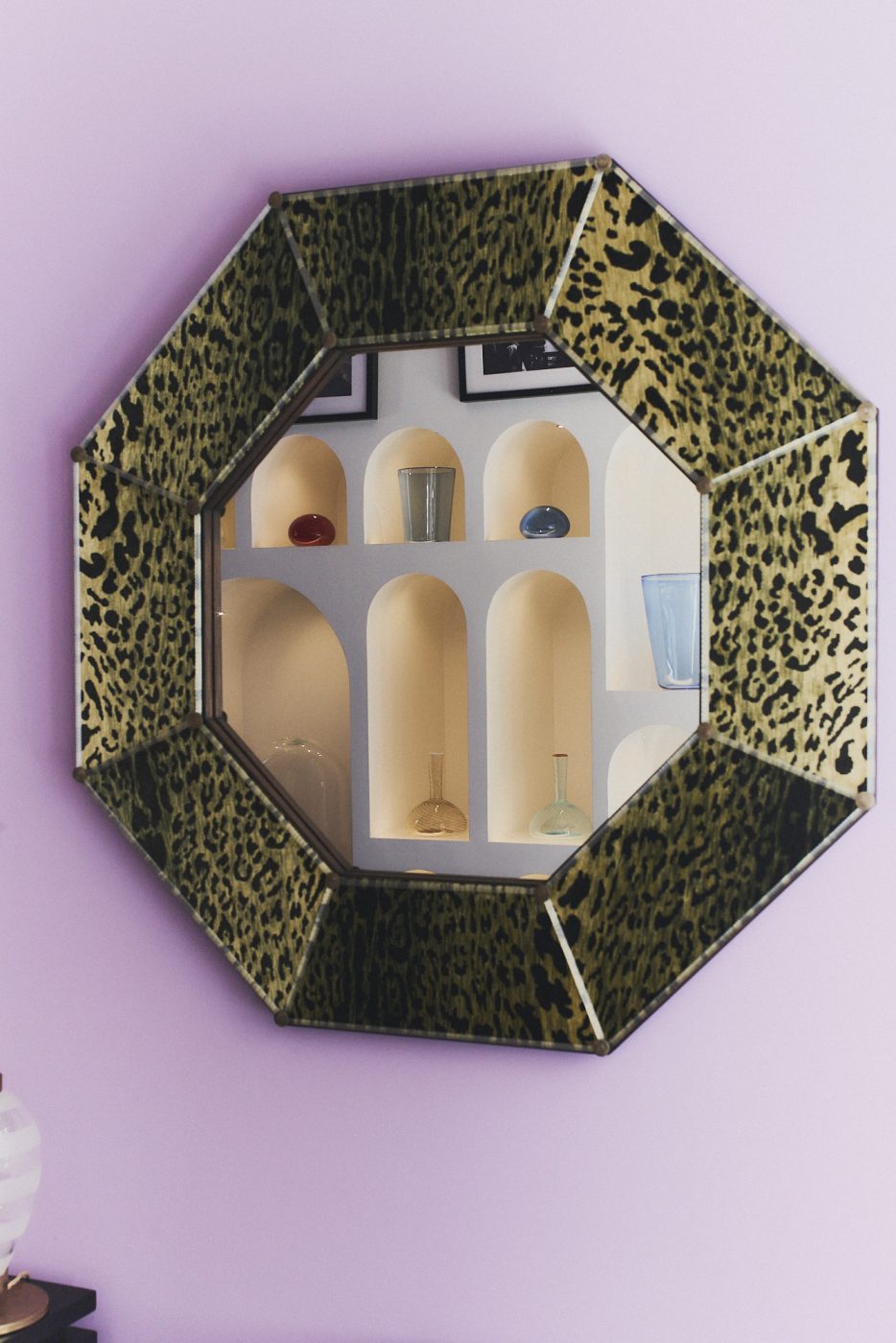
We have quite a lot happening at the moment. We are launching a new, smaller size for our velvet frames, which are very elegant and giftable. And we have the mini crystal-rock frames, which come in square and triangular shapes. These are inspired by a Fabergé aesthetic, made by our best artisans, and are very precise, the kind of object that looks simple until you hold it.
There is also the Dardo vide-poche, a small glass tray for jewelry and small personal objects, which is made in Murano using the lost-wax technique — an ancient process — with a cabochon stone set into each.
And then, for the Venice Glass Week in September, we are launching a series of five vases made in collaboration with Gianni Seguso. Each vase is a different shape and size, and they are all made using a special crackle technique, where you immerse the glass repeatedly in cold water while it is still hot, which creates a network of fissures across the surface that makes it look exactly like ice. It is one of those processes where you are essentially working against the material, forcing it to fracture in a controlled way. The results are extraordinary. For me, that collaboration is particularly meaningful, as Seguso is one of the great names of Murano, and to be making something new together, for the festival, feels like exactly the kind of thing the Venice Glass Week should be about.
Part of your palazzo is now the Aman Venice. How has that coexistence worked?
It’s a miracle how it worked out. Because of longstanding financial issues, the state of the palazzo was in distress. When Adrian Zecha, the founder of Aman, sat in my studio and told me he had been looking for a Venice property for fifteen years and this was the one, at first I said I wasn’t selling and I wasn’t leaving. But eventually, we became friends, and he convinced me to rent it to him. We did eighteen months of restoration work, with more than a hundred people on-site, and seeing that kind of investment go into the house was extraordinary. Now, the place is full, everyone is smiling, guests come up and want to know the story of the family and the palazzo. A situation like this just depends on your character — if you don’t like talking and interacting with people all the time, it could be a problem. But for me, it’s a dream.