March 1, 2026Many people who work in interiors segue into the industry from other creative pursuits. For Katie Harbison, however, her calling was always crystal clear. “From about the age of fifteen, I knew I wanted to be an interior designer,” she says. “It’s all I’ve ever done or been interested in doing.”
Originally from Ireland, Harbison studied interior design in Dublin before moving to New York and then London. Along the way, she earned a master’s from Italy’s Florence Design Academy and worked at such internationally renowned studios as Banda.
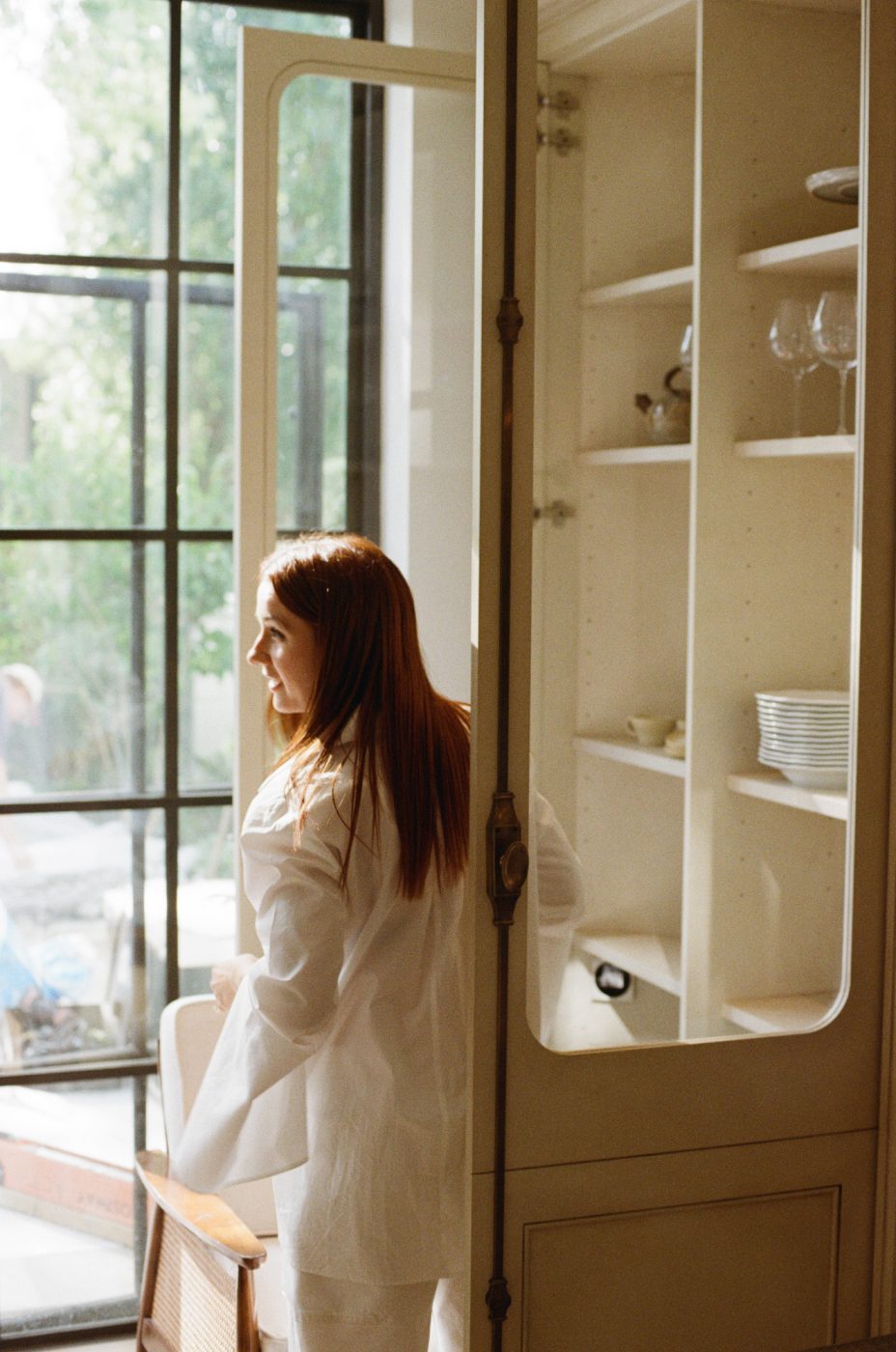
In 2021, she and her now husband, James Christian, decided to set up Katie Harbison Design. “It was during COVID, and at the time, we lived in a studio apartment in London. Like many people, we were quite miserable, and I really wanted to come back to New York,” says Harbison, who saw building her own interiors business as an avenue back to the States. “One project turned into two, then three — essentially, that was the inception of the company.”
Now based in Brooklyn, with another office in the British capital, Harbison employs a team of seven, serving clients in both Europe and the U.S. “My background is working with historic properties, so I think we’ll always have a presence in the UK,” she says.
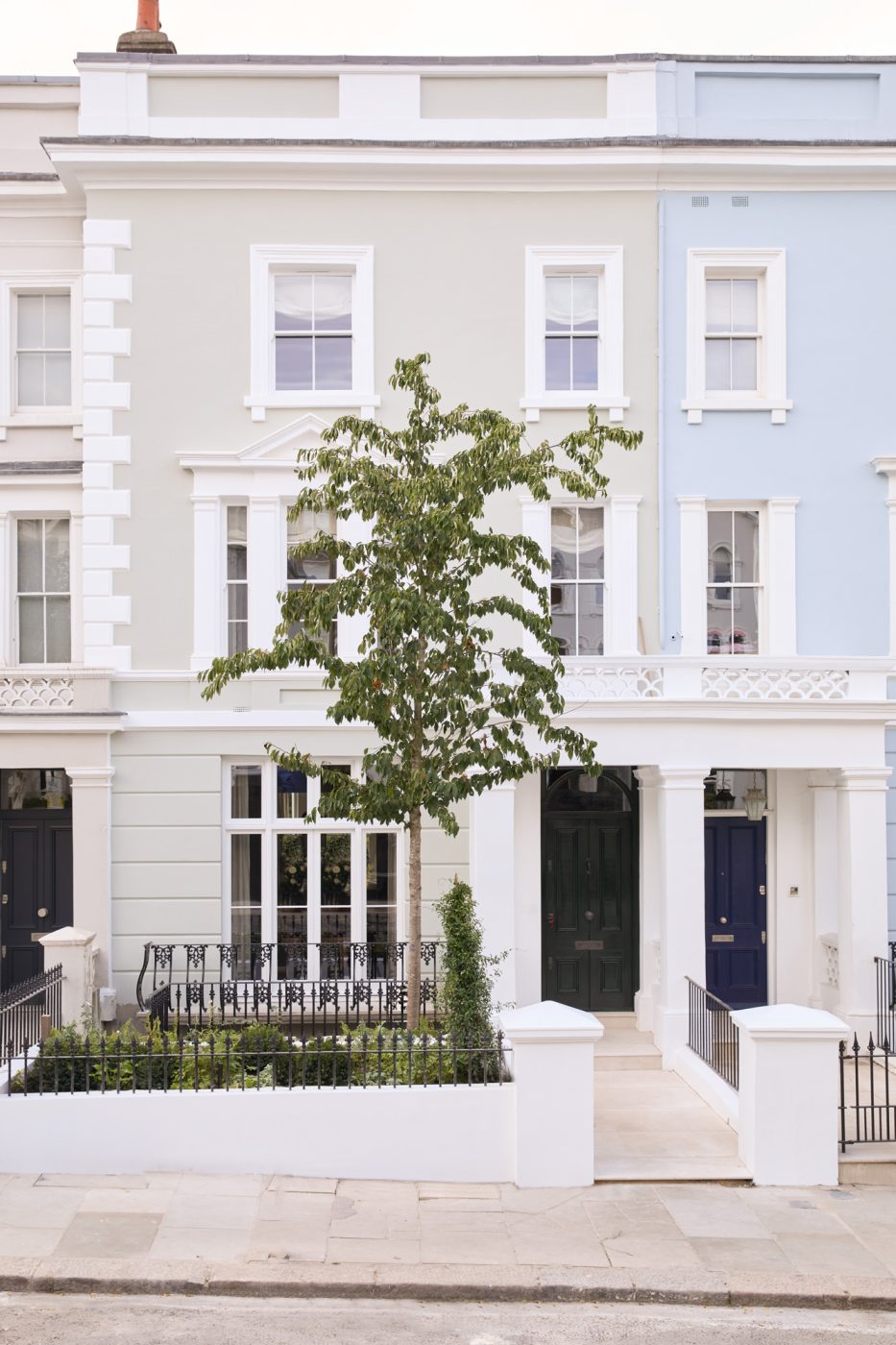
Her strong understanding of traditional homes proved a huge advantage when it came to renovating this 19th-century 3,500-square-foot Italianate townhouse in London’s Notting Hill. Purchased in 2022 by a young family who split their time between the city and South Africa, the five-bedroom property — which previously belonged to British children’s author Dame Shirley Hughes — had remained untouched for the nearly 70 years prior.
The clients, Harbison says, “have two little girls, but they really wanted to create a home they could grow in, rather than adapting to the toddler years.” With that in mind, she left the top floor a simple space where the children could play and, in the rest of the house, focused less on “durable fabrics and wipe-clean surfaces and more on it being a beautifully designed, forever home.
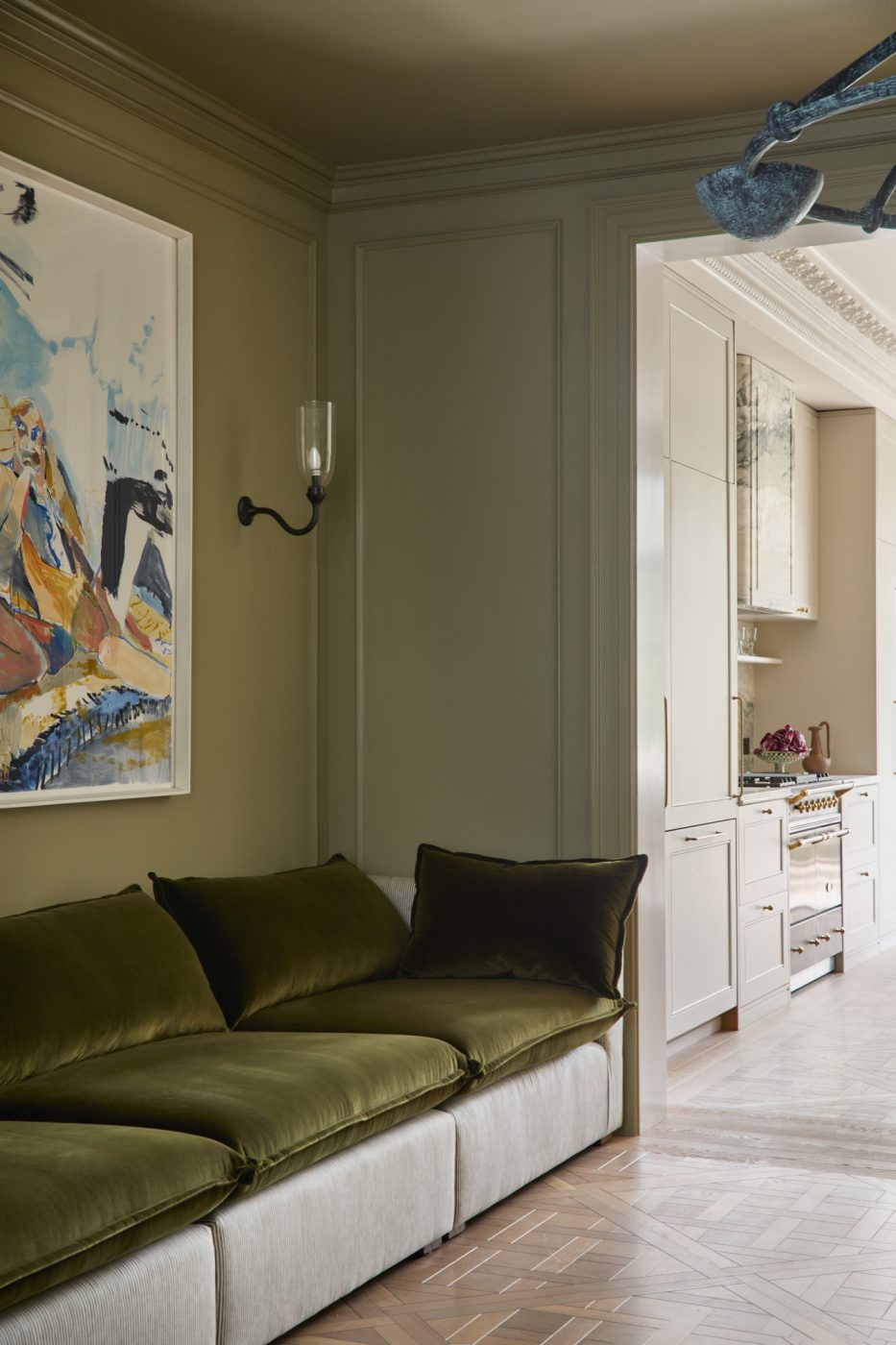
“In terms of palette,” she continues, “they wanted to keep it light, so we introduced pockets of color to a refined, neutral base, then added vintage furniture for warmth and texture, which they were very keen to do.”
Harbison worked closely with London-based architecture practice De Rosee Sa, to transform the formerly cramped layout, reconfiguring a warren of small rooms to maximize space. The revised floor plan, which includes a new location for the staircase, allows rooms to occupy the full width of the house, and for light to travel all the way from front to back, a design feature the clients especially desired.
“It’s a classic London townhouse, but the lower ground floor felt closed off,” says De Rosee Sa project architect Erin O’Sullivan, who together with Harbison conceived a redesign that celebrated the house’s history through the meticulous re-creation of such evocative architectural details as moldings and parquet floors. “Reworking the staircase was key,” O’Sullivan notes. “And by pulling it forward, we were able to create a generous living room overlooking the gardens.”
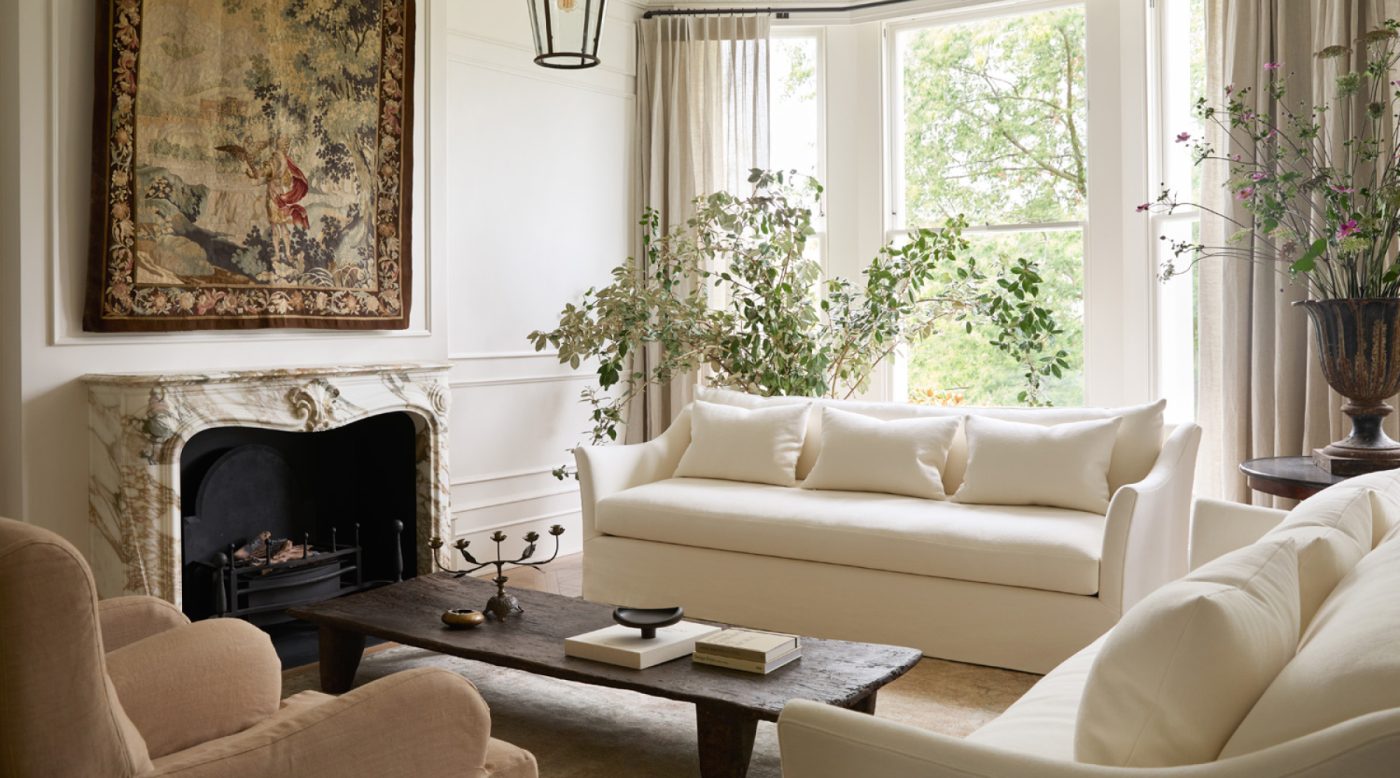
In that living room, Harbison used a pair of bespoke sofas, upholstered in ivory linen, to flank an antique farm table, hanging a 19th-century Aubusson tapestry above the Breccia marble fireplace. Directly adjacent is the dining room, which, thanks to handsome floor-to-ceiling cabinets on either side of the fireplace, also serves as a study.
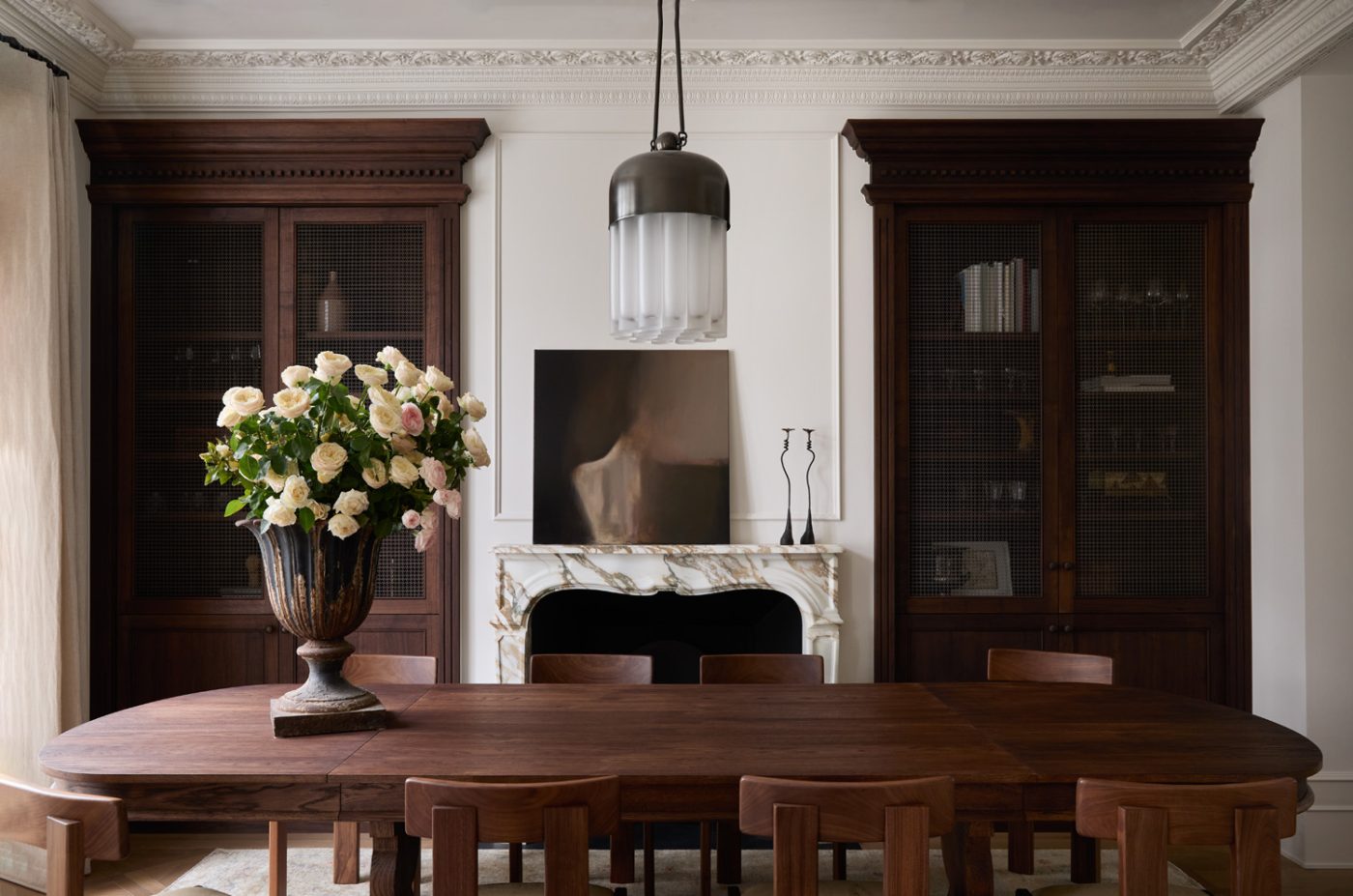
“There is custom storage for printers and other stationery, as well as leather-lined cutlery drawers and space for dinnerware and table linens,” Harbison says. “Ninety-five percent of the time, this room will be in office mode. We had the table made so it doubles as a desk. The end leaves come off to reduce the size, and it can be reorientated to make the most of the wonderful view.” Beneath the table is a rug by Stark, and above it hangs a pendant by Apparatus.
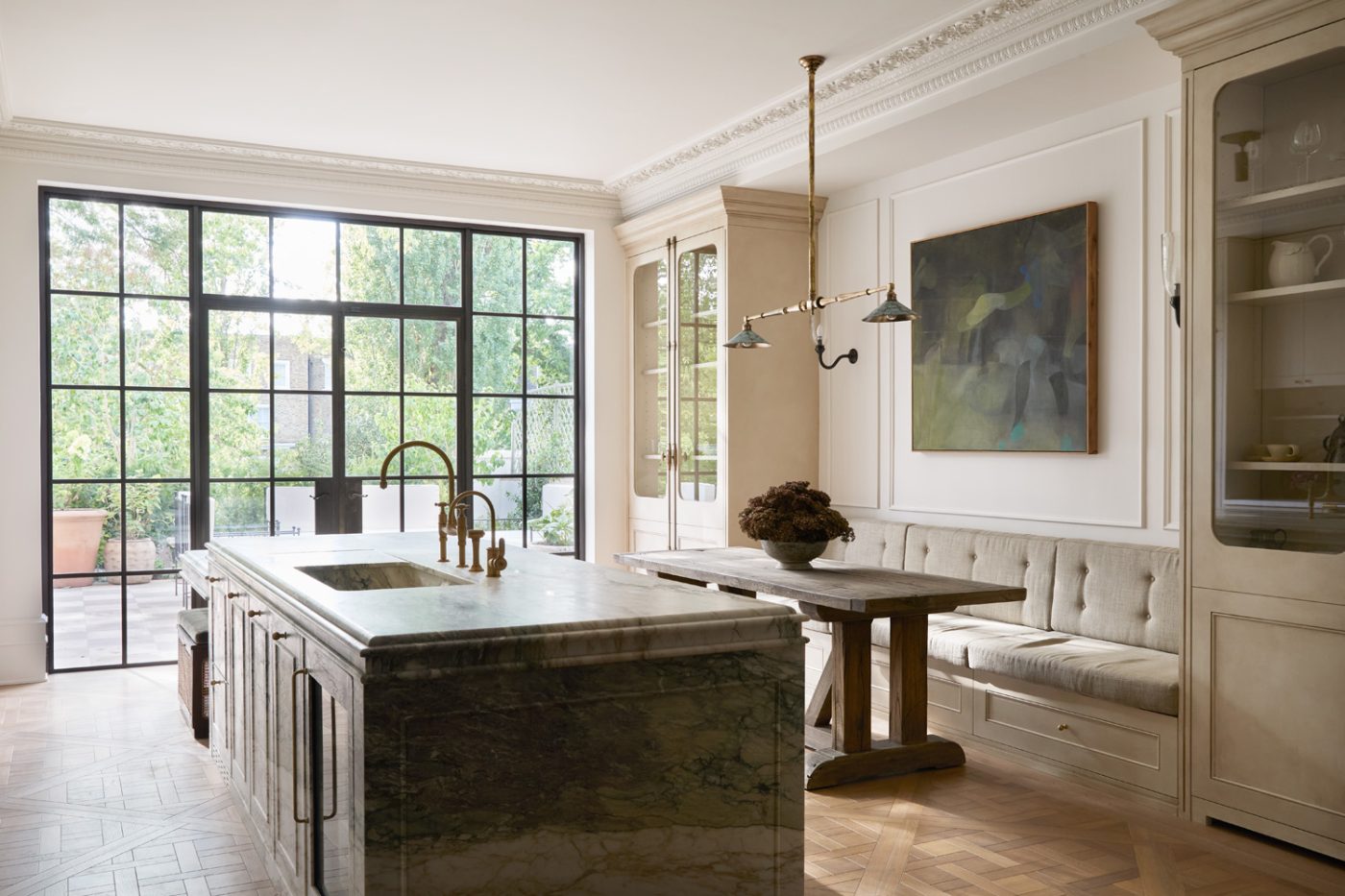
Downstairs, in the newly installed kitchen, Harbison repurposed Pierre Jeanneret linen boxes as stools at the island, itself impressively clad in slabs of Italian Breccia Monte Verde marble. Nearby, a Jamb pendant light illuminates a custom banquette, designed as a spot for the family to hang out.
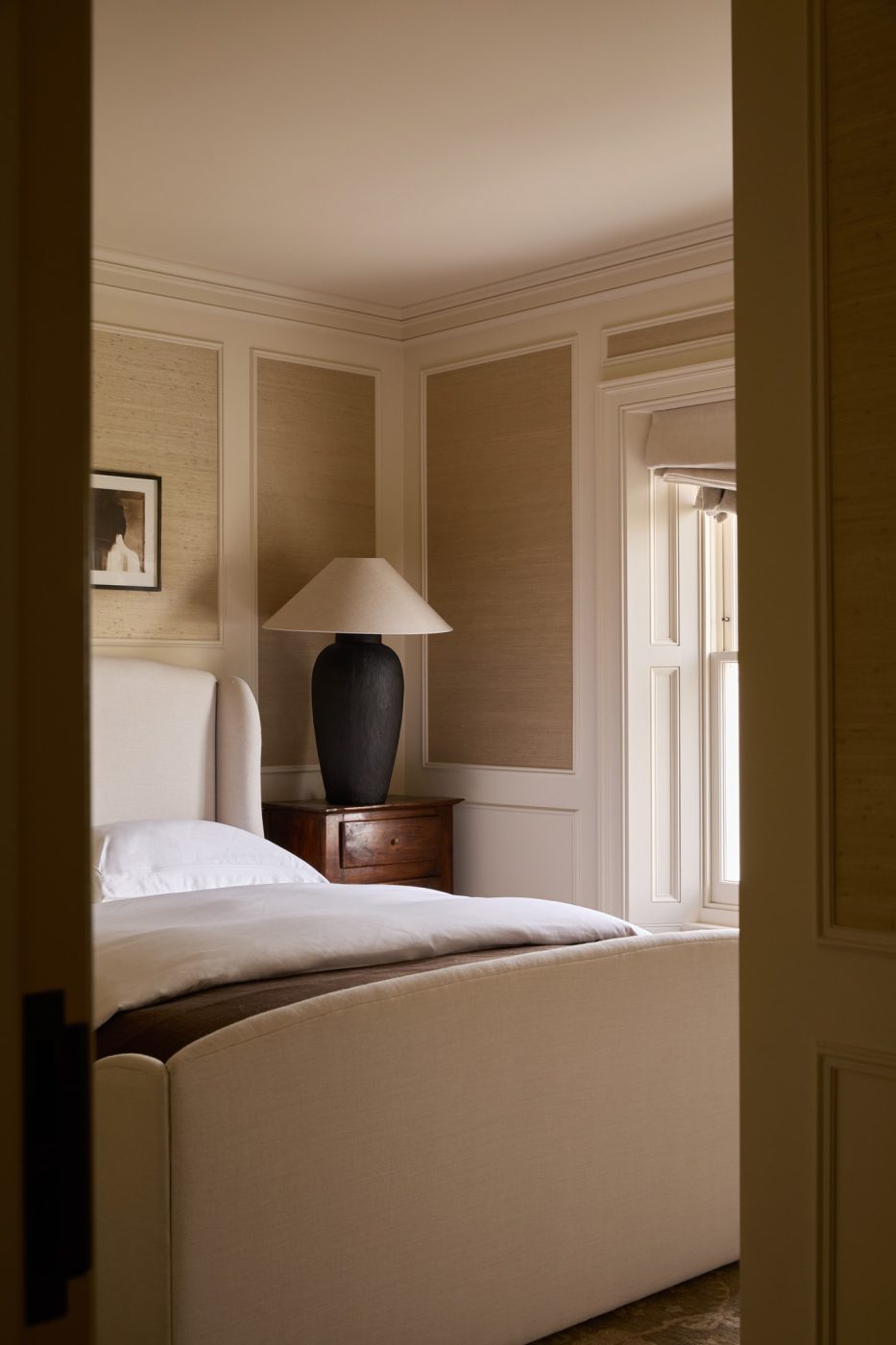
A pair of 18th-century walnut commodes flank a custom upholstered bed in a guest suite.
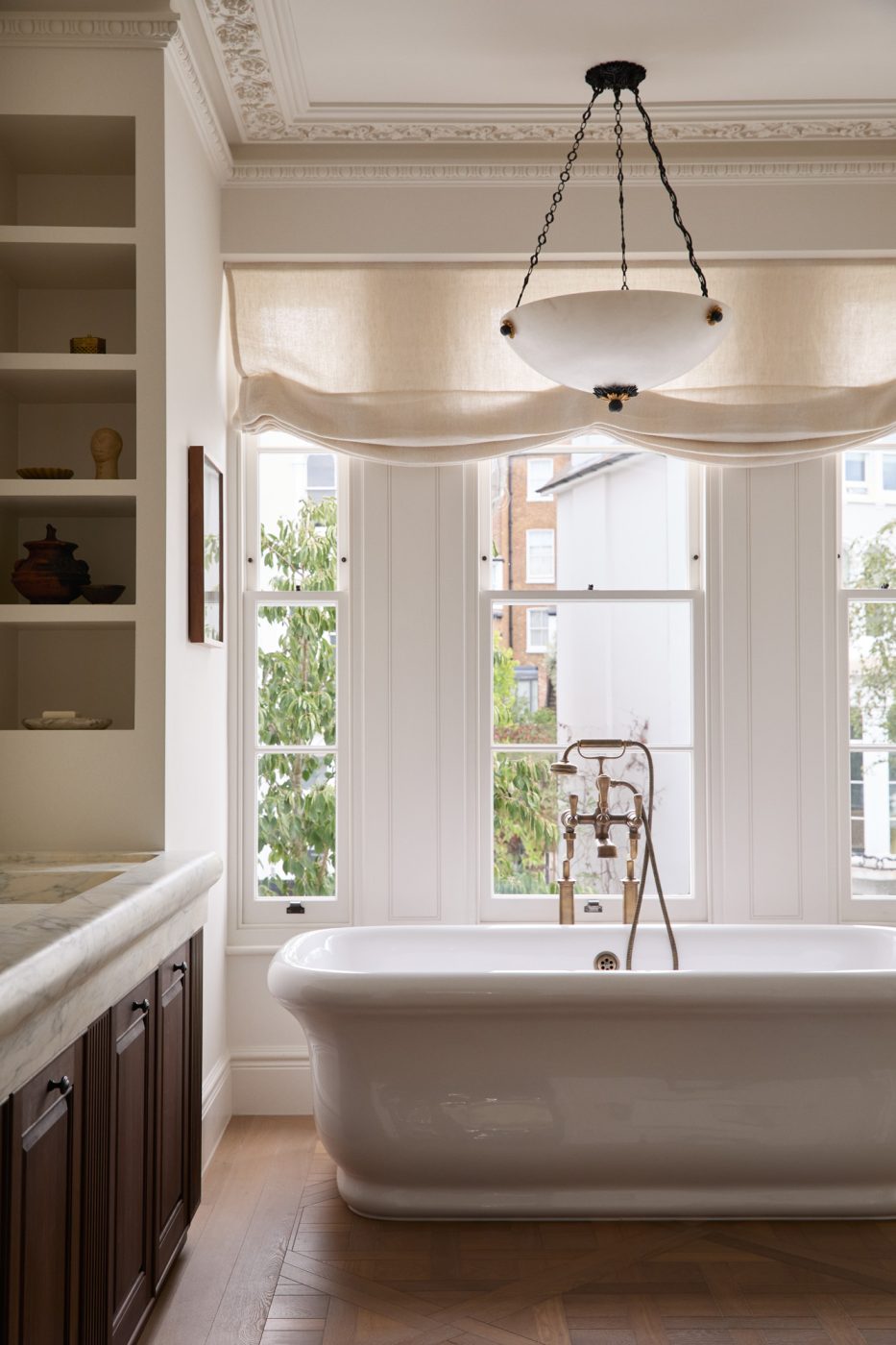
Harbison and O’Sullivan turned the entire second floor — which once housed a bathroom and three bedrooms — into a serene primary suite. “The clients felt strongly about keeping the palette of this space neutral, making it somewhere they could retreat and truly relax,” the designer says.
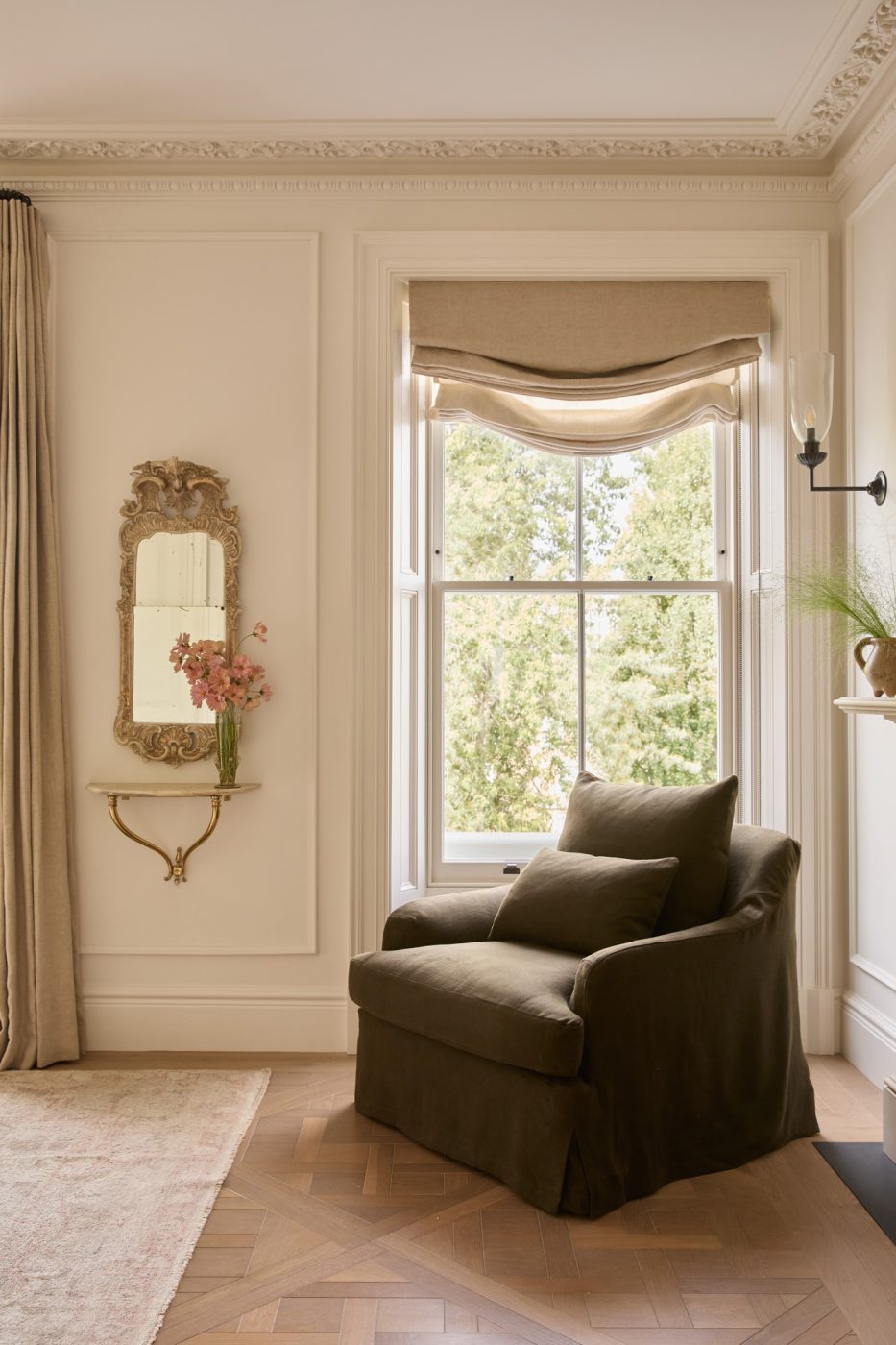
She complemented the bone and ecru tones with a 19th-century German armchair upholstered in olive green linen, part of a multiperiod mix that also includes a Swedish Rococo mirror and a mid-century brass and marble shelf sourced on 1stDibs. “It’s about the balance between antique and modern here,” says Harbison, who paired bespoke mirrors by Novocastrian with sconces from Apparatus in the adjacent primary bathroom.
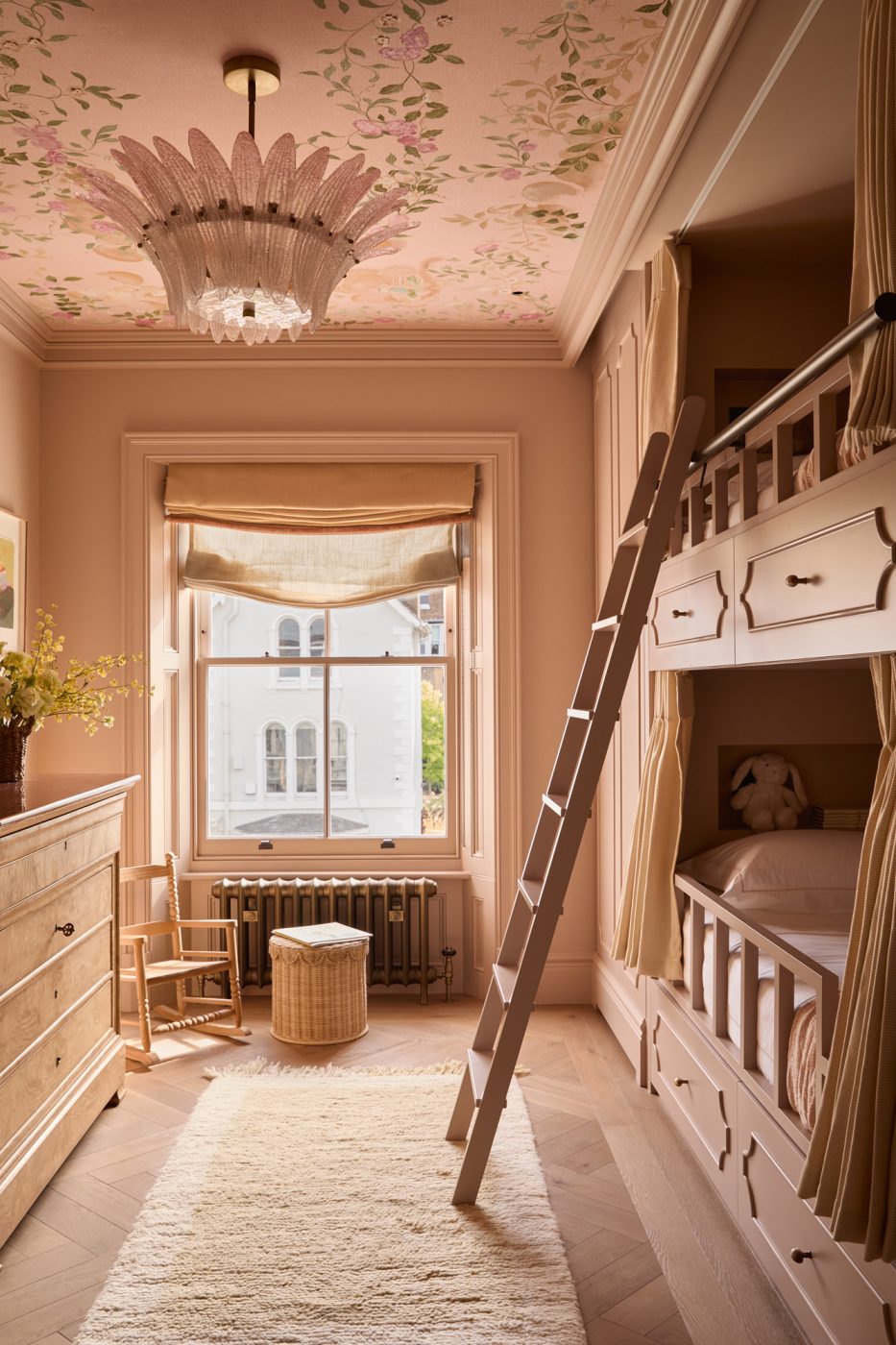
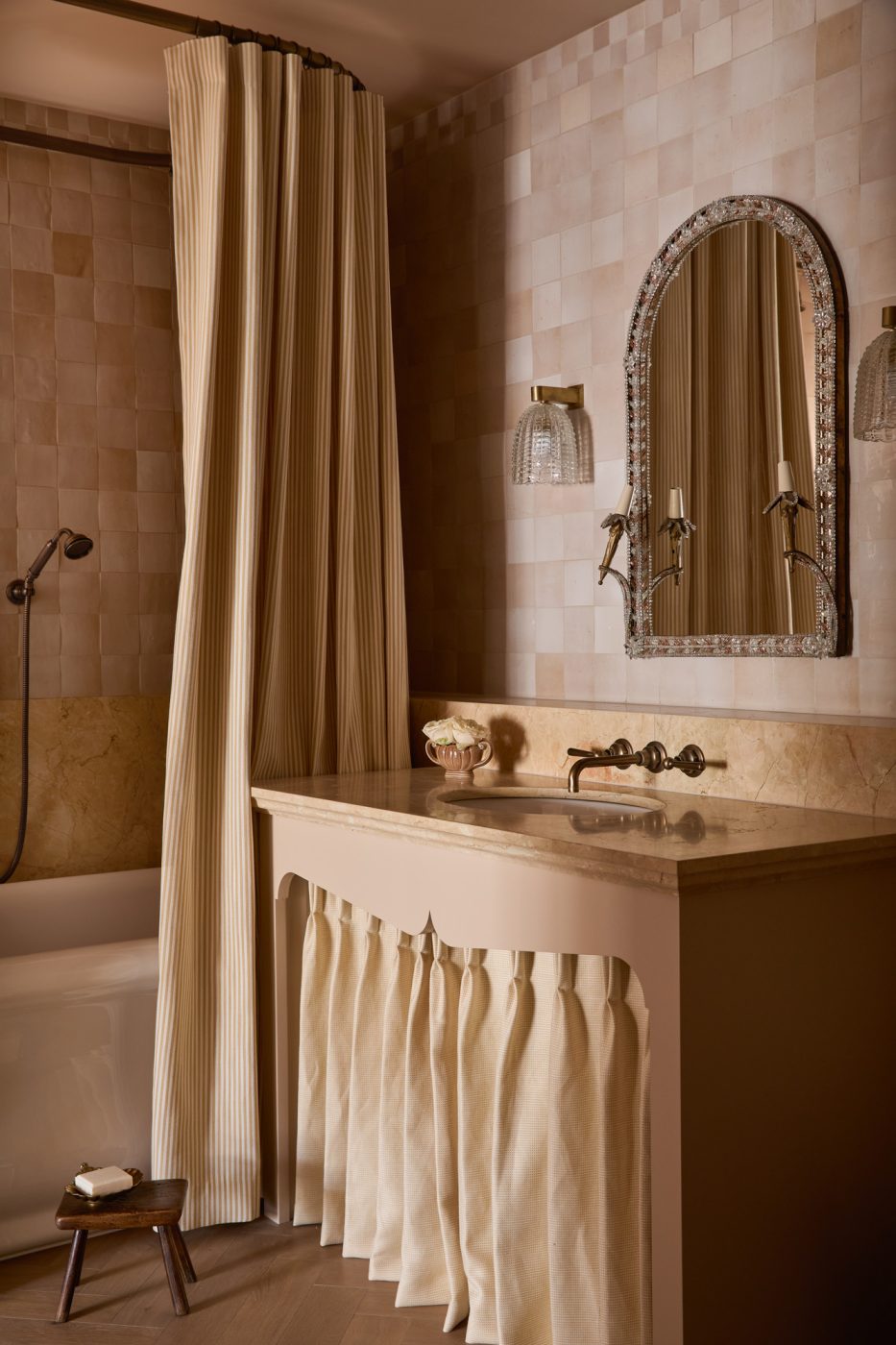
A similarly tranquil atmosphere and neutral hues define the grass-cloth-clad guest bedroom, which features 18th-century walnut nightstands. But Harbison breaks the mold in the children’s rooms, with playful pinks and pale greens, as well as custom hand-painted ceiling murals commissioned from British artist Natasha Hulse. “These nod to the house’s previous owner,” the designer explains. “We took references from the illustrations in Hughes’s books.”
Next up for the studio are projects in Ibiza, Miami, New York and, once again, London. “It’s very different, working in the UK and Europe versus the U.S., not least because we have to master two sets of terminology,” Harbison says, laughing. “But it’s nice to have that balance, and we’re always learning and making new connections, on whichever side of the Atlantic we find ourselves.”