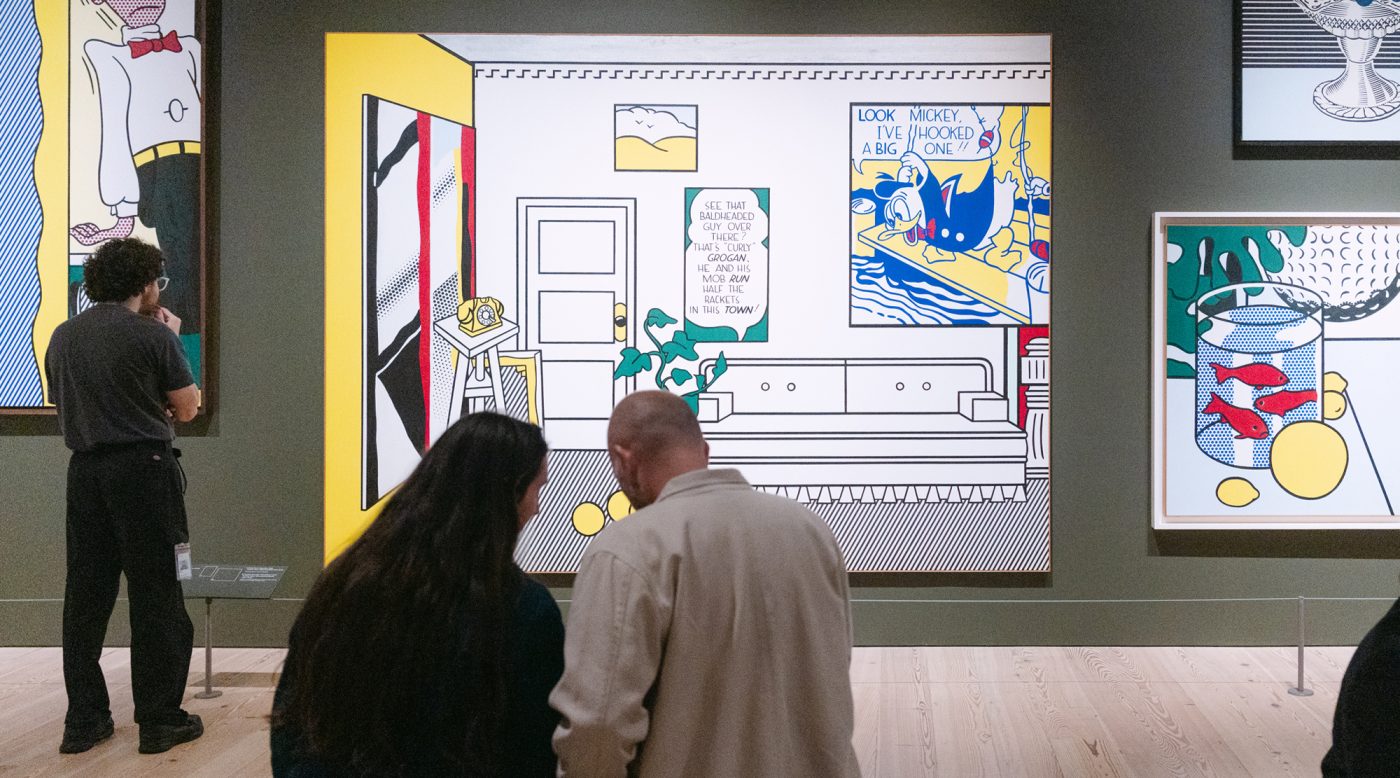
October 18, 2026Artist Roy Lichtenstein may have died 29 years ago, but he never really went away.
Not only is his particular Pop style indelible, but every artist after him who has used text in a painting or made us look closely at the detritus of low culture to see it anew, owes him a debt. His raised-eyebrow view of life, and of advertising and consumer culture in particular, always feels fresh.
“You see Lichtenstein’s style everywhere,” says Meg Onli, a cocurator of a boffo retrospective of the artist that opened October 11 at New York’s Whitney Museum of American Art. “I’m kind of shocked at how often I see Lichtenstein in the world.”
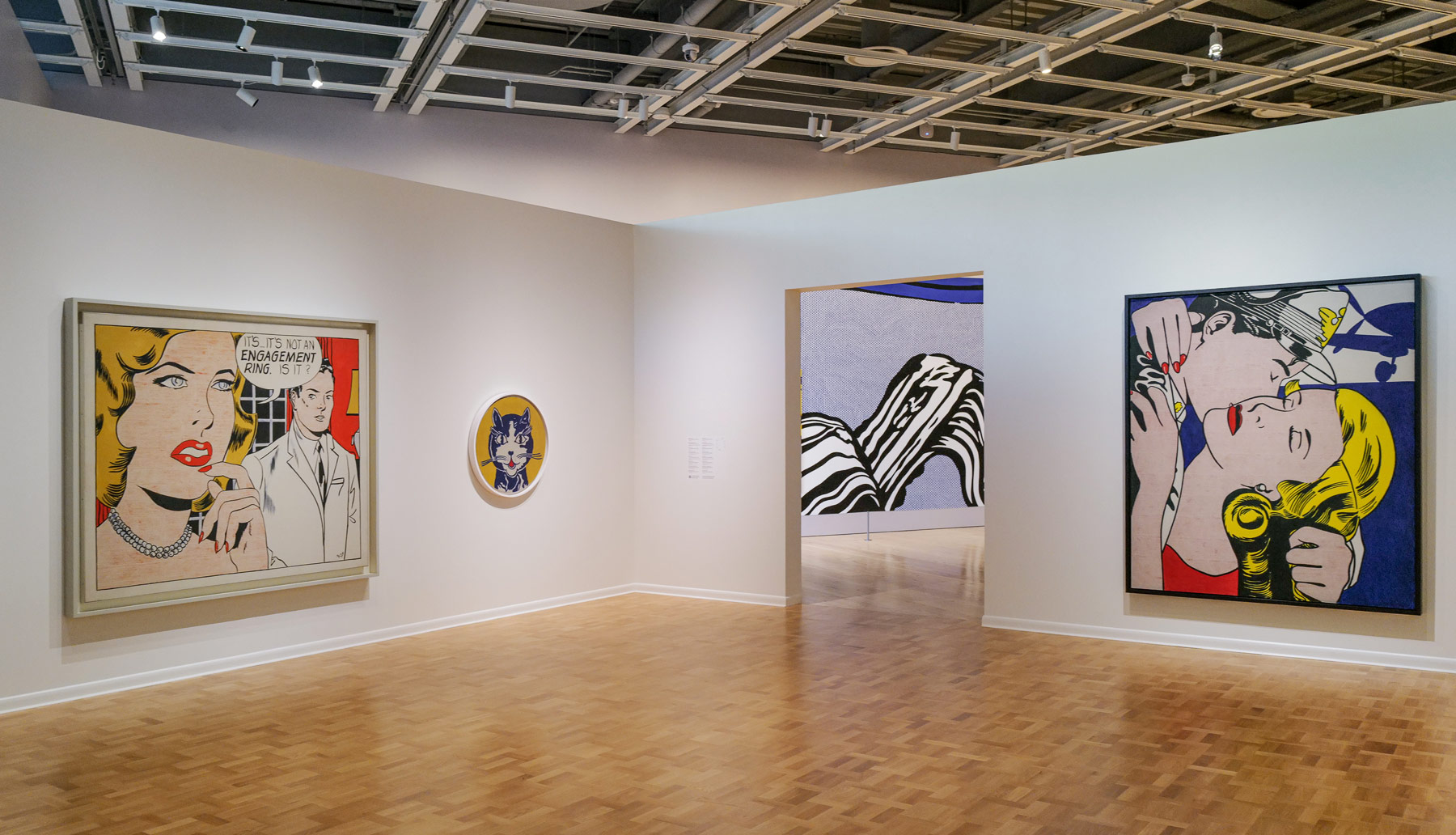
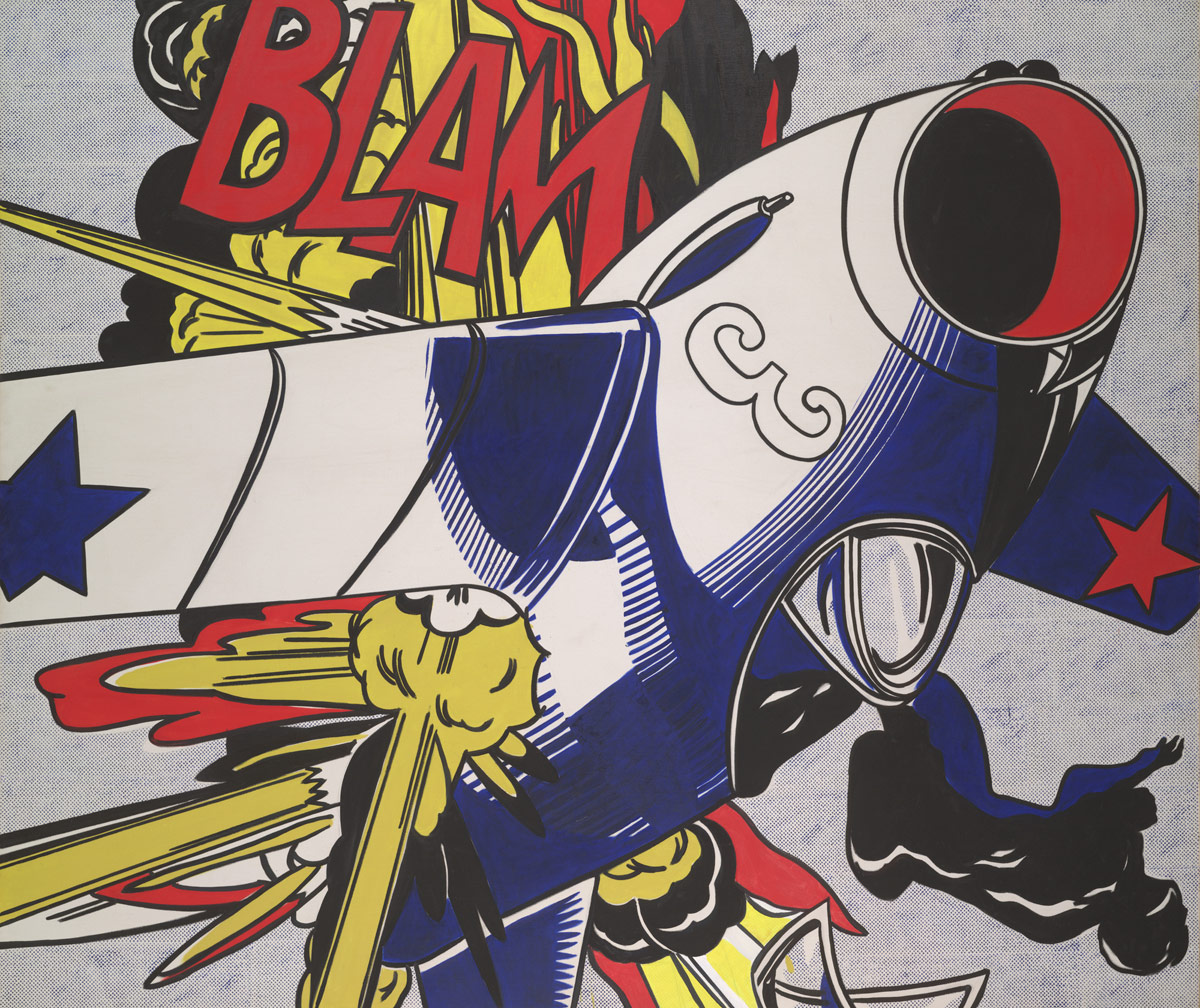
Known for his witty, graphic and wildly influential 1960s Pop art paintings — some of them in the style of comic books, mimicking the look of their Ben Day dots and emblazoned with their “Wham! Pow!” lexicon — Lichtenstein (1923–1997) may have been second only to Andy Warhol in terms of penetrating the collective consciousness of late-20th-century audiences.
He’s perhaps the most imitated artist of our time, but replicability was part of his program. “At the core, his practice was that the works should look mechanical, but they are actually defiantly and emphatically handmade,” says Onli.
She and her cocurator, the noted contemporary artist Alex Da Corte, have gathered more than 130 works for “Roy Lichtenstein: Like New.” The title is taken from one of the artist’s works, but it also announces that this is a retrospective unlike any you’ve seen before.
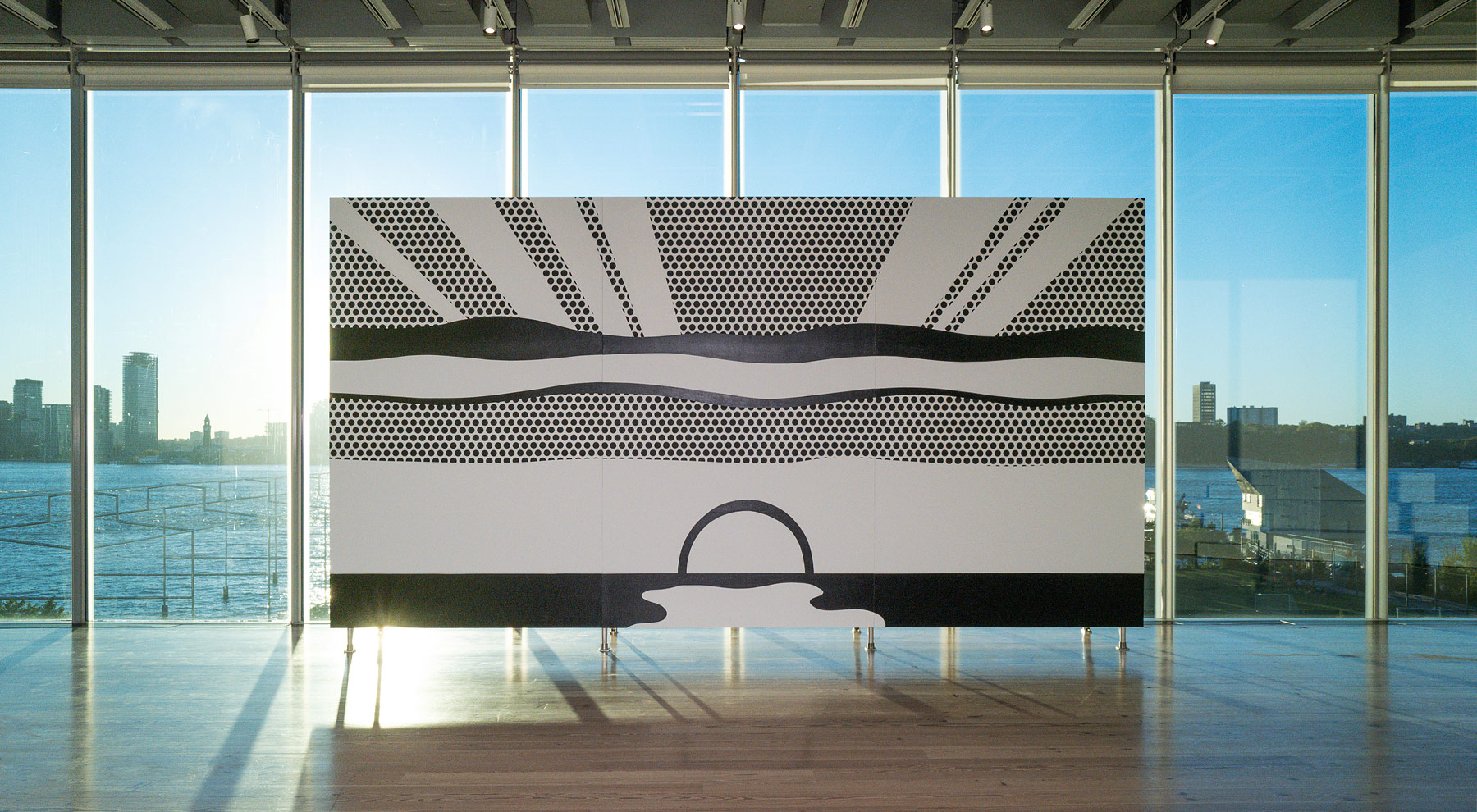
Da Corte has several of his own works in the show — perhaps the clearest example of how it differs from previous Lichtenstein surveys — including a hand-painted re-creation of the Pop master’s 1967 Super Sunset Billboard. The Da Corte version will stand outdoors on one of the Whitney’s terraces.
“We’re not Lichtenstein experts,” says Onli, who cocurated the museum’s 2024 biennial and was chosen for this exhibiiton because of her devotion to Lichtenstein’s work and her ability to put a new spin on familiar favorites. “We really kind of jumped in with a fresh set of eyes.”
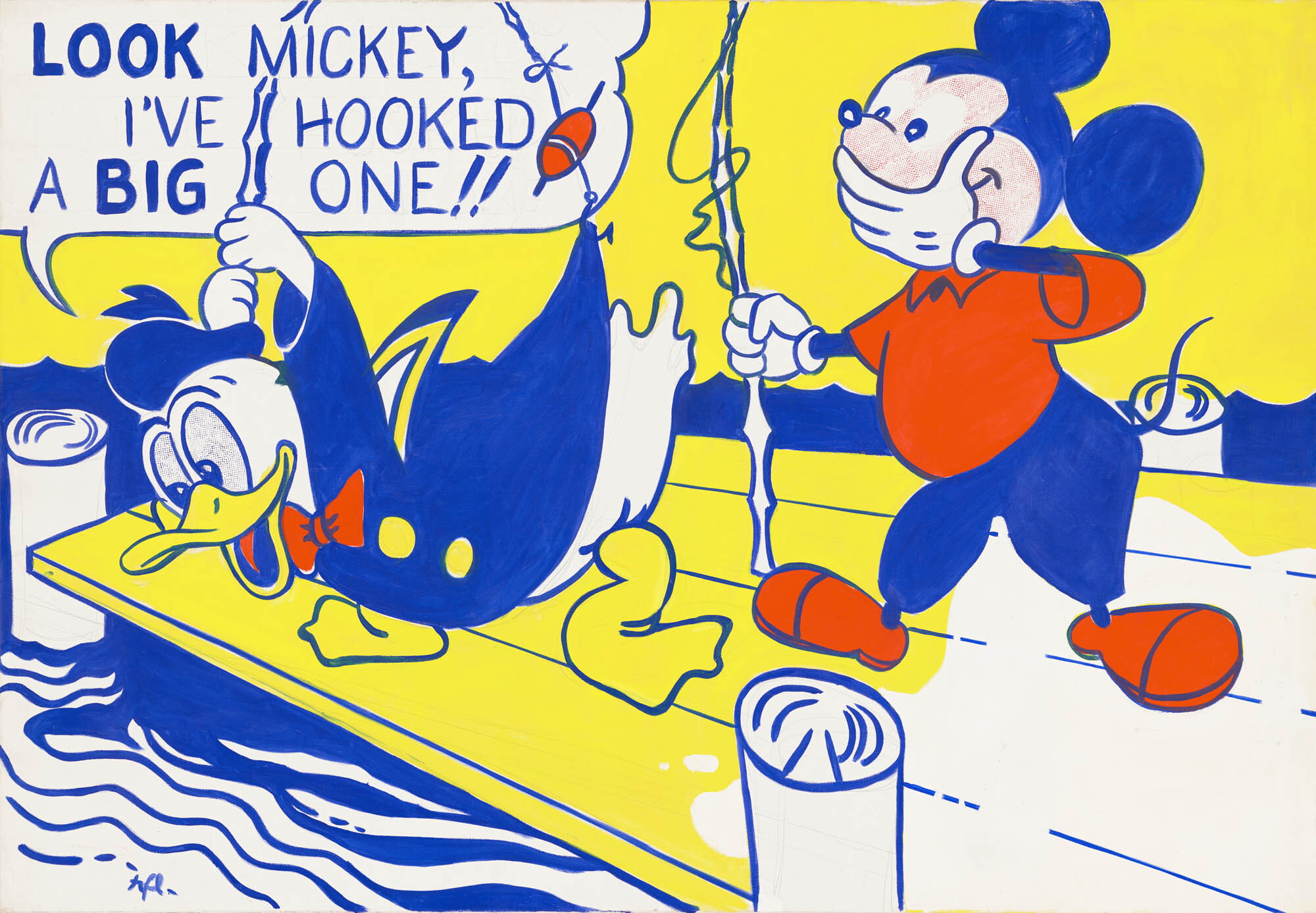
Among her moves was putting the 1961 Look Mickey — considered a breakthrough/seminal in the development of the artist’s recognizable high-Pop style — at the end of the show, not the beginning, a nod to the fact that it was not shown publicly until the early 1980s.
“I don’t think we can fully get back to that moment where you understand just how radical that gesture was,” Onli says, referring to Look Mickey‘s pioneering use of Ben Day–like dots and its mechanical-reproduction style, not to mention the perceived vulgarity of depicting a scene from the comics. “It felt truly innovative and new.”
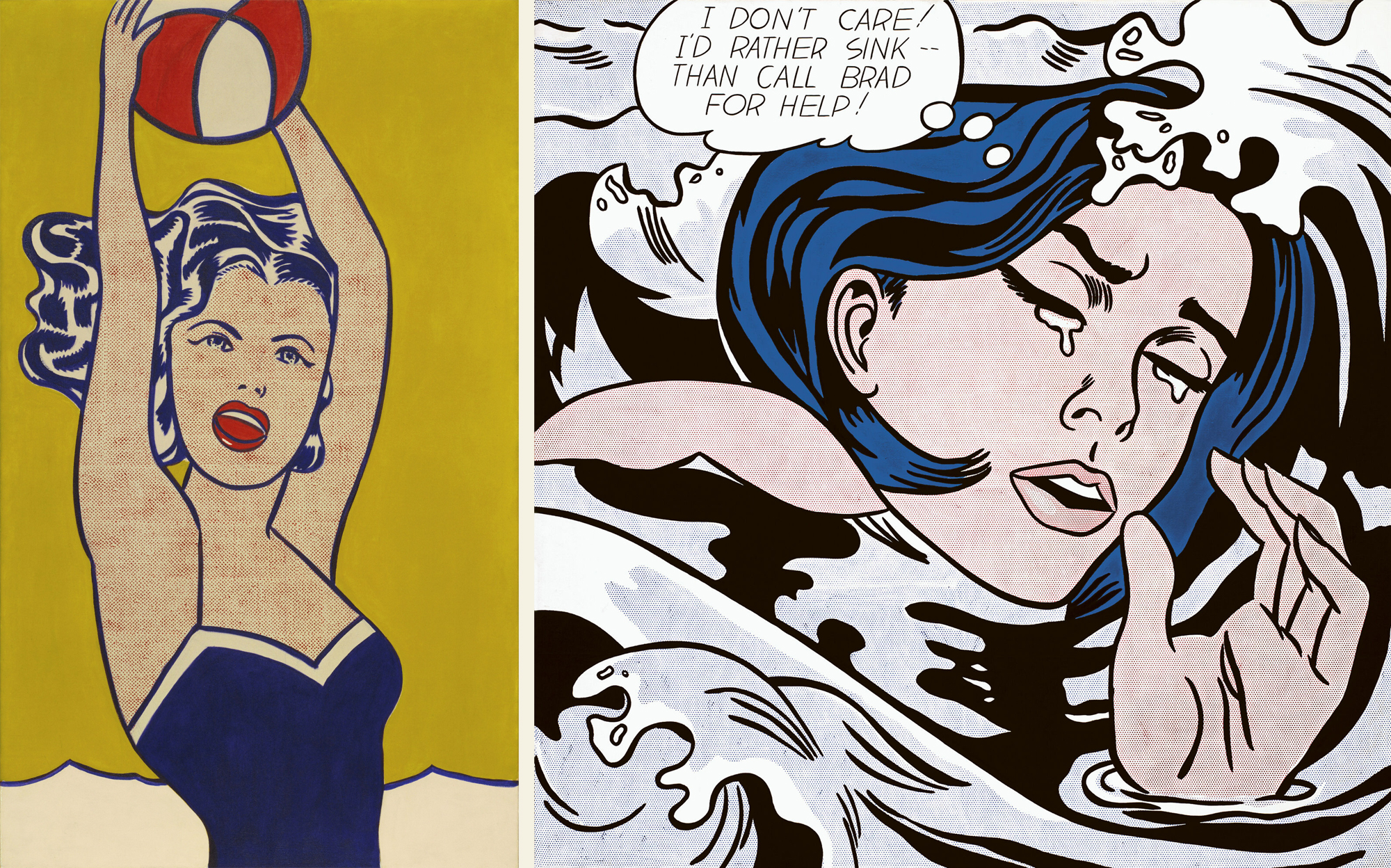
The exhibition includes many classics, like Girl with Ball from 1961 — a follow-up to Look Mickey — and 1963’s Drowning Girl. These pictures have stuck in our minds, created with sincere love for commercial image making and leavened by just enough Pop archness. But the show makes the point that Lichtenstein saw his source material, whether high or low, as nearly abstract assemblages of individual parts, which helps to explain the strength of his compositions.
In addition to the Da Corte re-creation, visitors to the Whitney will find copies of/homages to Lichtenstein’s oeuvre by other artists, like Richard Pettibone, whose straight-up re-rendering of the older painter’s work is represented by the 1962 Roy Lichtenstein, ‘Masterpiece.’ The mixing of old and new creates a pleasing hall-of-mirrors effect.
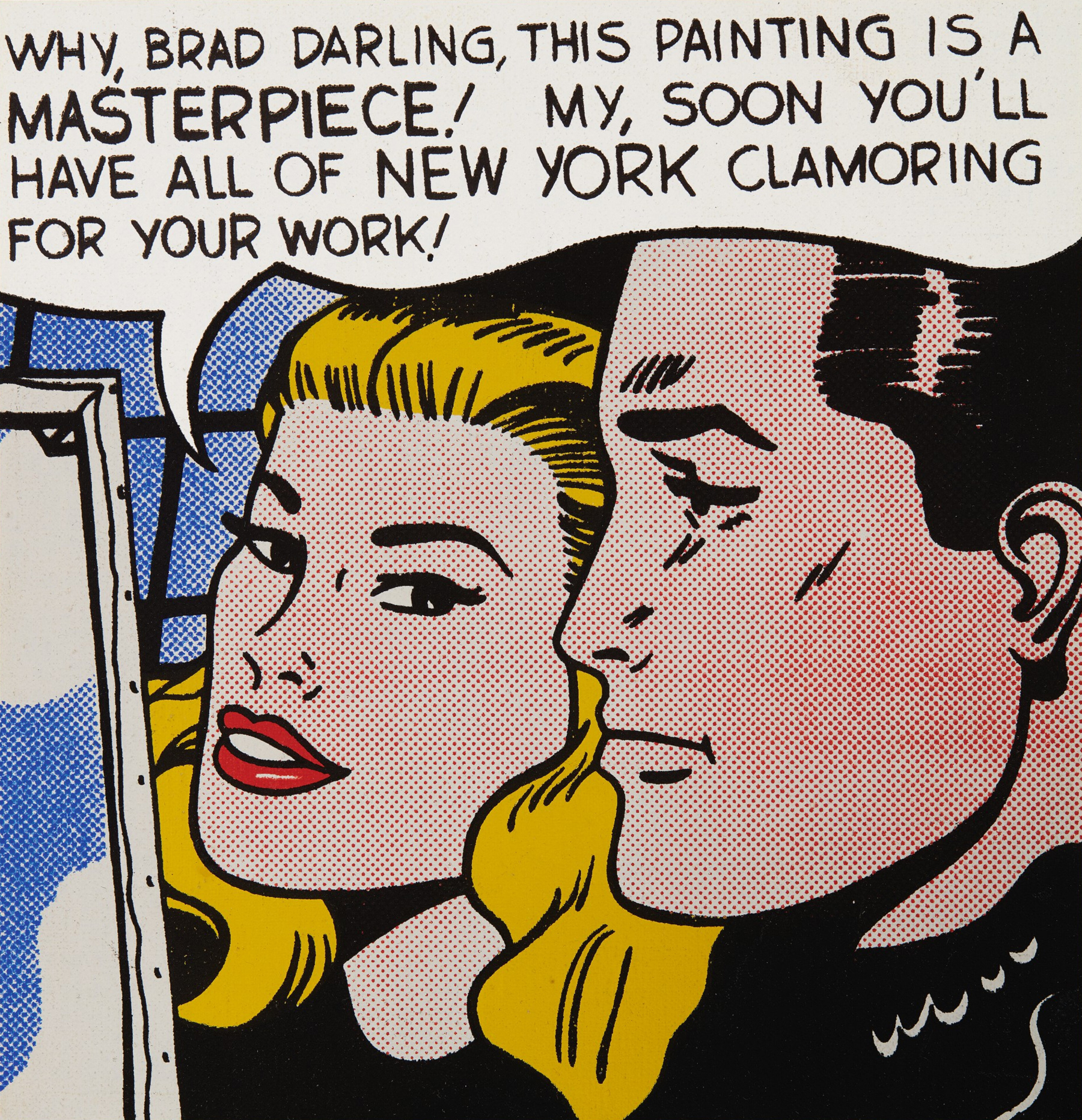
Lichtenstein encouraged mimicry of his work — as long as it was not being passed off as the real thing — because it aligned with his interest in seriality, reproduction and dissemination. If you’re buying a print or other editioned work of his on 1stDibs, you’re doing just what he intended by circulating his images in the wider world.
It all feels very relevant in the age of AI. “Appropriation is the name of the game now, and our understanding of it is being completely decontextualized and recontextualized,” says Onli. “We live in a moment in which the idea of author and provenance have been completely obliterated.”
The vision and dedication of collectors is essential to the show. Finance titan Kenneth Griffin lent two works, and major art patron Agnes Gund, who died last year, also contributed. The widow of famed dealer Leo Castelli, Barbara Bertozzi Castelli, came through, as did legendary gallerist Irving Blum, his wife, Jackie, and their son, horror film maestro Jason Blum. “We just thought we’d go big and ask for everything,” Onli says of the cocurators’ approach to getting the best pictures.
The Roy Lichtenstein Foundation and the heirs to the artist’s estate — primarily his sons, David and Mitchell — were essential to making the show happen, as well. His second wife, Dorothy Lichtenstein, was a highly active custodian of his work until her death, in 2024, including while he was still alive. She even saved some works from destruction when he was unhappy with them.
Onli says she has come to appreciate Dorothy’s eye, which Lichtenstein also trusted. “I’ve learned that many of my favorite paintings, like Golf Ball, Roy either traded something for or just bought back for Dorothy,” she adds, speaking of pieces that were sold to collectors but found their way back to the family (Golf Ball, 1961, found its way into the Whitney show, too). “I really love seeing that dynamic between the two of them.”
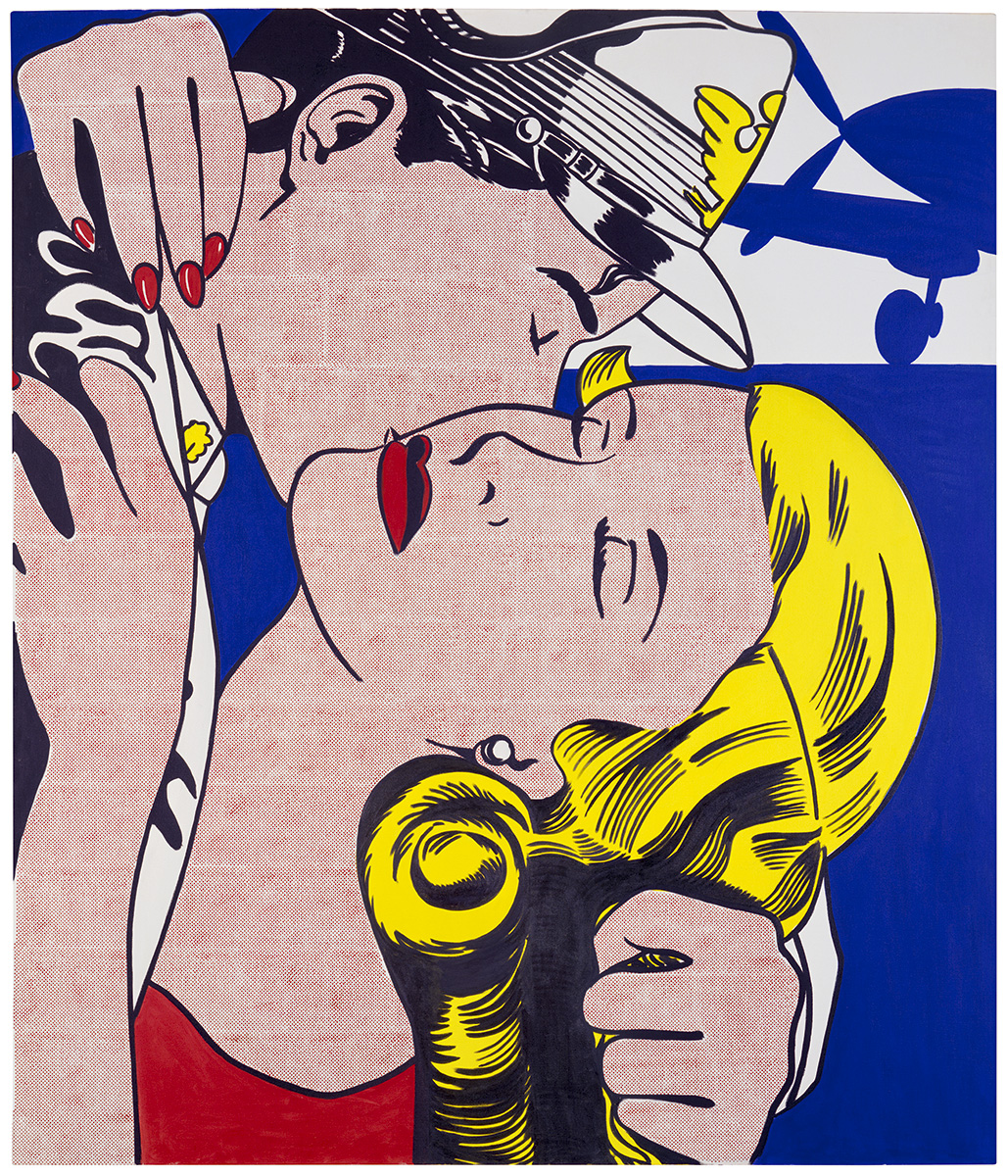
One of the retrospective’s most impressive feats is reuniting, for the first time, all eight of the works that were in the artist’s landmark 1962 Pop debut at Leo Castelli Gallery, which included 1961’s iconic The Kiss. Also in that show were pictures of a washing machine, a turkey and a refrigerator — mundane subjects that, when seen through Lichtenstein’s eyes, are transformed.
Onli says she “grew up with and loved” Lichtenstein’s work from an early age. Now in her 40s, as is Da Corte, she is eager to see how they strike younger audiences, especially in the context of today’s technology. “It’ll be exciting to see what new generations think,” she says.

