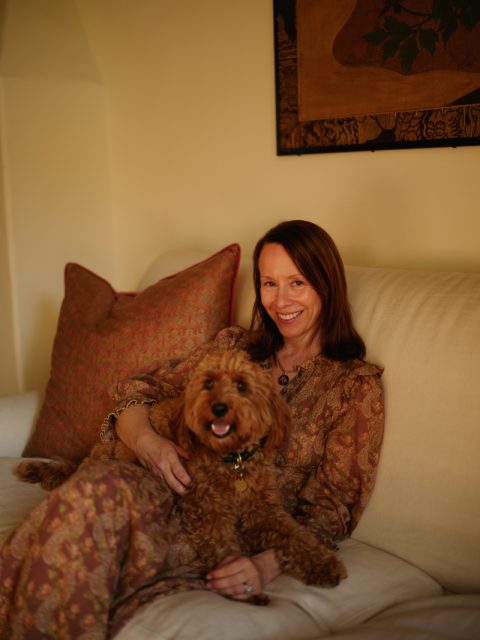
May 31, 2026By the time Sarah Shetter started working on a fourth home for a married pair of high-profile Hollywood writers and producers — among her most loyal interior design clients — she and the couple had developed the sort of easy rapport and aesthetic shorthand that make collaboration a cinch.
“I think we had two meetings with them, and then we did the whole house,” recalls the Los Angeles–based Shetter, who met the husband and wife nearly a decade ago through friends of her television-writer husband’s. “They’re very busy people. They told me, ‘Just go with it.’ ”
That didn’t mean the couple were looking for a rinse-and-repeat rehash of the prior homes Shetter had done for them and their three young kids, in L.A.’s Hancock Park and New York as well as on the California Coast.
The clients wanted their newly purchased pastoral Vermont compound to be “more colorful, with more pattern, more art — just more,” Shetter says. “They wanted it to look and feel as if they had put it together over a long period of time.”
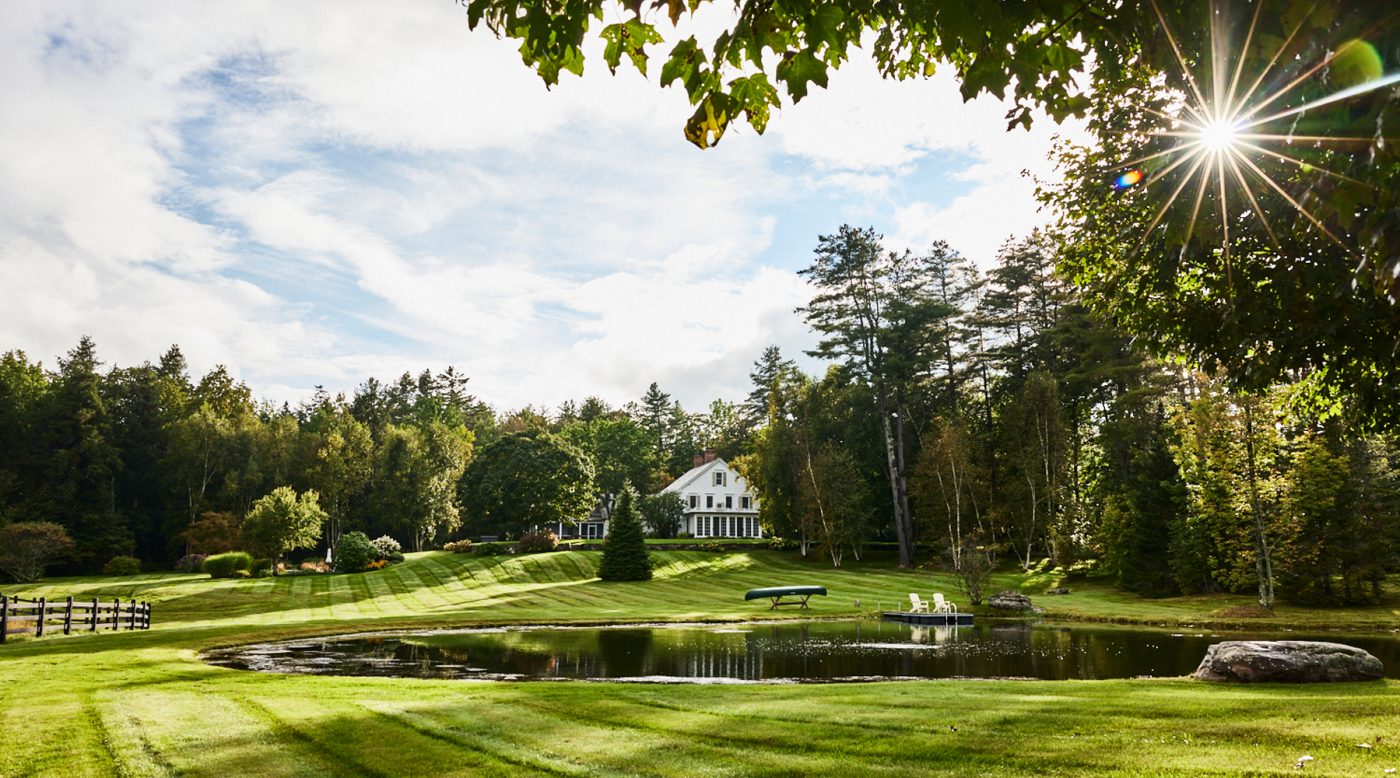
The evocative architecture of the American Colonial–style house went a long way toward establishing that narrative.
“It was made to appear vintage, and it’s actually quite believable,” says the designer, who collaboraetd closely on the project with her studio’s architect, Kate Christensen. “It looks like a traditional rambling clapboard family farmhouse. When we first saw it, we didn’t know the year it was finished, and we really thought it was old. But it’s actually from the nineteen nineties.” (In addition to the main residence, the property includes a guest house, a small writer’s cottage, a working barn and stables with a riding ring that can be used as a skating rink in the winter, as well as a pond, a swimming pool and a chicken coop.)
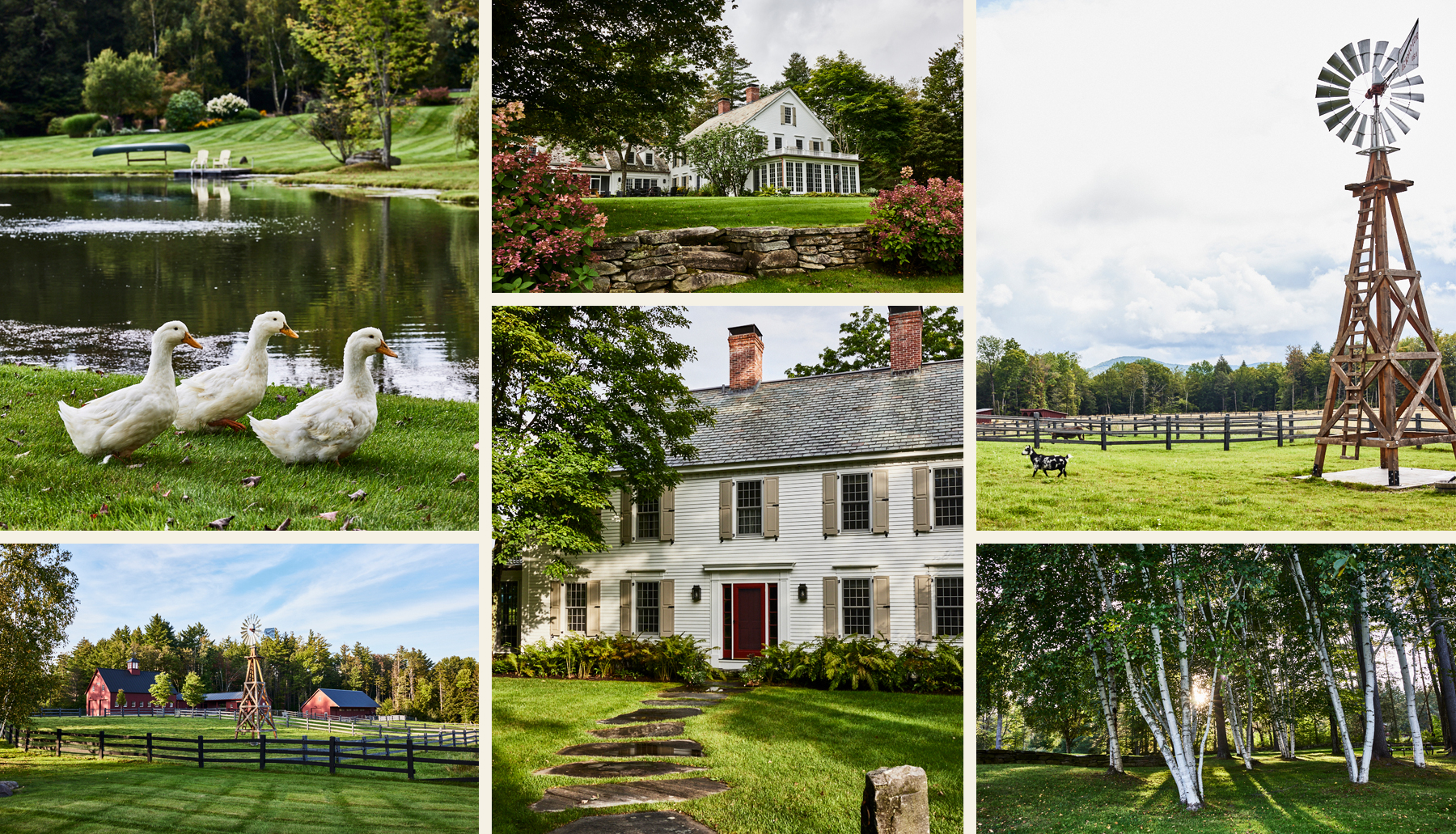
Despite being built all at once, the house feels like it was added onto over the years — “organically put together,” as Shetter puts it. She sought to create a similarly convincing temporal sleight of hand with her decor. Deploying textures, textiles and prints in a palette of muted earthy hues — along with an eclectic mix of antiques and vintage pieces from a variety of sources, including 1stDibs, auction houses and small local antiques shops — she crafted interiors that refuse to be time-stamped.
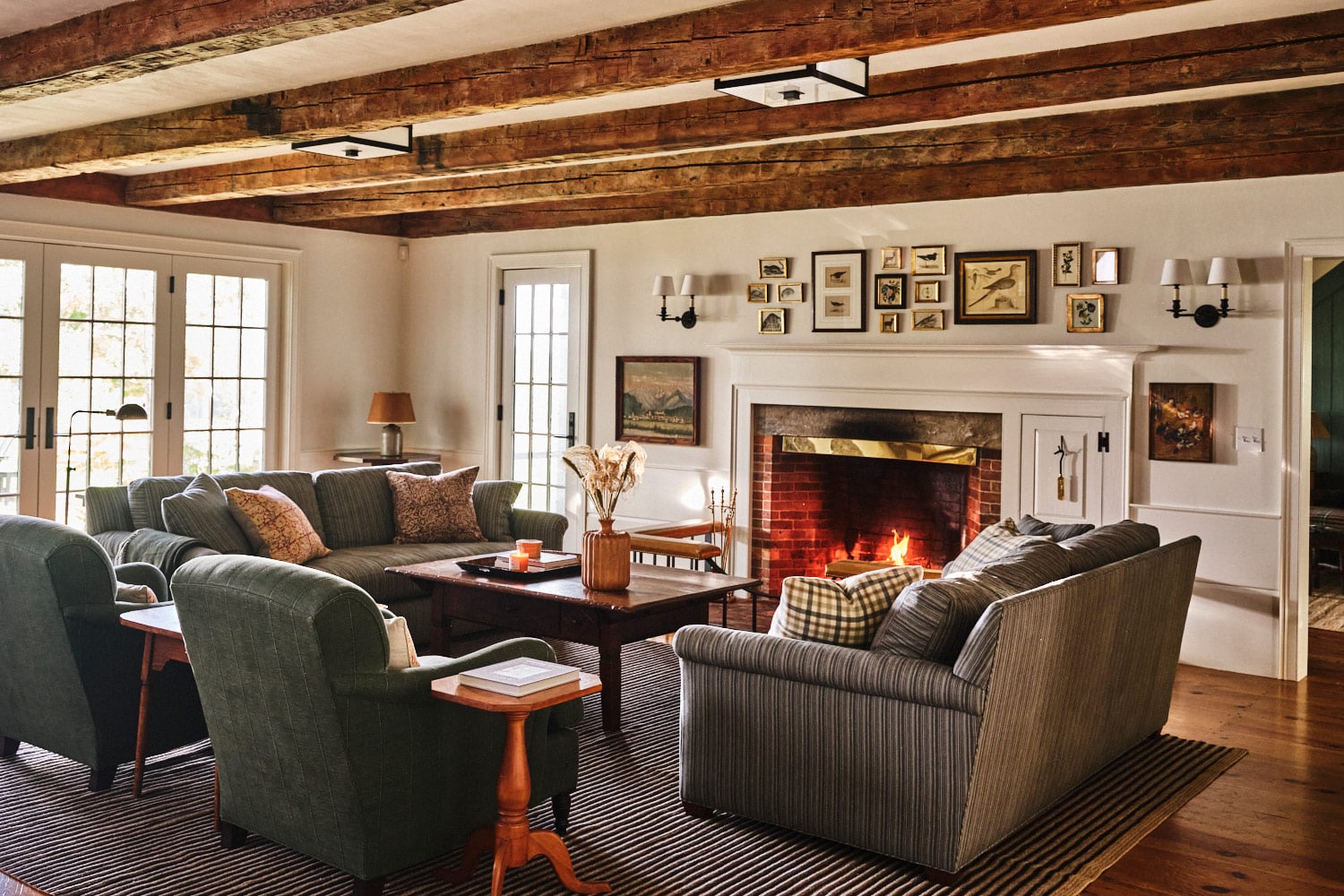
“They didn’t want to live in a home that felt like a grandmother’s cottage,” Shetter says. “A huge part of what keeps it from that is the fabrics and the prints and the colors. We used certain lively hues, the wallpaper feels fresh, and the fabrics have a lightness to them even though they’re in traditional prints.”
Local 1stDibs sellers proved fertile ground for Shetter. Working on a project located across the country from her studio, far from a city center and in an area where she’d never before had a commission, she found searching the site for dealers close to the property an enlightening, and efficient, way to shop.
“We didn’t have a ton of time, because they bought the house and wanted to be in pretty quickly,” she says, noting that the entire compound was finished in about eight months. “We weren’t going to be able to ship pieces from Paris and London. So, we found it all nearby.”
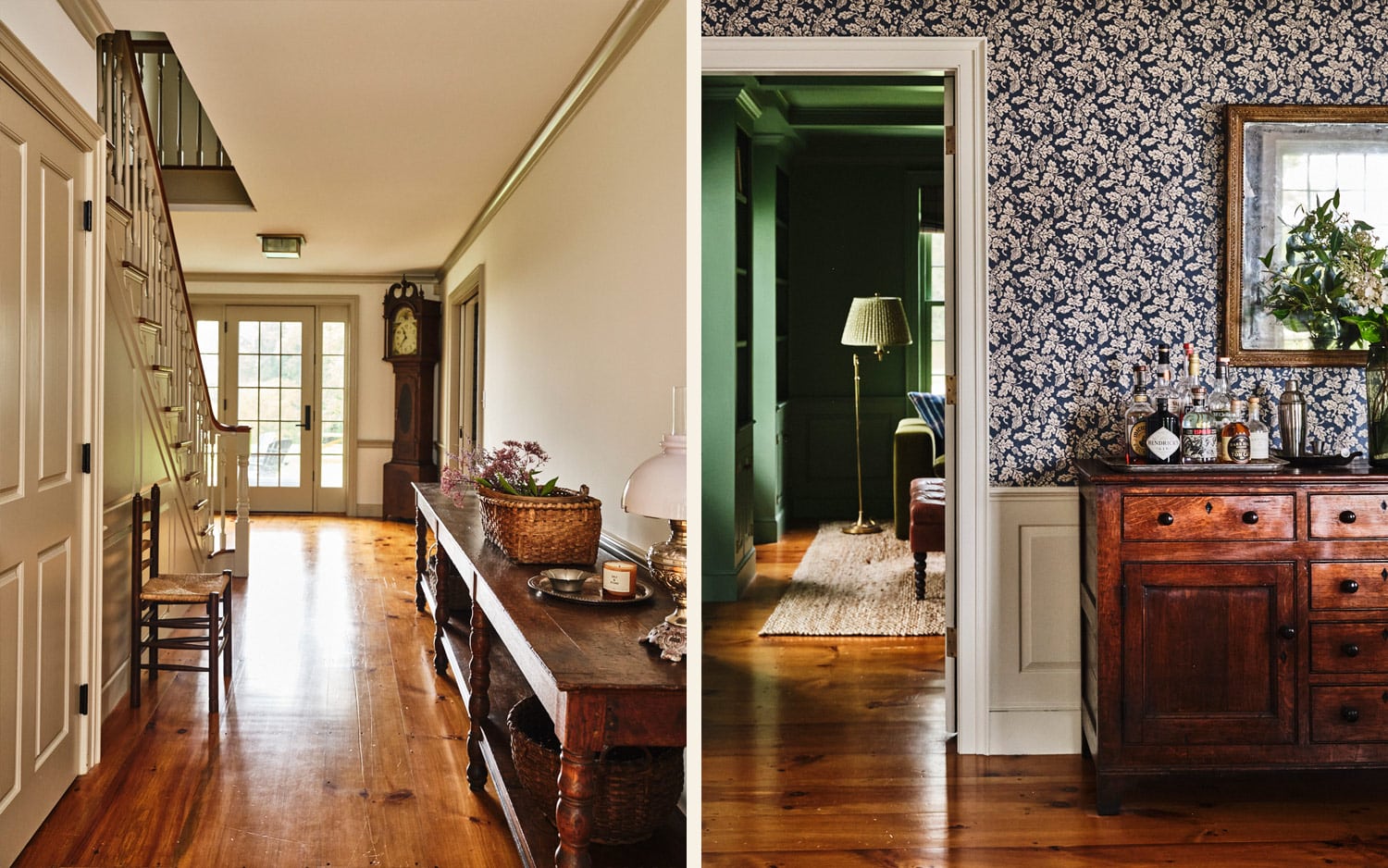
One of her fabulous 1stDibs finds greets visitors almost as soon as they enter the house, in the stair hall: a long, turned-leg draper’s table, often stacked with vintage baskets and family photos. The piece signals that this is a home that “feels really lived in,” Shetter says.
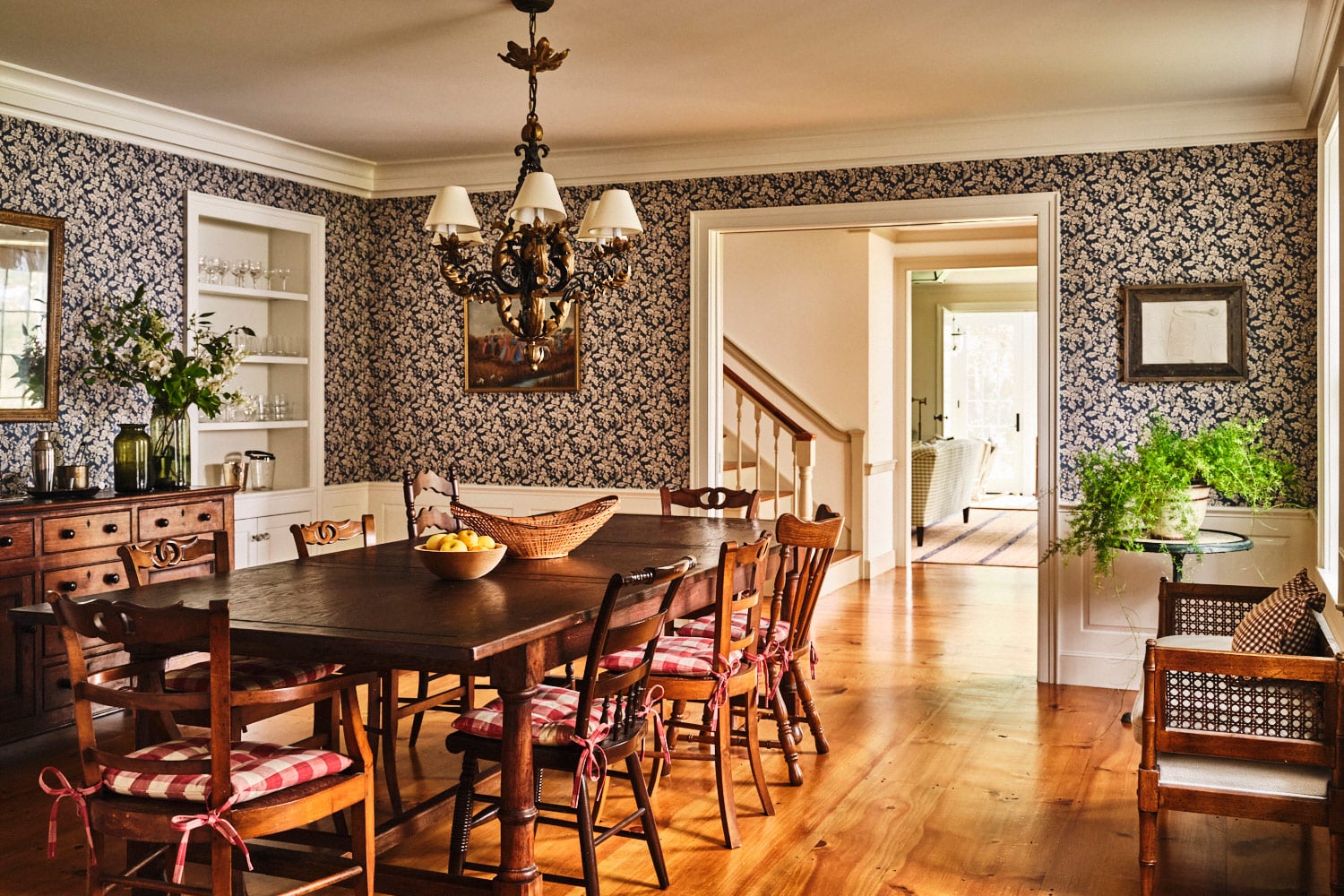
The dining room, wrapped in a blue-and-cream oak-leaf-patterned Robert Kime wallpaper, offers other 1stDibs gems, among them a Rococo-style gilt-iron chandelier, which overlooks a 19th-century English oak dresser that Shetter found at Judy Frankel Antiques and repurposed as a sideboard and bar. In front of this is a nine-foot-long Scottish table, also from 1stDibs, which she surrounded with a mix-and-match assortment of antique seats — “sourced from all over” — including 19th-century Swedish dining chairs with gingham cushions.
Shetter selected the table not only for its style but because it seemed indestructible. “Who cares if it gets messed up?” she asks rhetorically, noting that it already wears decades of wear and tear lightly. “It’s only going to look better and better.
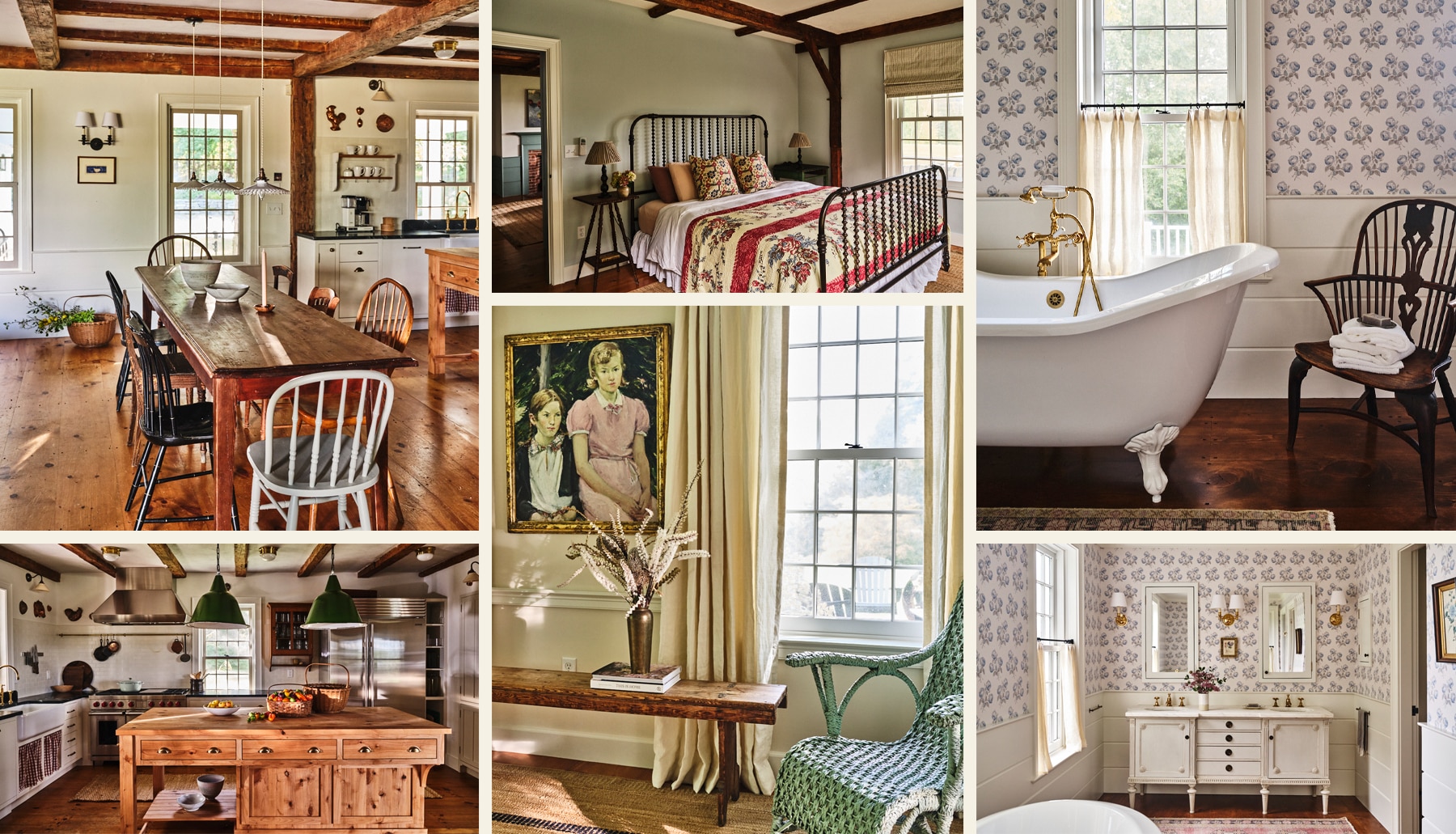
“That was our idea for the whole house,” she continues. “What are the materials that can feel durable? We wanted people to feel like they can really live in the house. There are dogs running around. There are kids. There’s food. The clients aren’t precious about those sorts of things and don’t want to live in a house where they’re reminding people to behave a certain way. So, when we were finding pieces, we were looking for ones that fit that lifestyle.”
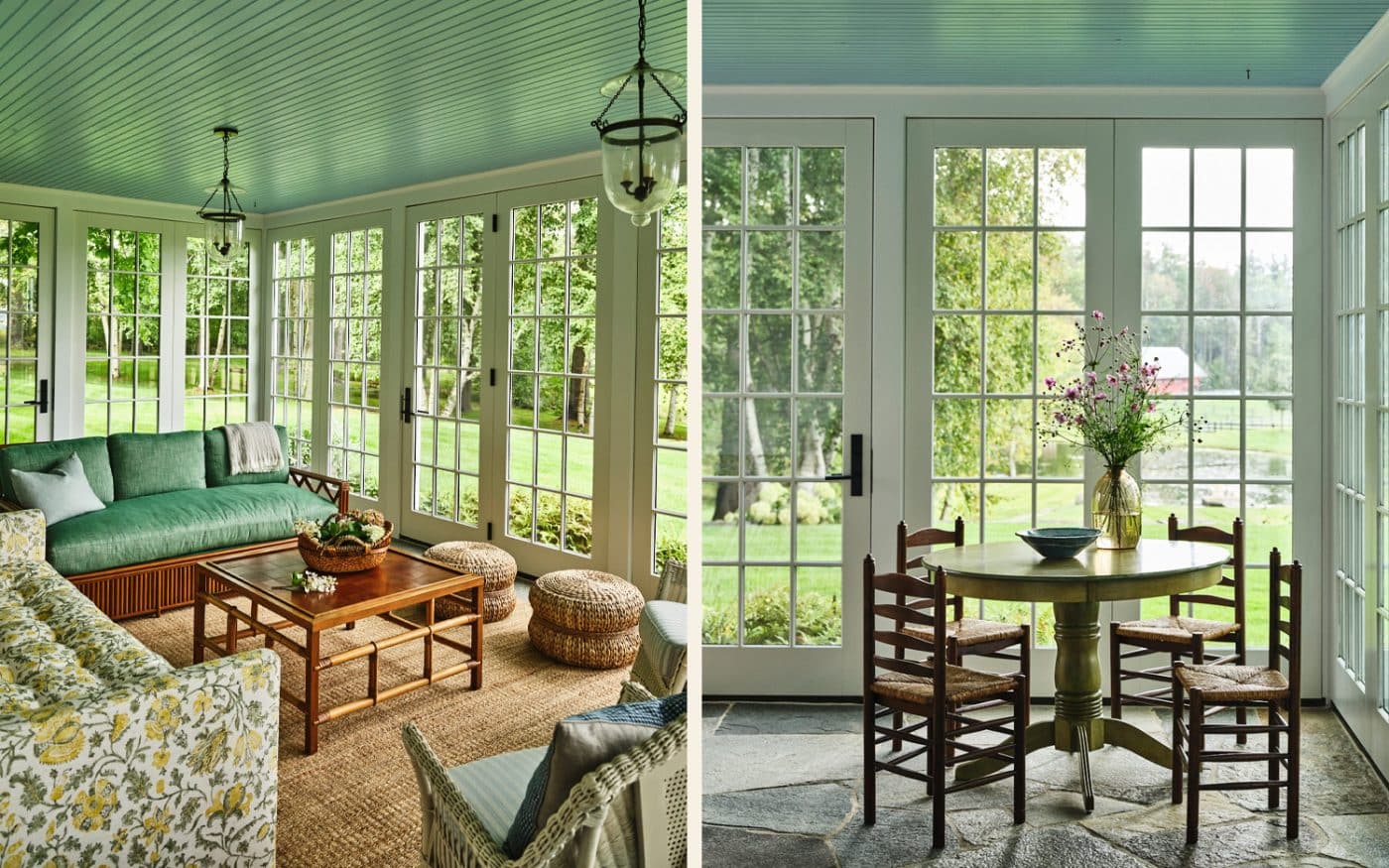
Not that form was ever sacrificed for function. Shetter managed to marry the two seamlessly, and most definitely successfully. In the sunroom, for example, she deployed chic shades of citron and green to stylishly catapult the collection of humble wicker seating and tables — all antiques found on 1stDibs —from the past into the present.
Here, as throughout the house, she removed recessed lighting, providing illumination instead with flush-mount fixtures and table lamps. “That made a huge difference, just the way it was lit,” she says. “By day, the sun pours in, and at night, it sort of glows.”
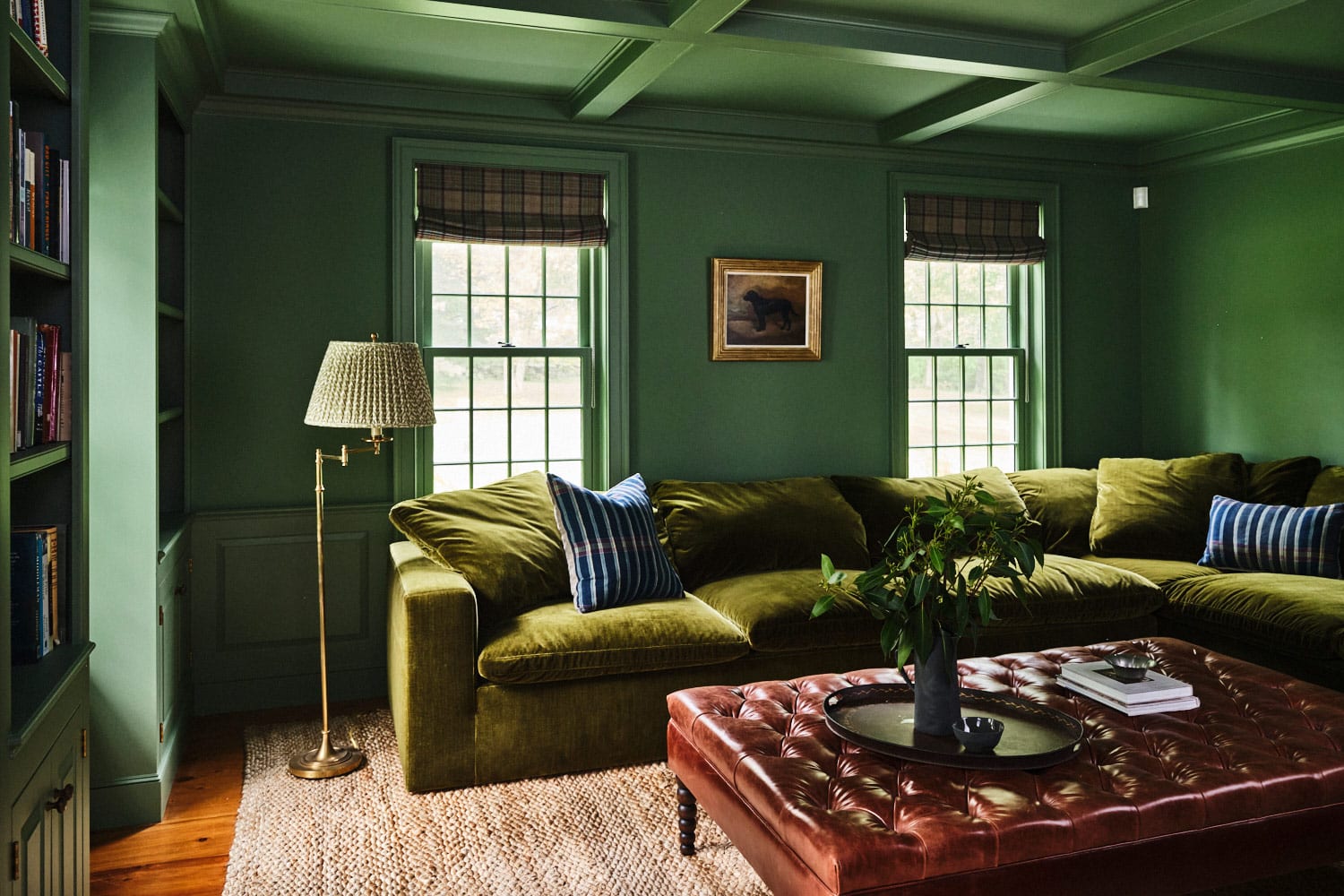
Shetter turned the former library — whose stained-wood paneling and built-in bookshelves read as more “cheesy” than sophisticated — into a cocoon of a sitting room. Drenched in green tones, it is outfitted with a velvet sectional Sofa and a button-tufted square leather ottoman. “This is now the main room to watch TV in,” she says.
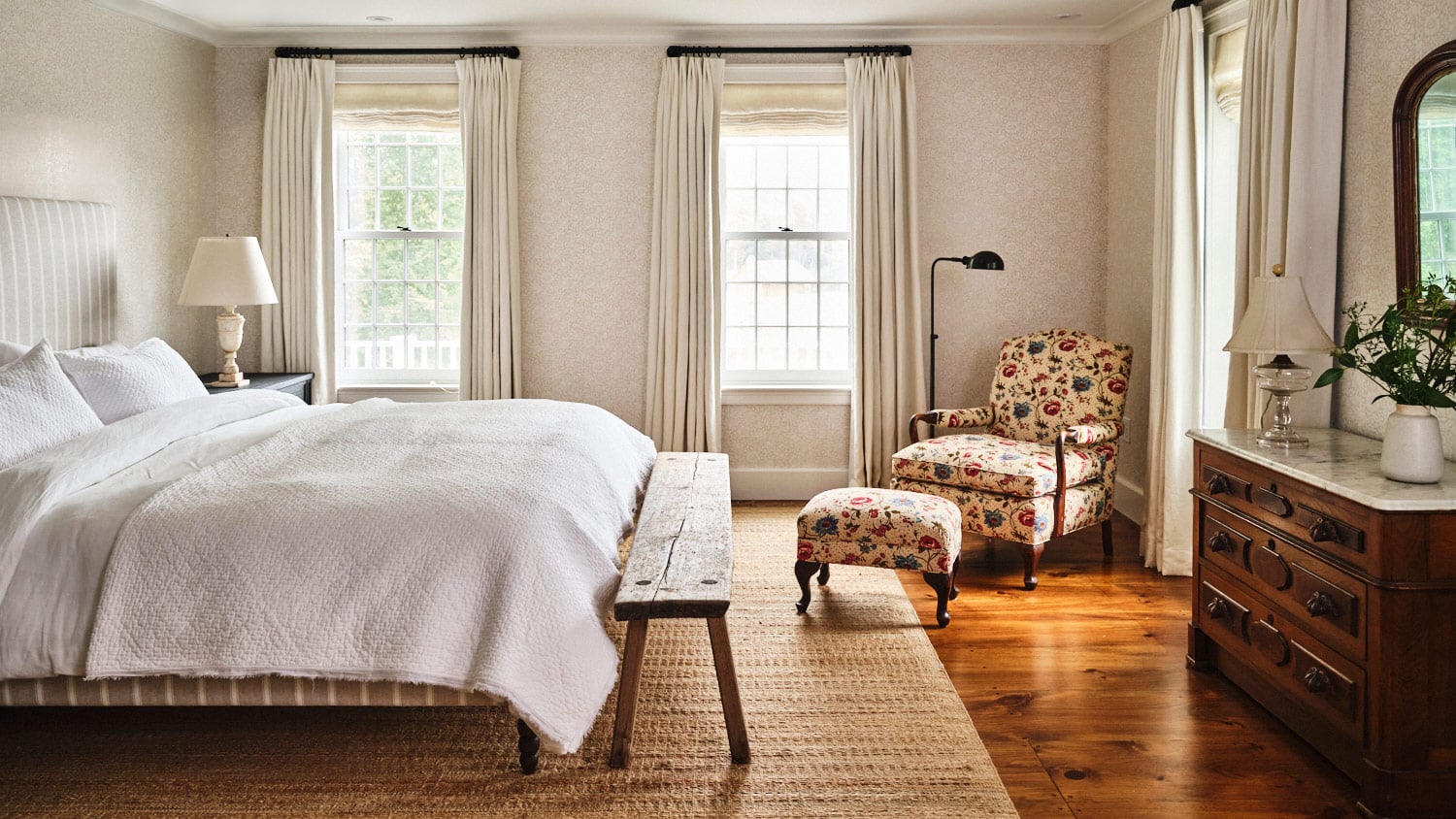
She clad the primary bedroom in a William Morris botanical, selecting a cream-and-ecru colorway that makes the paper read almost as textured. Set off against this backdrop are an antique armchair, recovered in a subtle Pierre Frey floral, and a marble-topped circa 1900 Victorian burl-walnut chest, both from 1stDibs.
The clients wanted the space to be “very bright and nice to wake up in,” says the designer. “It’s also probably one of the least colorful spaces in the house. They asked for it to be a little more subdued, quieter, simpler, as many people do for their own bedroom.”
The commitment to meet — and exceed — requests like this is the driving force behind Shetter’s entire approach to design. “We really do make all these houses for the people who live in them,” she explains. “We don’t want them to walk in and say, ‘This feels like a Sarah Shetter project.’ We want it to feel like them. And this one absolutely does.”