Before embarking on a project, designers Elizabeth Bennett and Mallory Robins conduct what they call a “client DNA session.” During these, the duo performs a deep dive to determine everything from the homeowners’ favorite colors to “the things they’ve always wished for,” as Bennett puts it. “We really try to gain a common vernacular between our design studio and what the client wants the space to feel like.”
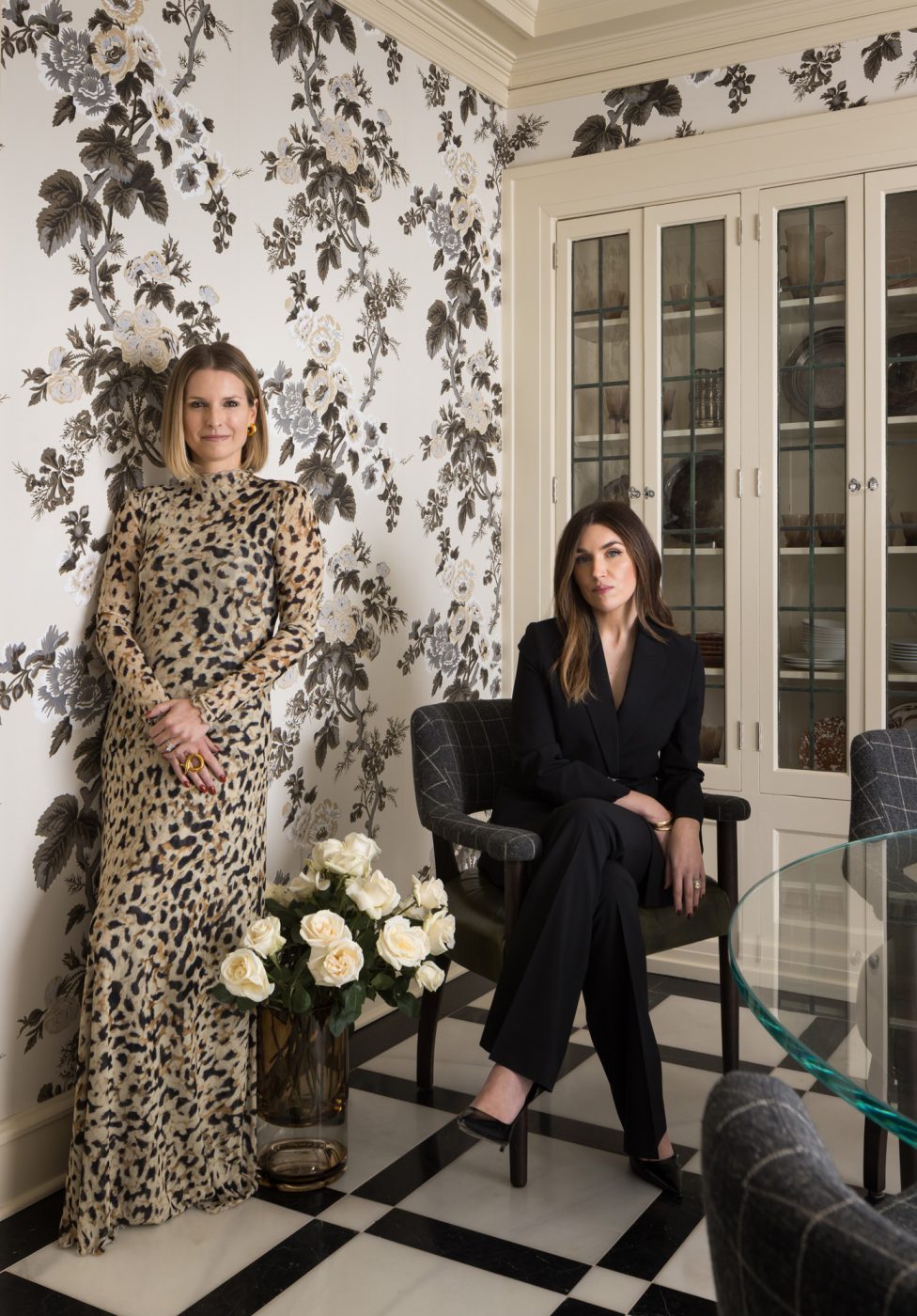
This collaborative process has been the modus operandi of their Kansas City, Missouri–based firm, Kobel + Co., since Robins founded it, in 2017, combining a lifelong love of design with skills honed in an earlier career in brand management and consulting. In 2019, Robins connected with Bennett at a school event for their children and asked her to join the firm, leaving her corporate role to indulge her longtime fondness for design. “We haven’t looked back since,” Robins says.
As the designers began reimagining the recently built Midwestern contemporary-Craftsman hybrid seen here, a guiding principle emerged early on in the DNA session: The house’s interiors needed to reflect the client’s sunny, effervescent personality. “She’s bubbly, sassy and fun,” Bennett says of the client, who needed an environment that would not only match her vivacity but also accommodate her love of entertaining and the varying needs of her husband and children.
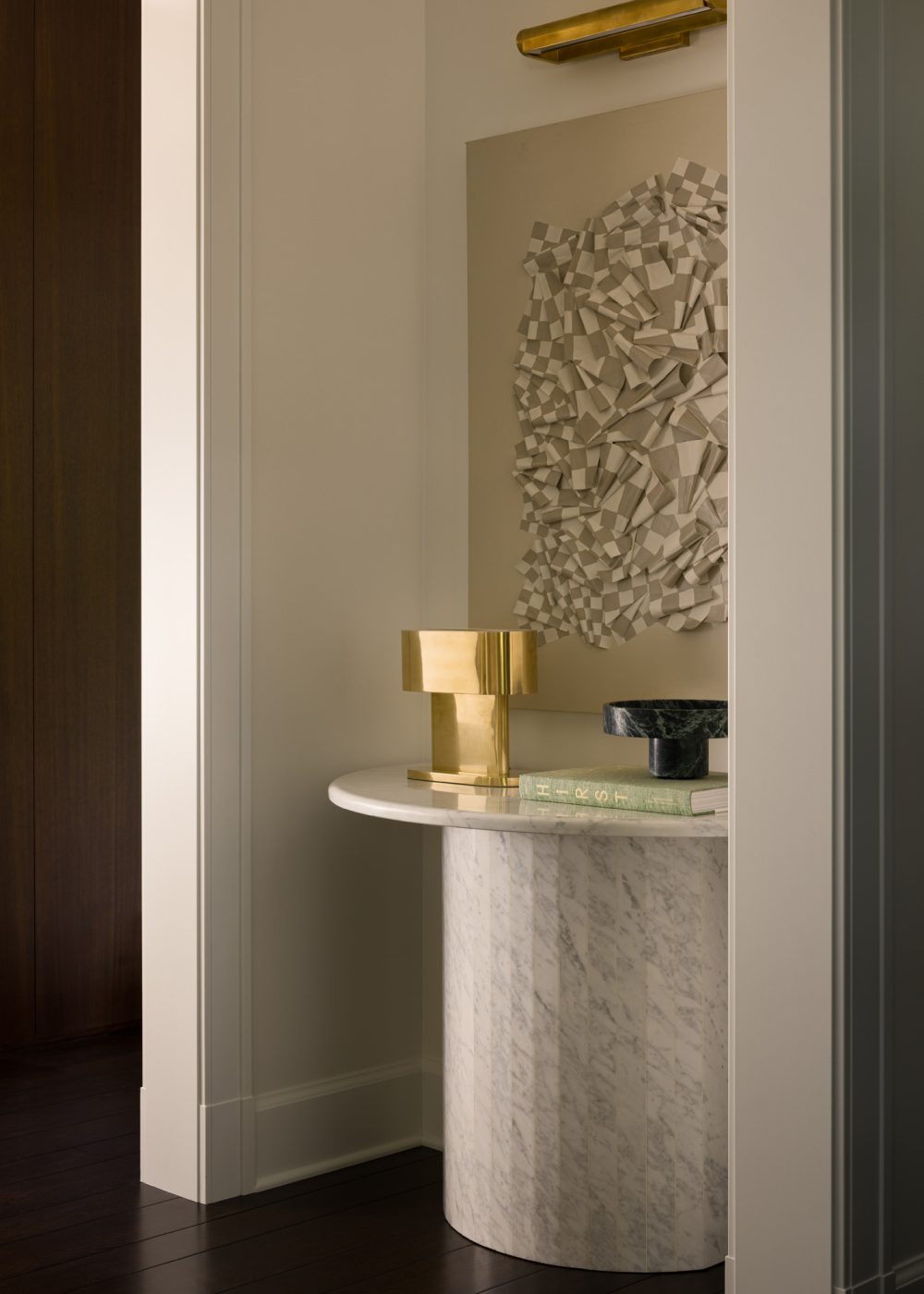
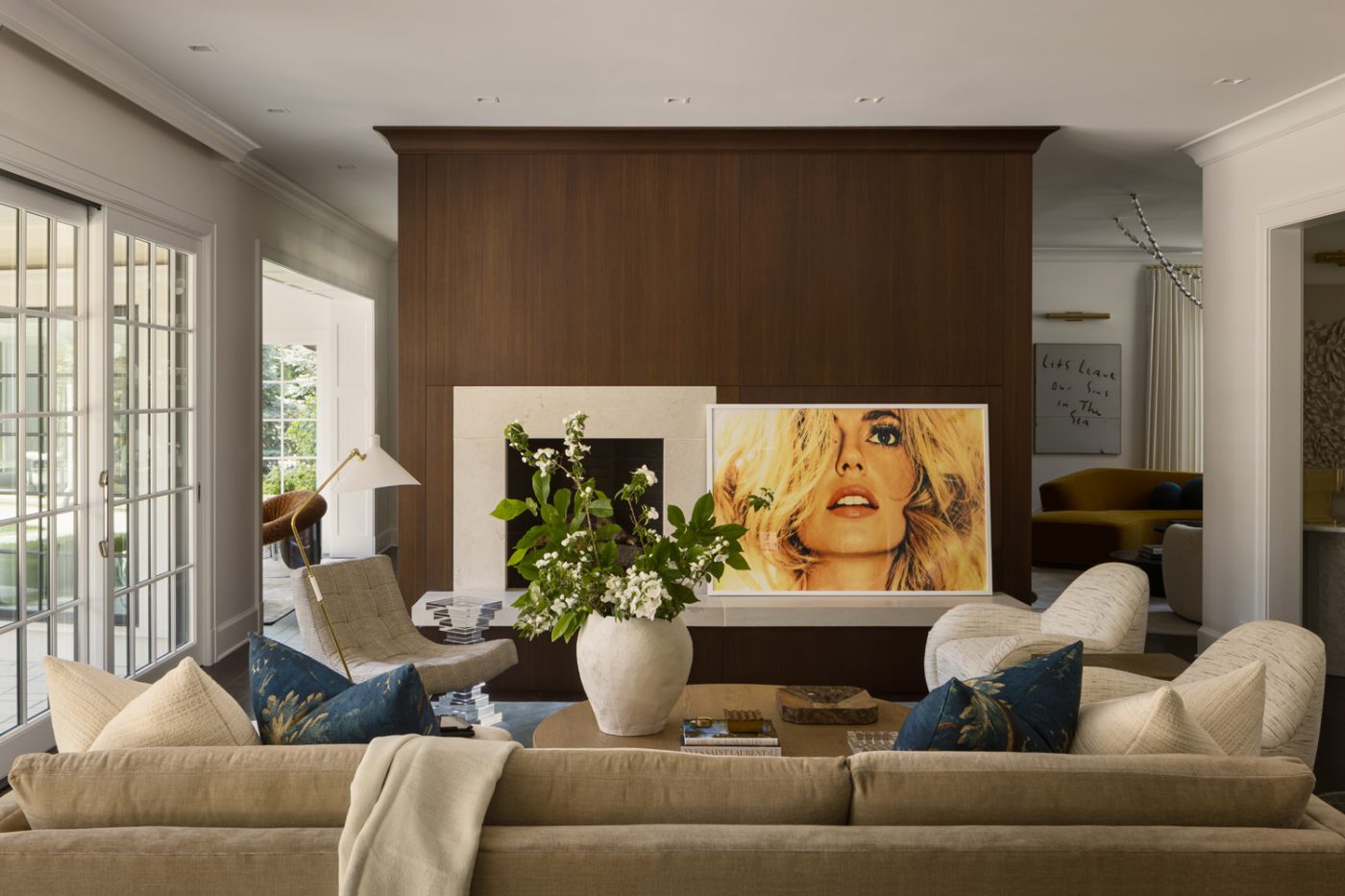
“When we first walked into this house, it felt cold and angular and not very joy filled,” Bennett says. It also presented an obstacle — not a metaphorical one, but an actual architectural one: a chunky, dark-wood cube, housing two fireplaces and the powder room, that was visible from all the main floor’s public rooms.
“We brought in playfulness, with entertaining spaces that were complementary to the cube and to the harsher lines of the architecture but that were sculptural, tactile and soulful and spoke to her and her family.”
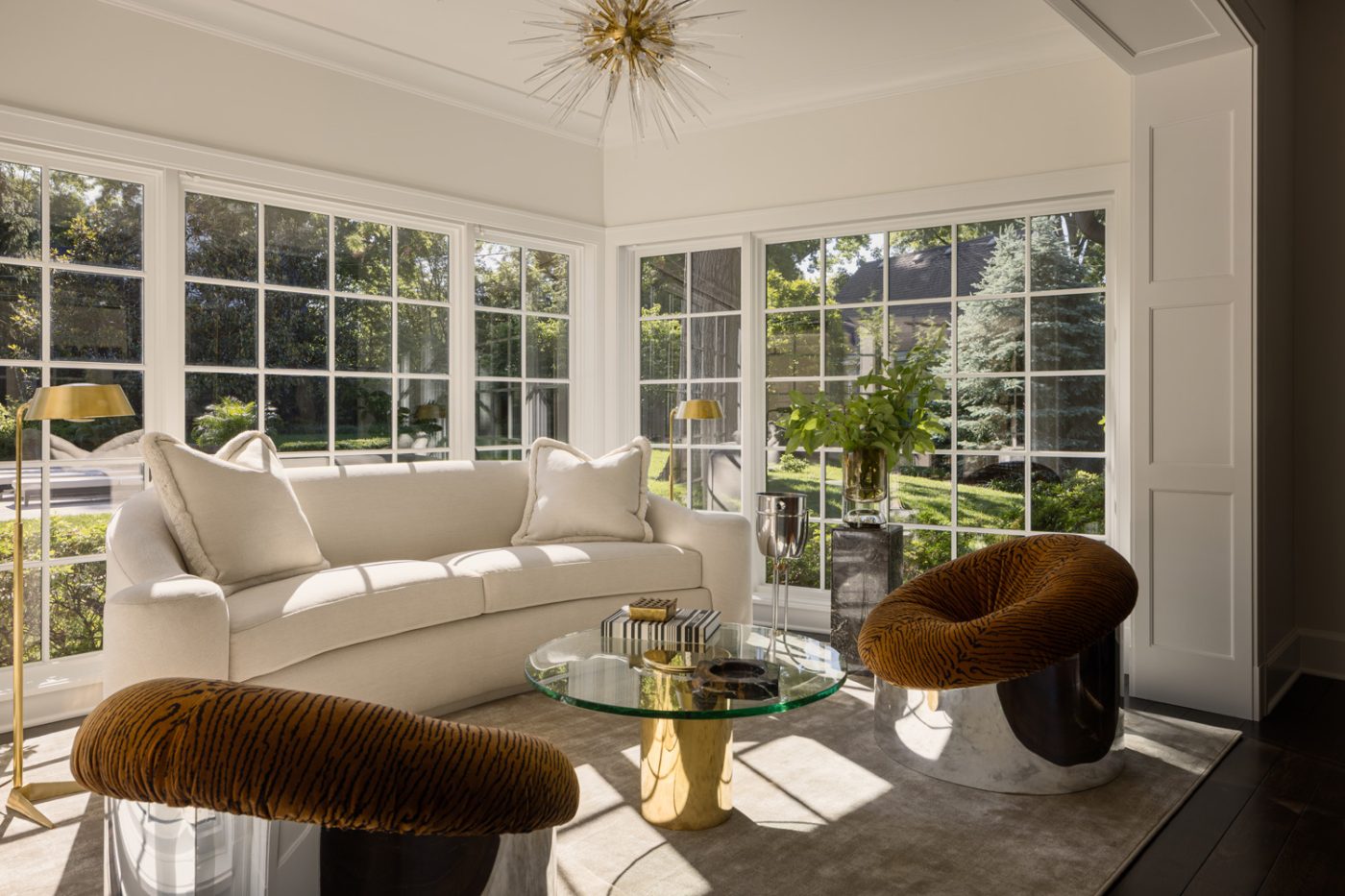
Bennett and Robins tempered the blocky structure’s solidity by adding a wet bar on the side facing the sunroom, which they redesigned as the client’s personal sitting room. “I think this was truly the sunniest space in the home, with window walls all along the back,” Robins says, noting how well it matched the client’s personality. “It was the room she was most excited about.”
It’s outfitted with two showstoppers: a pair of 1960s chrome Pod chairs by Adrian Pearsall, covered in a tiger-stripe velvet from Dedar. “She’s a blast,” Bennett says of the client. “So, when we showed her these chairs and the tiger velvet, she was like, ‘Let’s do it!’ ” The furnishings include other vintage finds, among them a glass-topped coffee table with a gold base and a 1994 Steve Chase for Martin Brattrud sofa.
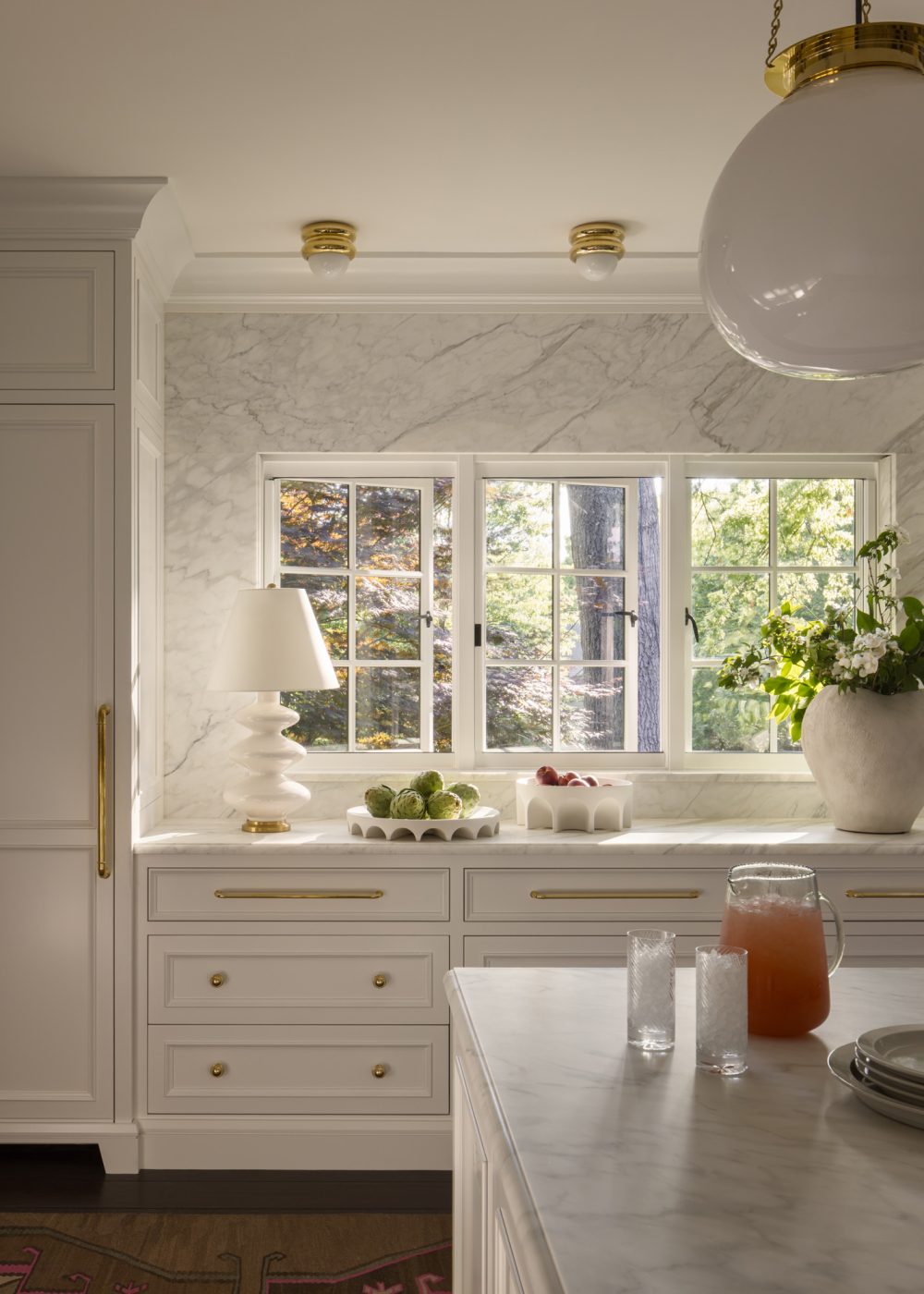
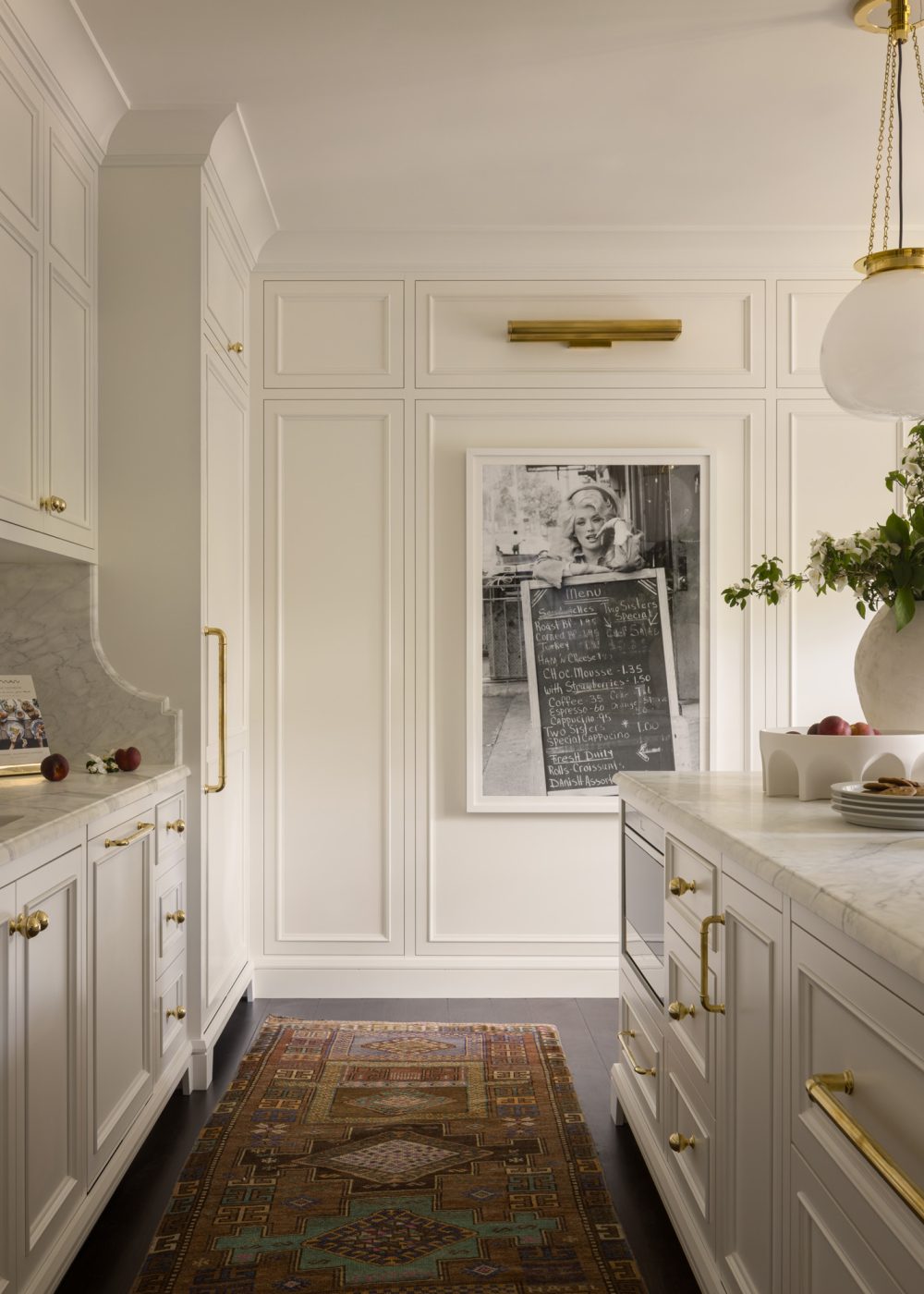
The designers opened the kitchen to the family room and reworked it to serve any occasion, from large family gatherings to intimate cocktail parties. This created an uninterrupted sight line to the cube, which they balanced by introducing what Bennett describes as a “thick and plinthy” walnut island, lightened by a six-inch-thick white-marble top. A thinner white-marble slab tops another island, which functions as a dining table. Pleated Urban Electric Co. pendants hover above, “to add softness,” Bennett says.
Tucked into the more casual back kitchen, just beyond, is a special moment the designers provided for the client: an enlargement of a vintage black-and-white David Gahr photo of Dolly Parton, one of her favorite personalities, who hails from the neighboring state of Tennessee.
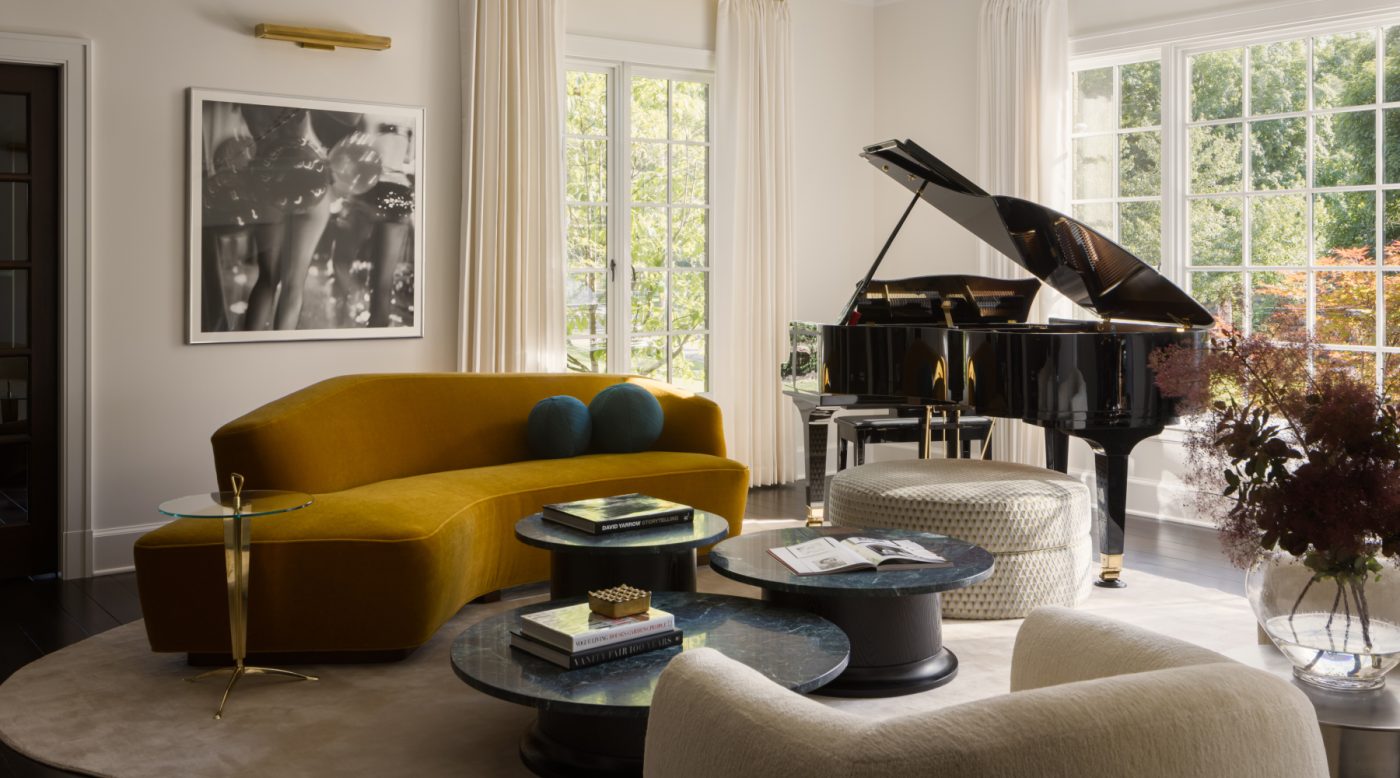
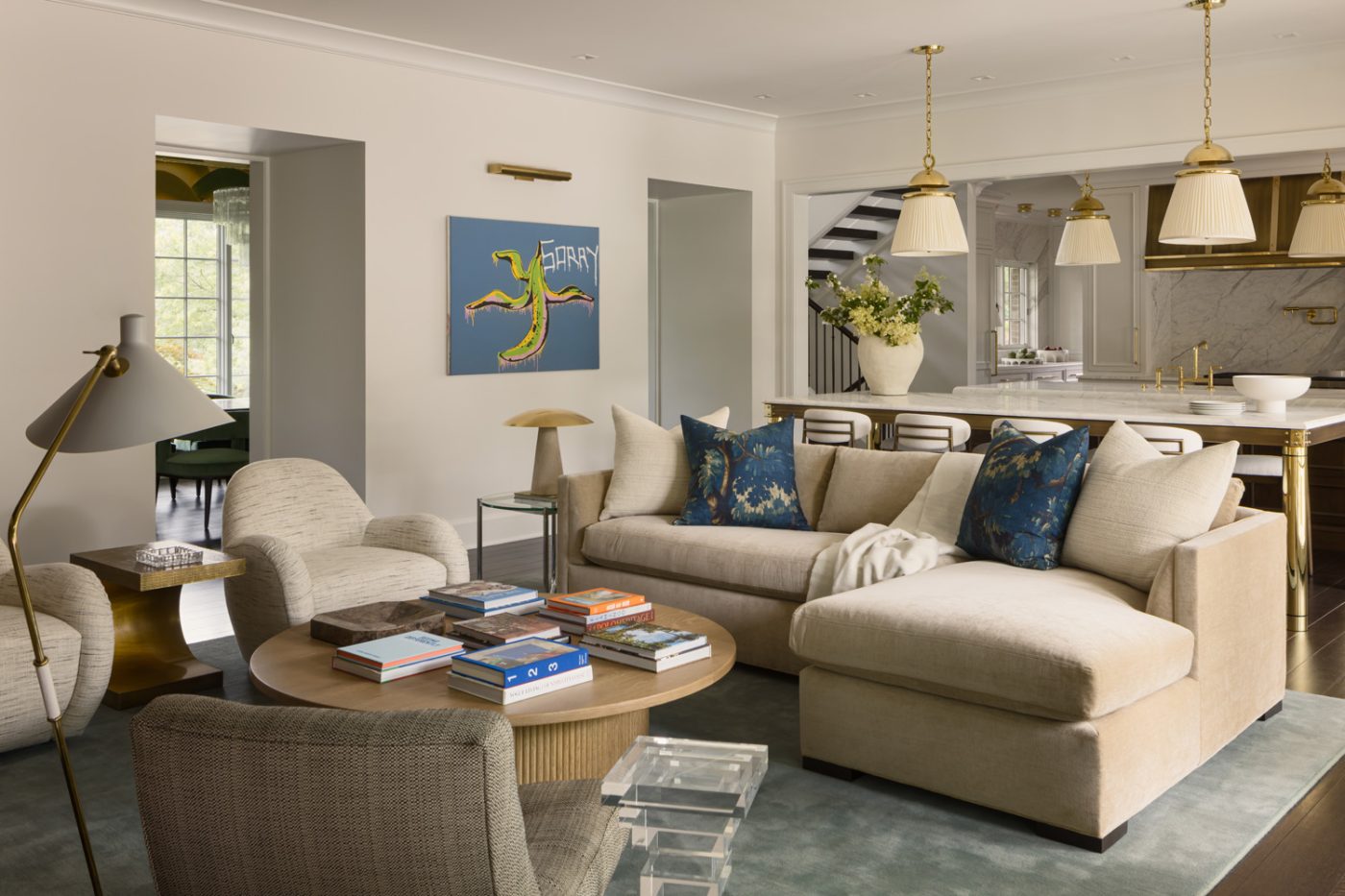
Neutrals dominate the family room, save for the art: Denis Ouch’s yellow-and-blue Warhol’s Eaten Banana and the golden-hued portrait Diora in the Doorway, by photographer Stephanie Vovas, which Bennett likens to a 1970s film still. Two pieces that would feel at home in that movie — a mushroom-like lamp and a 1970s chrome-and-glass side table — converse with a custom sectional and pair of Lee Industries swivel chairs.
Because the home’s architecture is “rigid and linear,” Robins says, “the bulk of the furniture is curved, with softer, more sensual shapes.” In the living room, a custom sofa celebrates both geometries, with an angled back rising above a curved seat. Its dark-mustard mohair upholstery, from Casamance, is a nod to the client’s fondness for yellow.
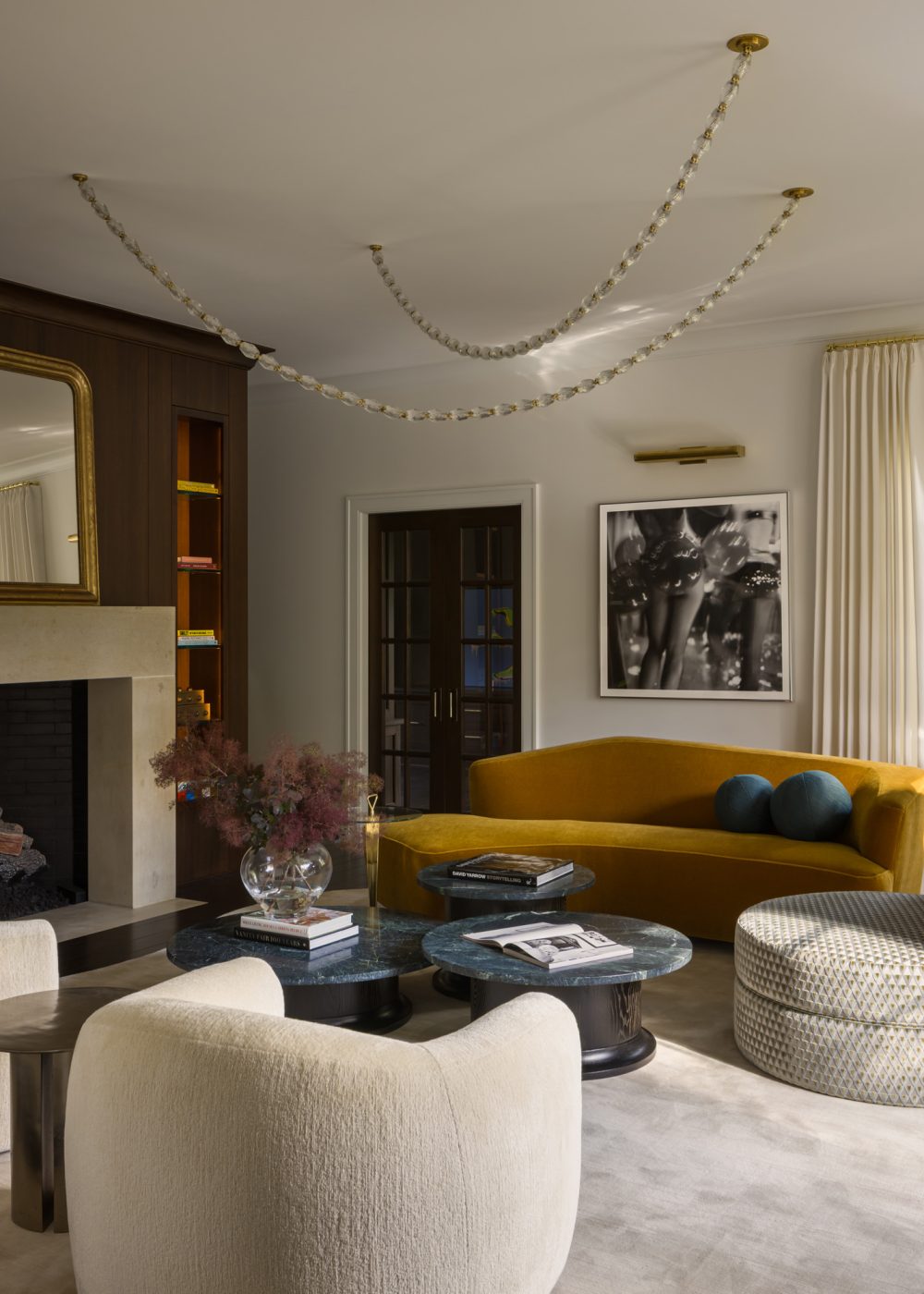
Round tables crafted by a Kansas City–based maker join a circa 1850 French gilded mirror from Olivier Fleury Antiques, while Visual Comfort faceted-crystal chandeliers hang from the ceiling like strands of opera beads. The room, says Bennett, is “a swanky space to entertain in,” and the vintage martini table perched between a pair of lounge chairs “is like the cherry on top.”
The client’s beloved yellow appears again in the dining room, in the shimmering gold of a hand-painted de Gournay wallpaper depicting Japan’s Kiso Mountains. “It just glows,” Bennett says.
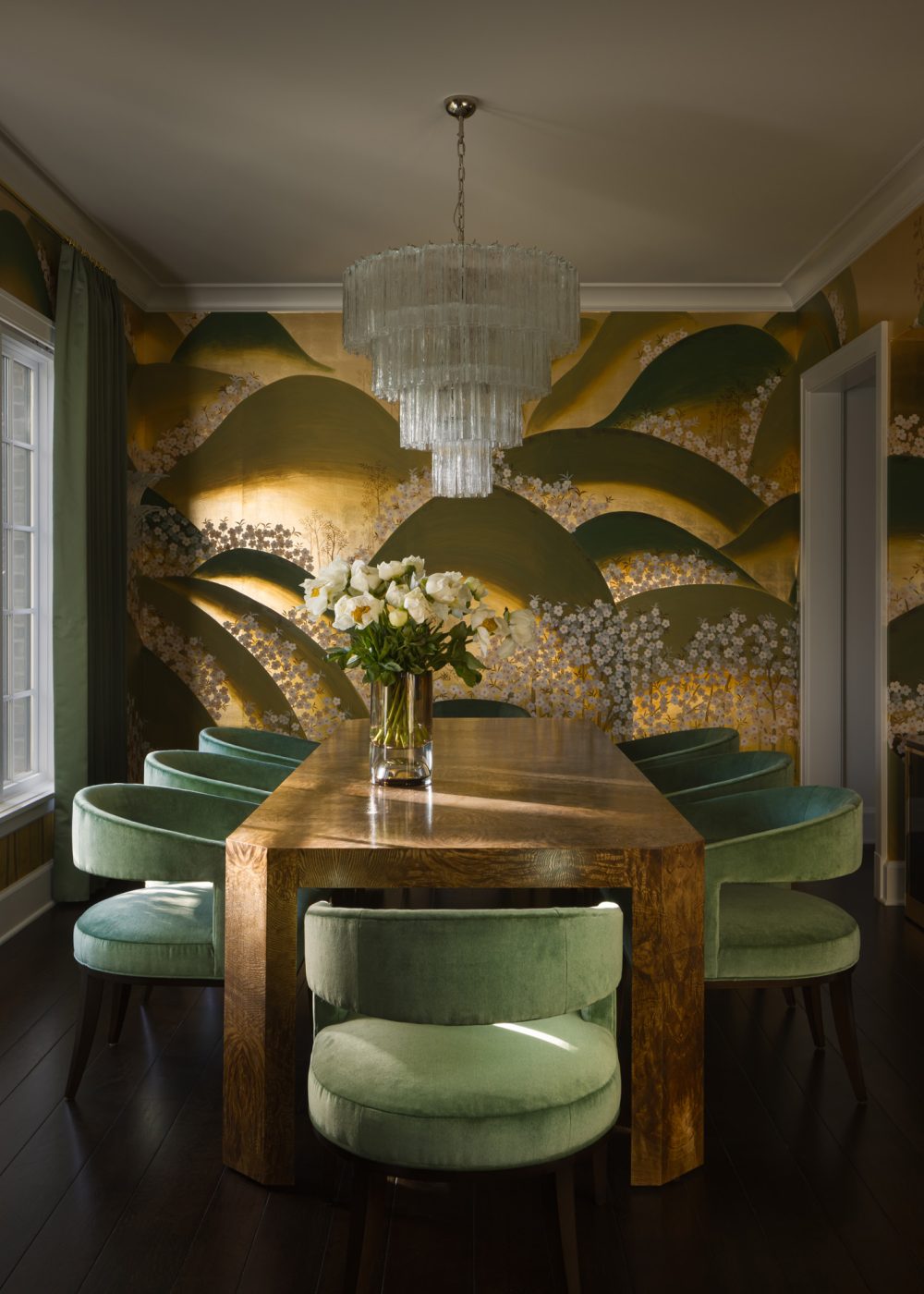
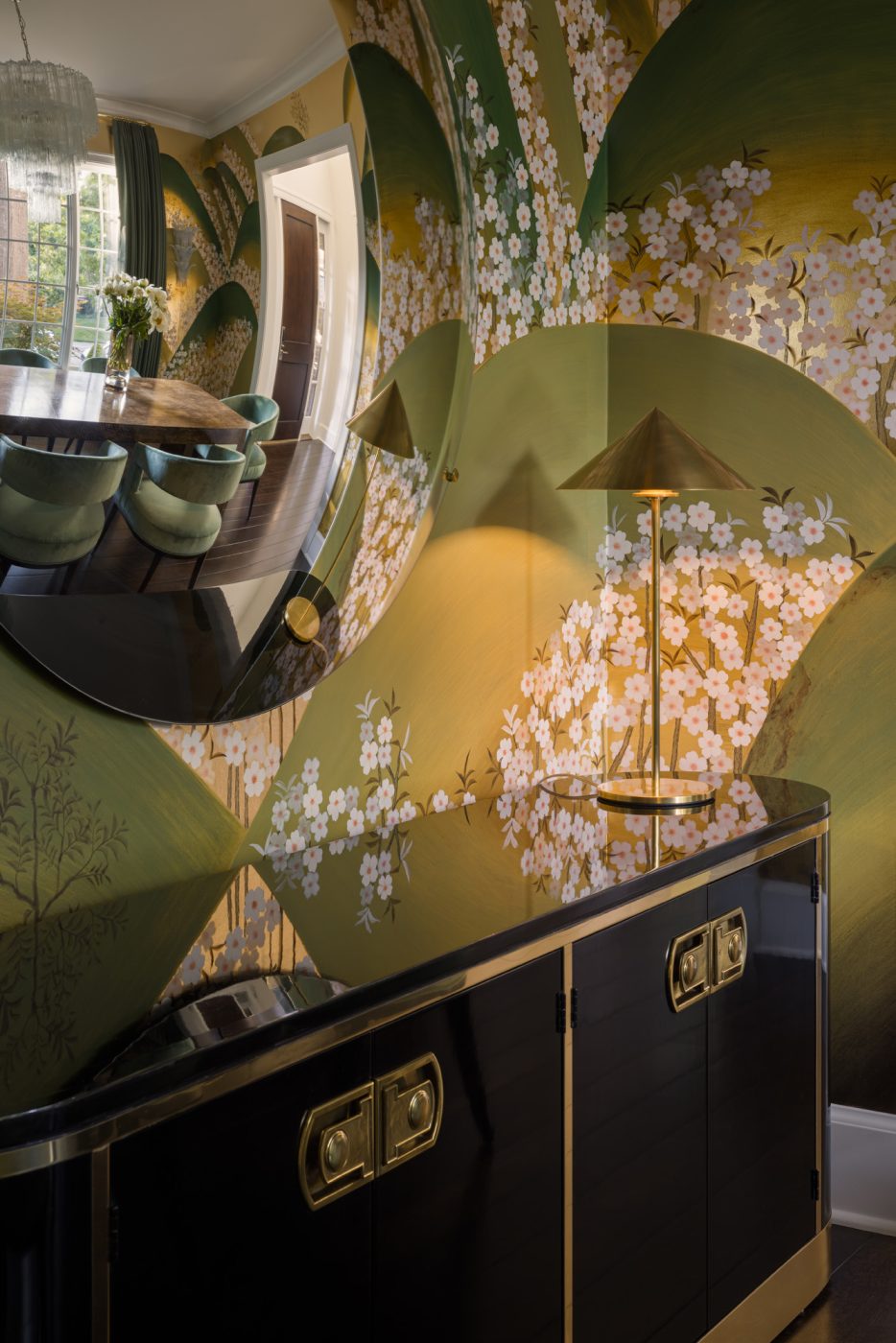
More gold gleams in the hardware of a glossy black 1970s Mastercraft sideboard and in table lamps with cone-shaped shades. The greens in the wallpaper are echoed in the jade-hued chair fabric. By a stroke of design kismet, the designer found on 1stDibs a Murano-glass chandelier with the faintest pistachio tint to complete the harmonious palette. “It saved the day,” Robins says.
“We were on the hunt for a perfect chandelier,” Bennett explains. “Crystal would have made it too sweet, and modern wasn’t speaking to the client. When we found the vintage Murano piece, it was just perfect. She fell in love with it.”
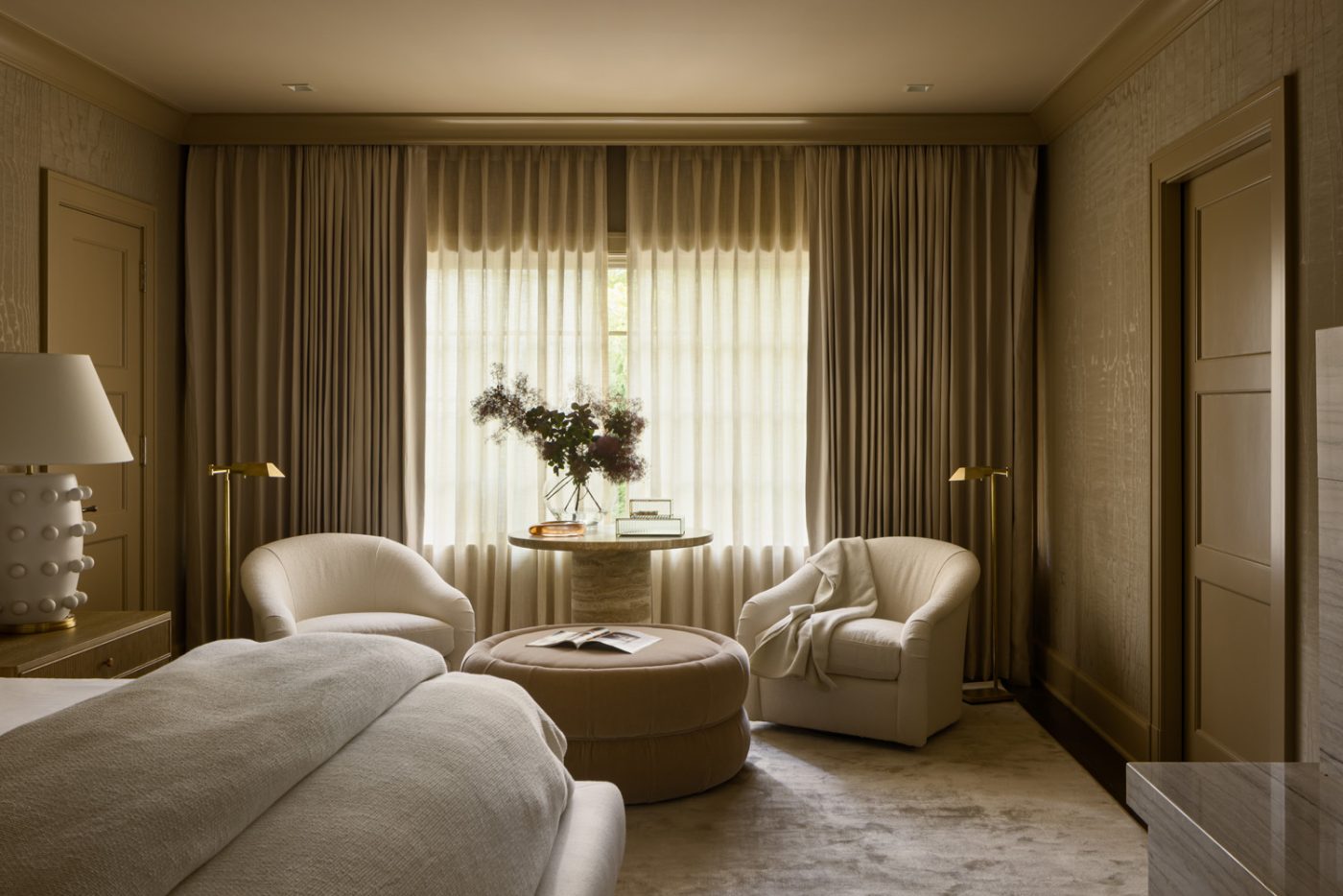
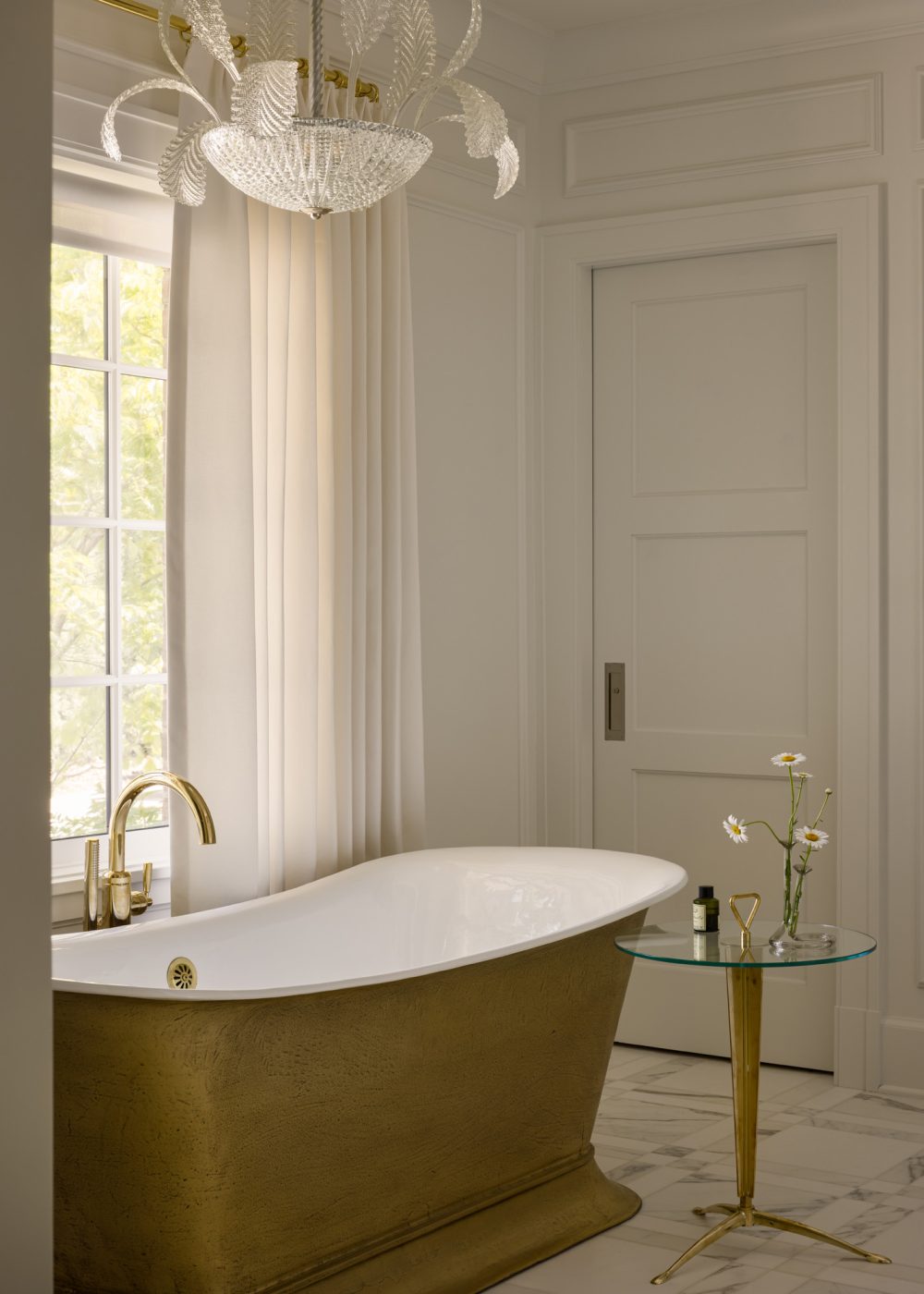
The designers mounted an English handmade, brass-framed, free-form mirror from 1stDibs in the hall leading to the primary suite. And in the suite’s bath, they hung another Murano chandelier, this one dating back to the 1940s and found at Carlos De La Puente Antiques. It dangles in front of a window over the soaking tub, enabling its glittering foliage motif to be appreciated from all angles. Like the Murano light in the dining room, it is a sublime variation on an elegant theme.
“The DNA process really helps us set that aesthetic vernacular,” Robins says. “It allows us to form spaces with individual identities, speaking back to that same cohesive DNA that we’ve set out for the house, so that when you walk into rooms they don’t feel like disparate spaces. There’s a throughline.”
Bennett agrees. “It’s like chapters in a book,” she says. “They’re all written in the same voice, but each chapter has a different mood and a different role to play in building that narrative. Each room can have a very different feeling, as long as we get those consistencies in the foundational pieces. We never want it to feel like you’ve walked into a different book.”