November 8, 2026What happens when you hand the talented architectural and interior designers Brittney Hart and Justin Capuco two vastly different residential commissions? You get two impeccably curated creations, distinct from each other but both grounded in the same approach — one that skillfully balances nostalgia and modernity, comfort and glamour.
The two projects in question were a stone country house with beamed ceilings that reads as rural France but is actually in suburban Bronxville, just north of New York City, and an apartment high up in Steinway Tower, a Midtown Manhattan supertall that incorporates a 1925 building at its base and offers views stretching miles.
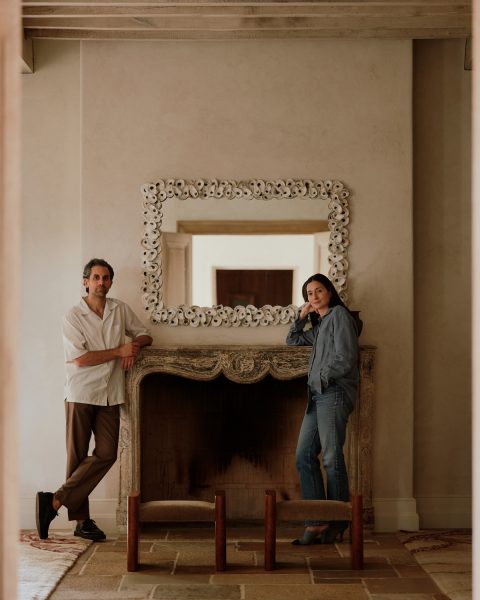
Hart and Capuco’s Chelsea-based studio, founded in 2015, is named Husband Wife. That accurately describes their marital status: They met in 2007 while working for architectural firms on opposite coasts and, after dating long distance, wed in 2010.
But more significantly, says Hart, the name alludes to “the balance and tension and conversation” in marriage — as well as in their smart, sophisticated interiors.
Husband Wife’s website characterizes their work as “evoking the casual elegance of Rohmerian cinema,” a reference to French New Wave director Eric Rohmer, remembered for films distinguished by their naturalistic, lived-in interiors, including My Night at Maud’s (1969), which was nominated for two Oscars, and Claire’s Knee (1970), nominated for a Golden Globe.
“We’re drawn to the way Rohmer frames living, how scenes unfold in structured spaces,” Capuco says. “When we design for our clients, we imagine how things are going to work for everyday life: if a kid jumps off the sofa, if there’s a stack of books here, if there’s an argument in this corner.”
Husband Wife is equally inspired by the director’s meticulous use of color, which has “an ethereal quality,” Capuco says. “If you look at our color samples isolated on a tray, there’s yellow, pink, purple, orange, tan — we’re not known for neutrals. But they’re washed-out versions of these colors, with a dreamlike quality.”
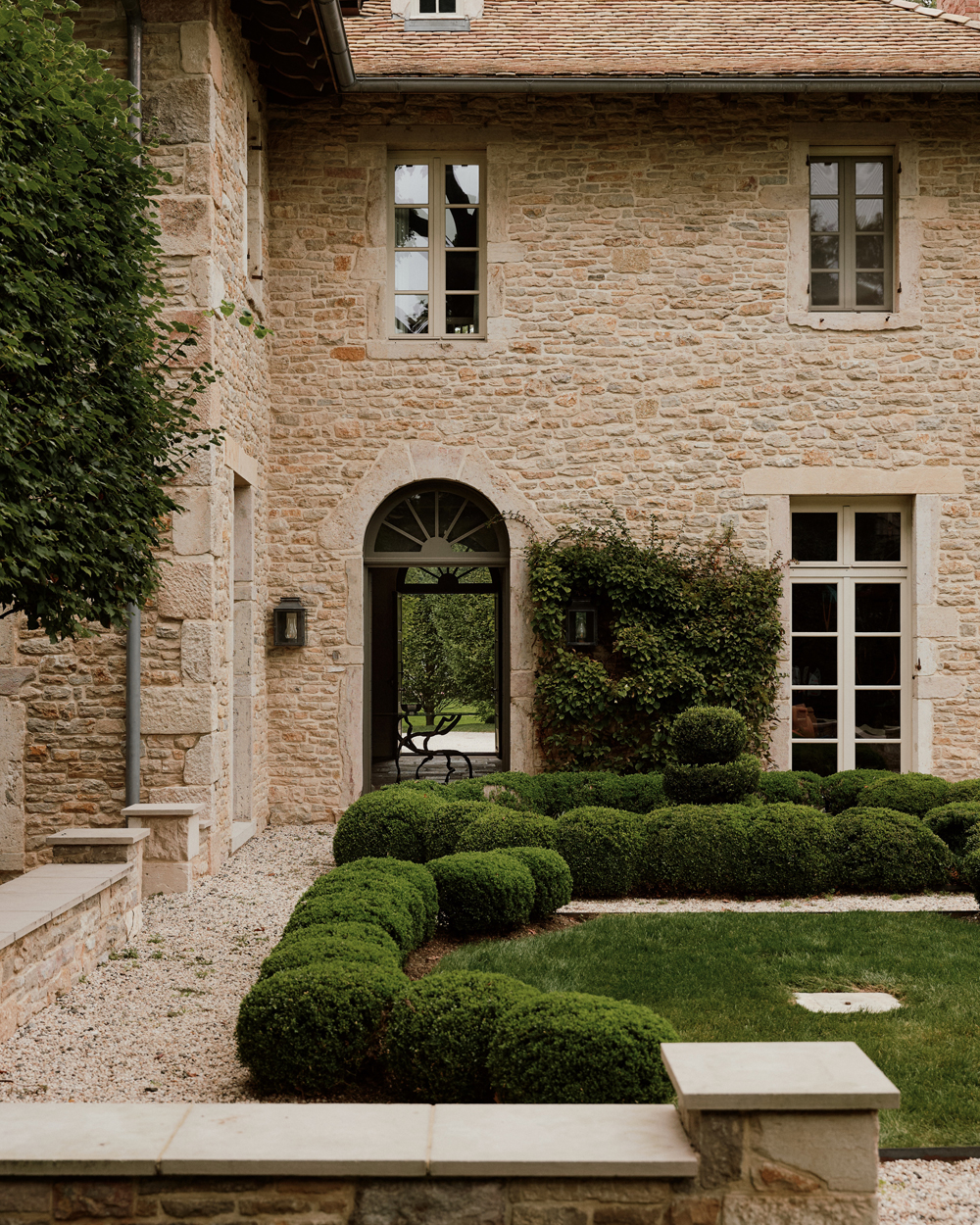
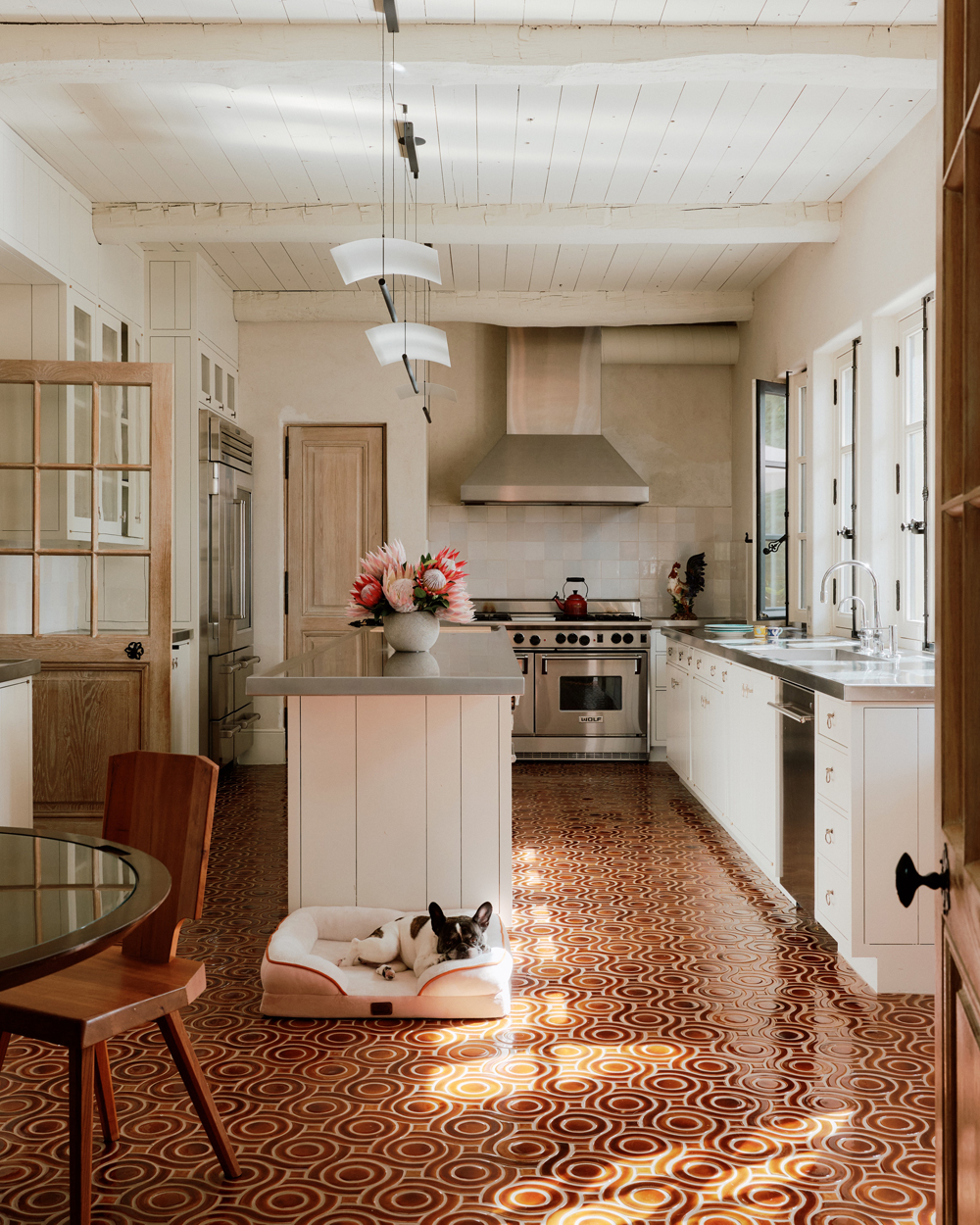
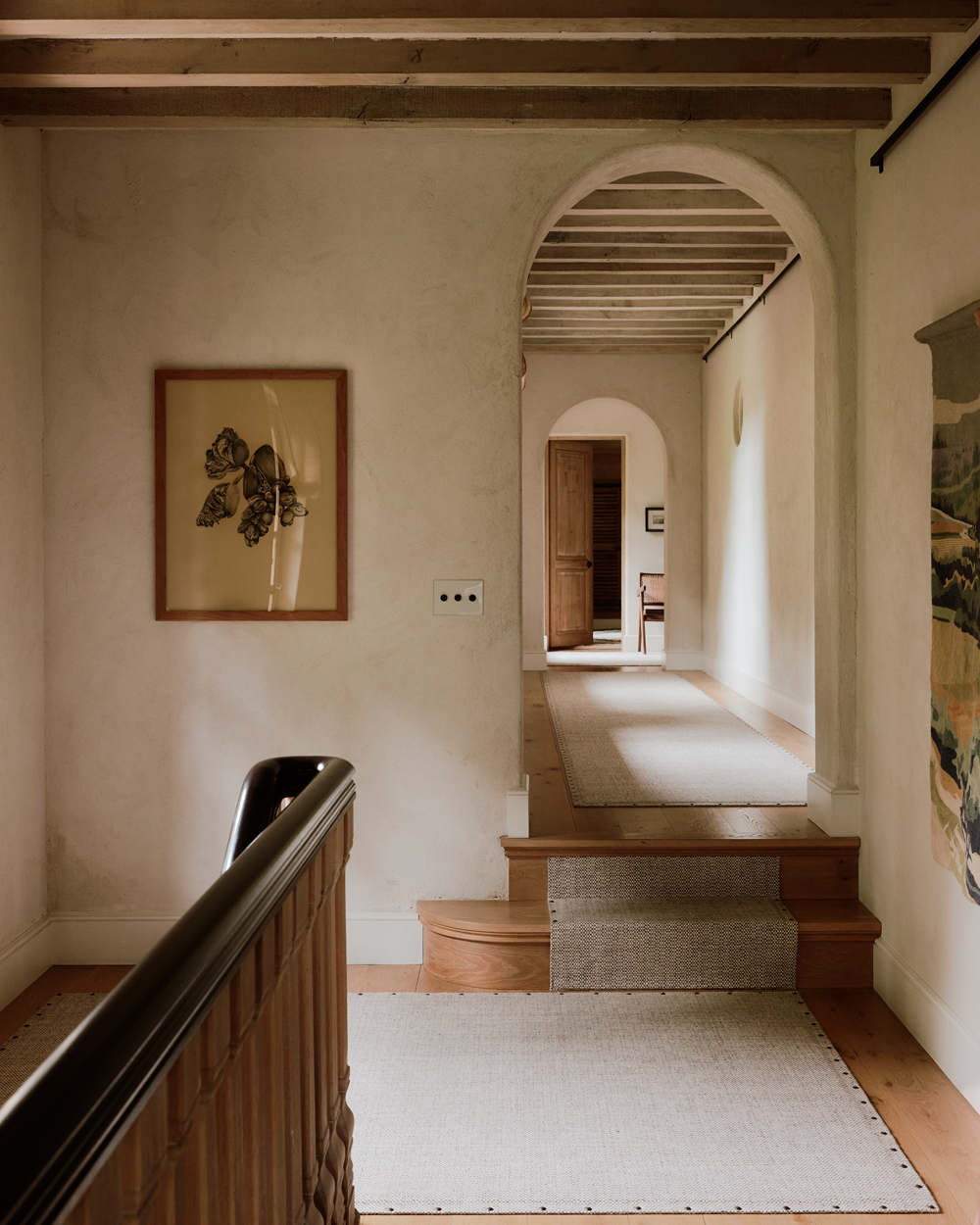
Both recent projects embody these attributes. The Bronxville homeowners are a sandwich-generation couple of Cuban heritage, with two young children and a large extended family. Relocating from Miami, they purchased a unique, grandly scaled house built in 2012 by designer Cheryl Skoog Tague.
“She procured beams and fireplaces and stone from a convent in the south of France and had them sent to this idyllic property on top of a hill,” says Hart. “She built around the pieces and did a beautiful job. Our clients were charmed by the architecture and wanted to make this their forever home.”
The extended-family dynamic played a big part in design decisions, Hart says. “Parents, grandparents, aunties, everybody spends time together enjoying meals and playing dominoes.”
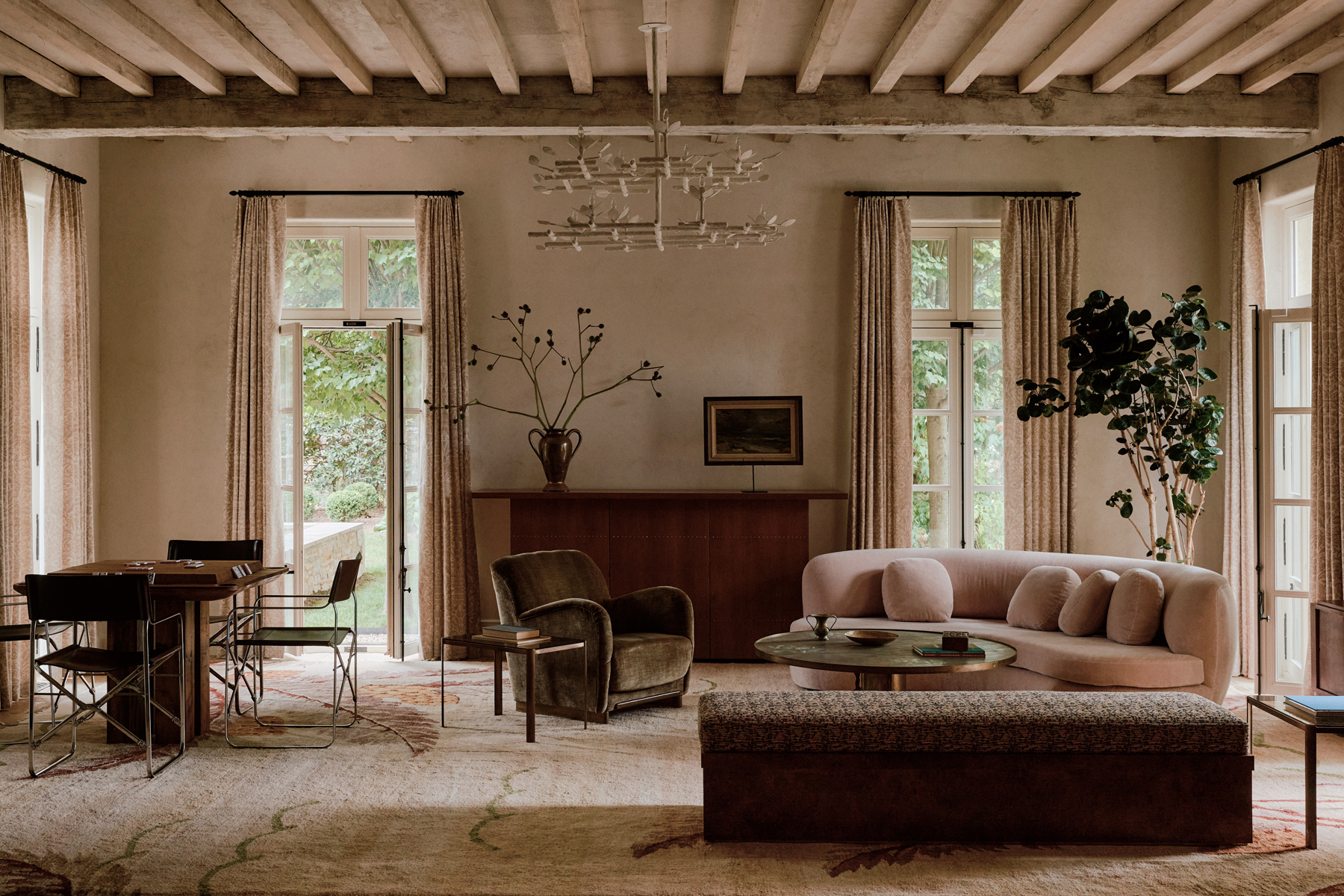
To create a space where everyone can gather at once, the designers anchored the living room with a curvaceous 1960s sofa by Harris of California, found on 1stDibs. In a corner, they installed a second swooping sofa, from Pierre Augustin Rose, and a round cocktail table of bronze, pewter and wood by Philip and Kelvin LaVerne, another 1stDibs find, forming a seating area where pairs or smaller groups can break off for conversation.
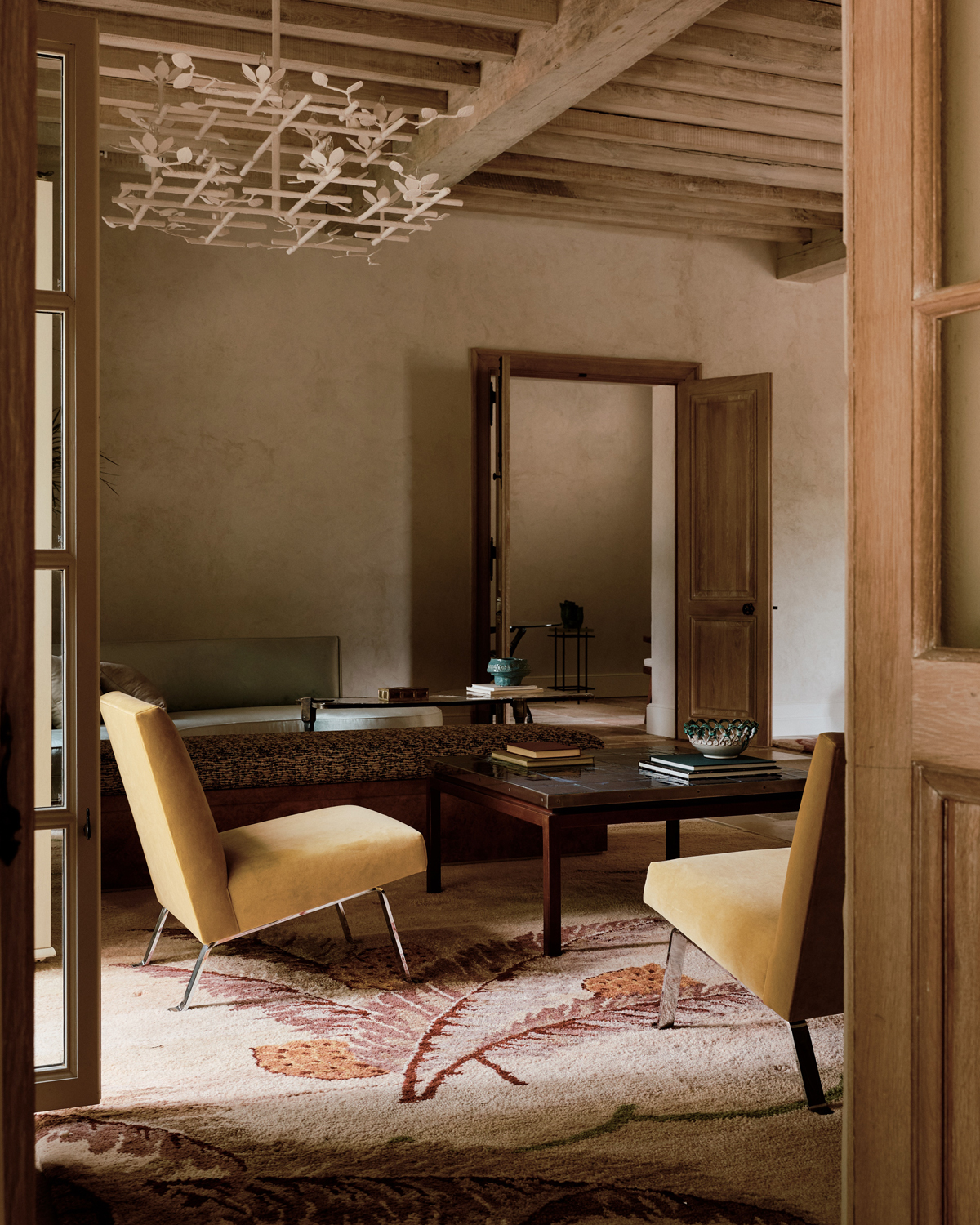
For underfoot, the designers commissioned palm frond-patterned rugs from Doris Leslie Blau, made “in nice cushy wool so the kids can roll around on the floor.” Hart says. And they hung a white plaster chandelier above. “We chose it instead of a more formal chandelier because of its lightness and indoor-outdoor quality,” says Capuco. “We imagine this room with the French doors open and the kids running in and out.”
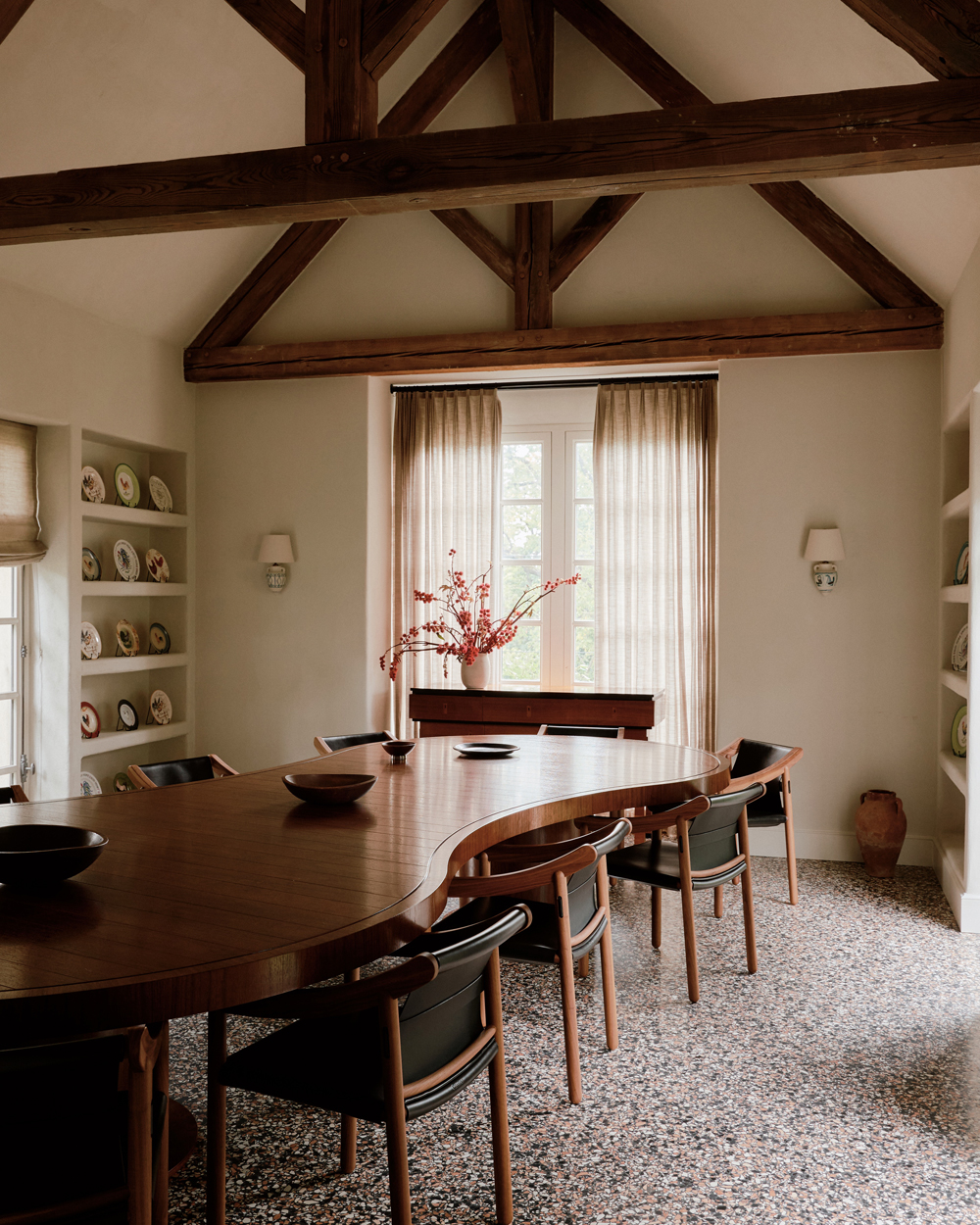
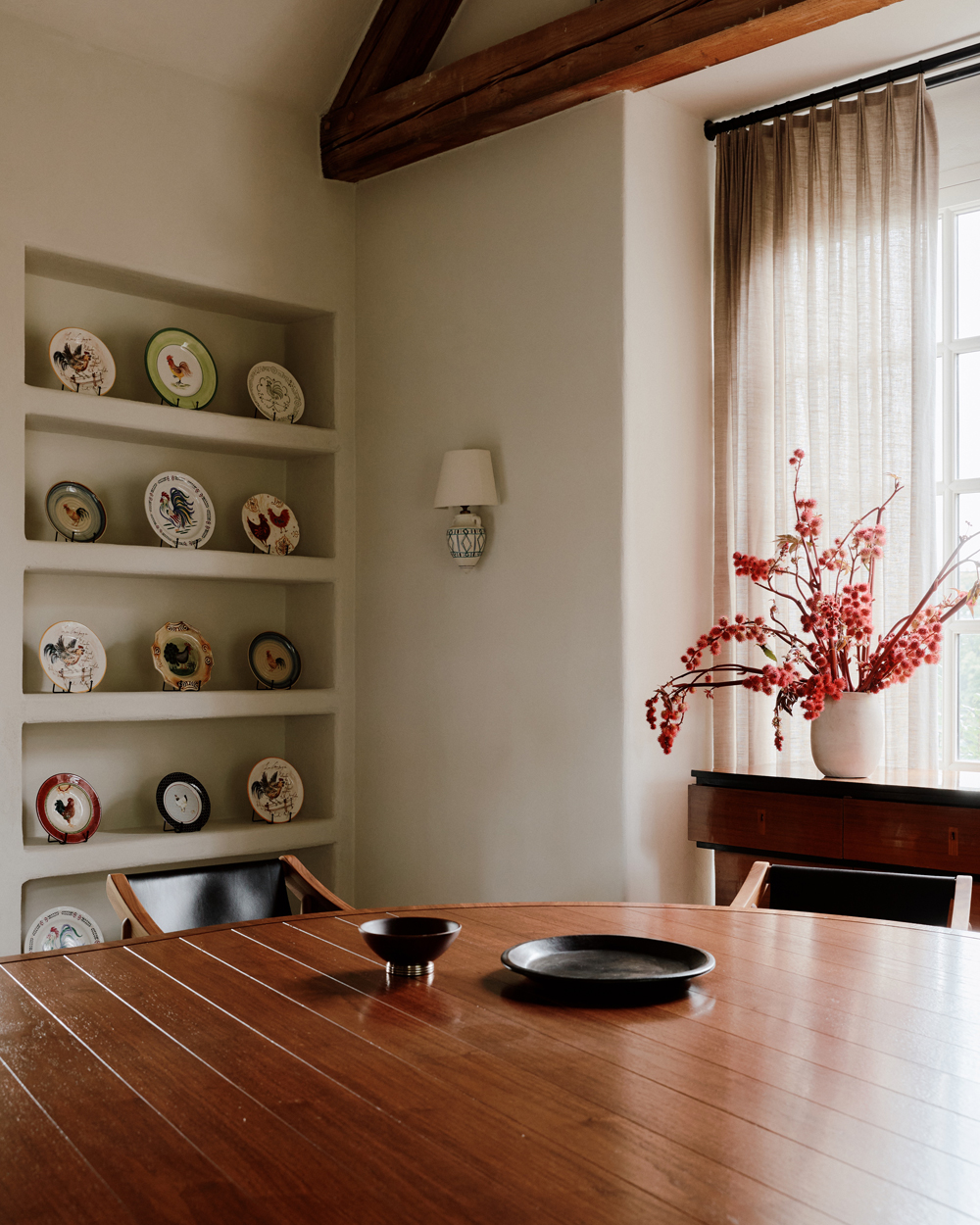
Husband Wife designed a bespoke walnut table for the peaked-ceilinged dining room. “It’s a gigantic kidney-shaped table that seats sixteen, but four people at one end can have an intimate meal,” Capuco says. Vico Magistretti dining chairs and a 1920s walnut Italian sideboard found on 1stDibs complete the chic mix. A collection of plates with a rooster motif, a common decorative element in Cuban culture, is arrayed on shelves along one wall; the terrazzo floor nods to Miami.
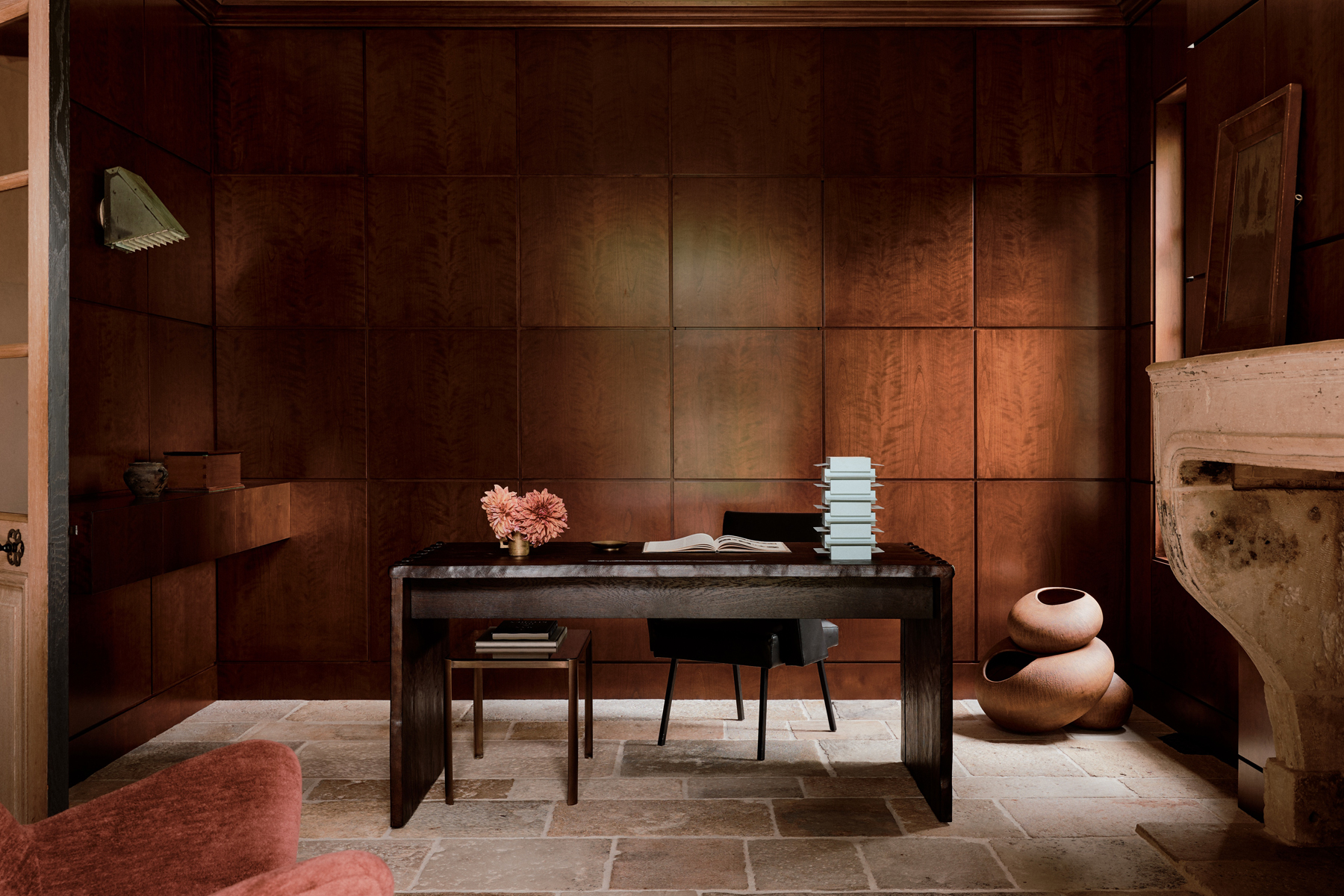
Husband Wife clad the formerly white box of a study in rich mahogany wall paneling, with storage hidden behind. The clients “wanted a buttoned-up, proper study zone that felt warm and cozy in winter,” says Hart. Vintage pieces further that feeling, including a Jacques Adnet desk chair and a pair of orange 1950s Italian chairs discovered on 1stDibs.
Simplicity reigns in the primary bedroom, where a French Art Deco rug of palest pink introduces the sole pattern against serenely monotone walls, diaphanous drapes and a monumental platform bed.
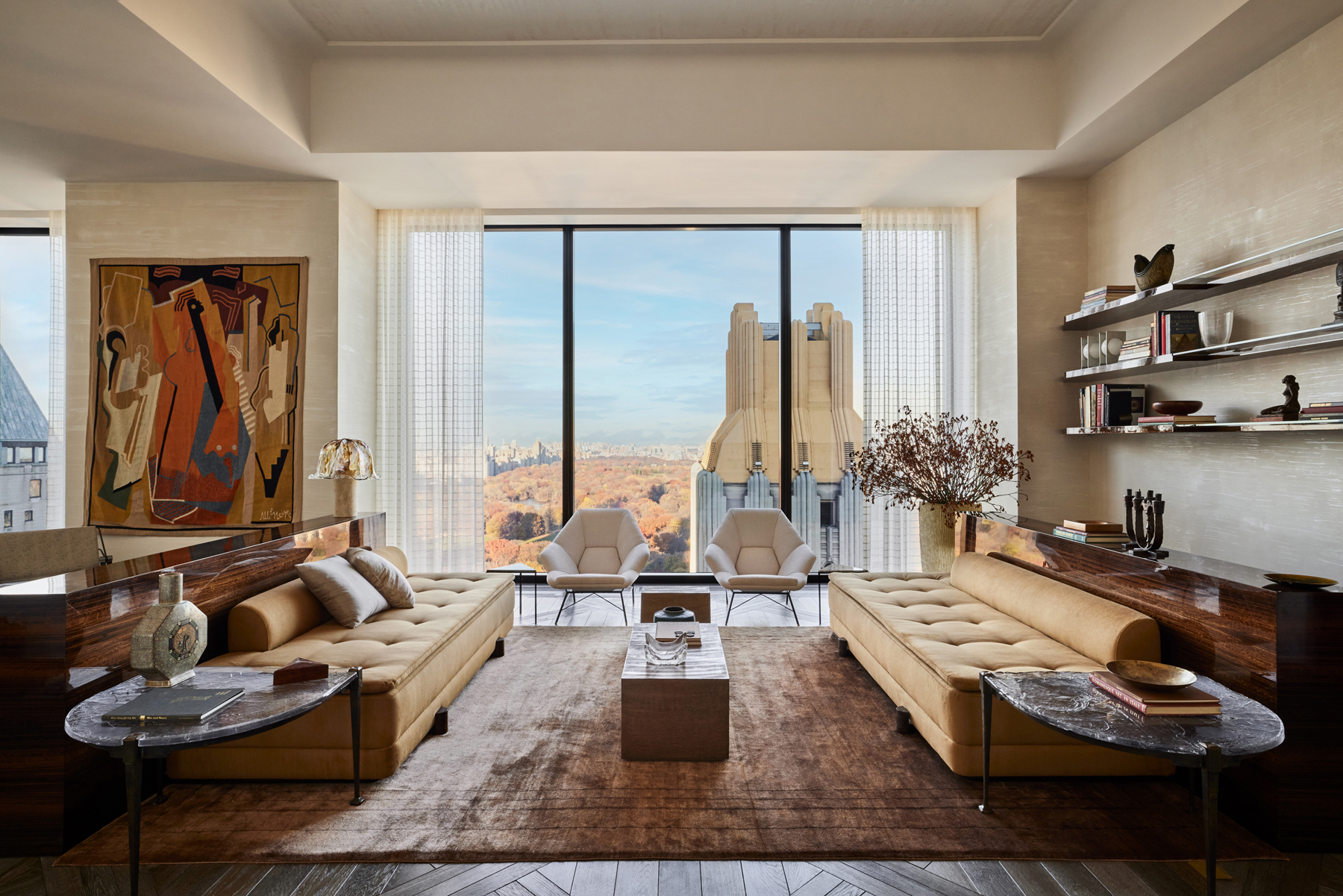
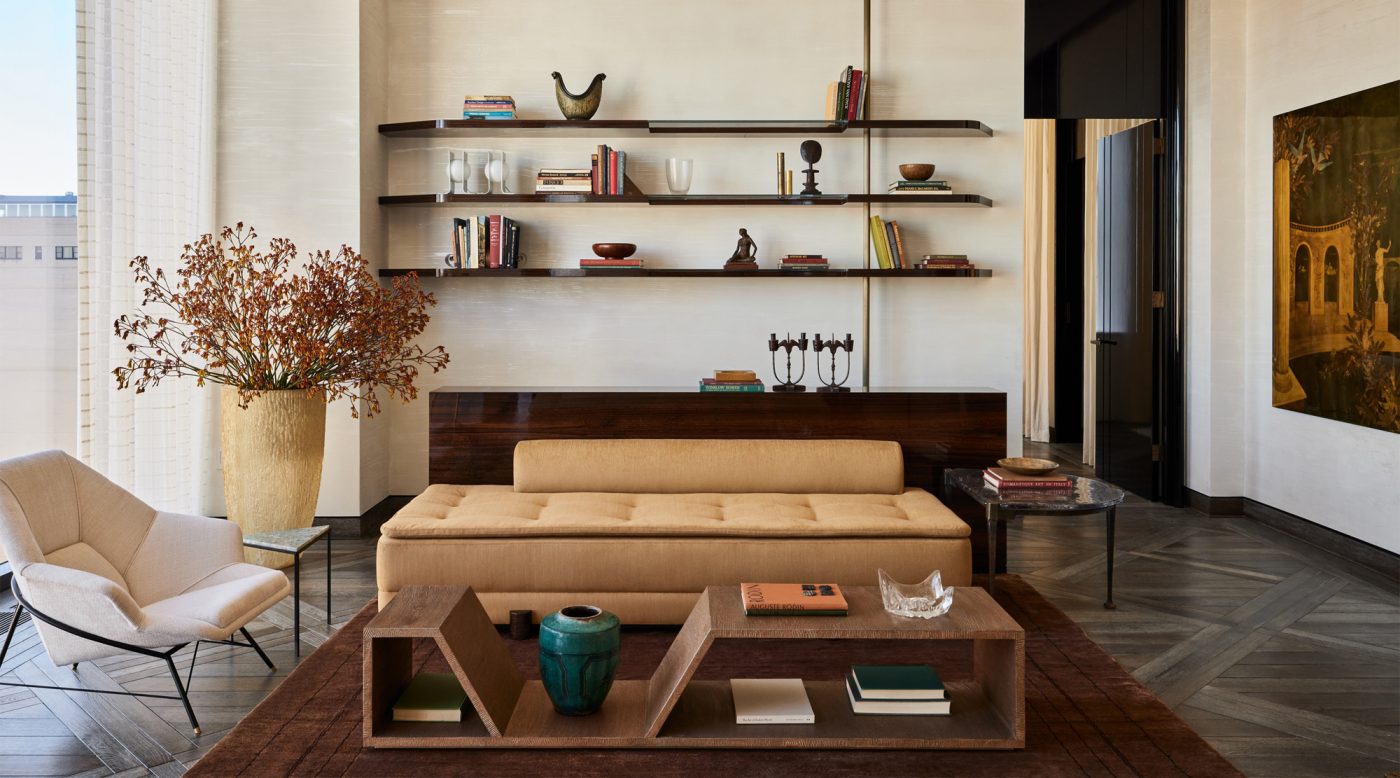
The owners of the Midtown aerie, a young, well-traveled international couple who are avid party hosts, wanted an apartment that was “lounge-like and elegant at the same time,” says Capuco.
Finishes and textures throughout, from warm plaster wall treatments to a gleaming French-polished eucalyptus sideboard and hand-knotted silk carpets, impart a subtle glimmer that reflects the changing light outside the expansive windows. “The finishes are all us,” says Capuco, except for the existing floors of fumed oak laid in a diamond pattern, which Husband Wife happily embraced.
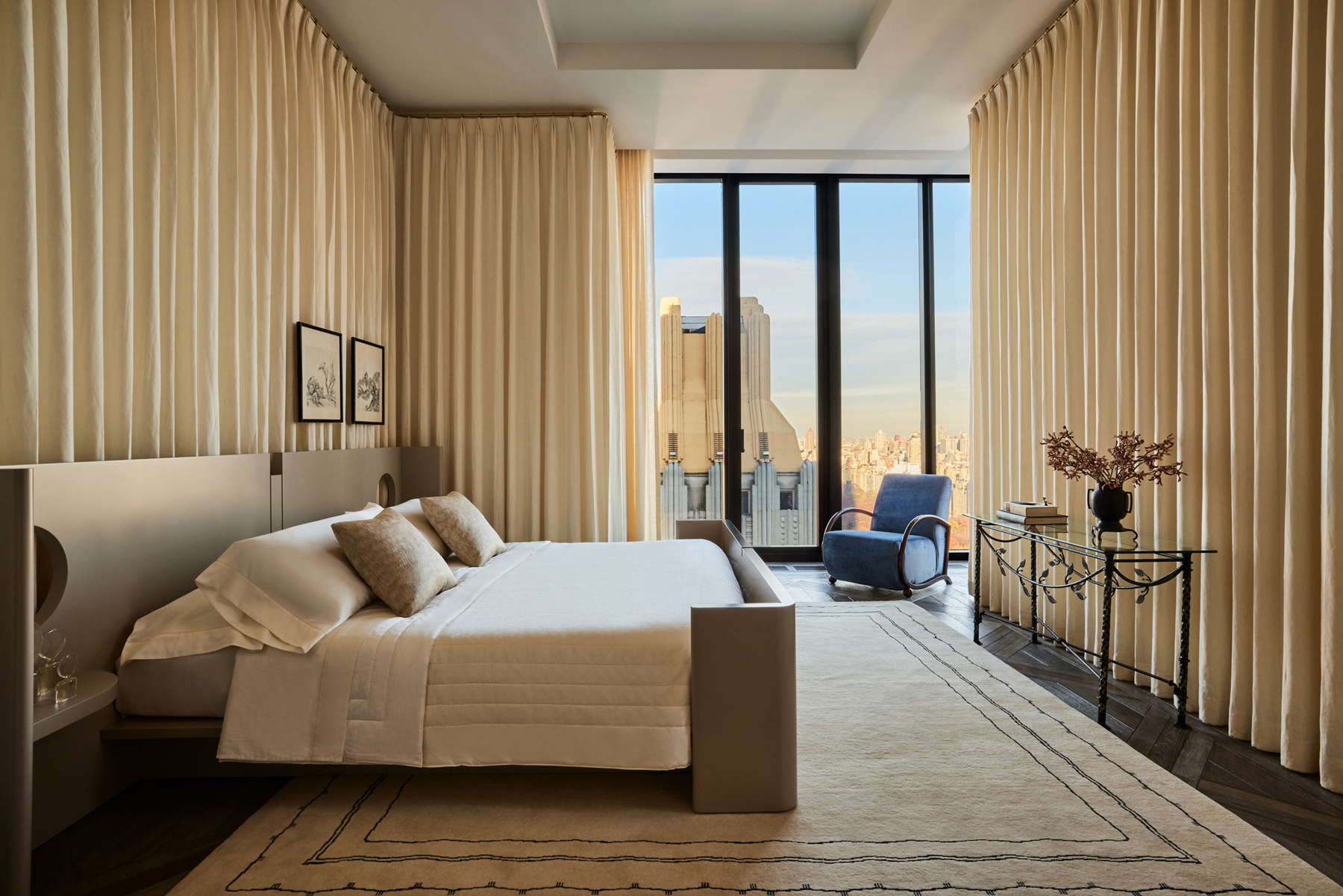
The apartment’s extraordinary views drove the color palette. “Fabric selections and finishes were influenced by the dynamism of the colors outside the windows,” Hart says. “The gold roof of the Art Deco tower seen from the living room; the blue of the sky brought into the bedroom in a velvet-upholstered armchair; bronze, eucalyptus and greige from the buildings you see when you look down the street.”
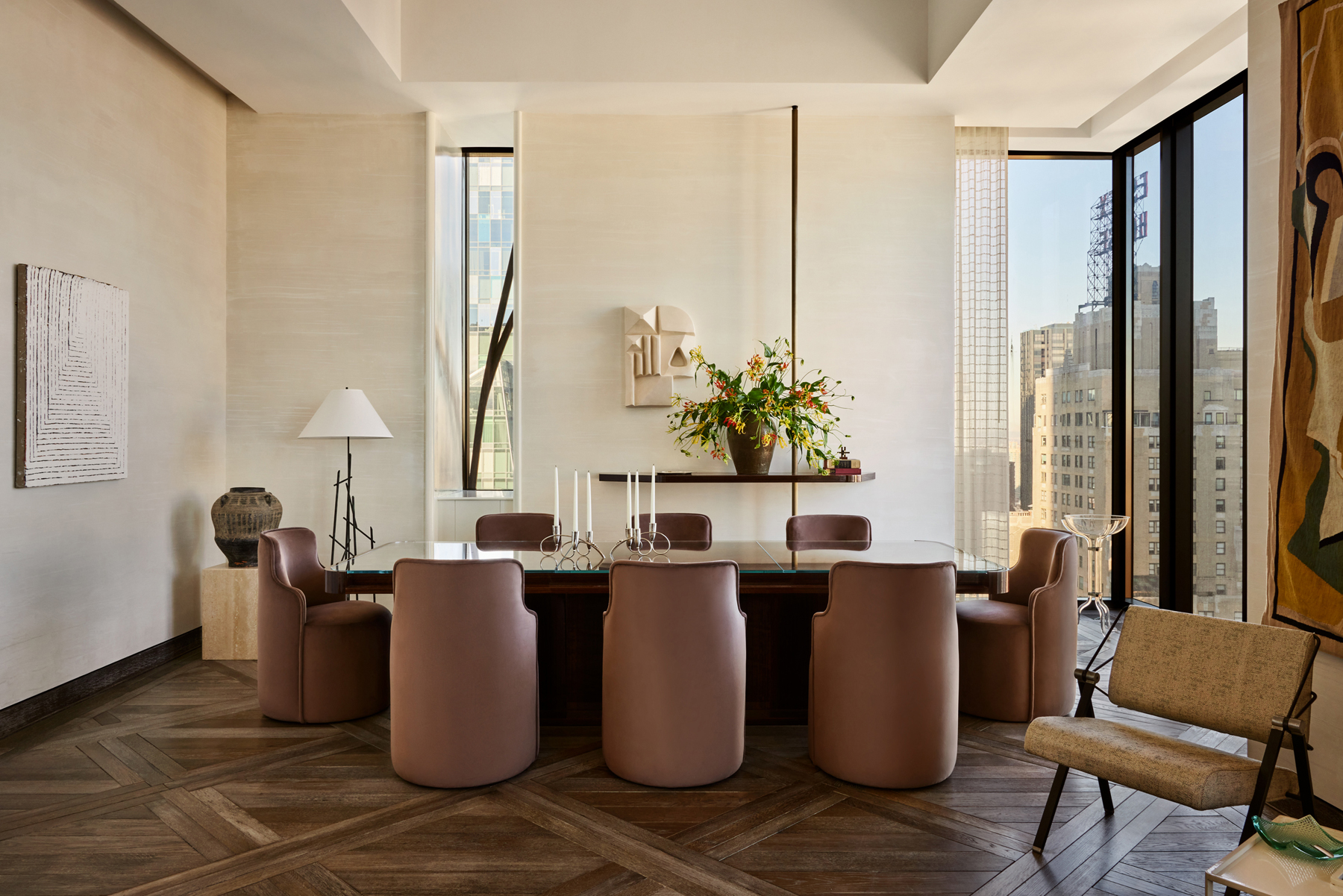
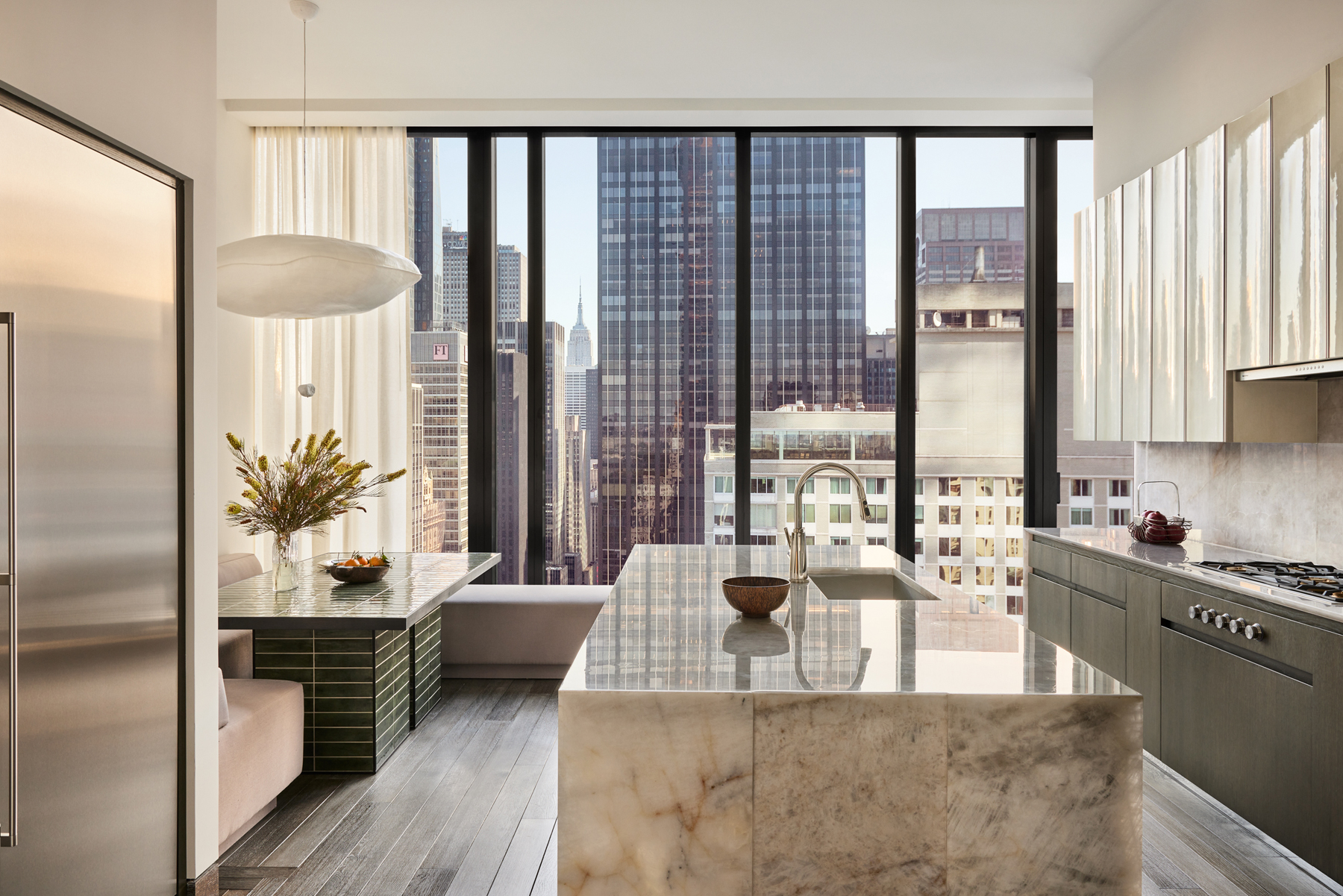
Husband Wife looked to Steinway Tower’s Deco-era origins in designing nearly all the major furnishings for the apartment, including a pair of gold-colored daybeds, a monumental dining table and barrel chairs covered in soft purple leather, beds with sleekly integrated bedside tables and, in the kitchen, a ceramic-tiled table. “Buildings often have layered histories,” Capuco says. “We accept all of it.”
The designers took further inspiration from the 1930s Hollywood home of actress Dolores Del Rio and MGM art director Cedric Gibbons. “That was a real jumping-off point — simple, pared down Deco forms with an architectural simplicity and rigor about them,” Hart says. Key pieces like the Cubist-inspired tapestry by Albert Gleizes in the living room and the chrome-and-black-leather Bauhaus-style daybed in the dressing room, sourced from 1stDibs, spring from the Deco period as well.
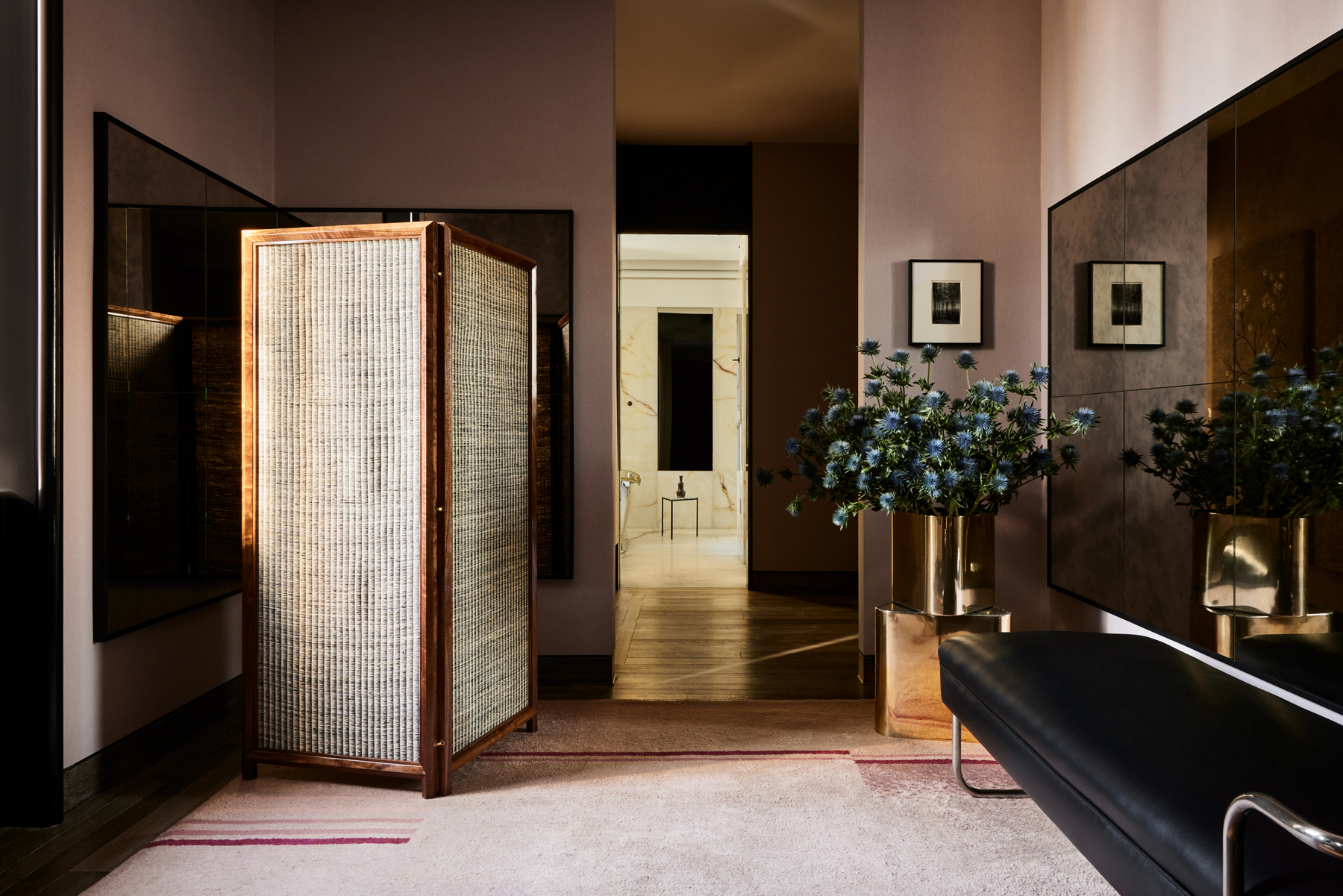
Hart and Capuco themselves live in a Brooklyn brownstone, where they are raising twins, born around the same time that they established Husband Wife. Now, after a decade in business, the designers are receiving increasingly high-profile and diverse commissions — a rambling Chelsea townhouse, an Upper East Side carriage house once owned by members of the Rockefeller family, a 7,500-square-foot apartment in Manhattan’s iconic Renaissance Revival–style San Remo.
As with other well-known romantic partnerships in the architecture/design space — Elizabeth Diller and Ricardo Scofidio; Tod Williams and Billie Tsien; Robin and Stephen Alesch, of Roman and Williams — one suspects the key to the couple’s success lies not in identical points of view but in the conversation between the two of them.