August 16, 2026In 1986, the Museum of Modern Art in New York staged a widely acclaimed exhibition, “Vienna 1900: Art, Architecture & Design,” which reintroduced the Vienna Secession to the American public and provoked a flurry of new interest in the movement. One memorable highlight of the show was a 1914 Gustav Klimt portrait of Elisabeth Lederer — the daughter of Viennese art collectors — which Leonard Lauder had recently acquired. (Following his death, last year, the Lauder estate sold the painting at Sotheby’s for an astounding $236 million.)
Now, 40 years later, New York architect Peter Marino has organized a small but serious exhibition in Southampton, New York, to showcase his own collection of paintings and decorative arts from the Secession.
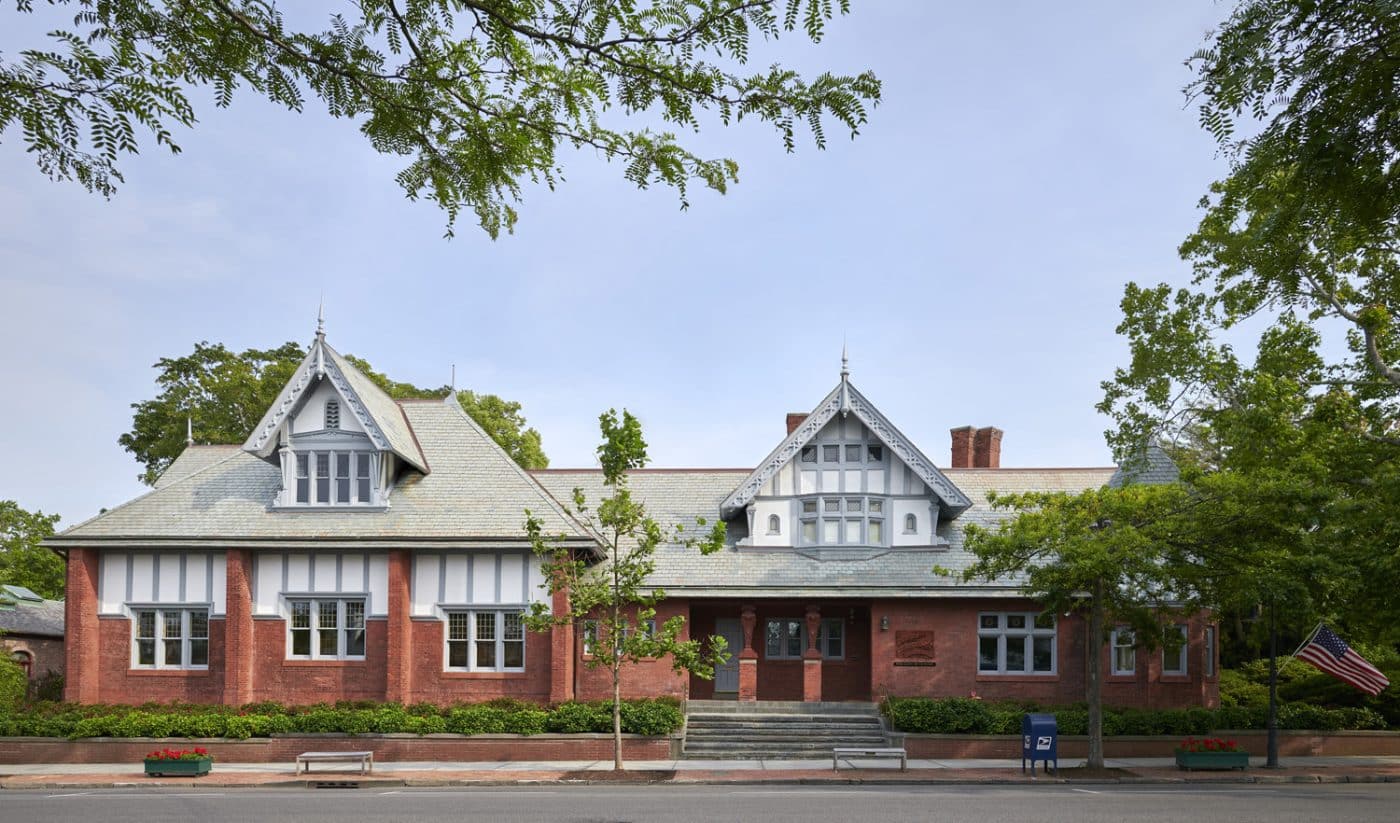
Marino is considered one of the finest designers of luxury residential, commercial, cultural and hospitality projects worldwide. He has organized his Vienna 1900 show on the second floor of his private foundation headquarters, which has been open to the public since 2021 following a multiyear renovation of the landmarked former Rogers Memorial Library, which Marino now owns.
An omnivorous collector, Marino has put his other decorative and artistic passions on display throughout the 8,000-square-foot building, including Renaissance bronzes, Les Lalanne sculptures, Carlo Bugatti chairs, Old Master paintings, Greek and Roman antiquities, 19th-century French ceramics and contemporary paintings.
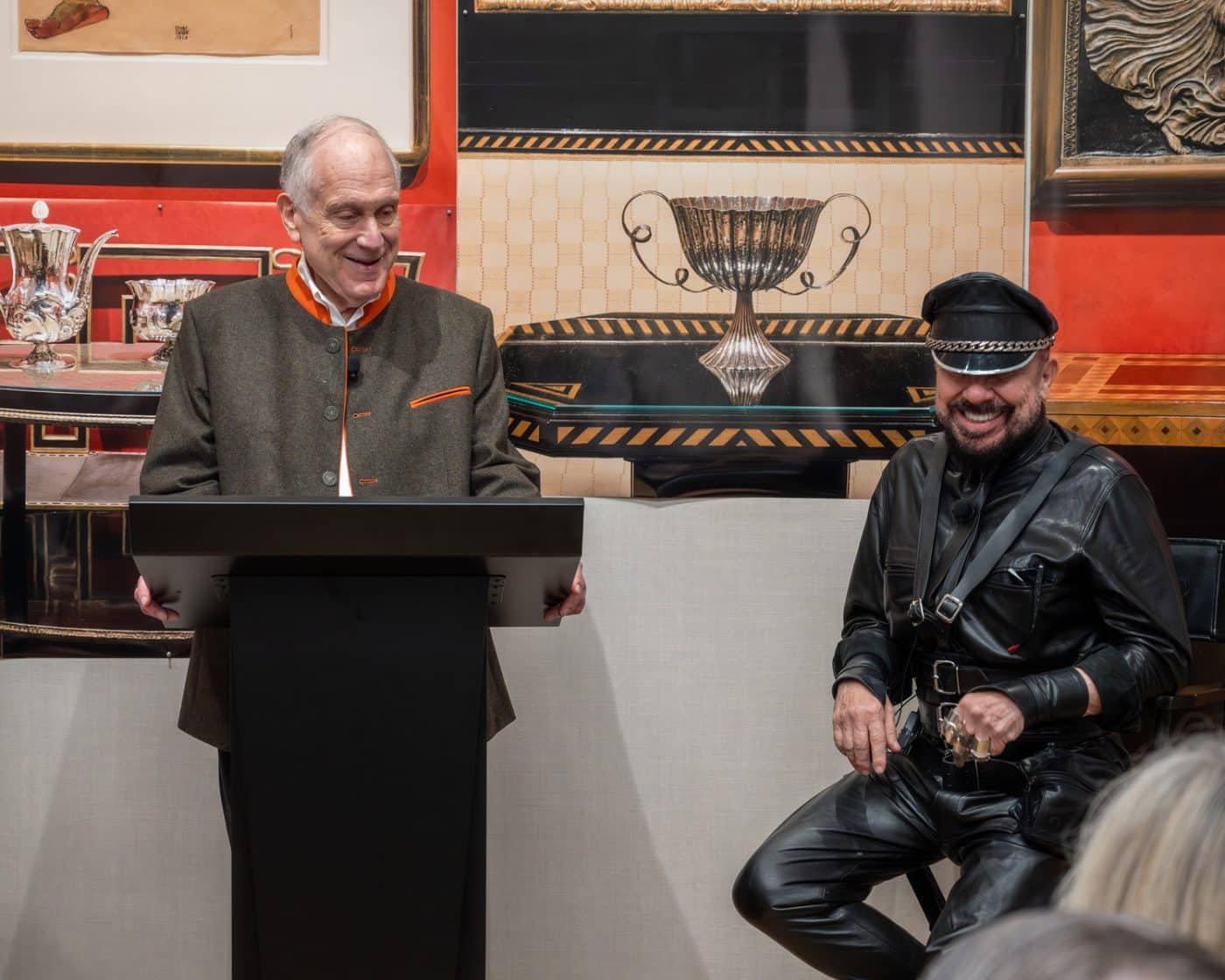
While his Vienna 1900 collection is not large, it is museum quality and cross-disciplinary, including paintings, drawings, textiles, ceramics, glass, silver and furniture. It cannot compete with the extensive collection of the Neue Galerie, in Manhattan, founded by Ronald S. Lauder (Leonard’s younger brother), but Marino has acquired some gems, including works by the two most renowned Austrian artists of the era, Klimt and Egon Schiele.
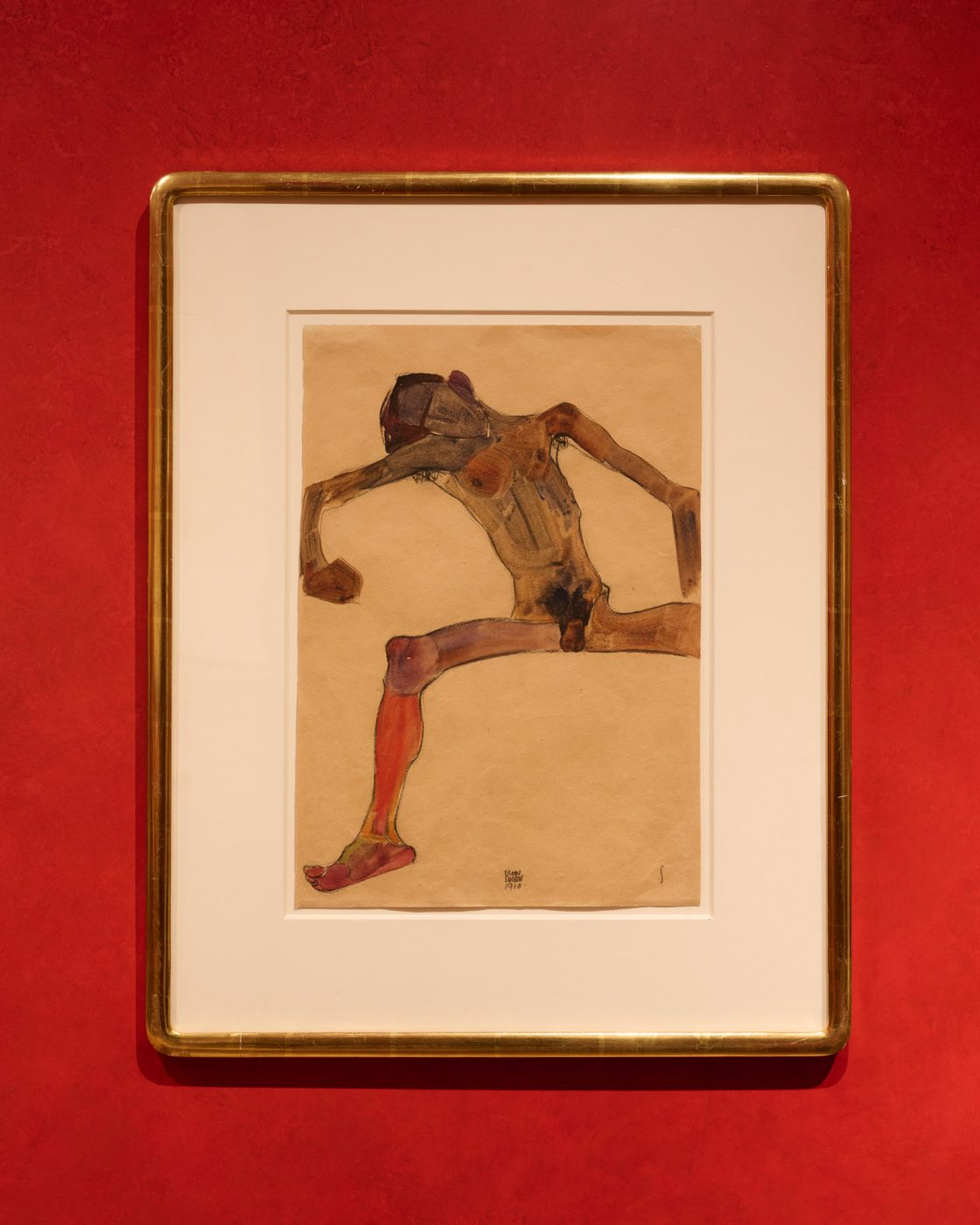
It was Klimt who in 1897 led the revolt against the art of the older generation to found the association of artists called the Vienna Secession. Marino has an important Klimt drawing, as well as an important painting by Klimt’s protégé Schiele: Seated Nude, a colorful, angular, erotic watercolor of a young man from 1910.
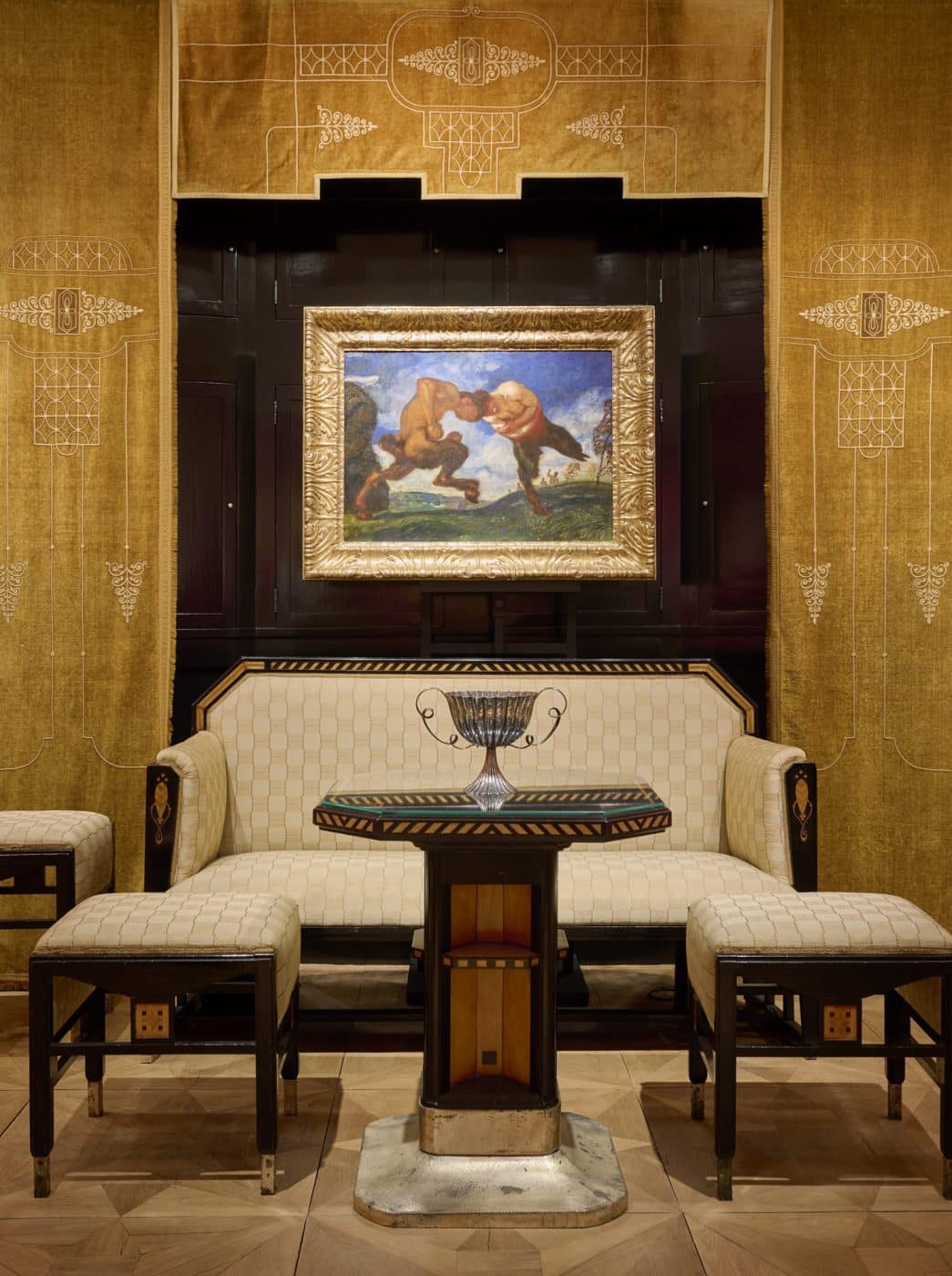
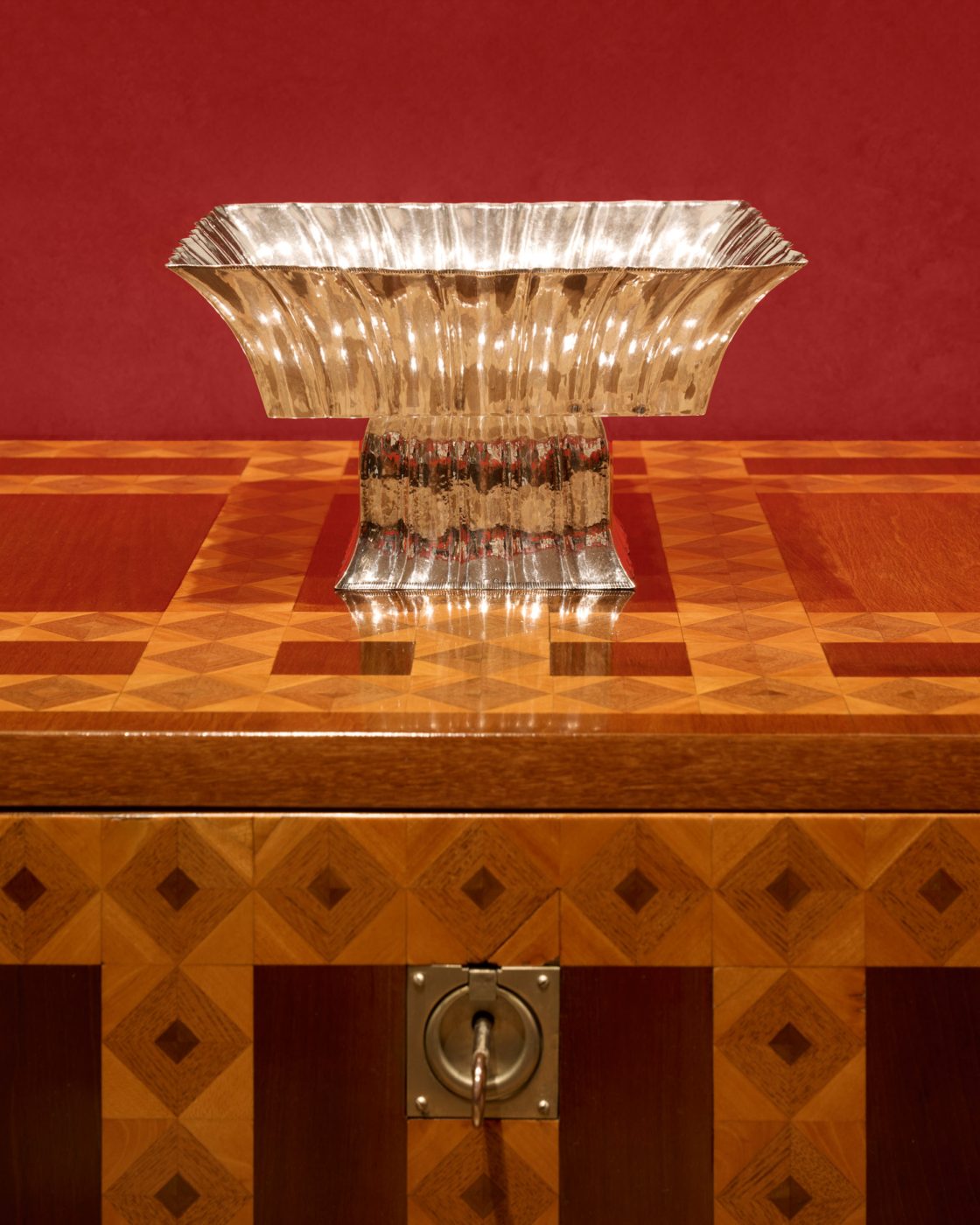
Marino’s Secessionist holdings encompass furniture, glass, silver and porcelain designed by the pioneering architect Josef Hoffmann; textiles by the artist Koloman Moser, a cofounder of the Secession; and pieces by the renowned Viennese architects Adolf Loos and Otto Wagner.
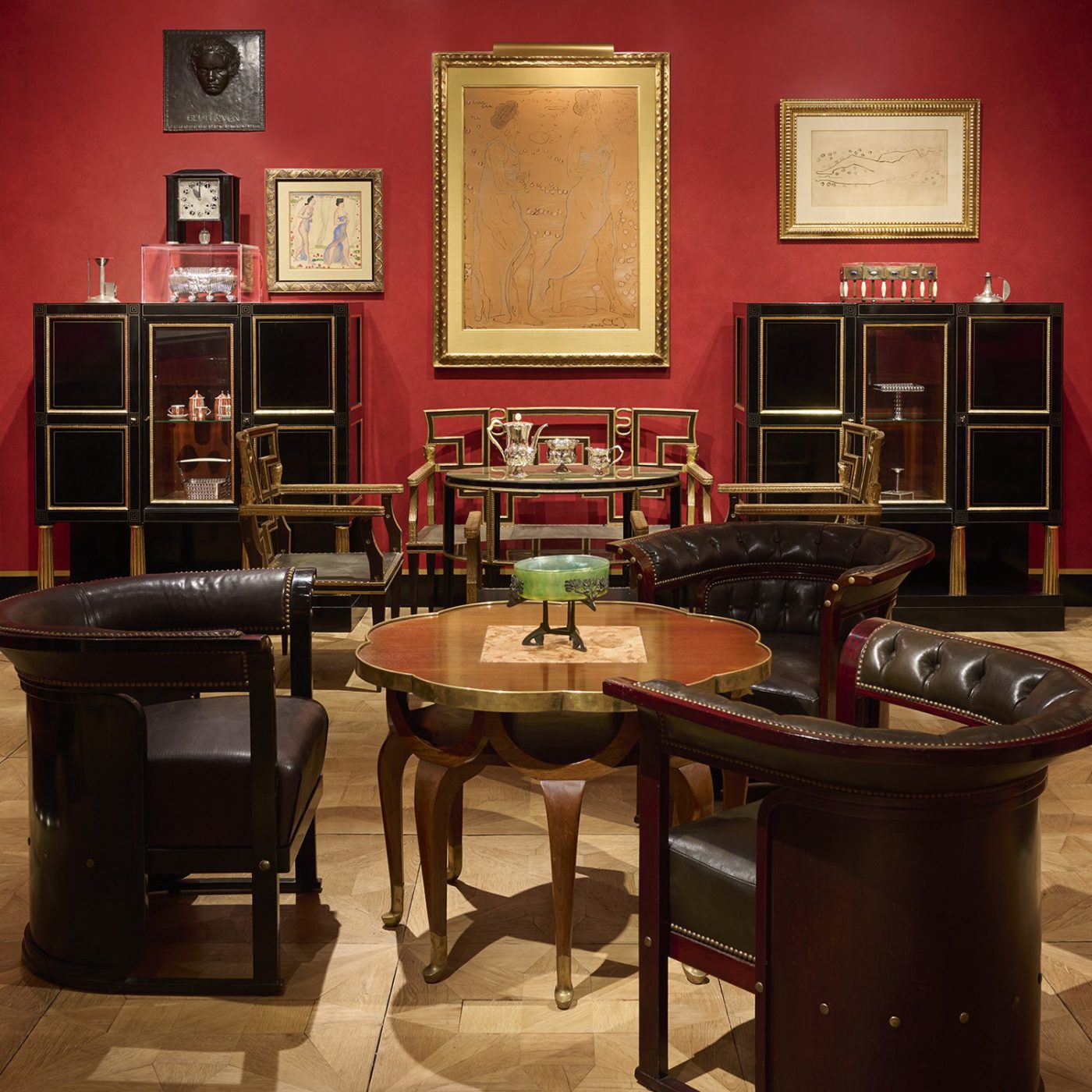
He has carefully arranged this assemblage in a home-like setting, covering the walls with raspberry Venetian plaster in tribute, he says, to the interiors of the Villa Stuck, in Munich. The famously pink interior of that 1898 neoclassical villa, now a house museum, was decorated by the German artist/professor Franz von Stuck, whose students included Paul Klee, Wassily Kandinsky and Josef Albers. “I’m crazy about Stuck,” Marino says.
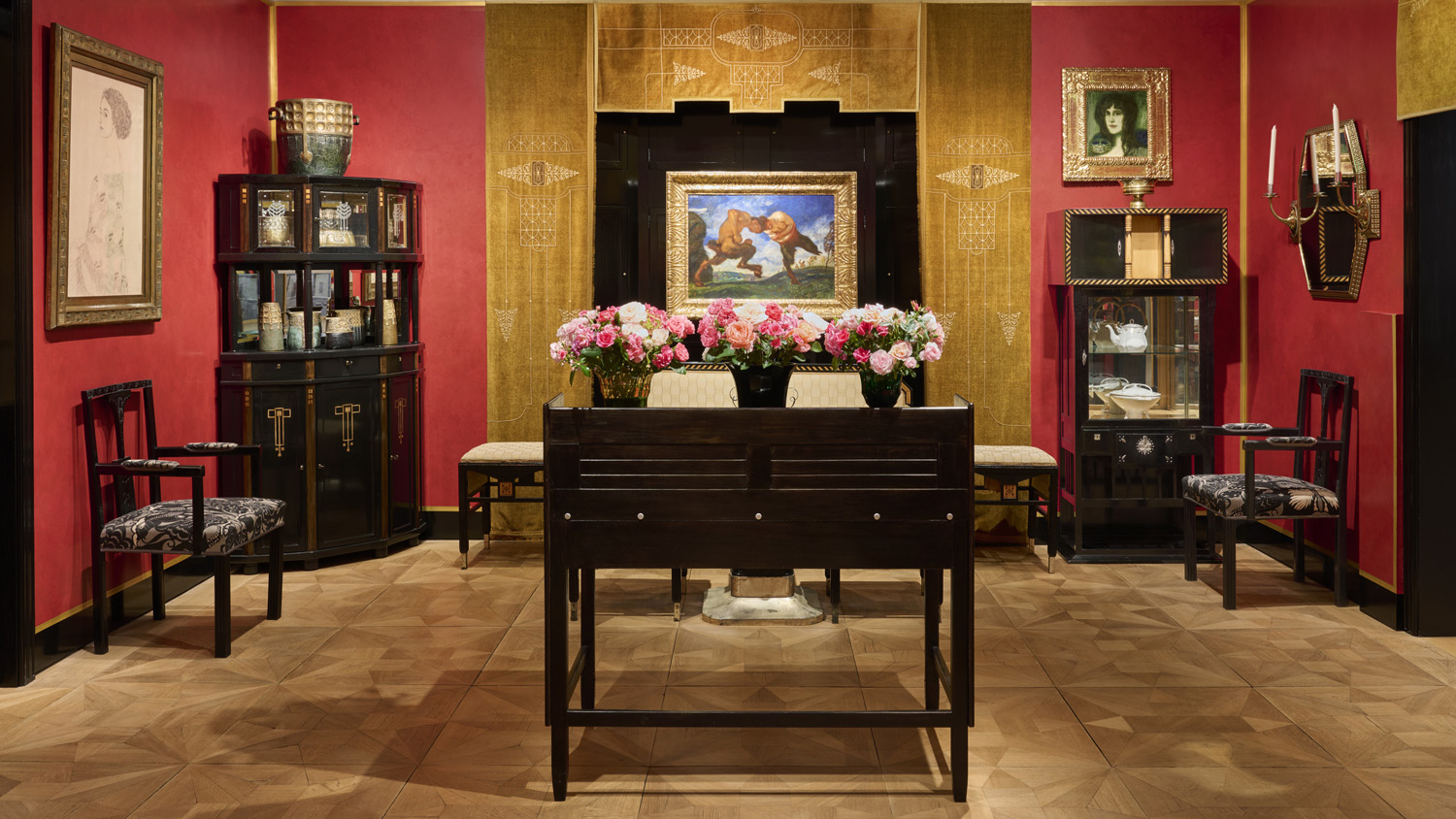
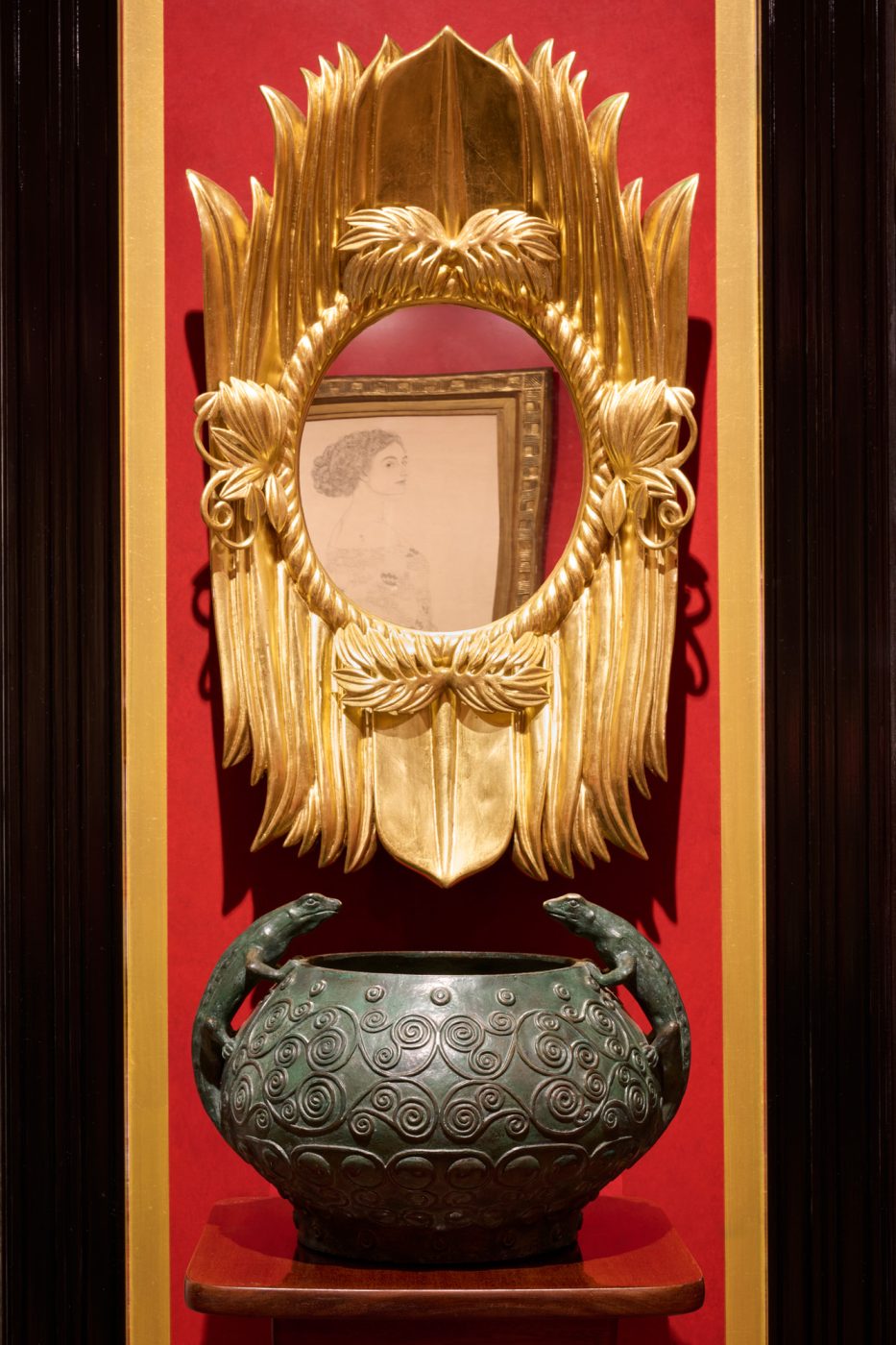
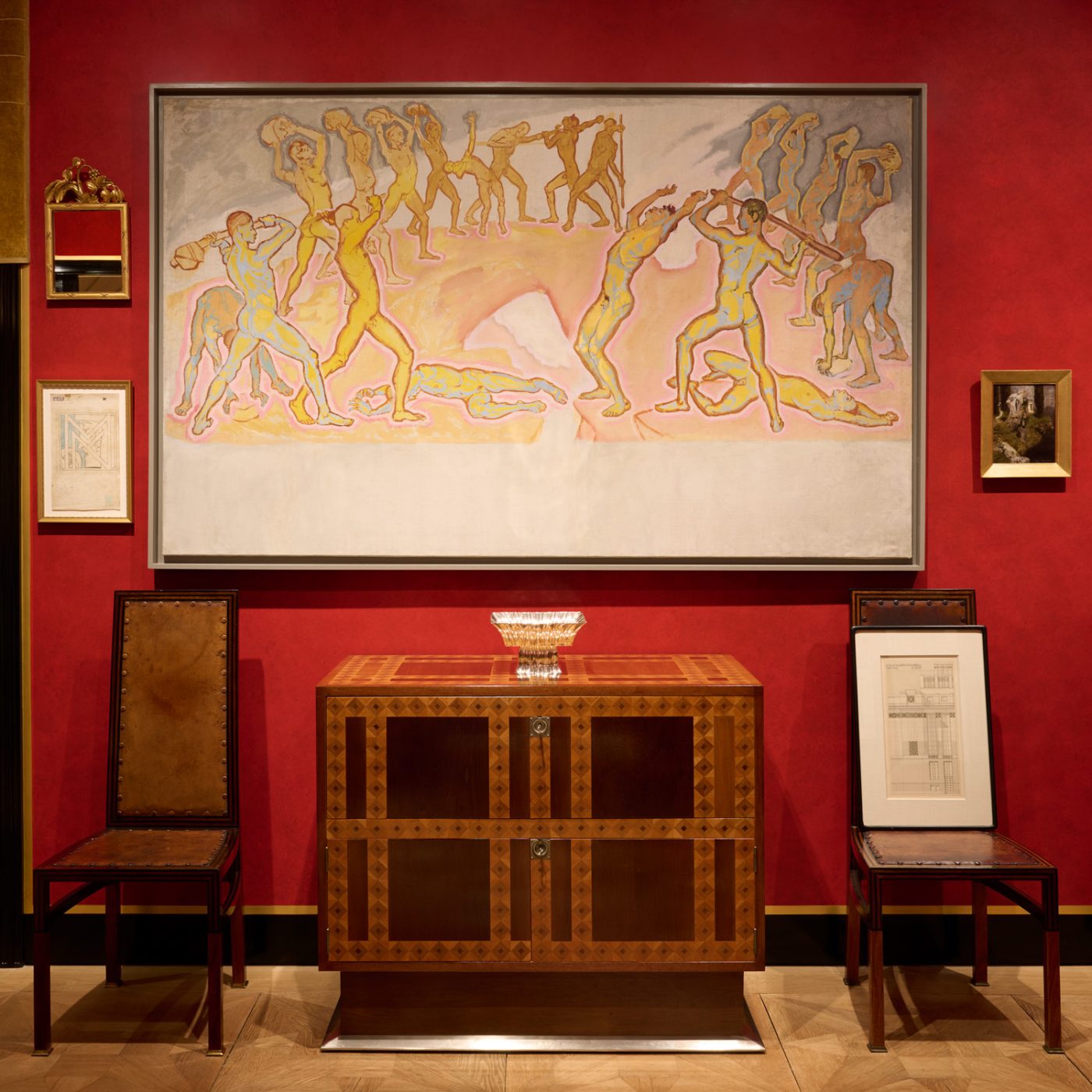
Several Stuck paintings are stacked salon style on the walls. In front of them are many notable Viennese antiques: an ebonized beech desk by Wagner, circa 1906; a circa 1904 pair of fine marquetry cabinets by Moser, intricately inlaid with African chestnut and lemonwood; and a tall, circa 1905 black-lacquered pearwood corner cabinet and vitrine by the Polish-born architect Leopold Bauer, who was one of Wagner’s most talented students at the Vienna Academy of Fine Arts and joined his architecture studio after graduation.
Another striking furniture suite, circa 1916, by the Austrian architect Oskar Strnad, looks a bit like Chinese Chippendale and is gilded with ebony veneers. One showstopper is a rare Elephant Trunk table, designed circa 1903 by Loos, a proto-modernist architect who later became a vehement critic of Secessionist design, which he felt had become too “decorated.”
“Decoration, like fashion, instantly goes out of style,” he stated, advocating instead timeless, clean, functional design. In a famous 1908 essay, “Ornament as Crime,” Loos wrote that the elimination of decoration was a sign of intellectual and cultural progress. (His ideas were later embraced by the Bauhaus and Le Corbusier.)
Despite Loos’s insistence on unadorned design, he always specified the finest materials in both his buildings and his furniture. The Elephant Trunk table — so named for its S-shaped legs, which mimic the curve of a pachyderm’s signature appendage — may not be “decorated,” but it is made of luscious cerused oak, with brass fittings and a top inlaid with marble.
What is so refreshing about Marino’s collection, like the Secession itself, is the myriad of styles, from strict rectilinear geometry to utter curvaceousness.
The Vienna Secession (aka the Union of Austrian Artists) was started in 1897 by Klimt, Moser, Hoffmann and Joseph Maria Olbrich, with Klimt as president. Wagner joined shortly afterwards. They resigned from the Association of Austrian Artists to protest its support of “official” (read, academic) artistic styles. The Secessionists, in contrast, yearned to create art without moral or social messaging, art that would be judged on its aesthetic qualities alone.
They also committed to create works uniting painting, architecture and the decorative arts, at a time when the last had a decidedly secondary status. Their goal is expressed by the German term Gesamtkunstwerk, roughly translated as “total work of art,” denoting a piece or creative process in which different artistic disciplines are combined to form a cohesive whole.
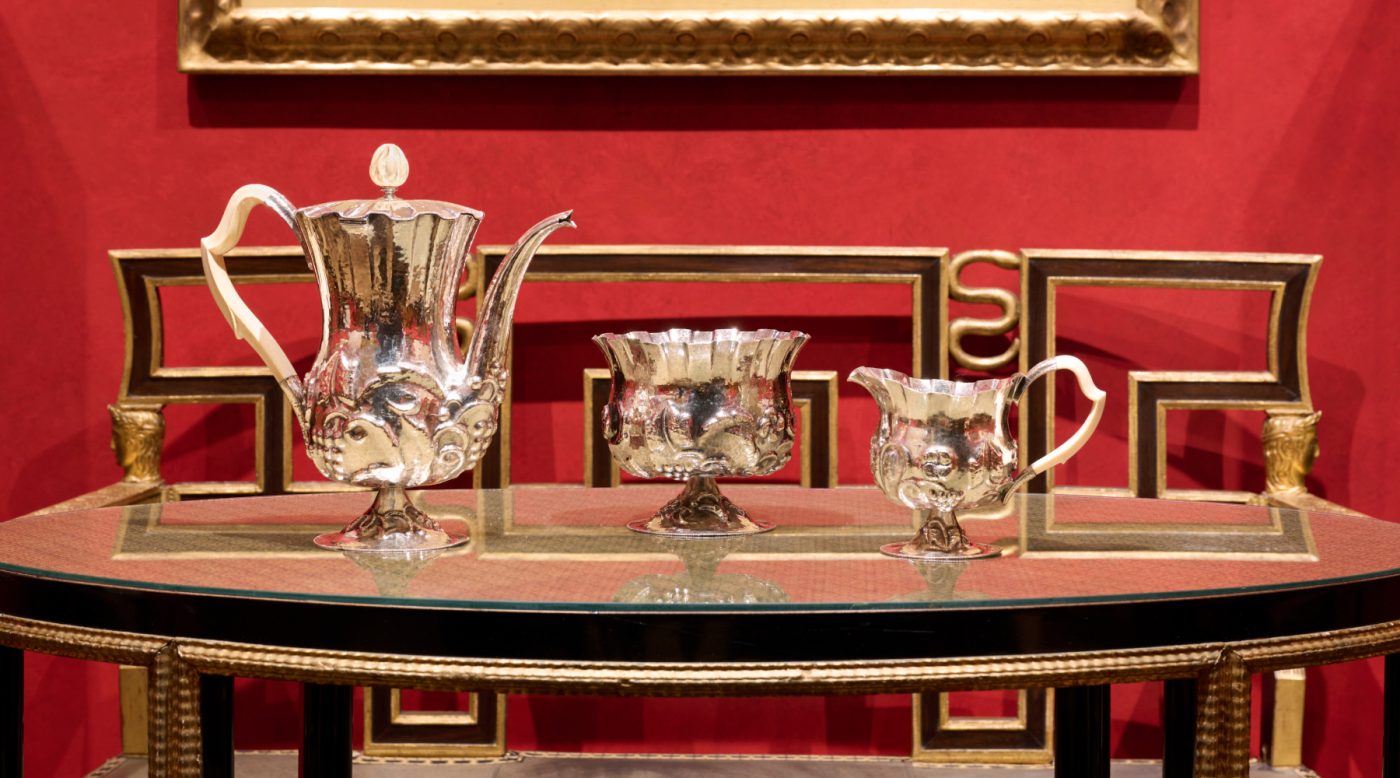
The Secessionists then founded the Wiener Werkstätte (the Vienna Workshops), a design collective inspired by the Arts and Crafts movement. Werkstätte makers wanted utilitarian objects to be works of art — and to be realized in every material: metal, leather, wood, cloth, gold, silver and precious materials.
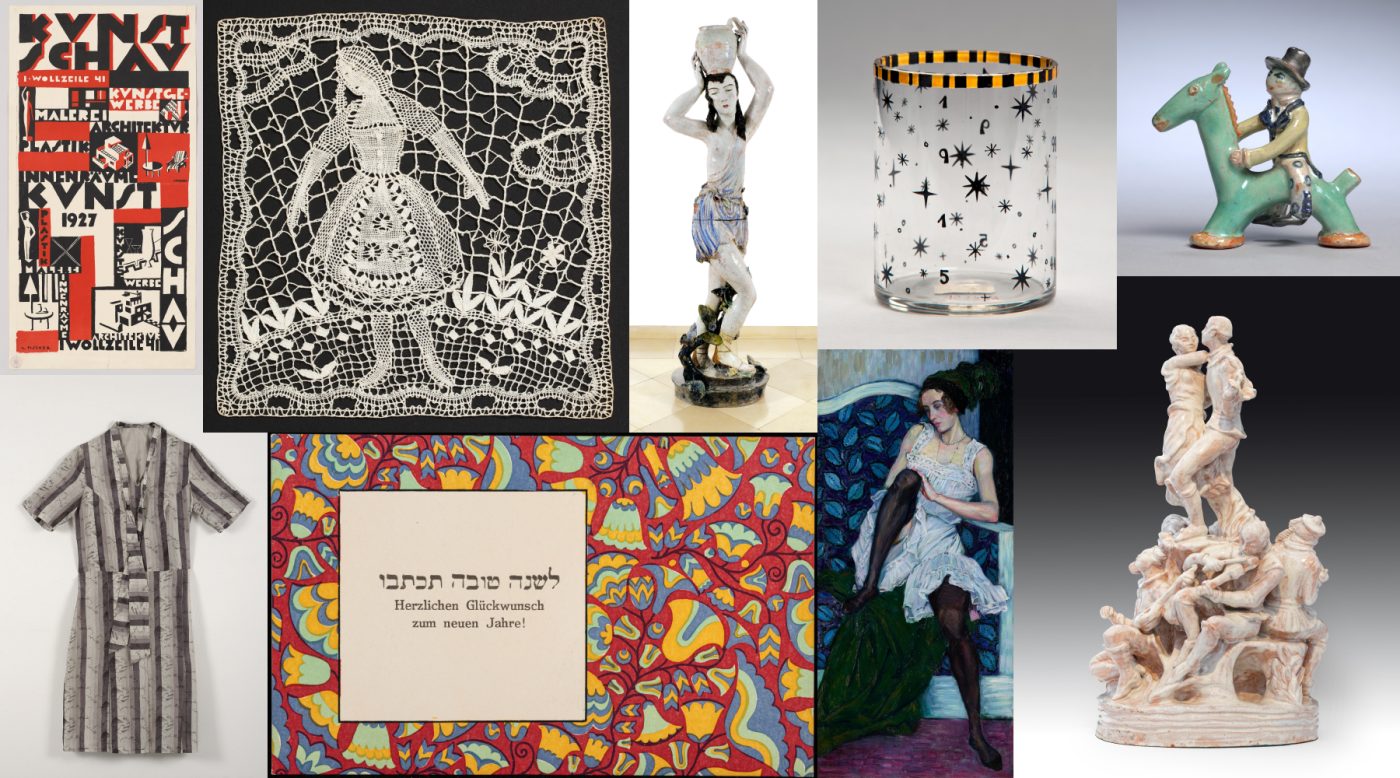
By 1903, the workshop had expanded into a three-story building that promoted high-quality, handcrafted, limited-edition items, from dresses to silver teapots to consoles. Two years later, it was employing more than a hundred skilled artisans, including women.
At the outset, the designers, under Hoffmann’s influence, limited themselves to the strict geometry of the sphere and the grid. Colors were reduced to black (or dark blue) and white. Eventually, more ornamentation and brighter colors were introduced.
When World War I broke out, the men went off to war and women replaced them at the workshop. “They developed original and expressive objects that went way beyond adornment and surface treatments,” says Kristina Parsons, curator of the exhibition “Modernity and Opulence: Women of the Wiener Werkstätte,” up through November 15 at New York’s Jewish Museum. The pieces designed by this female cohort — textiles, ceramics, glass works, typography, even playing cards — are wholly original, colorful and charming.
What was revolutionary about the Vienna 1900 period was its insistence on integrating art into every aspect of life: painting, architecture, furniture, textiles, silver, ceramics and glass.
This may also explain its appeal to Marino, who has designed textiles for Rubelli, glass vases and lighting for Venini, leather seating for Poltrona Frau, porcelain for Limoges and limited-edition fountain pens for Caran d’Ache.
“My world is very much about materials, materials, materials,” Marino says.