April 26, 2026The first real skateboard I bought, in 1993, featured a picture of a horse flying through the air after lunging from a high platform. I chose the deck, made by Foundation for pro skater Josh Beagle, as much for its graphic as for its rideability: That vintage photo of a horse-diving competition transfixed and scared me.
Later, the thrash-metal band Slayer came to my local Tower Records. A few friends and I went to meet them — one of those things high schoolers do just to do it, since I wasn’t really a fan. Still, I handed Slayer my horse-diving deck, and they happily signed it with a metallic marker, even adding the satanic flourish of an upside-down pentagram. I loved it.
Not wanting to grind away the signatures, I stopped skating the board and covered the underside with see-through contact paper. Almost without my noticing, the deck had shifted from a ridable apparatus into something closer to an artwork — or at least a collectible — long before I knew that skateboards themselves could be treated that way.
That shift — from purely functional equipment to conceptual object — is now the subject of a museum show. “Vehicles of Expression: The Craft of the Skateboard,” on view at the Craft in America Center in Los Angeles through May 30, regards skateboards as rideable sculptures shaped by decades of rider improvisation and evolving engineering.
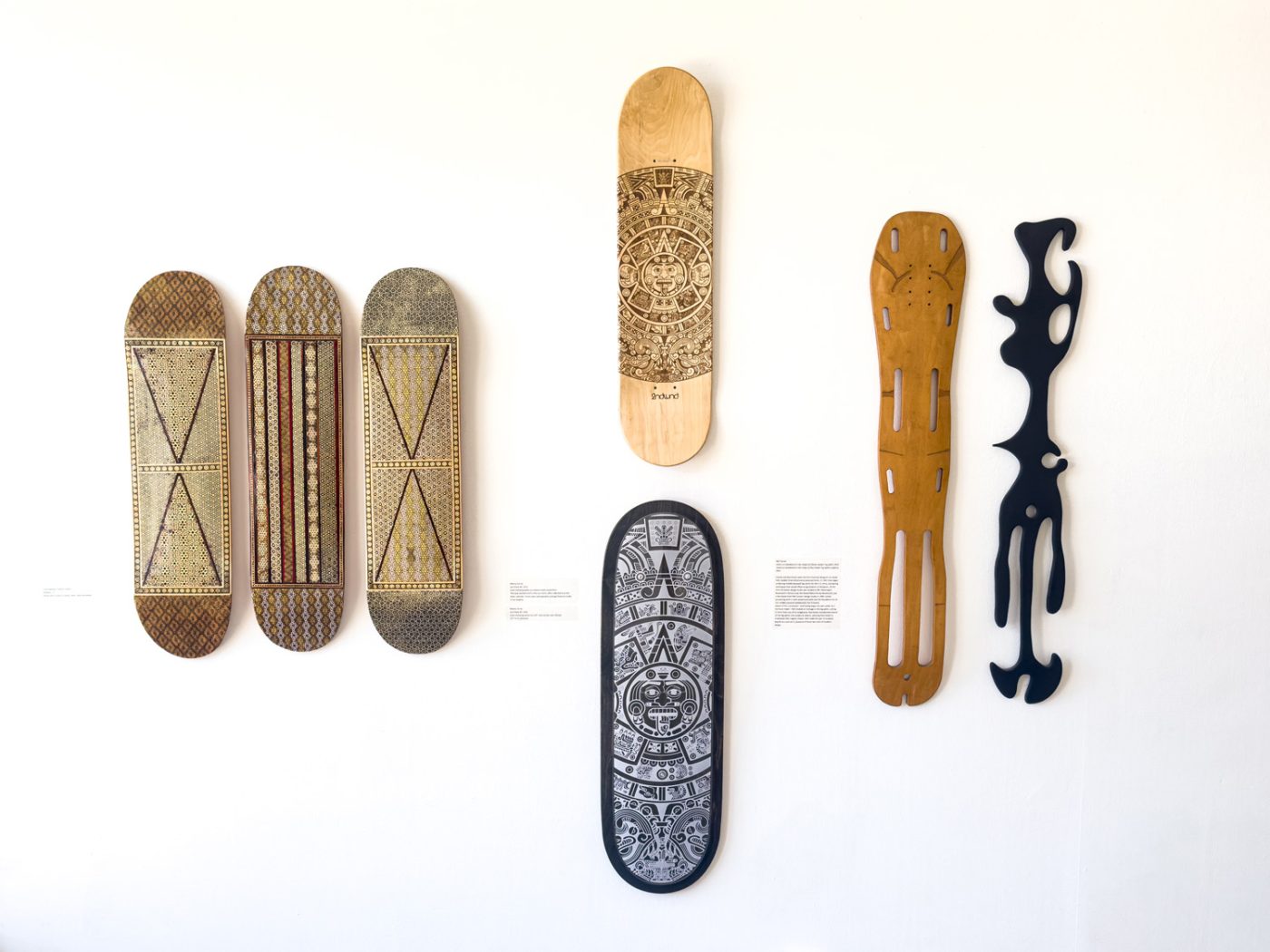
Creations in the exhibition range from early handmade boards assembled from scavenged parts to contemporary performative works by artists, skaters and makers, including the show’s cocurator, conceptual skateboarder and multimedia artist Abe Dubin (aka Orange Man); experimental builder Sam Helwig; custom shaper Todd Huber; Pop artist Tony Peralta; and the California studio Finless Skateboard Co. Some are meant to be ridden. Others are intentionally impractical, funny or experimental — boards carved into a circle or reshaped into an orb.
“First and foremost, the exhibition looks at the skateboard as a constructed, designed and crafted object in three dimensions,” says Emily Zaiden, lead curator and director of Craft in America. “While some exhibitions, and there have only been a few thus far, have explored skateboards as canvases for art, none have explored the entirety of all components that come together to form a skateboard: Its history, development and the creative interpretations and variants that have emerged over the decades.”
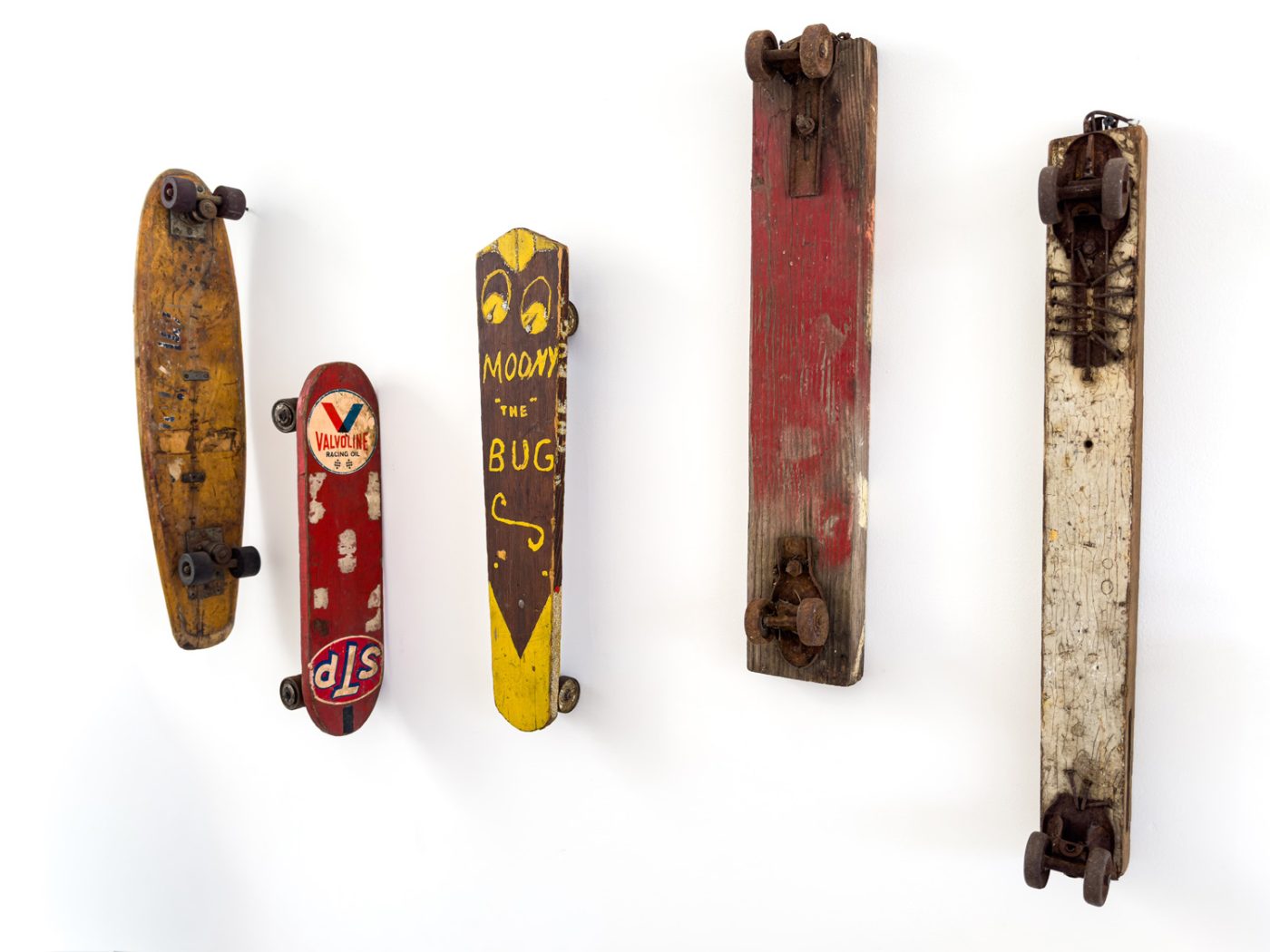
The earliest skateboards, likely invented in Southern California in the early 1950s, had been assembled from repurposed parts. “The first skateboards were simple, homemade devices made from cobbling together old roller-skate wheels and available planks of wood,” Zaiden says. “The skateboard is a story of American craft and ingenuity that was very widespread, and driven by kids.”
All skateboards consist of three main components: a deck, wheels and trucks (the metal axles underneath the board). Over time, wheels evolved from metal to clay to polyurethane; trucks became more responsive and durable; and decks shifted from narrow salvaged planks to curved maple plywood offering strength, flexibility, lightness and control.
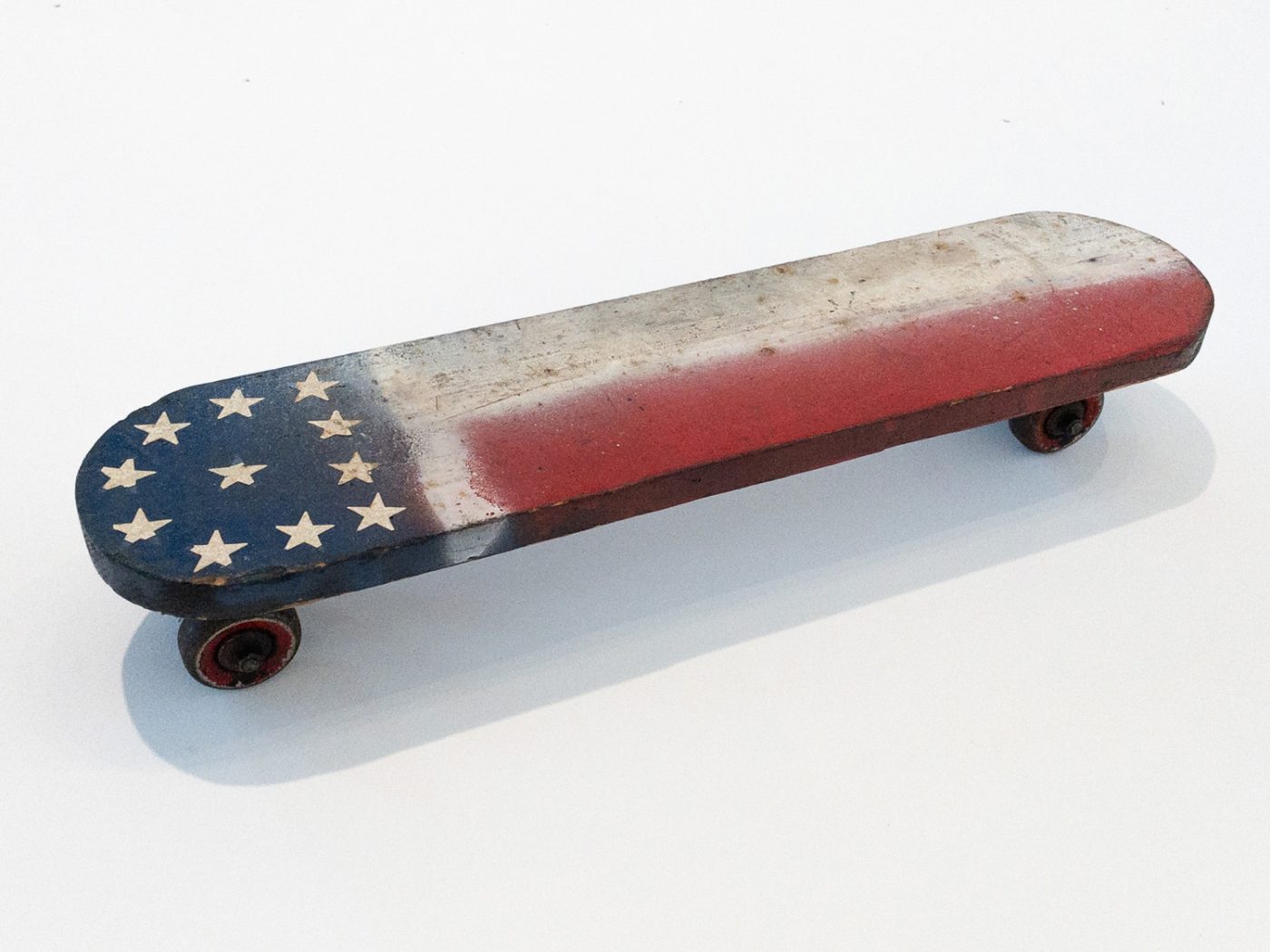
“All of these components have been shaped, engineered, imagined, reinvented and artistically envisioned countless ways since the first versions emerged in the nineteen fifties,” Zaiden says.
The first board manufacturers, surf-culture companies like Hobie and Makaha, introduced logos to their decks in the 1960s, but it was the explosion of graphic identities in the late 1970s (and especially Jim Phillips’s surreally creepy illustrations for Santa Cruz Skateboards) that helped establish the deck’s underside as an image-bearing surface.
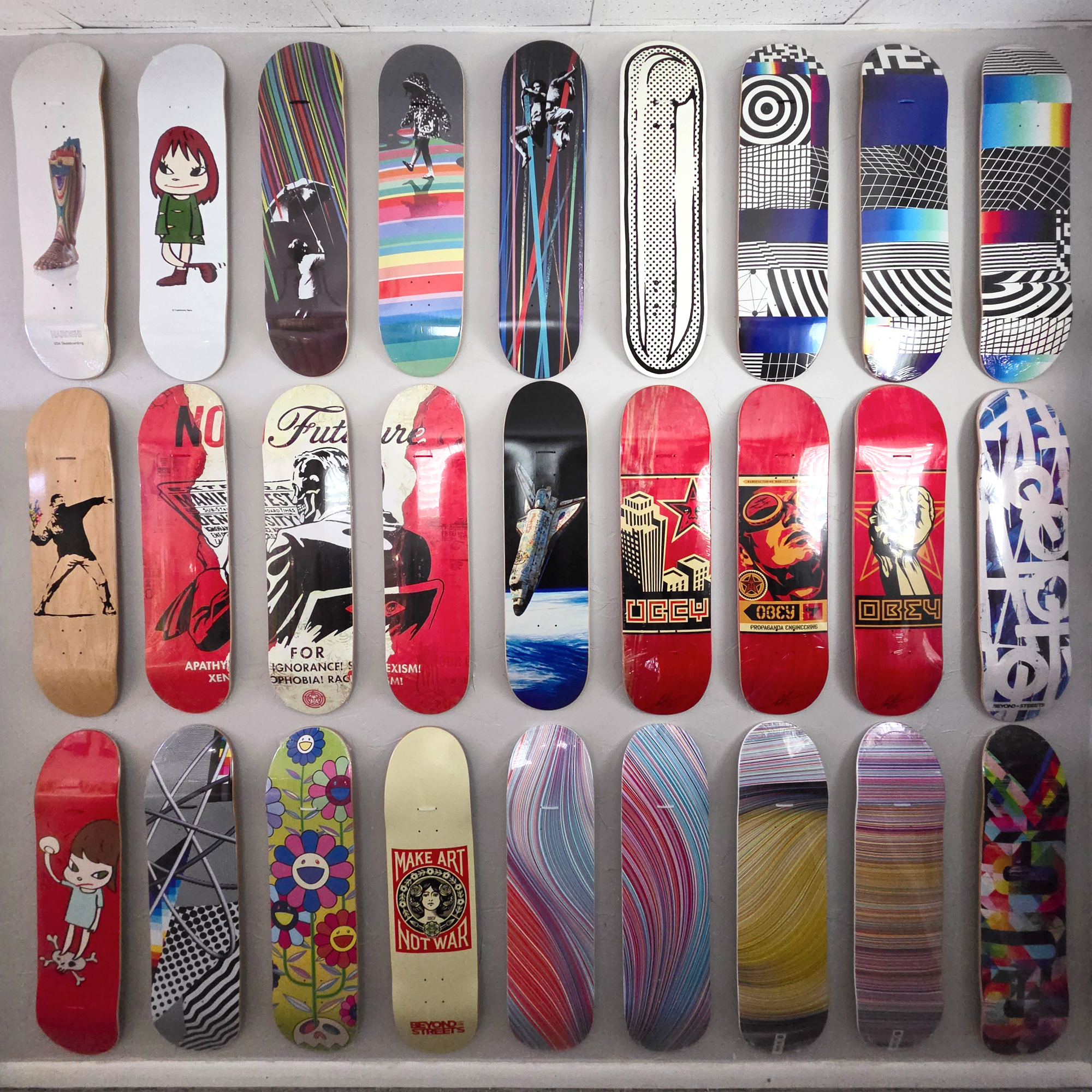
Street artists, who were already working with spray-paint murals, wheat-paste posters and pop-up sculpture, moved easily into the format, and many of them skated as well. Figures such as Mark Gonzales, Barry McGee, Futura, Shepard Fairey and FAILE did not arrive at the skateboard as outsiders; their work already inhabited the visual environments it lived in.
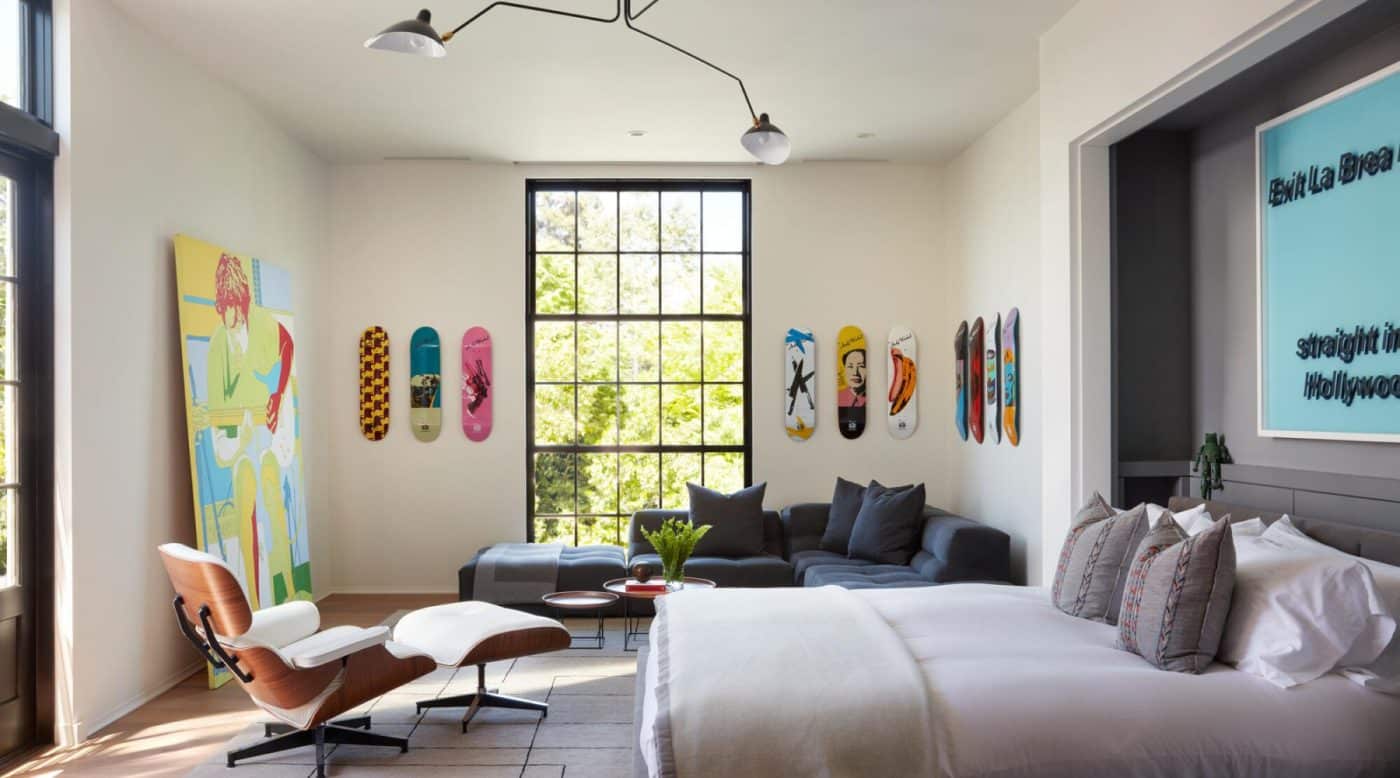
Around the early 2000s, collectors began to notice, and savvy brands like Supreme started commissioning decks by such blue-chip names as Damien Hirst, Richard Prince, Christopher Wool, Nan Goldin and Urs Fischer.
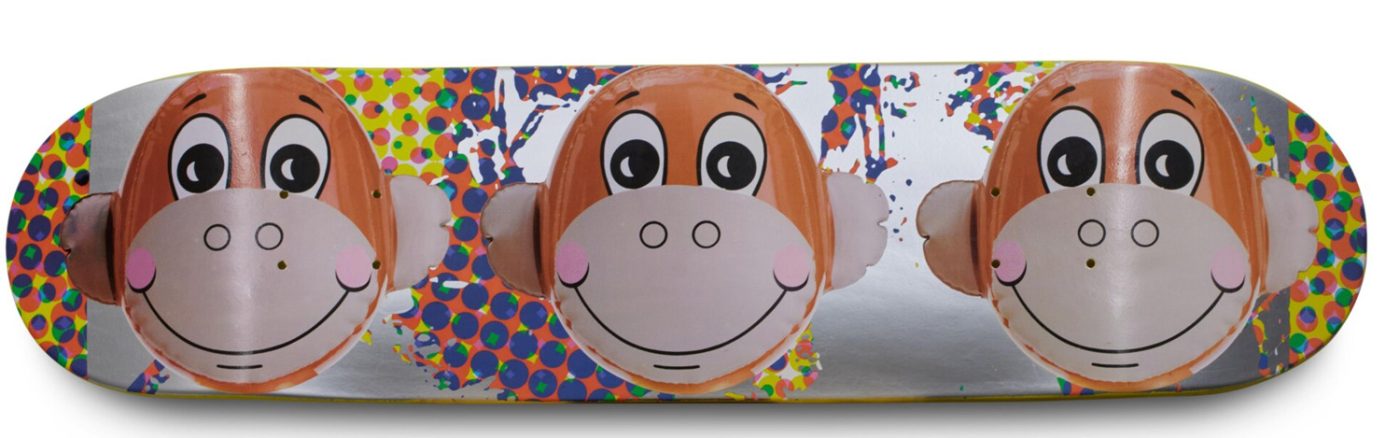
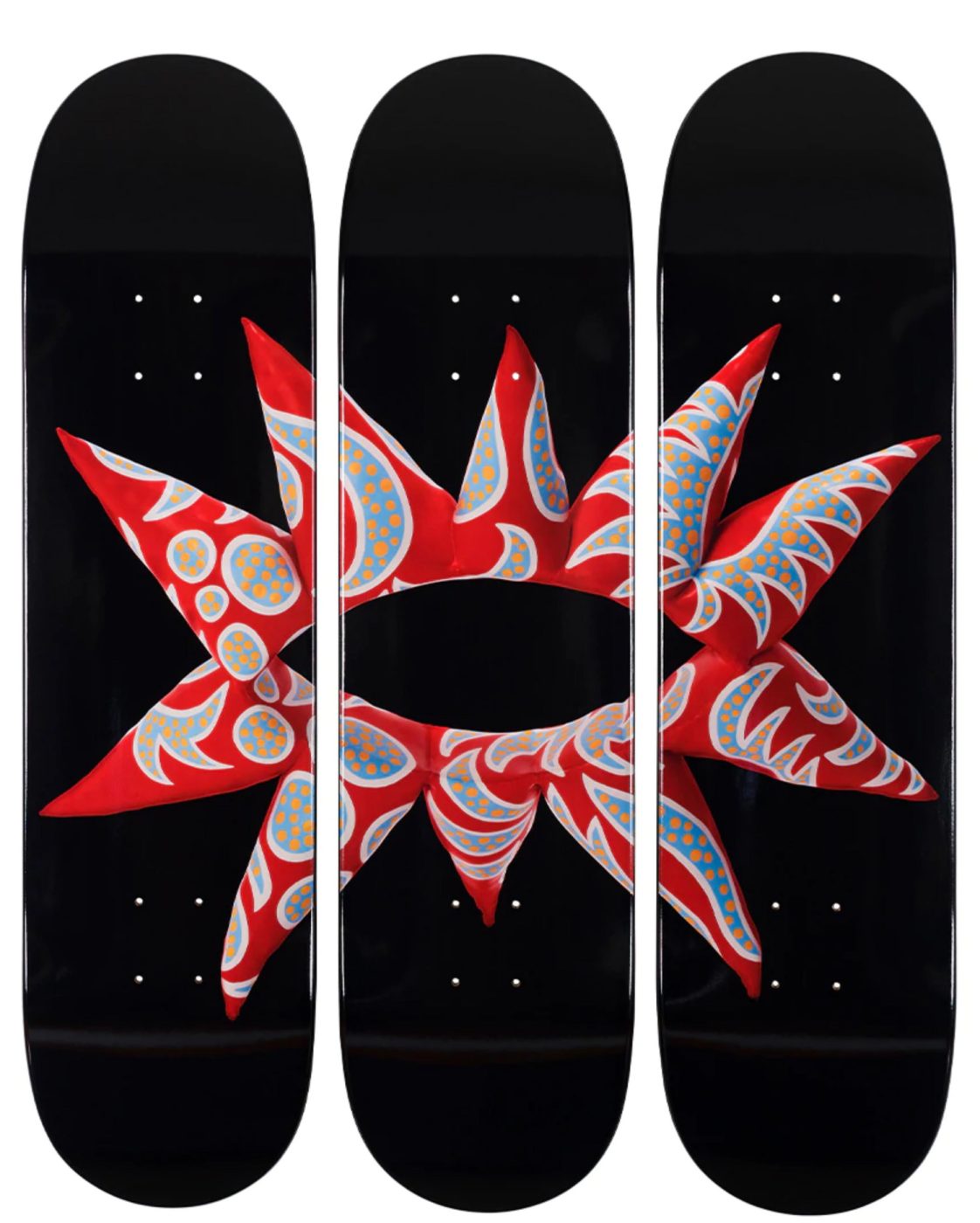
Not long after, museum editions, including ones by Yayoi Kusama and Jeff Koons, produced by major institutions like the Broad in Los Angeles and the Museum of Modern Art in New York, reinforced the idea of the skateboard as a sculptural multiple.
“Alpha 137 Gallery started collecting and selling artist-designed skateboards about fifteen years ago — during the art-skateboard boom, a cultural moment that represented a broader convergence of fashion, street culture, fine art, merchandise and the art market,” says Nadine Witkin, the New York gallery’s founding director. “It seemed like the skateboard was becoming the ‘new print’ for the younger generation of collectors.”
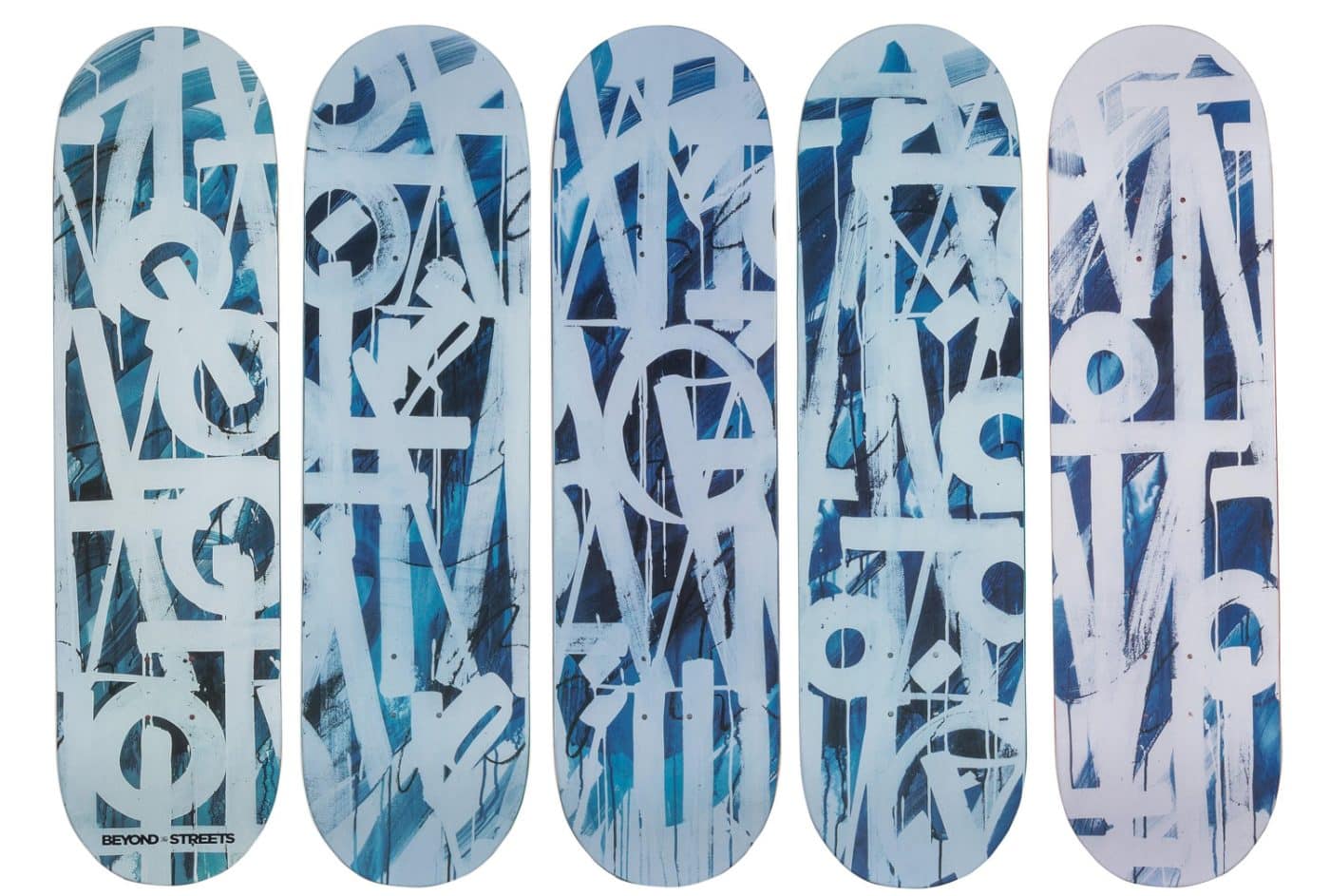
“Artist-designed skate decks offer good value compared with works on paper,” says Ron Kosa, founder of Lot 180 Gallery, in New York and L.A. “They are made of maplewood and have more dimensionality.”
As more artists and estates engaged with the category, distinctions between editions began to matter. “Eventually, the market got oversaturated, as hundreds — if not thousands — of artists and their estates were doing skate decks,” Witkin says.
“A decade ago, many of our skateboard clients seemed to be interior designers or finance bros,” the gallerist adds. “Nowadays, they are mostly mainstream art collectors.”
Recently, she sold a hand-signed Koons Ballerina deck, produced by the Broad in a limited edition of 140, to a septuagenarian client in Alabama, who acquired it alongside non-skateboard works by Frank Stella, Roy Lichtenstein, Thelma Appel and Judy Chicago.
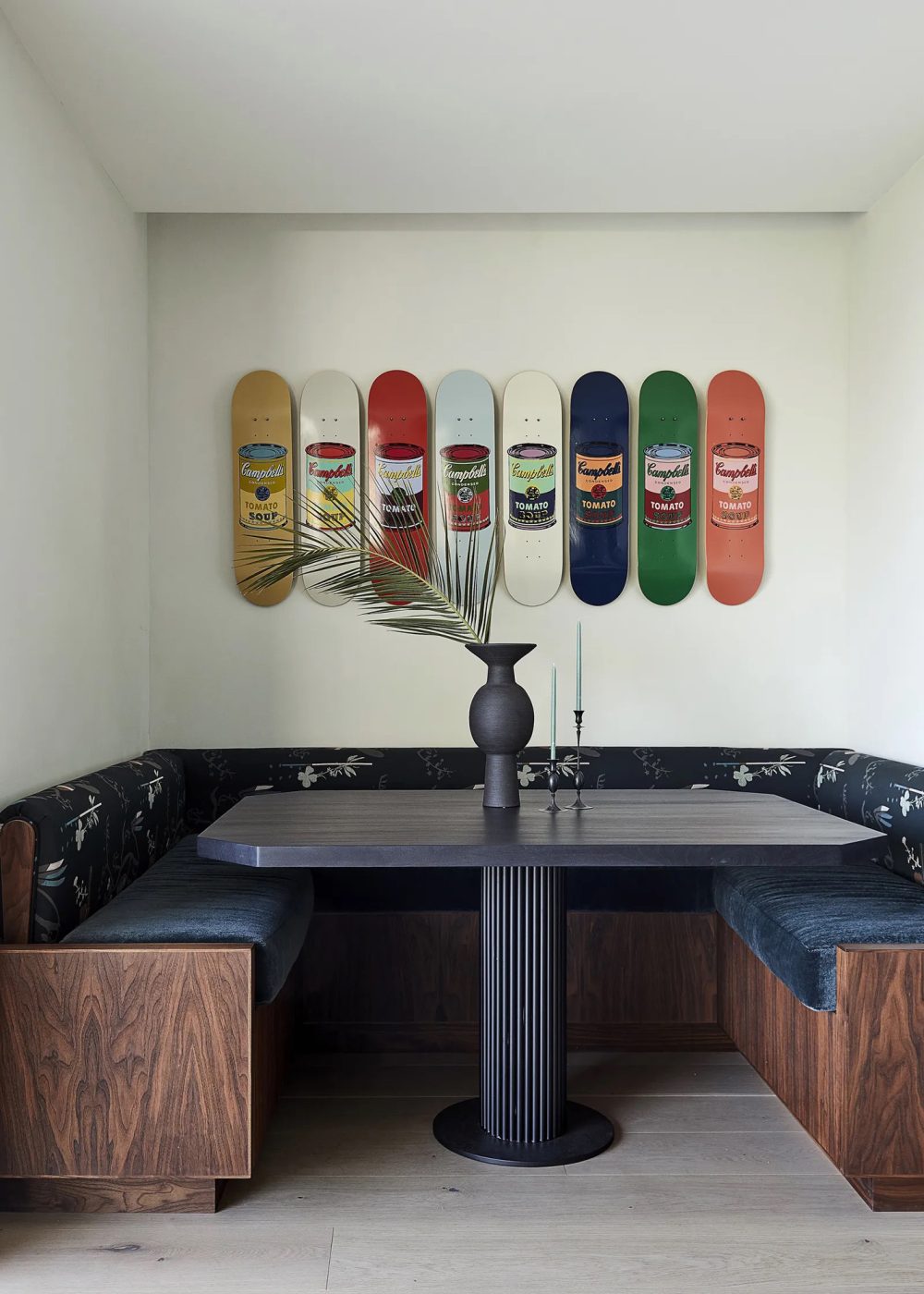
Around the same time, another prominent collector, in Silicon Valley, purchased a Kusama deck together with two Louise Bourgeois textiles. Ai Weiwei’s politically messaged skateboards, meanwhile, have found an audience among European collectors. The change in demographics, Witkin notes, reflects the fact that the most-sought-after examples are scarce, editioned works rather than decorative open releases.
Takashi Murakami’s decks are especially coveted. Kosa cites decks sporting estate-approved reproductions by Andy Warhol and Jean-Michel Basquiat as his biggest sellers.
For Quinn Edwards, founder of New Union Gallery, in Salt Lake City, the connection between skateboarding and artist-designed decks never required translation into art-world terms. “New Union is not a fine-art gallery that dabbles in street art. We have always been street-art first,” he says. “Working with artist-designed skate decks wasn’t even a conscious decision — it’s who we are.”
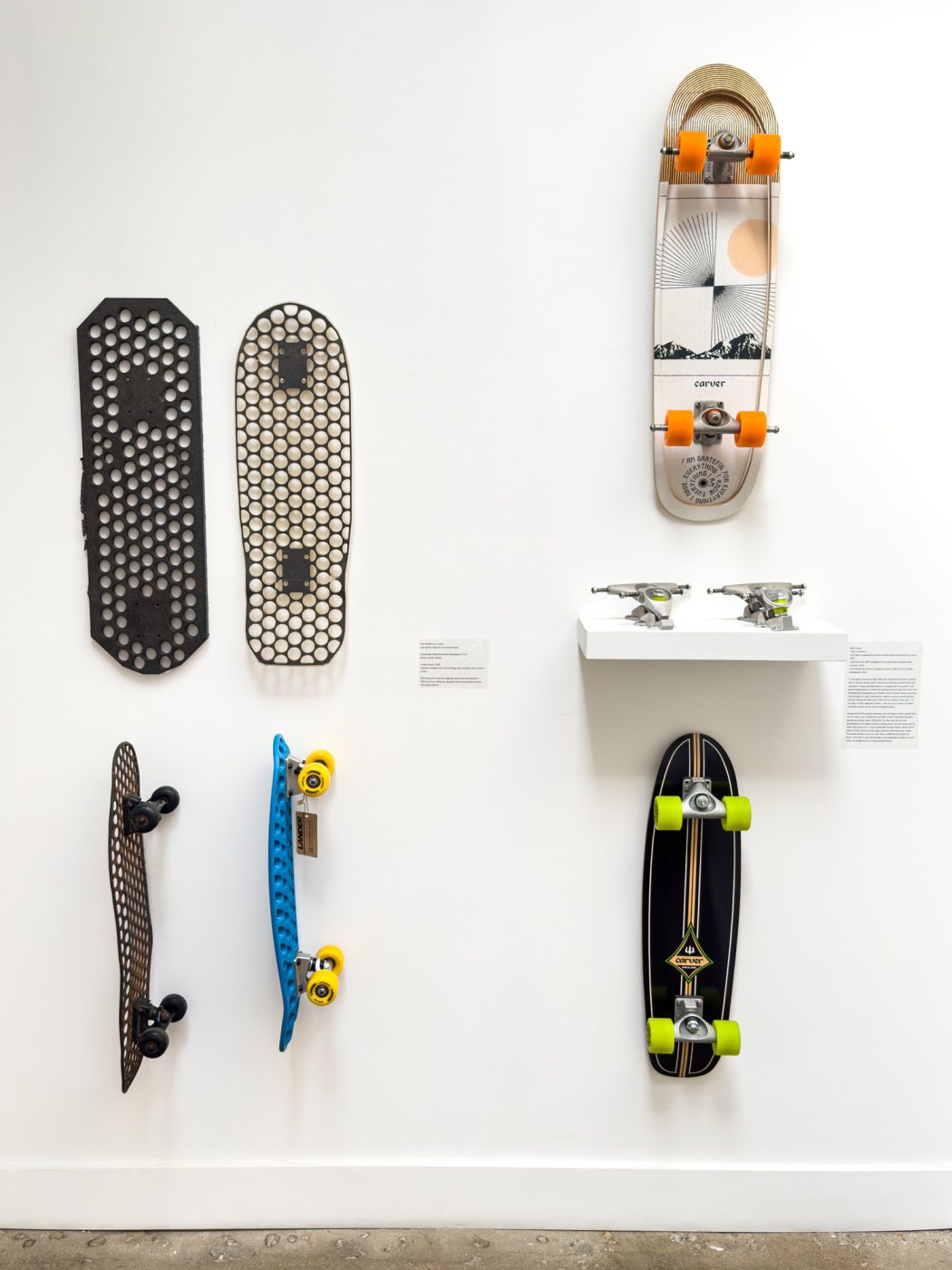
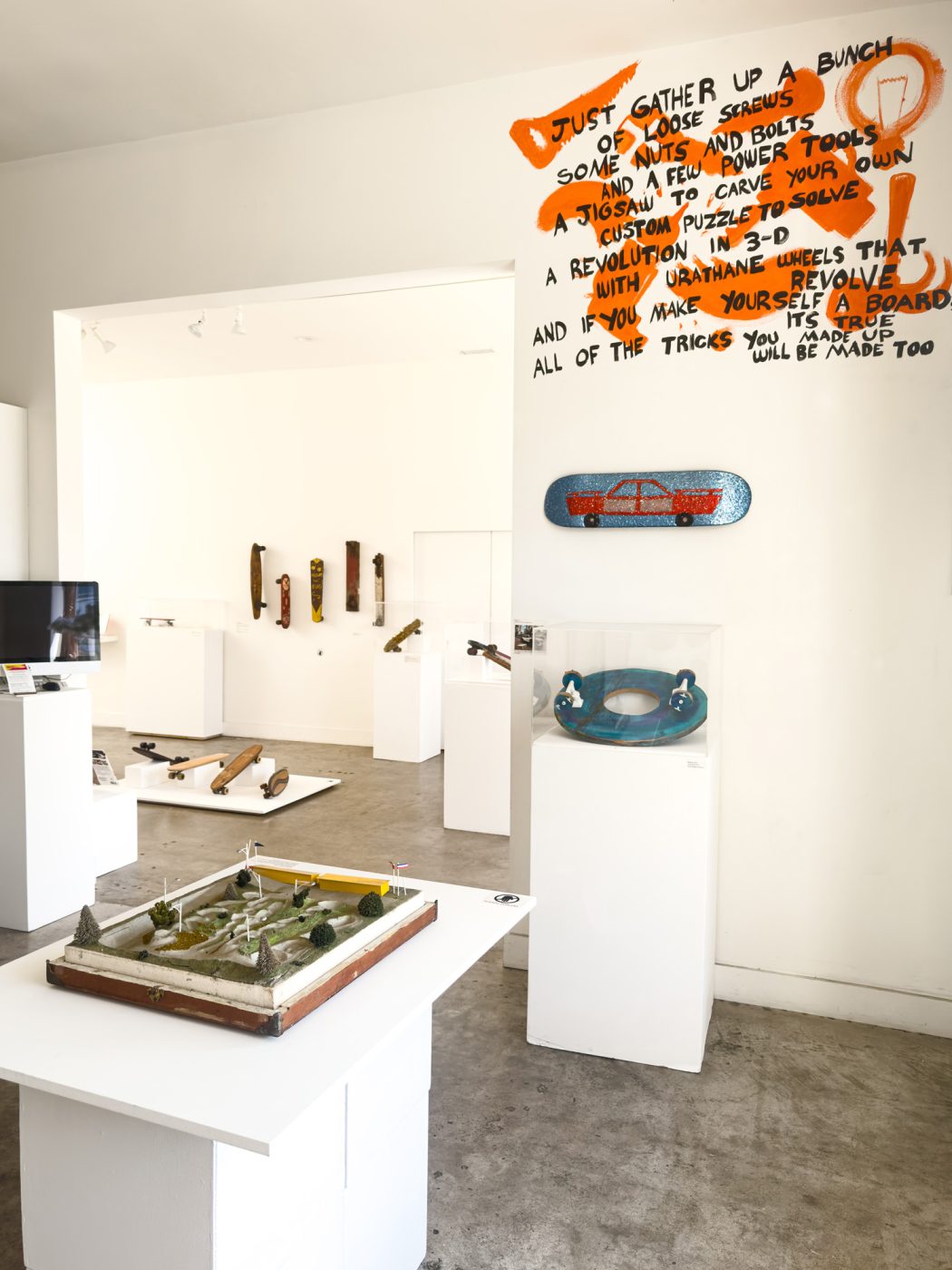
Viewed through the lens of the Craft in America exhibition, the emergence of artist-designed decks is part of a continuation.
“We place functional boards side by side with the skateboards that are purely sculptural and intended as ‘wall art,’ and those coexist along with the highly conceptual boards that are created by skateboard artists like Abe Dubin,” Zaiden says. “Expression in skateboards is largely about movement and performance. And it also overlaps with video art.”
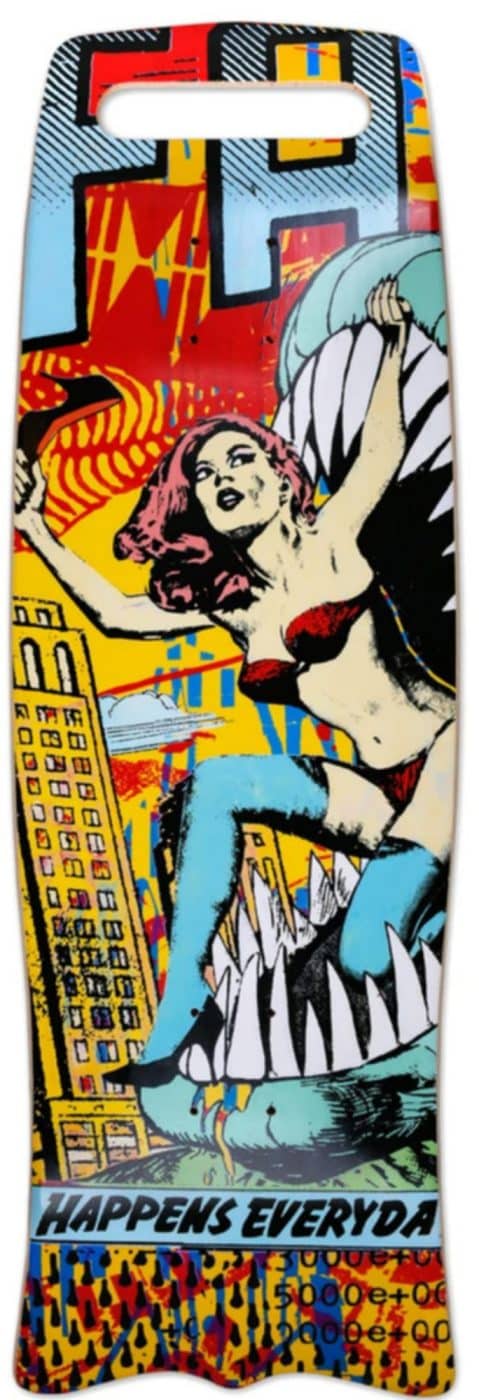
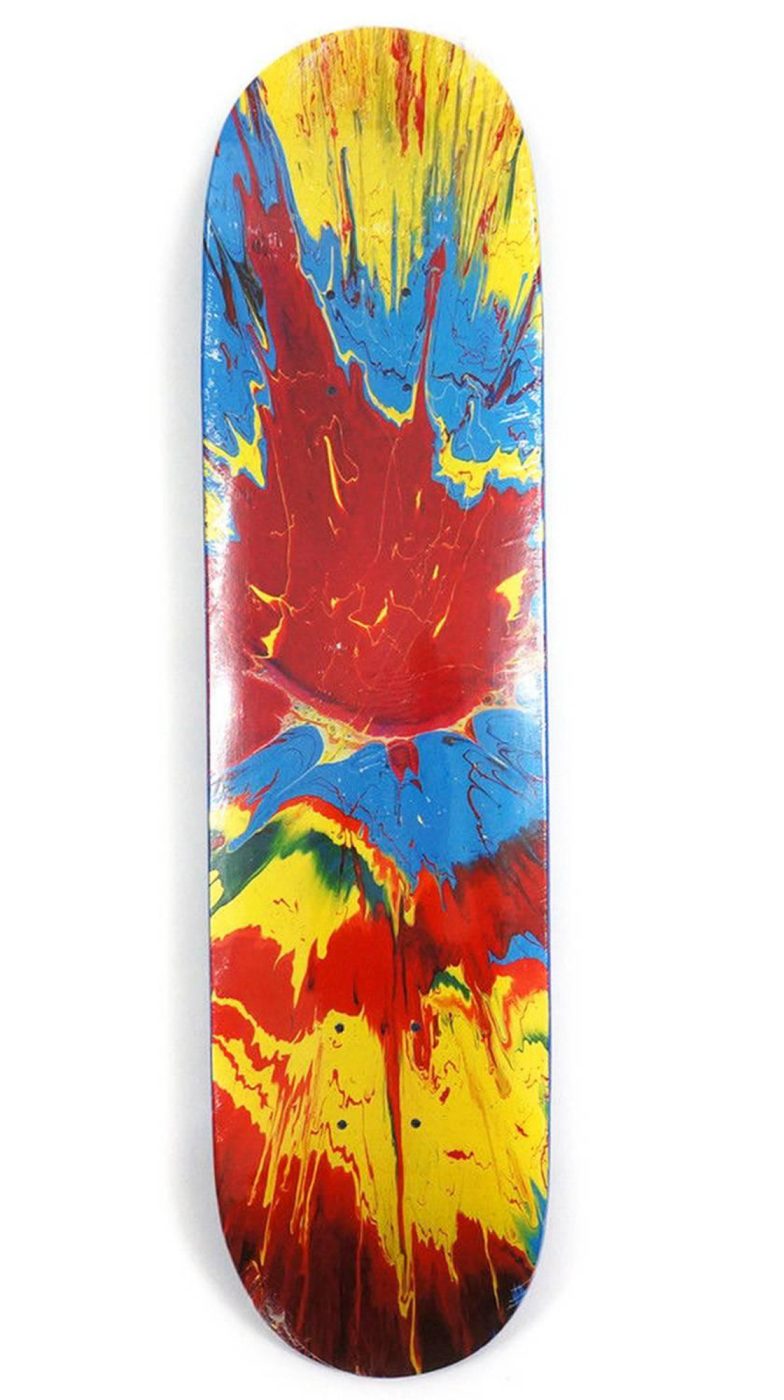
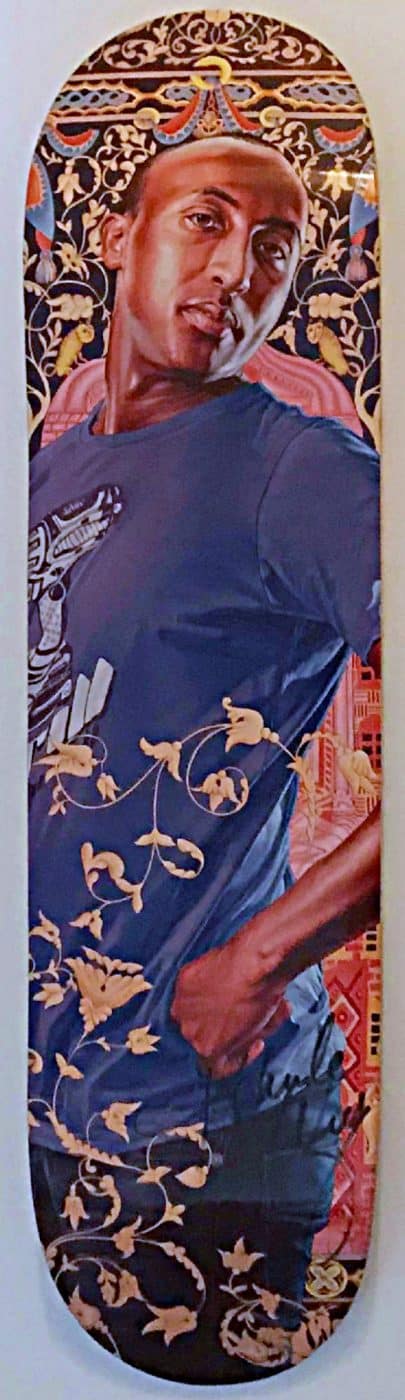
Left to right: Art decks by Faile, Damien Hirst and Kehinde Wiley
Recently, Edwards went to a club show by the pioneering hardcore band Black Flag and bought a skateboard from the merch table. A few minutes later, he had it signed by several members of the group.
Regardless of its resale value, he says, the piece, hanging on his wall, will always start a conversation. “It’s a reminder that even though my hair is going gray and my back hurts more than it should, we can still bond about an awesome subculture that shaped who we are.”
Like my old Slayer-signed board, which may still be tucked away in my mom’s attic, his Black Flag deck stopped being something to ride and became something to preserve.