January 11, 2026Interior designers often wax rhapsodic about their clients — sometimes genuinely, sometimes less so — but Caroline Rafferty’s latest undertaking was an honest-to-goodness labor of love: Her clients were her aunt and uncle.
The Palm Beach–based Rafferty had done work for the couple — an Egyptologist and a Broadway producer, respectively — before, but this house, in West Palm Beach, represented an important mileston for her business: It was the first time her namesake firm had joined a project before the site was even acquired. “We felt more attached to it in a lot of ways,” she says. “For my team, it was a huge period of growth.”

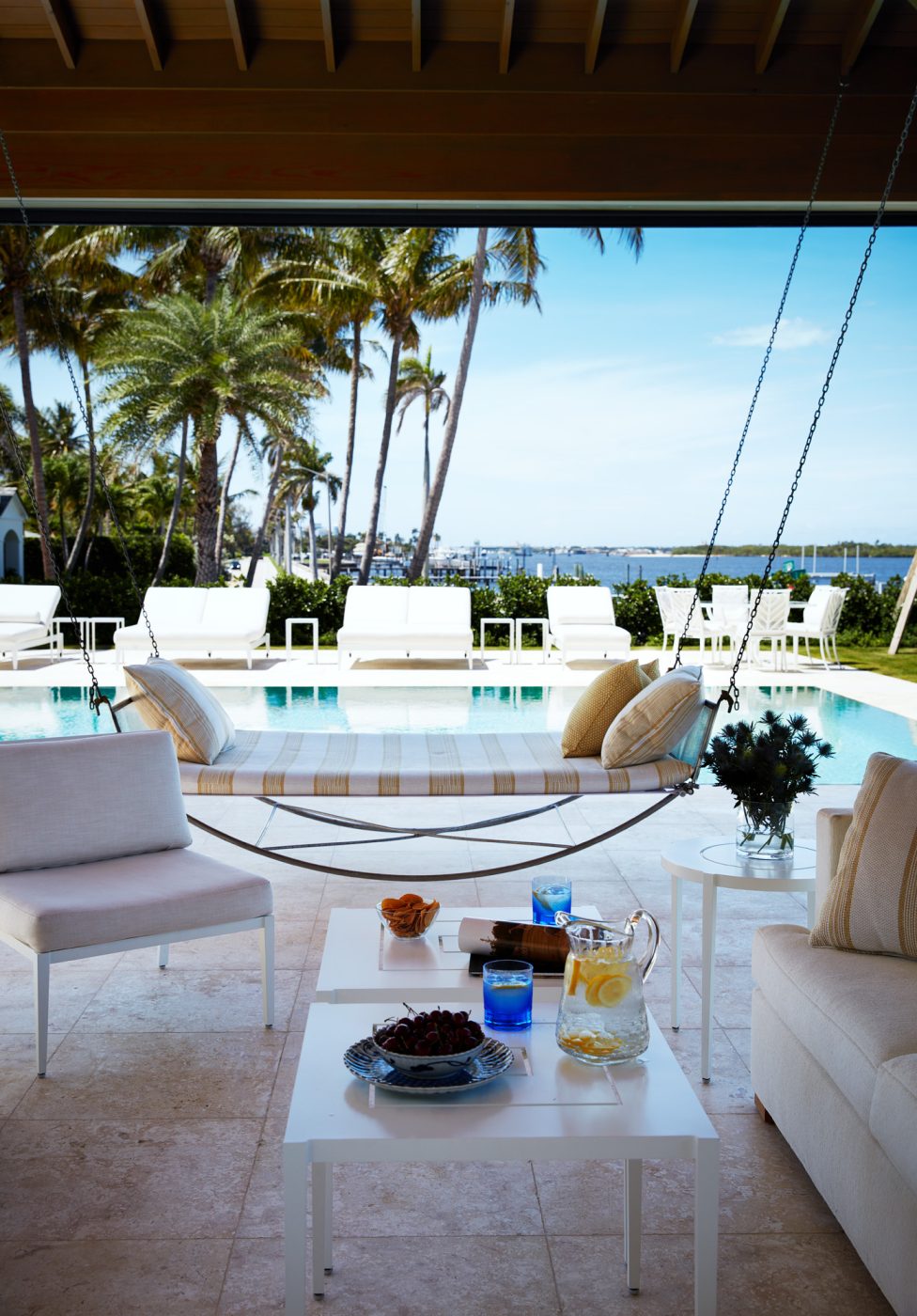
Her aunt had worked with architect Daniel Kahan, of local favorite Smith and Moore Architects, on her previous residence, which was located across the Intracoastal Waterway in Palm Beach proper, and turned to him again for this new build. She and her husband had several priorities: creating a house conducive to multigenerational living during their adult children’s visits; showcasing their substantial collections, which range from Middle Eastern and AsiaN ANTIQUITIES to contemporary art; and maximizing the advantages of the parcel of waterfront land.
In response, Kahan created a structure representing a sophisticated take on what he calls the modern vernacular. “It’s not too slick, not too cold — really, a very warm, well-proportioned scale to be lived in, as opposed to some of these grand, more contemporary places,” he says. Looking to architects like Walker Warner, he sought to interpret tropical and subtropical design for South Florida, bringing the outside in.
To make the 12,000-square-foot floor plan feel intimate, Kahan focused not only on scale but also on circulation. “Spaces that get used the most have a connectivity with one another,” he says, so you’re not constantly passing through vacant rooms that are not used on a daily basis. “It doesn’t feel like this empty, vacuous house.”
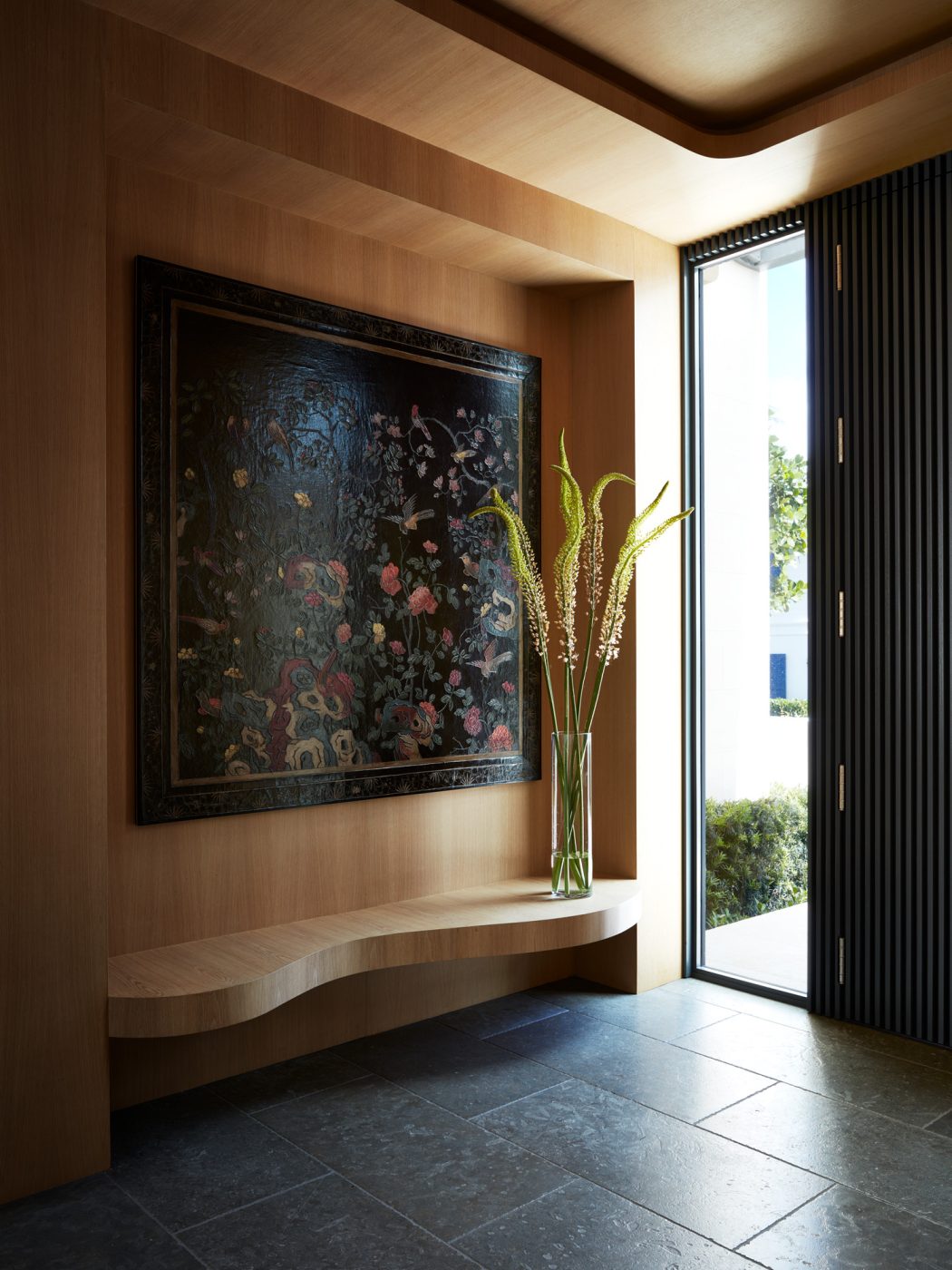
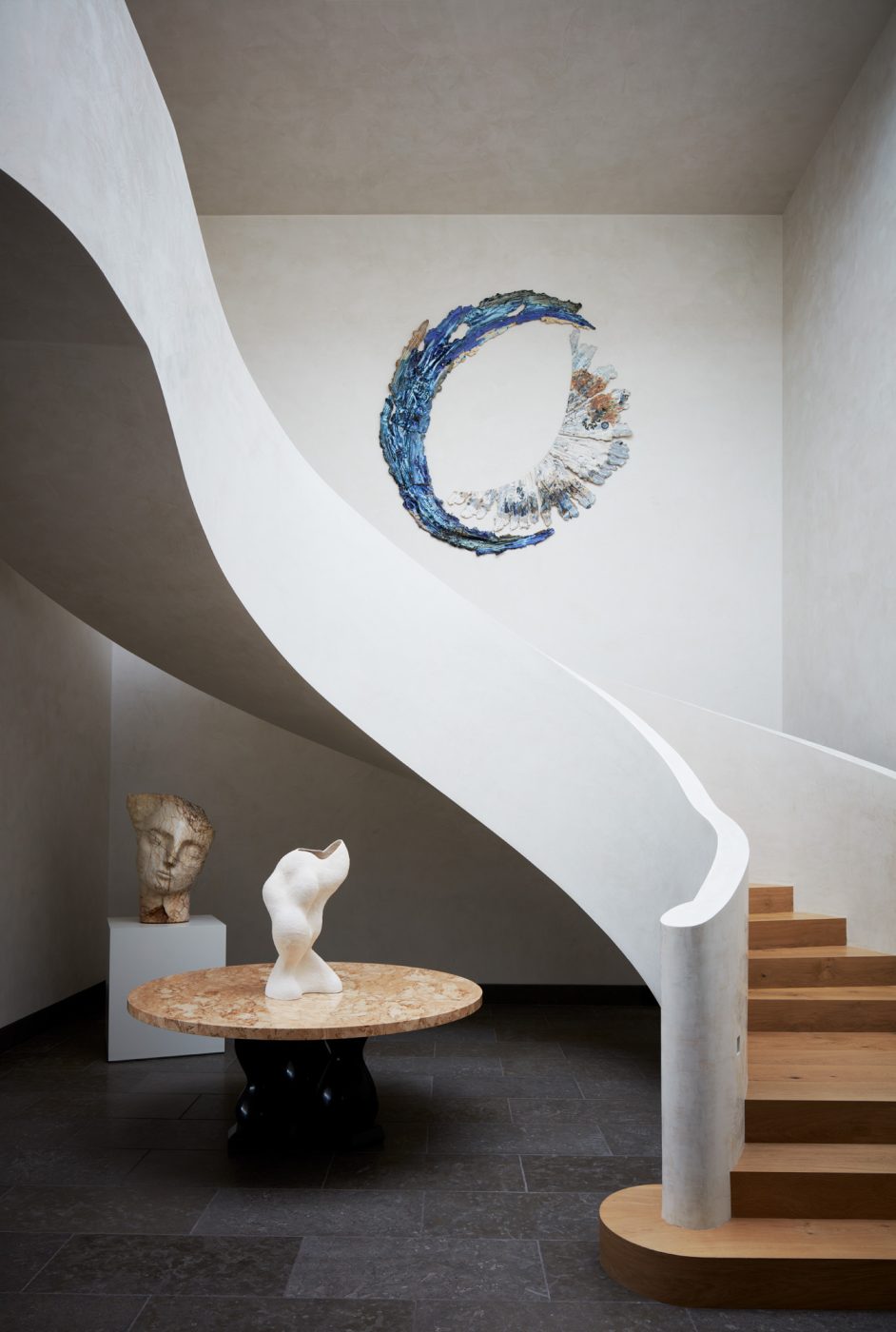
Natural materials like oak, Venetian plaster and hand-carved stone also warm up the home. Furniture by influential mid-century and contemporary designers offers some cosmopolitan punch, and elements like the sculptural, curved, slightly asymmetrical staircase that greets visitors in the foyer provide a dose of drama. Rafferty sketched out the design of the statement set of steps herself. “I wanted this stair to feel monumental and almost carved,” she says.
Before even mapping out the house’s footprint, Kahan put up scaffolding to help him optimize the Lake Worth vistas. “We moved it around to where they would want their bedroom and where the viewpoints from upstairs would be and from downstairs,” Rafferty explains. Kahan says such platforms are a typical part of his process when building a “very, very site-specific” house. He also raised the elevation of the property, which flood codes required but had the added benefit of maximizing the eastern and northeastern water views.
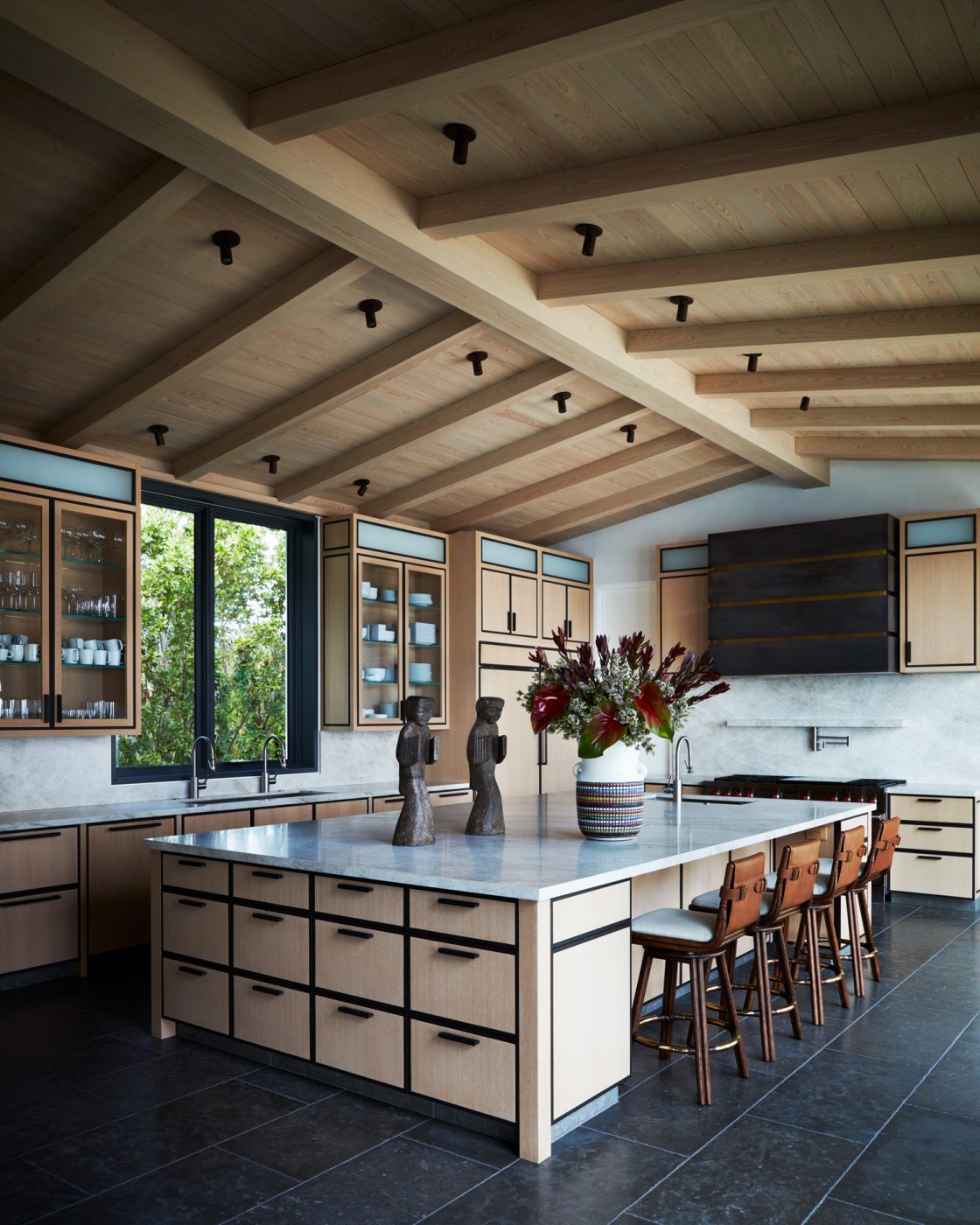
To comfortably accommodate the couple’s family, including grown children, their spouses and several grandchildren — who all gather together over the winter holidays — the house has six bedrooms, plus other rooms that easily convert to sleeping spaces. Kid-friendly details include not only performance rugs from Stark and many durable fabrics but also a home theater with a candy-laden snack bar (a favorite spot of Rafferty’s uncle too), a large swimming pool and a separate prep kitchen where much of the mess can happen while the family is hanging out in the spacious open main kitchen and great room.
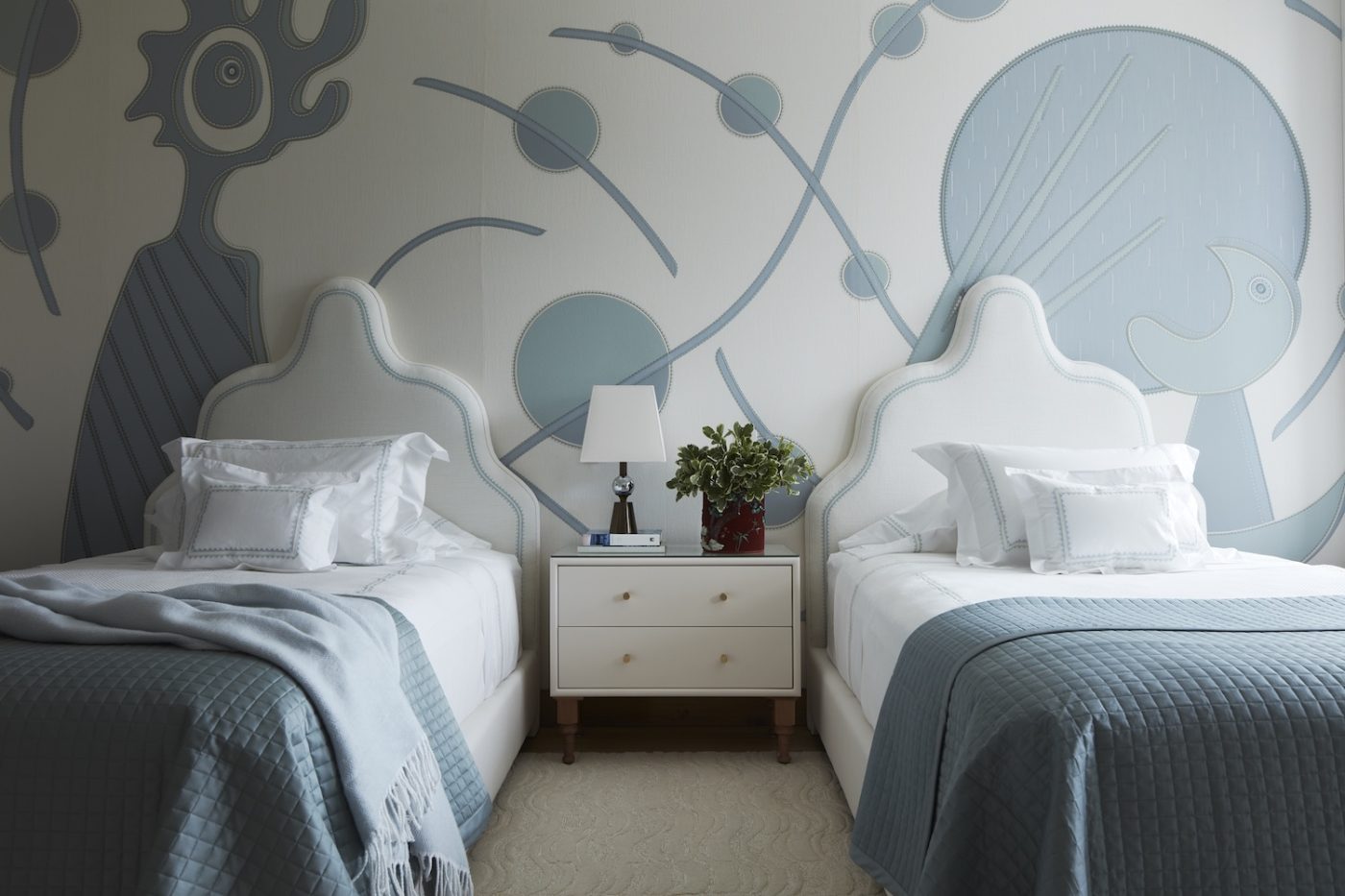
The child-centric showstopper, however, is the Miró room, a pale-blue space with twin beds whose walls are upholstered in a bespoke embroidered fabric that riffs on the Spanish surrealist Joan Miró’s signature motifs, with life-size whimsical creatures, arcs and circles. “We went for it,” says Rafferty. “We did a little sketch, and then Holland & Sherry did a really amazing job translating it.” The textile-and-wallcovering firm even employed different stitches for each element of the embroidery.
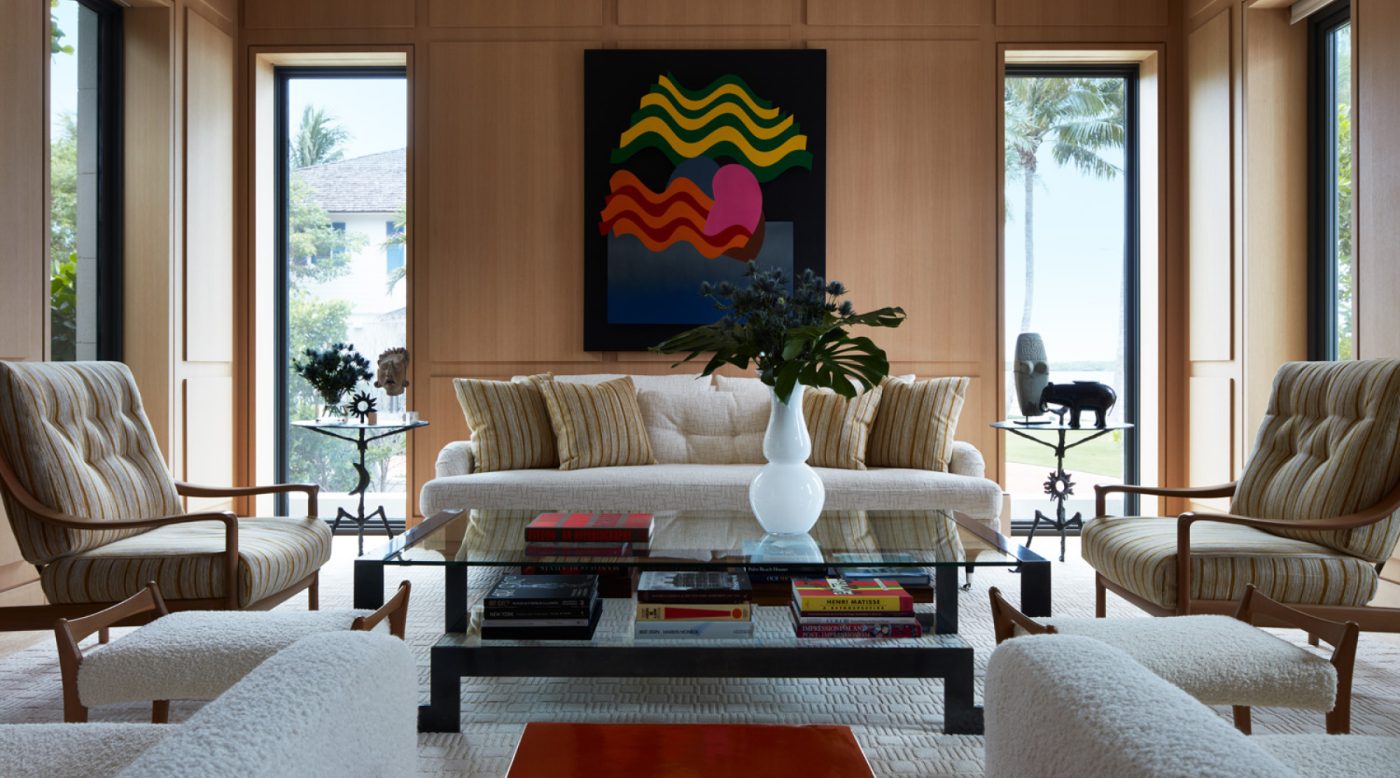
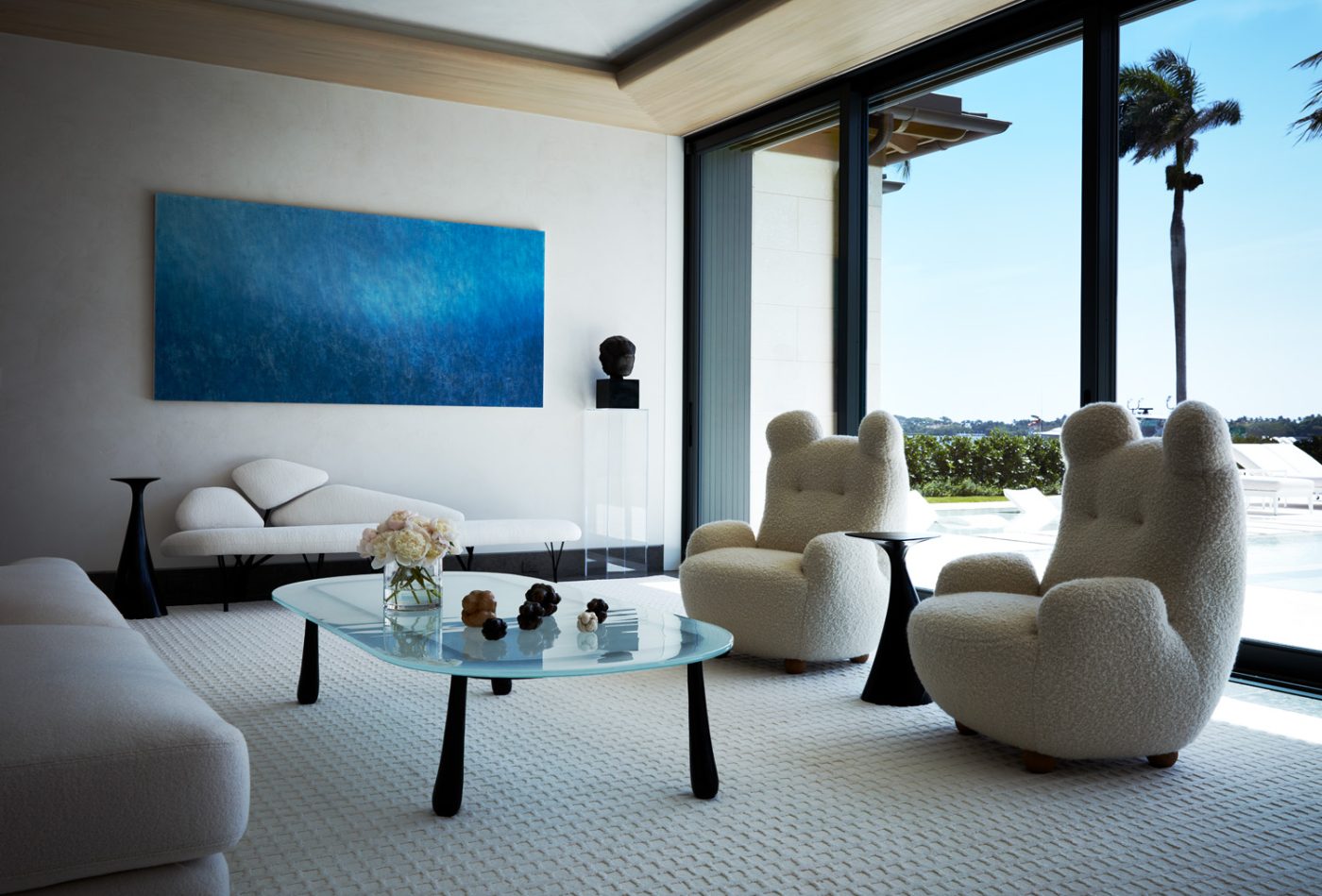
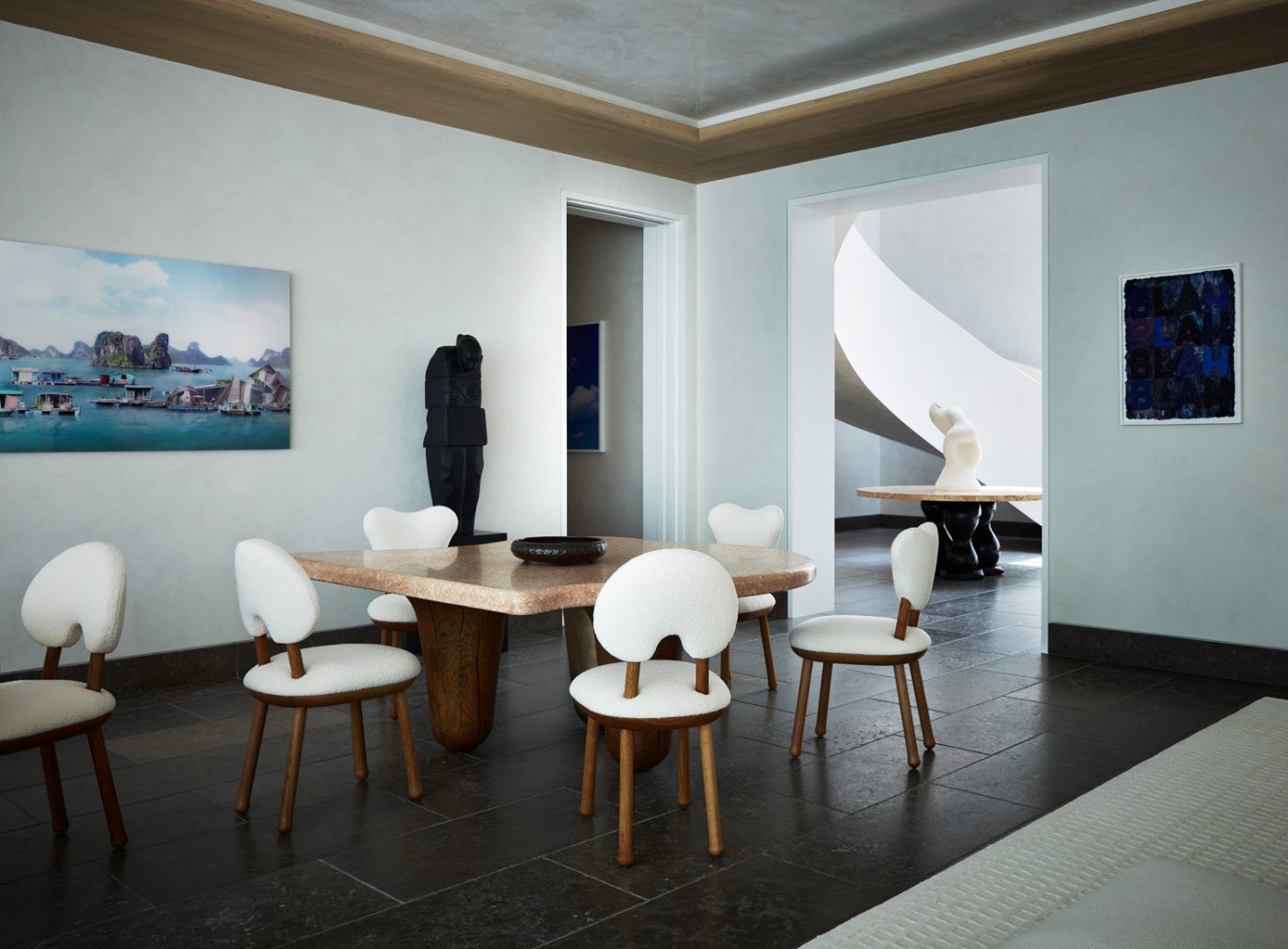
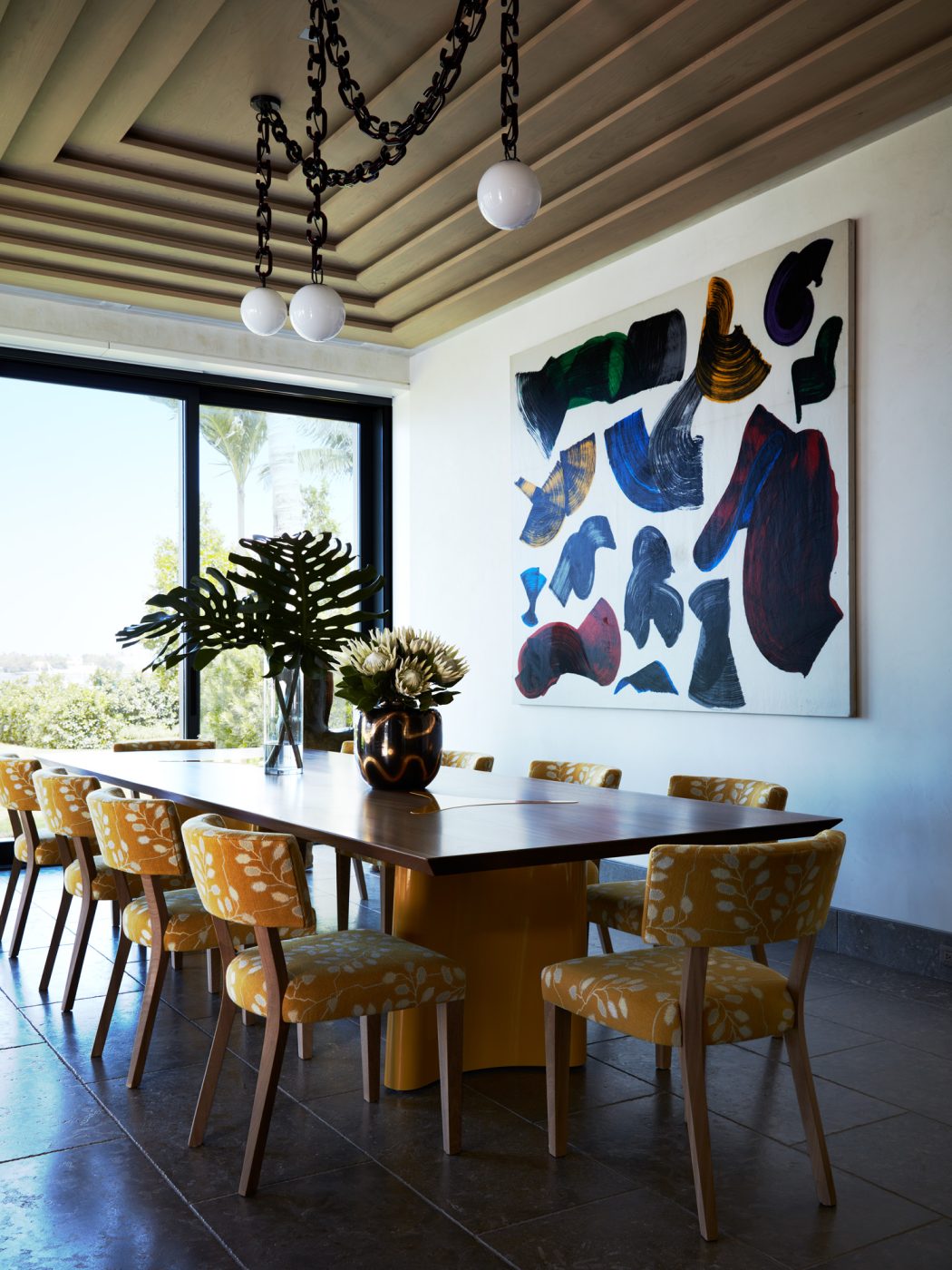
The Miró room apart, Rafferty relied primarily on a neutral palette throughout, letting the furniture’s silhouettes do the heavy lifting. In the great room, Noé Duchaufour Lawrance’s bronze-legged Borghese sofa resembling a pile of pebbles delivers the chic, while Pierre Yovanovich’s Papa Bear chairs — living up to their name in part through the “ears” atop their backs — offer a touch of whimsy. A pair of custom dining tables made of dappled resin with selenite flakes look like jigsaw-puzzle pieces resting atop ancient French-oak and natural-bronze legs.
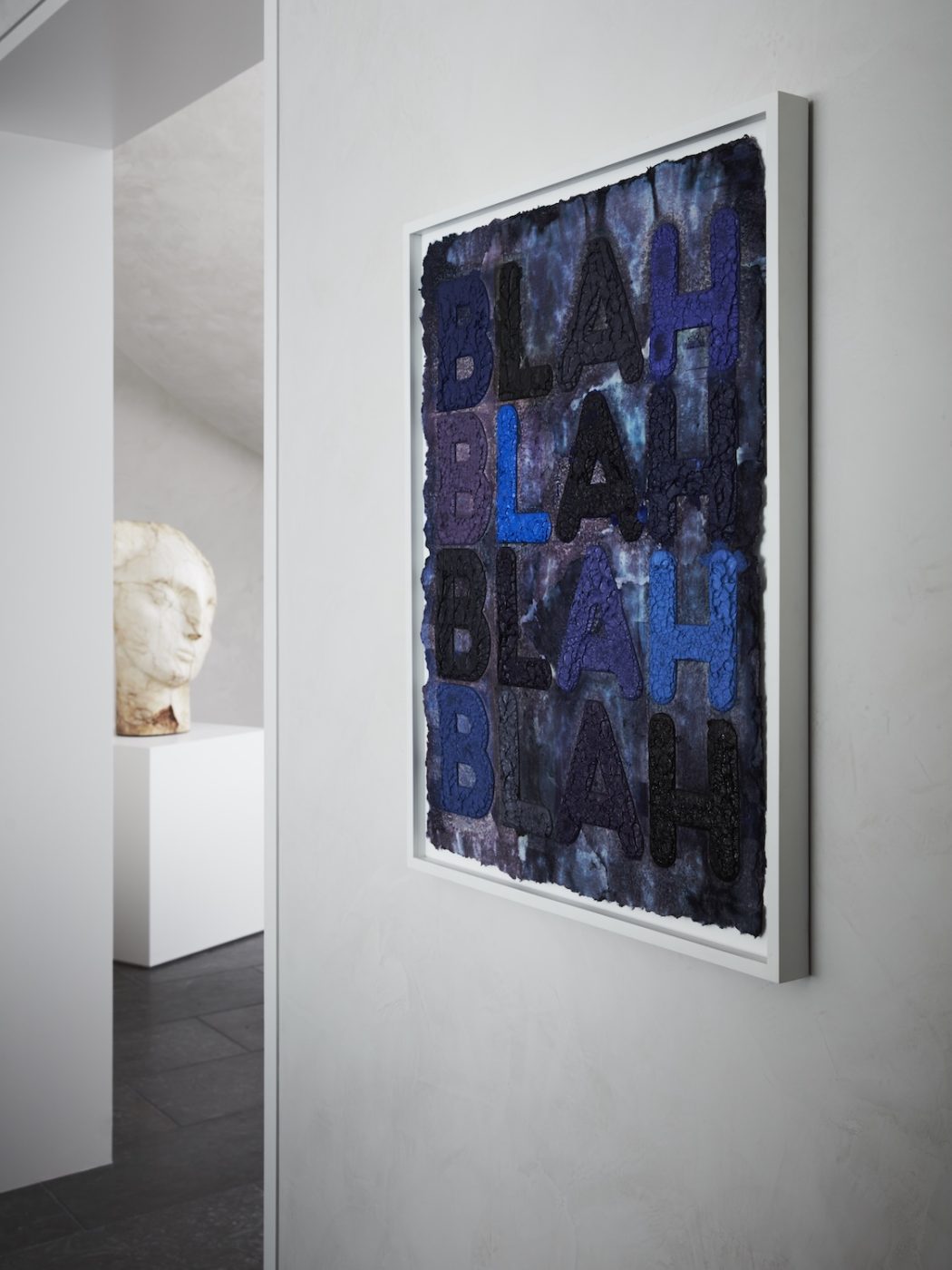
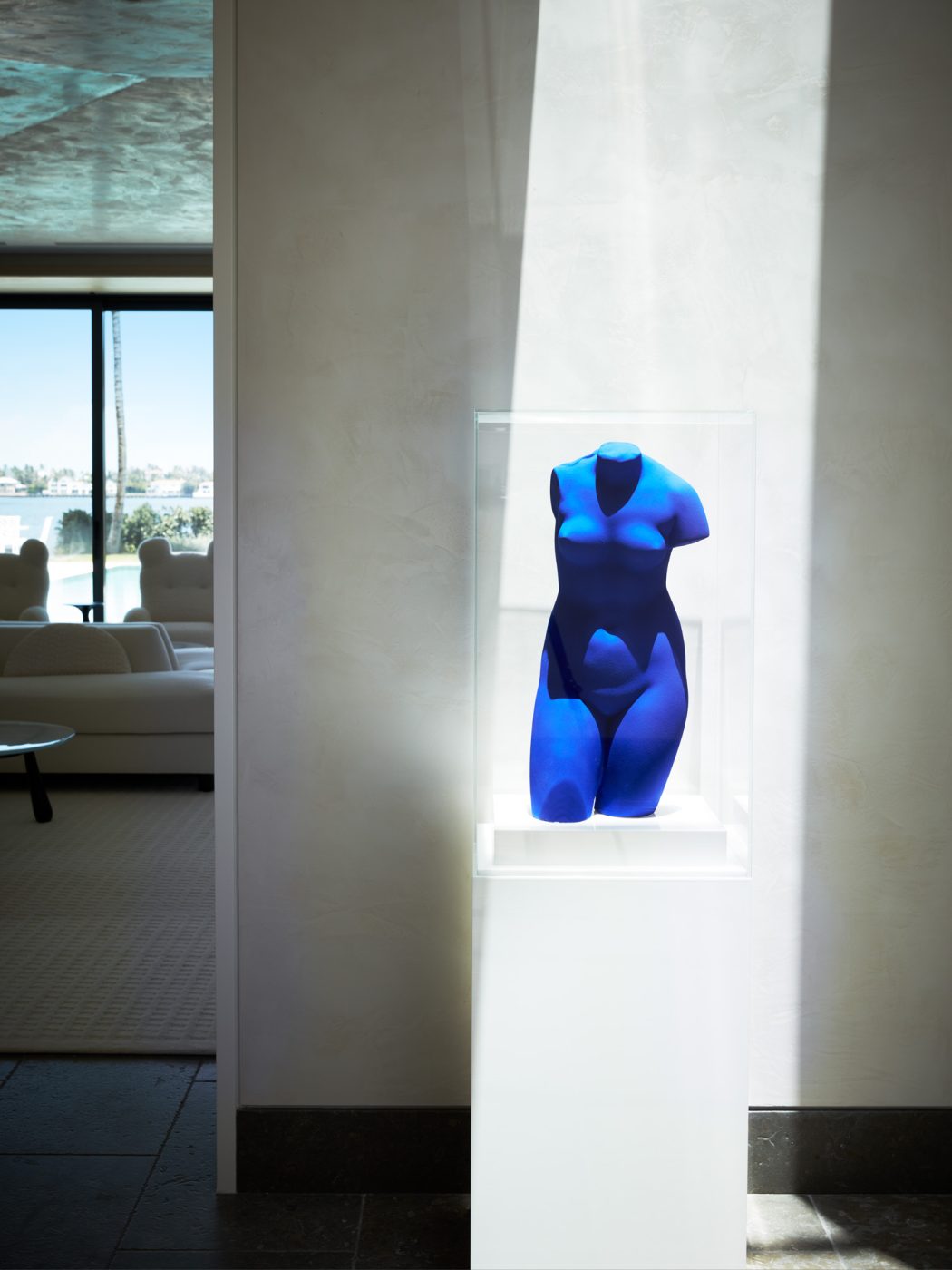
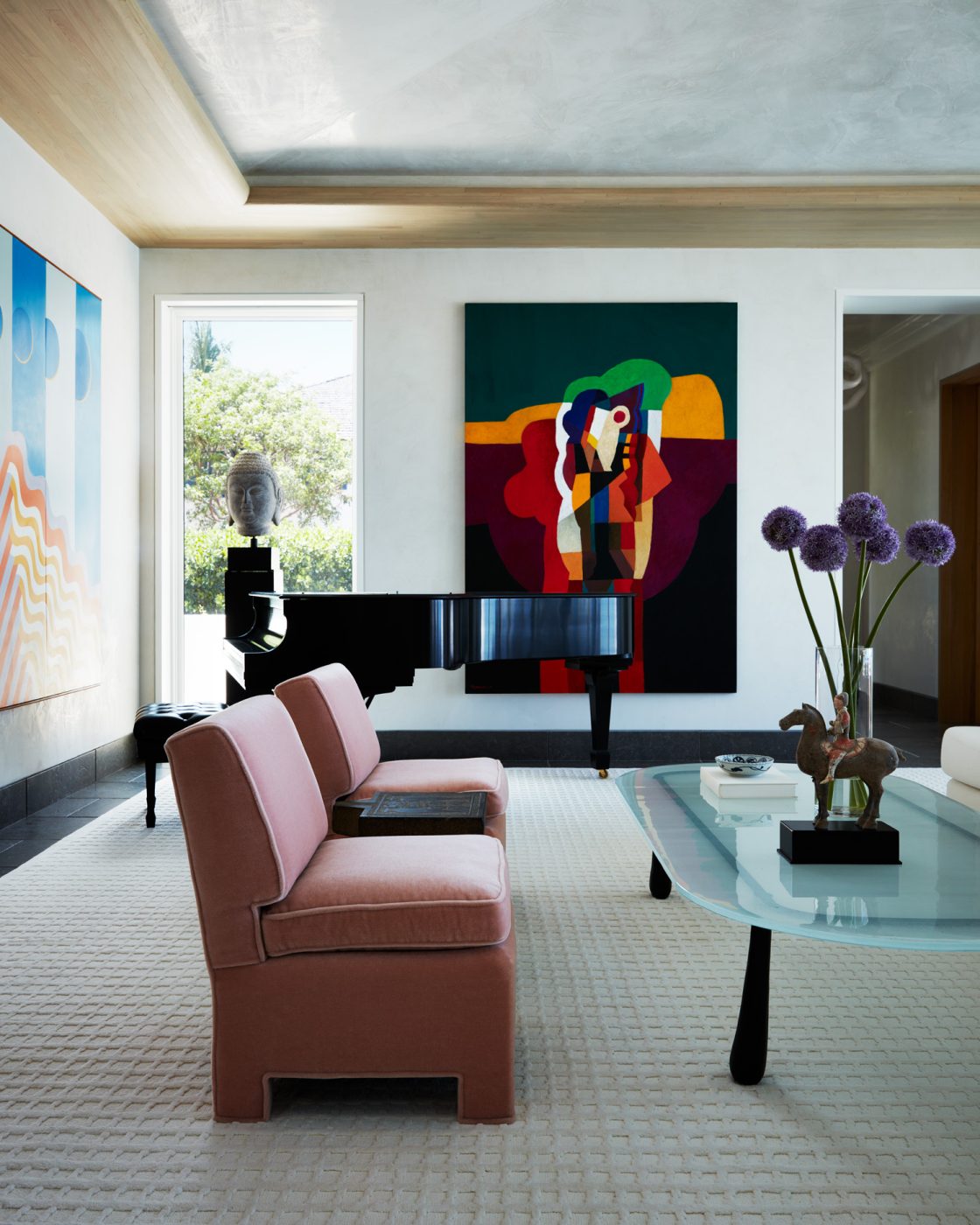
Contemporary art brings vibrant color to the spaces, from a posthumous example of Yves Klein‘s female torso in his signature blue to canvases by the late Moroccan abstract artist Mohamed Melehi, from what is thought to be the largest collection of his works. Pieces by such blue-chip names as Roy Lichtenstein, Mel Bochner and Michelangelo Pistoletto are peppered throughout, as are antiquities that Rafferty’s aunt has collected for decades. Standing on the ledge of the bathtub in her bathroom, which is awash in Bianco Dolomite marble, are three Chinese sleeve dancers. Even her closet is graced with Buddhas.
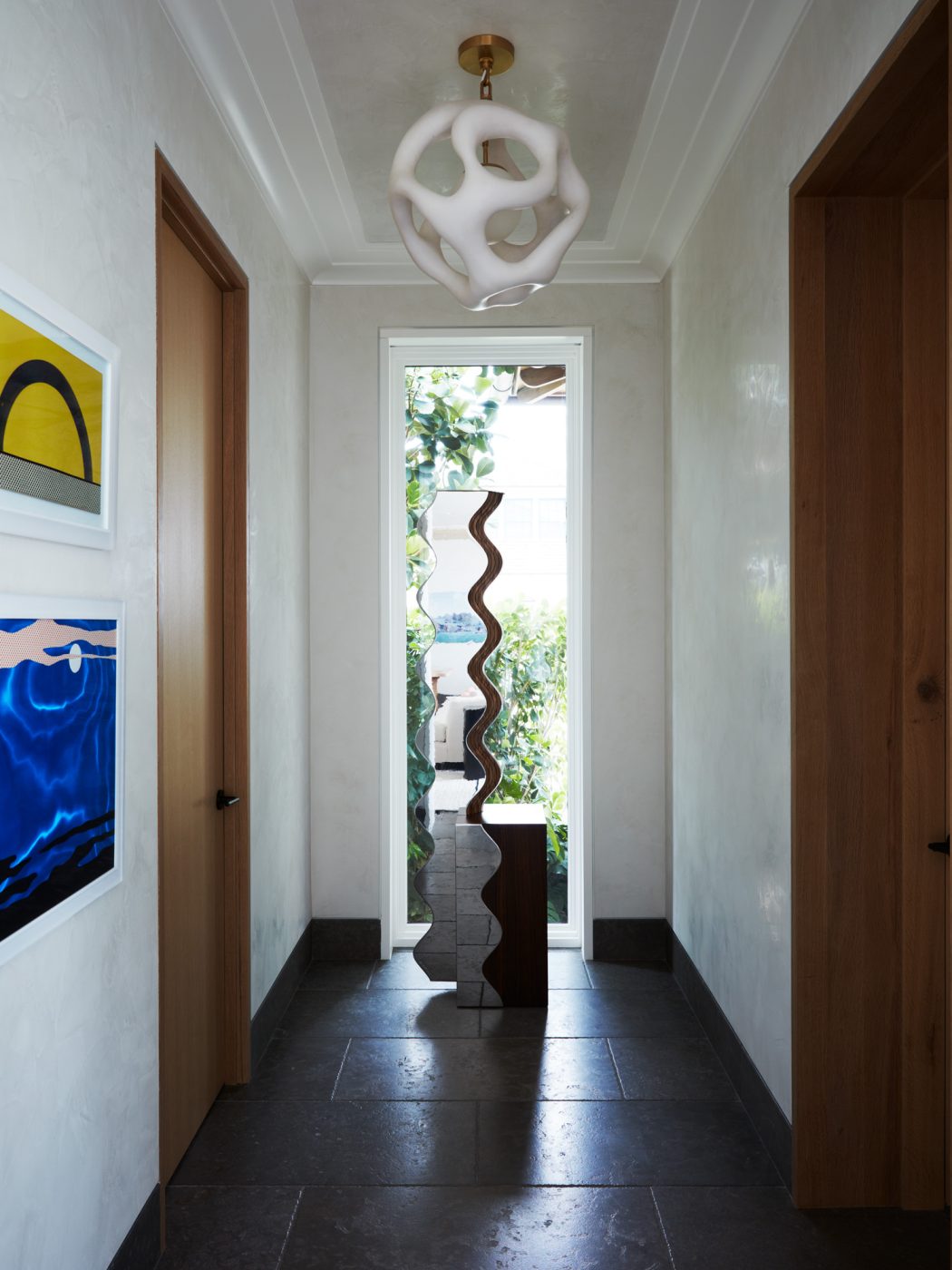
A Rogan Gregory Fertility Form light fixture from R & Company hangs above a Mohamed Melehi sculpture and a Roy Lichtenstein artwork in the vestibule.
Although her aunt and uncle, as longtime collectors, have plenty of experience acquiring artworks, Rafferty pitched in, finding the Emily Young sculpture of a head that now sits below the swoop of the staircase. She also selected, with their approval, a hypnotic blue painting for the great room by Makoto Ofune, who crushes his own pigments.
“I love working with people with collections because I think they tell a story,” says Rafferty, who earned a master’s degree in art history from NYU. “And if someone doesn’t have a collection, being on a journey to help them build one is also fun. It doesn’t need to have a great dollar value — it could be just sentimental to your family. Those stories make a house a home, give it life.”
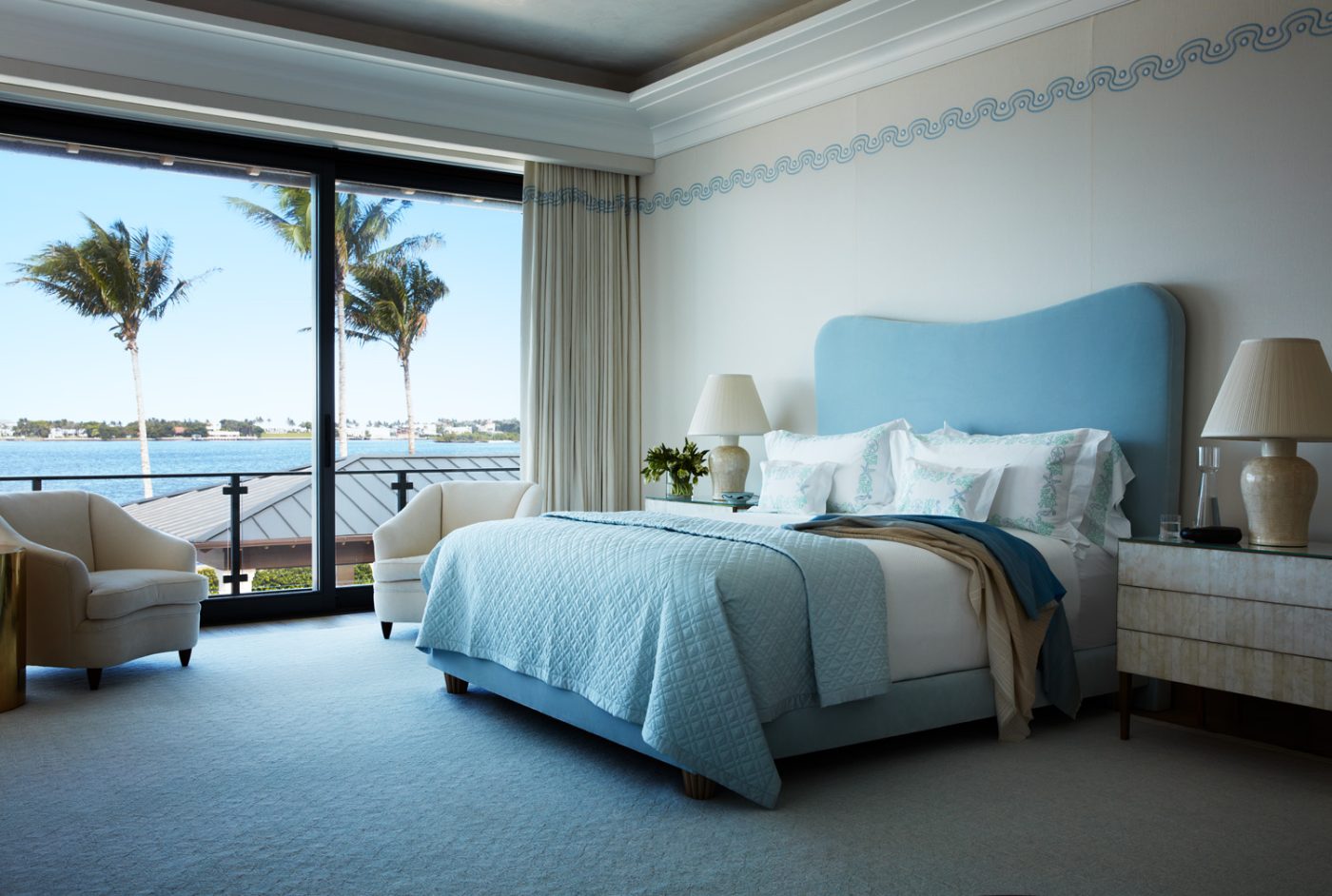
Doing a project for such close relatives put a personal spin on every decision — she says she designed her cousin’s bedroom as if it were her own dream boudoir — but it also amped up the self-imposed pressure. Rafferty and her team carefully tested the white Venetian plaster in different spaces and at different times of day. By the time craftsmen applied it to the walls throughout the house, however, the newly installed windows were covered in blue plastic wrap. Rafferty sweated about the final shade as she waited for the plaster to slowly dry so she could finally see how it would look in the light passing through the clear, unobscured panes. “Whites are so finicky,” she says. The worry was for naught.
Perhaps the family that designs together stays together. In a twist on the family compounds that became all the rage during the pandemic, Rafferty, her mother and her aunt all bought properties along the same stretch of West Palm Beach within about a six-month span. “We all live right lined up on the same street, the three of us,” Rafferty says. “It is so lucky.”
She is, of course, handling the decor of her mom’s house — also by Kahan — and reports that the two sisters delight in each other’s beautiful interiors. Though there is one possible point of contention. Neither could resist trying to pry certain classified information from Rafferty’s staff: “Can you measure her closet and see if mine’s bigger?”