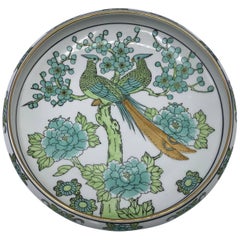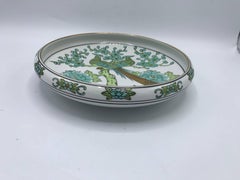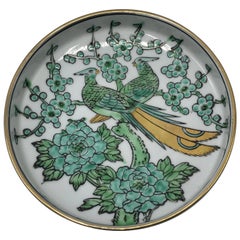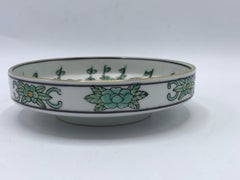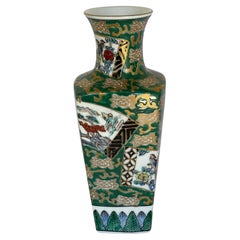
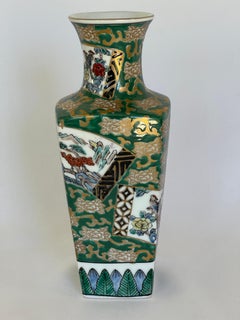
1960s Gold Imari

Recent Sales

Japanese Gold Imari Painted Porcelain Vase
Located in New York, NY
Graceful hand decorated Japanese vase with traditional motifs and gold rimmed top., c. 1960's
Category

Mid-20th Century Japanese Japonisme Ceramics

Materials

Ceramic

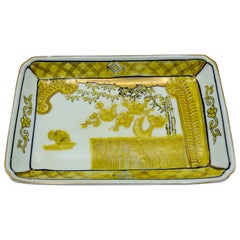
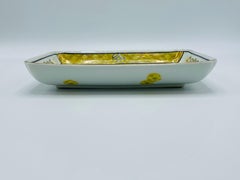
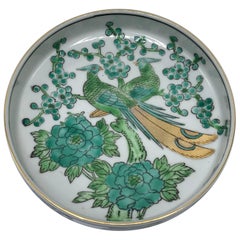
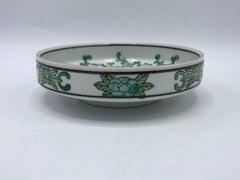
1960s Gold Imari Porcelain Catchall Dish
Located in Richmond, VA
Listed is a gorgeous, 1960s 'Gold Imari' hand painted porcelain catchall dish. The piece has a
Category

20th Century Asian Chinoiserie Decorative Bowls

Materials

Porcelain

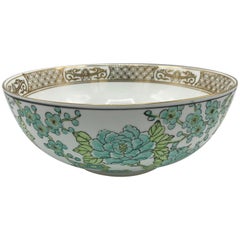
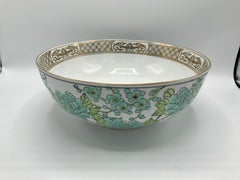
1960s Gold-Imari Green and White Peacock Punch Bowl
Located in Richmond, VA
Offered is a fabulous, 1960s Gold-Imari porcelain peacock motif punch bowl. This large centerpiece
Category

20th Century Asian Chinoiserie Decorative Bowls

Materials

Porcelain

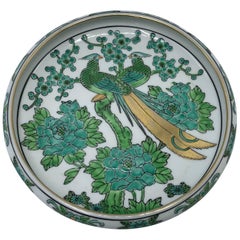
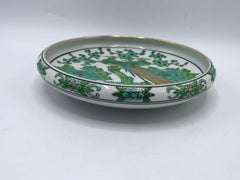
1960s Gold Imari Green and White Dish with Peacock Motif
Located in Richmond, VA
Listed is a beautiful, 1960s gold imari, green and white dish. The piece has a gorgeous peacock
Category

20th Century Chinoiserie Decorative Bowls

Materials

Porcelain

1960s Gold Imari Green and White Dish with Peacock Motif
Located in Richmond, VA
Listed is a beautiful, 1960s Gold Imari, green and white dish. The piece has a gorgeous peacock
Category

20th Century Chinoiserie Decorative Bowls

Materials

Porcelain

1960s Gold Imari Green and White Dish with Peacock Motif
Located in Richmond, VA
Listed is a beautiful, 1960s gold imari, green and white dish. The piece has a gorgeous peacock
Category

20th Century Chinoiserie Decorative Bowls

Materials

Porcelain

1960s Gold Imari Green and White Dish with Peacock Motif
Located in Richmond, VA
Listed is a beautiful, 1960s Gold Imari, green and white dish. The piece has a gorgeous peacock
Category

20th Century Chinoiserie Decorative Bowls

Materials

Porcelain

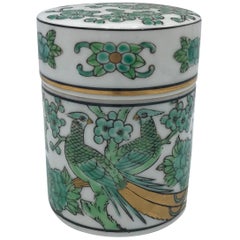
1960s Gold Imari Lidded Jar with a Green and Gold Peacock Motif
Located in Richmond, VA
Offered is a fabulous, 1960s Gold Imari lidded jar with a hand-painted green and gold peacock motif
Category

20th Century Japanese Chinoiserie Decorative Dishes and Vide-Poche

Materials

Porcelain

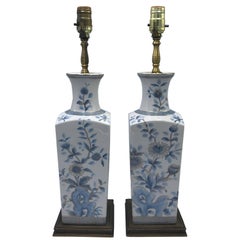
1960s Gold Imari Style Blue and White Lamps with Floral Motif, Pair
Located in Richmond, VA
Offered is a stunning, pair of 1960s Gold Imari style blue, white, and gold lamps with an all-over
Category

20th Century Chinoiserie Table Lamps

Materials

Porcelain

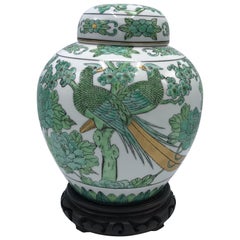
1960s Gold Imari Green, White, and Gold Peacock Motif Ginger Jar on Wood Stand
Located in Richmond, VA
Offered is a gorgeous, 1960s gold Imari ginger jar with a green, white, and gold peacock motif
Category

20th Century Chinoiserie Jars

Materials

Porcelain

Get Updated with New Arrivals
Save "1960s Gold Imari", and we’ll notify you when there are new listings in this category.

1960s Gold Imari For Sale on 1stDibs

With a vast inventory of beautiful furniture at 1stDibs, we’ve got just the piece of 1960s gold imari you’re looking for. Was constructed with extraordinary care, often using ceramic and porcelain. There are many kinds of the item from our selection of 1960s gold imari you’re looking for, from those produced as long ago as the 20th Century to those made as recently as the 20th Century. A choice in our collection of 1960s gold imari is a generally popular piece of furniture, but those created in styles are sought with frequency. Imari Porcelain each produced at least one beautiful object in our assortment of 1960s gold imari that is worth considering.

How Much is a 1960s Gold Imari?

Prices for a piece of 1960s gold imari can differ depending upon size, time period and other attributes — at 1stDibs, they begin at $245 and can go as high as $995, while the average can fetch as much as $395.

A Close Look at Chinoiserie Furniture

Emerging in the 17th century, chinoiserie appropriated the aesthetics and imagery of popular East Asian design for European-made versions. Reflecting the exoticization of China, Japan and other countries in this era, the word directly translates from French to “Chinese-esque,” which reveals its shortcomings as a style of furniture and decor that often stereotypically and reductively mimics Asian culture rather than showcasing and paying tribute to its artistic traditions.

The enthusiastically decorative chinoiserie style was propelled by influential tastemakers including French King Louis XIV, whose Trianon de Porcelaine in 1670 was inspired by Chinese architecture. Expanded trade between the East and West led to a demand for porcelain, lacquer objects, silk and other goods, which further informed the fanciful furniture being crafted in Europe.

Artisans working in the chinoiserie style used materials and elements like pagoda shapes, bamboo, lacquer surfaces, bird and flower motifs and other interpretations of Asian design on pieces that were frequently set against vibrant wallcoverings. This whimsical approach yielded chinoiserie furniture that boasted dramatic flourishes drawing on the natural world and reflected the dominance of Rococo during the 18th century.

As chinoiserie was shaped by approximations of Asian design by European creators, it had regional variations, such as Chinese Chippendale in England where cabinets, chairs and tea tables had wooden fretwork designs and “japanned” surfaces intended to resemble lacquer work that was created in East Asia. In North America, furniture makers in Boston and New York integrated chinoiserie-painted scenes into Queen Anne furniture.

Antique chinoiserie furniture has continued to be fashionable, from its popularity with decorators of the Hollywood Regency era — James Mont, Tommi Parzinger, William Haines and Samuel Marx favored the style — to contemporary interior designers, although it brings with it a complex history.

Find a collection of chinoiserie bedroom furniture, cabinets, decorative objects and more on 1stDibs.

Finding the Right Decorative-objects for You

Every time you move into a house or an apartment — or endeavor to refresh the home you’ve lived in for years — life for that space begins anew. The right home accent, be it the simple placement of a decorative bowl on a shelf or a ceramic vase for fresh flowers, can transform an area from drab to spectacular. But with so many materials and items to choose from, it’s easy to get lost in the process. The key to styling with antique and vintage decorative objects is to work toward making a happy home that best reflects your personal style. 

Ceramics are a versatile addition to any home. If you’ve amassed an assortment of functional pottery over the years, think of your mugs and salad bowls as decorative objects, ideal for displaying in a glass cabinet. Vintage ceramic serveware can pop along white open shelving in your dining area, while large stoneware pitchers paired with woven baskets or quilts in an open cupboard can introduce a rustic farmhouse-style element to your den.

Translucent decorative boxes or bowls made of an acrylic plastic called Lucite — a game changer in furniture that’s easy to clean and lasts long — are modern accents that are neutral enough to dress up a coffee table or desktop without cluttering it. If you’re showcasing pieces from the past, a vintage jewelry box for displaying your treasures can spark conversation: Where is the jewelry box from? Is there a story behind it?

Abstract sculptures or an antique vessel for your home library can draw attention to your book collection and add narrative charm to the most appropriate of corners. There’s more than one way to style your bookcases, and decorative objects add a provocative dynamic. “I love magnifying glasses,” says Alex Assouline, global vice president of luxury publisher Assouline, of adding one’s cherished objects to a home library. “They are both useful and decorative. Objects really elevate libraries and can also make them more personal.”

To help with personalizing your space and truly making it your own, find an extraordinary collection of decorative objects on 1stDibs.

Questions About 1960s Gold Imari
  • 1stDibs ExpertFebruary 13, 2023
    Yes, there were watches in the 1960s. The first recorded wristwatch dates back to 1868, when Patek Philippe, a watchmaker founded in Geneva in 1839 by Polish expats Antoni Patek and Franciszek Czapek, designed a timepiece for Countess Koscowicz of Hungary. Shop a collection of vintage watches from some of the world’s top sellers on 1stDibs.
  • 1stDibs ExpertFebruary 13, 2023
    A caftan from the 1960s or any other era refers to a long ankle-length variation on a robe or a tunic. Caftans, which are sometimes referred to as kaftans, feature full sleeves and usually have a deep, open neck. While these garments can be made from any fabric, most caftans are made of wool, silk or cotton. Find a selection of caftans from top fashion boutiques around the world on 1stDibs.
  • 1stDibs ExpertFebruary 22, 2021
    Fashion in the 1960s progressed toward a more casual look for men and for women during the decade. For women, the skirt suits of the 1950s prevailed during the early ‘60s and eventually miniskirts came along. Late-1960s fashion included ponchos, peace signs, chain belts, puffed “bubble” sleeves, frayed bell-bottom jeans for men and women, tie-dyed shirts, work shirts, sandals, headbands and moccasins.
  • 1stDibs ExpertApril 26, 2024
    What men wore in the 1960s varied over the course of the decade. At the start of the ’60s, when the Mod style was all the rage, men often sported boxy Italian-style suits with tight-fitting trousers for work and dressier occasions and polo shirts and turtlenecks paired with fitted trousers for casual dress. As the decade progressed, the Peacock Revolution occurred, with menswear becoming flashier with bright colors and bold prints. Fedoras and trilby hats were common in the early ’60s, but by the start of the 1970s, hats for men were much less common, marking a major departure from the style conventions of the 1930s, ’40s and ’50s. Explore an assortment of 1960s men's apparel and accessories on 1stDibs.
  • 1stDibs ExpertFebruary 21, 2024
    The dresses they wore in the 1960s varied depending on the time of day and the occasion. For everyday wear, many women opted for simply tailored frocks called shift dresses. They often featured bold geometric prints in eye-catching colors. In the evening, women tended to opt for gowns with plunging necklines, fitted waists and flowing full skirts. On 1stDibs, shop a diverse assortment of vintage dresses from the 1960s.
  • 1stDibs ExpertFebruary 13, 2023
    Furniture from the 1960s is often called mid-century modern. This style emphasizes the importance of good design that looks attractive and performs its function well. Notable mid-century modern designers include Eero Saarinen, George Nelson, Florence Knoll and Charles and Ray Eames. On 1stDibs, shop a selection of mid-century modern furniture.
  • 1stDibs ExpertApril 5, 2022
    To tell if a dress is from the 1960s or 1970s, first look for a label. You may be able to determine the approximate date of the dress simply by researching the designer using reputable online sources. Also, check the zippers. Dresses from the 1960s will usually have metal or nylon zippers. Ones from the 1970s are more likely to be plastic. You'll find a large selection of vintage dresses on 1stDibs.
  • 1stDibs ExpertApril 5, 2022
    Go-go boots were fashionable in the late 1960s through the 1970s. A calf-length to knee-length boot became synonymous with 1960s and 1970s fashion and is still highly coveted today by fashion enthusiasts. Shop a wide range of vintage go-go boots on 1stDibs.
  • 1stDibs ExpertFebruary 21, 2024
    Who the most famous fashion designer of the 1960s was is open to debate. Many designers helped define the looks of the decade, each influencing style in their own way. Among these notable designers were Mary Quant, André Courrèges, Pierre Cardin, Yves Saint Laurent, Bonnie Cashin, Hubert de Givenchy, Emilio Pucci, Paco Rabanne and Ossie Clark. On 1stDibs, shop a variety of vintage apparel and accessories from the 1960s.
  • 1stDibs ExpertFebruary 1, 2024
    Generally, 1960s-style furniture is called mid-century modern. The style, which emerged primarily in the years following World War II, is characterized by pieces that were conceived and made in an energetic, optimistic spirit by creators who believed that good design was an essential part of good living. Some of the most notable furniture designers of the time include Charles and Ray Eames, Arne Jacobsen, Eero Saarinen and Hans J. Wegner. On 1stDibs, shop a variety of mid-century modern furniture.
  • 1stDibs ExpertSeptember 27, 2024
    What the dress style was called in the 1960s varied, as there were several types of dresses that were fashionable during the decade. At the start of the 1960s, many women wore swing dresses featuring fitted bodices and full skirts. Collared, button-up belted dresses called shirtwaist dresses were also popular, as were loose-fitting, flowy shift dresses. By the late 1960s, new styles emerged, such as flared, flowing tent dresses, sleeveless jumpers usually styled over sweaters and blouses and drop-waist dresses, which had their waist seams at the hips rather than the natural waist. Find a variety of 1960s dresses and other vintage dresses on 1stDibs.
  • 1stDibs ExpertJanuary 27, 2025
    Frank Stella is the artist who became famous for his series of black paintings in the late 1950s and early 1960s. These works featured bands of black paint separated by thin, precise stripes of bare canvas. At a time when contemporary painting was all about wild gestures, thick paint and formal abandon, the “Black Paintings” created a sensation. Explore a range of Frank Stella art on 1stDibs.