Sam Spanier Art

to
3
Overall Width
to
Overall Height
to
3
2
1
3
3
2
2
1
1
1
3
10,297
2,810
2,500
1,406
3
Artist: Sam Spanier
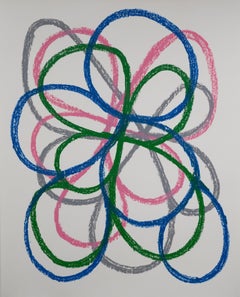
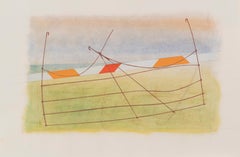
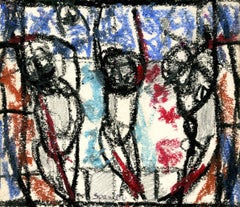
Chorus Line
Chorus Line

Chorus Line

By Sam Spanier

Located in Fairlawn, OH

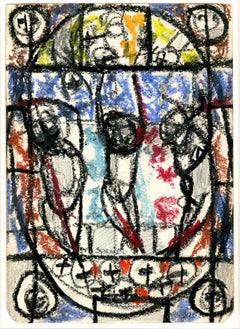
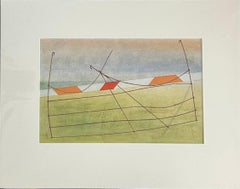
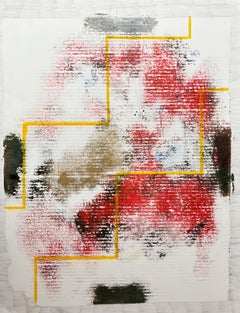
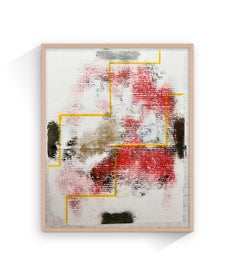
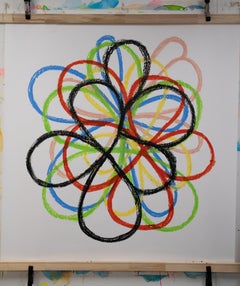
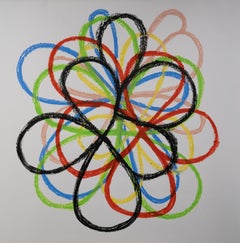
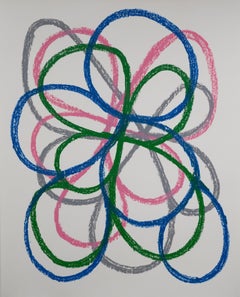
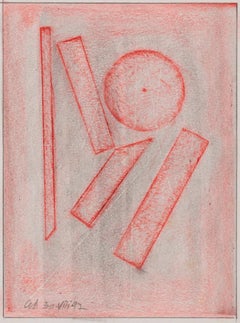
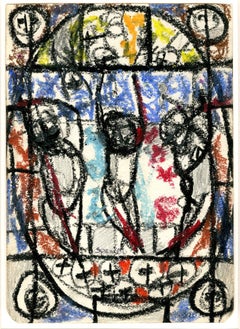
Chorus Line Oil pastel on paper, c. 1960's Signed (see photo) Provenance: Estate of the Artist Estate of the artist (Estate No. 745) Condition: Excellent Image/Sheet size: 5 3/4 x 4 inches Sam Spanier (1925-2008) Born in Brooklyn New York, Sam Spanier studied painting with Hans Hofmann (1949–50) and also at the Taos Valley Art School (1951). His formative years as a working artist were spent in Paris (1951–52), where he also became involved with the work of G. I. Gurdjieff, through his disciple, Mme. Jeanne de Salzmann. By 1953, Spanier’s work had already begun to meet with critical acclaim. That year, he had his first solo gallery show, and was selected by Milton Avery and Hans Hofmann to receive the prestigious Lorian Fund Award. His second solo exhibition, in 1955, was curated by renowned museum director, Gordon Washburn. Spanier’s early work was reviewed by Dore Ashton, Donald Judd, Fairfield Porter, Stuart Preston, and Irving Sandler, among other significant critics of the period. Spanier’s spiritual path increasingly became the central focus of both his life and his art. In 1960, he was introduced to the teachings of Sri Aurobindo, which led to visits to the Sri Aurobindo Ashram in Pondicherry, India, in 1962 and 1964, during which he was inspired to leave New York City and found Matagiri (in 1968)—a spiritual center in Woodstock, New York—with his lifelong partner, Eric Hughes. The work he embarked upon there bifurcates his life as an artist, separating him from New York’s art world, and radically altering the trajectory of his career. From that point forward, it would be difficult, perhaps impossible, to consider his artistic endeavor apart from the life of dedication he had undertaken, and to which he remained committed. As early as 1954, Dore Ashton had recognized in Sam Spanier a “haptic visionary;” in 1960, Irving Sandler wrote that the people in Spanier’s paintings “seem to have witnessed some transfiguring event.” In his later paintings—usually worked in oil pastel on panel or paper—made during intermittent creative periods, from the mid-1970s to the final years of his life, the artist’s inner life remains always apparent in his subject matter; and from the portraits and abstract Buddha-like figures and heads, to the fantasy landscapes, the paintings are redolent with a rich intensity of color and light that can only be described as inspired. Sam Spanier’s works are in the collections of the Historical Society of Woodstock Museum, and the Woodstock Artists Association & Museum. He received the Woodstock Artists Association Lifetime Achievement Award in 2007. Selected Solo Exhibitions: Urban Gallery, New York (1954, 1955, 1956); Wittenborn Gallery, New York (1958); Gallery Mayer, New York (1958, 1959, 1960); Unison Gallery, New Paltz (1986, 1995, 2009); Limner Gallery, New York (1988); Fletcher Gallery, Woodstock, New York (1999). Selected Group Exhibitions: Salon des Comparaisons, Musée d’Art Moderne, Paris, France (1952); October Exhibition of Oil Paintings, New York City Center Gallery, New York (1954); Salon de Mai, Musée d’Art moderne de la ville de Paris, Centre Culturel de Saint-Germain-en-Laye, Paris, France (1954); Carnegie International, Carnegie Institute, Pittsburgh, Pennsylvania (1955); Les Plus Mauvais Tableaux, Galerie Prismes, Paris (1955); Première Exposition Internationale de l’Art Plastique Contemporain, Musée des Beaux-Arts de la Ville de Paris (1956); Recent Paintings USA: The Figure, The Museum of Modern Art (1960); Winter’s Work, Woodstock Artists Association, Woodstock, New York (1985); Juried Group Show, Woodstock Artists Association, Woodstock, New York (1986); Woodstock Artists, Self-Portraits, Historical Society of Woodstock Museum, Woodstock, New York (1988); Portraits, Albert Shahinian Fine Art, Poughkeepsie, New York (2003); The World We Live In, Upstate Art, Phoenicia, New York (2003); Show of Heads, Limner Gallery, Phoenicia, New York (2004). Selected Writings on the Artist: Dore Ashton, “Sam Spanier,” Art Digest (May 1, 1954) and “Sam Spanier,” The New York Times (March 16, 1960); Cassia Berman, “Sam Spanier: A Divine Calling,” Woodstock Times (February 7, 2008); Lawrence Campbell, “Sam Spanier: Exhibition of Paintings at Urban Gallery,” Art News (April 1, 1954); Sam Feinstein...

Category

1960s Abstract Sam Spanier Art

Materials

Oil Crayon

Black and White Cat
Black and White Cat

Black and White Cat

By Sam Spanier

Located in Fairlawn, OH

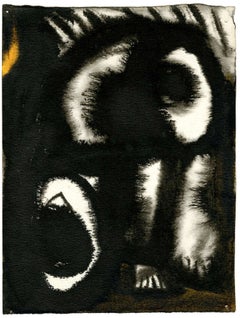
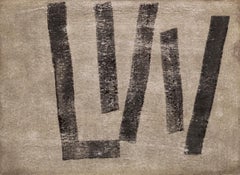
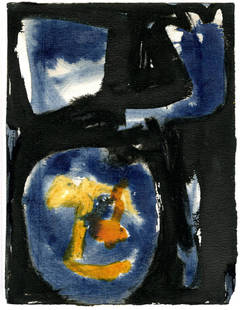
Black and White Cat Ink and watercolor on paper, c. 1970 Unsigned Provenance: Estate of the artist (Estate No. 737) Condition: Excellent Image/Sheet size: 4 3/4 x 6 1/4 inches Sam Spanier (1925-2008) Born in Brooklyn New York, Sam Spanier studied painting with Hans Hofmann (1949–50) and also at the Taos Valley Art School (1951). His formative years as a working artist were spent in Paris (1951–52), where he also became involved with the work of G. I. Gurdjieff, through his disciple, Mme. Jeanne de Salzmann. By 1953, Spanier’s work had already begun to meet with critical acclaim. That year, he had his first solo gallery show, and was selected by Milton Avery and Hans Hofmann to receive the prestigious Lorian Fund Award. His second solo exhibition, in 1955, was curated by renowned museum director, Gordon Washburn. Spanier’s early work was reviewed by Dore Ashton, Donald Judd, Fairfield Porter, Stuart Preston, and Irving Sandler, among other significant critics of the period. Spanier’s spiritual path increasingly became the central focus of both his life and his art. In 1960, he was introduced to the teachings of Sri Aurobindo, which led to visits to the Sri Aurobindo Ashram in Pondicherry, India, in 1962 and 1964, during which he was inspired to leave New York City and found Matagiri (in 1968)—a spiritual center in Woodstock, New York—with his lifelong partner, Eric Hughes. The work he embarked upon there bifurcates his life as an artist, separating him from New York’s art world, and radically altering the trajectory of his career. From that point forward, it would be difficult, perhaps impossible, to consider his artistic endeavor apart from the life of dedication he had undertaken, and to which he remained committed. As early as 1954, Dore Ashton had recognized in Sam Spanier a “haptic visionary;” in 1960, Irving Sandler wrote that the people in Spanier’s paintings “seem to have witnessed some transfiguring event.” In his later paintings—usually worked in oil pastel on panel or paper—made during intermittent creative periods, from the mid-1970s to the final years of his life, the artist’s inner life remains always apparent in his subject matter; and from the portraits and abstract Buddha-like figures and heads, to the fantasy landscapes, the paintings are redolent with a rich intensity of color and light that can only be described as inspired. Sam Spanier’s works are in the collections of the Historical Society of Woodstock Museum, and the Woodstock Artists Association & Museum. He received the Woodstock Artists Association Lifetime Achievement Award in 2007. Selected Solo Exhibitions: Urban Gallery, New York (1954, 1955, 1956); Wittenborn Gallery, New York (1958); Gallery Mayer, New York (1958, 1959, 1960); Unison Gallery, New Paltz (1986, 1995, 2009); Limner Gallery, New York (1988); Fletcher Gallery, Woodstock, New York (1999). Selected Group Exhibitions: Salon des Comparaisons, Musée d’Art Moderne, Paris, France (1952); October Exhibition of Oil Paintings, New York City Center Gallery, New York (1954); Salon de Mai, Musée d’Art moderne de la ville de Paris, Centre Culturel de Saint-Germain-en-Laye, Paris, France (1954); Carnegie International, Carnegie Institute, Pittsburgh, Pennsylvania (1955); Les Plus Mauvais Tableaux, Galerie Prismes, Paris (1955); Première Exposition Internationale de l’Art Plastique Contemporain, Musée des Beaux-Arts de la Ville de Paris (1956); Recent Paintings USA: The Figure, The Museum of Modern Art (1960); Winter’s Work, Woodstock Artists Association, Woodstock, New York (1985); Juried Group Show, Woodstock Artists Association, Woodstock, New York (1986); Woodstock Artists, Self-Portraits, Historical Society of Woodstock Museum, Woodstock, New York (1988); Portraits, Albert Shahinian Fine Art, Poughkeepsie, New York (2003); The World We Live In, Upstate Art, Phoenicia, New York (2003); Show of Heads, Limner Gallery, Phoenicia, New York (2004). Selected Writings on the Artist: Dore Ashton, “Sam Spanier,” Art Digest (May 1, 1954) and “Sam Spanier,” The New York Times (March 16, 1960); Cassia Berman, “Sam Spanier: A Divine Calling,” Woodstock Times (February 7, 2008); Lawrence Campbell, “Sam Spanier: Exhibition of Paintings at Urban Gallery,” Art News...

Category

1970s Abstract Sam Spanier Art

Materials

Ink, Watercolor

Chorus Line
Chorus Line

Chorus Line

By Sam Spanier

Located in Fairlawn, OH

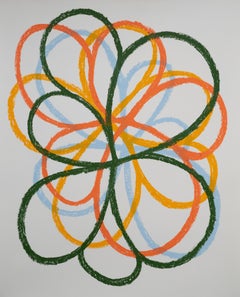
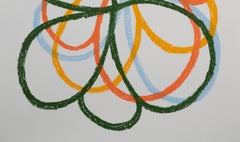
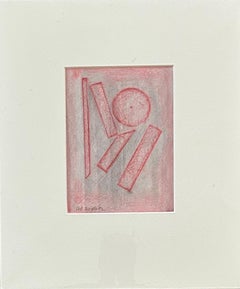
Chorus Line Oil pastel on paper, c. 1960's Signed (see photo) Provenance: Estate of the Artist Estate of the artist (Estate No. 745) Condition: Excellent Image/Sheet size: 5 3/4 x 4 inches Sam Spanier (1925-2008) Born in Brooklyn New York, Sam Spanier studied painting with Hans Hofmann (1949–50) and also at the Taos Valley Art School (1951). His formative years as a working artist were spent in Paris (1951–52), where he also became involved with the work of G. I. Gurdjieff, through his disciple, Mme. Jeanne de Salzmann. By 1953, Spanier’s work had already begun to meet with critical acclaim. That year, he had his first solo gallery show, and was selected by Milton Avery and Hans Hofmann to receive the prestigious Lorian Fund Award. His second solo exhibition, in 1955, was curated by renowned museum director, Gordon Washburn. Spanier’s early work was reviewed by Dore Ashton, Donald Judd, Fairfield Porter, Stuart Preston, and Irving Sandler, among other significant critics of the period. Spanier’s spiritual path increasingly became the central focus of both his life and his art. In 1960, he was introduced to the teachings of Sri Aurobindo, which led to visits to the Sri Aurobindo Ashram in Pondicherry, India, in 1962 and 1964, during which he was inspired to leave New York City and found Matagiri (in 1968)—a spiritual center in Woodstock, New York—with his lifelong partner, Eric Hughes. The work he embarked upon there bifurcates his life as an artist, separating him from New York’s art world, and radically altering the trajectory of his career. From that point forward, it would be difficult, perhaps impossible, to consider his artistic endeavor apart from the life of dedication he had undertaken, and to which he remained committed. As early as 1954, Dore Ashton had recognized in Sam Spanier a “haptic visionary;” in 1960, Irving Sandler wrote that the people in Spanier’s paintings “seem to have witnessed some transfiguring event.” In his later paintings—usually worked in oil pastel on panel or paper—made during intermittent creative periods, from the mid-1970s to the final years of his life, the artist’s inner life remains always apparent in his subject matter; and from the portraits and abstract Buddha-like figures and heads, to the fantasy landscapes, the paintings are redolent with a rich intensity of color and light that can only be described as inspired. Sam Spanier’s works are in the collections of the Historical Society of Woodstock Museum, and the Woodstock Artists Association & Museum. He received the Woodstock Artists Association Lifetime Achievement Award in 2007. Selected Solo Exhibitions: Urban Gallery, New York (1954, 1955, 1956); Wittenborn Gallery, New York (1958); Gallery Mayer, New York (1958, 1959, 1960); Unison Gallery, New Paltz (1986, 1995, 2009); Limner Gallery, New York (1988); Fletcher Gallery, Woodstock, New York (1999). Selected Group Exhibitions: Salon des Comparaisons, Musée d’Art Moderne, Paris, France (1952); October Exhibition of Oil Paintings, New York City Center Gallery, New York (1954); Salon de Mai, Musée d’Art moderne de la ville de Paris, Centre Culturel de Saint-Germain-en-Laye, Paris, France (1954); Carnegie International, Carnegie Institute, Pittsburgh, Pennsylvania (1955); Les Plus Mauvais Tableaux, Galerie Prismes, Paris (1955); Première Exposition Internationale de l’Art Plastique Contemporain, Musée des Beaux-Arts de la Ville de Paris (1956); Recent Paintings USA: The Figure, The Museum of Modern Art (1960); Winter’s Work, Woodstock Artists Association, Woodstock, New York (1985); Juried Group Show, Woodstock Artists Association, Woodstock, New York (1986); Woodstock Artists, Self-Portraits, Historical Society of Woodstock Museum, Woodstock, New York (1988); Portraits, Albert Shahinian Fine Art, Poughkeepsie, New York (2003); The World We Live In, Upstate Art, Phoenicia, New York (2003); Show of Heads, Limner Gallery, Phoenicia, New York (2004). Selected Writings on the Artist: Dore Ashton, “Sam Spanier,” Art Digest (May 1, 1954) and “Sam Spanier,” The New York Times (March 16, 1960); Cassia Berman, “Sam Spanier: A Divine Calling,” Woodstock Times (February 7, 2008); Lawrence Campbell, “Sam Spanier: Exhibition of Paintings at Urban Gallery,” Art News (April 1, 1954); Sam Feinstein, “Sam Spanier: Exhibition of Paintings at Urban Gallery,” Art Digest (March 1, 1955); Pat Horner, “Big Heart, Timeless Art —Sam Spanier Retrospective at Fletcher Gallery, Woodstock Times (July 1, 1999); Donald Judd, “In the Galleries: Sam Spanier,” Arts Magazine (April 1960); Liam Nelson, “Human Force...

Category

1960s Abstract Sam Spanier Art

Materials

Oil Crayon

Related Items
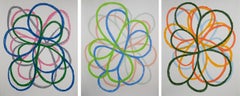
La Materialidad del Tiempo: Abstract Geometric Triptych in Oil Crayon

La Materialidad del Tiempo: Abstract Geometric Triptych in Oil Crayon

Located in Miami Beach, FL

Juan Carlos Amador grounds his recent work in two essential elements: cellulose and time. Using reclaimed wooden moldings from the 1980s and ’90s-originally designed for framing artw...

Category

2010s Abstract Geometric Sam Spanier Art

Materials

Paper, Oil Crayon

Las Mascaras XIV. From Las Mascaras (The masks) Series

Las Mascaras XIV. From Las Mascaras (The masks) Series

Located in Miami Beach, FL

This series draws inspiration from Hatillo’s Fiesta de los Santos Inocentes, translating the festival’s vibrant movement and collective energy into a refined abstract vocabulary. Thr...

Category

2010s Abstract Geometric Sam Spanier Art

Materials

Paper, Oil Crayon, Pastel

Gates No.1 Abstract Painting, Oil & Crayon on Paper, 1976, Unframed

Gates No.1 Abstract Painting, Oil & Crayon on Paper, 1976, Unframed

By George Dannatt

Located in Bournemouth, Dorset

George Dannatt (1915-2009) 'Gates' No 1 1976 Medium: Oil & crayon on oil wash Image: 21.0 x 33.0 cm Reference no: 0450 George Dannatt’s long career as a painter and sculptor ended ...

Category

1970s Abstract Sam Spanier Art

Materials

Paper, Oil Crayon, Mixed Media, Oil

Untitled Drawing, Abstract Pencil and Oil Crayon, Circa 2005, Unframed

Untitled Drawing, Abstract Pencil and Oil Crayon, Circa 2005, Unframed

By George Dannatt

Located in Bournemouth, Dorset

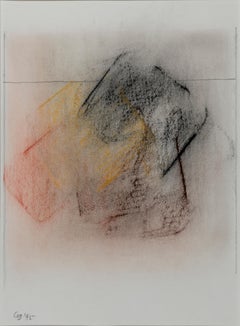
George Dannatt (1915-2009) Untitled Drawing 2005 Image: 27.5 x 18.0 cm Mount: 40.2 x 30.0 cm George Dannatt’s long career as a painter and sculptor ended with the artist’s death i...

Category

Early 2000s Abstract Sam Spanier Art

Materials

Pencil, Graphite, Oil Crayon

Colorful painting on paper, Unique piece, Abstract Expressionist

Colorful painting on paper, Unique piece, Abstract Expressionist

Located in Carballo, ES

TUSET (1997, A Coruña, España) Mixed media painting on paper Ready to frame One-of-a-kind Signed on back Includes certificate of authenticity 2021 65 x 50 cm. It belongs to the ser...

Category

21st Century and Contemporary Abstract Geometric Sam Spanier Art

Materials

Paper, Oil Crayon, Ink, Mixed Media, Acrylic, Pencil

Untitled 3. From La materialidad del tiempo (The Materiality of Time) Series

Untitled 3. From La materialidad del tiempo (The Materiality of Time) Series

Located in Miami Beach, FL

La Materialidad del Tiempo, Juan Carlos Amador grounds his recent work in two essential elements: cellulose and time. Using reclaimed wooden moldings from the 1980s and ’90s-original...

Category

2010s Abstract Geometric Sam Spanier Art

Materials

Paper, Oil Crayon

Untitled 4. From La materialidad del tiempo (The Materiality of Time) Series

Untitled 4. From La materialidad del tiempo (The Materiality of Time) Series

Located in Miami Beach, FL

La Materialidad del Tiempo, Juan Carlos Amador grounds his recent work in two essential elements: cellulose and time. Using reclaimed wooden moldings from the 1980s and ’90s-original...

Category

2010s Abstract Geometric Sam Spanier Art

Materials

Paper, Oil Crayon

Untitled 1. From La materialidad del tiempo (The Materiality of Time) Series

Untitled 1. From La materialidad del tiempo (The Materiality of Time) Series

Located in Miami Beach, FL

La Materialidad del Tiempo, Juan Carlos Amador grounds his recent work in two essential elements: cellulose and time. Using reclaimed wooden moldings from the 1980s and ’90s-original...

Category

2010s Abstract Geometric Sam Spanier Art

Materials

Paper, Oil Crayon

Untitled Abstract Painting, Mixed Media on Paper, 1992, Unframed

Untitled Abstract Painting, Mixed Media on Paper, 1992, Unframed

By George Dannatt

Located in Bournemouth, Dorset

George Dannatt (1915-2009) Untitled 1992 Medium: Mixed media on paper Image: 11.5 x 16.5 cm Mount: 26.0 x 30.5 cm George Dannatt’s long career as a painter and sculptor ended w...

Category

1990s Abstract Sam Spanier Art

Materials

Oil Crayon, Pencil, Graphite

Untitled Abstract Painting, Mixed Media on Paper, 1992, Unframed

Untitled Abstract Painting, Mixed Media on Paper, 1992, Unframed

By George Dannatt

Located in Bournemouth, Dorset

George Dannatt (1915-2009) Untitled 1992 Medium: Mixed media on paper Image: 14.9 x 10.9 cm Mount: 29.8 x 24.8 cm George Dannatt’s long career as a painter and sculptor ended w...

Category

1990s Abstract Sam Spanier Art

Materials

Oil Crayon, Pencil, Graphite

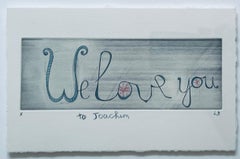
We Love You, drawing on engraving signed & inscribed unique variant X/X, Framed

We Love You, drawing on engraving signed & inscribed unique variant X/X, Framed

By Louise Bourgeois

Located in New York, NY

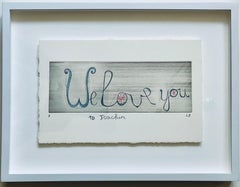
Louise Bourgeois We Love You, 2000 Engraving and watercolor with unique Ink drawing on Fabriano Paper Unique Variant with original hand coloring) Signed by the artist, inscribed "X" ...

Category

Early 2000s Abstract Sam Spanier Art

Materials

Ink, Watercolor, Pencil, Graphite, Engraving

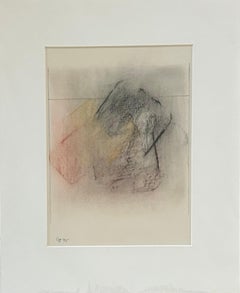
Deflection of Light - Venice No 1, Abstract Oil Crayon on Paper, 1995
Deflection of Light - Venice No 1, Abstract Oil Crayon on Paper, 1995
By George Dannatt

Located in Bournemouth, Dorset

George Dannatt (1915-2009) Deflection of Light - Venice No 1 1995 Mixed crayons on paper Image: 26.4 x 19.6 cm Mount: 40.0 x 32.4 cm Reference no: 1233/1 George Dannatt’s lon...

Category

1990s Abstract Sam Spanier Art

Materials

Oil Crayon
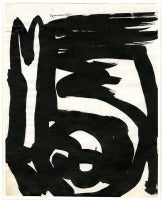
Previously Available Items
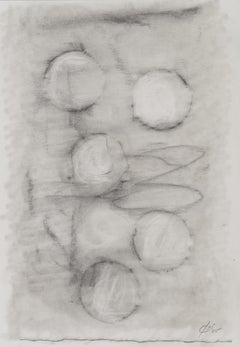
Burning Ember

Sam SpanierBurning Ember

Sold

H 6.25 in W 4.75 in

Burning Ember

By Sam Spanier

Located in Fairlawn, OH

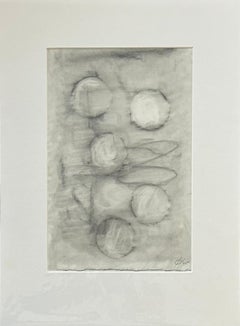
Estate of the artist (Estate No. 736)

Category

20th Century Sam Spanier Art

Materials

Ink, Watercolor

New Mexico Desert

New Mexico Desert

By Sam Spanier

Located in Fairlawn, OH

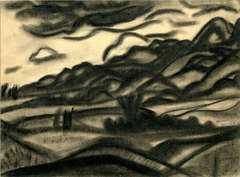
Signed, titled, and dated Taos, NM, 1950 center right Provenance: Estate of the artist (Estate No. 758) Done while the artist was visiting Mabel Dodge Luhan...

Category

1950s Sam Spanier Art

Materials

Charcoal

Whoosh!

Sam SpanierWhoosh!, 1953

Sold

H 8 in W 6 in

Whoosh!

By Sam Spanier

Located in Fairlawn, OH

Signed and dated in ink upper center Provenance: Estate of the artist (Estate No. 744)

Category

1950s Sam Spanier Art

Materials

Ink, Paper

Cosmic Waves

Cosmic Waves

By Sam Spanier

Located in Fairlawn, OH

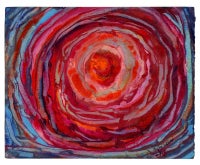
Comes from the estate of the artist. Representative of a meditational mandala. Founder of Matagiri Sri Aurobindo Center in Woodstock, NY (a spiritual center focused on Multi-India...

Category

1960s Sam Spanier Art

Materials

Oil Pastel

Sam Spanier art for sale on 1stDibs.

Find a wide variety of authentic Sam Spanier art available for sale on 1stDibs. You can also browse by medium to find art by Sam Spanier in crayon, ink, oil crayon and more. Much of the original work by this artist or collective was created during the 20th century and is mostly associated with the abstract style. Not every interior allows for large Sam Spanier art, so small editions measuring 4 inches across are available. Customers who are interested in this artist might also find the work of Charles Clary, Toni Simon, and Vincent Vella. Sam Spanier art prices can differ depending upon medium, time period and other attributes. On 1stDibs, the price for these items starts at $700 and tops out at $750, while the average work can sell for $725.

Artists Similar to Sam Spanier