Items Similar to 19th Century Anamilier Bronze Entitled "Ewe And Lamb" by Pierre Jules Mêne
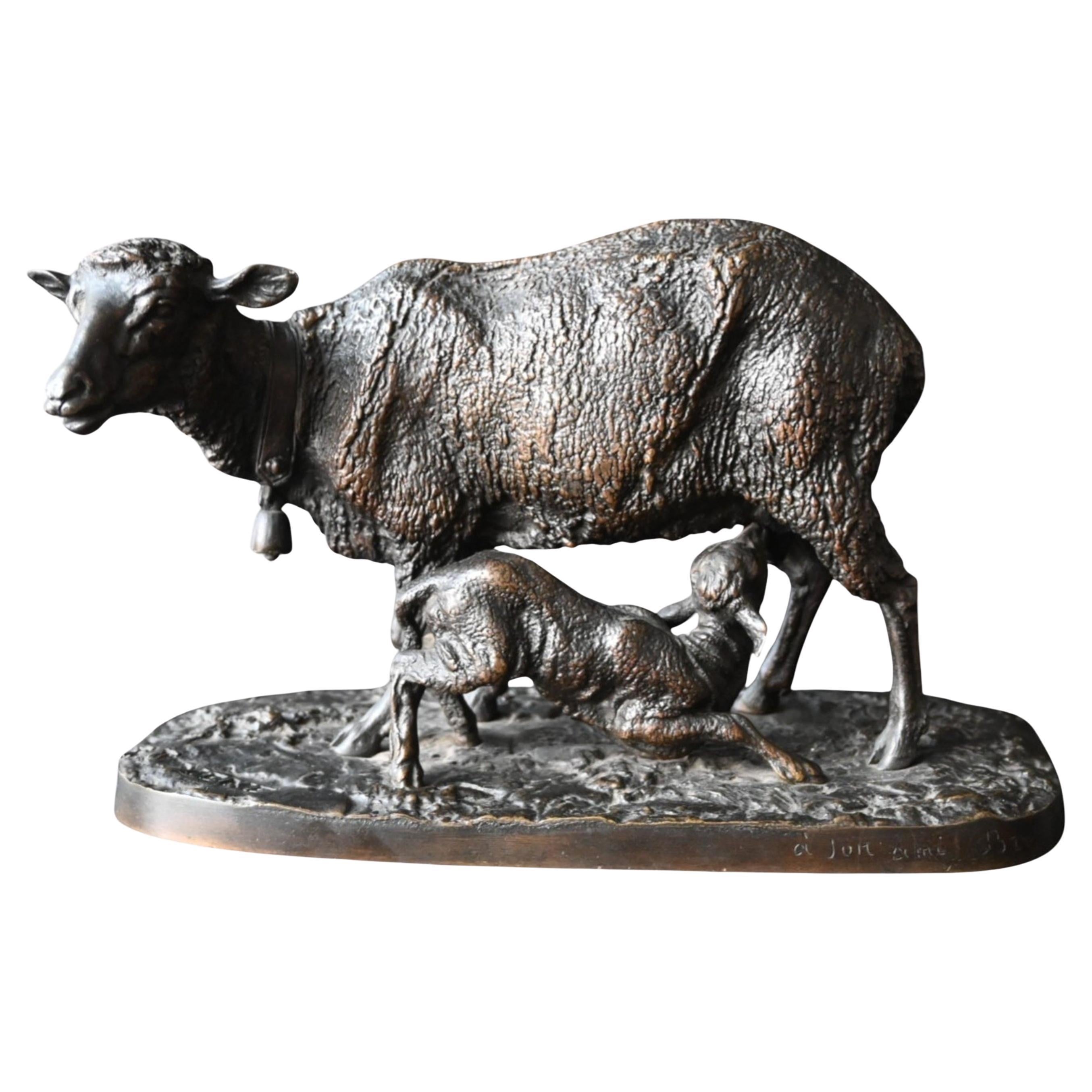
Want more images or videos?
Request additional images or videos from the seller
1 of 11
19th Century Anamilier Bronze Entitled "Ewe And Lamb" by Pierre Jules Mêne
$3,442.53
£2,500
€2,953.81
CA$4,754.79
A$5,306.85
CHF 2,779.87
MX$64,708.80
NOK 35,157.20
SEK 32,969.33
DKK 22,047.16
About the Item
Wonderful 19th Century animalier bronze group of a standing ewe with her feeding lamb beneath her, the bronze with excellent rich brown patina and very fine hand chased surface detail, raised on a naturalistic base, signed P J Mêne and inscribed Coalbrookdale Company
ADDITIONAL INFORMATION
Height: 14 cm
Width: 25 cm
Condition: Excellent Original Condition
Circa: 1870
Materials: Bronze
Book Ref Les Animaliers by Jane Horswell
Foundry: Coalbrookdale, England
SKU: 8515
DESCRIPTION
P J Mene, French 1810 ~ 1879
P J Mene is probably the best known of the French Animaliers School and his bronzes are today among the most highly prized in this genre. Surrounded as we are by disturbance and even violence, collectors of his work can find relaxation and enjoyment in contemplating the innate grace and beauty of his sculpture.
Beginning in 1838 Mêne worked at his own foundry, casting first his own works and later also those of his son-in-law Auguste Cain. He became absorbed in the meticulous work of casting and chiselling and ensured that during his lifetime the bronzes that were cast were always checked for quality, colour and finish before they were allowed to leave the foundry.
As a regular exhibitor at the Salon des Beaux-Arts many of Mêne’s subjects were shown to the general public in this popular showcase where acclaim and criticism could be judged before including the subject in his general Ouevre. This also served to establish public awareness of his new works and provides a useful reference when dating the origin of a particular cast. As a further point of reference Mêne produced a catalogue of all his works and each of his models has an identifiable catalogue number.
During Mêne's lifetime the artist granted rights for the casting of a number of his models in bronze to the Coalbrookdale Comapny in England. These casts are considered to be of the highest quality as they were consistently checked for technique and quality to match the production of the artist's own foundry.
After Mêne’s death in 1879 the Barbedienne and Susse Frères foundries acquired the rights to reproduce his many of his important models and these posthumous casts are marked F Barbedienne Fondeur and Susse Frères fondeur editeur respectively. These bronzes are of a fine quality and are cast by the leading bronze foundries in the late 19th and early 20th Centuries, however they do not have the vitality and attention to detail that Mêne achieved on the casts from his own foundry.
- Creator:Pierre Jules Mêne (Artist)
- Dimensions:Height: 5.52 in (14 cm)Width: 9.85 in (25 cm)Depth: 0 in (0.01 mm)
- Style:Art Nouveau (Of the Period)
- Materials and Techniques:Bronze,Cast
- Period:
- Date of Manufacture:1870
- Condition:Wear consistent with age and use. Excellent. Excellent Original Condition Please note that our items are genuine antiques with considerable age. It is therefore normal that they will show some signs of wear and handling to the surface.
- Seller Location:London, GB
- Reference Number:Seller: 85151stDibs: LU3216328989692
About the Seller
5.0
Vetted Professional Seller
Every seller passes strict standards for authenticity and reliability
Established in 1936
1stDibs seller since 2017
84 sales on 1stDibs
Typical response time: <1 hour
- ShippingRetrieving quote...Shipping from: London, United Kingdom
- Return Policy
Authenticity Guarantee
In the unlikely event there’s an issue with an item’s authenticity, contact us within 1 year for a full refund. DetailsMoney-Back Guarantee
If your item is not as described, is damaged in transit, or does not arrive, contact us within 7 days for a full refund. Details24-Hour Cancellation
You have a 24-hour grace period in which to reconsider your purchase, with no questions asked.Vetted Professional Sellers
Our world-class sellers must adhere to strict standards for service and quality, maintaining the integrity of our listings.Price-Match Guarantee
If you find that a seller listed the same item for a lower price elsewhere, we’ll match it.Trusted Global Delivery
Our best-in-class carrier network provides specialized shipping options worldwide, including custom delivery.More From This Seller
View AllLate 19th Century Animalier Bronze entitled "Biche Buvant" by Pierre Jules Mêne
By Pierre Jules Mêne
Located in London, GB
A very rare mid 19th Century Animalier bronze study of a doe drinking by the side of a lake, the bronze with fabulous rich brown patina and very fine hand chased surface detail, rais...
Category
Antique Late 19th Century French Art Nouveau Animal Sculptures
Materials
Bronze
19th Century Animalier French Bronze Entitled "Taureau Debout" by Rosa Bonheur
By Rosa Bonheur
Located in London, GB
"Taureau Debout" by Rosa Bonheur.
An excellent late 19th Century French animalier bronze study of a standing bull with fine hand chased surface that accentuates the muscle definition of the subject, signed Rosa B.
ADDITIONAL INFORMATION
Measures: Width: 32 cm
Height: 18 cm
Depth: 11cm
Condition: Excellent Original Condition
Circa: 1870
Materials: Bronze
Book reference: Animals in Bronze by Christopher Payne
Page no. 174
DESCRIPTION
Bonheur, Rosa (1822-1899)
The most popular artist of nineteenth-century France, Rosa Bonheur was also one of the first renowned painters of animals and the first woman awarded the Grand Cross by the French Legion of Honor. A professional artist with a successful career, Bonheur lived in two consecutive committed relationships with women.
Born on March 16, 1822 in Bordeaux, Marie Rosalie Bonheur was the oldest of the four children of Raimond Oscar Bonheur (1796-1849) and Sophie Marquis. Bonheur's father was an art teacher who came from a poor family, while her mother, a musician, had descended from a middle-class family and had been her husband's art student.
Bonheur's father, who taught drawing and landscape painting, was an ardent member of the utopian Saint Simeon society.
The group held idealistic beliefs about the reform of work, property, marriage, and the role of women in society. Most importantly, for the artist's future, the Saint Simeons questioned traditional gender norms and firmly believed in the equality of women. While teaching artistic techniques to his oldest daughter, Raimond Bonheur also encouraged her independence and taught her to consider art as a career.
In 1828 Raimond Bonheur joined the Saint Simeons at their retreat outside Paris. Sophie and the children joined him in Paris the following year. Four years later, however, Raimond abandoned his family to live in isolation with his fellow Saint Simeons.
Sophie Bonheur died in 1833 at the age of thirty-six. Rosa was only eleven years old when her mother died, but she was aware of the heavy price her mother paid for married life with a man who was more dedicated to his own ideals than to meeting his family's needs. Rosa also saw that her mother's marriage led to poverty and her death from exhaustion.
After her mother's death, Bonheur was taken in by the Micas family who resided nearby. Mme Micas and Bonheur's mother had been friends. When Mme Bonheur died, the Micas family paid Raimond Bonheur's debts and cared for Rosa. Their daughther, Nathalie, who would later become an amateur inventor and unschooled veterinarian, and Rosa became enamored with each other.
When Rosa Bonheur began her career as a professional artist, she had already been trained by her father who had allowed her to study in all male classes. Rosa also learned by sketching masterworks at the Louvre from the age of fourteen, and later, by studying with Léon Cogniet.
From the very beginning, Bonheur's favorite subject was animals. She learned their anatomy completely by dissecting them in local slaughterhouses. She also visited the horse market two times a week. Study of animals by direct observation led to the formation of the realist style in which Bonheur worked.
It was for such work that Bonheur obtained written permission from the French government to wear men's slacks. Her working attire also consisted of a loose smock and heavy boots that protected her feet from the dangerous environment in which she painted. The style of dress that the artist adopted for work and home may well have been influenced by her father's attire, which was based on St. Simeonian clothing experiments. Bonheur also cropped her hair, perhaps to facilitate her work. She did, however, always wear dresses for social occasions because she knew that appropriate dress would further her career.
Bonheur earned a successful living as a painter of animals. She exhibited at the annual Paris Salon regularly from the age of nineteen in 1841 through 1853, when she was thirty-one. She won the salon's gold medal at the age of twenty-six in 1848 and was commissioned by the French government to paint Plowing on the Nivernais in 1849. In the same year Bonheur and her sister Juliette became directors of l'École gratuite de dessin pour les jeunes filles, a post their father had once held.
Bonheur completed her most renowned work, The Horse Fair, in 1855. The successful representation of percherons (a breed native to Normandy) was purchased by Ernest Gambart, a London art dealer whose gallery specialized in work by French artists. He exhibited The Horse Fair in London where Bonheur visited with Nathalie. Queen Victoria requested a private viewing of the painting at Windsor Castle. It would later be purchased in 1887 by Cornelius Vanderbilt and donated to the new Metropolitan Museum of Art in New York City.
Bonheur's trip to England allowed her to meet Charles Eastlake, then President of the Royal Academy, John Ruskin, the English writer and critic, and Edwin Landseer, the British animalier. She also toured the English and Scottish countrysides and executed some paintings based on her observations of new breeds of animals found there.
Gambart made engravings of Bonheur's work, including The Horse Fair, and sold them in England, Europe, and the United States. Bonheur became one of the most renowned painters of the time. Little girls, such as Anna Klumpke in the United States, even had dolls in her likeness, much as American girls played with Shirley Temple dolls...
Category
Antique 19th Century French Art Nouveau Animal Sculptures
Materials
Bronze
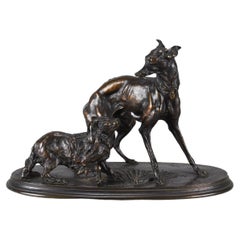
Anamilier Bronze Entitled "Greyhound and King Charles Spaniel" by P J Mêne
By Pierre Jules Mêne
Located in London, GB
Delightful mid 19th Century French Animaliers bronze study of a playful Greyhound and King Charles Spaniel, with rich brown rubbed to a golden colour and fine hand chased surface det...
Category
Antique 1870s Art Nouveau Animal Sculptures
Materials
Bronze
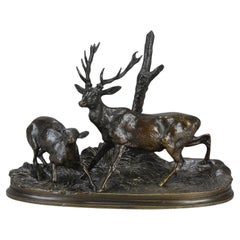
Mid 19th Century Animalier Bronze Study "Famille De Cerf" by P J Mêne
By Pierre Jules Mêne
Located in London, GB
Excellent French mid 19th Century Animalier bronze group of a stag and doe in a wooded landscape exhibiting excellent hand finished surface detail and rich brown patina, raised on an...
Category
Antique Mid-19th Century French Art Nouveau Animal Sculptures
Materials
Bronze
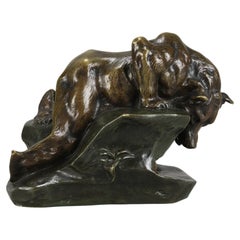
Animalier Bronze Sculpture Entitled "Bear and Rabbit" by Charles Paillet
By Charles Paillet
Located in London, GB
An amusing early 20th Century bronze group of a bear peering over the edge of a rock at a rabbit quietly hiding under a ledge, with excellent rich brown patina and fine hand chased surface detail. Signed Paillet
ADditional information
Measures: Height: 18 cm.
Condition: Excellent Original Condition.
circa: 1910.
Materials: Patinated Bronze.
ABOUT
Charles Paillet
Charles Paillet (French, 1871 ~ 1937) Paillet studied sculpture under Georges Gardet. Paillet’s first exhibit was in the Salon of 1897 and he exhibited regularly until 1921. Most of his works were cast by the foundry Thiebault Freres both in lost wax and by the sand-cast method. A few of his works have been recorded bearing the F. Barbedienne foundry mark also. Charles Paillet, Georges Gardet, Rene Paris...
Category
Early 20th Century French Art Deco Animal Sculptures
Materials
Bronze
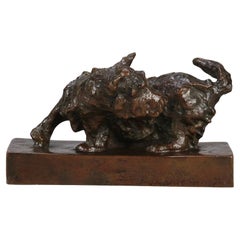
Early 20th Century Animalier Bronze Sculpture "Turning Terrier" by Edith Parsons
Located in London, GB
A charming early 20th Century patinated bronze study of a turning terrier with excellent textured surface detail and colour, raised on a bronze base and signed E B Parsons...
Category
Early 20th Century North American Art Nouveau Animal Sculptures
Materials
Bronze
You May Also Like
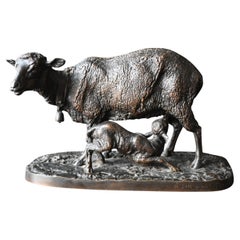
Pierre-jules Mêne, Bronze, The Sheep And Its Lamb, With Important Provenance
By Pierre Jules Mêne
Located in Bilzen, BE
"Pierre-jules Mêne (1810–1879) Bronze, The Sheep And Its Lamb, With Important Provenance"
Pierre-Jules Mêne (1810–1879)
La Brebis et son Agneau (The Ewe and Her Lamb)
Bronze with bro...
Category
Antique Mid-19th Century French Napoleon III Animal Sculptures
Materials
Bronze
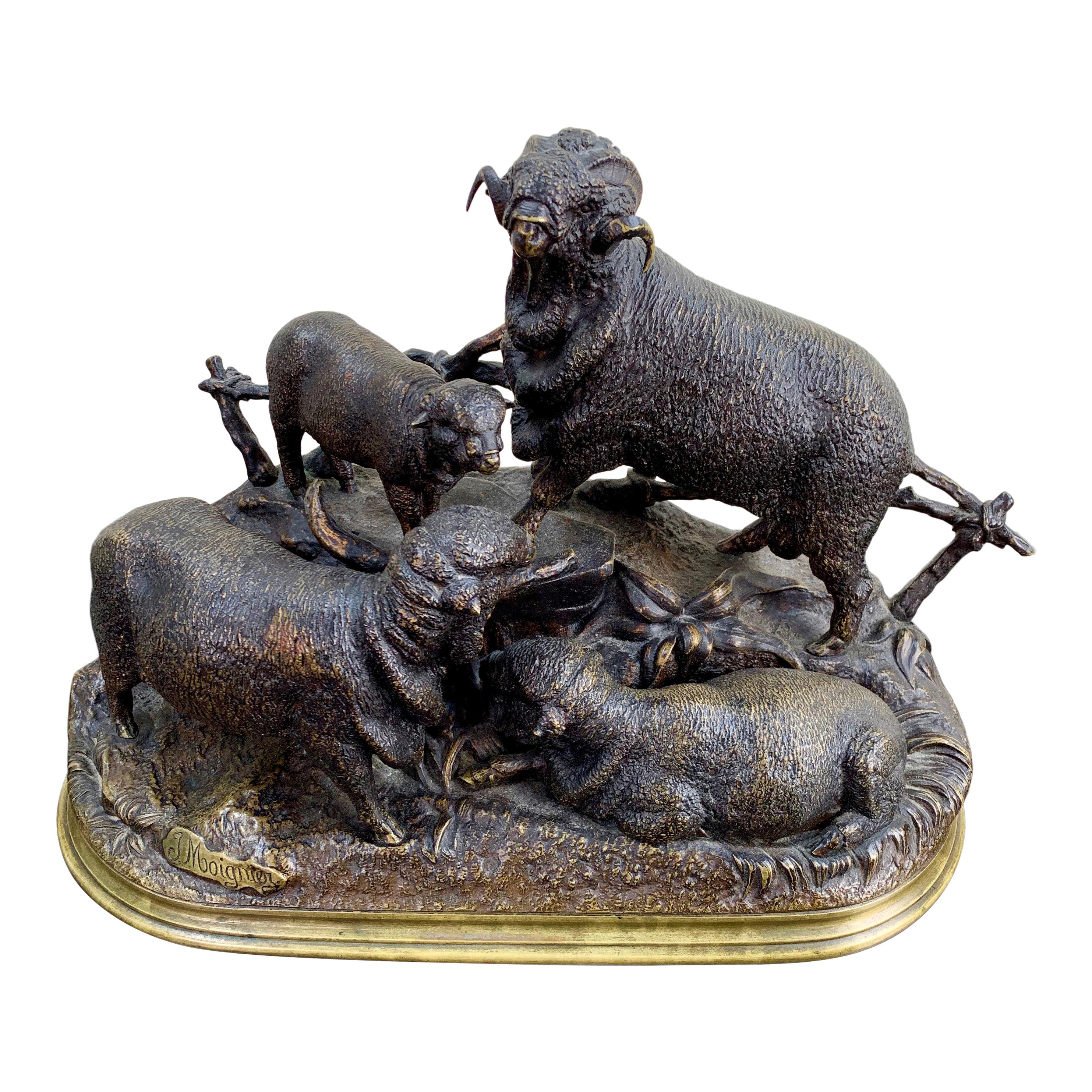
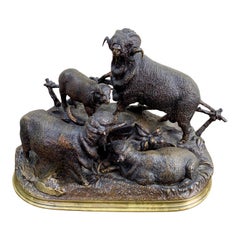
Jules Moigniez Bronze Sculpture of Three Sheep and a Lamb
By Jules Moigniez
Located in Philadelphia, PA
Bronze grouping of sheep with a nuanced brown patination. Moigniez' intricate work on the surface of the piece created a true-to-life rendering of the sheep's fleece. The group is se...
Category
Antique Mid-19th Century European Napoleon III Animal Sculptures
Materials
Bronze
$5,840 Sale Price
20% Off
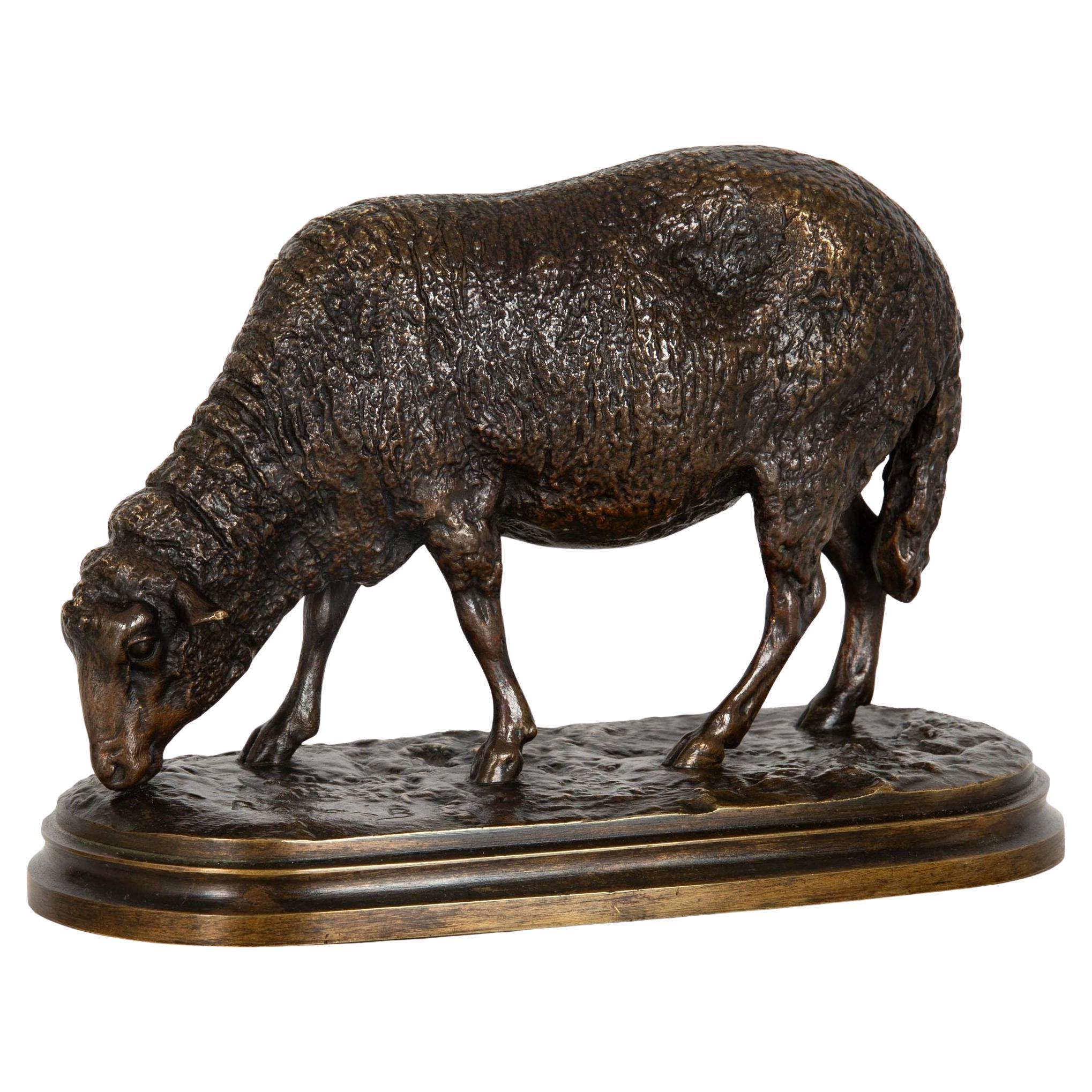
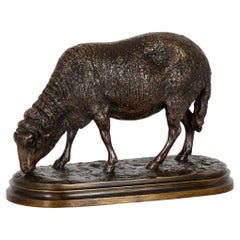
French Antique Bronze Sculpture of Sheep by Rosa Bonheur ca. 1860
By Rosa Bonheur
Located in Shippensburg, PA
ROSA BONHEUR
French, 1822-1899
"Mouton Broutant" or Grazing Ewe
Dark-brown patina sand-cast bronze Signed in base "Rosa B." almost certainly cast by Peyrol (unmarked) circa 1860...
Category
Antique 19th Century French Romantic Animal Sculptures
Materials
Bronze
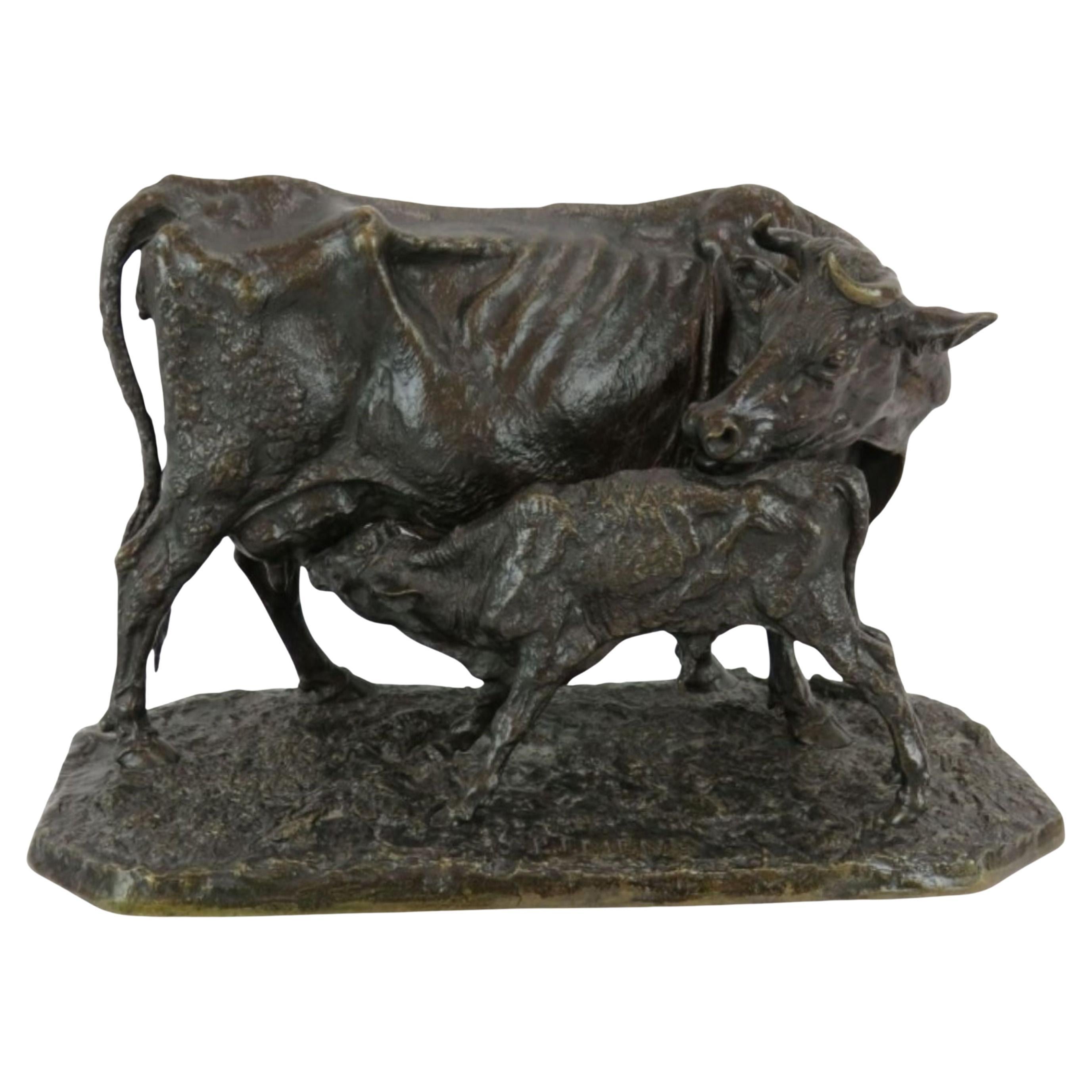
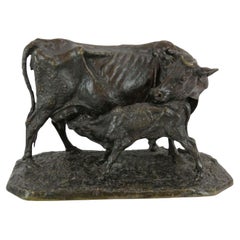
19th century bronze cow & calf after p j mene
Located in York, GB
A very fine 19th Century bronze Animalier sculpture example of a cow and calf after the renowned French sculptor Pierre Jules Mene
Signed. Height: 21.5cm. Length: 25.5cm. depth of ba...
Category
Antique 19th Century French Animal Sculptures
Materials
Bronze
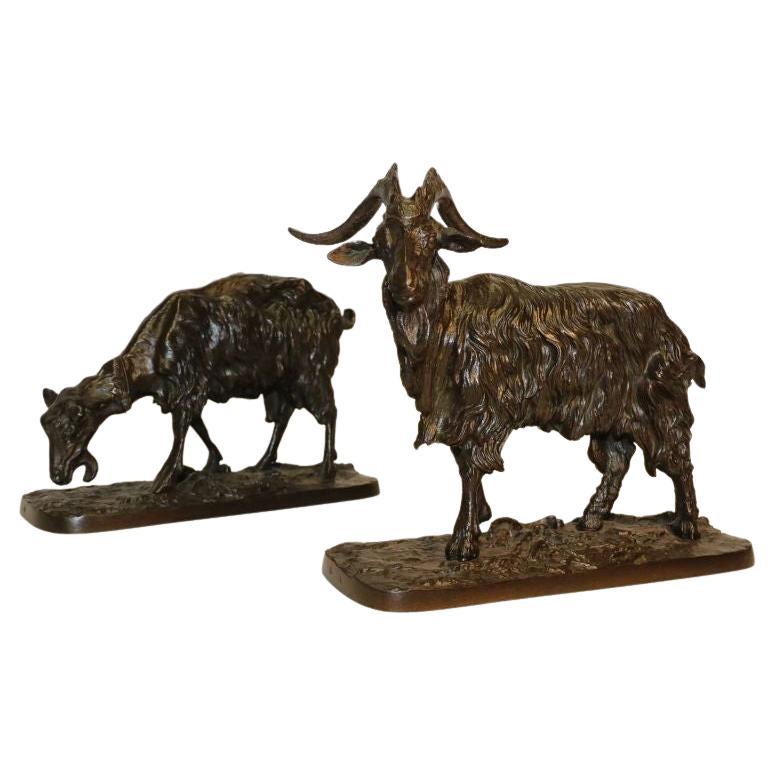
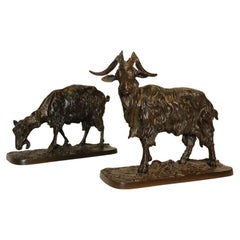
Pair of Iron 19th Century Goat Sculptures After P J Mene , French, circa 1850
By Pierre Jules Mêne
Located in Central England, GB
A fine pair of 19th century goat sculptures after P J Mene
This superb pair of sculptures depict a pair of male and female goats. They were produced in France in the mid-19th cent...
Category
Antique 19th Century French Animal Sculptures
Materials
Iron
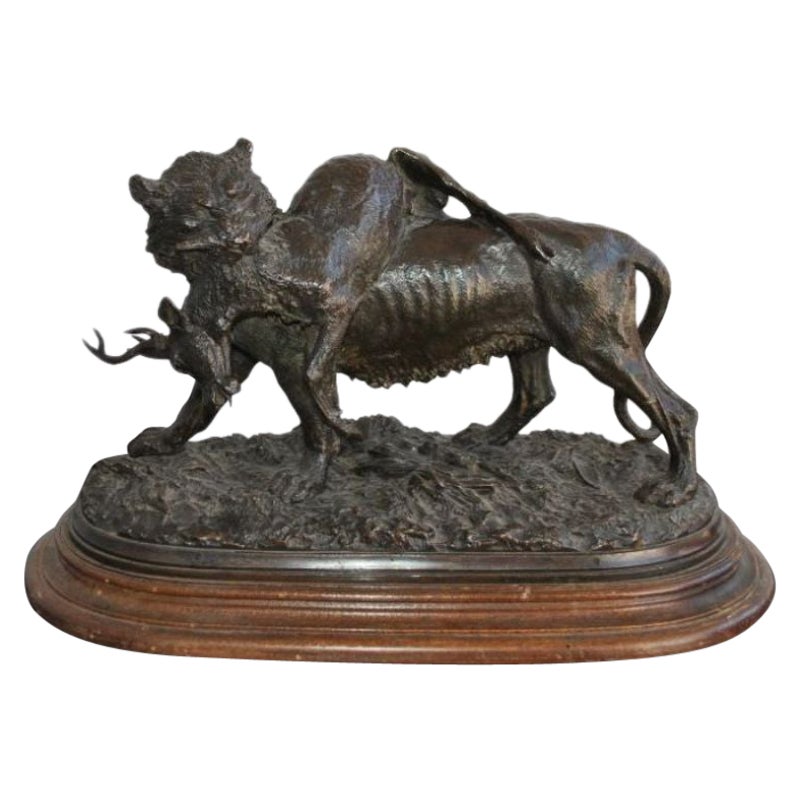
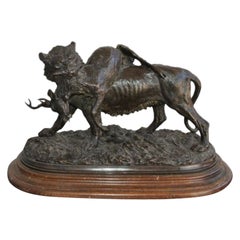
Bronze Animal Deer and Fawn Late 19th Century Signed Fratin
By Christophe Fratin
Located in Marseille, FR
Late 19th century animal bronze signed Fratin representing a wild animal having captured a young deer. Bronze mounted on wooden terrace Dimension height 29 cm for a length of 45 cm a...
Category
Antique Late 19th Century Animal Sculptures
Materials
Bronze
More Ways To Browse
Mene Bronze
Mene Bronze Sculpture
Susse Freres Bronze
Pierre Jules Mene Bronze
Pierre Jules Mene Bronze Sculpture
Barbedienne Fondeur
P J Mene
P J Mene Bronze
P J Mene Sculpture
Cain Bronze
19th Century Lamb Sculpture
Vintage Ceramic Dog
Elephant Trunk
Toucan Toucan
19th Century Bronze Dog
Gold Monkey
Mid Century Wood Fish
Antique Hen