Designer Spotlight

Banda’s Edo Mapelli Mozzi Adds Texture and Warmth to a Modern Milan Penthouse

For his first project in Milan, London-based Edo Mapelli Mozzi took on one of contemporary design’s most deceptively simple challenges: turning the cold, angular geometry of a modern residential building — in this case, by starchitect Daniel Libeskind — into a warm living environment. His solution? Adopt a “please touch” mantra, outfitting the space with soft curves and hard-to-resist textures. “You want to run your hands along everywhere,” he says.
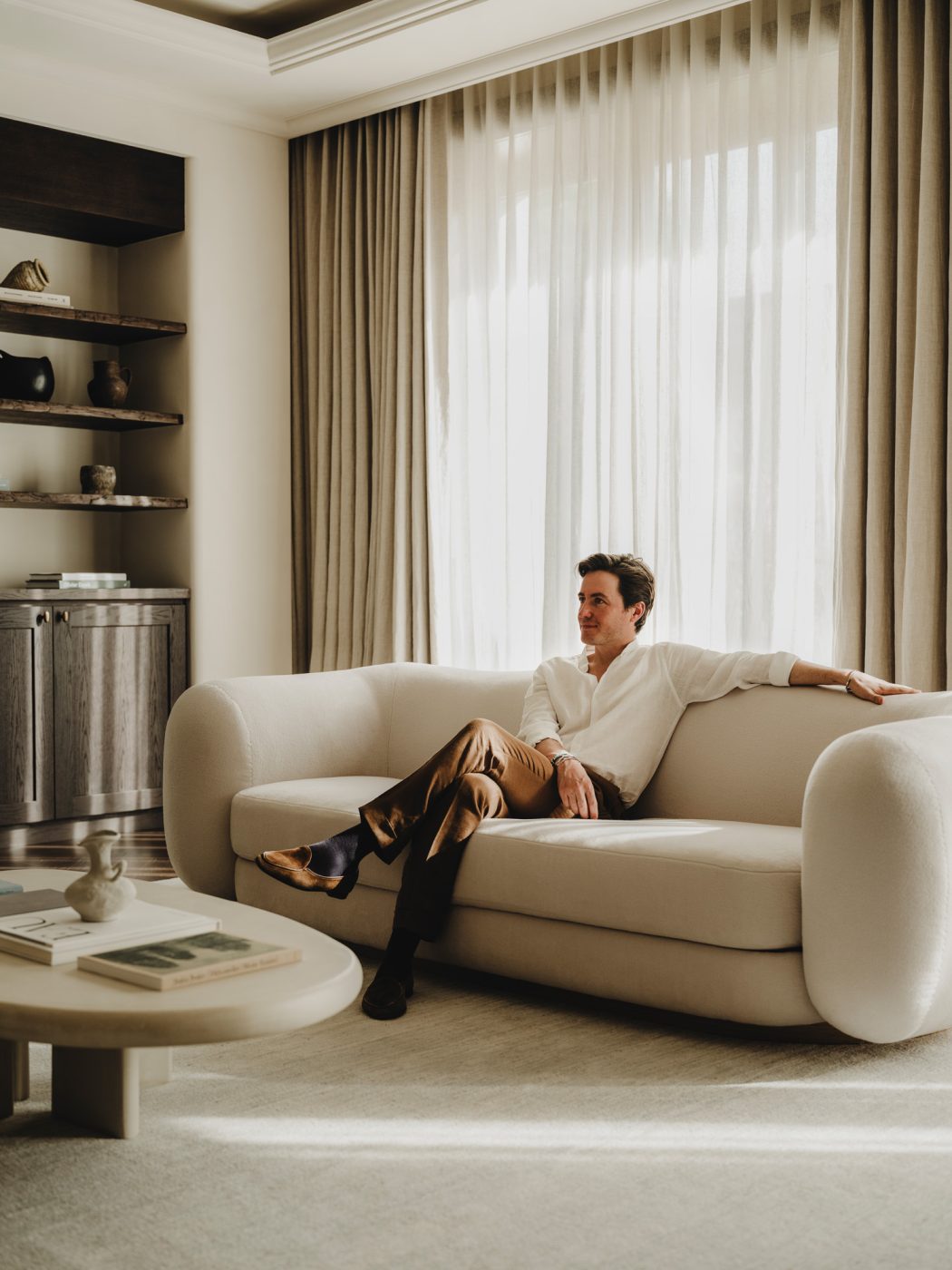
Portrait of Edo Mapelli Mozzi, founder of the design and development firm Banda, in a contemporary, neutrally hued living room.
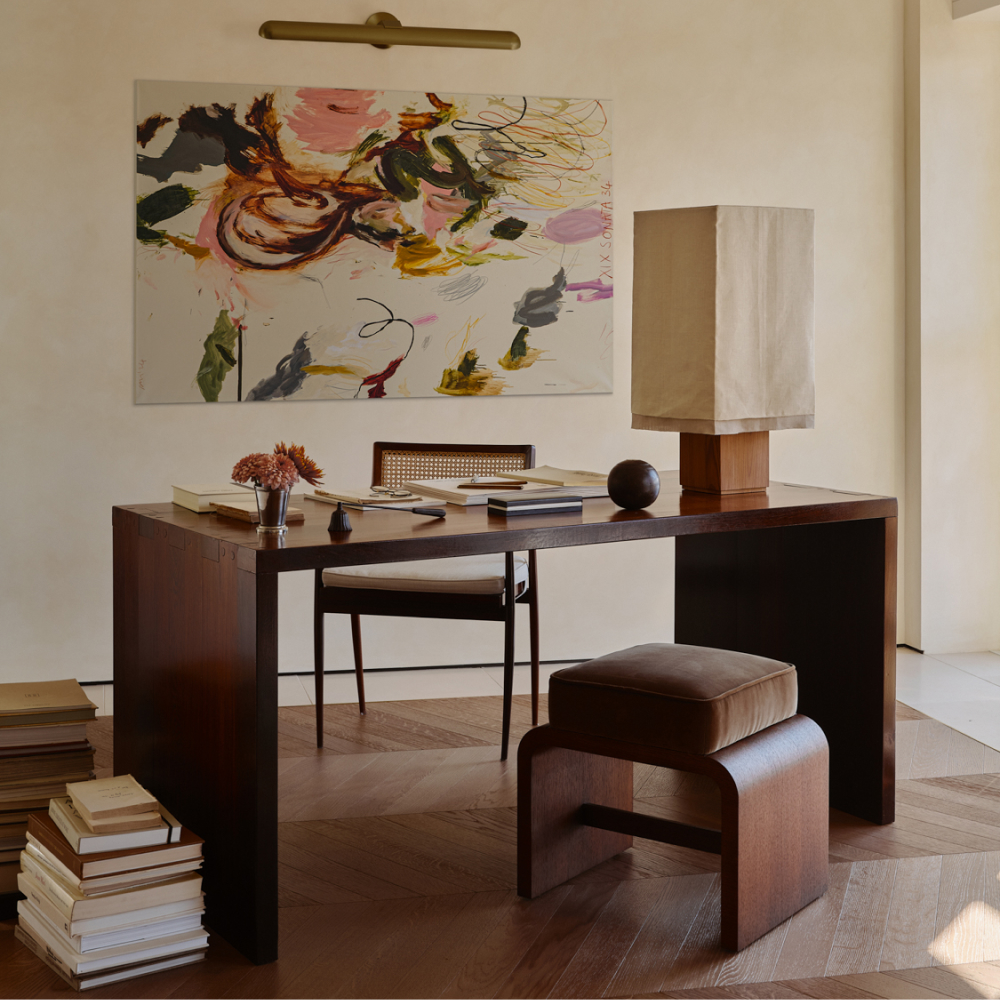
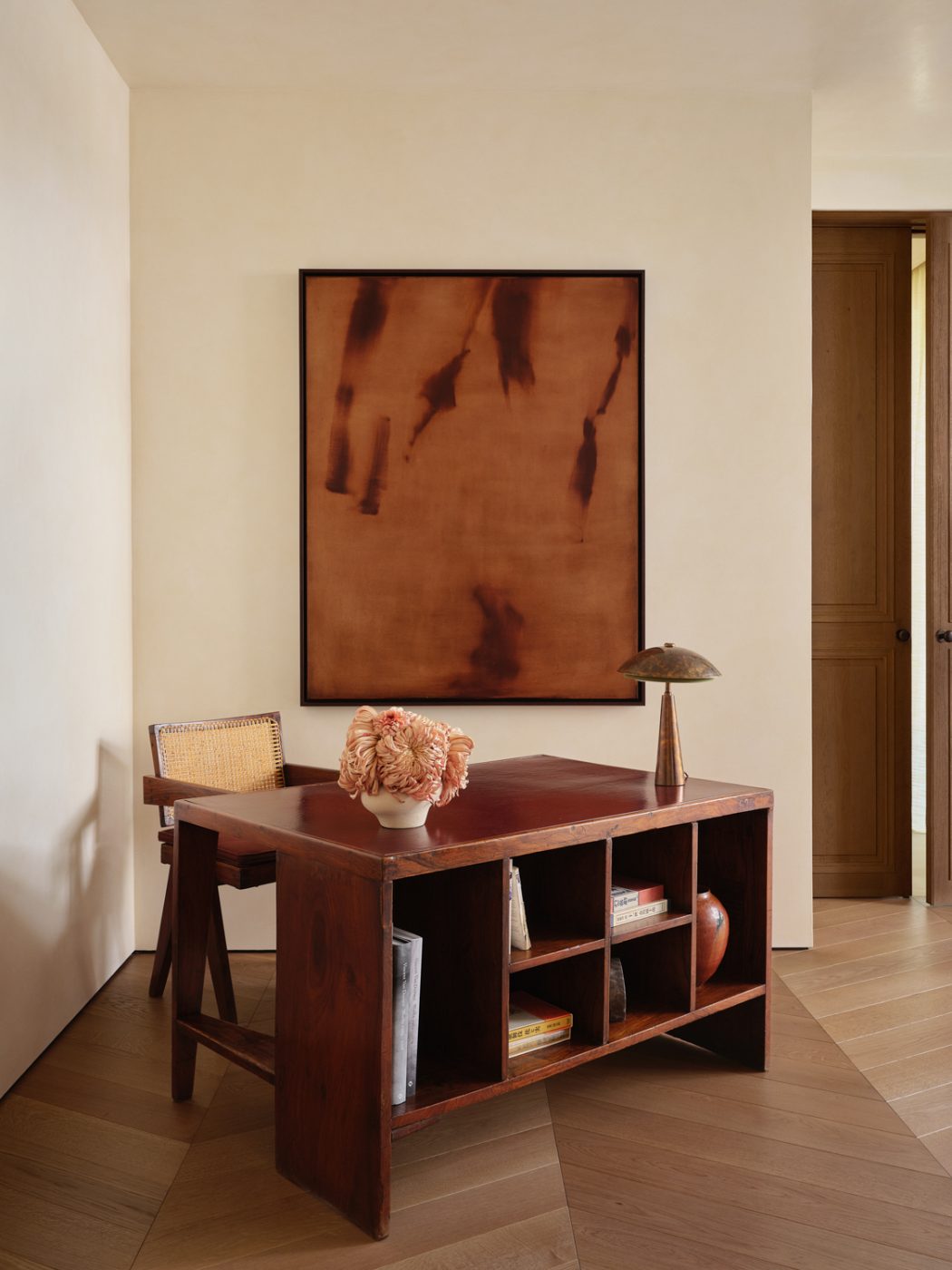
Briton Edo Mapelli Mozzi, founder of the design and development firm Banda, recently completed his first commission in Milan: a duplex penthouse atop one of the 13-story towers designed by Daniel Libeskind in the CityLife district (portrait by Michael Sinclair). Top: The study features a desk sourced from Morentz and artwork by Philip Maltman. All photos by Giulio Ghirardi

Mapelli Mozzi started with a mere shell of an apartment, a 5,000-square-foot duplex penthouse atop one of the 13-story towers Liebeskind designed in the CityLife district. “Our client didn’t want the sort of white box that the developer was going to produce in the rest of the units,” he says. “So, we were left just with a concrete double-height space. There was nothing.”

Descended from Italian nobility but born in the UK, Mapelli Mozzi — who married Britain’s Princess Beatrice in 2020 — was drawn to the idea of creating residential properties at a young age. “With divorced parents and moving homes and being sent off to boarding school, I very quickly realized how important home and place making were to your overall attitude, mindset and happiness,” he says. 
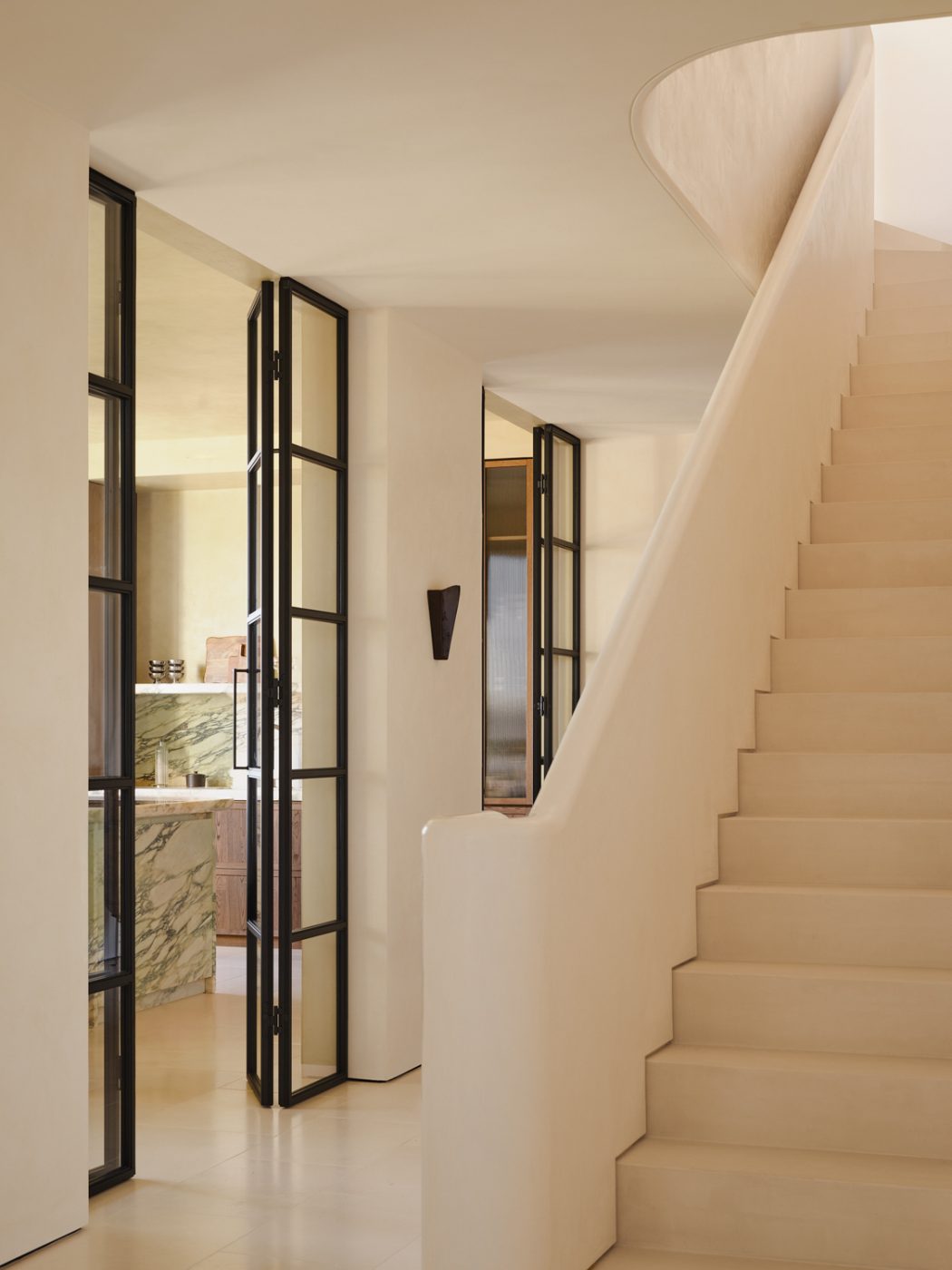
Main hall with staircase up and view to kitchen through steel-and-glass doors in a Milan penthouse whose interiors are by Edo Mapelli Mozzi, founded of the design and development firm Banda.
Mapelli Mozzi mounted a contemporary ceramic sconce on the wall between two sets of glass-paned metal doors that connect the stair hall to the kitchen. The sculptural plaster stairway was influenced by Mediterranean style.

In 2007, at the age of 23, he founded Banda, whose remit runs the gamut from real-estate transaction and development to interior design. The firm has grown to include a staff of 60, with projects around the globe. Lately, Mapelli Mozzi, its CEO and creative director, has been spending time in the U.S., checking on the progress of residences for clients in New York, Los Angeles, Miami and Puerto Rico.
Banda is also at work on four hospitality projects, including the residences at Rosewood Dubai and guest rooms at London’s forthcoming Waldorf Astoria, which will occupy the 19th-century neoclassical Admiralty Arch building. He’s mum on the details but shares that another London commission the guest rooms, amenities and food and beverage facilities in an independent hotel set to open in Soho in 2028 “is going to be a lot of fun creatively, because there are no brand guidelines. They’ve come to us for our aesthetic, and therefore, we’ve got a huge amount of freedom that allows us to put our identity on it.”

For the Milan penthouse, devising a graceful layout was perhaps the biggest hurdle — but also the aspect of his job that is often the most satisfying. “I wake up in the middle of my sleep,” he says with a laugh, “and I’m like, Oh, I’ve got it!” 
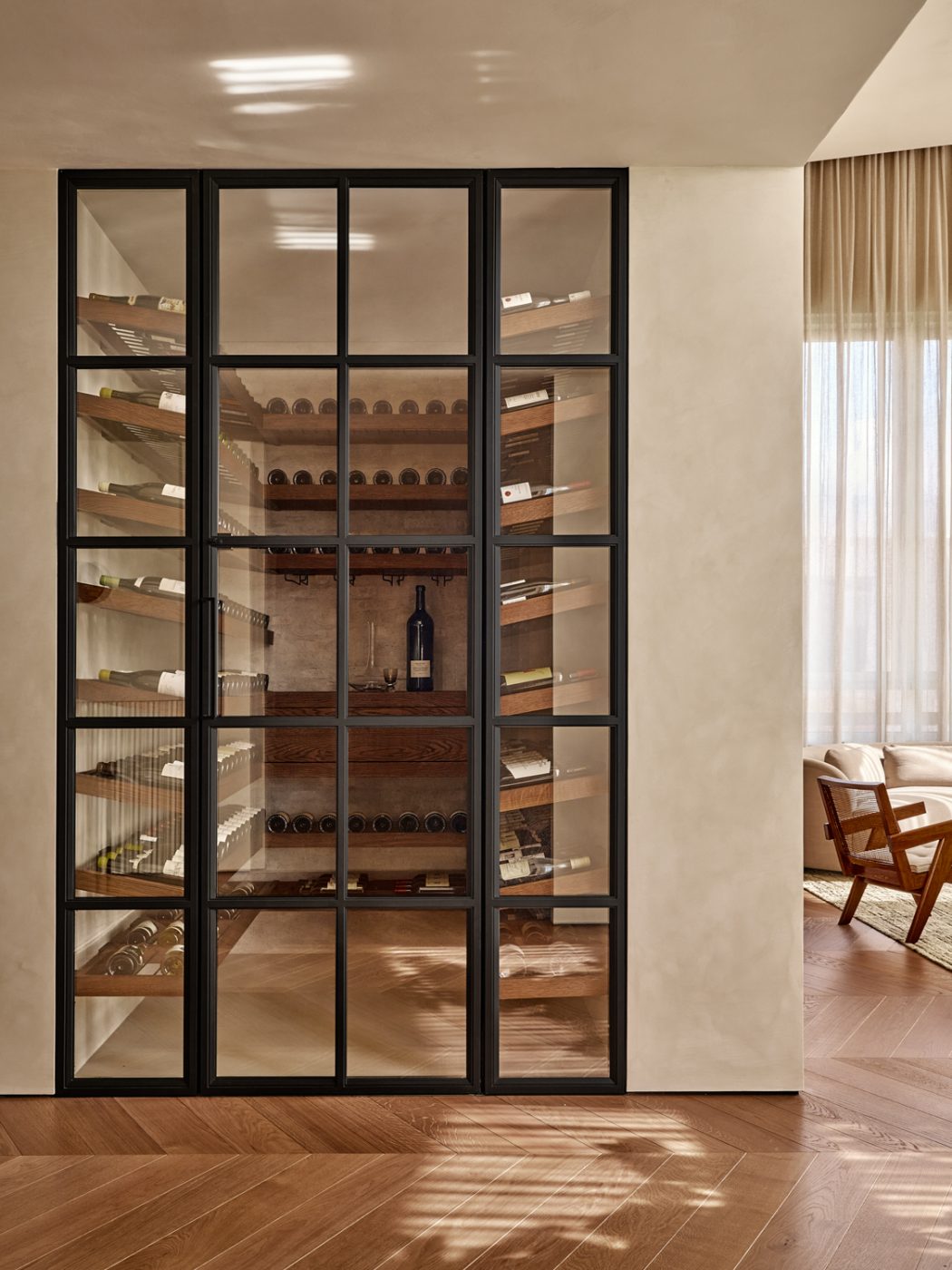
View through glass and steels door from living room into wine cellar in a Milan penthouse whose interiors are by Edo Mapelli Mozzi, founder of the design and development firm Banda.
More glass-paned metal doors divide the living room from the wine cellar.

After drafting multiple iterations, Mapelli Mozzi landed on a floorplan with the principal suite and the spaces for entertaining on the first floor and the guest rooms and study above, where a terrace — one of five — holds a swimming pool and outdoor living and dining areas. 

For the interiors, he and his team leaned into natural materials, including wood, marble and limestone, and sought subtle ways to harness light. They positioned the central hallway’s sculptural plaster staircase, for example, so that it would catch the sun’s rays streaming through a glass-paned door to the kitchen.
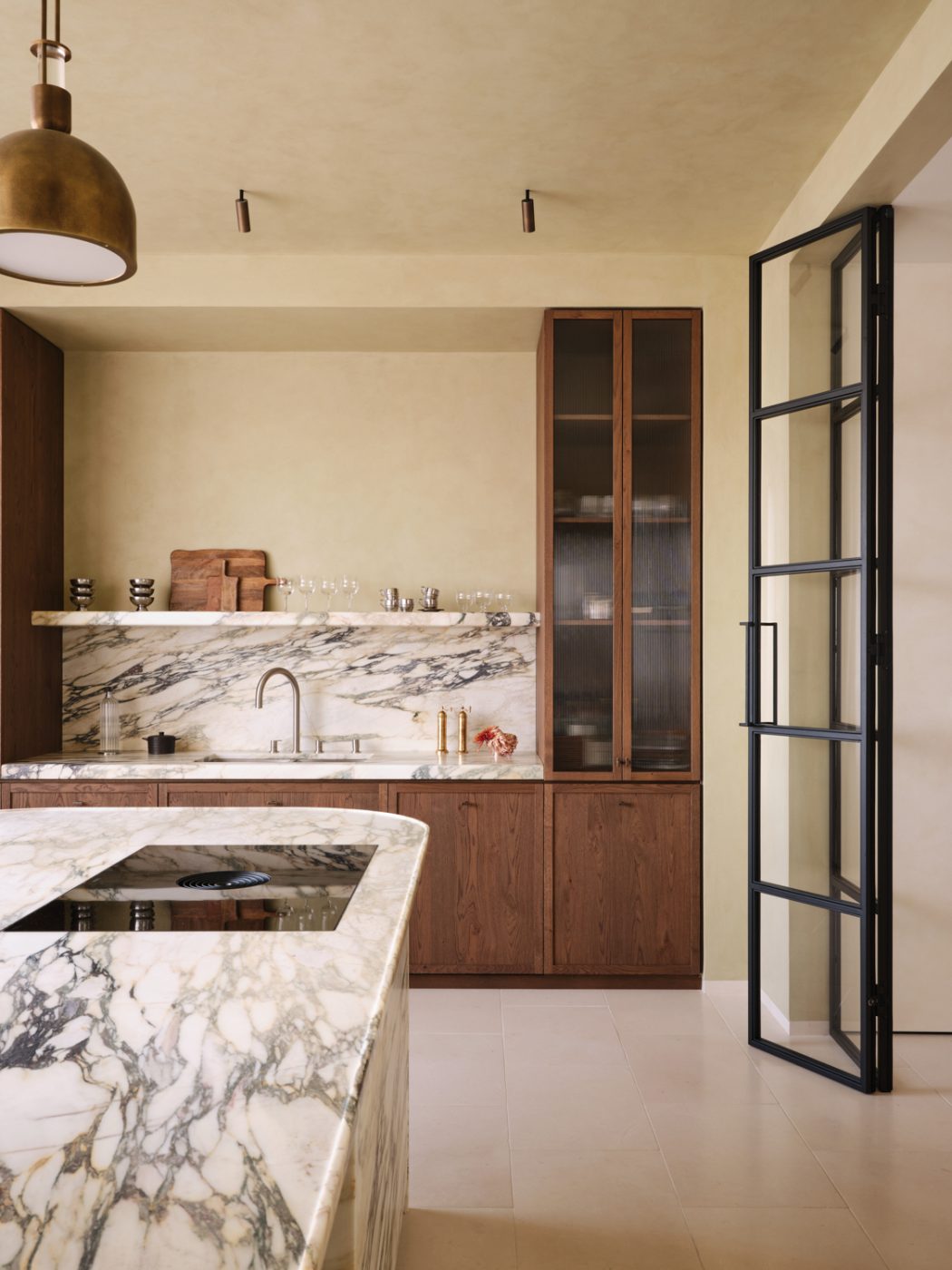
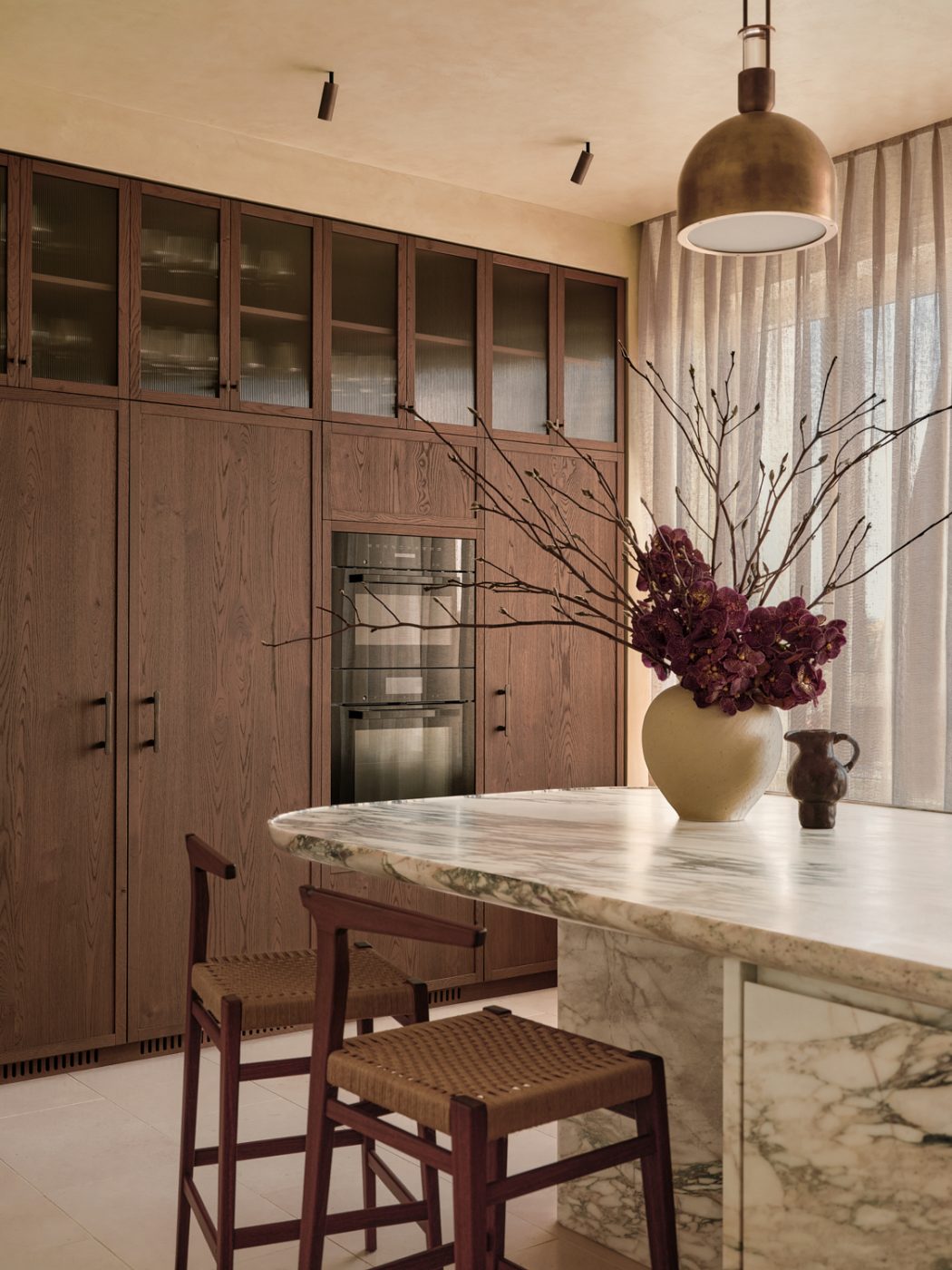
The clients, a young couple from the fashion world who also spend time at their family vineyard, hoped to evoke a Mediterranean sensibility, Mapelli Mozzi says, “a feeling of serenity, that you’re walking into this softer oasis when you come home from your day in Milan.” Their background in design made them engaged, knowledgeable participants in aesthetic choices, like selecting the various stones the Banda team sourced from nearby quarries.
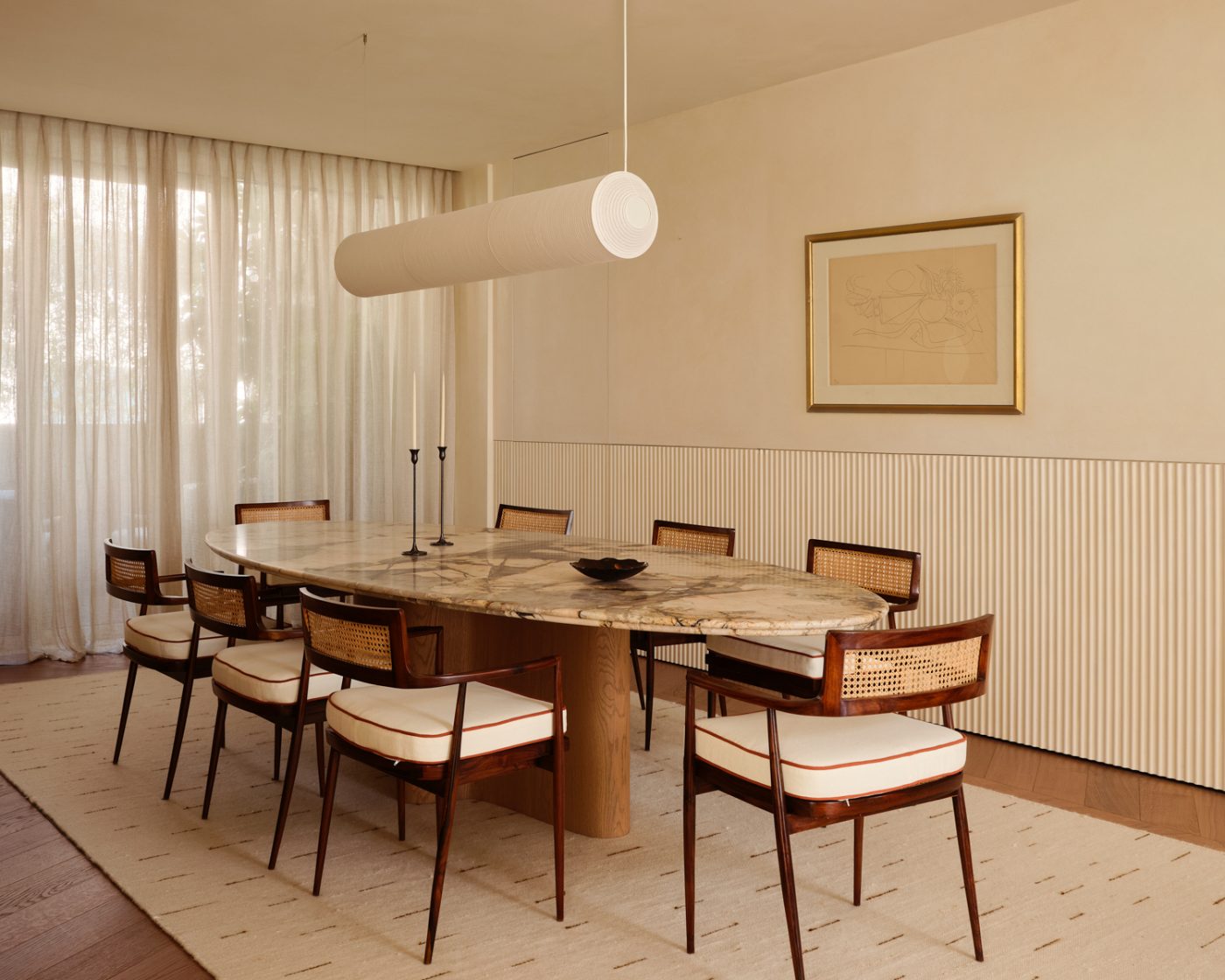
dining room with Joaquim Tenreiro chairs around a marble topped oval table in a Milan penthouse whose interiors are by Edo Mapelli Mozzi, founder of the design and development firm Banda.
For the dining room, Mapelli Mozzi found a rare intact set of jacaranda-wood chairs with low Viennese-straw backs by Brazilian designer Joaquim Tenreiro. They encircle a bespoke table with a Patagonia-marble top. The shade on the pendant light is made of Japanese paper.

When it came to the furniture, Mapelli Mozzi followed his general precept that the secret is in the mix. “The vintage items, the antiques, the Brazilian mid-century pieces allow the newer ones to age gracefully alongside them, to breathe,” he says. “If, day one, everything is new, you notice one scratch, one dent. If it’s sitting alongside vintage furniture, you don’t. And so everything can get better with time.”

His favorite pieces in the duplex are the jacaranda-wood chairs with low Viennese-straw backs by venerated Brazilian designer Joaquim Tenreiro that surround a custom Patagonia-marble table in the dining room. “I’ve never found a set in such good condition,” he says of the 10 chairs, which had belonged to a single family since their creation. “The quality was immaculate, and often they can get damaged or chipped.”
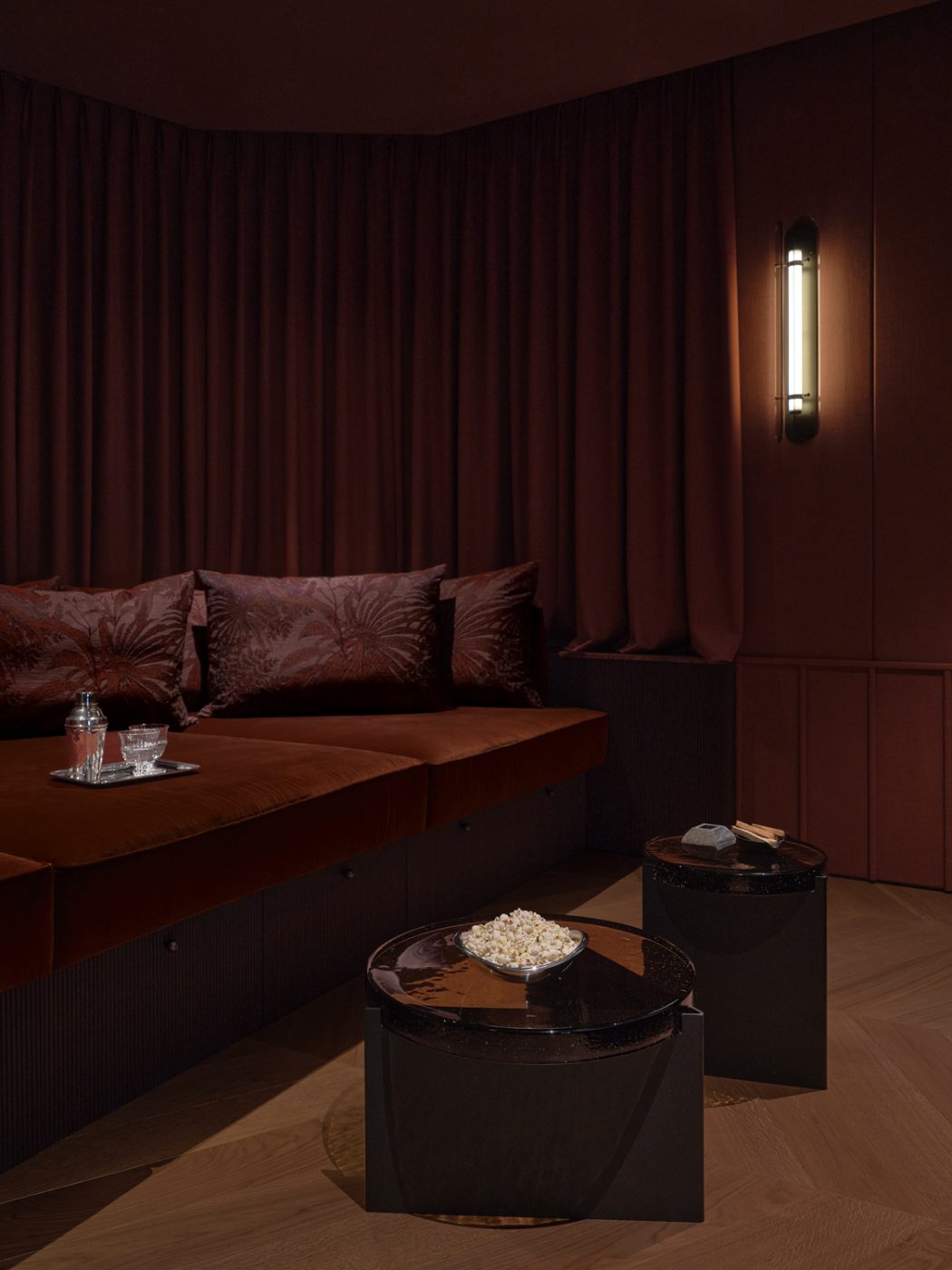
darkly hued cinema room in a Milan penthouse whose interiors are by Edo Mapelli Mozzi, founder of the design and development firm Banda.
A Contemporary sconce casts a soft, ambient glow in the cinema room, where Duo coffee tables by Sebastian Herkener sit at a bed-like sofa.

The space has walls of fluted plaster, for texture, and finishing touches like a Pablo Picasso drawing, a Japanese-paper tubular pendant light and a 1940s French Art Deco credenza discovered on 1stDibs.

The dining room connects to the cinema room, a cocoon of deep maroon, with wool drapery wrapping around upholstered walls and a supersize sofa-bed hybrid for movie nights. “The idea was they could jump on there with all of their friends,” Mapelli Mozzi says.
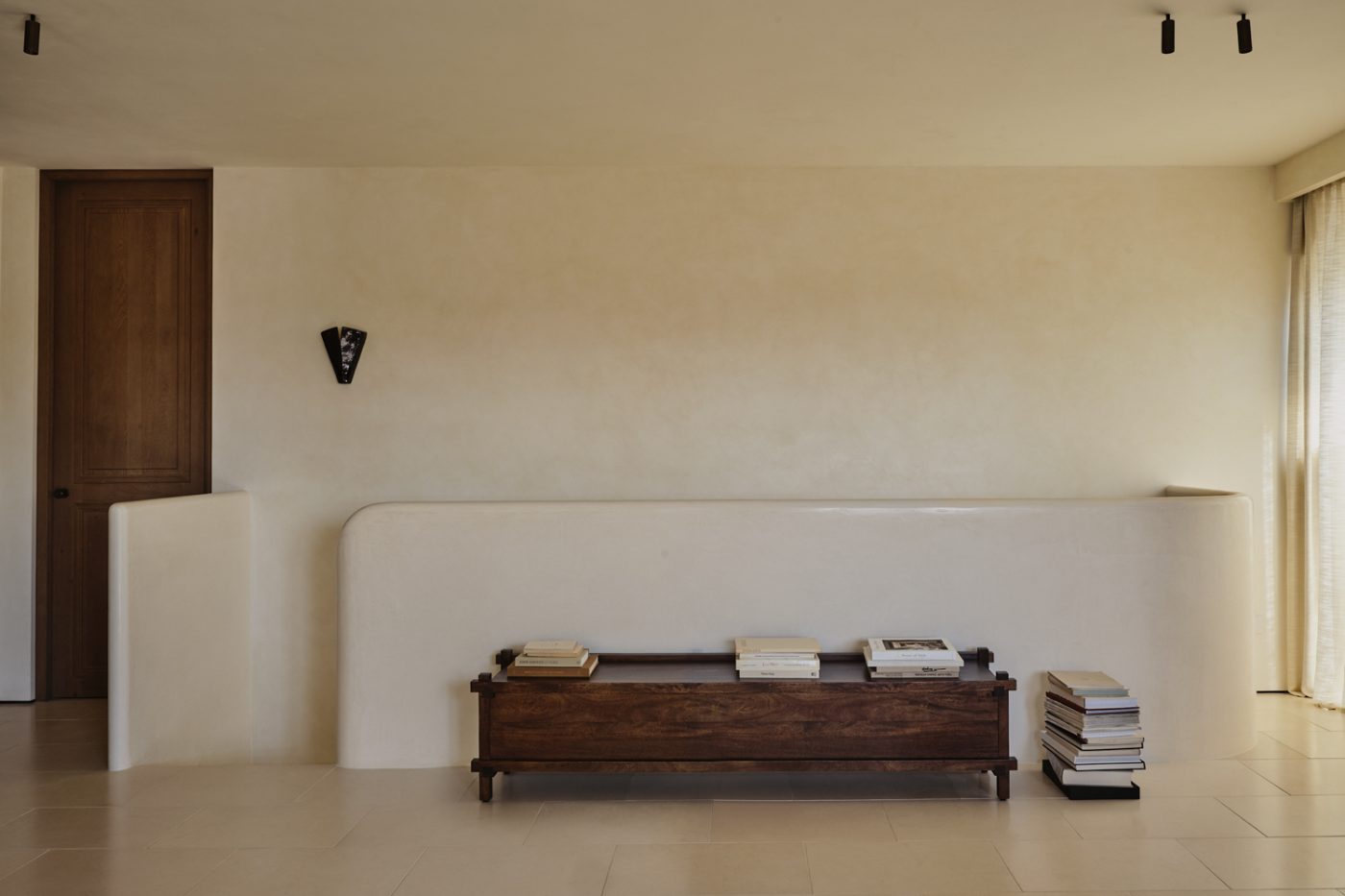
Serene upper stair landing with plaster walls and tiled floor in a Milan penthouse whose interiors are by Edo Mapelli Mozzi, founder of the design and development firm Banda.
On the landing at the top of the steps, Mapelli Mozzi placed a low mid-century-modern-inspired bench of his studio’s own design.
 

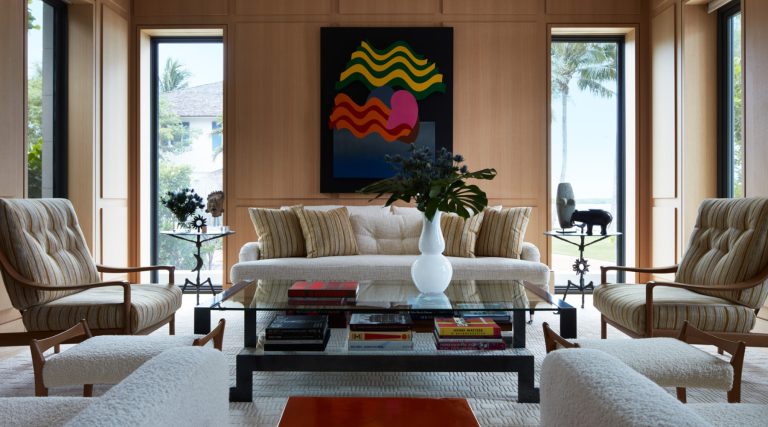
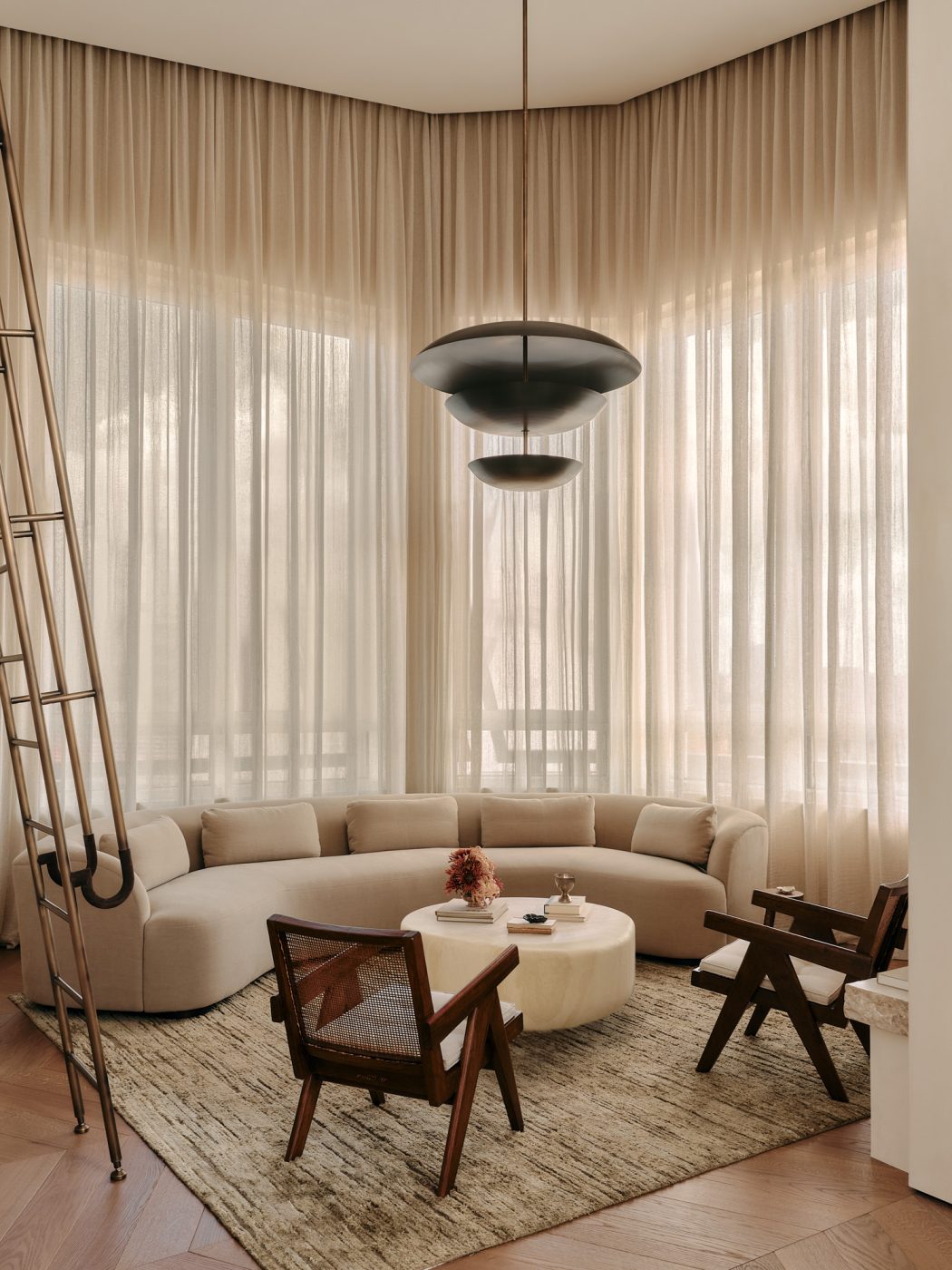
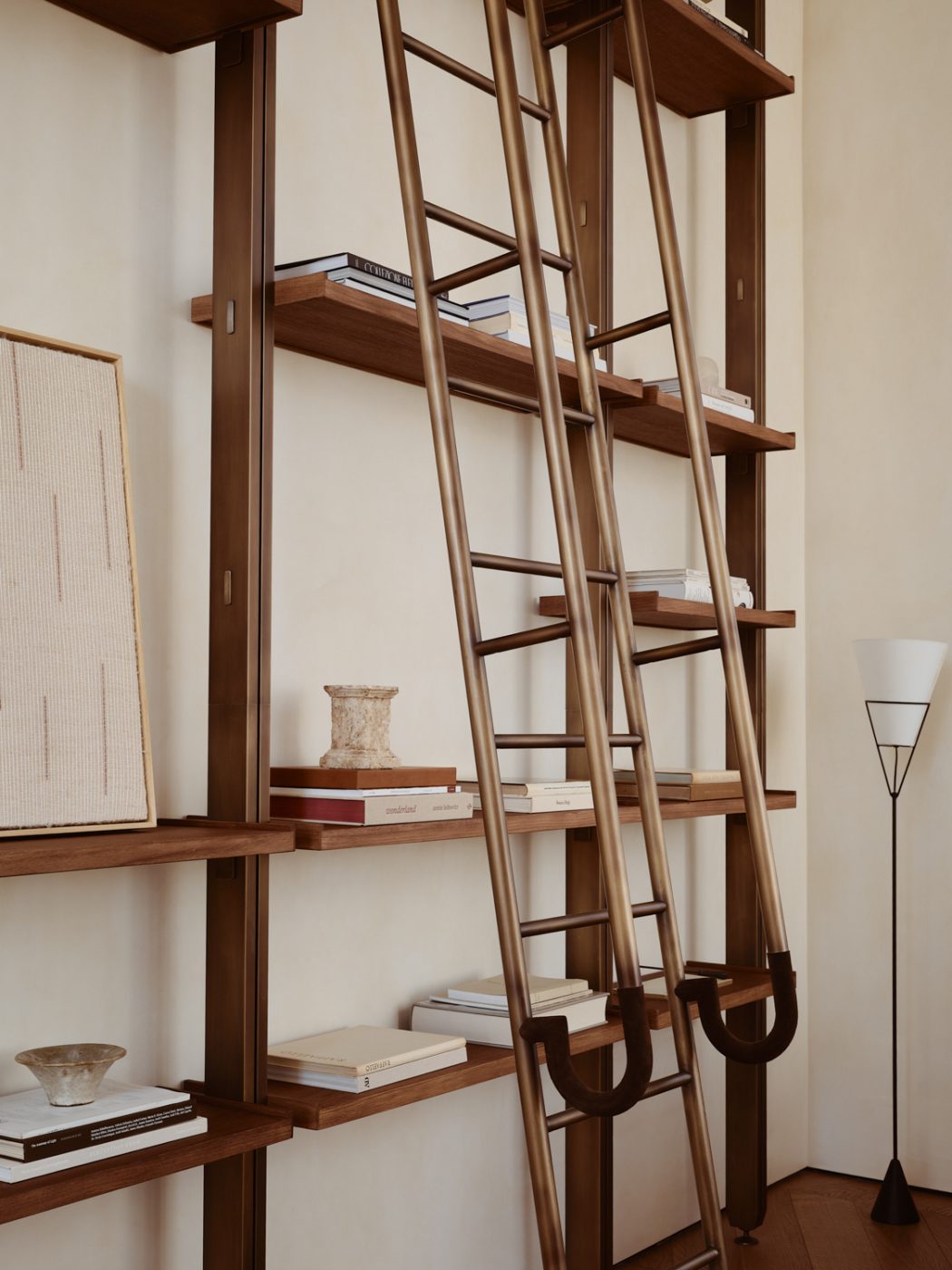
Double-height windows give the living room drama, as does a mid-century-inspired custom bookcase in dark oak and aged brass that climbs another wall. A bespoke flax-colored sofa curves in front of the windows, facing a pair of vintage Pierre Jeanneret Easy armchairs. 

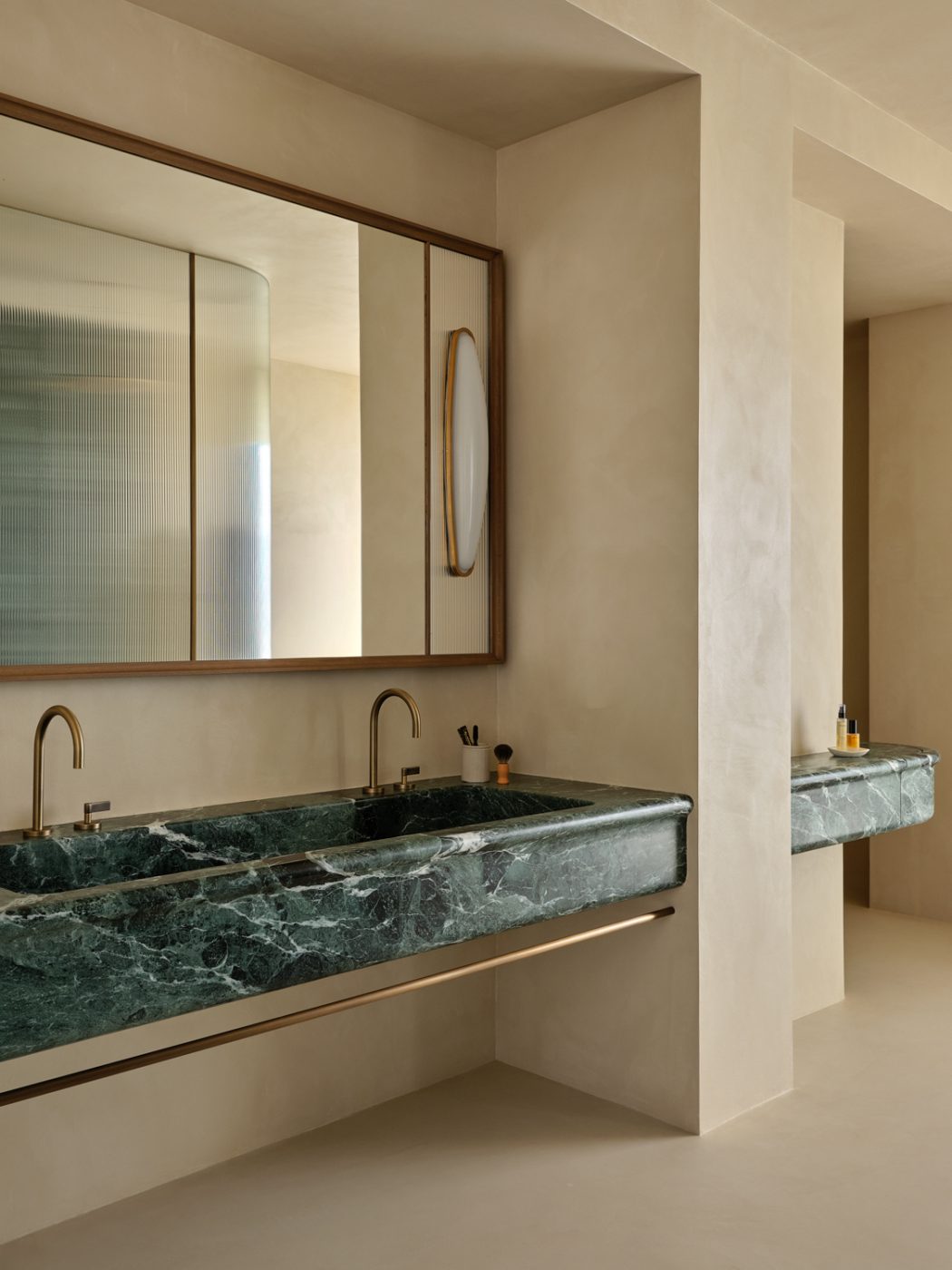
Even the kitchen is a lesson in tactility. The Banda team employed a half bullnose edge on the Calacatta Monet marble countertops and monumental island, giving them a gently curved lip. (They used the same technique in the bathrooms.)
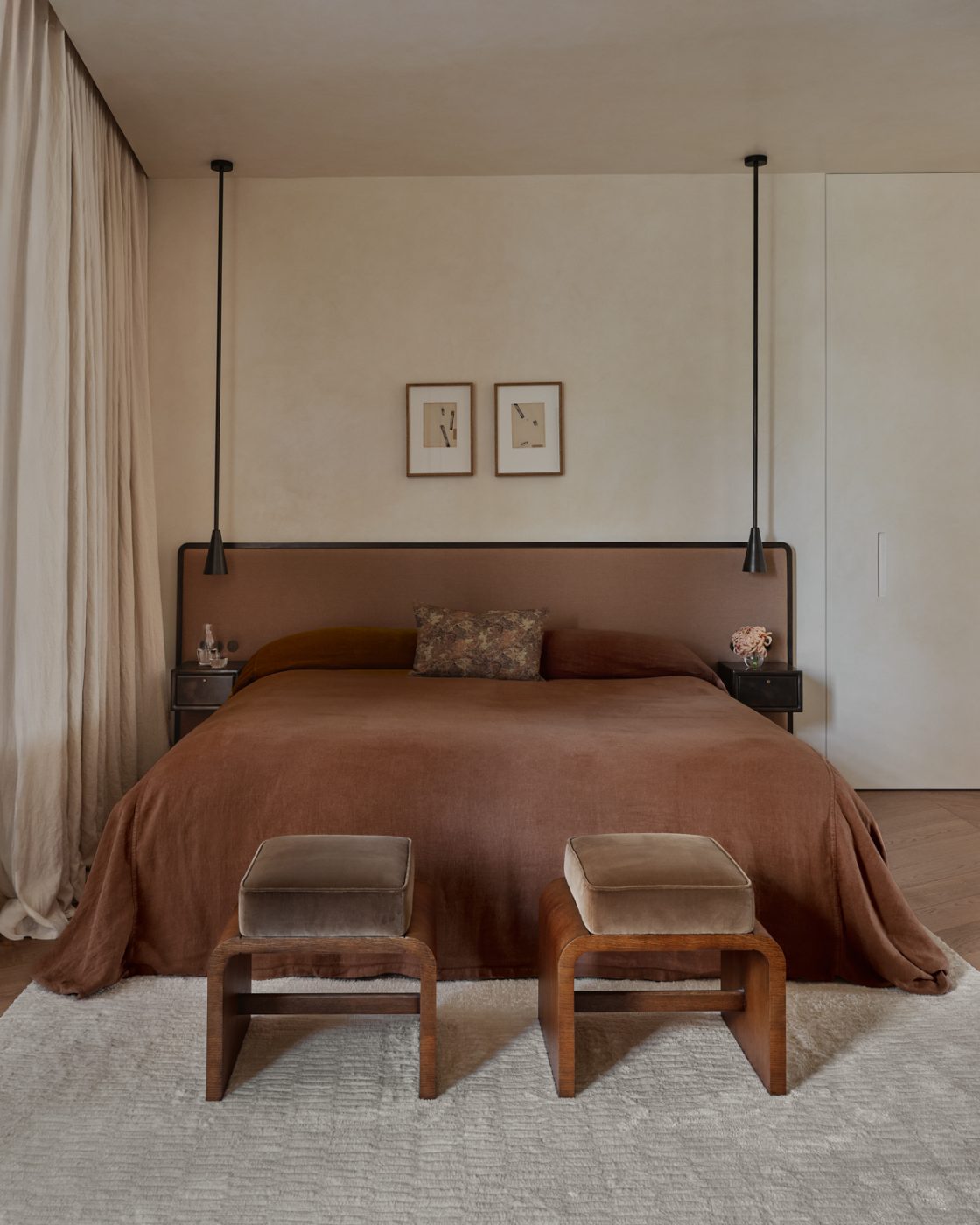
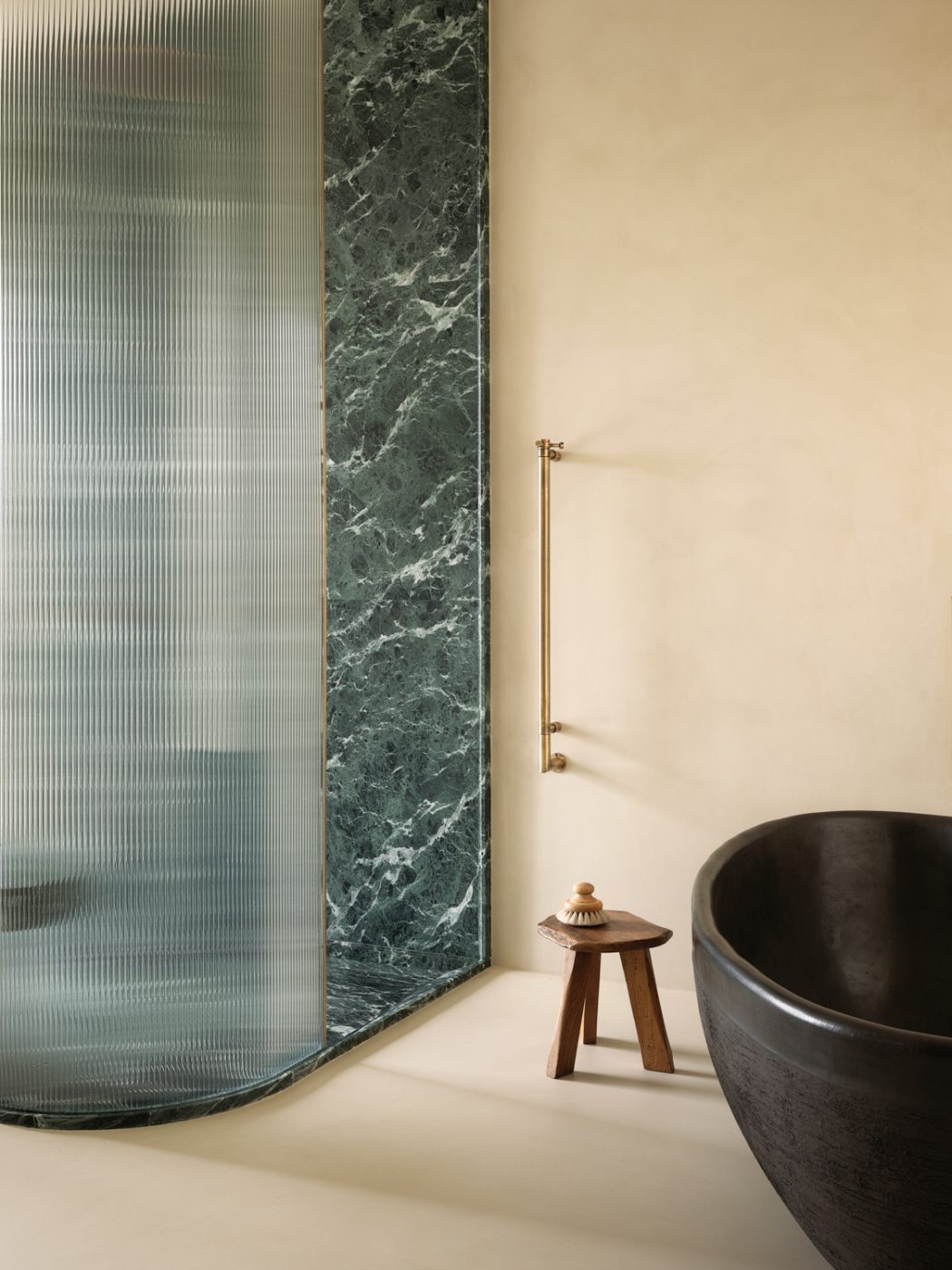
The large principal suite completes the first floor. The bedroom is a luxuriously minimalist space, its bed sporting a cinnamon-hued custom upholstered headboard and bedspread, with a pair of velvet-cushion-topped stools at its foot. The bathroom connects two terraces, one with an outdoor shower. Inside, micro-cement floors and walls mimic the feel of plaster, green Verde Alpi marble adds earthy color, and a black-clay tub by Studio Loho provides a sculptural focal point. “It’s really organic, soft and lovely to touch,” Mapelli Mozzi says. 
Upstairs, the two guest suites were designed with calm in mind. Both feature bespoke beds by Banda with low headboards. One, upholstered in a chalk-colored fabric, has rounded corners and is flanked by travertine nightstands. The other, outfitted in a deep cognac hue, has sharp corners and is teamed with oak nightstands. In the study, a clean-lined desk from the Dutch gallery Morentz aligns with the air of simplicity.
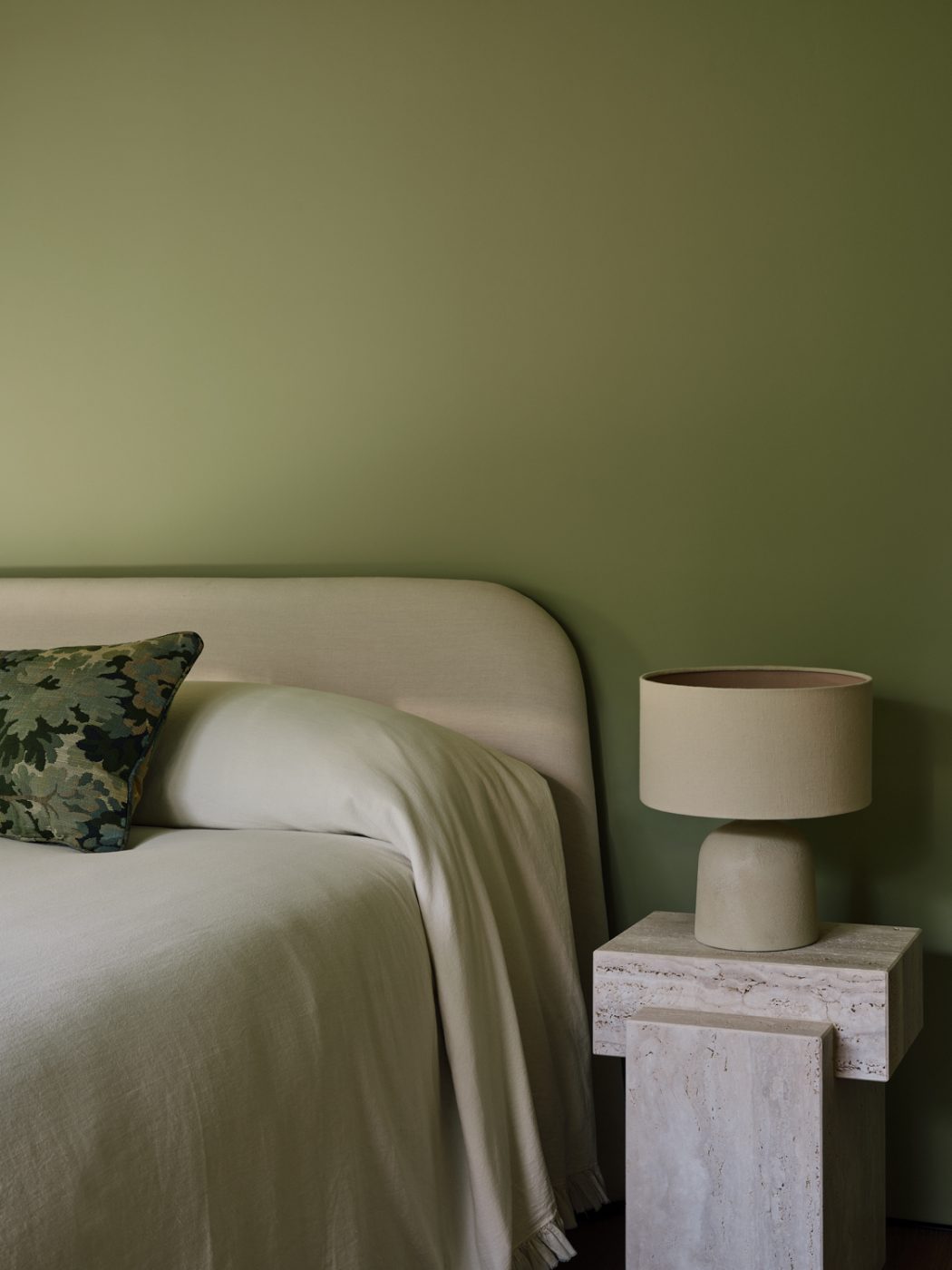
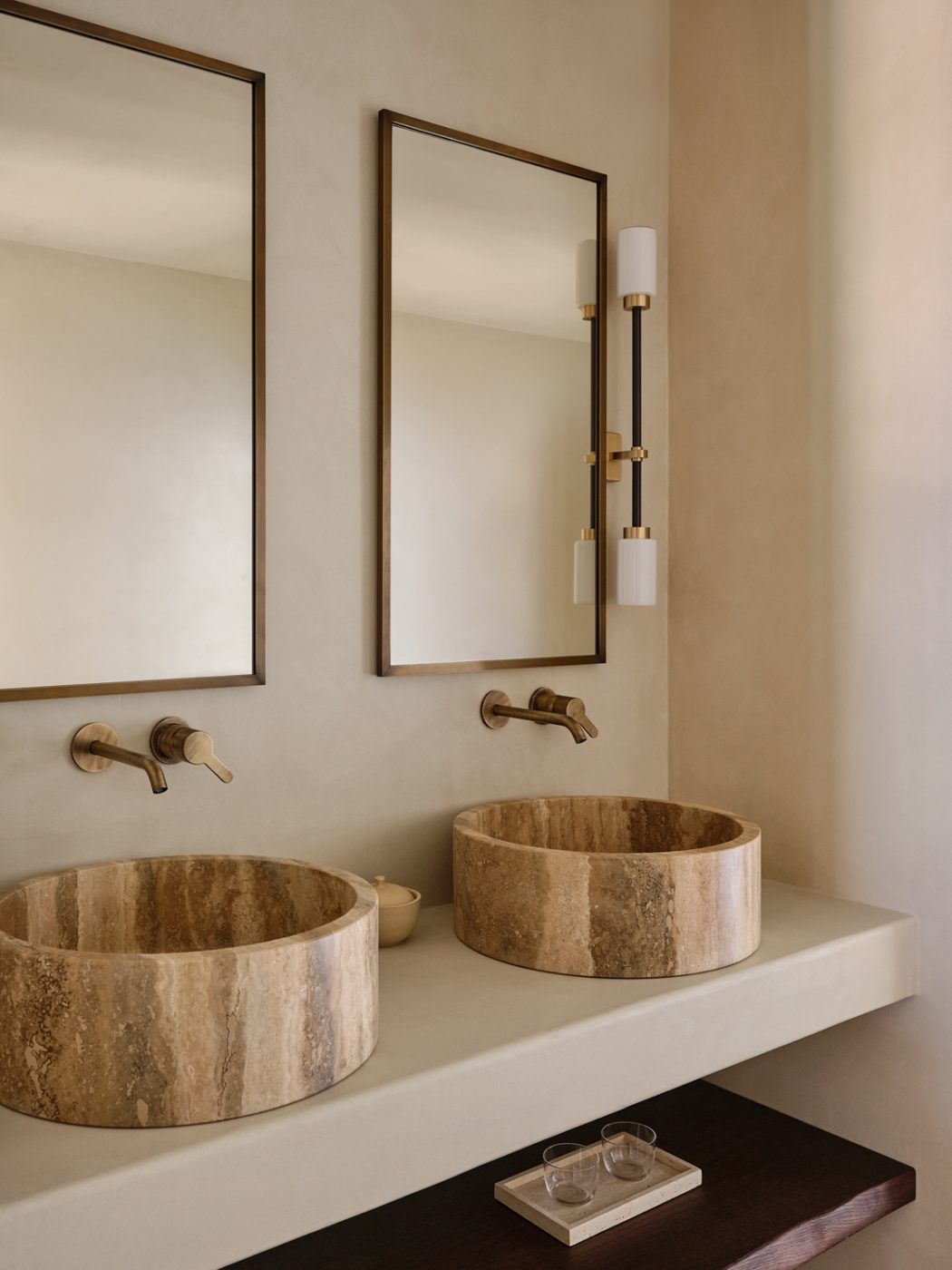
Mapelli Mozzi seems to have had a blast at every stage of the project, whether choosing the perfect slabs of stone or watching a crane hoist furniture up to a penthouse in the middle of Milan. Each task was in the service of finding just the right design language, he explains. “It’s quite ethereal to create emotion.”

Edo Mapelli Mozzi’s Quick Picks

Art Deco Parchment Desk, 1920s, offered by Beton Brut Ltd
Shop Now
Art Deco Parchment Desk, 1920s, offered by Beton Brut Ltd
“The proportions are very well resolved, and the parchment softens the geometry in a subtle way. It’s a piece that feels both practical and refined. I’ve always been drawn to the nineteen-twenties Art Deco period, and the clarity of this desk brings together what we value at Banda, a way of designing for living that carries history while adapting naturally to a contemporary way of life.”
Cartier Vendôme Fountain Pen, 1980s, offered by WALLECTOR SRL
Shop Now
Cartier Vendôme Fountain Pen, 1980s, offered by WALLECTOR SRL
“We often say that it’s all in the details, and I tend to appreciate objects that relate to use and daily rituals, while still carrying a sense of craftsmanship and decorative value. When these pieces come from the past, they hold a story that adds depth. It’s a simple object, but it brings a sense of purpose to a workspace, dressing it and staying with you, rather than being forgotten.”
Aubusson Verdure Tapestry, Late 17th Century, offered by Lorfords
Shop Now
Aubusson Verdure Tapestry, Late 17th Century, offered by Lorfords
“When you say tapestry, you think of Banda. We’ve used tapestries in many forms, including designing a seven-meter double-backed sofa with cushions upholstered in eighteenth-century French Aubusson tapestry. There is a richness to both the material and the narrative, yet it never feels excessive. It introduces depth and history while remaining entirely at ease within a contemporary interior.”
Club Chairs, New, offered by 50/60/70
Shop Now
Club Chairs, New, offered by 50/60/70
“I’m drawn to the oversize arms of this chair, but most importantly to the softness the alpaca brings to it. It has a playful quality yet still feels appropriate within a more formal setting, adding comfort without compromising presence.”
Test Pattern, 1979, by Jean-Michel Basquiat , offered by Lot 180 Gallery
Shop Now
Test Pattern, 1979, by Jean-Michel Basquiat , offered by Lot 180 Gallery
“Basquiat has always been one of my favorite artists. What I like about this piece is that it’s an early work, there is a real immediacy to it. I find it more interesting to look at where an artist began rather than where they ended. It’s like seeing Picasso before he became the Picasso we all recognize. It’s about understanding the growth, the timeline and the instinct behind it.”
Roman Male Torso Fragment, A.D. 100–400, offered by Elliot Davies Fine Art
Shop Now
Roman Male Torso Fragment, A.D. 100–400, offered by Elliot Davies Fine Art
“Fragments like this carry a sense of time and materiality without needing to be complete, which gives them a very natural presence. There is something powerful in what is left behind, it allows the imagination to fill the gaps rather than presenting something fully resolved. With ancient pieces in particular, it’s not just about the form but the journey they’ve been through. They bring a depth and a quiet sense of permanence to a space.”
Nazmiyal Collection Alcaraz Carpet, 16th Century, offered by Nazmiyal
Shop Now
Nazmiyal Collection Alcaraz Carpet, 16th Century, offered by Nazmiyal
“The scale and craftsmanship are remarkable, but what makes this piece particularly interesting is its origin. Alcaraz carpets come from Spain, produced in the fifteenth and sixteenth centuries, at a time when Islamic and European influences were deeply intertwined. You can see that dialogue in the geometry, the rhythm of the pattern and the way color is used. It feels structured but never rigid. These carpets were often commissioned for noble interiors, so they were always designed with architecture in mind, not as decorative additions but as foundational elements within a space.”
Palladian-Style Table, ca. 1835, offered by Jonathan Swire Antiques
Shop Now
Palladian-Style Table, ca. 1835, offered by Jonathan Swire Antiques
“I was attracted to this piece for its English origin and the clarity of its proportions. There’s a sense of order and restraint that feels very natural, something that comes from a strong architectural lineage. The bleached finish isn’t something we always gravitate toward, but here it works well. It softens the piece and allows it to sit more comfortably within a contemporary interior without losing its character.”

Loading next story…

No more stories to load. Check out The Study

No more stories to load. Check out The Study