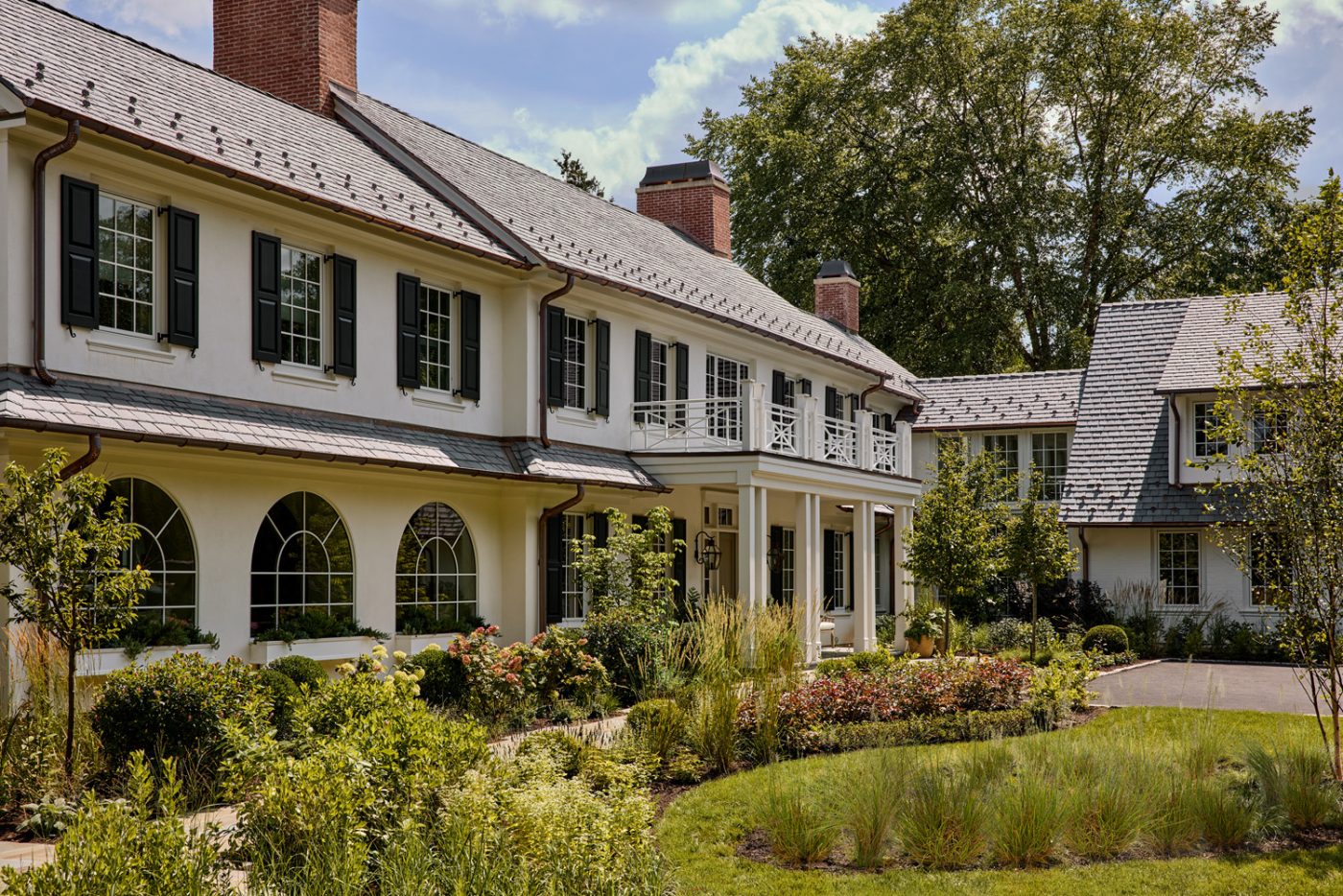
February 1, 2026Philadelphia’s Main Line, a string of suburbs named for the commuter railroad that has linked them since the first half of the 19th century, boasts some of the most elegant residences anywhere. Horace Trumbauer (1868 to 1938), who designed several of them, was the Robert A.M. Stern of the first Gilded Age, adapting traditional styles to suit contemporary expectations. This stately 1912 colonial was pure Trumbauer, its evenly spaced six-over-six windows, dark shutters and brick chimneys projecting authenticity and charm. But authenticity and practicality don’t always go together.
A few years ago, a couple with four grown children bought the house. They knew they needed to enlarge and rearrange it — to accommodate their kids and grandkids — and to update almost everything. But they didn’t proceed until they met Autumn Oser and Andre Golsorkhi, partners in the design-build firm Haldon House.
With the clients’ encouragement, Oser, the company’s lead designer, and Golsorkhi, its CEO and chief logistician, developed a plan for an extensive renovation and expansion. For the exterior, they copied Trumbauer’s details. His architecture “gave us a powerful foundation,” says Oser. “Our mission was to honor it.”
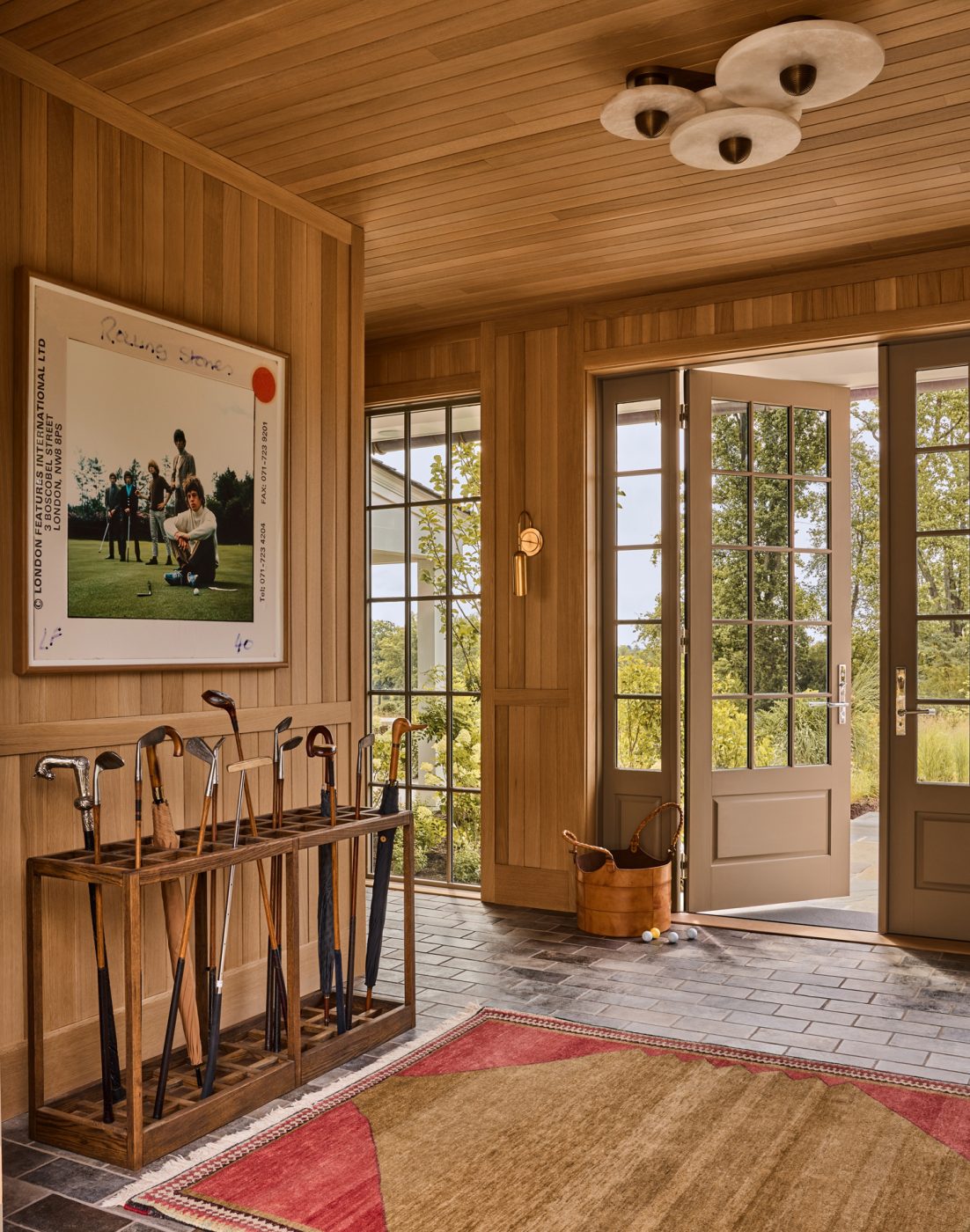
But inside the house, says Golsorkhi, “nothing is where it used to be.” One of the first big moves was turning an old cottage about 30 feet from the main house into a den and connecting the two buildings. The link, which serves as the home’s new main entrance, conveys a cozy informality, thanks to its cobblestone-patterned tile floor and walls and ceilings of white-oak boards, rift cut with a clear matte finish.
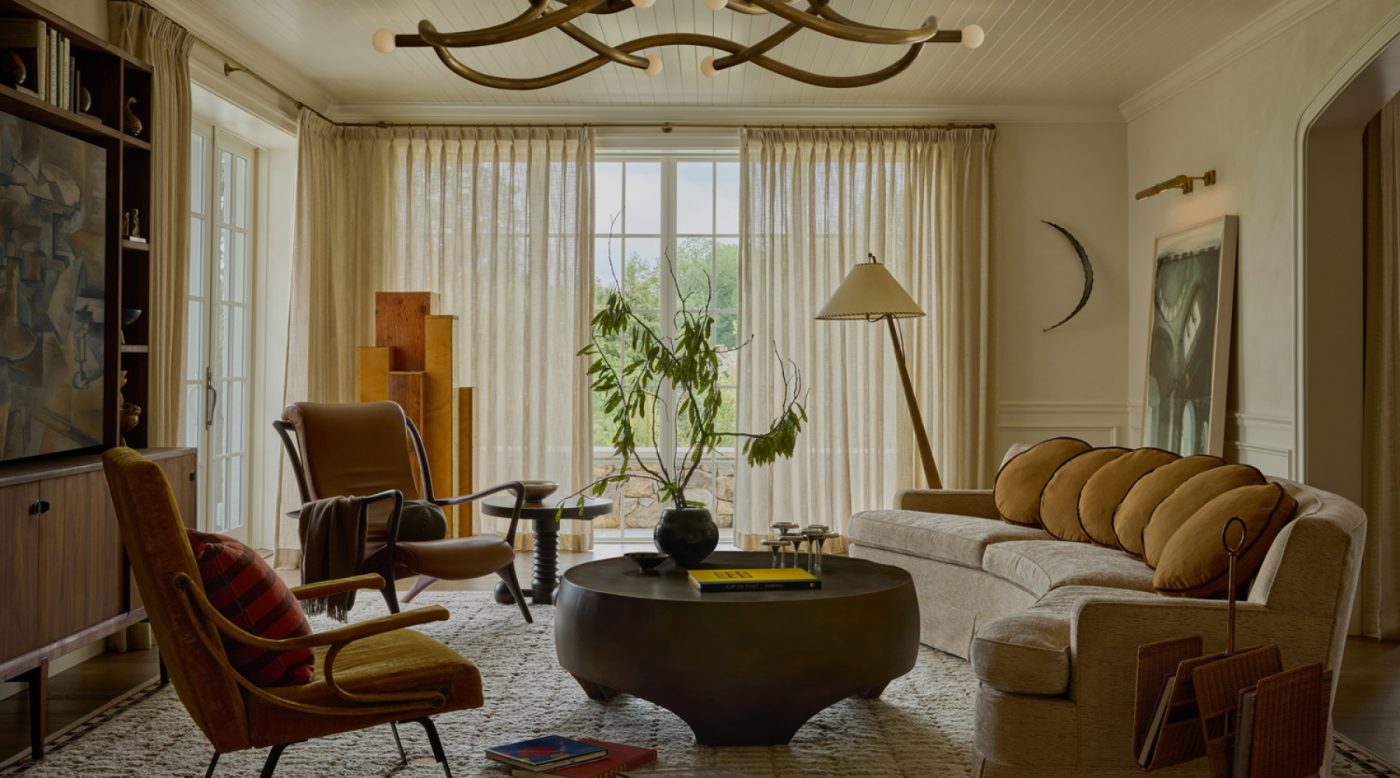
At one end of the connector, in the original main house, are the living room, dining room and kitchen, lined up with large openings that create an enfilade. They contain many traditional pieces, including the living room’s vintage parenthesis-shaped sofa, which came from the clients’ previous home. (Oser added round pillows.) Other seating includes swoopy Vladimir Kagan lounge chair and a 1950s Ignazio Gardella reclining chair from 1stDibs merchant PRB Collection.
But Oser was always on the lookout for what she calls “oddball” elements. The Gardella has duck feet, while the table next to it appears to rest on softballs. “They’re all wearing very cute shoes,” Oser says of the ensemble. And that, she says, is perfect for these clients, “whose lives are full of laughter. Nothing’s ever taken too seriously.” She even included a tall wooden storage unit on red wheels made by the clients’ nephew, an example of what she calls “strategic placement of quirky pieces.”
“Whenever a room seemed too formal, ” she explains, “I would ask myself what can I do to mess it up? What would make this weirder?”
As she added pieces to the room, Oser worked almost like a graphic designer, keeping thick and thin and vertical and horizontal elements in balance. She chose a coffee table that is bulbous, rather than spindly, because, she says, there were already too many legs in the room. The floor lamp to the right of the sofa, she continues, “is one of the most important pieces for the composition of this room, because it cuts through at an angle and changes up the geometry.” Paul Matter’s Tryst Six chandelier contributes interlocking squiggles to the composition.
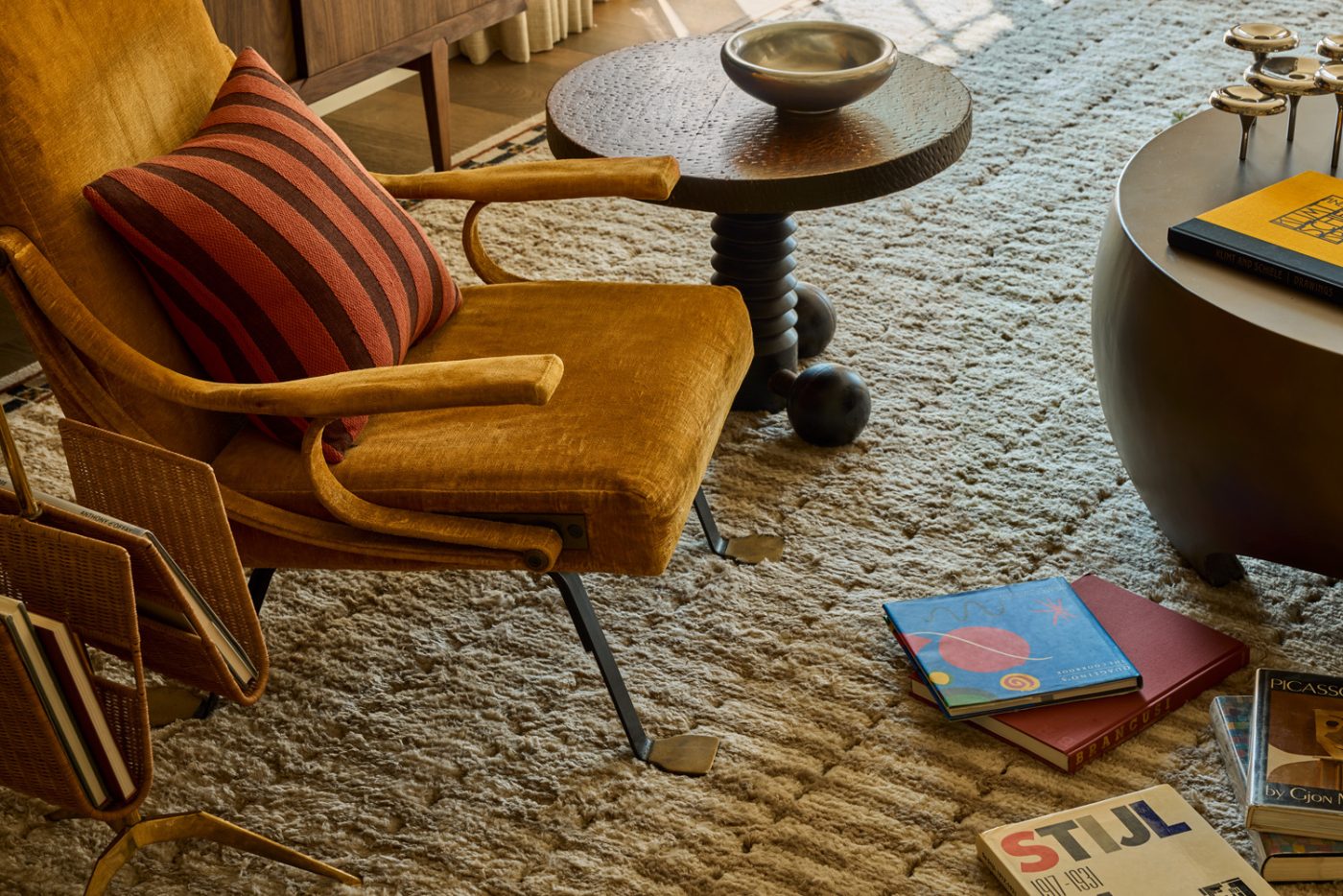
Similarly, whenever a room felt too monochromatic, she would add bright elements, usually versions of burnt orange. “I definitely lean to a moody autumn palette,” she says, as if her given name made any other preference unthinkable.
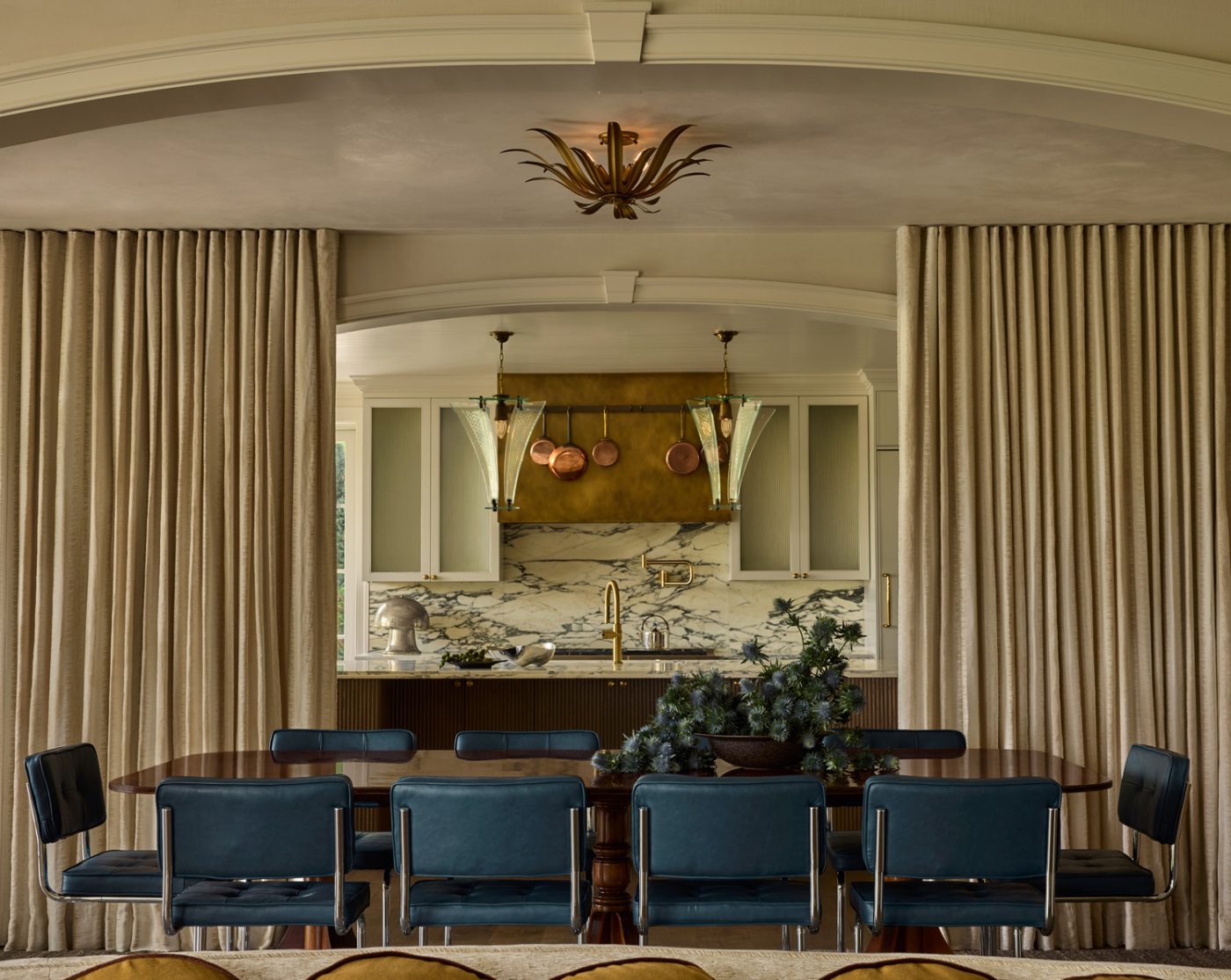
The dining room also plays with expectations. Because it’s in the middle of the enfilade, Oser looked for a flush-mounted ceiling light to avoid blocking views. She achieved that with an Italian gilt metal foliage fixture found on 1stDibs. She paired the clients’ own dark-wood dining table with a set of custom Marcel Breuer–style tubular steel chairs. “The contrast keeps the room from seeming too formal,” she explains.
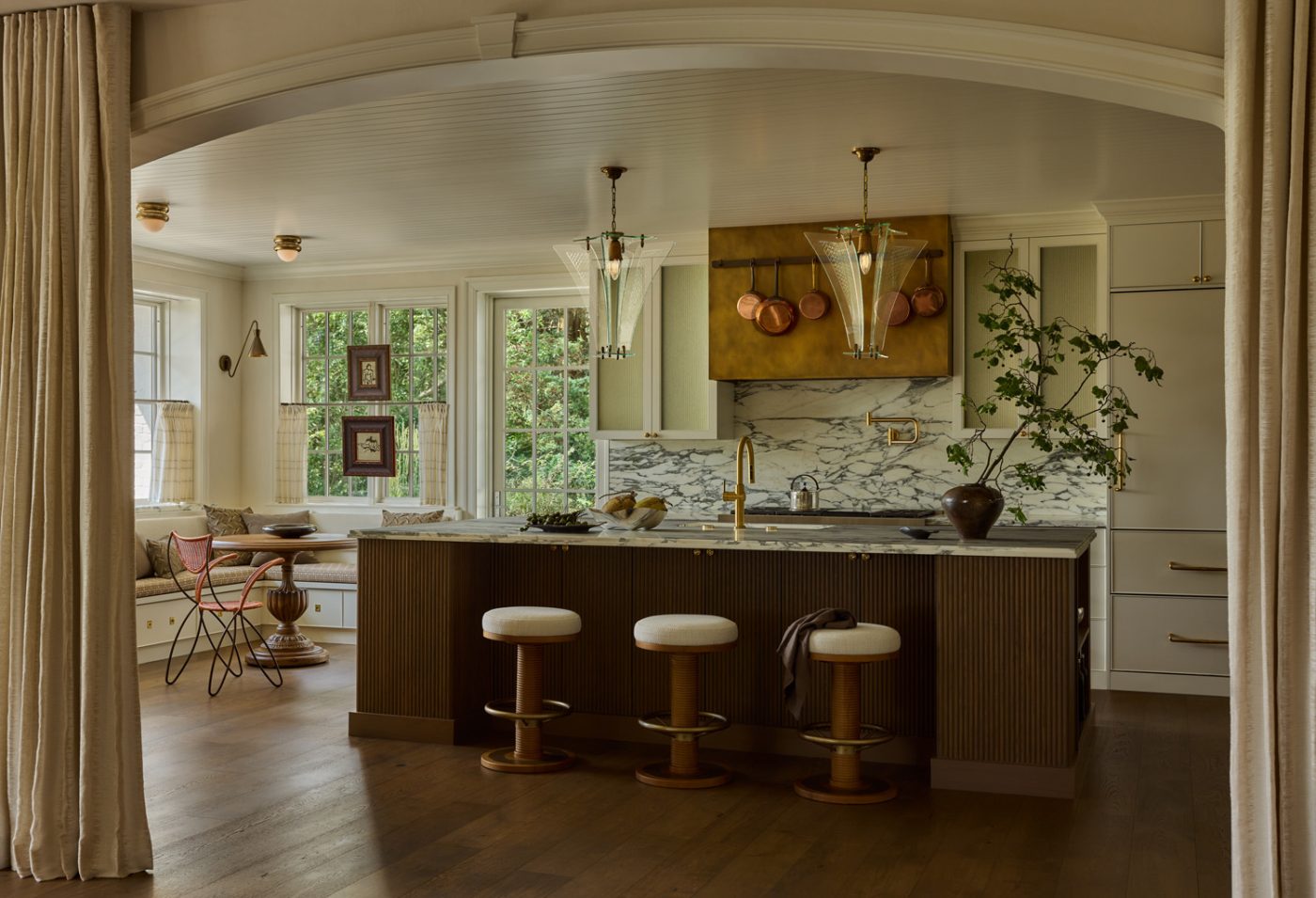
The kitchen, too, is unusual. A pair of 1960s Italian lanterns, bought on 1stDibs, hang over the reeded-wood island. A chair in the corner looks akin to something that Alexander Calder — who, like Trumbauer, was a son of Philadelphia — might have made out of a wire hanger. Actually designed by François Liguori and made in the 1990s, it accompanies a solid-wood bistro table from 1stDibs.
The house is filled with art and furniture that the clients brought with them, ranging from drawings by their children to works museums would covet. “There are definitely some interior designers who, if asked to use all of these pieces, would have pushed back,” Oser says. “We just went for it.”
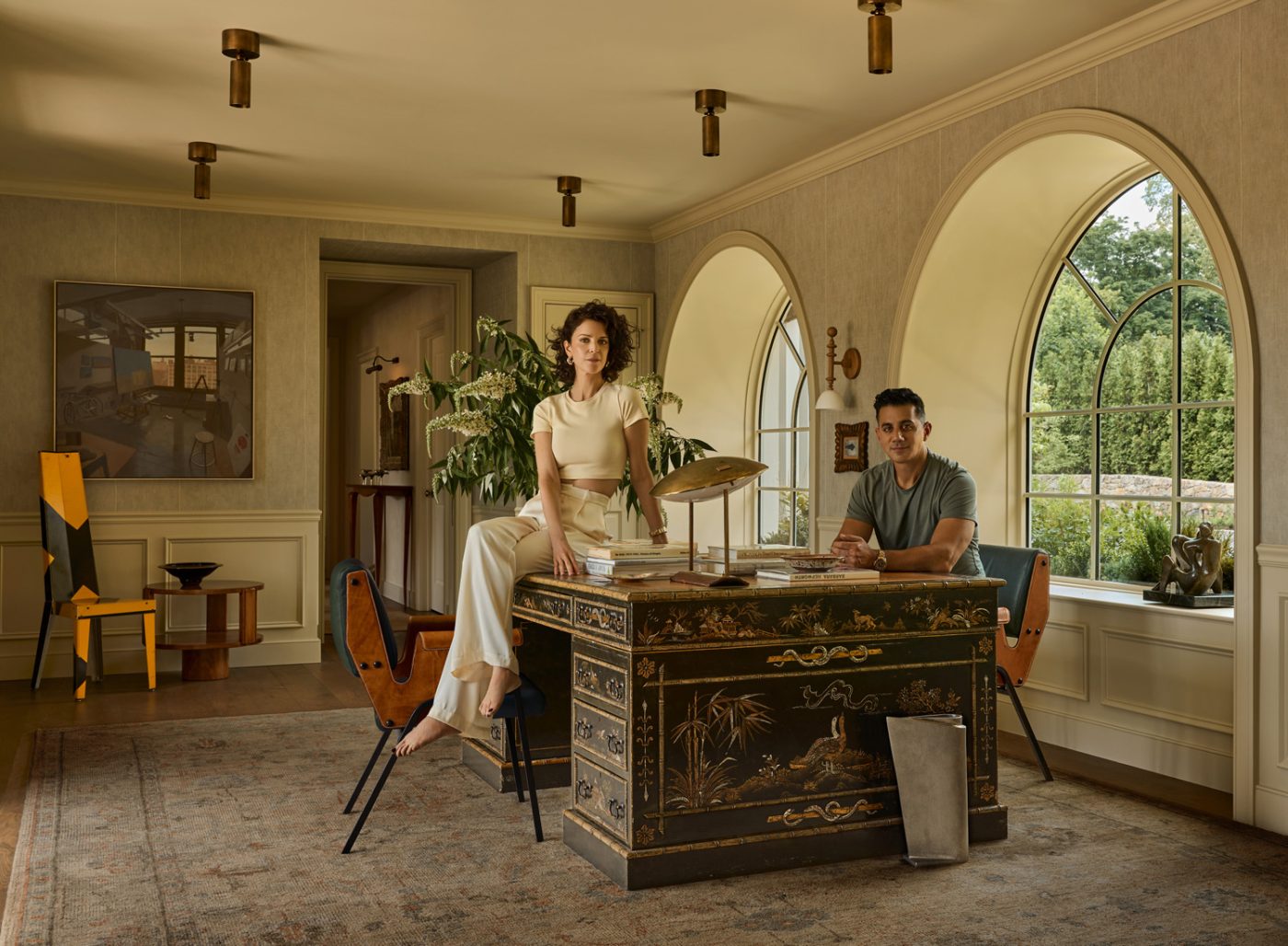
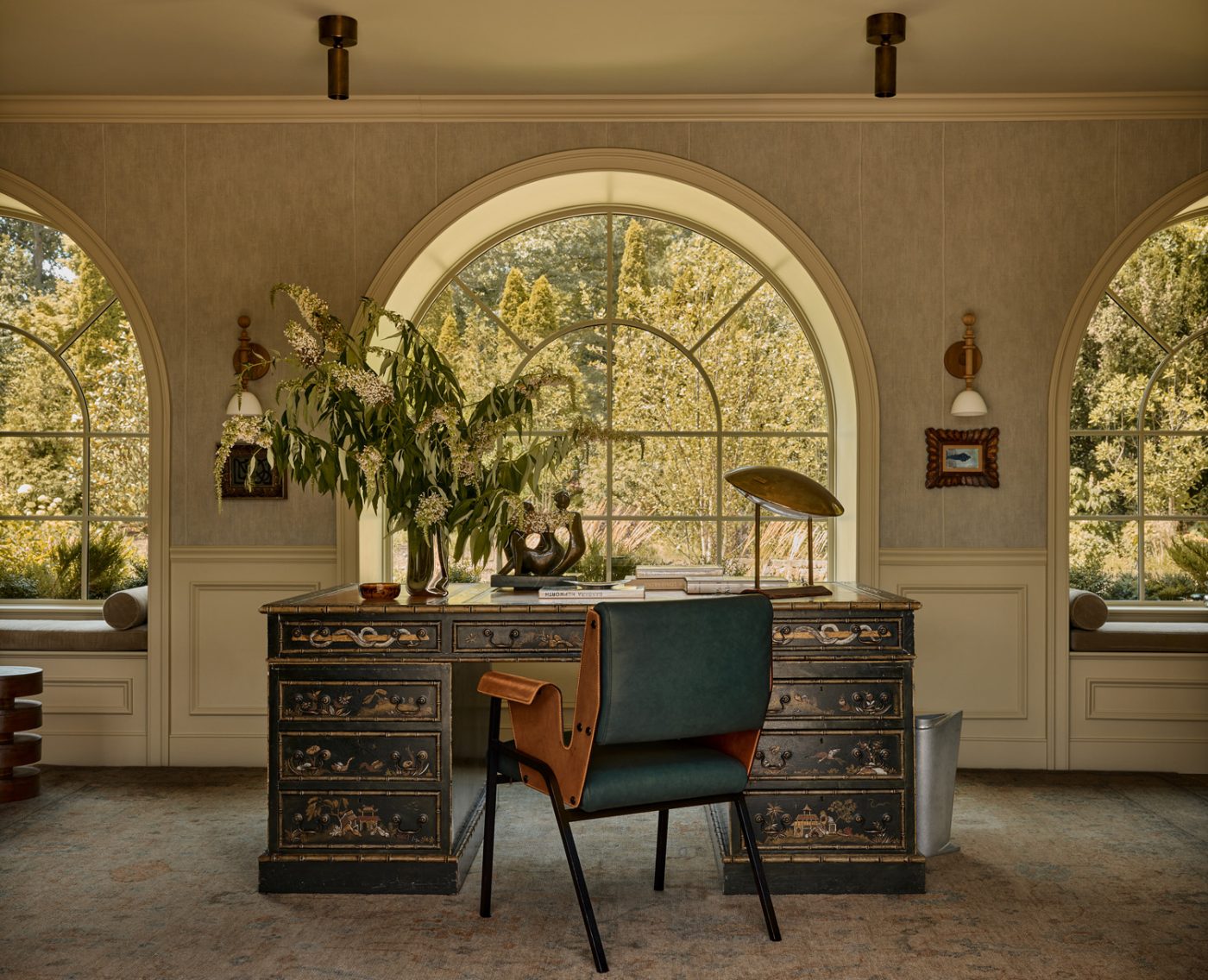
In fact, she designed the wife’s study around an antique Chinoiserie desk, echoing its colors and textures in the carpet and upholstery. The room still manages to skew modern, thanks to its simple cylindrical Apparatus light fixtures, its unadorned Stilnovo desk lamp and its 1950s stitched-leather chair by Gustavo Pulitzer Finali for Arflex, from 1stDibs dealer Gustavo Olivieri. “When you work with pieces that the client loves,” says Oser, “you end up designing a room that you could have never thought of otherwise.”
Another room inflected by the clients’ holdings is the lounge at the top of the central stairway. The couple owned a Candida Höfer photo so large it barely made it into the house, and Oser hung it right over the room’s picture-frame moldings. The placement was intentional, she says, explaining, “Anytime you break a line, you add complexity and depth.” And she went further, extending the row of chandeliers in the photo into the room. The fixture that performs this trick was a vintage amber Murano-glass chandelier, bought on 1stDibs.
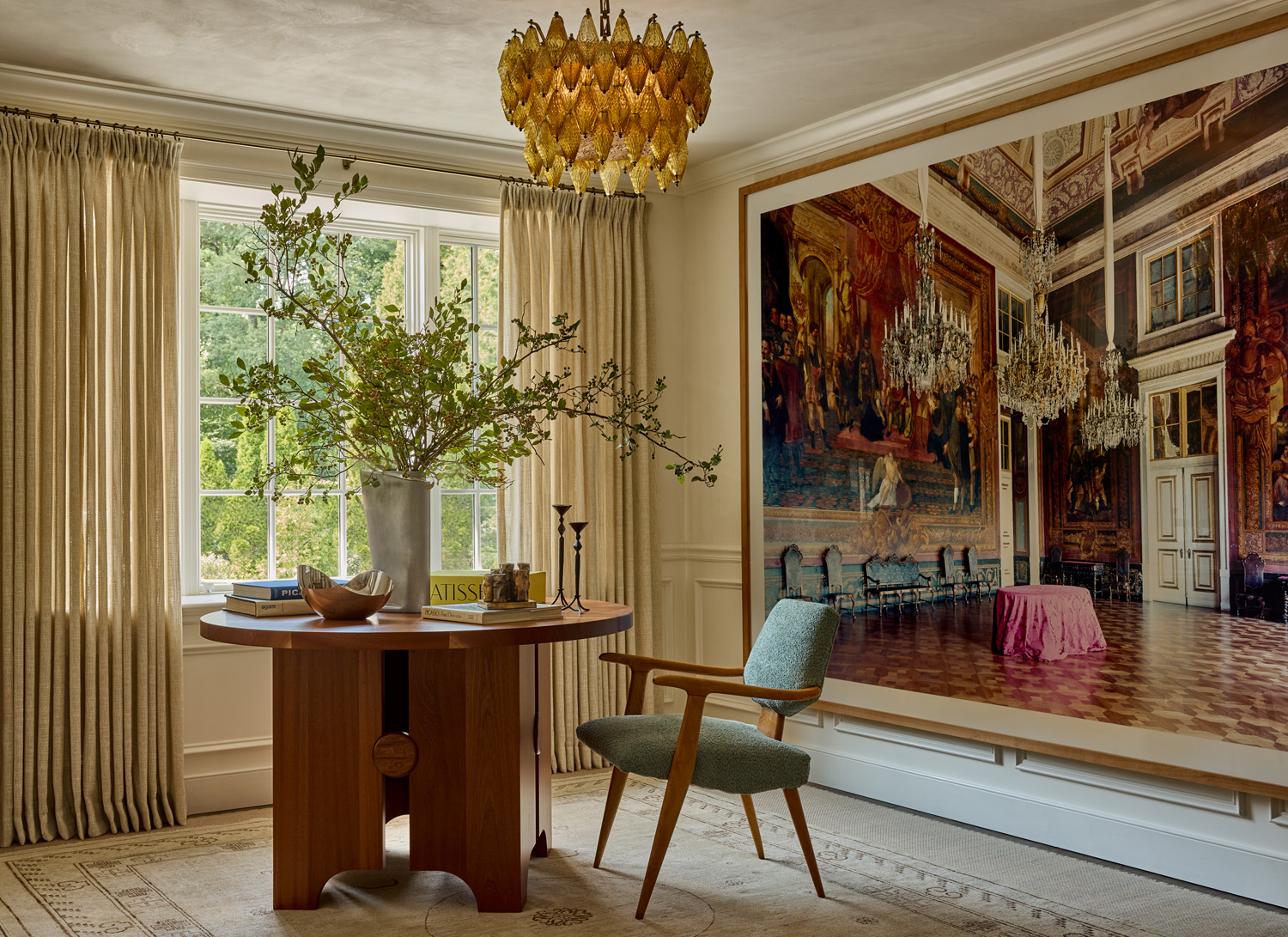
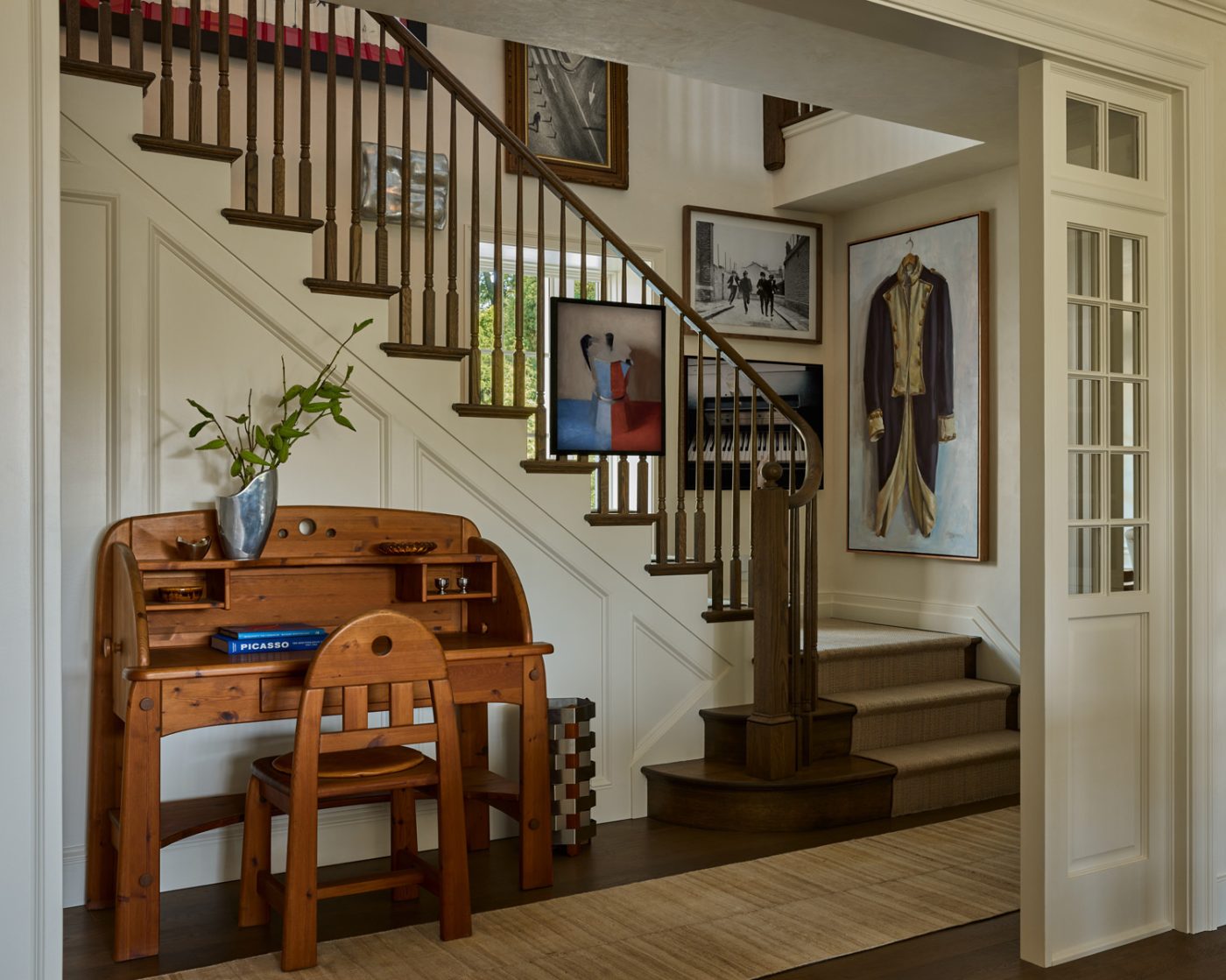
One of Oser’s trademarks, she says, “is hanging art in places where it’s not supposed to be.” There are paintings hung from the stair railing and paintings hung over windows. There are also lots of pieces leaning against walls, conveying a casualness the designer particularly treasures: “It looks like the art is just hanging out with you instead of on display.”
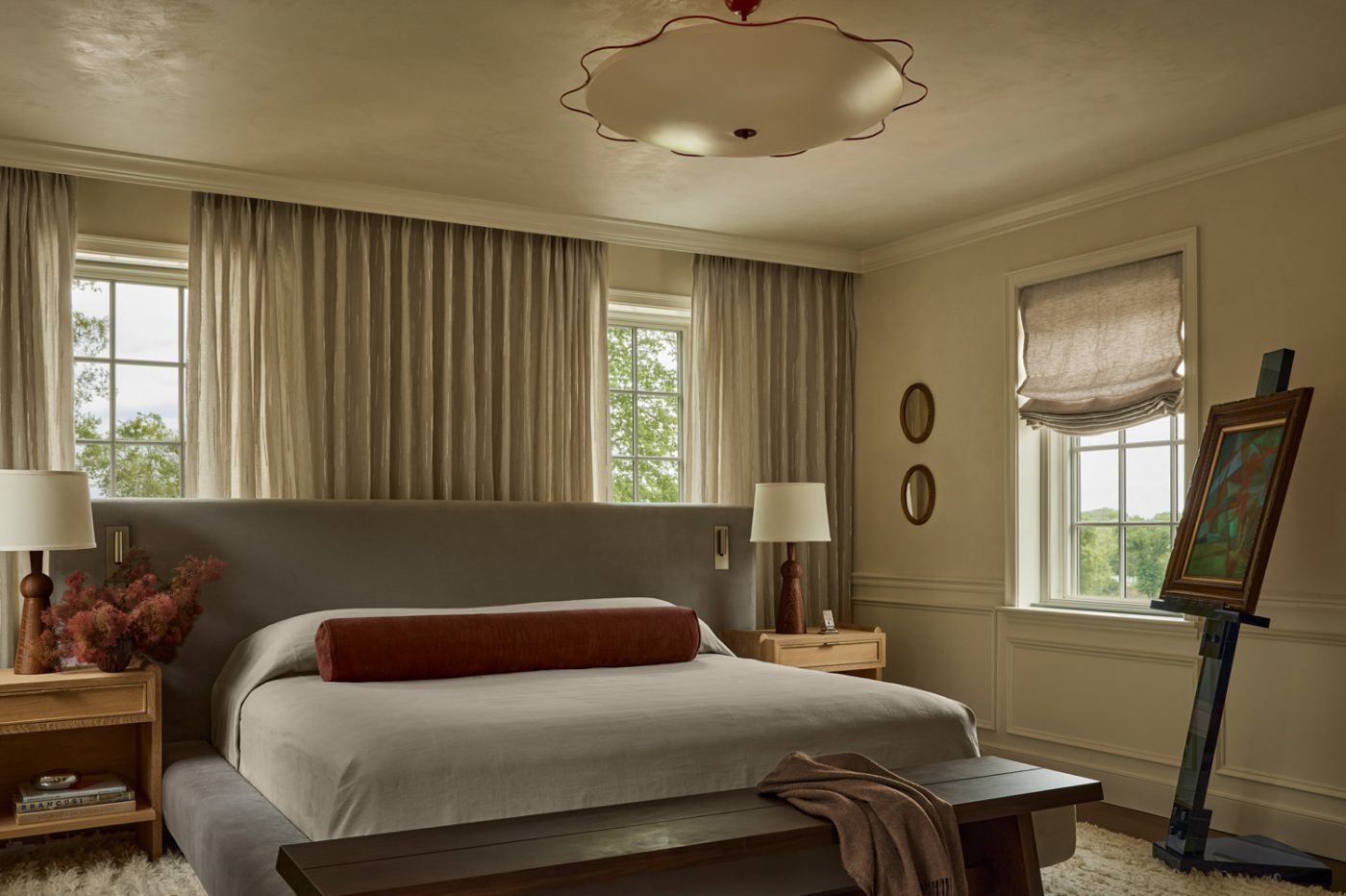
There are plenty of surprises upstairs. Of the primary bedroom, Oser says, “I wanted this space to feel really serene but not lack personality.” The headboard blocks the bottoms of the windows, which might seem to be against the rules. But to the extent there are rules, Oser says, “these clients are very cool with breaking them.” The curvy ceiling fixture, designed for the 1950s renovation of Vienna’s Filmcasino cinema, is just unusual enough for a colonial-style house.
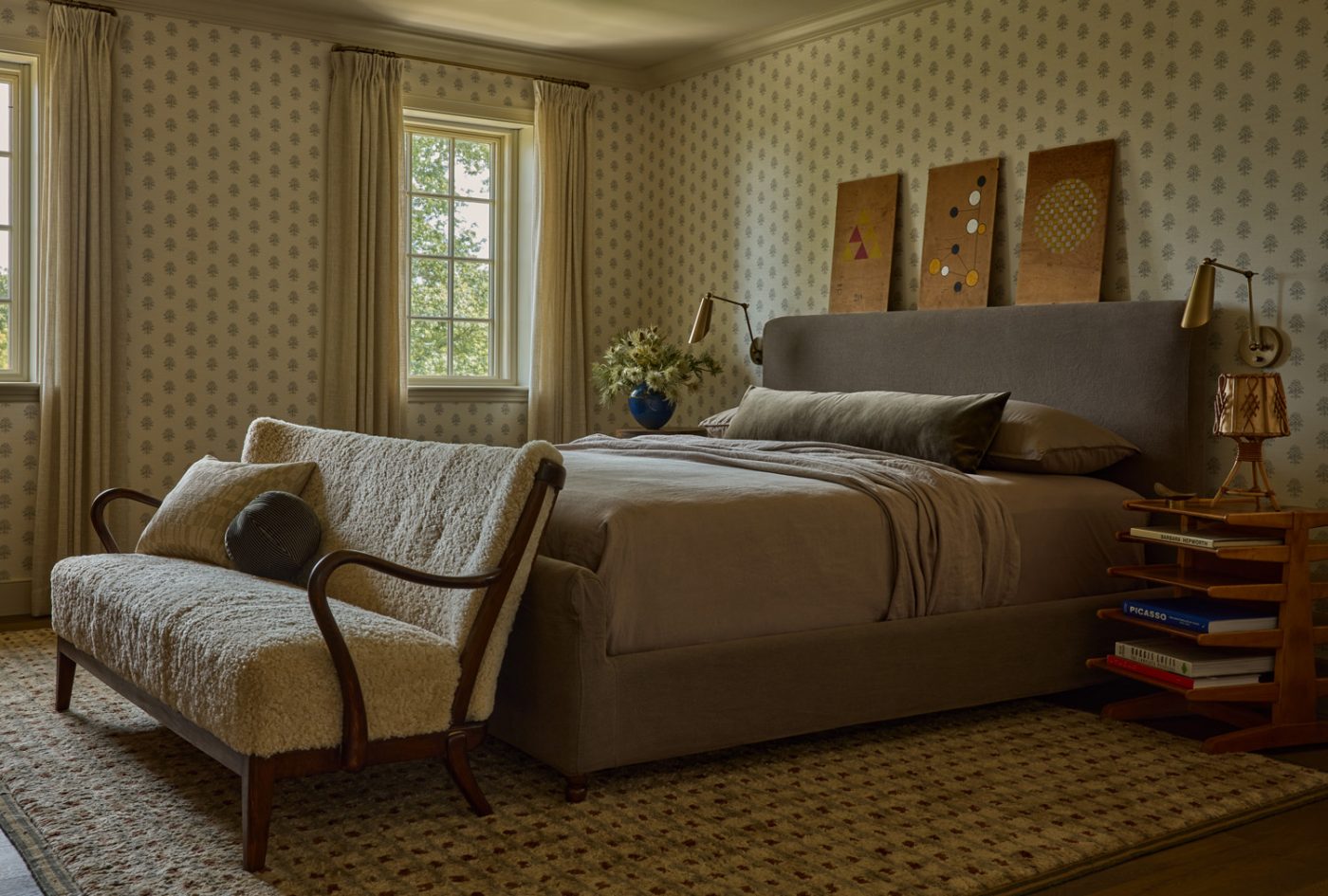
The wallpapered guest bedroom has a completely different look. At the foot of the bed is a shearling-covered Danish sofa by Alfred Christensen, and at its side is an unusual Magazine Tree table, designed by Edward Wormley for Dunbar. Both were purchased on 1stDibs.
Reflecting on the years-long project, Oser says the clients expected her to tailor each room to its intended use — and users. And they gave her the resources to do that. As a result, she says, the Trumbauer home was “a game changer” for her and the Haldon House team. It “taught us,” she says, “about how personal a design could be.”