October 12, 2025Few things are more exciting to lovers of interior design than the metamorphosis of a blank slate into something truly swoon-worthy. And that is what makes this year’s Kips Bay Decorator Show House in Manhattan an absolute must-see. In all previous editions of the annual event — currently celebrating its 50th anniversary — designers took over rooms in positively palatial uptown properties filled with evocative architectural elements and conveying a distinct sense of place and time.
This year for the first time, the Show House has moved downtown, to a 9,000-square-foot, six-level brownstone in the heart of Greenwich Village. And although the 125-year-old building has a long history behind it, a century’s worth of insensitive alterations cut up its once-grand spaces and left them nearly devoid of any original details, or charm. As a result, the 21 designers participating in the 2025 showhouse — open through October 19 — had to do double duty: first, restore each room to at least some of the building’s original gravitas, and then, give it the glow up of its life.
Double duty notwithstanding, this year’s designers were clearly undaunted, and their excitement unmitigated. “What I love most about the event is the collaboration among designers, contractors, artisans and dealers — like Galerie Glustin: I found them in the Paris Flea Market and use them all the time. We all work together, sometimes elbow to elbow, bringing ideas to life,” says the Denver-based Andrea Schumacher, who’s making her second showhouse appearance. “That intensity sparks creativity, and you feel it in every corner of the house.”
The event’s higher purpose elevates the atmosphere even further. “The proceeds benefit the Kips Bay Boys & Girls Club,” Schumacher notes. “And knowing that our creativity helps support children makes the long nights and hard work absolutely worth it.”
Here, a look at 11 of our favorites — each filled with a treasure trove of finds from 1stDibs sellers — among the spaces resulting from those long nights, that hard work and all that creative excitement.
Andrea Schumacher Interiors

Drawing on her childhood in Nigeria and subsequent travels in Morocco, Schumacher created a cocktail-ready lounge she affectionately dubbed the Pink Rhino Club. Sitting just off the brownstone’s foyer, “it’s designed to feel like a secret hideaway,” she says. “Part bar, part salon — a place that instantly transports you, glamorous and a little untamed.”
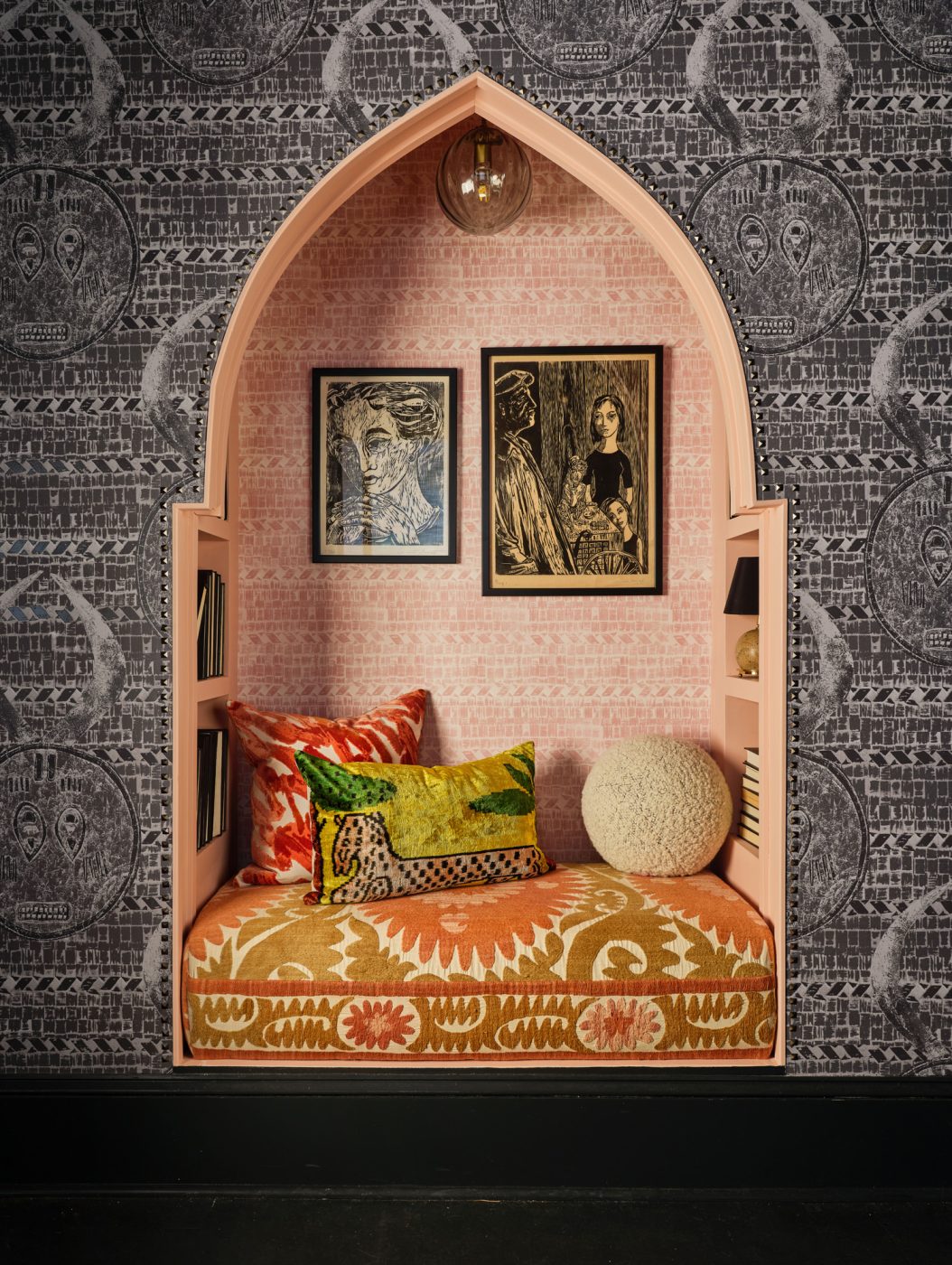
Sculptural rounded lounge chairs flank a petrified-wood and black-resin coffee table — all from Made Goods, a show cosponsor. Whimsical accessories and accents abound: velvet pillows emblazoned with animals, pink-leather cocktail accoutrements, a turkey-shaped bottle opener. Above, an asymmetrical blown-glass chandelier by designer Feyza Kemahlioglu’s FEYZ Studio, found at Wexler Gallery, exudes a warm pink light.
Enveloping it all is a wallpaper that Schumacher designed based on a sketch her grandmother, artist Elizabeth Monath, made while visiting family in Ibadan, Nigeria.
Ben Pentreath
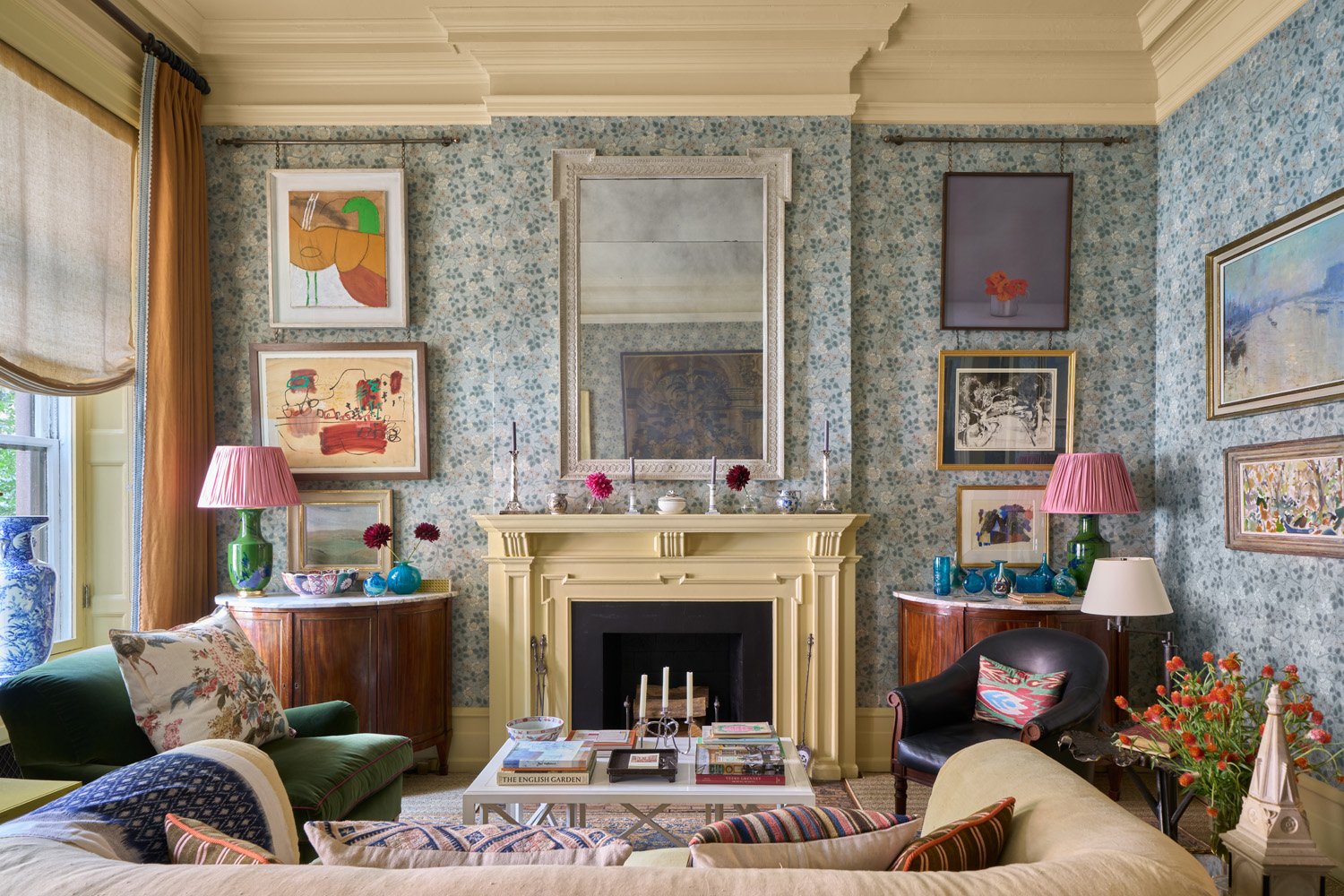
British designer Ben Pentreath and his firm’s interiors director, Amanda Flood, created a traditional British drawing room fit for a Merchant Ivory film. “We used primarily English antiques that champion our favorite craftsmen, workshops and contemporary designers, many of whom we brought over for the show,” Flood says. “We balanced traditional neoclassical furniture and nineteenth-century pieces with Japanese ceramics and Chinoiserie lacquer.”
Their first selections were an antique hand-knotted floral Persian rug and a 17th-century hand-woven wool Flemish tapestry from New York City’s Rug & Kilim. Next came seating: a slipcovered roll-arm sofa inspired by a 19th-century piece, a leather spoonbill armchair from Soane Britain and a small Howard & Sons armchair upholstered in a mossy green velvet. A coffee table lacquered in an ivory hue from Colefax & Fowler, now laden with a wealth of books about design, soon followed.
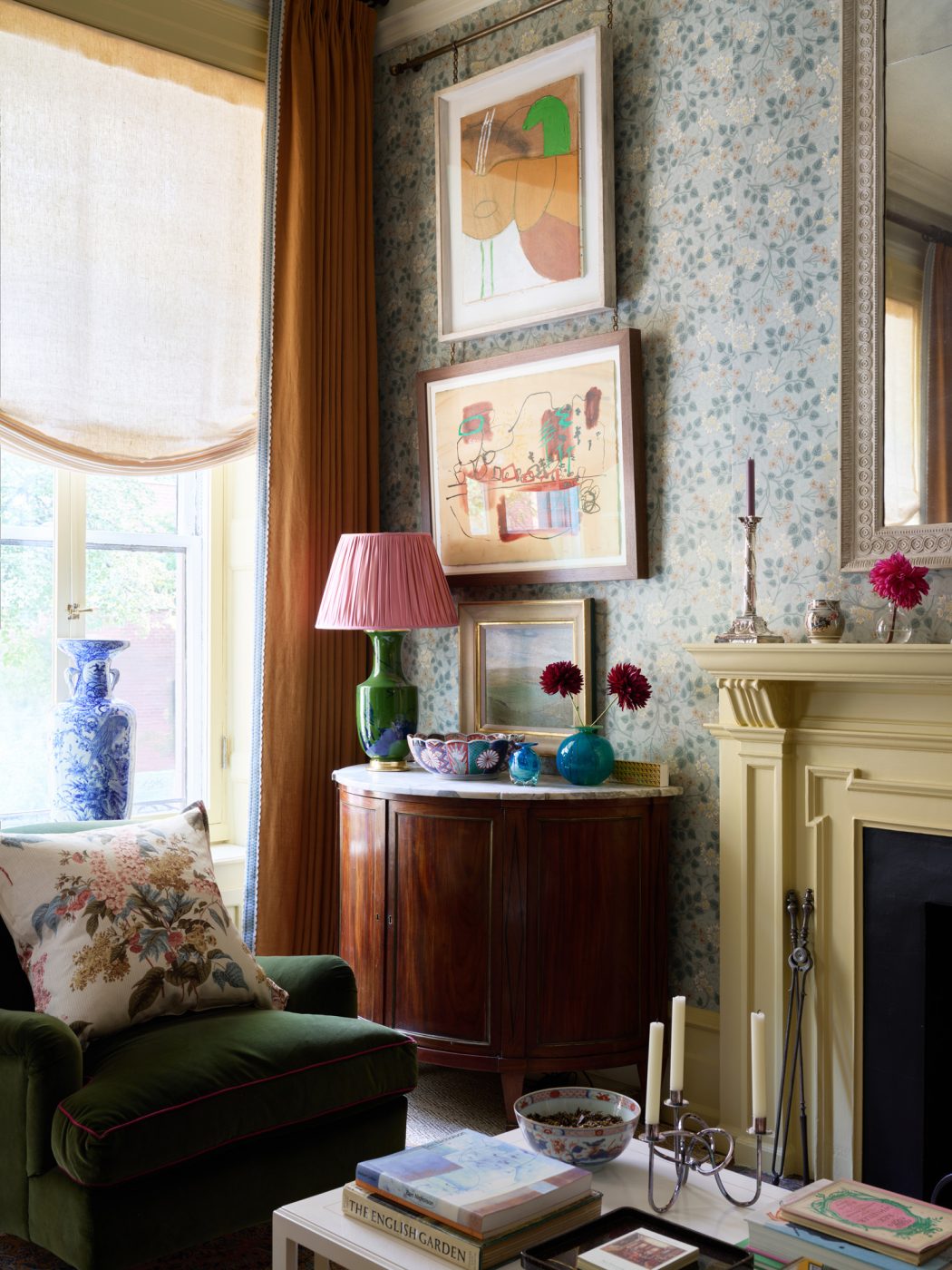
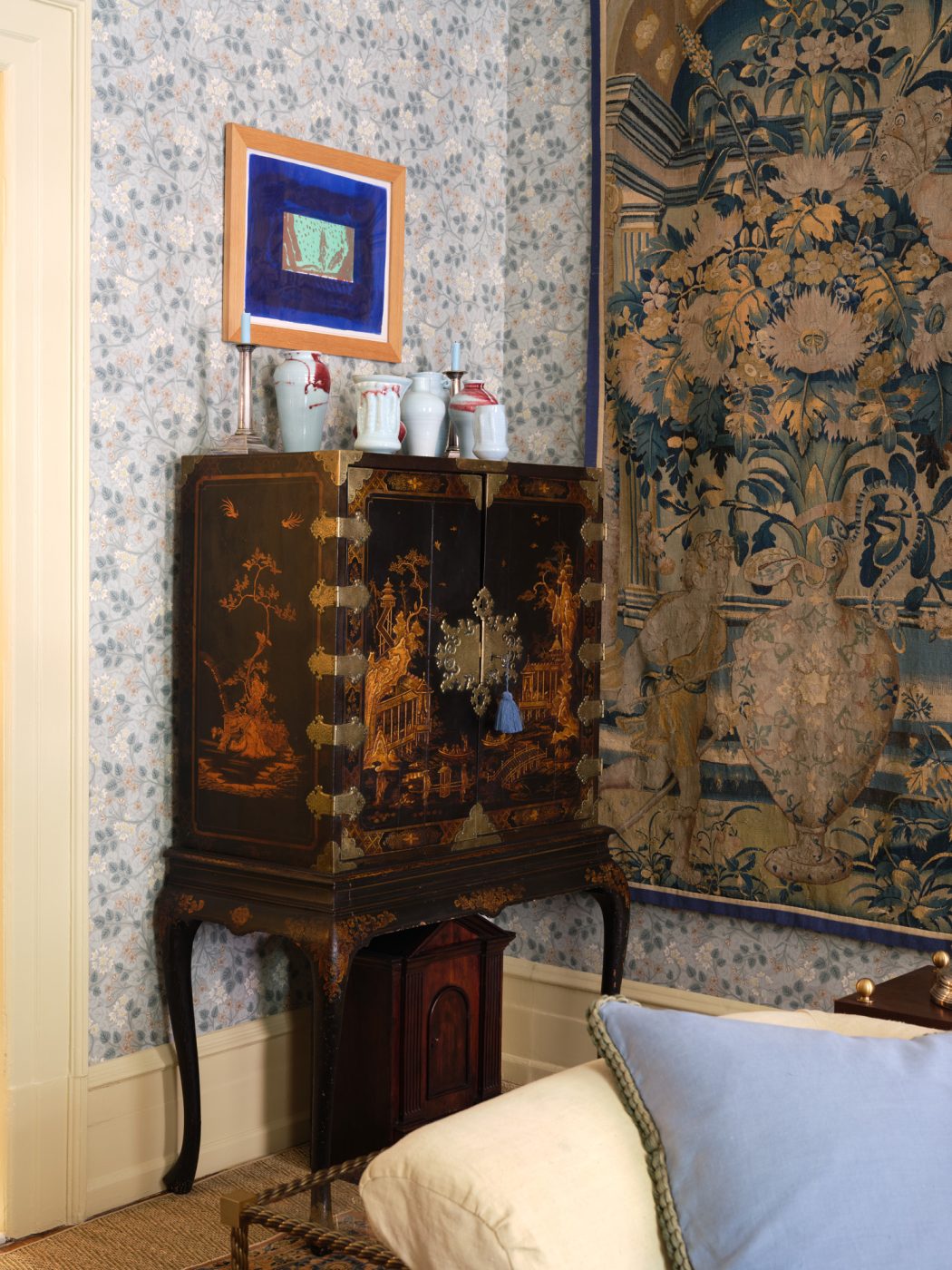
Flanking the fireplace are a pair of neoclassical demilune cabinets from Yew Tree house Antiques, which are topped by mid-century Maltese studio glass, also from Yew Tree, and Christopher Spitzmiller lamps. On the mantel are late-19th-century silver luster jugs, while a pair of Meiji-period blue-and-white porcelain vases rest on a window sill. Elsewhere, a 1920s blue opaline French table lamp from Carlos de la Puente illuminates a side table.
The designers of the floral wallpaper — which Flood describes as “reminiscent of nineteenth-century Morris & Co.,” — were influenced by the gardens at Highgrove, King Charles III and Queen Camilla’s private residence.
Tamara Feldman Design
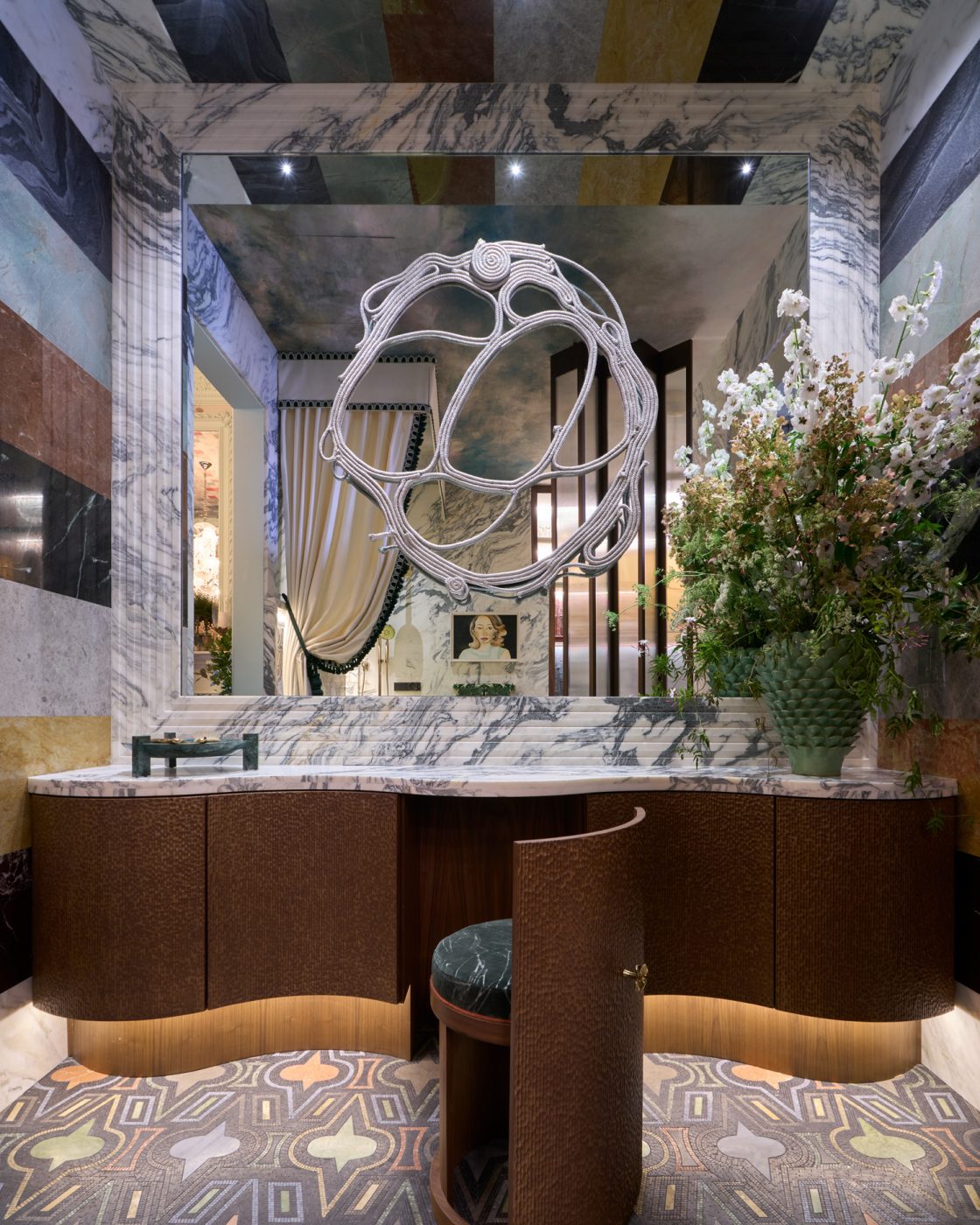
Miami designer Tamara Feldman was indelibly impressed by the aesthetics of Alfonso Cuarón’s 1998 film Great Expectations: the theatricality; the textures, from glass and stone to vegetation; and, especially, the verdant hues that infused everything and became a signature of the film.
Now, those colors have become the signature of the showhouse bathroom she designed. In crafting the space, Feldman took her cues in particular from the home of one of the film’s central characters, Nora Dinsmoor, played by Anne Bancroft, channeling it in all its layered, green glory.

She began by using a bright-green clawfoot tub from Kohler as a focal point, then covered the floor with Artistic Tile’s geometric Casino Royale mosaic, designed in collaboration with Donghia. A sweeping curtain makes the kind of elegant gesture Gwyneth Paltrow’s character, Estella, would have loved.
Feldman selected a Holland & Sherry fabric to cover the seat of a custom chair that cleverly disappears into the front of the vanity and hung a Campana Brothers mirror from Carpenters Workshop in front of a larger wall-to-wall mirror. Perhaps most impressive is a portrait of Feldman done by artist Francesco Clemente, who was responsible for the art in the movie. She commissioned the painting from Clemente, whom she’d met years earlier in New York when her father collaborated with him on another film. With this space, she’s created an ideal setting for it.
Corey Damen Jenkins & Associates

Inspired by Lewis Carroll’s 1871 Through the Looking Glass and What Alice Found There — the sequel to the author’s Alice’s adventures in Wonderland — New York’s Corey Damen Jenkins combined traditional tropes with modern fantasy in his dining room. Jenkins covered the walls, for instance, in Schumacher Madame de Pompadour paper (created by in collaboration with Miles Redd), which depicts an English garden, and then wittily covered the ceiling with a pixelated version of it, bringing in a contemporary element that contrasts beautifully with the elaborate classical plaster moldings he also installed.
A lacquered flame-walnut table sitting center stage is set as if for the Mad Hatter’s tea party, with gold and platinum plates, crystal glassware and candelabra, all by Baccarat. Alice and the other guests could take their cuppas on 1920s French chairs covered in velvet the color of rosé champagne.
Merrymakers can see the reflection of Baccarat’s Le Roi Soleil crystal chandelier in opposing mirrors on either side of the table, one created for the show by Jenkins and Arkada, the other a hand-carved antique mahogany masterpiece.
The designer placed a monumental weathered-zinc pedestal near the windows, topping it with a large fiberglass vase modeled on ancient Greek terracotta urns. Filled with a fantastic array of greenery, it’s the stuff of Wonderland dreams.
BRANCA
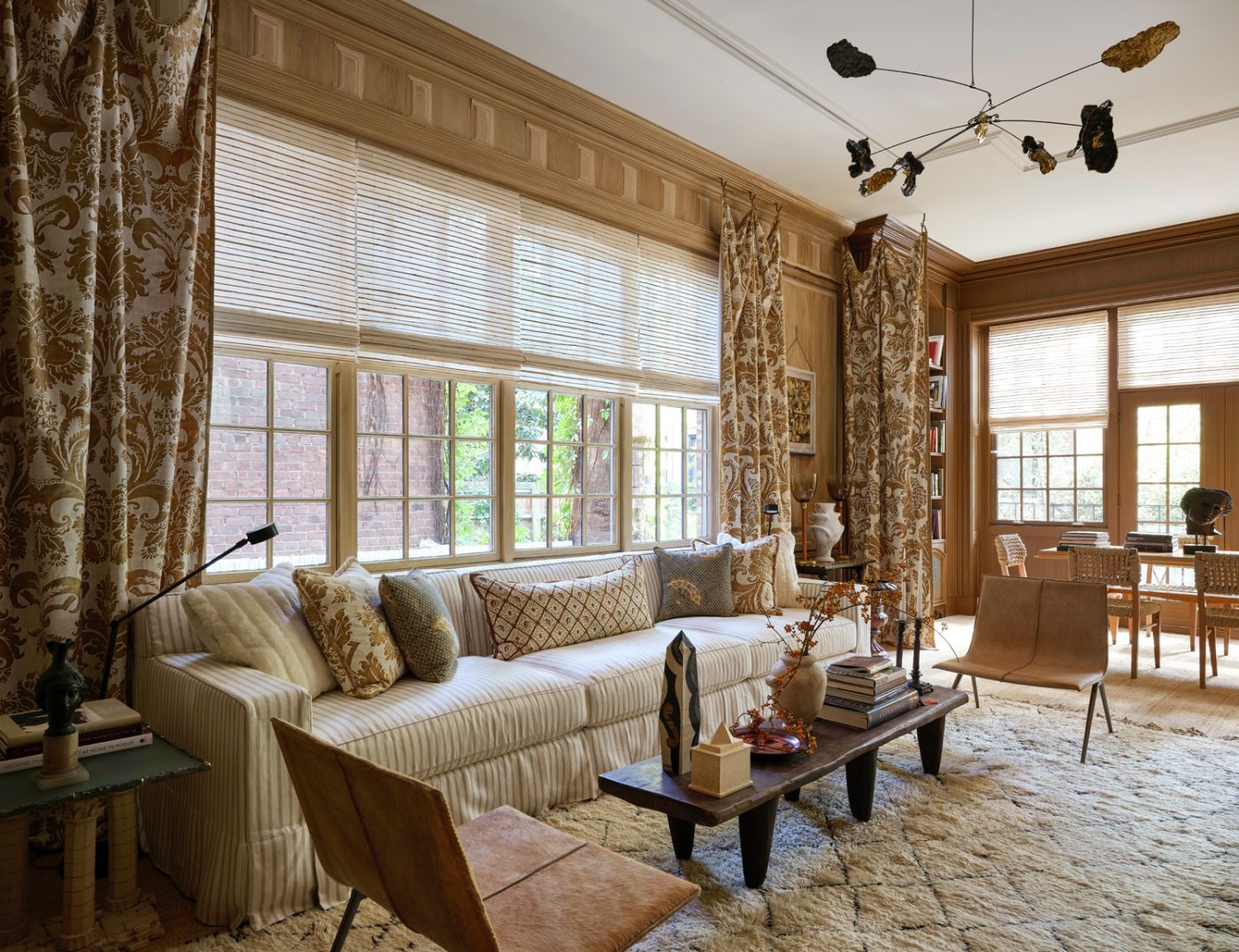
Chicago’s Alessandra Branca took several favorite spaces as her muse in designing what she calls a new drawing room. “Many of the iconic rooms that I love, like those of Hubert de Givenchy and Yves Saint Laurent, looked collected,” she says. “They were personal, they were comfortable. This room is also collected, as you can tell!”
Can we ever. Branca has filled it with pieces belonging to different periods and styles: a 1950s André Arbus ormolu-mounted sycamore table with an inlaid starburst design, topped by a bronze bust of Hera; mid-century oak and rope chairs by Adrien Audoux and Frida Minnet for Vibo from Maison Gerard; and bookshelves displaying her own collection of Grand Tour pottery based on ancient Greek vessels.
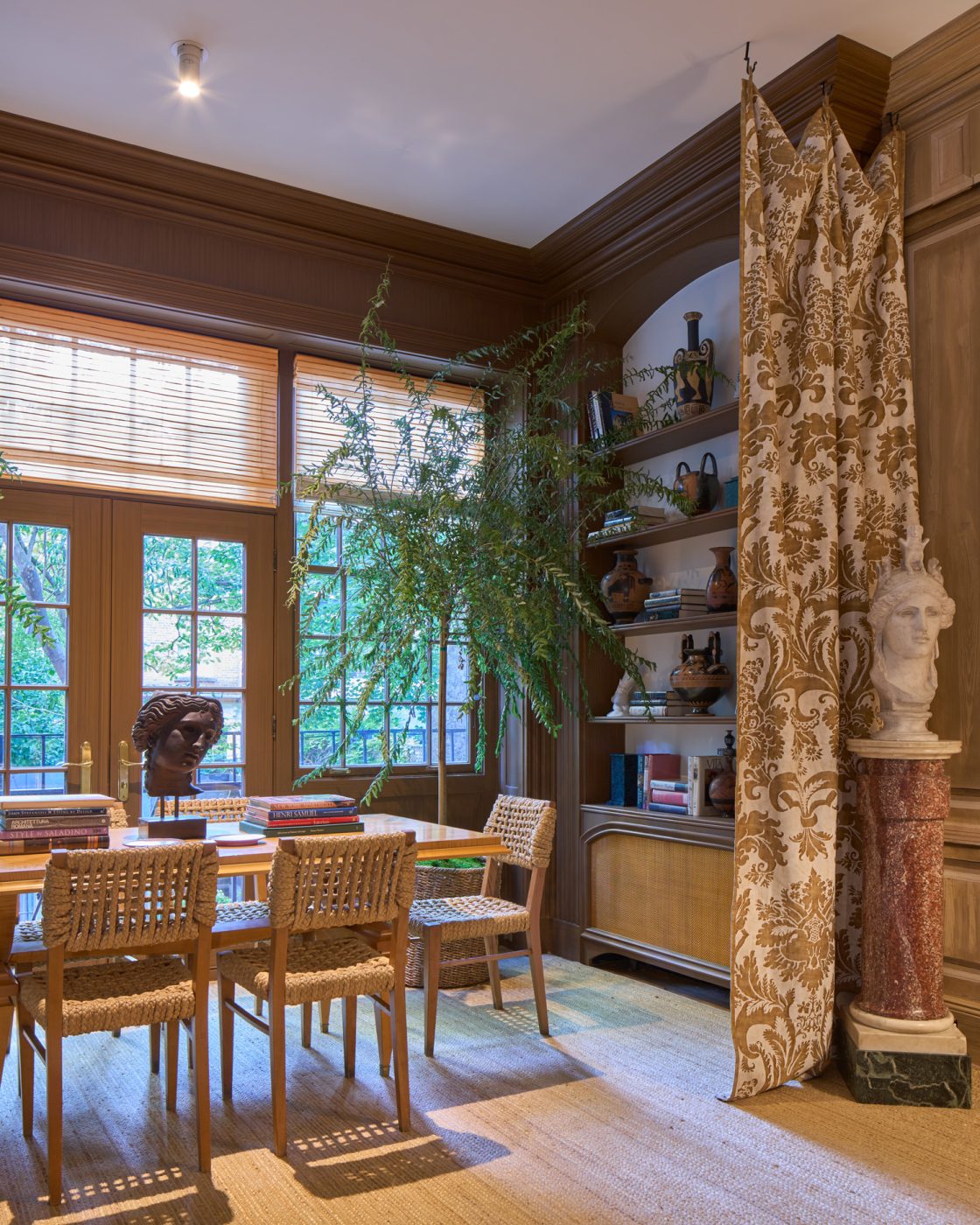
In the sitting area, a 17th-century inlaid Spanish table holds a pair of brass-and-glass mid-century table lamps from David Duncan Studio and a contemporary stone vessel by M. Fisher that’s based on a classical krater.
A rare Antique african senufo coffee taBle/bench from Andrianna Shamaris sits in front of a skirted sofa in the style of Jean-Michel Frank. Nineteen-sixties Brazilian cowhide chairs are also standouts among the seating, while overhead a mobile by Eve Kaplan from Gerald Bland adds an amusing flourish. Grounding the ensemble is a Moroccan rug from show cosponsor Rug & Kilim.
In a room this well curated, of course, you expect incredible accessories. And Branca obliged with a pair of Gio Ponti vases from Obsolete, a Horst P. Horst photograph and lamps by Frances Elkins.
A standout among these standouts? A monumental turn-of-the-20th-century neoclassical urn from Liz O’Brien decorated with chariot imagery. Standing more than five feet high and presiding regally over the entrance to the room, the piece “is super rare,” Branca says, “because you don’t usually find a piece that big that would have survived.”
Leyden Lewis Design Studio

New York’s Leyden Lewis created a sexy, welcoming sitting room that encourages social interaction. It harks back to the literary and intellectual salons of yore but also draws from his Caribbean roots. “ In Trinidad, we call it ‘the gallery,’ ” he says. “You sit outside the house, and you talk to people who pass by.”
To stimulate such conversation, he anchored one side of the space with a sinewy 1960s Sergio Rodrigues chaise from Bossa and the other with what he describes as “an unconventional sofa.” The latter, from his own Jab-Jab line of upholstered pieces, was inspired by traditional tête-à-têtes. “I wanted to push this idea of two bodies locking together to form one seating experience,” he explains. Underfoot is a silk patchwork carpet created by Lewis in collaboration with Tai Ping for the showhouse.

Between the chaise and the sofa is a fireplace, which Lewis fitted with a wavy concrete Wabele 03/Inward mantel he designed for Trueform Concrete. Wabele, he explains, references “West African mythology around fire breathing. The fireplace is the fire breather in the room.” Indeed, one can almost see a face with the firebox as its mouth.
The art in the space has an intentional point of view. “Most are by Black artists, including many queer female makers,” Lewis says. “ I’m finding all these inspirations from my African diasporic history. It’s important to me to push to include these voices within my environments.”
Hanging above the fireplace is a cast-bronze wall sculpture by Jamaican-born artist Nari Ward that is emblazoned with the title of the civil rights anthem “Oh Freedom,” while nearby stands a tall regal Dogon figure. On the wall next to the sofa, Garfunda, an oil of a majestic woman by interdisciplinary Miami-based artist Cornelius Tulloch, looks over the scene appraisingly. “The painting positions the Black body in what is generally a traditional or Renaissance portrait context,” Lewis says, “except, instead of holding a cat or a poodle, she’s holding breadfruit.”
Mark Hampton LLC
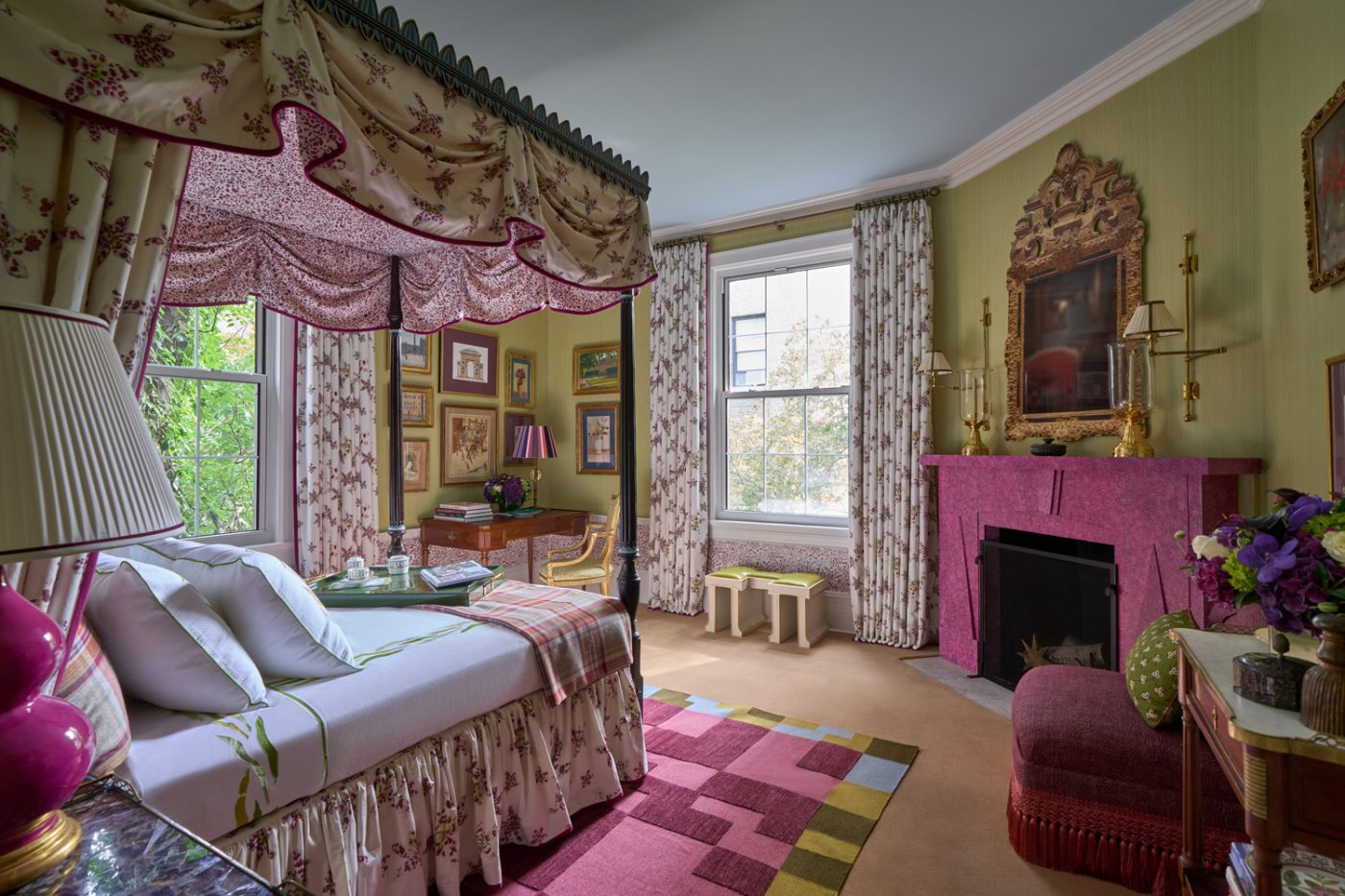
It was an alluring Oscar de la Renta dress with an orchid motif that provided New York native Alexa Hampton — who leads the eponymous firm of her late great father — with the basis for this cozy yet luxe bedroom. Intrigued by the prospect of serving as a muse, the fashion house sent Hampton the dress, which she then had digitally scanned and its orchid design printed on the fabric she used for the bed hangings and drapes.
Just as extraordinary as the creation of that textile is the provenance of the bed itself. “It’s a late-eighteenth- or early-nineteenth-century mahogany four-poster that belonged to the Duchess of Marlborough, Rosita Spencer-Churchill, from whom my parents acquired it,” Hampton says. “It was their bed in our house in Southampton for forty years.”
To match the bed’s grandeur and scale — as well as its familial connections — Hampton flanked it with her own French amethyst-topped bedside tables. Her husband realized it was Kips Bay time, she says, when his nightstand was suddenly went missing: “ He’s like, ‘And how long are we living like this this time?’ ”
She also pilfered a framed map and a print of a piazza from her twin sons’ bedroom because she thought they would look great with a set of watercolor architectural prints she placed on the walls. One of the twins campaigned to take the prints with him to college, but she won the battle.
Even a room as glamorous as this can incorporate a little fun, and Hampton included a Louis XVI mahogany tric trac table worthy of Marie Antoinette. When not in use as a games table, it functions as a desk. Thus the desk chair from Gerald Bland that sits in front of it. From the same period is a mahogany console dessert used to hold books and trinkets.
Vicente Wolf Associates
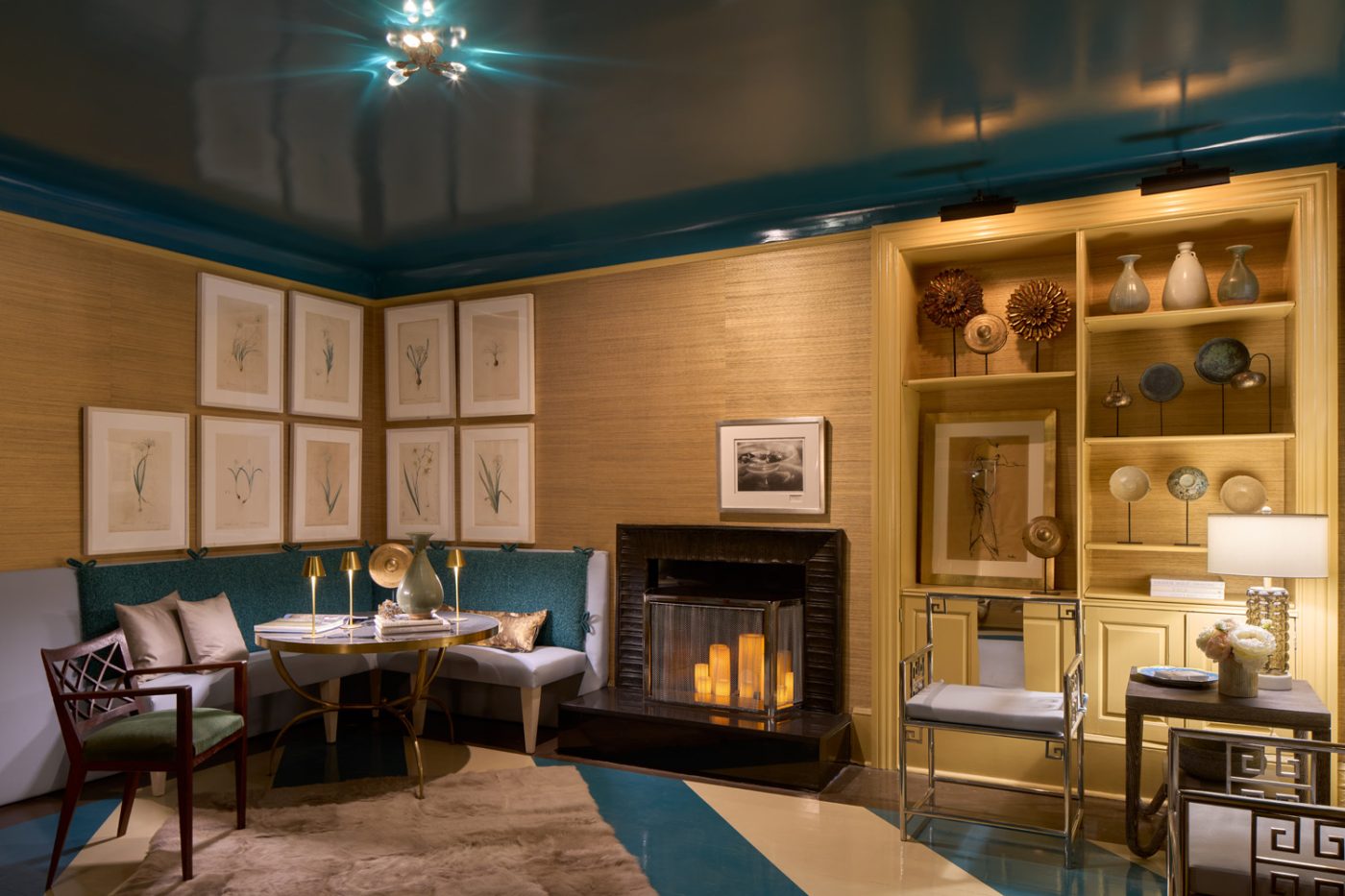
“I’ve always admired the drama, layers of rich color and intricate pattern of James Whistler’s Peacock Room,” says veteran New York designer Vicente Wolf, who used the Gilded Age artist’s paneled dining space as “a jumping-off point to push myself beyond my usual comfort zone.”
Wolf anchored his palette with a teal blue hue similar to the one Whistler used. But unlike the artist, Wolf imbued his salon with a clean, sleek vibe and incorporated elements from many different eras and styles. He points to the pair of contemporary Chinese chairs, sitting on either side of a Raul Carrasco end table, as particularly special. “They’re made of stainless steel, always an eye-catching addition to a room.”
The material perfectly complements the chrome and metal of the mid-century modern French fire screen. To counter the rigid geometry of the steel, Wolf hung a set of early-19th-century Pierre-Joseph Redouté botanical engravings over a corner banquette embracing a mid-century Italian table and adjoining a Jean Royère Croisillon armchair from 1947.
Shelves behind one of the Chinese chairs display treasures that suggest a trading ship just happened to wreck on West 12th: Thai celadon vESSELS, early-20th-century Japanese brass ikebana vases, wood altar trays with mother-of-pearl inlays and a set of mid-19th-century Indonesian ceramic bowls.
Huniford Design Studio

When Manhattan designer James Huniford saw the space on the top floor of the showhouse, with its wall of casement windows, he knew it was the room he wanted to design. “The idea was to create something that feels a bit like a modern treehouse,” he explains. “Above the city yet connected to nature.”
He also wanted it to have a slightly retro feel. “There are a lot of nineteen-seventies references,” he says. “From the built-in furnishings to the large trees that channel the California designer Michael Taylor’s work to the Eileen Gray–style glass-block partition that separates the wet bar and the lounge area.”
To incorporate both aesthetics, Huniford first wrapped the walls and ceiling in a gold-flecked cork from Phillip Jeffries, for a subtle tree-like vibe. He then selected a delicate sky-blue velvet to upholster the mammoth 23-foot built-in sofa he designed to run the length of one wall. In crafting the built-in side tables at the sofa’s ends, he says, “I was inspired by Mexican modernist designers like Clara Porset and Luis Barragán, who often integrated furniture directly into their architecture.”
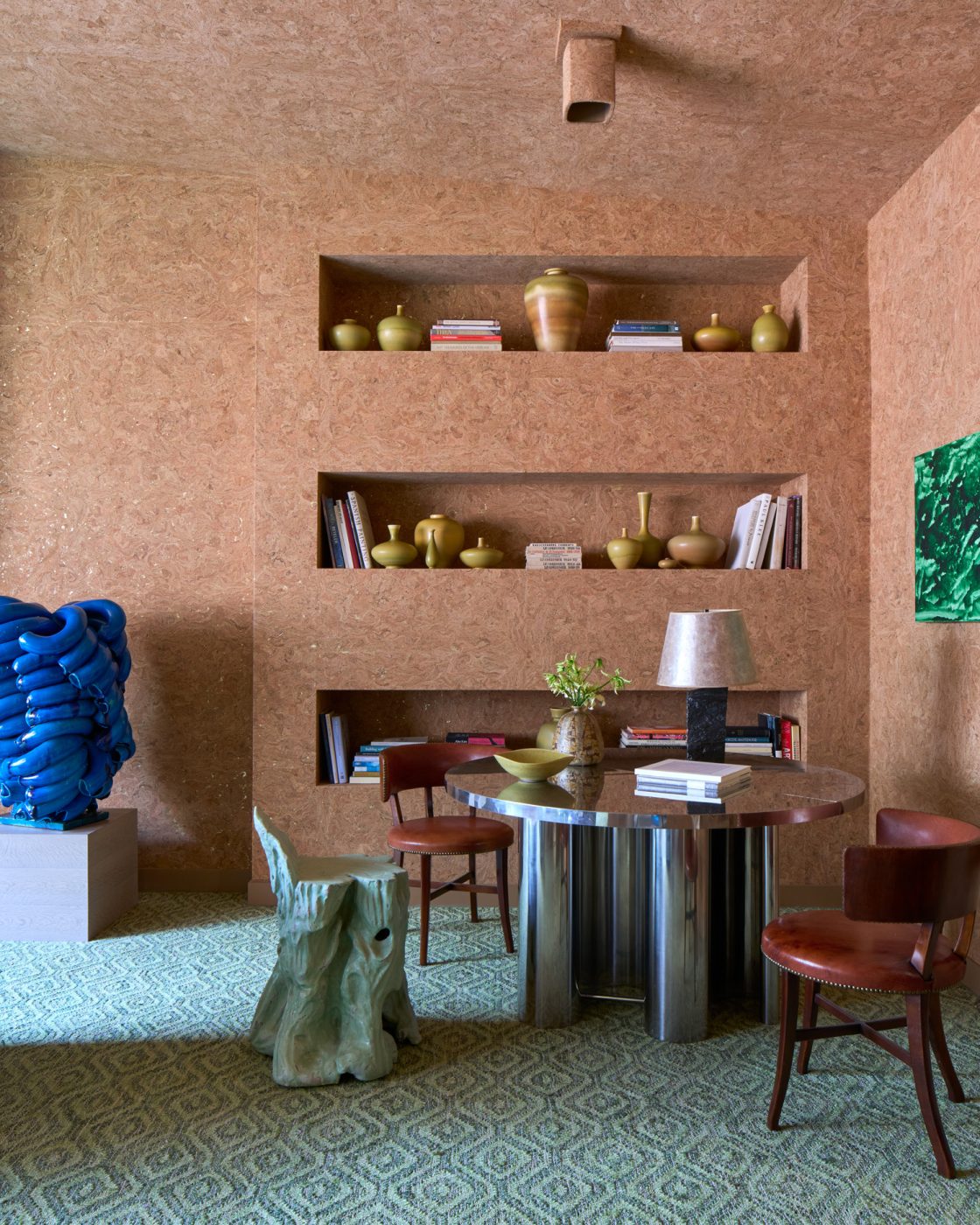
The sky allusions continue in the cloud-like resin coffee table, designed by Rogan Gregory and sourced from R & Company, and in a Torbjørn Kvasbø sculpture from Hostler Burrows that evokes a swirling wind. A 1970s French steel table near Donald Judd–inspired bookshelves suggests lightning. Throughout, Hunniford placed accessories sourced from Donzella.
For additional seating, the designer selected cozy 1940s Swedish chairs with their original shearling upholstery and a tree-stump-like chair. The sylvan theme is picked up again in a large abstract painting, Sagg Main #11, by the late East Hampton artist (and visionary gardener) Robert Dash. It hangs on an expanse of open wall above a chair by Magnus Stephensen and one of those Swedish seats. If you look at the painting from the right angle, you’ll see it contains a hidden tree.
Other artworks displayed around the room include a set of Marguerite Zorach watercolors from the early 20th century, which Huniford chose because of how they contrast with a nearby abstract 2025 painting by artist Mary Heilmann.
Olivia Williams Studio
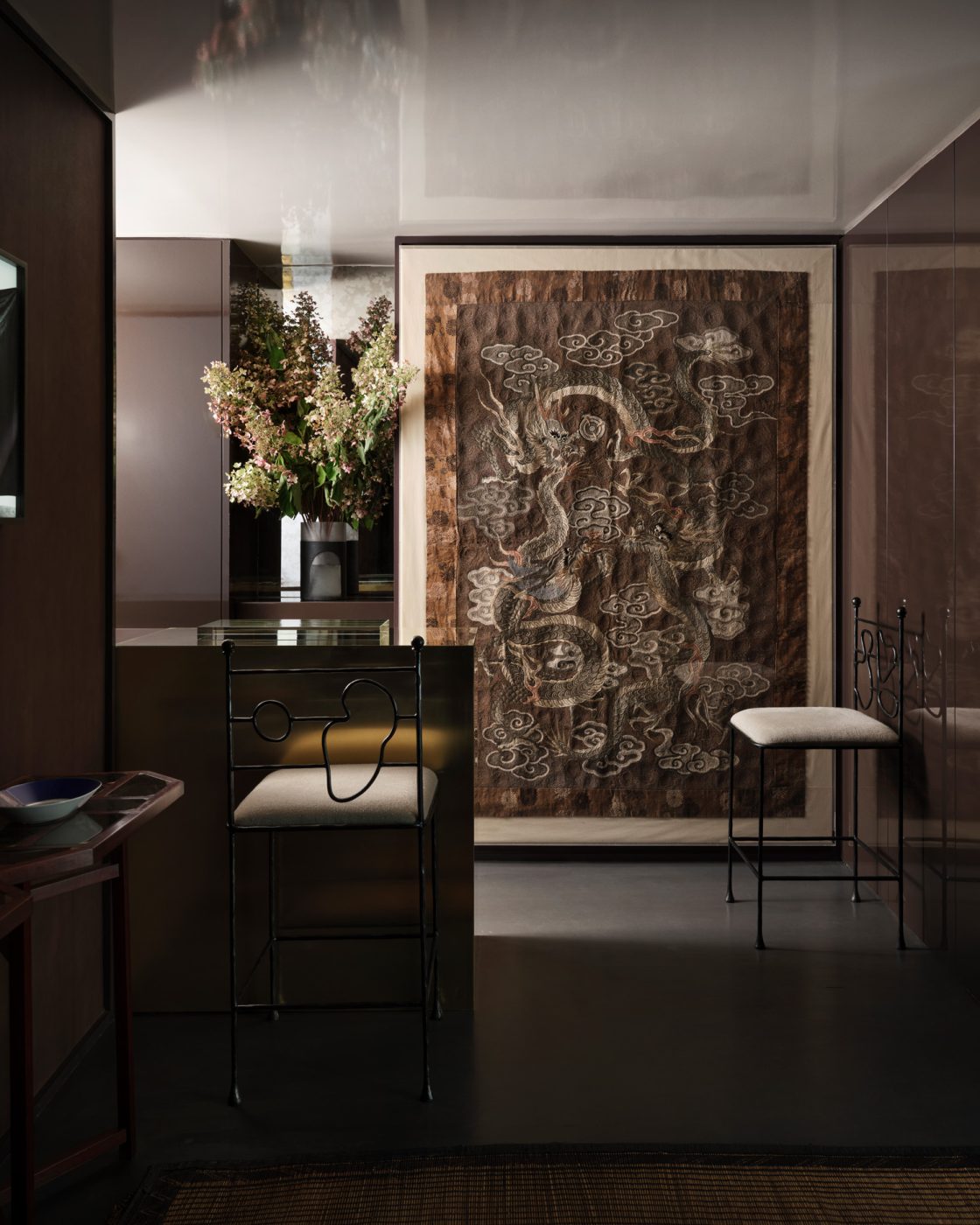
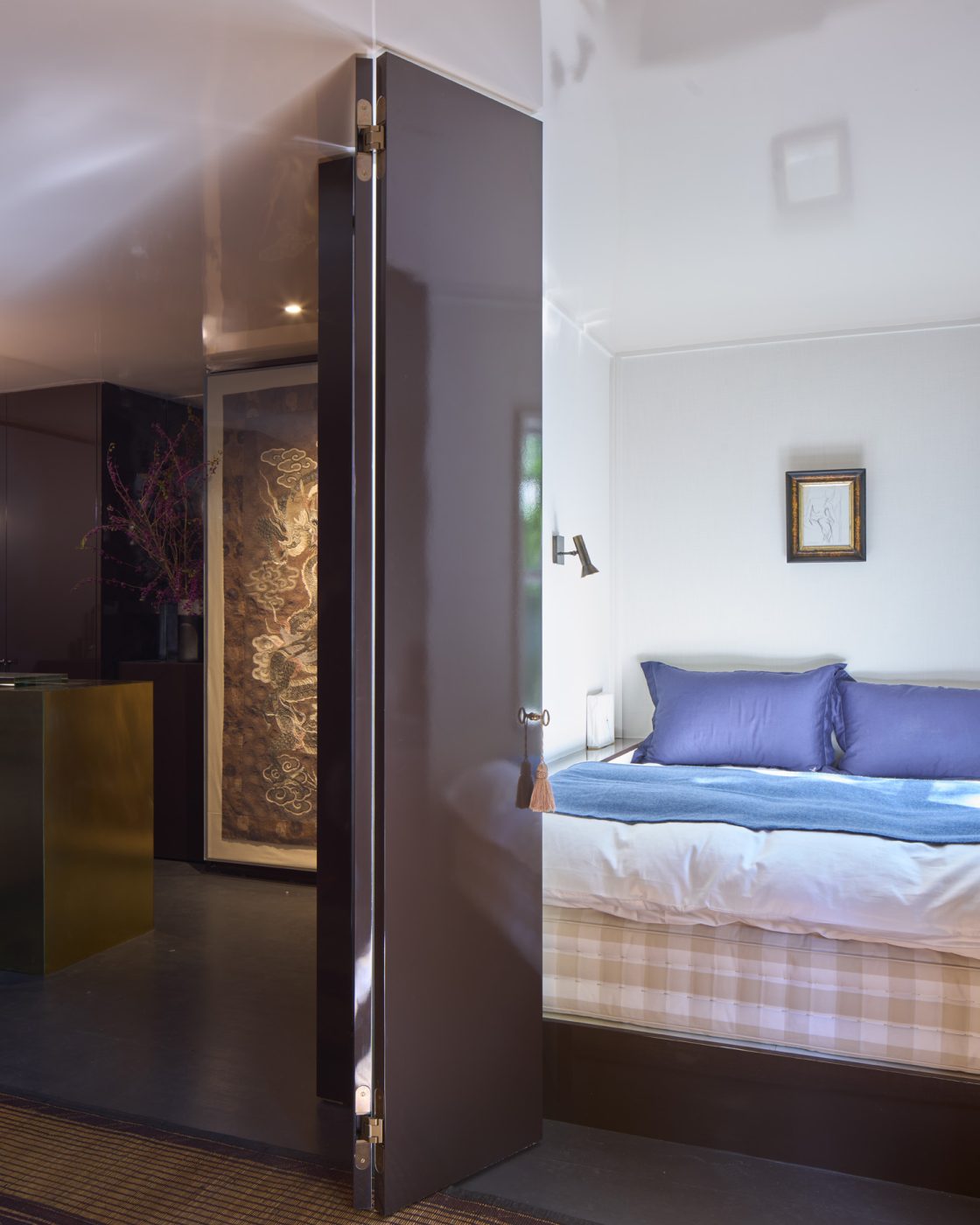
On the building’s top floor, Los Angeles designer Olivia Williams created a stylish studio apartment within the larger home. Awash in an aubergine hue, the unit boasts a most impressive hero piece: a framed 1850s Japanese embroidery from Rug & Kilim that enjoys pride of place between the kitchen and the bedroom. Decorated with a traditional motif of three dragons and a pearl, it provided the foundation for the rest of the project. “I built the wall to accommodate it, and then everything, including my whole color palette was built off of that,” Williams says.
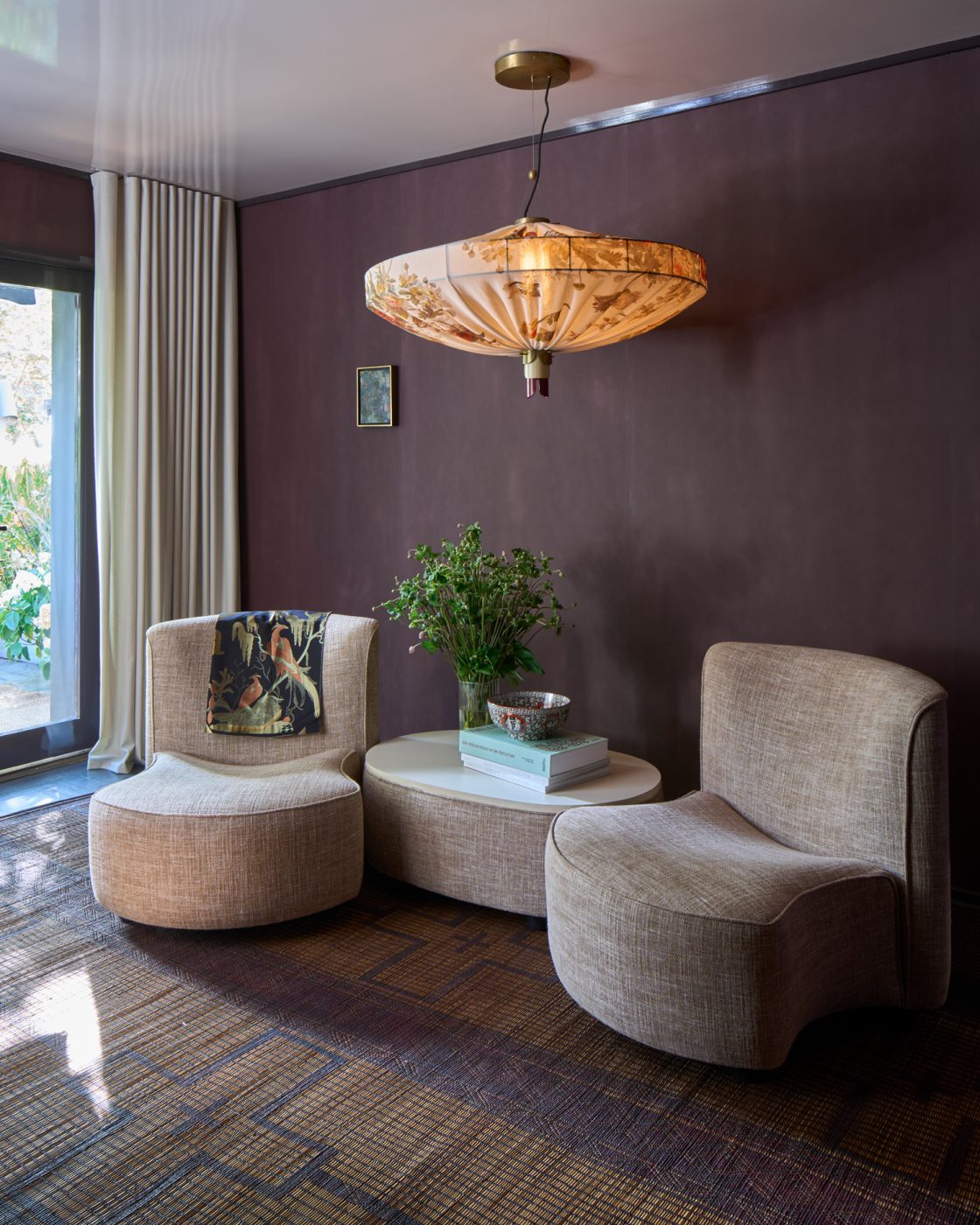
In the seating area, a modern pendant lamp in brass, painted metal and printed silk by Dimorestudio hangs over a Bernard Govin table and chairs, creating a space for conversation or work. Underfoot, a vintage tuareg mat connects the pieces.
As an accent, Williams added a W.T. Copeland Greek-inspired bowl from the late 19th century, while elsewhere in the studio, a small Hermès bowl acts as a catch-all atop a rare set of 1981 Pierre Paulin console tables made of amaranth, wood, glass and brass. Carefully chosen sketches and black-and-white photography dot the space.
Nearby, a bed cleverly enclosed by high-gloss lacquer walls fitted with handmade solid brass hardware creates a surprisingly ample bedroom. A Vespera sconce by WDSTCK makes for a chic reading lamp.
Jamie Drake
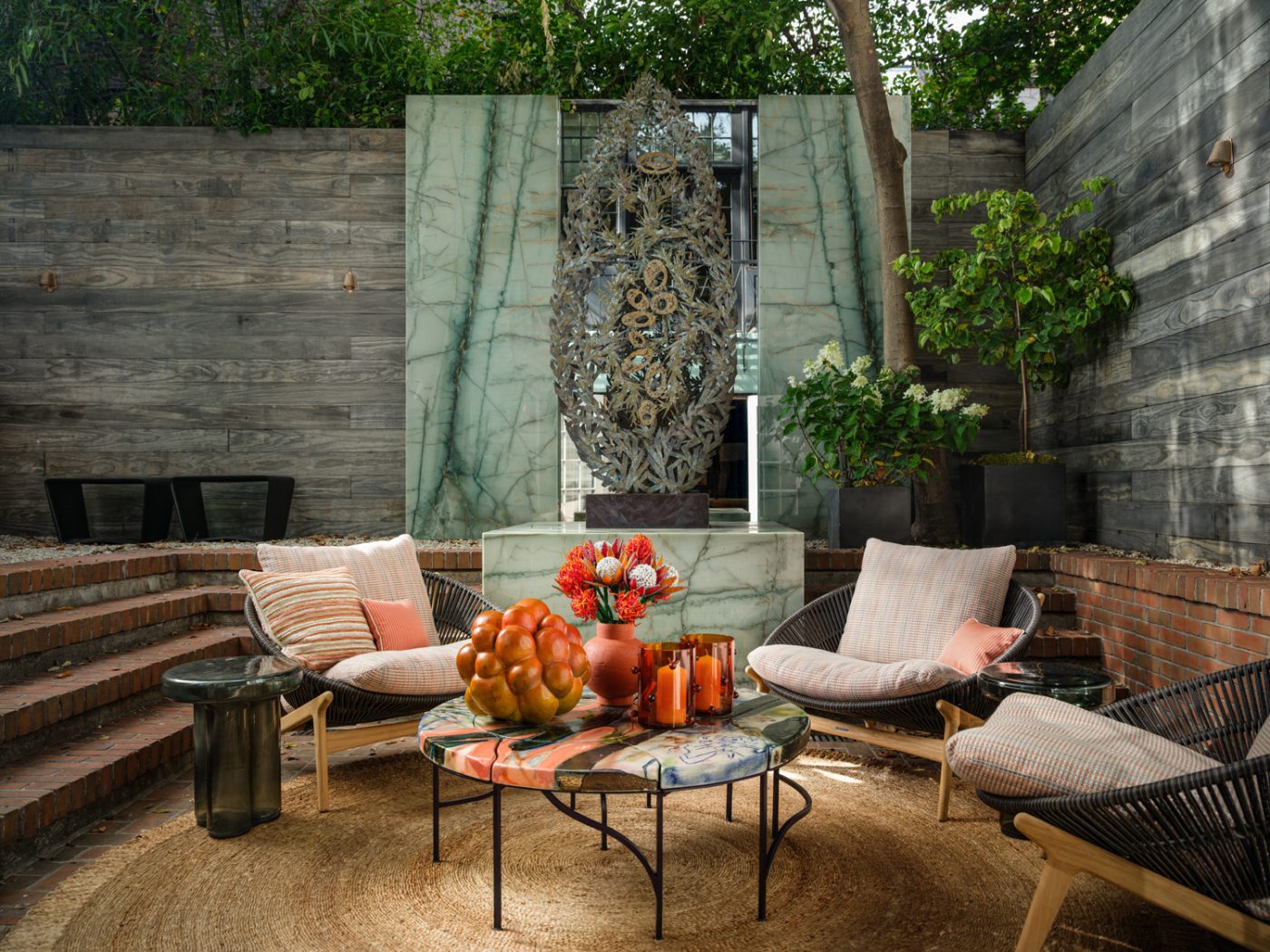
Influenced by the work of designers Ludwig Mies van der Rohe, Louis Kahn and John Saladino, New Yorker Jamie Drake — who has cochaired the showhouse for 15 years — took serenity as the central theme of his rear garden. “ We live in times of such intense mental pressure,” he says. “I think you should be able to have a backyard to go out into and breathe deep.”
To provide something to meditate upon, he foregrounded the fine arts. “I love to fill my interior spaces with art and sculpture,” he explains. “I don’t see why you can’t live with art and sculpture outside as well.”
In the center of the space, he set a leafy-looking 1960s Richard Filipowski bronze-and-silver sculpture from Hostler Burrows. In front of this, he formed a small seating area by setting 1970s-style teak-and-rope circular lounge chairs from Gloster around a painterly glazed-ceramic-topped Reinaldo Sanguino coffee table.
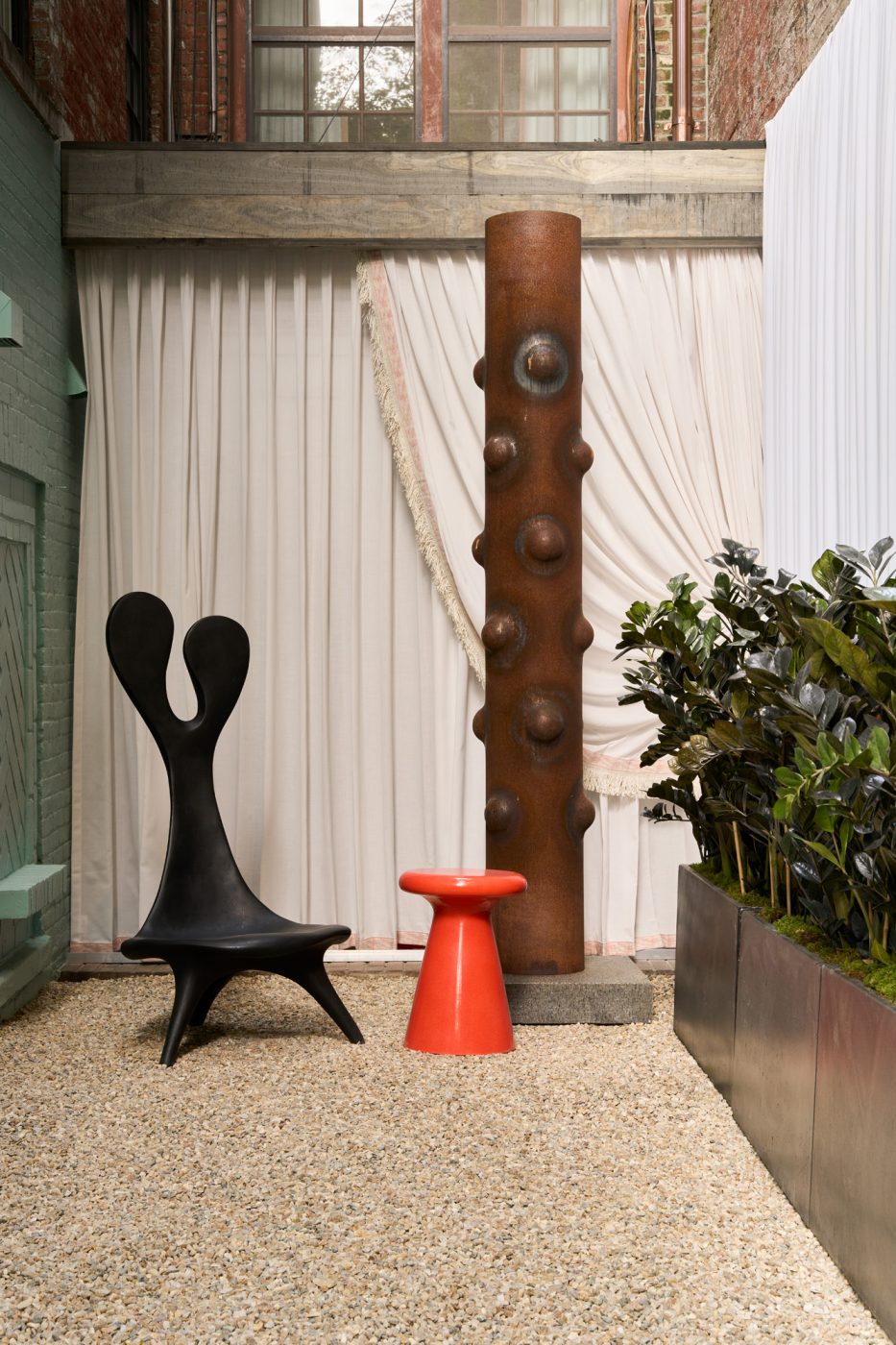
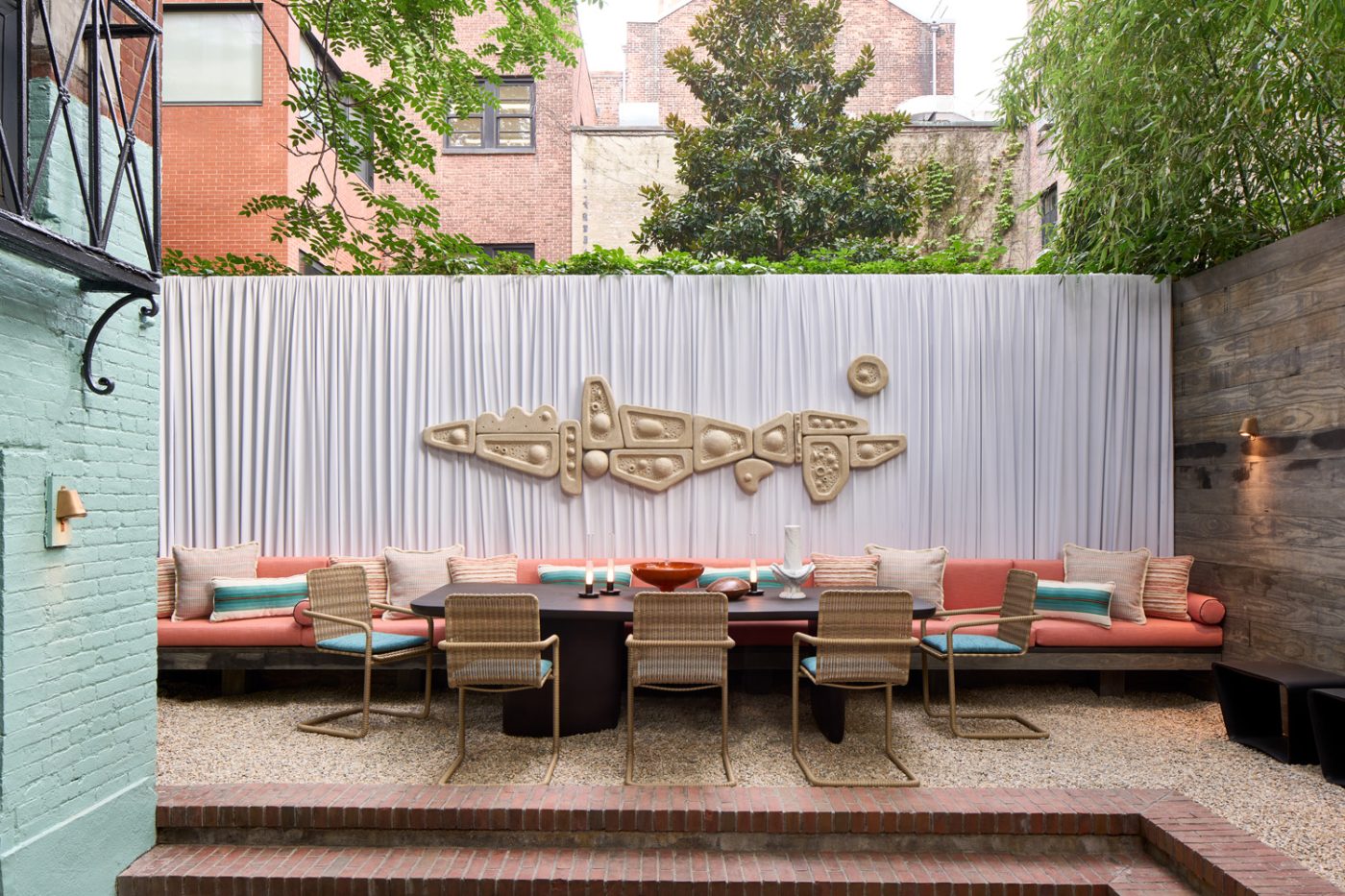
On an upper level, the designer adorned the wall behind a long dining table from Made Goods with an abstract contemporary ceramic stoneware sculpture by Carlos Otero. It is also from Hostler Burrows, as is a totemic steel-and-granite Jakob Jørgensen piece with an industrial feel that occupies a small alcove near a playful wavy Pau Hana lounge chair by John Koga.
”In the early years of Kips Bay, they only considered uptown locations because it was felt that’s where the audience was and that they wouldn’t travel downtown. But now,” says Drake, clearly excited about the showhouse’s move to Greenwich Village, “we understand that New York has a much more vibrant and vast community everywhere, full of sophisticated, arty, interesting people.”