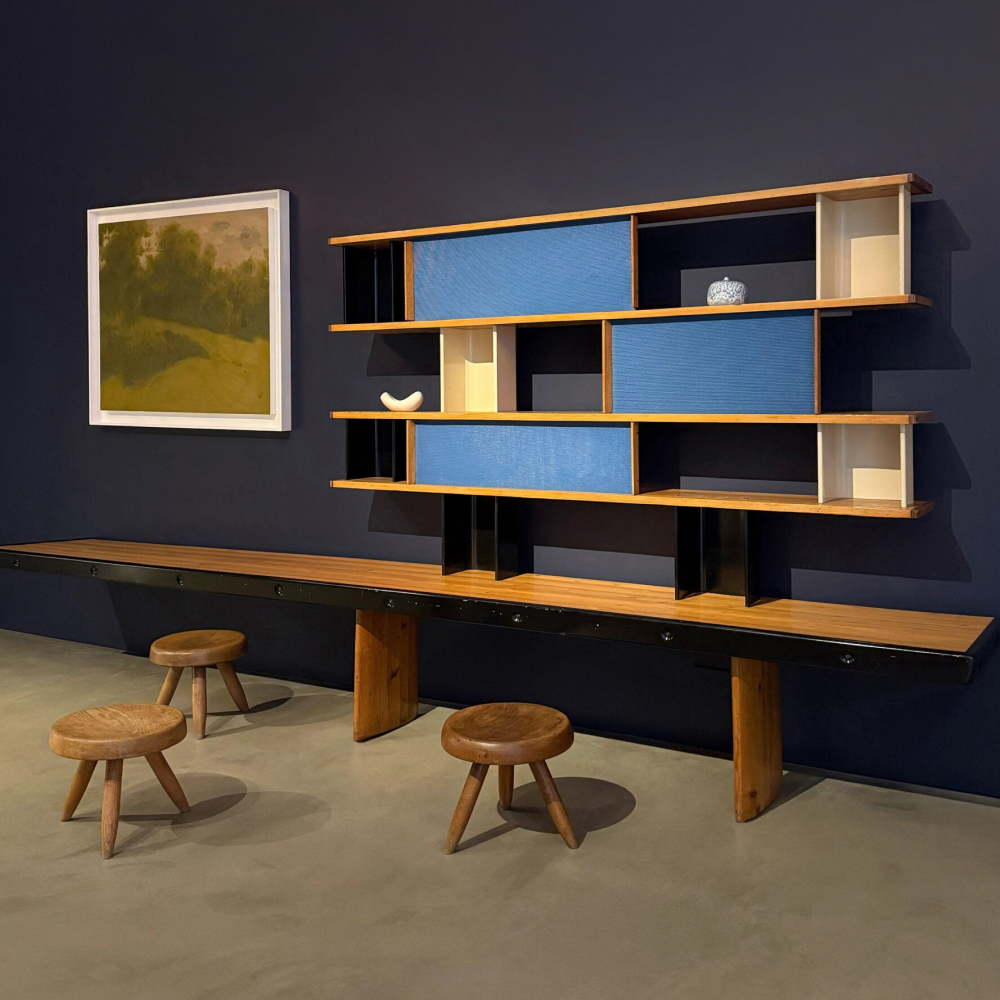
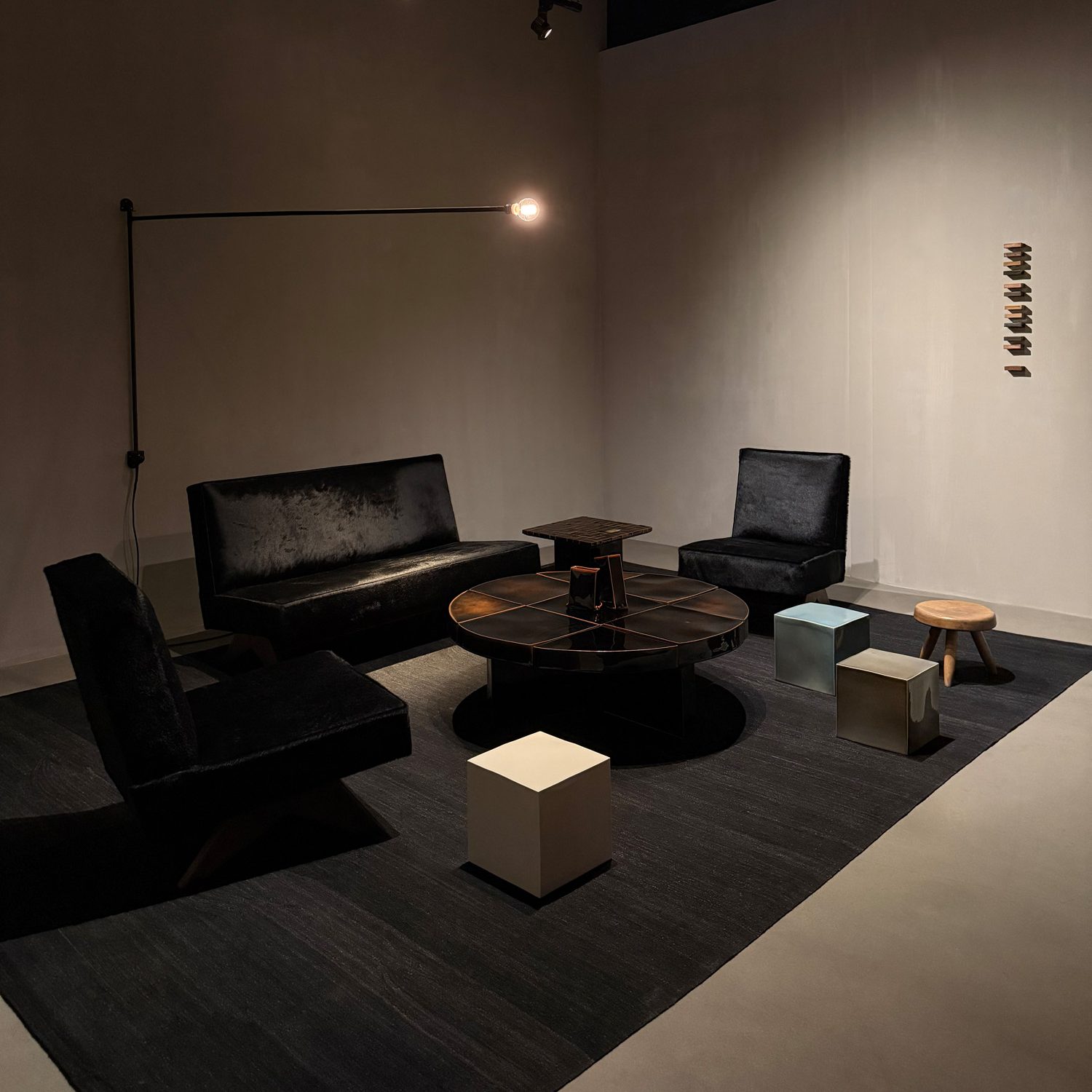
August 9, 2026Jeffrey Graetsch and Debbie August, partners in the Soho gallery Raisonné, share a mad passion for design. Their Crosby Street space showcases uncommon, meticulously researched and documented pieces by 20th- and 21st-century masters, with an emphasis on mid-century French and radical Italian material. Hallowed names like Charlotte Perriand, Jean Prouvé, Pierre Paulin and Ettore Sottsass are represented. But Raisonné places equal importance on championing contemporary artists, whose work it puts in conversation with that of the older, more established cohort. Graetsch and August have hosted the U.S. debuts of young talents like Gyuhan Lee, a Korean artist who transforms commercial packaging materials into sculptural lighting, and Paris-based Adélie Ducasse, whose use of joyful primary colors belies the formal rigor of her lamps and furniture.

Raisonné has mounted several ambitious exhibitions, including a 100-piece historical survey of the work of Memphis founder Ettore Sottsass and a retrospective covering 50 years of the late stage designer Robert Wilson’s stringent minimalism. Last spring, it introduced an American audience to the work of French ceramist Emmanuel Boos, who produced a line of intriguingly skewed and slumped porcelain tabletop ware especially for the gallery.


August’s collecting obsession began at Paris’s Clignancourt flea market, where a piece of Hermès silver she bought as a teenager spawned a lifelong habit. She reached a pinnacle in this pursuit recently with the installation of a 1969 Total filling station, a visionary prefab design by Jean Prouvé, on her property. Raisonné is her first gallery venture.
Graetsch is a former fashion photographer whose earlier Williamsburg space, MDFG (Modern Design Furniture Gallery), focused on illustrious French modernists like Perriand, Prouvé, Le Corbusier and Pierre Jeanneret and Jules Leleu. He chatted with Introspective about his personal backstory, the gallery’s philosophy and what fuels his design amour fou.
How did you and Debbie meet and become partners in Raisonné?
We were introduced by a good friend, Michael Nevin, from The Journal Gallery, who knew Debbie as a client. The minute I walked into her apartment, I realized she was a real connoisseur and that we’d probably been bidding against each other at auction for years. There was a Martin Székely table at the entrance, a massive Charlotte Perriand Nuage bookcase on the wall and a Date Painting from On Kawara’s “Today” series that happened to be the birthday of my oldest son. I was planning to bring my old Williamsburg gallery to Manhattan. I wanted to promote young designers along with historical ones. It immediately felt right, and I said, “This is the partner for me.” From that moment on, we dove in.


How did you get started in collecting? What were some of your earliest purchases?
The word collector is a tough one for me. I’m more a custodian than a collector. My love of design started in Toronto, where I grew up, after seeing and buying an Eames rocking chair. Later, as a struggling photographer, I sold it because I needed the money — that was heartbreaking. I also brought home a [Castiglioni] Arco lamp that scraped the ceiling of my bedroom. My mother said, “Why are you bringing this stuff home?” Becoming a dealer has toned down my obsessiveness. I still get to be around the stuff and handle it, which is fulfilling, but I don’t necessarily need to bring it home.

How did you come up with the name Raisonné?
It took us months to think up a name. We knew we wanted something French and something that encompassed curation and collecting. We were shocked to find that no one had used the name Raisonné, and we snatched it up immediately. Every major artist has a catalogue raisonné, a listing of their complete works that is vetted and correct. The name sums up what we’re about: authenticating our material and feeling confident about what we sell.


What drives your passion for design?
Good design solves problems. I’m passionate about design down to my cutlery by Sori Yanagi or Arne Jacobsen. It’s so natural to use that it becomes an extension of you, whether it’s a chair, a glass, a fork or a knife. My wake time, my sleep time, is encompassed by design. When I’m around bad design, I swear a lot.
As much as Raisonné is a business and we need to make money to keep the lights on, it’s all for the love of it — passion first, business second.
Raisonné’s 1stDibs storefront has an extraordinary array of objects and furnishings by luminaries of 20th-century French and Italian design, and your 2,500-square-foot street-level gallery is replete with furniture, lighting and art. But that’s just the tip of the iceberg, correct?
We have another 2,500 square feet of space below the gallery, and an off-site warehouse for massive bookcases and other things we can’t get down the stairs, as well as projects we’re working on and things we don’t want anyone to see we’re buying.

What makes Raisonné stand out from other galleries?
The number-one rule is we say hello to everyone who walks in. These are important, top-tier artifacts, and we want people to see them, whether they have the means to buy them or need to save up. We love educating people. If anyone has a question about an object, come in, let’s look at it together.
When I was young and would walk into galleries, they looked me up and down and would never say hi. We are not that.