August 16, 2026By the time Melissa Lee was finished revamping this house in the Hudson Valley town of Accord, New York, its age and aesthetic had become difficult to pin down. William Morris wallpapers, Swedish textiles, vintage English furniture and wood-clad beams suggested a home whose character had evolved gradually over generations.
In fact, it was built in the early 2000s.
Working with the owners, a married couple with two young sons, whose classic Federal townhouse in Brooklyn’s Boerum Hill she had previously updated, Lee set out to imbue the country residence with the sense that it had always belonged to their family.
“A lot of people want their second home to feel completely different from their city home,” says Lee, founder of the Brooklyn-based design firm Bespoke Only. “These clients actually wanted more of an extension than a separate identity.”
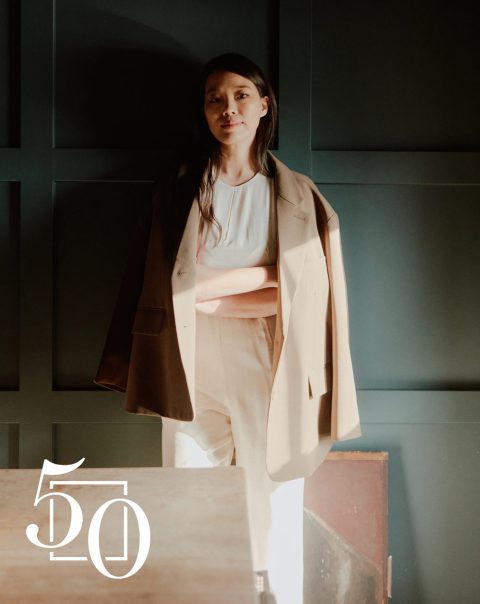
Born in Taipei, Taiwan, Lee grew up visiting construction sites for her family’s real-estate development business before studying fashion and textiles at Parsons School of Design, in New York. After launching Bespoke Only as an events and set-design studio, she pivoted to residential interiors during the height of the pandemic.
“Obviously, events weren’t really happening anymore in 2020, whereas interior design was having a very busy time,” says Lee, who made her 1stDibs 50 debut this year.
Almost as influential as her formal training in forming her design philosophy was her study of psychology. “The way people approach the spaces around them has never been just visual for me,” she says. “It’s about the experience.”
Throughout the Accord house, that experience is shaped and enhanced in a varierty of ways: colors that morph with the changing light, furniture that appears inherited over decades and rooms that beckon people to settle in.
Referring to the homeowners, both lawyers, the designer recalls, “The couple kept saying, ‘Let’s make the house look like it’s been here forever.’ ”
Below, Lee takes Introspective on a tour.
FOYER
From the moment they step over the threshold, visitors are surrounded by elements of the home’s transformation. Lee drenched the entryway and stairwell in a Farrow & Ball sky blue that she describes as having a “very English country” vibe.
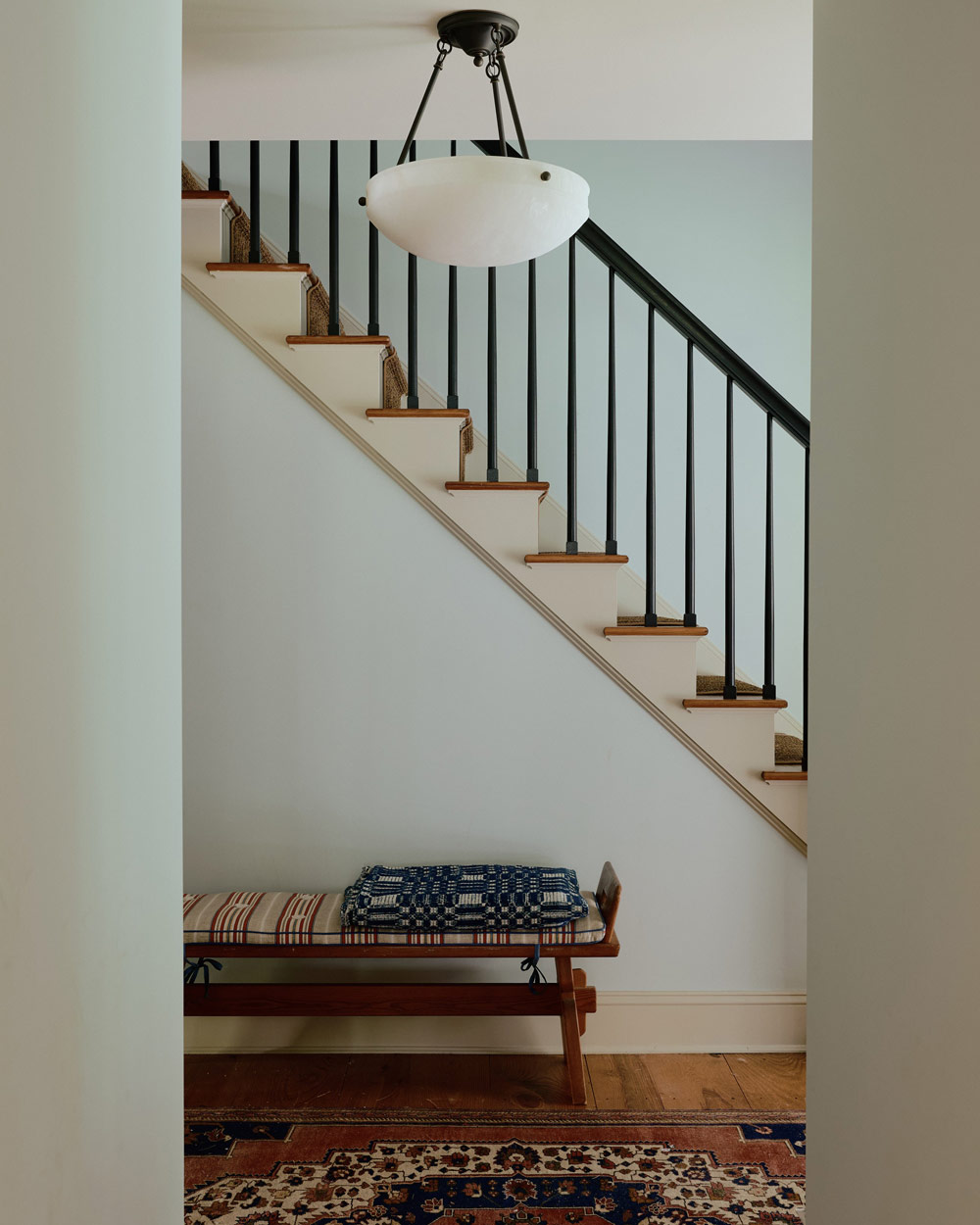
“This pale blue is a little traditional, but it can also feel very light and refreshing,” she says. “It really sets the tone for the entire house.”
A 1940s Swedish bench upholstered in a vintage textile simultaneously shifts and supports the mood. Lee says she gravitated toward Scandinavian antiques because, like the Hudson Valley itself, they possess a rural character while remaining “a little less delicate” than their English counterparts.
LIVING ROOM
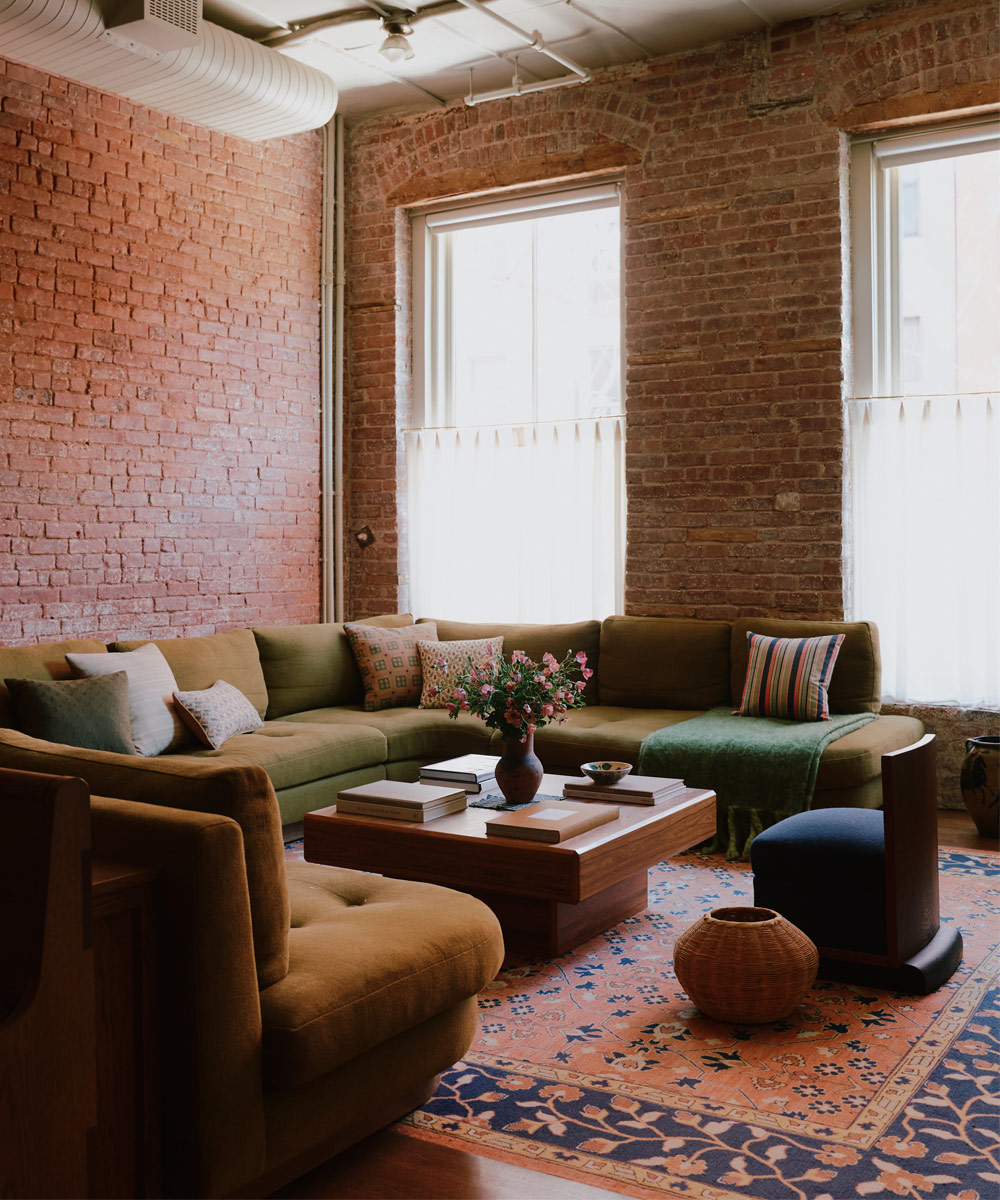
Lee calls the living room “the soul of the house,” where the project’s aesthetic flourishes. The original mantel was removed and the fireplace converted into a minimalist plaster firebox painted the same sage green as the walls, lending the eclectic room a quiet presence.
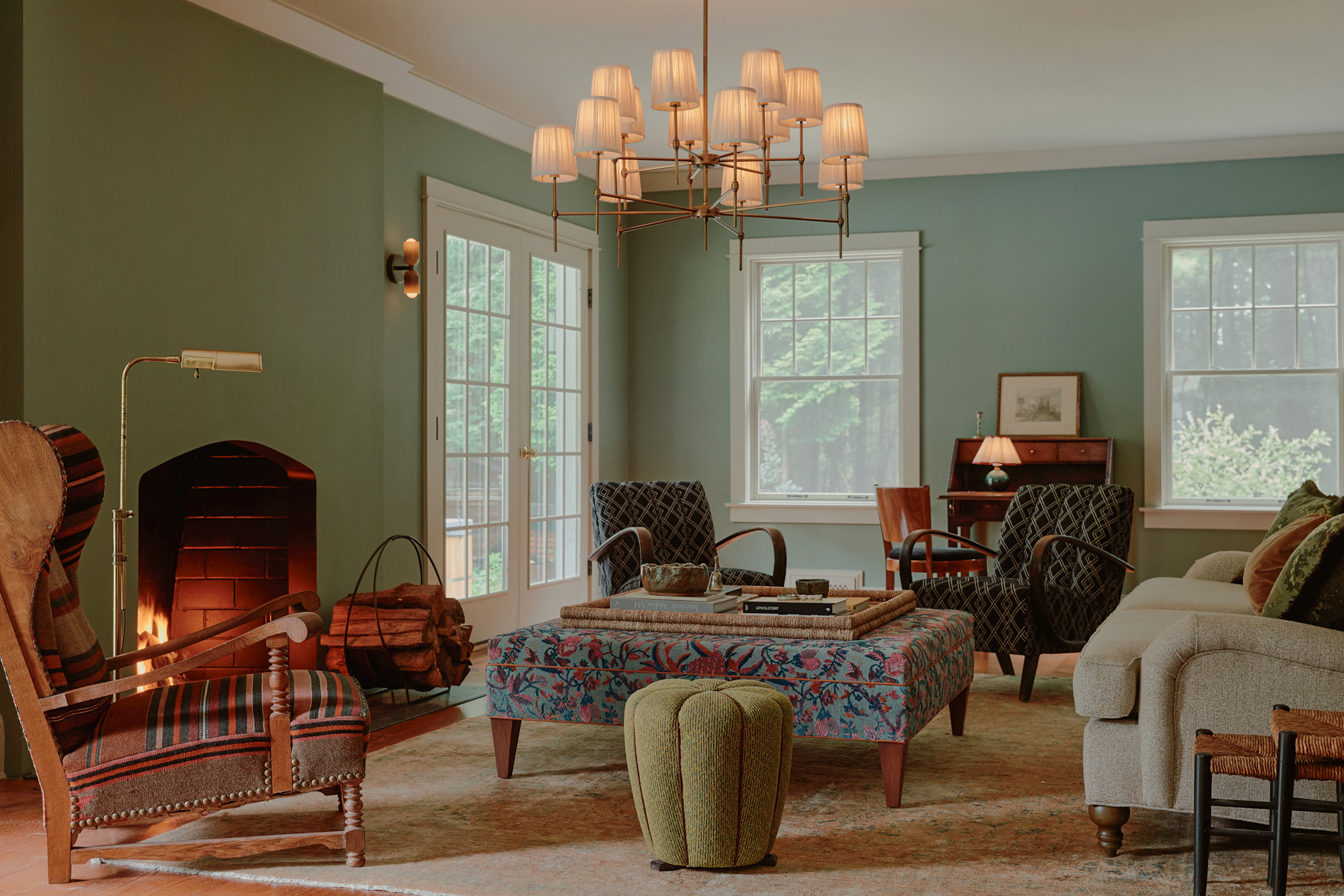
Against this restrained backdrop, older pieces, many sourced on 1stDibs, bring a sense of history reflective of the family’s city home.
The mix of vintage and antique items spans continents and eras yet feels cohesive: a 1930s Art Deco pouf by Czech designer Jindřich Halabala, an antique Persian rug, oak Windsor chairs upholstered with kilims and a set of Gio Ponti nesting stools. Serving as a cocktail table is a giant ottoman — in a floral textile recalling William Morris — topped with a rattan tray.
A vintage brass reading lamp and a contemporary chandelier and sconces illuminate the space, while a vintage English bureau desk together with a 1940s American lacquered burl-wood side chair forms a writing nook.
The result brings to mind the lived-in interiors of the late British designer Robert Kime, one of Lee’s design heroes.
HOME OFFICE
Just off the living room, the office continues the green palette, which is used throughout the home with slight variations. “They’re actually all different,” Lee says of the paint tones. “We adjusted each color a little bit based on the natural light each room receives so that, as you move through the house, you have a similar experience, even though the light changes.”
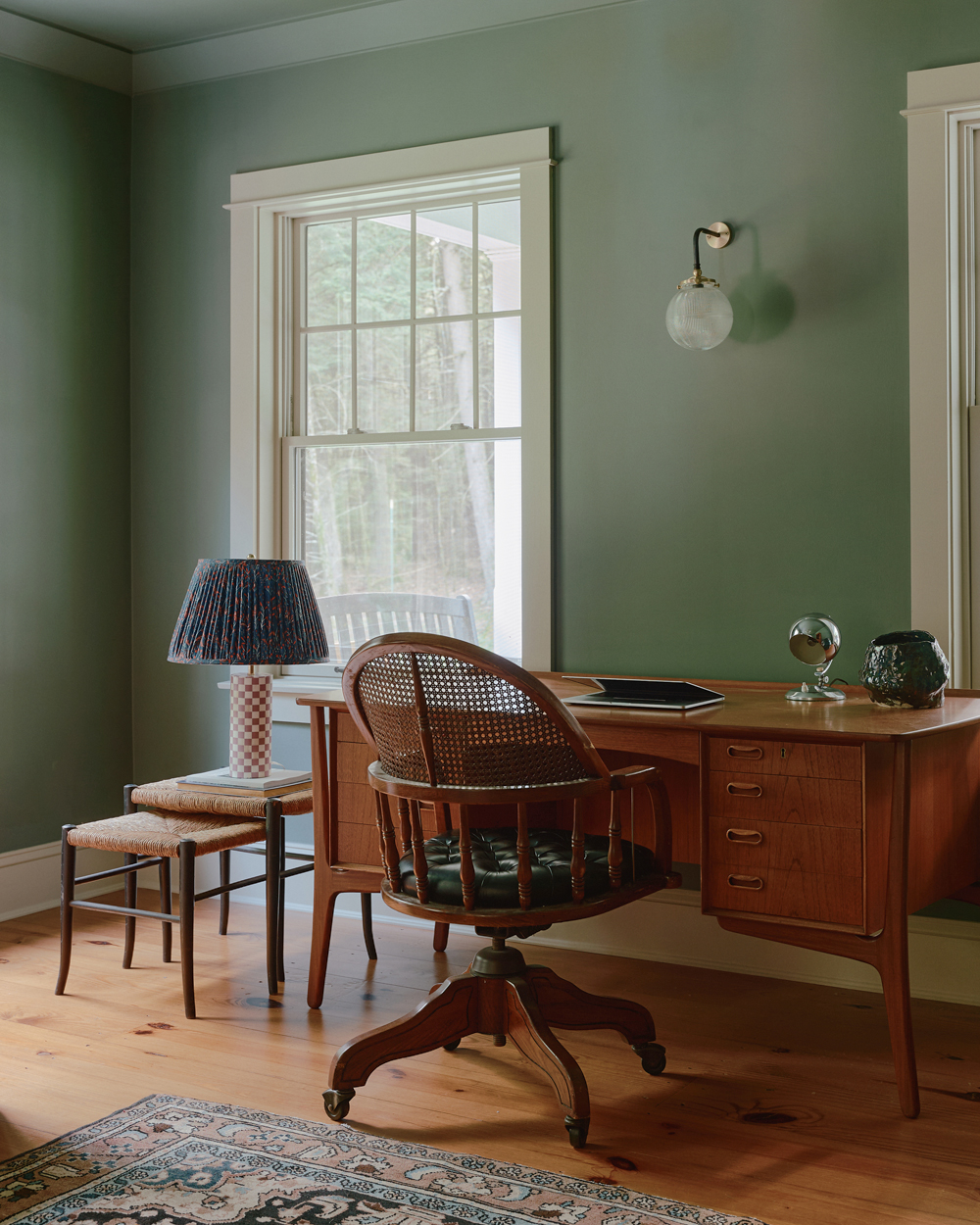
“The office centers on a floating-frame teak desk by Danish designer Svend Åge Madsen, paired with a vintage leather-and-rattan swivel chair. An antique Persian rug, reproduction vintage-style sconce and a checker-patterned lamp reinforce the serene sensibility. Café curtains hung across glass French doors (on the other side of the room from the area seen here) allow the office to double as a private workspace for video calls and as an extra guest room when needed.
DINING ROOM
If the living room is where the Brooklyn townhouse is most strongly echoed in Accord, the dining room reveals how its aesthetic was adapted to the country.
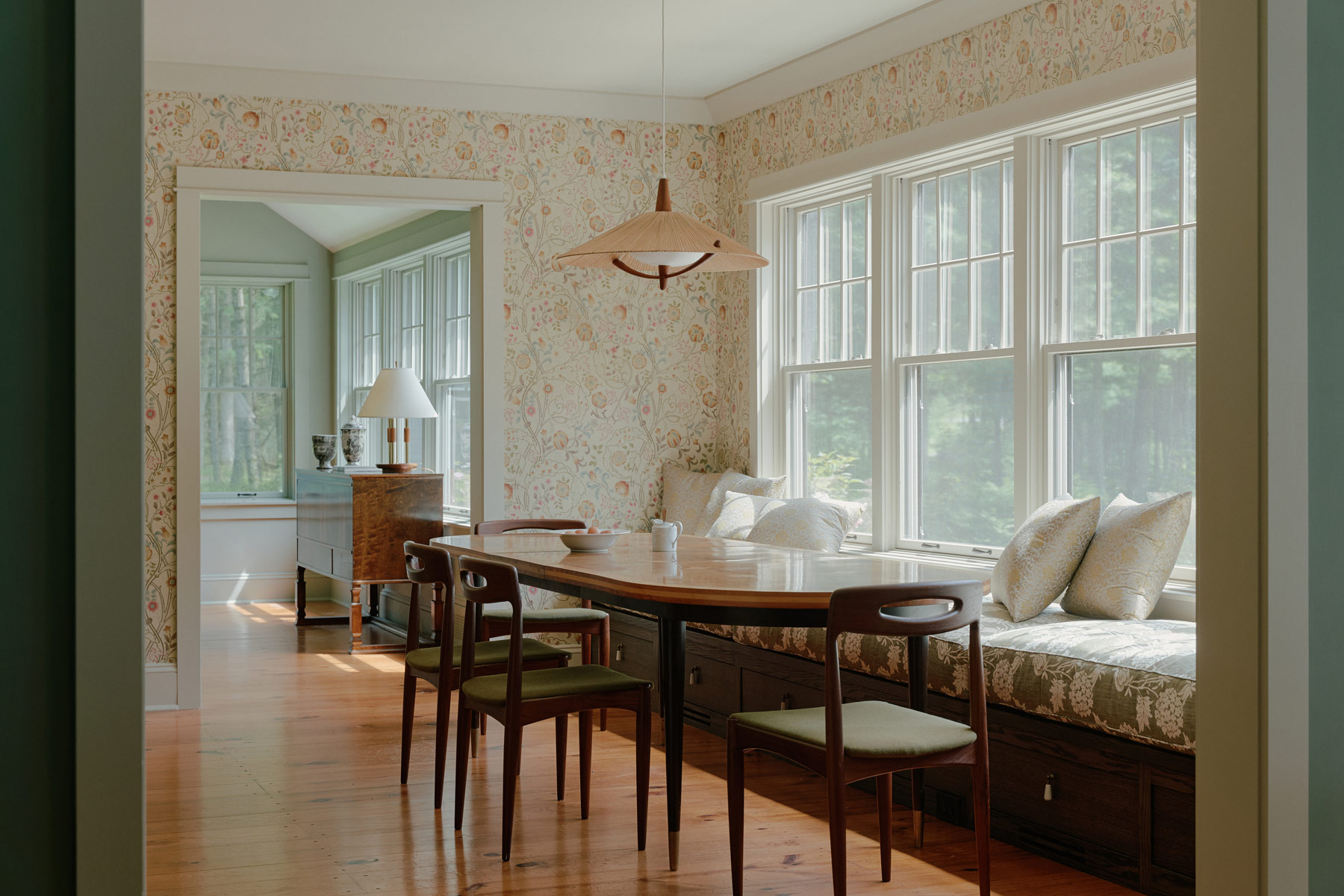
“Everything gets to breathe a lot more,” Lee says. “Everything is a little more plush, a little more kicked back and much more generous in scale and proportion.”
Both houses express an appreciation for the Arts and Crafts style of William Morris, whose wallpaper transforms the walls here into a botanical fantasia.
A 1920s French oak parquetry table, vintage Danish dining chairs and a 1960s Temde Leuchten sisal-and-teak pendant, found on 1stDibs, contribute to the layered feel of the space, where a built-in banquette upholstered in Soane Britain fabric encourages long family meals.
KITCHEN
The kitchen offered Lee an opportunity to make a big impact with few changes. She preserved the existing cupboards, refinishing them in a buttery yellow, and replaced the counter of the kitchen island with butcher-block, painting the base a cheerful blue.
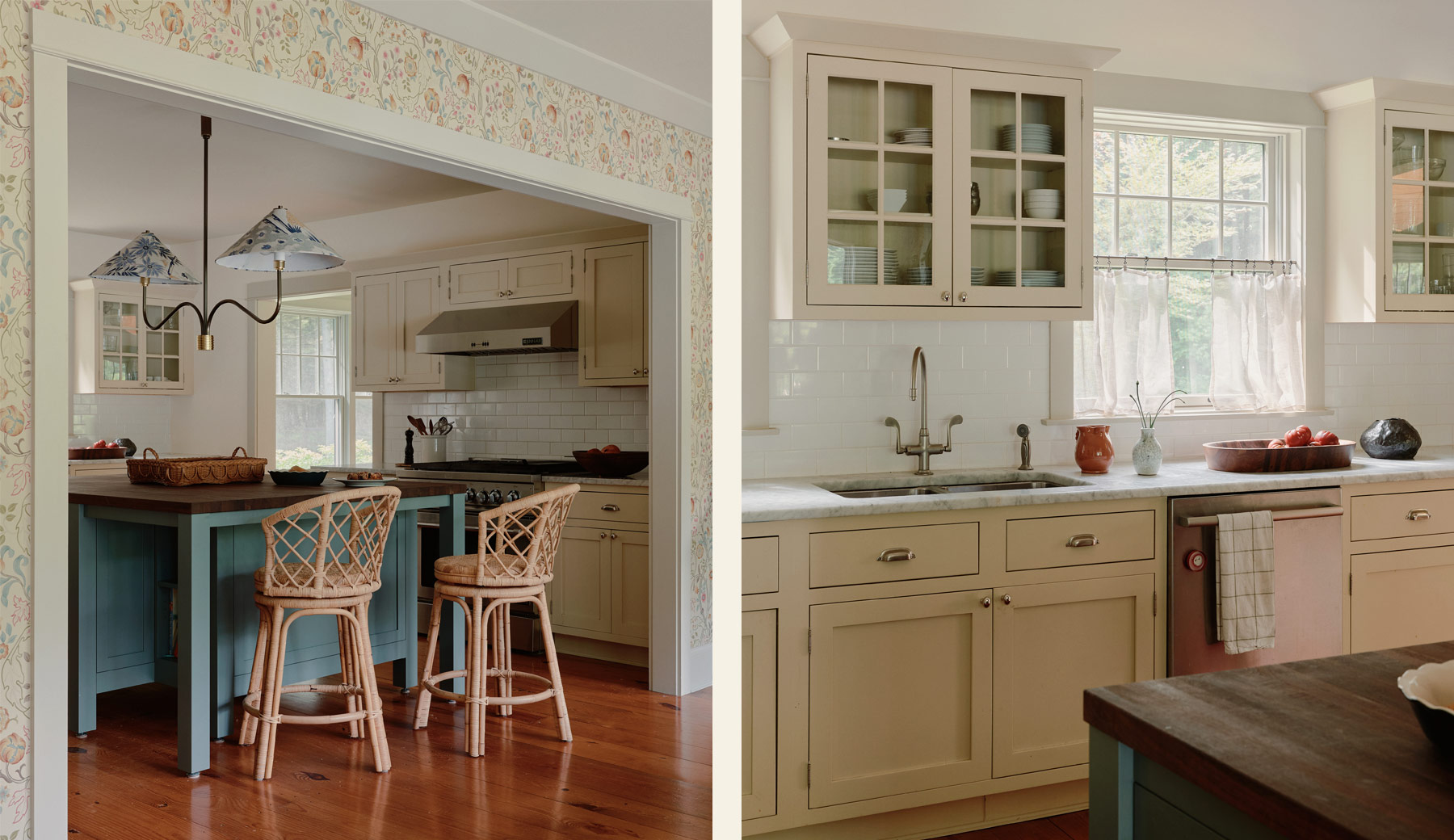
That shade wasn’t arbitrary. “That’s a little nod to their Brooklyn home, where we painted many of the interior doors the same blue color,” the designer says.
This hue is echoed in the floral-fabric lampshades of the Urban Electric Co. pendant hanging above. Rattan barstools and linen café curtains further the kitchen’s rural atmosphere. “It feels very country,” Lee notes, “in a nostalgic way.”
FAMILY ROOM
“It was meant to be very sun-drenched,” Lee says of this space, which features a wall of windows. Rather than emphasize its solarium-like qualities, she made it feel cozy and inviting year-round.
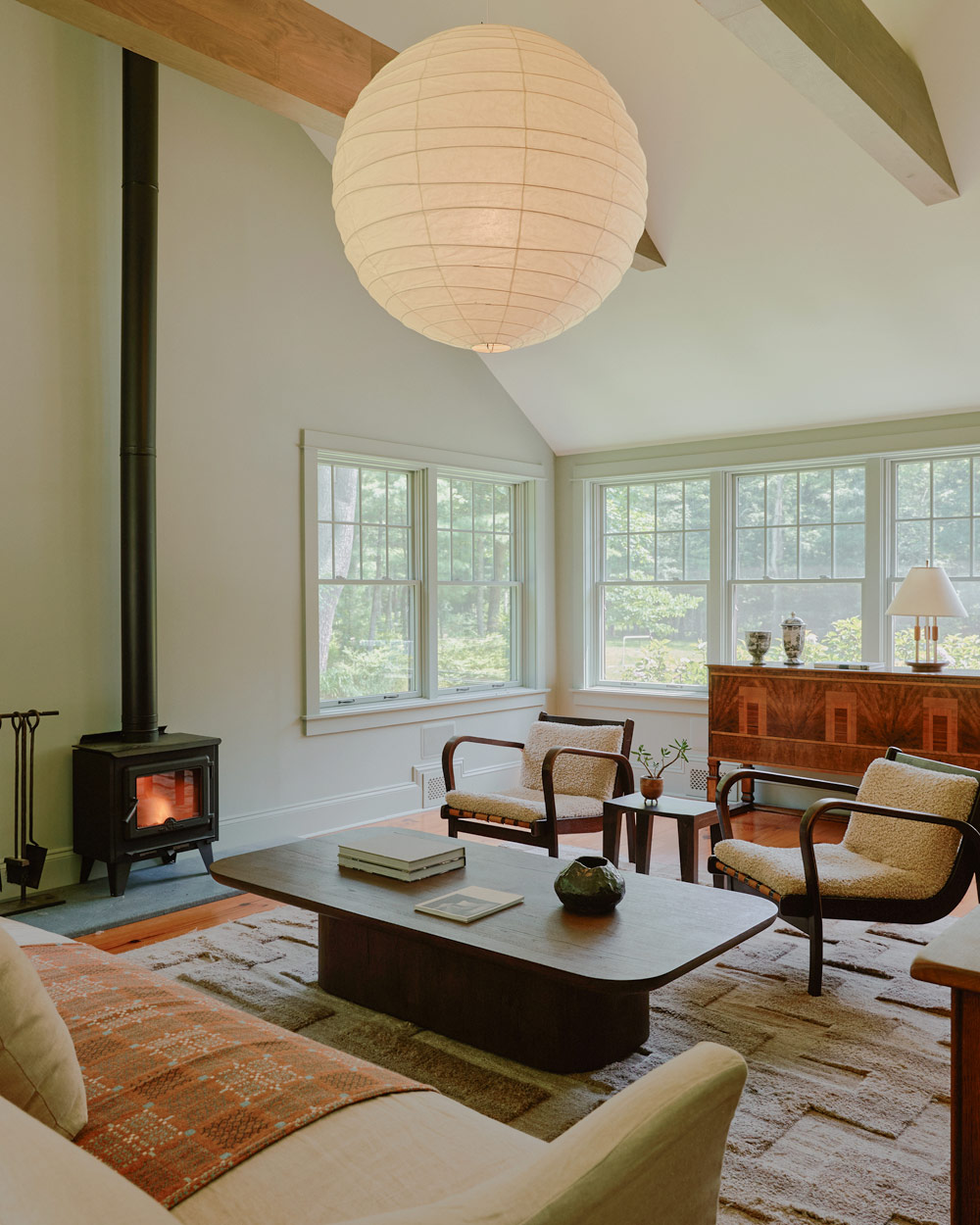
A black wood-burning stove — “the strongest mountain-cabin reference in the house,” according to the designer — presides over one end of the space, while lighter-toned pieces, including a contemporary sofa, Swedish Grace sideboard and Isamu Noguchi Akari pendant, preserve its airiness.
The ceiling’s structural beams had been encased in McMansion-esque sheetrock. Lee clad them instead in tongue-and-groove wood to give the room more architectural presence. “We wanted them to feel like full wood beams,” she says.
POWDER ROOM
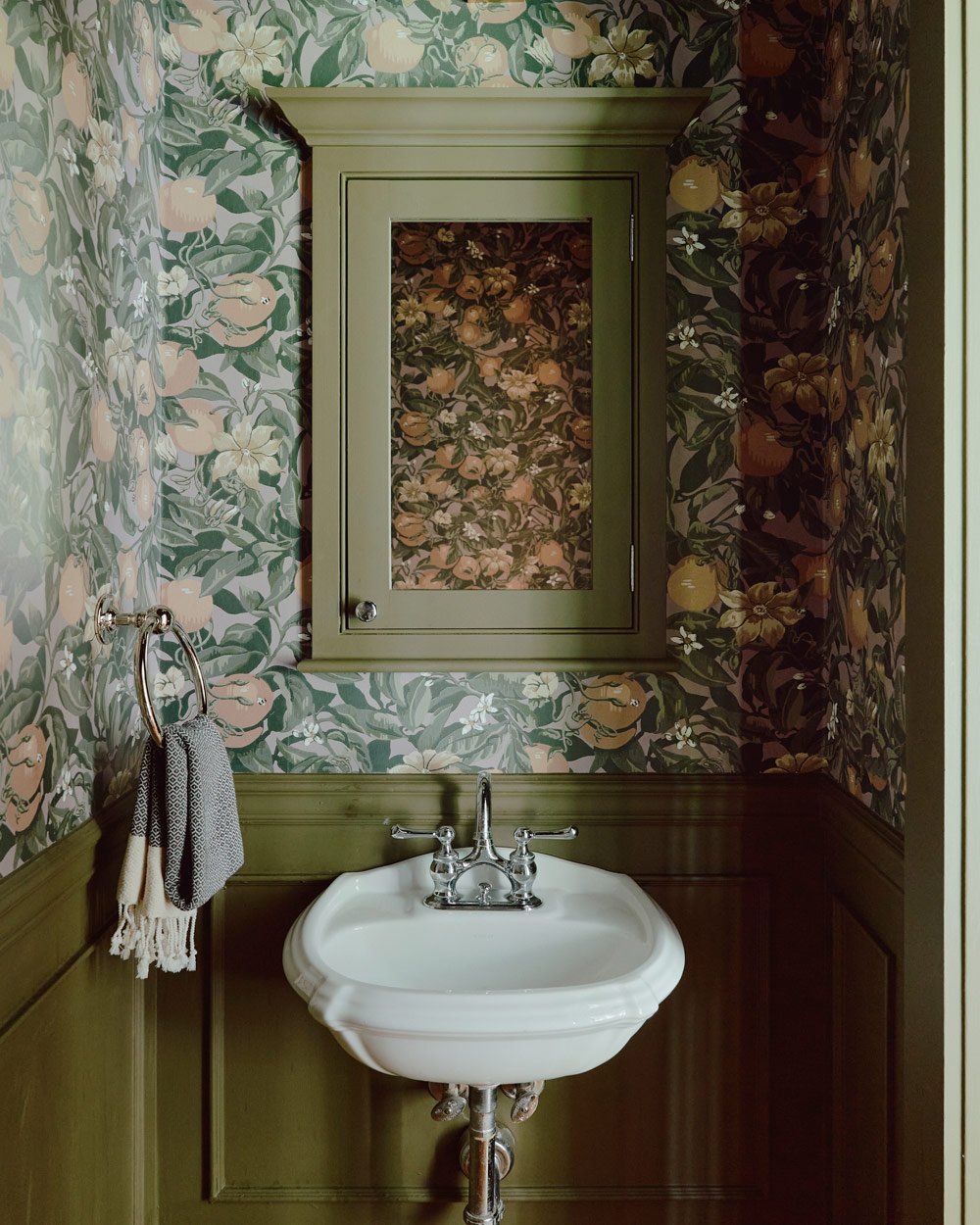
Just off the entry, the powder room exemplifies Lee’s eye for recognizing what doesn’t need to change. The sink, medicine cabinet and moldings were already in the house when the clients purchased it.
Rather than replace them, she covered the room in new finishes, including Zak + Fox wallpaper. Lee jokes that the ornate little sink was “probably the most appropriate thing the builder originally put into the house.”
PRIMARY SUITE
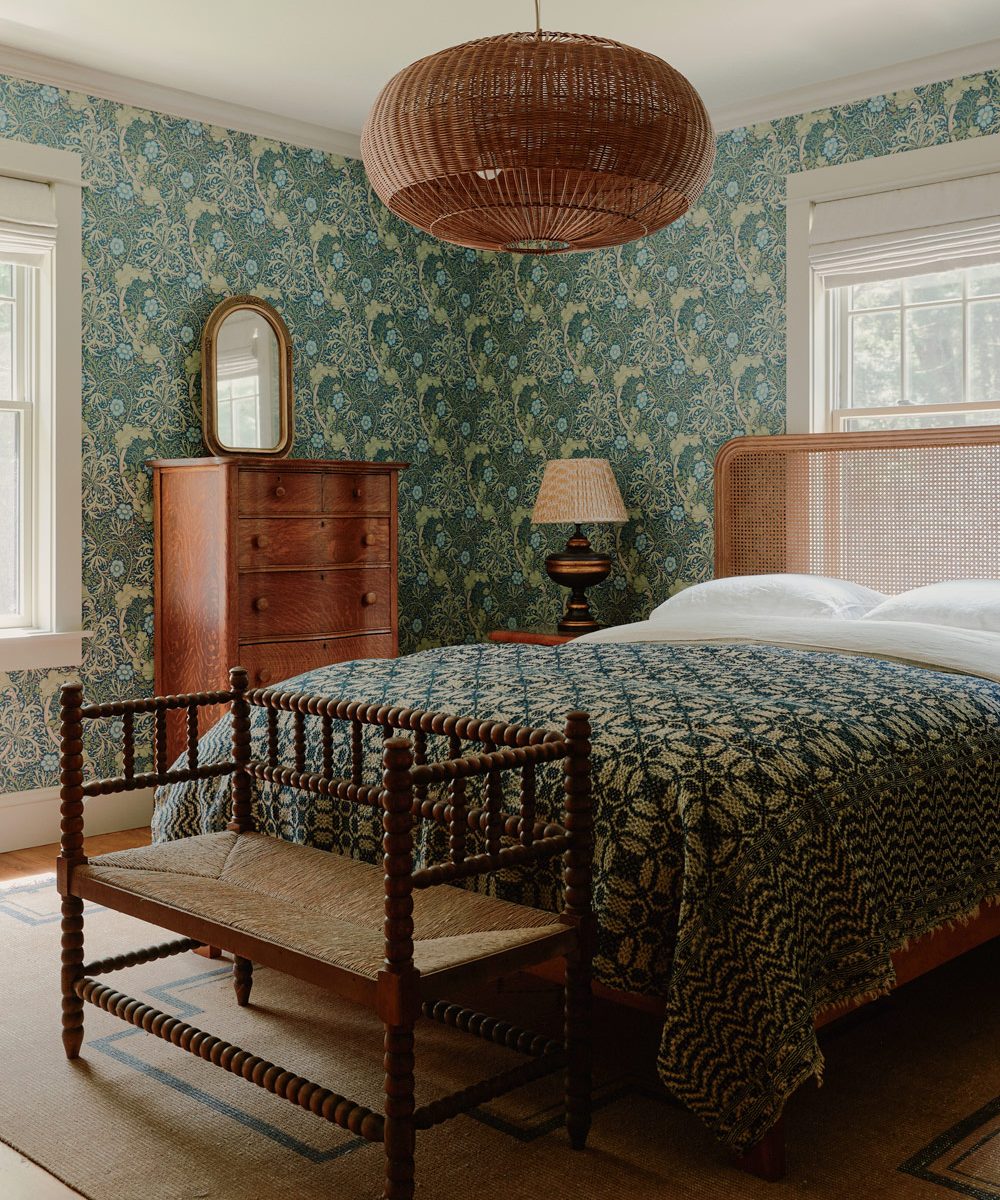
At the foot of the primary bedroom’s contemporary rattan bed, a pair of 1960s Bröderna Andersson armchairs reupholstered in Schumacher fabric create a sitting area that Lee says was meant to make the room feel ”like a little hotel suite.” The mossy-green botanical pattern “ties back to downstairs and to the landscape outside.”
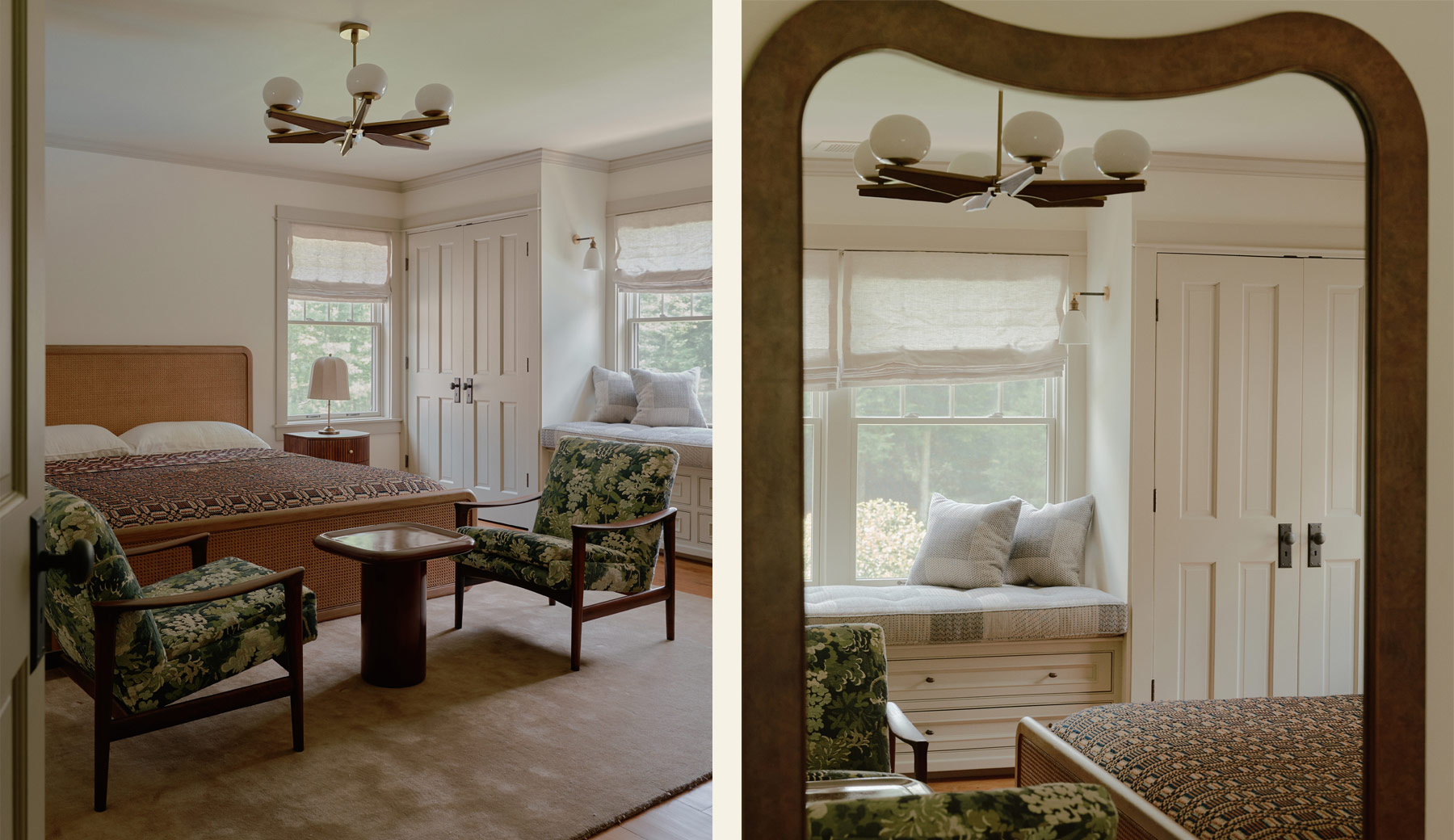
Sitting between the chairs is a small table originally designed to go outside. “We do that a lot,” Lee says of deploying unexpected pieces. “This is supposed to be outdoors, this is new, this is old — just a lot of push and pull.”
KIDS’ BEDROOM
Lee resisted filling the boys’ room with cartoonish decor or sports references. Instead, she brought in twin vintage carved headboards by Kipp Stewart for Drexel, discovered on 1stDibs, and paired them with a vintage dresser and subtly whimsical C.F.A. Voysey wallpaper.
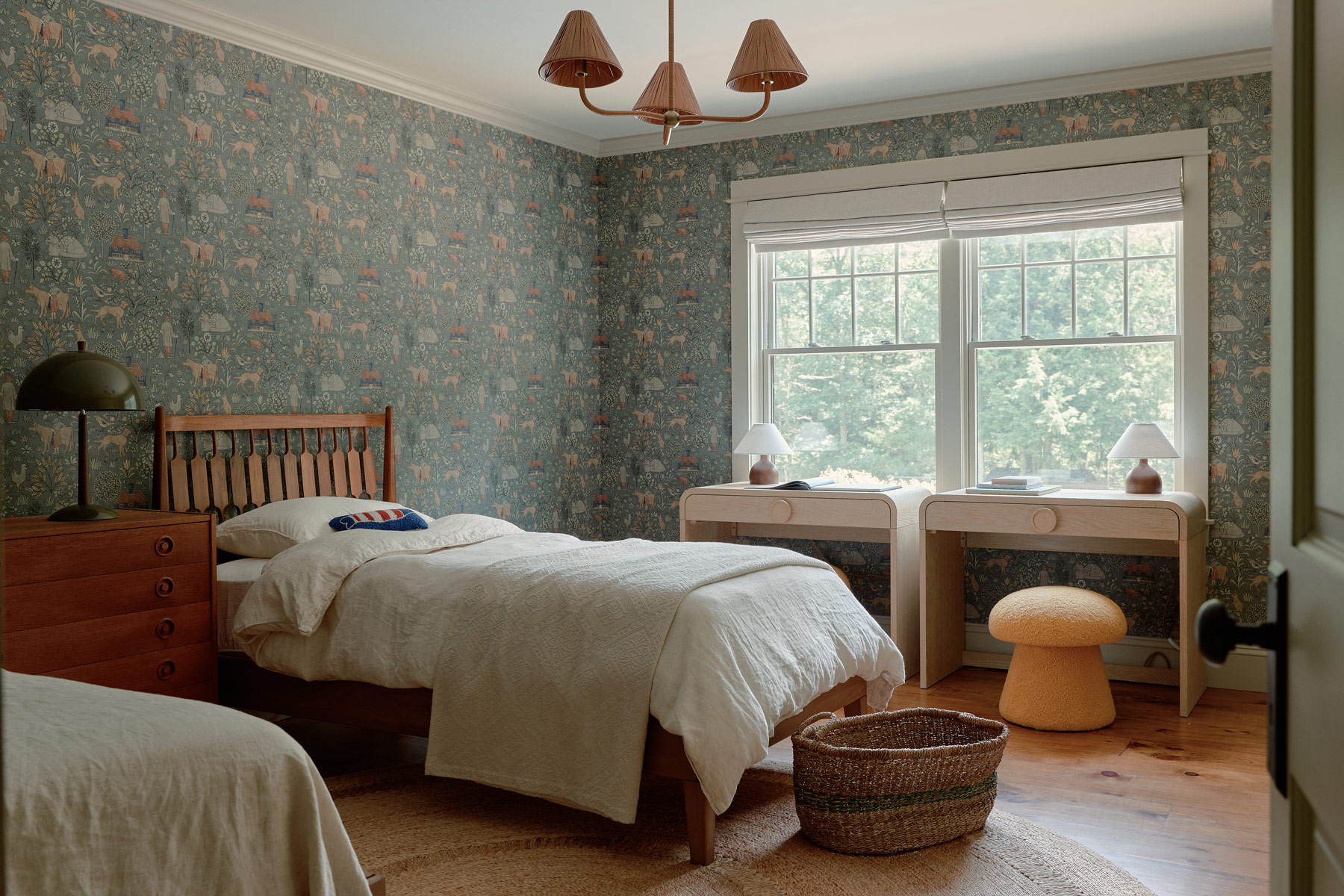
“I don’t think kids’ rooms have to be filled entirely with children’s furniture,” she says. “You can insert a few grown-up pieces so it still feels connected to the rest of the house.”
For Lee, vintage furnishings are practical as well. “These pieces have already survived a very long time,” she says. “They should be able to take some wear and tear. They’re durable, and visually they’re not the kind of pieces you have to be overly precious about.”