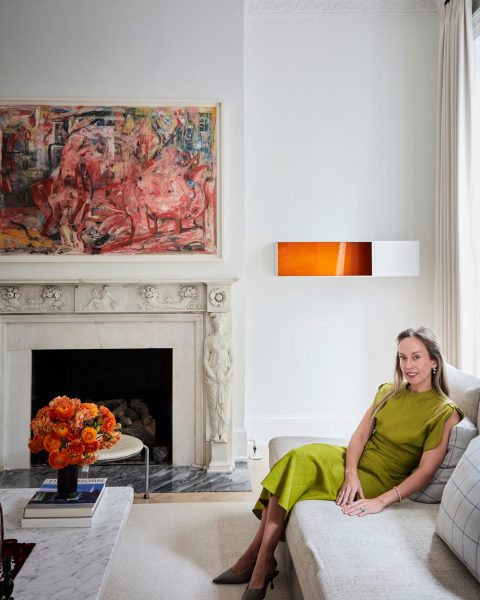
September 20, 2026“It was kind of a puzzle,” designer Melissa Colgan recalls of a recent Washington, DC, project she completed for a pair of contemporary-art aficionados who are repeat clients. In reimagining their turn-of-the-20th-century Georgetown rowhouse, she says, “everything was about highlighting and showcasing their collection.”
To do this, she had to work backwards: Instead of starting her scheme with a floor plan, as she usually would, she began by thinking about where to put works by blue-chip names like Cy Twombly and Cecily Brown. Their placement determined the overall direction.
Even so, the goal was to create not a museum but a warm, welcoming home for the clients: Elizabeth Miller and Dan Sallick, who is a cofounder of the communications and creative agency Avoq, a former chairman of the board of the Smithsonian’s Hirshhorn Museum and a current member of the Solomon R. Guggenheim Foundation board of trustees. Colgan’s incorporation in her scheme of a core downstairs space conducive to gathering “had great appeal. It’s not a totally open floor plan — there’s still some separation — but it’s more open than their previous Georgetown house,” say the DC-based designer, who worked with the couple on that home as well.
“They have such incredible art holdings,” Colgan continues. “And they collect and curate their furniture as they do their art. Everything has to have good lines and a story.”
After settling on which prized pieces of furniture and art would make the move, the designer began the delicate dance of filling in gaps. From selecting paint colors to choosing the flooring, all decisions were made with an eye toward showing off the art in the best light possible — no matter where you look.
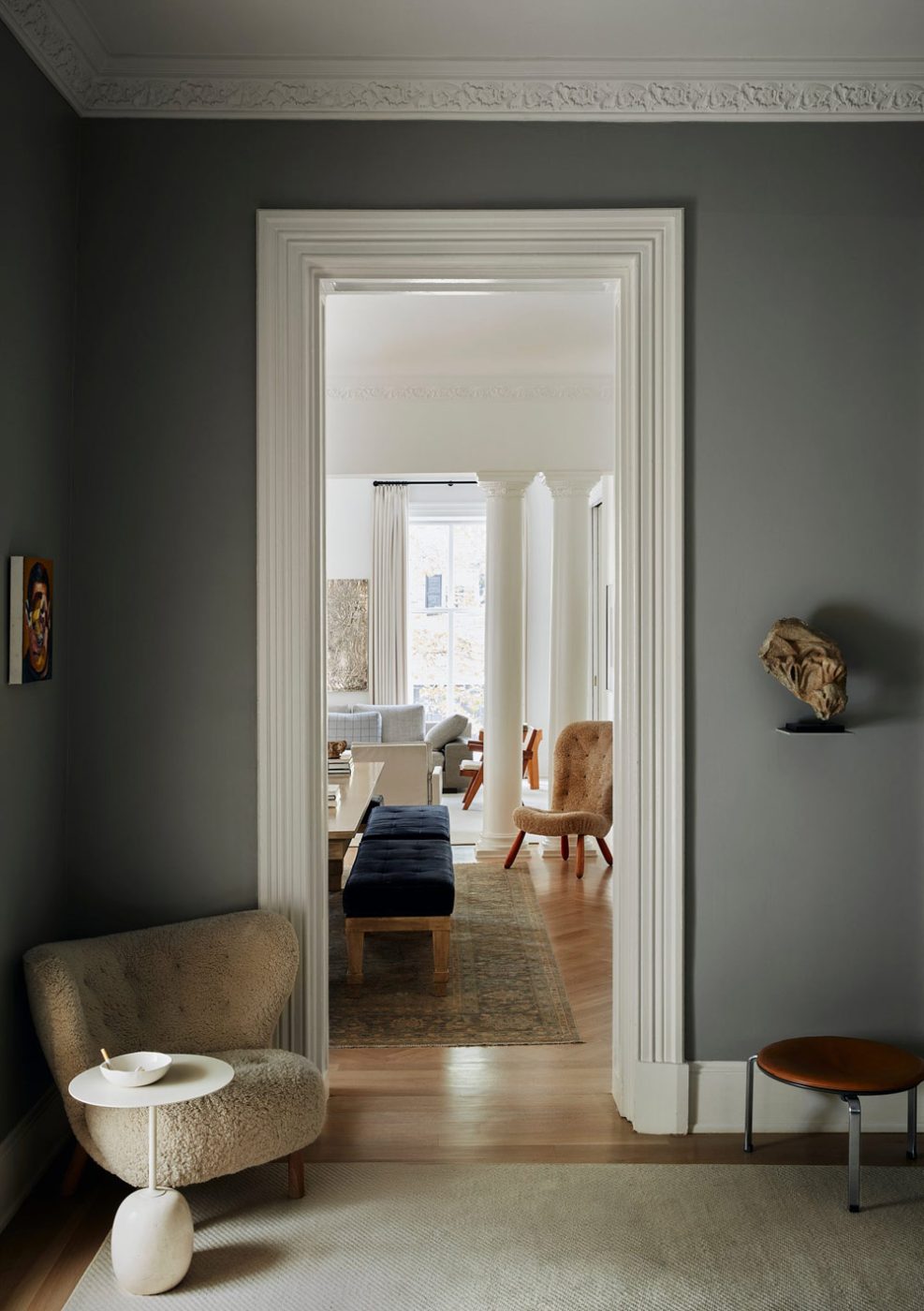
“What we loved about working with Melissa is that she understood from the beginning that art is our true passion,” says Sallick, whose parents, Barbara and Robert Sallick, founded Waterworks and whose brother, Peter, heads the Design Leadership Network, in addition to being Waterworks’s long-time CEO. “Throughout the project, the conversation was about how we could really live with our art, not just in the formal spaces of the house but everywhere. Some of our favorite pieces are in the TV room and in hallways we walk through every day.”
Although the placement of every piece of art and stick of furniture had been meticulously planned via drawings and renderings and over the course of months, Colgan executed spontaneous on-site adjustments during the installation, which she found truly made the whole composition sing. “You have to let some of that be an intuitive and natural process,” she says.
Here, Colgan takes us on a tour of the home.
ENTRY HALL
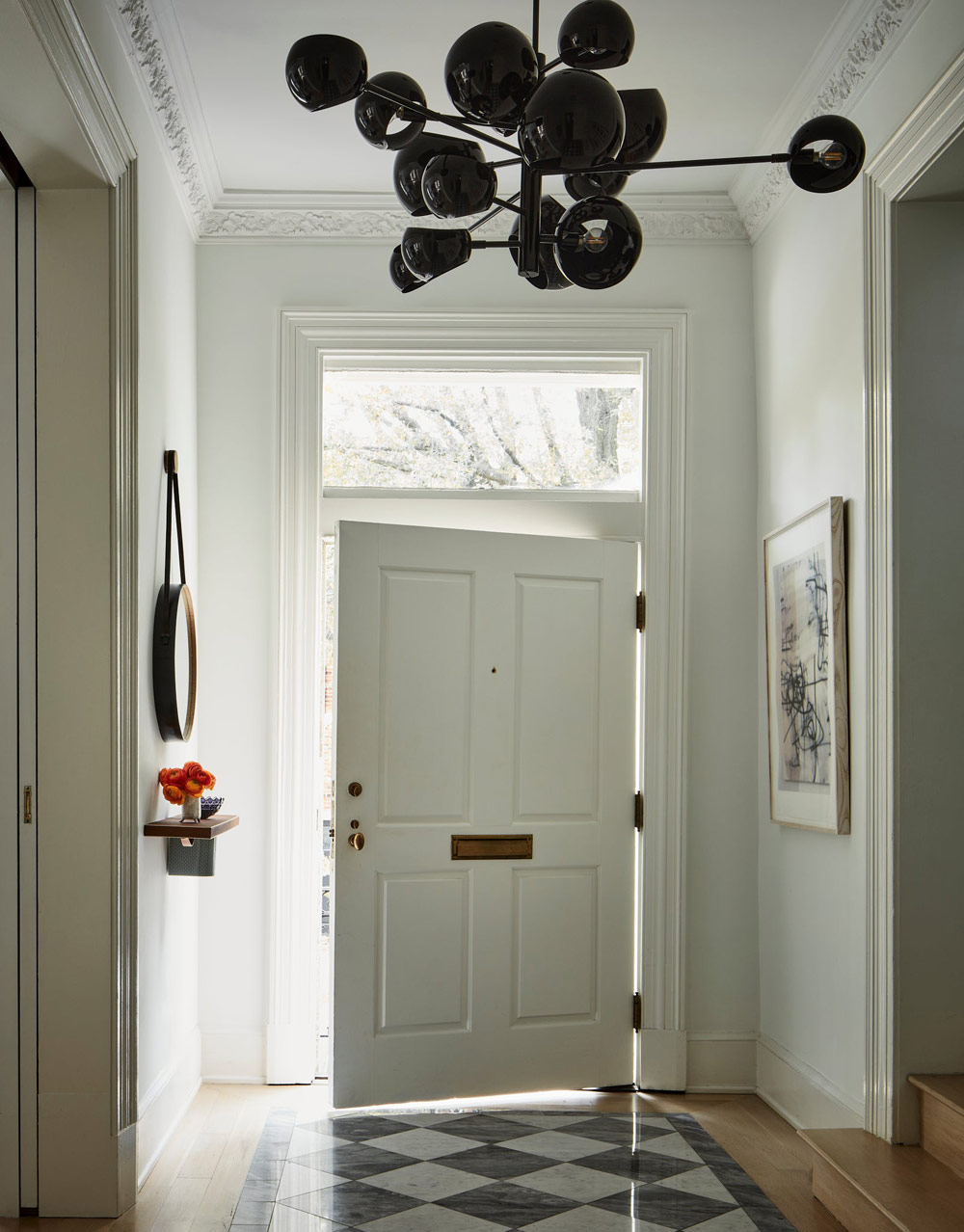
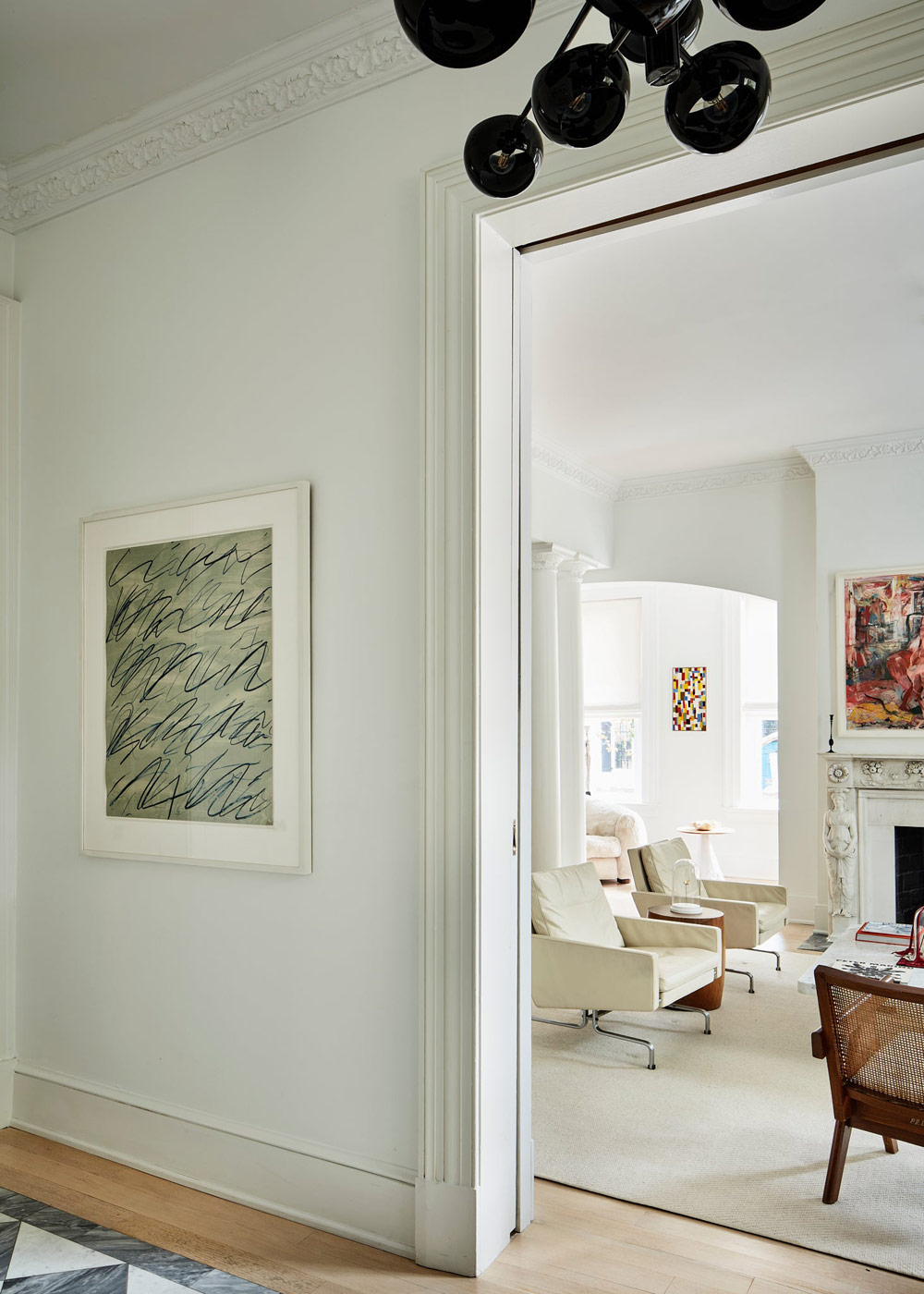
In the compact entry hall — which displays a Cy Twombly lithograph from his 1970 “Roman Notes” series and an abstract Christopher WooL artwork — Colgan says she wanted to introduce her clients’ “ethos, their vibe, their collecting style right away.” Along with the art, she installed an asymmetrical David Weeks chandelier with black globes — which, she explains, “counterbalances the [existing] checkerboard marble” floor — as well as a circular BDDW mirror perfectly scaled for the petite Hermès console table mounted on the wall beneath it.
LIVING ROOM
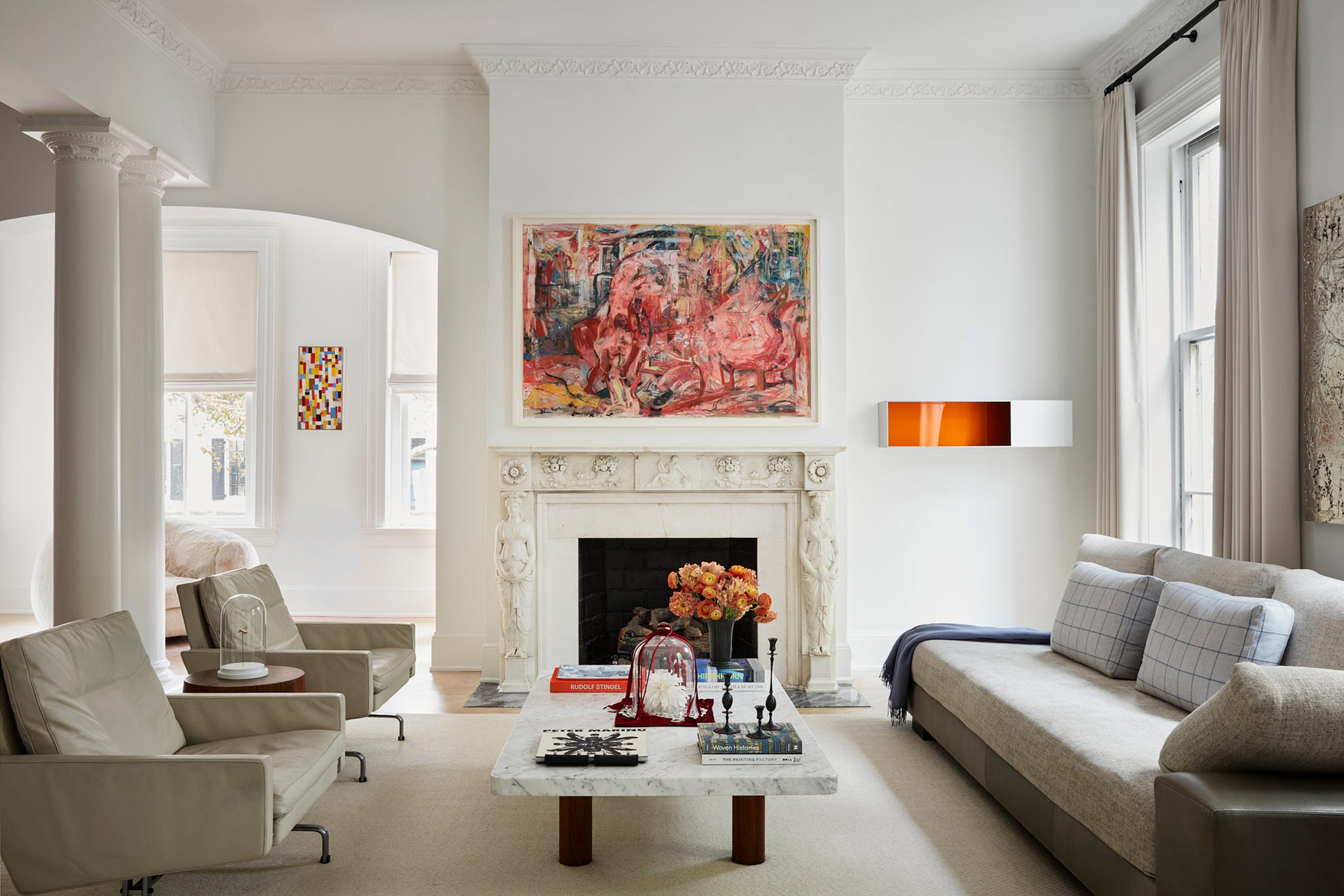
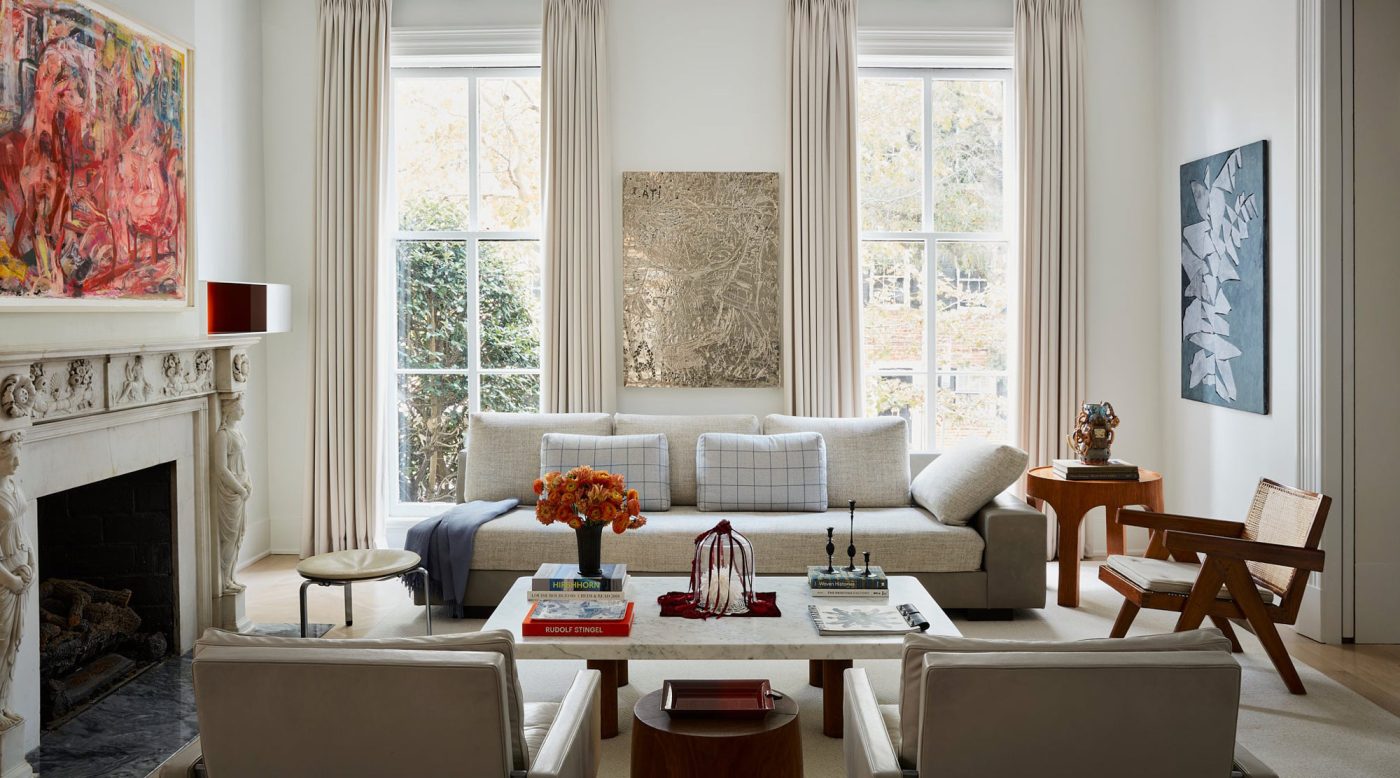
Colgan juxtaposed the living room’s original ornately carved marble neoclassical fireplace with a chromatically intense Cecily Brown painting and a geometrically disciplined wall-mounted Donald Judd sculpture. The two artworks “are similar colors, but one is linear and rigorous, one more whimsical and colorful and layered,” she says. “They were the starting point of what needed to happen in this room.”
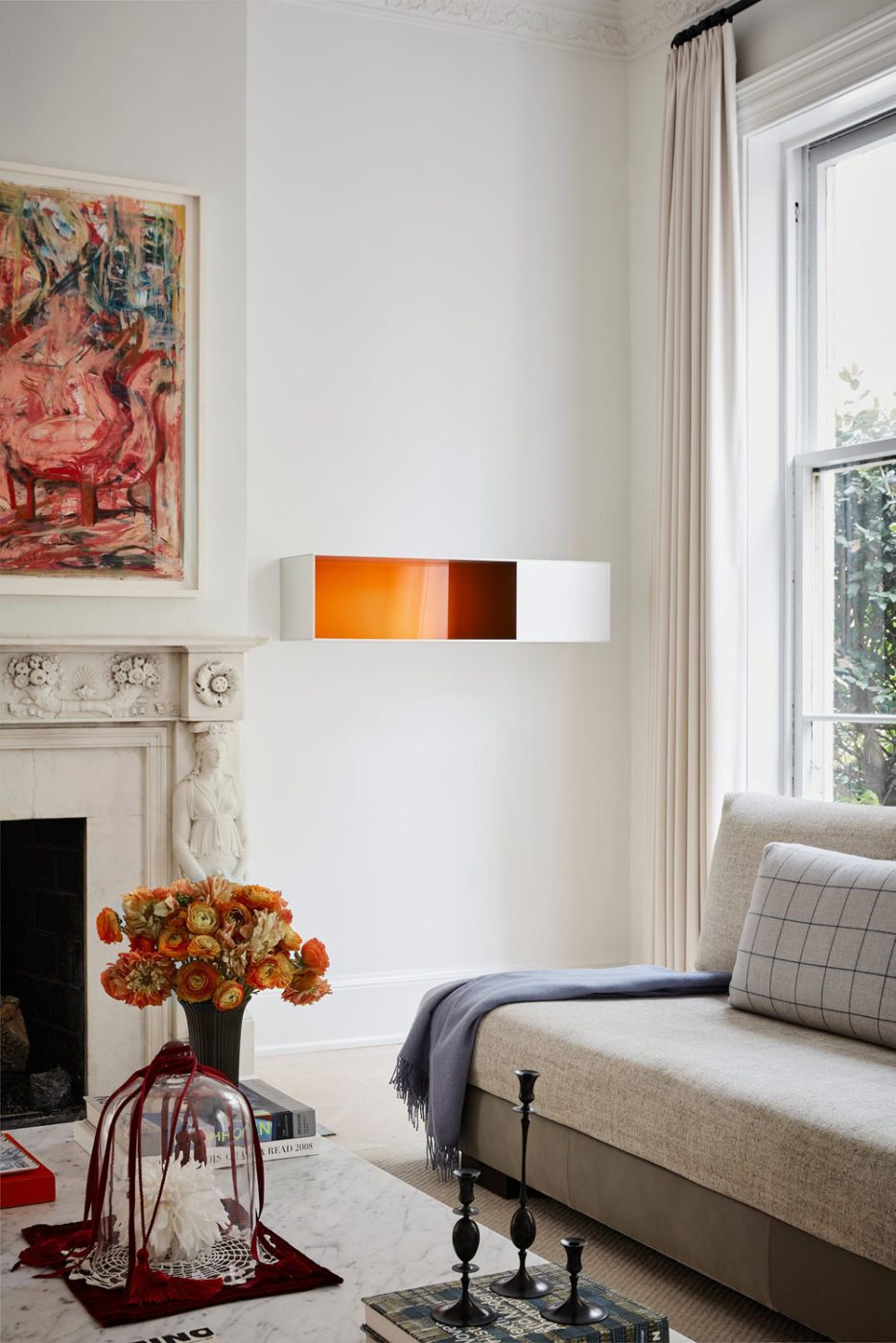
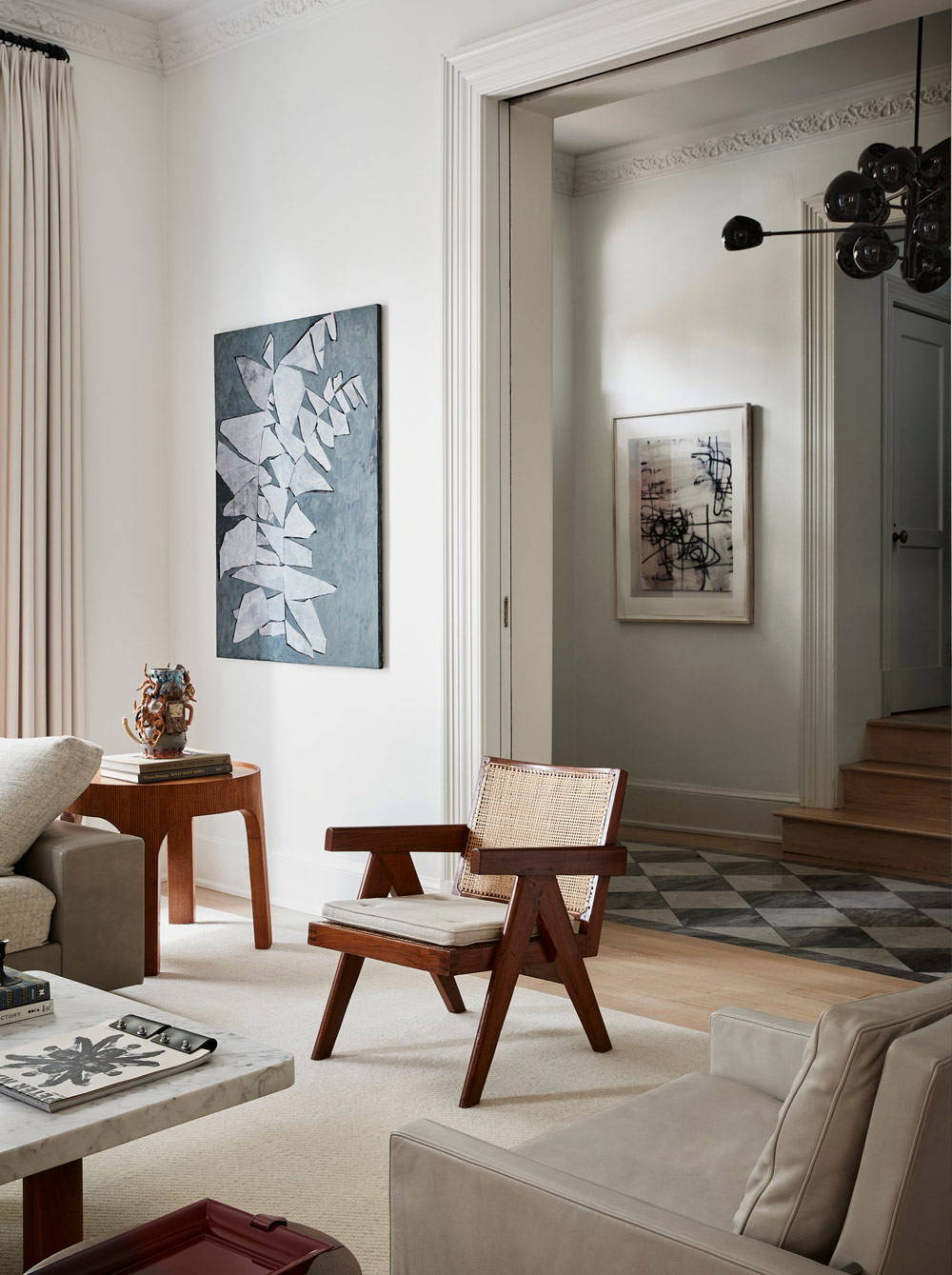
From there, the designer mounted a copper-and-nickel work by Rudolf Stingel between a pair of west-facing windows, placing in front of it a single-armed Christian Liaigre sofa. “It sits nicely. It never feels too heavy,” she says of the piece. She also set vintage Poul Kjærholm chairs from the clients’ collection opposite a Fort Standard coffee table. “The pieces’ relatively low backs mean your line of sight is never interrupted,” Colgan says of the room’s seating, which also includes a Pierre Jeanneret chair.
DINING ROOM
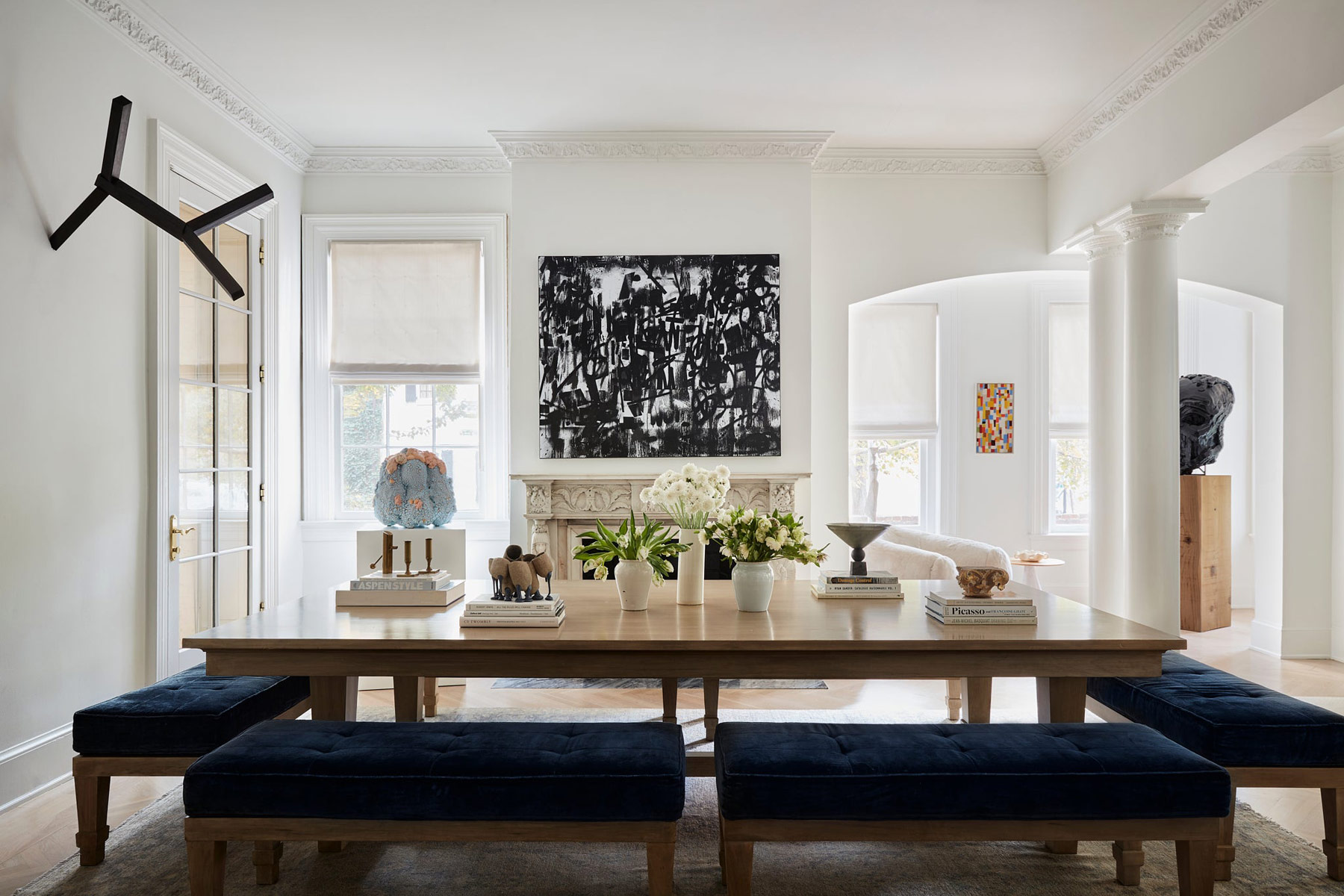
Miller and Sallick’s previous Georgetown home had significantly more-contemporary interior architecture than this one. The new setting created exciting new connections and contrasts. “We loved how all of these more modern pieces fit so nicely with the more classical elements — especially when things were cleaned up. It became such a nice backdrop,” Colgan says.
This dynamic is exemplified in the dining room, where an Adam Pendleton black-and-white silkscreen serves as a foil to another ornamented fireplace. Nearby are a minimalist, black casein-painted wood Joel Shapiro work, emerging from a wall, and one of ceramic artist Brian Rochefort’s signature tactile, bulbous forms enrobed in playful colors.
Because Miller and Sallick prefer informal, flexible mealtime entertaining and gatherings, Colgan opted for benches covered in thick blue-mohair cushions rather than conventional dining chairs around the David Iatesta table.
FAMILY ROOM
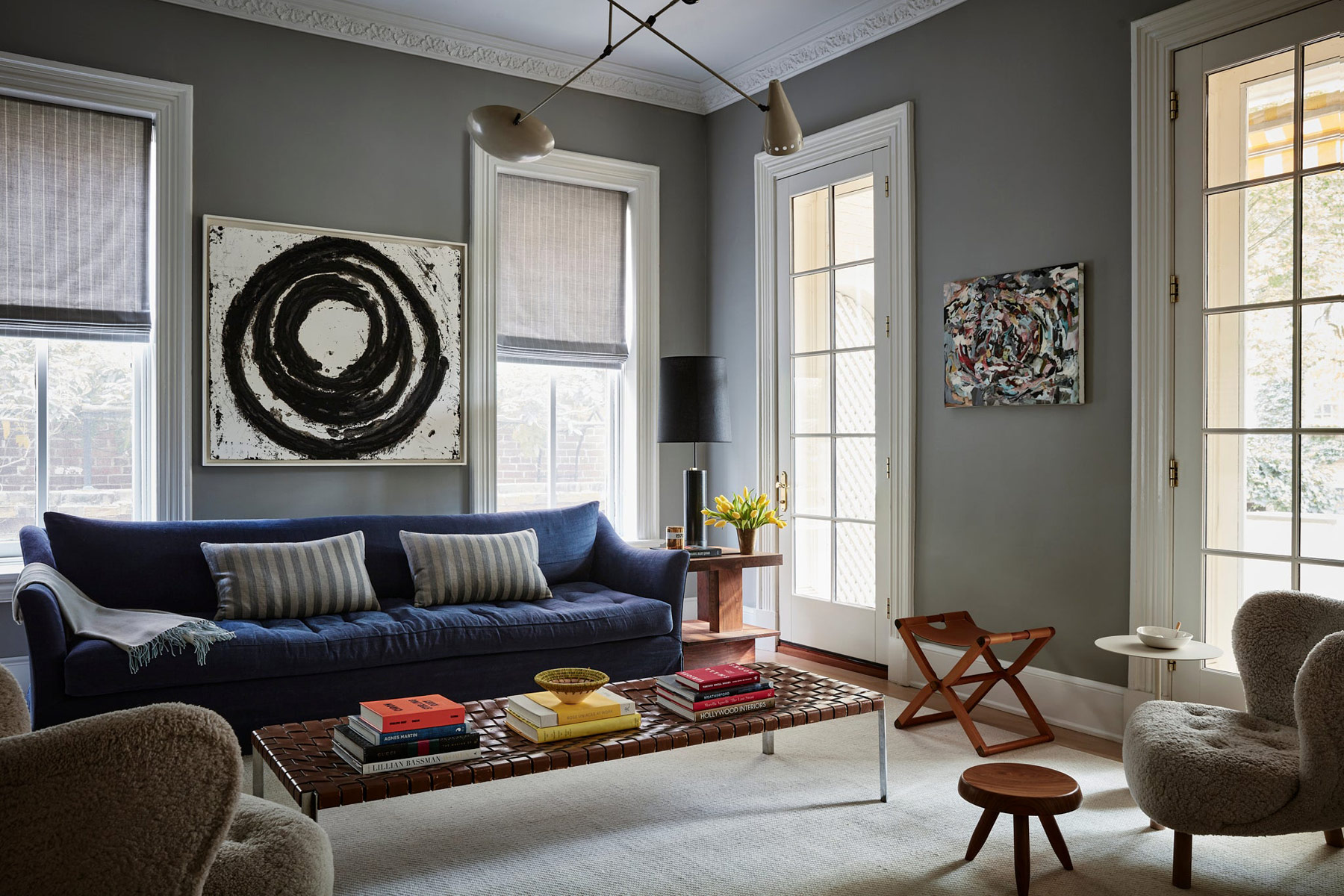
In the family room, a Richard Serra work on paper overlooks a plush contemporary sofa upholstered in a Holly Hunt linen. Another Cecily Brown work, this one an abstraction in black, white, gray and pastel hues, hangs above an Hermès stool.
Imparting a mid-century vibe are a woven-leather and chrome bench by Katavolos, Littell, and Kelley, repurposed as a table; a multiarmed Stilnovo chandelier; and a pair of shearling-covered Finn Juhl chairs. The last “almost give you a hug,” Colgan says. “They are such comfortable, human-scale pieces.”
UPSTAIRS LANDING
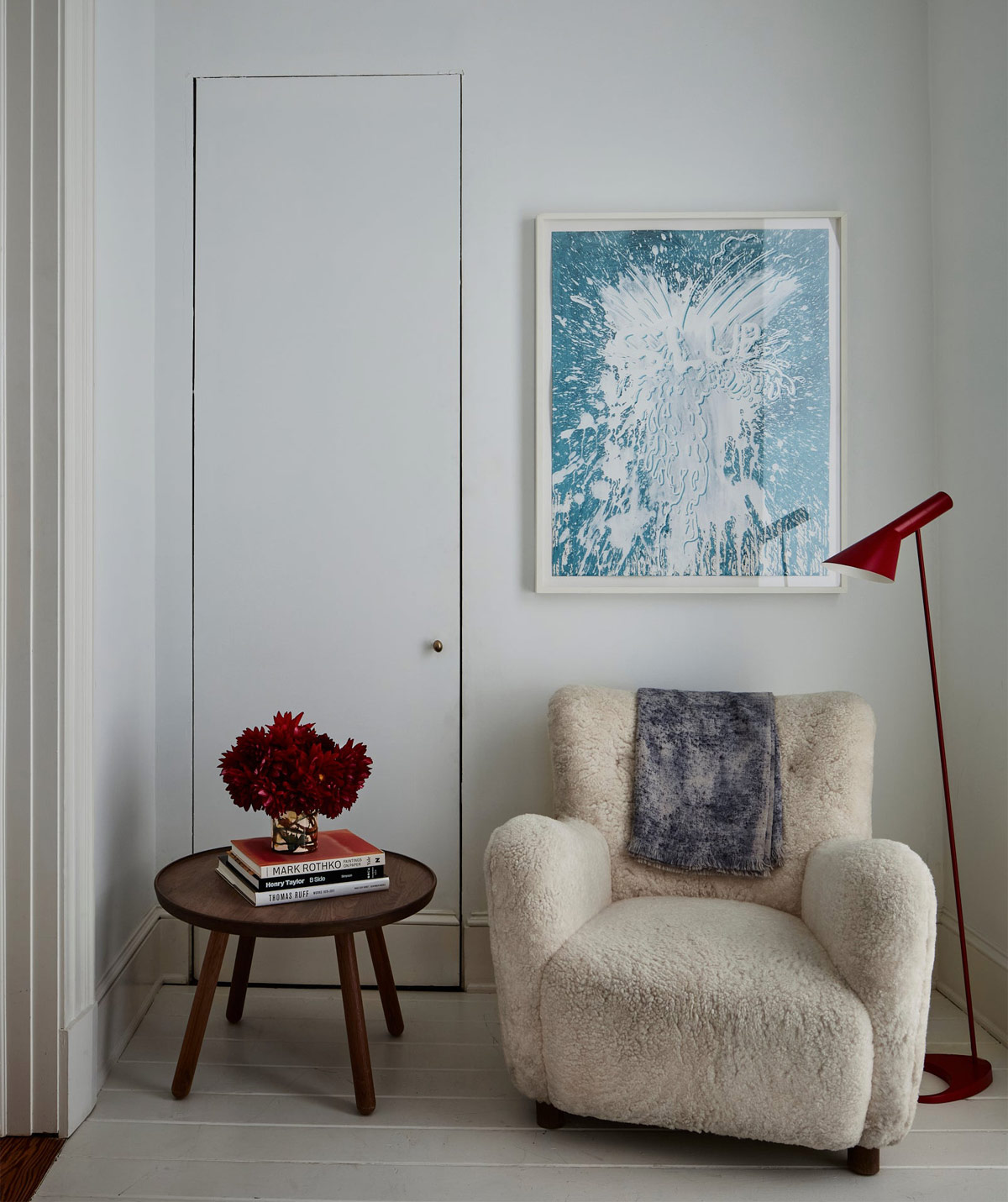
To give this otherwise pass-through space its own identity and import, Colgan furnished it with some of the couple’s best-loved pieces: A trio of Danish modern classics — a red AJ floor lamp designed by Arne Jacobsen for Louis Poulsen, a shearling-upholstered Fritz Hansen chair and a Finn Juhl table — as well as a Christian Marclay work on paper all ensure the landing demands attention.
PRIMARY BEDROOM
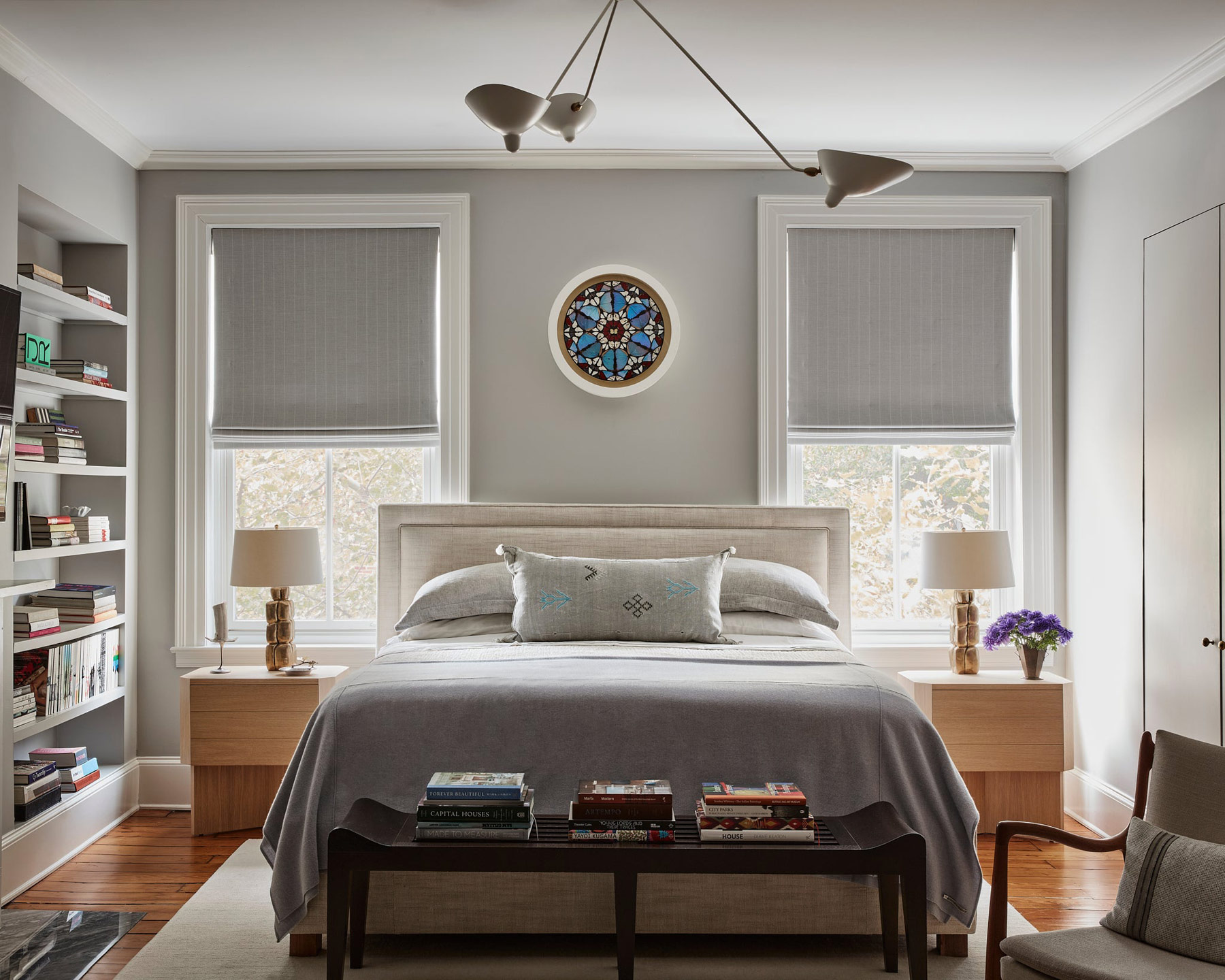
Walls painted a neutral gray allow Damien Hirst’s 2008 butterfly-wings-on-canvas Psalm: Verba Mea Auribus, Psalm 5, to command the stage from its perch above the primary bedroom’s headboard. DISC Interiors nightstands flank the bed, at whose foot Colgan set a Christian Liaigre bench.
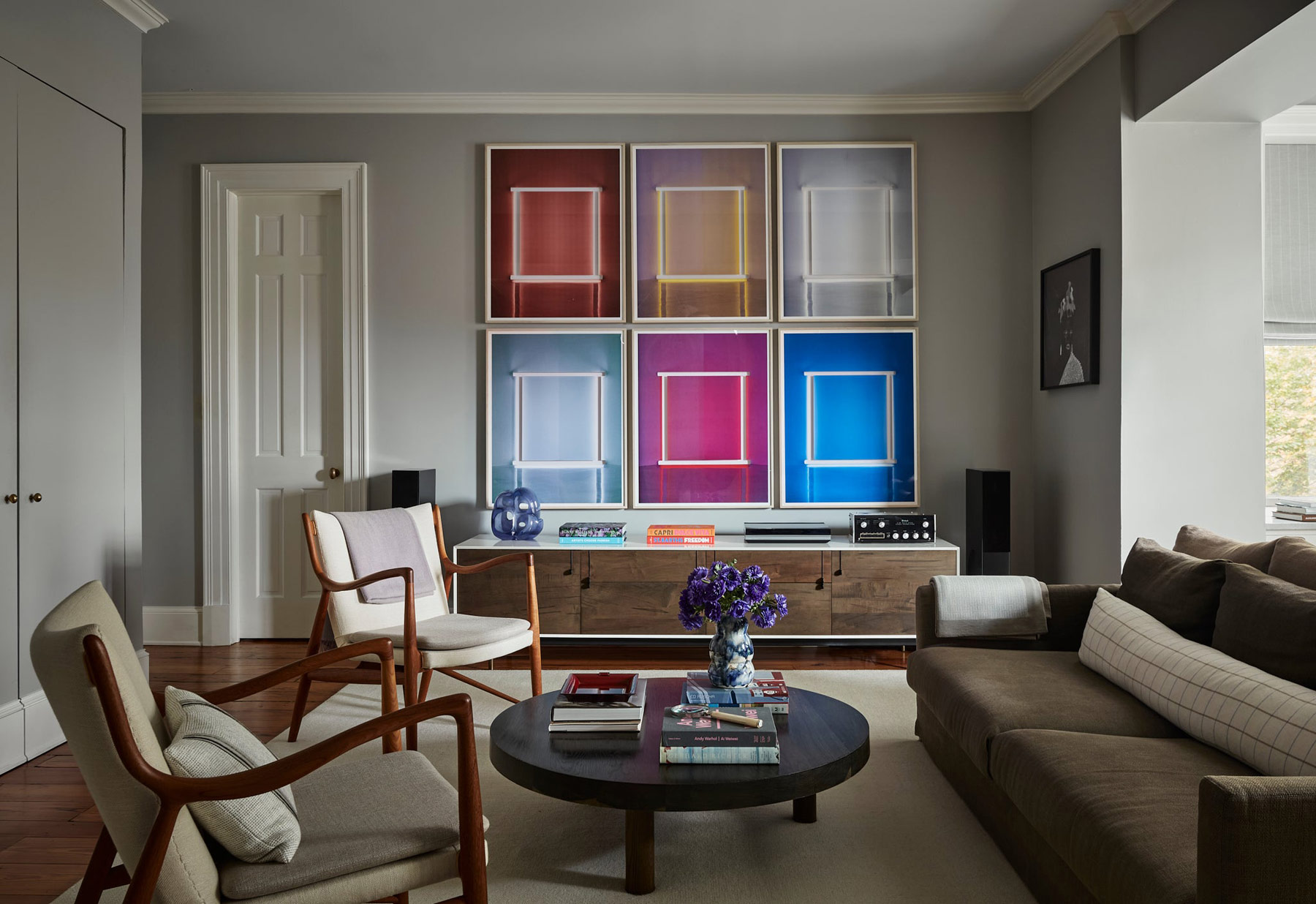
In the room’s sitting area, defined by a Piero Lissoni sofa, a Nickey Kehoe coffee table and more vintage chairs by Finn Juhl, the designer mounted a set of Jose Dávila photographs above a BDDW media cabinet. The images, she says, are “very electric, just like the Hirst.”