After Pierre Turpin Art

to
5
Overall Width
to
Overall Height
to
5
5
5
5
10,680
2,826
2,495
1,414
Artist: After Pierre Turpin
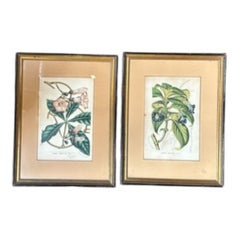
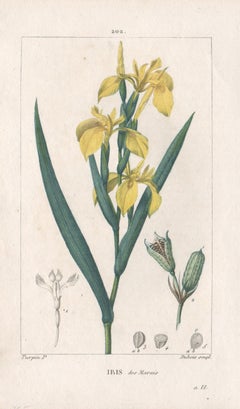
Iris des Marais (Yellow Iris), French botanical herbal flower engraving, 1818

Iris des Marais (Yellow Iris), French botanical herbal flower engraving, 1818

By After Pierre Turpin

Located in Melbourne, Victoria

French botanical flower engraving, 1818. Colour-printed stipple engraving by J Lambert after Pierre Turpin (1775-1840) From Francois Pierre Chaumeton's 'Flore Medicale' which portrayed a variety of flowers, trees and herbs which could be used for treating illnesses. The engravings were produced during the great period of French colour printing using the stipple-engraving process pioneered by the great botanical artist Pierre-Jospeh Redoute. The artist is the celebrated Pierre Jean Francois Turpin...

Category

Early 19th Century Victorian After Pierre Turpin Art

Materials

Engraving

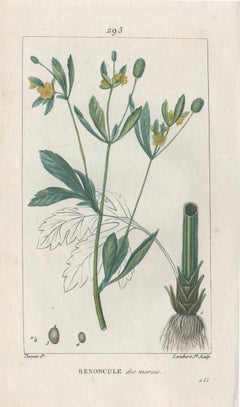
Renoncule des marais (Buttercup), French botanical flower engraving, 1818

Renoncule des marais (Buttercup), French botanical flower engraving, 1818

By After Pierre Turpin

Located in Melbourne, Victoria

French botanical flower engraving, 1818. Colour-printed stipple engraving by J Lambert after Pierre Turpin (1775-1840) From Francois Pierre Chaumeton's 'Flore Medicale' which portrayed a variety of flowers, trees and herbs which could be used for treating illnesses. The engravings were produced during the great period of French colour printing using the stipple-engraving process pioneered by the great botanical artist Pierre-Jospeh Redoute. The artist is the celebrated Pierre Jean Francois Turpin...

Category

Early 19th Century Victorian After Pierre Turpin Art

Materials

Engraving

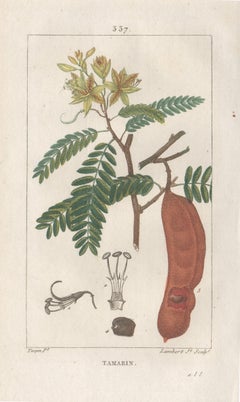
Tamarin (Tamarind), French botanical herbal medicinal flower engraving, 1818

Tamarin (Tamarind), French botanical herbal medicinal flower engraving, 1818

By After Pierre Turpin

Located in Melbourne, Victoria

French botanical flower engraving, 1818. Colour-printed stipple engraving by J Lambert after Pierre Turpin (1775-1840) From Francois Pierre Chaumeton's 'Flore Medicale' which portrayed a variety of flowers, trees and herbs which could be used for treating illnesses. The engravings were produced during the great period of French colour printing using the stipple-engraving process pioneered by the great botanical artist Pierre-Jospeh Redoute. The artist is the celebrated Pierre Jean Francois Turpin...

Category

Early 19th Century Victorian After Pierre Turpin Art

Materials

Engraving

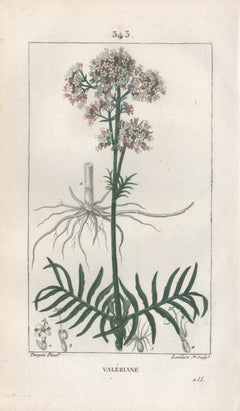
Valeriane (Valerian), French botanical medicinal herbal flower engraving, 1818

Valeriane (Valerian), French botanical medicinal herbal flower engraving, 1818

By After Pierre Turpin

Located in Melbourne, Victoria

French botanical flower engraving, 1818. Colour-printed stipple engraving by J Lambert after Pierre Turpin (1775-1840) From Francois Pierre Chaumeton's 'Flore Medicale' which portrayed a variety of flowers, trees and herbs which could be used for treating illnesses. The engravings were produced during the great period of French colour printing using the stipple-engraving process pioneered by the great botanical artist Pierre-Jospeh Redoute. The artist is the celebrated Pierre Jean Francois Turpin...

Category

Early 19th Century Victorian After Pierre Turpin Art

Materials

Engraving

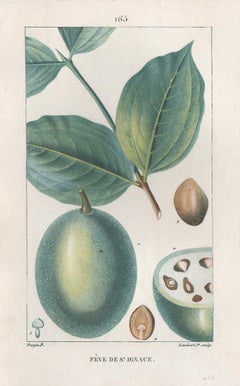
Feve de St Ignace (Strychnos ignatii), French botanical flower engraving, 1818

Feve de St Ignace (Strychnos ignatii), French botanical flower engraving, 1818

By After Pierre Turpin

Located in Melbourne, Victoria

French botanical flower engraving, 1818. Colour-printed stipple engraving by J Lambert after Pierre Turpin (1775-1840) From Francois Pierre Chaumeton's 'Flore Medicale' which portrayed a variety of flowers, trees and herbs which could be used for treating illnesses. The engravings were produced during the great period of French colour printing using the stipple-engraving process pioneered by the great botanical artist Pierre-Jospeh Redoute. The artist is the celebrated Pierre Jean Francois Turpin...

Category

Early 19th Century Victorian After Pierre Turpin Art

Materials

Engraving

Related Items
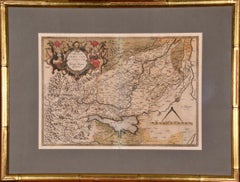
Northern Italy: A 16th Century Hand-colored Map by Abraham Ortelius

Northern Italy: A 16th Century Hand-colored Map by Abraham Ortelius

By Abraham Ortelius

Located in Alamo, CA

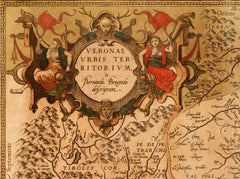
This is a framed 16th century hand-colored copperplate map of northern Italy entitled "Veronae Urbis Territorium a Bernardo Bragnolo Descriptium" by Abraham Ortelius from his atlas "Theatrum Orbis Terrarum", which was the first modern atlas of the world, with the first volume published in 1570. This map was part of a subsequent volume, published in Antwerp in 1584. It was based on an earlier map by Bernardo Brognoli. This beautiful map of northern Italy is focussed on Verona and its environs, including Mantua. Lake Garda and the South Tyrol mountains are prominently depicted. There is a very large striking cartouche in the upper left and a decorative distance scale in the lower right. This striking hand-colored map of northern Italy is presented in a gold-colored wood frame and an olive green-colored mat. It is glazed with UV conservation glass. All mounting materials used are archival. The frame measures 21.5" high by 28" wide by 0.75" deep. There is a central vertical fold, as issued, with slight separation of the lower portion of the fold. There are faint spots in the upper and right margins, but the map is otherwise in very good condition. Abraham Ortelius (also known as Ortels, Orthellius, and Wortels) (1527-1598) was a Dutch cartographer, geographer, and cosmographer. He began his career as a map colorist. In 1547 he entered the Antwerp guild of St Luke as an "illuminator of maps". He had an affinity for business from an early age and most of his journeys before 1560, were for business. He was a dealer in antiques, coins, maps, and books. 
His business income allowed him to acquire an extensive collection of medals, coins, and antiques, as well as a large library of books...

Category

16th Century Old Masters After Pierre Turpin Art
Materials

Engraving

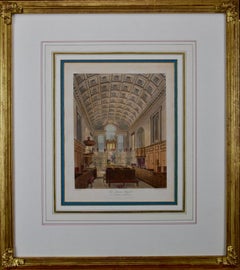
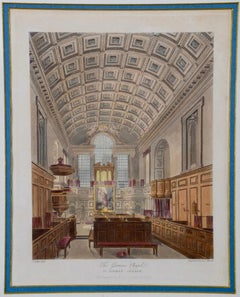
The German Chapel in St. James Palace, A 19th Century Hand Colored Engraving

The German Chapel in St. James Palace, A 19th Century Hand Colored Engraving

By Charles Wild

Located in Alamo, CA

A hand-colored engraving of the interior The German Chapel, St. James Palace in London, England from 'The History of the Royal Residences of Windsor Castle, St. James Palace, Carlton House, Kensington Palace, Hampton Court, Buckingham House, and Frogmore', commissioned by the British Royal Family. The work is one of the finest depictions of interiors ever published. The engraving was created by Daniel Havel (1786-1826) after a painting by Charles Wild (1781-1835) and published by William Henry Pyne (1770–1843) in 1819. The print is presented in a gold-colored wood museum style frame and an elaborate light grey French mat with highlighted gold and royal blue bands. A certificate of authenticity from Trowbridge Gallery...

Category

Early 19th Century Victorian After Pierre Turpin Art

Materials

Aquatint

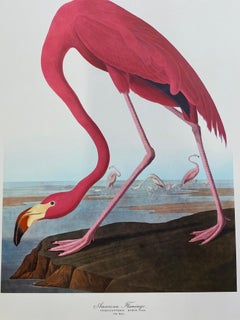
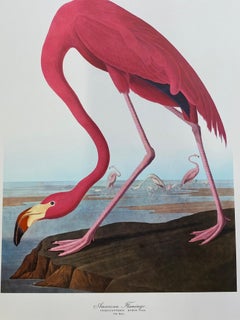
Large Classical Bird Color Print after John James Audubon, American Flamingo

Large Classical Bird Color Print after John James Audubon, American Flamingo

Located in Cirencester, Gloucestershire

Classical Bird print, after John James Audubon, printed by Harry N. Abrams, Publishers, New York unframed, 17 x 14 inches color print on paper condition: very good provenance: from...

Category

20th Century Victorian After Pierre Turpin Art

Materials

Acrylic

"Scene _ Country Fair": A Framed Early 19th Century Engraving by George Hunt

"Scene _ Country Fair": A Framed Early 19th Century Engraving by George Hunt

By George Hunt

Located in Alamo, CA

This is a framed colored engraving entitled "Scene _ Country Fair" by George Hunt, published in London in 1825. It depicts a gathering of people at an early 19th century county fair, presumably in England. A majority of the crowd are turned away, watching a performance on a stage in the background. In the foreground a man is in conversation with a couple. The man wears a top hat and the woman is holding a baby. They are dressed in the typical attire of the middle class at that time. The engraving is presented in a brown wood frame and a double mat, with a cream-colored outer mat and a light cranberry...

Category

Early 19th Century After Pierre Turpin Art

Materials

Engraving

Frankfort, Germany: A 16th Century Hand-colored Map by Braun & Hogenberg

Frankfort, Germany: A 16th Century Hand-colored Map by Braun & Hogenberg

By Franz Hogenberg

Located in Alamo, CA

This is a 16th century original hand-colored copperplate engraved map of Frankfort, Germany entitled "Francenbergum, vel ut alij Francoburgum Hassiae Opp" by Georg Braun & Franz Hogenberg, from their famous city atlas "Civitates Orbis Terrarum", published in Cologne, Germany in 1595. This is an English translation of an excerpt from the original text in the atlas: "Frankenberg or, according to others, Francoburgum, a town in Hesse. Charlemagne vested the town of Frankenberg with many freedoms and privileges, which it still enjoys to this day, and on account of its valiant and victorious soldiers awarded a signet, upon which there formerly appeared a golden castle with a tower, together with the letter F and a golden crown. Frankenberg, seen here from the northeast, lies on a hill above the River Eder. The hillside is covered with fields neatly separated by bushes and fences. Soaring above the town is the massive Liebfrauenkirche, which was modelled on St Elizabeth's church in Marburg. The New Town was founded in 1335 at the foot of the hill (right) and merged with the Old Town as late as 1556. Frankenberg was founded by Conrad of Thuringia in 1233/34 to prevent the archbishops of Mainz from expanding their sphere of influence...

Category

16th Century Old Masters After Pierre Turpin Art
Materials

Engraving

The Orbits of Venus and Mercury: An 18th C. Framed Celestial Map by Doppelmayr

The Orbits of Venus and Mercury: An 18th C. Framed Celestial Map by Doppelmayr

By Johann Gabriel Doppelmayr 1

Located in Alamo, CA

This 18th century hand-colored copperplate celestial map by Johann Doppelmayr entitled "Phænomena Motuum Irregularium quos Planetar inferiores Venus et M...

Category

Early 18th Century After Pierre Turpin Art

Materials

Engraving

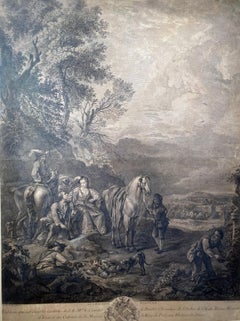
Chasseur Fortune, Engraving, Van Falenz / Le Bas, Hunter, Decorative Piece

Chasseur Fortune, Engraving, Van Falenz / Le Bas, Hunter, Decorative Piece

Located in Greven, DE

Le Chasseur Fortune Engraving framed Bez.: C. Van Falenz pinixit // Jac. Ph. Le Bas Sculp. // a Paris chez Le Bas graveur du Cabinet du Roy au bas de la rue de la Harpe...

Category

18th Century Rococo After Pierre Turpin Art

Materials

Engraving

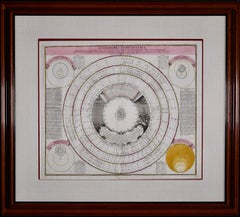
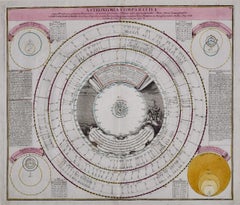
Theories of Planetary Orbits: A Framed 18th C. Celestial Map by Doppelmayr

Theories of Planetary Orbits: A Framed 18th C. Celestial Map by Doppelmayr

By Johann Gabriel Doppelmayr 1

Located in Alamo, CA

This 18th century hand-colored copperplate celestial map by Johann Doppelmayr entitled "Astronomia Comparativa in qua Planetarum Primaria Phaenomena" (Co...

Category

Early 18th Century After Pierre Turpin Art

Materials

Engraving

Cartusia Bruxellensis Monastery in Brussels: A 17th C. Hand-colored Engraving

Cartusia Bruxellensis Monastery in Brussels: A 17th C. Hand-colored Engraving

By Lucas Vorsterman the Younger

Located in Alamo, CA

This is a 17th century hand-colored copperplate engraving entitled "Cartusia Bruxellensis" by Lucas Vorsterman, the Younger, after a drawing by Jacob van Werden or Jacques van Weerden, published in 1659 in Antonius Sanderus' book 'Chorographia sacra Brabantiae sive celebrium aliquot in ea provincia ecclesiarum et coenobiorum descriptio . . . Brussel' (A sacred chorography of Brabant, or a description of several famous churches and convents in that province). It also appeared in other publications by Sanderus. In the 17th century, Brussels was within the Duchy of Brabant. This engraving depicts a bird's-eye view of the Scheut Carthusian Monastery in Brussels. Scheut is a district of Anderlecht, a municipality of Brussels, Belgium. The monastery housed monks, who took a vow of silence, in 20 rooms. There is a central courtyard with trees and shrubs. Monks are depicted strolling along its pathways. The cells for the friars are in the middle the cloister. There are people along the streets in the foreground and to the right of the large, imposing monastery. Some are on horseback, others are walking. In the lower right, what appears to be a dog pulls a small cart containing barrels, possibly of beer or wine. Districts and neighborhoods are labelled in the background, including Scheut, Anderlecht and Ransfort. A very ornate cartouche in the lower left contains Latin and the artist's attribution. Another decorative cartouche in the upper central area contains the title. This beautifully hand-colored and detailed engraving is printed on laid, chain-linked paper with wide, full margins. The sheet measures 17.25" high and 21.25" wide. It has Latin text on the verso. It has a central vertical fold, as issued, which is reinforced on the verso. Two small spots in the lower margin may actually represent drops of watercolor paint used to color the engraving. It is otherwise in very good condition. Antonius Sanderus (1586-1664) was a Flemish Catholic cleric and historian. He was born "Antoon Sanders", but Latinized his name like many writers and scholars of his time. He was the author of several books, including 'Chorographia Sacra Brabantiae', which was illustrated with this engraving. Lucas Vorsterman the Younger (1624-between 1666 & 1676) was a Flemish Baroque engraver and draughtsman. He produced engravings after the work of contemporary painters and for books by Antwerp publishers. Jacob van Werden or Jacques van Weerden (active 1643-1669), was a Flemish draughtsman, cartographer, military engineer and archer who was active in the Habsburg Netherlands. His drawings were used as designs for prints executed by various printmakers. He worked on maps, topographical views, historical scenes, portraits and book illustrations. He had a career as a military engineer and a member of the guard of the Spanish King. He advised on various military engineering projects and was an engineer of the Spanish army...

Category

Mid-17th Century Old Masters After Pierre Turpin Art
Materials

Engraving

Large Classical Bird Color Print After John James Audubon, Trumpeter Swan

Large Classical Bird Color Print After John James Audubon, Trumpeter Swan

Located in Cirencester, Gloucestershire

Classical Bird print, after John James Audubon, printed by Harry N. Abrams, Publishers, New York unframed, 17 x 14 inches color print on paper Condition: very good Provenance: from...

Category

20th Century Victorian After Pierre Turpin Art
Materials

Acrylic

Previously Available Items
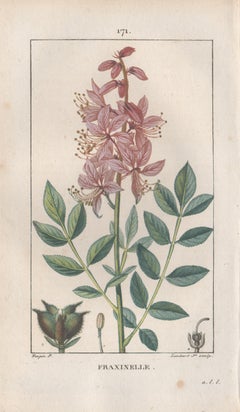
Fraxinelle (Dictamnus albus), French botanical herbal flower engraving, 1818

Fraxinelle (Dictamnus albus), French botanical herbal flower engraving, 1818

By After Pierre Turpin

Located in Melbourne, Victoria

French botanical flower engraving, 1818. Colour-printed stipple engraving by J Lambert after Pierre Turpin (1775-1840) From Francois Pierre Chaumeton's 'Flore Medicale' which portrayed a variety of flowers, trees and herbs which could be used for treating illnesses. The engravings were produced during the great period of French colour printing using the stipple-engraving process pioneered by the great botanical artist Pierre-Jospeh Redoute. The artist is the celebrated Pierre Jean Francois Turpin...

Category

Early 19th Century Victorian After Pierre Turpin Art
Materials

Engraving

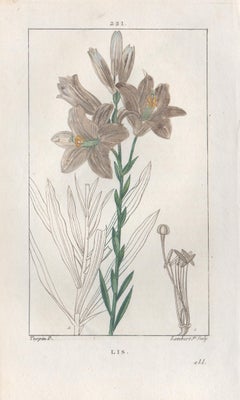
3 French botanical medicinal herbal flower engravings, 1818

3 French botanical medicinal herbal flower engravings, 1818

By After Pierre Turpin

Located in Melbourne, Victoria

3 French botanical flower engravings, 1818. Colour-printed stipple engraving by J Lambert after Pierre Turpin (1775-1840) From Francois Pierre Chaumeton's 'Flore Medicale' which portrayed a variety of flowers, trees and herbs which could be used for treating illnesses. The engravings were produced during the great period of French colour printing using the stipple-engraving process pioneered by the great botanical artist Pierre-Jospeh Redoute. The artist is the celebrated Pierre Jean Francois Turpin...

Category

Early 19th Century Victorian After Pierre Turpin Art
Materials

Engraving

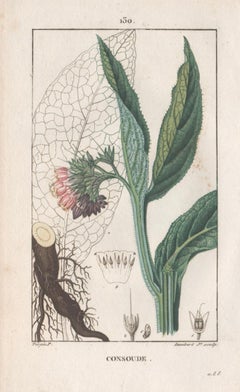
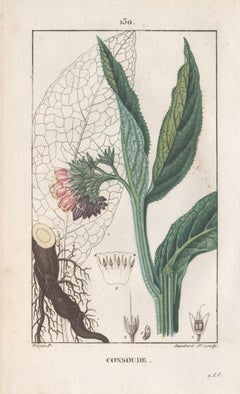
Consoude (Symphytum - Comfrey), French botanical herbal flower engraving, 1818

Consoude (Symphytum - Comfrey), French botanical herbal flower engraving, 1818

By After Pierre Turpin

Located in Melbourne, Victoria

French botanical flower engraving, 1818. Colour-printed stipple engraving by J Lambert after Pierre Turpin (1775-1840) From Francois Pierre Chaumeton's 'Flore Medicale' which portrayed a variety of flowers, trees and herbs which could be used for treating illnesses. The engravings were produced during the great period of French colour printing using the stipple-engraving process pioneered by the great botanical artist Pierre-Jospeh Redoute. The artist is the celebrated Pierre Jean Francois Turpin...

Category

Early 19th Century Victorian After Pierre Turpin Art
Materials

Engraving

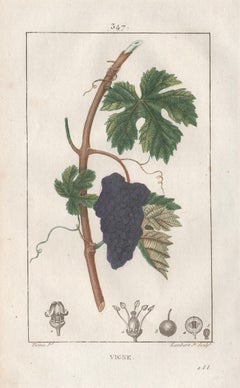
Vigne (Vine), French botanical wine grape fruit engraving, 1818

Vigne (Vine), French botanical wine grape fruit engraving, 1818

By After Pierre Turpin

Located in Melbourne, Victoria

French botanical flower engraving, 1818. Colour-printed stipple engraving by J Lambert after Pierre Turpin (1775-1840) From Francois Pierre Chaumeton's 'Flore Medicale' which portrayed a variety of flowers, trees and herbs which could be used for treating illnesses. The engravings were produced during the great period of French colour printing using the stipple-engraving process pioneered by the great botanical artist Pierre-Jospeh Redoute. The artist is the celebrated Pierre Jean Francois Turpin...

Category

Early 19th Century Victorian After Pierre Turpin Art
Materials

Engraving

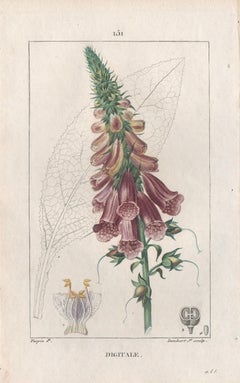
Digitale (Foxglove), French botanical medicinal herbal flower engraving, 1818

Digitale (Foxglove), French botanical medicinal herbal flower engraving, 1818

By After Pierre Turpin

Located in Melbourne, Victoria

French botanical flower engraving, 1818. Colour-printed stipple engraving by J Lambert after Pierre Turpin (1775-1840) From Francois Pierre Chaumeton's 'Flore Medicale' which portrayed a variety of flowers, trees and herbs which could be used for treating illnesses. The engravings were produced during the great period of French colour printing using the stipple-engraving process pioneered by the great botanical artist Pierre-Jospeh Redoute. The artist is the celebrated Pierre Jean Francois Turpin...

Category

Early 19th Century Victorian After Pierre Turpin Art
Materials

Engraving

After Pierre Turpin art for sale on 1stDibs.

Find a wide variety of authentic After Pierre Turpin art available for sale on 1stDibs. You can also browse by medium to find art by After Pierre Turpin in engraving and more. Not every interior allows for large After Pierre Turpin art, so small editions measuring 6 inches across are available. After Pierre Turpin art prices can differ depending upon medium, time period and other attributes. On 1stDibs, the price for these items starts at $75 and tops out at $75, while the average work can sell for $75.
Questions About After Pierre Turpin Art
  • 1stDibs ExpertApril 5, 2022
    Pierre Bonnard was a post-impressionist whose work is known for his bold use of color and stylized qualities. Bonnard would often work on multiple paintings at once, tacking rolls of canvas to a wall and cutting them once the painting was complete. Browse a collection of Pierre Bonnard paintings and prints on 1stDibs.
  • 1stDibs ExpertApril 5, 2022
    Pierre Balmain was a French fashion designer most known for founding his fashion house Balmain. Balmain’s designs are described as sophisticated and elegant, and remain one of the most sought after garments in high-fashion. Find vintage and contemporary Balmain designs from some of the world’s top boutiques on 1stDibs.
  • 1stDibs ExpertMay 13, 2024
    Pierre Balmain was the founder of Balmain, an iconic haute couture house based in Paris, France. Under creative director Olivier Rousteing, the brand introduced an affordable diffusion line named for its founder in 2011. 

    In the postwar years, Balmain became known for bell-shaped skirts falling from slender waists, structured jackets over sheath day dresses and embellishments like fur trim. Pierre died in 1982, and the company is now owned by Mayhoola for Investments.

    From the dresses favored by Hollywood icons like Audrey Hepburn and Marlene Dietrich to the sleek, skinny jeans seen on Nicki Minaj, Kid Cudi and every Kardashian, clothes from the House of Balmain have long been mainstays in celebrity wardrobes. 

    Shop a collection of vintage Balmain from some of the world’s top sellers on 1stDibs.
  • 1stDibs ExpertAugust 8, 2024
    What happened to Pierre Cardin is that while he became known all over the world for creating groundbreaking apparel from the 1950s onward, the French designer also enjoyed great success in other fields, most notably furniture.

    Cardin’s chairs, cabinets, tables and other pieces share many of the keynotes of his clothing designs. They are simple, geometric, elegant and cool.

    Cardin’s clothes de-emphasized a woman’s curves; his breakthrough pieces like the Bubble dress had, instead, a sculptural quality. In the 1960s, Cardin introduced bright tunic dresses and shifts, marketed as the Space Age look and accessorized with vinyl hats and visors.

    Cardin later expanded his design work into furniture, jewelry and automobiles. (Later, licensing agreements would put Cardin’s name on goods ranging from perfume to sunglasses.) The couturier died in 2020.

    Find vintage Pierre Cardin dresses, scarves, handbags and other clothing and accessories on 1stDibs.
  • 1stDibs ExpertApril 26, 2024
    Pierre Cardin was most famous for his work as a fashion designer. He created groundbreaking fashion designs from the 1950s onward. In addition, he enjoyed great success in other design fields, most notably furniture. Cardin's chairs, cabinets, tables and other pieces share many of the keynotes of his clothing designs. They are simple, geometric, elegant and cool. Shop a wide range of Pierre Cardin apparel, accessories and furniture on 1stDibs.
  • 1stDibs ExpertMarch 25, 2024
    Pierre Cardin is famous for creating groundbreaking fashion designs from the 1950s onward. The designer's clothes deemphasized a woman's curves. His breakthrough pieces, like the Bubble dress, had, instead, a sculptural quality. During the 1960s, Cardin introduced bright tunic dresses and shifts, marketed as the Space Age look and accessorized with vinyl hats and visors. In the 1970s, Cardin expanded his design work into furniture, jewelry and automobiles. Cardin's furniture pieces feature simple, symmetrical forms, lacquer and figured veneer finishes and accents in metals such as aluminum and brass. On 1stDibs, explore a range of Pierre Cardin apparel and accessories.
  • 1stDibs ExpertMarch 15, 2024
    Yes, Pierre Cardin is a luxury brand. Founder Pierre Cardin launched his company in 1950, and the brand quickly won attention for its novel style. Unlike Dior's famous New Look, Cardin's clothes de-emphasized a woman's curves; his breakthrough pieces, like the Bubble dress, had a sculptural quality. In the following decade, Cardin introduced bright tunic dresses and shifts, marketed as the Space Age look, and accessorized them with vinyl hats and visors. He also achieved success in other design fields, most notably furniture. Explore a variety of apparel and accessories on 1stDibs.
  • 1stDibs ExpertJanuary 27, 2025
    Pierre Frey is mostly made in France. The maison has its textile-weaving workshop in the north of the country. The Ministry of the Economy and Industry granted the facility the Entreprise du Patrimoine Vivant, or Living Heritage Company label, an honor reserved only for manufacturers with a high level of artisanal expertise. Furniture produced by Pierre Frey comes mainly from an atelier in Villers-Cotterêts, Hauts de France. On 1stDibs, find a variety of Pierre Frey pieces.
  • 1stDibs ExpertFebruary 28, 2024
    Pierre Balmain jeans tend to run true to size. The brand provides a size chart/“fit predictor” on its official website. It is recommended that you make use of the size chart before you make your purchase on the site. Balmain was founded in 1945 by Pierre and is now known by the French designer’s surname. On 1stDibs, find a collection of vintage Pierre Balmain clothing.
  • 1stDibs ExpertApril 5, 2022
    Pierre-Auguste Renoir is known for his Impressionist paintings. His works reflect the interest in displaying the effects of light indicative of the movement. Some of the French artist's most famous works include Luncheon of the Boating Party, Two Sisters and La Grenouillère. You'll find a variety of Pierre-Auguste Renoir art on 1stDibs.
  • 1stDibs ExpertMay 13, 2024
    Balmain is the name of a luxury brand founded by French couturier Pierre Balmain in 1945. Pierre Balmain is also the name of one of Balmain’s diffusion lines.

    Launched in 2011 under Balmain creative director Olivier Rousteing, the diffusion line was largely inclusive of apparel intended for casual wear and offered at affordable price points. It targeted a younger segment of buyers.

    Shop a collection of vintage Balmain on 1stDibs.
  • 1stDibs ExpertApril 5, 2022
    Pierre Soulages has been using acrylic paint since 2004. Soulages favors acrylic paint due to its fast-drying properties, making it ideal for artists who like to work quickly. Acrylics are also easily attached to most bases while leaving a vivid pigmentation. Browse a selection of Pierre Soulages artwork on 1stDibs.
  • 1stDibs ExpertFebruary 21, 2024
    Whether Pierre Jeanneret chairs are comfortable or not is largely a matter of personal preference. However, the Swiss designer focused on creating pieces with curves and contours that provided optimal support for the body while being visually appealing. A hallmark of Jeanneret’s furniture designs is his great sensitivity to materials. In contrast to the tubular-steel chairs produced by Marcel Breuer and other members of the Bauhaus, the chromed metal pieces designed by Jeanneret have a sensuous, relaxed and welcoming look. Explore a collection of Pierre Jeanneret chairs on 1stDibs.
  • 1stDibs ExpertApril 5, 2022
    Yes, Pierre Cardin bags described as “leather” are made from real leather, including Italian, woven, vintage, perforated, rustic, and patterned leather. But Cardin also makes bags out of nylon and canvas. Find vintage and modern Pierre Cardin genuine leather bags from top sellers on 1stDibs.
  • 1stDibs ExpertMarch 25, 2024
    Yes, Pierre Cardin is a high-end brand. The French fashion house is renowned for the quality of the materials and craftsmanship that go into its apparel and accessories. Pierre Cardin is best known for creating groundbreaking fashion designs from the 1950s onward. In the 1970s Cardin expanded his design work into furniture, jewelry and automobiles. Find a variety of Pierre Cardin pieces on 1stDibs.
  • 1stDibs ExpertMarch 22, 2022
    To tell if a Pierre Balmain vintage bag is authentic, first check the hardware. Balmain often stamped the brand name onto zipper pulls and fasteners. The lettering should appear crisp and evenly spaced. Balmain's tags changed greatly over time. Compare the ones in your bag to images of authenticated pieces available online. Shop a range of expertly vetted Pierre Balmain bags on 1stDibs.
    1stDibs ExpertApril 5, 2022
    There are a few ways to tell if your vintage Pierre Balmain is real. Authentic Pierre Balmain bags are made with brand tags, authenticity labels and serial numbers. Always purchase Balmain jackets from a reputable seller to ensure authenticity. Shop a collection of authentic Pierre Balmain from some of the world’s top boutiques on 1stDibs.