Jean-Baptiste-Camille Corot Art

French, 1796-1875
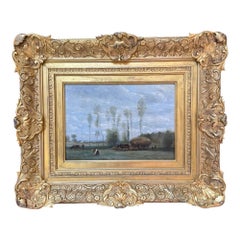
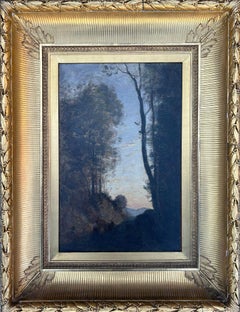
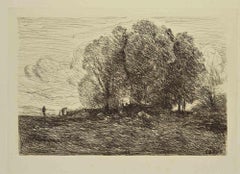
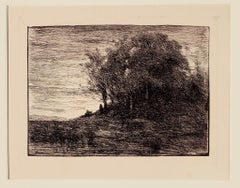
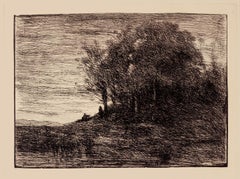
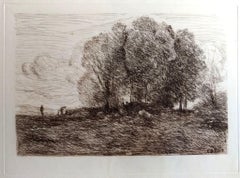
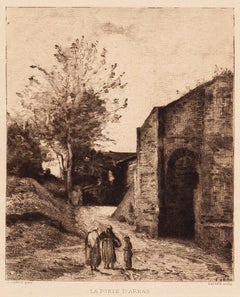
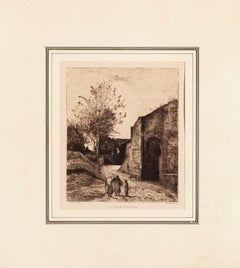
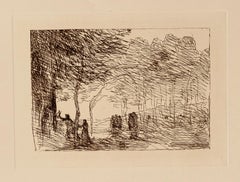
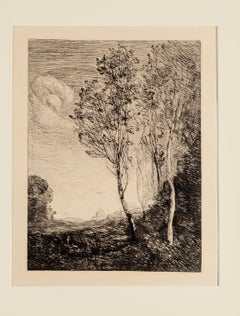
Corot was a French landscape and portrait painter as well as a printmaker who is considered a great master of landscape painting in the 19th century. A pivotal figure in landscape painting, his vast output (over 3,000 paintings) simultaneously references the Neo-Classical tradition and anticipates the plein-air innovations of Impressionism. In the spring of 1829, Corot came to Barbizon to paint in the Forest of Fontainebleau, he had first painted in the forest at Chailly in 1822. He returned to Barbizon in the autumn of 1830 and in the summer of 1831, where he made drawings and oil studies, from which he made a painting intended for the Salon of 1830. The Barbizon school of painters were part of an art movement towards Realism in art, which arose in the context of the dominant Romantic Movement of the time. The Barbizon school was active roughly from 1830 through 1870.
to
2
5
5
1
1
Overall Width
to
Overall Height
to
9
3
1
3
1
1
7
5
7
6
1
1
1
1
1
1
1
1
1
1
1
5
4
1
1
1
13
10,732
2,836
2,495
1,414
7
4
Artist: Jean-Baptiste-Camille Corot
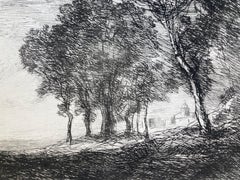
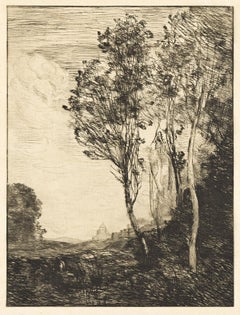
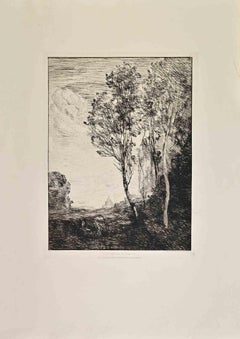
Paysage d'Italie - Etching by Camille Corot - 1870s

Paysage d'Italie - Etching by Camille Corot - 1870s

By Jean-Baptiste-Camille Corot

Located in Roma, IT

Paysage d'Italie is an artwork realized by Corot in the 1870s. Etching. Good conditions. Realized for the "Société des Aquafortistes. Born on the initiative of the publisher Alfre...

Category

1870s Modern Jean-Baptiste-Camille Corot Art

Materials

Etching

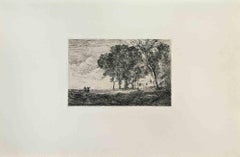
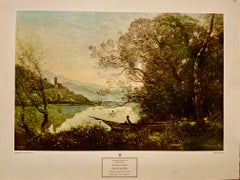
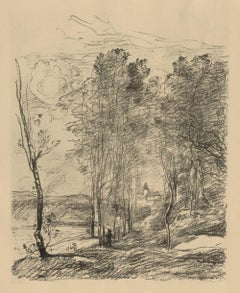
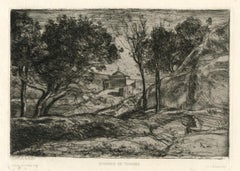
"The Lake of Terni"  by Jean Baptiste Camille Corot; lithograph

"The Lake of Terni" by Jean Baptiste Camille Corot; lithograph

By Jean-Baptiste-Camille Corot

Located in Chesterfield, MI

Jean Baptiste Camille Corot was a French landscape and portrait painter as well as a printmaker in etching. His prolific works simultaneously referenced the Neo-Classical tradition a...

Category

1860s Impressionist Jean-Baptiste-Camille Corot Art

Materials

Lithograph

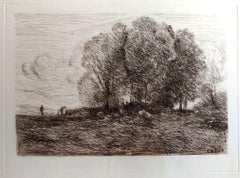
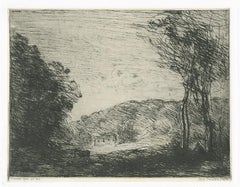
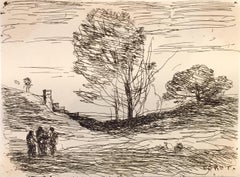
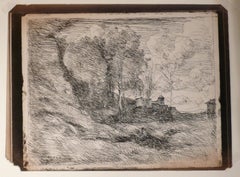
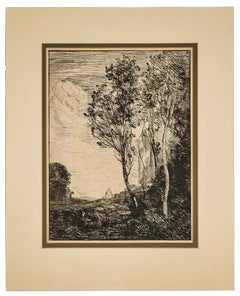
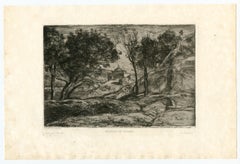
Landscape #4 -  Etching by Camille Corot - 1850s

Landscape #4 - Etching by Camille Corot - 1850s

By Jean-Baptiste-Camille Corot

Located in Roma, IT

Landscape #4 is a beautiful original etching realized by Camille Corot in the middle of XIX Century. Image Dimensions: 18.5 x 25.5 cm Very good conditions. Includes passepartout....

Category

Mid-20th Century Modern Jean-Baptiste-Camille Corot Art

Materials

Etching

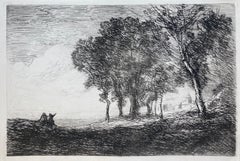
PAYSAGE D’ ITALIE
PAYSAGE D’ ITALIE

PAYSAGE D’ ITALIE

By Jean-Baptiste-Camille Corot

Located in Santa Monica, CA

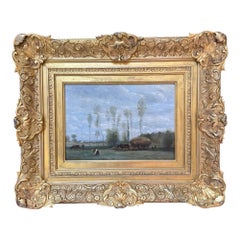
JEAN-BAPTISTE CAMILLE COROT (1876 - 1875) PAYSAGE D’ ITALIE 1866 (Melot 7 iii/iii) Etching, plate 6 ¼ x 9 inches, Third state after the removal of the text but before the random scr...

Category

1860s Romantic Jean-Baptiste-Camille Corot Art

Materials

Etching

Jean-Baptiste-Camille Corot (French, 1796–1875) – Landscape with Figures and Cat

Jean-Baptiste-Camille Corot (French, 1796–1875) – Landscape with Figures and Cat

By Jean-Baptiste-Camille Corot

Located in Jacksonville, FL

A charming 19th-century oil on canvas by renowned French artist Jean-Baptiste-Camille Corot, depicting a peaceful pastoral landscape. The composition features grazing cattle, a hay w...

Category

19th Century American Realist Jean-Baptiste-Camille Corot Art

Materials

Oil

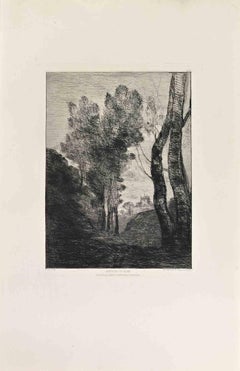
Environs de Rome - Etching by Camille Corot - 1860s

Environs de Rome - Etching by Camille Corot - 1860s

By Jean-Baptiste-Camille Corot

Located in Roma, IT

Environs de Rome is a black and White etching realized by Camille Corot in the 1860s.  Titled in the lower. Image size: 31 x 22. Very good impression with wide margins and a very ...

Category

1860s Contemporary Jean-Baptiste-Camille Corot Art

Materials

Etching

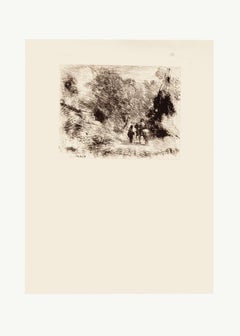
Campagne boisée (Wooded countryside)

Campagne boisée (Wooded countryside)

By Jean-Baptiste-Camille Corot

Located in Middletown, NY

1866 Etching on cream wove paper. 5 1/2 x 4 3/8 inches (138 x 110 mm), full margins. Third state (of 4). Light scattered age tone, and time stain. Scattered extremely light areas of ...

Category

Mid-19th Century Barbizon School Jean-Baptiste-Camille Corot Art

Materials

Etching

Souvenir d’Eza

Souvenir d’Eza

By Jean-Baptiste-Camille Corot

Located in Roma, IT

Cliché-verre. Magnificent proof of ancient edition, numbered in red pencil on verso, and whose subject wasn’t included in the later reprints by Bouasse-Lebel and Le Garrec. Signed on...

Category

1870s Modern Jean-Baptiste-Camille Corot Art

Materials

Plate Glass

SOUVENIR D'OSTIE

SOUVENIR D'OSTIE

By Jean-Baptiste-Camille Corot

Located in Portland, ME

Corot, Jean-Baptiste-Camille. SOUVENIR D'OSTIE. Delteil 57, Melot 57. Cliche Verre, 1855. Second State of two, with the signature of Corot in reverse, low...

Category

1850s Jean-Baptiste-Camille Corot Art

Materials

Black and White

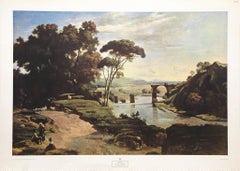
"The Bridge of Narni" by Camille Corot. Limited Edition Lithograph: TP 666

"The Bridge of Narni" by Camille Corot. Limited Edition Lithograph: TP 666

By Jean-Baptiste-Camille Corot

Located in Chesterfield, MI

Limited Edition Print of "The Bridge of Narni" by Camille Corot Published by The Twin Editions, New York Graphic Society, 1959. Print measures 19 in x 26.2 in. Printed in Switzerland...

Category

20th Century Jean-Baptiste-Camille Corot Art

Materials

Lithograph

Le Clocher de St. Nicolas

Le Clocher de St. Nicolas

By Jean-Baptiste-Camille Corot

Located in New York, NY

A very good impression of this scarce lithograph on wove paper. , Printed by Lemercier & Cie, Paris and published by Alfred Robaud. From "Douze Croquis et Dessins Originaux." Catalo...

Category

1870s Realist Jean-Baptiste-Camille Corot Art

Materials

Lithograph

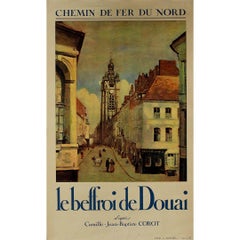
Circa 1930 "Le Beffroi de Douai" to promote travel via the Chemin de fer du Nord

Circa 1930 "Le Beffroi de Douai" to promote travel via the Chemin de fer du Nord

By Jean-Baptiste-Camille Corot

Located in PARIS, FR

In the 1930s, Corot, a notable artist of the era, crafted a captivating poster for "Le Beffroi de Douai" to promote travel via the Chemin de fer du Nord. This poster beautifully enca...

Category

1930s Jean-Baptiste-Camille Corot Art

Materials

Paper, Lithograph

Related Items
Dust Time, large lithograph

John MaxonDust Time, large lithograph, 1993

$1,020

H 31.5 in W 44 in D 0.01 in

Dust Time, large lithograph

By John Maxon

Located in San Francisco, CA

Artist: John Maxon (American, born 1947) Title: Dust Time Year: 1993 Medium: Color lithograph Edition: Numbered 146/210 Paper: Arches Image size: 26.5 x 39.75 inches Paper size: 31.5 x 44 inches Signature: Hand signed in pencil by the artist Condition: Excellent, has never been framed About the artist. Coming from a very western tradition in Wyoming, John Maxon developed an expansive view of nature . Moving eventually to the San Francisco Bay area, John's delight in the effects of light and color led him to the decision to become an artist at the young age of 15. His natural ability was encouraged, and at 16 he began figurative art classes with Howard Brodie, the artist well known for his WWII correspondence, drawings and the Watergate trial drawings. Education San Francisco Art Institute B.A., Painting, San Jose State University M.F.A., Painting, University of California, Davis Stanford University, Palo Alto, California Cabrillo College, Aptos, California Selected Solo Exhibitions 2018 Gallery Panza Verde – Antigua Guatemala, Guatemala 2015 Desert Art Collection - Palm Desert California 2015 Galeria Antigua – Antigua, Guatemala 2014 Galeria Panza Verde – Antigua, Guatemala 2008 Linda Durnell Gallery – Los Gatos, California 2006 Linda Durnell Gallery – Los Gatos, California 2005 Robert Allen Fine Art Gallery – Sausalito, California 2004 Ellis West Gallery – Durango, Colorado 2002 Ellis West Gallery – Durango, Colorado 2001 Robert Allen Fine Art Gallery – Sausalito, California 1997 Stanford University Faculty Club – Stanford, California Selected Group Exhibitions 2018 Chemers Art Gallery – Los Angeles, California 2009, 2010, 2016, 2017 & 2018 Robert Allen Fine Art – Sausalito, California 2017 Christopher Hill Gallery - St Helena, California 2013 / 19 Gallery North - Carmel, California 2015 Desert Art Collection - Palm Desert, California 2014 Paul Scott Gallery - Bend, Oregon 2014 Christopher Hill Gallery Healdsberg, California 2013 Firehouse Art Center - Pleasanton, Ca. 2013 2011 - 2013 Robert Allen Fine Art – Sausalito, California 2010 - 2012 Susan Street Gallery – Solano Beach, California 2010 (Awarded 1st place) and 2012 “Contemporary Landscape Painters of California” – Awarded 1st Place 2011 - 2012 Salisbury Fine Art – Avila Beach, California 2010 Bryant Street Gallery – Palo Alto, California 2009 Museum Art and History – Santa Cruz, California 2008 Cabrillo College – Aptos, California 2006 Christopher Hill Gallery – St. Helena, California 2005 Fort Lewis College – Durango, Colorado 2001 St. Supery Winery & Fine Art Gallery, Napa California 2001 Napa Valley Wine Auction – St. Helena, California 1997 West Coast Painting and Sculpture – Ocean Side, California 1997 Wolk Gallery – St. Helena, California Selected Museum Collections Interior Museum, Department of the Interior, Washington D. C. Santa Cruz County Art Museum – Santa Cruz, California University of California – Berkeley, California University of California – Davis, California Napa Valley Art...

Category

Late 20th Century American Impressionist Jean-Baptiste-Camille Corot Art

Materials

Lithograph

1975 Andrew Dasburg Color Lithograph, "Trees in Ranchitos II" Taos Modernist

1975 Andrew Dasburg Color Lithograph, "Trees in Ranchitos II" Taos Modernist

By Andrew Michael Dasburg

Located in Denver, CO

"Trees in Ranchitos II" is a striking 1975 color lithograph by acclaimed modernist artist Andrew Michael Dasburg (1887–1979). This collectible artwork, initialed in the lower right, beautifully captures the serene landscapes of New Mexico, reflecting Dasburg’s signature fusion of Post-Impressionism and Cubist influences. The composition conveys the tranquil rhythm of trees and desert terrain, combining geometric abstraction with lyrical naturalism. The lithograph is presented in a custom frame measuring 30 ½ x 36 ¼ inches, with an image size of 16 ½ x 23 ¼ inches, making it a sophisticated and visually compelling addition to any collection of Taos Modernist art, American modernism, or Southwestern landscape prints. About Andrew Michael Dasburg (1887–1979): Born in Paris, France, Dasburg immigrated to New York City in 1892, where his early talent was recognized. He trained at the Art Students League of New York under notable instructors including Robert Henri, Kenyon Cox, and Birge Harrison. In 1908, he returned to Paris and encountered the works of Henri Matisse and Paul Cézanne, experiences that ignited his lifelong commitment to modernism. After settling in Woodstock, NY, Dasburg immersed himself in the avant-garde scene, collaborating with Morgan Russell...

Category

1970s American Impressionist Jean-Baptiste-Camille Corot Art

Materials

Lithograph

Behind the Frog - 21st Century Contemporary Landscape Etching

Behind the Frog - 21st Century Contemporary Landscape Etching

By Charles Donker

Located in Nuenen, Noord Brabant

Charles Donker Behind the Frog 20 x 38,5 (Framed included in price, 42 x 59 cm) Etching on paper The etchings of Charles Donker are admired and collected both in the Netherlands and...

Category

2010s Contemporary Jean-Baptiste-Camille Corot Art

Materials

Etching

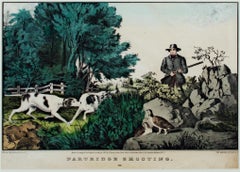
19th century color lithograph watercolor landscape figurative animal print

19th century color lithograph watercolor landscape figurative animal print

By Nathaniel Currier

Located in Milwaukee, WI

The present hand-colored lithograph presents the viewer with a hunting scene in a picturesque landscape. In the foreground, a man approaches two partridges as his two pointers prepare to flush them out. Beyond, a white fence draws our eyes to the homestead in the distance. Images like this one show how people in the United States were trying to identify themselves as a new nation in the North American landscape - as separate from their European counterparts but with similar similar and specific wildlife and magesties of nature. It also identifies hunting in this landscape as an American pastime. 9.25 x 12.5 inches, artwork 18.38 x 22 inches, frame Entitled bottom center "Partridge Shooting...

Category

Mid-19th Century Romantic Jean-Baptiste-Camille Corot Art

Materials

Watercolor, Lithograph

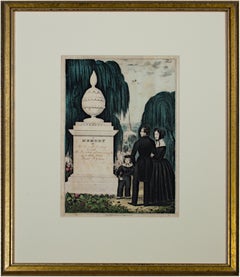
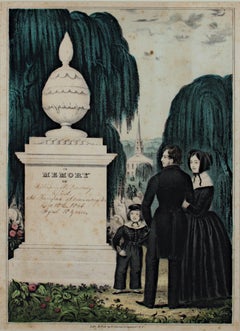
19th century color lithograph figures cemetery willow tree memorial headstone

19th century color lithograph figures cemetery willow tree memorial headstone

By Nathaniel Currier

Located in Milwaukee, WI

The present hand-colored lithograph was produced as part of the funeral and mourning culture in the United States during the 19th century. Images like this were popular as ways of remembering loved ones, an alternative to portraiture of the deceased. This lithograph shows a man, woman and child in morning clothes next to an urn-topped stone monument. Behind are additional putto-topped headstones beneath weeping willows, with a steepled church beyond. The monument contains a space where a family could inscribe the name and death dates of a deceased loved one. In this case, it has been inscribed to a young Civil War soldier: William W. Peabody Died at Fairfax Seminary, VA December 18th, 1864 Aged 18 years The young Mr. Peabody probably died in service for the Union during the American Civil War. Farifax Seminary was a Union hospital and military headquarters in Alexandria, Virginia. The hospital served nearly two thousand soldiers during the war time. Five hundred were also buried on the Seminary's grounds. 13.75 x 9.5 inches, artwork 23 x 19 inches, frame Published before 1864 Inscribed bottom center "Lith. & Pub. by N. Currier. 2 Spruce St. N.Y." Framed to conservation standards using 100 percent rag matting and TruVue Conservation Clear glass, housed in a gold gilded moulding. Nathaniel Currier was a tall introspective man with a melancholy nature. He could captivate people with his piercing stare or charm them with his sparkling blue eyes. Nathaniel was born in Roxbury, Massachusetts on March 27th, 1813, the second of four children. His parents, Nathaniel and Hannah Currier, were distant cousins who lived a humble yet spartan life. When Nathaniel was eight years old, tragedy struck. Nathaniel’s father unexpectedly passed away leaving Nathaniel and his eleven-year-old brother Lorenzo to provide for the family. In addition to their mother, Nathaniel and Lorenzo had to care for six-year-old sister Elizabeth and two-year-old brother Charles. Nathaniel worked a series of odd jobs to support the family, and at fifteen, he started what would become a life-long career when he apprenticed in the Boston lithography shop of William and John Pendleton. A Bavarian gentleman named Alois Senefelder invented lithography just 30 years prior to young Nat Currier’s apprenticeship. While under the employ of the brothers Pendleton, Nat was taught the art of lithography by the firm’s chief printer, a French national named Dubois, who brought the lithography trade to America. Lithography involves grinding a piece of limestone flat and smooth then drawing in mirror image on the stone with a special grease pencil. After the image is completed, the stone is etched with a solution of aqua fortis leaving the greased areas in slight relief. Water is then used to wet the stone and greased-ink is rolled onto the raised areas. Since grease and water do not mix, the greased-ink is repelled by the moisture on the stone and clings to the original grease pencil lines. The stone is then placed in a press and used as a printing block to impart black on white images to paper. In 1833, now twenty-years old and an accomplished lithographer, Nat Currier left Boston and moved to Philadelphia to do contract work for M.E.D. Brown, a noted engraver and printer. With the promise of good money, Currier hired on to help Brown prepare lithographic stones of scientific images for the American Journal of Sciences and Arts. When Nat completed the contract work in 1834, he traveled to New York City to work once again for his mentor John Pendleton, who was now operating his own shop located at 137 Broadway. Soon after the reunion, Pendleton expressed an interest in returning to Boston and offered to sell his print shop to Currier. Young Nat did not have the financial resources to buy the shop, but being the resourceful type he found another local printer by the name of Stodart. Together they bought Pendleton’s business. The firm ‘Currier & Stodart’ specialized in "job" printing. They produced many different types of printed items, most notably music manuscripts for local publishers. By 1835, Stodart was frustrated that the business was not making enough money and he ended the partnership, taking his investment with him. With little more than some lithographic stones, and a talent for his trade, twenty-two year old Nat Currier set up shop in a temporary office at 1 Wall Street in New York City. He named his new enterprise ‘N. Currier, Lithographer’ Nathaniel continued as a job printer and duplicated everything from music sheets to architectural plans. He experimented with portraits, disaster scenes and memorial prints, and any thing that he could sell to the public from tables in front of his shop. During 1835 he produced a disaster print Ruins of the Planter's Hotel, New Orleans, which fell at two O’clock on the Morning of the 15th of May 1835, burying 50 persons, 40 of whom Escaped with their Lives. The public had a thirst for newsworthy events, and newspapers of the day did not include pictures. By producing this print, Nat gave the public a new way to “see” the news. The print sold reasonably well, an important fact that was not lost on Currier. Nat met and married Eliza Farnsworth in 1840. He also produced a print that same year titled Awful Conflagration of the Steamboat Lexington in Long Island Sound on Monday Evening, January 18, 1840, by which melancholy occurrence over One Hundred Persons Perished. This print sold out very quickly, and Currier was approached by an enterprising publication who contracted him to print a single sheet addition of their paper, the New York Sun. This single page paper is presumed to be the first illustrated newspaper ever published. The success of the Lexington print launched his career nationally and put him in a position to finally lift his family up. In 1841, Nat and Eliza had their first child, a son they named Edward West Currier. That same year Nat hired his twenty-one year old brother Charles and taught him the lithography trade, he also hired his artistically inclined brother Lorenzo to travel out west and make sketches of the new frontier as material for future prints. Charles worked for the firm on and off over the years, and invented a new type of lithographic crayon which he patented and named the Crayola. Lorenzo continued selling sketches to Nat for the next few years. In 1843, Nat and Eliza had a daughter, Eliza West Currier, but tragedy struck in early 1847 when their young daughter died from a prolonged illness. Nat and Eliza were grief stricken, and Eliza, driven by despair, gave up on life and passed away just four months after her daughter’s death. The subject of Nat Currier’s artwork changed following the death of his wife and daughter, and he produced many memorial prints and sentimental prints during the late 1840s. The memorial prints generally depicted grief stricken families posed by gravestones (the stones were left blank so the purchasers could fill in the names of the dearly departed). The sentimental prints usually depicted idealized portraits of women and children, titled with popular Christian names of the day. Late in 1847, Nat Currier married Lura Ormsbee, a friend of the family. Lura was a self-sufficient woman, and she immediately set out to help Nat raise six-year-old Edward and get their house in order. In 1849, Lura delivered a son, Walter Black Currier, but fate dealt them a blow when young Walter died one year later. While Nat and Lura were grieving the loss of their new son, word came from San Francisco that Nat’s brother Lorenzo had also passed away from a brief illness. Nat sank deeper into his natural quiet melancholy. Friends stopped by to console the couple, and Lura began to set an extra place at their table for these unexpected guests. She continued this tradition throughout their lives. In 1852, Charles introduced a friend, James Merritt Ives, to Nat and suggested he hire him as a bookkeeper. Jim Ives was a native New Yorker born in 1824 and raised on the grounds of Bellevue Hospital where his father was employed as superintendent. Jim was a self-trained artist and professional bookkeeper. He was also a plump and jovial man, presenting the exact opposite image of his new boss. Jim Ives met Charles Currier through Caroline Clark, the object of Jim’s affection. Caroline’s sister Elizabeth was married to Charles, and Caroline was a close friend of the Currier family. Jim eventually proposed marriage to Caroline and solicited an introduction to Nat Currier, through Charles, in hopes of securing a more stable income to support his future wife. Ives quickly set out to improve and modernize his new employer’s bookkeeping methods. He reorganized the firm’s sizable inventory, and used his artistic skills to streamline the firm’s production methods. By 1857, Nathaniel had become so dependent on Jims’ skills and initiative that he offered him a full partnership in the firm and appointed him general manager. The two men chose the name ‘Currier & Ives’ for the new partnership, and became close friends. Currier & Ives produced their prints in a building at 33 Spruce Street where they occupied the third, fourth and fifth floors. The third floor was devoted to the hand operated printing presses that were built by Nat's cousin, Cyrus Currier, at his shop Cyrus Currier & Sons in Newark, NJ. The fourth floor found the artists, lithographers and the stone grinders at work. The fifth floor housed the coloring department, and was one of the earliest production lines in the country. The colorists were generally immigrant girls, mostly German, who came to America with some formal artistic training. Each colorist was responsible for adding a single color to a print. As a colorist finished applying their color, the print was passed down the line to the next colorist to add their color. The colorists worked from a master print displayed above their table, which showed where the proper colors were to be placed. At the end of the table was a touch up artist who checked the prints for quality, touching-in areas that may have been missed as it passed down the line. During the Civil War, demand for prints became so great that coloring stencils were developed to speed up production. Although most Currier & Ives prints were colored in house, some were sent out to contract artists. The rate Currier & Ives paid these artists for coloring work was one dollar per one hundred small folios (a penny a print) and one dollar per one dozen large folios. Currier & Ives also offered uncolored prints to dealers, with instructions (included on the price list) on how to 'prepare the prints for coloring.' In addition, schools could order uncolored prints from the firm’s catalogue to use in their painting classes. Nathaniel Currier and James Merritt Ives attracted a wide circle of friends during their years in business. Some of their more famous acquaintances included Horace Greeley, Phineas T. Barnum, and the outspoken abolitionists Rev. Henry Ward, and John Greenleaf Whittier (the latter being a cousin of Mr. Currier). Nat Currier and Jim Ives described their business as "Publishers of Cheap and Popular Pictures" and produced many categories of prints. These included Disaster Scenes, Sentimental Images, Sports, Humor, Hunting Scenes, Politics, Religion, City and Rural Scenes, Trains, Ships, Fire Fighters, Famous Race Horses, Historical Portraits, and just about any other topic that satisfied the general public's taste. In all, the firm produced in excess of 7500 different titles, totaling over one million prints produced from 1835 to 1907. Nat Currier retired in 1880, and signed over his share of the firm to his son Edward. Nat died eight years later at his summer home 'Lion’s Gate' in Amesbury, Massachusetts. Jim Ives remained active in the firm until his death in 1895, when his share of the firm passed to his eldest son, Chauncey. In 1902, faced will failing health from the ravages of Tuberculosis, Edward Currier sold his share of the firm to Chauncey Ives...

Category

Mid-19th Century Romantic Jean-Baptiste-Camille Corot Art

Materials

Watercolor, Lithograph
Edgar Degas, Dancer Standing in Profile, 1945 (after)

Edgar Degas, Dancer Standing in Profile, 1945 (after)

By Edgar Degas

Located in Southampton, NY

This exquisite lithograph after Edgar Degas (1834–1917), titled Danseur debout de profil (Dancer Standing in Profile), originates from the 1945 folio Degas, Ten Ballet Sketches. Published by The Studio Publications, Inc., New York, rendered and printed by Albert Carman, City Island, 1945, this work reflects Degas’s sensitive mastery of line, movement, and intimate observation, capturing the grace, poise, and psychological immediacy that define his iconic ballet imagery. In Danseur debout de profil (Dancer Standing in Profile), Degas reveals gesture and inner emotion through economical contour and lyrical nuance. Executed as a lithograph and pochoir on velin paper, this work measures 17 x 13 inches (43.18 x 33.02 cm). Signed in the plate and unnumbered as issued. Rendered and printed by Albert Carman, City Island, one of the notable American ateliers specializing in fine art lithography during the mid-20th century. Artwork Details: Artist: After Edgar Degas (1834–1917) Title: Danseur debout de profil (Dancer Standing in Profile), from Degas, Ten Ballet Sketches, 1945 Medium: Lithograph and pochoir on velin paper Dimensions: 17 x 13 inches (43.18 x 33.02 cm) Inscription: Signed in the plate and unnumbered as issued Date: 1945 Publisher: The Studio Publications, Inc., New York Printer: Albert Carman, City Island, 1945 Condition: Well preserved, consistent with age and medium Provenance: From the 1945 folio Degas, Ten Ballet Sketches, published by The Studio Publications, Inc., New York Notes: Excerpted from the album, Born in Paris in 1834, Edgar Degas lived, and surely loved the life of that city during most of his years. These continued somewhat sadly beyond those of most of his friends— into the debacle of the first World War, during which he died in 1917. Judging by the frequency with which he used them as models, he must have had an especial admiration for the ballet girls who followed a profession that at the time brought none of the glory and prosperity which attend it today. New aspects of the human body, revealed in movement, fascinated him. But his occupation with the simply anatomical side of his subjects never resulted in a cold interpretation. On the contrary there is a warmth and sympathy that pervades all of his work. The drawings here represent the painter in one important phase of his multi-sensitive view of life; and permit an insight which a more ambitious work might not do-into the operation of the creative process, the artist's transformation of reality as it passes through the mesh of his sensibilities. The Edition of this Portfolio is limited to MMMD examples. Rendered by Albert Carman. About the Publication: Degas, Ten Ballet Sketches, published in 1945 by The Studio Publications, Inc., New York, stands as one of the most elegant and scholarly mid-century American fine art folios devoted to the ballet imagery of Edgar Degas. Conceived as a high-quality interpretive portfolio, the album presents a series of lithograph-and-pochoir renderings based on Degas’s original drawings, executed with exceptional attention to tonal subtlety, contour fidelity, and the emotional interiority that defines the artist’s draftsmanship. Rendered and printed by Albert Carman on City Island, the publication embodies an American postwar effort to restore and celebrate European masterworks through meticulous handcraft and artisanal color application, honoring Degas’s distinctive line and the atmospheric delicacy of his studio-based studies. Produced in a substantial edition of MMMD examples, the portfolio offered audiences rare access to Degas’s private working drawings—images rarely seen outside institutional collections—while exemplifying the technical refinement and interpretive care characteristic of Carman’s workshop. Today, Degas, Ten Ballet Sketches remains a sought-after historical publication, valued for its craft, fidelity to Degas’s aesthetic, and its role in preserving and disseminating the artist’s intimate ballet imagery in a beautifully executed mid-century fine art format. About the Artist: Edgar Degas (1834–1917) was a French painter, draughtsman, printmaker, and sculptor whose groundbreaking fusion of classical draftsmanship, modern experimentation, and psychological depth helped define the trajectory of Western art, positioning him as one of the most influential figures of the nineteenth and early twentieth centuries; renowned for his depictions of ballet dancers, racehorses, theater scenes, cafe life, domestic interiors, milliners, laundresses, and women at their toilette, Degas reimagined observational realism through radical compositional innovation—employing extreme cropping, asymmetrical framing, oblique viewpoints, and dramatic lighting that anticipated photographic and cinematic language long before these technologies shaped visual culture, and although associated with Impressionism, he rejected plein-air spontaneity in favor of studio-based discipline rooted in the linear precision of Jean-Auguste-Dominique Ingres, the expressive chromaticism of Eugene Delacroix, and the modernity of Edouard Manet while also drawing inspiration from Japanese ukiyo-e prints, classical sculpture, and early photography; his independent artistic philosophy resonated with and helped shape the innovations of Pablo Picasso, Alexander Calder, Alberto Giacometti, Salvador Dali, Joan Miro, Wassily Kandinsky, Marcel Duchamp, and Man Ray, whose explorations of movement, form, dream logic, abstraction, and conceptualism all find antecedents in Degas’s investigations into seriality, temporality, and the fragmented figure, and his pioneering use of pastel, monotype, and wax sculpture fundamentally transformed each medium, influencing artists from Henri Matisse, Francis Bacon, Lucian Freud, and Giacomo Manzu to Paula Rego, contemporary realists, experimental photographers, and choreographers; his works are held in nearly every major museum collection worldwide—including the Musee dOrsay, the Louvre, the Metropolitan Museum of Art, the National Gallery of Art, the Art Institute of Chicago, the Courtauld Institute, and the National Gallery, London—affirming his central place in the history of art, and the highest auction record for Degas was achieved at Sothebys London on February 3, 2015, when Danseuses en Bleu sold for 37,033,000 GBP, cementing his status as one of the most sought-after and enduringly significant artists of the Western canon. Edgar Degas lithograph...
Category

1940s Impressionist Jean-Baptiste-Camille Corot Art

Materials

Lithograph
"Texas Hill Country Bluebonnet Scene with Lake" Tranquil Pastoral Wildflowers

"Texas Hill Country Bluebonnet Scene with Lake" Tranquil Pastoral Wildflowers

Located in Austin, TX

Canvas Size: 20 x 30 in. Frame Size: 26 x 36 in. Signed, bottom right. Inscribed on verso, "January 20, 1972" This oil painting by Palmer Chrisman, is a masterclass in regional impr...

Category

1970s American Realist Jean-Baptiste-Camille Corot Art

Materials

Canvas, Oil

"Texas Hill Country Landscape With Cattle" oil painting of wildflowers, cactus

"Texas Hill Country Landscape With Cattle" oil painting of wildflowers, cactus

By Don Warren

Located in Austin, TX

Canvas Size: 12 x 16 in. Frame Size: 20.5 x 24.5 in. Signed, lower left: "Don Warren" A serene, classic, and cheerful scene in the Texas Hill Country by Don Warren. The foreground i...

Category

1970s American Realist Jean-Baptiste-Camille Corot Art

Materials

Canvas, Oil

Edgar Degas, Dancer Arranging Her Dress, 1945 (after)

Edgar Degas, Dancer Arranging Her Dress, 1945 (after)

By Edgar Degas

Located in Southampton, NY

This exquisite lithograph after Edgar Degas (1834–1917), titled Danseuse arrangeant sa robe (Dancer Arranging Her Dress), originates from the 1945 folio Degas, Ten Ballet Sketches. Published by The Studio Publications, Inc., New York, rendered and printed by Albert Carman, City Island, 1945, this work reflects Degas’s sensitive mastery of line, movement, and intimate observation, capturing the grace, poise, and psychological immediacy that define his iconic ballet imagery. In Danseuse arrangeant sa robe (Dancer Arranging Her Dress), Degas reveals gesture and inner emotion through economical contour and lyrical nuance. Executed as a lithograph and pochoir on velin paper, this work measures 17 x 13 inches (43.18 x 33.02 cm). Signed in the plate and unnumbered as issued. Rendered and printed by Albert Carman, City Island, one of the notable American ateliers specializing in fine art lithography during the mid-20th century. Artwork Details: Artist: After Edgar Degas (1834–1917) Title: Danseuse arrangeant sa robe (Dancer Arranging Her Dress), from Degas, Ten Ballet Sketches, 1945 Medium: Lithograph and pochoir on velin paper Dimensions: 17 x 13 inches (43.18 x 33.02 cm) Inscription: Signed in the plate and unnumbered as issued Date: 1945 Publisher: The Studio Publications, Inc., New York Printer: Albert Carman, City Island, 1945 Condition: Well preserved, consistent with age and medium Provenance: From the 1945 folio Degas, Ten Ballet Sketches, published by The Studio Publications, Inc., New York Notes: Excerpted from the album, Born in Paris in 1834, Edgar Degas lived, and surely loved the life of that city during most of his years. These continued somewhat sadly beyond those of most of his friends— into the debacle of the first World War, during which he died in 1917. Judging by the frequency with which he used them as models, he must have had an especial admiration for the ballet girls who followed a profession that at the time brought none of the glory and prosperity which attend it today. New aspects of the human body, revealed in movement, fascinated him. But his occupation with the simply anatomical side of his subjects never resulted in a cold interpretation. On the contrary there is a warmth and sympathy that pervades all of his work. The drawings here represent the painter in one important phase of his multi-sensitive view of life; and permit an insight which a more ambitious work might not do-into the operation of the creative process, the artist's transformation of reality as it passes through the mesh of his sensibilities. The Edition of this Portfolio is limited to MMMD examples. Rendered by Albert Carman. About the Publication: Degas, Ten Ballet Sketches, published in 1945 by The Studio Publications, Inc., New York, stands as one of the most elegant and scholarly mid-century American fine art folios devoted to the ballet imagery of Edgar Degas. Conceived as a high-quality interpretive portfolio, the album presents a series of lithograph-and-pochoir renderings based on Degas’s original drawings, executed with exceptional attention to tonal subtlety, contour fidelity, and the emotional interiority that defines the artist’s draftsmanship. Rendered and printed by Albert Carman on City Island, the publication embodies an American postwar effort to restore and celebrate European masterworks through meticulous handcraft and artisanal color application, honoring Degas’s distinctive line and the atmospheric delicacy of his studio-based studies. Produced in a substantial edition of MMMD examples, the portfolio offered audiences rare access to Degas’s private working drawings—images rarely seen outside institutional collections—while exemplifying the technical refinement and interpretive care characteristic of Carman’s workshop. Today, Degas, Ten Ballet Sketches remains a sought-after historical publication, valued for its craft, fidelity to Degas’s aesthetic, and its role in preserving and disseminating the artist’s intimate ballet imagery in a beautifully executed mid-century fine art format. About the Artist: Edgar Degas (1834–1917) was a French painter, draughtsman, printmaker, and sculptor whose groundbreaking fusion of classical draftsmanship, modern experimentation, and psychological depth helped define the trajectory of Western art, positioning him as one of the most influential figures of the nineteenth and early twentieth centuries; renowned for his depictions of ballet dancers, racehorses, theater scenes, cafe life, domestic interiors, milliners, laundresses, and women at their toilette, Degas reimagined observational realism through radical compositional innovation—employing extreme cropping, asymmetrical framing, oblique viewpoints, and dramatic lighting that anticipated photographic and cinematic language long before these technologies shaped visual culture, and although associated with Impressionism, he rejected plein-air spontaneity in favor of studio-based discipline rooted in the linear precision of Jean-Auguste-Dominique Ingres, the expressive chromaticism of Eugene Delacroix, and the modernity of Edouard Manet while also drawing inspiration from Japanese ukiyo-e prints, classical sculpture, and early photography; his independent artistic philosophy resonated with and helped shape the innovations of Pablo Picasso, Alexander Calder, Alberto Giacometti, Salvador Dali, Joan Miro, Wassily Kandinsky, Marcel Duchamp, and Man Ray, whose explorations of movement, form, dream logic, abstraction, and conceptualism all find antecedents in Degas’s investigations into seriality, temporality, and the fragmented figure, and his pioneering use of pastel, monotype, and wax sculpture fundamentally transformed each medium, influencing artists from Henri Matisse, Francis Bacon, Lucian Freud, and Giacomo Manzu to Paula Rego, contemporary realists, experimental photographers, and choreographers; his works are held in nearly every major museum collection worldwide—including the Musee dOrsay, the Louvre, the Metropolitan Museum of Art, the National Gallery of Art, the Art Institute of Chicago, the Courtauld Institute, and the National Gallery, London—affirming his central place in the history of art, and the highest auction record for Degas was achieved at Sothebys London on February 3, 2015, when Danseuses en Bleu sold for 37,033,000 GBP, cementing his status as one of the most sought-after and enduringly significant artists of the Western canon. Edgar Degas lithograph...
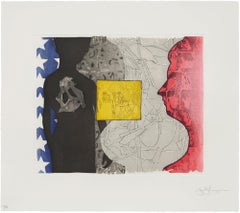
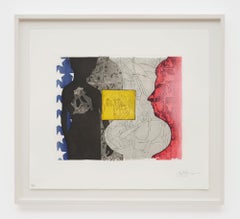
Category

1940s Impressionist Jean-Baptiste-Camille Corot Art

Materials

Lithograph
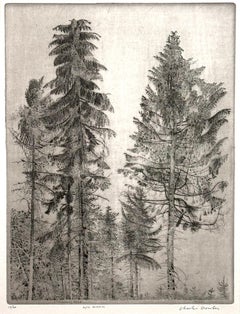
Forest VII - 21st Century Contemporary Landscape Etching

Forest VII - 21st Century Contemporary Landscape Etching

By Charles Donker

Located in Nuenen, Noord Brabant

Charles Donker Forest VII 29,5 x 23,8 (Framed included in price, 52,5 x 45 cm) Etching on paper The etchings of Charles Donker are admired and collected both in the Netherlands and ...

Category

2010s Contemporary Jean-Baptiste-Camille Corot Art

Materials

Etching

Three Chairs
Three Chairs

Harold AltmanThree Chairs, 1978

$900

H 22.25 in W 27.75 in D 1.35 in

Three Chairs

By Harold Altman

Located in San Francisco, CA

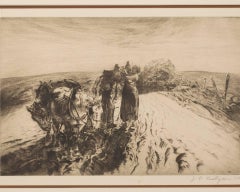
Artist: Harold Altman (American, 1924-2003) Title: Three Chairs Year: 1978 Medium: Original color lithograph Edition: Numbered 61/185 in pencil Paper: ...
Category

Late 20th Century American Impressionist Jean-Baptiste-Camille Corot Art

Materials

Lithograph
Previously Available Items
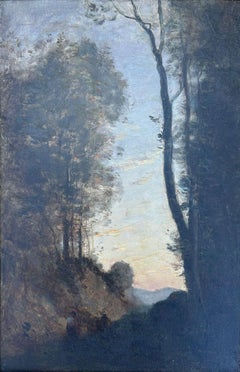
"Soir dans une gorge Boisee" Jean-Baptiste-Camille Corot, Plein-Air Landscape

"Soir dans une gorge Boisee" Jean-Baptiste-Camille Corot, Plein-Air Landscape

By Jean-Baptiste-Camille Corot

Located in New York, NY

Jean-Baptiste-Camille Corot Soir dans une gorge Boisee, 1850-55 Signed lower right Oil on board 13 1/2 x 9 inches Provenance: Dutilleux, Paul Tesse, etc. Quincy Adams Shaw Pauline S...

Category

1850s Impressionist Jean-Baptiste-Camille Corot Art

Materials

Oil, Panel

Souvenir d'Italie
Souvenir d'Italie

Souvenir d'Italie

By Jean-Baptiste-Camille Corot

Located in Greenwich, CT

Etching "Souvenir d'Italie” by Jean Baptiste Camille printed on laid paper (partial watermark Annonay). rich impression size : sight 11.5 x 9 in. , matted 17 x 14 in. A remarkab...
Category

Late 19th Century Romantic Jean-Baptiste-Camille Corot Art

Materials

Etching

Souvenir d'Italie - Etching by Camille Corot - 1860s

Souvenir d'Italie - Etching by Camille Corot - 1860s

By Jean-Baptiste-Camille Corot

Located in Roma, IT

Souvenir d'Italie is a black and White etching realized by Camille Corot in the 1860s.  Titled in the lower Image Size: 32x23 Very good impression. Realized for the "Société des ...

Category

1860s Modern Jean-Baptiste-Camille Corot Art

Materials

Etching

"Souvenir de Toscane" original etching

"Souvenir de Toscane" original etching

By Jean-Baptiste-Camille Corot

Located in Henderson, NV

Medium: original etching. Catalogue reference Delteil 1. This impression on cream laid paper was published by the Gazette des Beaux-Arts in 1903. Plate size: 4 7/8 x 7 inches (125 x ...

Category

Early 1900s Barbizon School Jean-Baptiste-Camille Corot Art

Materials

Etching

Landscape - Original Etching by Camille Corot - 19th Century

Landscape - Original Etching by Camille Corot - 19th Century

By Jean-Baptiste-Camille Corot

Located in Roma, IT

Landscape is an original print artwork realized by Camille Corot. With the stamp of "Collezione Contessa Laetitia Pecci-Blunt" lower right on the rear. In good condition except for diffused foxing and the trace of humidity just below the top margin. Included a Passepartout: 49 x 34 cm. Image Dimensions: 16.5 x 23 cm Light, and brilliant landscape with the poetical expression of trees, the work is characterized by a well-balanced lightning which created a strong feeling of the scene, with the movement of trees in the wind through intense black made shadows and light with a strong feeling of nature. Jean-Baptiste Camille Corot...

Category

19th Century Modern Jean-Baptiste-Camille Corot Art

Materials

Etching

Landscape - Original Etching on Paper by Camille Corot - 19th Century

Landscape - Original Etching on Paper by Camille Corot - 19th Century

By Jean-Baptiste-Camille Corot

Located in Roma, IT

Landscape is an original etching artwork realized by Camille Corot. With the stamp of "Collezione Contessa Laetitia Pecci-Blunt" lower right on the rear...

Category

19th Century Realist Jean-Baptiste-Camille Corot Art

Materials

Etching

Landscape - Original Etching By Camille Corot - Late 19th Century

Landscape - Original Etching By Camille Corot - Late 19th Century

By Jean-Baptiste-Camille Corot

Located in Roma, IT

Image dimensions: 10 x 15 cm. Landscape is an original print artwork realized by Camille Corot. With the stamp of "Collezione Contessa Laetitia Pecci-Bl...

Category

Late 19th Century Modern Jean-Baptiste-Camille Corot Art

Materials

Etching

Landscape - Original Etching By Camille Corot - Late 19th Century

Landscape - Original Etching By Camille Corot - Late 19th Century

By Jean-Baptiste-Camille Corot

Located in Roma, IT

Landscape is an original etching, realized by Camille Corot (1796-1875). with the stamp" Collection Contessa Anna Laetitia Pecci-Bblunt" on the lower lef...

Category

Late 19th Century Modern Jean-Baptiste-Camille Corot Art

Materials

Etching

Jean-baptiste-camille Corot art for sale on 1stDibs.

Find a wide variety of authentic Jean-Baptiste-Camille Corot art available for sale on 1stDibs. You can also browse by medium to find art by Jean-Baptiste-Camille Corot in etching, oil paint, paint and more. Much of the original work by this artist or collective was created during the 19th century and is mostly associated with the modern style. Not every interior allows for large Jean-Baptiste-Camille Corot art, so small editions measuring 4 inches across are available. Customers who are interested in this artist might also find the work of Félix Bracquemond, Maurice Utrillo, and Claude Hemeret. Jean-Baptiste-Camille Corot art prices can differ depending upon medium, time period and other attributes. On 1stDibs, the price for these items starts at $175 and tops out at $499,296, while the average work can sell for $850.

Artists Similar to Jean-Baptiste-Camille Corot

Questions About Jean-Baptiste-Camille Corot Art
  • 1stDibs ExpertAugust 26, 2024
    Yes, Corot was a Realist. He is particularly well known for his realistic depictions of historical and mythological scenes set in rural landscapes, often depicted beneath hazy rather than idyllic blue skies. Some of his most famous works include Souvenir de Mortefontaine, Orpheus Leading Eurydice from the Underworld and Hagar in the Wilderness. Find a selection of Jean-Baptiste-Camille Corot art on 1stDibs.