
May 10, 2026The late, great artist Frank Stella was a good talker, and his line “What you see is what you see” lives on as one of the juiciest art koans of modern times. Endlessly dissected, the 1960s quote is something between a philosophical encapsulation of Minimalism and “Don’t overthink it, Bub.”
What is clear is that Stella (1936–2024) — in his paintings, sculptures, writings and even his collecting — knew how to see what other people did not.
He was barely out of Princeton when he became famous for spare geometric gems like the “Black Paintings.” And he was the youngest artist ever to have a Museum of Modern Art retrospective, at age 33. Later in his career, the master of restraint moved to making ebullient, maximalist sculptures.
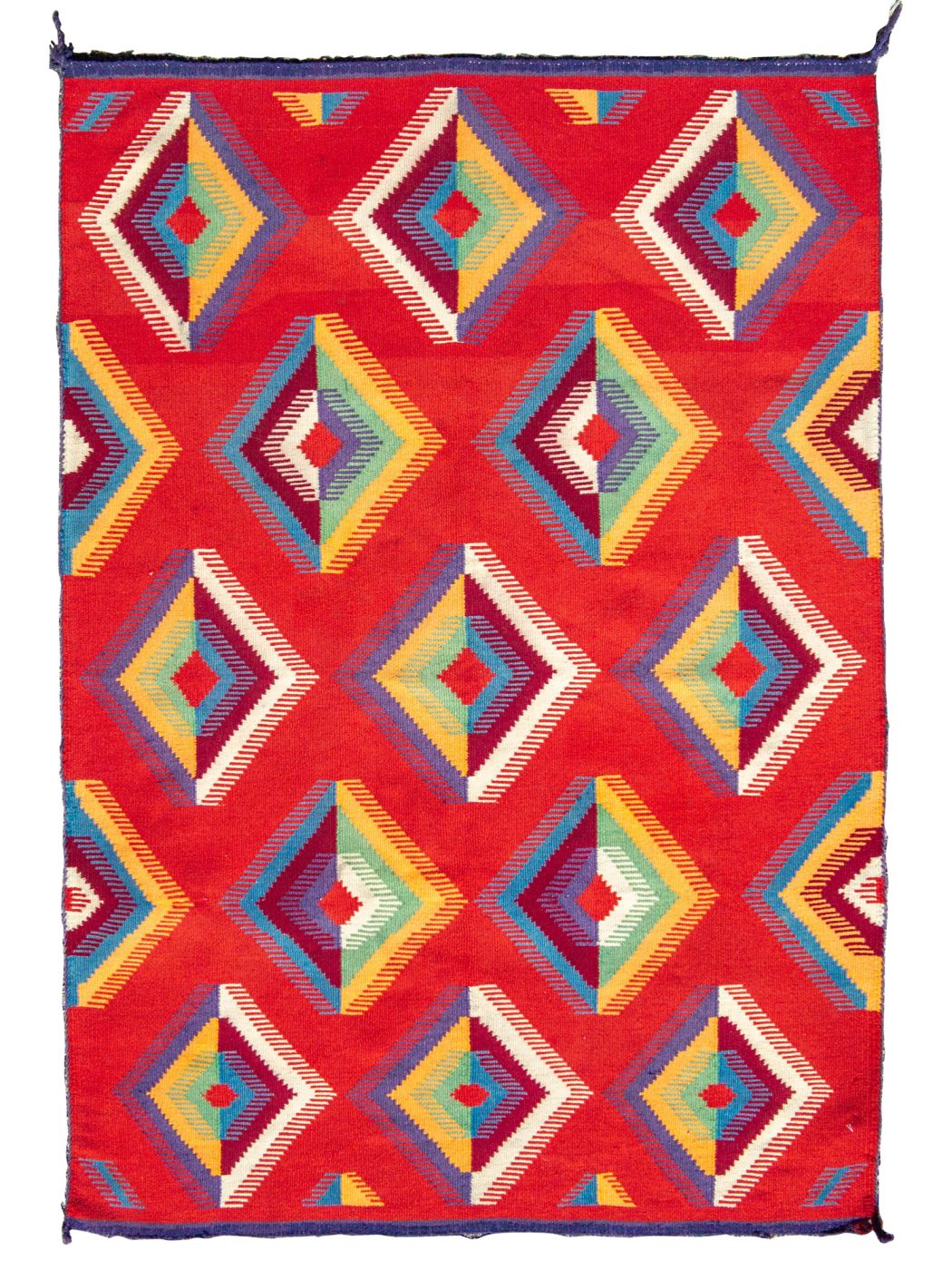
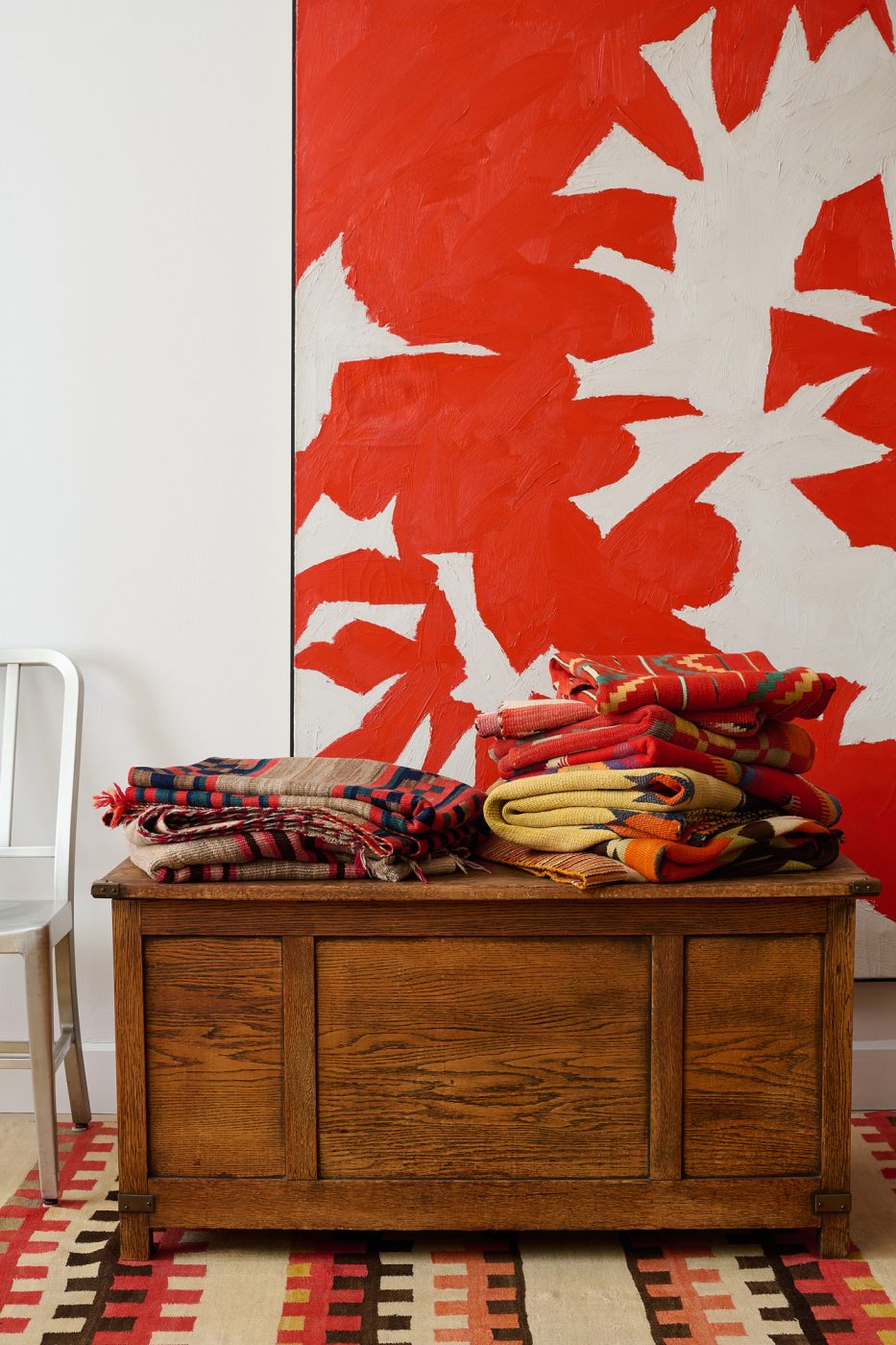
All the while, he was purchasing pieces by other artists, from his 20th-century abstractionist peers to Old Masters and Impressionists, plus works of any kind that he found interesting.
Among the items he loved and bought were textiles made by Diné weavers (Diné being the name the Navajo use to refer to themselves in their own language). Now, 40 of them are being offered by Peter Pap Rugs, first on 1stDibs and then, from May 15 to June 10, at Arader Galleries, in New York City, with a preview the evening of May 14. After that, they will travel to Pap’s own venue, in Dublin, New Hampshire, where they will reside from June 20 to July 7.
Bursting with color, especially deep reds, and pulsating with patterns like diamonds and chevrons, the wool textiles are mesmerizing — “eye dazzler,” in fact, is one of the official terms for the style of some of them. They all date from the late 19th to the early 20th century.

You don’t need a PhD in art history to see a connection between Stella’s paintings and these textiles. Geometry and color are a common language used to very different ends.
“It was a natural attraction for him,” says Harriet McGurk, the physician and Columbia University professor emeritus who was married to Stella for decades.
For McGurk, the affinities between the paintings and weavings are a token of the universality of abstraction. “Geometric design is all over, through cultures ancient and modern,” she says, noting that almost all the textiles were bought by Stella before they became a couple, in the mid-1970s — during the years he was exploring pure geometry the most intensely.
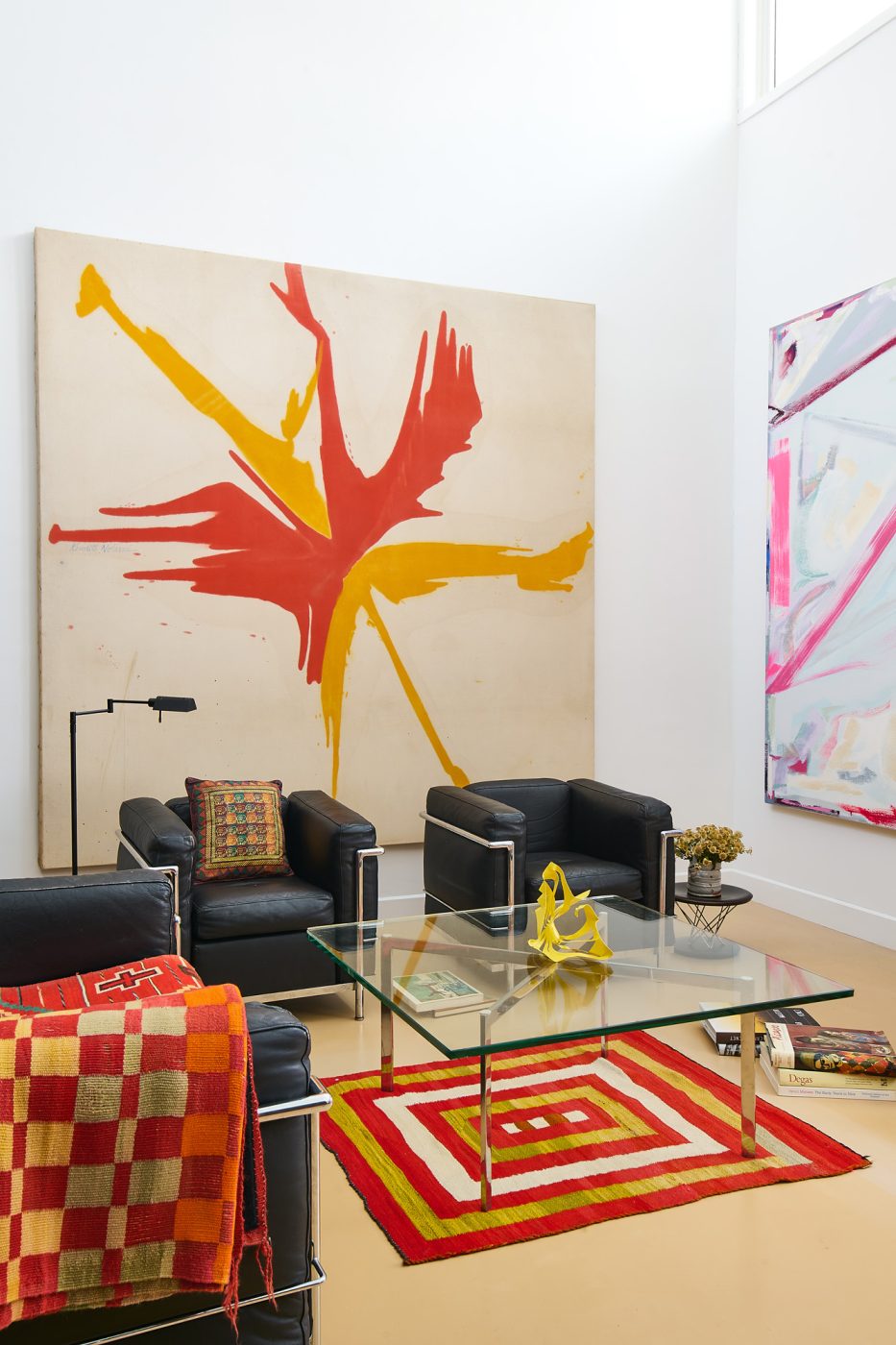

For Pap, who has been in business for 50 years, the textiles are a thrilling twist on his usual wares. “I’m struck by Frank’s eye,” he says. “A lot of the pieces have tremendous negative space, and that creates power.”
He would know. Pap is a longtime guest appraiser on PBS’s Antiques Roadshow and has exhibited for nearly 30 years at the Park Avenue Armory’s Winter Show. Recently, he discovered the Sorover tapestry by Norwegian artist Frida Hansen, which hadn’t been seen for more than 90 years. He went on to sell it for $750,000 — the highest price ever paid for a 20th-century tapestry.
The Stella textiles are priced between $6,500 and $25,000. “People acclimated to the cost of contemporary art are going to look at these and say, ‘Why are they so reasonable?’ ” Pap says. “Especially with the Stella provenance.”

— designed by Le Corbusier, Charlotte Perriand, Pierre Jeanneret — and artworks by Dennis Ashbaugh.
Because he is not a specialist in Diné work, Pap enlisted Jill Ahlberg Yohe, a curator of modern and contemporary art at Minneapolis’s Cafesjian Art Trust Museum and a scholar of Navajo weavings, to evaluate and conserve the textiles.
“For Diné weavers, this era had an abundance of creativity not explored very much by scholars or collectors,” Ahlberg Yohe says. “The years from 1880 to 1900 were especially fertile, the way they mixed color and optical designs, building on their artistic lineage.”
Most of the weavers were women, Ahlberg Yohe notes, though we don’t know individual creators. And while collectors can, of course, employ the pieces as blankets or rugs or hang them like tapestries, the makers did not specify use; hence textile is the term of art, she says.
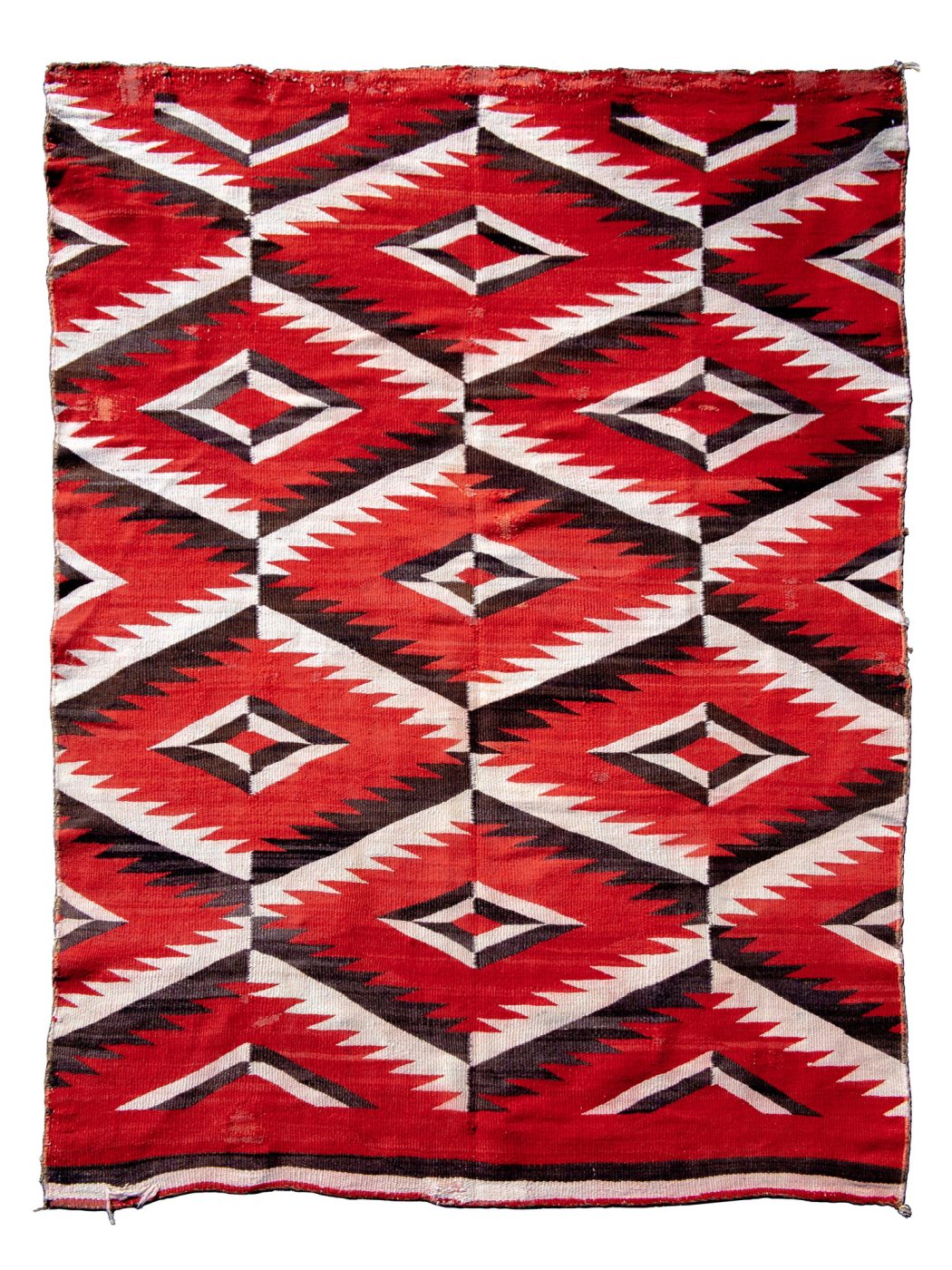
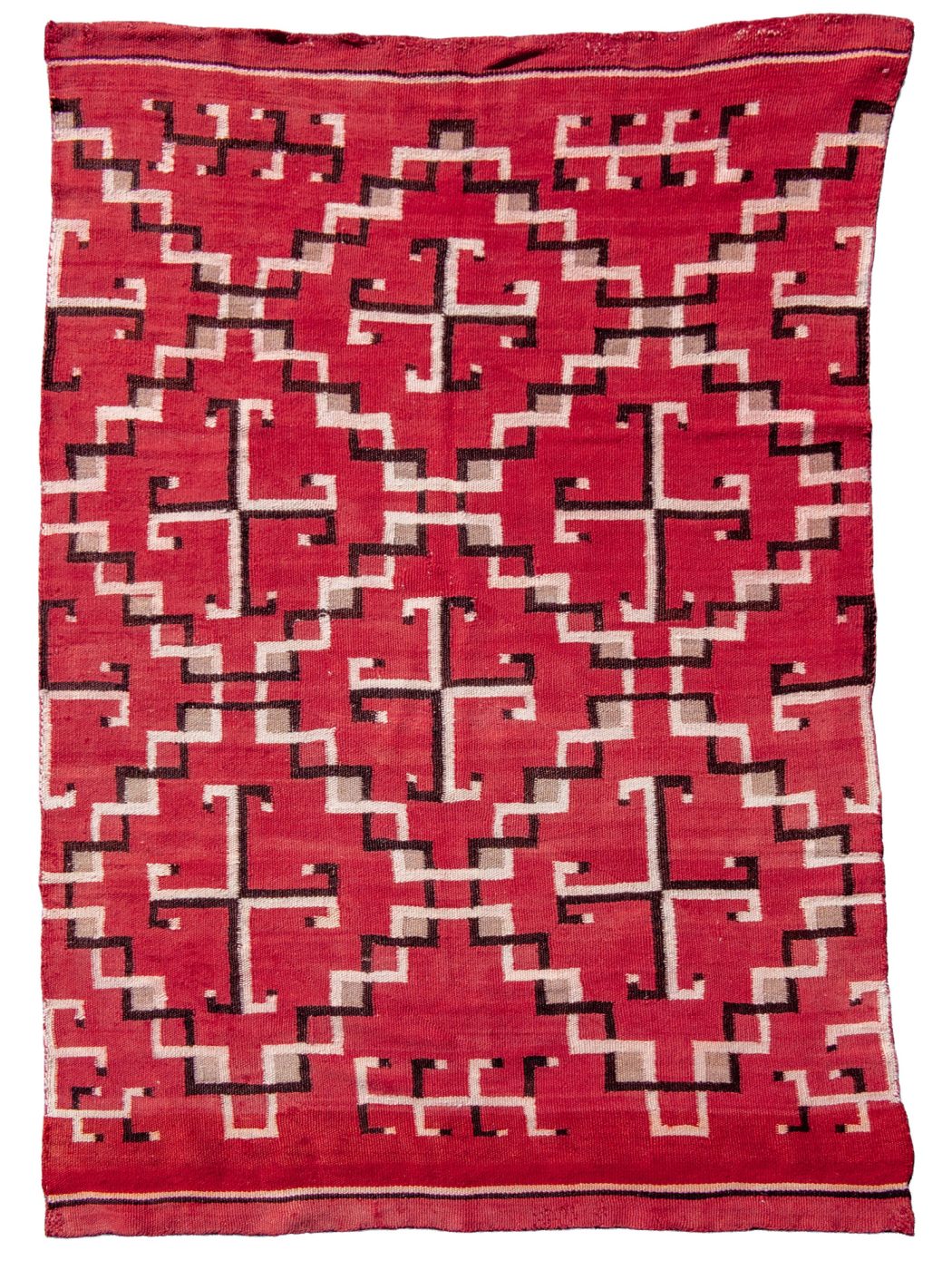
A few of the Stella textiles earn her particular curatorial favor. A circa 1885 eye dazzler incorporating diamonds and triangles has an impressively large color palette. “The confidence to use all those pinks and purples!” she says. The red dye employed in many of the textiles is derived from an insect called the cochineal, for centuries the traditional source for the color.
A circa 1900 optical textile is “one the strongest works of art in the Stella Collection,” Ahlberg Yohe writes in her show description, explaining, “The weaver tightly weaves radiating and overlapping abstract designs that are made to trick the eye. Four vertically separated quadrants of serrated triangles create vibrating energy.”

In terms of design strategy, she adds, “it was all about creating three-dimensional movement on a two-dimensional plane.”
The weavers were expert at turning what could be a liability into a strength. “It’s all a flat-weave technique,” says Pap. “It prohibits anything that’s curvilinear. There are only a certain number of combinations you can come up with.” They dazzle nonetheless.
Stella, of course, did not have such limitations in his work. His “Protractor” series, for instance, explored what happens when big curves meet straight lines.
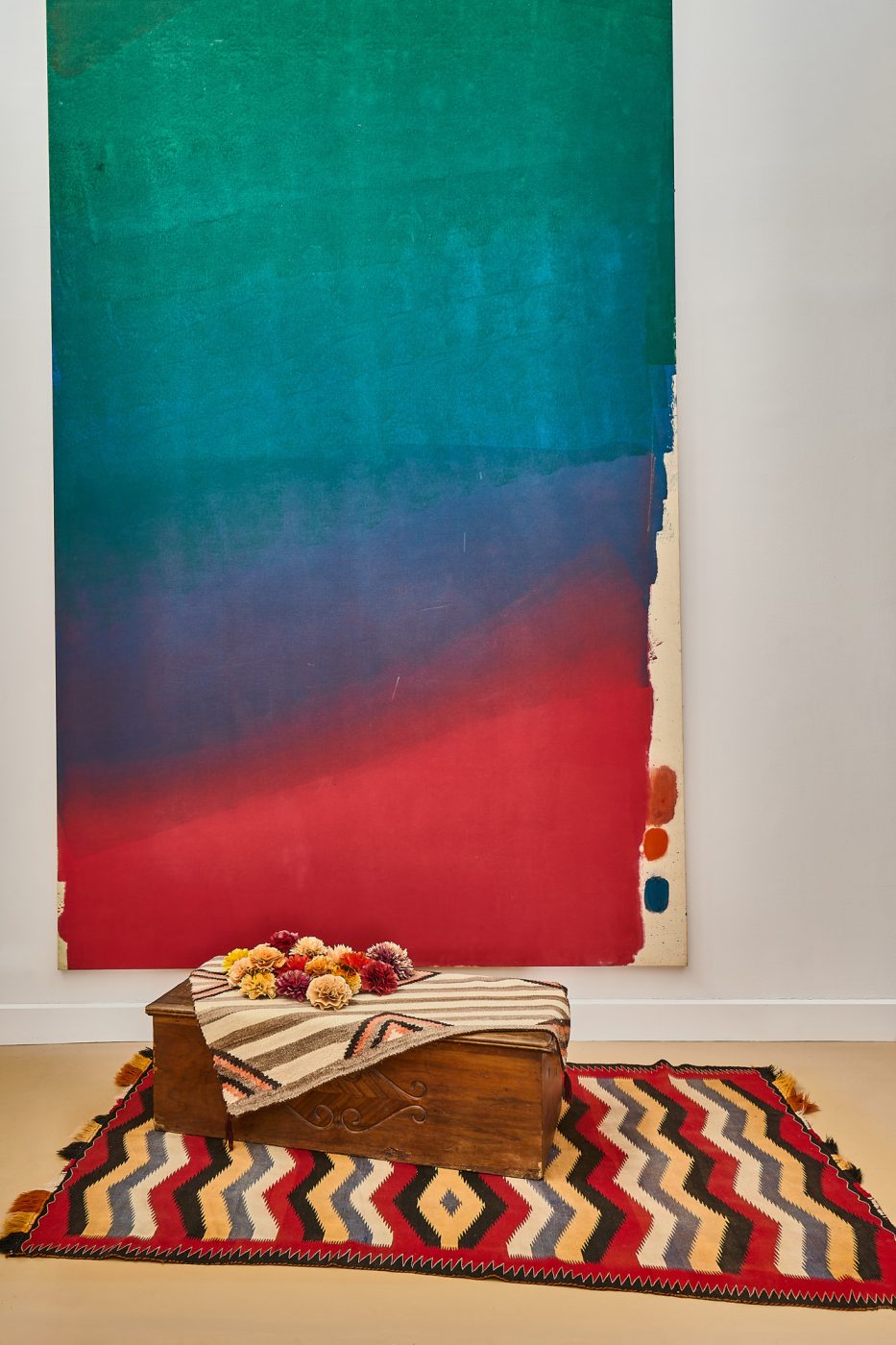
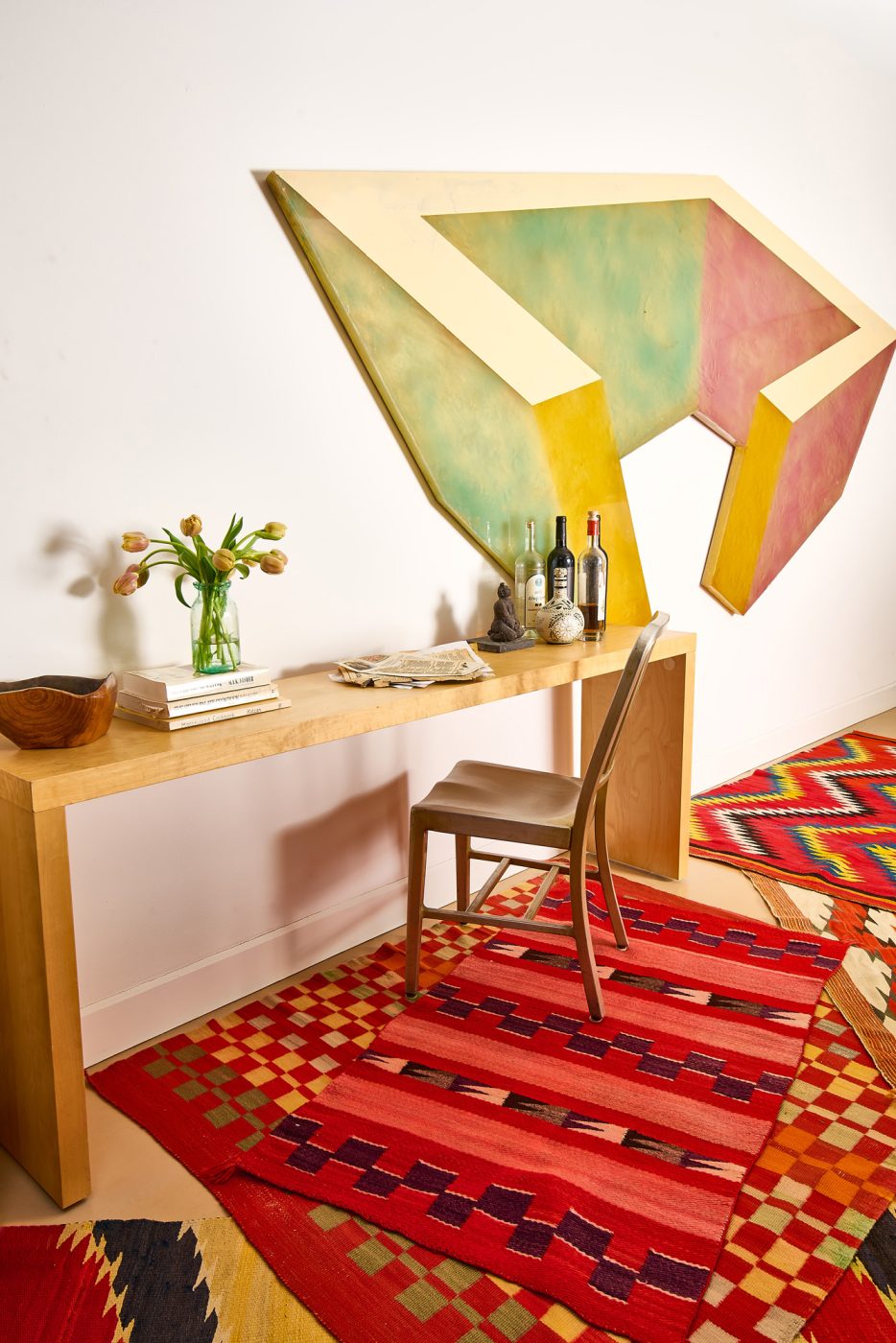
But he clearly greatly appreciated Diné work. And he was not alone in this among modern and contemporary artists. Makers as diverse as Jasper Johns, Georgia O’ Keeffe and Donald Judd have also been admirers. Too many great minds shared in this esteem for it to be a coincidence.
Ahlberg Yohe says that, although Stella did not evaluate expert textile details like the number of wefts per inch, “he saw the overall creative artistry. The things he was drawn to, you can see in his own work.”
The dialogue between the modern master and the turn-of-the-century Diné makers resonates for her. “It’s a visual conversation over time and space,” she says.