Phoenix - Prints and Multiples

to
3
50
53
30
9
3
Overall Width
to
Overall Height
to
17
5
2
1
5
4
4
4
4
5
133
7
1
7
9
1
4
4
8
12
3
79
62
3
77
43
39
24
20
17
10
9
8
8
7
6
5
5
4
4
4
4
3
2
92
25
14
10
8
12
1
50,723
36,814
Item Ships From: Phoenix
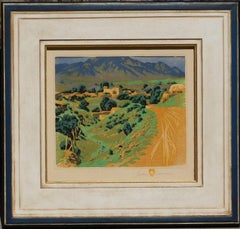
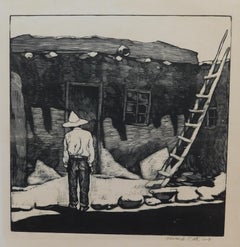
Gustave Baumann Color Woodblock - Rancho de Taos
By Gustave Baumann
Located in Phoenix, AZ
“Rancho de Taos” by well-known woodblock artist Gustave Baumann (1881-1971). The medium is color woodblock. It's a beautiful print in excellent condition. Baumann's personal Hand and...
Category

Mid-20th Century Phoenix - Prints and Multiples

Materials

Woodcut

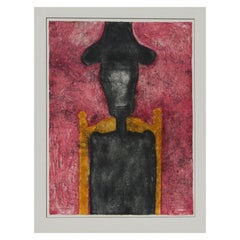
Rufino Tamayo Mixografia “Hombre En Negro, ” circa 1976
By Rufino Tamayo
Located in Phoenix, AZ
Mixografia “Man in Black” by well-known Mexico artist Rufino Tamayo (1891-1991). Signed “R. Tamayo” in pencil lower right. Numbered in pencil “60/140" lower left. In excellent unfram...
Category

Late 20th Century Phoenix - Prints and Multiples

Materials

Other Medium

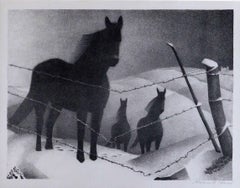
Grant Wood Original Pencil Signed Lithograph, 1940 - February
By Grant Wood
Located in Phoenix, AZ
Original pencil signed Grant Wood lithograph, "February," created 1940. A fine impression and one of the most important of the 19 lithographs created by the painter of "American Goth...
Category

1940s Phoenix - Prints and Multiples

Materials

Paper, Lithograph

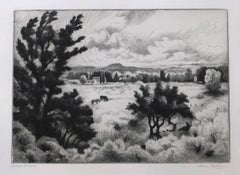
Taos Artist Gene Kloss Original Etching. Indian Summer
By Gene Kloss
Located in Phoenix, AZ
Original Etching by famous Taos Artist Gene Kloss (1903-1996). Full Margins. Edition of 75. Titled: Indian Summer. Image measures: 7 3/4" H x 11 1/8" W. Unframed. Archivally matted. ...
Category

Mid-20th Century Phoenix - Prints and Multiples

Materials

Paper, Etching

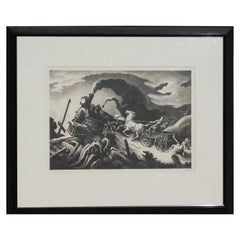
Thomas Hart Benton Original Lithograph, 1944 - Wreck of the Ol’ ‘97
By Thomas Hart Benton
Located in Phoenix, AZ
Original stone lithograph created 1944 by well-known Regionalist Thomas Hart Benton. The print is in excellent condition with full margins and pencil signed lower right. Also signed in the stone. It is matted in a 4-ply archival mat and rests in a simple black frame. Image size: 10 ½ x 15. Frame size: 18 x 23. Published by AAA. Ed: 250. Thomas Hart Benton found inspiration for his art in the ebb and flow of daily life in rural and small-town America. Wreck of the Ol’ 97, one of his best-known prints, is based on a ballad of the same title that tells the story of a rail disaster. A speeding locomotive attempting to make up lost time jumped the tracks as it descended a Virginia mountain...
Category

Mid-20th Century Phoenix - Prints and Multiples

Materials

Paper, Lithograph

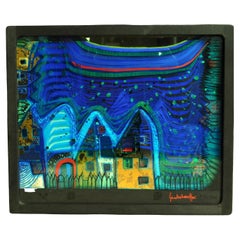
Friedensreich Hundertwasser Serigraph on Metal on Layered Plexiglas, 1979
By Friedensreich Hundertwasser
Located in Phoenix, AZ
Friedensreich Hundertwasswer (Austrian 1928-2000) Serigraph on Metal on Layered Plexiglas, 1979 “Fall in Cloud, Fall in Fog, Fall Out” Measures: 11 3/8"h x 13 3/4"w x 1 1/2"d. Prese...
Category

1970s Phoenix - Prints and Multiples

Materials

Plexiglass

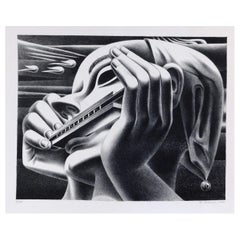
Emilio Amero Original Lithograph, 1950, Harmonica Blues
By Emilio Amero
Located in Phoenix, AZ
Original lithograph by Mexican artist Emilio Amero (1901 -1976) created 1950. Titled: “Harmonica Blues.” Edition size is 3 of 25. Signed in pencil lower right. In excellent condition. Presents in a 4-ply museum mat. Image size: 9 5/8"h x 12 1/4"w. Born in the village of Ixtlahuaca, in the state of Mexico, Emilio Amero counts Spaniards and Otomi Indians among his ancestors. Shortly after his birth, the family moved to Mexico City. In 1911 he began his studies in art at the Academy of San Carlos. He also studied drawing privately with Antonio Gomez, a family friend and well-known newspaper artist. At the academy in 1917, he became acquainted with Diaz de Leon, Rufino Tamayo, Ramon Alva de la Canal, Enrique Ugarte, and Leopoldo Mendez-all students there at the time. Later he joined the open air school in Coyoacan, founded and directed by Alfredo Ramos Martinez...
Category

Mid-20th Century Phoenix - Prints and Multiples

Materials

Paper

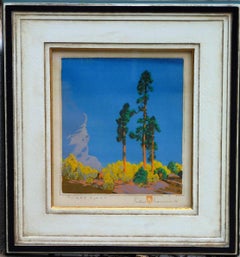
Gustave Baumann Color Woodblock - Three Pines
By Gustave Baumann
Located in Phoenix, AZ
“Three Pines” by well-known woodblock artist Gustave Baumann (1881-1971). The medium is color woodblock. It's a beautiful print in excellent condition. Baumann's personal Hand and He...
Category

Mid-20th Century Phoenix - Prints and Multiples

Materials

Paper, Color, Woodcut

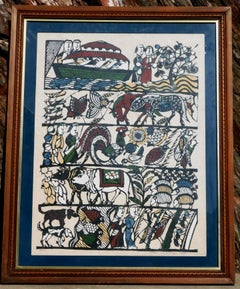
Sadao Watanabe Stencil Print, 1979 - Noah's Ark
By Sadao Watanabe
Located in Phoenix, AZ
Sadao Watanabe (1913-1996) Limited Edition Stencil Print on Hand Made Paper. Title: Noah's Ark. Created 1979. No. 45 of the edition of 100. Image size: 29 1/2"h x 21 1/2"w. Frame siz...
Category

1970s Phoenix - Prints and Multiples

Materials

Stencil

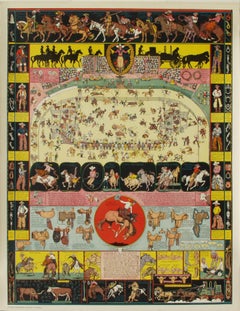
Jo Mora, Evolution of the Cowboy 1933, from Jo Mora Estate
Located in Phoenix, AZ
"LAST ONE IN MINT CONDITION" Evolution of the Cowboy, 1933 Original Lithograph Excellent condition, came directly from Jo Mora Jr. Unframed!! SHIPPING CHARGES INCLUDE SHIPPING, PACKAGING & INSURANCE Original version was called Evolution of the Cowboy, 1933 or referred today as "Sweetheart of the Rodeo", Images from the poster were used for "Sweetheart of the Rodeo", the sixth album by American rock band the Byrds and was released on August 30, 1968. It was hated when released, today it is considered one of the great classics. This is an original lithograph from the Jo Mora Estate from Jo Mora Jr. Joseph Jacinto Mora (October 22, 1876 – October 10, 1947) was a Uruguayan-born American cowboy, photographer, artist, cartoonist, illustrator, painter, muralist, sculptor, and historian who wrote about his experiences in California. He has been called the "Renaissance Man of the West". Early life Mora was born on October 22, 1876, in Montevideo, Uruguay. His father was the Catalan sculptor, Domingo Mora, and his mother was Laura Gaillard Mora, an intellectual born in the Bordeaux region of France. His elder brother was F. Luis Mora, who would become an artist and the first Hispanic member of the National Academy of Design. The family entered the United States in 1880 and first settled in New York City, and then Perth Amboy, New Jersey. Jo Mora 1931 Yosemite map Jo Mora studied art at the Art Students League of New York and the Cowles Art School in Boston. He also studied with William Merritt Chase. He worked as a cartoonist for the Boston Evening Traveller, and later, the Boston Herald. In the spring of 1903, Mora arrived in Solvang, California. He stayed at the Donohue Ranch. He made plans to travel to the Southwest to paint and photograph the Hopi. He spent time at the Mission Santa Inés; those photographs are now maintained by the Smithsonian Institution. Mora visited many Spanish missions in California that summer by horseback. He followed the "Mission Trail", also called the "Kings Highway". In 1904, Mora visited Yosemite. Later, in 1904, to 1906, visited Arizona where he took photographs, painted and otherwise recorded the daily life of these Native Americans. Because the Hopi and other tribes have voiced their concerns more recently about photographs depicting religious ceremonies, the tribal nation should be contacted before they are used. He learned the Native languages and made detailed drawings of what he observed. Career In 1907, Mora wrote and illustrated the comic strip Animaldom. In 1907, Mora returned to California and married Grace Needham. Their son, Joseph Needham Mora, was born on March 8, 1908. The Moras moved to San Jose, California, where Mora continued his work. On 22 February 1911, the Native Sons of the Golden West Building, in San Francisco, with six terra cotta panels, by Domingo Mora and his son, Jo Mora, was dedicated. In 1915, he served on the International Jury of Awards at the Panama–Pacific International Exposition and displayed six sculptures.[9] In 1915-16 two of his sculptural commissions were revealed: the bronze memorial tablet with the profile of the late Archbishop Patrick W. Riordan for the Knights of Columbus and the Cervantes Monument in San Francisco's Golden Gate Park.[10][11] By 1919, he was sculpting for the Bohemian Club, including the Bret Harte Memorial plaque, completed in August 1919 and mounted on the outside of the private men's club building in San Francisco. Carmel-by-the-Sea In 1921, the Mora family relocated to Carmel-by-the-Sea, California, the largest art colony on the West Coast, making it their primary residence. He constructed a Craftsman-style home, which is located on the west side of San Carlos Street, the third house south of 1st Avenue. Mora received a commission for the bronze and travertine Cenotaph, for Father Junípero Serra in the Memorial Chapel at the west end of Mission Carmel. Mora was a director of the Carmel Art Association as early as 1934. His sculptures were exhibited between 1927 and 1934 in various galleries in Carmel. Jo Mora is a serious sculptor, a responsible amateur actor; when mixed up with pen and ink, a humorist! Comic strips was once his trade. He was famous at it. That was years ago but his art of cartooning bloomed again when in recent years he produced the well known Mora Map of the Monterey Peninsula. Most successful with bronze statue creations which decorate many gardens in East and West. If he has a specialty in figures it is cowboys. He knows his West. Jo Mora will ever be famed for his portrayal of Pancho Lopez, The Bad Man, at Carmel Playhouse. He does everything well and is handsome while doing it. He is happily married-alas! — Carmel Pine Cone During the Great Depression, Mora created the "Carmel Dollar" as part of Carmel's program, offering unemployed residents scrip for public service, exchangeable for groceries and essentials; a three-cent stamp on the certificate's back acknowledged their efforts. When full, merchants accepted the certified scrip for goods or a dollar. Architect Robert Stanton...
Category

1930s Other Art Style Phoenix - Prints and Multiples

Materials

Lithograph

Gene Kloss Etching, 1982 - "Pueblo Dancer"
By Gene Kloss
Located in Phoenix, AZ
Drypoint on paper by famous Taos Artist Gene Kloss (1903-1996). Titled: “Pueblo Dancer.” Pencil signed lower right and in excellent condition. Image measures: 8" H x 6" W. Sheet size...
Category

1980s Phoenix - Prints and Multiples

Materials

Paper

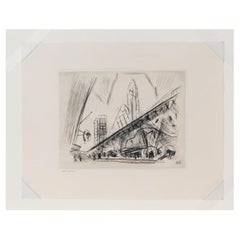
John Marin Etching, 1921 - “Downtown, the El”
By John Marin
Located in Phoenix, AZ
Beautiful etching by John Marin (1870-1953) created 1921. Title: Downtown, The El (From the New Republic Set) Medium: Etching Size: 6 7/8 x 8 5/8. Sheet: 10 3/4 x 14. Mat: 16 x 17 3...
Category

1920s Phoenix - Prints and Multiples

Materials

Paper

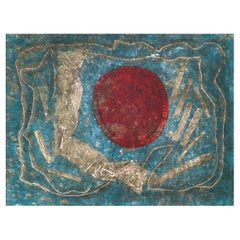
Rufino Tamayo Original Mixografica, 1976, Sol
By Rufino Tamayo
Located in Phoenix, AZ
Mixografia on Paper “Sol (The Sun)” by well-known Mexico artist Rufino Tamayo (1891-1991). Signed “R. Tamayo” lower right. Numbered lower left 96/140. Created 1976. In excellent cond...
Category

1970s Phoenix - Prints and Multiples

Materials

Paper

Werner Drewes Bauhaus Artist Color Woodblock, 1975, Enterlocked Forms
By Werner Drewes
Located in Phoenix, AZ
Original color woodblock print by Werner Drewes. In excellent condition. Unframed. Image measures 9 1/8 x 21 inches. Pencil signed and dated lower right. Edition size in pencil lower left: #3 of 30. (13) R-341 Werner Drewes (1899-1985) Werner Drewes, painter, printmaker, and teacher was born in Canig, Germany in 1899. His father, a Lutheran Minister, hoped he would become and architect but Werner chose the life of an artist. After he served on the front line in France during the war, Werner was admitted to the Bauhaus in 1921 where he studied under Klee, Itten, and Muche. Later, he traveled through Europe to study such old masters as Tintoretto, Velasque, and El Greco. After marrying Margaret Schrobsdorff, they traveled throughout South America, North America, and Asia. In 1930, Werner immigrated to New York City with his family. In New York City, despite the Depression, Werner joined other Bauhaus artists such as Mondrian and Feininger to make a living as an artist. This group became the core of the American Abstract Artists group. Werner taught at Columbia University, worked on the design of the 1939 Worlds Fair building...
Category

Late 20th Century Phoenix - Prints and Multiples

Materials

Paper

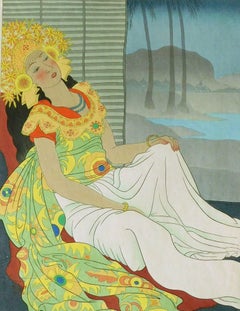
Color Woodblock Print - Apres La Danse "Celebes"
By Paul Jacoulet
Located in Phoenix, AZ
This beautiful color woodblock print by Paul Jacoulet was printed in 1940. This limited-edition work is numbered on the verso: 102 from the edit...
Category

Mid-20th Century Phoenix - Prints and Multiples

Materials

Woodcut

Ed Mell, This Palomino Ain't No Pal of Mine, Giant Size, 54 x 36 in , Special Ed
By Ed Mell
Located in Phoenix, AZ
This Palomino Ain’t No Pal of Mine 1982 Giant Size, Special Limited Edition Archival Pigment Print Original Pencil Signature, Signed Lower Right Made in collaboration with Ed Mell ...
Category

1980s Contemporary Phoenix - Prints and Multiples

Materials

Digital

Down to the Valley by Bill Schenck
By Bill Schenck
Located in Phoenix, AZ
Down in the Valley Bill Schenck Serigraph 46/50 Edition of 50 Image size: 25 x 29 inches Paper size: 31 x 35 inches SHIPPING CHARGES INCLUDE SHIPPING, PACKAGING & INSURANCE UNFRAM...
Category

1990s Contemporary Phoenix - Prints and Multiples

Materials

Screen

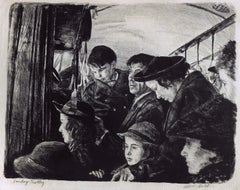
Albert Gold Depression Era Philadelphia Artist Lithograph - Sunday Trolley
By Albert Gold
Located in Phoenix, AZ
Original Lithograph by Depression-era Philadelphia artist Albert Gold (1916-2006). This work depicts the trolley on Sunday in downtown Philly. The image measures 10 ½ x 13 ½ inches, ...
Category

20th Century Phoenix - Prints and Multiples

Materials

Paper, Lithograph

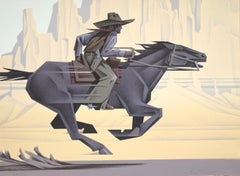
Full Speed Ahead by Ed Mell
By Ed Mell
Located in Phoenix, AZ
Full Speed Ahead 1985 Ed Mell 1942-2024 Original signature lower right Stone Lithograph 22 x 30 inches MINT CONDITION. NEVER FRAMED! SHIPPING CHARGES INCLUDE SHIPPING, PACKAGING...
Category

1980s Phoenix - Prints and Multiples

Materials

Lithograph

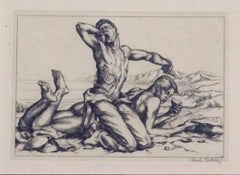
Paul Cadmus Signed Original Etching, 1938 - “Two Boys on a Beach No. 1"
By Paul Cadmus
Located in Phoenix, AZ
Original Etching in excellent condition by New York artist Paul Cadmus (1904-1999). Signed in pencil lower right. Created 1938. Presents in a simple black frame, archivally matted. ...
Category

Mid-20th Century Phoenix - Prints and Multiples

Materials

Etching

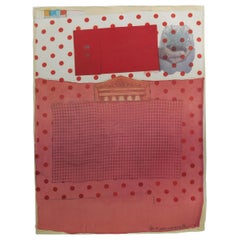
Robert Rauschenberg Pop Art, 1976, "Artists Rights Today"
By Robert Rauschenberg
Located in Phoenix, AZ
Robert Rauschenberg pop art offset lithograph created 1976. Pencil signed, dated, and numbered lower right. The edition size is 16 of 125. Titled: Artists rights today. The work is...
Category

Late 20th Century Phoenix - Prints and Multiples

Materials

Paper

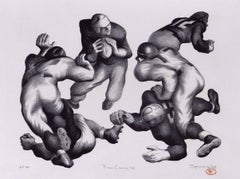
Original Lithograph - Football Subject
By Benton Murdoch Spruance
Located in Phoenix, AZ
Original lithograph created 1935 by Pennsylvania artist - Benton Spruance. Titled “Pass Coming Up.” The edition size is small - just 30. The image measures 10 x 14 inches and the pri...
Category

Mid-20th Century Phoenix - Prints and Multiples

Materials

Lithograph

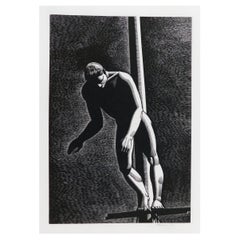
Rockwell Kent Original Wood Engraving, 1931 - Diver
By Rockwell Kent
Located in Phoenix, AZ
Rockwell Kent (1882-1971) wood engraving in excellent condition titled: Diver. Created 1931. Edition size: 150. Image measures: 7 7/8"h x 5 3/8"w. The print is unframed and presents ...
Category

Mid-20th Century Phoenix - Prints and Multiples

Materials

Paper

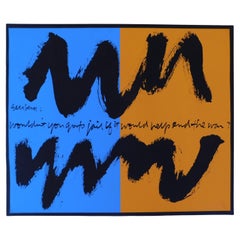
Corita Kent Original Serigraph Vietnam War Protest, "Wouldn't You Go to Jail.."
By Corita Kent
Located in Phoenix, AZ
Original serigraph by Sister Mary Corita Kent (1918-1986). Sheet size: 25"h x 30"w. Titled “Would You Go to Jail if it Would End the War? Quote by activist Daniel Ellsberg. Importan...
Category

Late 20th Century Phoenix - Prints and Multiples

Materials

Paper

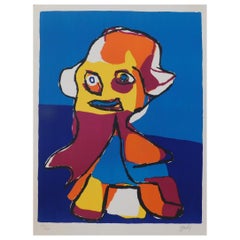
Karel Appel Abstract Original Color Lithograph, 1969
By Karel Appel
Located in Phoenix, AZ
Original Abstract Color lithograph by Dutch artist Karel Appel (1921-2006). Created 1969. Edition size is 53 of 200. The work is signed in pencil lower right. The image size is: 25 5...
Category

1960s Phoenix - Prints and Multiples

Materials

Paper

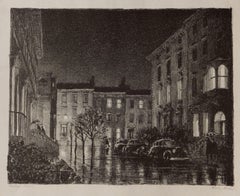
Fermin Rocker Mid-Century Signed Lithograph “Montague Terrace (Brooklyn N.Y.)
By Fermin Rocker
Located in Phoenix, AZ
Fermin Rocker (1907-2004) original pencil signed lithograph. The subject is a very atmospheric rendering of the Brooklyn Heights area of New York. The image measures 11 x 14 and rest...
Category

Mid-20th Century Phoenix - Prints and Multiples

Materials

Paper, Lithograph

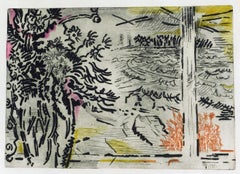
Original Pencil Signed Etching - Sound of the Sea
By Karl Schrag
Located in Phoenix, AZ
Original pencil signed etching and aquatint by Karl Schrag, 1958. In excellent condition - neither matted nor framed. No. 1 of the edition of 50. Image measures 19 7/8 x 27 3/4 inche...
Category

Mid-20th Century Phoenix - Prints and Multiples

Materials

Paper, Etching

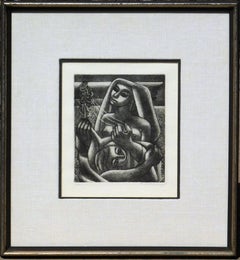
Emilio Amero Original Aquatint Etching, 1969 - The Fetish
By Emilio Amero
Located in Phoenix, AZ
Original aquatint by Mexican artist Emilio Amero (1901-1976) created 1969. Titled: “The Fetish.” Edition size is 9 of 50. Signed and dated in pencil lower right and numbered lower l...
Category

1960s Phoenix - Prints and Multiples

Materials

Aquatint

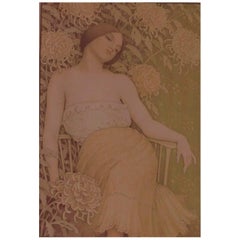
Paul Berthon Original Color Lithograph, 1899. “Les Chrysanthemes”
By Paul Berthon
Located in Phoenix, AZ
Wonderful original color lithograph by Paul Berthon (1872-1909). In excellent condition with great color. Unframed. Presents in a 4-Ply Archival Mat. Titled: "Les Chrysanthemes.” Cre...
Category

1890s Phoenix - Prints and Multiples

Materials

Paper

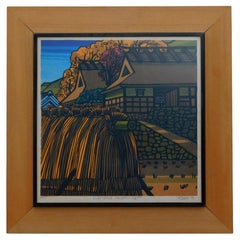
Clifton Karhu Original Color Woodblock, 1974, Koshihata Autumn
By Clifton Karhu
Located in Phoenix, AZ
This beautiful, limited edition original color woodblock is by the famous Showa Shin Hanga woodblock master Clifton Karhu (1927-2007). It bears the original frame and has a label on the back from a Tokyo gallery. The work is a beautiful impression with rich color. It and the frame are in excellent condition. The print measures 16 x 16 inches. The frame is 23 ½ x 23 ½ inches. It is numbered lower left as AP5 - Artist Proof #5 and is pencil signed and dated ‘74 lower right. An American of Finnish descent, Clifton Karhu was born in Minnesota in 1927. Raised together with his twin brother Raymond, Karhu was the son of painters Arne and Anna Karhu. After his graduation in 1946 he served in the military at an American Navy base in Japan. Returning to America following his military service in 1950, Karhu enrolled at the Minneapolis School of Art but quit two years later to pursue missionary work as a Lutheran minister. Karhu left the missionary work in 1958 and chose to move his new family to Gifu City, a small provincial town northwest of Kyoto, Japan where he set about returning to his art. Karhu soon found local success in 1961; obtaining first prize at the Chubu Taiheijo Bijutsu Kyokai Ten (The Middle Pacific Art Group Exhibition) and fixing his first single, professional exhibition at the Shin Gifu Gallery. In hopes of providing their three children with an international education, Karhu settled in Kyoto in 1963. The next few years proved heavily influential in Karhu’s work. Arguably forming the foundation for all his future success, Karhu found tutelage under recognized woodblock artist and gallery owner Tetsuo Yamada and colour theorist Stanton Macdonald-Wright. Responsible for shifting Karhu’s artistic doubts, Karhu proceeded to fulfill a very successful career in woodblock printing - carving his own works largely by himself. Clifton Karhu passed away in 2007 after an illustrious career that saw him viewed and celebrated as a local Kyoto celebrity, as well as having exhibited widely in many countries around the world. His woodblock prints have been collected by many famous museums including the Tokyo Modern Art...
Category

Late 20th Century Phoenix - Prints and Multiples

Materials

Paper

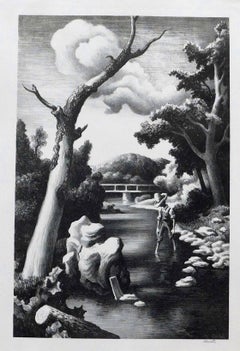
Thomas Hart Benton Original Lithograph, 1939 - "Shallow Creek"
By Thomas Hart Benton
Located in Phoenix, AZ
Original stone lithograph by well-known Regionalist Thomas Hart Benton (1889-1975). Titled: "Shallow Creek.” The print has full margins and is in excellent condition. AAA print creat...
Category

1930s Phoenix - Prints and Multiples

Materials

Paper

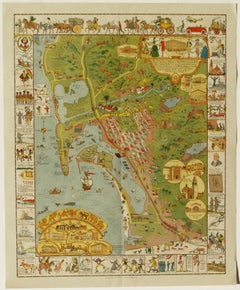
Jo Mora's 1928 "Carte" of San Diego, Very Rare Pictorial Map
Located in Phoenix, AZ
Jo Mora's 1928 "Carte" of San Diego, Very Rare Pictorial Map Size: 28 x 22.5 in (71.12 x 57.15 cm) Every good condition for it's age Originally came folded in envelope for mailing....
Category

1920s Other Art Style Phoenix - Prints and Multiples

Materials

Lithograph

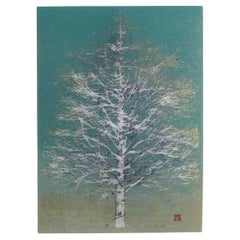
Joichi Hoshi Original Japanese Color Woodblock, 1974 - "Early Spring"
By Joichi Hoshi
Located in Phoenix, AZ
Joichi Hoshi (1913-1979) Original Color Woodblock, 1974. Title: “Early Spring.” Image: 9 5/8"h x 7.” Frame: 17 1/4"h x13 5/8"w. Signed in pencil lower right and dated ‘74. Chop mark...
Category

1970s Phoenix - Prints and Multiples

Materials

Paper

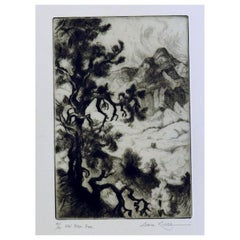
Gene Kloss Original Etching, 1981 - "Old Pinon Tree"
By Gene Kloss
Located in Phoenix, AZ
Etching & Drypoint on paper by famous Taos Artist Gene Kloss (1903-1996). Titled: “Old Pinon Tree.” Pencil signed lower right and in excellent condition. Image measures: 8" H x 6" W....
Category

1980s Phoenix - Prints and Multiples

Materials

Paper

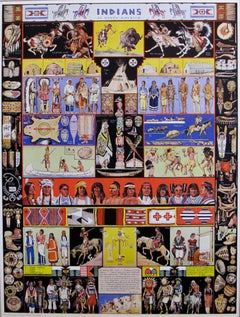
Indians of North America 1936 by Jo Mora
Located in Phoenix, AZ
Indians of North America 1936 Jo Mora Lithograph Paper size: 31 7/8 x 24 1/4 inches Image size; 30 1/4 x 22 7/8 inches These are the original lithographs from the Jo Mora Estate from Jo Mora Jr. THESE ARE NOT REPRODUCTIONS! SHIPPING CHARGES INCLUDE SHIPPING, PACKAGING & INSURANCE Joseph Jacinto Mora 1876 – 1947 Mora was born in Montevideo, Uruguay, and was the son of Domingo Mora, a well-known painter and sculptor who brought his family to the United States in the mid 1890s and then became a teacher in New York at the Art Students League. Joseph and his artist brother Luis Mora (1874-1940) grew up being much influenced by the creative atmosphere of their father’s studio. In 1904, he returned to Arizona and New Mexico and lived with Hopi and Navajo tribes, learning their languages and painting depictions of their ceremonies, especially the Kachina ceremonial dances. One of the results of his Western travels was a series of humorous maps that were spoofs of the national parks and that were made into posters. In the 1930s, the maps sold for 25 cents each and were distributed through souvenir shops at the parks. He also painted a watercolor series, “Horsemen of the West” and wrote two books, “Trail Dust and Saddle Leather” and “Californios.” Joseph Mora died in Pebble Beach on October 10, 1947. Devoting his life to exploration of subjects as diverse as vaqueros, Hopi Kachina figures, the Arizona landscape, and California missions, Joseph Mora also excelled as a writer, photographer, designer, children’s book illustrator, and map maker. “Apart from the bread and butter commissions that he referred to as “pot-boilers,” Mora has left a vast legacy of fine artwork. His contributions to public sculpture and architectural decorations, which are numerous and diverse, gaze calmly at the world from buildings in Los Angeles, San Francisco, Salinas, San Jose and Portland. Mora’s dioramas and large-scale figures are permanently in Monterey and Sacramento, California and Claremore and Bartlesville, Oklahoma. His drawings, paintings and photographs are cherished in private collections and private institutions across the country and first editions of his books are highly valued. But in the final analysis, Mora’s most important works may be his cartes. In these entertaining maps, Mora combined his encyclopedic knowledge of history, his writing, drawing, and cartooning skills, his fine sense of design, and his sense of playfulness to create an art form uniquely his own. Mora’s cartes are still captivating more than fifty years after their completion, and they exemplify the popular, entertaining, direct, and informative art at which Mora excelled.” Betty Hoag McGlynn • Original works by Maynard Dixon, Lon Megargee, Ed Mell, Fritz Scholder, Bill Schenck, Bill Lesch, Luis Jimenez, Greg Singley, Dan Budnik, and other 20th century Western, WPA and Contemporary Southwestern artists. • The Fine Art Estate of Lon Megargee • Vintage rodeo...
Category

1930s Other Art Style Phoenix - Prints and Multiples

Materials

Lithograph

Louis Lozowick Original Lithograph Pencil Signed “Coal Pockets”
By Louis Lozowick
Located in Phoenix, AZ
Original pencil signed etching by Ukraine/Pennsylvania artist Louis Lozowick (1892-1973). The print, created 1929, measures 8 3/4 x 15 inches and is unframed. It is in excellent cond...
Category

Early 20th Century Phoenix - Prints and Multiples

Materials

Etching

Don Freeman Original Pencil Signed Lithograph “Casting for a Character”
By Don Freeman
Located in Phoenix, AZ
Original lithograph signed lower right, by California/New York artist Don Freeman. Seeing as Don Freeman liked to attend theater in New York and go backstage to meet the players and ...
Category

Mid-20th Century Phoenix - Prints and Multiples

Materials

Paper, Lithograph

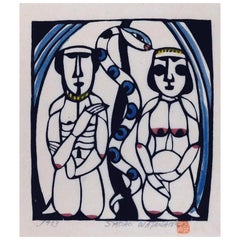
Sadao Watanabe Original Stencil Print, 1973 - Adam and Eve
By Sadao Watanabe
Located in Phoenix, AZ
Stencil Print by Sadao Watanabe, hand colored on hand-made washi paper. This image depicts Adam & Eve with the snake in the garden of Eden from Genesis. Artist’s chop mark and penci...
Category

Late 20th Century Phoenix - Prints and Multiples

Materials

Paper

Herman Volz Original Woodcut, Social Unrest of the 1960's, Disbursing the Riot
By Herman Roderick Volz 1
Located in Phoenix, AZ
An original woodcut print depicting the social unrest of the 1960s by Herman Roderick Volz. Pencil signed by the artist lower right. Image measures 14" x 24," sheet measures 18 1/2"...
Category

Mid-20th Century Phoenix - Prints and Multiples

Materials

Paper

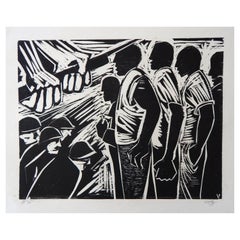
Herman Volz Original Woodcut, Social Unrest of the 1960s, Rioters
By Herman Roderick Volz 1
Located in Phoenix, AZ
An original woodcut print depicting the social unrest of the 1960s by Herman Roderick Volz. Pencil signed by the artist lower right. Image measures 11 1/2" x 14 1/2," sheet measures...
Category

Mid-20th Century Phoenix - Prints and Multiples

Materials

Paper

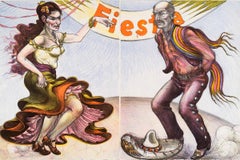
Fiesta by Luis Jimenez (Diptych) Stone Lithograph
By Luis Jiménez
Located in Phoenix, AZ
Artist: Luis Jimenez, American (1940 - 2006) Title: Fiesta (Diptych) Year: 1986 Medium: Two Lithographs on Arches, signed and numbered in pencil Edition: 76 Size: 34 x 24 in. (86.36 ...
Category

1980s Contemporary Phoenix - Prints and Multiples

Materials

Lithograph

Jose by Luis Jimenez
By Luis Jiménez
Located in Phoenix, AZ
Jose 1986 Color lithograph 23/30 23 × 34 in 58.4 × 86.4 cm. SHIPPING CHARGES INCLUDE SHIPPING, PACKAGING & INSURANCE Luis Jimenez 1940 - 2006 Luis Jiménez was born in El Paso, Te...
Category

1980s Contemporary Phoenix - Prints and Multiples

Materials

Lithograph

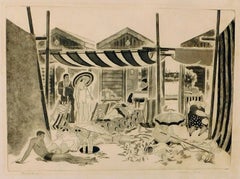
Salvatore Pinto Original Aquatint and Etching “Beach Houses”
Located in Phoenix, AZ
Charming etching by Italian/Pennsylvania artist Salvatore Pinto (1905-1966). The work is titled in pencil lower left “Beach Houses.” Created 1935. Signed in pencil lower right “Salv...
Category

Mid-20th Century Phoenix - Prints and Multiples

Materials

Etching, Aquatint

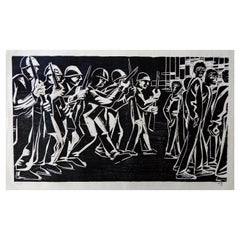
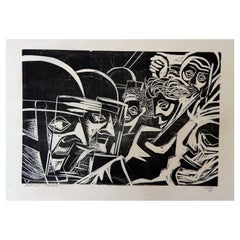
Herman Volz Original Woodcut, Social Unrest of the 1960's, Confrontation
By Herman Roderick Volz 1
Located in Phoenix, AZ
An original woodcut print depicting the social unrest of the 1960s by Herman Roderick Volz. Pencil signed by the artist lower right. Image measures 11 1/2" x 17," sheet measures 18"...
Category

Mid-20th Century Phoenix - Prints and Multiples

Materials

Paper

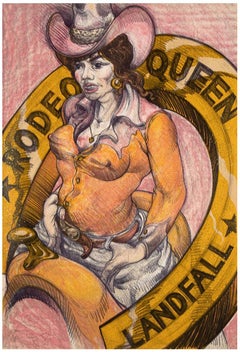
Rodeo Queen by Luis Jimenez
Located in Phoenix, AZ
Rodeo Queen, 1981 Edition 36/50 Signed lower left, Inscribed: for the "Rose" 82. Provenance: Print was a gift to Rozanne Charington, companion and model for "Rodeo Queen", "Rose Tattoo" and "Jimenez at Adeliza's Candy Store". Lithograph on paper 42 ½ × 29 in. (107.3 × 73.7 cm) Luis Alfonso Jimenez Born, 1940, El Paso, Texas, died 2006, Hondo, New Mexico. Statement: Luis Jimenez, in his work, celebrates the vitality of life. . . . Jimenez es un hijo de la frontera; he knows its people and the landscape. It is the transformation of these people into art that is his most important contribution to the art of this vast region which stretches between Mexico and the United States. His subject matter utilizes the popular images of the cultura del norte, and a large part of it is depicted and transformed in the rough and tumble world of la frontera. He is also a son of el norte, and so he uses its materials and explores its emerging, popular myths. The tension and attraction of Jimnez’s work is that he always creates within the space of his two worlds, the Mexicano and the Americano. He constantly shows us the irony of the two forces which repel, while showing us glimpses of the synthesis he seeks. What a gift it has been to us for this talented artist to reflect on the soul of our region. He gives meaning to our existence and history. Rudolfo Anaya (passage chosen by the artist), A View from La Frontera, Man on Fire: Luis Jimenez, pp. 1, 3, 6Biography: Luis Jimenez was born in Texas to parents who had emigrated from Mexico to the United States; he would later dedicate his 1989 sculpture Border Crossing to his father, who had entered the country illegally. The elder Jimenez was a neon sign designer in El Paso, and Luis worked with him as a youth. His experience working in the neon shop and his fascination with U.S. car culture would both become major influences on his art career. Jimenez studied architecture at the University of Texas, Austin (UTA), and also took art courses in which he first created sculptures with wood, steel, and fiberglass, choosing the latter because of its association with U.S. popular culture. He subsequently became one of the artists who made fiberglass an acceptable medium in the 1960s. In 1964 Jimenez received his B.S. in art from UTA, and he continued his studies at the Universidad Nacional Autonoma de Mexico in Mexico City. In 1966 he moved to New York City and worked as an assistant to sculptor Seymour Lipton. Jimenez began to exhibit his art while in New York and in 1972 moved to New Mexico to focus on creating public sculptures, even as he maintained his diverse output of drawings, prints, and lithographs. Drawing on his early experiences, Jimenez creates works that come from a border perspective, one that draws upon the hybridity bred by culture clashes. Often socially and politically informed, his works speak not only in regional terms, those germane to the southwestern United States, but to broader, more global issues as well. They exhibit a profoundly Chicano aesthetic and sensibility, one that is informed by Mexican and Mexican American traditions, North American popular culture, Chicano cultural icons, and images and themes unique to the Southwest. Death, sexuality, and the struggle of the common people are frequent themes. Inspired by authors who write in an autobiographical style, Jimenez creates works that function as personal narrative yet are also able to make statements about culture in more global terms. His use of bold colors and lines, a legacy from his fathers work as a neon sign maker, lends a dynamic sensuality to his work, one that is particularly evident in his monumental fiberglass and acrylic urethane sculptural works Many of Jimenez's works correspond to scholar Toms Ybarra-Fraustos definition of the Chicano aesthetic of rasquachismo, a lowbrow sensibility that appeals to the working class in that it applies to objects that subvert expressions of the mainstream or dominant culture. Creating art that speaks to the people, Jimenez is able to transform regional and culturally specific myths and symbols into globally recognized and relevant icons. Exhibitions: In addition to his personal work, Jimenez has been commissioned for numerous public art projects. In 1999 his sculpture Southwest Piet was designated a National Treasure by First Lady Hillary Clinton. The many exhibitions featuring his work have included Human Concern/Personal Torment (Whitney Museum of American Art, New York, 1969). The First International Motorcycle Art Show (Phoenix Art Museum, Phoenix, AZ, 1973). Three Texas Artists (Centre Cultural Americaine, USIS, Paris, 1977), Recent Trends in Collecting (Smithsonian Institution, Washington, DC, 1982). Committed to Print (Museum of Modern Art, New York, 1989) Printmaking in Texas: The 1980s (Modern Art Museum, Fort Worth, TX. Laguna Gloria Art Museum, Austin, 1990. The Whitney Biennial (Whitney Museum of American Art, New York, 1991) Man On Fire: Luis Jimnez (Albuquerque Museum of Art, NM, 1994-95). 47th Annual Purchase Exhibition (American Academy of Arts and Letters, New York, 1995). Traveling solo exhibition, Working Class Heroes: Images from the Popular Culture (1997-2000). Jiménez Collier Gallery has been in continuous operation for over 40 years. Originally located just off Main Street in downtown Scottsdale, Arizona, we have moved to Phoenix to accommodate and showcase our large inventory including: • Original works by Maynard Dixon, Lon Megargee, Ed Mell, Fritz Scholder, Bill Schenck, Bill Lesch, Luis Jimenez, Greg Singley, Dan Budnik, and other 20th century Western, WPA and Contemporary Southwestern artists. • The Fine Art Estate of Lon Megargee • Vintage rodeo...
Category

1980s Contemporary Phoenix - Prints and Multiples

Materials

Lithograph

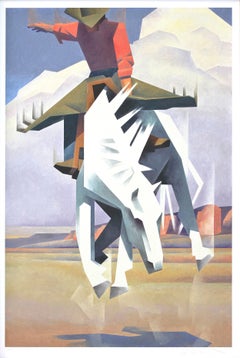
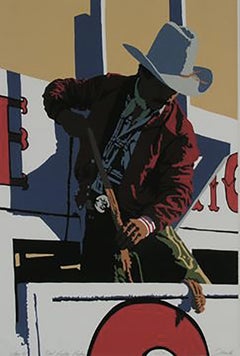
Red Rider by Bill Schenck
By Bill Schenck
Located in Phoenix, AZ
SHIPPING CHARGES INCLUDE SHIPPING, PACKAGING & **INSURANCE** Red Rodeo Rider 1981 Bill Schenck Serigraph, edition of 75 Image size 35 x 25 inches UNFRAMED Billy Schenck has been...
Category

1980s Phoenix - Prints and Multiples

Materials

Screen

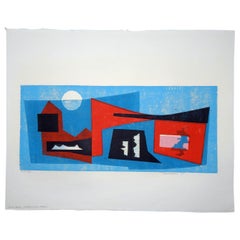
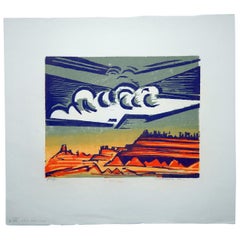
Werner Drewes Bauhaus Artist Color Woodblock, 1977, White Storm Cloud
By Werner Drewes
Located in Phoenix, AZ
Original color woodblock print by Werner Drewes. In excellent condition. Unframed. Image measures 11 1/4 x 14 1/4 inches. Pencil Signed and Dated: Proof (15) R-364. Werner Drewes (1899-1985) Werner Drewes, painter, printmaker, and teacher was born in Canig, Germany in 1899. His father, a Lutheran Minister, hoped he would become and architect but Werner chose the life of an artist. After he served on the front line in France during the war, Werner was admitted to the Bauhaus in 1921 where he studied under Klee, Itten, and Muche. Later, he traveled through Europe to study such old masters as Tintoretto, Velasque, and El Greco. After marrying Margaret Schrobsdorff, they traveled throughout South America, North America, and Asia. In 1930, Werner immigrated to New York City with his family. In New York City, despite the Depression, Werner joined other Bauhaus artists such as Mondrian and Feininger to make a living as an artist. This group became the core of the American Abstract Artists group. Werner taught at Columbia University, worked on the design of the 1939 Worlds Fair building...
Category

Late 20th Century Phoenix - Prints and Multiples

Materials

Paper

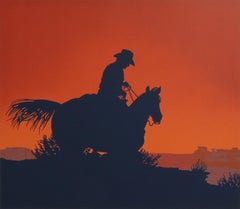
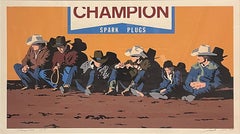
Champion by Billy Schenck
By Bill Schenck
Located in Phoenix, AZ
SHIPPING CHARGES INCLUDE SHIPPING, PACKAGING & **INSURANCE** Champion 1979 Billy Schenck Serigraph Image size: 16 x 27 inches Billy Schenck has been known internationally for 44 ye...
Category

1980s Contemporary Phoenix - Prints and Multiples

Materials

Screen

Martin Lewis 20th Century Master Printmaker, Etching, 1932 "White Monday"
By Martin Lewis
Located in Phoenix, AZ
Original drypoint etching and aquatint in mint condition by well-known artist and printmaker Martin Lewis, (1881-1962) The print has full margins with deckle edges and is signed in p...
Category

Mid-20th Century Phoenix - Prints and Multiples

Materials

Paper

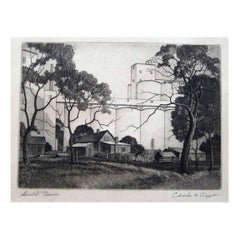
Charles Capps Original Pencil Signed Etching, 1954, "Sunlit Towers"
Located in Phoenix, AZ
A wonderful regionalist etching and aquatint by Charles Capps (1898-1981) Titled "Sunlit Towers," depicts the Kansas grain elevators. A Prairie Printmake...
Category

Mid-20th Century Phoenix - Prints and Multiples

Materials

Paper

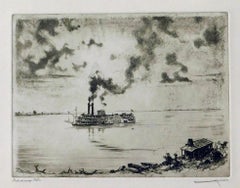
Otto Kuhler Signed Original Etching “Mississippi Evening”
By Otto Kuhler
Located in Phoenix, AZ
Otto Kuhler (1894-1976) original etching, 1923. Title: “Mississippi Evening” Signed in pencil lower right. Title in pencil lower center. Dated lower left, 1923. Image measures 7 7/8...
Category

Early 20th Century Phoenix - Prints and Multiples

Materials

Etching

Last Silver Dollar By Greg Singley, Original Signed Print
Located in Phoenix, AZ
Flip For It Artist: Greg Singley Signed original signature Archival Pigment Print, 100% Rag Paper Paper size: 24 x30 inches Image Size: 20 x 26 inches The art of Greg Singley have b...
Category

2010s Contemporary Phoenix - Prints and Multiples

Materials

Archival Pigment

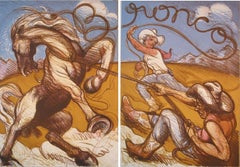
Bronco
Located in Phoenix, AZ
SHIPPING FEES INCLUDE SHIPPING CHARGE, PACKAGING & **INSURANCE** Luis Alfonso Jimenez Born, 1940, El Paso, Texas, died 2006, Hondo, New Mexico. Statement: Luis Jimenez, in his work, celebrates the vitality of life. . . . Jimenez es un hijo de la frontera; he knows its people and the landscape. It is the transformation of these people into art that is his most important contribution to the art of this vast region which stretches between Mexico and the United States. His subject matter utilizes the popular images of the cultura del norte, and a large part of it is depicted and transformed in the rough and tumble world of la frontera. He is also a son of el norte, and so he uses its materials and explores its emerging, popular myths. The tension and attraction of Jimnez’s work is that he always creates within the space of his two worlds, the Mexicano and the Americano. He constantly shows us the irony of the two forces which repel, while showing us glimpses of the synthesis he seeks. What a gift it has been to us for this talented artist to reflect on the soul of our region. He gives meaning to our existence and history. Rudolfo Anaya (passage chosen by the artist), A View from La Frontera, Man on Fire: Luis Jimnez, pp. 1, 3, 6Biography: Luis Jimnez was born in Texas to parents who had emigrated from Mexico to the United States; he would later dedicate his 1989 sculpture Border Crossing to his father, who had entered the country illegally. The elder Jimnez was a neon sign designer in El Paso, and Luis worked with him as a youth. His experience working in the neon shop and his fascination with U.S. car culture would both become major influences on his art career. Jimenez studied architecture at the University of Texas, Austin (UTA), and also took art courses in which he first created sculptures with wood, steel, and fiberglass, choosing the latter because of its association with U.S. popular culture. He subsequently became one of the artists who made fiberglass an acceptable medium in the 1960s. In 1964 Jimenez received his B.S. in art from UTA, and he continued his studies at the Universidad Nacional Autnoma de Mexico in Mexico City. In 1966 he moved to New York City and worked as an assistant to sculptor Seymour Lipton. Jimnez began to exhibit his art while in New York and in 1972 moved to New Mexico to focus on creating public sculptures, even as he maintained his diverse output of drawings, prints, and lithographs. Drawing on his early experiences, Jimnez creates works that come from a border perspective, one that draws upon the hybridity bred by culture clashes. Often socially and politically informed, his works speak not only in regional terms, those germane to the southwestern United States, but to broader, more global issues as well. They exhibit a profoundly Chicano aesthetic and sensibility, one that is informed by Mexican and Mexican American traditions, North American popular culture, Chicano cultural icons, and images and themes unique to the Southwest. Death, sexuality, and the struggle of the common people are frequent themes. Inspired by authors who write in an autobiographical style, Jimnez creates works that function as personal narrative yet are also able to make statements about culture in more global terms. His use of bold colors and lines, a legacy from his fathers work as a neon sign maker, lends a dynamic sensuality to his work, one that is particularly evident in his monumental fiberglass and acrylic urethane sculptural works Many of Jimnezs works correspond to scholar Toms Ybarra-Fraustos definition of the Chicano aesthetic of rasquachismo, a lowbrow sensibility that appeals to the working class in that it applies to objects that subvert expressions of the mainstream or dominant culture. Creating art that speaks to the people, Jimnez is able to transform regional and culturally specific myths and symbols into globally recognized and relevant icons. Exhibitions: In addition to his personal work, Jimnez has been commissioned for numerous public art projects. In 1999 his sculpture Southwest Piet was designated a National Treasure by First Lady Hillary Clinton. The many exhibitions featuring his work have included Human Concern/Personal Torment (Whitney Museum of American Art, New York, 1969). The First International Motorcycle Art Show (Phoenix Art Museum, Phoenix, AZ, 1973). Three Texas Artists (Centre Cultural Americaine, USIS, Paris, 1977), Recent Trends in Collecting (Smithsonian Institution, Washington, DC, 1982). Committed to Print (Museum of Modern Art, New York, 1989) Printmaking in Texas: The 1980s (Modern Art Museum, Fort Worth, TX. Laguna Gloria Art Museum, Austin, 1990. The Whitney Biennial (Whitney Museum of American Art, New York, 1991) Man On Fire: Luis Jimnez (Albuquerque Museum of Art, NM, 1994-95). 47th Annual Purchase Exhibition (American Academy of Arts and Letters, New York, 1995). Traveling solo exhibition, Working Class Heroes: Images from the Popular Culture (1997-2000). Jiménez Collier Gallery has been in continuous operation for over 40 years. Originally located just off Main Street in downtown Scottsdale, Arizona, we have moved to Phoenix to accommodate and showcase our large inventory including: • Original works by Maynard Dixon, Lon Megargee, Ed Mell, Fritz Scholder, Bill Schenck, Bill Lesch, Luis Jimenez, Greg Singley, Dan Budnik, and other 20th century Western, WPA and Contemporary Southwestern artists. • The Fine Art Estate of Lon Megargee • Vintage rodeo...
Category

1970s Contemporary Phoenix - Prints and Multiples

Materials

Lithograph

Sonoran Kings by Ed Mell
By Ed Mell
Located in Phoenix, AZ
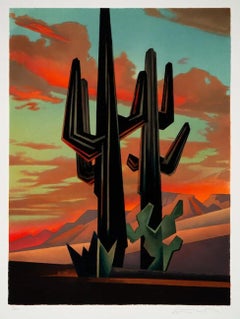
"Sonoran Kings" Ed Mell 1942-2024 Stone lithograph 32" x 24" **PRINTS ARE ESTATE SIGNED WITH WITH EMBOSSED LOGO AND SIGNATURE STAMP*** Edition. 200, 2020 Print is unframed. Biograp...
Category

21st Century and Contemporary Phoenix - Prints and Multiples

Materials

Lithograph

Theophile Alexandre Steinlen Original Stone Lithograph, 1894 - Petit Voyage
By Théophile Alexandre Steinlen
Located in Phoenix, AZ
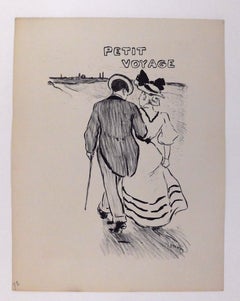
Original Lithograph by Theophile Steinlen - Swiss born French Artist (1859-1923). Titled: “Petit Voyage” (Little Journey). Signed “Steinlen” in the stone lower left. The work is in ...
Category

Late 19th Century Phoenix - Prints and Multiples

Materials

Lithograph

2 Lazy 2 P
Located in Phoenix, AZ
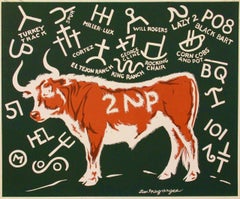
2 Lazy 2P, ca. 1939 Lon Megargee Serigraph 20 x 24 inches Signed in screen Original serigraph print by Lon Megargee 1883 - 1960 Featured in "Hot Irons" by Oren Arnold and John Hale, 1940 SHIPPING CHARGES INCLUDE SHIPPING, PACKAGING & INSURANCE Lon Megargee created this serigraph from his commission with Oren Arnold and John Hale to do their dust jacket for the book, " Hot Irons", 1940. Arnold and Hale wanted to establish a reference work, an "authority", with a entertaining history about the evolution of the brand. Megargee created a painting of a steer that was branded with the script, 2 Lazy 2 P. Surrounding the steer is a random display of famous brands of ranches in the Southwest. It was well received and must have prompted Megargee to create the likeness as a print. The brand is described in chapter thirteen, page 207-208 and says, " Ed Stram, who was Arizona state veterinarian for sixteen years, fire-branded his cattle with this peculiar crest. It isn't peculiar unless you have an equally peculiar sense of humor. At a glance it appears to be just another typically unimaginative brand, but it has been used to make many a thousand girls blush, and a few thousand bashful young men as well". COLLIER GALLERY, FINE ART ESTATE OF LON MEGARGEE Born and raised in Philadelphia, Pennsylvania, Lon Megargee, at age 13, ran away from his upper class home and went West in 1896 led by his zest for the wild and adventuresome life. There he established a reputation as a cowboy painter and illustrator with work most associated with Arizona Brewing Company ads featuring humorous aspects of cowboy life. In his youth, he worked as a free-lance cowboy, exhibition roper, poker dealer, and bronco buster in Arizona, and then went east again to study art in Philadelphia at the Pennsylvania Academy of Fine Arts, and to New York at the Art Students League and Pratt Institute. He returned to Arizona, living in Cave Creek, Salt River Canyon, Phoenix and the last years of his life near Sedona. His Phoenix home later became a popular hotel and dining place called the Hermosa Inn. Megargee was a ranch owner and also did oil canvases of the places he loved and the cowboy life he admired. By 1910, he was among the earliest resident artists, and was probably the best known artist in Arizona. His name was first associated with a landscape series of 15 large murals for the Capitol Building, newly constructed just after Arizona became a state in 1912. Another one of his paintings, Elemental, was the first painting by an artist living in Arizona to be acquired for the Municipal Collection of Phoenix. These works were chosen from entries in the State Fair, where he continued to win prizes for figure and landscape painting. From 1911 to 1953, he did numerous commission works for the Santa Fe Railroad, including a work titledNavajos Watching a Santa Fe Train. Between 1915 and 1930, he also painted in the Los Angeles area of California and had entries in the California State Fair. He died in Cottonwood, Arizona. After his death, theSaturday Evening Post had a double-page reproduction of his painting Cowboy's Dream. Creator of the iconic logo for the Stetson Hat Company, " Last Drop From his Stetson", still in use today. Fine Art Estate of Lon Megargee We offer signed in print and original signature block prints. Custom, hand carved, signature frames, with archival standards and a speciality in hand dyed mats and french matting are provided for a beautiful and timeless presentation. Megargee explored different mediums; printmaking captivated him in particular. The contrast of the black and white block print method captured perfectly his interpretation of a bold American West. The first print was produced around 1921 and culminated with the creation of “The Cowboy Builds a Loop” in 1933 with 28 images and poetry by his friend, Roy George. Megargee continued producing prints throughout the 1940s and early 50s. At age 13, Lon Megargee came to Phoenix in 1896 following the death of his father in Philadelphia. For several years he resided with relatives while working at an uncle’s dairy farm and at odd jobs. He returned to Philadelphia in 1898 – 1899 in order to attend drawing classes at the Pennsylvania Academy of the Fine Arts. Back in Phoenix in 1899, he decided at the age of 16 to try to make his living as a cowboy. Lon moved to the cow country of Wickenburg where he was hired by Tex Singleton’s Bull Ranch. He later joined the Three Bar Ranch . . . and, after a few years, was offered a job by Billy Cook...
Category

1930s American Modern Phoenix - Prints and Multiples

Materials

Screen

Howard Cook Original Wood-Engraving, 1932 - "Acapulco Girl"
By Howard Norton Cook
Located in Phoenix, AZ
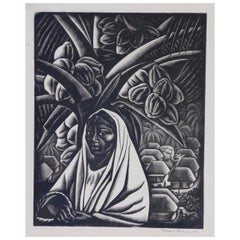
Wonderful wood-engraving by Taos artist Howard Cook (1901-1980). Titled: “Acapulco Girl (alternate title: Coconut Palm).” Edition: 30. Image size: 10 1/16"h x 8"w. Sheet size: 12"h...
Category

1930s Phoenix - Prints and Multiples

Materials

Paper

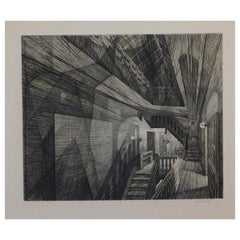
Armin Landeck Original Etching, 1950 - “Stairhall”
By Armin Landeck
Located in Phoenix, AZ
Drypoint and engraving by Wisconsin born printmaker Armin Landeck (1905-1984). Titled “Stairhall.” Pencil signed lower right. Full margins. The image measures 11 7/8"h x 14 1/2"w and...
Category

1950s Phoenix - Prints and Multiples

Materials

Paper

Howard Cook Taos Artist Original Woodcut, 1927 - Hopi House
By Howard Norton Cook
Located in Phoenix, AZ
Taos Artist Howard Cook original woodcut print, 1927. Title: “Hopi House.” Duffy #47. Signed in pencil lower right. Image size: 8"h x 8"w. Paper size: 10 x 8 3/4. Mat size: 20 x 16....
Category

Mid-20th Century Phoenix - Prints and Multiples

Materials

Paper, Ink

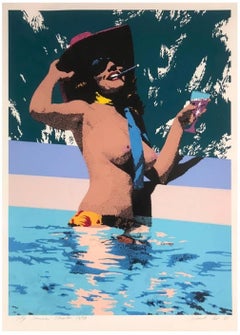
My Summer Vacation by Bill Schenck
By Bill Schenck
Located in Phoenix, AZ
SHIPPING CHARGES INCLUDE SHIPPING, PACKAGING & **INSURANCE** My Summer Vacation Serigraph 1984 33 × 24 in 83.8 × 61 cm Edition of 59 VERY RARE UNFRAMED SHIPPING CHARGES INCLUDE S...
Category

1980s Contemporary Phoenix - Prints and Multiples

Materials

Screen

Still Thinking About These?

All Recently Viewed