Portrait Figurative Paintings

to
1,369
1,010
779
792
699
884
Overall Width
to
Overall Height
to
86
277
1,066
2,736
32
27
96
103
81
58
39
50
45
63
46
1,328
334
229
211
104
90
83
65
63
58
22
9
6
4
2,970
589
572
27,136
16,676
9,192
8,427
8,165
4,522
3,290
2,638
2,114
2,026
1,933
1,912
1,744
1,546
1,236
1,143
1,059
1,027
965
3,953
2,879
2,300
2,165
1,126
37
28
20
19
17
1,354
533
1,938
1,353
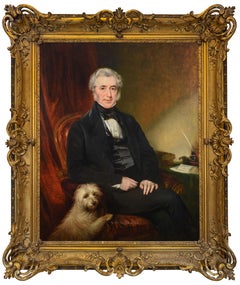
Art Subject: Portrait
Important Victorian portrait of Alexander Smith
Located in New York, NY
Important Victorian painting depicting Alexander Smith. It has a fantastic frame and is in excellent condition. Written Alex Smith (...) on the letter.
Category

Mid-19th Century Victorian Portrait Paintings

Materials

Canvas, Oil

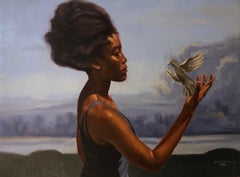
Surely I Will Fly - 21st Century, Contemporary, Figurative, Women, Bird, Oil
Located in Ibadan, Oyo
“Surely I Will Fly” is a vibrant and hopeful expression of the human spirit's innate desire for freedom and transcendence. This painting represents the moment when we spread our wing...
Category

21st Century and Contemporary Contemporary Figurative Paintings

Materials

Canvas, Oil

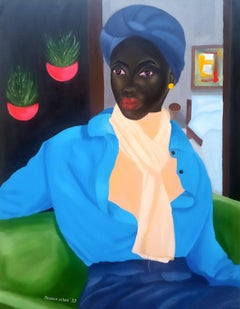
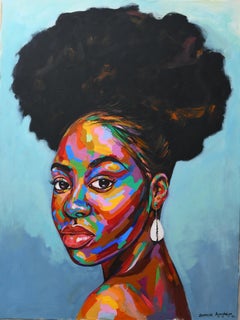
Head Wrap
Located in Ibadan, Oyo
Shipping Procedure FREE Shipping Worldwide Ships in a well-protected tube. This work is unique, not a print or other type of copy. Accompanied by a Certificate of Authenticity. Head wrap...
Category

21st Century and Contemporary Contemporary Portrait Paintings

Materials

Canvas, Oil, Acrylic

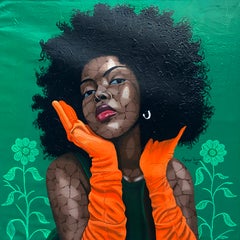
Head Wrap
Head Wrap
$2,600 Sale Price
35% Off
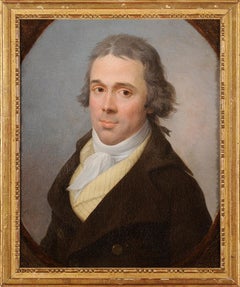
Men portrait
Located in BELEYMAS, FR
Jean François Marie Bellier (Paris 1745 – Paris 1836) Portrait of a Man Oil on oval canvas laid flat H. 45 cm; W. 55 cm Signed on the left Circa 1790 Jean François Marie Bellier occ...
Category

1790s French School Portrait Paintings

Materials

Canvas, Oil

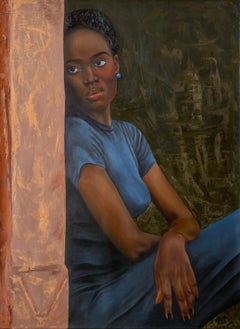
Love Never End - 21st Century, Contemporary, Realist Portrait, Black Woman
Located in Ibadan, Oyo
It all started when we both met years back. I loved you and you loved me too. Our love journey began and was full of joy, love, peace and happiness! You showered me with the love I ...
Category

21st Century and Contemporary Contemporary Figurative Paintings

Materials

Canvas, Oil, Acrylic

Belle Epoque French Impressionist 19th Century Oil Painting Portrait of Elegant
Located in Cirencester, Gloucestershire
Portrait of an Elegant Beauty French Impressionist painter, circa 1890s signed indistinctly oil on canvas, framed framed: 28 x 23 inches canvas: 24 x 20 inches provenance: private c...
Category

Late 19th Century Impressionist Portrait Paintings

Materials

Oil, Canvas

French 1930s Art Deco Society Portrait, Lady with a Diamond Earring.
Located in Cotignac, FR
French Art Deco, oil on canvas, society female portrait by Dembinkski (probably Anton J.) Signed, dated and located (Paris) bottom left. In later wood and gilt frame. A charming and...
Category

1930s Portrait Paintings

Materials

Oil, Canvas

Portrait of a Young Man With Ray of Sunshine Beaming Original French Artwork
Located in Cirencester, Gloucestershire
Original French Artwork by Robert Ladou (French 1929-2014) original acrylic painting on paper, unframed size: 12 x 10 inches condition: very good provenance: from the artists estate...
Category

20th Century Portrait Paintings

Materials

Acrylic

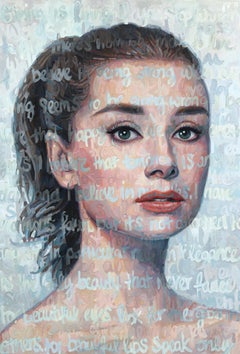
Audrey "I Believe" Large Textural Original Audrey Hepburn Pastel Oil Painting
Located in Los Angeles, CA
Christina Major’s "Audrey - I Believe" is a mesmerizing contemporary portrait that blends realism with expressive text overlays, creating a visually and emotionally compelling artwork. This 84 x 57-inch painting captures the timeless grace of Audrey Hepburn, her luminous features emerging from a soft, ethereal palette of cool blues, warm peaches, and gentle neutrals. Layered over her serene expression are hand-painted phrases inspired by Hepburn’s wisdom and humanitarian legacy, adding depth and narrative to the composition. The interplay between the hyperrealistic portraiture and textured text invites viewers to engage with both the subject’s beauty and the empowering messages woven into the piece, making it a captivating addition for collectors of figurative art, contemporary paintings, and pop culture iconography. Christina Major is a portrait painter interested in the ways the identity of both artist and subject can coexist in a painting. Major's current creative research focuses on the traditional form of the portrait as a powerful form of representing an individual and how meaning can be expanded through scale, brushstroke, color, texture, composition, and the many variables that portraiture deals with. This one-of-a-kind oil painting is 84 inches tall and 57 inches wide. It is signed by Major on the back. The artwork is wired and ready to hang. It does not require framing. Free local Los Angeles area delivery. Affordable Continental U.S. and International shipping are also available. A certificate of authenticity issued by the art gallery is included. Major expands the traditional portrait painting...
Category

2010s Contemporary Figurative Paintings

Materials

Canvas, Oil

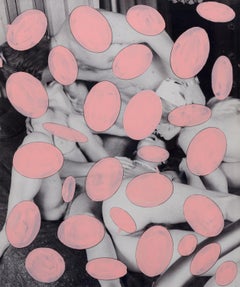
Untitled (Censor Painting Pink)
Located in Palm Desert, CA
"Untitled (Censor Painting Pink)" is a nude figurative acrylic on inkjet board painting by Richard Prince in 2009. The artwork is 35 1/2 x 30 inches and 37 1/2 x 32 x 1 1/2 inches wi...
Category

21st Century and Contemporary Contemporary Nude Paintings

Materials

Acrylic, Inkjet

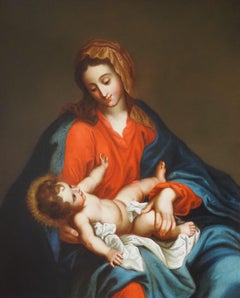
Madonna and child, Italian school, 18th century
Located in DEVENTER, NL
Italian School, 18th century Depicted are the Madonna and Child Jesus, the virgin Mary is holding the Child Jesus lovingly in her arms. The child, lying on a bundle of cloth and with...
Category

18th Century Figurative Paintings

Materials

Canvas, Oil

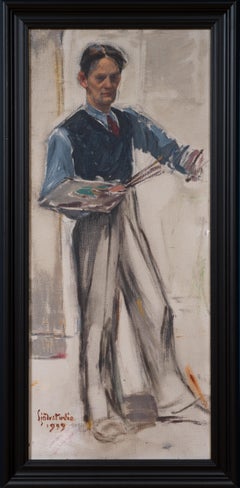
Gustaf Höglund: Self-Study (1939), a Rare and Striking Early Self-Portrait
Located in Stockholm, SE
Gustaf Höglund (1910-1994) Sweden Självstudie (Self Study), 1939 signed and dated lower left oil on canvas unframed 71 × 31 cm (28 × 12.2 in) framed 79 × 39 cm (31.1 × 15.4 in) T...
Category

1930s Post-Impressionist Figurative Paintings

Materials

Canvas, Oil

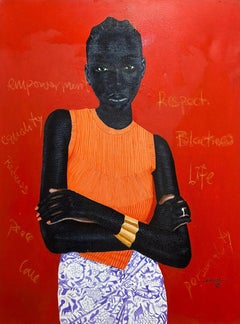
Untitled 4 - 21st Century, Contemporary, Figurative Portrait, Modern, Women
Located in Ibadan, Oyo
Shipping Procedure Ships in a well-protected tube This work is unique, not a print or other type of copy. Accompanied by a Certificate of Authenticity. About Artist Born in 1993 in...
Category

21st Century and Contemporary Expressionist Portrait Paintings

Materials

Canvas, Acrylic

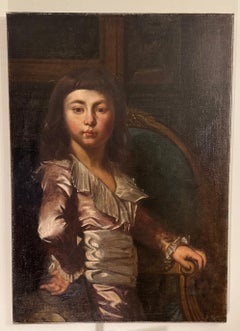
19th century English Portrait of a Young boy in a Cavalier costume
Located in Woodbury, CT
This elegant English 19th-century portrait of a young boy dressed in a Cavalier costume, painted circa 1860, is a striking example of Victorian portraiture that seamlessly combines h...
Category

1860s Old Masters Portrait Paintings

Materials

Canvas, Oil

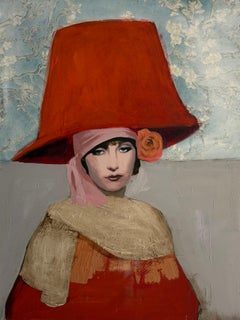
Portrait of a Parisian Woman
Located in London, GB
Nicolle was born in Zimbabwe (Rhodesia as it was then) and grew up in Africa and then travelled the world for some years before settling in the Uk. “My love of colour stems from my ...
Category

2010s Modern Figurative Paintings

Materials

Chalk, Mixed Media, Acrylic

Purpose of Existence 10
Located in Ibadan, Oyo
Shipping Procedure FREE Shipping Worldwide Ships in a well-protected tube from Nigeria This work is unique, not a print or other type of copy. Accompanied by a Certificate of Authent...
Category

21st Century and Contemporary Contemporary Portrait Paintings

Materials

Canvas, Acrylic

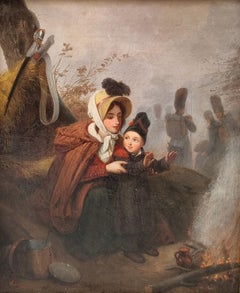
French Romantic painting BERNARD Napoleon Soldiers Mother and Child 19th
Located in PARIS, FR
Adolphe BERNARD (Attributed to)Ghent, 1812 – Ghent, 1890 The soldier's wife and her son by the fire Oil on canvas46 x 38 cm (61 x 52 cm with the frame) Signed and dated lower left "B...
Category

1830s Romantic Figurative Paintings

Materials

Oil

Sans titre (1881), James Drummond, R.S.A., F.S.A.
Located in Fairfield, CT
Artist: James Drummond, R.S.A., F.S.A. (1816-1877) Title: Sans titre (1881) Year: 1881 Medium: Oil on canvas Size: 37 x 29 inches Inscription: Hand signed and dated, recto Provenance...
Category

1880s Academic Figurative Paintings

Materials

Oil

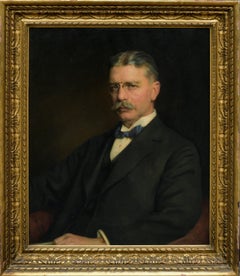
Portrait of Franklin Atwood Park, VP of Singer Mfg. Co.
Located in Soquel, CA
Portrait of Franklin Atwood Park, VP of Singer Mfg. Co. Stately portrait of Franklin Atwood Park by Arthur Trevethin Nowell (British, 1862-1940). Park is sitting for a classical portrait, wearing a suit with a blue bowtie against a dark background. Of particular note are his glasses and moustache, both rendered with expert detail. Park was the VP and Chairman of the Board for Singer Manufacturing Company and Manager of the Singer Division in Scotland when the portrait was commissioned. We show a digital image of a photographic portrait of Franklin. Signed and dated "A T Nowell. 1922" Includes paper with biographical information on the sitter. Frame size: 37.5"H x 32.5"W Canvas size: 30"H x 25"W Arthur Nowell (British, 1862-1940) was born at Garndiffath, near Pontypool, and was the youngest of six children born to the Rev. John Nowell and his wife Mary...
Category

1920s American Modern Figurative Paintings

Materials

Canvas, Oil, Stretcher Bars

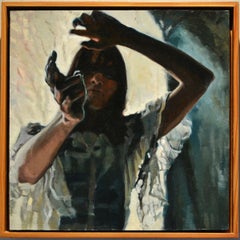
'Paramount Alchemy' by April Dawes, Oil on Birch Panel Painting
Located in Oklahoma City, OK
This 13" x 13" oil on birch panel painting is by Oklahoma artist, April Dawes. This painting presents a composition centered on a solitary figure, whose arms are raised in an expres...
Category

2010s Contemporary Figurative Paintings

Materials

Birch, Oil

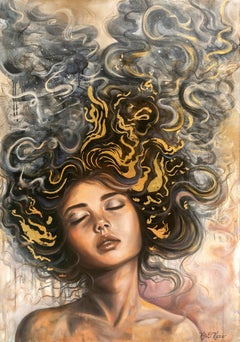
Alchemy. Contemporary Figurative Painting
Located in Brecon, Powys
70 x 100cm mixed media and oil on canvas. Part of the "Fragments of Self" collection, "Alchemy" evokes transformation and inner evolution. The muted tones with touches of gold swirl...
Category

2010s Abstract Expressionist Figurative Paintings

Materials

Oil

[Bruce Sargeant (1898-1938)] Portrait with Blue Shirt, Contemporary Painting
Located in New York, NY
A contemporary figurative painted portrait of a man in a blue shirt by Mark Beard/[Bruce Sargeant (1898-1938)] Portrait with Blue Shirt n.d. Signed in red, u.l. Oil on canvas 14...
Category

2010s Paintings

Materials

Canvas, Oil

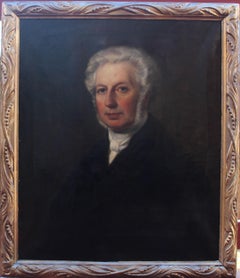
Listed Artist Samuel West (1810-1867) Antique oil on canvas, Dated 1860 Portrait
Located in Palm Coast, FL
This is an Antique oil painting on canvas 19 century depicting a portrait of a British Gentleman by Listed British-Irish Artist Samuel West (1810-1860). C...
Category

1860s Impressionist Portrait Paintings

Materials

Oil

'Sketching Wisconsin' original oil painting, Signed
Located in Milwaukee, WI
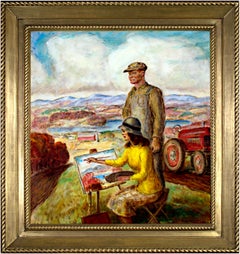
John Steuart Curry "Sketching Wisconsin," 1946 oil on canvas 31.13 x 28 inches, canvas 39.75 x 36.75 x 2.5 inches, frame Signed and dated lower right Overall excellent condition Presented in a 24-karat gold leaf hand-carved wood frame John Steuart Curry (1897-1946) was an American regionalist painter active during the Great Depression and into World War II. He was born in Kansas on his family’s farm but went on to study art in Chicago, Paris and New York as young man. In Paris, he was exposed to the work of masters such as Peter Paul Rubens, Eugène Delacroix and Jacques-Louis David. As he matured, his work showed the influence of these masters, especially in his compositional decisions. Like the two other Midwestern regionalist artists that are most often grouped with him, Grant Wood (American, 1891-1942) and Thomas Hart Benton (American, 1889-1975), Curry was interested in representational works containing distinctly American subject matter. This was contrary to the popular art at the time, which was moving closer and closer to abstraction and individual expression. Sketching Wisconsin is an oil painting completed in 1946, the last year of John Steuart Curry’s life, during which time he was the artist-in-residence at the University of Wisconsin in Madison. The painting is significant in Curry’s body of work both as a very revealing self-portrait, and as a landscape that clearly and sensitively depicts the scenery of southern Wisconsin near Madison. It is also a portrait of the artist’s second wife, Kathleen Gould Curry, and is unique in that it contains a ‘picture within a picture,’ a compositional element that many early painting masters used to draw the eye of the viewer. This particular artwork adds a new twist to this theme: Curry’s wife is creating essentially the same painting the viewer is looking at when viewing Sketching Wisconsin. The triangular composition of the figures in the foreground immediately brings focus to a younger Curry, whose head penetrates the horizon line and whose gaze looks out towards the viewer. The eye then moves down to Mrs. Curry, who, seated on a folding stool and with her hand raised to paint the canvas on the easel before her, anchors the triangular composition. The shape is repeated in the legs of the stool and the easel. Behind the two figures, stripes of furrowed fields fall away gently down the hillside to a farmstead and small lake below. Beyond the lake, patches of field and forest rise and fall into the distance, and eventually give way to blue hills. Here, Curry has subverted the traditional artist’s self-portrait by portraying himself as a farmer first and an artist second. He rejects what he sees as an elitist art world of the East Coast and Europe. In this self-portrait he depicts himself without any pretense or the instruments of his profession and with a red tractor standing in the field behind him as if he was taking a break from the field work. Here, Curry’s wife symbolizes John Steuart Curry’s identity as an artist. Compared with a self-portrait of the artist completed a decade earlier, this work shows a marked departure from how the artist previously presented and viewed himself. In the earlier portrait, Curry depicted himself in the studio with brushes in hand, and with some of his more recognizable and successful canvases behind him. But in Sketching Wisconsin, Curry has taken himself out of the studio and into the field, indicating a shift in the artist’s self-conception. Sketching Wisconsin’s rural subject also expresses Curry’s populist ideals, that art could be relevant to anyone. This followed the broad educational objectives of UW’s artist-in-residence program. Curry was appointed to his position at the University of Wisconsin in 1937 and was the first person to hold any such position in the country, the purpose of which was to serve as an educational resource to the people of the state. He embraced his role at the University with zeal and not only opened the doors of his campus studio in the School of Agriculture to the community, but also spent a great deal of time traveling around the state of Wisconsin to visit rural artists who could benefit from his expertise. It was during his ten years in the program that Curry was able to put into practice his belief that art should be meaningful to the rural populace. However, during this time he also struggled with public criticism, as the dominant forces of the art market were moving away from representation. Perhaps it was Curry’s desire for public acceptance during the latter part of his career that caused him to portray himself as an Everyman in Sketching Wisconsin. Beyond its importance as a portrait of the artist, Sketching Wisconsin is also a detailed and sensitive landscape that shows us Curry’s deep personal connection to his environment. The landscape here can be compared to Wisconsin Landscape of 1938-39 (the Metropolitan Museum of Art), which presents a similar tableau of rolling hills with a patchwork of fields. Like Wisconsin Landscape, this is an incredibly detailed and expressive depiction of a place close to the artist’s heart. This expressive landscape is certainly the result of many hours spent sketching people, animals, weather conditions and topography of Wisconsin as Curry traveled around the state. The backdrop of undulating hills and the sweeping horizon, and the emotions evoked by it, are emphatically recognizable as the ‘driftless’ area of south-central Wisconsin. But while the Metropolitan’s Wisconsin Landscape conveys a sense of uncertainty or foreboding with its dramatic spring cloudscape and alternating bands of light and dark, Sketching Wisconsin has a warm and reflective mood. The colors of the foliage indicate that it is late summer and Curry seems to look out at the viewer approvingly, as if satisfied with the fertile ground surrounding him. The landscape in Sketching Wisconsin is also revealing of what became one of Curry’s passions while artist-in-residence at UW’s School of Agriculture – soil conservation. When Curry was a child in Kansas, he saw his father almost lose his farm and its soil to the erosion of The Dust Bowl. Therefore, he was very enthusiastic about ideas from UW’s School of Agriculture on soil conservation methods being used on Wisconsin farms. In Sketching Wisconsin, we see evidence of crop rotation methods in the terraced stripes of fields leading down the hillside away from the Curry’s and in how they alternate between cultivated and fallow fields. Overall, Sketching Wisconsin has a warm, reflective, and comfortably pastoral atmosphere, and the perceived shift in Curry’s self-image that is evident in the portrait is a positive one. After his rise to favor in the art world in the 1930’s, and then rejection from it due to the strong beliefs presented in his art, Curry is satisfied and proud to be farmer in this self-portrait. Curry suffered from high blood...
Category

1940s American Realist Figurative Paintings

Materials

Canvas, Oil

I don’t remember tenderness
Located in Zofingen, AG
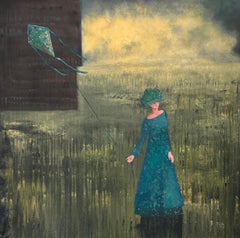
In a boundless field, a girl holds a bright kite soaring into the sky — a symbol of longing for tenderness she has never known. This scene reflects my own dreams: once, I longed for ...
Category

2010s Post-Impressionist Figurative Paintings

Materials

Canvas, Acrylic

Expectation 1 - 21st Century, Contemporary, Figurative Portrait, African Women
Located in Ibadan, Oyo
This artwork is inspired by one of the issues amongst many in the traditional Yoruba African society where I'm still growing up as the son of the soil. As I was growing up and up til...
Category

21st Century and Contemporary Contemporary Portrait Paintings

Materials

Canvas, Acrylic

18th Century Oil - Praying to St Peter
Located in Corsham, GB
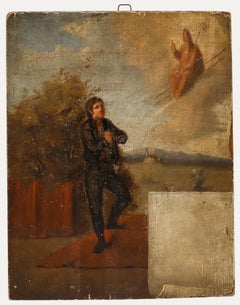
A captivating 18th-century oil painting portraying a gentleman in prayer before Saint Peter, who appears celestial in the clouds above. In the distance, a quaint church nestles withi...
Category

Early 18th Century Figurative Paintings

Materials

Oil

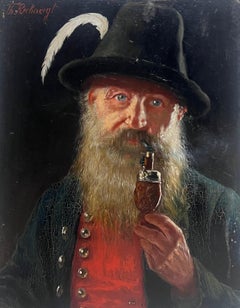
Antique German Signed Oil Painting Portrait of Bavarian Gentleman with Pipe
Located in Cirencester, Gloucestershire
Portrait of a Bavarian Gentleman with Pipe by Theodor Recknagl (1865-1945) German signed oil on board, framed board : 7 x 5.5 inches Provenance: private collection, UK Condition: som...
Category

Late 19th Century Victorian Portrait Paintings

Materials

Oil

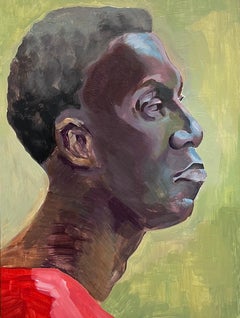
Side Profile Portrait of Man in Red Top Signed 20th Century British Oil Painting
Located in Cirencester, Gloucestershire
Portrait Profile of a Man by J.Williams, 1980, English oil on board, framed framed: 18.5 x 14.5 inches board : 15 x 11 inches Inscribed verso Provenance: private collection, UK Condi...
Category

1980s Post-Impressionist Portrait Paintings

Materials

Oil

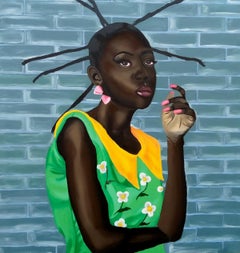
Beauty Within
Located in Ibadan, Oyo
Shipping Procedure FREE Shipping Worldwide Ships in a well-protected tube. This work is unique, not a print or other type of copy. Accompanied by a Certificate of Authenticity. Blac...
Category

21st Century and Contemporary Contemporary Portrait Paintings

Materials

Canvas, Oil, Acrylic

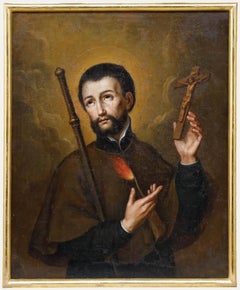
18th Century Oil - St Francis Xavier
Located in Corsham, GB
An evocative 18th-century oil depicting St Francis Xavier - the 16th-century Catholic missionary and co-founder of the Jesuit order. The artist has depicted the figure with elements ...
Category

Early 18th Century Figurative Paintings

Materials

Oil

Italian Contemporary Art by Matteo Nannini - ?
Located in Paris, IDF
Oil on canvas Matteo Nannini is an Italian artist born in 1979 in Bologna who lives and works in Cento, Ferrara, Italy. He studied at the Academy of F...
Category

2010s Contemporary Figurative Paintings

Materials

Canvas, Oil

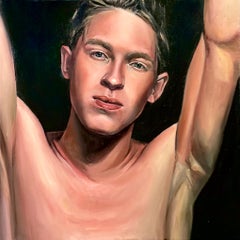
Confidence- 21st Century Contemporary Portrait of a Boy with Bare chest
Located in Nuenen, Noord Brabant
David van der Linden 'Confidence' 60 x 60 cm ( Framed in black wooden frame, included in price, 70 x 70 cm) Oil on canvas 2024 Artist David van der Linden has a hard time to paint...
Category

2010s Contemporary Figurative Paintings

Materials

Canvas, Oil

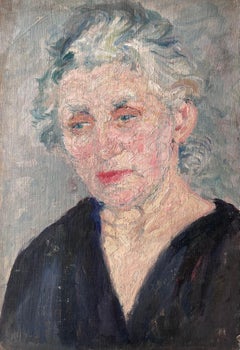
Mid Century French Painting of a Elder Lady Grey Haired Lady In a Blue V Neck
Located in Cirencester, Gloucestershire
Artist/ School: Suzanne Dinkés (French, 1895 - 1984) Medium: oil on board, unframed Size : 18.75 x 12.5 inches Provenance: private collection, France Condition: The painting is in ov...
Category

Mid-20th Century Post-Impressionist Portrait Paintings

Materials

Oil

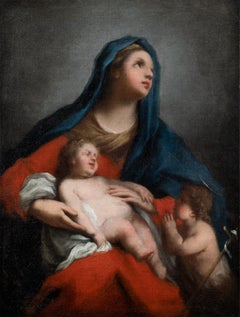
Jacopo Amigoni (Venetian Rococò) - 18th century figure painting - Virgin Child
Located in Varmo, IT
Jacopo Amigoni (Venice 1682 - Madrid 1752) - Madonna and Child. 82 x 62 cm unframed, 104.5 x 66.5 cm with frame. Oil on canvas, in a carved and gilded wooden frame (not signed). -...
Category

Mid-18th Century Rococo Figurative Paintings

Materials

Canvas, Oil

"Avery and Hazel" Contemporary Figurative Oil Painting
Located in Brecon, Powys
"Avery and Hazel" 14 x 11 inches oil on board 15 x 12 inches in frame We are pleased to sell works on behalf of Christopher E Barrow ABNA. Christopher is a full time artist residing...
Category

2010s Contemporary Figurative Paintings

Materials

Oil

Fine 17th Century Dutch Old Master Oil Painting Two Topers in Deep Conversation
Located in Cirencester, Gloucestershire
Topers in Deep Conversation Dutch School, mid 17th entury circle of David Teniers (Dutch 1610-1690) oil on canvas canvas: 8 x 7 inches provenance: private collection, France conditio...
Category

Mid-17th Century Old Masters Figurative Paintings

Materials

Oil, Canvas

Down Is The New Up 3 - Contemporary Expressive Figurative Oil Painting
Located in Salzburg, AT
The inspiration for Daniel Wimmer’s art consistently stems from the human body. He is particularly fascinated by the beautiful colors of the skin and is constantly searching for intr...
Category

2010s Contemporary Figurative Paintings

Materials

Oil

Late 18th Century English Family Portrait
Located in Houston, TX
English family portrait from the late 18th century. The canvas is aged accordingly with newsprint from October 1847. The painting is framed in a decorative gold frame with an open ba...
Category

Late 18th Century Naturalistic Portrait Paintings

Materials

Oil

Embrace Nature 6 - 21st Century, Contemporary, Figurative Portrait Floral, Women
Located in Ibadan, Oyo
This piece is a catalyst. As we navigate the complexities of our modern world, embracing Nature has become more crucial than ever. "Nature" I observed that her beauty comes from emb...
Category

21st Century and Contemporary Contemporary Portrait Paintings

Materials

Canvas, Acrylic

Surrealist Figurative Portrait on Canvas, Green and Red Palette. "The Pirate"
Located in FISTERRA, ES
This surrealist figurative portrait on canvas merges traditional painting techniques with symbolic elements of contemporary art. Executed in acrylic on board, the piece measures 60 x...
Category

2010s Pop Art Figurative Paintings

Materials

Spray Paint, Acrylic, Board

Peace Within - 21st Century, Contemporary, Figurative, Modern, Love, Fashion
Located in Ibadan, Oyo
Shipping Procedure Ships in a well-protected tube from Nigeria This work is unique, not a print or other type of copy. Accompanied by a Certificate of Authenticity (issued by The Gal...
Category

21st Century and Contemporary Contemporary Figurative Paintings

Materials

Canvas, Acrylic

"Elvis", Denied Andy Warhol Silver & Black Pop Art Painting by Charles Lutz
Located in Brooklyn, NY
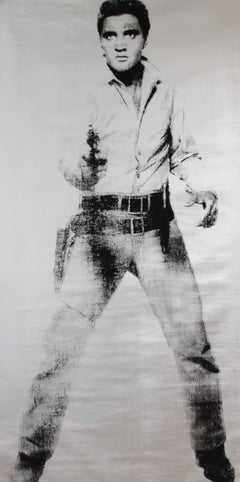
Elvis, Metallic Silver and Black Full Length Silkscreen Painting by Charles Lutz Silkscreen and silver enamel painted on vintage 1960's era linen with Artist's Denied stamp of the Andy Warhol Art Authentication Board. 82" x 40" inches 2010 Lutz's 2007 ''Warhol Denied'' series gained international attention by calling into question the importance of originality or lack thereof in the work of Andy Warhol. The authentication/denial process of the [[Andy Warhol Art Authentication Board]] was used to create value by submitting recreations of Warhol works for judgment with the full intention for the works to be formally marked "DENIED". The final product of the conceptual project being "officially denied" "Warhol" paintings authored by Lutz. Based on the full-length Elvis Presley paintings by Pop Artist Andy Warhol in 1964, this is likely one of his most iconic images, next to Campbell's Soup Cans and portraits of Jackie Kennedy, Marilyn Monroe, Liz Taylor, and Marlon Brando. This is the rarest of the Elvis works from the series, as Lutz sourced a vintage roll of 1960's primed artist linen which was used for this one Elvis. The silkscreen, like Warhol's embraced imperfections, like the slight double image printing of the Elvis image. Lutz received his BFA in Painting and Art History from Pratt Institute and studied Human Dissection and Anatomy at Columbia University, New York. Lutz's work deals with perceptions and value structures, specifically the idea of the transference of values. Lutz's most recently presented an installation of new sculptures dealing with consumerism at Frank Lloyd Wright's Fallingwater House in 2022. Lutz's 2007 Warhol Denied series received international attention calling into question the importance of originality in a work of art. The valuation process (authentication or denial) of the Andy Warhol Art Authentication Board was used by the artist to create value by submitting recreations of Warhol works for judgment, with the full intention for the works to be formally marked "DENIED" of their authenticity. The final product of this conceptual project is "Officially DENIED" "Warhol" paintings authored by Lutz. Later in 2013, Lutz went on to do one of his largest public installations to date. At the 100th Anniversary of Marcel Duchamp's groundbreaking and controversial Armory Show, Lutz was asked by the curator of Armory Focus: USA and former Director of The Andy Warhol Museum, Eric Shiner to create a site-specific installation representing the US. The installation "Babel" (based on Pieter Bruegel's famous painting) consisted of 1500 cardboard replicas of Warhol's Brillo Box (Stockholm Type) stacked 20 ft tall. All 1500 boxes were then given to the public freely, debasing the Brillo Box as an art commodity by removing its value, in addition to debasing its willing consumers. Elvis was "the greatest cultural force in the Twentieth Century. He introduced the beat to everything, and he changed everything - music, language, clothes, it's a whole new social revolution." Leonard Bernstein in: Exh. Cat., Boston, The Institute of Contemporary Art and traveling, Elvis + Marilyn 2 x Immortal, 1994-97, p. 9. Andy Warhol "quite simply changed how we all see the world around us." Kynaston McShine in: Exh. Cat., New York, Museum of Modern Art (and traveling), Andy Warhol: Retrospective, 1996, p. 13. In the summer of 1963 Elvis Presley was just twenty-eight years old but already a legend of his time. During the preceding seven years - since Heartbreak Hotel became the biggest-selling record of 1956 - he had recorded seventeen number-one singles and seven number-one albums; starred in eleven films, countless national TV appearances, tours, and live performances; earned tens of millions of dollars; and was instantly recognized across the globe. The undisputed King of Rock and Roll, Elvis was the biggest star alive: a cultural phenomenon of mythic proportions apparently no longer confined to the man alone. As the eminent composer Leonard Bernstein put it, Elvis was "the greatest cultural force in the Twentieth Century. He introduced the beat to everything, and he changed everything - music, language, clothes, it's a whole new social revolution." (Exh. Cat., Boston, The Institute of Contemporary Art (and traveling), Elvis + Marilyn 2 x Immortal, 1994, p. 9). In the summer of 1963 Andy Warhol was thirty-four years old and transforming the parameters of visual culture in America. The focus of his signature silkscreen was leveled at subjects he brilliantly perceived as the most important concerns of day to day contemporary life. By appropriating the visual vernacular of consumer culture and multiplying readymade images gleaned from newspapers, magazines and advertising, he turned a mirror onto the contradictions behind quotidian existence. Above all else he was obsessed with themes of celebrity and death, executing intensely multifaceted and complex works in series that continue to resound with universal relevance. His unprecedented practice re-presented how society viewed itself, simultaneously reinforcing and radically undermining the collective psychology of popular culture. He epitomized the tide of change that swept through the 1960s and, as Kynaston McShine has concisely stated, "He quite simply changed how we all see the world around us." (Exh. Cat., New York, Museum of Modern Art (and traveling), Andy Warhol: Retrospective, 1996, p. 13). Thus in the summer of 1963 there could not have been a more perfect alignment of artist and subject than Warhol and Elvis. Perhaps the most famous depiction of the biggest superstar by the original superstar artist, Double Elvis is a historic paradigm of Pop Art from a breath-taking moment in Art History. With devastating immediacy and efficiency, Warhol's canvas seduces our view with a stunning aesthetic and confronts our experience with a sophisticated array of thematic content. Not only is there all of Elvis, man and legend, but we are also presented with the specter of death, staring at us down the barrel of a gun; and the lone cowboy, confronting the great frontier and the American dream. The spray painted silver screen denotes the glamour and glory of cinema, the artificiality of fantasy, and the idea of a mirror that reveals our own reality back to us. At the same time, Warhol's replication of Elvis' image as a double stands as metaphor for the means and effects of mass-media and its inherent potential to manipulate and condition. These thematic strata function in simultaneous concert to deliver a work of phenomenal conceptual brilliance. The portrait of a man, the portrait of a country, and the portrait of a time, Double Elvis is an indisputable icon for our age. The source image was a publicity still for the movie Flaming Star, starring Presley as the character Pacer Burton and directed by Don Siegel in 1960. The film was originally intended as a vehicle for Marlon Brando and produced by David Weisbart, who had made James Dean's Rebel Without a Cause in 1955. It was the first of two Twentieth Century Fox productions Presley was contracted to by his manager Colonel Tom Parker, determined to make the singer a movie star. For the compulsive movie-fan Warhol, the sheer power of Elvis wielding a revolver as the reluctant gunslinger presented the zenith of subject matter: ultimate celebrity invested with the ultimate power to issue death. Warhol's Elvis is physically larger than life and wears the expression that catapulted him into a million hearts: inexplicably and all at once fearful and resolute; vulnerable and predatory; innocent and explicit. It is the look of David Halberstam's observation that "Elvis Presley was an American original, the rebel as mother's boy, alternately sweet and sullen, ready on demand to be either respectable or rebellious." (Exh. Cat., Boston, Op. Cit.). Indeed, amidst Warhol's art there is only one other subject whose character so ethereally defies categorization and who so acutely conflated total fame with the inevitability of mortality. In Warhol's work, only Elvis and Marilyn harness a pictorial magnetism of mythic proportions. With Marilyn Monroe, whom Warhol depicted immediately after her premature death in August 1962, he discovered a memento mori to unite the obsessions driving his career: glamour, beauty, fame, and death. As a star of the silver screen and the definitive international sex symbol, Marilyn epitomized the unattainable essence of superstardom that Warhol craved. Just as there was no question in 1963, there remains still none today that the male equivalent to Marilyn is Elvis. However, despite his famous 1968 adage, "If you want to know all about Andy Warhol, just look at the surface of my paintings" Warhol's fascination held purpose far beyond mere idolization. As Rainer Crone explained in 1970, Warhol was interested in movie stars above all else because they were "people who could justifiably be seen as the nearest thing to representatives of mass culture." (Rainer Crone, Andy Warhol, New York, 1970, p. 22). Warhol was singularly drawn to the idols of Elvis and Marilyn, as he was to Marlon Brando and Liz Taylor, because he implicitly understood the concurrence between the projection of their image and the projection of their brand. Some years after the present work he wrote, "In the early days of film, fans used to idolize a whole star - they would take one star and love everything about that star...So you should always have a product that's not just 'you.' An actress should count up her plays and movies and a model should count up her photographs and a writer should count up his words and an artist should count up his pictures so you always know exactly what you're worth, and you don't get stuck thinking your product is you and your fame, and your aura." (Andy Warhol, The Philosophy of Andy Warhol (From A to B and Back Again), San Diego, New York and London, 1977, p. 86). The film stars of the late 1950s and early 1960s that most obsessed Warhol embodied tectonic shifts in wider cultural and societal values. In 1971 John Coplans argued that Warhol was transfixed by the subject of Elvis, and to a lesser degree by Marlon Brando and James Dean, because they were "authentically creative, and not merely products of Hollywood's fantasy or commercialism. All three had originative lives, and therefore are strong personalities; all three raised - at one level or another - important questions as to the quality of life in America and the nature of its freedoms. Implicit in their attitude is a condemnation of society and its ways; they project an image of the necessity for the individual to search for his own future, not passively, but aggressively, with commitment and passion." (John Coplans, "Andy Warhol and Elvis Presley," Studio International, vol. 181, no. 930, February 1971, pp. 51-52). However, while Warhol unquestionably adored these idols as transformative heralds, the suggestion that his paintings of Elvis are uncritical of a generated public image issued for mass consumption fails to appreciate the acuity of his specific re-presentation of the King. As with Marilyn, Liz and Marlon, Warhol instinctively understood the Elvis brand as an industrialized construct, designed for mass consumption like a Coca-Cola bottle or Campbell's Soup Can, and radically revealed it as a precisely composed non-reality. Of course Elvis offered Warhol the biggest brand of all, and he accentuates this by choosing a manifestly contrived version of Elvis-the-film-star, rather than the raw genius of Elvis as performing Rock n' Roll pioneer. A few months prior to the present work he had silkscreened Elvis' brooding visage in a small cycle of works based on a simple headshot, including Red Elvis, but the absence of context in these works minimizes the critical potency that is so present in Double Elvis. With Double Elvis we are confronted by a figure so familiar to us, yet playing a role relating to violence and death that is entirely at odds with the associations entrenched with the singer's renowned love songs. Although we may think this version of Elvis makes sense, it is the overwhelming power of the totemic cipher of the Elvis legend that means we might not even question why he is pointing a gun rather than a guitar. Thus Warhol interrogates the limits of the popular visual vernacular, posing vital questions of collective perception and cognition in contemporary society. The notion that this self-determinedly iconic painting shows an artificial paradigm is compounded by Warhol's enlistment of a reflective metallic surface, a treatment he reserved for his most important portraits of Elvis, Marilyn, Marlon and Liz. Here the synthetic chemical silver paint becomes allegory for the manufacture of the Elvis product, and directly anticipates the artist's 1968 statement: "Everything is sort of artificial. I don't know where the artificial stops and the real starts. The artificial fascinates me, the bright and shiny..." (Artist quoted in Exh. Cat., Stockholm, Moderna Museet and traveling, Andy Warhol, 1968, n.p.). At the same time, the shiny silver paint of Double Elvis unquestionably denotes the glamour of the silver screen and the attractive fantasies of cinema. At exactly this time in the summer of 1963 Warhol bought his first movie camera and produced his first films such as Sleep, Kiss and Tarzan and Jane Regained. Although the absence of plot or narrative convention in these movies was a purposely anti-Hollywood gesture, the unattainability of classic movie stardom still held profound allure and resonance for Warhol. He remained a celebrity and film fanatic, and it was exactly this addiction that so qualifies his sensational critique of the industry machinations behind the stars he adored. Double Elvis was executed less than eighteen months after he had created 32 Campbell's Soup Cans for his immortal show at the Ferus Gallery, Los Angeles in July and August 1962, and which is famously housed in the Museum of Modern Art, New York. In the intervening period he had produced the series Dollar Bills, Coca-Cola Bottles, Suicides, Disasters, and Silver Electric Chairs, all in addition to the portrait cycles of Marilyn and Liz. This explosive outpouring of astonishing artistic invention stands as definitive testament to Warhol's aptitude to seize the most potent images of his time. He recognized that not only the product itself, but also the means of consumption - in this case society's abandoned deification of Elvis - was symptomatic of a new mode of existence. As Heiner Bastian has precisely summated: "the aura of utterly affirmative idolization already stands as a stereotype of a 'consumer-goods style' expression of an American way of life and of the mass-media culture of a nation." (Exh. Cat., Berlin, Neue Nationalgalerie (and traveling), Andy Warhol: Retrospective, 2001, p. 28). For Warhol, the act of image replication and multiplication anaesthetized the effect of the subject, and while he had undermined the potency of wealth in 200 One Dollar Bills, and cheated the terror of death by electric chair in Silver Disaster # 6, the proliferation of Elvis here emasculates a prefabricated version of character authenticity. Here the cinematic quality of variety within unity is apparent in the degrees to which Presley's arm and gun become less visible to the left of the canvas. The sense of movement is further enhanced by a sense of receding depth as the viewer is presented with the ghost like repetition of the figure in the left of the canvas, a 'jump effect' in the screening process that would be replicated in the multiple Elvis paintings. The seriality of the image heightens the sense of a moving image, displayed for us like the unwinding of a reel of film. Elvis was central to Warhol's legendary solo exhibition organized by Irving Blum at the Ferus Gallery in the Fall of 1963 - the show having been conceived around the Elvis paintings since at least May of that year. A well-known installation photograph shows the present work prominently presented among the constant reel of canvases, designed to fill the space as a filmic diorama. While the Elvis canvases...
Category

21st Century and Contemporary Pop Art Figurative Paintings

Materials

Enamel

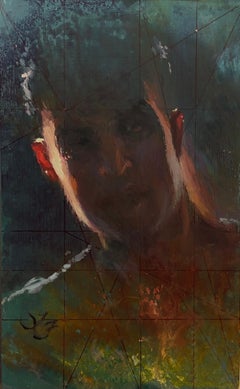
"Dark Spirit" (2023) by Lisa Fricker, Original Oil Portrait Painting
Located in Denver, CO
Lisa Fricker's "Dark Spirit" is an original, handmade oil painting that depicts a close up portrait of a man on a dark abstracted background. Through her portrait and figure paintin...
Category

21st Century and Contemporary Portrait Paintings

Materials

Oil, Board

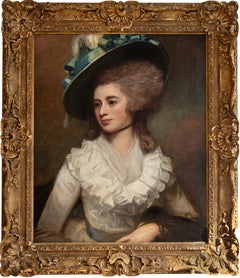
Portrait of Lady Caroline Price
Located in Miami, FL
DESCRIPTION: Perhaps the best Romney in private hands. If Vogue Magazine existed in the late 18th century, this image of Lady Caroline Price would be ...
Category

1970s Old Masters Portrait Paintings

Materials

Oil, Canvas

Original Oil on Canvas by Juan Soler, "A Parisian Beauty" Signed
Located in Mere, GB
Juan Soler (born 1951), Pseudonym for the artist Juan Lopez de la Cruz. He painted late 19th century town and figurative scenes in a soft impressionist style for Harrods and the US m...
Category

Late 20th Century Figurative Paintings

Materials

Oil

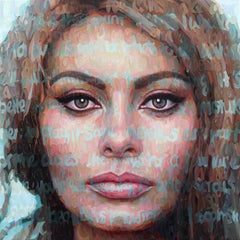
Sophia Loren - Cherish it - Textural Oil Painting and Image Immersed in Text
Located in Los Angeles, CA
Christina Major’s "Sophia Loren - Cherish It" is a captivating contemporary portrait that merges hyperrealistic portraiture with layered text, creating a dynamic fusion of depth, emotion, and storytelling. This 49 x 49-inch original painting masterfully captures the timeless beauty of Sophia Loren, with her piercing gaze and luminous complexion enhanced by the artist’s meticulous brushwork. Overlapping layers of hand-painted script weave through the portrait, adding texture and meaning, reflecting themes of wisdom, self-love, and femininity. The interplay of soft pastels and bold contrasts makes this artwork a statement piece for collectors drawn to modern figurative painting, celebrity portraiture, and mixed-media techniques. Christina Major is a portrait painter interested in the ways the identity of both artist and subject can coexist in a painting. Major's current creative research focuses on the traditional form of the portrait as a powerful form of representing an individual and how meaning can be expanded through scale, brushstroke, color, texture, composition, and the many variables that portraiture deals with. This one-of-a-kind oil painting is signed by Major on the back. The artwork is wired and ready to hang. It does not require framing. Free local Los Angeles area delivery. Affordable Continental U.S. and International shipping available. A certificate of authenticity issued by the art gallery is included. Major expands the traditional portrait painting...
Category

2010s Contemporary Portrait Paintings

Materials

Canvas, Oil

Here I am
Located in Ibadan, Oyo
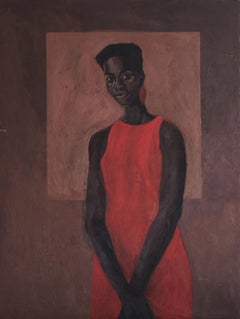
Shipping Procedure Ships in a well-protected tube from Nigeria. This work is unique, not a print or other type of copy. Accompanied by a Certificate of Authenticity (Issued by the Gallery). At the heart of the artwork lies a young woman adorned in a striking red dress. The choice of red as the dominant color symbolizes strength, passion, and confidence. It serves as a visual representation of the artist's intention to empower and embolden the subject, inspiring viewers to embrace their own identities unapologetically. The woman in the red dress becomes a beacon of self-assurance, encouraging others to fully express themselves without fear or hesitation. "Here I Am" encapsulates the essence of celebrating one's individuality. The young woman's presence demands attention, her confident stance serving as a powerful statement of self-acceptance. The artwork encourages viewers to embrace the unique attributes, quirks, and qualities that make them who they are. It celebrates the beauty of diversity and underscores the importance of allowing oneself to shine authentically. Kayimahe Ishmael Zed...
Category

21st Century and Contemporary Expressionist Figurative Paintings

Materials

Canvas, Acrylic

[Bruce Sargeant (1898-1938)] Man with Red Fez
Located in New York, NY
[Bruce Sargeant (1898-1938)] Man with Red Fez n.d. Signed in red, u.r. Double-sided oil painting on panel 30 x 24 inches
Category

21st Century and Contemporary Contemporary Paintings

Materials

Oil, Panel

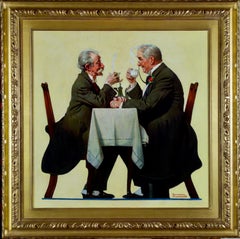
Men Drinking Coffee
Located in Fort Washington, PA
Signed by Artist Lower Right Maxwell House Coffee
Category

1920s Figurative Paintings

Materials

Oil

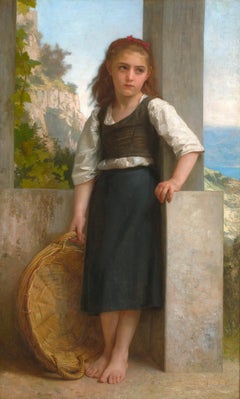
La Fille Du Pêcheur By William Bouguereau
Located in New Orleans, LA
William-Adolphe Bouguereau 1825-1905 French La fille du pêcheur (The Fisherman’s Daughter) Signed and dated “W-Bouguereau-1882” (middle right) Oil on canvas William Bouguereau's...
Category

19th Century Academic Figurative Paintings

Materials

Canvas, Oil

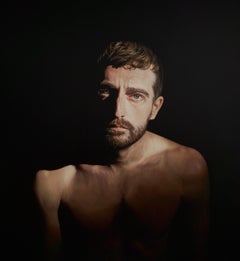
The Space Between - Large Portrait of Bearded, Shirtless Male, Original Oil
Located in Chicago, IL
Nathan Brad Hall's work comes together in this show to build an undeniably jaw dropping experience for viewers. “Undercurrents,” says Hall, “is about ...
Category

2010s Contemporary Nude Paintings

Materials

Linen, Oil

Love and Bond 2 - 21st Century, Contemporary, Figurative Portrait, Whites, Black
Located in Ibadan, Oyo
There is a common thread that binds us all, and that is our shared humanity. Everyone has a general desire in their heart - to be seen, heard and understood. Each of us has dreams, f...
Category

21st Century and Contemporary Expressionist Portrait Paintings

Materials

Canvas, Oil, Acrylic

[Bruce Sargeant (1898-1938)] Single Rower in Cattails
Located in New York, NY
Signed in red, u.l. Oil on canvas mounted to Masonite This work is offered by ClampArt in New York City.
Category

2010s Contemporary Figurative Paintings

Materials

Canvas, Masonite, Oil

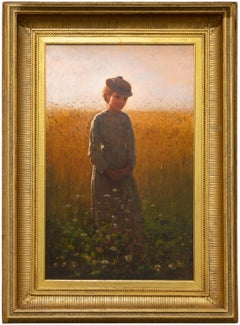
In the Wheatfield (Girl Standing in a Wheat Field)
Located in Palm Desert, CA
"In the Wheatfield (Girl Standing in a Wheat Field)" is a painting by Winslow Homer. The painting is signed, lower left, "Homer 1873". The framed piece measures 29 3/4 x 21 5/8 x 2 7/8 in. During the early 1870s, Winslow Homer frequently painted scenes of country living near a small farm hamlet renowned for generations for its remarkable stands of wheat, situated between the Hudson River and the Catskills in New York state. Today Hurley is far more famous for inspiring one of Homer’s greatest works, Snap the Whip...
Category

1870s Realist Figurative Paintings

Materials

Canvas, Oil

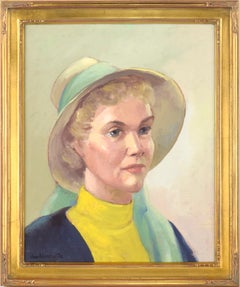
Mid Century Portrait of Woman
Located in Soquel, CA
Mid Century portrait of a grey haired woman wearing a sun hat by Jon Blanchette (American, 1908-1987). Rendered his signature style, this...
Category

Mid-20th Century American Impressionist Portrait Paintings

Materials

Oil, Masonite

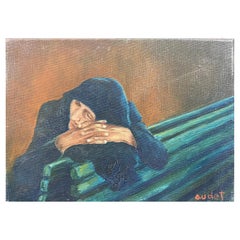
Fernand Audet French Signed Oil Elderly Lady Sleeping on Bench
Located in Cirencester, Gloucestershire
"The Park Bench" by Fernand Audet (French, Tarascon 1923- Mulhouse 2016) oil painting on canvas, unframed painting: 6.25 x 8.5 inches A fine oil painting by the listed French Impres...
Category

Mid-20th Century Figurative Paintings

Materials

Acrylic

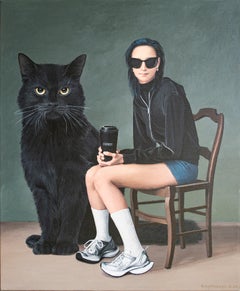
Coffee Ritual
Located in Zofingen, AG
This captivating work of art presents a surreal dialogue between the mundane and the fantastic. A casually dressed woman sits confidently on a vintage chair, wearing dark sunglasses...
Category

2010s Contemporary Figurative Paintings

Materials

Lacquer, Cotton Canvas, Acrylic

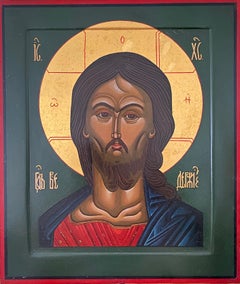
Christ with the Angry Gaze - After a Russian Icon, 17th C.
Located in Segovia, ES
Christ with the Angry Gaze (The Savior of the Burning Gaze), after a Russian icon from the mid-17th century Artist: Oliver Samsinger Technique: Egg tempera on gesso and wood, with 24...
Category

2010s Byzantine Portrait Paintings

Materials

Gold Leaf

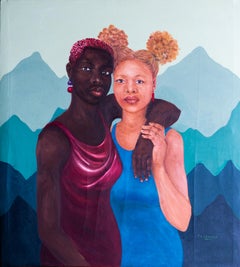
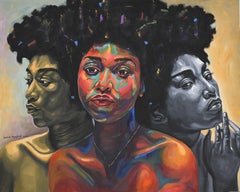
Sisterhood 3 -21st Century, Contemporary, Figurative Portrait, Women Africa Love
Located in Ibadan, Oyo
Sisterhood is also about growth and transformation. As we go through life, we change and evolve as individuals, and our relationships with our sisters change and evolve with us. The ...
Category

21st Century and Contemporary Contemporary Portrait Paintings

Materials

Canvas, Acrylic

Recently Viewed

View All