Want more images or videos?
Request additional images or videos from the seller
1 of 11

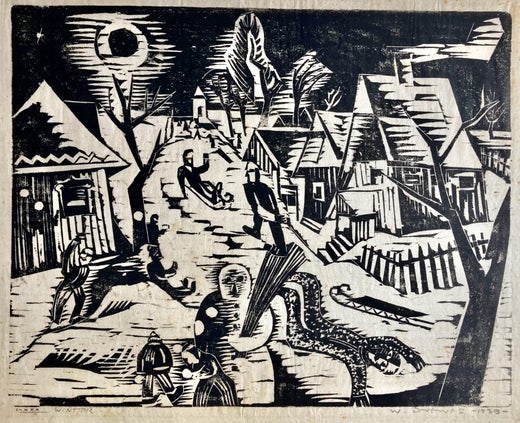
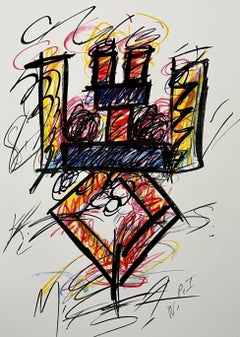
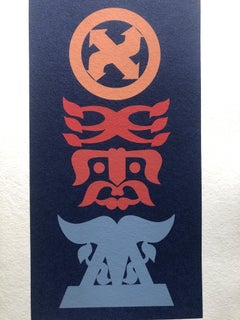
Werner Drewes
Bauhaus Abstract Color Woodcut Mechanical Ballet Woodblock Print

1978

Price:$2,200

You May Also Like

April 2012 - XXI Century Contemporary Woodcut , Abstract Print, Red Color Accent
By Ryszard Gieryszewski
Located in Warsaw, PL
RYSZARD GIERYSZEWSKI (born in 1936) Graduated from the Academy of Fine Arts in Warsaw in 1964. He is a member of International Association XYLON in Switzerland. He participated in mo...
Category

2010s Abstract Abstract Prints

Materials

Paper, Woodcut

Non-accidental shapes - XX Century, Colorful Woodcut , Abstract Print
By Ryszard Gieryszewski
Located in Warsaw, PL
RYSZARD GIERYSZEWSKI (born in 1936) Graduated from the Academy of Fine Arts in Warsaw in 1964. He is a member of International Association XYLON in Switzerland. He participated in mo...
Category

Early 2000s Abstract Abstract Prints

Materials

Paper, Woodcut

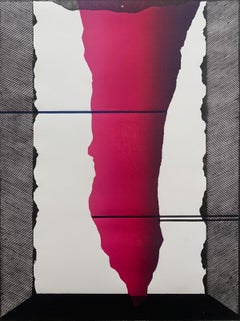
Untitled (A border) - XX Century Contemporary Woodcut , Abstract Print, Relief
By Ryszard Gieryszewski
Located in Warsaw, PL
RYSZARD GIERYSZEWSKI (born in 1936) Graduated from the Academy of Fine Arts in Warsaw in 1964. He is a member of International Association XYLON in Switzerland. He participated in mo...
Category

1980s Abstract Abstract Prints

Materials

Paper, Woodcut

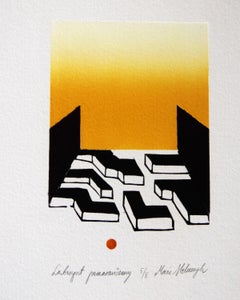
Orange labyrinth - XXI Century, Contemporary Linocut & Woodcut Print, Abstract
By Maria Stelmaszczyk
Located in Warsaw, PL
MARIA STELMASZCZYK (born in 1983) Studies at the Faculty of Graphic Arts and Painting Laboratory of Woodcut Techniques and Artistic Book at the Academy of Fine Arts Władysław Strzemi...
Category

Early 2000s Contemporary Abstract Prints

Materials

Paper, Linocut, Woodcut

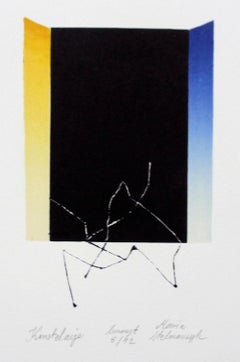
Constellation - XXI Century, Contemporary Linocut & Woodcut Print, Abstract
By Maria Stelmaszczyk
Located in Warsaw, PL
MARIA STELMASZCZYK (born in 1983) Studies at the Faculty of Graphic Arts and Painting Laboratory of Woodcut Techniques and Artistic Book at the Academy of Fine Arts Władysław Strzemi...
Category

Early 2000s Contemporary Abstract Prints

Materials

Paper, Linocut, Woodcut

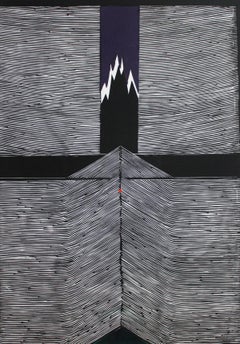
Illusion. Woodcut, Op art, Abstract Print, Black & white, Polish art
By Ryszard Gieryszewski
Located in Warsaw, PL
Contemporary op art abstract linocut and woodcut print by Polish artist Ryszard Gieryszewski. Print is mostly black&white with addition of red. Title of this artwork is 'An Illusion'...
Category

Early 2000s Abstract Abstract Prints

Materials

Paper, Woodcut

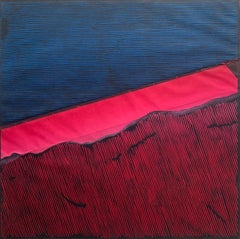
A division. Woodcut, Linocut, Op art, Abstract Print, Colorful, Polish art
By Ryszard Gieryszewski
Located in Warsaw, PL
Contemporary op art abstract linocut and woodcut print by Polish artist Ryszard Gieryszewski. Print is mostly pink and blue. Title of this artwork is 'A division'. Artwork is signed ...
Category

Early 2000s Abstract Abstract Prints

Materials

Paper, Woodcut

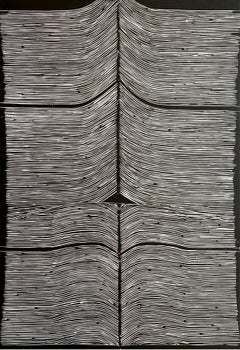
Lines and green triangle. Woodcut, Linocut, Op art, Abstract Print, Polish art
By Ryszard Gieryszewski
Located in Warsaw, PL
Contemporary op art abstract linocut and woodcut print by Polish artist Ryszard Gieryszewski. Print is mostly black and white. Title of this artwork is 'Lines and a green triangle'. ...
Category

Early 2000s Abstract Abstract Prints

Materials

Paper, Woodcut, Linocut

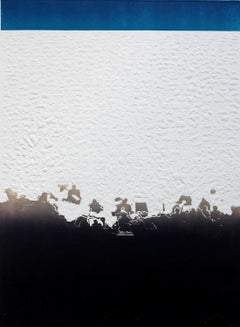
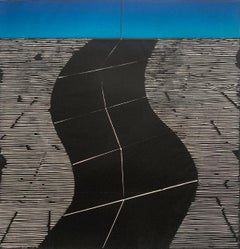
A road. Woodcut, Op art, Vibrant colors, Abstract Print, Polish art
By Ryszard Gieryszewski
Located in Warsaw, PL
Contemporary op art abstract linocut and woodcut print by Polish artist Ryszard Gieryszewski. Print is mostly black, blue and white. Title of this artwork is 'A road'. Artwork is sig...
Category

Early 2000s Abstract Abstract Prints

Materials

Paper, Woodcut

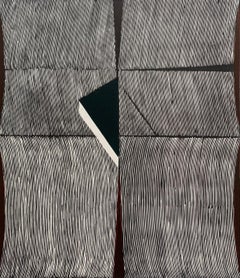
Equivalent shapes. Woodcut, Linocut, Op art, Abstract Print, Polish art
By Ryszard Gieryszewski
Located in Warsaw, PL
Contemporary op art abstract linocut and woodcut print by Polish artist Ryszard Gieryszewski. Print is mostly black and white with red. Title of this artwork is 'Equivalent shapes'. ...
Category

Early 2000s Abstract Abstract Prints

Materials

Paper, Linocut, Woodcut

More From This Seller

View All
1981 American Post Minimalist Abstract Art Lithograph Neon Series Keith Sonnier
By Keith Sonnier
Located in Surfside, FL
Keith Sonnier, American (1941-2020) lithograph From Neon series circa 1980-1981 Bears the Waterstreet Press watermarks and Arches paper blind stamp to lower right corner. Pub. Edizioni Lucio Amelio Hand signed with initials in pencil Dimensions: 30 x 21 3/4 inches Post minimalist Abstract by Keith Sonnier Keith Sonnier (1941 – 2020) was a post minimalist sculptor, performance artist, video and light artist. Sonnier was one of the first artists to use light in sculpture in the 1960s. With his use of neon in combination with ephemeral materials he achieved international recognition. Sonnier was part of the Process Art movement. James Keith Sonnier was born July 31, 1941, in Mamou, Louisiana. His family was Cajun and Roman Catholic. His father was a hardware store owner, Joseph Sonnier, and his mother was a florist and singer, Mae Ledoux. He graduated in 1963 from Southwestern Louisiana Institute (now known as the University of Louisiana at Lafayette). In 1966, he graduated with his MFA degree from Rutgers University, where he studied under Allan Kaprow, Robert Watts, and Robert Morris. After graduation from Rutgers, he moved to New York City with Jackie Winsor and some of his former classmates. Sonnier died in Southampton, NY on July 18, 2020. Sonnier began experimenting with neon in 1968. Neon lights became a signature material used in his sculptural works. The common materials Sonnier employed included neon and fluorescent lights; reflective materials; aluminum and copper; and glass and wires. Of the generation of James Turrell and Dan Flavin, He was also associated with the Light and Space movement, a loosely affiliated art movement related to op art, minimalism and geometric abstraction originating in Southern California in the 1960s and influenced by John McLaughlin. It is characterized by a focus on perceptual phenomena, such as light, volume and scale, and the use of materials such as glass, neon, fluorescent lights, resin and cast acrylic, often forming installations conditioned by the work's surroundings. Artists included Ron Cooper...
Category

1980s Post-Minimalist Abstract Prints

Materials

Paper

1981 American Post Minimalist Abstract Art Lithograph Neon Series Keith Sonnier
By Keith Sonnier
Located in Surfside, FL
Keith Sonnier, American (1941-2020) lithograph From Neon series circa 1980-1981 Bears the Waterstreet Press watermarks and Arches paper blind stamp to lower right corner. Pub. Edizioni Lucio Amelio Hand signed with initials in pencil Dimensions: 30 x 21 3/4 inches Post minimalist Abstract by Keith Sonnier Keith Sonnier (1941 – 2020) was a post minimalist sculptor, performance artist, video and light artist. Sonnier was one of the first artists to use light in sculpture in the 1960s. With his use of neon in combination with ephemeral materials he achieved international recognition. Sonnier was part of the Process Art movement. James Keith Sonnier was born July 31, 1941, in Mamou, Louisiana. His family was Cajun and Roman Catholic. His father was a hardware store owner, Joseph Sonnier, and his mother was a florist and singer, Mae Ledoux. He graduated in 1963 from Southwestern Louisiana Institute (now known as the University of Louisiana at Lafayette). In 1966, he graduated with his MFA degree from Rutgers University, where he studied under Allan Kaprow, Robert Watts, and Robert Morris. After graduation from Rutgers, he moved to New York City with Jackie Winsor and some of his former classmates. Sonnier died in Southampton, NY on July 18, 2020. Sonnier began experimenting with neon in 1968. Neon lights became a signature material used in his sculptural works. The common materials Sonnier employed included neon and fluorescent lights; reflective materials; aluminum and copper; and glass and wires. Of the generation of James Turrell and Dan Flavin, He was also associated with the Light and Space movement, a loosely affiliated art movement related to op art, minimalism and geometric abstraction originating in Southern California in the 1960s and influenced by John McLaughlin. It is characterized by a focus on perceptual phenomena, such as light, volume and scale, and the use of materials such as glass, neon, fluorescent lights, resin and cast acrylic, often forming installations conditioned by the work's surroundings. Artists included Ron Cooper...
Category

1980s Post-Minimalist Abstract Prints

Materials

Paper, Lithograph

1981 American Post Minimalist Abstract Art Lithograph Neon Series Keith Sonnier
By Keith Sonnier
Located in Surfside, FL
Keith Sonnier, American (1941-2020) lithograph From Neon series circa 1980-1981 Bears the Waterstreet Press watermarks and Arches paper blind stamp to lower right corner. Pub. Edizioni Lucio Amelio Hand signed with initials in pencil Dimensions: 30 x 21 3/4 inches Post minimalist Abstract by Keith Sonnier Keith Sonnier (1941 – 2020) was a post minimalist sculptor, performance artist, video and light artist. Sonnier was one of the first artists to use light in sculpture in the 1960s. With his use of neon in combination with ephemeral materials he achieved international recognition. Sonnier was part of the Process Art movement. James Keith Sonnier was born July 31, 1941, in Mamou, Louisiana. His family was Cajun and Roman Catholic. His father was a hardware store owner, Joseph Sonnier, and his mother was a florist and singer, Mae Ledoux. He graduated in 1963 from Southwestern Louisiana Institute (now known as the University of Louisiana at Lafayette). In 1966, he graduated with his MFA degree from Rutgers University, where he studied under Allan Kaprow, Robert Watts, and Robert Morris. After graduation from Rutgers, he moved to New York City with Jackie Winsor and some of his former classmates. Sonnier died in Southampton, NY on July 18, 2020. Sonnier began experimenting with neon in 1968. Neon lights became a signature material used in his sculptural works. The common materials Sonnier employed included neon and fluorescent lights; reflective materials; aluminum and copper; and glass and wires. Of the generation of James Turrell and Dan Flavin, He was also associated with the Light and Space movement, a loosely affiliated art movement related to op art, minimalism and geometric abstraction originating in Southern California in the 1960s and influenced by John McLaughlin. It is characterized by a focus on perceptual phenomena, such as light, volume and scale, and the use of materials such as glass, neon, fluorescent lights, resin and cast acrylic, often forming installations conditioned by the work's surroundings. Artists included Ron Cooper...
Category

1980s Post-Minimalist Abstract Prints

Materials

Paper, Lithograph

Italian Abstract Aquatint Collage Lithograph Print Eugenio Carmi 80s Memphis Era
By Eugenio Carmi
Located in Surfside, FL
Genre: Modern, Modernist Subject: Abstract Medium: Print, Aquatint Hand signed dated 1988, limited edition Surface: Paper Country: Italy Dimensions: 26" x 20" approximately Eugenio ...
Category

1980s Post-Modern Abstract Prints

Materials

Aquatint

Canadian Post Modern Pop Art Lithograph Vintage Poster Memphis Galerie Maeght
By Jean-Paul Riopelle
Located in Surfside, FL
Vintage gallery exhibition poster. The Galerie Maeght is a gallery of modern art in Paris, France, and Barcelona, Catalonia, Spain. The gallery was founded in 1936 in Cannes. The Paris gallery was started in 1946 by Aimé Maeght. The artists exhibited are mainly from France and Spain. Since 1945, the gallery has presented the greatest modern artists such as Matisse, Bonnard, Braque, Miró, and Calder. In 1956, Adrien Maeght opened a new parisian venue. The second generation of “Maeght” artists was born: Bazaine, Andre Derain, Giacometti, Kelly, Raoul Ubac, then Riopelle, Antoni Tapies, Pol Bury and Adami, among others. Jean-Paul Riopelle, CC GOQ (7 October 1923 – 12 March 2002) was a painter and sculptor from Quebec, Canada. He became the first Canadian painter (since James Wilson Morrice) to attain widespread international recognition. Born in Montreal, Riopelle began drawing lessons in 1933 and continued through 1938. He studied engineering, architecture and photography at the école polytechnique in 1941. In 1942 he enrolled at the École des beaux-arts de Montréal but shifted his studies to the less academic école du Meuble, graduating in 1945. He studied under Paul-Émile Borduas in the 1940s and was a member of Les Automatistes movement. Breaking with traditional conventions in 1945 after reading André Breton's Le Surréalisme et la Peinture, he began experimenting with non-objective (or non-representational) painting. He was one of the signers of the Refus global manifesto. In 1947 Riopelle moved to Paris and continued his career as an artist, where, after a brief association with the surrealists (he was the only Canadian to exhibit with them) he capitalized on his image as a "wild Canadian". His first solo exhibition took place in 1949 at the Surrealist meeting place, Galerie La Dragonne in Paris. Riopelle married Françoise Lespérance in 1946; the couple had two daughters but separated in 1953. In 1959 he began a relationship with the American painter Joan Mitchell, Living together throughout the 1960s, they kept separate homes and studios near Giverny, where Monet had lived. They influenced one another greatly, as much intellectually as artistically, but their relationship was a stormy one, fueled by alcohol. The relationship ended in 1979. His 1992 painting Hommage à Rosa Luxemburg is Riopelle's tribute to Mitchell, who died that year, and is regarded as a high point of his later work. Riopelle's style in the 1940s changed quickly from Surrealism to Lyrical Abstraction (related to abstract expressionism), in which he used myriad tumultuous cubes and triangles of multicolored elements, facetted with a palette knife, spatula, or trowel, on often large canvases to create powerful atmospheres. The presence of long filaments of paint in his painting from 1948 through the early 1950s[8] has often been seen as resulting from a dripping technique like that of Jackson Pollock. Rather, the creation of such effects came from the act of throwing, with a palette knife or brush, large quantities of paint onto the stretched canvas. Riopelle's voluminous impasto became just as important as color. His oil painting technique allowed him to paint thick layers, producing peaks and troughs as copious amounts of paint were applied to the surface of the canvas. Riopelle, though, claimed that the heavy impasto was unintentional: "When I begin a painting," he said, "I always hope to complete it in a few strokes, starting with the first colours I daub down anywhere and anyhow. But it never works, so I add more, without realizing it. I have never wanted to paint thickly, paint tubes are much too expensive. But one way or another, the painting has to be done. When I learn how to paint better, I will paint less thickly." When Riopelle started painting, he would attempt to finish the work in one session, preparing all the color he needed before hand: "I would even go as far to say—obviously I don't use a palette, but the idea of a palette or a selection of colors that is not mine makes me uncomfortable, because when I work, I can't waste my time searching for them. It has to work right away." A third element, range of gloss, in addition to color and volume, plays a crucial role in Riopelle's oil paintings. Paints are juxtaposed so that light is reflected off the surface not just in different directions but with varying intensity, depending on the naturally occurring gloss finish (he did not varnish his paintings). These three elements; color, volume, and range of gloss, would form the basis of his oil painting technique throughout his long and prolific career. Riopelle received an Honorable Mention at the 1952 São Paulo Art Biennial. In 1953 he showed at the Younger European Painters exhibition at the Solomon R. Guggenheim Museum in New York City. The following year Riopelle began exhibiting at the Pierre Matisse Gallery in New York. In 1954, works by Riopelle, along with those of B. C. Binning and Paul-Émile Borduas represented Canada at the Venice Biennale. He was the sole artist representing Canada at the 1962 Venice Biennale in an exhibit curated by Charles Comfort...
Category

1970s Pop Art Abstract Prints

Materials

Lithograph, Offset

Hungarian Surrealist Abstract Hebrew Silkscreen Judaica Print Jewish Serigraph
By Jozsef Jakovits
Located in Surfside, FL
Abstract Hebrew Prints on heavy mould made paper from small edition of 15. there is a facing page of text in Hungarian folded over. Hard edged geometric abstract prints in color base...
Category

1980s Abstract Geometric Abstract Prints

Materials

Archival Paper, Screen

Still Thinking About These?

All Recently Viewed