I am one of those lucky people whose parents got them piano lessons as a kid. I am also one of those people who did not care about taking piano lessons. Spending hours practicing chords and learning songs felt like a chore when I could have been doing something else — anything else. But as a parent myself now, one who knows the absurd cost of any type of lesson for kids, I feel pretty guilty.
Guilt aside, pianos have been on my mind lately, because they seem to be everywhere I look, at least when it comes to interior design. In fact, while reviewing potential projects for last year’s 1stDibs 50, our team noticed so many rooms with pianos that we featured them all in a story. We also learned from designers that sometimes clients request pianos even when no one in the family plays. Can you blame them? Whether it’s a gleaming baby grand or a well-loved upright, a piano adds life to a space. And it’s not just that they’re beautiful — they also suggest intriguing possibilities, like sing-alongs with family and friends or mastering favorite pieces by finally practicing enough.
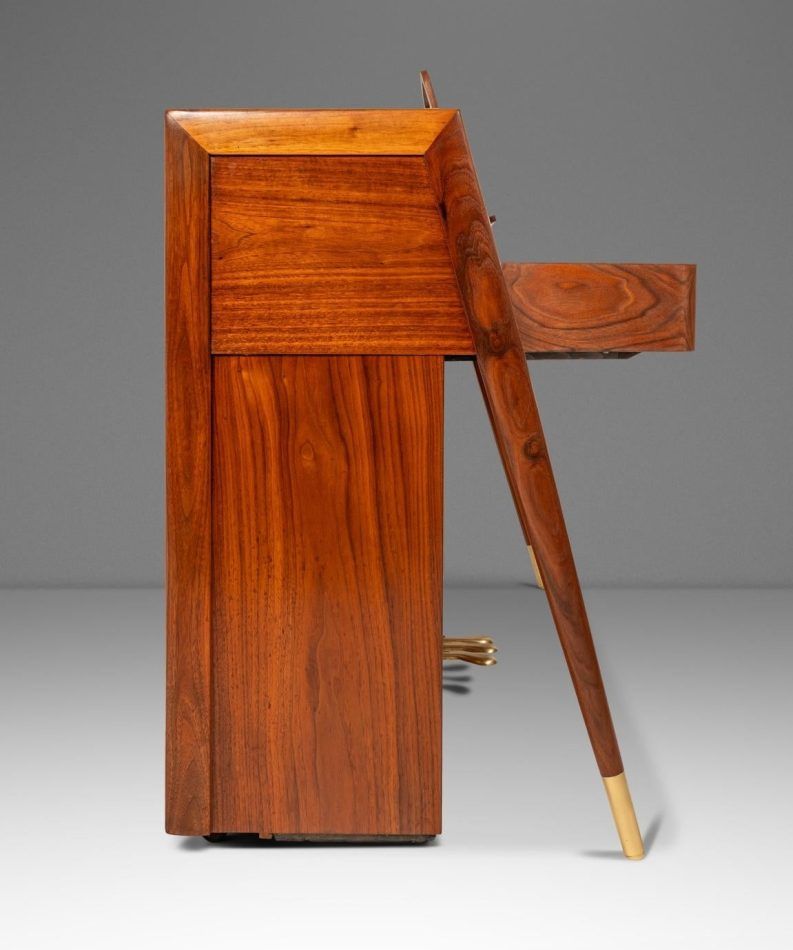
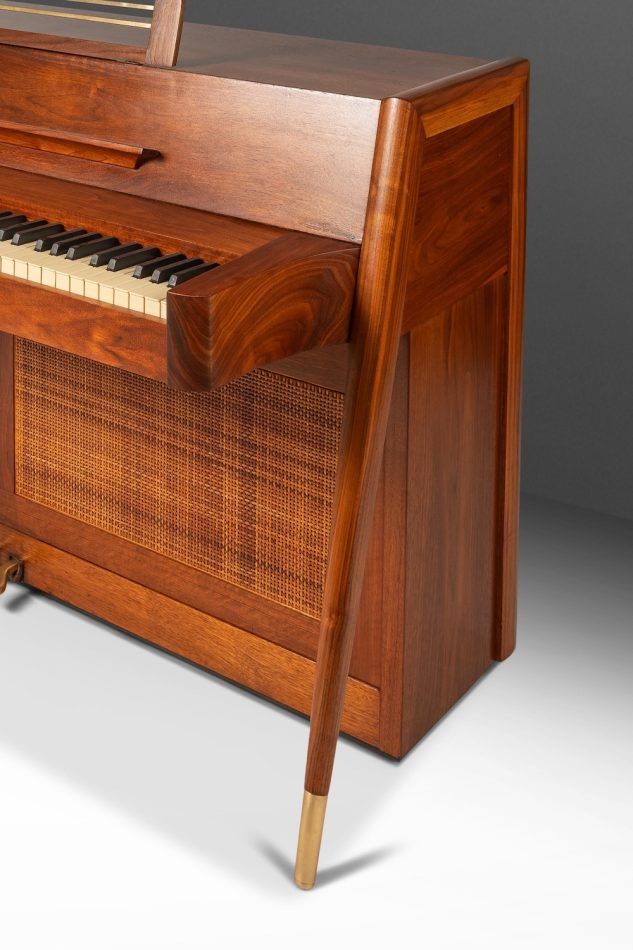
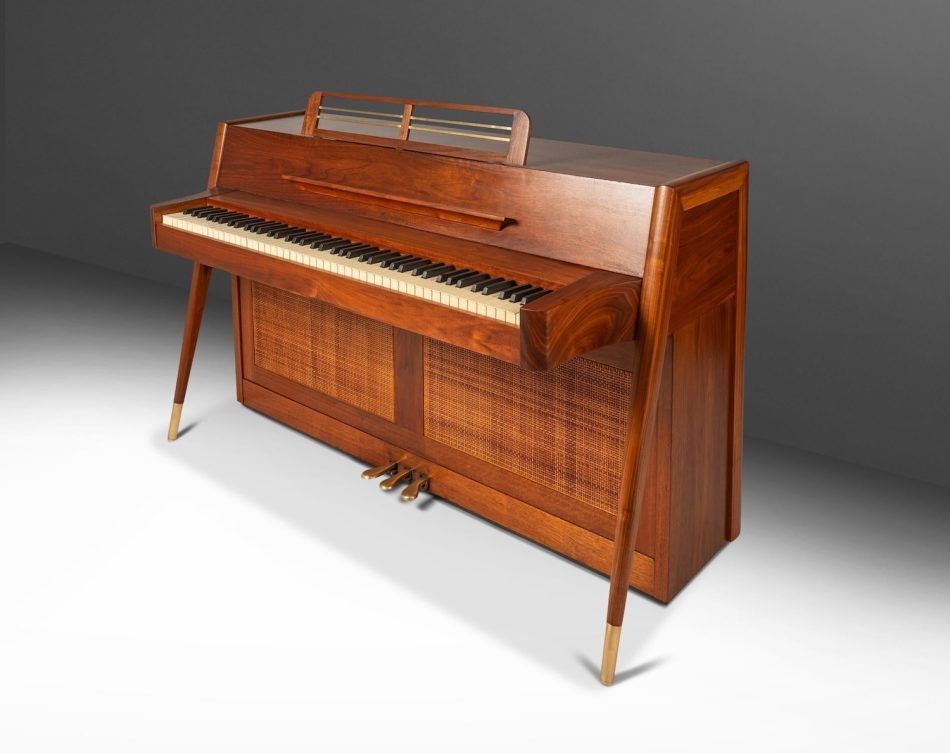
No one in my family knew how to play back in the 1980s, when my parents brought home the piano — a walnut Baldwin upright they bought from an acquaintance who had recently gotten divorced. (Apparently, the woman’s husband wanted the instrument, so she insisted on keeping it herself — and then promptly sold it.) I spent many hours sitting at that piano. It makes sense, therefore, that when I’m perusing pianos on 1stDibs, they’re Baldwins. And this mid-century Baldwin Acrosonic piano stopped me mid-scroll.
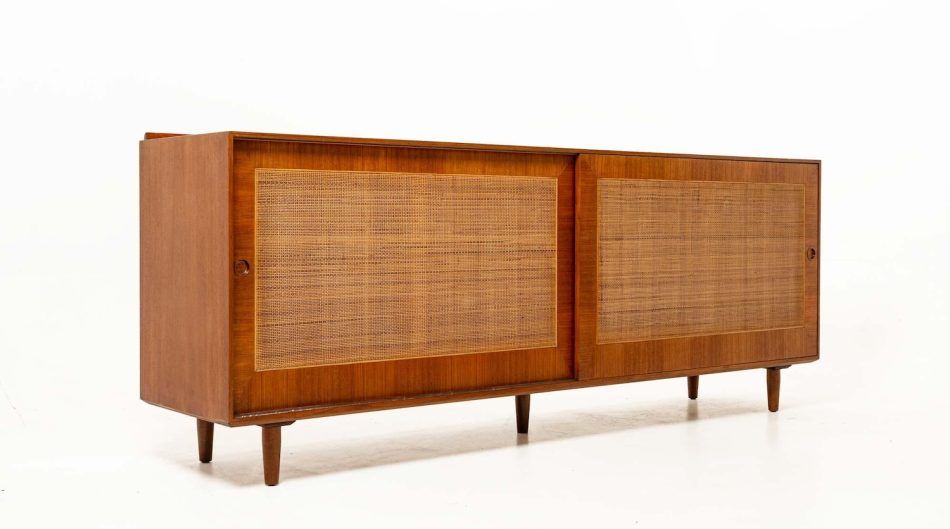
The alluring Danish aesthetic of this Baldwin Acrosonic was the result of a collaboration between the piano manufacturer and Baker Furniture. The lines of the instrument’s walnut cabinet and its cane accents were likely influenced by the manufacturer’s other furniture of that period, like this sideboard by Finn Juhl.
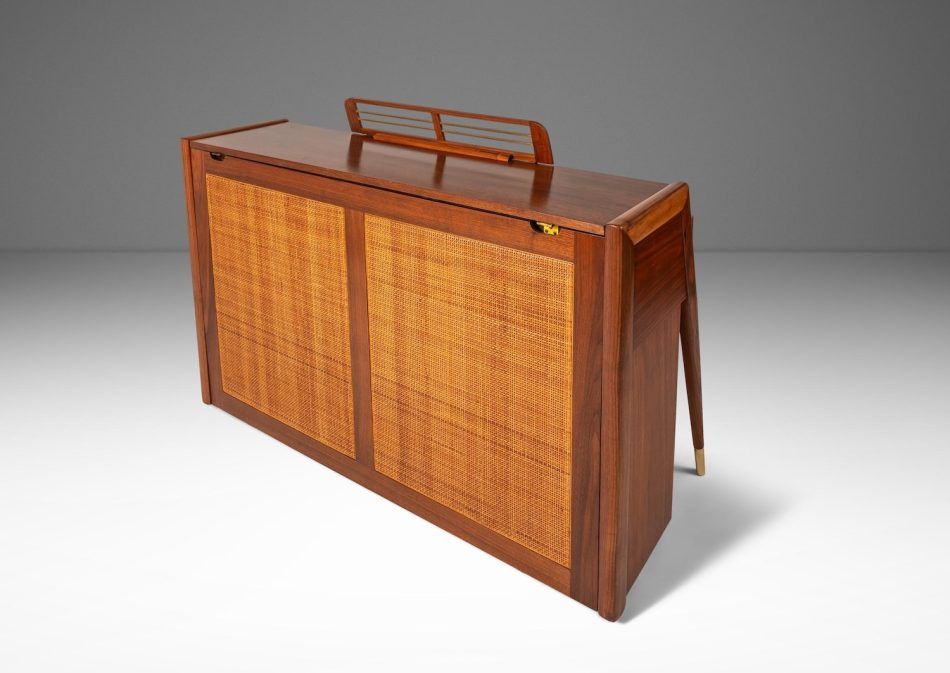
The piano has splayed legs and brass feet, as well as two cane panels on its back, which makes it even more striking when installed away from the wall, ideally at an angle. A newspaper ad from 1960 even claimed it made “an attractive room divider.”
But the appeal of the Baldwin Acrosonic line, first introduced in 1936, went beyond its good looks — it’s also known for its sound quality. In fact, the trademarked name Acrosonic is a combination of the Greek word akros, meaning “supreme,” and the Latin sonus, meaning “tone.”
The Baldwin Acrosonic Danish models, like this one, are particularly prized by Josh Cemelich, of ABT Modern, who is offering the piano on 1stDibs. “This is probably the 20th one I’ve had,” he says. “I only buy this model.”
When Cemelich acquires a new piano, he and his team assess and restore it, a process he describes as super tedious, often entailing recaning, leg restoration and key re-veneering. He says he has sold this model to a wide range of clients, including a film-score composer, NBA players and moms who want their kids to take lessons.
I’m becoming one of those moms. Whenever I visit my parents, all I want to do is sit down at the piano with decades-old sheet music (Christmas carols and Michael Bolton songs? Don’t mind if I do!). I’m continually interrupted, though, by my two young sons scooting me off the bench to bang away on the keys themselves.
So, if you’re like me and want to both own a beautiful piano and make your kids take lessons that they’ll appreciate in 20 to 30 years, maybe this Baldwin Acrosonic is for you. Assuming, that is, Cemelich doesn’t decide to keep it. A father himself, he says, “I always threaten that this will be the piano I buy for my kids.”