Few periods of British design were as innovative and eclectic as the late 19th century, thanks to the impact of both industrialization and international exhibitions. The aesthetic movement, which believed in “art for art’s sake,” drew inspiration from a wide range of global cultures, while the Arts and Crafts movement championed a return to handcraft and small-scale workshops producing decorative objects for a modern home. With a keen understanding of how these new ways of thinking were impacting the zeitgeist, the firm of Alexander Morton & Co. set out in the late 1890s to introduce a new category of crafts to the British Isles: hand-knotted rugs, or, as they are often referred to by collectors today, Donegal carpets.
How Donegal carpets came to be is a tale of talent, social idealism and business savvy. When Alexander Morton founded his eponymous firm, in 1875, it relied on handlooms and power looms to produce rugs suited to Victorian tastes, including Axminster squares and Kidderminster-type carpets. But by the 1890s, it had shifted its focus to more modern styles, under the direction of Alexander’s nephew Gavin Morton, the head of the company’s design department. Gavin was a proponent of Arts and Crafts ideologies and aesthetics and began to commission new carpet patterns from the movement’s leading talents, including C.F.A. Voysey, one of the period’s most renowned designers.
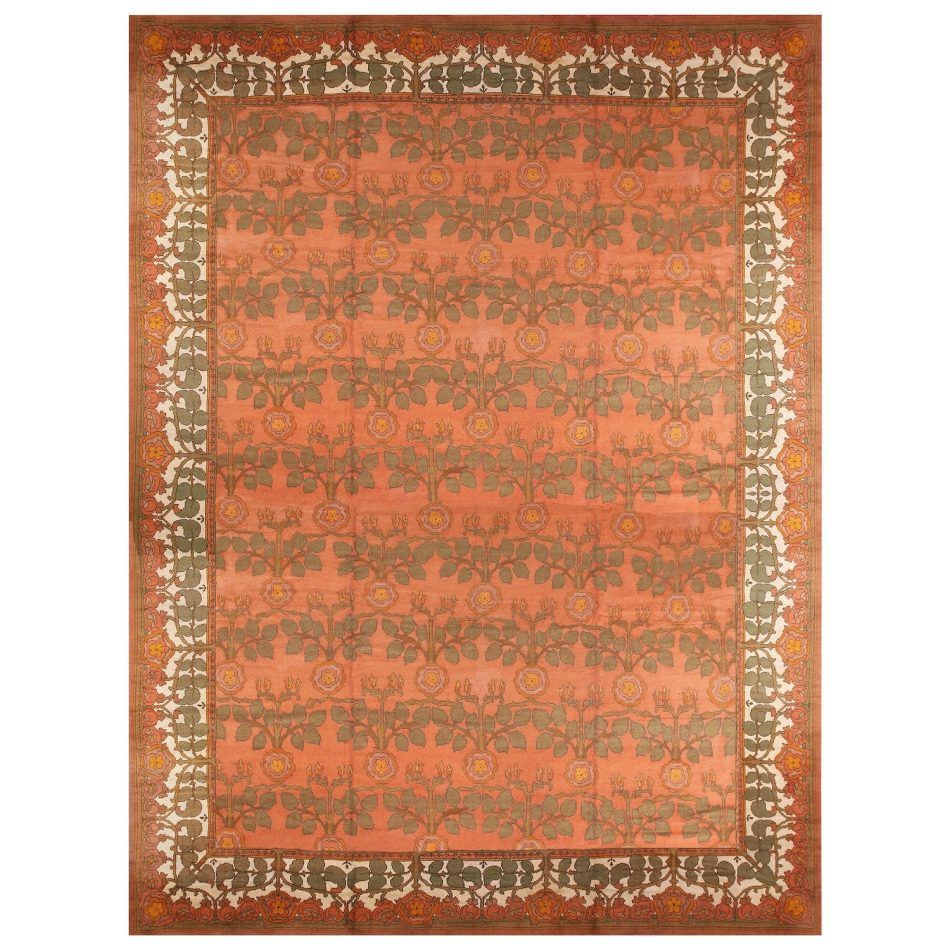
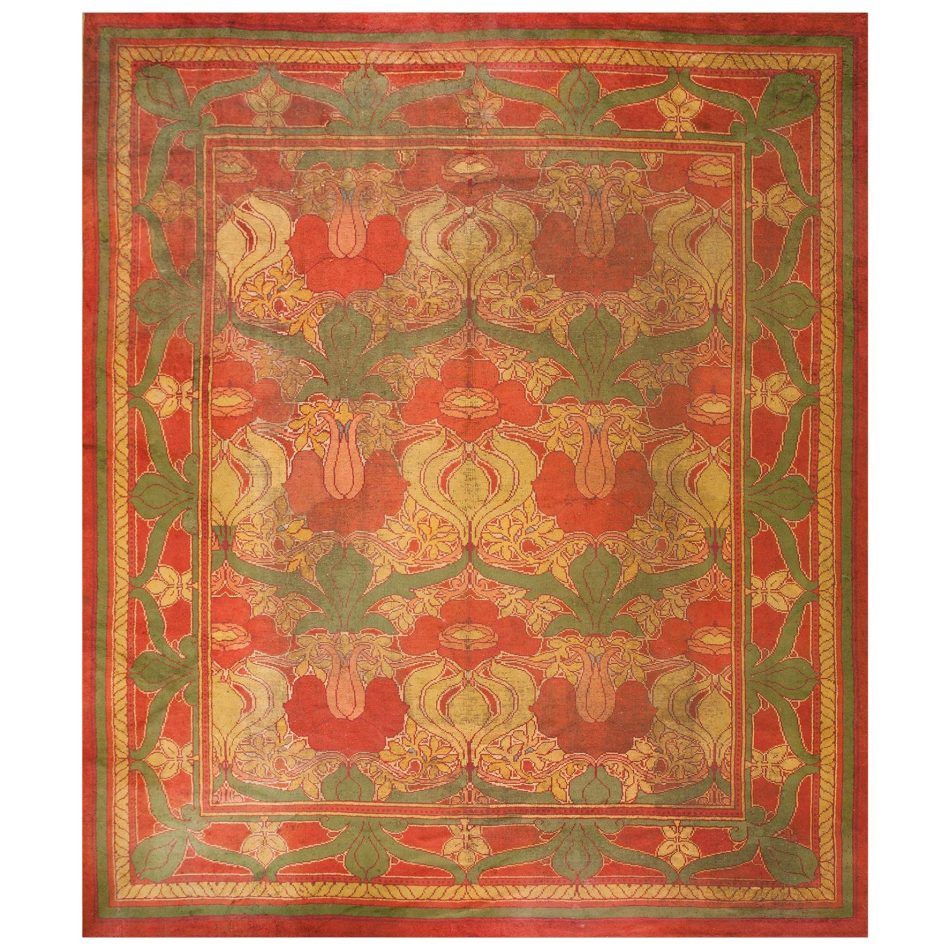
As for idealism, a chance meeting between Alexander Morton and a government official from Ireland presented the company with a rare business opportunity that aligned with the Arts and Crafts movement’s principles. County Donegal, in Ireland, had been deeply impacted by the floods and famine of the 1880s, and the Irish government, eager to support revitalization efforts, offered to subsidize the building of Morton’s factories near the town of Killybegs to spur employment. Even more remarkably, skilled artisans already existed in the area, as the Donegal Industrial Fund, a charitable endeavor established to alleviate poverty, had been teaching locals textile arts since 1883. In 1898, the Morton company opened in Donegal, hiring weavers and producing its very first carpets out of a rented hayloft while awaiting the construction of its factory.
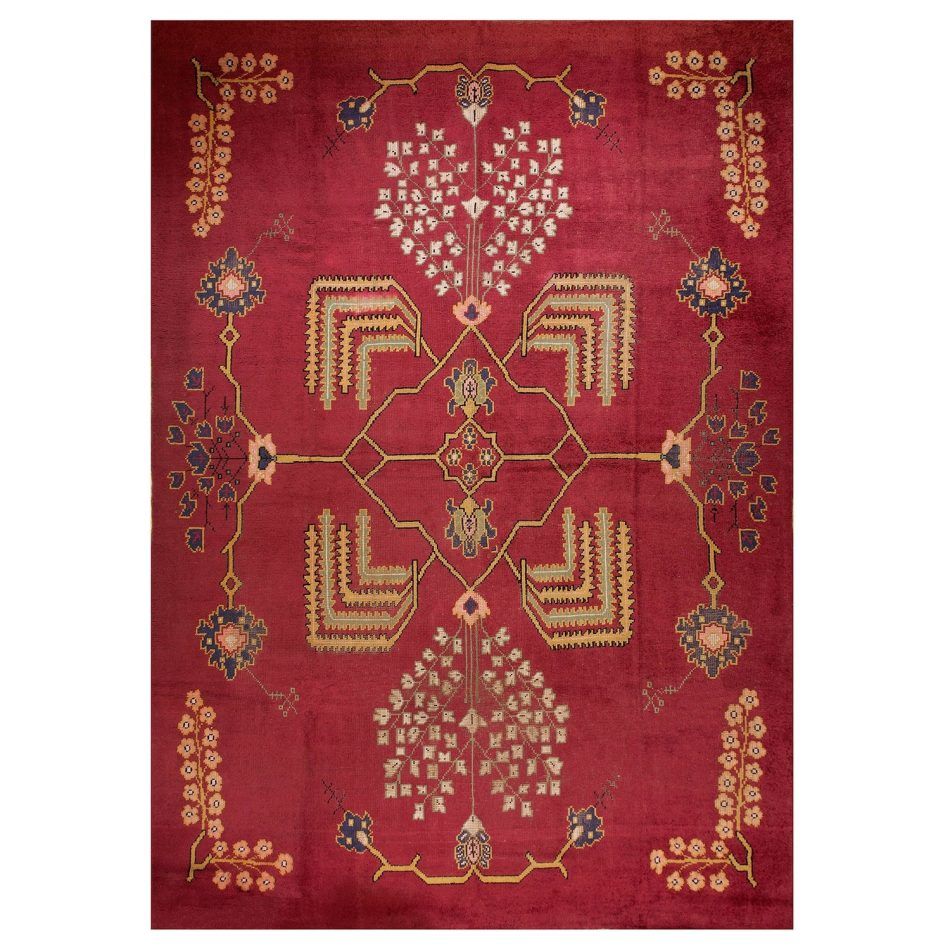
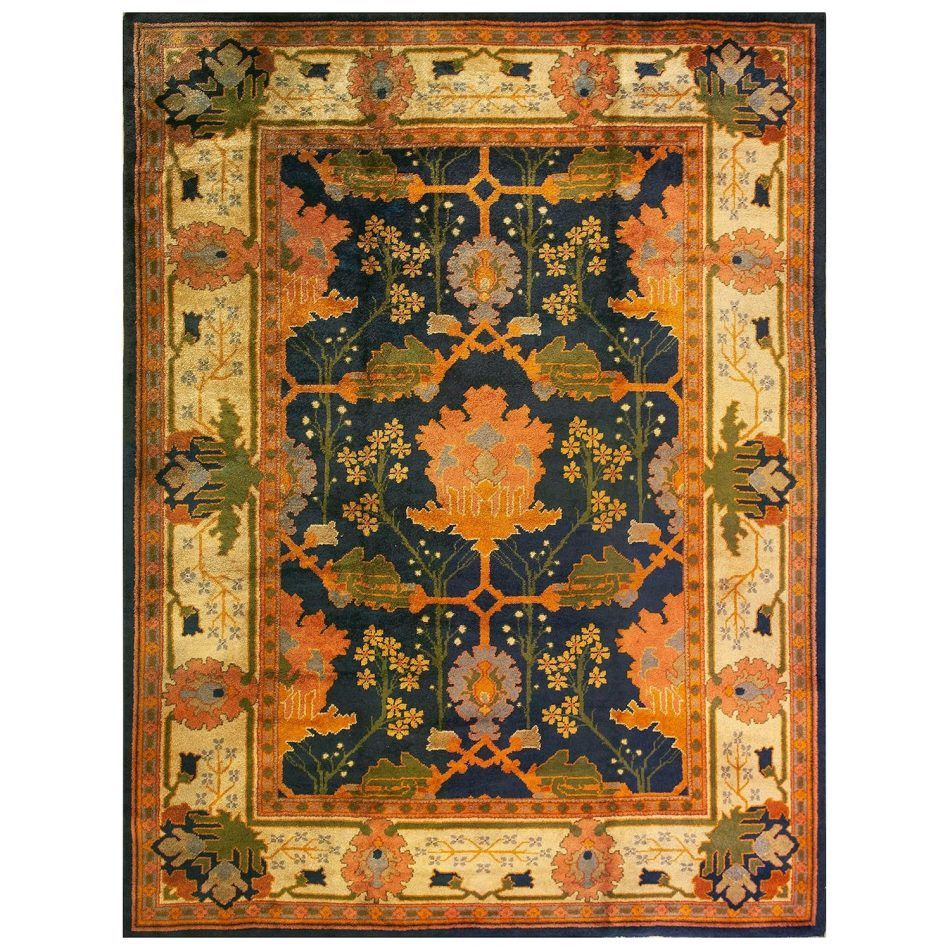
Many of the early carpets drew inspiration from the rich Eastern rug cultures, including the Turkish Oushak and Persian traditions. The Morton company was already producing similar rugs with great success for its retailer, the famed Liberty London, and head designer Gavin Morton had a unique talent for blending traditional patterns with a distinctly British Arts and Crafts aesthetic, as evidenced by this remarkable example, offered on 1stDibs by Rugs On Net.
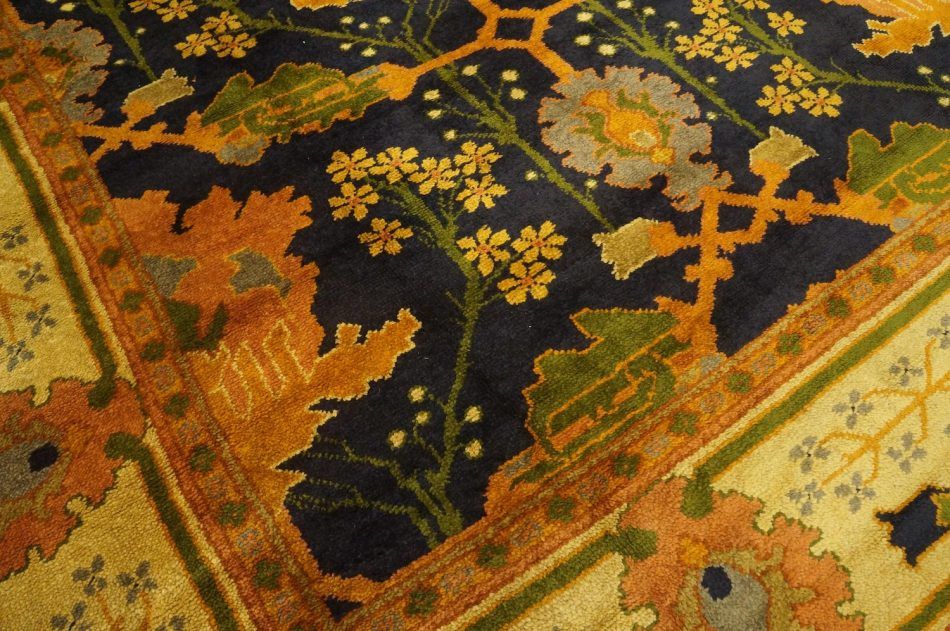
One critic at the time said of his creations, “While they somewhat resemble Turkey carpets both in texture and design, they have a distinctive quality of their own.” Katrina Mauro, of Rugs On Net, couldn’t agree more: “The large-scale adapted Oushak-style design is captivating. And the bold juxtaposition of bright and light hues against the deep blue ground make it pop even more.”
Morton’s Donegal carpets quickly became a hit, praised in Arts and Crafts exhibitions throughout England and Ireland and in dedicated shows at the inimitable Liberty London. Select retailers, including Gustav Stickley’s Craftsman showroom, in New York City, brought them to an even wider audience. The company continued to innovate through collaborations with notable designers who embraced the eclectic revivalism of the day, creating patterns that showed influences ranging from the Celtic to the Neo-Georgian. Many of its productions were special commissions. In fact, the very first rug produced by Morton’s new factory was for Queen Victoria, who had placed her order after seeing a special exhibition of the firm’s carpets at Millar & Beatty Ltd., in Dublin, in 1899.
The turn of the century was a remarkable period of design excellence for Morton’s, which was unparalleled in the market for fine hand-knotted British carpets. The family-owned company kept producing the Arts and Crafts carpets that had brought them fame until the Donegal factories were sold, in the 1950s.
According to Oriental rug expert Dr. Peter Saunders, “There were no other Irish carpet workshops at this time, except for short-lived minor operations, and Morton’s Donegal work would have no followers. Donegal satisfied the demand, and other British Arts and Crafts carpets of the period are otherwise nothing like them.”
Today, period Donegal carpets like this one are rare treasures, remarkable for their unusual patterns and colors, as well as their unique place in the Arts and Crafts movement.