Ohio - Art

1,966 Results
to
123
987
391
323
152
248
Overall Width
to
Overall Height
to
66
220
1,306
507
62
70
154
143
86
105
192
165
139
58
30
446
356
285
130
58
47
24
19
18
18
8
7
1
1,003
836
134
658
317
229
229
183
128
127
107
88
85
72
70
58
46
38
34
34
33
33
29
781
324
251
234
203
80
59
58
49
34
557
167
233,322
170,271
Item Ships From: Ohio
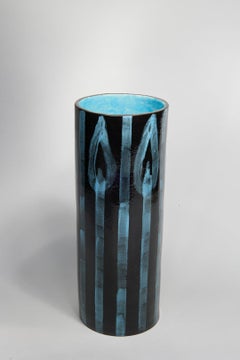
Large 20th Century Ceramic Vase w/ Flowers, French Artist

Large 20th Century Ceramic Vase w/ Flowers, French Artist

By Roger Capron

Located in Beachwood, OH

Roger Capron (French, 1922-2006) Vase Ceramic Signed on bottom 15.75 x 6 inches French ceramist Roger Capron was born in Vincennes in 1922. He studied at Paris’s School of Applied A...

Category

Late 20th Century Ohio - Art

Materials

Ceramic

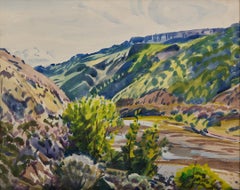
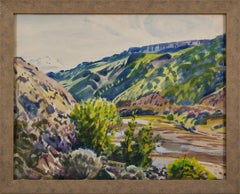
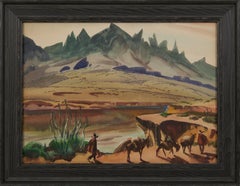
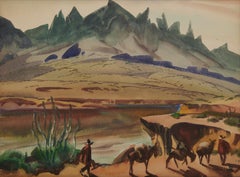
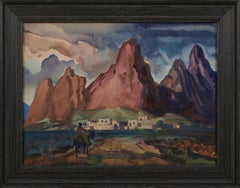
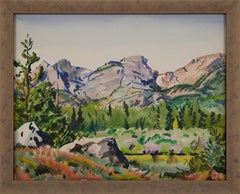
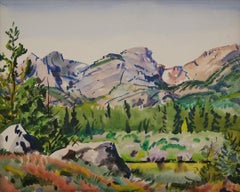
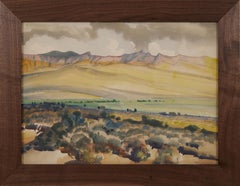
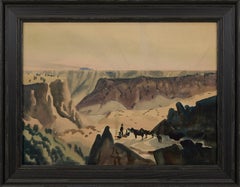
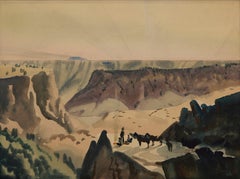
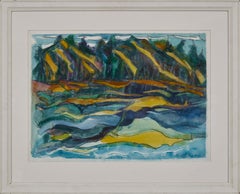
Moraine Valley, Rocky Mountain National Park, Colorado, 20th Century

Moraine Valley, Rocky Mountain National Park, Colorado, 20th Century

By Frank Wilcox

Located in Beachwood, OH

Frank Nelson Wilcox (American, 1887-1964) Moraine Valley, Rocky Mountain National Park, Colorado, c. 1950 Watercolor on paper Unsigned 19 x 24 inches Provenance: From the Estate of Frank Nelson Wilcox Frank Nelson Wilcox (October 3, 1887 – April 17, 1964) was a modernist American artist and a master of watercolor. Wilcox is described as the "Dean of Cleveland School painters," though some sources give this appellation to Henry Keller or Frederick Gottwald. Wilcox was born on October 3, 1887 to Frank Nelson Wilcox, Sr. and Jessie Fremont Snow Wilcox at 61 Linwood Street in Cleveland, Ohio. His father, a prominent lawyer, died at home in 1904 shortly before Wilcox' 17th birthday. His brother, lawyer and publisher Owen N. Wilcox, was president of the Gates Legal Publishing Company or The Gates Press. His sister Ruth Wilcox was a respected librarian. In 1906 Wilcox enrolled from the Cleveland School of Art under the tutelage of Henry Keller, Louis Rorimer, and Frederick Gottwald. He also attended Keller's Berlin Heights summer school from 1909. After graduating in 1910, Wilcox traveled and studied in Europe, sometimes dropping by Académie Colarossi in the evening to sketch the model or the other students at their easels, where he was influenced by French impressionism. Wilcox was influenced by Keller's innovative watercolor techniques, and from 1910 to 1916 they experimented together with impressionism and post-impressionism. Wilcox soon developed his own signature style in the American Scene or Regionalist tradition of the early 20th century. He joined the Cleveland School of Art faculty in 1913. Among his students were Lawrence Edwin Blazey, Carl Gaertner, Paul Travis, and Charles E. Burchfield. Around this time Wilcox became associated with Cowan Pottery. In 1916 Wilcox married fellow artist Florence Bard, and they spent most of their honeymoon painting in Berlin Heights with Keller. They had one daughter, Mary. In 1918 he joined the Cleveland Society of Artists, a conservative counter to the Bohemian Kokoon Arts Club, and would later serve as its president. He also began teaching night school at the John Huntington Polytechnic Institute at this time, and taught briefly at Baldwin-Wallace College. Wilcox wrote and illustrated Ohio Indian Trails in 1933, which was favorably reviewed by the New York Times in 1934. This book was edited and reprinted in 1970 by William A. McGill. McGill also edited and reprinted Wilcox' Canals of the Old Northwest in 1969. Wilcox also wrote, illustrated, and published Weather Wisdom in 1949, a limited edition (50 copies) of twenty-four serigraphs (silk screen prints) accompanied by commentary "based upon familiar weather observations commonly made by people living in the country." Wilcox displayed over 250 works at Cleveland's annual May Show. He received numerous awards, including the Penton Medal for as The Omnibus, Paris (1920), Fish Tug on Lake Erie (1921), Blacksmith Shop (1922), and The Gravel Pit (1922). Other paintings include The Trailing Fog (1929), Under the Big Top (1930), and Ohio Landscape...

Category

1950s American Modern Ohio - Art

Materials

Watercolor

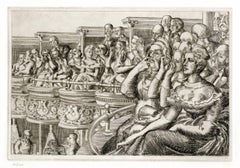
Grand Tier and the Met

Grand Tier and the Met

By Reginald Marsh

Located in Fairlawn, OH

Grand Tier at the Met Etching, 1939 From: Reginald Marsh, Thirty Etchings and Engravings Published by the Whitney Museum of American Art, 1969 Unsigned (as usual for the Whitney edit...

Category

1930s American Modern Ohio - Art

Materials

Etching

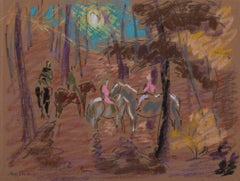
Horseback Riders in Sunny Landscape, 20th Century, Cleveland Artist

Horseback Riders in Sunny Landscape, 20th Century, Cleveland Artist

By Joseph O'Sickey

Located in Beachwood, OH

Work sold to benefit the CLEVELAND INSTITUTE OF ART Joseph B. O’Sickey (American, 1918–2013) Horseback Riders Pastel on brown paper Signed lower left 9.5 x 12.5 inches Joseph O'S...

Category

Late 20th Century Post-Impressionist Ohio - Art

Materials

Pastel

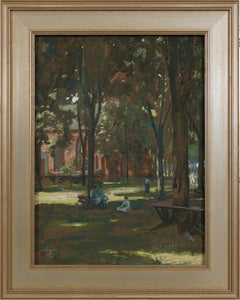
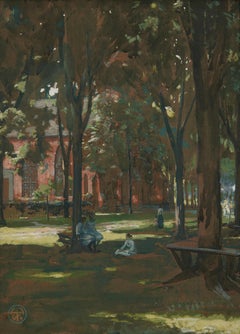
Ladies in a Church Yard in Shady Afternoon, Early 20th Century Cleveland School

Ladies in a Church Yard in Shady Afternoon, Early 20th Century Cleveland School

By Henry Keller

Located in Beachwood, OH

Henry George Keller (American, 1869-1949) Ladies in a Church Yard Watercolor and gouache on paper Signed lower left with monogram 15 x 20 inches 25.5 x 20.25 inches, framed Keller, ...

Category

Early 20th Century Ohio - Art

Materials

Watercolor, Gouache

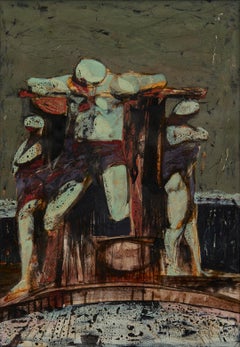
Crucifixion, 20th Century Figural Expressionist Artist

Crucifixion, 20th Century Figural Expressionist Artist

By Robert Carroll

Located in Beachwood, OH

Robert Carroll (American, 1934-2016) Crucifixion Oil on paper Signed lower right 19.5 x 13.5 inches 25.25 x 19.5 inches, framed Robert Carroll was an American artist born in 1934. ...

Category

Late 20th Century Expressionist Ohio - Art

Materials

Oil

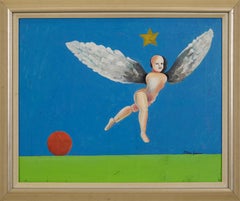
Surrealist Flying Fantasy Figure, Cleveland Woman Artist

Surrealist Flying Fantasy Figure, Cleveland Woman Artist

By Mary Spain

Located in Beachwood, OH

Mary Spain (American, 1934–1983) Flying Figure, 1970s Oil on canvas Signed lower right 17.5. x 21.5. inches 22 x 26 inches, framed Set in a realm of fantasy, Mary Spain’s work exhib...

Category

1970s Surrealist Ohio - Art

Materials

Oil

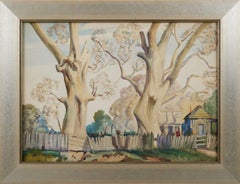
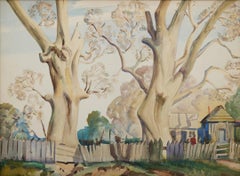
Two Old Pecan Trees, Early 20th Century Landscape, 1st Place May Show Winner

Two Old Pecan Trees, Early 20th Century Landscape, 1st Place May Show Winner

By Frank Wilcox

Located in Beachwood, OH

Frank Nelson Wilcox (American, 1887–1964) Two Old Pecan Trees, 1932 Watercolor on paper mounted on board Signed lower right 21 x 28.25 inches 27 x 35.25 inches, as framed Exhibited: 1932 May Show (1st Place) Cleveland Museum of Art; Poetics of Place: Charles Burchfield and His Contemporaries, 2001 Cleveland Artist's Foundation. Frank Nelson Wilcox (October 3, 1887 – April 17, 1964) was a modernist American artist and a master of watercolor. Wilcox is described as the "Dean of Cleveland School painters," though some sources give this appellation to Henry Keller or Frederick Gottwald. Wilcox was born on October 3, 1887 to Frank Nelson Wilcox, Sr. and Jessie Fremont Snow Wilcox at 61 Linwood Street in Cleveland, Ohio. His father, a prominent lawyer, died at home in 1904 shortly before Wilcox' 17th birthday. His brother, lawyer and publisher Owen N. Wilcox, was president of the Gates Legal Publishing Company or The Gates Press. His sister Ruth Wilcox was a respected librarian. In 1906 Wilcox enrolled from the Cleveland School of Art under the tutelage of Henry Keller, Louis Rorimer, and Frederick Gottwald. He also attended Keller's Berlin Heights summer school from 1909. After graduating in 1910, Wilcox traveled and studied in Europe, sometimes dropping by Académie Colarossi in the evening to sketch the model or the other students at their easels, where he was influenced by French impressionism. Wilcox was influenced by Keller's innovative watercolor techniques, and from 1910 to 1916 they experimented together with impressionism and post-impressionism. Wilcox soon developed his own signature style in the American Scene or Regionalist tradition of the early 20th century. He joined the Cleveland School of Art faculty in 1913. Among his students were Lawrence Edwin Blazey, Carl Gaertner, Paul Travis, and Charles E. Burchfield. Around this time Wilcox became associated with Cowan Pottery. In 1916 Wilcox married fellow artist Florence Bard, and they spent most of their honeymoon painting in Berlin Heights with Keller. They had one daughter, Mary. In 1918 he joined the Cleveland Society of Artists, a conservative counter to the Bohemian Kokoon Arts Club, and would later serve as its president. He also began teaching night school at the John Huntington Polytechnic Institute at this time, and taught briefly at Baldwin-Wallace College. Wilcox wrote and illustrated Ohio Indian Trails in 1933, which was favorably reviewed by the New York Times in 1934. This book was edited and reprinted in 1970 by William A. McGill. McGill also edited and reprinted Wilcox' Canals of the Old Northwest in 1969. Wilcox also wrote, illustrated, and published Weather Wisdom in 1949, a limited edition (50 copies) of twenty-four serigraphs (silk screen prints) accompanied by commentary "based upon familiar weather observations commonly made by people living in the country." Wilcox displayed over 250 works at Cleveland's annual May Show. He received numerous awards, including the Penton Medal for The Omnibus, Paris (1920), Fish Tug on Lake Erie (1921), Blacksmith Shop (1922), and The Gravel Pit (1922). Other paintings include The Trailing Fog (1929), Under the Big Top (1930), and Ohio Landscape...

Category

1930s Ohio - Art

Materials

Watercolor

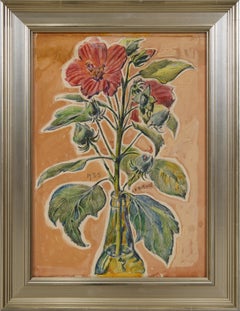
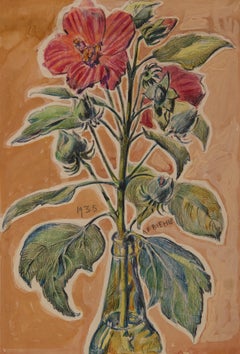
Hibiscus Floral Still Life, Early 20th Century Cleveland School

Hibiscus Floral Still Life, Early 20th Century Cleveland School

Located in Beachwood, OH

August Frederick Biehle (American, 1885–1979) Hibiscus, 1935 Gouache, graphite and colored pencil on paper Signed and dated center 16.5 x 11.5 inches 21 x 15.75 inches, framed A ver...

Category

1930s American Modern Ohio - Art

Materials

Gouache, Color Pencil, Graphite

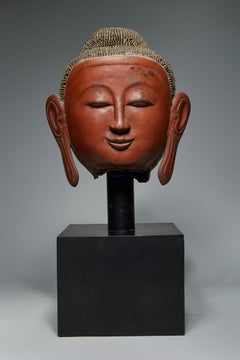
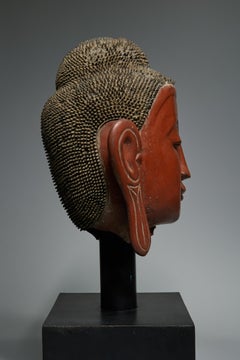
19th Century Burmese School Buddha Head of the Shan (Tai Yai) Style

19th Century Burmese School Buddha Head of the Shan (Tai Yai) Style

Located in Beachwood, OH

Burmese School, 19th Century Buddha Head of the Shan (Tai Yai) Style Wood with red lacquered pigment 25 x 13 x 10 inches dry lacquer form with finely sculpted features such as the e...

Category

19th Century Ohio - Art

Materials

Wood, Lacquer

Silent Prayers at St. Malo, France, Early 20th Century European Landscape

Silent Prayers at St. Malo, France, Early 20th Century European Landscape

By Frank Wilcox

Located in Beachwood, OH

Frank Nelson Wilcox (American, 1887–1964) Silent Prayers at St. Malo, France, 1925 Watercolor and gouache on board Signed and dated lower right 19 x 24 inches Frank Nelson Wilcox (...

Category

1920s Ohio - Art

Materials

Watercolor, Gouache

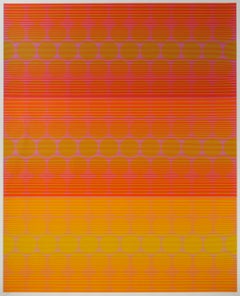
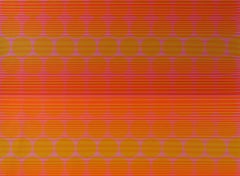
Three to Compare
Three to Compare

Three to Compare

By Julian Stanczak

Located in Fairlawn, OH

Three to Compare From: Twelve Progressions Signed and numbered in pencil Commissioned by Martha Jackson Graphics Printer: Domberger, Stuttgart, Germany Their drystamp lower right cor...

Category

1970s Op Art Ohio - Art

Materials

Screen

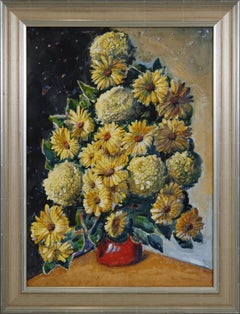
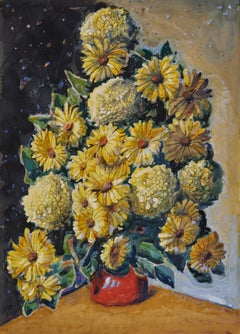
Chrysanthemums & Gerbera Daisies, Large Floral Still Life

Chrysanthemums & Gerbera Daisies, Large Floral Still Life

Located in Beachwood, OH

August Frederick Biehle (American, 1885–1979) Chrysanthemums and Gerbera Daisies Gouache and litho crayon on paper Signed lower right 28 x 20 inches 33.75 x 26 inches, framed A vers...

Category

20th Century Modern Ohio - Art

Materials

Gouache

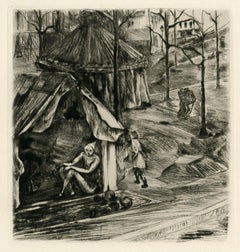
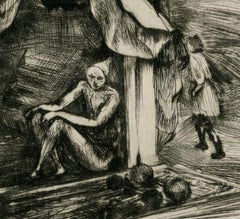
Le Vieux Saltimbanque (The Old Acrobat)

Le Vieux Saltimbanque (The Old Acrobat)

By Jean-Louis Boussingault

Located in Fairlawn, OH

Le Vieux Saltimbanque (The Old Acrobat) drypoint on wove Van Gelder Zonen paper, 1933 Unsigned as issued Condition: Excellent Image size: 5 x 4 3/4 inches Sheet size: 10 1/2 x 7 15/1...

Category

1930s Expressionist Ohio - Art

Materials

Drypoint

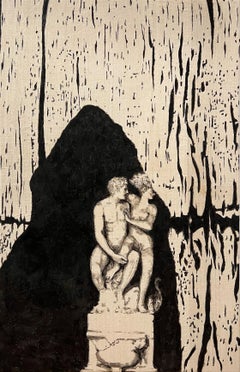
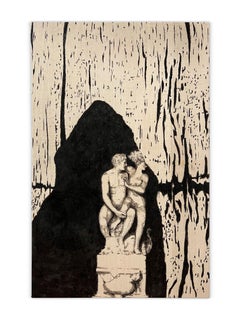
"Tempt Ensemble" (Parisian, black & white, women, monochromatic, sculptures)

"Tempt Ensemble" (Parisian, black & white, women, monochromatic, sculptures)

By Nicholas Evans

Located in Paris, IDF

TEMPT ENSEMBLE 2022 Paris, France Originally created as part of Nicholas' solo exhibition "This, and Thereafter (Plumes)," December 10, 2022 - January 7, 2023. The theme illustrated...

Category

21st Century and Contemporary Abstract Ohio - Art

Materials

India Ink, Linen

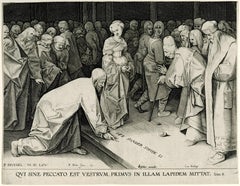
Jesus and the Woman Taken in Adultery (after Pieter Brueghel the Elder

Jesus and the Woman Taken in Adultery (after Pieter Brueghel the Elder

Located in Fairlawn, OH

Jesus and the Woman Taken in Adultery (after Pieter Brueghel the Elder [c. 1525-1569]) Engraving, 1579 Signed in the plate by Bruegel (the artist), Perret (the engraver) and Visscher...

Category

16th Century Old Masters Ohio - Art

Materials

Engraving

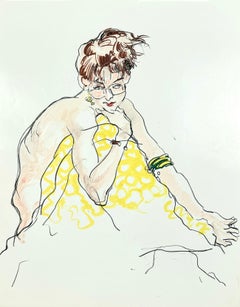
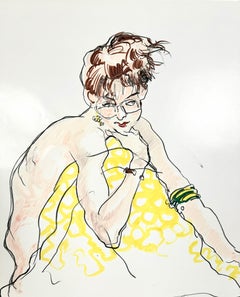
Original Ronald Shap figure drawing

Original Ronald Shap figure drawing

By Ronald Shap

Located in Las Vegas, NV

Original oil pastel and gouache figure drawing by celebrated, twentieth-century California landscape painter, Ronald Shap. Vibrant sketch of sitting nude woman with yellow blanket. 2...

Category

1980s Pop Art Ohio - Art

Materials

Oil Pastel, Gouache

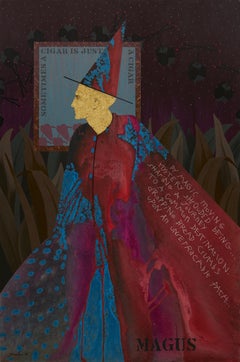
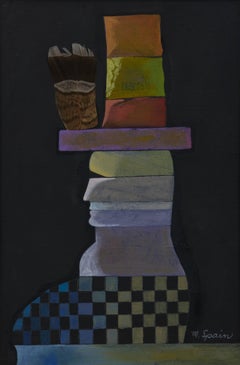
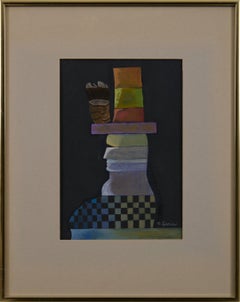
Man with Feather in His Cap 20thc Figural Abstract Cleveland School Woman Artist

Man with Feather in His Cap 20thc Figural Abstract Cleveland School Woman Artist

By Mary Spain

Located in Beachwood, OH

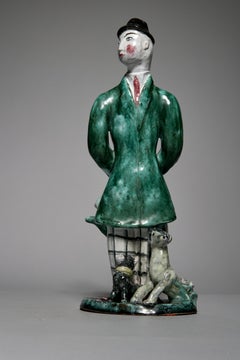
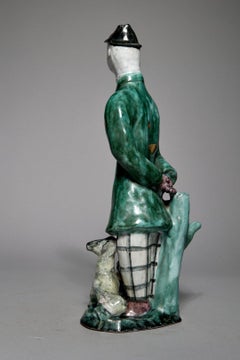
Mary Spain (American, 1934-1983) Man with Feather in His Cap Mixed media Signed lower right, signed and titled verso 11.5 x 7.75 inches 19.25 x 15.25 inches, framed Set in a realm o...

Category

Late 20th Century Ohio - Art

Materials

Oil

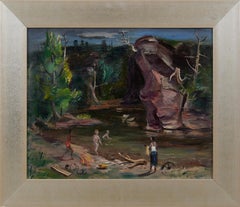
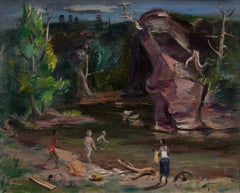
Skinny Dippers, 20th Century Landscape, Swimming Family, Italian Artist

Skinny Dippers, 20th Century Landscape, Swimming Family, Italian Artist

By Louis Bosa

Located in Beachwood, OH

Louis Bosa (American, 1905-1981) Skinny Dippers Oil on board Signed lower right 15.5 x 20 inches 21.25 x 25.5 inches, framed Born in Codroipo, a small village only a few miles from ...

Category

1960s Ohio - Art

Materials

Oil

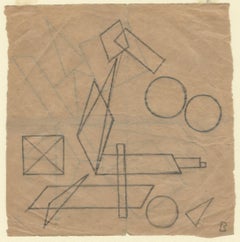
Non-Objective Drawing, Graphite on Paper, Abstract, 1938, Framed

Non-Objective Drawing, Graphite on Paper, Abstract, 1938, Framed

By Rudolf Bauer

Located in Fairlawn, OH

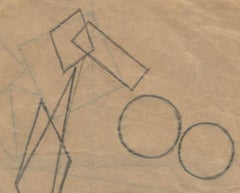
Non-Objective Drawing (Double sided composition) Graphite on paper, 1938 Initialed "B" by the artist lower right corner Created while the artist was imprisoned in a Gestapo Prison fo...

Category

1930s Abstract Ohio - Art

Materials

Graphite

Untitled
Untitled

Peter MarksUntitled, 2003-2004

$600Sale Price|50% Off

Untitled

By Peter Marks

Located in Fairlawn, OH

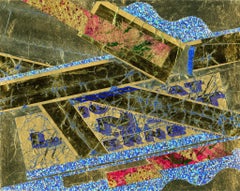
Untitled Acrylic with gold leaf on canvas, metallic foil and glitter paper collage mounted on paper, c. 2003-2004 Unsigned Provenance: Estate of...

Category

Early 2000s Abstract Ohio - Art

Materials

Mixed Media

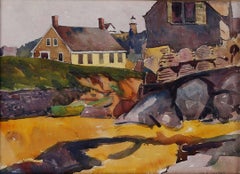
Beachside Village, Maine, 20th century landscape watercolor, Cleveland School

Beachside Village, Maine, 20th century landscape watercolor, Cleveland School

By George Adomeit

Located in Beachwood, OH

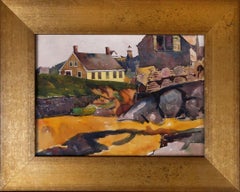
George Gustav Adomeit (American, 1879-1967) Beachside Village, Maine Watercolor on paper Signed lower right 10 x 14 inches 17.75 x 21.75 inches, framed A major painter of American ...

Category

Mid-20th Century American Modern Ohio - Art

Materials

Watercolor

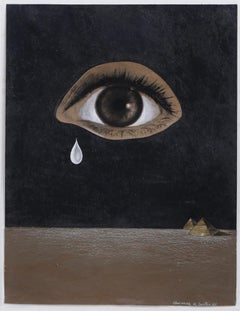
Eye of the Desert, Figural Abstract collage, Surrealist Black & Brown painting

Eye of the Desert, Figural Abstract collage, Surrealist Black & Brown painting

By Clarence Holbrook Carter

Located in Beachwood, OH

Clarence Holbrook Carter (American, 1904-2000) Eye of the Desert, 1965 Collage, graphite and gouache on paper Signed and dated lower right 16 x 12 inches 25 x 21 inches, framed Condition: Minor stains on mat. A mid-century figural abstract painting. Clarence Holbrook Carter achieved a level of national artistic success that was nearly unprecedented among Cleveland School artists of his day, with representation by major New York dealers...

Category

1960s American Modern Ohio - Art

Materials

Gouache, Graphite

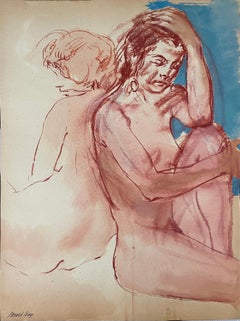
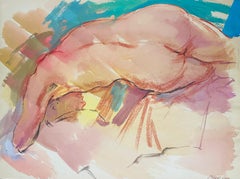
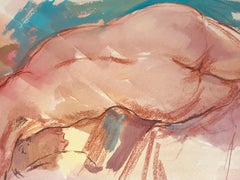
Original Ronald Shap figure drawing, signed

Original Ronald Shap figure drawing, signed

By Ronald Shap

Located in Las Vegas, NV

Original oil pastel and gouache figure drawing by celebrated, twentieth-century California landscape painter, Ronald Shap. Stunning sketch of a nude with washes of aqua and pink. This is a part of Shap's '80s Interiors...

Category

1980s Contemporary Ohio - Art

Materials

Oil Pastel, Gouache

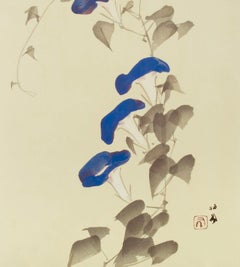
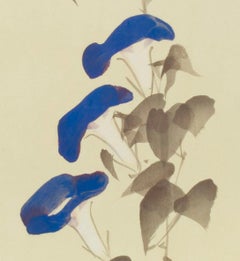
Morning Glory Vine and Flowers

Morning Glory Vine and Flowers

By Takeuchi Seiho

Located in Fairlawn, OH

Takeuchi Seiho (1864-1942) Morning Glory Vine and Flowers Color woodcut mounted on shikishiban cardboard mount Printed after 1942 Most probably published by Unsodo, Kyoto No record ...

Category

1920s Other Art Style Ohio - Art

Materials

Woodcut

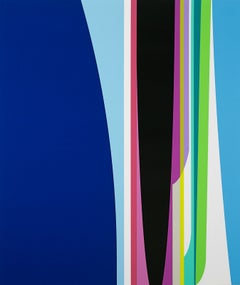
Spy, Abstract Screen Print, 15-Screen Process, Framing Available, 29 x 34.25

Spy, Abstract Screen Print, 15-Screen Process, Framing Available, 29 x 34.25

By Dion Johnson

Located in Columbus, OH

Each edition of Spy features an impressive 15-screen process, with each pass requiring the utmost precision and registration to be perfectly aligned with each pass. As one of the fir...

Category

2010s Abstract Geometric Ohio - Art

Materials

Screen

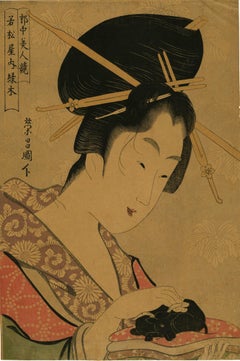
The Courtesan Midorigi Woodcut Print, Signed, Oban, Circa 1790

The Courtesan Midorigi Woodcut Print, Signed, Oban, Circa 1790

By Chokosai Eisho

Located in Fairlawn, OH

Signed: Eisho zu From the series: "Contest of Beauties in the Pleasure District" (Kakuchi bijin-kurabe) Format: Oban Publisher: Yamaguchi ya Chusuke The courtesan Midorigi of the Wakamatsu ya bordello depicted against a decorated ground, holding an ornamental sculpture of an ox. Eisho Chokosai was a pupil of Eisho Hosoda, and is also known as Eisho Hosoda. Reference: Richard Lane...

Category

1790s Ohio - Art

Materials

Woodcut

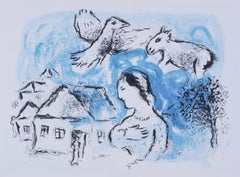
Le Village (The village)

Le Village (The village)

By Marc Chagall

Located in Fairlawn, OH

Le Village (The village) Original lithograph in colors, listed in the artist's catalog raisonne of his prints, 1977 From: Derriere le Miroir, No. 225, Edition 15,000 as published in...

Category

1970s French School Ohio - Art

Materials

Lithograph

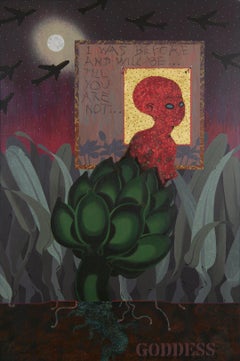
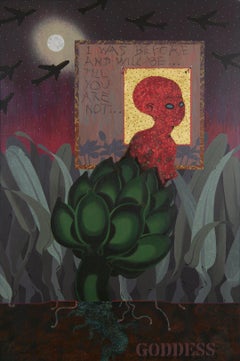
Goddess, Large Surreal Late 20th Century Painting, Cleveland School Artist

Goddess, Large Surreal Late 20th Century Painting, Cleveland School Artist

By Dean Drahos

Located in Beachwood, OH

Dean Drahos (American, 1937-2010) Goddess, 1989 Oil on canvas Signed and dated lower left 72 x 47.5 inches Dean Franklin Drahos was a Cleveland School, Cleveland, Ohio based artist ...

Category

1980s Surrealist Ohio - Art

Materials

Oil

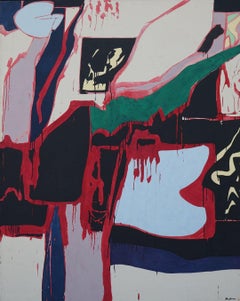
Shore V, large colorful red, black & blue mid-century abstract expressionist

Shore V, large colorful red, black & blue mid-century abstract expressionist

By Richard Andres

Located in Beachwood, OH

Richard Andres (American, 1927-2013) Shore V, c. 1964 acrylic on canvas signed lower right, signed and titled verso 54 x 44 inches Richard Andres was born in Buffalo, New York in 1927. A graduate of the Cleveland Institute of Art in 1950, he was immediately drafted and served for two years in the army as a mural painter. He received his Master of Arts from Kent State in 1961. A frequent exhibitor at galleries and museums and winner of multiple May Show prizes, Andres taught art in the Cleveland Public Schools for 28 years, as well as teaching the University of Buffalo, the Cleveland Institute of Art and the Western Reserve University. Very little in Richard Andres’ childhood would have predicted his love of classical music, mid-century-modern architecture and certainly not his lifelong passion for art and in particular abstract art. Richard’s father, Raymond, had no more than a third-grade education, and his mother, Clara, was one of thirteen children – only three of whom lived into adulthood and none of whom attended high school. They lived, when Richard was a boy, in a dingy area of Buffalo, NY in a walk-up apartment situated above a tavern. Raymond and Clara supplemented the income from their factory jobs in the bar downstairs with Raymond playing ragtime on the piano and Clara serving drinks. This often left Richard and his two older brothers at home alone to fend for themselves. The two older boys, Raymond and Russell, were - unlike Richard- rather rough and tumble and entertained themselves with stickball, boxing and the like. Richard, on the other hand, from a very young age liked to draw, or better yet even, to paint with the small set of watercolors he received for Christmas one year. Paper, however, at the height of the depression, was hard to come by. Luckily, Clara used paper doilies as decoration for the apartment and Richard would contentedly paint and then cut up doilies, gluing the pieces together to create collages. At eight-years-old, he discovered the Albright-Knox Museum (then known as the Albright Art Gallery) and spent several hours a week there studying the paintings. He was particularly fond of Charles Burchfield‘s landscapes, enamored with their ‘messiness’ and thinking that they somehow captured more ‘feeling’ than works he was previously familiar with. For his tenth Christmas, he asked for and received a ‘how-to’ paint book by Elliot O’Hare. Through this self-teaching, he assembled the portfolio needed for acceptance to Buffalo Technical High School where he studied Advertising Arts. In his Junior year, he was encouraged to enter a watercolor painting, “Two Barns,” in the national 1944-45 Ingersoll Art Award Contest and was one of twelve grand prize winners – each one winning one hundred dollars. More importantly the painting was exhibited at the Carnegie Institute Galleries, which resulted in his winning a national scholarship to the Cleveland School of Art (The Cleveland Art Institute). He flourished at the art school under the tutelage of faculty members such as Carl Gaertner, as well as that of visiting artists such as William Sommer and Henry George Keller. He would say in later years that Gaertner, in particular, influenced his attitude toward life as well as art. “Gaertner,” Andres said, “believed that there was no need to be a ‘tortured artist’, that an artist should rather enjoy beauty, family, and life in general.” Free to spend his days as he chose, he wandered the Cleveland Art Museum for most of the hours he was not attending classes or painting; the remaining time was spent drinking coffee at a local hangout with art school friends – which is where he met fellow Henry Keller scholarship winner, Avis Johnson. Richard was immediately smitten with Avis, but being rather shy, it took him the entire summer of 1948 to build up his courage to ask her out. Over that summer he ‘thought about Avis’ and worked in a diner to save money. He also used the hundred-dollar prize money won in High School to visit the first Max Beckmann retrospective in the United States at the City Art Museum in St. Louis. Over a half century later he spoke of that exhibit with a reverence usually reserved for spiritual matters, “I walked in and it was like nothing I had ever seen before... the color...It just glowed.” Returning to campus in the Fall, the first thing he did was go to the coffee shop in hopes of finding Avis. He did, and she, upon seeing him, realized that she was also smitten with him. They quickly became known as ‘the couple’ on campus, and a year later, with Richard being drafted for the Korean war, they were quickly married by a Justice of the Peace, celebrating after with family at Avis’s Cleveland home. As a gift, faculty member John Paul Miller...

Category

1960s Abstract Expressionist Ohio - Art

Materials

Acrylic

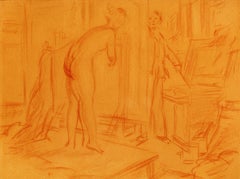
Conte Crayon Drawing of Artist and Model, Ashcan School, Circa 1906

Conte Crayon Drawing of Artist and Model, Ashcan School, Circa 1906

By Everett Shinn

Located in Fairlawn, OH

Artist and Model Conte crayon on tan paper, mounted to board, c. 1906 Unsigned (signature hs faded over time) Condition: slightly toned, mounted to board for support Image/Sheet size...

Category

Early 1900s Ashcan School Ohio - Art

Materials

Crayon

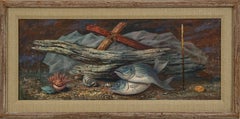
Driftwood & Fish, Mid-20th Century Magical Realism, Surrealist Cleveland Artist

Driftwood & Fish, Mid-20th Century Magical Realism, Surrealist Cleveland Artist

By Paul Riba

Located in Beachwood, OH

Paul Riba (American, 1912-1977) Driftwood and Fish Oil on panel Signed lower right 9.25 x 23.5 inches 14 x 28.25 inches, framed Paul Riba was a painter of Magic Realism. He explore...

Category

20th Century Surrealist Ohio - Art

Materials

Oil

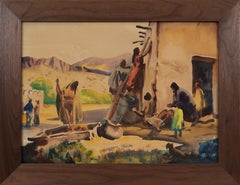
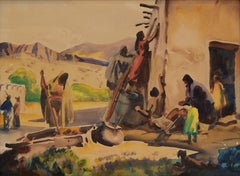
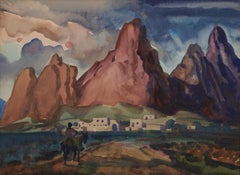
Flats Near Pueblo Isleta, New Mexico, 20th Century Western Landscape

Flats Near Pueblo Isleta, New Mexico, 20th Century Western Landscape

By Frank Wilcox

Located in Beachwood, OH

Frank Nelson Wilcox (American, 1887–1964) Flats Near Isleta, c. 1937 Watercolor on paper Signed lower right, titled verso 14.5 x 20 inches 18.5 x 24 inches framed Frank Nelson Wil...

Category

1930s American Modern Ohio - Art

Materials

Watercolor

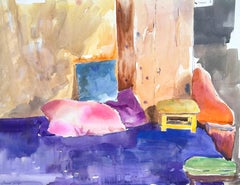
Six Cushions
Six Cushions

Ronald ShapSix Cushions, 1991

$560Sale Price|20% Off

Six Cushions

By Ronald Shap

Located in Las Vegas, NV

Original gouache interior painting by celebrated, twentieth-century California landscape painter, Ronald Shap. Vibrant still life in purple, blue, pink, yellow, orange, green and neu...

Category

1980s Pop Art Ohio - Art

Materials

Gouache

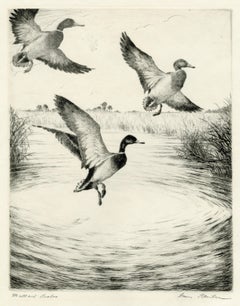
Mallard Drakes (Louisiana Honkers)

Mallard Drakes (Louisiana Honkers)

Located in Fairlawn, OH

Mallard Drakes (Louisiana Honkers) Drypoint, c. 1940 Signed in pencil lower right (see photo) Titled in pencil lower left (see photo) Note: A famous image by Kleiber. It is was made in a hand colored version which commands a large premium. Condition: Excellent Image/Plate size: 9 7/8 x 7 7/8 inches Hans Kleiber (1887-1967) Hans Norbert Kleiber, painter, etcher, illustrator, and naturalist, was born in Cologne, Germany on August 24, 1887. He emigrated from Germany to the United States in 1900, settling in Massachusetts before moving to Wyoming. Kleiber first worked in lumber camps before working for the United States Forest Service from 1906 until 1924. One of his duties as a ranger was to monitor the logging camps in the Bighorn Mountains. Kleiber was primarily self-taught as an artist and it was in the 1920s that he began devoting himself to art. It appears that he first began to work in watercolor and oil but was producing etchings and drypoints as early as 1924. He traversed the mountains of Wyoming, Montana, and Idaho, and his subjects are drawn from the pristine landscapes and wildlife. Kleiber's first exhibition of his etchings was mounted in 1928 at Goodspeed's Book Shop in Boston. His etching, Crossing the Platte, was included in the 1939 New York World's Fair exhibition, American Art Today. There was an exhibition of fifty of his etchings at the National Museum in 1944, and an exhibition of his watercolors was mounted at the Grand Central Galleries in New York in 1950. Kleiber was a member of the Society of American Etchers and the California Society of Printmakers. He received a silver medal in 1931 from the Printmakers Society of California for his print, Leaving the High Country...

Category

1940s American Realist Ohio - Art

Materials

Drypoint

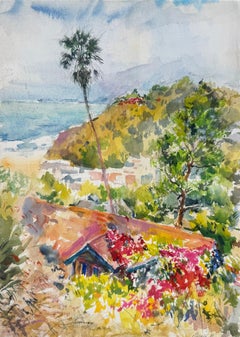
Santa Monica Bay
Santa Monica Bay

Ronald ShapSanta Monica Bay, 1999

$320Sale Price|20% Off

Santa Monica Bay

By Ronald Shap

Located in Las Vegas, NV

Original watercolor painting by celebrated, twentieth-century California landscape painter, Ronald Shap. Vibrant view of the Pacific Ocean and Santa Monica Bay from the hills above H...

Category

20th Century Contemporary Ohio - Art

Materials

Watercolor

Untitled

Untitled

By Andre Minaux

Located in Fairlawn, OH

Unsigned Edition: Large edition as published and bound into the catalog raisonne of the artist's lithographs From: Minaux Lithographe Published by Leon Amiel, Paris Printed by Fe...

Category

1970s Ohio - Art

Materials

Lithograph

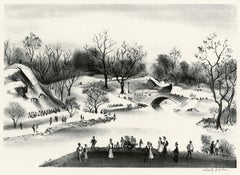
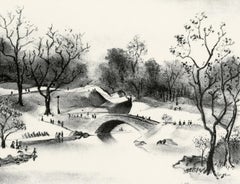
Central Park
Central Park

Central Park

By Adolf Dehn

Located in Fairlawn, OH

Central Park Lithograph, 1955 Signed in pencil lower right (see photo) Published by Associated American Artists, NYC Edition: 250 Illustrated: AAA Cat. 1955-03, 1958-01 Reference: L....

Category

1950s American Modern Ohio - Art

Materials

Lithograph

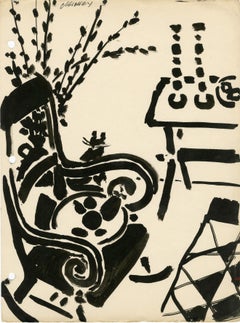
American Modernist Still Life Chair, Flowers, 1950's, Signed

American Modernist Still Life Chair, Flowers, 1950's, Signed

By Joseph O'Sickey

Located in Fairlawn, OH

Interior still life with chair, table and flowers India ink on three ring binder wove paper, late 1950's Signed upper left in ink (see photo) Provenance: Estate of the Artist (estate...

Category

1950s American Modern Ohio - Art

Materials

Ink

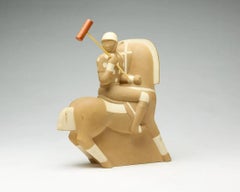
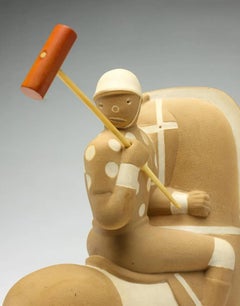
Early 20th Century Ceramic Sculpture of a Polo Player and Horse

Early 20th Century Ceramic Sculpture of a Polo Player and Horse

By Waylande Gregory

Located in Beachwood, OH

Waylande Gregory (American, 1905-1971) Polo Player, c. 1930s Ceramic Inscribed signature on bottom 11 x 8.5 inches Waylande Gregory was considered a major American sculptor during the 1930's, although he worked in ceramics, rather than in the more traditional bronze or marble. Exhibiting his ceramic works at such significant American venues for sculpture as the Whitney Museum of American Art in New York City and at the venerable Pennsylvania Academy of the Fine Arts in Philadelphia, he also showed his ceramic sculptures at leading New York City galleries. Gregory was the first modern ceramist to create large scale ceramic sculptures, some measuring more than 70 inches in height. Similar to the technique developed by the ancient Etruscans, he fired his monumental ceramic sculptures only once. Gregory was born in 1905 in Baxter Springs, Kansas and was something of a prodigy. Growing up on a ranch near a Cherokee reservation, Gregory first became interested in ceramics as a child during a native American burial that he had witnessed. He was also musically inclined. In fact, his mother had been a concert pianist and had given her son lessons. At eleven, he was enrolled as a student at the Kansas State Teacher's College, where he studied carpentry and crafts, including ceramics. Gregory's early development as a sculptor was shaped by the encouragement and instruction of Lorado Taft, who was considered both a major American sculptor as well as a leading American sculpture instructor. In fact, Taft's earlier students included such significant sculptors as Bessie Potter Vonnoh and Janet Scudder. But, Taft and his students had primarily worked in bronze or stone, not in clay; and, Gregory's earliest sculptural works were also not in ceramics. In 1924, Gregory moved to Chicago where he caught the attention of Taft. Gregory was invited by Taft to study with him privately for 18 months and to live and work with him at his famed "Midway Studios." The elegant studio was a complex of 13 rooms that overlooked a courtyard. Taft may have been responsible for getting the young man interested in creating large scale sculpture. However, by the 1920's, Taft's brand of academic sculpture was no longer considered progressive. Instead, Gregory was attracted to the latest trends appearing in the United States and Europe. In 1928 he visited Europe with Taft and other students. "Kid Gregory," as he was called, was soon hired by Guy Cowan, the founder of the Cowan Pottery in Cleveland, Ohio, to become the company's only full time employee. From 1928 to 1932, Gregory served as the chief designer and sculptor at the Cowan Pottery. Just as Gregory learned about the process of creating sculpture from Taft, he literally learned about ceramics from Cowan. Cowan was one of the first graduates of Alfred, the New York School of Clayworking and Ceramics. Alfred had one of the first programs in production pottery. Cowan may have known about pottery production, but he had limited sculptural skills, as he was lacking training in sculpture. The focus of the Cowan Pottery would be on limited edition, table top or mantle sculptures. Two of the most successful of these were Gregory's "Nautch Dancer," (fig. 1) and his "Burlesque Dancer," (fig. 2). He based both sculptures on the dancing of Gilda Gray, a Ziegfield Follies girl. Gilda Gray was of Polish origin and came to the United States as a child. By 1922, she would become one of the most popular stars in the Follies. After losing her assets in the stock market crash of 1929, she accepted other bookings outside of New York, including Cleveland, which was where Gregory first saw her onstage. She allowed Gregory to make sketches of her performances from the wings of the theatre. She explained to Gregory, "I'm too restless to pose." Gray became noted for her nautch dance, an East Indian folk dance. A nautch is a tight, fitted dress that would curl at the bottom and act like a hoop. This sculpture does not focus on Gray's face at all, but is more of a portrait of her nautch dance. It is very curvilinear, really made of a series of arches that connect in a most feminine way. Gregory created his "Burlesque Dancer" at about the same time as "Nautch Dancer." As with the "Nautch Dancer," he focused on the movements of the body rather than on a facial portrait of Gray. Although Gregory never revealed the identity of his model for "Burlesque Dancer," a clue to her identity is revealed in the sculpture's earlier title, "Shimmy Dance." The dancer who was credited for creating the shimmy dance was also Gilda Gray. According to dance legend, Gray introduced the shimmy when she sang the "Star Spangled Banner" and forgot some of the lyrics, so, in her embarrassment, started shaking her shoulders and hips but she did not move her legs. Such movement seems to relate to the "Burlesque Dancer" sculpture, where repeated triangular forms extend from the upper torso and hips. This rapid movement suggests the influence of Italian Futurism, as well as the planar motion of Alexander Archipenko, a sculptor whom Gregory much admired. The Cowan Pottery was a victim of the great depression, and in 1932, Gregory changed careers as a sculptor in the ceramics industry to that of an instructor at the Cranbrook Academy in Bloomfield Hills, Michigan. Cranbrook was perhaps the most prestigious place to study modern design in America. Its faculty included the architect Eliel Saarinen and sculptor Carl Milles. Although Gregory was only at Cranbrook for one and one half years, he created some of his finest works there, including his "Kansas Madonna" (fig. 3). But, after arriving at Cranbrook, the Gregory's had to face emerging financial pressures. Although Gregory and his wife were provided with complimentary lodgings, all other income had to stem from the sale of artworks and tuition from students that he, himself, had to solicit. Gregory had many people assisting him with production methods at the Cowan Pottery, but now worked largely by himself. And although he still used molds, especially in creating porcelain works, many of his major new sculptures would be unique and sculpted by hand, as is true of "Kansas Madonna." The scale of Gregory's works were getting notably larger at Cranbrook than at Cowan. Gregory left the surface of "Kansas Madonna" totally unglazed. Although some might object to using a religious title to depict a horse nursing its colt, it was considered one of Gregory's most successful works. In fact, it had a whole color page illustration in an article about ceramic sculpture titled, "The Art with the Inferiority Complex," Fortune Magazine, December, 1937. The article notes the sculpture was romantic and expressive and the sculpture was priced at $1,500.00; the most expensive sculpture in the article. Gregory was from Kansas, and "Kansas Madonna" should be considered a major sculptural document of Regionalism. Gregory and his wife Yolande moved to New Jersey in the summer of 1933. And the artist began construction on his new home in the Watchung Mountains of Bound Brook (Warren today) in 1938. His enormous, custom kiln was probably constructed at the start of 1938. Gregory's new sculptures were the largest ceramic sculptures in western art, in modern times. To create these works of ceramic virtuosity, the artist developed a "honeycomb" technique, in which an infrastructure of compartments was covered by a ceramic "skin." Science and atomic energy were a theme in Gregory's most significant work, the "Fountain of the Atom" (fig. 4), at the 1939 New York's World Fair. This major work included twelve monumental ceramic figures at the fairground entrance from the newly constructed railway entrance, giving the work great visibility and prominence. The framework of the fountain itself was of steel and glass bricks. It consisted of a bluish green pool which was sixty five feet in diameter. Above it were two concentric circular tiers, or terraces, as Gregory called them; the first wider than the second. On the first terrace were eight "Electrons," comprised of four male and four female terra cotta figures, each approximately 48 inches high. These relate to the valance shell of the atom. Above them on a narrower terrace, were the much larger and heavier terra cotta figures depicting the four elements, each averaging about 78 inches in height and weighing about a ton and a half. Of the four, "Water" and "Air" were male, while "Earth" and "Fire" were female. This terrace represents the nucleus of the atom. In the center of the fountain, above the "Elements," was a central shaft comprised of sixteen glass tubes from which water tumbled down from tier to tier. At the top, a colorful flame burned constantly. The glass block tiers were lit from within, the whole creating a glowing and gurgling effect. Since the fair was temporary, the figures could be removed after its closing. But the credit for the design of the structure of the fountain belongs to collaborator Nembhard Culin, who was responsible for several other structures on the fair grounds as well. Although Gregory created a figure of "Fire" for the "Fountain of the Atom," he also executed a second, slightly smaller but more defined version which he exhibited at various locations (including Cranbrook, Baltimore Museum, etc.) in 1940-1941, during the second year of the fair (fig.5). Measuring 61 inches in height, "Fire" may be a metaphor for sexual energy, as well as atomic energy. Gregory stated, "Fire is represented by an aquiline female figure being consumed in endless arabesques of flame." Portraiture was also a significant focus of Gregory's sculpture. Gregory produced many commissioned portraits of local people as well as celebrities. He created Albert Einstein's portrait from life (fig. 6, ca. 1940) after Einstein had seen Gregory's "Fountain of the Atom." He also sculpted some of the leading figures in entertainment, including 2 sculptures of Henry Fonda, who became a personal friend. Gregory also sculpted a series of idealized female heads, both in terra cotta and in porcelain. These include "Girl with Olive" (ca. 1932) and "Cretan Girl;"(ca. 1937) both are very reductive and almost abstract works that call to mind Constantine Brancusi's "Mademoiselle Pogany" (1912, Philadelphia Museum of Art). But perhaps one of his most original female heads is "Head of a Child" (fig. 7, ca. 1933), a sensitive white glazed terra cotta portrayal with elaborately crafted braded hair, was originally created as one of a pair. Gregory also produced sculptural works for the Works Progress Administration. The WPA was a work relief project that greatly helped artists during the great depression. Founded by the Federal Government in 1935, an estimated 2500 murals were produced. Among these public works were the iconic post office murals. But, among the painted murals were also sculptural relief murals including Gregory's "R.F.D.," 1938, for the Columbus, Kansas Post Office. But, Gregory's largest WPA relief...

Category

1930s Ohio - Art
Materials

Ceramic

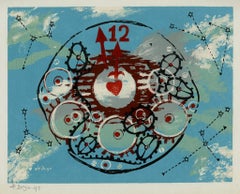
"Love That Makes the World Go Round"

"Love That Makes the World Go Round"

By Julio de Diego

Located in Fairlawn, OH

"Love That Makes the World Go Round" Silk screen on paper, 1`947 Signed in pencil lower left: "de Diego" and dated '47 (see photo) An important American screenprint, showing the grow...

Category

1940s American Modern Ohio - Art
Materials

Screen

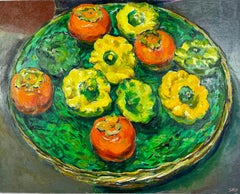
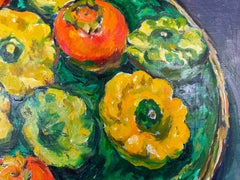
Squash and Persimmons

Squash and Persimmons

By Ronald Shap

Located in Las Vegas, NV

Original oil painting by celebrated, twentieth-century California landscape painter, Ronald Shap. A vibrant still life of a bowl of squash and persimmons. Perfect for the kitchen or ...

Category

1990s Impressionist Ohio - Art
Materials

Oil

Poem 71-25 (Me)
Poem 71-25 (Me)

Poem 71-25 (Me)

By Haku Maki

Located in Fairlawn, OH

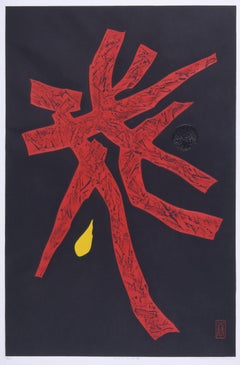
Poem 71-25 (Me) Color woodcut with cement mold embossing, 1971 Signed, titled and numbered in pencil (see photos) Edition 100 (55/100) (see photo) Signed with the artist's stamp lowe...

Category

1970s Abstract Ohio - Art
Materials

Woodcut

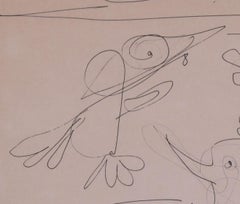
Untitled (Wizard Fantasy) Pen and Ink Drawing, American Modern, 1948

Untitled (Wizard Fantasy) Pen and Ink Drawing, American Modern, 1948

By Morris Louis

Located in Fairlawn, OH

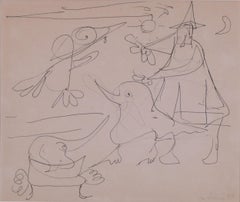
Untitled (Wizard Fantasy) Pen and ink on paperboard, 1948 Signed and dated by the artist lower right Extremely rare "Middle Period" drawing. One of two drawings that were given by the artist to Jeanette Kear, Chevy Chase, MD which were signed and dated by the artist. All others in the exhibition are from sketchbooks and have the estate stamp and numbering. Exhibited at National Collection of Fine Arts, Smithsonian Institution, Dec. 6 1979-Feb. 3, 1980 and Fogg Museum of Art, Harvard University, Feb. 22-April6, 1980 Illustrated twice in the resulting catalog, The Drawings of Morris Louis, by Diane Upright Headly, Harvard Univeristy and author of the catalog essay and entries. (See photos) Condition: Mounted to paper board by owner, Jeanette Kear for framing Glazed with glass Image size: 13 7/8 x 16 5/8 inches Frame size: 20 x 23 x 3/4 inches Provenance: Jeanette F. Kear, Chevy Chase, MD Illustrated: National Collection of Fine Art, 1979: "The Drawings of Morris Louis," Catalog No. 1, illustrated D1, reproduced p. 73 Morris Louis Bernstein (November 28, 1912 – September 7, 1962), known professionally as Morris Louis, was an American painter. During the 1950s he became one of the earliest exponents of Color Field painting. While living in Washington, D.C., Louis, along with Kenneth Noland and other Washington painters, formed an art movement that is known today as the Washington Color Schoo Early life and education From 1929 to 1933, he studied at the Maryland Institute of Fine and Applied Arts (now Maryland Institute College of Art) on a scholarship, but left shortly before completing the program. Louis worked at various odd jobs to support himself while painting, and in 1935 was president of the Baltimore Artists' Association. From 1936 to 1940, he lived in New York City and worked in the easel division of the Works Progress Administration Federal Art Project. During this period, he knew Arshile Gorky, David Alfaro Siqueiros, and Jack Tworkov. He also dropped his last name. Work Color field painting He returned to his native Baltimore in 1940 and taught privately. In 1948, he pioneered the use of Magna paint—a newly developed oil-based acrylic paint made for him by his friends, New York paintmakers Leonard Bocour and Sam Golden. In 1952, Louis moved to Washington, D.C. Living in Washington, D.C., he was somewhat apart from the New York scene and he was working almost in isolation. During the 1950s he and a group of artists that included Kenneth Noland, Gene Davis, Thomas Downing, Howard Mehring, Anne Truitt and Hilda Thorpe...

Category

1940s American Modern Ohio - Art
Materials

Graphite