Ohio - Art

to
132
909
393
319
161
281
Overall Width
to
Overall Height
to
50
202
1,299
510
59
61
156
132
77
109
198
166
140
58
32
430
350
284
133
56
32
27
23
21
17
8
7
1
954
834
128
610
280
216
208
153
113
109
104
86
82
80
73
57
48
40
39
36
30
28
28
832
325
278
208
208
92
62
61
50
35
566
145
231,369
155,688
Item Ships From: Ohio
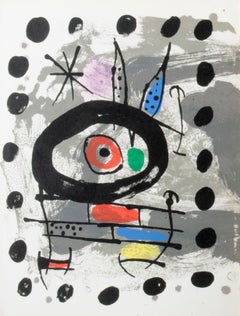
Cahiers d'art, Surrealist Composition 1

Cahiers d'art, Surrealist Composition 1

By Joan Miró

Located in Fairlawn, OH

Cahiers d'art, Surrealist Composition 1 Pochoir, 1934 Unsigned as issued in Cahier's edition Published in Cahier's d'art, 1934 Unsigned Edition of 1200 There was also a pencil signed...

Category

1930s Surrealist Ohio - Art

Materials

Stencil

Tommy's Pond
Tommy's Pond

Tommy's Pond

By Gabor F. Peterdi

Located in Fairlawn, OH

Tommy's Pond Etching, aquatint and intaglio, 1966 Signed, dated and numbered in pencil Image/Plate size: 13 7/8 x 10 7/8 inches Sheet size: : 20 1/16 x 14 7/16 inches From: The Portf...

Category

1960s American Modern Ohio - Art
Materials

Intaglio

Xylon 21 Naoko Matsubara USA

Xylon 21 Naoko Matsubara USA

Located in Fairlawn, OH

Xylon 21 Naoko Matsubara USA Woodcuts, two which are printed in color, 1970 2 of the 5 woodcuts signed in pencil (see photos) Five original woodcuts, two of which are signed in penci...

Category

1970s Abstract Ohio - Art

Materials

Woodcut

Bouquet de reves pour Leila-Poemes d'Yuan Goll

Bouquet de reves pour Leila-Poemes d'Yuan Goll

By Joan Miró

Located in Fairlawn, OH

Bouquet de reves pour Leila-Poemes d'Yuan Goll Color lithograph, 1964 Unsigned (as issued) From: XXe siecle, No. 24, December 1964 Publisher: G. di San Lazzaro, Paris Printer: Mourlot, Paris Edition: c. 1500 Reference: Mourlot 546 Condition: Excellent Glue residue on left amrgin from binding in the book XXe Siecle (20th century-review) New series Back in Paris in 1949, Gualtieri di San Lazzaro resumed 20TH century publishing in 1951. It hosts many of the most important writers and art critics of the 1950s and 1960s, including Alain Bosquet , Genevieve Bonnefoi, Camille Bourniquel , Georges Borgeaud, Marcel Brion , Georges Boudaille, Jacques Brosse , Michel Butor , Jean Cassou , Denys Chevalier, Pierre Courthion, Hubert Damisch , Pierre Descargues, Bernard Dorival , Jacques Dupin , Mircea Eliade , Jean-Louis Ferrier , Pierre Francastel , André Frenaud , Roger Van Gindertael...

Category

1960s Abstract Ohio - Art

Materials

Lithograph

Prelude to Transition

Prelude to Transition

By Benjamin G. Benno

Located in Fairlawn, OH

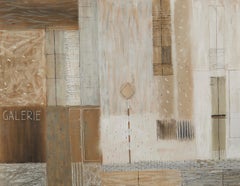
Prelude to Transition Pastel on paper, 1953 Signed and dated lower left (See photo) Image size: 10 1/2 x 13 3/4 inches Frame size: 24-5/8 x 1-1/2 inches Exhibited and Illustrated: Z...

Category

1950s Abstract Ohio - Art

Materials

Pastel

Getting Ready for the Revolution - Learning How to Ride in the Subway

Getting Ready for the Revolution - Learning How to Ride in the Subway

By Adolf Arthur Dehn

Located in Fairlawn, OH

Getting Ready for the Revolution - Learning How to Ride in the Subway Litho crayons on illustrator’s board, c. 1932 Signed: Adolf Dehn (VED) lower right corner (signed by Virginia Dehn, the artist’s widow) Tilted along the upper edge of the recto in pencil by the artist Verso inscriptions: “VF 3168.D” in a circle, also annotated in red pencil “32” in a circle and “699 Provenance: Mary Ryan Gallery, exhibition entitled Adolf Dehn Lithographs, 1927-1940, Nov. 16 to Dec. 12, 1982. The original exhibition notice us affixed to the backing board of the frame Note: A drawing intended or used in the publication Vanity Fair, for whom Dehn worked in the mid 1920’s to the 1930’s. Adolf Dehn, American Watercolorist and Printmaker, 1895-1968 Adolf Dehn was an artist who achieved extraordinary artistic heights, but in a very particular artistic sphere—not so much in oil painting as in watercolor and lithography. Long recognized as a master by serious print collectors, he is gradually gaining recognition as a notable and influential figure in the overall history of American art. In the 19th century, with the invention of the rotary press, which made possible enormous print runs, and the development of the popular, mass-market magazines, newspaper and magazine illustration developed into an artistic realm of its own, often surprisingly divorced from the world of museums and art exhibitions, and today remains surprisingly overlooked by most art historians. Dehn in many regards was an outgrowth of this world, although in an unusual way, since as a young man he produced most of his illustrative work not for popular magazines, such as The Saturday Evening Post, but rather for radical journals, such as The Masses or The Liberator, or artistic “little magazines” such as The Dial. This background established the foundation of his outlook, and led later to his unique and distinctive contribution to American graphic art. If there’s a distinctive quality to his work, it was his skill in introducing unusual tonal and textural effects into his work, particularly in printmaking but also in watercolor. Jackson Pollock seems to have been one of many notable artists who were influenced by his techniques. Early Years, 1895-1922 For an artist largely remembered for scenes of Vienna and Paris, Adolf Dehn’s background was a surprising one. Born in Waterville, Minnesota, on November 22, 1895, Dehn was the descendent of farmers who had emigrated from Germany and homesteaded in the region, initially in a one-room log cabin with a dirt floor. Adolf’s father, Arthur Clark Dehn, was a hunter and trapper who took pride that he had no boss but himself, and who had little use for art. Indeed, during Adolf’s boyhood the walls of his bedroom and the space under his bed were filled with the pelts of mink, muskrats and skunks that his father had killed, skinned and stretched on drying boards. It was Adolf’s mother, Emilie Haas Dehn, a faithful member of the German Lutheran Evangelical Church, who encouraged his interest in art, which became apparent early in childhood. Both parents were ardent socialists, and supporters of Eugene Debs...

Category

1930s American Modern Ohio - Art
Materials

Oil Crayon

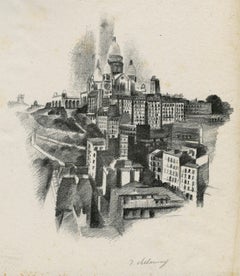
Untitled (Moulin Rouge and other Paris landmarks)

Untitled (Moulin Rouge and other Paris landmarks)

By Robert Delaunay

Located in Fairlawn, OH

Untitled (Moulin Rouge and other Paris landmarks) Lithograph, 1926 Rare signed in pencil proof on chine paper (see photo) Lithograph from Joseph Delteil's "Allo, Paris," published by...

Category

1920s Modern Ohio - Art

Materials

Lithograph

Untitled (Undertow Variant)

Untitled (Undertow Variant)

By Louisa Chase

Located in Fairlawn, OH

Untitled (Undertow Variant) Etching and aquatint printed in colors Signed and numbered in pencil (see photos) Edition: 30 (9/30) see photo Condition: Excellent Image: 7 7/8 x 7" She...

Category

1980s Abstract Geometric Ohio - Art

Materials

Etching, Aquatint

Untitled Abstraction

Untitled Abstraction

By Medard P. Klein

Located in Fairlawn, OH

Untitled Abstraction Graphite on paper, c. 1950 Unsigned Signed with the estate stamp verso (see photo) Provenance: Estate of the artist Inherited by his neighb...

Category

1950s Abstract Ohio - Art

Materials

Graphite

Boulevard de Strasbourg, Sunset on a Parisian Street, French Cityscape

Boulevard de Strasbourg, Sunset on a Parisian Street, French Cityscape

By Eugene Galien-Laloue

Located in Beachwood, OH

Eugène Galien Laloue (French, 1854-1941) Boulevard de Strasbourg Gouache on board Signed lower left 8 x 12.75 inches 13 x 18 inches, framed Some artists or writers are content to ha...

Category

Late 19th Century Ohio - Art

Materials

Gouache

Barges, Dordrecht
Barges, Dordrecht

Barges, Dordrecht

By James Abbott McNeill Whistler

Located in Fairlawn, OH

Barges, Dordrecht Etching, c. 1886 Signed in the plate with the butterfly Edition: One of 10 known impressions of this image. VERY RARE Provenance: Frederick Keppel & Co. with their ...

Category

19th Century Impressionist Ohio - Art

Materials

Etching

Reading
Reading

Reading

By James Abbott McNeill Whistler

Located in Fairlawn, OH

Reading Lithograph, 1879 and 1887 Signed in the stone with the Butterfly (see photo) A proof laid paper printed before the edition of 100 impressions printed for Art Notes Watermark:...

Category

1870s American Impressionist Ohio - Art

Materials

Lithograph

Golf (Wall Plaque)
Golf (Wall Plaque)

Golf (Wall Plaque)

By Viktor Schreckengost

Located in Fairlawn, OH

Golf (Wall Plaque) Polychromed ceramic, c. 1930-1 Signed with the artist's initials: VS recto Very rare, only a few produced prior to the closure of Cowan Pottery Format: Round ceramic plate, 11 1/4 inches Designed by the artist while working for Cowan Pottery in 1930. One of Cowan's clients, an interior designer, requested plates decorated with different outdoor activities. Others in the series included "Swimming," "Tennis," "Polo," and "The Hunt." According to Henry Adams, the number of examples created was very limited due to the closing of Cowan Pottery in 1931. Very rare Condition: Good, with the usual craquelure of the glazes used. Note: Industrial design democratizes high style, and Mr. Schreckengost was widely considered among the most democratic industrial designers. He made, quite literally, the stuff of life — things found routinely in homes, backyards and garages in this country and around the world. He designed bicycles for Sears and everyday china for American Limoges...

Category

1930s Art Deco Ohio - Art

Materials

Ceramic

S. Paolo Fuori Le Mura  (Vedute della Basilica di S. Paolo fuor della mura)

S. Paolo Fuori Le Mura (Vedute della Basilica di S. Paolo fuor della mura)

By Giovanni Battista Piranesi

Located in Fairlawn, OH

S. Paolo Fuori Le Mura (Vedute della Basilica di S. Paolo fuor della mura) Etching, 1748 From: Vedute di Roma, Plate 8 An early Roman printing, published by Bouchard e Gravier Watermark: Fleur de Lys in a double circle Signed in the plate Condition: Small margins as are common with Bouchard published impressions. Centerfold (as usual) Rich impression with good contrasts Plate/Image size: 15 7/8 x 24 1/8 inches Sheet size: 17 3/8 x 24 3/4 inches Reference: Focillon 723 Wilton-Ely 138 Hind 6 ii/VI, Bouchard e Gravier printing, before the price and numbers in later states This image is Piranesi’s second interior scene from the Vedute di Roma. The first interior is a less complex composition of the Interior of St. Peters which lacks the challenging perspective that the artist masters in this image. The Papal Basilica of St. Paul Outside the Walls...

Category

1740s Old Masters Ohio - Art

Materials

Etching

Untitled (Musician with clarinet)

Untitled (Musician with clarinet)

By Paul Gavarni (Guillaume Sulpice Chevalier)

Located in Fairlawn, OH

Untitled (Musician with clarinet) Watercolor on paper, c. 1844 Created on J Whatman Turkey Mill Watermarked paper Signed lower left: Gavarni (see photo) Condition: very fresh colors ...

Category

1840s Romantic Ohio - Art

Materials

Watercolor

Deneb
Deneb

Deneb

By William T. Wiley

Located in Fairlawn, OH

Deneb Color lithograph on BFK Rives, 1996 Signed and dated in pencil lower right Titled and inscribed "Ed 265" lower left Publishers chop stamp l;ower left Printed by Shark's Ink, ...

Category

1990s Contemporary Ohio - Art

Materials

Lithograph

Dueling Franz - Diptych (Two Paintings), Painting, Acrylic on Canvas

Dueling Franz - Diptych (Two Paintings), Painting, Acrylic on Canvas

By Robert Musser

Located in Yardley, PA

I have recently been studying the artist Franz Kline and produced this art to get closer to his process. Two black and white paintings can hang separate or together. :: Painting :: A...

Category

2010s Abstract Ohio - Art

Materials

Acrylic

Flower Vase, Red Camellia, white plum, white daffodils and orchids

Flower Vase, Red Camellia, white plum, white daffodils and orchids

Located in Fairlawn, OH

Flower Vase, Red Camellia, white plum, white daffodils and orchids Color woodcut, c. 1950 Signed "B. Ohno" (see photo) Seal: Bakufu (see photo) Series: Flowers of the Four Seasons Ca...

Category

1950s Other Art Style Ohio - Art

Materials

Woodcut

Ecce Homo VII
Ecce Homo VII

Ecce Homo VII

By Werner Drewes

Located in Fairlawn, OH

Ecce Homo VII Woodcut, 1921 Signed, titled, and dated in pencil by the artist One of only three known impressions Created while the artist was studying at the Bauhaus in Weimar, Germany. Extreme rarity-One of three know impressions Note: In 1921 Drewes went to the Bauhaus in Weimar, where, after completing the compulsory preliminary course with Johannes Itten, he continued to study with Paul Klee, Oskar Schlemmer and Georg Muche and initially went to the wall painting workshop. He then traveled extensively through Europe, North America and Asia. After returning to Germany in 1927, he went back to the Bauhaus, this time to his new location in Dessau, where he studied in the classes of László Moholy-Nagy and Wassily Kandinsky. He was one of the first artists to introduce the groundbreaking concepts of the Bauhaus School in the United States through his painting, printmaking, and teaching. Condition: Excellent Missing small voids in the upper margin from removal of the original hinges. Image size: 9 7/8 x 8 3/16 inches Reference: Rose 30 Provenance: From the estate of Drewes's teacher at the Bauhaus. During the pasot WW2 the professor lived in East Germany. WERNER DREWES 1899-1985 Werner Drewes initially studied architecture before enrolling, in 1921-22, at the Bauhaus in Weimar under Klee, Kandinsky, Itten and Feininger. For four years - 1923 to 1927 - he travelled the world with his bride, before completing his Bauhaus training in Dessau in 1929. He immigrated to the United States in 1930, documenting that move to New York through series of woodcuts. In 1936/37 he was an active founder of the American Abstract Artists and participated in the Federal Arts Project in New York before moving on to a teaching career at Washington University in St. Louis. As an artist for over sixty five years, he employed various media from drawing and watercolor, through woodcut and etching, to painting and collage. Translating an early interest in subjective cubistic forms, his work evolved into nonobjective abstraction. He was creative until the day of his death. Courtesy: Toby C. Moss Werner Drewes (1899–1985) was a painter, printmaker, and art teacher. Considered to be one of the founding fathers of American abstraction, he was one of the first artists to introduce concepts of the Bauhaus school within the United States. His mature style encompassed both nonobjective and figurative work and the emotional content of this work was consistently more expressive than formal. Drewes was as highly regarded for his printmaking as for his painting. In his role as teacher as well as artist he was largely responsible for bringing the Bauhaus aesthetic to America. Early life and education Drewes was born in 1899 to Georg Drewes, a Lutheran pastor, and Martha Schaefer Drewes. The family lived in the village of Canig within Lower Lusatia, Germany. From age eight to eighteen he attended the Saldria Gymnasium, a boarding school in Brandenburg an der Havel. There, he showed talent both for painting and woodblock printing. Graduating from Saldria in 1917, he was drafted by the German army and served in France from then until the close of the war. About this period of his life he is reported to have said that the horrors of life at the front were only made tolerable by his sketchbook, a copy of Goethe's Faust and a volume of Nietzsche. For a decade following the close of the war he studied, made paintings and prints, and traveled widely. His friend, Herwarth Walden, helped shape his appreciation for expressionist literature and art. Walden produced the quarterly magazine, Der Sturm and ran a gallery of contemporary art, Galerie Der Sturm, from which, in 1919, Drewes purchased an expressionist painting by William Wauer titled Blutrausch (Bloodlust). In the same year he made the acquaintance of Heinrich Vogeler and participated in Vogeler's socialist utopian artists' commune, Barkenhoff, at Worpswede, Lower Saxony. In 1919 Drewes also enrolled at the Königlich Technischen Hochschule Charlottenburg to study architecture and the following year he studied the same subject at the Technischen Hochschule Stuttgart. Preferring art over architecture, he then enrolled in Stuttgart's school of applied arts (Kunstgewerbeschule) where he studied life drawing and learned to work with colored glass. At this time he joined a group of artists and architects associated with the newly formed Merz Akademie, a college of design, art, and media in Stuttgart. In 1921 his friendship with a French artist, Sébastien Laurent, led him to begin studies in Weimar at Bauhaus, then a new school which taught an integrated approach to the fine and applied arts. His instructors were Johannes Itten and Lyonel Feininger, whose paintings were expressionist and abstract, and Paul Klee, who taught bookbinding, stained glass, and murals. While at Bauhaus Drewes produced a portfolio of ten woodblock prints entitled "Ecce Homo." In 1923 and 1924 he studied art during travels throughout Italy, Spain, the United States, and Central America and in 1926 he traveled to San Francisco, Japan, and Korea, thence taking the Trans-Siberian railway to Manchuria, Moscow, and Warsaw. He later said the El Grecos he saw proved to be most influential in his work. While traveling, he exhibited: (1) etchings in Madrid (1923) and Montevideo (1924), oils and etchings in Buenos Aires and St. Louis (1925), and (3) etchings in San Francisco (1926). He paid his way by the sales these exhibits produced and by taking commissions to paint portraits. While in San Francisco he set up a shop from which he sold prints he had made in Spain and South America. After his return to Germany in 1927 he resumed study at Bauhaus, which had been forced to relocate in Dessau, Saxony-Anhalt. His instructors at that time were László Moholy-Nagy (metal work), Wassily Kandinsky, and (painting), and Lyonel Feininger (prints). At this time he also worked and exhibited in Frankfurt. With the rise of Nazism abstract artists found it increasingly difficult to sell their work and, in 1930, Drewes, finding the political pressure unbearable, emigrated to the United States. There, despite the world economic crisis, Drewes was able to earn a living as a professional artist. Mature style After Drewes moved to New York, Kandinsky, who was both friend and mentor, continued to exert a strong influence over his style. Later in life he said he had a hard time getting away from Kandinsky's influence as he developed his own style. In time he was able to bring a more emotional approach to his work and to base it, more than Kandinsky did, on natural forms. In 1930 Drewes had a solo exhibition at the 135th Street Branch of the New York Public Library and a two-person show at the S.P.R. Penthouse Gallery...

Category

1920s Expressionist Ohio - Art

Materials

Woodcut

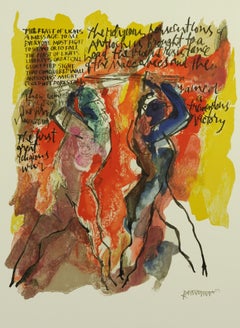
Feast of Lights: Hanukkah

Feast of Lights: Hanukkah

By Abraham Rattner

Located in Fairlawn, OH

Feast of Lights (Poster) Signed in the stone 17 color lithograph Published by Kennedy Galleries Edition: Unknown edition, signed in the stone There was also a pencil signed edition o...

Category

1970s American Modern Ohio - Art
Materials

Lithograph

Blossom Time in Tokyo

Blossom Time in Tokyo

By Helen Hyde

Located in Fairlawn, OH

Blossom Time in Tokyo Color woodcut, 1914 Signed by the artist in pencil on the image (see photo) Signed in the block with the artist red stamp and her initials (see photo) Condition...

Category

1910s American Impressionist Ohio - Art

Materials

Woodcut

Lido (Venice)
Lido (Venice)

Lido (Venice)

By Otto Henry Bacher

Located in Fairlawn, OH

Lido (Venice) Etching on chine collee, 1880 Part of the artist's "Venice Set" Signed upper right in plate :Otto H Bacher" (see photo) Signed with the estate stamp, Lugt 2002 recto lower right beneath image. (see photo) Created October 20, 1880 Reference: Andrew Venice No. 29 Provenance: Estate of the Artist Otto H. Bacher (1856-1909) Otto Henry Bacher was born in Cleveland, Ohio, to a family of German descent. He first studied art at the age of sixteen with local genre trompe l'oeil still-life artist, DeScott Evans. Although he studied with Evans for less than one year, Bacher's early work, comprised mainly of still lifes, betrays Evans's influence. After a short period in Philadelphia, where he studied at the Pennsylvania Academy of the Fine Arts, Bacher returned to Cleveland and met Willis Seaver Adams, an artist from Springfield, Massachusetts, who had just recently arrived upon the Cleveland art scene. Soon the two artists were rooming together. Adams was instrumental in the founding of the Cleveland Art Club, as well as the establishment of the Cleveland Academy of the Fine Arts, to the board of which Adams had Bacher appointed. Also during this time, Bacher began to learn the process of etching from local etcher and landscape painter Sion Longley Wenban. In 1878, Bacher and Adams left for Europe. After stopping briefly in Scotland, Bacher went on to Munich, where he enrolled at the Royal Academy. He quickly tired of the rigors of the academy, and soon he was studying with Cincinnati artist Frank Duveneck, the prime American exponent of the Munich School. In 1879, Bacher made a trip to Florence with Duveneck as one of the celebrated "Duveneck Boys." Early the following year, the group proceeded to Venice, where Bacher and several other artists established studios in the Casa Jankovitz. By this time an avid printmaker, Bacher had his etching press sent from Muni ch, and it was in his Venice studio that he taught Duveneck the rudiments of etching. Soon Bacher, Duveneck, and other members of the Duveneck circle were experimenting in printmaking. Among the group's contributions were some of the first American examples of monotypes, which they called "Bachertypes" because they were printed using Bacher's press. It was also in Venice that Bacher met the venerable American expatriate artist, James McNeill Whistler. On learning of Bacher's press and his collection of etchings by Rembrandt, Whistler made himself a regular visitor to Bacher's studio, and he eventually took his own room in the Casa Jankovitz. Bacher spent much of the rest of 1880 with Whistler, the two artists sharing etching techniques. From Whistler, Bacher learned tone and line graduation; from Bacher, Whistler learned his etching techniques, including better ways of using the acid bath which produced less tedious and more efficient work. Bacher visited Whistler occasionally in the years that followed, and in 1908 he published With Whistler in Venice, his famous recollections of his time with the great artist. Bacher spent the next two years traveling extensively throughout Italy, with Venice as the center of his operations, and he produced a number of important etchings of Italian subjects. Bacher sent several of these works to America in 1881 to be included in the Society of American artists exhibition that year, and had a similar group of works shown at the Royal Society of Painter-Etchers' first exhibition at the Hanover Gallery in London. Following the exhibition, Bacher, along with several other of the American contributors, was elected a Fellow of the Society. Bacher collected twelve of his etchings of Venetian subjects and sold them in bound volumes through his New York dealer, Frederick Keppel. Bacher returned to Cleveland in January 1883 as a fully cosmopolitan artist. He set up a lavish studio furnished with exotic items and objets-d'art he had collected on his travels, and began to hold art classes as a means to supplement his income. He soon joined with Joseph De Camp in forming a summer sketch class in Richfield, Ohio. Bacher and De Camp also planned the Cleveland Room for a major loan exhibition in Detroit that year. During this period, Bacher increasingly painted in oil, and he began to produce sun-dappled canvases in an impressionistic mode. Unable to sell any paintings from this early period, however, Bacher left Cleveland for Paris in 1885, where he planned to undertake further studies. Stopping first in London to visit Whistler, Bacher stayed only briefly in Paris before heading to Venice, where he spent the remainder of the year. In January 1886, Bacher returned to Paris and enrolled at the Académie Julian, and also entered the atelier of Emile-Auguste Carolus-Duran. The life of the student seems never to have suited Bacher, as he stayed in Paris only through June, before departing again for Venice. For the next six months he, Robert Blum, and Charles Ulrich...

Category

1880s American Impressionist Ohio - Art

Materials

Etching

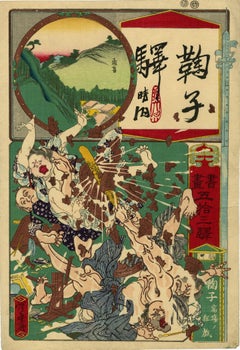
Homing Geese at Kanazawa

Homing Geese at Kanazawa

By Utagawa Kuniyoshi

Located in Fairlawn, OH

(The poetess Chiyo turns to watch a flight of wild geese while sweeping up autumn leaves) Signature: Ichiyusai Kuniyoshi ga; Censor seal: Muramatsu Series: Kenjo hakkei ...

Category

1840s Ohio - Art

Materials

Woodcut

Taurus-The Bull
Taurus-The Bull

Taurus-The Bull

By Eugène Grasset

Located in Fairlawn, OH

From: Les Douze Mois de 1889 As published in Vol. 9, No. 425 of Les Hommes d'Aujourd'hui. Published by Sagot, Paris Proof before letters without the calendarium as published Very ra...

Category

1880s Art Nouveau Ohio - Art

Materials

Lithograph

Cobwebs and Rocks
Cobwebs and Rocks

Cobwebs and Rocks

By Benjamin G. Benno

Located in Fairlawn, OH

Cobwebs and Rocks Watercolor, 1940 Signed, dated, and copyrighted lower right Exhibited: Zimmerli Art Museum, Benjamin Benno: Retrospective Exhibition, 1988 Illustrated: Gustafson, Zimmerli Museum: Benjamin Benno: Retrospective Exhibition, 1988 Color Plate 14 copy copy of the catalog accompanies the watercolor Condition: excellent Image size: 14 3/4 x 21 inches Provenance: Estate of the Artist Ruth O...

Category

1940s Surrealist Ohio - Art

Materials

Watercolor

Untitled
Untitled

Untitled

Located in Fairlawn, OH

Bömmels belonged to the co-founders of the Cologne artist group Mülheimer Freiheit , which also included Hans Peter Adamski , Walter Dahn , Jiří Georg Dokoupil , Gerard Kever and Ger...

Category

1980s Surrealist Ohio - Art

Materials

Graphite

Isaiah's Prayer
Isaiah's Prayer

Isaiah's Prayer

By Marc Chagall

Located in Fairlawn, OH

Isaiah's Prayer Etching, c. 1931-1939 Signed in the plate (see photo) Plate No. 99 From: La Bible. L'Ancien Testament (105 plates) Edition of 275 unsigned (there were an additional 2...

Category

1930s French School Ohio - Art

Materials

Etching

Landscape with Trees

Landscape with Trees

By Leon Kelly

Located in Fairlawn, OH

Landscape with Trees Watercolor on paper, 1929 Signed in pencil lower right corner Obviously influenced by the Cezanne works in the collection of ...

Category

1920s American Modern Ohio - Art
Materials

Watercolor

Moto-Fuite
Moto-Fuite

Moto-Fuite

By Georges Meunier

Located in Fairlawn, OH

Moto-Fuite Color lithograph, c. 1902 Signed in the stone lower right (see photo) Published by Edmund Sagot (1857-1917), Paris Printed by Atelier Chaix, Paris Large edition with titl...

Category

Early 1900s Art Nouveau Ohio - Art

Materials

Lithograph

View of the Ancient Structure built by Tarquinius Superbus called the Bel Lido

View of the Ancient Structure built by Tarquinius Superbus called the Bel Lido

By Giovanni Battista Piranesi

Located in Fairlawn, OH

View of the Ancient Structure built by Tarquinius Superbus called the Bel Lido, and like others built by Marcus Agrippa in the time of Augustus when he cleaned all the sewers leading...

Category

1750s Old Masters Ohio - Art

Materials

Etching

Standing Woman in Profile

Standing Woman in Profile

By Frederick Carl Frieseke

Located in Fairlawn, OH

Standing Woman in Profile Pen and ink drawing, c. 1900 Unsigned Estate authentication verso by Frances Frieseke Kilmer (Mrs. Kenton Kilmer, 1914-1998) (see photo) Condition: Excellen...

Category

Early 1900s American Impressionist Ohio - Art

Materials

Ink

Bird and Hibiscus
Bird and Hibiscus

Bird and Hibiscus

Located in Fairlawn, OH

Bird and Hibiscus Cibachrome print, 1980 Signed and dated by the artist in pencil lower right (see photo) Deaccessed from the Reader's Digest Association Collection (#18717) with label (see photo) Purchased from Lieberman & Saul Gallery, between 1986 and 1993 when the name oif the gallery changed to Julie Saul Projects Very small edition Provenance: Lieberman & Saul Gallery, New Yokr, NY (until 1985) (label verso) Reader's Digest Association (label) Condition: Excellent Image size: 9-7/8 x 9-7/8" (25 x 25 cm.) Frame size: 20-1/2 x 16-1/2" Suzanne Camp Crosby Posted by FMoPA Apr 7, 2021 FMoPA In Focus 0 Suzanne Camp Crosby, Gasparilla Ship, 2004 In December of 2020 beloved Tampa photographer and educator Suzanne Camp Crosby died. She had taught generations of students at the Hillsborough Community College where she had been a professor of photography for 38 years. Camp Crosby had the prestigious honor of being the 2004 City of Tampa Photo Laureate and the exhibition resulting from that body of work, Suzanne Camp Crosby: 2004 Photo Laureate City of Tampa Public Art – Big Picture Project, was presented at the Tampa Museum of Art that same year. Other awards include a Southeast Artist Fellowship from the National Endowment for the Arts and Southeastern Center for Contemporary Art in 1978-79. Suzanne Camp Crosby, Paper Flowers, c. 1990 The Florida Museum of Photographic Arts (FMoPA) has gratefully accepted the task of helping to place the photographic archives of this beloved artist. This collection includes more than 725 photographs spanning her career of over 40 years. A broad selection of this work will be brought into the collection of FMoPA, with an exhibition to follow in the summer of 2022. Other institutions in the area are also considering simultaneous showings. University of Tampa student Alyssa R. Miller has signed on to help with the documenting and digitizing of this body of work. This will help make it possible to distribute photographs to other institutions, with limited works to be sold to help finance the efforts. Examples of her photography are already currently held in the collections of FMoPA, the Tampa Museum of Art (TMA), Los Angeles County Museum of Art, and the New Orleans Museum of Art, among many others. Three wonderful examples of her talent are currently on view at the TMA’s exhibition Her World in Focus: Women Photographers from the Permanent Collection, on view until June 27, 2021. Suzanne Camp Crosby, Doris Day at Clothesline, 1980 Camp Crosby’s solo exhibitions include Suzanne Camp Crosby: Kid City, 2009 at FMoPA, and multiple exhibitions at the HCC Galleries, where she eventually became the Program Manager for the Visual Art and Dance departments in addition to her teaching and exhibitions. She also taught and received her MFA at the University of South Florida in Tampa. Additional schools where she was an instructor include the University of Central Florida in Orlando, FL, and the St. Petersburg College, Clearwater campus. Camp Crosby specialized in creating thematically directed photographs, created by adding unexpected objects or people to mostly everyday scenes. Her artwork is often playful and witty. Early work included tender black and white compositions often using her children or friends to create evocative scenes. Later photographs brought in color and experimentation. Examples include the juxtaposition of life-sized 2-D paper doll cut-outs of 1950s movie stars to real-life mundane household settings, as well as a wide selection of other artificial items placed into real-life settings. As a visual storyteller, she continued to explore and experiment with ideas and themes throughout her lengthy career. Courtesy The FLORIDA MUSEUM of PHOTOGRAPHIC ARTS Suzanne’s artwork is in many permanent collections, including the Tampa Museum of Art, the USF Museum of Contemporary Art, the Orlando Museum of Art, the Polk Museum of Art, the Florida Museum of Photographic Arts, the Leepa-Rattner Museum of Art, the New Orleans Museum of Art, the Los Angeles County Museum of Art, Walt Disney World Corporation, Tropicana Corporate Collection, City Bank, Tampa Electric Company, Shriner’s Hospital, Tampa General Hospital, Hillsborough Community College, City of Tampa Public Art, City of Orlando Public Art, and the von Liebig Art Center. From ARTFORUM JULIE SAUL (1954–2022) Julie Saul, who through her long-running eponymous New York gallery did much to elevate contemporary photography within the art world, died February 4 in Tampa after a battle with a rare form of leukemia. Saul was known for her willingness to show an eclectic range of works in media ranging from painting to sculpture to video to ceramics by an equally diverse range of artists, but it was her eye for both traditional and avant-garde contemporary photography that cemented her reputation and that of her gallery, which she first established in 1986 in SoHo, then a frontier for the arts. Saul was born in Tampa on New Year’s Eve in 1954 to a father who was head of a sewn-products company and a housewife mother, a native New Yorker and volunteer docent whom Saul would later credit with introducing her to the arts. “Tampa had no museums, but she would take us to museums in New York,” she told the Tampa Bay Timesin 2003. “We had a house that wasn't filled with great art, but there were great reproductions and great art books.” In 1979, Saul moved to New York, obtaining her master’s degree from New York University’s Institute of Fine Arts in 1982. Four years later, with partner Nancy Lieberman, she opened Lieberman Saul Gallery at 155 Spring Street in SoHo, showing contemporary photography at a time when not many others were. “One thing that drew me to photography from the very beginning—and it still holds—is that photography is an affordable medium. Almost anybody can afford to collect photographs,” she told the Association of International Photography Art Dealers (AIPAD) in 2010. “Fundamentally, photography is a medium and what makes work great is the idea behind it and how well it’s executed.” Among the photographers whose work Saul championed are Nikolay Bakharev, Morton Bartlett, Eugene Bellocq, Andrew Bush, Sally Gall, Luigi Ghirri, Andrea Grützner, Sarah Anne Johnson, Adam Magyar, and Arne Svenson...

Category

1980s Naturalistic Ohio - Art

Materials

Photographic Paper

Columns of the Parthenon

Columns of the Parthenon

By Arnold Genthe

Located in Fairlawn, OH

Columns of the Parthenon vintage silver bromide print, 1929 Signed in pencil on mount: "Arnold Genthe, 1929" Illustrated: Arnold Genthe, As I Remember, Reynal & Hitchcock, NY, 1936, ...

Category

1920s American Modern Ohio - Art
Materials

Silver Gelatin

Amazons Studio

Amazons Studio

By Hunt Slonem

Located in Woodmere, OH

This is an original work by world famous artist Hunt Slonem.

Category

2010s Modern Ohio - Art

Materials

Oil

Amberley Boy, No. 2
Amberley Boy, No. 2

Amberley Boy, No. 2

By Gerald Leslie Brockhurst

Located in Fairlawn, OH

Amberley Boy, No. 2 Etching with stipple, 1928 Signed in pencil lower right (see photo) Signed in the plate in reverse (see photo) Provenance inscription in pencil verso A proof outs...

Category

1920s English School Ohio - Art

Materials

Etching

Preliminary study for Cretan Dancer bronze sculpture

Preliminary study for Cretan Dancer bronze sculpture

By Boris Lovet-Lorski

Located in Fairlawn, OH

Preliminary study for Cretan Dancer bronze sculpture Unsigned Graphite on tracing paper, 1930-1934 Sheet size: 6 7/8 x 7 1/8 inches Created while the artist was woring in Paris, c. 1...

Category

1930s Art Deco Ohio - Art

Materials

Graphite

David Hostetler Sculpture  Polished Bronze Female Art Deco Modern By Commission

David Hostetler Sculpture Polished Bronze Female Art Deco Modern By Commission

By David Hostetler

Located in Nantucket, MA

I have ordered a Sensuous Woman. It will be ready to paint mid- November I can leave it all polished or paint it with a BMW white dress or a Ferrari red dress using the car paint Galsurit. Sensuous Woman as pictured is a polished bronze. It is sealed with automotive finish, so it never needs to be polished. The base is black marble, 2"h x 6"d. Sculpture is 20"h. The dynamic sculpture...

Category

1980s Art Deco Ohio - Art

Materials

Bronze

Pieces Collage, vibrant mid-century abstract expressionist black, pink & red

Pieces Collage, vibrant mid-century abstract expressionist black, pink & red

By Richard Andres

Located in Beachwood, OH

Richard Andres (American, 1927-2013) Pieces Collage, c. 1965 collage on paper 14 x 18 inches Richard Andres was born in Buffalo, New York in 1927. A graduate of the Cleveland Institute of Art in 1950, he was immediately drafted and served for two years in the army as a mural painter. He received his Master of Arts from Kent State in 1961. A frequent exhibitor at galleries and museums and winner of multiple May Show prizes, Andres taught art in the Cleveland Public Schools for 28 years, as well as teaching the University of Buffalo, the Cleveland Institute of Art and the Western Reserve University. Very little in Richard Andres’ childhood would have predicted his love of classical music, mid-century-modern architecture and certainly not his lifelong passion for art and in particular abstract art. Richard’s father, Raymond, had no more than a third-grade education, and his mother, Clara, was one of thirteen children – only three of whom lived into adulthood and none of whom attended high school. They lived, when Richard was a boy, in a dingy area of Buffalo, NY in a walk-up apartment situated above a tavern. Raymond and Clara supplemented the income from their factory jobs in the bar downstairs with Raymond playing ragtime on the piano and Clara serving drinks. This often left Richard and his two older brothers at home alone to fend for themselves. The two older boys, Raymond and Russell, were - unlike Richard- rather rough and tumble and entertained themselves with stickball, boxing and the like. Richard, on the other hand, from a very young age liked to draw, or better yet even, to paint with the small set of watercolors he received for Christmas one year. Paper, however, at the height of the depression, was hard to come by. Luckily, Clara used paper doilies as decoration for the apartment and Richard would contentedly paint and then cut up doilies, gluing the pieces together to create collages. At eight-years-old, he discovered the Albright-Knox Museum (then known as the Albright Art Gallery) and spent several hours a week there studying the paintings. He was particularly fond of Charles Burchfield‘s landscapes, enamored with their ‘messiness’ and thinking that they somehow captured more ‘feeling’ than works he was previously familiar with. For his tenth Christmas, he asked for and received a ‘how-to’ paint book by Elliot O’Hare. Through this self-teaching, he assembled the portfolio needed for acceptance to Buffalo Technical High School where he studied Advertising Arts. In his Junior year, he was encouraged to enter a watercolor painting, “Two Barns,” in the national 1944-45 Ingersoll Art Award Contest and was one of twelve grand prize winners – each one winning one hundred dollars. More importantly the painting was exhibited at the Carnegie Institute Galleries, which resulted in his winning a national scholarship to the Cleveland School of Art (The Cleveland Art Institute). He flourished at the art school under the tutelage of faculty members such as Carl Gaertner, as well as that of visiting artists such as William Sommer and Henry George Keller. He would say in later years that Gaertner, in particular, influenced his attitude toward life as well as art. “Gaertner,” Andres said, “believed that there was no need to be a ‘tortured artist’, that an artist should rather enjoy beauty, family, and life in general.” Free to spend his days as he chose, he wandered the Cleveland Art Museum for most of the hours he was not attending classes or painting; the remaining time was spent drinking coffee at a local hangout with art school friends – which is where he met fellow Henry Keller scholarship winner, Avis Johnson. Richard was immediately smitten with Avis, but being rather shy, it took him the entire summer of 1948 to build up his courage to ask her out. Over that summer he ‘thought about Avis’ and worked in a diner to save money. He also used the hundred-dollar prize money won in High School to visit the first Max Beckmann retrospective in the United States at the City Art Museum in St. Louis. Over a half century later he spoke of that exhibit with a reverence usually reserved for spiritual matters, “I walked in and it was like nothing I had ever seen before... the color...It just glowed.” Returning to campus in the Fall, the first thing he did was go to the coffee shop in hopes of finding Avis. He did, and she, upon seeing him, realized that she was also smitten with him. They quickly became known as ‘the couple’ on campus, and a year later, with Richard being drafted for the Korean war, they were quickly married by a Justice of the Peace, celebrating after with family at Avis’s Cleveland home. As a gift, faculty member John Paul Miller designed and made the simple gold wedding ring Avis wore for their 65 years of marriage. During those 65 years neither wavered in their mutual love, nor in the respect they shared for one another’s art. The couple lived in a converted chicken coop in Missouri while Richard was in boot camp. At the camp, he would volunteer for any job offered and one of those jobs ended up being painting road signs. His commander noticed how quickly and neatly he worked and gave him more painting work to do - eventually recommending him for a position painting murals for Army offices in Panama. Until her dying day, Avis remained angry that “The army got to keep those fabulous murals and they probably didn’t even know how wonderful they were.” In Panama, their first son, Mark, was born. After Richard’s discharge in 1953, they moved back to the Cleveland area and used the GI bill to attend Kent State gaining his BA in education. The small family then moved briefly to Buffalo, where Richard taught at the Albright Art School and the University of Buffalo – and their second son, Peter, was born. Richard had exhibited work in the Cleveland May Show and the Butler Art Museum during his art school years, and during the years in Buffalo, his work was exhibited at the gallery he had so loved as a child, the Albright Art Gallery. In 1956, the family moved back to the Cleveland area and Richard began teaching art at Lincoln West High School during the day while working toward his MA in art at Kent State in the evenings. Avis and Richard, with the help of an architect, designed their first home - a saltbox style house in Hudson, Ohio, and in 1958, their third son, Max (after Max Beckmann) was born. Richard enjoyed the consistency of teaching high school as well as the time it gave him to paint on the weekends and during the summer months. In 1961, he received his MA and his daughter, Claire, was born. With a fourth child, the house was much too small, and Avis and Richard began designing their second home. An admirer of MCM architecture, Richard’s favorite example of the style was the Farnsworth house – he often spoke of how the concepts behind this architectural style, particularly that of Mies van der Rohe, influenced his painting. Andres described himself as a 1950’s...

Category

1960s Abstract Geometric Ohio - Art

Materials

Acrylic

Untitled
Untitled

Untitled

By Dennis Ashbaugh

Located in Fairlawn, OH

Untitled (Abstraction) Mixed media on paper, 1980 Signed and dated 1980 lower right (see photo) Condition: Excellent, unframed Sheet size: 31 1/2 x 47 1/2 inches Provenance: Jan Cowl...

Category

1980s Abstract Expressionist Ohio - Art

Materials

Mixed Media

untitled Woman by the Windows

untitled Woman by the Windows

By Karl Albert Buehr

Located in Fairlawn, OH

Untitled (Woman by the Windows) Unsigned. Pastel on board, c. 1915 Created while the artist was in Giverny, France Provenance: Gift of the artist to his wife, Mary Hess Buehr by Desc...

Category

1910s Abstract Impressionist Ohio - Art

Materials

Pastel

Navajo Thunderbird Silversmith

Navajo Thunderbird Silversmith

By Stephen Longstreet

Located in Fairlawn, OH

Navajo Thunderbird Silversmith Signed in ink, titled in pencil Dimensions: 42 1/4 x 23 inches Mixed media on paper Provenance: Acquired from the art...

Category

Mid-20th Century American Modern Ohio - Art
Materials

Mixed Media

untitled
untitled

untitled

By Dennis Ashbaugh

Located in Fairlawn, OH

Untitled Mixed media on paper, 1979 Signed and dated ‘79 lower right (see photo) Sheet size: 31 1/2 x 48" Frame: 34 1/4 x 50 1/4" Provenance: Members Gallery, Albright-Knox Art Galle...

Category

1970s Abstract Ohio - Art

Materials

Mixed Media, Oil

Untitled
Untitled

Untitled

By Henri Goetz

Located in Fairlawn, OH

Untitled Engraving, drypoint & carborundum, c. 1960's Signed and numbered in pencil lower margin (see photos) Edition: 25 (9/25) Printed by the artist Condition: Adhesive residue on ...

Category

1960s Abstract Expressionist Ohio - Art

Materials

Engraving

St. Valentine's Day -- The Old Story in All Lands

St. Valentine's Day -- The Old Story in All Lands

By Winslow Homer

Located in Fairlawn, OH

St. Valentine's Day -- The Old Story in All Lands Wood engraving, 1868 Published in: Harper's Weekly, February 22, 1868 Titled and signed in the block Image size: 13 5/8 x 9 inches C...

Category

1860s Hudson River School Ohio - Art

Materials

Engraving

Irving Place Burlesk

Irving Place Burlesk

By Reginald Marsh

Located in Fairlawn, OH

Irving Place Burlesque Etching, 1930 Unsigned (as usual for the Whitney edition) Numbered in pencil lower left Blind stamp of the Whitney Museum (WM) lower right From: Reginald Marsh...

Category

1930s Ashcan School Ohio - Art

Materials

Etching

Mountainous Landscape, Mexico

Mountainous Landscape, Mexico

Located in Fairlawn, OH

Mountainous Landscape, Mexico Monotype in colors on heavy paper, c. 1960's Signed in ink lower left "G Ceniceros" Condition: Excellent Image size: 6 x 14 1/2" (15.24 x 36.83cm) Sheet size: 12 7/8 x 19 11/16 inches Guillermo Ceniceros (born May 7, 1939) is a Mexican painter and muralist, best known for his mural work in Mexico City, as well as his figurative easel work. He began his mural painting career as an assistant to mural painters such as Federico Cantú, Luis Covarrubias and then David Alfaro Siqueiros who was a mentor and a key influence. Ceniceros is the most notable of Siqueiros' assistants. While he has experimented with abstract expression, his easel work mostly classifies as figurativism and is influenced by the geometrical construct of Mexican muralism. He has had over 300 individual and collective exhibitions in Mexico and the International stage. His work has been recognized by the Mexican Ministry of Culture and several of its institutions. He has painted over 20 large scale Mural Paintings with some of the most notable being the large scale work for the Legislative Palace of San Lazaro (Mexico's Legislative Building) as well as his murals in the Metro Subway System. He is a member of the Salón de la Plástica Mexicana. In 1995, the State of Durango, Ceniceros' native state, opened to the public the Guillermo Ceniceros Art Museum within the oversight of the Ministry of Culture. Ceniceros has been reviewed by notable critics such as Berta Taracena, Raquel Tibol, Alaide Foppa, Graciela Kartofel, José Angel Leyva and Eduardo Blackaller among others. There are several publications about his work including a vast review of his art life endeavors developed by the Ministries of Culture of Durango and Nuevo León. He is married to the artist Esther González and lives in his studio house in the Colonia Roma of Mexico City. Life Interview with the subject Ceniceros and Siqueiros Ceniceros was born in a small village called El Salto, located in the municipality of Pueblo Nuevo in the Mexican state of Durango. His father was a woodworker who made toys and furniture in his workshop. His father's shop would become an influence in Ceniceros' life long interest in developing his own innovative working tools. When he was twelve the family moved to Monterrey to seek better economic opportunities. There he attended school and when he was fourteen he entered the Fabricación de Máquinas, S.A. (FAMA), a school/business, where he studied industrial drawing. He considers this early training important as it taught him the importance of geometry, use of space and materials. While at FAMA he met painters Gerardo Cantú and Ignacio Ortiz, and collaborated with them on sketches for publications of Alfonso Reyes, Pedro Garfias and other notable writers. In 1955, he enrolled in the Taller de Artes Plásticas at the Universidad Autónoma de Nuevo León, graduating in 1958. At the Taller he met fellow Mexican artist Esther González, whom he married and with whom he has two children. In 1962 he moved to Mexico City with the goal of working in the Taller of the Maestro David Alfaro Siqueiros. He became Siqueiros' first assistant working on his last murals while at the same time working at night on his easel painting work. Siqueiros supported Ceniceros decision to leave his Taller and supported him in his career until his death in 1974. By then Ceniceros was already a break thru artist having had several individual exhibitions including the prestigious Palacio De Bellas Artes as well as other recognitions. Thru the 70's and 80s Ceniceros continued his work with an emphasis on exhibits and exchanges abroad and traveling to Eastern Europe, Cuba, China, Chile, Ecuador, Italy and the United States. His Mexico City contemporaries and circle would include names that today have become reference such as Sebastian, José Luis Cuevas, Gilberto Aceves Navarro, Benjamin Dominguez, Gustavo Arias Murueta, Byron Galvez, Leonel Maciel among others. In the 70's his Row-House neighbors in the colonia Roma were Francisco Toledo and Alejandro Jodorowski. His focus on mural painting is renewed in the mid 80's thru his large scale work in the Metro Subway System with him working on major commissions consistently and into the new century. While the Mexican school of Muralism had been challenged by the Ruptura members, the interest in Mural painting as a unique national form of expression continues. He lives in Mexico City at a studio/home in the Colonia Roma. His home is a frequent gathering place for writers, poets, painters, singers, actors and journalists. He has a strong interest in Spanish language literature. Juan Rulfo...

Category

1960s Modern Ohio - Art

Materials

Monotype

XXe Siecle, No. 34, Mai 1970

XXe Siecle, No. 34, Mai 1970

By Marc Chagall

Located in Fairlawn, OH

XXe Siecle, No. 34, Mai 1970 Color lithograph, 1970 Unsigned (as usual for XXeme Siecle edition) From: XXe Siecle, Volume 34, 1970 Published by G. di San Lazzaro for A. Maeght, Paris...

Category

1970s French School Ohio - Art

Materials

Lithograph

Taos Series
Taos Series

Taos Series

By Harry Nadler

Located in Fairlawn, OH

Taos Series Mixed media on handmade paper Signed and dated by the artist lower right Archival framing with Conversation Glass Frame size: 29 3/4 x 34 inches Image size: 19 1/2 x 19 1/2 inches Provenance: Peter Marciniak, New Hampshire Distinguished Midwest Private Collection Regarding the artist: Select Exhibition: 1991 Franz Bader Gallery, Washington, D.C. (solo) 1980 Guggenheim Museum, New York, NY 1974 Bertha Schaefer Gallery; New York, NY (solo) 1972 Childe Hassam Purchase Show, National Institute of the Arts and Letters 1971 "The Turkish Bath of Ingres,” Louvre Museum, Paris, France 1971 Guest Artist, Tamarind Institute; Albuquerque, NM 1970 “American Drawings of the Sixties,” New School Art Center; New York, NY 1966 Dorsky Gallery, New York, NY (solo) 1962 Dwan Gallery...

Category

1980s Abstract Ohio - Art

Materials

Mixed Media

The Red Dress
The Red Dress

The Red Dress

By Robert Hallowell

Located in Fairlawn, OH

The Red Dress Watercolor on paper, mounted on board by the artist, 1926 Signed and dated, 1926 lower left (see photo) Condition: Mounted on support board by the artist ...

Category

1920s American Impressionist Ohio - Art

Materials

Watercolor

19th Century Burmese School Buddha Head of the Shan (Tai Yai) Style

19th Century Burmese School Buddha Head of the Shan (Tai Yai) Style

Located in Beachwood, OH

Burmese School, 19th Century Buddha Head of the Shan (Tai Yai) Style Wood with red lacquered pigment 25 x 13 x 10 inches dry lacquer form with finely sculpted features such as the e...

Category

19th Century Ohio - Art

Materials

Lacquer, Wood

Kandahar
Kandahar

Kandahar

By Virginia Dehn

Located in Fairlawn, OH

Kandahar Acrylic and mixed media on fabric, c. 1970 Signed by the artist lower right (see photo) Kandahar is one of the thirty-four provinces of Afghanistan, located in the southern part of the country next to Pakistan. Inspired by the Dehns visit to Afghanistan in the 1960's. Provenance: Estate of the Artist Dehn Heirs Condition: Excellent Canvas size: 18 x 20 inches Virginia Dehn From Wikipedia, the free encyclopedia Virginia Dehn Virginia Dehn in her studio in Santa Fe Virginia Dehn (née Engleman) (October 26, 1922 – July 28, 2005) was an American painter and printmaker. Her work was known for its interpretation of natural themes in almost abstract forms. She exhibited in shows and galleries throughout the U.S. Her paintings are included in many public collections. Life Dehn was born in Nevada, Missouri on October 26, 1922.] Raised in Hamden, Connecticut, she studied at Stephens College in Columbia, Missouri before moving to New York City. She met the artist Adolf Dehn while working at the Art Students League. They married in November 1947. The two artists worked side by side for many years, part of a group of artists who influenced the history of 20th century American art. Their Chelsea brownstone was a place where artists, writers, and intellectuals often gathered. Early career Virginia Dehn studied art at Stephens College in Missouri before continuing her art education at the Traphagen School of Design, and, later, the Art Students League, both located in New York City. In the mid-1940s while working at the Associated American Artists gallery, she met lithographer and watercolorist Adolf Dehn. Adolf was older than Virginia, and he already enjoyed a successful career as an artist. The two were married in 1947 in a private ceremony at Virginia's parents house in Wallingford, Connecticut. Virginia and Adolf Dehn The Dehns lived in a Chelsea brownstone on West 21st Street where they worked side by side. They often hosted gatherings of other influential artists and intellectuals of the 20th century. Among their closest friends were sculptor Federico Castellón and his wife Hilda; writer Sidney Alexander and his wife Frances; artists Sally and Milton Avery; Ferol and Bill Smith, also an artist; and Lily and Georges Schreiber, an artist and writer. Bob Steed and his wife Gittel, an anthropologist, were also good friends of the Dehns. According to friend Gretchen Marple Pracht, "Virginia was a glamorous and sophisticated hostess who welcomed visitors to their home and always invited a diverse crowd of guests..." Despite their active social life, the two were disciplined artists, working at their easels nearly daily and taking Saturdays to visit galleries and view new work. The Dehns made annual trips to France to work on lithographs at the Atelier Desjobert in Paris. Virginia used a bamboo pen to draw directly on the stone for her lithographs, which often depicted trees or still lifes. The Dehns' other travels included visits to Key West, Colorado, Mexico, and countries such as Greece, Haiti, Afghanistan, and India. Dehn's style of art differend greatly from that of her husband, though the two sometimes exhibited together. A friend of the couple remarked, "Adolf paints landscapes; Virginia paints inscapes." Virginia Dehn generally painted an interior vision based on her feelings for a subject, rather than a literal rendition of it.] Many of her paintings consist of several layers, with earlier layers showing through. She found inspiration in the Abstract Expressionism movement that dominated the New York and Paris art scenes in the 1950s. Some of her favorite artists included Adolf Gottileb, Rothko, William Baziotes, Pomodoro, and Antonio Tapies. Dehn most often worked with bold, vibrant colors in large formats. Her subjects were not literal, but intuitive. She learned new techniques of lithography from her husband Adolf, and did her own prints. Texture was very important to her in her work. Her art was influenced by a variety of sources. In the late 1960s she came across a book that included photographs of organic patterns of life as revealed under a microscope. These images inspired her to change the direction of some of her paintings. Other influences on Dehn's art came from ancient and traditional arts of various cultures throughout the world, including Persian miniatures, illuminated manuscripts, Dutch still life painting, Asian art, ancient Egyptian artifacts...

Category

1970s Abstract Ohio - Art

Materials

Acrylic

Untitled
Untitled

Untitled

By Laddie John Dill

Located in Fairlawn, OH

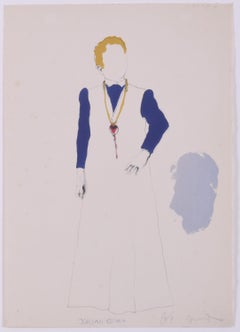
Untitled Watercolor on paper. 1971 Unsigned Sheet size: 24 x 19 inches Condition: Excellent From the collection of Ileana Sonnabend (1914-2007) Laddie John Dill, a Los Angeles artist...

Category

1970s Abstract Ohio - Art

Materials

Watercolor

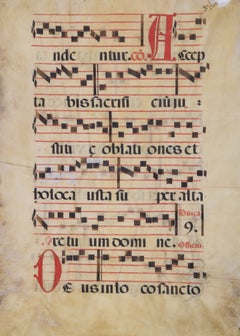
Dharma Prayer Book Manuscript Folio

Dharma Prayer Book Manuscript Folio

Located in Fairlawn, OH

Dharma Prayer Book Manuscript Folio Ink and gouache on handmade paper, 1875-1925) Miniature depicting Tibetan deity Script is Tibetan. Miniature Size: 2 3/8 x 1 ½ inches Part of a se...

Category

Early 20th Century Other Art Style Ohio - Art

Materials

Gouache

Jane Hading
Jane Hading

Jane Hading

By Henri de Toulouse-Lautrec

Located in Fairlawn, OH

Jane Hading Lithograph, 1898 Monogramed in the stone upper left corner (see photo) From the First Edition, printed posthumously before 1906 c. 400 impressions (per Wittrock) The sitt...

Category

1890s French School Ohio - Art

Materials

Lithograph

Untitled (Surrealist rendering of Pyramids at Giza with alligator)

Untitled (Surrealist rendering of Pyramids at Giza with alligator)

By Beni E. Kosh

Located in Fairlawn, OH

Untitled (Surrealist rendering of Pyramids at Giza with alligator) watecolor and gouache on paper, 1960 Unsigned Beni Kosh estate stamp No. 717 verso, unsigned. (see photo) Condition: Minor condition issues minor folds Not objectionable Image/Sheet size: 18 1/4 x 24 inches Provenance: Estate of the Artist Bingham Vance, Shaker Heights...

Category

1960s Surrealist Ohio - Art

Materials

Watercolor, Gouache

Constellation
Constellation

Constellation

By Roy Ahlgren

Located in Fairlawn, OH

Constellation Silkscreen in colors, 1969 Signed, dated, titled and numbered in pencil Edition: 100 (56/100) Condition: Excellent Image Size: 17 x 17 inches Sheet size: 20 x 20 inch...

Category

1960s Abstract Geometric Ohio - Art

Materials

Screen

Snow Mountain (or Lake in the Mountains)

Snow Mountain (or Lake in the Mountains)

By Adolf Arthur Dehn

Located in Fairlawn, OH

Signed lower right Edition: Undetermined, plus an artist's edition of 10 Edition: Undetermined, plus an artist's edition of 10 Published by the Associated American Artist ...

Category

1960s Ohio - Art

Materials

Lithograph

Veduta del Romano Camipidpglio con scalinata che va alla chisea d’Araceli (The C

Veduta del Romano Camipidpglio con scalinata che va alla chisea d’Araceli (The C

By Giovanni Battista Piranesi

Located in Fairlawn, OH

Veduta del Romano Camipidpglio con scalinata che va alla chisea d’Araceli (The Capitol and the Steps of S. Maria in Aracoeli) Etching, 1775 Watermark: Double Circle Fleur de Lys A lifetime impression with the price etching in the plate Printed in Rome, before the plates are moved to Paris and the numerous posthumous editions Reference: Hind 38 ii/IV Robison 38 ii/V with the price Wilton Ely 190 Condition: A fine Roman...

Category

1770s Baroque Ohio - Art

Materials

Etching

Les Fruits 2
Les Fruits 2

Les Fruits 2

By Charles Harris ( Beni Kosh )

Located in Fairlawn, OH

Les Fruits 2 Oil on masonite, 1967 Signed and titled lower right (see photos) Signed with the estate stamp verso: Beni Kosh Collection #254 (see photo) Condition: Good Board size: 7 ...

Category

1960s Contemporary Ohio - Art

Materials

Oil

Provincetown (Sunbathing)

Provincetown (Sunbathing)

By Peter Grippe

Located in Fairlawn, OH

Provincetown (Sunbathing) Sepia ink on tan paper, 1966 Signed in ink lower center (see photo) Exhibited: Art from Lexington Homes, Lincoln Massachusetts, May 14-22, 1966 (see label) ...

Category

1960s American Modern Ohio - Art
Materials

Ink