Surrealist Abstract Prints

1,166 Results
SURREALIST STYLE

In the wake of World War I’s ravaging of Europe, artists delved into the unconscious mind to confront and grapple with this reality. Poet and critic André Breton, a leader of the Surrealist movement who authored the 1924 Surrealist Manifesto, called this approach “a violent reaction against the impoverishment and sterility of thought processes that resulted from centuries of rationalism.” Surrealist art emerged in the 1920s with dreamlike and uncanny imagery guided by a variety of techniques such as automatic drawing, which can be likened to a stream of consciousness, to channel psychological experiences.

Although Surrealism was a groundbreaking approach for European art, its practitioners were inspired by Indigenous art and ancient mysticism for reenvisioning how sculptures, paintings, prints, performance art and more could respond to the unsettled world around them.

Surrealist artists were also informed by the Dada movement, which originated in 1916 Zurich and embraced absurdity over the logic that had propelled modernity into violence. Some of the Surrealists had witnessed this firsthand, such as Max Ernst, who served in the trenches during World War I, and Salvador Dalí, whose otherworldly paintings and other work responded to the dawning civil war in Spain.

Other key artists associated with the revolutionary art and literary movement included Man Ray, Joan Miró, René Magritte, Yves Tanguy, Frida Kahlo and Meret Oppenheim, all of whom had a distinct perspective on reimagining reality and freeing the unconscious mind from the conventions and restrictions of rational thought. Pablo Picasso showed some of his works in “La Peinture Surréaliste” — the first collective exhibition of Surrealist painting — which opened at Paris’s Galerie Pierre in November of 1925. (Although Magritte is best known as one of the visual Surrealist movement’s most talented practitioners, his famous 1943 painting, The Fifth Season, can be interpreted as a formal break from Surrealism.)

The outbreak of World War II led many in the movement to flee Europe for the Americas, further spreading Surrealism abroad. Generations of modern and contemporary artists were subsequently influenced by the richly symbolic and unearthly imagery of Surrealism, from Joseph Cornell to Arshile Gorky.

Find a collection of original Surrealist paintings, sculptures, prints and multiples and more art on 1stDibs.

to
495
583
256
257
88
25
Overall Width
to
Overall Height
to
8,977
3,338
1,966
996
465
402
333
141
118
43
17
17
270
127
75
59
41
2
1,139
68
3
18
11
99
358
489
48
22
859
308
38
20
16
14
6
6
4
4
3
3
3
3
3
2
2
2
2
1
1
1
1
785
241
96
82
73
153
268
942
242
Style: Surrealist
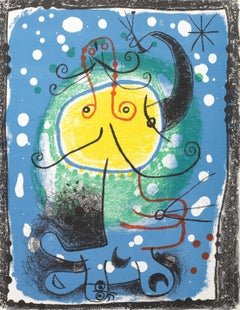
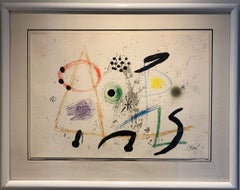
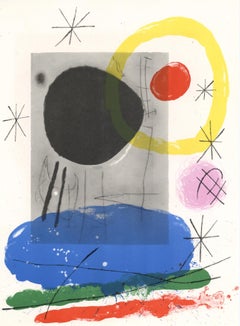
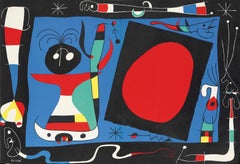
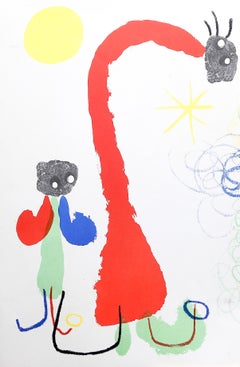
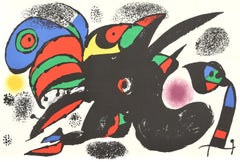
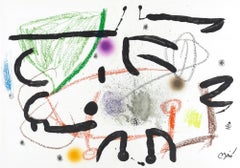
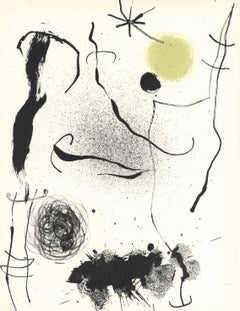
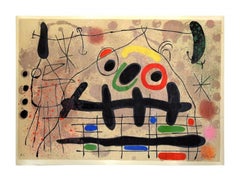
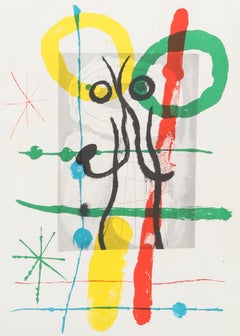
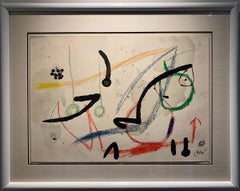
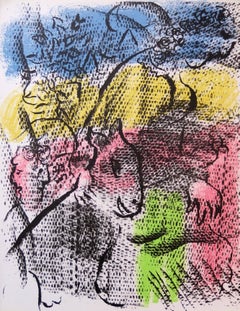
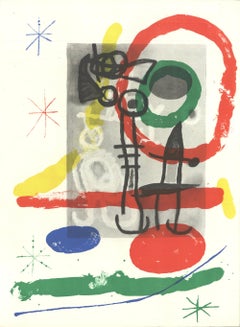
Joan Miro, Graphisms, from Derriere le Miroir, 1961

Joan Miro, Graphisms, from Derriere le Miroir, 1961

By Joan Miró

Located in Fairfield, CT

Artist: Joan Miro (1893–1983) Title: Graphisms (Graphismes) Year: April 1961 Medium: Lithograph on velin paper Paper Size: 15 x 33 inches (38.1 x 83.82 cm), with bifold, as issued Co...

Category

1960s Surrealist Abstract Prints

Materials

Lithograph

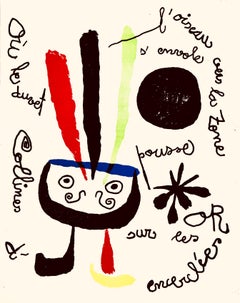
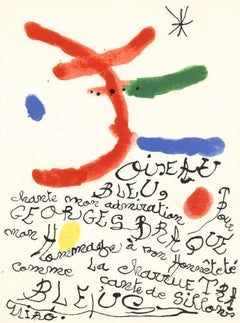
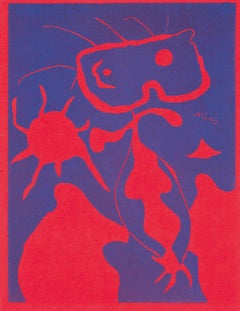
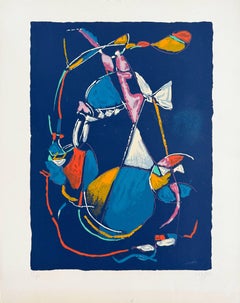
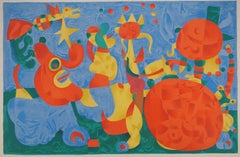
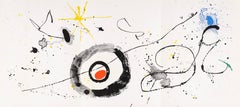
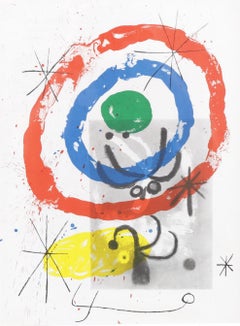
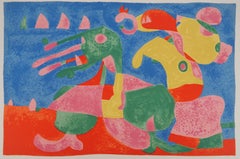
Joan Miro, Bird Before the Sun, from Derriere le Miroir, 1961

Joan Miro, Bird Before the Sun, from Derriere le Miroir, 1961

By Joan Miró

Located in Fairfield, CT

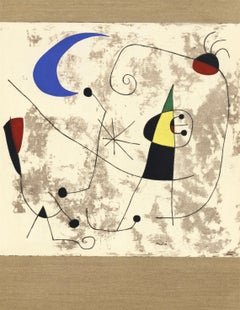
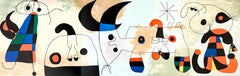
Artist: Joan Miro (1893–1983) Title: Bird Before the Sun (Oiseau devant le soleil) Year: April 1961 Medium: Lithograph on velin paper Paper Size: 33 x 15 inches (83.82 x 38.1 cm), with bifold, as issued Condition: Well preserved, consistent with age and medium Inscription: Unsigned and unnumbered, as issued Publisher: Maeght Editeur, Paris Printer: Imprimerie Arte, Paris Catalogue raisonne reference: Miro, Joan, et al. Joan Miro Lithographe. Maeght, 1972–1992, illustration 1722 Notes: This exquisite lithograph by Joan Miro (1893–1983), titled Oiseau devant le solei (Bird Before the Sun), originates from the April 1961 folio Derriere le Miroir, No. 125-126, published by Maeght Editeur, Paris, under the direction of Aime Maeght, and printed by Imprimerie Arte, Paris, 1961. The composition exemplifies Miro’s poetic use of symbolic imagery, where the bird and sun function as elemental forces within his visual language. Through gestural line, saturated color, and spatial freedom, the work reflects Miro’s fusion of cosmic imagery, instinctive mark making, and lyrical abstraction. Derriere le Miroir (translated as "Behind the Mirror") was an iconic French art periodical published from 1946 to 1982 by Maeght Editeur, one of the most influential art publishers of the twentieth century. Founded by Aime Maeght in Paris, the publication was conceived as a visual and literary collaboration between leading modern artists, poets, and critics. Each issue functioned simultaneously as an exhibition catalogue and as an autonomous work of art, featuring original lithographs printed directly from the artists stones or plates alongside essays, poems, and critical texts. Over more than three decades, Derriere le Miroir produced over 250 issues and presented an extraordinary range of artists including Henri Matisse, Marc Chagall, Georges Braque, Alexander Calder, Fernand Leger, Pierre Bonnard, Alberto Giacometti, Eduardo Chillida, Ellsworth Kelly, Francis Bacon, Antoni Tapies, Pierre Alechinsky, Pol Bury, Bram van Velde, and many others. Printed by master ateliers such as Mourlot and Arte, the series established new standards of excellence in modern lithography and graphic design. Closely linked to exhibitions at Galerie Maeght, each issue served as a lasting document of postwar modernism, uniting image, text, and philosophy into a uniquely influential publication that remains among the most important and collectible achievements in twentieth century art publishing. JOAN MIRO (1893–1983) was a Catalan painter, sculptor, printmaker, and ceramicist whose visionary imagination and lyrical abstraction made him one of the most influential and beloved artists of the twentieth century. Born in Barcelona, Miro drew inspiration from Catalan folk art, Romanesque frescoes, and the luminous landscapes of Mont-roig del Camp, developing a deep connection to nature that infused his work with vitality and symbolism. After formal training at the Escola d'Art in Barcelona, he absorbed the lessons of Post-Impressionism and Cubism before moving to Paris in the early 1920s, where he became a leading figure in the Surrealist movement. There, Miro forged a personal visual language of biomorphic shapes, floating symbols, and radiant color harmonies that reflected both spontaneity and spiritual depth. In creative dialogue with peers such as Alexander Calder, Alberto Giacometti, Salvador Dali, Wassily Kandinsky, Marcel Duchamp, and Man Ray, he helped revolutionize modern art by dissolving the boundaries between abstraction and dream imagery. Miro's inventive approach extended far beyond painting, embracing sculpture, ceramics, and monumental public commissions that redefined how art could interact with space and emotion. His expressive freedom and gestural abstraction profoundly influenced later artists including Jackson Pollock, Mark Rothko, Alexander Calder, Jean Dubuffet, Antoni Tapies, and Joan Mitchell, inspiring generations who sought to merge instinct, color, and imagination. Today, Miro's work remains a cornerstone of modernism, prized by collectors and celebrated in major museums worldwide. His highest auction record was achieved by Peinture (Etoile Bleue) (1927), which sold for approximately 37 million USD at Sothebys London on June 19, 2012. Joan Miro Oiseau...

Category

1960s Surrealist Abstract Prints

Materials

Lithograph

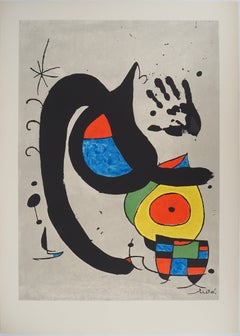
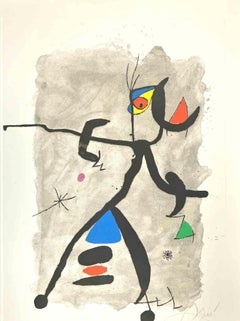
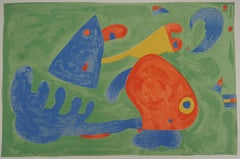
Espana, Surrealist figure - Original lithograph, 1982

Espana, Surrealist figure - Original lithograph, 1982

By Joan Miró

Located in Paris, IDF

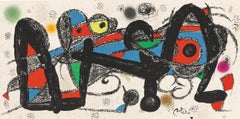
Joan MIRO Espana, Surrealist figure, 1982 Original lithograph in colors (atelier Arte, Maeght) Printed signature in the plate On thin paper 95 x 60 cm (c. 37.4 x 23.6 in) Referenc...

Category

1980s Surrealist Abstract Prints

Materials

Lithograph

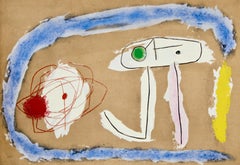
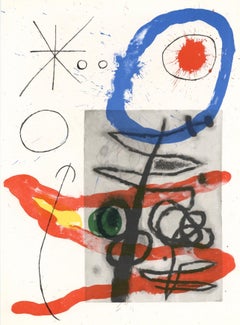
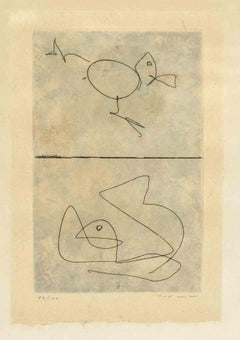
Les Brisants
Les Brisants

Les Brisants

By Joan Miró

Located in New York, NY

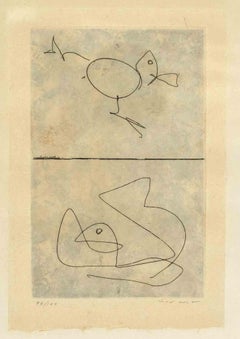
Color etching and aquatint, 1958. Signed by the artist in pencil, lower right Numbered IV/15 in pencil, lower left. Printed by Crommelynck and Dutrou, Paris. Published by GLM, Par...

Category

1950s Surrealist Abstract Prints

Materials

Etching, Aquatint

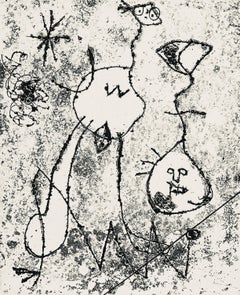
Miro a l'Encre II, Surrealist Lithograph by Joan Miro

Miro a l'Encre II, Surrealist Lithograph by Joan Miro

By Joan Miró

Located in Long Island City, NY

Joan Miro, Spanish (1893 - 1983) - Miro a l'Encre II, Year: 1972, Medium: Lithograph, Image Size: 13.75 x 9.75 inches, Size: 14 x 10 in. (35.56 x 25.4 cm), Frame Size: 21 x 17 inch...

Category

1970s Surrealist Abstract Prints

Materials

Lithograph

For Alberti, For Spain! - Etching by Joan Mirò - 1975

For Alberti, For Spain! - Etching by Joan Mirò - 1975

By Joan Miró

Located in Roma, IT

For Alberti, For Spain!  it's an artwork realized by Joan Mirò in 1975. Etching,  90 x 66 cm.  Hand signed. Edition 45/90. Reference: Dupin 926 Printed on Fabriano paper, Printed...

Category

1970s Surrealist Abstract Prints

Materials

Etching

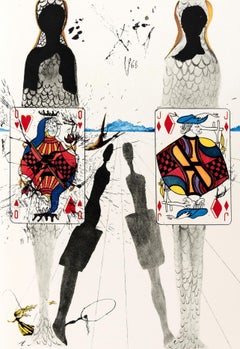
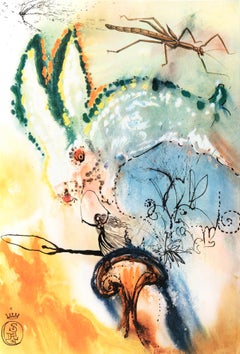
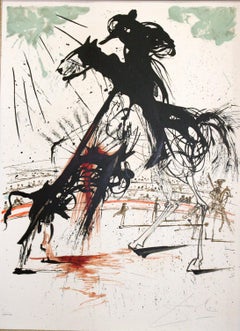
Salvador Dalì Surrealist Modern Signed Work on Paper

Salvador Dalì Surrealist Modern Signed Work on Paper

By Salvador Dalí­

Located in Roma, IT

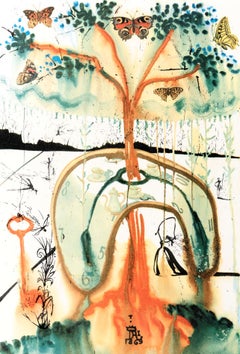
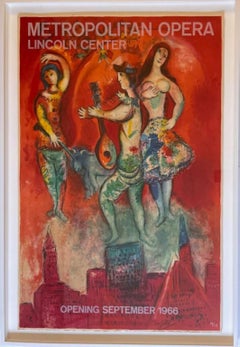
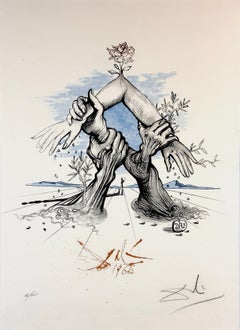
This important artwork is an original color lithograph by Salvador Dalí titled "Don José" from his famous Carmensuite. Created in 1968, this specific impression is a rare "Artist's proof" designated by the pencil inscription "artist proof" in the lower-left margin. This artwork, never before on the market, comes from an important Italian private collection. Our company has been present on this platform for many years, with more than 100 sales made and just as many excellent reviews received that you can under our Furniture account. The artwork is also protected by glass This artwork, upon request, is accompanied by a certificate of authenticity issued by an official Expert in Italian furniture for the Chamber of Commerce of Rome and for the Rome Civil Courts. The composition It is characterised by a highly dynamic and contrasting color scheme relies on saturated, expressive reds in the lower-left corner balanced by deep, brooding blues and earthy ochres/sanguine tones making up the central figure. The background features muted, atmospheric gray and green washes to simulate a turbulent, twilight sky. The composition uses an asymmetrical, vertical orientation dominated by a colossal, central figure towering over a fragmented architectural landscape. The perspective is intentionally distorted to emphasize a dreamlike, theatrical space. In this wonderful artwork are presents many surrealist iconography elements. On the the central figure is represented Don José; the character's form is severely elongated and spindly, bearing hallmarks of Dalí’s fascination with gaunt, skeletal figures. The anatomy transitions from fluid gestural lines to an almost root-like structure near the base. Atop the figure's head sits a prominent, black geometric cage resembling a street lantern or polyhedral framework. This structure acts as a visual anchor and source of dramatic light rays radiating downwards. To the right, a detailed architectural elements, surrealist cathedral/church façade rises with a crucifix, complete with an intricate, wheel-like window resembling an anatomical eye...

Category

1980s Surrealist Abstract Prints

Materials

Lithograph

For Alberti, For Spain! - Etching by Joan Mirò - 1975

For Alberti, For Spain! - Etching by Joan Mirò - 1975

By Joan Miró

Located in Roma, IT

For Alberti, For Spain!  is a contemporary artwork realized by Joan Mirò in 1975. Mixed colored etching. Hand signed and numbered on the lower margin. Edition of XXVIII/LX. There ...

Category

1970s Surrealist Abstract Prints

Materials

Etching

The Four Ages of Man Suite

The Four Ages of Man Suite

By Salvador Dalí­

Located in Hollywood, FL

ARTIST: Salvador Dali TITLE: The Four Ages of Man Suite Juventud Adolescencia Madurez Vejez MEDIUM: 4 Lithographs SIGNED: Each lithograph is Hand Signed PUBLISHER: Galerie Spect...

Category

1970s Surrealist Abstract Prints

Materials

Lithograph

Divine Comedy Heaven Canto 14 Decomposition

Divine Comedy Heaven Canto 14 Decomposition

By Salvador Dalí­

Located in Hollywood, FL

Artist: Salvador Dali Title: Divine Comedy Heaven Canto 14 Decomposition Medium: Woodcut Measurements: Paper: 10.5" x 13" Frame: 13.75" x 17.5" Condition: Excellent. This piec...

Category

1960s Surrealist Abstract Prints

Materials

Woodblock

Les Chants de Maldoror

Les Chants de Maldoror

By Salvador Dalí­

Located in New York, NY

Heliogravure, etching, and drypoint, 1934. From the deluxe edition of 40 with the drypoint remarqué, before the published edition of 100 printed from the reduced plate. From the po...

Category

20th Century Surrealist Abstract Prints

Materials

Etching, Drypoint

Les Chiens Ont Soif VII, Surrealist Lithograph by Max Ernst

Les Chiens Ont Soif VII, Surrealist Lithograph by Max Ernst

By Max Ernst

Located in Long Island City, NY

Max Ernst, German (1891 - 1976) - Les Chiens Ont Soif VII, Portfolio: Les Chiens Ont Soif, Year: 1964, Medium: Lithograph, Edition: 165/320, Size: 17 x 24.5 in. (43.18 x 62.23 c...

Category

1960s Surrealist Abstract Prints

Materials

Lithograph

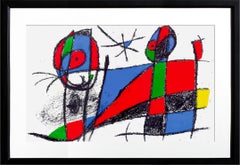
Lithographs II (1046), Surrealist Lithography by Joan Miro

Lithographs II (1046), Surrealist Lithography by Joan Miro

By Joan Miró

Located in Long Island City, NY

Joan Miro was a Spanish Surrealist artist, world-renowned for his unique art style that blended surrealist fantasy and modern life. This lithograph is part of the series "Lithographs...

Category

1970s Surrealist Abstract Prints

Materials

Lithograph

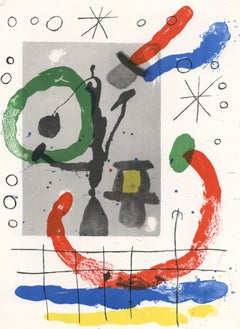
Joan Miro, Overweavings, from Derriere le Miroir, 1973

Joan Miro, Overweavings, from Derriere le Miroir, 1973

By Joan Miró

Located in Fairfield, CT

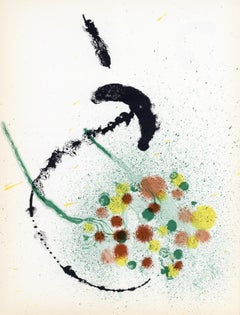
Artist: Joan Miro (1893–1983) Title: Overweavings (Sobreteixims) Year: April 1973 Medium: Lithograph on velin paper Paper Size: 15 x 11 inches (38.1 x 27.94 cm) Condition: Well preserved, consistent with age and medium Inscription: Unsigned and unnumbered, as issued Publisher: Maeght Editeur, Paris Printer: Imprimerie Arte, Paris Catalogue raisonne reference: Miro, Joan, et al. Joan Miro Lithographe. Maeght, 1972–1992, illustration 889-891; Cramer, Patrick. Joan Miro: The Illustrated Books: Catalogue Raisonne. Patrick Cramer, 1989, illustration 167 Notes: This exquisite lithograph by Joan Miro (1893–1983), titled Sobreteixims (Overweavings), originates from the April 1973 folio Derriere le Miroir, No. 203, published by Maeght Editeur, Paris, under the direction of Aime Maeght, and printed by Imprimerie Arte, Paris, 1973. The composition reflects Miro’s late exploration of materiality, sign, and gesture, where dense textures and symbolic forms converge into a powerful synthesis of abstraction, surface, and poetic invention. Derriere le Miroir (translated as "Behind the Mirror") was an iconic French art periodical published from 1946 to 1982 by Maeght Editeur, one of the most influential art publishers of the twentieth century. Founded by Aime Maeght in Paris, the publication was conceived as a visual and literary collaboration between leading modern artists, poets, and critics. Each issue functioned simultaneously as an exhibition catalogue and as an autonomous work of art, featuring original lithographs printed directly from the artists stones or plates alongside essays, poems, and critical texts. Over more than three decades, Derriere le Miroir produced over 250 issues and presented an extraordinary range of artists including Henri Matisse, Marc Chagall, Georges Braque, Alexander Calder, Fernand Leger, Pierre Bonnard, Alberto Giacometti, Eduardo Chillida, Ellsworth Kelly, Francis Bacon, Antoni Tapies, Pierre Alechinsky, Pol Bury, Bram van Velde, and many others. Printed by master ateliers such as Mourlot and Arte, the series established new standards of excellence in modern lithography and graphic design. Closely linked to exhibitions at Galerie Maeght, each issue served as a lasting document of postwar modernism, uniting image, text, and philosophy into a uniquely influential publication that remains among the most important and collectible achievements in twentieth century art publishing. JOAN MIRO (1893–1983) was a Catalan painter, sculptor, printmaker, and ceramicist whose visionary imagination and lyrical abstraction made him one of the most influential and beloved artists of the twentieth century. Born in Barcelona, Miro drew inspiration from Catalan folk art, Romanesque frescoes, and the luminous landscapes of Mont-roig del Camp, developing a deep connection to nature that infused his work with vitality and symbolism. After formal training at the Escola d'Art in Barcelona, he absorbed the lessons of Post-Impressionism and Cubism before moving to Paris in the early 1920s, where he became a leading figure in the Surrealist movement. There, Miro forged a personal visual language of biomorphic shapes, floating symbols, and radiant color harmonies that reflected both spontaneity and spiritual depth. In creative dialogue with peers such as Alexander Calder, Alberto Giacometti, Salvador Dali, Wassily Kandinsky, Marcel Duchamp, and Man Ray, he helped revolutionize modern art by dissolving the boundaries between abstraction and dream imagery. Miro's inventive approach extended far beyond painting, embracing sculpture, ceramics, and monumental public commissions that redefined how art could interact with space and emotion. His expressive freedom and gestural abstraction profoundly influenced later artists including Jackson Pollock, Mark Rothko, Alexander Calder, Jean Dubuffet, Antoni Tapies, and Joan Mitchell, inspiring generations who sought to merge instinct, color, and imagination. Today, Miro's work remains a cornerstone of modernism, prized by collectors and celebrated in major museums worldwide. His highest auction record was achieved by Peinture (Etoile Bleue) (1927), which sold for approximately 37 million USD at Sothebys London on June 19, 2012. Joan Miro Sobreteixims...

Category

1970s Surrealist Abstract Prints

Materials

Lithograph

Max Ernst Dada Surrealist Hand Signed Lithograph Poster for a Jewish Museum

Max Ernst Dada Surrealist Hand Signed Lithograph Poster for a Jewish Museum

By Max Ernst

Located in Surfside, FL

Max Ernst (German, American, 1891-1976) Color lithograph Titled, "Poster For The Jewish Museum" 1966 Hand signed lower right Hand numbered HC I/XVII Dimensions: 34.75 x 28.5 sight 25 X 19.25 Max Ernst (German 1891 – 1976) was a German-born painter, sculptor, printmaker, graphic artist, and poet. A prolific artist, Ernst was a primary pioneer of the Dada movement and surrealism in Europe. He had no formal artistic training, but his experimental attitude toward the making of art resulted in his invention of frottage—a technique that uses pencil rubbings of textured objects and relief surfaces to create images—and grattage, an analogous technique in which paint is scraped across canvas to reveal the imprints of the objects placed beneath. Max Ernst showed for the first time in 1912 at the Galerie Feldman in Cologne. At the Sonderbund exhibition of that year in Cologne he saw the work of Paul Cezanne, Edvard Munch, Pablo Picasso, Paul Gauguin and Vincent van Gogh. In 1913 he met Guillaume Apollinaire and Robert Delaunay and traveled to Paris. Ernst participated that same year in the Erste deutsche Herbstsalon. In 1914 he met Jean Arp in Cologne who was to become a lifelong friend. In 1921 Ernst exhibited at the Galerie au Sans Pareil in Paris. He was involved in Surrealist activities in the early 1920s with Paul Eluard and André Breton. His work was exhibited that year together with that of the Das Junge Rheinland group, at Galerie Feldman in Cologne, and then in several group exhibitions in 1913. In his paintings of this period, Ernst adopted an ironic style that juxtaposed grotesque elements alongside Cubist and Expressionist motifs. Ernst fought in world war I. Several German Expressionist painters died in action during the war, among them August Macke and Franz Marc. In 1918, Ernst was demobilised and returned to Cologne. He soon married art history student Luise Straus, of Jewish ancestry, whom he had met in 1914. In 1919, he visited Paul Klee in Munich and studied paintings by Giorgio de Chirico. In the same year, inspired by de Chirico and mail-order catalogues, teaching-aide manuals and similar sources, he produced his first collage works (notably Fiat modes, a portfolio of lithographs), a technique which later dominated his artistic pursuits. Also in 1919, Ernst, social activist Johannes Theodor Baargeld and several colleagues founded the Cologne Dada group. In 1919–20, Ernst and Baargeld published various short-lived magazines such as Der Strom, die Schammade and organised Dada exhibitions. Ernst and Luise's son Ulrich Jimmy Ernst was born on 24 June 1920; he later would also become a painter. In 1921, he met Paul Éluard, who became a lifelong friend. Éluard bought two of Ernst's paintings (Celebes and Oedipus Rex) and selected six collages to illustrate his poetry collection Répétitions. A year later the two collaborated on Les malheurs des immortels and then with André Breton, whom Ernst met in 1921, on the magazine Littérature. Ernst developed a fascination with birds which was prevalent in his work. His alter ego in paintings, which he called Loplop, was a bird. He suggested that this alter-ego was an extension of himself stemming from an early confusion of birds and humans. In 1927, he married Marie-Berthe Aurenche and it is thought his relationship with her may have inspired the erotic subject matter of The Kiss and other works of that year. He collaborated with Joan Miro on designs for Sergei Diaghilev Ballet that same year. The following year the artist collaborated with Salvador Dali and the Surrealist Luis Bunuel on the film L'Age d'or. His first American show was held at the Julien Levy Gallery, New York, in 1932. In 1936 Ernst was represented in Fantastic Art, Dada, Surrealism at the Museum of Modern Art in New York. Ernst began to sculpt in 1934 and spent time with Alberto Giacometti. In 1938, the American heiress and artistic patron Peggy Guggenheim acquired a number of Max Ernst's works, which she displayed in her new gallery in London. Ernst and Guggenheim were married from 1942 to 1946. In September 1939, the outbreak of World War II caused Ernst, being German, to be interned as an "undesirable foreigner" in Camp des Milles, near Aix-en-Provence, along with fellow surrealist, Hans Bellmer, who had recently emigrated to Paris. He had been living with his lover and fellow surrealist painter, Leonora Carrington who, not knowing whether he would return, saw no option but to sell their house to repay their debts and leave for Spain. Thanks to the intercession of Paul Éluard and other friends, including the journalist Varian Fry, he was released a few weeks later. Soon after the German occupation of France, he was arrested again, this time by the Gestapo, but managed to escape to America with the help of Fry and Peggy Guggenheim, a member of a wealthy American art collecting family. Ernst and Peggy Guggenheim arrived in the United States in 1941 and were married at the end of the year. Along with other artists and friends (Marcel Duchamp and Marc Chagall) who had fled from the war and lived in New York City, Ernst helped inspire the development of abstract expressionism. His marriage to Guggenheim did not last. In October 1946 he married American surrealist painter Dorothea Tanning in a double ceremony with Man Ray and Juliet P. Browner in Beverly Hills, California. The couple made their home in Sedona, Arizona from 1946 to 1953. He and Tanning hosted intellectuals and European artists such as Henri Cartier-Bresson and Yves Tanguy. Sedona proved an inspiration for the artists and for Ernst, who compiled his book Beyond Painting and completed his sculptural masterpiece Capricorn while living in Sedona. As a result of the book and its publicity, Ernst began to achieve financial success. From the 1950s he lived mainly in France. In 1954 he was awarded the Grand Prize for painting at the Venice Biennale. In 2005, "Max Ernst: A Retrospective" opened at the Metropolitan Museum of Art. Contemporary artist tapestries have had their true believers. He produced a tapestry for Gloria Ross...

Category

1960s Surrealist Abstract Prints

Materials

Lithograph

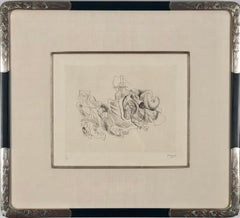
Henry Moore, "Fantasy", original etching

Henry Moore, "Fantasy", original etching

By Henry Moore

Located in Chatsworth, CA

This piece is an original etching created by Henry Moore in 1967. This piece is hand signed in pencil and numbered from the edition of 50 on Japon paper. There are also two proofs on...

Category

1960s Surrealist Abstract Prints

Materials

Etching

Plate VI, Le Cocu Magnifique

Plate VI, Le Cocu Magnifique

By Pablo Picasso

Located in Fairlawn, OH

Plate VI, Le Cocu Magnifique etching & aquatint, 1968 Unsigned as usual From the unsigned edition of 200 impressions printed on Rives BFK paper There is also a signed edition of 30 i...

Category

1960s Surrealist Abstract Prints

Materials

Etching, Aquatint

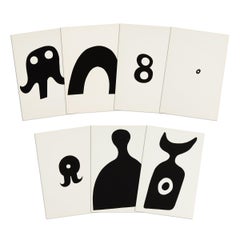
Untitled (Surrealist Composiition)

Untitled (Surrealist Composiition)

By Julio de Diego

Located in Fairlawn, OH

Untitled (Surrealist Composiition) Lithograph with hand coloring, 1945 Signed and dated lower right (see photo) Numbered 10/12 lower left (see photo) fragment from 6X litho In 1945, ...

Category

1940s Surrealist Abstract Prints

Materials

Lithograph

'Cheerleader' — Mid-century American Surrealism, Chicago Avant-garde

'Cheerleader' — Mid-century American Surrealism, Chicago Avant-garde

By Robert Vale Faro

Located in Myrtle Beach, SC

Robert Vale Faro, 'Cheerleader', wood engraving, 1945, edition 15. Signed, dated, titled, and numbered '104' (the artist's inventory number) and '8/15' in pencil. A fine, black impression, with full margins (1 1/2 inches), on heavy, cream wove paper, in excellent condition. Scarce. Matted to museum standards, unframed. ABOUT THE ARTIST Robert Vale Faro (1902-1988) was a well-known modernist architect and artist associated with the Chicago Bauhaus...

Category

1940s Surrealist Abstract Prints

Materials

Woodcut

For Alberti, For Spain! - Etching by Joan Mirò - 1975

For Alberti, For Spain! - Etching by Joan Mirò - 1975

By Joan Miró

Located in Roma, IT

For Alberti, For Spain!  it's an original artwork realized by Joan Mirò in 1975. Etching,  90 x 66 cm.  Hand signed. Edition 50/90. Reference: Dupin 926 Printed on Fabriano paper...

Category

1970s Surrealist Abstract Prints

Materials

Etching

Personnages Lithograph by R.S. Matta, Surrealist, Signed, 1980s

Personnages Lithograph by R.S. Matta, Surrealist, Signed, 1980s

By Sebastian Matta

Located in Roma, IT

Personnages is an Artwork realized by Roberto Sebastián Antonio Matta Echaurren (Santiago, Chile, 1911 - Civitavecchia, Italy, 2002). Colored Litograph on paper. Hand Signed on the lower right margin. Good conditions. After studying architecture, in 1934 Roberto Sebastian Matta moved to Paris, where he worked with Le Corbusier and came into contact with intellectuals such as Rafael Alberti and Federico García Lorca. Here, he also met André Breton and Salvador Dalí , and adhered to the Surrealist movement, elaborating a painting style focused on psychological morphologies. In 1944, Breton wrote: " Matta is the one who most faithfully keeps his star, which is perhaps on the best path to reach the supreme secret: the control of fire". An extremely dynamic Chilean artist, who met Alvar Aalto in Scandinavia, Henry Moore , Roland Penrose...

Category

1970s Surrealist Abstract Prints

Materials

Lithograph

Surrealist abstract prints for sale on 1stDibs.

Find a wide variety of authentic Surrealist abstract prints available for sale on 1stDibs. Works in this style were very popular during the 20th Century, but contemporary artists have continued to produce works inspired by this movement. If you’re looking to add abstract prints created in this style to introduce contrast in an otherwise neutral space in your home, the works available on 1stDibs include elements of blue, purple, orange, red and other colors. Many Pop art paintings were created by popular artists on 1stDibs, including (after) Joan Miró, Holger Bäckström, Joan Miró, and John Hultberg. Frequently made by artists working with Lithograph, and Mixed Media and other materials, all of these pieces for sale are unique and have attracted attention over the years. Not every interior allows for large Surrealist abstract prints, so small editions measuring 2.5 inches across are also available. Prices for abstract prints made by famous or emerging artists can differ depending on medium, time period and other attributes. On 1stDibs, the price for these items starts at $88 and tops out at $1,450,000, while the average work sells for $947.