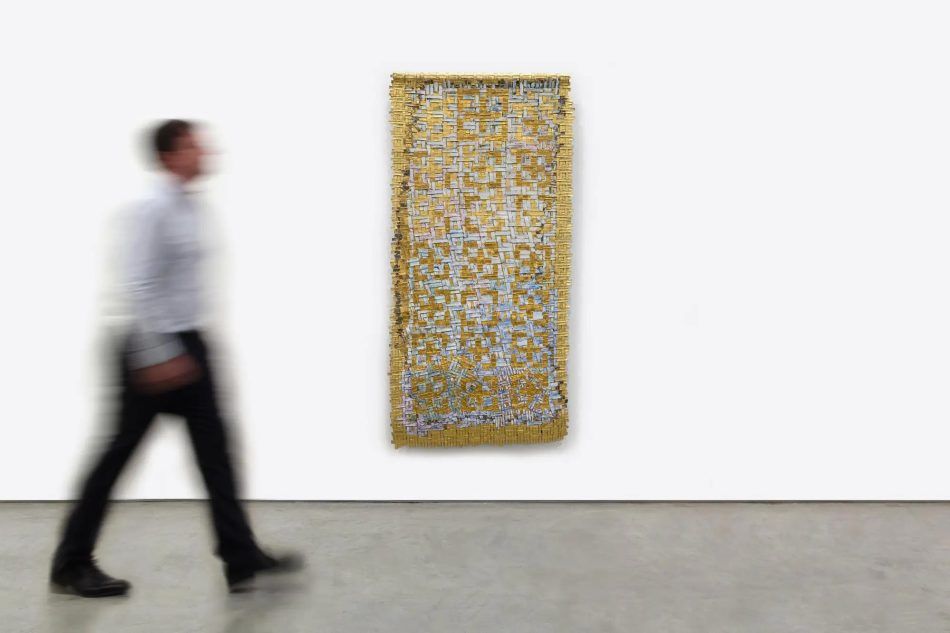
“Photos really can’t capture it!” says Jenna Grotelueschen, marketing director at Heather James Fine Art, referring to Olga de Amaral’s Memento 7 (2010). “The gold leaf catches light differently with every step you take around the piece, so it is very dynamic in the room. It’s less like looking at a static object and more like watching light move through water.”
That’s a lot to ask of a textile. Then again, de Amaral has never been particularly interested in behaving like a conventional textile artist.
Born in Bogotá in 1932, she studied architectural drafting before shifting to weaving at the Cranbrook Academy of Art, in Michigan.
When she returned to Colombia, in 1955, de Amaral began experimenting with woven forms that traversed the boundaries between textile, painting, sculpture and architecture.
Seven decades later, she’s still at it — and museums and collectors are finally paying close attention.
On September 10, the Pulitzer Arts Foundation, in St. Louis, opened “Olga de Amaral: Weaving the Infinite,” a retrospective comprising 130 textiles and works on paper. The show, which runs through January 31, follows de Amaral’s artistic evolution, starting with her weavings of the 1950s and ending with her monumental works of recent decades. It travels to New York City’s Cooper Hewitt, Smithsonian Design Museum, next April.
“Frankly, we think the art world is finally catching up to her,” says Julia Jackson, senior vice president at Heather James. “She’s been doing this at the highest level for seven decades. And a wave of major shows, from her 2024 Fondation Cartier retrospective — which traveled to the Institute of Contemporary Art, Miami — to her inclusion in MoMA’s ‘Woven Histories,’ in 2025, is putting her rightfully alongside artists like Agnes Martin.”
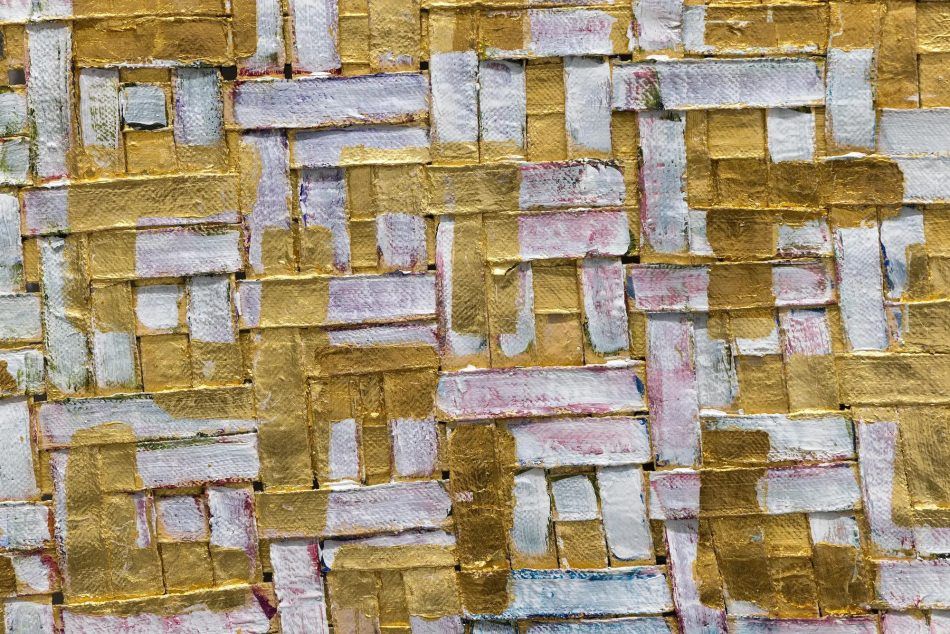
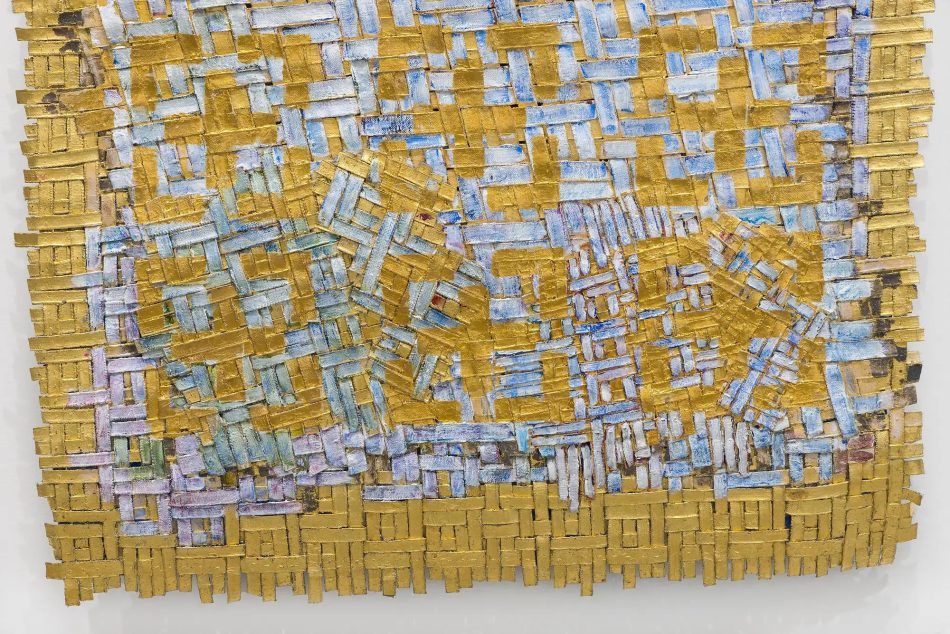
Memento 7 initially reads as highly structured, even gridlike. Move closer, though, and another layer emerges. De Amaral has applied white, blue, green, magenta and black acrylic paints to the gessoed woven linen strips.
So, what first appears to be an intricate textile begins to look like an expressionist painting crossing through golden meridians. The mix of mediums never fully resolves into one or the other.
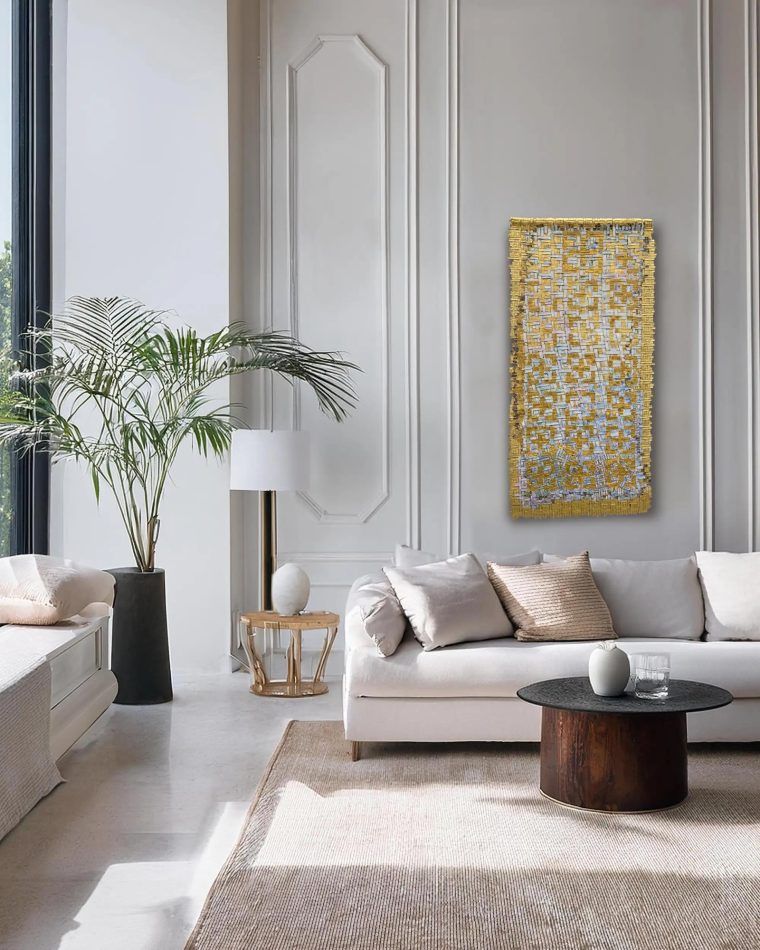
Gold, meanwhile, does more than shimmer. De Amaral has long drawn on the cultural and spiritual significance of gold in pre-Columbian traditions, and in the “Memento” works, it takes on a particularly poignant role.
“The gold is doing the work of memory itself, catching and losing light the way a memory sharpens and fades over time,” Grotelueschen says. “The piece feels like it’s holding on to something rather than just depicting it.”