A couple of the biggest rascals in Greek and Roman mythology, the baby gods Eros and Cupid often instigated trouble by shooting their golden arrows at deities and mortals, igniting uncontrollable and sometimes inappropriate passions. When they appear in jewelry, however, these little winged kings of chaos are generally better behaved.
In ancient intaglios and gold pieces, Eros and Cupid represented powerful and even complex romantic themes. In the 19th century, they frolicked in Etruscan Revival jewelry of different styles. The best examples convey an impish attitude, depicting them as if they were about to or perhaps already had engaged in a playful or naughty act. Regardless of their era, pieces featuring these gods make a very special gift for Valentine’s Day.
Hellenistic Gold Earrings

Gold jewelry, like these elaborate earrings sporting four Eros figures demonstrate the rich artistry of Greece in the Hellenistic period, spanning from 323 to 30 BC. Master craftsmen employed a range of techniques, including intricate wirework and meticulous weaving, used to create loop-in-loop gold chains. The wheel held by three of the Eros figures is a love charm, called an iynx, used to attract lovers.
Ancient Greek Gold Intaglio Ring
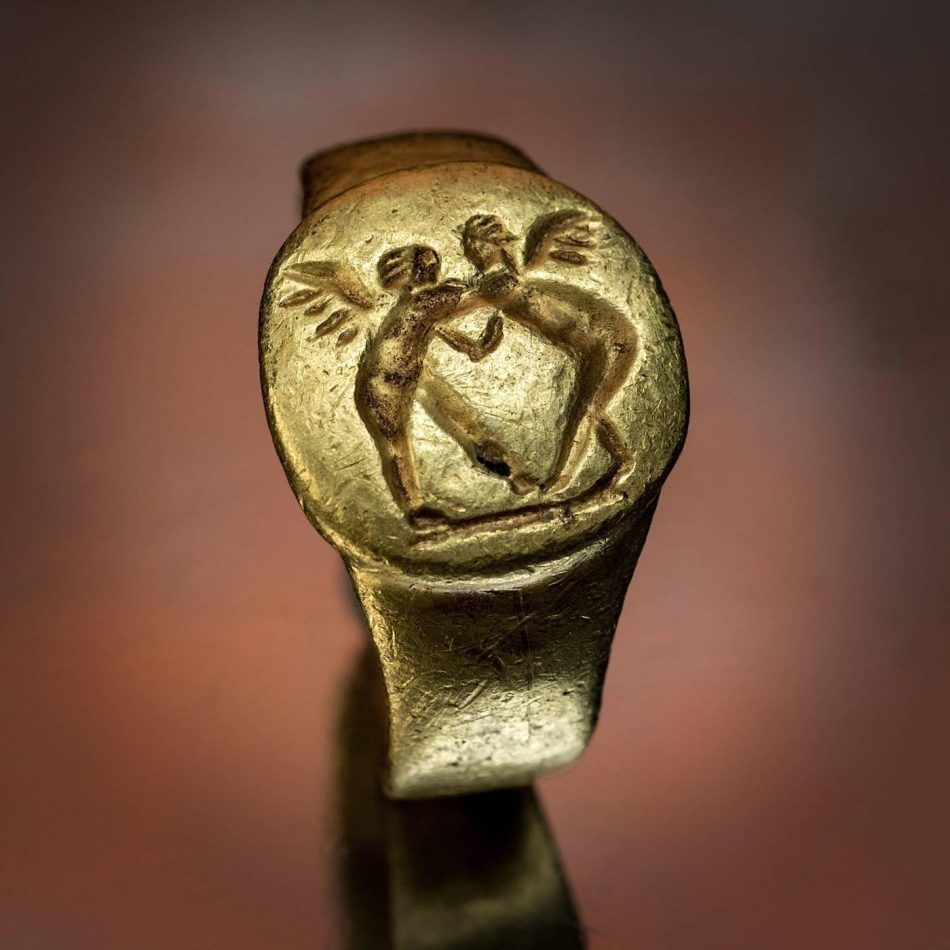
Eros’s twin brother, Himeros, is the god of sexual desire. Scenes showing the two siblings wrestling, like the one depicted on this gold signet ring believed to be from the 4th century BC, represent the internal struggle between lust and love.
Gold and Carved-Coral Classical Revival Earrings
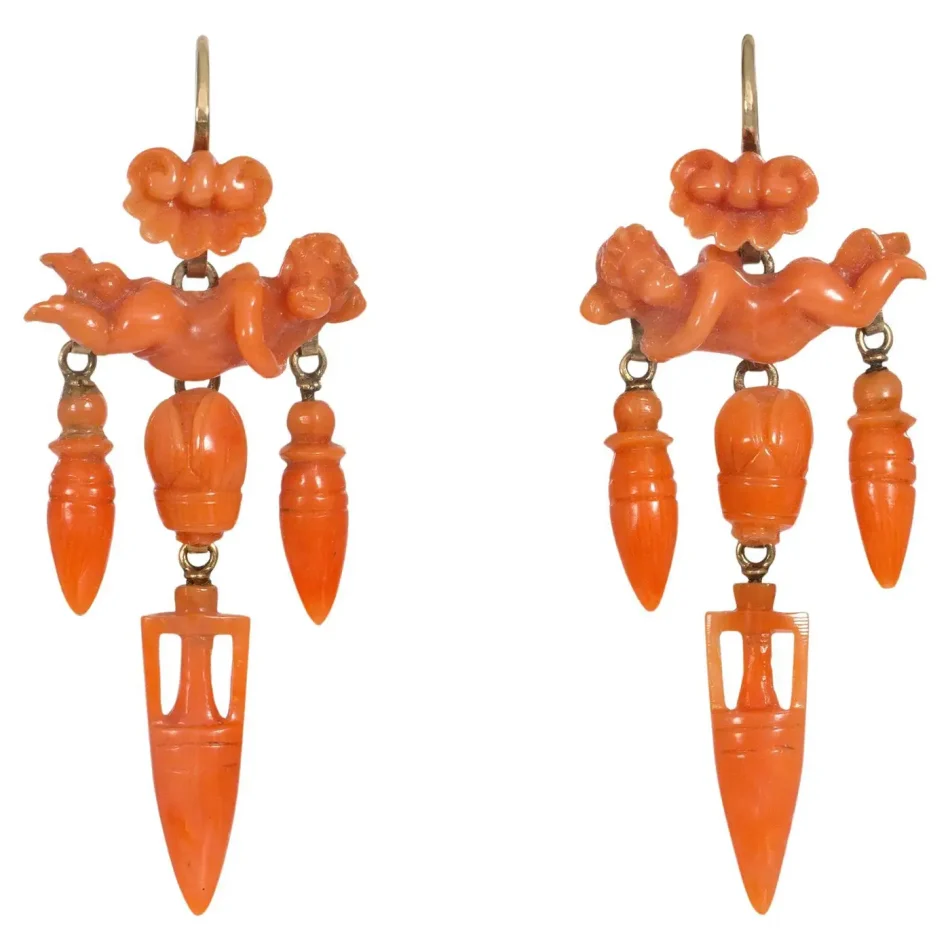
In these mid-19th-century earrings, the Cupids and amphorae, vessels used for wine, loosely symbolize the intoxicating love or uncontrollable passion that characterizes the early stages of romance. Coral, sourced from the Mediterranean, was a popular material at the time because of its connection to Italy, a country traditionally visited as part of the Grand Tour.
Roman Carnelian Intaglio Ring Depicting Eros Crowning a Rooster

Eros jauntily stepping forward to crown a rooster on this carnelian intaglio, dating to between the second and third centuries, represents the joining of love with new beginnings. The ancient gem is mounted in a modern 18-karat-gold ring.
Victorian Carved-Hardstone Cameo Brooch
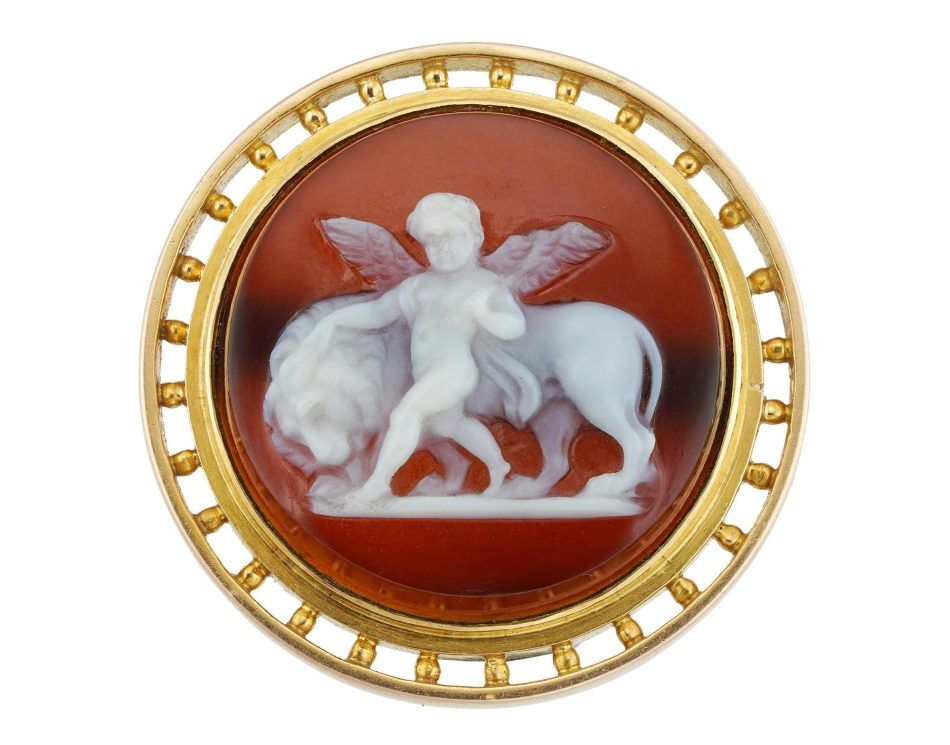
In this 19th-century classical-revival cameo, the undeniably adorable scene of Eros accompanying a lion signifies that love conquers all. The animal’s lowered head shows that the little winged god is in charge.
Carved-Whitby-Jet Earrings with Dancing Cupids

By the end of the 19th century, Whitby jet had evolved from a gemstone appearing exclusively in mourning jewelry to one used generally in statement pieces. These circa 1875 Whitby-jet earrings feature small porcelain plaques painted with cupids. The sashes the cupids hold are a clever motif often employed to preserve the modesty of naked cherubs.
Chushev Carnelian-Intaglio Signet Ring Depicting Eros and a Lion

Master gem carver Chavdar Chushev uses traditional tools to create intaglios whose imagery is drawn from ancient and antique-revival jewels. This intaglio ring, crafted in 2019, features Eros carrying a harp while riding a lion with its tail down and wrapped around his leg in a submissive gesture. It conveys the idea that love conquers all.
Gold Micromosaic Double-Drop Earrings
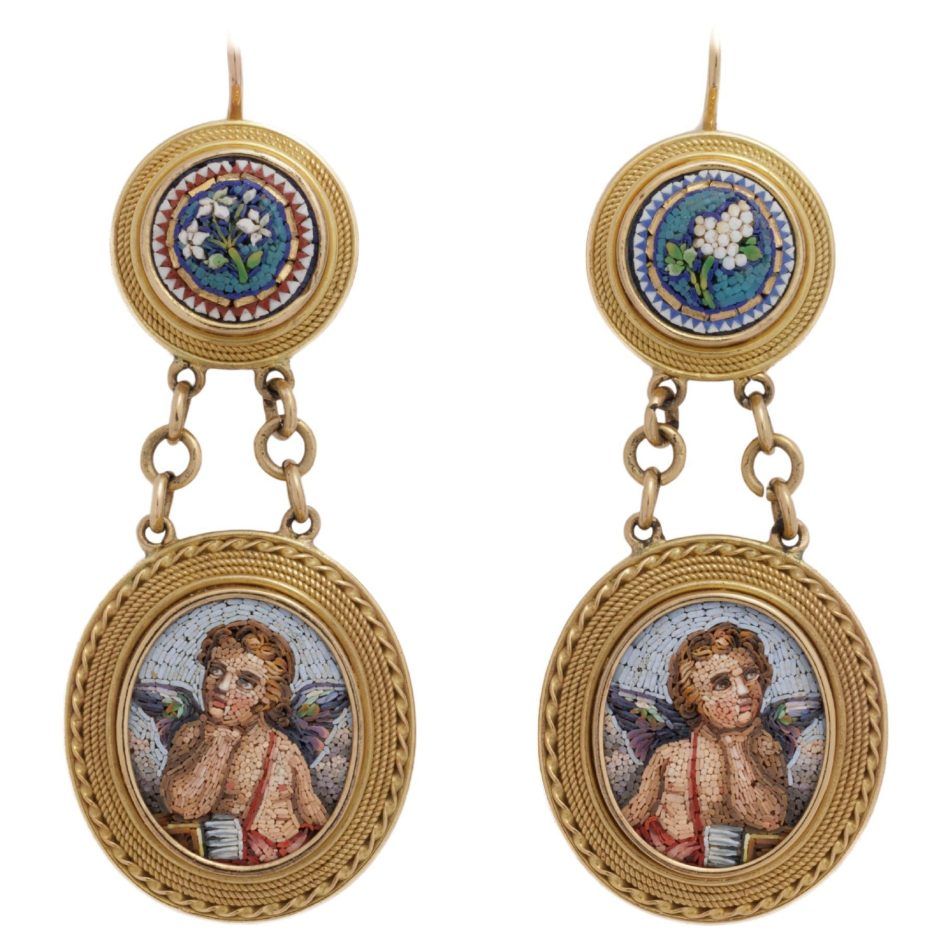
Cupids and forget-me-nots, two romantic symbols, appeared on everything from postcards to soap packaging during the 19th century. They are elevated into art in these 1860s micromosaic and gold earrings. Pieces featuring imagery like this and created using the micromosaic technique were among the many Grand Tour jewelry styles inspired by ancient art and the mythological scenes it depicted.