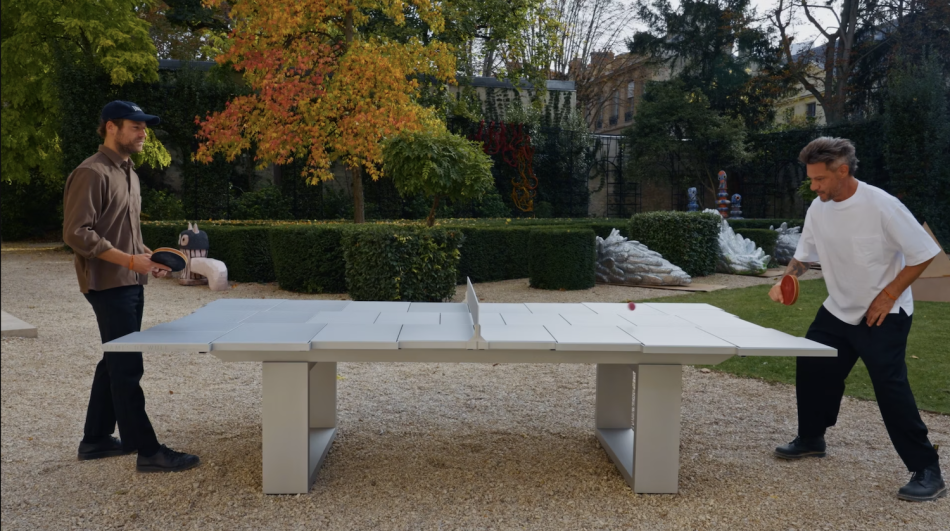
Concrete is the foundation of James de Wulf‘s career, literally and figuratively. He used the material to create an acclaimed body of work, including coffee tables, fire pits and his popular Ping Pong tables. Concrete is known for its weight, its brutalist permanence and its ability to absorb sound, and after a while de Wulf found himself seeking a frequency shift, to aluminum. This departure made waves (sound waves, that is) when his Resonating Ping Pong table (Song no. 1) featuring that metal debuted at Design Miami/Paris and won big.
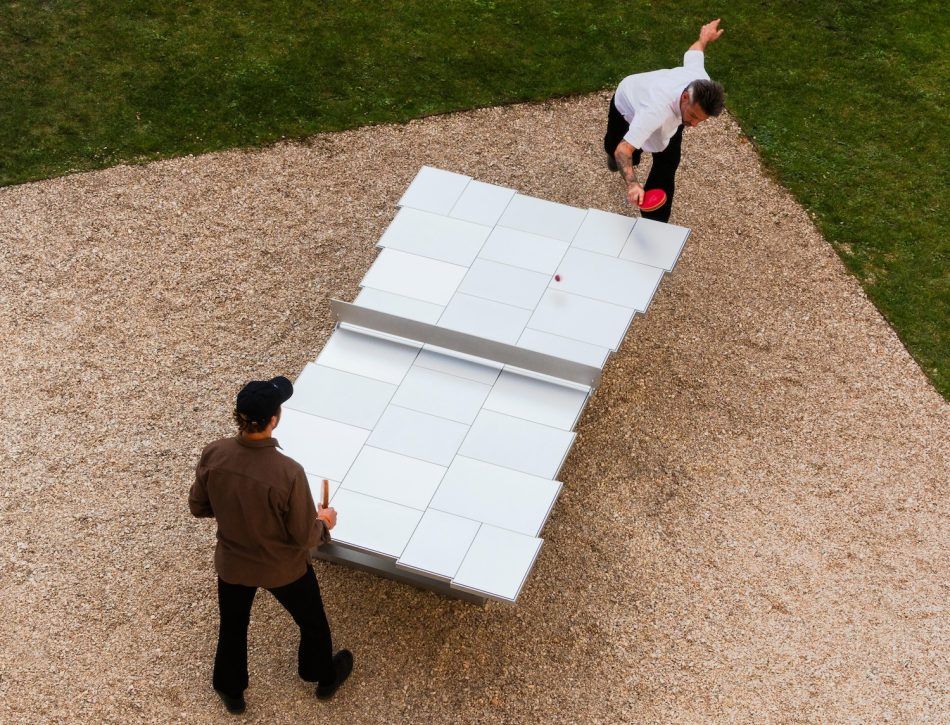
Song No. 1 had its roots in an art fair that took place long before Marty Supreme brought table tennis back to the cultural zeitgeist. De Wulf noticed that the rhythmic sounds of Ping-Pong being played on a table he had created for the exhibition attracted onlookers, sparking smiles in an otherwise stuffy environment.
To realize this idea, de Wulf traded his signature concrete for aluminum, chosen for its superior resonance. Song No. 1 is made not from a single piece of the material but from a collection of bell plates, inspired by the mechanics of a vibraphone, the xylophone’s fully metal sister. Through an obsessive R&D process, which involved sprinkling sugar on the plates to visually identify vibrational nodes, de Wulf discovered how to float them so they would ring out clearly when struck while remaining stable enough for play.
The table is tuned to an A minor pentatonic scale. The choice was deliberate: In a pentatonic scale, there are no “wrong” notes. Wherever the ball lands, it produces a harmonious tone. The ball, however, had to be specially crafted for the purpose. A standard Ping-Pong ball produced a sharp, metallic ting, so de Wulf swapped it for a denser, bouncy rubber ball and fabricated custom heavy wooden paddles. The result when the ball hits the table surface is a warm, rolling gong that envelops the players and audience.
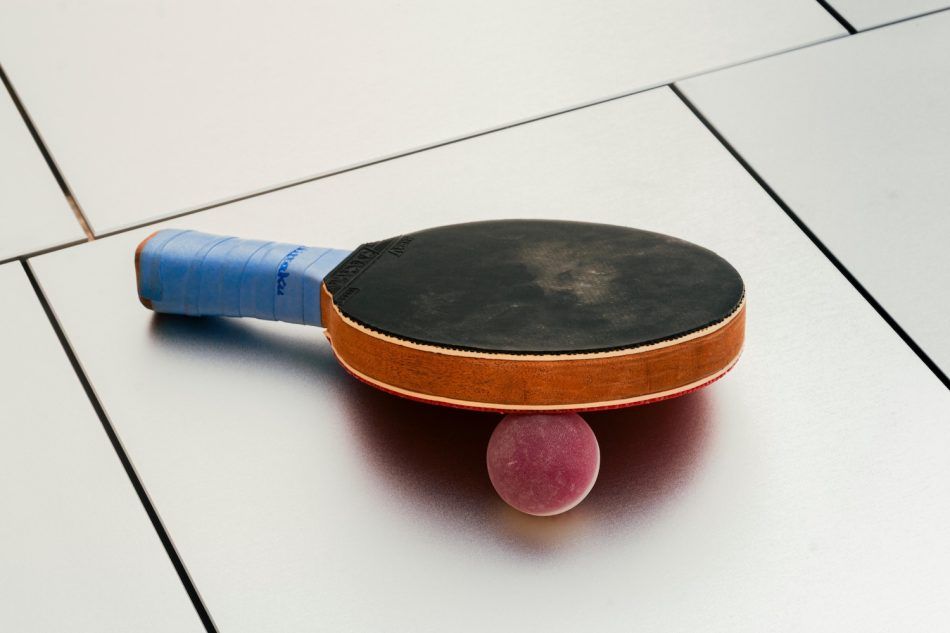
This acoustic shift fundamentally alters the psychology of the game. Ping-Pong is typically a high-speed one-on-one sport. But playing on Song No. 1, with the bouncier ball and the hypnotic sounds, participants — even the Olympic table tennis players and international tennis stars who were captivated by the table’s tones — naturally shift from trying to score points to trying to maintain the rhythm. “It’s no longer about slamming it,” de Wulf explains. “It’s us trying to keep the song going.” The table turns a competitive sport into a collaborative, meditative performance.
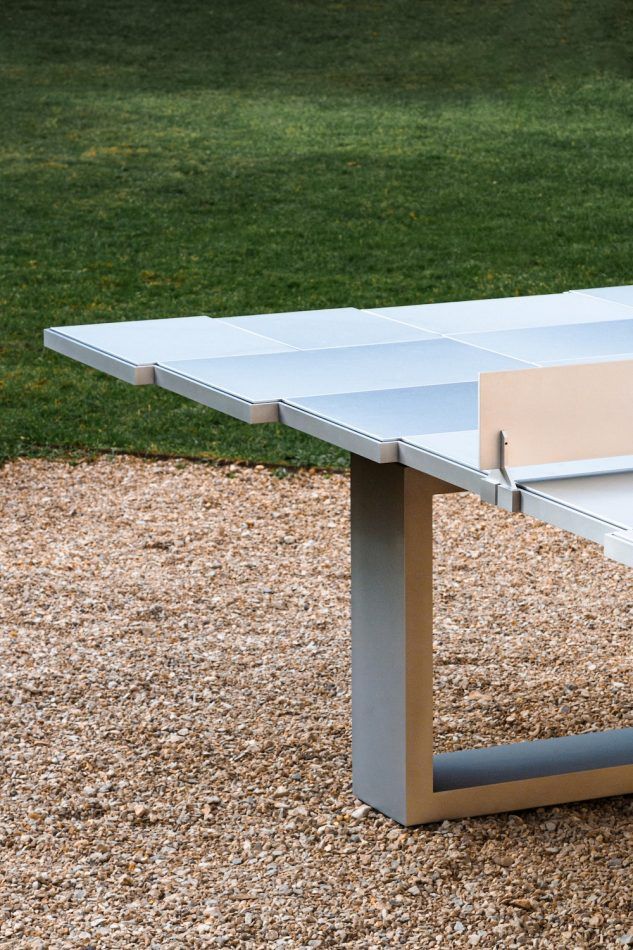
Song No. 1 exemplifies de Wulf’s functional ethos. As with his other Ping Pong tables, its net (in this case, a long aluminum plate) can be removed to convert the piece’s purpose from sport to dining. The designer has yet to eat on one but dreams of a dinner party where the kids rush to clear the table so they can play on it.
The table also has emotional resonance. De Wulf describes seeing a “serious Swiss banker” transform into a “joyous child” while playing on it, a reaction that validates his new direction. “Nobody really gives a shit about cantilevers and gravity joints anymore,” he says with a laugh, signaling a departure from pure structural flexing. “If you can get that inner child out of someone . . . that’s my goal now.”
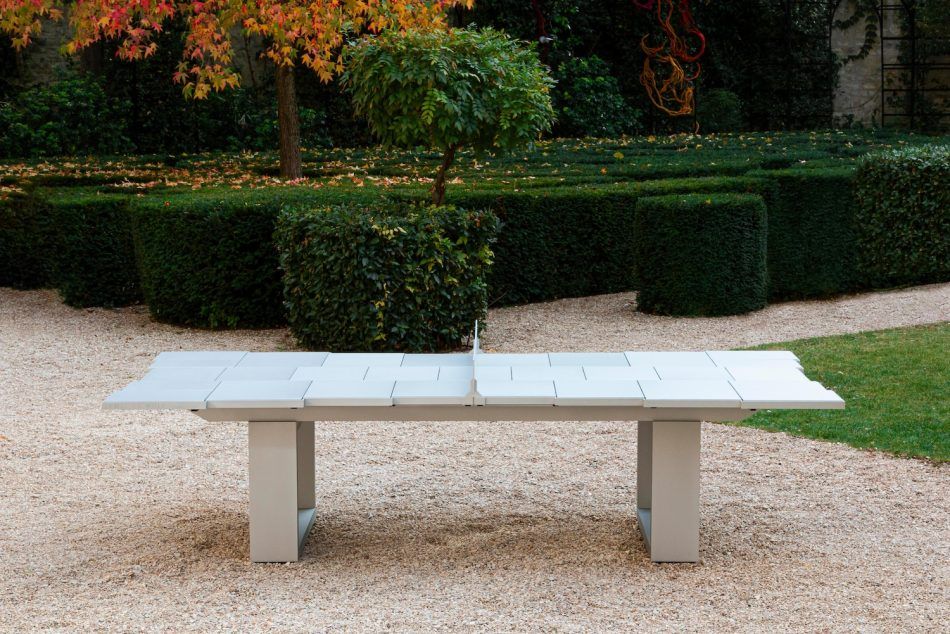
Song No. 1 is not a stand-alone composition but a prelude, the first movement in what de Wulf calls the “Resonant” series. He is already designing a Song No. 2, alongside coffee and console tables in the same vein. Song No. 1 doesn’t just occupy floor space; it claims the air around it, turning the environment into a communal sound bath. It dismantles the pretentious aura of high design, inviting everyone within earshot to participate. Whether you’re holding the paddle or simply listening to the melody, the table becomes an instrument when people play, and a song rings out, connecting strangers through a shared, harmonious bounce.