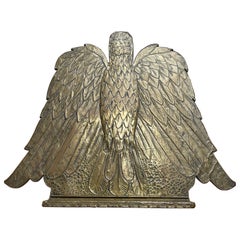
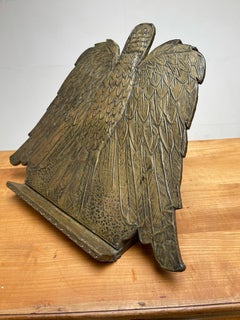
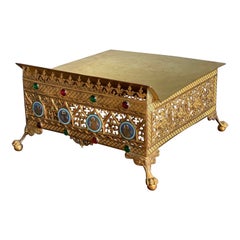
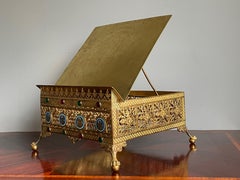
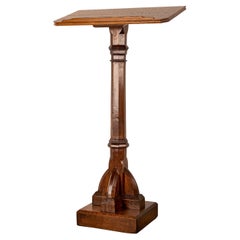
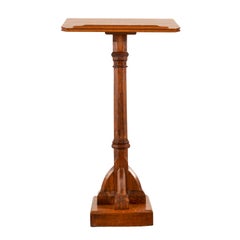
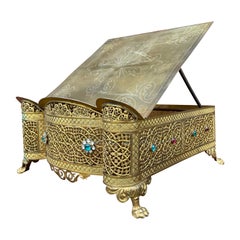
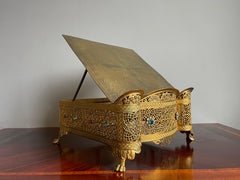
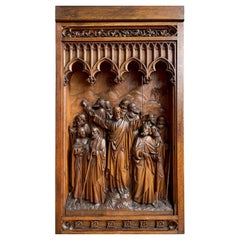
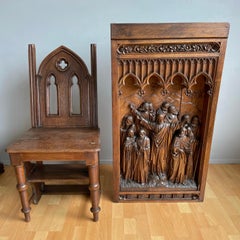
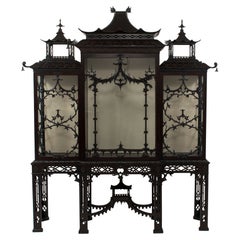
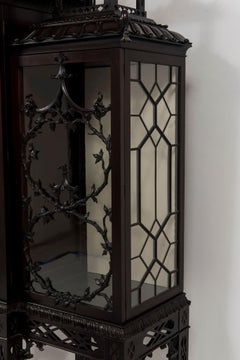
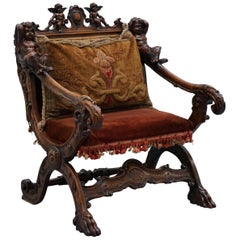
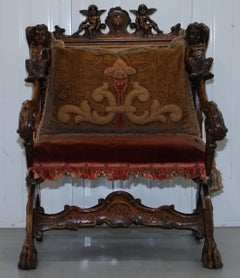
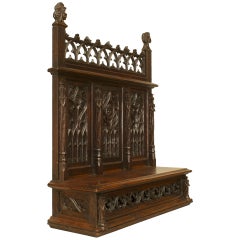
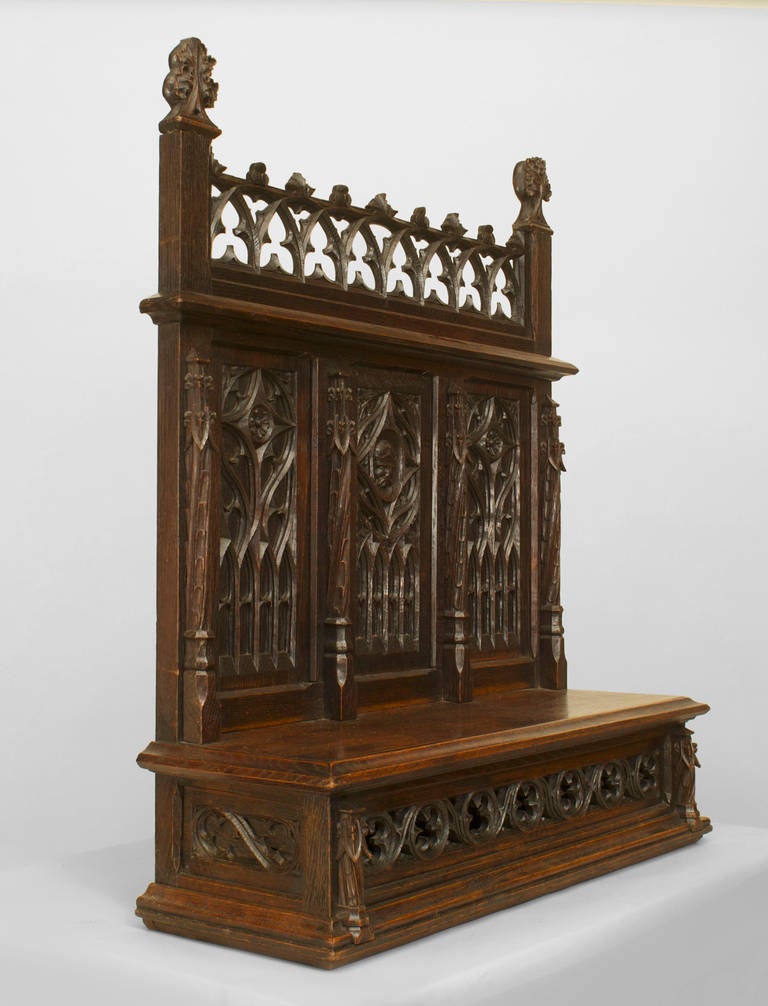
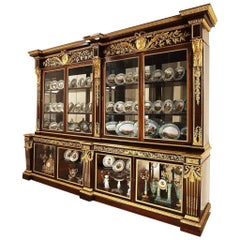
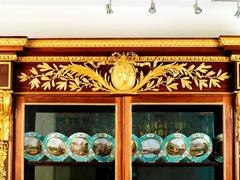
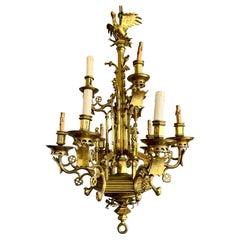
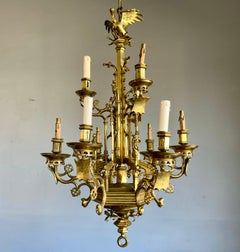
The Gothic Revival movement (also called Victorian Gothic or Neo-Gothic) emerged in Britain in the 1740s, and reached its height in the late-19th century. Gothic Revival furniture's characteristics include such decorative flourishes as pointed arches, floral details, finials, heraldic motifs and linenfold carving.
The movement was rooted in religious and social conservatism. Gothic Revival's proponents, who included Charles Barry and A.W.N. Pugin, the architects of London’s Houses of Parliament (designed in 1840), believed that the art and architecture of the Middle Ages were authentically spiritual and inherently moral.
In the United States, the Gothic Revival movement shaped both public buildings and private houses. Numerous American schools were built in the early-19th century in a style now called Collegiate Gothic. Many builders and craftsmen were inspired by Andrew Jackson Downing’s widely read 1850 book Architecture for Country Houses, which posited that a family’s home should exemplify their values — and that the Gothic Revival style was particularly well-suited to scholars and clergymen. Furniture with detailing that mirrored that of Gothic Revival buildings appeared in the same period. Such pieces typically feature dark, intricately carved wood, and upholstery in velvet or leather.
Much like the castles or cathedrals that inspired them, Gothic Revival chairs, bookcases and beds make a bold design statement. And while you probably don’t have to cross a moat or raise a portcullis to get through your front door, a Gothic Revival piece will declare that your home is indeed your castle.
Religious art has had an enduring and significant role throughout history and continues to resonate with modern audiences. Over the years, vintage and antique religious artifacts have become popular with collectors and the devout alike, and religious art has been used to express devotion across a range of media.
Historic examples of religious art remain evocative. From the Renaissance to 1800, many Old Masters actively explored sacred themes from Christianity. In the Baroque period, painters infused religious scenes with intense emotions through the technique of chiaroscuro, which uses strong contrasts between light and dark.
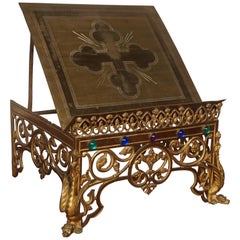
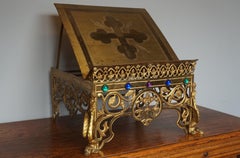
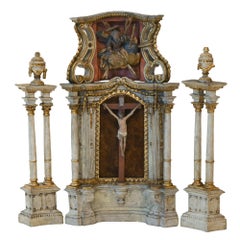
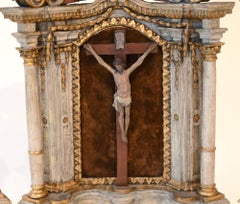
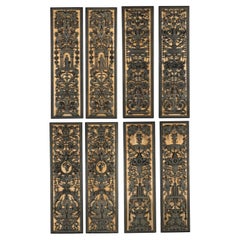
From the 18th to 19th century, Gothic Revival saw designers using elements that evoked the Middle Ages. Artists found inspiration in the romantic qualities of medieval paneling, furniture and other accoutrements, such as candelabras, statues and crosses. Works created in the Gothic style add drama and a grandiose elegance to any room.
Religious art reflects the diversity of beliefs around the world. Islamic art and Judaica are just a couple of examples of the vibrant expression that has coursed through faith-based art over the centuries. Sculptures have long depicted the image of Buddha, while intricately carved reliefs have stunningly depicted deities from Hinduism, like Ganesh. Members of Nepalese religions that emphasize shamanism have made ornate drums, artistically enhanced with images of animals like birds.
In some cases, artisans have created pieces that celebrate specific religious holidays such as the Jewish festival of Hanukkah. But even everyday items are an opportunity to bring both art and religion into a space. For example, designers of furniture over the years have drawn on elements found in cathedrals and other religious settings in order to elevate their work.
On 1stDibs, find a varied collection of antique and vintage religious artifacts and other objects that can be searched by style, period, artist and material, such as wood or metal.