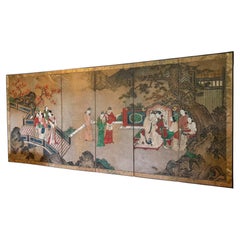
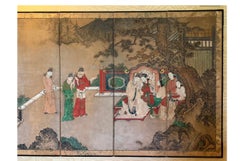
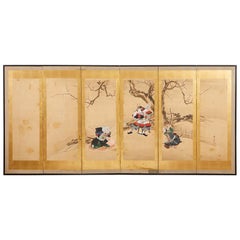
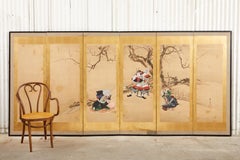
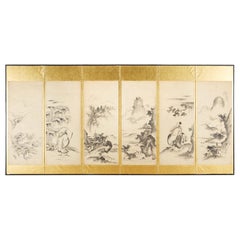
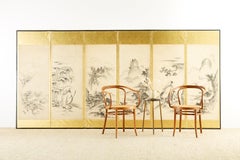
Antique Kano School Edo Period 6 Panel Chinoiserie Screen
Located in LOS ANGELES, CA
Antique Kano School Edo Period 6 Panel Chinoiserie Screen.
Category
18th Century Japanese Antique Edo Decorative Art
Materials
Paper
Edo furniture was created during a flourishing time for the decorative arts owing to the stability of the Tokugawa shogunate rule in Japan. Spanning from 1603 to 1867, this era of peace and economic growth supported artistic advancements in lacquer, woodblock printing, porcelain and other artisanal trades. Because the country was largely isolated, there was little outside influence, leading to centuries of exceptional attention to the design of its furnishings and the quality of its traditional arts.
Unlike during the Meiji period that followed, with an increase in domestic and international markets, furniture during the Edo period was predominately commissioned by the ruling class, although people from across social groups benefited from the burgeoning metropolitan hubs for artisanal trades. For instance, Kyoto became a major center for lacquer art. Most furniture pieces were made from wood such as cedar or ash, including the era’s sashimono cabinets, which involved fine joinery and were rooted in the Heian period.
Sashimono cabinets, which were built by master craftsmen in a range of different wood types owing to the various trees that populate Japan, occasionally featured a stack of slender drawers as well as sliding doors. They were popular with everyone from samurai to kabuki actors. Tansu storage chests crafted from wood with metal fittings were also common in Edo-period homes. Some were designed to be easily portable while others were made to double as staircases.
Painted folding screens, called byōbu, were also fashionable, with Japanese artists inspired by nature, literature and scenes of history and daily life to create vivid works. In Buddhist temples and the palatial homes of the aristocratic class, fusuma, or large sliding panels, would sometimes be adorned with gold or silver leaf. These dividers allowed interiors to change throughout the day, closing in small spaces for personal use or reflecting candlelight to illuminate communal spaces after dark.
Find a collection of Edo tables, lighting, decorative objects, wall decorations and more furniture on 1stDibs.
Antique Kano School Edo Period 6 Panel Chinoiserie Screen
Located in LOS ANGELES, CA
Antique Kano School Edo Period 6 Panel Chinoiserie Screen.
Paper
$1,120Sale Price|20% Off
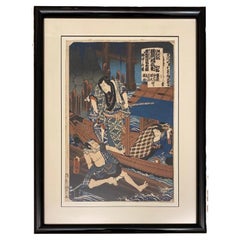
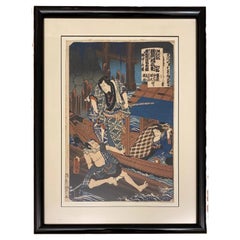
Utagawa Kunisada Woodblock Print, Edo Period, 1859, Framed Kabuki
By Utagawa Kunisada (Toyokuni III)
Located in Miami, FL
A fine, professionally framed original Japanese woodblock print attributed to the master Utagawa Kunisada (1786 – 1865), also known as Utagaw...
Wood, Paper
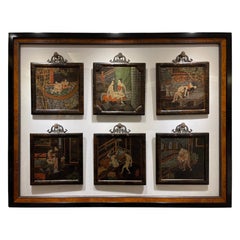
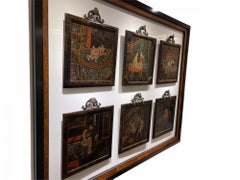
Set of Six Japanese Ido Period Shunga 'Erotica' Hanging Lacquered Wood Panels
Located in North Miami, FL
These magnificent lacquered wood panels have been mounted together on a lucite panel. Each panel has its original hanging handle. The panels are hanging on antique railroad...
Metal, Iron
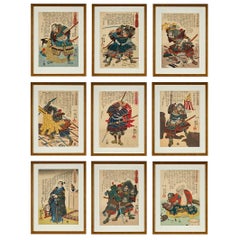
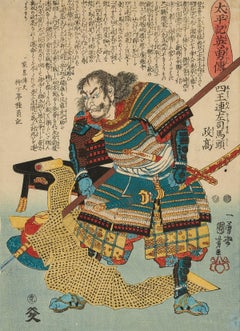
Nine Japanese Woodblock Prints by Utagawa Kuniyoshi
Located in Petworth, West Sussex
Utagawa Kuniyoshi (Japan, 1798-1861), a set of nine Japanese woodblock prints (ukiyo-e) from the series 'Taiheiki Eiyuden', or 'Heroes of the Great Peace' published between 1846-1847...
Paper
$6,000 / set
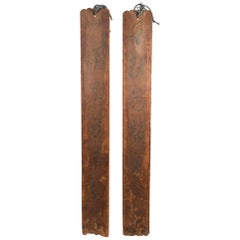
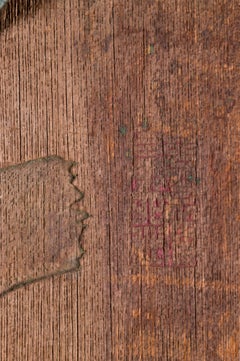
Pair of Very Early Temple Calligraphy Panels
Located in Hudson, NY
Pair of very early temple calligraphy panels. A pair of Edo period (17th century) carved wood panels that used to hang outside a temple. One plaque has evidence of a seal in the uppe...
Silk, Wood
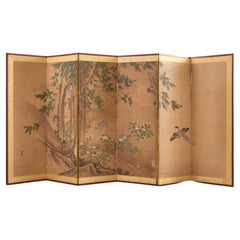
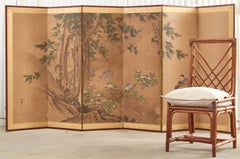
19th Century Japanese Edo Six Panel Kano School Landscape Screen
Located in Rio Vista, CA
Late Edo period 19th century Japanese six-panel landscape screen featuring a cypress tree over a flowering hibiscus with a pair of hototogisu birds. Kano school painted with ink and ...
Silk, Wood, Paper
$3,400Sale Price|29% Off
H 66 in W 139.5 in D 0.5 in
Japanese Edo Six Panel Screen Yoshitsune and Benkei
Located in Rio Vista, CA
Spectacular 19th century Japanese late Edo period six-panel byobu screen depicting Yoshitsune and Benkei, two heroes of Japanese folklore. Crafted in ink and natural color pigments on mulberry paper with thick gold leaf borders on each panel. The character Yoshitsune is seated under a blossoming cherry tree in full armor holding a fan. The warrior priest or monk Benkei is depicted kneeling on a leopard skin...
Brass, Gold Leaf
$166Sale Price|35% Off
H 7.68 in W 10.63 in D 0.01 in
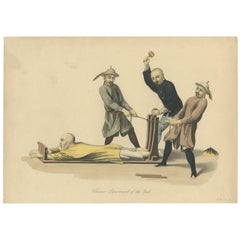
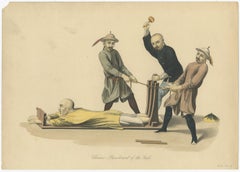
Antique Print of Chinese Torture or Punishment of the Rack, 1859
Located in Langweer, NL
Antique print titled 'Chinese Punishment of the Rack'. Print of Chinese punishment of the rack. The rack is a torture device consisting of a rectangular...
Paper
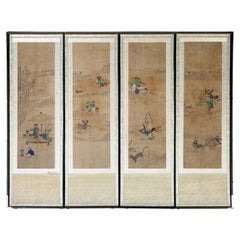
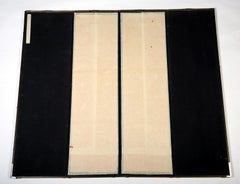
Korean Four Panel Screen of Hunting Scene Joseon Dynasty
Located in Atlanta, GA
A Korean four-panel folding screen circa 1830s, from the late Joseon Dynasty. The painting depicts a vivid hunting scene on four vertical scroll panels mounted with brocade borders. The four panels are related to each other in narrative but not in an absolutely continuous fashion, therefore they could be viewed individually and independently, which was not uncommon in the screen paintings as they are meant to be folded and unfolded as needed. The pictures show a general on the far left panel seated on a low platform bed...
Brocade, Wood, Paper
$5,390
H 51.19 in W 33.47 in D 1.58 in
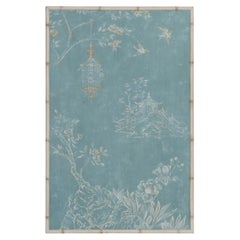
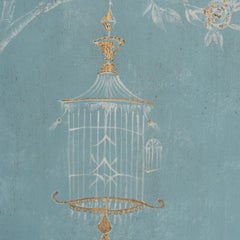
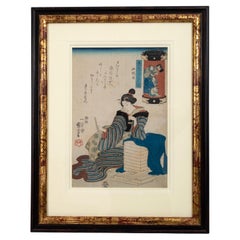
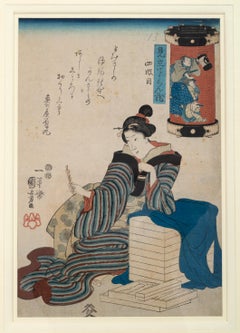
Parma Bamboo Light Blue & White with Gold Chinoiserie design Panel
By Porte Italia
Located in Milan, IT
This medium-sized panel features a delicate monochromatic Chinoiserie scene in soft whites against a Parma blue backdrop, enriched with subtle golden accents highlighting birds, flow...
Wood
$1,989
H 22.45 in W 17.72 in D 0.79 in
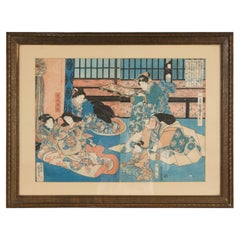
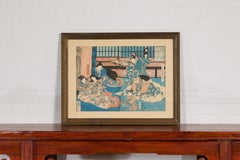
19th Century Japanese Woodblock Print, Meiji Period, After Utagawa Kuniyoshi
Located in London, GB
Dimension: Frame: 57 x 45 Picture: 34.5 x 23.5 19th Century Japanese Woodblock Print, Meiji Period, After Utagawa Kuniyoshi A J...
Paper
$2,175
H 20.5 in W 26 in D 1 in
Japanese Edo 19th Century Signed Utagawa Kuniyoshi Diptych Woodblock Print
Located in Yonkers, NY
An antique Japanese Edo period diptych woodblock print from the early to mid 19th century, signed by Utagawa Kuniyoshi. Immerse yourself in the Japanese Edo period artistry with this antique 19th-century diptych woodblock print. Signed by the artist, this captivating piece is a striking depiction of a tranquil interior scene, rendered in a soothing color palette of blue, pink, and black tones. This print comprises two panels, assembled under glass in a custom frame to form a cohesive narrative. The scene captures a specific moment in time, presenting a man surrounded by four women and a child, beautifully adorned in traditional Japanese garments. The intricate details of their clothing are a testament to the artisan's skill, bringing an element of authenticity and depth to the scene. On the left, three women sit in a state of relaxed conversation, while another stands, graciously offering a tray. Adding intrigue, two additional women can be spotted peeking through a slightly open window, one cleverly concealing her face behind a fan. A child, smaller in stature, sits attentively in front of the man, further enhancing the scene's narrative quality. A signature from the artist adds an additional layer of authenticity, making this piece a must-have for collectors of antique Japanese art...
Glass, Paint, Paper
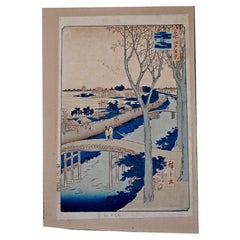
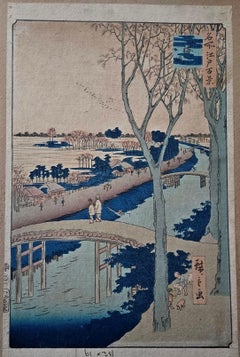
Utagawa Hiroshige 歌川廣重 Woodblock Print, Koume Embankment
Located in Norton, MA
Utagawa Hiroshige (1797–1858) One Hundred Famous Views of Edo - Koume Embankment mounted on a cardboard Artist: Utagawa Hiroshige is recognized as a master of the ukiyo-e woodblock ...
Paper
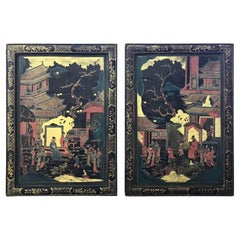
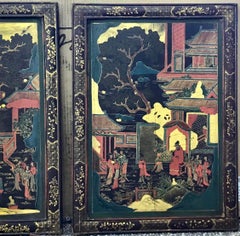
Chinese Chinoiserie Decorated Lacquer Panels, a Pair
Located in Bradenton, FL
Pair of stylish Chinoiserie panels in a lacquer finish, painted in gold, red & black with landscapes with village and people. The frame also decorat...
Lacquer
$1,450
H 21 in W 17 in D 1 in
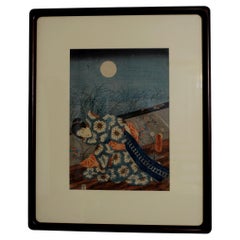
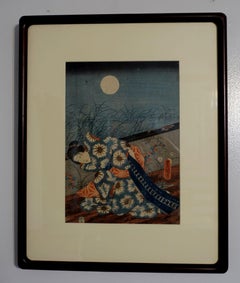
Antique Japanese Woodblock Print by Utagawa Toyokuni III (1786~1964), 三代歌川豊国
Located in Norton, MA
A Japanese Woodblock A Young Woman in a Ruined House, print by Utagawa Toyokuni III (1786~1964), 三代歌川豊国. Dated: Aratame seal, 1855 Publisher: Yamada-ya ABOUT THE ARTIST Utagawa Kuni...
Paper
Japanese Edo Six-Panel Haboku Landscapes of Seasons
Located in Rio Vista, CA
19th century Japanese Edo period six-panel screen painted in Haboku (splashed ink) style. Depicts Four Seasons landscape scenes with two portraits of Chinese sages. One sage is trave...
Gold Leaf
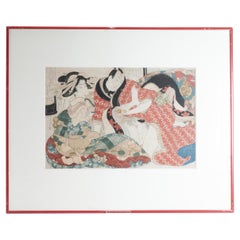
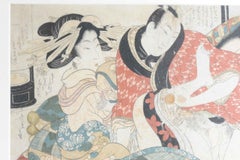
Antique Edo Period Shunga Woodblock Print by Kikukawa Eizan, 1810-1820
Located in Amsterdam, Noord Holland
Kikukawa Eizan (1787-1867) Dated 1810-1820. The text is about thing happening between lovers. Shunga Print Nicely framed Additional information: Material: Paper Region of Origin: Ja...
Paper
Sold
H 70.08 in W 58.67 in D 3.94 in
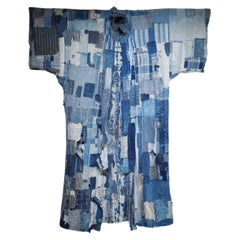
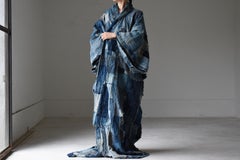
Japanese Antique Indigo Boro “Yogi” 1800s-1860s / Textile Art Wabi Sabi
Located in Chōsei District Nagara, JP
This is an antique Japanese Boro Yogi (patched sleeping robe). The countless layers of fabric spread across its surface transcend the boundaries of mere clothing, possessing the powe...
Textile
Sold
H 72.05 in W 66.93 in D 0.2 in
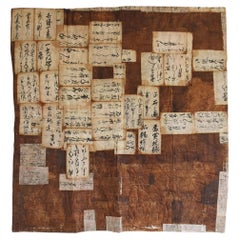
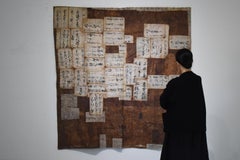
Japanese Antique Paper Mat Wall Decoration 1800s-1860s / Abstract Art Wabisabi
Located in Chōsei District Nagara, JP
This is a very old Japanese paper mat. It is believed to date from the late Edo period (1800s–1860s) and has an impressive scale of approximately 1700 mm × 1830 mm. It was created by...
Paper
Sold
H 57.49 in W 22.05 in D 0.4 in
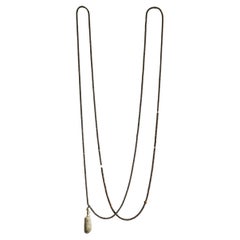
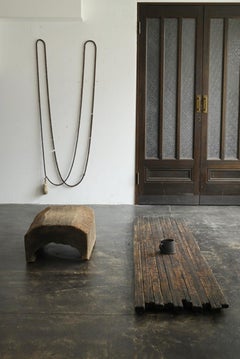
Antique Japanese wooden prayer beads / wall hanging object / 1800s
Located in Sammu-shi, Chiba
This is a "Hyakumanben Nenbutsu Juzu" (Hyakumanben Nembutsu Prayer Beads), crafted between the late Edo and Meiji periods (19th century). Hyakumanben Nembutsu Juzu refers to the gian...
Wood
Sold
H 9.85 in W 5.91 in D 6.3 in
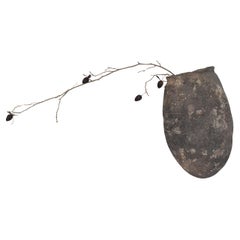
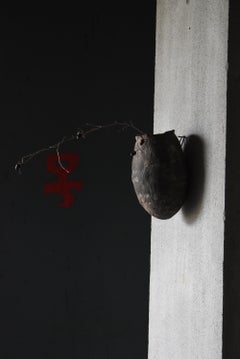
Japanese Antique Wabi-Sabi Ceramic Wall-hanging Flower Vase 20th Century
Located in Chōsei District Nagara, JP
This is an old wall-mounted ceramic vase made in Japan. It was made in the 20th century and was originally an “octopus pot” used to catch octopus at sea. The metal fittings were adde...
Pottery

Sold
H 70.48 in W 72.84 in D 3.15 in
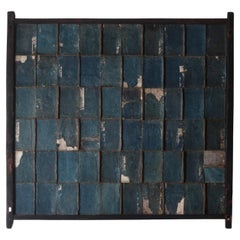
Japanese Antique Large Old Books Art / Wall Decoration Japanese Paper /Wabi-sabi
Located in Shizukuishi-cho, Iwate-gun, Iwate Prefecture
This is a large wall decoration, combining old Japanese items and made by us original. I used old books from the Edo period and made them randomly. The covers of multiple books of t...
Wood, Paper
Sold
H 4.61 in W 14.41 in D 10.71 in
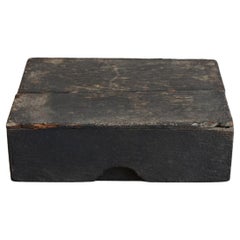
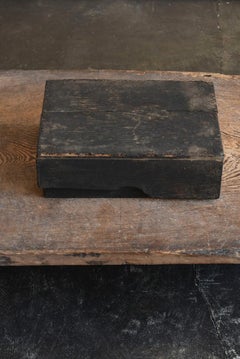
Japanese Wabi Sabi Antique Wooden Box/1850-1912/Small Black Display Stand
Located in Sammu-shi, Chiba
It is a wooden box made from the late Edo period to the Meiji period in Japan. The material is considered to be made of chestnut wood. Chestnut is a wood that has been often used in...
Cherry
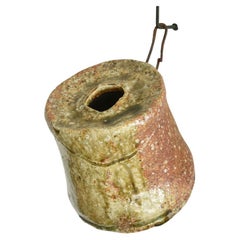
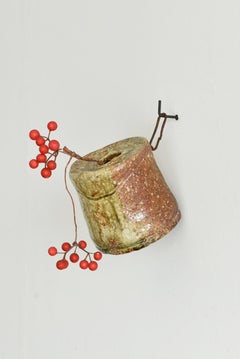
Rare Japanese Small Wall-Mounted Pottery Jar/1573-1650/Beautiful Glaze
Located in Sammu-shi, Chiba
We have a unique Japanese aesthetic sense. And only we can introduce unique items through our purchasing channels in Japan and the experience we have gained so far, in such a way th...
Pottery
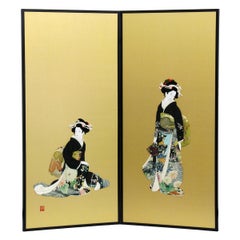
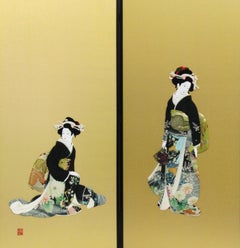
Japanese Contemporary Black Green Silk Brocade Two Panel Folding Screen
Located in Takarazuka, JP
Extraordinary Japanese contemporary two panel "byobu" or folding screen featuring two graceful ladies dressed in elegant formal traditional Japanese...
Brocade, Silk

Sold
H 34.06 in W 28.55 in D 2.76 in
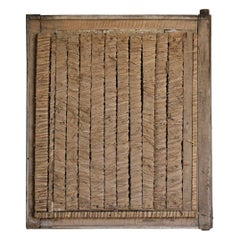
Japanese Antique Door 'Abstract Art' 1800s-1900s/Architecture Wabisabi Mingei
Located in Sammu-shi, Chiba
This is a door of a very old Japanese warehouse (KURA). This door is from the Edo period. (1800s-1900s) Very rare. The door was made of plaster, but the plaster has peeled off. ...
Wood

Sold
H 41.15 in W 28.15 in D 2.56 in
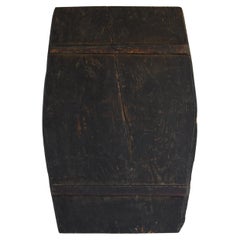
Japanese Antique Black Wooden Board 1800s-1900s/Abstract Art Wabisabi Art
Located in Sammu-shi, Chiba
It is a work board used in Japanese private houses. It is an item from the Edo period. Weight 7.5kg It seems that it was a work table for kneading wheat. After many years of ...
Cedar

Sold
H 31.7 in W 33.67 in L 31.7 in
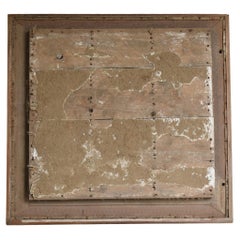
Japanese Old Door 'Abstract Art' 1800s-1900s/Antique Architecture Wabisabi Art
Located in Sammu-shi, Chiba
It is the door of the warehouse (KURA) in the Edo period in Japan. This door is from the late Edo period to the Meiji period. (1800-1900s) The door was made of plaster, but the p...
Wood
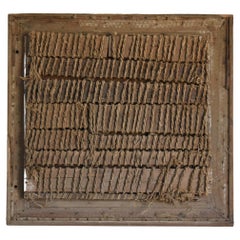

Sold
H 31.5 in W 33.67 in D 3.94 in
Japanese Old Door 'Abstract Art' 1750s-1860s /Antique Architecture Wabisabi Art
Located in Sammu-shi, Chiba
It is the door of a warehouse (KURA) in the Edo period in Japan. This door dates from the late Edo period. (1750-1860s) The door was made of plaster, but the plaster came off. T...
Wood