Ohio - Art

2,000 Results
to
123
1,003
399
333
150
250
Overall Width
to
Overall Height
to
76
227
1,311
520
62
70
157
146
84
105
193
165
143
57
35
450
361
296
132
58
54
24
19
18
18
8
7
1
1,024
851
134
683
327
240
235
191
133
131
107
91
85
73
69
64
46
37
36
36
35
34
30
779
324
249
238
213
80
59
56
48
34
565
183
233,154
170,933
Item Ships From: Ohio
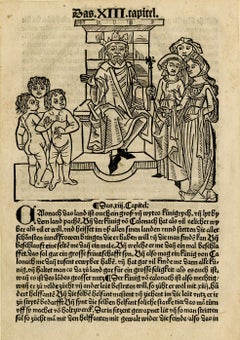
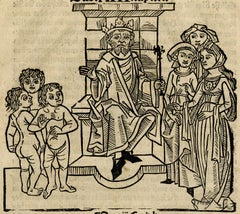
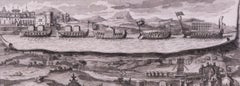
Untitled (King seated on his throne, with ladies and children)

Untitled (King seated on his throne, with ladies and children)

Located in Fairlawn, OH

Untitled (King seated on his throne, with ladies and children) From: The Travels of Sir John Mandeville, printed by Johannes Prüss Woodcut on 15th century laid paper, 1488 Unsigned (...

Category

15th Century and Earlier Old Masters Ohio - Art

Materials

Woodcut

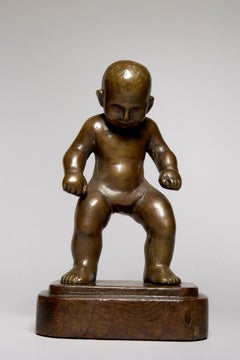
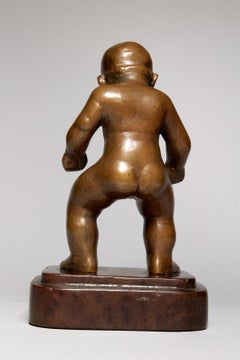
First Steps, Early 20th Century Bronze Sculpture, Cleveland School

First Steps, Early 20th Century Bronze Sculpture, Cleveland School

By William Zorach

Located in Beachwood, OH

William Zorach (American 1891-1966) First Steps, 1918 Bronze 8.5 x 5 x 4 inches, including base Born in 1887 in Lithuania, William Zorach immigrated with his family to the United States when he was just four years old, settling in Cleveland, Ohio. Zorach displayed an exceptional artistic talent at a young age and, at the recommendation of his seventh-grade teacher, began studying lithography at night at the Cleveland School of Art. It was not long before he was apprenticing at a lithography company in Cleveland. It was there that he realized he wanted to become an artist - to escape the commercial end of the field in which he was suddenly immersed. In 1907, Zorach saved enough money to move to New York and study art at the National Academy of Design, where he received several awards for his paintings and drawings. He continued his studies in Paris in 1910 at La Palette. This year abroad would turn out to be quite fruitful because in Paris he was greatly influenced by the Cubist and Fauvist movements and had several paintings exhibited at the Salon d'Automme. This influence and subsequent success fueled his career back in the states where he was honored with his first one-man exhibition. Due to this new-found stability, he married a young woman he met at school in Paris, and they moved to New York and set up a studio. Shortly after, their work was accepted into the famous 1913 Armory Show. For the next nine years, Zorach continued to think of himself as a painter, although he had already begun to experiment in sculpting. He was experiencing modest success with his painting and was therefore reluctant to abandon it completely. However, he was impelled toward sculpting, and in 1922, he painted his last oil. Zorach's involvement with sculpture began largely be accident. While he was working on a series of wood-block prints, Zorach suddenly became more interested in the butternut panel than the print and turned the panel into a carved relief. With no formal training as a sculptor, Zorach's first sculptures were of wood and his carving tools were primitive, such as a jack-knife. I n fact, his early works have a certain stylized look, suggesting the influence of various primitive arts such as African and American folk. Zorach found his sculptural direction by instinct, but was not unaware of what other sculptors were doing, both here and abroad. He soon allied himself with a growing number of modern sculptors who believed in the esthetic necessity of carving their own designs directly in the block of stone or wood rather than modeling them in clay. From the beginning he found a deep satisfaction in the slow and patient process of freeing the image from its imprisoning block, watching the forms emerge and appear. "The actual resistance of tough material is a wonderful guide," Zorach said in a lecture on direct sculpture in 1930. The sculptor "cannot make changes easily, there is no putting back tomorrow what was cut away today. His senses are constantly alert. If something goes wrong there is the struggle to right the rhythm. And slowly the vision grows as the work progresses." Zorach also found that the material itself had a constantly modifying effect on the artist's vision. The grain of the wood, the markings in the stone, the shape of the log or boulder all set limits and suggested possibilities. He was always sensitive to the characteristic qualities of his material and occasionally let them play a major role in determining his forms. In works such as these, the feel of the original material is preserved in the finished piece and is often heightened by leaving parts of the original surface untouched and other areas roughly marked by the sculptors tools...

Category

1910s Ohio - Art

Materials

Bronze

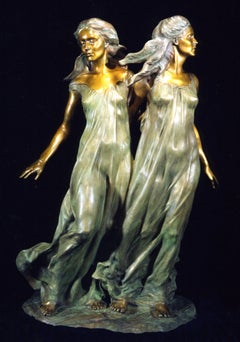
Illuminata II by Frederick Hart

Illuminata II by Frederick Hart

By Frederick Hart

Located in Woodmere, OH

Frederick Hart is America's greatest figurative sculptor. Not only did he create works of great beauty and gravitas, he was singularly responsible for restoring to American public mo...

Category

1990s Ohio - Art

Materials

Resin

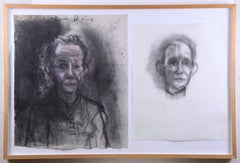
Jim Dine, Joel Grey, Double Potrait, charcoal, 1970-1980's, both signed dedicate

Jim Dine, Joel Grey, Double Potrait, charcoal, 1970-1980's, both signed dedicate

By Jim Dine

Located in Fairlawn, OH

Jim Dine (Born 1935) Double Portrait of Joel Grey (the actor) c. 1970's-1980's Charcoal on two sheets of paper, framed together Left sheet: signed Jim Dine, upper center edge Right s...

Category

1980s Contemporary Ohio - Art

Materials

Charcoal

Big Rock, Malibu
Big Rock, Malibu

Big Rock, Malibu

By Ronald Shap

Located in Las Vegas, NV

Original watercolor painting by celebrated, twentieth-century California landscape painter, Ronald Shap. Evocative and moody painting of Malibu and the Santa Monica Mountains with th...

Category

20th Century Contemporary Ohio - Art

Materials

Watercolor

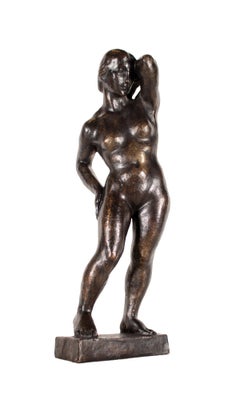
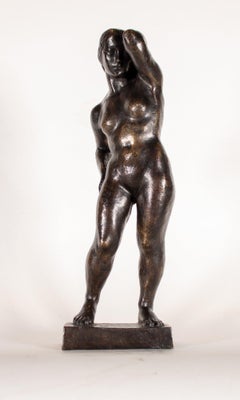
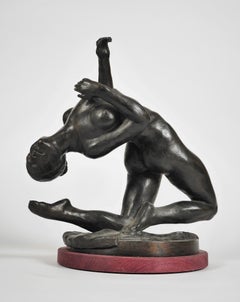
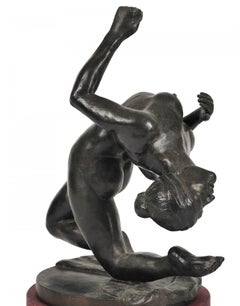
Italian Bronze Sculpture of Nude Woman, Mid 20th Century

Italian Bronze Sculpture of Nude Woman, Mid 20th Century

Located in Beachwood, OH

Mario Spampinato (Italian 1912–2000) Nude Bronze Signed on base 17.5 in. h. x 5.75 in. w. x 6 in. d. The artist was born, raised and trained in Italy. During one of his exhibits (at San Marcos in Rome) the Director of a New York Gallery asked him to come to New York to work for him. The American Consul, before issuing his visa, asked Spampinato to create a bust of him. In exchange, the Consul paid for his passage on the boat to New York. In New York, he worked with his brother Clemente Spampinato who is a well known sculptor as well. After moving to Chicago in 1954, he discovered that there was no foundry in the Midwest that could cast his bronzes. So, he opened his own foundry called the Spampinato Art Foundry, casting in the lost wax process. He also started his own private school (Spampinato Art Workshop, Ltd) and did some teaching at the University of Chicago and conducted seminars at Lawrence University in Kansas. Many of his own works are pictured and cataloged in Volumes 2 & 3 of Bronzes: Sculptors and Founders, 1800-1930 by Harold Berman. Between 1959 and 1967, Spampinato recast a number of Charles M Russell...

Category

Mid-20th Century Ohio - Art

Materials

Bronze

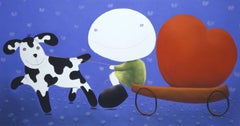
Riding in Love by Mackenzie Thorpe

Riding in Love by Mackenzie Thorpe

By Mackenzie Thorpe

Located in Woodmere, OH

Rinding in Love by Mackenzie Thorpe Framed Serigraph on Paper. Edition XXXIV/C Framed Dimensions: 29.125 x 41.875 inches Handling time may exceed 10 bu...

Category

Early 2000s Contemporary Ohio - Art

Materials

Color

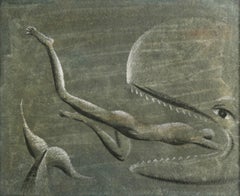
Dichotomy, mid-century figural abstract green oil painting

Dichotomy, mid-century figural abstract green oil painting

By Clarence Holbrook Carter

Located in Beachwood, OH

Clarence Holbrook Carter (American, 1904-2000) Dichotomy, 1962 Oil on paper Signed and dated upper left 20 x 25 inches Mid-century figural abstract green painting of woman swimming ...

Category

1960s American Modern Ohio - Art

Materials

Oil

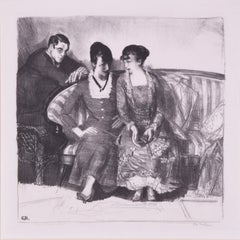
Geoirge Bellows, Emma, Elsie and Gene, 1921, White Gold Leaf frame, Family Portr

Geoirge Bellows, Emma, Elsie and Gene, 1921, White Gold Leaf frame, Family Portr

By George Wesley Bellows

Located in Fairlawn, OH

George Bellows (1882-1925) Emma, Elsie and Gene Lithograph, 1921 Signed in pencil lower right (see photo) Initialed in the plate lower left Printer: Bolton Colt Brown, signed in penc...

Category

1920s American Modern Ohio - Art

Materials

Lithograph

Old Master, Tiber River, Roma, Fishermen, Jan Both (active 1643-1652)

Old Master, Tiber River, Roma, Fishermen, Jan Both (active 1643-1652)

By Jan Both

Located in Fairlawn, OH

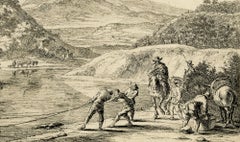
Jan Both (1636-1652) Fishermen at the Tiber, near Mount Soracte Etching onlaid paper with a Coat of Arms watermark, c. 1644-1652 Extremely early impression, before the etching signat...

Category

1640s Old Masters Ohio - Art

Materials

Etching

New Bauhaus Chicago, Union of American Artists (UAA90), 1941, Myron Kozman

New Bauhaus Chicago, Union of American Artists (UAA90), 1941, Myron Kozman

By Myron Kozman

Located in Fairlawn, OH

Myron Kozman (1916-2002) Abstraction #303 Color serigraph on paper, 1941 Signed, dated, titled, and numbered in pencil by the artist (see photos) Annotated: UAA 90 lower right (see p...

Category

1940s Abstract Ohio - Art

Materials

Screen

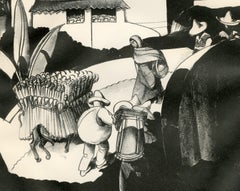
Mexico, American Woman artist, American Modernist, Cleveland School, 1935

Mexico, American Woman artist, American Modernist, Cleveland School, 1935

By Honore Guilbeau

Located in Fairlawn, OH

Honore Guilbeau (1907-2006) To Market Lithograph printed on Sulgrave wove paper, November 1935 Signed in pencil lower right (see photo) Titled in pencil, lower left (see photo) From:...

Category

1930s American Modern Ohio - Art

Materials

Lithograph

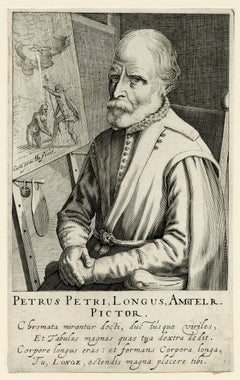
Old Master, 1610, engraving, Hendrick Hondius I, Painter Pieter Aetsen, Dutch

Old Master, 1610, engraving, Hendrick Hondius I, Painter Pieter Aetsen, Dutch

By Hendrik Hondius the Elder

Located in Fairlawn, OH

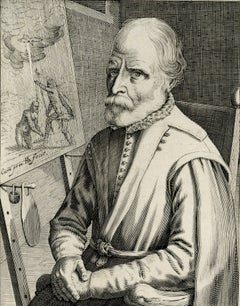
Hendrick Hondius I Flemish/Dutch, 1573–1650 formerly attributed jointly to Simon Frisius and Hondius Portrait of Pieter Aertsen (“Petrus Petri, Longus, Amstelr. Pictor”) 1610 Engraving on laid paper Plate: approximately 20.4 × 12.8 cm (8 × 5 in.) From Pictorum aliquot celebrium praecipuae Germaniae Inferioris effigies Signed within the image at lower left: Cum priv. Hh. fecit Lettered below the portrait with the sitter’s name and a four-line Latin encomium New Hollstein (Hondius) 105; Hollstein (Frisius) 149 Christopher Mendez stock label verso Attribution and series This engraving was published in The Hague in 1610 as part of Hendrick Hondius I’s celebrated series Pictorum aliquot celebrium praecipuae Germaniae Inferioris effigies—“Portraits of Certain Celebrated Painters, Principally of the Low Countries.” The volume assembled engraved likenesses of distinguished Northern European artists and helped establish an enduring visual canon of Netherlandish art. The old Christopher Mendez label identifies the engraving as “Frisius and Hondius” and calls it number 30 in the series. Current Rijksmuseum cataloguing, however, identifies Hendrick Hondius I as both engraver and publisher, consistent with the inscription Hh. fecit—“Hendrick Hondius made this”—within the image. Simon Frisius contributed other plates to the publication, which presumably accounts for the older dual attribution and the print’s listing under Frisius in Hollstein. Numbering varies between arrangements or parts of the series: another commercial description identifies the Aertsen portrait as plate 27 of the second part. The safest modern attribution is therefore engraved and published by Hendrick Hondius I, while recording the historical Frisius–Hondius attribution. The Rijksmuseum dates its impression to 1610 and gives the plate dimensions as 204 × 128 mm. Catalog Essay and Analysis Pieter Aertsen is represented half-length, seated before an easel and turning slightly toward the viewer. His heavy mustache, rounded beard, furrowed brow and direct gaze communicate experience and intellectual authority rather than courtly refinement. Hondius surrounds him with the material signs of his profession: palette, brushes and mahlstick rest on the ledge at left, while the unfinished or displayed painting behind him depicts the Baptism of Christ. The inclusion of a religious composition is important. Although Aertsen is now especially celebrated for monumental kitchen and market scenes, he was also a highly regarded painter of altarpieces. Many of those religious works were destroyed during the iconoclastic upheavals of the sixteenth century. By placing a sacred history painting so conspicuously beside the sitter, Hondius reminds the viewer that Aertsen was not merely a painter of food, peasants and market produce, but an ambitious inventor of large-scale religious compositions. The Baptism scene also establishes a subtle relationship between the artist and his creation. Aertsen’s large head and upper body dominate the foreground, while the slender figures in the painting recede dramatically. The arrangement transforms the workshop into a site of artistic memory: the painter survives physically through his likeness and professionally through the work displayed behind him. Hondius differentiates the surfaces through exceptionally controlled engraving. Closely spaced, curving lines model the sitter’s face and sleeves, while dense cross-hatching produces the dark wall and garment. The comparatively open white areas of the bald forehead, collar and cloak give the figure monumental clarity. The strict geometry of the chair, easel and background contrasts with the organic lines of Aertsen’s face and beard. The print is also an early example of the artist portrait as cultural historiography. Hondius’s series did more than reproduce appearances. It organized Northern painters into a lineage of recognized masters, pairing each likeness with a concise Latin inscription praising the sitter’s distinctive achievements. The series contained portraits made by Hondius, Simon Frisius, Andries Jacobsz. Stock and Robert de Baudous; the Rijksmuseum describes its set as comprising seventy-two portraits. Inscription The title identifies the sitter as: PETRUS PETRI, LONGUS, AMSTELR. PICTOR That is, “Pieter Pietersz., the Tall, painter of Amsterdam.” Longus translates Aertsen’s familiar nickname Lange Piet or “Tall Pieter.” The Latin verses may be translated: Learned men admire your colors and vigorous draughtsmanship, And the great pictures produced by your right hand. Tall you were in body, and in forming tall bodies; You, O Tall One, show that greatness pleased you. The poem plays repeatedly upon Aertsen’s exceptional height, his nickname, the elongated figures in his paintings and the unusually large scale of his compositions. A period description of another impression transcribes the same inscription and identifies the scene on the easel as the Baptism of Christ. Hendrick Hondius I Hendrick Hondius the Elder was born at Duffel, near Antwerp, in 1573. Trained initially in drawing and engraving, he reportedly studied with the celebrated printmaker Jan Wierix. He also developed interests in mathematics, perspective, architecture and fortification design. Following travels that included Cologne, London and Paris, he settled in The Hague, where he entered the Guild of Saint Luke in 1597. Hondius became an important engraver, publisher and organizer of printed knowledge. His publications ranged from architectural and perspective studies to portraits and reproductive prints. His 1610 Pictorum aliquot celebrium was among his most consequential projects. The collection expanded upon the earlier artist-portrait series issued in Antwerp in 1572 by Hieronymus Cock’s widow, Volcxken Diericx, with texts by Dominicus Lampsonius. By enlarging the group to include later Netherlandish artists—and selected German and English figures—Hondius fashioned a broader history of Northern European art. Hondius should not be confused with the contemporary cartographer Jodocus Hondius or with Jodocus’s son, Hendrik Hondius II. Pieter Aertsen Pieter Aertsen was born in Amsterdam in 1508 and died there on June 2, 1575. By 1535 he was documented as a master in the Antwerp Guild of Saint Luke. He remained in Antwerp for much of his career before returning to Amsterdam around the middle of the century. Known as Lange Piet because of his height, Aertsen was a pivotal figure in the development of Northern European genre and still-life painting. He pioneered monumental compositions in which lavish displays of meat, fish, vegetables, cooking vessels and market goods occupy the foreground, while a comparatively small biblical episode appears in the distance. These deliberate reversals of pictorial hierarchy invite the viewer to choose between material abundance and spiritual meaning. Aertsen’s compositions were deeply influential upon his nephew and pupil Joachim Beuckelaer and, through him, upon subsequent Flemish and Dutch kitchen...

Category

1610s Old Masters Ohio - Art

Materials

Engraving

Werner Drewes, woodcut, 1919, early pre Bauhaus, small edition

Werner Drewes, woodcut, 1919, early pre Bauhaus, small edition

By Werner Drewes

Located in Fairlawn, OH

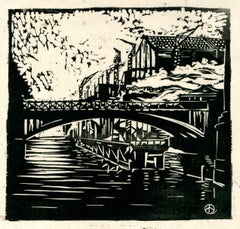
Werner Drewes (1899-1985) Berlin Elevated Linocut on Japanese paper, 1919 Unsigned Provnenance: Gift of the artist Bauhaus Art Professor Jorg Maass Kunsthandel, Berlin ...

Category

1910s Bauhaus Ohio - Art

Materials

Woodcut

Old Master, Tomb Design, After: Cornelis Floris (before 1514-1575), van Doetecum

Old Master, Tomb Design, After: Cornelis Floris (before 1514-1575), van Doetecum

By Johannes van Doetecum

Located in Fairlawn, OH

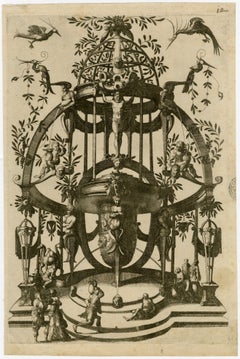
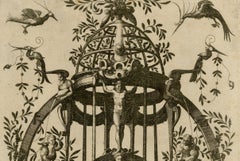
Johannes van Doetecum 1528-1605, Veelderleij niewe inventien van antijcksche sepultueren...Libro secundo (Surface decorations, grotesques with strapwork, including cartouches and fun...

Category

16th Century Old Masters Ohio - Art

Materials

Etching

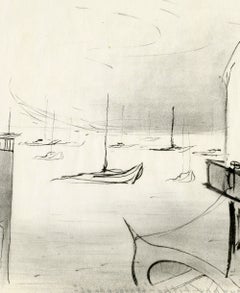
New York, Skyline, Financial District, Boats, New York Waterfront

New York, Skyline, Financial District, Boats, New York Waterfront

By Earl Horter

Located in Fairlawn, OH

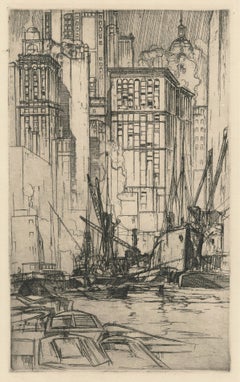
New York Waterfront and Skyline (also recorded as N.Y. Waterfront & Skyline and View of the New York Waterfront) Etching, 1930-1935 Unsigned Provenance: Estate of the Artist ...

Category

1930s American Realist Ohio - Art

Materials

Etching

WPA, California, San Francisco Wharf, 1938, small edition

WPA, California, San Francisco Wharf, 1938, small edition

Located in Fairlawn, OH

Arthur George Murphy (1906-1991) Landscape #6 (San Francisco) Lithograph, c. 1938 Signed with the artist's initials lower right titled verso (photo show full sheet inreverse) Annotated "Calif" verso Published and printed by: Works Progress Administration (WPA), Federal Art Project, San Francisco Note: This impression does NOT have the usual WPA Federal Art Project stamp on it. It is a unstamped proof that we believe was given to a family member in Ohio where Murphy was born. Edition: Probably fewer than 25 impressions; the exact number printed for this lithograph has not been documented. Museum: Baltimore Museum of Art Weisman Art Museum Condition: Wrinkles in the this japon lower right corner, to the right of the artist's initials Reference: General Services Administration (GSA), No. 92 Arthur George Murphy (1906–1991) Arthur George Murphy was an American painter, teacher, and especially prolific lithographer. Born in Tiffin, Ohio, he studied at the Cleveland School of Art and the Art Students League in New York before moving to San Francisco in 1930. His strongest body of prints grew out of the San Francisco Federal Art Project in the later 1930s. He subsequently served as a war artist in the South Pacific and settled in Connecticut after World War II. The documented WPA publication and printing credits on his lithographs confirm his participation in the project. Analysis Murphy’s lithographs range from Bay Bridge construction workers to horses, rodeo riders, dancers, and New Mexico landscapes. The bridge prints give muscular figures and steel structures comparable visual weight: workers appear embedded in the machinery they operate. In the horse and rodeo subjects, he pares forms down to quick, sweeping contours that convey movement with remarkably little detail. His Taos Plains takes a quieter approach, using broad open space and a low band of distant activity to convey scale. These are observations about the prints’ compositions, rather than claims that every impression was drawn directly from life. Murphy is significant within New Deal printmaking for that breadth. His industrial subjects celebrate skilled labor, while his animal and landscape prints show a sustained interest in motion, contour, and the American West. MoMA identifies the San Francisco WPA Federal Art Project as both publisher and printer of its impressions of Pueblo – New Mexico #2 and Citizen Dancing; it describes their editions as “probably fewer than 25.” That estimate should be applied to those catalogued works, not assumed for every Murphy lithograph. Documented museum holdings Institution Examples in its collection record National Gallery of Art, Washington Twelve listed lithographs, including Steel Riggers – No. 3 – Bay Bridge (1936), Taos Plains (1937), Bullrider No. 1 (1937), and Bulldoggers (c. 1940). Metropolitan Museum of Art, New York Bridge Worker No. 7 (1936), Seagulls, Horse Group #19, Citizen Perplexed, and other WPA lithographs...

Category

1930s American Modern Ohio - Art

Materials

Lithograph

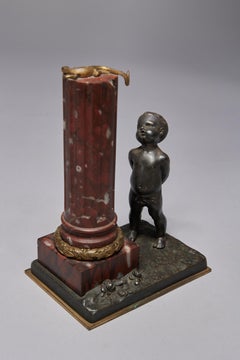
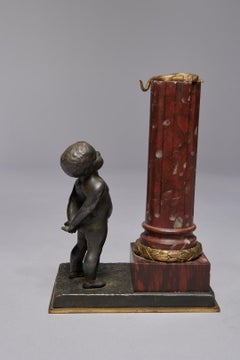
19th Century Bronze & Marble of Boy w/ Lizard and Column

19th Century Bronze & Marble of Boy w/ Lizard and Column

Located in Beachwood, OH

Louis Kley (French, 1833-1911) The Lizard, 19th Century Gilt bronze and marble Signed to base 6.25 x 4.5 x 3 inches In Greco-Roman times, the lizard represented good fortune and reg...

Category

19th Century Ohio - Art

Materials

Marble, Bronze

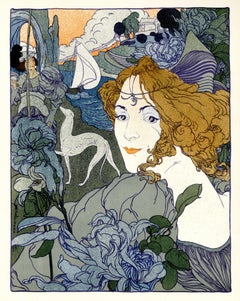
Retour (Homecoming)
Retour (Homecoming)

Retour (Homecoming)

By Georges De Feure

Located in Fairlawn, OH

Retour Color lithograph, 1897 Signed in the stone lower left edge of the image (see photo) As published in "L'Estampe Moderne" L'Estampe Moderne appeared each month as a portfolio of...

Category

1890s Art Nouveau Ohio - Art

Materials

Lithograph

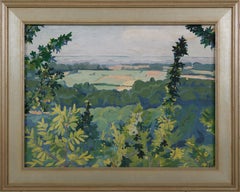
Berlin Heights, Ohio Towards Lake Erie, Landscape with Trees & Fields

Berlin Heights, Ohio Towards Lake Erie, Landscape with Trees & Fields

By August Biehle

Located in Beachwood, OH

August Frederick Biehle (1885-1979) Berlin Heights Looking toward Lake Erie, 1929 Gouache on paper Signed and dated lower right 18 x 23 inches 23.25 x 29 inches, framed A versatile ...

Category

1920s Ohio - Art

Materials

Gouache

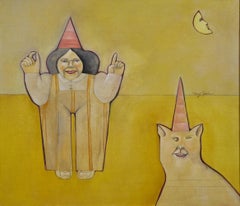
Janet and Bill, Surrealist Painting of Woman and Cat w/ Party Hats

Janet and Bill, Surrealist Painting of Woman and Cat w/ Party Hats

By Mary Spain

Located in Beachwood, OH

Mary Spain (American, 1934–1983) Janet and Bill, 1970s Oil on canvas Signed middle right, titled verso 26 x 30 inches 32.5 x 36.5 inches, framed Set in a realm of fantasy, Mary Spai...

Category

1970s Surrealist Ohio - Art

Materials

Oil

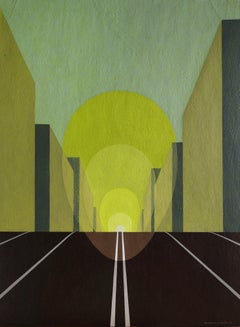
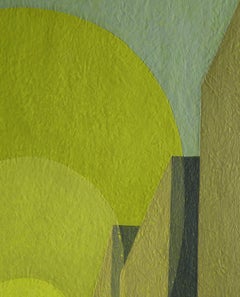
City Scape, Ovoid Geometrical Abstract Green & Brown Structures

City Scape, Ovoid Geometrical Abstract Green & Brown Structures

By Clarence Holbrook Carter

Located in Beachwood, OH

Clarence Holbrook Carter (American, 1904-2000) City Scape, 1978 Acrylic on scintilla Signed and dated lower right 30 x 22 inches Condition: craquelure in upper right corner. A sur...

Category

1970s American Modern Ohio - Art

Materials

Acrylic

Pinocchio series, hand colored lithograph, Little Green Marks, 2012

Pinocchio series, hand colored lithograph, Little Green Marks, 2012

By Jim Dine

Located in Fairlawn, OH

Little Green Marks Lithograph, etching and spit bite aquatint on White Arches Cover paper, 2012 Signed in white pencil, upper left vertically (see photo) Numbered and dated on the le...

Category

2010s Contemporary Ohio - Art

Materials

Lithograph

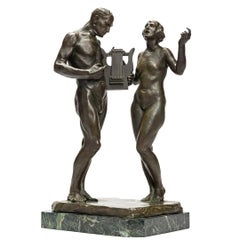
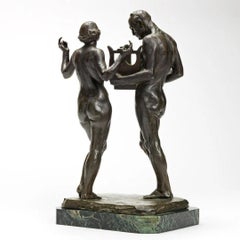
Harmony, 20th century bronze & green marble base, nude man and woman with lyre

Harmony, 20th century bronze & green marble base, nude man and woman with lyre

By Max Kalish

Located in Beachwood, OH

Max Kalish (American, 1891-1945) Harmony, c. 1930 Bronze with green marble base Incised signature on right upper side of base 14 x 9 x 5 inches, excluding base 17 x 10 x 8 inches, including base Born in Poland March 1, 1891, figurative sculptor Max Kalish came to the United States in 1894, his family settling in Ohio. A talented youth, Kalish enrolled at the Cleveland Institute of Art as a fifteen-year-old, receiving a first-place award for modeling the figure during studies with Herman Matzen. Kalish went to New York City following graduation, studying with Isidore Konti...

Category

1930s American Modern Ohio - Art

Materials

Marble, Bronze

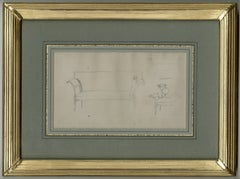
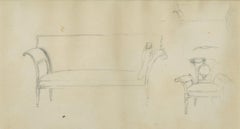
Stanford White, drawing, sofe, chair, architect, Davis Galleries 1963

Stanford White, drawing, sofe, chair, architect, Davis Galleries 1963

By Stanford White

Located in Fairlawn, OH

Stanford White (1853-1906) Sketches of Sofa and Chair Graphite on paper, c. 1890 Unsigned Provenance: Davis Galleries, New York, 1963 Alan Wanzenberg Davis Galleries organized the important 1963 exhibition Stanford White: Works on Paper, one of the earliest concentrated presentations of White’s drawings. The firm’s own historical exhibition list confirms that show. Davis and Langdale exhibition history. Condition: Mounted to support sheet Image size: 5 1/8 x 8 1/4 inches Frame size: 10 3/4 x 14 inches Archival framing with Tru Vue Museum Glass Alan Wanzenberg is a distinguished New York architect and interior designer whose work emphasizes architectural proportion, craftsmanship, historic furniture and the integration of art with interiors. His ownership is particularly appropriate for a Stanford White furniture study and gives the sheet a stronger design-history provenance than an anonymous private collection would provide. “Possibly exhibited, Davis Galleries, New York, Stanford White: Works on Paper, 1963; not confirmed in the exhibition checklist.” Stanford White was born in New York City in 1853. After training in the office of Henry Hobson Richardson...

Category

1890s American Modern Ohio - Art

Materials

Graphite

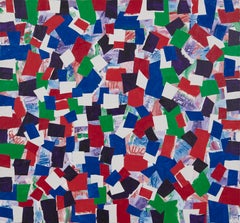
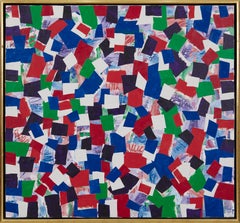
Colorful abstract acrylic collage 20th century painting, New York artist

Colorful abstract acrylic collage 20th century painting, New York artist

By Joseph Glasco

Located in Beachwood, OH

Joseph Glasco (American, 1925-1996) Untitled 1978-81 Acrylic on canvas collage initialed verso and dated ‘81 48 x 51 inches Joseph Glasco was born in Paul’s Valley, Oklahoma and gre...

Category

1980s Abstract Expressionist Ohio - Art

Materials

Acrylic

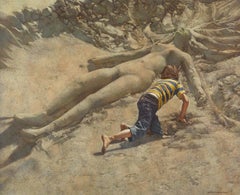
Herbert Davidson Magical Realism Boy Finds Nude Woman Sand Sculpture Beach 1970s

Herbert Davidson Magical Realism Boy Finds Nude Woman Sand Sculpture Beach 1970s

Located in Rancho Santa Fe, CA

An amazing, magical realism painting by renowned artist, Herbert Laurence Davidson (1930-2018). This painting depicts a young boy’s innocent discovery on the beach of a sand sculptur...

Category

Late 20th Century American Realist Ohio - Art

Materials

Cotton Canvas, Oil

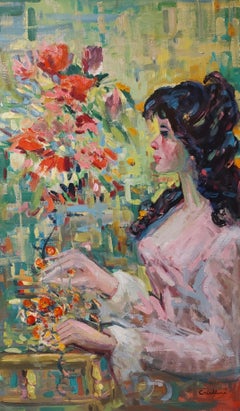
Large Floral Still Life, Flowers in Vase, 20th Century Italian-American Artist

Large Floral Still Life, Flowers in Vase, 20th Century Italian-American Artist

By Louis Bosa

Located in Beachwood, OH

Louis Bosa (American, 1905-1981) Floral Still Life Oil on canvas Signed lower right 32 x 20 inches 43 x 31 inches, framed Born in Codroipo, a small village only a few miles from Ven...

Category

20th Century Ohio - Art

Materials

Oil

Tenby, Coast of Wales Shoreline, View of Ocean & Village

Tenby, Coast of Wales Shoreline, View of Ocean & Village

By Clarence Holbrook Carter

Located in Beachwood, OH

Clarence Holbrook Carter (American, 1904-2000) Tenby, Coast of Wales, 1960 Acrylic on scintilla paper Signed and dated lower right 18 x 28.5 inches 26 x 36 inches, framed Clarence H...

Category

1960s American Modern Ohio - Art

Materials

Acrylic

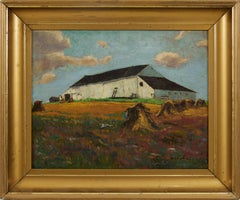
20th Century Landscape of a Barn with Haystacks, Cleveland School Artist

20th Century Landscape of a Barn with Haystacks, Cleveland School Artist

By George Adomeit

Located in Beachwood, OH

George Gustav Adomeit (American, 1879-1964) Barn Scene Oil on canvas mounted to masonite Signed lower right 16 x 20 inches 21.5 x 25.5 inches, framed A major painter of American sce...

Category

Early 20th Century American Modern Ohio - Art

Materials

Oil

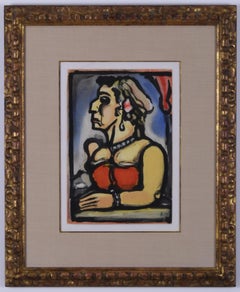
Madame Carmencita, Plate 9

Madame Carmencita, Plate 9

By Georges Rouault

Located in Fairlawn, OH

Madame Carmencita, Plate 9 From: Cirque de l'etoile filante (Circus of the Shooting Star), 1934-1936 (published 1938) Signed with the artist's initials and dated, lower right of plat...

Category

1930s French School Ohio - Art

Materials

Aquatint

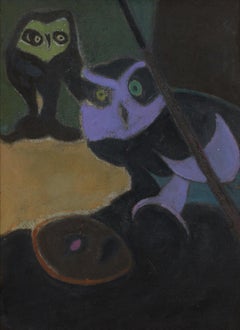
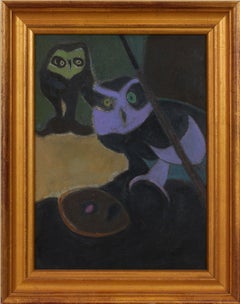
Two Owls Oil Painting on Board, Post-Impressionist, 20th Century

Two Owls Oil Painting on Board, Post-Impressionist, 20th Century

By Joseph O'Sickey

Located in Beachwood, OH

Work sold to benefit the CLEVELAND INSTITUTE OF ART Joseph B. O’Sickey (American, 1918–2013) Two Owls Oil on board 15 x 10.5 inches Joseph O'Sickey, born in...

Category

20th Century Post-Impressionist Ohio - Art

Materials

Oil

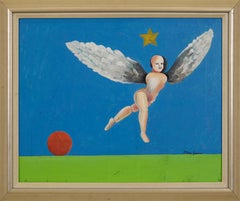
Surrealist Flying Fantasy Figure, Cleveland Woman Artist

Surrealist Flying Fantasy Figure, Cleveland Woman Artist

By Mary Spain

Located in Beachwood, OH

Mary Spain (American, 1934–1983) Flying Figure, 1970s Oil on canvas Signed lower right 17.5. x 21.5. inches 22 x 26 inches, framed Set in a realm of fantasy, Mary Spain’s work exhib...

Category

1970s Surrealist Ohio - Art

Materials

Oil

Winter Landscape w/ Red Barn, 20th Century Cleveland School Artist

Winter Landscape w/ Red Barn, 20th Century Cleveland School Artist

By Carl Frederick Gaertner

Located in Beachwood, OH

Carl Frederick Gaertner (American, 1898–1952) Red Barn Oil on canvas board Signed lower right 11 x 13.5 inches 15.5 x 17.75 inches, framed Carl Gaertner was one of the greatest pain...

Category

Early 20th Century Ohio - Art

Materials

Oil

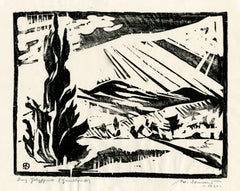
Bauhaus, Werner Drewes, woodcut, 1921, unrecorded proof

Bauhaus, Werner Drewes, woodcut, 1921, unrecorded proof

By Werner Drewes

Located in Fairlawn, OH

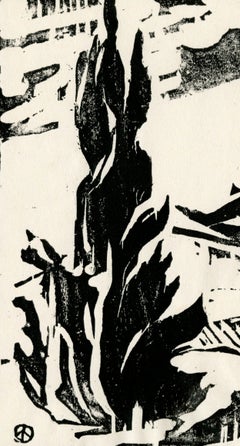
Werner Drewes (1899-1985) Mountainous Landscape with Cypress, 1921 Woodcut on wove paper Original paper folder serving as overmatting of the image, signed and titled a second time by...

Category

1920s Bauhaus Ohio - Art

Materials

Woodcut

Flats Near Pueblo Isleta, New Mexico, 20th Century Western Landscape

Flats Near Pueblo Isleta, New Mexico, 20th Century Western Landscape

By Frank Wilcox

Located in Beachwood, OH

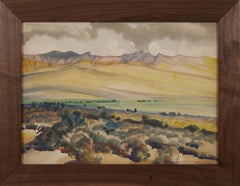
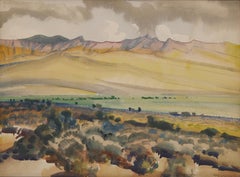
Frank Nelson Wilcox (American, 1887–1964) Flats Near Isleta, c. 1937 Watercolor on paper Signed lower right, titled verso 14.5 x 20 inches 18.5 x 24 inches framed Frank Nelson Wil...

Category

1930s American Modern Ohio - Art

Materials

Watercolor

Sisters Bronze Sculpture by Frederick Hart, 1990s

Sisters Bronze Sculpture by Frederick Hart, 1990s

By Frederick Hart

Located in Woodmere, OH

Frederick Hart is America's greatest figurative sculptor. Not only did he create works of great beauty and gravitas, he was singularly responsible for restoring to American public mo...

Category

1990s Contemporary Ohio - Art

Materials

Bronze

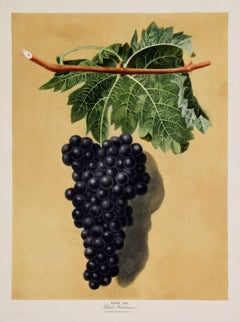
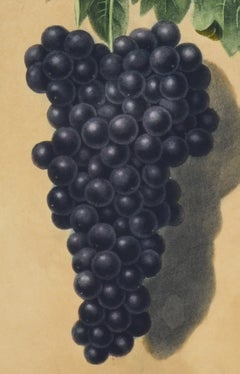
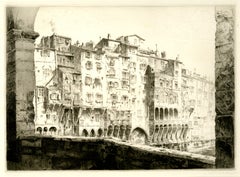
Brookshaw Botanical, Natural History, Aquatint, Still Life, large folio

Brookshaw Botanical, Natural History, Aquatint, Still Life, large folio

By George Brookshaw

Located in Fairlawn, OH

George Brrokshaw (1751-1823) Plate LVII, Black Frontiniac Aquatint printed in color on heavy laid paper watermarked J. Whatman 1809 Signed in the plate lower center margin (see photo) From: Pomona Britannica or A Collection of the Most Esteemed Fruits (90 Plates) Published: White, Cochrane & Co., E. Lloyd and W. Lindsell, London: [1804-] 1812 Format: Folio size, 1st edition Printer: Thomas Bensley (active c. 1760-1935) Considered to be a masterpiece of natural history illustration Condition: Excellent Never framed, fresh colors, full margins Image size: 17 3/4 x 13 3/4 inches Sheet size: 21 1/4 x 17 1/8 inches Provenance: W. Russell Button Gallery, Chicago Regerence: Dunthrone: 1938.050 Publication legend lower center: “Painted & Published as the Act Directs by the Author G. Brookshaw” followed by date, varying from 1804 to 1812. Title page credits: “Printed for the author by T. Bensley, Bolt Court, Fleet Street. Published by White, Cochrane and Co. Fleet Street; E. Lloyd, Harley Street; and W. Linsell, Corner of Wigmore Street.” George Brookshaw (1751-1823) (after) from Pomona Britannica; Or, a collection of the most esteemed fruits at present cultivated in this country… selected principally from the Royal Gardens at Hampton Court T. Bensley, London (printer) White, Cochrane & Co., E. Lloyd and W. Lindsell, London: [1804-] 1812 Folio edition Stipple engravings, printed in color, finished by hand 17.5 x 14 inches, plate mark, average approximate 22 x 17 inches, overall, average approximate Pomona Britannica, or a Collection of the Most Esteemed Fruits at present cultivated in the country…selected principally from the royal gardens at Hampton Court…accurately drawn and coloured from nature, with full descriptions was published in London from 1804—1812. Comprising 90 aquatint engravings, including 256 depictions of British fruit, after paintings by George Brookshaw. Published in London and engraved by R. Brookshaw and H. Merke. George Brookshaw (1751—1823) was born in Birmingham, England where he was apprenticed to Samuel Troughton (d. 1783), a Birmingham painter and japanner. According to a recent blog post related to St. Philips Cathedral, Birmingham, England, entitled In Search of Sobieski Brookshaw, by Gill Partridge, he may have received some art training from his father, also named George Brookshaw, who is listed as an engraver in a document dated 1751. George Brookshaw’s brother, Richard Brookshaw (1736—c.1804) was a portrait painter and engraver well versed in mezzotint and copperplate engraving techniques, and may have instructed his brother. In 1777, Brookshaw moved from Birmingham to London and began a celebrated career building fine cabinets detailed with hand-painted botanical and pomological motifs. Shortly afterward, in 1778, he married Sobieski Grice (1749—1811), daughter of William Grice, a prosperous gunsmith.The Prince of Wales was the most distinguished of Brookshaw’s well-heeled patrons, and today examples of Brookshaw’s cabinetry may be seen at the Victoria & Albert Museum, London. According to church records noted in Gill Partridge’s post, both George Brookshaw and Sobieski Grice were baptized at the Birmingham Cathedral. In his cabinet-making shop, Brookshaw also offered lessons in flower painting to ‘Ladies of Taste and Fashion’. During the mid 1790s, it appears his furniture-making business went bankrupt, and he led his life under an assumed name, G. Brown. In 1991, Lucy Wood wrote two articles in which she drew the connection between G. Brown and George Brookshaw. During his years of anonymity, Brookshaw worked as an illustrator of botanical books and gave flower-painting lessons, which may have been his primary source of income. Apparently, the marriage dowry he enjoyed while married to Sobieski Grice was lost after their marriage dissolved. Brookshaw returned to public view as the earliest parts of Pomona Britannica were issued. In Flower and Print Books of the 18th and Early 19th Centuries, Gordon Dunthorne extolls the virtues of George Brookshaw’s large folio edition. “One of the eminent English artists of the early nineteenth century is George Brookshaw, who issued in 1812, Pomona Britannica. Ninety aquatint plates, printed in colour and on a scale comparable to Thornton’s Temple of Flora...

Category

Early 1800s Other Art Style Ohio - Art
Materials

Aquatint

Untitled (also known as "1811 THE BACKWOODSMAN'S CHRISTMAS")

Untitled (also known as "1811 THE BACKWOODSMAN'S CHRISTMAS")

Located in Fairlawn, OH

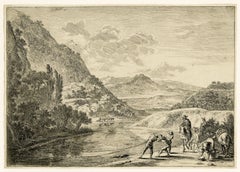
Untitled (also known as "1811 THE BACKWOODSMAN'S CHRISTMAS") Oil on canvas, c. 1875-1925 Unsigned Provenance: Found in Ohio A charming American naive nocturn of a hunter and his two ...

Category

1870s Outsider Art Ohio - Art
Materials

Oil

Untitled
Untitled

Untitled

By Walasse Ting

Located in Fairlawn, OH

Untitled Color lithograph, 1972 Unsigned Edition: From: Fresh Air School, Exhibition of Paintings Large Edition (2000?) Published by the Carnegie Institute Museum of Art, 1973 Printe...

Category

1970s Abstract Ohio - Art
Materials

Lithograph

City Scene, XXe Siecle, famous French woman artist, 1966

City Scene, XXe Siecle, famous French woman artist, 1966

By Maria Helena Vieira da Silva

Located in Fairlawn, OH

Ville espagnole (Spanish City) Color lithograph on wove paper, 1966 Unsigned (as issued) Unsigned and unnumbered, as issued Printed by Mourlot, Paris Published by Gualtieri di San La...

Category

1960s French School Ohio - Art

Materials

Lithograph

Spiral of Time II
Spiral of Time II

Spiral of Time II

By Harry Nadler

Located in Fairlawn, OH

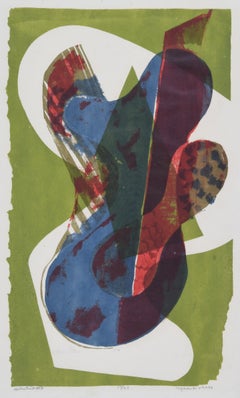
Spiral of Time II Mixed media with acrylic on paper, 1986 Signed lower right (see photo) Condition: Excellent Image size: 35 x 15 1/2 inches Provenance: Peter Marciniak, New Hampshir...

Category

1980s Abstract Ohio - Art

Materials

Mixed Media

Nude with green accents

Nude with green accents

By Ronald Shap

Located in Las Vegas, NV

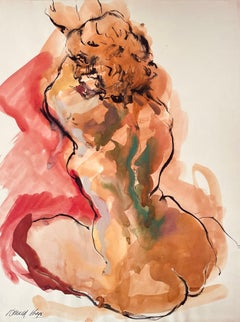
"Nude with green accents" is an original gouache and ink drawing by celebrated, twentieth-century California impressionist landscape painter, Ronald Shap. Nude woman turning her back...

Category

1980s Contemporary Ohio - Art
Materials

Ink, Gouache

Early Snow: A View of Woodstock

Early Snow: A View of Woodstock

By Emil Ganso

Located in Fairlawn, OH

Early Snow: A View of Woodstock Color lithograph, 1937-1938 Signed in pencil in the lower right Titled in pencil in the lower left Annotated inside the matting that this impression p...

Category

1930s American Modern Ohio - Art
Materials

Lithograph

Panama Garden, Mid-century abstract expressionist modern work

Panama Garden, Mid-century abstract expressionist modern work

By Richard Andres

Located in Beachwood, OH

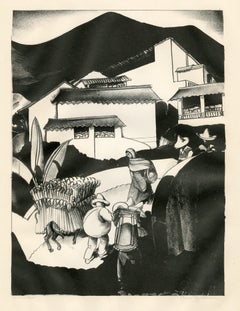
Richard Andres (American, 1927-2013) Panama Garden, c. 1964 acrylic on canvas signed lower right, signed and titled verso 46 x 38 inches Richard Andres was born in Buffalo, New York in 1927. A graduate of the Cleveland Institute of Art in 1950, he was immediately drafted and served for two years in the army as a mural painter. He received his Master of Arts from Kent State in 1961. A frequent exhibitor at galleries and museums and winner of multiple May Show prizes, Andres taught art in the Cleveland Public Schools for 28 years, as well as teaching the University of Buffalo, the Cleveland Institute of Art and the Western Reserve University. Very little in Richard Andres’ childhood would have predicted his love of classical music, mid-century-modern architecture and certainly not his lifelong passion for art and in particular abstract art. Richard’s father, Raymond, had no more than a third-grade education, and his mother, Clara, was one of thirteen children – only three of whom lived into adulthood and none of whom attended high school. They lived, when Richard was a boy, in a dingy area of Buffalo, NY in a walk-up apartment situated above a tavern. Raymond and Clara supplemented the income from their factory jobs in the bar downstairs with Raymond playing ragtime on the piano and Clara serving drinks. This often left Richard and his two older brothers at home alone to fend for themselves. The two older boys, Raymond and Russell, were - unlike Richard- rather rough and tumble and entertained themselves with stickball, boxing and the like. Richard, on the other hand, from a very young age liked to draw, or better yet even, to paint with the small set of watercolors he received for Christmas one year. Paper, however, at the height of the depression, was hard to come by. Luckily, Clara used paper doilies as decoration for the apartment and Richard would contentedly paint and then cut up doilies, gluing the pieces together to create collages. At eight-years-old, he discovered the Albright-Knox Museum (then known as the Albright Art Gallery) and spent several hours a week there studying the paintings. He was particularly fond of Charles Burchfield‘s landscapes, enamored with their ‘messiness’ and thinking that they somehow captured more ‘feeling’ than works he was previously familiar with. For his tenth Christmas, he asked for and received a ‘how-to’ paint book by Elliot O’Hare. Through this self-teaching, he assembled the portfolio needed for acceptance to Buffalo Technical High School where he studied Advertising Arts. In his Junior year, he was encouraged to enter a watercolor painting, “Two Barns,” in the national 1944-45 Ingersoll Art Award Contest and was one of twelve grand prize winners – each one winning one hundred dollars. More importantly the painting was exhibited at the Carnegie Institute Galleries, which resulted in his winning a national scholarship to the Cleveland School of Art (The Cleveland Art Institute). He flourished at the art school under the tutelage of faculty members such as Carl Gaertner, as well as that of visiting artists such as William Sommer and Henry George Keller. He would say in later years that Gaertner, in particular, influenced his attitude toward life as well as art. “Gaertner,” Andres said, “believed that there was no need to be a ‘tortured artist’, that an artist should rather enjoy beauty, family, and life in general.” Free to spend his days as he chose, he wandered the Cleveland Art Museum for most of the hours he was not attending classes or painting; the remaining time was spent drinking coffee at a local hangout with art school friends – which is where he met fellow Henry Keller scholarship winner, Avis Johnson. Richard was immediately smitten with Avis, but being rather shy, it took him the entire summer of 1948 to build up his courage to ask her out. Over that summer he ‘thought about Avis’ and worked in a diner to save money. He also used the hundred-dollar prize money won in High School to visit the first Max Beckmann retrospective in the United States at the City Art Museum in St. Louis. Over a half century later he spoke of that exhibit with a reverence usually reserved for spiritual matters, “I walked in and it was like nothing I had ever seen before... the color...It just glowed.” Returning to campus in the Fall, the first thing he did was go to the coffee shop in hopes of finding Avis. He did, and she, upon seeing him, realized that she was also smitten with him. They quickly became known as ‘the couple’ on campus, and a year later, with Richard being drafted for the Korean war, they were quickly married by a Justice of the Peace, celebrating after with family at Avis’s Cleveland home. As a gift, faculty member John Paul Miller...

Category

1960s Abstract Expressionist Ohio - Art
Materials

Acrylic

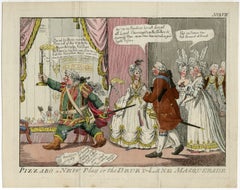
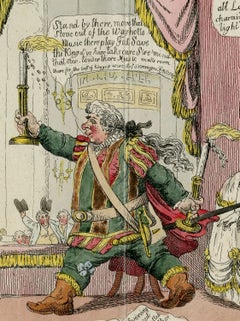
British Polical Satire, Drury Lane Theatre, 1799, Richard Sheridan

British Polical Satire, Drury Lane Theatre, 1799, Richard Sheridan

Located in Fairlawn, OH

Saturday 3:38 PM Pizzaro a new play or the Drury-Lane masquerade, published June 11, 1799, by SW Forbes, 50 Piccadilly write museum essay including, artist, publication, museum hold...

Category

1790s Ohio - Art
Materials

Etching