Ohio - Art

1,971 Results
to
126
987
394
320
155
249
Overall Width
to
Overall Height
to
61
220
1,321
501
62
72
160
143
86
107
195
166
139
58
28
440
354
284
136
57
43
24
19
19
18
8
7
1
1,000
843
134
659
317
232
227
181
131
126
109
90
87
74
70
58
46
38
36
35
34
34
29
792
324
260
234
202
80
60
58
49
34
566
163
233,382
171,124
Item Ships From: Ohio
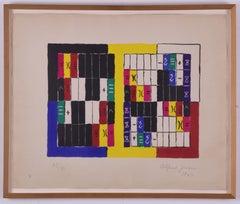
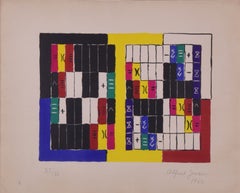
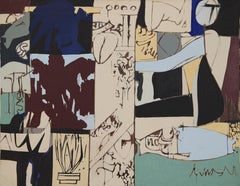
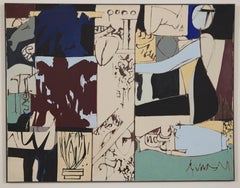
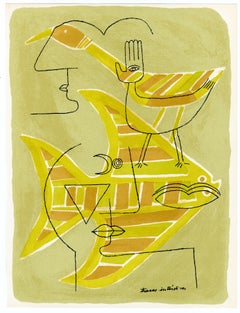
Surrealist, lithograph, Bird, Fish, Victor Brauner, 1960's

Surrealist, lithograph, Bird, Fish, Victor Brauner, 1960's

By Victor Brauner

Located in Fairlawn, OH

Victor Brauner (1903-1966) Traces interstices (inscribed on the stone in the image) Color lithograph on wove paper, 1963 Unsigned (as issued) Published by Gualtieri di San Lazzaro fo...

Category

1960s Surrealist Ohio - Art

Materials

Lithograph

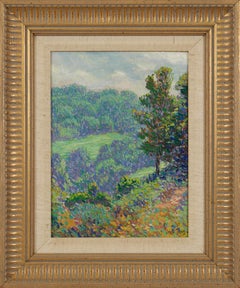
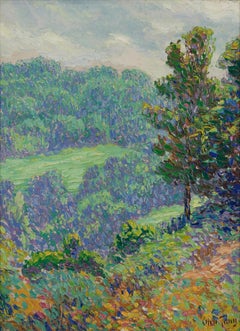
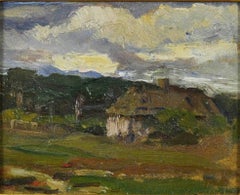
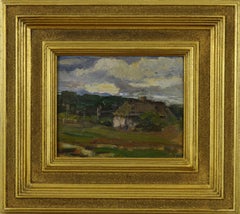
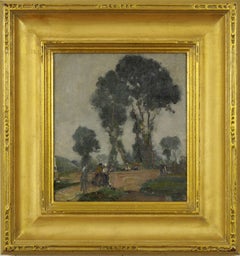
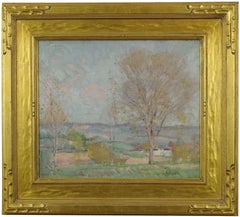
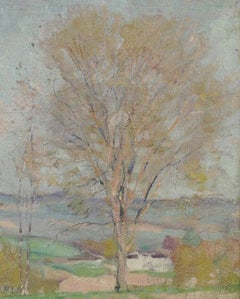
Summer Impressionist Landscape with Trees, Oil on Board, Circa 1920

Summer Impressionist Landscape with Trees, Oil on Board, Circa 1920

Located in Beachwood, OH

Glen Tracy (American, 1883-1956) Summer Landscape, c. 1920 Oil on board Signed lower right, titled verso 12 x 9 inches 17.25 x 14.5 inches, framed Since he studied and taught commer...

Category

1920s American Impressionist Ohio - Art

Materials

Oil

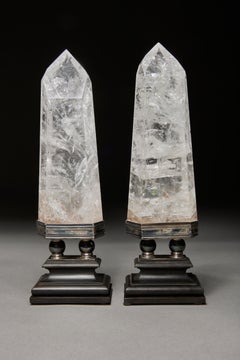
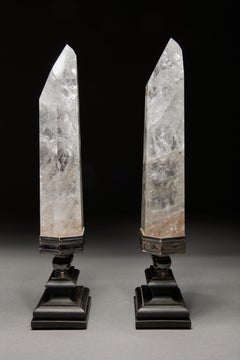
Pair of 20th Century Giuliano Tincani Rock Crystal Obelisks

Pair of 20th Century Giuliano Tincani Rock Crystal Obelisks

Located in Beachwood, OH

Giuliano Tincani (Italian, 20th Century) Pair of Rock Crystal Obelisks Clear quartz crystal and sterling silver 13 x 4 x 2.5 inches, each These obelisks present as a matched pair of...

Category

20th Century Ohio - Art

Materials

Silver

Giverny, American Impressionist, Karl Albert Buehr, Expatriot, 1910

Giverny, American Impressionist, Karl Albert Buehr, Expatriot, 1910

By Karl Albert Buehr

Located in Fairlawn, OH

Karl Albert Buehr (1866-1952) Giverny Landscape Oil on board, c. 1910 Unsigned Condition: Excellent Image size: 5 7/8 x 7 1/8 inches Frame: 11-1/2 x 12-3/4 x 1-1/2" Provenance: Estat...

Category

1910s American Impressionist Ohio - Art

Materials

Oil

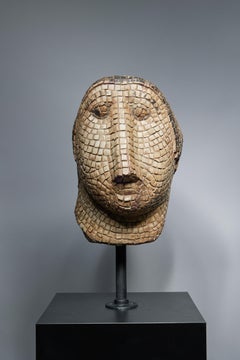
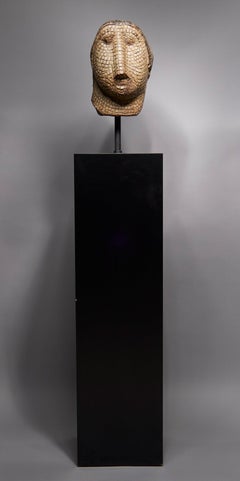
Mosaic Female Head Atop Large Pedestal, 20th Century California Artist

Mosaic Female Head Atop Large Pedestal, 20th Century California Artist

Located in Beachwood, OH

Mary T. Bowling (American, 1917-1995) Female Head Mosaic ceramic sculpture Head: 13 x 7 x 9.5 inches Overall: 59 inches tall Provenance: Fred Schmidt (American 1936-2001) Mary T. ...

Category

20th Century Ohio - Art

Materials

Ceramic, Mosaic

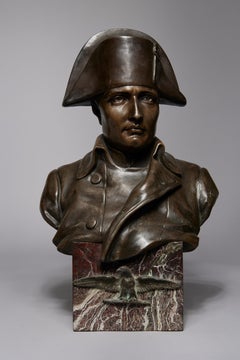
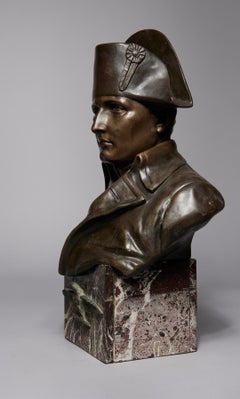
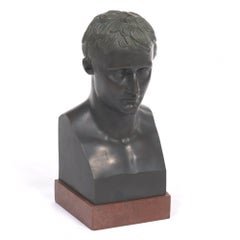
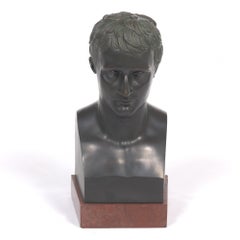
Late 19th Century Bronze Bust of Napoleon Sculpture, Italian Artist

Late 19th Century Bronze Bust of Napoleon Sculpture, Italian Artist

Located in Beachwood, OH

Raphaël Nannini (Italian, 1852-1925) Napoleon Bust, Late 19th Century Bronze on marble base Signed on back 17 x 11 x 8 inches Raphael Nannini was born in Florence. He exhibited at t...

Category

Late 19th Century Ohio - Art

Materials

Marble, Bronze

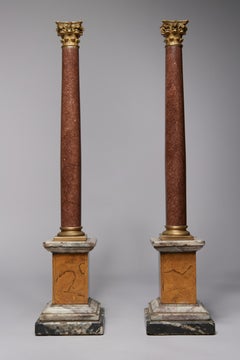
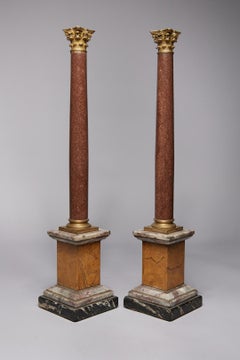
Pair of Porphyry Marble Columns with Gilt Bronze Capitals, 19th Century

Pair of Porphyry Marble Columns with Gilt Bronze Capitals, 19th Century

Located in Beachwood, OH

Pair of Porphyry Marble Columns with Gilt Bronze Capitals, 19th Century Porphyry marble & gilt bronze 20 x 4.25 x 4.25 inches Porphyry is an igneous rock, not marble, known for its...

Category

19th Century Ohio - Art

Materials

Marble, Bronze

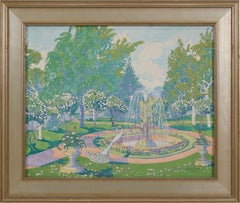
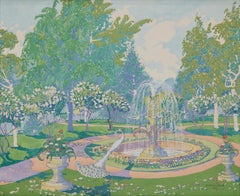
The Fountain, Milan, Ohio Park Summer Landscape w/ Peacock

The Fountain, Milan, Ohio Park Summer Landscape w/ Peacock

By Clara Deike

Located in Beachwood, OH

Clara Deike (American, 1881-1965) The Fountain, Milan, Ohio, 1915 Watercolor on paper Signed and dated lower right 18 x 22 inches 23.5 x 28 inches, framed A graduate of the Clevelan...

Category

1910s Ohio - Art

Materials

Watercolor

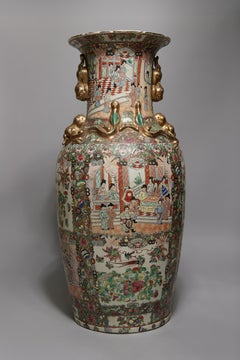
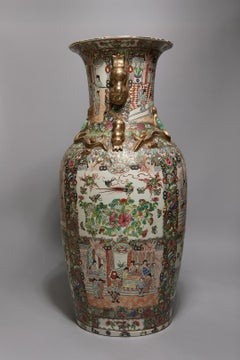
Monumental Chinese Famille Rose Medallion Vase, 20th Century

Monumental Chinese Famille Rose Medallion Vase, 20th Century

Located in Beachwood, OH

Monumental Chinese Famille Rose Medallion Vase, 20th Century Porcelain 36 x 18 inches Famille rose is an 18th century Chinese porcelain, characterized by its pink-colored enamel.

Category

20th Century Ohio - Art

Materials

Porcelain

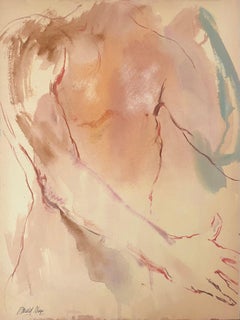
Original Ronald Shap figure drawing, signed

Original Ronald Shap figure drawing, signed

By Ronald Shap

Located in Las Vegas, NV

Original oil pastel and gouache figure drawing by celebrated, twentieth-century California landscape painter, Ronald Shap. Sketch of a nude male torso with washes of light aqua/sage green and accents of neon pink oil pastel. This is a part of Shap's '80s Interiors...

Category

1980s Contemporary Ohio - Art

Materials

Oil Pastel, Gouache

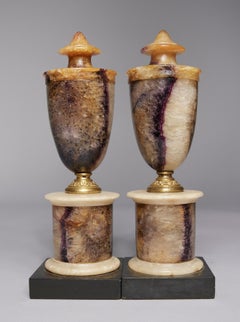
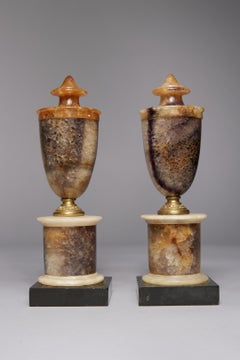
Pair of English Regency Blue John (Derbyshire Spar) Urns, 19th Century

Pair of English Regency Blue John (Derbyshire Spar) Urns, 19th Century

Located in Beachwood, OH

Pair of English Regency Blue John (Derbyshire Spar) Urns, 19th Century 9.5 x 3 x 3 inches Obtained from the Derbyshire England, Blue John is a semi-precious mineral, a rare form of ...

Category

19th Century Ohio - Art

Materials

Marble

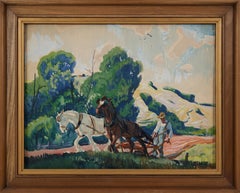
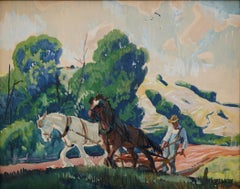
Plowman, Brecksville, Ohio, Early 20th Century Farm Landscape, Cleveland School

Plowman, Brecksville, Ohio, Early 20th Century Farm Landscape, Cleveland School

By Frank Wilcox

Located in Beachwood, OH

Frank Nelson Wilcox (American, 1887–1964) Plowman, Brecksville, Ohio, c. 1922 Watercolor on paper Signed lower right 22.5 x 27.75 inches 27.75 x 34.5 inches, framed Frank Nelson Wilcox (October 3, 1887 – April 17, 1964) was a modernist American artist and a master of watercolor. Wilcox is described as the "Dean of Cleveland School painters," though some sources give this appellation to Henry Keller or Frederick Gottwald. Wilcox was born on October 3, 1887 to Frank Nelson Wilcox, Sr. and Jessie Fremont Snow Wilcox at 61 Linwood Street in Cleveland, Ohio. His father, a prominent lawyer, died at home in 1904 shortly before Wilcox' 17th birthday. His brother, lawyer and publisher Owen N. Wilcox, was president of the Gates Legal Publishing Company or The Gates Press. His sister Ruth Wilcox was a respected librarian. In 1906 Wilcox enrolled from the Cleveland School of Art under the tutelage of Henry Keller, Louis Rorimer, and Frederick Gottwald. He also attended Keller's Berlin Heights summer school from 1909. After graduating in 1910, Wilcox traveled and studied in Europe, sometimes dropping by Académie Colarossi in the evening to sketch the model or the other students at their easels, where he was influenced by French impressionism. Wilcox was influenced by Keller's innovative watercolor techniques, and from 1910 to 1916 they experimented together with impressionism and post-impressionism. Wilcox soon developed his own signature style in the American Scene or Regionalist tradition of the early 20th century. He joined the Cleveland School of Art faculty in 1913. Among his students were Lawrence Edwin Blazey, Carl Gaertner, Paul Travis, and Charles E. Burchfield. Around this time Wilcox became associated with Cowan Pottery. In 1916 Wilcox married fellow artist Florence Bard, and they spent most of their honeymoon painting in Berlin Heights with Keller. They had one daughter, Mary. In 1918 he joined the Cleveland Society of Artists, a conservative counter to the Bohemian Kokoon Arts Club, and would later serve as its president. He also began teaching night school at the John Huntington Polytechnic Institute at this time, and taught briefly at Baldwin-Wallace College. Wilcox wrote and illustrated Ohio Indian Trails in 1933, which was favorably reviewed by the New York Times in 1934. This book was edited and reprinted in 1970 by William A. McGill. McGill also edited and reprinted Wilcox' Canals of the Old Northwest in 1969. Wilcox also wrote, illustrated, and published Weather Wisdom in 1949, a limited edition (50 copies) of twenty-four serigraphs (silk screen prints) accompanied by commentary "based upon familiar weather observations commonly made by people living in the country." Wilcox displayed over 250 works at Cleveland's annual May Show. He received numerous awards, including the Penton Medal for The Omnibus, Paris (1920), Fish Tug on Lake Erie (1921), Blacksmith Shop (1922), and The Gravel Pit (1922). Other paintings include The Trailing Fog (1929), Under the Big Top (1930), and Ohio Landscape...

Category

1920s American Modern Ohio - Art

Materials

Watercolor

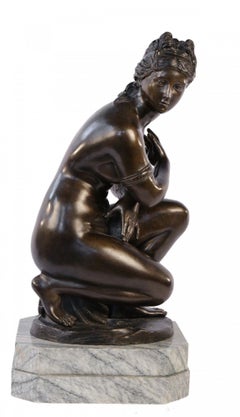
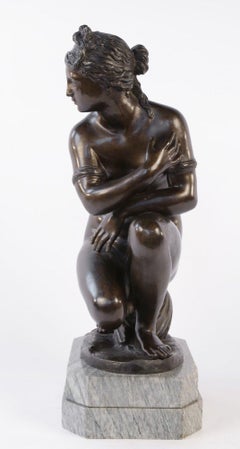
Figure of Crouching Venus/Naked Aphrodite, 19th Century Italian School Sculpture

Figure of Crouching Venus/Naked Aphrodite, 19th Century Italian School Sculpture

Located in Beachwood, OH

Bronze Figure of Crouching Venus, or The Naked Aphrodite, 19th Century Italian School Bronze raised on a marble base 21 in. h. x 10 in. w. x 7 in. d., overall 18 in. h. x 8.5 in. w....

Category

19th Century Ohio - Art

Materials

Marble, Bronze

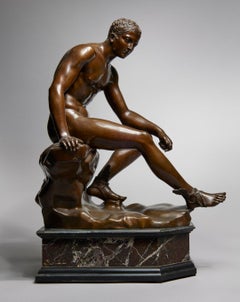
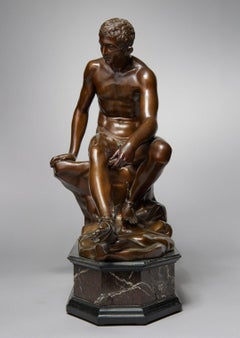
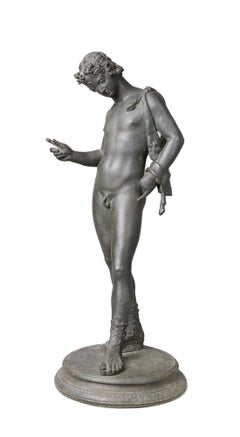
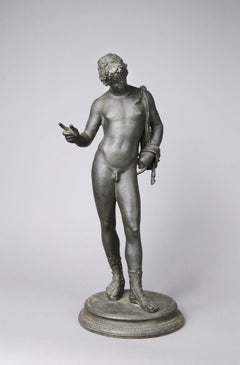
Grand Tour Bronze Sculpture of Dionysus, 19th Century Italian School

Grand Tour Bronze Sculpture of Dionysus, 19th Century Italian School

Located in Beachwood, OH

19th Century Italian School Grand Tour Bronze Sculpture of Dionysus, 19th Century Bronze with black-green patination 24 x 10 x 10 inches Dionysus, in Greco-Roman religion, a nature ...

Category

19th Century Italian School Ohio - Art

Materials

Bronze

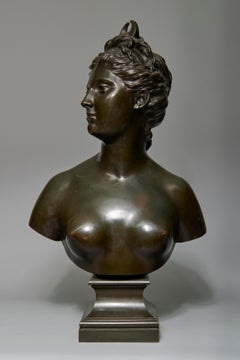
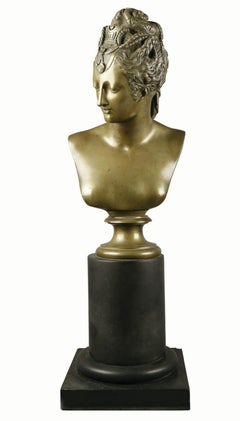
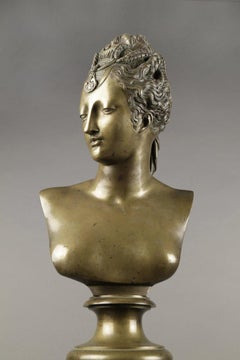
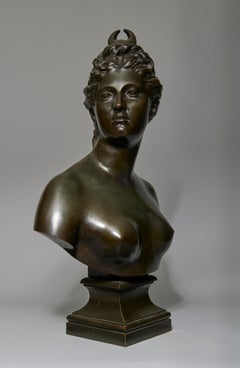
Large Bronze Bust Sculpture of Diane de Poitiers, 18th Century

Large Bronze Bust Sculpture of Diane de Poitiers, 18th Century

Located in Beachwood, OH

After Jean Goujon (French, 1510-1568) Bust of Diane de Poitiers, 18th/19th Century Bronze 14 x 7 x 5 inches 22 x 8 x 7 inches, with base Diane de Poitiers was a French noblewoman and prominent courtier. She wielded much power and influence as King Henry II's royal mistress and adviser until his death. Her position increased her wealth and family's status. She was a major patron of French Renaissance architecture...

Category

Late 18th Century Ohio - Art

Materials

Bronze

Large Figural Abstract Late 1960s Painting, Mexican American Artist

Large Figural Abstract Late 1960s Painting, Mexican American Artist

By Miguel Conde

Located in Beachwood, OH

Miguel Condé (Mexican/American, b. 1939) Untitled, 1968 Oil on canvas Signed and dated verso 55.25 x 44 inches Miguel Condé is a Mexican figurative painter, draughtsman, and print m...

Category

1960s Abstract Ohio - Art

Materials

Oil

Abstract Landscape, large mid-century green painting, COBRA art movement

Abstract Landscape, large mid-century green painting, COBRA art movement

Located in Beachwood, OH

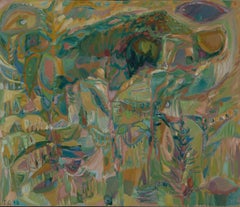
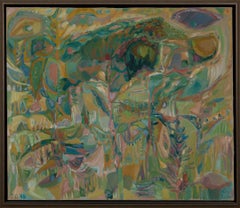
Erik Ortvad (Danish, 1917 - 2008) Abstract Landscape, 1946 Oil on canvas Signed and dated lower right 32 X 37.5 inches 35 x 40.5 inches, framed Born in 1917 in Copenhagen, Erik Ortvad was a surrealist painter and a founding member of the COBRA art...

Category

1940s Abstract Impressionist Ohio - Art

Materials

Oil

Back Cover from Derriere Le Miroir, No. 190, Fevrier 1971

Back Cover from Derriere Le Miroir, No. 190, Fevrier 1971

By Alexander Calder

Located in Fairlawn, OH

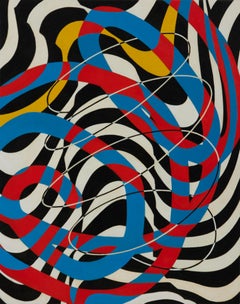
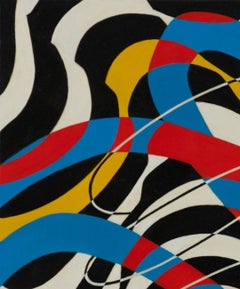
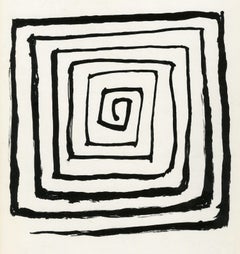
Alexander Calder Back Cover from Derriere Le Miroir, No. 190, Fevrier 1971 Color lithograph, February 1971 Published by Aime Maeght, Paris Printer: L'Imprimerie Arte, Paris Condition...

Category

1970s French School Ohio - Art

Materials

Lithograph

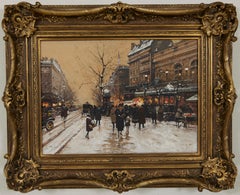
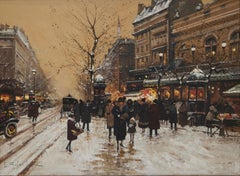
Théâtre du Gymnasium, Evening Parisian Winter Street Scene

Théâtre du Gymnasium, Evening Parisian Winter Street Scene

By Eugene Galien-Laloue

Located in Beachwood, OH

Eugène Galien Laloue (French, 1854-1941) Théâtre du Gymnasium Gouache and watercolor on board Signed lower left 15 x 20.5 inches 24 x 29 inches, framed Some artists or writers are c...

Category

Late 19th Century Ohio - Art

Materials

Watercolor, Gouache

Large Figural Abstract Late 1960s Painting, Mexican American Artist

Large Figural Abstract Late 1960s Painting, Mexican American Artist

By Miguel Conde

Located in Beachwood, OH

Miguel Condé (Mexican/American, b. 1939) Untitled, 1968 Oil on canvas Signed and dated verso 59.5 x 49.5 inches Paint loss throughout - please reach out for a thorough condition rep...

Category

1960s Abstract Ohio - Art

Materials

Oil

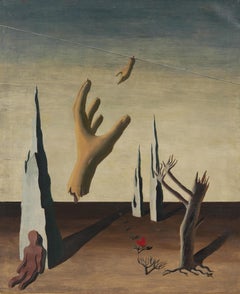
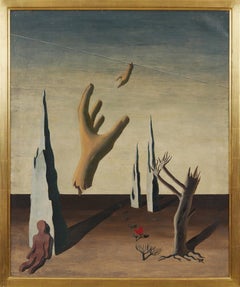
Surrealist Landscape Oil Painting, 20th Century, Framed, 30 x 24.25 in

Surrealist Landscape Oil Painting, 20th Century, Framed, 30 x 24.25 in

Located in Beachwood, OH

Surrealist Landscape Oil on canvas 'R. Lee Glenn' verso 30 x 24.25 inches 31.75 x 26.75 inches, framed Surrealism aims to revolutionize human experience. It balances a rational visi...

Category

20th Century Surrealist Ohio - Art

Materials

Oil

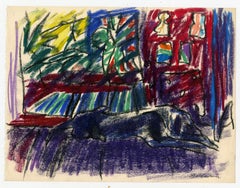
American Expressionist color crayon drawing, Nude reclining, signed

American Expressionist color crayon drawing, Nude reclining, signed

By Joseph O'Sickey

Located in Fairlawn, OH

Reclining Model in the Studio Interior Crayon on laid paper, c. 2000 signed lower right (see photo) A vigorous expressionist rendering of a model reclining in the studio. Condition: ...

Category

Early 2000s Expressionist Ohio - Art

Materials

Crayon

Giverny, American Impressionist, Karl Albert Buehr, Expatriot, c. 1910

Giverny, American Impressionist, Karl Albert Buehr, Expatriot, c. 1910

By Karl Albert Buehr

Located in Fairlawn, OH

Karl Albert Buehr (1866-1952) Strolling in the Park Oil on canvas, relined, c. 1910 Unsigned Provenance: Gift of the Artist to his wife, Mary Hess Beuhr The artist's niece, daughter of Will Hess David Saltzman Robert Henry Adams Fine Art, Chicago, exhibited 1994 Karl Albert Buehr at Robert Henry Adams Fine Art, Chicago Exhibition dates The exhibition was held in 1994 at Robert Henry Adams Fine Art, 715 North Franklin Street, Chicago. Surviving provenance records describe it as the gallery’s first exhibition at its North Franklin Street location. Works documented as included include Woman on a Patio, Rocky Inlet (France), and apparently other paintings and studies acquired through David Saltzman from the family of Buehr’s wife, Mary Hess Buehr. The 1994 Karl Albert Buehr exhibition at Robert Henry Adams Fine Art represented an important act of historical recovery. Although Buehr enjoyed considerable recognition during his lifetime—as an exhibiting painter, prizewinner, and influential teacher at the School of the Art Institute of Chicago—his reputation had become less visible in the decades following his death. By bringing together paintings and works on paper that had descended through the artist’s family, the Adams exhibition helped restore Buehr to his proper position among the leading exponents of American Impressionism and the most important Chicago-trained painters working in France before the First World War. Giverny was crucial to Buehr’s mature development. American painters had been drawn to the Norman village since the late 1880s, attracted both by Monet’s presence and by the region’s gardens, river valleys, cultivated fields, and distinctive northern light. Buehr did not simply imitate Monet. His figure compositions remained grounded in the academic training he received in Chicago and Paris, but he enlivened that structure with broken brushwork, heightened complementary color, and an increasingly luminous palette. His characteristic compositions place elegantly dressed young women on terraces, beside windows, or within flowering gardens. These figures are neither conventional society portraits nor anonymous decorative accessories. They occupy a carefully balanced space between individual presence and pictorial harmony. Faces and gestures are often quietly observed, while dresses, parasols, flowers, foliage, and shifting sunlight become vehicles for color. Lavender shadows, rose and coral fabrics, emerald foliage, and brilliant passages of yellow or blue transform the garden into a chromatic environment surrounding the sitter. Works associated with the Adams exhibition illuminate the breadth of Buehr’s French production. The pastel Woman on a Patio, circa 1915, demonstrates his ability to translate Impressionist color into the immediacy of a dry medium. Pastel allowed him to place one hue directly beside another without losing intensity. The resulting surface possesses a soft atmospheric unity while retaining the energy of individual strokes. The work’s history—gifted by Buehr to Mary Hess Buehr and subsequently descending through her family—also gives it a particularly intimate character. Rocky Inlet (France) presents another aspect of Buehr’s practice. In place of the cultivated garden and poised female figure, the artist confronts a rugged coastal landscape. Yet his essential concern remains light acting upon color. Rock, water, and vegetation are constructed through abbreviated touches rather than continuous modeling. The small scale suggests direct observation, possibly an outdoor study made during Buehr’s travels in Normandy. Its provenance likewise begins with Mary Hess Buehr and passes through the family before reaching David Saltzman and Robert Henry Adams Fine Art. This family provenance was central to the significance of the 1994 exhibition. The works had not merely circulated anonymously through the market; many retained a direct association with the artist’s household. Such a group could include informal studies, experimental compositions, and personal gifts that Buehr elected to keep rather than send to public exhibitions. Together they offered a more private and exploratory view of his career. Condition: relined canvas and cleaned Image/Canvas size: 10 x 9 inches Frame: 16-3/4 x 15-3/4 x 1-3/4 inches Karl Albert Buehr (1866–1952): France and the Giverny Years Karl Albert Buehr—whose surname is sometimes misspelled “Beuhr”—was a German-born American painter and influential teacher associated with the second generation of American Impressionists working at Giverny. Although his artistic identity was rooted in Chicago, the years he spent in France transformed his palette, subject matter, and approach to painting. Born on February 14, 1866, in Feuerbach, near Stuttgart, Buehr immigrated with his family to Chicago, probably in 1881. After working briefly for a commercial lithographer, he enrolled at the School of the Art Institute of Chicago in 1888. He studied with John H. Vanderpoel and graduated with honors in 1894, after which the school invited him to teach. He also served in the Illinois cavalry during the Spanish-American War and married Mary Guion Hess, one of his students and an accomplished artist in her own right. Early study in Europe Buehr’s European education unfolded in several stages. Around 1900 he settled in Paris and studied at the Académie Julian, principally under the French painter Raphaël Collin. Collin was known for idealized female figures placed in luminous outdoor settings, a combination of academic draftsmanship and Impressionist light that anticipated Buehr’s mature work. Buehr reportedly received a gold medal at the Académie in 1901. His early European paintings included portraits, landscapes, and scenes of rural labor. Visits to Holland exposed him to the restrained tonalism of the Hague School, while his travels in Italy—particularly Taormina, Sicily, during 1906 and 1907—encouraged a brighter response to Mediterranean sunlight. He also studied in London, where his contacts with Frank Brangwyn and the decorative currents of British painting strengthened his interest in broad design, rhythmic composition, and large arrangements of figures. A decisive factor in this extended European residence was the patronage of Chicago philanthropist Lydia Coonley Ward. From approximately 1906 until 1913, Ward provided Buehr with a monthly stipend, enabling the artist, his wife, and their children to remain abroad and pursue their work without the immediate pressures of the American market. Buehr at Giverny Buehr entered the Anglo-American artistic community at Giverny around 1909, probably through his friendship with Henry Salem Hubbell, another American figure painter supported by Lydia Coonley Ward. From approximately 1909 through 1912, Buehr generally spent winters in Paris and the warmer months at Giverny. In 1912 and the summer of 1913, the family reportedly lived at Sainte-Geneviève-lès-Gasny, close to Giverny. By this date Giverny was no longer merely the village in which Claude Monet lived. It had become an international artists’ colony, particularly attractive to American painters who admired Impressionist color but wished to retain firm drawing and carefully organized figure compositions. Buehr’s associates included Frederick Carl Frieseke, Richard Edward Miller, Guy Rose, Lawton Parker, Louis Ritman, Edmund Greacen, Karl Anderson, and Theodore Earl Butler. Buehr was especially close to the circle of Frieseke and Miller. These artists specialized in decorative paintings of fashionably dressed women reading, sewing, taking tea, or resting in sunlit gardens. Their figures were surrounded by flowers, patterned fabrics, parasols, and flickering passages of colored light. Buehr adopted this repertoire, but his paintings usually retained a stronger structural organization and a more assertive contrast between complementary colors. During his first months at Giverny, Buehr worked on a large decorative panel of dancing figures. The composition received an honorable mention at the Paris Salon of 1910, an important professional recognition. That summer, however, he increasingly turned toward intimate garden scenes and outdoor figure studies. The influence of Richard Miller can be detected in the decorative arrangement of the figures, while Frieseke’s example encouraged Buehr s use of brilliant sunlight, patterned surfaces, and saturated hues. Relationship with Claude Monet Claude Monet was Buehr’s artistic hero, but the extent of their personal relationship should not be overstated. Buehr’s children played with the children of Theodore Butler, Monet’s son-in-law, and they visited the Monet household. Buehr’s daughter Kathleen later recalled that Monet was gracious to the children. Nevertheless, the best available scholarship suggests that no close personal association between Buehr and Monet has been documented. Monet’s importance to Buehr was therefore primarily artistic. At Giverny, Buehr learned to regard colored light as a central subject rather than merely a means of describing objects. Shadows became violet, blue, or green; white dresses reflected the surrounding garden; and faces and arms were modeled through small strokes of warm and cool color. The enclosed garden also became a kind of outdoor studio in which human figures, flowers, fabrics, and sunlight could be orchestrated into a unified decorative design. The Giverny style Buehr became best known for paintings of young women seated or standing in gardens, often accompanied by colorful parasols. Works such as Springtime in Giverny, Under the Parasol, and related pictures of women reading or conversing exemplify his mature style. Although inspired by French Impressionism, these paintings are not spontaneous transcriptions of fleeting visual experience in the strict Monet tradition. They are carefully staged figure compositions. Buehr himself explained that the outdoor figure painter should concentrate upon the ensemble—grouping, arrangement, and color—rather than laboriously describing every feature. This principle helps distinguish his Giverny paintings...

Category

1910s American Impressionist Ohio - Art
Materials

Oil

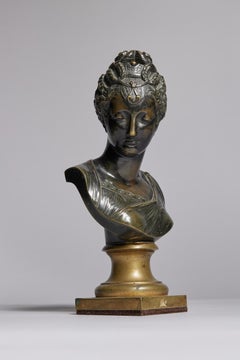
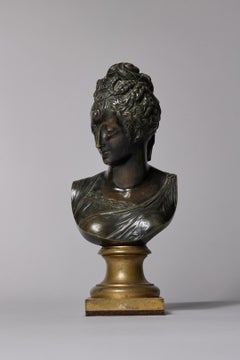
Bust of Diane de Poitiers, Bronze sculpture of French Noblewoman

Bust of Diane de Poitiers, Bronze sculpture of French Noblewoman

Located in Beachwood, OH

After Jean Goujon (French, 1510-1568) Bust of Diane de Poitiers Bronze with gilt socle base 9 x 3.75 x 2.75 inches Provenance: Removed from a private residence at the Pierre Hotel Di...

Category

19th Century Ohio - Art

Materials

Bronze

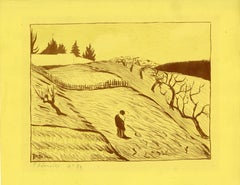
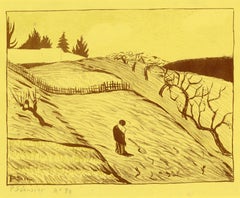
Pont-Aven. Paul Serusier, lithograph, yellow paper, 1893, Paul Proute

Pont-Aven. Paul Serusier, lithograph, yellow paper, 1893, Paul Proute

Located in Fairlawn, OH

Paul Serrusier (1864-1927) La Fin Du Jour (The End of the Day) Color lithograph printed on canary yellow paper, 1893 Signed and numbered in pencil lower left (see photo) Edition 100...

Category

1890s French School Ohio - Art

Materials

Lithograph

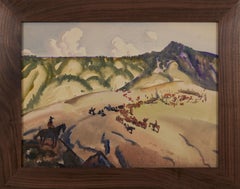
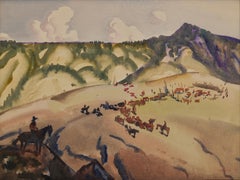
High Pastures, Cattle Round Up, Wyoming, 20th Century Western Landscape

High Pastures, Cattle Round Up, Wyoming, 20th Century Western Landscape

By Frank Wilcox

Located in Beachwood, OH

Frank Nelson Wilcox (American, 1887–1964) High Pastures, Cattle Round Up, Wyoming, 1937 Watercolor on paper Signed and dated lower right, titled verso 15 x 20 inches 18.5 x 24 inche...

Category

1930s American Modern Ohio - Art

Materials

Watercolor

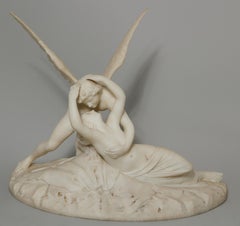
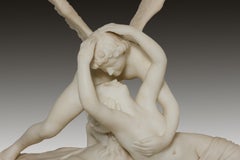
Psyche Revived by Cupid's Kiss, Large Marble Sculpture after Canova, 19th C.

Psyche Revived by Cupid's Kiss, Large Marble Sculpture after Canova, 19th C.

By Antonio Canova

Located in Beachwood, OH

After Antonio Canova (Italian, 1757-1822) Psyche Revived by Cupid's Kiss Marble 24 x 19 x 16 inches 135 lb. The love affair between Cupid and Psyche is one of the best known classic...

Category

19th Century Ohio - Art

Materials

Marble

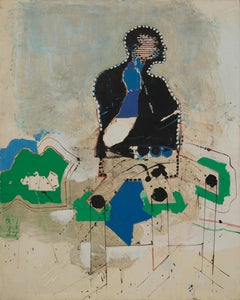
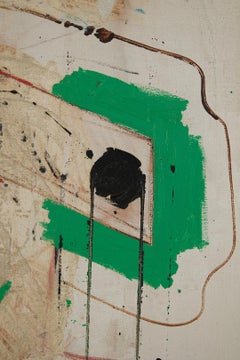
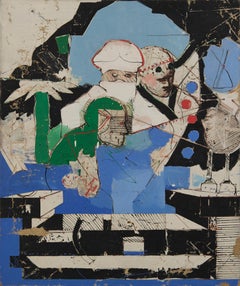
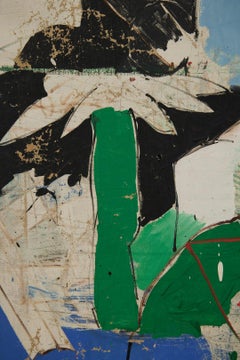
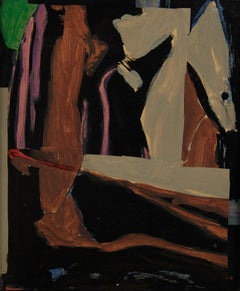
Untitled abstract expressionist oil painting by Cleveland School artist

Untitled abstract expressionist oil painting by Cleveland School artist

By Richard Andres

Located in Beachwood, OH

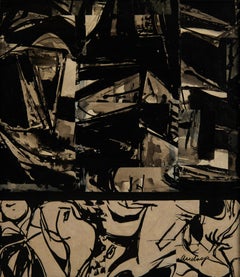
Richard Andres American, 1927-2013 Untitled, c. 1984 acrylic and ink on paper mounted on canvas signed lower right 19 x 16 inches Richard Andres was born in Buffalo, New York in 192...

Category

1980s Abstract Expressionist Ohio - Art

Materials

Ink, Acrylic

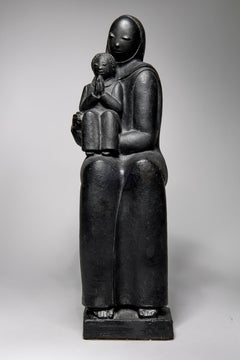
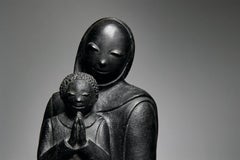
Mother and Child, Mid-20th Century sculpture, Cleveland School Artist

Mother and Child, Mid-20th Century sculpture, Cleveland School Artist

By Walter Sinz 1

Located in Beachwood, OH

Walter Sinz (American, 1881-1966) Mother and Child, 1949 Plaster Signed and dated on base 23.5 x 6 x 9 inches Walter A. Sinz was an American sculptor born in Cleveland, Ohio on Jul...

Category

1940s Ohio - Art

Materials

Plaster

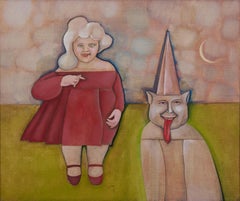
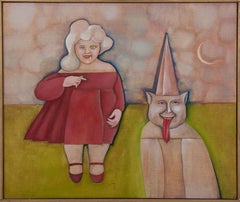
The Happy Couple, Mid Century Surrealist Fantasy Landscape by Ohio artist

The Happy Couple, Mid Century Surrealist Fantasy Landscape by Ohio artist

By Mary Spain

Located in Beachwood, OH

Mary Spain (American, 1934-1983) The Happy Couple Oil on canvas Signed middle right, signed and titled verso 22 x 26 inches Set in a realm of fantasy, Mary Spain’s work exhibits oddly distorted figures in a child-like manner with an underlying sense of absurdity. Through her toylike and primitive style, Spain created surrealistic dramas that puzzle and entrance the viewer. Born in Raleigh, North Carolina, Mary Spain studied art at Syracuse University and moved to Ohio in the 1960s to teach art at Chagrin Falls...

Category

Mid-20th Century Surrealist Ohio - Art

Materials

Oil

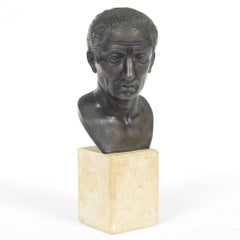
19th Century Bronze Bust of Julius Caesar on Stone Base

19th Century Bronze Bust of Julius Caesar on Stone Base

Located in Beachwood, OH

Bronze Bust of Julius Caesar, 19th Century Patinated bronze mounted to stone base Unsigned 11.25 x 4.5 x 4.5 inches Gaius Julius Caesar was a Roman general and statesman. A member o...

Category

19th Century Ohio - Art

Materials

Stone, Bronze

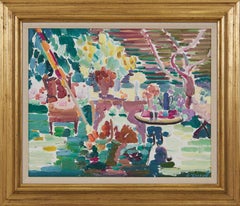
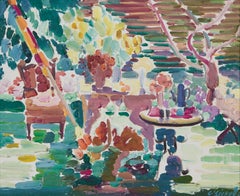
Backyard Garden Still-Life Landscape Scene, Cleveland School Artist

Backyard Garden Still-Life Landscape Scene, Cleveland School Artist

By Joseph O'Sickey

Located in Beachwood, OH

Joseph O'Sickey (American, 1918-2013) Garden Scene Oil on canvas Signed lower right 18 x 22 inches 24 x 28 inches, framed Joseph O'Sickey, born in Detroit in 1918, has been a painte...

Category

Late 20th Century Post-Impressionist Ohio - Art

Materials

Oil

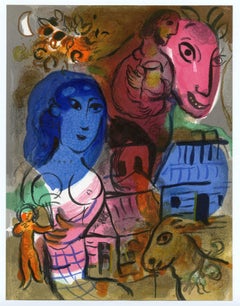
XXe Siecle-Hommage a Marc Chagall

XXe Siecle-Hommage a Marc Chagall

By Marc Chagall

Located in Fairlawn, OH

XXe Siecle-Hommage a Marc Chagall Color lithograph, 1969 Unsigned as issued by XXe Siecle From: XXe Siecle, Volume, Special Issue Marc Chagall Published by G. di San Lazzaro for A. M...

Category

1960s French School Ohio - Art

Materials

Lithograph

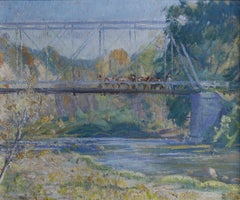
Giverny Landscape, Karl Albert Buehr, c. 1912, American Impressionism, Expatriot

Giverny Landscape, Karl Albert Buehr, c. 1912, American Impressionism, Expatriot

By Karl Albert Buehr

Located in Fairlawn, OH

Karl Albert Beuhr (1866-1952) Giverny Landscape Oil on relined canvas, c. 1912 Signed lower right: K A Buehr Condition: Canvas relined for support Image size: 13 1/4 x 15 3/8 inches Frame size: 19 5/8 x 21 7/8 inches Provenance: Gift of the artist to his wife, Mary Hess Beuhr The artist's niece, daughter of Will Hess Buehr David Saltzman Robert Henry Adams Thomas French Fine Art Mr. and Mrs. Thomas Horner, Canton, Ohio Exhibited: Canton Museum of Art, Impressionism: An American View, 1983, label on verso Karl Albert Buehr at Robert Henry Adams Fine Art, Chicago Exhibition dates The exhibition was held in 1994 at Robert Henry Adams Fine Art, 715 North Franklin Street, Chicago. Surviving provenance records describe it as the gallery’s first exhibition at its North Franklin Street location. Works documented as included include Woman on a Patio, Rocky Inlet (France), and apparently other paintings and studies acquired through David Saltzman from the family of Buehr’s wife, Mary Hess Buehr. The 1994 Karl Albert Buehr exhibition at Robert Henry Adams Fine Art represented an important act of historical recovery. Although Buehr enjoyed considerable recognition during his lifetime—as an exhibiting painter, prizewinner, and influential teacher at the School of the Art Institute of Chicago—his reputation had become less visible in the decades following his death. By bringing together paintings and works on paper that had descended through the artist’s family, the Adams exhibition helped restore Buehr to his proper position among the leading exponents of American Impressionism and the most important Chicago-trained painters working in France before the First World War. Giverny was crucial to Buehr’s mature development. American painters had been drawn to the Norman village since the late 1880s, attracted both by Monet’s presence and by the region’s gardens, river valleys, cultivated fields, and distinctive northern light. Buehr did not simply imitate Monet. His figure compositions remained grounded in the academic training he received in Chicago and Paris, but he enlivened that structure with broken brushwork, heightened complementary color, and an increasingly luminous palette. His characteristic compositions place elegantly dressed young women on terraces, beside windows, or within flowering gardens. These figures are neither conventional society portraits nor anonymous decorative accessories. They occupy a carefully balanced space between individual presence and pictorial harmony. Faces and gestures are often quietly observed, while dresses, parasols, flowers, foliage, and shifting sunlight become vehicles for color. Lavender shadows, rose and coral fabrics, emerald foliage, and brilliant passages of yellow or blue transform the garden into a chromatic environment surrounding the sitter. Works associated with the Adams exhibition illuminate the breadth of Buehr’s French production. The pastel Woman on a Patio, circa 1915, demonstrates his ability to translate Impressionist color into the immediacy of a dry medium. Pastel allowed him to place one hue directly beside another without losing intensity. The resulting surface possesses a soft atmospheric unity while retaining the energy of individual strokes. The work’s history—gifted by Buehr to Mary Hess Buehr and subsequently descending through her family—also gives it a particularly intimate character. Rocky Inlet (France) presents another aspect of Buehr’s practice. In place of the cultivated garden and poised female figure, the artist confronts a rugged coastal landscape. Yet his essential concern remains light acting upon color. Rock, water, and vegetation are constructed through abbreviated touches rather than continuous modeling. The small scale suggests direct observation, possibly an outdoor study made during Buehr’s travels in Normandy. Its provenance likewise begins with Mary Hess Buehr and passes through the family before reaching David Saltzman and Robert Henry Adams Fine Art. This family provenance was central to the significance of the 1994 exhibition. The works had not merely circulated anonymously through the market; many retained a direct association with the artist’s household. Such a group could include informal studies, experimental compositions, and personal gifts that Buehr elected to keep rather than send to public exhibitions. Together they offered a more private and exploratory view of his career. Karl Albert Buehr (1866–1952): France and the Giverny Years Karl Albert Buehr—whose surname is sometimes misspelled “Beuhr”—was a German-born American painter and influential teacher associated with the second generation of American Impressionists working at Giverny. Although his artistic identity was rooted in Chicago, the years he spent in France transformed his palette, subject matter, and approach to painting. Born on February 14, 1866, in Feuerbach, near Stuttgart, Buehr immigrated with his family to Chicago, probably in 1881. After working briefly for a commercial lithographer, he enrolled at the School of the Art Institute of Chicago in 1888. He studied with John H. Vanderpoel and graduated with honors in 1894, after which the school invited him to teach. He also served in the Illinois cavalry during the Spanish-American War and married Mary Guion Hess, one of his students and an accomplished artist in her own right. Early study in Europe Buehr’s European education unfolded in several stages. Around 1900 he settled in Paris and studied at the Académie Julian, principally under the French painter Raphaël Collin. Collin was known for idealized female figures placed in luminous outdoor settings, a combination of academic draftsmanship and Impressionist light that anticipated Buehr’s mature work. Buehr reportedly received a gold medal at the Académie in 1901. His early European paintings included portraits, landscapes, and scenes of rural labor. Visits to Holland exposed him to the restrained tonalism of the Hague School, while his travels in Italy—particularly Taormina, Sicily, during 1906 and 1907—encouraged a brighter response to Mediterranean sunlight. He also studied in London, where his contacts with Frank Brangwyn and the decorative currents of British painting strengthened his interest in broad design, rhythmic composition, and large arrangements of figures. A decisive factor in this extended European residence was the patronage of Chicago philanthropist Lydia Coonley Ward. From approximately 1906 until 1913, Ward provided Buehr with a monthly stipend, enabling the artist, his wife, and their children to remain abroad and pursue their work without the immediate pressures of the American market. Buehr at Giverny Buehr entered the Anglo-American artistic community at Giverny around 1909, probably through his friendship with Henry Salem Hubbell, another American figure painter supported by Lydia Coonley Ward. From approximately 1909 through 1912, Buehr generally spent winters in Paris and the warmer months at Giverny. In 1912 and the summer of 1913, the family reportedly lived at Sainte-Geneviève-lès-Gasny, close to Giverny. By this date Giverny was no longer merely the village in which Claude Monet lived. It had become an international artists’ colony, particularly attractive to American painters who admired Impressionist color but wished to retain firm drawing and carefully organized figure compositions. Buehr’s associates included Frederick Carl Frieseke, Richard Edward Miller, Guy Rose, Lawton Parker, Louis Ritman, Edmund Greacen, Karl Anderson, and Theodore Earl Butler. Buehr was especially close to the circle of Frieseke and Miller. These artists specialized in decorative paintings of fashionably dressed women reading, sewing, taking tea, or resting in sunlit gardens. Their figures were surrounded by flowers, patterned fabrics, parasols, and flickering passages of colored light. Buehr adopted this repertoire, but his paintings usually retained a stronger structural organization and a more assertive contrast between complementary colors. During his first months at Giverny, Buehr worked on a large decorative panel of dancing figures. The composition received an honorable mention at the Paris Salon of 1910, an important professional recognition. That summer, however, he increasingly turned toward intimate garden scenes and outdoor figure studies. The influence of Richard Miller can be detected in the decorative arrangement of the figures, while Frieseke’s example encouraged Buehr s use of brilliant sunlight, patterned surfaces, and saturated hues. Relationship with Claude Monet Claude Monet was Buehr’s artistic hero, but the extent of their personal relationship should not be overstated. Buehr’s children played with the children of Theodore Butler, Monet’s son-in-law, and they visited the Monet household. Buehr’s daughter Kathleen later recalled that Monet was gracious to the children. Nevertheless, the best available scholarship suggests that no close personal association between Buehr and Monet has been documented. Monet’s importance to Buehr was therefore primarily artistic. At Giverny, Buehr learned to regard colored light as a central subject rather than merely a means of describing objects. Shadows became violet, blue, or green; white dresses reflected the surrounding garden; and faces and arms were modeled through small strokes of warm and cool color. The enclosed garden also became a kind of outdoor studio in which human figures, flowers, fabrics, and sunlight could be orchestrated into a unified decorative design. The Giverny style Buehr became best known for paintings of young women seated or standing in gardens, often accompanied by colorful parasols. Works such as Springtime in Giverny, Under the Parasol, and related pictures of women reading or conversing exemplify his mature style. Although inspired by French Impressionism, these paintings are not spontaneous transcriptions of fleeting visual experience in the strict Monet tradition. They are carefully staged figure compositions. Buehr himself explained that the outdoor figure painter should concentrate upon the ensemble—grouping, arrangement, and color—rather than laboriously describing every feature. This principle helps distinguish his Giverny paintings...

Category

1910s American Impressionist Ohio - Art
Materials

Oil

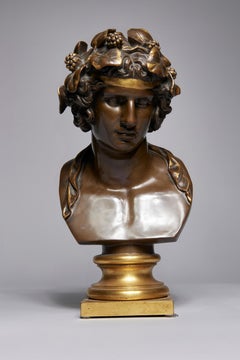
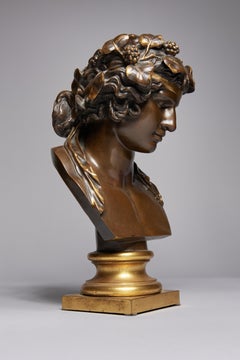
19th Century Bust of Antinous as Bacchus/Dionysus w/ Gilt Floral Wreath

19th Century Bust of Antinous as Bacchus/Dionysus w/ Gilt Floral Wreath

Located in Beachwood, OH

Bust of Antinous as Bacchus/Dionysus with Gilt Floral Wreath, 19th Century F. Barbedienne foundry, A. Collas Reduction Mechanique stamp on back Gilt bronze 12.5 x 7 x 6 inches Antin...

Category

19th Century Ohio - Art

Materials

Bronze

20th century abstract expressionist oil painting by Cleveland School artist

20th century abstract expressionist oil painting by Cleveland School artist

By Richard Andres

Located in Beachwood, OH

Richard Andres American, 1927-2013 Untitled, c. 1980 acrylic and ink on paper mounted on canvas 12 x 10 inches Richard Andres was born in Buffalo, New York in 1927. A graduate of th...

Category

1980s Abstract Expressionist Ohio - Art

Materials

Ink, Acrylic

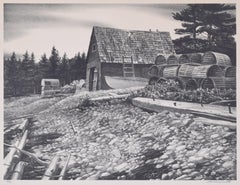
Lobsterman's Cove Lithograph, Signed American Realist, 1941 Edition

Lobsterman's Cove Lithograph, Signed American Realist, 1941 Edition

By Stow Wengenroth

Located in Fairlawn, OH

Lobsterman's Cove, Winter Harbor, Maine Lithograph, 1941 Signed in pencil lower right (see photo) Edition 50 Impressions are in the collection of the Pennsylvania Academy of the Fine...

Category

1940s American Realist Ohio - Art

Materials

Lithograph

Abstract, Joan Miro, lithograph, 1973, Sobreteixims I

Abstract, Joan Miro, lithograph, 1973, Sobreteixims I

By Joan Miró

Located in Fairlawn, OH

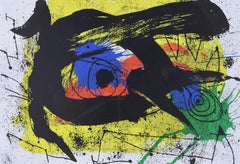
Sobreteixims I Color lithograph, 1973 Unsigned (as issued) From: Derrière le Miroir, No. 203. Large edition Published by Maeght Éditeur, Paris Lithographs printed by Lourlot, Paris P...

Category

1970s Abstract Ohio - Art

Materials

Lithograph

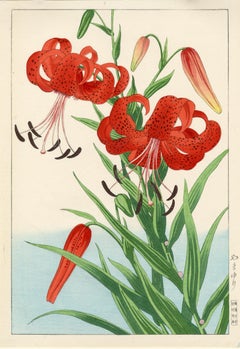
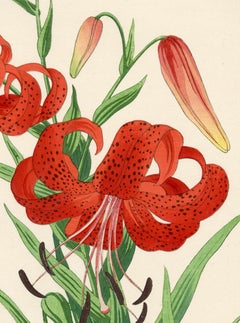
Tiger Lily
Tiger Lily

Tiger Lily

By Nishimura Hodo

Located in Fairlawn, OH

Tiger Lily Color woodcut, 1939 Unsigned (as usual) Publisher: Takemura Hideo (active Yokohama 1926-1940) Condition: Excellent Image/sheet size: 15 3/8 x 10 7/8 inches Provenance: Robert O. Muller Estate Biography Hodo Nishimura...

Category

1930s Modern Ohio - Art

Materials

Woodcut

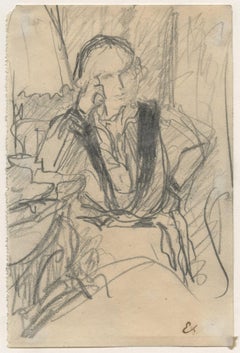
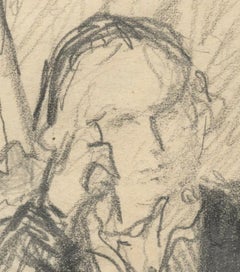
Study of Lucie (Ralph) Belin seated in an interior

Study of Lucie (Ralph) Belin seated in an interior

By Edouard Vuillard

Located in Fairlawn, OH

Study of Lucie (Ralph) Belin seated in an interior Graphite on paper, 1915 Signed with the estate stamp, Lugt 909b, the stamp faded from blue to brown (see photo) Provenance: Neffe-D...

Category

1910s Impressionist Ohio - Art
Materials

Graphite

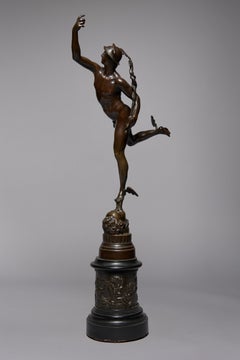
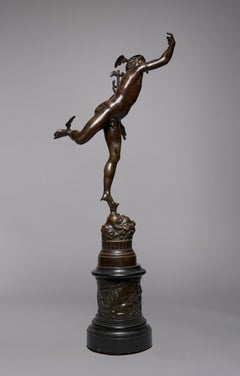
Mercury Standing on the Breath of Zeus, Antique Grand Tour

Mercury Standing on the Breath of Zeus, Antique Grand Tour

By Giambologna

Located in Beachwood, OH

After Giambologna (Italian, 1529-1608) Mercury Standing on the Breath of Zeus Bronze 27.5 x 14.25 x 5.5 inches The sculpture depicts Mercury wearing his winged helmet and sandals and holding a caduceus. Created after one of Giambologna's most celebrated sculptures in the Renaissance, Mercury, was designed as part of a fountain for the Villa Medici in Rome.The head on which Mercury steps symbolizes the figure being “exhaled, purified, unburdened.” When the Giambologna sculpture...

Category

19th Century Ohio - Art

Materials

Bronze

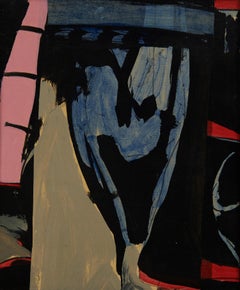
20th century abstract expressionist oil painting by Cleveland School artist

20th century abstract expressionist oil painting by Cleveland School artist

By Richard Andres

Located in Beachwood, OH

Richard Andres American, 1927-2013 acrylic and ink on paper mounted on canvas 12 x 10 inches Note: Small dent in canvas. See pictures for details. Richard Andres was born in Buffal...

Category

1980s Abstract Expressionist Ohio - Art
Materials

Ink, Acrylic