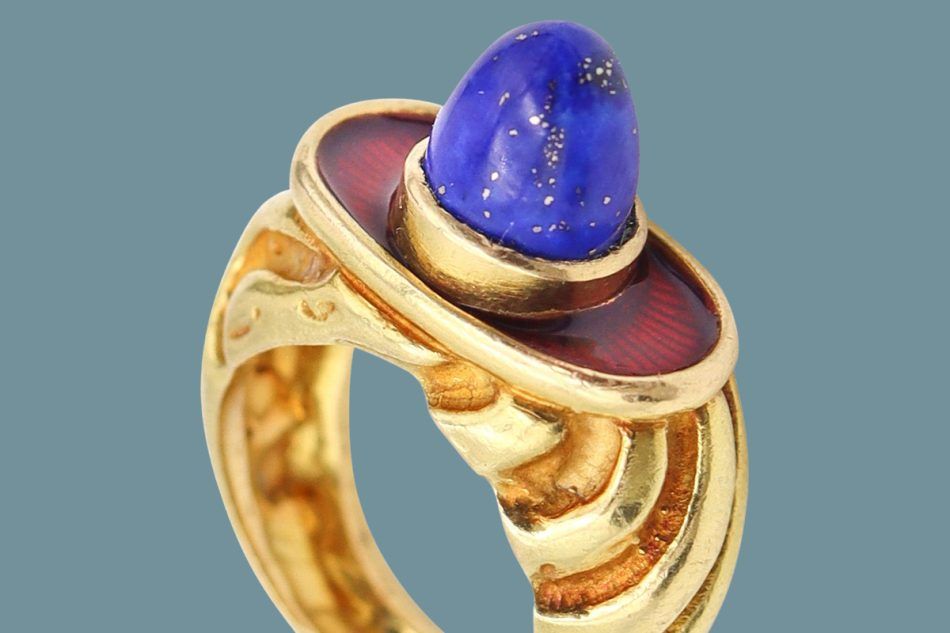
In this moment of renewed interest in 1990s minimalism, Elizabeth Gage’s bold gold jewelry is a refreshing reminder of the joys of maximalism. To examine her work is to appreciate the craft of goldsmithing and a creator with a distinct point of view — one I immersed myself in while poring through the recently published Elizabeth Gage: A Life in Jewellery (ACC Art Books). What caught my eye in particular were the British designer’s rings, like this striking gold and lapis lazuli example, offered on 1stDibs by Treasure Fine Jewelry.
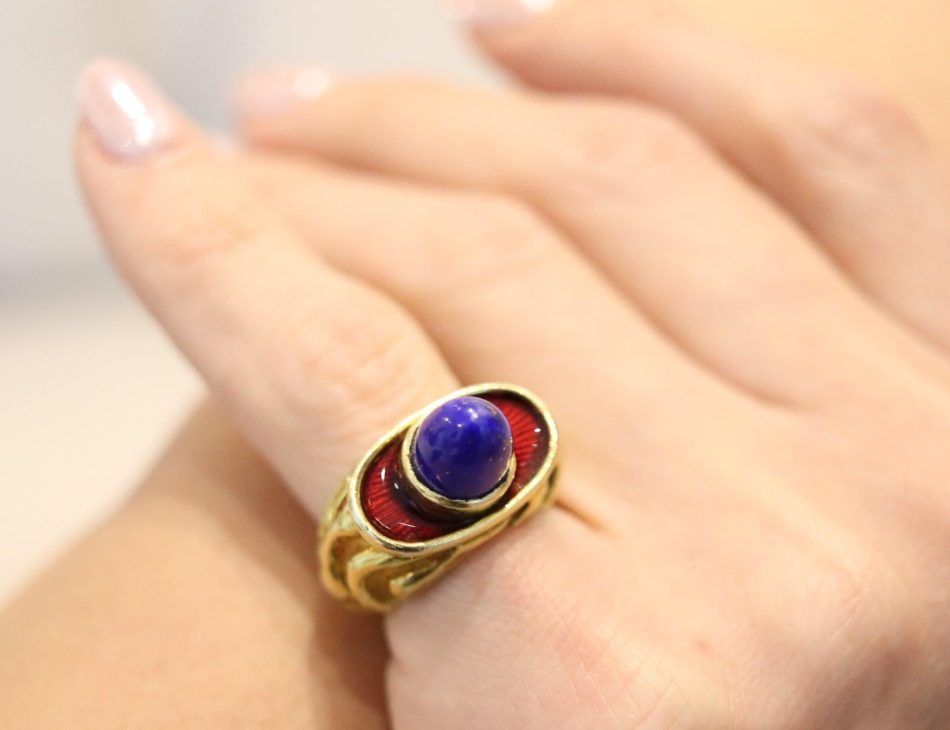
The jewel’s wavy 18-karat-gold band is set with a distinctive cabochon lapis lazuli, whose bullet-like shape resembles the tip of a lipstick and whose golden flecks conjure stars in the night sky. The stone rests on top of the band, nestled in a flat oval bezel that is embellished with a guilloche motif covered with sheer red enamel.
During her 60-year career, Gage has become known for certain trademark designs, like her Agincourt, Templar and Zodiac collections. She is also famed for her experimentation, and in this piece, she plays with unexpected elements. A passion for history informs her work, as well. In fact, it was on a visit to London’s British Museum, specifically the Viking room, that she became so transfixed by a display of ancient gold rings that she decided to train as a goldsmith.

Gage is distinguished by both her ambition and her aesthetic sensibility. Shortly after graduating from college, Cartier commissioned her to create 30 pieces. She went on to establish her own business, winning awards and honors (including an MBE in 2017) and attracting high-profile clients like Lauren Bacall and former First Lady Jackie Kennedy, who became a loyal customer after buying one of Gage’s necklaces that she had seen advertised in a magazine.
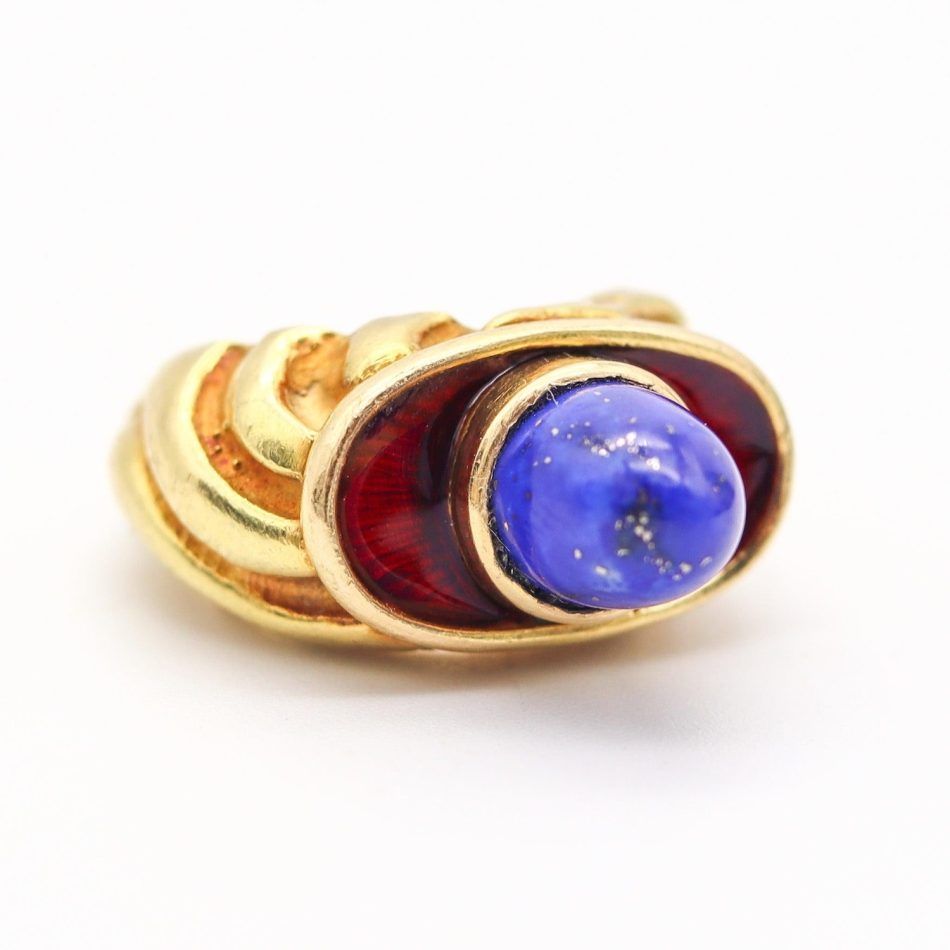
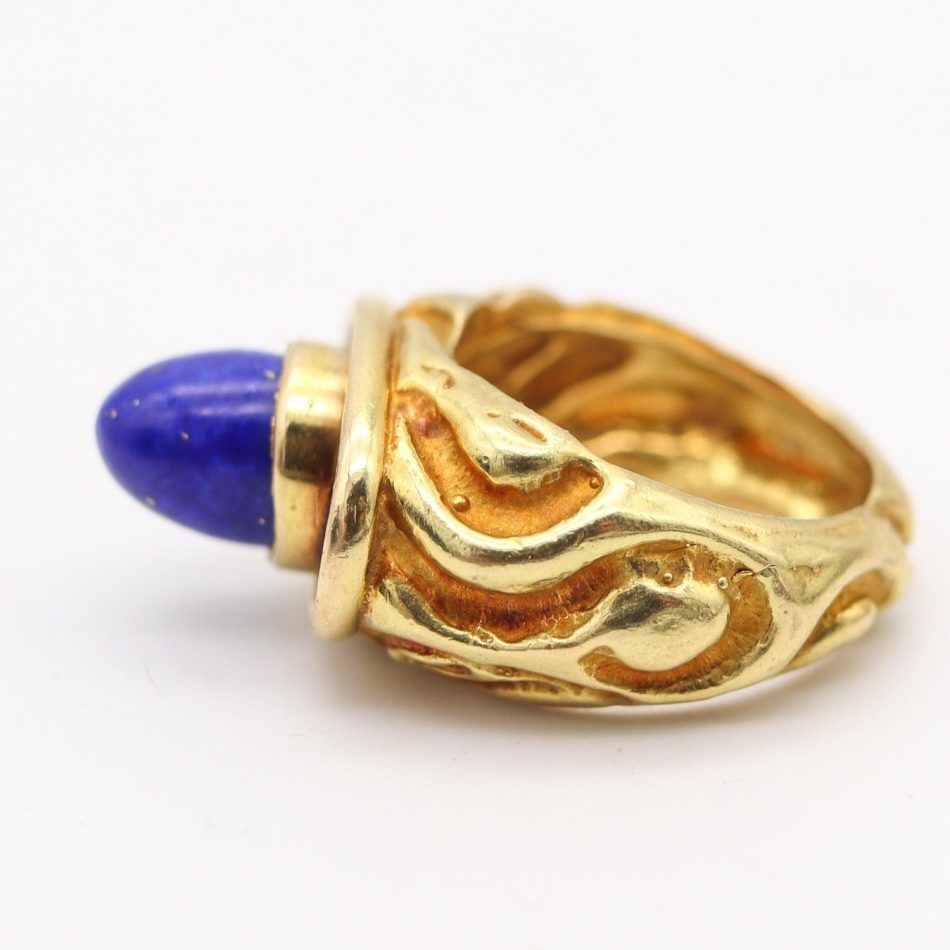
Her thoughtful approach to design extends beyond aesthetics to wearability. If rings like this one strike some as not intended for daily wear, Gage would disagree. Here, as in her Templar rings, she used a rub-over instead of a claw setting, because, as she explains in the book, firstly, “that gives the correct look to the ring and makes a statement with each stone and, secondly, I see these rings as jewelry women can wear every day, and these settings will not catch on clothing.” Spoken by a thoughtful designer — and woman who has been on the receiving end of a snag.