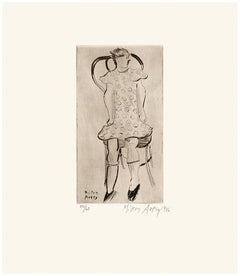
Milton Avery Prints and Multiples

American, 1885-1965

Milton Clark Avery was born in 1885 in Altmar, New York. Largely self-taught, Avery is today regarded as one of the great early modern American artists; his inspired palette, simplified forms and unwavering commitment to a figurative tradition have secured him a place not only in the canon but also in the hearts of the American public.

Always at odds with the dominant style of the time, be it the American Scene Painting and Social Realism of the 1930s and '40s or the Abstract Expressionism of the 1950s, Avery's oeuvre is a labor of singular dedication. As a boy, Avery worked factory jobs to help support his large family following their move to Connecticut in 1898. He did not seriously begin to pursue art until sometime following his father's death in 1905, when he intermittently attended classes at the Connecticut League of Art Students. He made his artistic debut in 1915 at the Wadsworth Atheneum's Fifth Annual Exhibition of Oil Painting and Sculpture.

In 1925 Avery relocated to New York to be closer to his future bride. Following his marriage in 1926 he was able to quit working and paint full time. At this time Avery replaced the light-drenched palette of his Hartford days with more muted tones. He also exchanged his heavy impasto for thin washes of pigment, which he used to create veiled fields of color.

In 1927 Avery exhibited with the Society of Independent Artists. Success quickly followed. Two of his paintings were selected for inclusion in a 1928 group show at the Opportunity Gallery in New York. Also in 1928, renowned collector Louis Kaufman became the first person to purchase a painting by the artist; and in 1929 Duncan Phillips purchased Winter Riders (1929) for the Phillips Memorial Gallery, making it Avery's first painting to enter a museum collection.

Avery's signature figurative style characterized by simple forms and flattened shapes filled with arbitrary color "in the manner of Matisse" was fully developed by the 1940s. His work as a colorist greatly influenced succeeding generations of artists, specifically Color Field painters Mark Rothko, Barnett Newman, and Adolph Gottlieb. In 1944 he was given his first solo museum exhibition at the Phillips Memorial Gallery. That same year, he entered into a contract with famed dealer Paul Rosenberg, in which Rosenberg agreed to purchase 25 of Avery's paintings twice a year.

In 1952 the Baltimore Museum of Art hosted Avery's first museum retrospective, and Avery was the subject of a major article in Arts magazine by eminent art critic Clement Greenberg. In 1960 the Whitney Museum of American Art hosted his second museum retrospective.

Find authentic Milton Avery prints and paintings on 1stDibs. 

(Biography provided by Helicline Fine Art)

to
1
5
3
1
Overall Width
to
Overall Height
to
5
15
1,321
1,029
921
889
9
2
2
4
6
3
4
3
3
3
2
2
2
1
1
1
5
5
2
1
1
4
2
8
Artist: Milton Avery
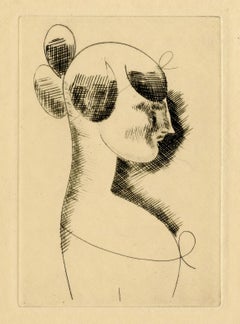
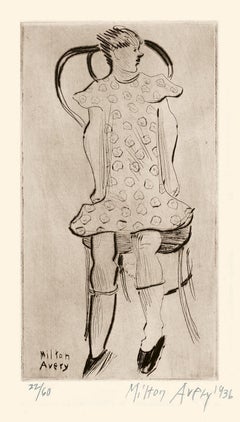
'Little Girl' — American Modernism

'Little Girl' — American Modernism

By Milton Avery

Located in Myrtle Beach, SC

Milton Avery, 'Little Girl', drypoint, 1936, edition 60, Lunn 11. Signed, dated, and numbered '22/60' in pencil. A superb impression, in warm black ink with delicate overall plate tone, on off-white wove paper, with wide margins (2 5/8 to 4 1/8 inches); hinge stains on the top sheet edge, verso, otherwise in excellent condition. Matted to museum standards, unframed. Image size 8 3/4 x 4 3/4 inches (222 x 121 mm); sheet size 14 7/8 x 13 1/8 inches (378 x 333 mm). Collections: Cantor Arts Center, National Gallery of Art. ABOUT THE ARTIST "I never have any rules to follow; I follow myself." "I paint not by sight but by faith. Faith gives you sight." —Milton Avery 'His is the poetry of sheer loveliness.' —Mark Rothko in his 1965 eulogy to Avery. Milton Avery (1885-1965) is recognized as one of America's foremost modernist artists, renowned for his uniquely expressive style, evocative use of color, and captivating compositions. Growing up in a working-class family in Altmar, New York, Avery's early life was marked by the struggles and realities of rural New York. Despite lacking formal artistic training, he displayed an innate talent for drawing from an early age. In 1905, his family relocated to Hartford, Connecticut, where he worked various odd jobs while developing his artistic skills through self-study and experimentation. In 1915, he enrolled at the Connecticut League of Art Students, where he received formal instruction and began to refine his distinctive style. In 1918, Avery transferred to the School of the Art Society of Hartford and worked in the evenings so that he could paint during the day. He became a member of the Connecticut Academy of Fine Arts in 1924. That summer in Gloucester, Massachusetts, he met the artist Sally Michael...

Category

1930s American Modern Milton Avery Prints and Multiples

Materials

Drypoint
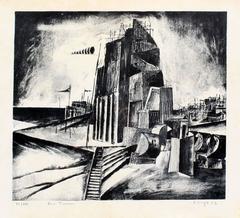
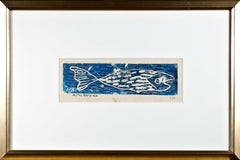
Fish (Blue) Woodcut Print, Framed, Rare A/P, Circa 1952, 2.38 x 9 in

Fish (Blue) Woodcut Print, Framed, Rare A/P, Circa 1952, 2.38 x 9 in

By Milton Avery

Located in Milwaukee, WI

Milton Avery Fish (blue), 1952, (A/P) Catalogue raisonné : Lunn 41. Woodcut, printed in blue2.38 x 9 in (6.05 x 22.86 cm)Framed 12.50 x 18.75 in From the blue prints, approximately 1...

Category

1950s Milton Avery Prints and Multiples

Materials

Woodcut

original lithograph

original lithograph

By Milton Avery

Located in Henderson, NV

Medium: original lithograph. This lithograph was printed in 1952 for the "Improvisations" portfolio, published by the Artists Equity Association of New York on the occasion of the 19...

Category

1950s Milton Avery Prints and Multiples

Materials

Lithograph

YOUNG GIRL NUDE
YOUNG GIRL NUDE

YOUNG GIRL NUDE

By Milton Avery

Located in Portland, ME

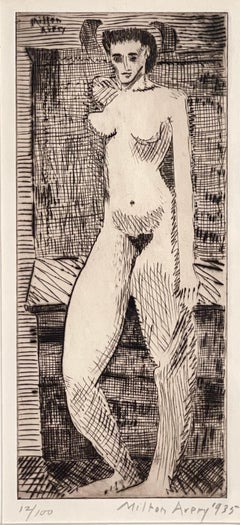
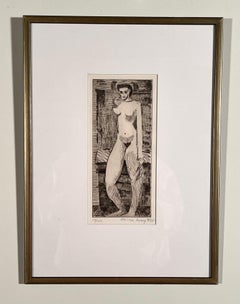
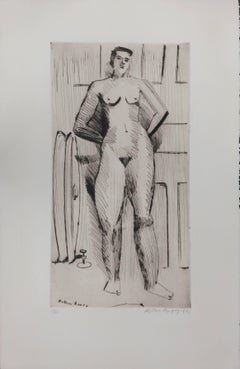
Avery, Milton. YOUNG GIRL NUDE. Lunn 7. Drypoint, 1935. Edition of 100. Signed, dated, and numbered 12/100 in pencil. 10 x 4 1/4 inches (plate), framed to 19 x 14 inches.Provenance H...

Category

1930s Milton Avery Prints and Multiples

Materials

Drypoint
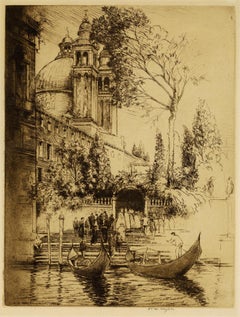
Sally with Beret Drypoint Print, Signed, 20th Century, Edition 99/100
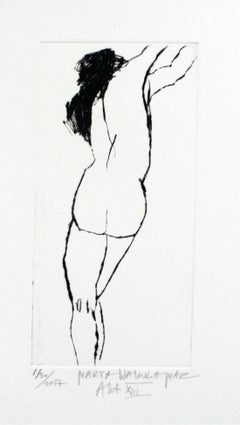
Sally with Beret Drypoint Print, Signed, 20th Century, Edition 99/100
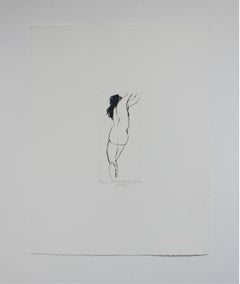
By Milton Avery

Located in Milwaukee, WI

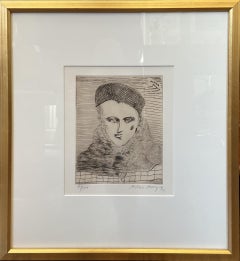
Signed and dated in pencil LRC "Milton Avery 1939" Numbered in pencil LLC "99/100" The Metropolitan Museum of Art and the Museum of Modern Art in New York City each have a print fro...

Category

20th Century Milton Avery Prints and Multiples

Materials

Drypoint
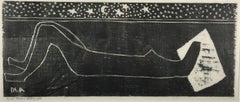
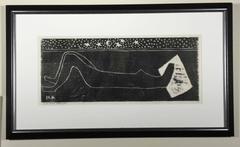
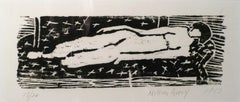
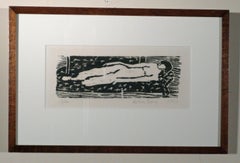
NIGHT NUDE
NIGHT NUDE

NIGHT NUDE

By Milton Avery

Located in Portland, ME

Avery, Milton. NIGHT NUDE. Woodcut, 1953. Edition of 25 in black and white (there were a further 25 printed in black and blue). Signed, dated and numbered "6/25" in pencil, and also ...

Category

1950s American Modern Milton Avery Prints and Multiples

Materials

Woodcut

Standing Nude, Hand Signed Drypoint on Paper, 1941, Edition of 60
Standing Nude, Hand Signed Drypoint on Paper, 1941, Edition of 60
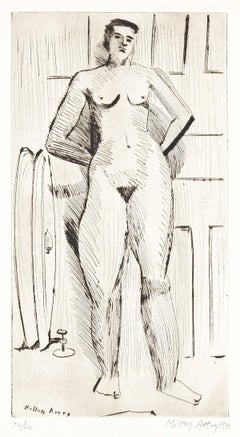
By Milton Avery

Located in Aventura, FL

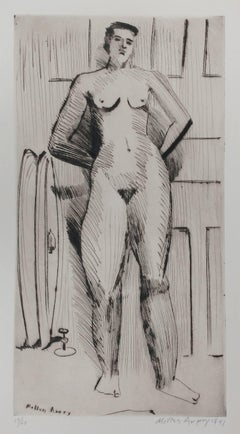
Hand signed and numbered by the artist. Sheet size 19.75 x 13 inches. Image size 14 x 7 inches. Artwork is in excellent condition. Certificate of Authenticity included. Edition of 6...
Category

1940s Modern Milton Avery Prints and Multiples

Materials

Drypoint, Paper

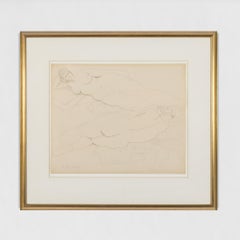
Relaxed Conversation

Relaxed Conversation

By Milton Avery

Located in Toronto, Ontario

Milton Avery (1885-1965) whose lyrical command of colour and form positioned him as a pivotal figure in 20th-century art. Often described as the “American Fauve,” Avery produced pai...

Category

1950s American Modern Milton Avery Prints and Multiples

Materials

Ink

MARCH WITH BABUSHKA (HEAD OF MARCH).

MARCH WITH BABUSHKA (HEAD OF MARCH).

By Milton Avery

Located in Portland, ME

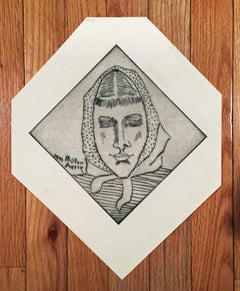
Avery, Milton. MARCH WITH BABUSHKA (HEAD OF MARCH). Drypoint, 1948. Edition of 100, published by Collectors of American Art. Unsigned, as called for (prints from this edition were not signed). 7 x 6 5/8 inches (plate size, measured along the edges), 9 3/4 x 9 5/8 (image, measured on the diagonal, as oriented), 11 1/4 x 11 inches (sheet). In excellent condition. Three of the four corners of the plate have been trimmed to about one inch from the platemark. A spare and elegant portrait of the artist's daughter, the artist March Avery.
Category

1940s American Modern Milton Avery Prints and Multiples

Materials

Drypoint

Related Items
Galerie Maeght Murales et Peintures

Galerie Maeght Murales et Peintures

By Joan Miró

Located in Fairlawn, OH

Galerie Maeght Murales et Peintures Color lithograph poster, 1961 Unsigned as issued Large edition Published by Maeght Editeur Imprimeur Reference #13 from J. Corredor-Matheos, "Miro's Posters', 1980 Condition: Framed Colors fresh Image/sheet size: 25 x 19 inches Frame size: 34 x 27...

Category

1960s Abstract Milton Avery Prints and Multiples

Materials

Lithograph

"Cormorant and Egret" Japanese Woodblock Print of Birds in Water & Nature Poem

"Cormorant and Egret" Japanese Woodblock Print of Birds in Water & Nature Poem

By Kitagawa Utamaro 1

Located in Austin, TX

Artist: Kitagawa Utamaro the First (Japanese, 1753 - 1806) Publisher: Tsutaya Jūzaburō (Japanese, 1750 - 1797) Page Size: 10 x 15 in. Frame Size: 16 x 22 in. An Edo Period color woo...

Category

1790s Milton Avery Prints and Multiples

Materials

Paper, Woodcut

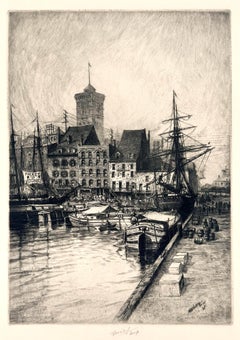
Coenties Slip
Coenties Slip

Coenties Slip

By Charles Frederick William Mielatz

Located in Middletown, NY

Lower Manhattan and the Seaport as the artist imagined it would have appeared before 1835. New York: 1907. Etching with drypoint on Japon paper, 13 7/8 x 9 3/4 inches (353 x 248 mm...

Category

Late 19th Century American Modern Milton Avery Prints and Multiples

Materials

Handmade Paper, Drypoint, Etching

New York Skyline
New York Skyline

Louis H. RuylNew York Skyline, 1920

$450

H 9.18 in W 12.72 in

New York Skyline

By Louis H. Ruyl

Located in Middletown, NY

Etching with drypoint on cream wove paper with deckle edges, 4 3/8 x 12 3/4 inches (233 x 323 mm); sheet 9 1/2 x 15 3/4 inches (240 x 338 mm), full margins. Signed and numbered 4/75 ...

Category

Early 20th Century American Modern Milton Avery Prints and Multiples

Materials

Handmade Paper, Etching, Drypoint

The Pleasure of Being Alone

The Pleasure of Being Alone

By Julio de Diego

Located in Fairlawn, OH

The Pleasure of Being Alone Lithograph, 1931 Signed lower right (see photo) Very rare early suurealist lithograph Edition: 15 (15/15), numbered lower left (see photo) Impressions of...

Category

1930s Surrealist Milton Avery Prints and Multiples

Materials

Lithograph

Low Country (South Carolina)

Low Country (South Carolina)

By Elizabeth Verner

Located in Middletown, NY

An enchanting Southern landscape by the mother of the Charleston Renaissance. A native of Charleston, South Carolina, and educated under the tutelage of Thomas Anshutz at The Pennsylvania Academy of Fine Arts, O'Neill Verner was a teacher, a mother, an artist, an ardent preservationist, and a skilled autodidact. Having previously focused on painting, in the early 1920s she found herself deeply moved by printmaking as a media, and especially so by the simple, peaceful themes and tableaus she discovered in Japanese art. She embarked on a effort to teach herself Japanese printmaking techniques, and in the process, produced the charming images of every day life in Charleston and its environs that earned her recognition as a cultural icon in her day, and in more modern times, as the mother of the Charleston Renaissance, which flourished well into the 1930s. In 1923 she opened a studio in Charleston where she focused on documenting the local color and the architecture and landscape that distinguishes Charleston as one of the South's most beautiful cities, all the while applying the gentle and poetic thematic sensibilities of Japanese printmaking. O'Neill Verner soon found herself in high demand when municipalities and institutions throughout the country sought commissions from her to document the beauty of their grounds and historic buildings. She worked as far north as the campuses of Harvard and Princeton, and extensively across the South, including in Savannah, Georgia, where through sweeping commissions she was able to marry her love of southern preservation and art. O'Neill Verner was a lifelong learner, and continued a path of edification that led her to study etching at the Central School of Art in London, to travel extensively through Europe, and to visit Japan in 1937, where she studied sumi (brush and ink) painting. She was a founding member of the Charleston Etchers Club, and the Southern States Art League. Her works are represented in the permanent collections of leading museums across the American south, and in major national institutions including the Metropolitan Museum of Art, Boston's Museum of Fine Art, and the Smithsonian American Art Museum. O'Neil Verner...

Category

Early 20th Century American Modern Milton Avery Prints and Multiples

Materials

Archival Paper, Drypoint, Etching

Ancient Roman Architecture: Original Framed 18th C. Etching by G. Piranesi

Ancient Roman Architecture: Original Framed 18th C. Etching by G. Piranesi

By Giovanni Battista Piranesi

Located in Alamo, CA

"Veduta del Sepolcro della Famiglia Plauzia per la Strada Che Conduce da Roma a Tivoli vicino a Ponte Lugano" from "Le Antichità Romane" (Roman Antiquities), one of the most famous works by Piranesi. "Antichita" illustrates the tombs along the Appian Way...

Category

Early 18th Century Old Masters Milton Avery Prints and Multiples

Materials

Etching, Engraving, Drypoint

Bird Eggs - Antique egg colour woodblock print, 1875

Bird Eggs - Antique egg colour woodblock print, 1875

By Alexander Lydon

Located in Melbourne, Victoria

Antique bird egg colour woodblock , 1880, from Francis Orpen Morris’, 'A Natural History of the Nests & Eggs of British Birds', 1875. The woodblocks ...

Category

Late 19th Century Naturalistic Milton Avery Prints and Multiples

Materials

Woodcut

Manhattan Mountains
Manhattan Mountains

Lawrence WilburManhattan Mountains, 1938

$1,250

H 14.75 in W 12.38 in D 0.5 in

Manhattan Mountains

By Lawrence Wilbur

Located in Plano, TX

Manhattan Mountains. 1938. Etching and drypoint. 14 3/4 x 12 3/8 (sheet 17 1/4 x 14 3/4). Artist proof, previous to the edition of 40. An atmospheric impression printed on buff-colored laid paper. Signed and dated in the plate. Signed, titled, and annotated 'Final state' and 'Jones Proof'in pencil. Housed in an archival sleeve. Painter and printmaker Lawrence Nelson...

Category

20th Century American Modern Milton Avery Prints and Multiples

Materials

Drypoint, Etching

Indian Friendship Dance

Gene KlossIndian Friendship Dance, 1953

$2,500

H 8.19 in W 11.94 in

Indian Friendship Dance

By Gene Kloss

Located in Fairlawn, OH

Indian Friendship Dance Drypoint, 1953 Signed in pencil lower right, (see photo) Edition 200 Published by The Society of American Graphic Artists, New York An impression is in the collection of SAAM, Washington and RISD Museum, Condition: Excellent Very rich impression with burr and selective whiping of the ink for atmospheric nocturnal effect. Image/Plate size: 8 3/16 x 11 15/16 inches Sheet size: 11 1/8 x 17 inches Reference: Kloss 450 "'Indian Friendship Dance' is an eloquent statement of something which Gene Kloss has both observed and participated in. It is an Indian dance that is thought of as entertainment, rather than ceremony, but it is essentially an idea expressed in action, and an idea that has universal meaning. The young men who dance wear costumes of exquisite workmanship, intricately wrought with beads and feathers and subtle combinations of colors. The dancers are trained from childhood but develop their own steps and exhibit distinctive strength and grace. Singers and a tom-tom accompany the dance and since it usually takes place at night, a campfire is the source of light. The conclusion occurs when all the onlookers, old and young and from many places, join hands with the dancers in a slow revolving movement, while those who can, sing the difficult but meaningful Indian song that flows with the rhythmical dance step and speaks of fellowship, brotherhood, friendship." - An excerpt from a descriptive statement, written by Lynd Ward, and distributed with the drypoint at the time of publication." Courtesy Old Print Shop Born Alice Glasier in Oakland, CA, Kloss grew up amid the worldly bustle of the San Francisco Bay Area. She attended the University of California at Berkeley, graduating with honors in art in 1924. She discovered her talents in intaglio printmaking during a senior-year course in figurative drawing. The professor, Perham Nahl, held up a print from Kloss’ first plate, still damp from the printing process, and announced that she was destined to become a printmaker. In 1925, Gene married Phillips Kloss, a poet and composer who became her creative partner for life. The match was uncanny, for in her own way Gene, too, was a poet and a composer. Like poetry, her artworks capture a moment in time; like music, her compositions sing with aesthetic harmony. Although she was largely self-taught, Kloss was a printmaking virtuoso. On their honeymoon the Klosses traveled east from California, camping along the way. They spent two week is Taos Canyon – with a portable printing press cemented to a rock near their campsite – where Gene learned to appreciate the wealth of artistic subject matter in New Mexico. The landscape, the cultures, and the immense sky left an indelible impression on the couple, who returned every summer until they made Taos their permanent home 20 years later. Throughout her life, Kloss etched more than 625 copper plates, producing editions ranging from five to 250 prints. She pulled every print in every edition herself, manually cranking the wheel of her geared Sturges press until she finally purchased a motorized one when she was in her 70s. Believing that subject matter dictated technique, she employed etching, drypoint, aquatint, mezzotint, roulette, softground, and a variety of experimental approaches, often combining several techniques on the same plate. She also produced both oil and watercolor paintings. Kloss’ artworks are filled with drama. Her prints employ striking contrasts of darkness and light, and her subjects are often illuminated by mysterious light sources. Though she was a devout realist, there is also a devout abstraction on Kloss’ work that adds an almost mythical quality. For six decades Kloss documented the cultures of the region-from images of daily life to those of rarely seen ceremonies. She and her husband shared a profound respect for the land and people, which made them welcome among the Native American and Hispanic communities. Kloss never owned a camera but relied instead on observation and recollection. Her works provide an inside look at the cultures she depicted yet at the same time communicate the awe and freshness of an outsider’s perspective. Although Kloss is best known for her images of Native American and Penitente scenes, she found artistic inspiration wherever she was. During the early years of their marriage, when she and Phil returned to the Bay Area each winter to care for their aging families, she created images of the California coast. And when the Klosses moved to southwestern Colorado in 1965, she etched the mining towns and mountainous landscapes around her. In 1970 the Klosses returned to Taos and built a house north of town. Though her artwork continued to grow in popularity, she remained faithful to Taos’ Gallery A, where she insisted that owner Mary Sanchez keep the prices of her work reasonable regardless of its market value. Kloss continued to etch until 1985, when declining health made printmaking too difficult. From her first exhibition at San Francisco’s exclusive Gump’s in 1937 to her 1972 election to full membership in the National Academy of Design, Kloss experienced a selective fame. She received numerous awards, and though she is not as well known as members of the Taos Society of Artists...

Category

1950s American Realist Milton Avery Prints and Multiples

Materials

Drypoint

La Sortie du Bain
La Sortie du Bain

La Sortie du Bain

Located in Fairlawn, OH

Eugene Leroux (1807-1863) La Sortie Du Bain Lithograph, c. 1840 Signed in the lower left corner of the image (see photo) Inscribed "Imp Bertauts Paris" in bottom margin Inscribed "55...

Category

1840s Romantic Milton Avery Prints and Multiples

Materials

Lithograph

Previously Available Items
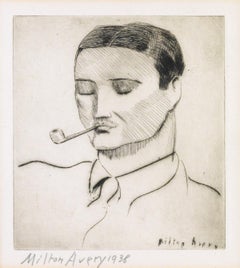
Man with Pipe

Milton AveryMan with Pipe, 1938

Sold

H 6.38 in W 5.75 in

Man with Pipe

By Milton Avery

Located in New York, NY

A very good, richly-inked impression of this scarce drypoint. Signed, dated and numbered 22/60 in pencil by Avery. This is a portrait of the artist Vincent Spagna.

Category

1930s Modern Milton Avery Prints and Multiples

Materials

Drypoint

Standing Nude

Milton AveryStanding Nude, 1941

Sold

H 14.25 in W 7.75 in

Standing Nude

By Milton Avery

Located in New York, NY

A superb, richly-inked impression of this drypoint with strong contrasts. Signed, dated and numbered 32/60 in pencil by Avery.

Category

1940s Modern Milton Avery Prints and Multiples

Materials

Drypoint

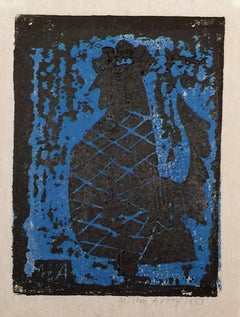
Rooster
Rooster

Milton AveryRooster, 1953

Sold

H 12 in W 9 in

Rooster

By Milton Avery

Located in Rancho Santa Fe, CA

DESCRIPTION Woodcut in colors on Japan paper 9 5/8 x 7 inches (image size) 12 x 9 inches (paper size) Signed and dated lower right Set aside from an edition of 100 Cat. Raisonné – Lu...

Category

1950s Modern Milton Avery Prints and Multiples

Materials

Paper, Woodcut

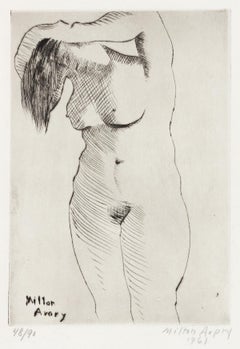
Nude Combing Hair

Nude Combing Hair

By Milton Avery

Located in New York, NY

A superb, well-inked impression of this scarce drypoint. Signed, dated and numbered 48/90 in pencil, lower margin.

Category

1950s American Modern Milton Avery Prints and Multiples

Materials

Drypoint

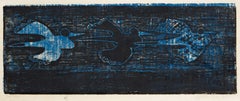
Three Birds
Three Birds

Milton AveryThree Birds, 1952

Sold

H 9.63 in W 25 in

Three Birds

By Milton Avery

Located in New York, NY

A superb, richly-inked impression of this color woodcut printed on Japan paper. Artist's proof, aside from the edition of 15. Signed, dated and inscribed "Artist's proof" in pencil b...

Category

1950s Modern Milton Avery Prints and Multiples

Materials

Color, Woodcut

Trees by the Sea
Trees by the Sea

Milton AveryTrees by the Sea, 1953

Sold

H 9.75 in W 13.88 in

Trees by the Sea

By Milton Avery

Located in New York, NY

This bold color woodcut print is printed on Japan paper and is an artist proof, aside from the edition of 20. Signed, dated and inscribed "artist proof" in pencil by Avery. Dimension...

Category

1950s Abstract Milton Avery Prints and Multiples

Materials

Lithograph, Woodcut

'Flight' offset lithograph poster with birds after painting by Milton Avery

'Flight' offset lithograph poster with birds after painting by Milton Avery

By Milton Avery

Located in Milwaukee, WI

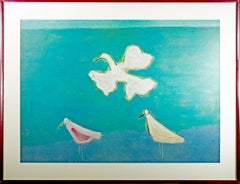
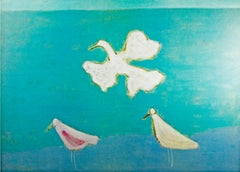
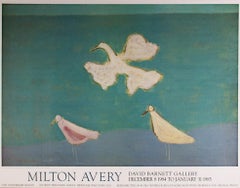
The present work is a poster from the 1985 Milton Avery exhibition at the David Barnett Gallery, Milwaukee. The poster (as did the catalogue of the exhibition) features the work "Flight," an oil from 1950 that was a centerpiece of the exhibition. In the image, a teal sea is seen in the background, in the foreground is a grey and blue ground. Two birds sit on this ground, a bird with a pink wing sits looking towards the left. A yellow bird is further to the right, but also looks towards the left. The most eye catching bird has begun to fly towards the scene, placed immediately in the center of the composition. Birds such as these were a common motif in Avery's painting and printmaking and he often featured them in his abstracting images of the sea. This poster has been cut down to the image. Unframed and uncut posters are available. Contact us for more information. 28 x 36 inches, image 30.5 x 40.5 inches, frame Framed to conservation standards using archival materials including 100 percent rag matting and UV Clear glass to inhibit UV damage. Housed in a modern-profile red/cabernet-stain finish wood moulding. Overall good condition; some minor wear to frame; poster cut to image Milton Avery (March 7, 1885 – January 3, 1965) was an American modern painter. Born in Altmar, New York, he moved to Connecticut in 1898 and later to New York City. Avery was a man of few words. "Why talk when you can paint?" he often quipped to his wife. Their daughter, March Avery...

Category

1980s Expressionist Milton Avery Prints and Multiples

Materials

Lithograph, Offset

Milton Avery wood block black and white rare dancer COA appraisal framed period

Milton Avery wood block black and white rare dancer COA appraisal framed period

By Milton Avery

Located in Buffalo, NY

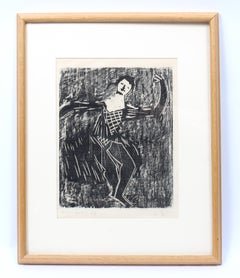
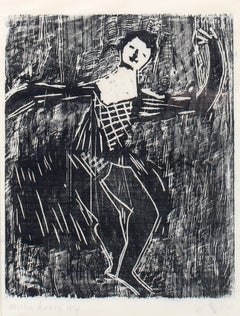
Milton Avery. Dancer, 1954. Woodcut. Signed, dated, and numbered in pencil. A fine impression, on cream wove Japan paper, with full margins (7/8 to 3 1/8 inches); in good conditio...

Category

1950s Abstract Expressionist Milton Avery Prints and Multiples

Materials

Woodcut

"Flight, " Expressionist Landscape with Birds Poster by Milton Avery

"Flight, " Expressionist Landscape with Birds Poster by Milton Avery

By Milton Avery

Located in Milwaukee, WI

"Flight" is a poster from the David Barnett Gallery's show on Milton Avery. A teal sea is seen in the background, in the foreground is a grey and blue ground. Two birds sit on this ground, a bird with a pink wing sits looking towards the left. A yellow bird is further to the right, but also looks towards the left. The most eye catching bird has begun to fly towards the scene, he is in the middle of the piece. Image: 23.75 x 34.5 in Framed: 31.375 x 42 in An American Modern Painter The son of a tanner, Avery began working at a local factory at the age of 16, and supported himself for decades with a succession of blue-collar jobs. The death of his brother-in-law in 1915 left Avery, as the sole remaining adult male in his household, responsible for the support of nine female relatives. His interest in art led him to attend classes at the Connecticut League of Art Students in Hartford, and over a period of years he painted in obscurity while receiving a conservative art education. In 1917 he began working night jobs in order to paint in the daytime. In 1924 he met Sally Michel, a young art student, and in 1926 they married; her income as an illustrator enabled him to devote himself more fully to painting. For several years in the late 1920s through the late 1930s Avery practiced painting and drawing at the Art Students League of New York. Roy Neuberger saw his work and thought he deserved recognition. Determined to get the world to know and respect Avery's work, Neuberger bought over 100 of his paintings, starting with Gaspé Landscape, and lent or donated them to museums all over the world. With the work of Milton Avery rotating through high-profile museums, he came to be a highly respected and successful painter. Avery's work is seminal to American abstract painting while his work is clearly representational, it focuses on color relations and is not concerned with creating the illusion of depth as most conventional Western painting since the Renaissance has. Avery was often thought of as an American Matisse, especially because of his colorful and innovative landscape paintings. His poetic, bold and creative use of drawing and color set him apart from more conventional painting of his era. Early in his career his work was considered too radical for being too abstract; when Abstract Expressionism became dominant his work was overlooked, as being too representational. In the 1930s he was befriended by Adolph Gottlieb and Mark Rothko among many other artists living in New York City in the 1930s-40s. The Phillips Collection in Washington, D.C. was the first museum to purchase one of Avery's paintings in 1929; that museum also gave him his first solo museum exhibition in 1944. Avery was a man of few words. "Why talk when you can paint?" he often quipped to his wife. Their daughter, March Avery...

Category

1980s Expressionist Milton Avery Prints and Multiples

Materials

Other Medium

Dancer
Dancer

Milton AveryDancer, 1954

Sold

H 11.94 in W 9.88 in

Dancer

By Milton Avery

Located in Myrtle Beach, SC

Milton Avery, 'Dancer', woodcut, 1954, edition 25, Lunn 56. Signed, dated, and numbered '10/25' in pencil. A fine impression, on cream wove Japan paper, with full margins (7/8 to 3 1...

Category

1950s American Modern Milton Avery Prints and Multiples

Materials

Woodcut

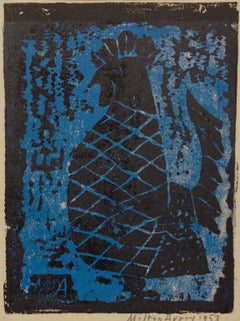
ROOSTER

Milton AveryROOSTER, 1953

Sold

H 20 in W 16 in

ROOSTER

By Milton Avery

Located in Portland, ME

Avery, Milton. ROOSTER. Woodcut, 1953. Printed in Blue and Black. Edition of 100 published by Collectors of American Art. Signed and dated in pencil. 9 5/8 x 7 1/4 inches, 245 x 184...

Category

1950s Milton Avery Prints and Multiples

Materials

Woodcut

NUDE
NUDE

Milton AveryNUDE, 1953

Sold

H 16 in W 20 in D 1 in

NUDE

By Milton Avery

Located in Portland, ME

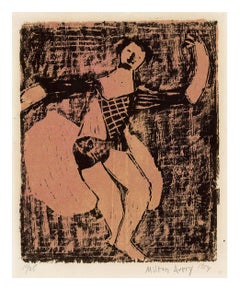
Avery, Milton. NUDE. Lunn 49. Woodcut, 1953. Edition of 20 printed in Black There was also an edition of 500, printed in blue, published by Art In America, and editions of 20 each i...

Category

1950s Milton Avery Prints and Multiples

Materials

Woodcut

Milton Avery prints and multiples for sale on 1stDibs.

Find a wide variety of authentic Milton Avery prints and multiples available for sale on 1stDibs. You can also browse by medium to find art by Milton Avery in drypoint, engraving, lithograph and more. Much of the original work by this artist or collective was created during the 20th century and is mostly associated with the modern style. Not every interior allows for large Milton Avery prints and multiples, so small editions measuring 5 inches across are available. Customers who are interested in this artist might also find the work of Gene Kloss, Warrington Colescott, and Byron Browne. Milton Avery prints and multiples prices can differ depending upon medium, time period and other attributes. On 1stDibs, the price for these items starts at $400 and tops out at $12,500, while the average work can sell for $3,650.