Dye Sculptures

to
1
9
3
5
5
16
Overall Width
to
Overall Height
to
3
35
1
1
18
10
1
1
1
243
11,219
5,838
3,456
3,202
8
6
5
4
4
38
Medium: Dye
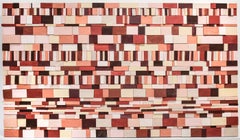
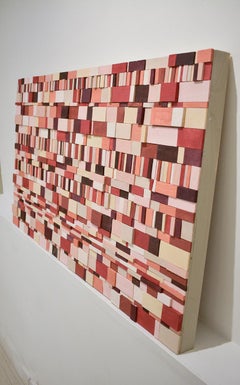
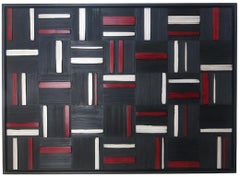
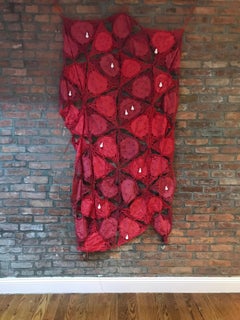
Piquant: Abstract Geometric 3D Wooden Wall Sculpture in Red, Pink, Peach, Maroon

Piquant: Abstract Geometric 3D Wooden Wall Sculpture in Red, Pink, Peach, Maroon

By Stephen Walling

Located in Hudson, NY

Abstract geometric three-dimensional wood wall sculpture in bright hues of red, peach, pink, maroon, white and beige Piquant, hand-carved wooden wall sculpture by Hudson Valley artis...

Category

2010s Abstract Geometric Dye Sculptures

Materials

Wood, Dye, Acrylic, Wood Panel

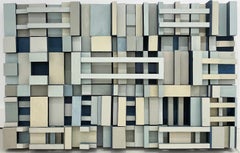
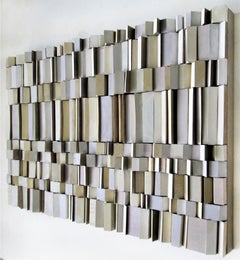
Over & About: Abstract Geometric Wood Wall Sculpture in Grey, Light Blue, Beige

Over & About: Abstract Geometric Wood Wall Sculpture in Grey, Light Blue, Beige

By Stephen Walling

Located in Hudson, NY

Abstract geometric three-dimensional wood wall sculpture in pale grey, light blue, light taupe, and beige, with accents of stormy blue "In, Out, Over, and About", hand-carved woode...

Category

2010s Abstract Geometric Dye Sculptures

Materials

Wood, Dye, Acrylic, Wood Panel

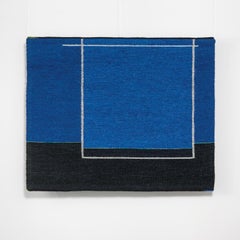
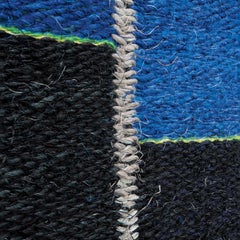
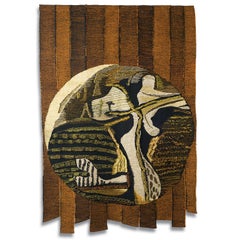
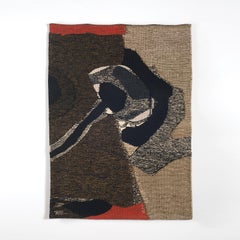
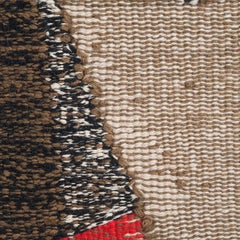
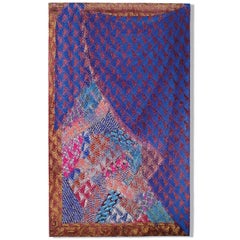
Thin Green Horizon, Contemporary Geometric Tapestry by Gudrun Pagter

Thin Green Horizon, Contemporary Geometric Tapestry by Gudrun Pagter

By Gudrun Pagter

Located in Wilton, CT

Thin Green Horizon, sisal, linen and flax, 45.5” x 55.5”, 2017. Gudrun Pagter is a Denmark-based artist that is known for creating exquisite woven tapestries. Pagter creates strong...

Category

2010s Abstract Geometric Dye Sculptures

Materials

Fabric, Textile, Tapestry, Linen, Thread, Dye

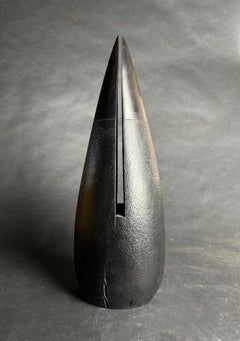
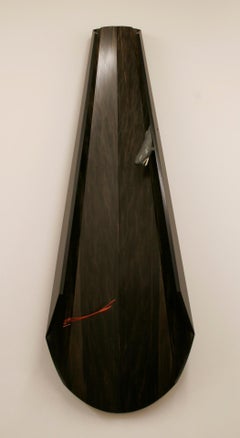
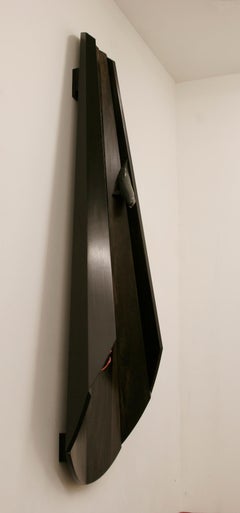
Joel Urruty - Traveler, Sculpture 2024

Joel Urruty - Traveler, Sculpture 2024

By Joel Urruty

Located in Stamford, CT

Medium: Dyed and Lacquered Basswood As an artist I strive to create elegant sculptures that capture the true essence of the subject matter. Form, line and surface are used as the vi...

Category

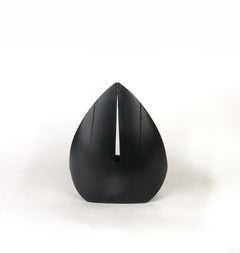
2010s Contemporary Dye Sculptures

Materials

Wood, Lacquer, Dye

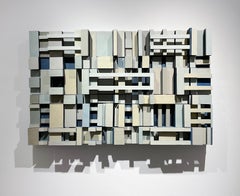
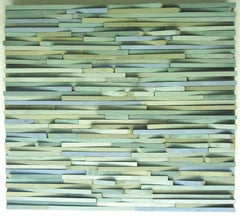
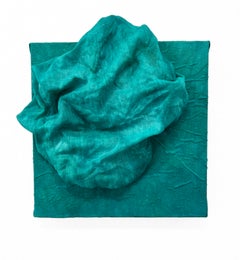
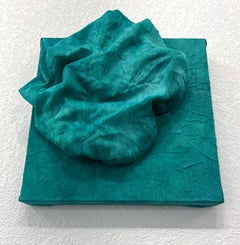
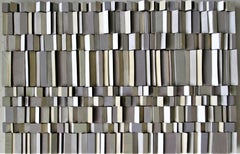
Turnabout: Abstract Geometric 3D Wooden Wall Sculpture in Green, Grey & Beige

Turnabout: Abstract Geometric 3D Wooden Wall Sculpture in Green, Grey & Beige

By Stephen Walling

Located in Hudson, NY

Abstract geometric three-dimensional wood wall sculpture in bright pastel hues of sage green, light grey, and beige "Turnabout", hand-carved wooden wall sculpture by Hudson Valley ar...

Category

2010s Abstract Geometric Dye Sculptures

Materials

Wood, Dye, Acrylic, Wood Panel

Hip, Hip, Hooray! (Memphis Style Multicolored 3D Wooden Wall Sculpture, Square)

Hip, Hip, Hooray! (Memphis Style Multicolored 3D Wooden Wall Sculpture, Square)

By Stephen Walling

Located in Hudson, NY

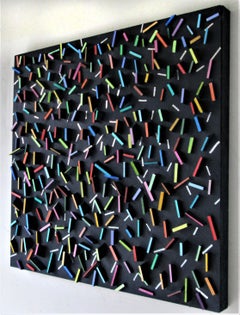
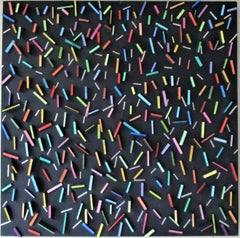
"Hip, Hip, Hooray!", hand-carved wooden wall sculpture by Hudson Valley artist, Stephen Walling, made in 2019 24 x 24 x 2.5 inches Carved wood and acrylic paint on panel Signed, ver...

Category

2010s Abstract Geometric Dye Sculptures

Materials

Wood, Dye, Acrylic, Wood Panel

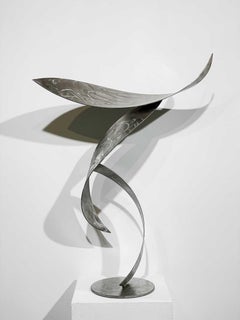
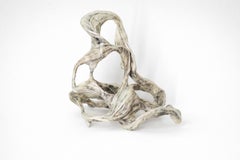
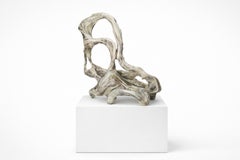
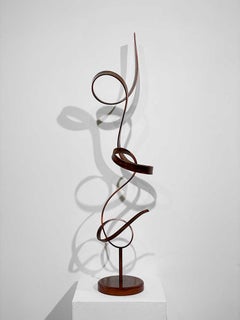
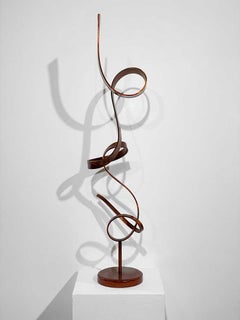
"City Lights, " Abstract Stainless Steel Sculpture

"City Lights, " Abstract Stainless Steel Sculpture

Located in Westport, CT

This mid-sized abstract sculpture by artist Joe Sorge is made with stainless steep, orange dye, and a clear coat. It features a thin strip of steel that appears to curl upwards, looping around itself in loose knots. This flowing form creates unique shadows in its environment. Please note that the white pedestal base pictured is not included. Connecticut-based sculptor Joe Sorge studied at the School of Visual Art (SVA) in New York City. While Joe's body of work is most often made with stainless steel which he sometimes dyes to give the forms bold, solid colors, he also experiments with stone carving, genesa crystals, tiger eye alabaster and others. He works with a variety of colors, finishes, and textures, to create the final piece. Joe's sculptures express the fluidity and tension inherent in the material he uses. His work draws on a modernist vocabulary to create abstract, often whimsical objects...

Category

2010s Contemporary Dye Sculptures

Materials

Stainless Steel

"Sailing Off, " Abstract Stainless Steel Sculpture

"Sailing Off, " Abstract Stainless Steel Sculpture

Located in Westport, CT

This mid-sized abstract contemporary sculpture by artist Joe Sorge is made with stainless steel. The strips of steel that compose this piece have a curved, concave shape and a beautiful texture. The piece casts unique shadows on its surroundings. Please note that the white pedestal base pictured is not included. Connecticut-based sculptor Joe Sorge studied at the School of Visual Art (SVA) in New York City. While Joe's body of work is most often made with stainless steel which he sometimes dyes to give the forms bold, solid colors, he also experiments with stone carving, genesa crystals, tiger eye alabaster and others. He works with a variety of colors, finishes, and textures, to create the final piece. Joe's sculptures express the fluidity and tension inherent in the material he uses. His work draws on a modernist vocabulary to create abstract, often whimsical objects...

Category

2010s Contemporary Dye Sculptures

Materials

Stainless Steel

Patricia Miranda, Pearls Before Swine  2020, cochineal dyes, pages, sewn pearls

Patricia Miranda, Pearls Before Swine 2020, cochineal dyes, pages, sewn pearls

By Patricia Miranda

Located in Darien, CT

Patricia Miranda's work includes interdisciplinary installation, textile, paper and books. The textiles incorporated in these new pieces are vintage linens from her Italian and Irish grandmothers and sourced from friends and strangers around the country. Each donation is documented and integrated into the work. Textile as a form that wraps the body from cradle to grave. The role of lacemaking in the lives of women both economically and historically is packed with metaphorical potential. The relationship of craft and women’s work (re)appropriated by artists today to environmental and social issues is integral to the artist's research. Her work is process oriented; materials are submerged in natural dyes from oak gall wasp nests, cochineal insects, turmeric, indigo, and clay. She forages for raw materials, cook dyes, grind pigments, ecofeminist actions that consider environmental impacts of objects. The process is left visible as dyestuff is unfiltered in the vat and finished work. Sewn into larger works, Miranda incorporates hair, pearls, bone beads, Milagros, cast plaster. The distinct genetics and environmental and cultural history of each material asserts its voice as collaborator rather than medium. The lace inserts a visceral femininity into the pristine gallery, and exerts a ghostly trace of the history of domestic labor. The combination of earth and lace references human and environmental devastation and the conflation of nature and women’s bodies as justifications for exploitation. Mournful and solastalgic, they are lamentations to the violence against women and the earth. Patricia Miranda is an interdisciplinary artist, curator, educator, and founder of The Crit Lab, graduate-level critique seminars and Residency for artists, and MAPSpace project space. She has been Visiting Artist at Vermont Studio Center, the Heckscher Museum, and University of Utah; and been awarded residencies at I-Park, Weir Farm, Vermont Studio Center, and Julio Valdez Printmaking Studio. She received an Anonymous Was a Woman Covid19 Artist Relief Grant, an artist grant from ArtsWestchester/New York State Council on the Arts, and was part of a year-long NEA grant working with homeless youth. Miranda currently teaches graduate curatorial studies at Western Colorado University, and develops programs for K-12, museums, and institutions such as Franklin Furnace. Her work has been exhibited at ODETTA, NYC; ABC No Rio, NYC; Alexey von...

Category

2010s Feminist Dye Sculptures

Materials

Thread, Dye, Found Objects

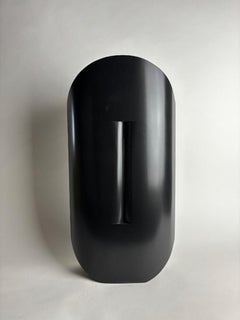
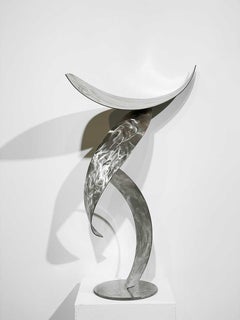
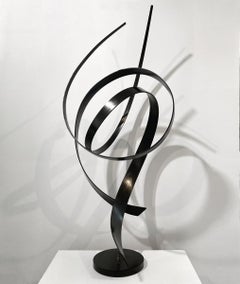
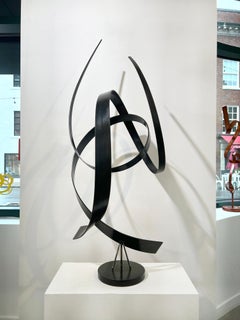
"Late Night Drive, " Abstract Steel Sculpture

"Late Night Drive, " Abstract Steel Sculpture

Located in Westport, CT

This large, abstract sculpture by Joe Sorge is made with steel and black dye. Two strips of steel curl upward from a round, circular base, twisting through and around one another. The sculpture casts unique and intricate shadows on its surrounding environment. The white pedestal pictured is not included. Connecticut-based sculptor Joe Sorge studied at the School of Visual Art (SVA) in New York City. While Joe's body of work is most often made with stainless steel which he sometimes dyes to give the forms bold, solid colors, he also experiments with stone carving, genesa crystals, tiger eye alabaster and others. He works with a variety of colors, finishes, and textures, to create the final piece. Joe's sculptures express the fluidity and tension inherent in the material he uses. His work draws on a modernist vocabulary to create abstract, often whimsical objects...

Category

2010s Contemporary Dye Sculptures

Materials

Steel

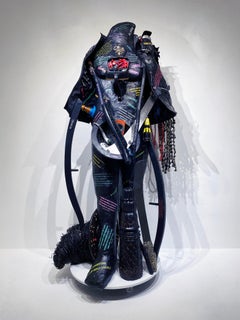
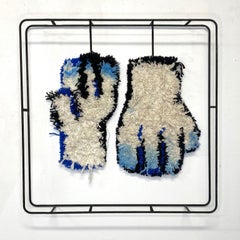
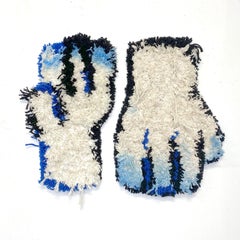
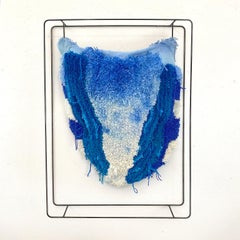
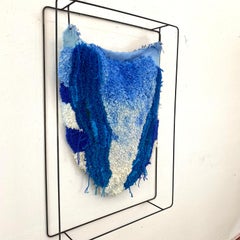
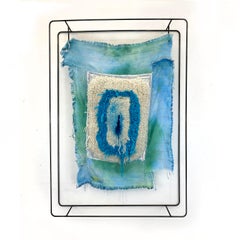
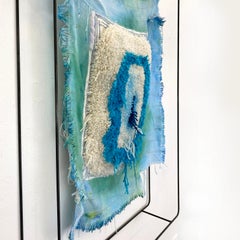
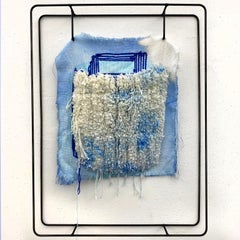
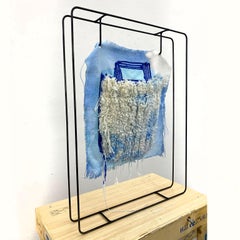
Textile Sculpture on Steel frame: 'Gloves'

Textile Sculpture on Steel frame: 'Gloves'

By Judy Rushin-Knopf

Located in New York, NY

Judy Rushin-Knopf (1959) was born in Dallas Texas and lives in Tallahasee, FL. Her work addresses bodies, access, and connection. She has exhibited her paintings, sculptures, and tex...

Category

2010s Contemporary Dye Sculptures

Materials

Steel

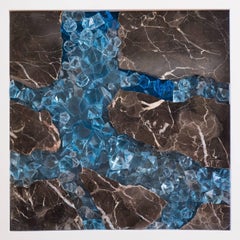
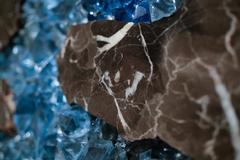
"A Mere Few Years" Wall-Hanging Marble Sculpture with Artist-Made Resin Geodes

"A Mere Few Years" Wall-Hanging Marble Sculpture with Artist-Made Resin Geodes

By Paige Smith (A Common Name)

Located in Philadelphia, PA

Resin cast geodes in cracked marble in a wooden frame by Paige Smith. This piece measures 18in x 18in, with a depth of 1-5/8in. Paige Smith AKA A Common Name, is a multi-disciplinary artist and designer who lives and works in Los Angeles, CA. Smith is most notable for creating “Urban Geode,” a street art series of sculptures that resemble geodes, made entirely of paper and resin casts. Always interested in geology, Smith started to notice the nooks and crannies in the sides of buildings, walls, and abandoned phone booths within her community of the Historical Arts District (in Los Angeles). Seeing this as an opportunity to create, Smith took street-art to a whole new level. Since beginning the project, she has created large-scale installations for well-known brands such as The Standard, Hollywood; The Viper Room...

Category

21st Century and Contemporary Contemporary Dye Sculptures

Materials

Marble

"Framed & Draped: Material Collection" Lia Cook, Contemporary Wall Textile

"Framed & Draped: Material Collection" Lia Cook, Contemporary Wall Textile

By Lia Cook

Located in Wilton, CT

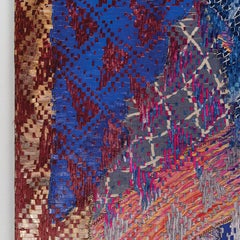
"Framed and Draped: Material Collection", acrylic on abaca, dyes on rayon; woven, 63" x 38", 1989. This contemporary abstract mixed media tapestry was done by California-based Ameri...

Category

1980s Abstract Geometric Dye Sculptures

Materials

Fabric, Tapestry, Thread, Dye, Mixed Media, Acrylic

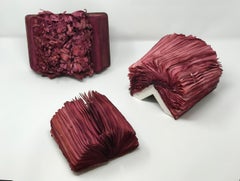
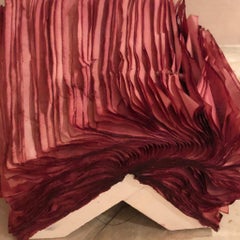
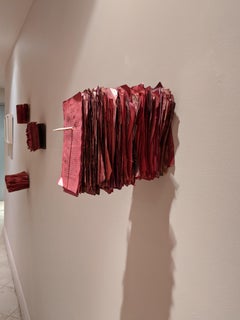
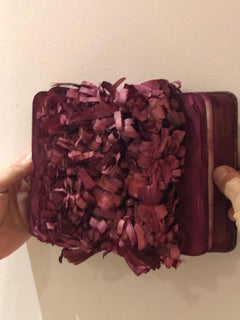
Patricia Miranda, Florilegium Series, 2016, cochineal dyes, antique books, pearl

Patricia Miranda, Florilegium Series, 2016, cochineal dyes, antique books, pearl

By Patricia Miranda

Located in Darien, CT

Patricia Miranda's work includes interdisciplinary installation, textile, paper and books. The textiles incorporated in these new pieces are vintage linens from her Italian and Irish grandmothers and sourced from friends and strangers around the country. Each donation is documented and integrated into the work. Textile as a form that wraps the body from cradle to grave. The role of lacemaking in the lives of women both economically and historically is packed with metaphorical potential. The relationship of craft and women’s work (re)appropriated by artists today to environmental and social issues is integral to the artist's research. Her work is process oriented; materials are submerged in natural dyes from oak gall wasp nests, cochineal insects, turmeric, indigo, and clay. She forages for raw materials, cook dyes, grind pigments, ecofeminist actions that consider environmental impacts of objects. The process is left visible as dyestuff is unfiltered in the vat and finished work. Sewn into larger works, Miranda incorporates hair, pearls, bone beads, Milagros, cast plaster. The distinct genetics and environmental and cultural history of each material asserts its voice as collaborator rather than medium. The lace inserts a visceral femininity into the pristine gallery, and exerts a ghostly trace of the history of domestic labor. The combination of earth and lace references human and environmental devastation and the conflation of nature and women’s bodies as justifications for exploitation. Mournful and solastalgic, they are lamentations to the violence against women and the earth. Patricia Miranda is an interdisciplinary artist, curator, educator, and founder of The Crit Lab, graduate-level critique seminars and Residency for artists, and MAPSpace project space. She has been Visiting Artist at Vermont Studio Center, the Heckscher Museum, and University of Utah; and been awarded residencies at I-Park, Weir Farm, Vermont Studio Center, and Julio Valdez Printmaking Studio. She received an Anonymous Was a Woman Covid19 Artist Relief Grant, an artist grant from ArtsWestchester/New York State Council on the Arts, and was part of a year-long NEA grant working with homeless youth. Miranda currently teaches graduate curatorial studies at Western Colorado University, and develops programs for K-12, museums, and institutions such as Franklin Furnace. Her work has been exhibited at ODETTA, NYC; ABC No Rio, NYC; Alexey von...

Category

2010s Feminist Dye Sculptures

Materials

Fabric, Thread, Plaster, Dye, Found Objects
Patricia Miranda, Florilegium Series, 2016, cochineal dyes, antique books, pearl

Patricia Miranda, Florilegium Series, 2016, cochineal dyes, antique books, pearl

By Patricia Miranda

Located in Darien, CT

Patricia Miranda's work includes interdisciplinary installation, textile, paper and books. The textiles incorporated in these new pieces are vintage linens from her Italian and Irish grandmothers and sourced from friends and strangers around the country. Each donation is documented and integrated into the work. Textile as a form that wraps the body from cradle to grave. The role of lacemaking in the lives of women both economically and historically is packed with metaphorical potential. The relationship of craft and women’s work (re)appropriated by artists today to environmental and social issues is integral to the artist's research. Her work is process oriented; materials are submerged in natural dyes from oak gall wasp nests, cochineal insects, turmeric, indigo, and clay. She forages for raw materials, cook dyes, grind pigments, ecofeminist actions that consider environmental impacts of objects. The process is left visible as dyestuff is unfiltered in the vat and finished work. Sewn into larger works, Miranda incorporates hair, pearls, bone beads, Milagros, cast plaster. The distinct genetics and environmental and cultural history of each material asserts its voice as collaborator rather than medium. The lace inserts a visceral femininity into the pristine gallery, and exerts a ghostly trace of the history of domestic labor. The combination of earth and lace references human and environmental devastation and the conflation of nature and women’s bodies as justifications for exploitation. Mournful and solastalgic, they are lamentations to the violence against women and the earth. Patricia Miranda is an interdisciplinary artist, curator, educator, and founder of The Crit Lab, graduate-level critique seminars and Residency for artists, and MAPSpace project space. She has been Visiting Artist at Vermont Studio Center, the Heckscher Museum, and University of Utah; and been awarded residencies at I-Park, Weir Farm, Vermont Studio Center, and Julio Valdez Printmaking Studio. She received an Anonymous Was a Woman Covid19 Artist Relief Grant, an artist grant from ArtsWestchester/New York State Council on the Arts, and was part of a year-long NEA grant working with homeless youth. Miranda currently teaches graduate curatorial studies at Western Colorado University, and develops programs for K-12, museums, and institutions such as Franklin Furnace. Her work has been exhibited at ODETTA, NYC; ABC No Rio, NYC; Alexey von...

Category

2010s Feminist Dye Sculptures

Materials

Fabric, Thread, Plaster, Dye, Found Objects
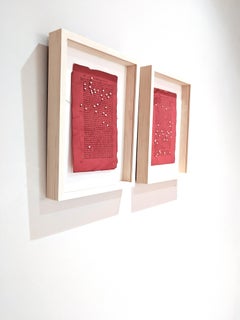
Patricia Miranda, Sentinella, 2020, Battinger lace, synthetic dyes, cast plaster

Patricia Miranda, Sentinella, 2020, Battinger lace, synthetic dyes, cast plaster

By Patricia Miranda

Located in Darien, CT

Patricia Miranda's work includes interdisciplinary installation, textile, paper and books. The textiles incorporated in these new pieces are vintage linens from her Italian and Irish grandmothers and sourced from friends and strangers around the country. Each donation is documented and integrated into the work. Textile as a form that wraps the body from cradle to grave. The role of lacemaking in the lives of women both economically and historically is packed with metaphorical potential. The relationship of craft and women’s work (re)appropriated by artists today to environmental and social issues is integral to the artist's research. Her work is process oriented; materials are submerged in natural dyes from oak gall wasp nests, cochineal insects, turmeric, indigo, and clay. She forages for raw materials, cook dyes, grind pigments, ecofeminist actions that consider environmental impacts of objects. The process is left visible as dyestuff is unfiltered in the vat and finished work. Sewn into larger works, Miranda incorporates hair, pearls, bone beads, Milagros, cast plaster. The distinct genetics and environmental and cultural history of each material asserts its voice as collaborator rather than medium. The lace inserts a visceral femininity into the pristine gallery, and exerts a ghostly trace of the history of domestic labor. The combination of earth and lace references human and environmental devastation and the conflation of nature and women’s bodies as justifications for exploitation. Mournful and solastalgic, they are lamentations to the violence against women and the earth. Patricia Miranda is an interdisciplinary artist, curator, educator, and founder of The Crit Lab, graduate-level critique seminars and Residency for artists, and MAPSpace project space. She has been Visiting Artist at Vermont Studio Center, the Heckscher Museum, and University of Utah; and been awarded residencies at I-Park, Weir Farm, Vermont Studio Center, and Julio Valdez Printmaking Studio. She received an Anonymous Was a Woman Covid19 Artist Relief Grant, an artist grant from ArtsWestchester/New York State Council on the Arts, and was part of a year-long NEA grant working with homeless youth. Miranda currently teaches graduate curatorial studies at Western Colorado University, and develops programs for K-12, museums, and institutions such as Franklin Furnace. Her work has been exhibited at ODETTA, NYC; ABC No Rio, NYC; Alexey von...

Category

2010s Feminist Dye Sculptures

Materials

Fabric, Dye, Plastic

Joel Urruty - Gwen, Sculpture 2024

Joel Urruty - Gwen, Sculpture 2024

By Joel Urruty

Located in Stamford, CT

Medium: Dyedwood As an artist I strive to create elegant sculptures that capture the true essence of the subject matter. Form, line and surface are used as the visual language. The ...

Category

2010s Contemporary Dye Sculptures

Materials

Wood, Dye

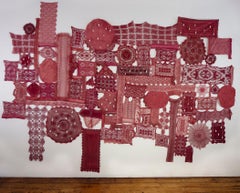
Patricia Miranda, Lamentations for Ermenegilda; 2020, lace, cochineal dye, thread

Patricia Miranda, Lamentations for Ermenegilda; 2020, lace, cochineal dye, thread

By Patricia Miranda

Located in Darien, CT

Patricia Miranda's work includes interdisciplinary installation, textile, paper and books. The textiles incorporated in these new pieces are vintage linens from her Italian and Irish grandmothers and sourced from friends and strangers around the country. Each donation is documented and integrated into the work. Textile as a form that wraps the body from cradle to grave. The role of lacemaking in the lives of women both economically and historically is packed with metaphorical potential. The relationship of craft and women’s work (re)appropriated by artists today to environmental and social issues is integral to the artist's research. Her work is process oriented; materials are submerged in natural dyes from oak gall wasp nests, cochineal insects, turmeric, indigo, and clay. She forages for raw materials, cook dyes, grind pigments, ecofeminist actions that consider environmental impacts of objects. The process is left visible as dyestuff is unfiltered in the vat and finished work. Sewn into larger works, Miranda incorporates hair, pearls, bone beads, Milagros, cast plaster. The distinct genetics and environmental and cultural history of each material asserts its voice as collaborator rather than medium. The lace inserts a visceral femininity into the pristine gallery, and exerts a ghostly trace of the history of domestic labor. The combination of earth and lace references human and environmental devastation and the conflation of nature and women’s bodies as justifications for exploitation. Mournful and solastalgic, they are lamentations to the violence against women and the earth. Patricia Miranda is an interdisciplinary artist, curator, educator, and founder of The Crit Lab, graduate-level critique seminars and Residency for artists, and MAPSpace project space. She has been Visiting Artist at Vermont Studio Center, the Heckscher Museum, and University of Utah; and been awarded residencies at I-Park, Weir Farm, Vermont Studio Center, and Julio Valdez Printmaking Studio. She received an Anonymous Was a Woman Covid19 Artist Relief Grant, an artist grant from ArtsWestchester/New York State Council on the Arts, and was part of a year-long NEA grant working with homeless youth. Miranda currently teaches graduate curatorial studies at Western Colorado University, and develops programs for K-12, museums, and institutions such as Franklin Furnace. Her work has been exhibited at ODETTA, NYC; ABC No Rio, NYC; Alexey von...

Category

2010s Feminist Dye Sculptures

Materials

Ceramic, Fabric, Thread, Dye, Found Objects
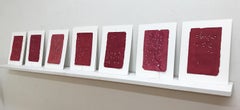
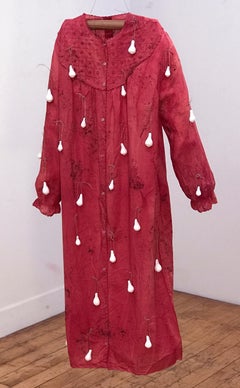
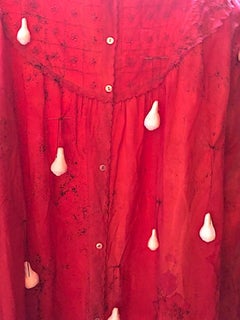
Patricia Miranda, Dreaming Awake, 2020, nightdress, cochineal dyes, plaster,

Patricia Miranda, Dreaming Awake, 2020, nightdress, cochineal dyes, plaster,

By Patricia Miranda

Located in Darien, CT

Patricia Miranda's work includes interdisciplinary installation, textile, paper and books. The textiles incorporated in these new pieces are vintage linens from her Italian and Irish grandmothers and sourced from friends and strangers around the country. Each donation is documented and integrated into the work. Textile as a form that wraps the body from cradle to grave. The role of lacemaking in the lives of women both economically and historically is packed with metaphorical potential. The relationship of craft and women’s work (re)appropriated by artists today to environmental and social issues is integral to the artist's research. Her work is process oriented; materials are submerged in natural dyes from oak gall wasp nests, cochineal insects, turmeric, indigo, and clay. She forages for raw materials, cook dyes, grind pigments, ecofeminist actions that consider environmental impacts of objects. The process is left visible as dyestuff is unfiltered in the vat and finished work. Sewn into larger works, Miranda incorporates hair, pearls, bone beads, Milagros, cast plaster. The distinct genetics and environmental and cultural history of each material asserts its voice as collaborator rather than medium. The lace inserts a visceral femininity into the pristine gallery, and exerts a ghostly trace of the history of domestic labor. The combination of earth and lace references human and environmental devastation and the conflation of nature and women’s bodies as justifications for exploitation. Mournful and solastalgic, they are lamentations to the violence against women and the earth. Patricia Miranda is an interdisciplinary artist, curator, educator, and founder of The Crit Lab, graduate-level critique seminars and Residency for artists, and MAPSpace project space. She has been Visiting Artist at Vermont Studio Center, the Heckscher Museum, and University of Utah; and been awarded residencies at I-Park, Weir Farm, Vermont Studio Center, and Julio Valdez Printmaking Studio. She received an Anonymous Was a Woman Covid19 Artist Relief Grant, an artist grant from ArtsWestchester/New York State Council on the Arts, and was part of a year-long NEA grant working with homeless youth. Miranda currently teaches graduate curatorial studies at Western Colorado University, and develops programs for K-12, museums, and institutions such as Franklin Furnace. Her work has been exhibited at ODETTA, NYC; ABC No Rio, NYC; Alexey von...

Category

2010s Feminist Dye Sculptures

Materials

Fabric, Thread, Dye, Found Objects, Plaster

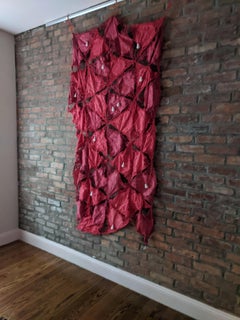
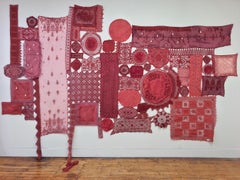
Patricia Miranda, Lamentations for Rebecca; 2020, lace, cochineal dye, thread

Patricia Miranda, Lamentations for Rebecca; 2020, lace, cochineal dye, thread

By Patricia Miranda

Located in Darien, CT

Patricia Miranda's work includes interdisciplinary installation, textile, paper and books. The textiles incorporated in these new pieces are vintage linens from her Italian and Irish grandmothers and sourced from friends and strangers around the country. Each donation is documented and integrated into the work. Textile as a form that wraps the body from cradle to grave. The role of lacemaking in the lives of women both economically and historically is packed with metaphorical potential. The relationship of craft and women’s work (re)appropriated by artists today to environmental and social issues is integral to the artist's research. Her work is process oriented; materials are submerged in natural dyes from oak gall wasp nests, cochineal insects, turmeric, indigo, and clay. She forages for raw materials, cook dyes, grind pigments, ecofeminist actions that consider environmental impacts of objects. The process is left visible as dyestuff is unfiltered in the vat and finished work. Sewn into larger works, Miranda incorporates hair, pearls, bone beads, Milagros, cast plaster. The distinct genetics and environmental and cultural history of each material asserts its voice as collaborator rather than medium. The lace inserts a visceral femininity into the pristine gallery, and exerts a ghostly trace of the history of domestic labor. The combination of earth and lace references human and environmental devastation and the conflation of nature and women’s bodies as justifications for exploitation. Mournful and solastalgic, they are lamentations to the violence against women and the earth. Patricia Miranda is an interdisciplinary artist, curator, educator, and founder of The Crit Lab, graduate-level critique seminars and Residency for artists, and MAPSpace project space. She has been Visiting Artist at Vermont Studio Center, the Heckscher Museum, and University of Utah; and been awarded residencies at I-Park, Weir Farm, Vermont Studio Center, and Julio Valdez Printmaking Studio. She received an Anonymous Was a Woman Covid19 Artist Relief Grant, an artist grant from ArtsWestchester/New York State Council on the Arts, and was part of a year-long NEA grant working with homeless youth. Miranda currently teaches graduate curatorial studies at Western Colorado University, and develops programs for K-12, museums, and institutions such as Franklin Furnace. Her work has been exhibited at ODETTA, NYC; ABC No Rio, NYC; Alexey von...

Category

2010s Feminist Dye Sculptures

Materials

Ceramic, Fabric, Thread, Dye, Found Objects
Joel Urruty - Redwhiteblack, Sculpture 2024

Joel Urruty - Redwhiteblack, Sculpture 2024

By Joel Urruty

Located in Stamford, CT

Medium: Charred and dyed basswood As an artist I strive to create elegant sculptures that capture the true essence of the subject matter. Form, line and surface are used as the visu...

Category

2010s Contemporary Dye Sculptures

Materials

Wood, Dye

Joel Urruty - Pod, Sculpture 2024

Joel Urruty - Pod, Sculpture 2024

By Joel Urruty

Located in Stamford, CT

Medium: dyed wood As an artist I strive to create elegant sculptures that capture the true essence of the subject matter. Form, line and surface are used as the visual language. The...

Category

2010s Contemporary Dye Sculptures

Materials

Wood, Dye

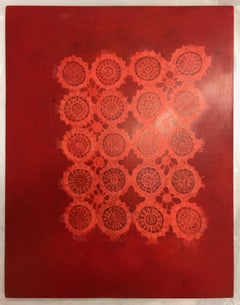
Patricia Miranda, Seeing Red Lace, 2020, egg tempera on panel

Patricia Miranda, Seeing Red Lace, 2020, egg tempera on panel

By Patricia Miranda

Located in Darien, CT

Patricia Miranda's work includes interdisciplinary installation, textile, paper and books. The textiles incorporated in these new pieces are vintage linens from her Italian and Irish grandmothers and sourced from friends and strangers around the country. Each donation is documented and integrated into the work. Textile as a form that wraps the body from cradle to grave. The role of lacemaking in the lives of women both economically and historically is packed with metaphorical potential. The relationship of craft and women’s work (re)appropriated by artists today to environmental and social issues is integral to the artist's research. Her work is process oriented; materials are submerged in natural dyes from oak gall wasp nests, cochineal insects, turmeric, indigo, and clay. She forages for raw materials, cook dyes, grind pigments, ecofeminist actions that consider environmental impacts of objects. The process is left visible as dyestuff is unfiltered in the vat and finished work. Sewn into larger works, Miranda incorporates hair, pearls, bone beads, Milagros, cast plaster. The distinct genetics and environmental and cultural history of each material asserts its voice as collaborator rather than medium. The lace inserts a visceral femininity into the pristine gallery, and exerts a ghostly trace of the history of domestic labor. The combination of earth and lace references human and environmental devastation and the conflation of nature and women’s bodies as justifications for exploitation. Mournful and solastalgic, they are lamentations to the violence against women and the earth. Patricia Miranda is an interdisciplinary artist, curator, educator, and founder of The Crit Lab, graduate-level critique seminars and Residency for artists, and MAPSpace project space. She has been Visiting Artist at Vermont Studio Center, the Heckscher Museum, and University of Utah; and been awarded residencies at I-Park, Weir Farm, Vermont Studio Center, and Julio Valdez Printmaking Studio. She received an Anonymous Was a Woman Covid19 Artist Relief Grant, an artist grant from ArtsWestchester/New York State Council on the Arts, and was part of a year-long NEA grant working with homeless youth. Miranda currently teaches graduate curatorial studies at Western Colorado University, and develops programs for K-12, museums, and institutions such as Franklin Furnace. Her work has been exhibited at ODETTA, NYC; ABC No Rio, NYC; Alexey von...
Category

2010s Feminist Dye Sculptures

Materials

Fabric, Plastic, Dye

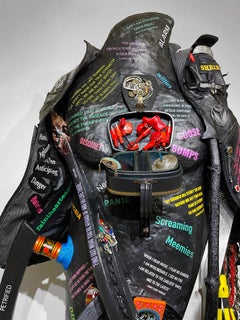
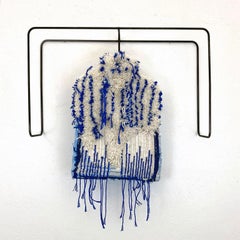
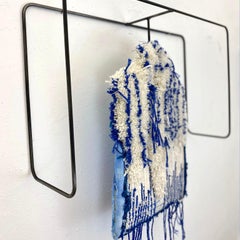
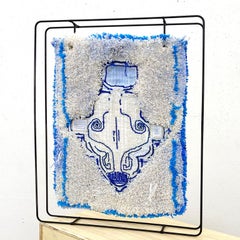
Textile Sculpture on Steel frame: 'Collar'

Textile Sculpture on Steel frame: 'Collar'

By Judy Rushin-Knopf

Located in New York, NY

Judy Rushin-Knopf (1959) was born in Dallas Texas and lives in Tallahasee, FL. Her work addresses bodies, access, and connection. She has exhibited her paintings, sculptures, and tex...

Category

2010s Contemporary Dye Sculptures

Materials

Steel

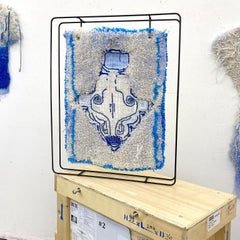
Textile Sculpture on Steel frame: 'Bust

Textile Sculpture on Steel frame: 'Bust

By Judy Rushin-Knopf

Located in New York, NY

Judy Rushin-Knopf (1959) was born in Dallas Texas and lives in Tallahasee, FL. Her work addresses bodies, access, and connection. She has exhibited her paintings, sculptures, and tex...

Category

2010s Contemporary Dye Sculptures

Materials

Steel

To Find Each Other, We Have to Leave Our Depths; To Survive, We Can Not Stay

To Find Each Other, We Have to Leave Our Depths; To Survive, We Can Not Stay

Located in Boston, MA

Original Contemporary Sculpture Wood, plastic whale, plastic squid, dyes, pigmented finish, clear finish Artist's Commentary: "The sperm whales of the world consume more squid each year by mass than the mass of the human population of the planet. It's a lot of squid. They're almost constantly hunting squid. What you may not have known is that there is some evidence giant squid...

Category

21st Century and Contemporary Abstract Dye Sculptures

Materials

Wood, Dye

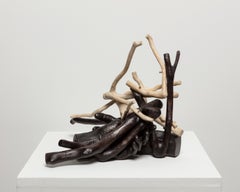
Widows and Maidens #6

Widows and Maidens #6

By Sherry Owens

Located in New Orleans, LA

Sherry Owens Windows and Maidens #6, 2019 Bronze, patina, crepe myrtle, dye, milk paint, wax 11 x 14 3/4 x 11 3/4 inches For over 30 years, sculptor Sherry Owens has used the sinewy crepe myrtle tree to tell her story of the Texas landscape, death, renewal, beauty, and of today’s growing environmental concerns. Remnants of personal stories, visions and observations in nature are the driving forces in her work. She believes that what we see and do in our daily lives leaves a mark on our planet. It is the direct impact of human activities on the natural world, which is visualized in her artistic practice. She creates connections with nature using crepe myrtle trees found along the side of the road. Each stick is hand-carved and cut to fit, then laid in place and secured with a small myrtle peg. What takes precedence in the laborious process is the importance of detail and evidence of the artist’s hand and her interaction with the materials. Sherry Owens is a native Texan, currently living and working in Dallas, TX. She received a BFA from Southern Methodist University. Recent Texas solo exhibitions include The Grace Museum; Cris Worley Fine Arts; Martin Museum of Art; Art Museum of Southeast Texas; and a two-person site-specific installation at the Umlauf Sculpture Garden & Museum. She was also included in recent exhibitions at the Amon Carter Museum of American Art, TX and the Ogden Museum of Southern Art, LA. She has exhibited internationally in Austria, Denmark, Germany, Greece, India, Japan, Peru, and Turkey. Her work is currently on view in the Ground Zero 360 Remembrance Exhibition at the Museum of Biblical Art...

Category

2010s Contemporary Dye Sculptures

Materials

Bronze

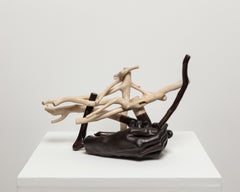
Widows and Maidens #5

Widows and Maidens #5

By Sherry Owens

Located in New Orleans, LA

Sherry Owens Windows and Maidens #5, 2019 Bronze, patina, crepe myrtle, dye, milk paint, wax 9 1/4 x 14 1/4 x 9 inches For over 30 years, sculptor Sherry Owens has used the sinewy crepe myrtle tree to tell her story of the Texas landscape, death, renewal, beauty, and of today’s growing environmental concerns. Remnants of personal stories, visions and observations in nature are the driving forces in her work. She believes that what we see and do in our daily lives leaves a mark on our planet. It is the direct impact of human activities on the natural world, which is visualized in her artistic practice. She creates connections with nature using crepe myrtle trees found along the side of the road. Each stick is hand-carved and cut to fit, then laid in place and secured with a small myrtle peg. What takes precedence in the laborious process is the importance of detail and evidence of the artist’s hand and her interaction with the materials. Sherry Owens is a native Texan, currently living and working in Dallas, TX. She received a BFA from Southern Methodist University. Recent Texas solo exhibitions include The Grace Museum; Cris Worley Fine Arts; Martin Museum of Art; Art Museum of Southeast Texas; and a two-person site-specific installation at the Umlauf Sculpture Garden & Museum. She was also included in recent exhibitions at the Amon Carter Museum of American Art, TX and the Ogden Museum of Southern Art, LA. She has exhibited internationally in Austria, Denmark, Germany, Greece, India, Japan, Peru, and Turkey. Her work is currently on view in the Ground Zero 360 Remembrance Exhibition at the Museum of Biblical Art...

Category

2010s Contemporary Dye Sculptures

Materials

Bronze

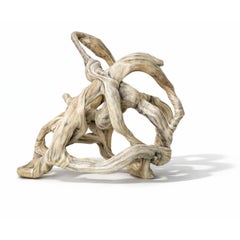
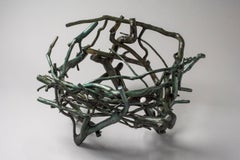
Waterhole

Sherry OwensWaterhole, 2017

Price Upon Request

Waterhole

By Sherry Owens

Located in New Orleans, LA

Sherry Owens Waterhole, 2017 Crepe myrtle, dye, paint, wax 24 x 36 x 36 inches For over 30 years, sculptor Sherry Owens has used the sinewy crepe myrtle tree to tell her story of the Texas landscape, death, renewal, beauty, and of today’s growing environmental concerns. Remnants of personal stories, visions and observations in nature are the driving forces in her work. She believes that what we see and do in our daily lives leaves a mark on our planet. It is the direct impact of human activities on the natural world, which is visualized in her artistic practice. She creates connections with nature using crepe myrtle trees found along the side of the road. Each stick is hand-carved and cut to fit, then laid in place and secured with a small myrtle peg. What takes precedence in the laborious process is the importance of detail and evidence of the artist’s hand and her interaction with the materials. Sherry Owens is a native Texan, currently living and working in Dallas, TX. She received a BFA from Southern Methodist University. Recent Texas solo exhibitions include The Grace Museum; Cris Worley Fine Arts; Martin Museum of Art; Art Museum of Southeast Texas; and a two-person site-specific installation at the Umlauf Sculpture Garden & Museum. She was also included in recent exhibitions at the Amon Carter Museum of American Art, TX and the Ogden Museum of Southern Art, LA. She has exhibited internationally in Austria, Denmark, Germany, Greece, India, Japan, Peru, and Turkey. Her work is currently on view in the Ground Zero 360 Remembrance Exhibition at the Museum of Biblical Art...

Category

2010s Contemporary Dye Sculptures

Materials

Wood, Paint, Dye, Wax

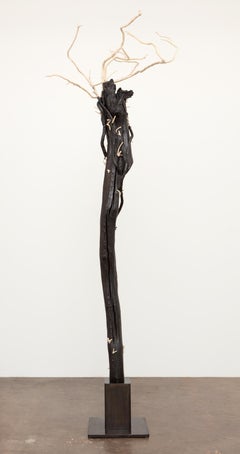
Reawakening the Spirit

Reawakening the Spirit

By Sherry Owens

Located in New Orleans, LA

Sherry Owens Reawakening the Spirit, 2019 Crepe myrtle, steel, milk paint, dye, oil, wax 108 1/2 x 36 x 31 inches For over 30 years, sculptor Sherry Owens has used the sinewy crepe myrtle tree to tell her story of the Texas landscape, death, renewal, beauty, and of today’s growing environmental concerns. Remnants of personal stories, visions and observations in nature are the driving forces in her work. She believes that what we see and do in our daily lives leaves a mark on our planet. It is the direct impact of human activities on the natural world, which is visualized in her artistic practice. She creates connections with nature using crepe myrtle trees found along the side of the road. Each stick is hand-carved and cut to fit, then laid in place and secured with a small myrtle peg. What takes precedence in the laborious process is the importance of detail and evidence of the artist’s hand and her interaction with the materials. Sherry Owens is a native Texan, currently living and working in Dallas, TX. She received a BFA from Southern Methodist University. Recent Texas solo exhibitions include The Grace Museum; Cris Worley Fine Arts; Martin Museum of Art; Art Museum of Southeast Texas; and a two-person site-specific installation at the Umlauf Sculpture Garden & Museum. She was also included in recent exhibitions at the Amon Carter Museum of American Art, TX and the Ogden Museum of Southern Art, LA. She has exhibited internationally in Austria, Denmark, Germany, Greece, India, Japan, Peru, and Turkey. Her work is currently on view in the Ground Zero 360 Remembrance Exhibition at the Museum of Biblical Art...

Category

2010s Contemporary Dye Sculptures

Materials

Steel

Dye sculptures for sale on 1stDibs.

Find a wide variety of authentic Dye sculptures available on 1stDibs. While artists have worked in this medium across a range of time periods, art made with this material during the 21st Century is especially popular. If you’re looking to add sculptures created with this material to introduce a provocative pop of color and texture to an otherwise neutral space in your home, the works available on 1stDibs include elements of red, blue, green, purple and other colors. There are many well-known artists whose body of work includes ceramic sculptures. Popular artists on 1stDibs associated with pieces like this include Judy Rushin-Knopf, Sherry Owens, Patricia Miranda, and Hsu Yun Chin. Frequently made by artists working in the Contemporary, Abstract, all of these pieces for sale are unique and many will draw the attention of guests in your home. Not every interior allows for large Dye sculptures, so small editions measuring 0.12 inches across are also available

Read More

At Hosfelt Gallery, Bertoia Masterworks Complement Dynamic Contemporary Art

For nearly three decades, San Francisco–based Todd Hosfelt has curated against the grain — with a show on the legendary modernist Harry Bertoia the latest case in point.

This Weathered-Steel Sculpture Distills a Form of Protest into a Minimalist Monument

Part of Alejandro Vega Beuvrin’s “Barricada” series, the work is a subversive tribute to the street smarts of citizen activists.

How the Chunky, Funky Ceramics of 5 Mid-Century American Artists Balanced Out Slick Modernism

Get to know the innovators behind the pottery countercultural revolution.

Art Brings the Drama in These Intriguing 1stDibs 50 Spaces

The world’s top designers explain how they display art to elicit the natural (and supernatural) energy of home interiors.

Chryssa’s 1962 Neon Sculpture Was Way ahead of the Art-World Curve

By working with lettering, neon and Pop imagery, Chryssa pioneered several postmodern themes at a time when most male artists detested commercial mediums.

How to Spot a Fake KAWS Figure

KAWS art toys have developed an avid audience in recent decades, and as in any robust collectible market, counterfeiters have followed the mania. Of course, you don’t have to worry about that on 1stDibs, where all our sellers are highly vetted.

A Giant Wedding Cake Has Us Looking at Portuguese Tiles in a New Light

At Waddesdon Manor, artist Joana Vasconcelos has installed a three-tiered patisserie inspired by the narrative tile work of her homeland. We take a look at the cake sculpture and how Portuguese tiles have been used in architecture from the 17th century to today.

These Soft Sculptures Are Childhood Imaginary Friends Come to Life

Miami artist and designer Gabriela Noelle’s fantastical creations appeal to the Peter Pan in all of us.