Pop artists took familiar images from advertising, comic books, consumer products and popular culture and turned them into fine art. If you’re looking to collect Pop art, understanding its origins, visual language and important practitioners will help you buy with confidence.
What Is Pop Art? Origins and Characteristics
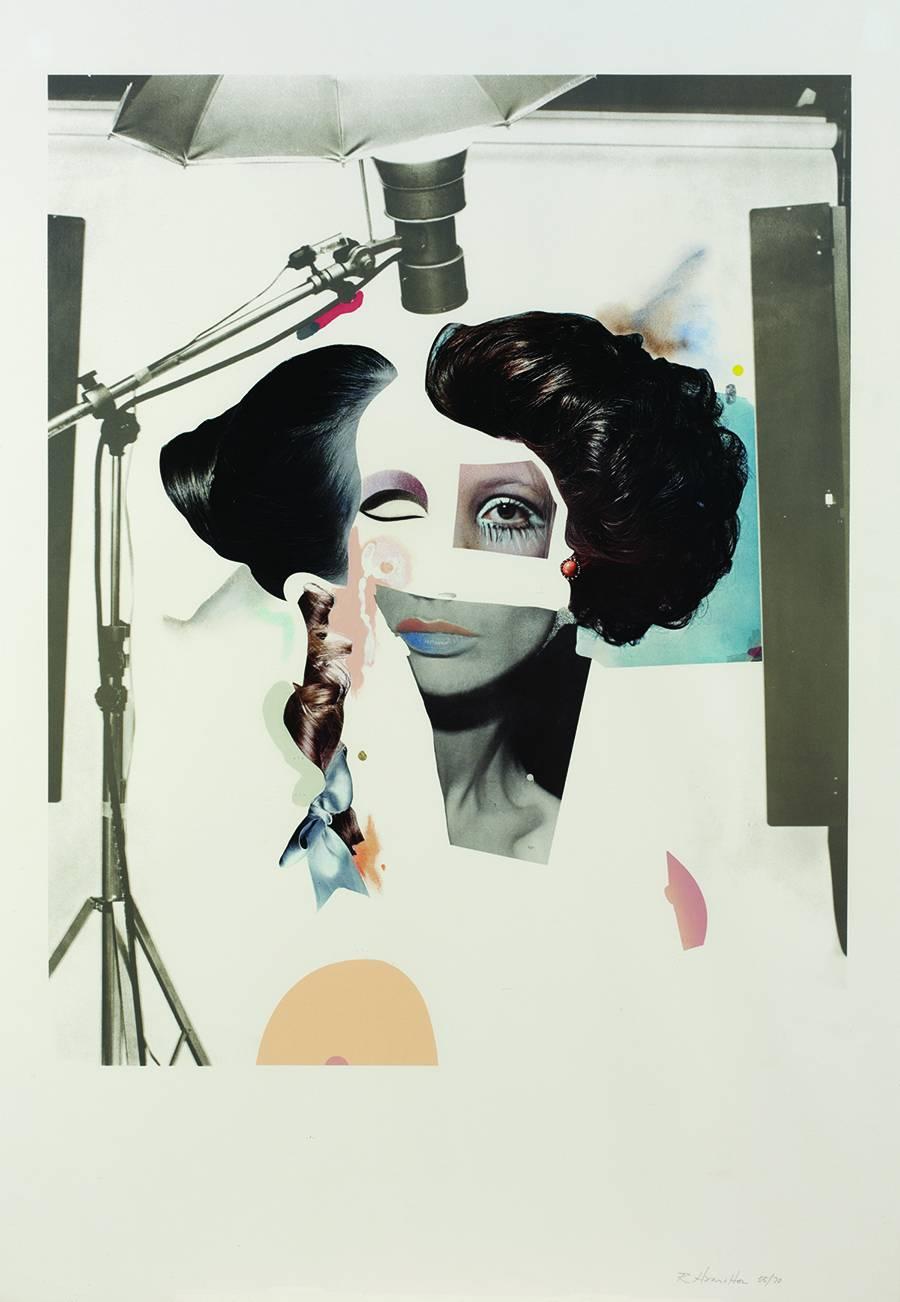
Pop art developed in Great Britain during the 1950s as artists began creating works that explored the influence of advertising, movies, magazines, consumer goods and other forms of mass culture.
One of the earliest Pop art pieces was British artist Richard Hamilton’s 1956 collage Just what is it that makes today’s homes so different, so appealing?
By the early 1960s, Pop art was becoming popular in the United States, as artists broke with the Abstract Expressionist movement that had dominated postwar art. Instead of expressive brushwork, Pop artists favored crisp edges, recognizable subjects, repetition and techniques associated with commercial printing.
Although individual artists developed distinctive approaches, Pop art in general displays the following characteristics:
- Bold, instantly recognizable forms
- Bright primary colors
- Images borrowed or adapted from advertising, packaging, comics and mass media
- Repetition and seriality
- Clean lines, hard edges
- Irony, humor and the playful treatment of consumer culture
The works blurred the traditional distinction between so-called high art and the images infusing daily life.
Types of Pop Art
The different styles of Pop art are defined by their different subjects, materials and approaches.
- The comic-book style uses large panels, speech balloons and Ben-Day dots.
- Works focused on consumer culture and advertising feature branded products, packaging and celebrities.
- Mixed-media collages combine photographs, printed material, painting and other media.
- Neo-pop is a contemporary movement that shares Pop art’s interest in consumer culture and recognizable imagery but from a contemporary viewpoint.
Key Pop Art Artists to Know
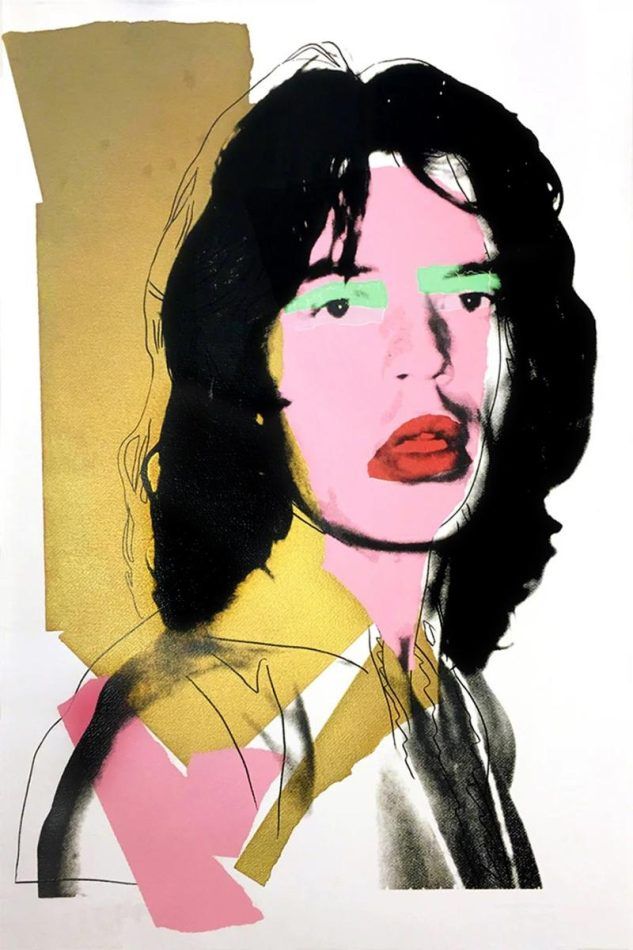
Andy Warhol turned images from commercial and celebrity culture into some of the movement’s most recognizable works. At his New York studio, the Factory, he used screen-printing to create repeating images of public figures like Marilyn Monroe and products like Campbell’s soup. You can explore more examples on 1stDibs’ Andy Warhol page.
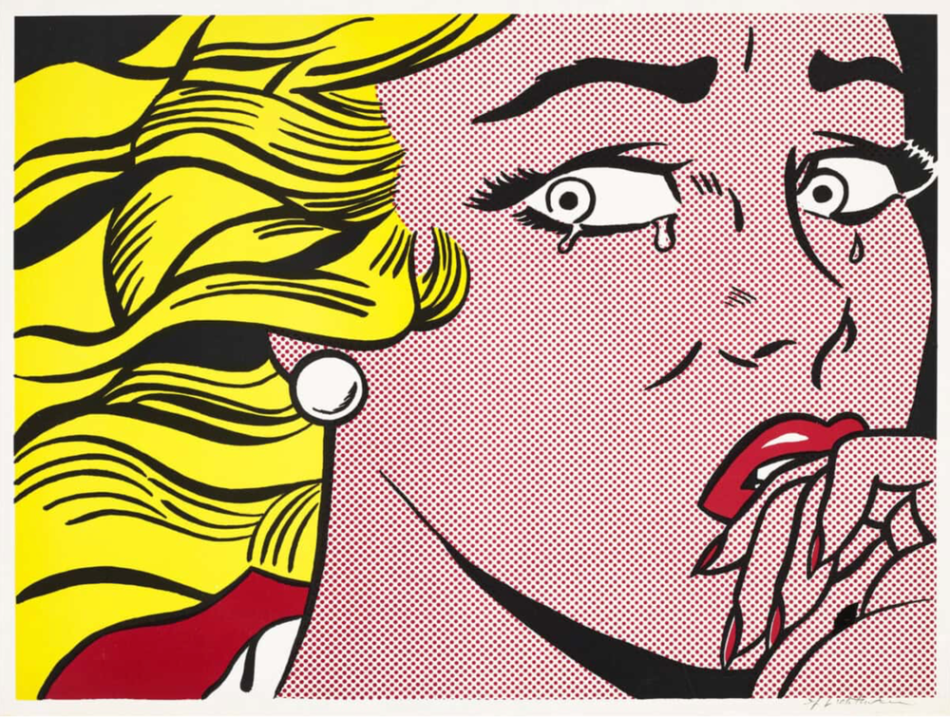
Roy Lichtenstein borrowed the visual language of comic books, including thick outlines, speech balloons and Ben-Day dots. Works like Crying Girl and Whaam! enlarged images associated with inexpensive commercial printing and presented the result as fine art. Find out more on 1stDibs’ Roy Lichtenstein page.
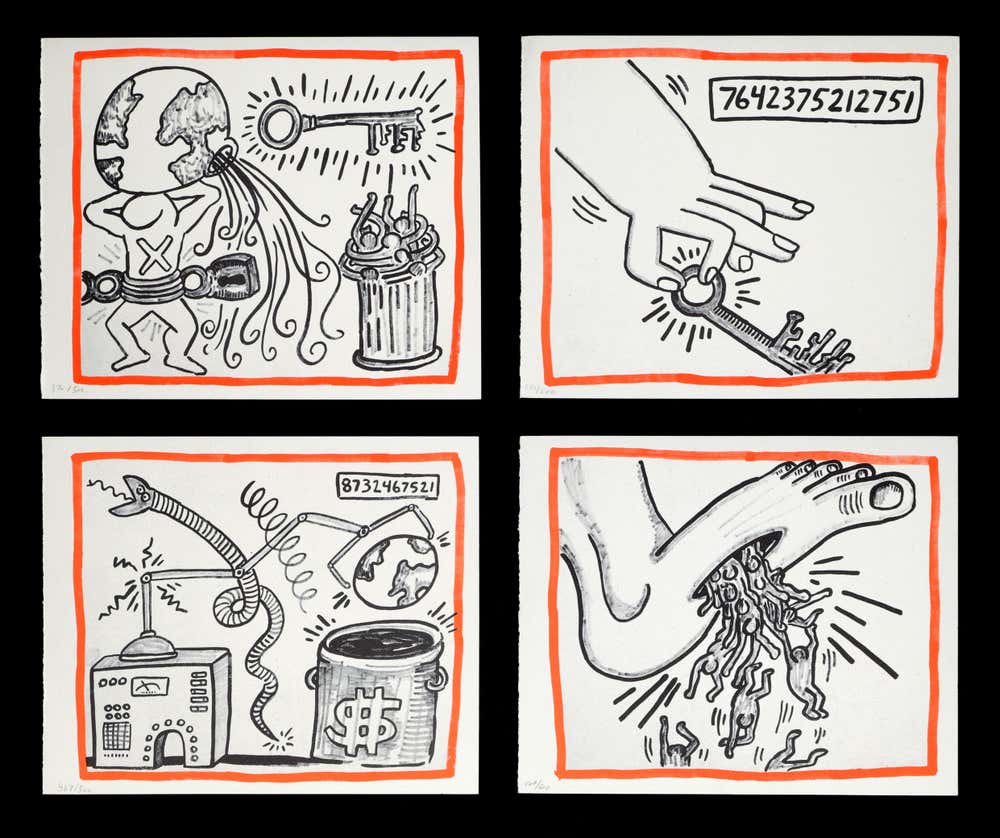
Keith Haring applied Pop’s bold graphics to the street culture of the 1980s. His energetic figures first appeared as chalk drawings in unused New York subway advertising spots. Later, he opened the Pop Shop to make his images available on affordable merchandise. Browse 1stDibs’ Keith Haring page for examples of his work.
Jeff Koons, often associated with Neo-pop, transformed familiar commercial objects and kitsch into highly polished sculptures, like the ones in his well-known “Balloon Dog” series. Browse Jeff Koons’s work on 1stDibs.
Rosalyn Drexler brought a distinctive approach to American Pop. A painter, novelist, playwright and former professional wrestler, she often incorporated images from newspapers and magazines in vividly colored paintings. Her work referenced movies, crime stories, celebrities and popular entertainment while also addressing violence and gender roles.
Originals vs. Prints vs. Editions vs. Reproductions
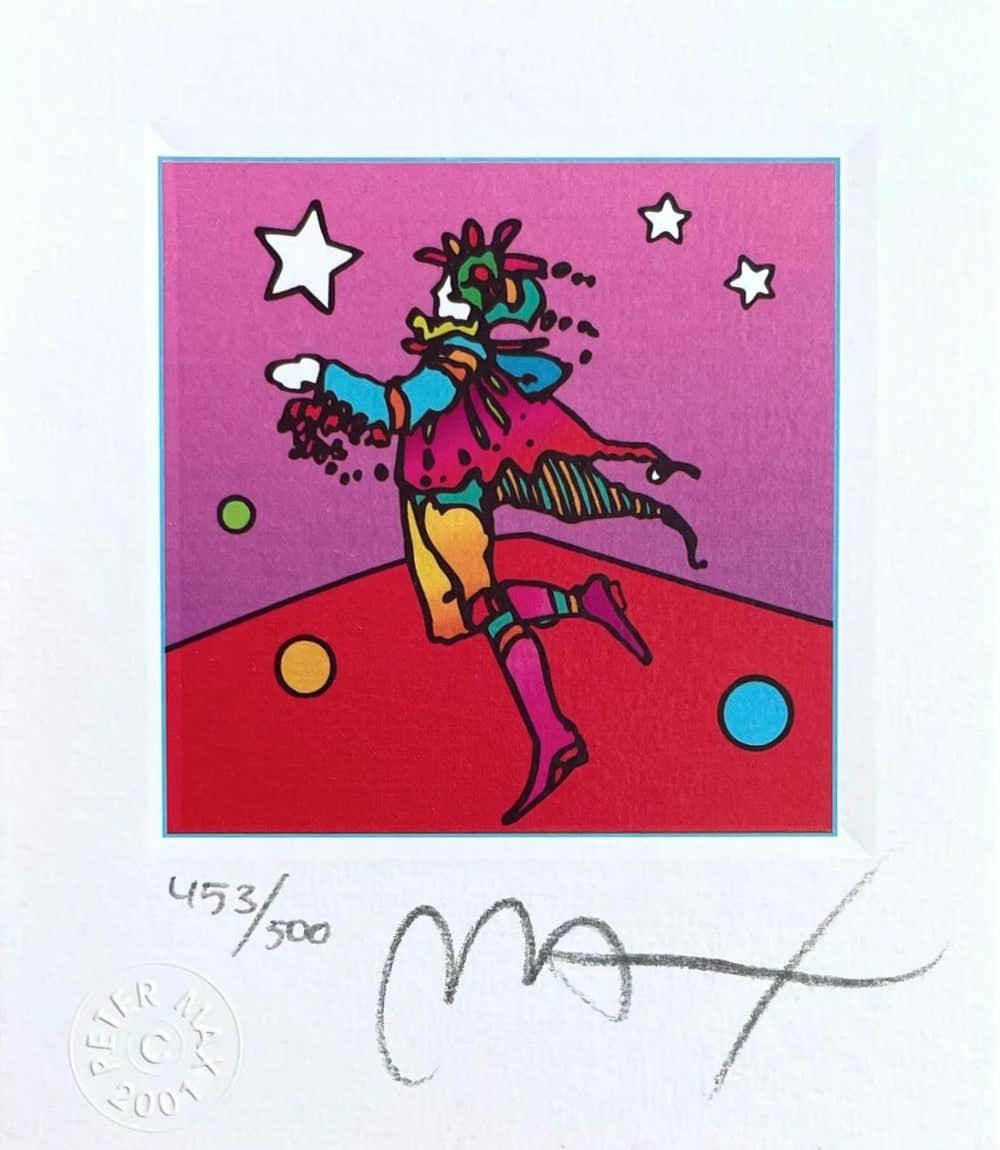
“Original” usually refers to a one-of-a-kind artwork, like a painting or drawing. But it can also be applied to a fine-art print. An original fine-art print is one that the artist created as part of an edition rather than reproducing a pre-existing work.
A limited edition is a set of prints containing a defined number of impressions. A print with the notation 24/125, for example, is the 24th impression of a set of 125. A print with a lower number isn’t necessarily more valuable than one with a higher number. Collectors usually pay less attention to the impression number than to the edition size, the print’s condition and provenance.
Fine-art prints may have pencil signatures and edition numbers, but not all legitimate ones do. Some artists used stamps or estate signatures. So, the important point is whether those details appear just as they do on the originally issued work.
An open-edition reproduction or poster re-creates an existing image without a fixed edition size. Reproductions and posters are not as valued by collectors as impressions from authorized limited editions.
Screen-printing existed as a fine-art process before Warhol, but he pushed the technique in new directions through photographic techniques and bold color changes. For more background, see 1stDibs’ guide to printmaking techniques, and browse Pop Art Prints and Multiples.
What to Look for When Evaluating a Pop Art Piece
Before buying a Pop art print or reproduction, look closely at its condition. Works on paper can develop fading, foxing (deterioration) or tears, and previous restoration efforts can affect value. Check the edition size and number along with any signature, stamp, blind stamp (colorless embossed impression) or publisher’s mark.
For higher-value works, provenance — the documented history of ownership — can help establish authenticity. Provenance is especially important with widely reproduced artists like Warhol and Lichtenstein. Learn more about 1stDibs’ seller vetting process, and discover 10 Reasons Art Collectors Are Obsessed with Andy Warhol.
How to Choose Pop Art for Your Space and Collection
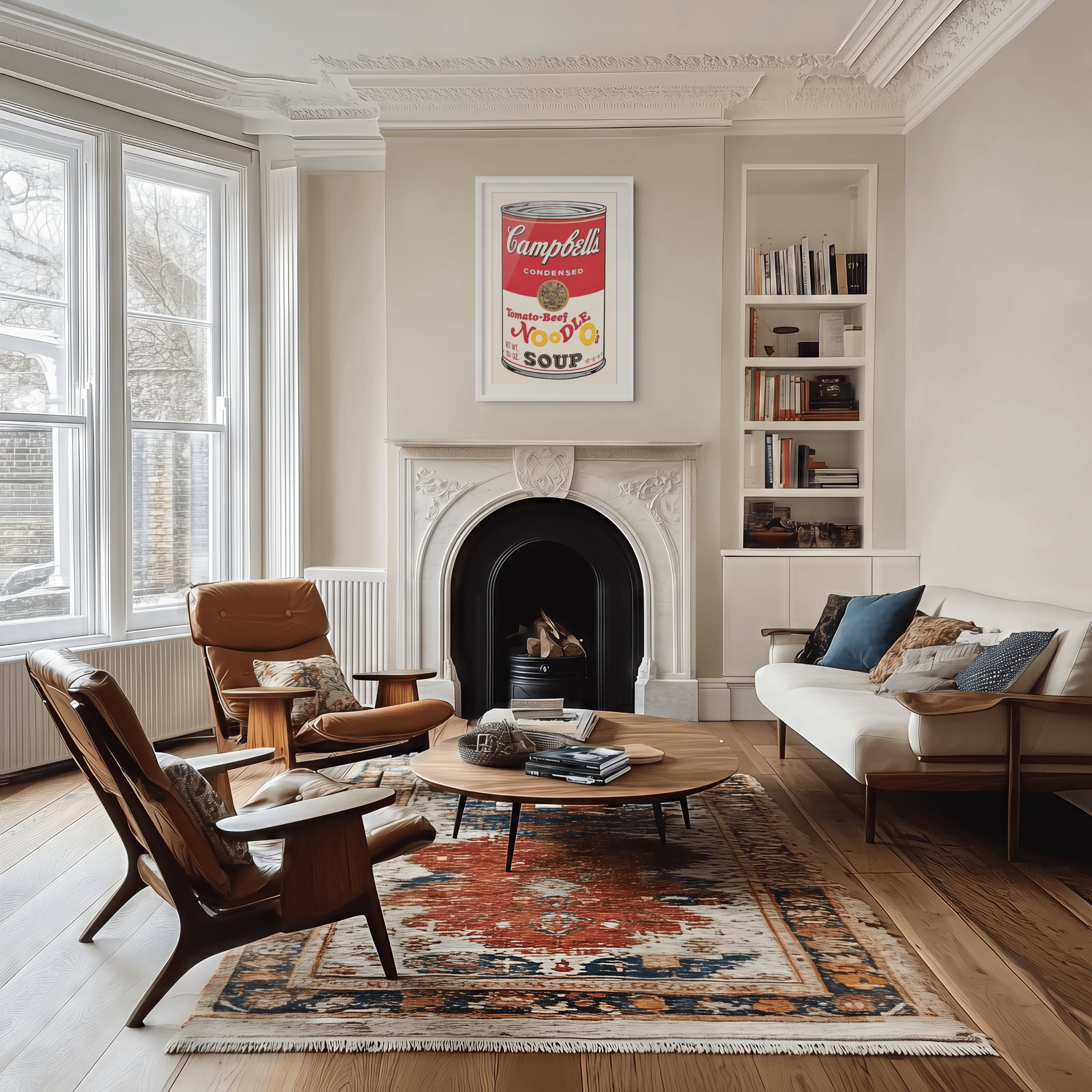
Pop art’s strong colors and graphic imagery work in a variety of spaces. An oversize piece can anchor an open living or dining area, while a smaller one does well in a guest room or office.
You can develop a theme by focusing on a particular artist or subject. Open-edition posters are relatively inexpensive. Signed limited editions’ prices depend on the artist, edition, condition and provenance but can begin in the low thousands. Important unique works by major Pop artists can cost six or seven figures.
Browse the 1stDibs Pop art style page for ideas, or explore Pop Art Paintings if you’re looking for unique works.
Frequently Asked Questions
What is the difference between originals and prints?
An original is a unique work, like a painting. A print can qualify as original if it is part of an edition the artist created rather than a reproduction of an existing work. A limited-edition print belongs to set consisting of a fixed number of prints. Open-edition posters reproduce existing images without a fixed edition size.
What distinguishes Pop art from other 20th-century art movements?
Pop artists borrowed images and techniques from comic books, consumer culture and mass media. With their bold color, graphic simplicity and irony, the works blur the boundary between commercial products and fine art.
Who are the most important Pop artists to know?
Andy Warhol and Roy Lichtenstein defined American Pop art, while Richard Hamilton was seminal in British Pop art. Rosalyn Drexler and Keith Haring expanded the genre’s subjects, and later Neo-pop artists, like Jeff Koons, carried it forward.
How much does a Pop artwork cost, and where should a new collector start?
Posters are generally inexpensive relative to museum-level works, which can go for millions. Signed limited-edition prints can be a good starting point for collectors who want an original artwork for less than the price of a major painting.
How do I know if a work is authentic?
Check the edition information, signature or identifying marks, condition and provenance. For significant purchases, buying through a vetted dealer can reduce uncertainty about attribution and authenticity.
Does Pop art suit a contemporary or non-mid-century home?
Yes. Pop art’s bold colors, recognizable imagery and strong graphic shapes can create contrast in minimalist and contemporary interiors just as effectively as in mid-century settings.
Start Collecting Pop Art with Confidence
Understanding the difference between a unique work, an original print and a reproduction is basic for evaluating Pop art. Further research will allow you to compare artists, formats, condition and price with confidence.
Explore the 1stDibs Pop art collection to browse paintings, prints, and editions from vetted sellers.