Art by Medium: Engraving

4,606 Results
to
774
2,801
901
810
224
137
Overall Width
to
Overall Height
to
1,060
953
2,279
653
38
151
185
162
125
165
202
438
174
185
742
685
659
362
352
318
113
74
33
27
17
12
11
5
2
2,398
1,152
1,068
741
669
532
392
353
258
202
197
196
175
160
149
144
114
113
109
108
2,724
1,817

Use search to find more

322
111
105
69
67

Use search to find more

Medium: Engraving
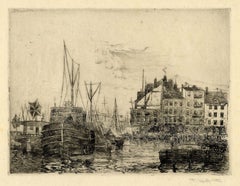
"The Boat" Hand Signed Drypoint Print, American Realist, 1930s, Framed

"The Boat" Hand Signed Drypoint Print, American Realist, 1930s, Framed

By Jeanette Maxfield Lewis

Located in Soquel, CA

"The Boat" Hand Signed Drypoint Print Maritime drypoint print by Jeannette Maxfield Lewis (American. b 1894 d. 1982.) A boat is docked in a harbor, its sails are lowered over the c...

Category

1930s American Realist Art by Medium: Engraving

Materials

Paper, Drypoint, Ink

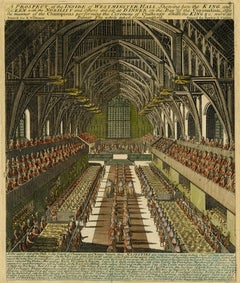
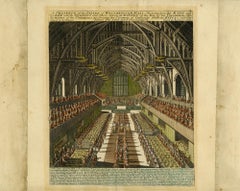
The Grand Coronation Banquet of King George IV at Westminster Hall, 17 July 1821

The Grand Coronation Banquet of King George IV at Westminster Hall, 17 July 1821

By Johannes Kip

Located in Middletown, NY

The Grand Coronation Banquet of King George IV at Westminster Hall, the oldest building on the Parliamentary estate. A Prospect of the Inside of Westminster Hall; The Grand Coronati...

Category

Early 19th Century English School Art by Medium: Engraving

Materials

Handmade Paper, Engraving, Watercolor

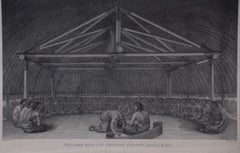
"King of the Friendly Islands" (Tonga); Engraving from Captain Cook's 3rd Voyage

"King of the Friendly Islands" (Tonga); Engraving from Captain Cook's 3rd Voyage

By John Webber

Located in Alamo, CA

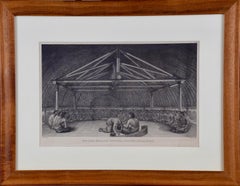
"Poulaho, King of the Friendly Islands, Drinking Kava" is an engraving created by William Sharp (1749-1824), from a drawing by John Webber (1752-1793), who was the artist on Captain James Cook's 3rd and final voyage of discovery. It was published in the atlas of "A Voyage to the Pacific Ocean Undertaken by the Command of His Majesty, for Making Discoveries in the Northern Hemisphere", the official British Admirality sanctioned journal published upon completion of the voyage in London in 1784 by Strahan & Cadell. Captain Cook visited Tonga on his 3rd voyage, which he named The Friendly Islands because of the warm welcome he and his crew received, unlike some of the other more hostile Pacific islands. The engraving depicts Cook and his men observed a kava ceremony at the village of Mu’a on Tongatapu. King Paulaho sits in the centre foreground, his back to the spectator with a man kneeling before him. The ceremonial mat depicted behind Paulaho indicates that nobody was allowed to sit behind him. The figure in the centre holds a single cup, referring to the Tongan custom of offering the cup to the king first. Kava is native to the islands of the South Pacific and was first described for English readers in 1768 by Captain James Cook. The kava root has been used for centuries as a central feature of ceremonies and celebrations because it was able to bring about a calming and pleasant social atmosphere. The root was crushed and processed into coconut milk to become the focal ceremonial beverage, simply referred to as kava. This engraving is presented in a Koa wood frame and a white mat. Koa wood is legendary in Hawaii. There are occasional faint spots, but the print is otherwise in very good condition. This amazing Koa wood is native to Hawaii and it is known for the deep rich colors and varied grain pattern. Koa has an honored heritage in Hawaii and is highly revered and sacred. The word “koa” means “warrior” in Hawaiian. The warriors of King Kamehameha the Great, created canoes and weapons from a wood plentiful on the Big Island of Hawaii. This wood became synonymous with the warriors themselves, and it became known as koa. There are three other engravings listed from the official journal of Captain Cook's 3rd voyage available that are presented in identical Koa wood frames and mats (LU117324682422, LU117324684052, LU117324684032). They would make a wonderful grouping for a display of 2, 3 or 4 prints. A discount is available for a grouping depending on the number of items included. Captain Cook is remembered as one of the greatest explorers and navigators in history. His explorations included Australia, New Zealand and islands of the South Pacific and the northwest coast of North America. Hawaii was discovered by Captain Cook during this voyage. Hawaii was originally called The Sandwich Islands in honor of The Earl of Sandwich...

Category

1780s Realist Art by Medium: Engraving

Materials

Engraving

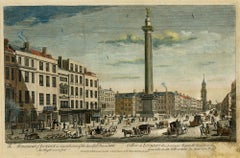
The Monument of London in Remembrance of the Dreadful Fire of 1666

The Monument of London in Remembrance of the Dreadful Fire of 1666

Located in Middletown, NY

Bowles, Thomas III (after John Donowell) John Bowles & Richard Wilkinson, 1751. Steel engraving with extensive hand coloring in watercolor on cream wove paper, 10 1/4 x 16 inches (...

Category

Mid-18th Century English School Art by Medium: Engraving

Materials

Watercolor, Handmade Paper, Engraving

John Boydell (1720-1804) - Framed 1750 Engraving, View of Rhaidder Fawr

John Boydell (1720-1804) - Framed 1750 Engraving, View of Rhaidder Fawr

Located in Corsham, GB

Rhaidder Fawr, a Great Cataract three miles from Penmaen Mawr,' an engraving with hand colouring by John Boydell (1720-1804). Well presented in a gilt frame. Signed within the plate....

Category

Early 18th Century Art by Medium: Engraving

Materials

Engraving

Beggars Receiving Alms at the Door of a House - Engraving after Rembrandt

Beggars Receiving Alms at the Door of a House - Engraving after Rembrandt

By Charles Amand Durand

Located in Roma, IT

Beggars Receiving Alms at the Door of a House is an engraving on ivory-colored paper realized by Charles Amand Durand (1831-1905) after an etching by Rembrandt. This wonderful piece ...

Category

19th Century Old Masters Art by Medium: Engraving

Materials

Engraving

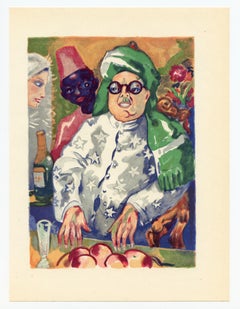
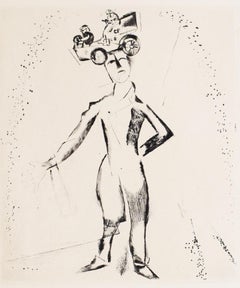
The Automobilist, from: My Life - Russian French Berlin Autobiography Surrealism

The Automobilist, from: My Life - Russian French Berlin Autobiography Surrealism

By Marc Chagall

Located in London, GB

This original etching with drypoint is hand signed in pencil by the artist "Marc Chagall" at the lower right margin. It is also hand numbered 49 in pencil from the edition of 110, at the lower left margin. There were 84 impressions on laid paper and a further 26 impressions on Japan paper. It was published by Paul Cassirer, Berlin in 1923. Note: The work was part of Chagall's important and renowned series "Mein Leben...

Category

1920s Surrealist Art by Medium: Engraving

Materials

Drypoint, Etching

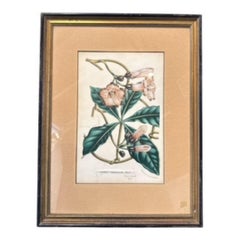
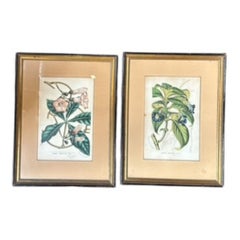
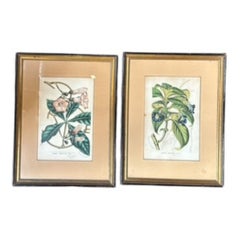
Pair of 19th Century Framed Botanical Prints  Hooker & Gardner

Pair of 19th Century Framed Botanical Prints Hooker & Gardner

Located in Jacksonville, FL

A stunning pair of original 19th-century hand-colored botanical engravings featuring Ipomoea horsfalliae and Chirita walkeria, attributed to renowned British botanists William Jackso...

Category

1830s Victorian Art by Medium: Engraving

Materials

Engraving

‘Shadow of Death’
‘Shadow of Death’

‘Shadow of Death’

Located in Bournemouth, Dorset

After William Holman Hunt (1827-1910) ‘Shadow of Death’ Mezzotint Image: 73 x 57cm Frame: 104 x 84 cm Engraved by Frederick Stacpoole (1813-1907), on wove paper published 1878 by T...

Category

1870s Art by Medium: Engraving

Materials

Mezzotint

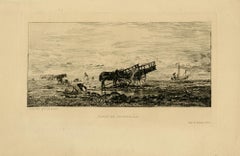
Plage de Villerville

Plage de Villerville

By Charles François Daubigny

Located in Middletown, NY

Paris: Gazette des Beaux-Arts, 1856. Drypoint etching on cream laid paper, 4 7/8 x 8 3/8 inches (124 x 245 mm), full margins. In good condition with light uniform age tone. Fourth s...

Category

Mid-19th Century Realist Art by Medium: Engraving

Materials

Drypoint, Etching

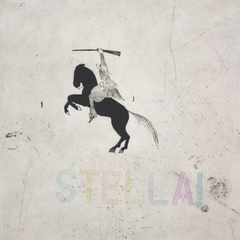
Stella, Kate Boxer, limited edition print, contemporary

Stella, Kate Boxer, limited edition print, contemporary

By Kate Boxer

Located in Deddington, GB

Stella Drypoint, handcoloured Limited edition print Edition of 30 Image Size 72.4cm H x 72.4cms W (28 1/2 x 28 1/2 in) Unframed ARTIST BIOGRAPHY: Kate Boxer makes the plates in her...

Category

21st Century and Contemporary Contemporary Art by Medium: Engraving

Materials

Drypoint, Chine Colle

A Calvary Skirmish - by  Jan van Huchtenburg

A Calvary Skirmish - by Jan van Huchtenburg

By Jan van Huchtenburg

Located in Middletown, NY

Haarlem: c1700. Mezzotint on watermarked laid paper, 11 1/2 x 18 1/4 inches (290 x 462 mm), thread margins. In good condition with expert repairs at the right corners, and upper-lef...

Category

18th Century Art by Medium: Engraving

Materials

Laid Paper, Mezzotint

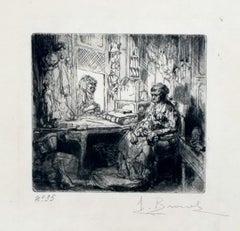
La Prêteuse sur Gage

La Prêteuse sur Gage

By Auguste Brouet

Located in Middletown, NY

Brussels: Fondation de Dietrich et Cie, 1914. Etching with drypoint on Japon paper, 3 5/8 x 4 inches (93 x 102 mm); sheet 11 1/8 x 9 7/8 inches (283 x 251 mm), full margins. Signed a...

Category

Early 20th Century French School Art by Medium: Engraving

Materials

Handmade Paper, Etching, Drypoint

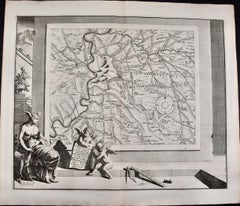
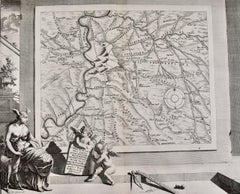
Roman Hills, Aqueducts and Roads: An Early 18th Century Map by Jan Goeree

Roman Hills, Aqueducts and Roads: An Early 18th Century Map by Jan Goeree

Located in Alamo, CA

This richly engraved map of Rome and its environs entitled "Urbis Cum Vicis Seu Pagis Adiacentibus Dissertationi III De Aq et Aqueaed Veteris Promae Praemissa Authore Raph Fabretto G...

Category

Early 18th Century Old Masters Art by Medium: Engraving

Materials

Engraving

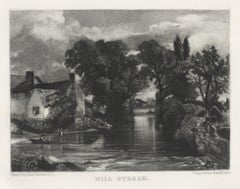
(after) John Constable mezzotint "Mill Stream"

(after) John Constable mezzotint "Mill Stream"

By David Lucas

Located in Henderson, NV

Medium: mezzotint (engraved by David Lucas after the John Constable painting). Printed in 1855 on cream wove paper for the "English Landscape Scenery" portfolio, published in London ...

Category

1850s Art by Medium: Engraving

Materials

Mezzotint

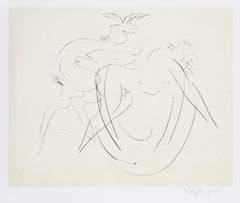
Nymph and Goat 3 (Black), Signed print by Reuben Nakian

Nymph and Goat 3 (Black), Signed print by Reuben Nakian

By Reuben Nakian

Located in Long Island City, NY

Nymph and Goat 3 (Black) by Reuben Nakian, 1897 - 1986 Date: 1979 Medium: Drypoint Etching with Chine Colle, signed and numbered in pencil Edition: XXV Size: 20 in. x 26 in. (50.8 cm...

Category

1970s Modern Art by Medium: Engraving

Materials

Drypoint, Etching

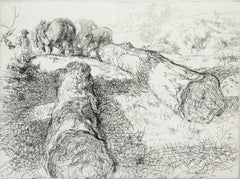
Lumbermen.
Lumbermen.

Edmund BlampiedLumbermen., 1923

$500Sale Price|33% Off

Lumbermen.

By Edmund Blampied

Located in Plano, TX

Lumbermen. 1923. Etching. Appleby 91. 9 x 12 (sheet 12 3/8 x 18 1/8). Edition 100. A cleanly-wiped impression printed on off-white 'FG Head & Co' laid paper with full margins. Signed...

Category

1920s Modern Art by Medium: Engraving

Materials

Drypoint, Etching

Vue du Chateau de Villaines

Vue du Chateau de Villaines

By Jean-Emile Laboureur

Located in Middletown, NY

Paris: Henri Petiet, 1923. Etching with drypoint and roulette on buff Van Gelder Zonen paper with a partial watermark, 7 5/8 x 16 inches (194 x 407 mm); sheet 9 5/8 x 17 3/4 inches ...

Category

Early 20th Century French School Art by Medium: Engraving

Materials

Drypoint, Etching, Handmade Paper

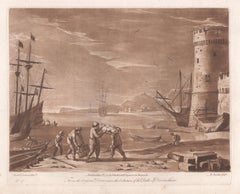
Italianate Landscape, mezzotint by Richard Earlom after Claude le Lorrain

Italianate Landscape, mezzotint by Richard Earlom after Claude le Lorrain

By (after) Claude Lorrain (Claude Gellée)

Located in Melbourne, Victoria

Sepia mezzotint by Richard Earlom (1743-1822) After Claude Gellee ('Claude Lorrain') (1600-82). From 'Liber Veritatis; or A Collection of Prints after the original designs of Claude le Lorrain...

Category

Late 18th Century Italian School Art by Medium: Engraving

Materials

Engraving, Mezzotint, Etching

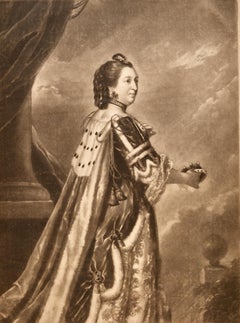
Elizabeth, Countess of Northumberland: Mezzotint After a Painting by J. Reynolds

Elizabeth, Countess of Northumberland: Mezzotint After a Painting by J. Reynolds

By Joshua Reynolds

Located in Alamo, CA

This is an 18th century mezzotint portrait of Elizabeth, Countess of Northumberland, Baroness Percy by Richard Houston after a painting by Joshua Reynolds, published in London by Robert Sayer in 1763. It is a rare, full length portrait of Elizabeth, who was known as Lady Betty. Lady Betty stands, facing to the right, holding her coronet, and wearing her peeress’s ermine and velvet robes over a brocade dress. In the background are a column, a billowing drape, and the grounds of Alnwick Castle...

Category

Mid-18th Century Art by Medium: Engraving

Materials

Mezzotint

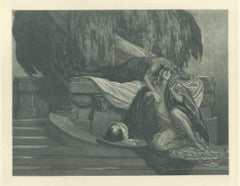
Die Zisterne - Vintage Héliogravure by Franz von Bayros - 1921 ca.

Die Zisterne - Vintage Héliogravure by Franz von Bayros - 1921 ca.

Die Zisterne is a black and white héliogravure on cream-colored cardboard realized by Choisy Le Conin, pseudonym of Franz Von Bayros (Agram, 1866 – Vienna, 1924). From Mappe, a port...

Category

1920s Symbolist Art by Medium: Engraving

Materials

Engraving

Cuban Artist signed limited edition original art print silkscreen n3

Cuban Artist signed limited edition original art print silkscreen n3

By Alfredo Sosabravo

Located in Miami, FL

Alfredo Sosabravo (Cuba, 1930) 'Mi torre de Babel acuática', 2001 silkscreen on paper 25.2 x 30.4 in. (64 x 77 cm.) Edition of 100 Unframed ID: SOS1289-003-100 ______________________________________ Manuel Alfredo Sosabravo  Born: 1930, Sagua la Grande, Matanzas, Cuba.  Studies: Between 1955-1957 he studied at the Elementary School of Applied Plastic Arts attached to the Academy of Fine Arts San Alejandro, in Havana, Cuba.  Experience: Member of the Association of Cuban Recorders and teaches several drawing and engraving courses at the National School of Art Instructors. In 1965 he entered the Graphic Experimental Workshop of Havana. In 1993 he teaches a mural ceramic course at the Faculty of Fine Arts of the University of Tenerife in the Canary Islands, working in turn at the Giuseppe Mazzotti Museum House 1903 in Albissola Mare, Italy.  Exhibitions: It is included in the 1959 annual Salon, Palace of Fine Arts, Havana. He made the first personal exhibition of importance in 1967 with oil-collages and ceramics in the Havana gallery. In 1973 he placed on the mezzanine floor of the Habana Libre Hotel a mural composed of 555 pieces of ceramics started since 1971. In 1997 he presented Sosabravo, The Guardian of the Small, in the Art Gallery, Madrid, Spain. In 2001 he exhibited graphic and painting works in El Comune de Orvieto Italia, in the Sala Conca de la Laguna, Tenerife and at the Feria de la Estampa in Madrid. In Cuba, he built the 10 m2 mural called Carnaval de la Habana for the Residencial América real estate. In 2002, Galería Cernuda Arte, Coral Gables, Florida, shows his works at the Art Miami Fair. In the United Kingdom he exhibited Murano glass oil paintings and sculptures. The Biennale di Ceramica nell'Arte Contemporary of Albissola Mare, Savona, invited him to participate with works that he would carry out in the San Giorgio da Poggi workshop. In 2003 his work was part of the Important Cuban Artworks...

Category

Early 2000s Neo-Expressionist Art by Medium: Engraving

Materials

Paper, Engraving, Screen

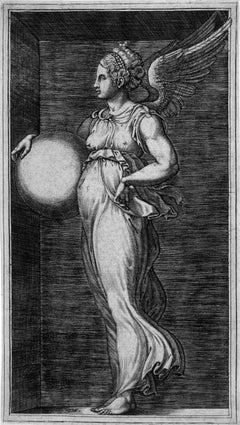
Allegorical Figure, Holding a Ball

Allegorical Figure, Holding a Ball

By Giorgio Mantovano Ghisi

Located in Chicago, IL

Provenance: Edouard Schultze (Lugt 906) References: Bartsch 34 Boorsch & Lewis 38 Notes: A fine impression of this engraving. Boorsch and Lewis state that this work dates from “the mid-1560s” and suggest that it was after a work by Giulio Romano...

Category

16th Century Old Masters Art by Medium: Engraving

Materials

Engraving

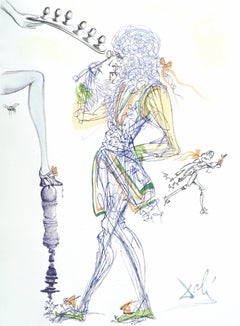
Salvador Dali, Eye Watches from Peephole, from Dali illustre Casanova, 1967

Salvador Dali, Eye Watches from Peephole, from Dali illustre Casanova, 1967

By Salvador Dalí­

Located in Fairfield, CT

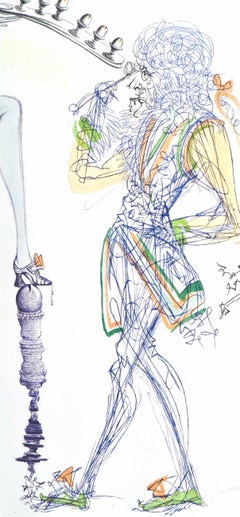
Artist: Salvador Dali (1904–1989) Title: Eye Watches from Peephole (Œil regardant par le trou de serrure) Year: April 14, 1967 Medium: Engraving in colors on velin pur chiffon de Rives paper Paper Size: 14.875 x 11.25 inches (37.78 x 28.58 cm) Condition: Well preserved, consistent with age and medium Inscription: Signed in the plate and unnumbered as issued Publisher: Cercle du Livre Precieux, Paris Printer: Haasen, Boileau and Cappelle, Paris Catalogue raisonne references: Field, Albert, and Salvador Dali. The Official Catalog of the Graphic Works of Salvador Dali. S. Dali Archives, 1996, illustration 67-4; Michler, Ralf, et al. Salvador Dali: Catalogue Raisonne of Prints. Prestel, 1994, illustrations 174–187 Notes: Excerpted from the folio (translated from French), Dali illustre Casanova was realized at the expense of the Cercle du Livre Precieux by Haasen, Boileau and Cappelle for the print of engravings and by Viglino, art printer for the text, under the direction of Claude Talon. The draw has been completed, April 14, 1967. Justification of the draw—a single example on Japon nacre, to which were added V original watercolors and V inked copper plates, as well as a suite of engraved lines on silk, a suite on papier de Rives, and a color suite of the XIV illustrations, numbered I. II examples on Japon nacre, including II original watercolors, II inked copper plates, a silk suite of engraved lines, and a color suite of illustrations, numbered II and III. V examples on Japon nacre, including an original watercolor, an inked copper plate, a silk suite of engraved lines, and a color suite of illustrations, numbered IV to VIII. XVII examples on velin pur chiffon de Rives, to which were added a silk suite of engraved lines and a color suite of illustrations, numbered IX to XXV. CCCLXV examples on velin pur chiffon de Rives, numbered XXVI to CCCXC. In addition, some examples marked H.C. were produced for the publisher and his friends. Additional notes: This exquisite engraving in colors by Salvador Dali (1904–1989), titled Œil regardant par le trou de serrure (Eye Watches from Peephole), from the folio Dali illustre Casanova (Dali Illustrates Casanova), originates from the 1967 edition published by Cercle du Livre Précieux, Paris, and printed by Haasen, Boileau and Cappelle, Paris. The composition exemplifies Dali’s extraordinary command of classical engraving combined with his visionary Surrealist imagination, where symbolic imagery, meticulous draftsmanship, and psychological suggestion converge in an evocative interpretation of the literary world of Giacomo Casanova. In Œil regardant par le trou de serrure (Eye Watches from Peephole), Dali transforms the human eye and the intimate act of looking through a concealed opening into an enigmatic meditation on voyeurism, curiosity, secrecy, and forbidden desire. The eye, one of the most powerful recurring symbols within Surrealist art, evokes perception, consciousness, and the mysteries of the subconscious mind, while the peephole introduces associations with concealed observation, erotic intrigue, and the tension between revelation and concealment. These themes resonate with Casanova’s celebrated memoirs, whose accounts of romance, seduction, and clandestine encounters provided Dali with a rich imaginative framework for exploring the complexities of human desire. Through his characteristic combination of technical precision, provocative symbolism, and imaginative ambiguity, Dali transforms the simple act of observation into a psychologically charged exploration of temptation, intimacy, and the mysteries of human experience. Dali illustre Casanova (Dali Illustrates Casanova), published in Paris in 1967 by Cercle du Livre Précieux, represents a distinguished collaboration between Salvador Dali’s visionary Surrealist imagination and the literary legacy of Giacomo Casanova, the celebrated eighteenth-century Venetian adventurer, writer, and chronicler of European society. Conceived within the tradition of the French livre d’artiste, the publication unites original graphic works, literary narrative, and exceptional craftsmanship in a refined edition intended for collectors of fine art and illustrated literature. Casanova’s memoirs, renowned for their vivid accounts of romance, intrigue, travel, aristocratic society, and the complexities of human desire, provided Dali with a particularly fertile imaginative framework through which to explore his lifelong fascination with eroticism, symbolism, psychological transformation, and the irrational dimensions of human experience. Rather than approaching the literary subject through conventional illustration alone, Dali interprets the world of Casanova through his distinctive Surrealist vocabulary, transforming objects, figures, and symbolic motifs into enigmatic compositions that evoke the sensuality, theatricality, and psychological tensions of the narrative. Through its synthesis of eighteenth-century literary culture, Surrealist symbolism, original etching, and traditional French bookmaking, Dali illustre Casanova stands as an important expression of Dali’s engagement with the illustrated book and his ability to reinterpret historical literature through the imaginative possibilities of modern art. SALVADOR DALI (1904–1989) was a Spanish painter, draughtsman, printmaker, sculptor, designer, filmmaker, and writer whose astonishing technical virtuosity, theatrical imagination, and psychologically charged dream imagery established him as one of the most celebrated and recognizable artists of the twentieth century and one of the defining figures of the Surrealist movement. Born in Figueres in Catalonia, Spain, Dali demonstrated exceptional artistic talent at an early age and later studied at the Real Academia de Bellas Artes de San Fernando in Madrid, where he absorbed the traditions of Renaissance draftsmanship, Spanish Golden Age painting, and the radical visual innovations transforming modern European art. During this formative period he became aware of the revolutionary achievements of Pablo Picasso, whose Cubist experiments reshaped modern painting, while also engaging with the poetic symbolism of Joan Miro, the experimental photography of Man Ray, the conceptual provocations of Marcel Duchamp, the sculptural investigations of Alberto Giacometti and Alexander Calder, and the spiritual abstraction of Wassily Kandinsky. In the late 1920s Dali moved to Paris and joined the Surrealist circle led by Andre Breton, quickly distinguishing himself through his extraordinary technical skill and his ability to translate psychoanalytic ideas into unforgettable visual form. It was during this period that he developed the paranoiac-critical method, a process intended to access the subconscious through controlled irrational associations, enabling him to create images that shift between multiple interpretations and symbolic meanings. Through this method he produced some of the most iconic works of modern art, including The Persistence of Memory, The Great Masturbator, and Soft Construction with Boiled Beans, paintings that introduced imagery such as melting clocks, distorted landscapes, and dreamlike spaces rendered with the precision of Old Master painting. Throughout his prolific career Dali worked across painting, sculpture, printmaking, jewelry design, photography, theater, literature, and film, collaborating with figures such as Luis Bunuel on the landmark Surrealist film Un Chien Andalou, designing the dream sequence for Alfred Hitchcock’s film Spellbound, and even producing experimental animation with Walt Disney. Dali also became one of the twentieth century’s most prolific printmakers, producing extensive bodies of etchings, lithographs, and illustrated works that brought Surrealist imagery to collectors worldwide. His flamboyant public persona and instantly recognizable mustache made him a cultural icon, yet beneath the spectacle lay a disciplined artist deeply informed by art history, drawing inspiration from Renaissance and Baroque masters such as Leonardo da Vinci, Raphael, Velazquez, and Vermeer while pushing painting toward psychological and symbolic exploration. Dali’s imaginative universe influenced generations of artists across many disciplines, including Andy Warhol, Jeff Koons, Damien Hirst, Matthew Barney, and numerous contemporary painters, photographers, filmmakers, and designers exploring dream imagery, hyperrealism, symbolism, and the subconscious mind. Today his works are held in many of the world’s leading museum collections, including the Museo Nacional Centro de Arte Reina Sofia in Madrid, the Salvador Dali Museum in St. Petersburg, Florida, the Museum of Modern Art in New York, the Centre Pompidou in Paris, the Tate in London, and the Art Institute of Chicago. Salvador Dali’s paintings, sculptures, drawings, and graphic works remain among the most recognizable and widely collected works of twentieth century art, and the highest auction record for a painting by Salvador Dali is Portrait de Paul Eluard (1929), which sold for 21,671,500 GBP at Sotheby’s London on February 10, 2011, confirming his lasting importance in the international art market and the continuing demand for his visionary works among collectors worldwide. Salvador Dali Œil regardant par le trou de serrure (Eye Watches from Peephole), Salvador Dali Casanova, Dali illustre Casanova, Dali 1967 engraving, Salvador Dali color engraving, Dali Cercle du Livre Précieux Paris, Dali Haasen Boileau Cappelle, Dali vélin pur chiffon de Rives, Dali Surrealist print, Dali eye...

Category

1960s Surrealist Art by Medium: Engraving

Materials

Engraving

The Barnyard
The Barnyard

The Barnyard

By Armin Landeck

Located in Middletown, NY

An extremely scare impression of an image Landeck etched while touring Europe after his graduation from Columbia University. Drypoint etching on Japon paper, 9 11/16 x 9 7/8 inches ...

Category

Mid-20th Century American Modern Art by Medium: Engraving

Materials

Handmade Paper, Drypoint, Etching

Bannerman after Le Nain (1593-1648) - 1767 Engraving, The Dancing Children

Bannerman after Le Nain (1593-1648) - 1767 Engraving, The Dancing Children

Located in Corsham, GB

The Dancing Children,' an engraving by Alexander Bannerman (c.1730) after Antoine Le Nain (1593-1648) published by John Boydell (1720-1804) in 1767. Inscribed within the plate below ...

Category

Early 18th Century Art by Medium: Engraving

Materials

Engraving

Mediterranean and Adriatic Seas: Original 18th Century Hand-colored Map by Bowen

Mediterranean and Adriatic Seas: Original 18th Century Hand-colored Map by Bowen

By Emanuel Bowen 1

Located in Alamo, CA

This is an original 18th century hand-colored map entitled "An Accurate Chart of The Mediterranean and Adriatic Sea's; with the Archipelago & Part of the Black Sea. Exhibiting all th...

Category

Mid-18th Century Old Masters Art by Medium: Engraving

Materials

Engraving

(after) Edouard Manet - "L'enfant aux cerises"

(after) Edouard Manet - "L'enfant aux cerises"

By Édouard Manet

Located in Henderson, NV

Medium: engraving (after the painting). Engraved by French artist Henri Bérengier (1881-1943) after the Manet painting. Printed in 1910 on watermarked BFK Rives paper and published i...

Category

1910s Art by Medium: Engraving

Materials

Engraving

Mexican Artist ¨Decantacion verde¨ signed limited edition original art print

Mexican Artist ¨Decantacion verde¨ signed limited edition original art print

Located in Miami, FL

Juan Sebastián Barberá Durón (Mexican, 1964) 'Decantación verde', 2004 Engraving Series number: HC Archivo Limited edition of 99 Size: 50 x 70 cm. (19.7 x 27.6 in.) Surface: Guarro S...

Category

Early 2000s Contemporary Art by Medium: Engraving

Materials

Paper, Engraving, Etching, Aquatint, Screen

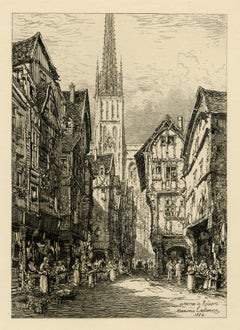
Une rue de Rouen
Une rue de Rouen

Une rue de Rouen

By Maxime Lalanne

Located in Middletown, NY

Copper plate etching with drypoint on cream laid paper with a partial heraldic watermark, 11 x 8 inches (280 x 204 mm), full margins. Toning and some discoloration along the left mar...

Category

Late 19th Century French School Art by Medium: Engraving

Materials

Laid Paper, Etching, Drypoint

Tapies Voilé Engraved abstract Ed. Galerie Lelong. Paris.

Tapies Voilé Engraved abstract Ed. Galerie Lelong. Paris.

By Antoni Tàpies

Located in CORAL GABLES - MIAMI, FL

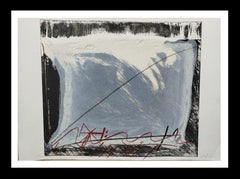
engraved Aguatinta. Arches paper 63x90, Arches filigree. Ed. Galerie Lelong. Paris. 50 ejs numbered 1/50 and 15 HC ejs numbered 1/15 catalogue raisonné image 801, 1981 ANTONI TAPI...

Category

1970s Abstract Art by Medium: Engraving

Materials

Engraving

Famous Portaits of George and Martha Washington after Gilbert Stuart

Famous Portaits of George and Martha Washington after Gilbert Stuart

Located in Fairlawn, OH

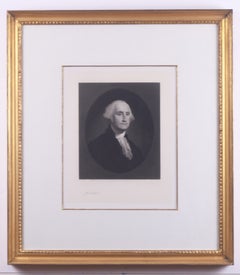
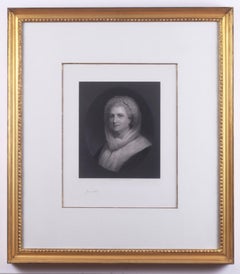
John Sartain (1808-1897) after Gilbert Stuart (1755-1828) George Washington and Martha Washington, A Pair Mezzotints, handsomely framed in period style reproduction frames with silk ...

Category

1860s American Realist Art by Medium: Engraving
Materials

Mezzotint

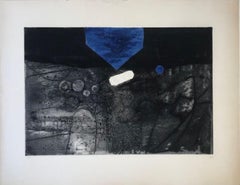
No title

No title

By Antoni Clavé

Located in Paris, FR

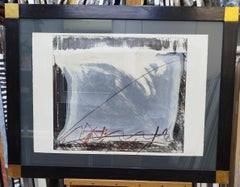
Engraving Handsigned by the artist in pencil and numbered 33/35 72.00 cm. x 91.00 cm. 28.35 in. x 35.83 in. (paper) 49.00 cm. x 71.00 cm. 19.29 in. x 27.95 in. (image) LCD5238

Category

1970s Abstract Art by Medium: Engraving

Materials

Engraving

Daphne Du Maurier, Kate Boxer, limited edition print, portrait

Daphne Du Maurier, Kate Boxer, limited edition print, portrait

By Kate Boxer

Located in Deddington, GB

Daphne Du Maurier Kate Boxer Contemporary Drypoint Print Edition of 30 Image Size: H 65.5cm x W 76cm Paper Size May Vary Sold Unframed Please note that in situ images are purely an i...

Category

21st Century and Contemporary Minimalist Art by Medium: Engraving
Materials

Drypoint

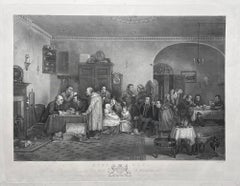
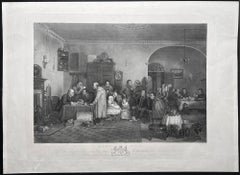
Rent Day, English antique engraving after Sir David Wilkie

Rent Day, English antique engraving after Sir David Wilkie

By Sir David Wilkie

Located in Melbourne, Victoria

'Rent Day' Engraving by Abraham Raimbach (1776-1843) after Sir David Wilkie RA (1785-1841). Circa 1820. 'Second Plate' printed under engraver's name. Wilkie was an important Scot...

Category

Mid-19th Century Naturalistic Art by Medium: Engraving
Materials

Engraving

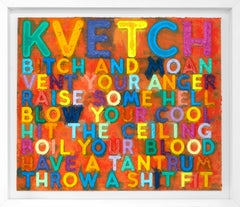
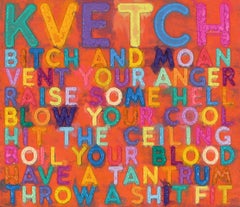
"Kvetch" monoprint in oil with collage, engraving and embossment by Mel Bochner

"Kvetch" monoprint in oil with collage, engraving and embossment by Mel Bochner

By Mel Bochner

Located in Boca Raton, FL

"Kvetch" monoprint in oil with collage, engraving and embossment on handmade paper by artist Mel Bochner from Two Palms Publishing. Signed and dated Bochner 2021 lower right recto. I...

Category

2010s Contemporary Art by Medium: Engraving
Materials

Oil, Handmade Paper, Engraving

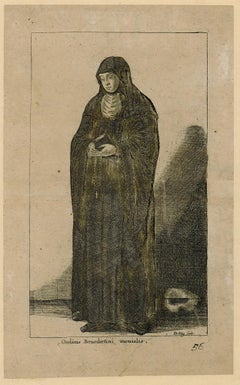
Ordinis Benedictini monialis; Saint Thecla of Kitzengen

Ordinis Benedictini monialis; Saint Thecla of Kitzengen

Located in Middletown, NY

King, Daniel (with Wenceslaus Hollar) Ordinis Benedictini monialis; Saint Thecla of Kitzengen c 1650. Etching with engraving on cream laid paper with an indiscernible watermark wit...

Category

Mid-19th Century Old Masters Art by Medium: Engraving

Materials

Etching, Laid Paper, Engraving

Rainy Night in Rome
Rainy Night in Rome

Rainy Night in Rome

By Sir Muirhead Bone

Located in Fairlawn, OH

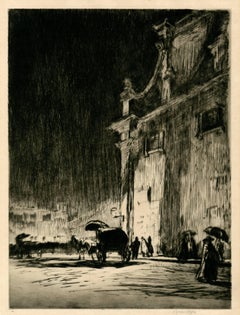
Rainy Night in Rome Drypoint, 1913 Signed in pencil and titled in the lower margin by the artist (see photo) Provenance: Kennedy Galleries, Stock # A6538 Reference; Doddgson 299 _/X ...

Category

1910s English School Art by Medium: Engraving

Materials

Drypoint

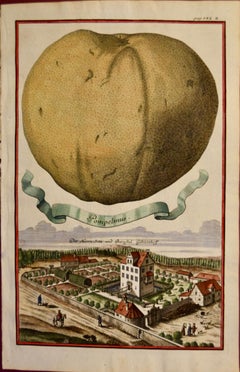
Pompelmus (Grapefruit): An Early 18th C. Hand-colored Engraving by Volckamer

Pompelmus (Grapefruit): An Early 18th C. Hand-colored Engraving by Volckamer

By Johann Christoph Volkhamer

Located in Alamo, CA

This is an early 18th century hand-colored copperplate engraving of the anatomy of grapefruit by Johann Christoph Volkhamer, entitled "Pompelmus (Grapefruit), Der Herra Sitz und Burg...

Category

Early 18th Century Naturalistic Art by Medium: Engraving
Materials

Engraving

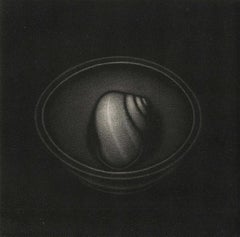
Snail in a Bowl (Artist Proof inscribed to Fritz Eichenberg)

Snail in a Bowl (Artist Proof inscribed to Fritz Eichenberg)

Located in New Orleans, LA

Leonard Merchant's mezzotint, "Snail in Cup" is inscribed for fellow artist, Fritz Eichenberg. While a student at the Central School for Arts and Crafts in London, a young Leonard Marchant found an engraving rocker in a cupboard and proceeded to turn himself into a master of the painstaking art of mezzotinting. Marchant, who has died in Shrewsbury aged 70, grew up in Simonstown, the Royal Navy's enclave in South Africa. Though his first job was as a parliamentary messenger, he taught himself to paint and, aged 19, was given a one-man show in Cape Town. Fired by this success, he left for England to study painting and, he claimed, to escape the stifling home atmosphere created by his Catholic mother and aunts. (His father was killed in the second world war.) Without contacts in London, he phoned Jacob Epstein, whose recommendation resulted in a grant to study briefly at the Central School. It was later, when studying full-time at the Central, that he saw the mezzotints of the Japanese master, Yozo Hamaguchi, in a London gallery. He was hooked. Creating a mezzotint is tedious in the extreme. The copper plate must first be prepared with a "rocker" which roughens the surface. A plate may be "rocked" 30 or 40 times. The rough texture is then reduced with a burnisher and a scraper, allowing the print a range of tones from velvety black through the greys to white. Marchant's plates could be months in the making. But the technical demands were the least of his worries. In its 18th- and 19th-century heyday, mezzotint was solely a reproductive medium, for copying masters such as Reynolds and Turner. The development of photography rendered it unfashionable, and by the 1960s the technique, known as la manière anglaise, was a bygone medium. Marchant, by now a teacher in printmaking at the Central, began to create original mezzotints with a colleague, Radavan Kraguly. A perfectionist, he seemed to revel in the straitjacket procedure. Perhaps it was the metaphor of bringing darkness out of light that appealed to this straight-talking, sometimes sombre, man, who would suddenly relax and light up like a gleaming hue on one of his prints. His work was of squares and triangles with the occasional cat, black and ominous, and carefully arranged still lifes, featuring plants, a seed pod, a pot he might have bought at auction to celebrate the sale of a print. There were one-man shows, notably at the Bankside Gallery. He sold well at the Royal Academy summer exhibition, was a Florence Biennale prizewinner, spent a fellowship year at the British School in Rome, and was elected a Fellow of the Royal Society of Painter-Printmakers. But making mezzotints was not a paying job. Marchant and his South African wife...

Category

1980s Modern Art by Medium: Engraving
Materials

Mezzotint

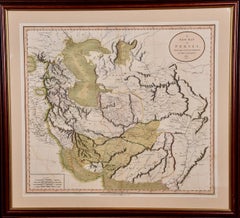
Persia & Afghanistan: A Framed Hand-colored 17th Century Map by John Cary

Persia & Afghanistan: A Framed Hand-colored 17th Century Map by John Cary

By John Cary

Located in Alamo, CA

This colorful and detailed early 18th century copperplate map by John Cary entitled "A New Map of Persia from the Latest Authorities" was published in London in 1801. It depicts Persia, the region of modern day Afghanistan, the Caspian Sea, the Sea of Aral, the Persian Gulf...

Category

Early 19th Century Old Masters Art by Medium: Engraving
Materials

Engraving

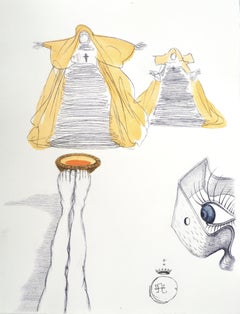
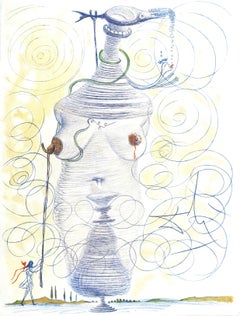
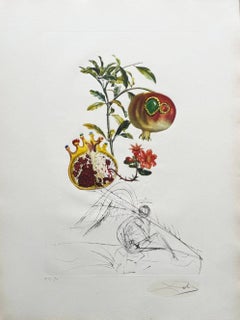
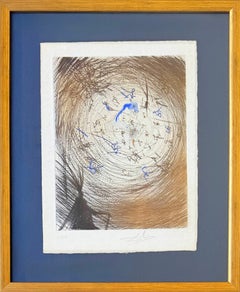
Pomegranate and Angel, Original Lithograph with drypoint etching, 1969, Signed

Pomegranate and Angel, Original Lithograph with drypoint etching, 1969, Signed

By Salvador Dalí­

Located in OPOLE, PL

Salvador Dali (1904-1989) - Grenade et l’ange (Pomegranate and Angel) Lithograph with drypoint etching from 1969. The edition E.C. /b on Auvergne paper. Dimensions of work: 74.5 x...

Category

1960s Modern Art by Medium: Engraving
Materials

Drypoint, Etching, Lithograph

Coentes Slip, NY

Coentes Slip, NY

By Frederick Leo Hunter

Located in Middletown, NY

Etching with drypoint on hand made laid Japan paper with a deckle edge, 8 9/16 x 11 5/8 inches (220 x 296 mm), full margins. Signed, dated and titled in pencil in the margin, recto. ...

Category

Late 19th Century Victorian Art by Medium: Engraving
Materials

Handmade Paper, Laid Paper, Drypoint, Etching

Engraving art for sale on 1stDibs.
Find a wide variety of authentic Engraving art available on 1stDibs. There are many well-known artists whose body of work includes ceramic sculptures. Not every interior allows for large Engraving art, so small editions measuring 0.4 inches across are also available Prices for art made by famous or emerging artists can differ depending on medium, time period and other attributes. On 1stDibs, the price for these items starts at $106 and tops out at $981,948, while the average work can sell for $3,322.