1910s Prints and Multiples

to
111
545
116
147
45
83
Overall Width
to
Overall Height
to
236
115
59
21
18
9
6
1
1
110
34
22
22
17
4,841
10,635
58,195
24,103
727
2,293
2,357
2,351
4,816
7,832
13,533
8,290
4,605
3,987
627
302
5
709
347
313
270
206
177
149
142
134
129
90
56
42
38
37
32
27
26
25
21
377
289
219
166
100
82
238
497
386
Period: 1910s
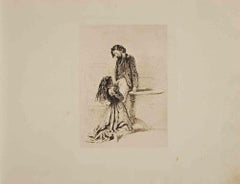
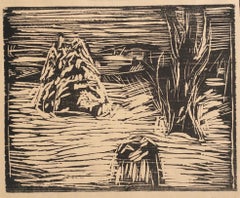
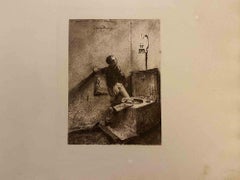
"Der Maler in der Landschaft" original etching

"Der Maler in der Landschaft" original etching

Located in Henderson, NV

Medium: original etching. Printed in 1919 and published in Berlin by Paul Cassirer. Plate size: 6 1/2 x 4 1/4 inches (165 x 110 mm). Not signed.

Category

Realist 1910s Prints and Multiples

Materials

Etching

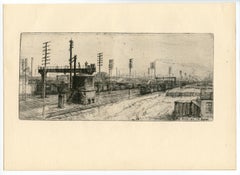
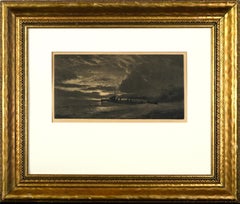
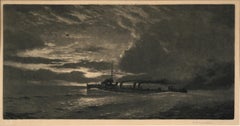
"Ivray, chemin de fer" original etching

"Ivray, chemin de fer" original etching

By Charles Heyman

Located in Henderson, NV

Medium: original etching. This impression on laid paper was printed in 1912 and published in Paris by the Revue de l'Art ancien et moderne. Plate size: 4 1/4 x 9 1/2 inches (110 x 24...

Category

1910s Prints and Multiples

Materials

Etching

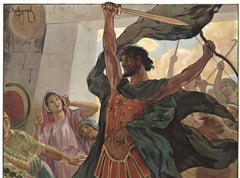
Original USA BONDS  Weapons for Liberty WW1 Third Liberty Loan vintage poster

Original USA BONDS Weapons for Liberty WW1 Third Liberty Loan vintage poster

By Joseph Christian Leyendecker

Located in Spokane, WA

Original vintage World War I poster. U.S.A. bonds: Third Liberty Loan campaign: Boy Scouts of America. Depicted: Boy Scout handing a sword inscribed "Be prepared" to a stylized warri...

Category

Art Deco 1910s Prints and Multiples

Materials

Lithograph

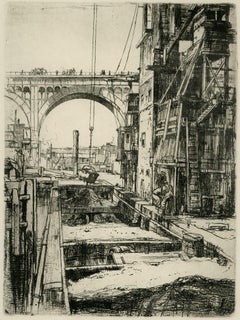
"The Pavement, St. Paul's" original etching

"The Pavement, St. Paul's" original etching

By Joseph Pennell

Located in Henderson, NV

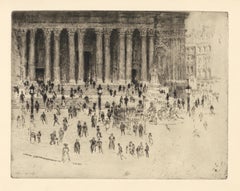
Medium: original etching. Printed in 1910 by K. K. Hof and the Staatsdruckerei of Vienna. Plate size: 8 1/2 x 11 inches (225 x 280mm). Sheet size: 11 x 15 1/2 inches. A nice, dark im...

Category

1910s Prints and Multiples

Materials

Etching

"Coin de fonderie" original etching

"Coin de fonderie" original etching

By Angèle Delasalle

Located in Henderson, NV

Medium: original etching. Printed in 1913 and published in Paris by the Revue de l'art ancien et moderne. Plate size: 4 3/8 x 5 5/8 inches (112 x 143 mm). A rich, dark impression on ...

Category

Expressionist 1910s Prints and Multiples

Materials

Etching

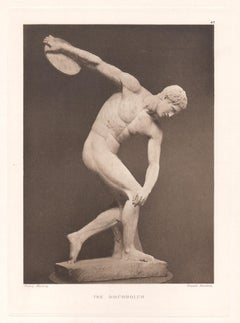
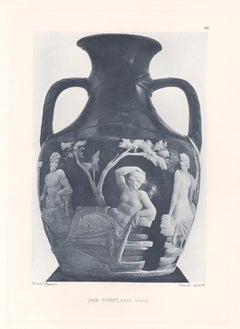
The Portland Vase, British Museum Roman antiquity photogravure

The Portland Vase, British Museum Roman antiquity photogravure

Located in Melbourne, Victoria

'The Portland Vase' Photogravure after Donald Macbeth (1865-1943). Donald Macbeth was a commercial photographer who seems to have held a quasi-official position at the British Muse...

Category

Other Art Style 1910s Prints and Multiples

Materials

Photogravure

"Zaandam" original lithograph

"Zaandam" original lithograph

By Joseph Pennell

Located in Henderson, NV

Medium: original lithograph. The catalogue reference is Wuerth 66. Published in Vienna by Gesellschaft für Vervielfältigende Kunst in 1910. The image measures 8 x 11 1/2 inches (210 ...

Category

1910s Prints and Multiples

Materials

Lithograph

1910 original poster by Geo Bric "Le Zodiac III" dirigible balloon

1910 original poster by Geo Bric "Le Zodiac III" dirigible balloon

Located in PARIS, FR

In 1910, Geo Bric unveiled his original poster "Le Zodiac III", featuring an airship or dirigible balloon. This remarkable artwork depicted the sleek and majestic form of the airship...

Category

1910s Prints and Multiples

Materials

Paper, Lithograph

1917 original poster by Albert Besnard - 3e emprunt de la défense nationale

1917 original poster by Albert Besnard - 3e emprunt de la défense nationale

By Albert Besnard

Located in PARIS, FR

This 1917 original wartime propaganda poster, designed by Albert Besnard, was created to promote the Third National Defense Loan (3e Emprunt de la Défense Nationale) in France during World War I. As the war raged on, France needed financial support from its citizens to sustain military efforts, and posters like this played a crucial role in mobilizing the public to contribute to the war effort. The composition is rich with symbolism and emotion. At the forefront, a serene yet resolute woman, draped in blue and white, holds an innocent child while extending an olive branch—a universal sign of peace. Behind her, a winged allegorical figure of Victory, clad in dramatic red robes, brandishes a sword and urges forward action. This juxtaposition between maternal protection and military force highlights the dual message of the poster: peace can only be achieved through victory. The bold red typography reads: "SOUSCRIVEZ POUR HÂTER LA PAIX PAR LA VICTOIRE" ("Subscribe to hasten peace through victory"), emphasizing the patriotic duty of citizens to invest in war bonds as a means of securing France’s triumph and eventual peace. Created in the late phase of World War I, this poster reflects France’s determination and resilience. The use of dynamic lines, rich colors, and classical figures is characteristic of Besnard’s artistic style, blending Academic and Symbolist influences. This piece is not only a historical artifact but also a powerful example of propaganda art...

Category

1910s Prints and Multiples

Materials

Paper, Lithograph

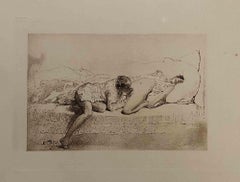
Erotic Scene - Héliogravure by Micheal Von Zichy - 1911

Erotic Scene - Héliogravure by Micheal Von Zichy - 1911

Located in Roma, IT

Erotic scene is an original Héliogravure artwork on ivory-colored paper, realized by Micheal Von Zichy in 1911. Printed in only 300 copies, Leipzig; Privatdruck, from the Catalogue ...

Category

Modern 1910s Prints and Multiples

Materials

Paper, Engraving

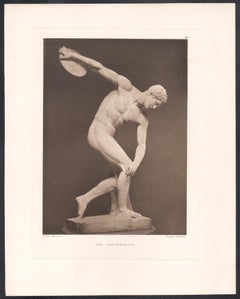
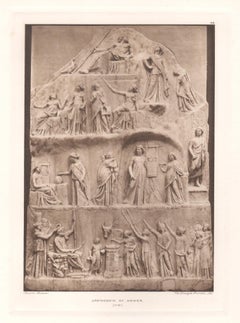
Sculptured Drum, British Museum Greek Roman Classical sculpture photogravure

Sculptured Drum, British Museum Greek Roman Classical sculpture photogravure

Located in Melbourne, Victoria

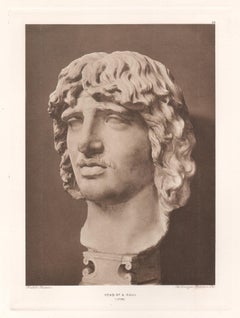
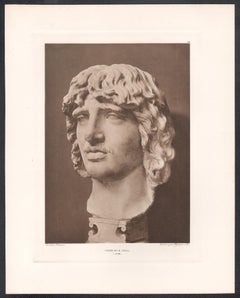
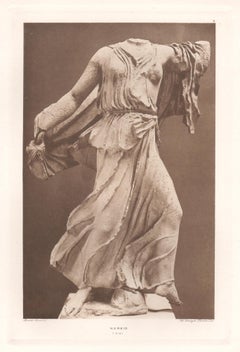
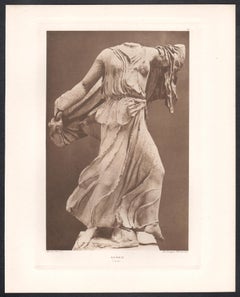
'Sculptured Drum, Temple of Artemis, Ephesus' Photogravure from a collection of photogravures depicting Greek and Roman marbles and bronzes in the British museum. Plate number above...

Category

Other Art Style 1910s Prints and Multiples

Materials

Photogravure

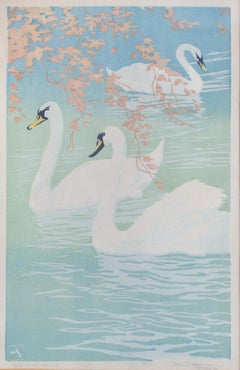
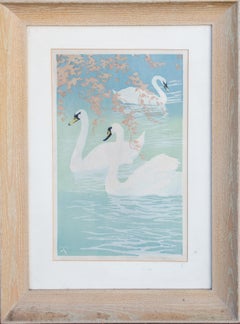
Swans Woodblock by Hans Neumann, 1913

Swans Woodblock by Hans Neumann, 1913

By Hans Neumann

Located in New York, NY

Hans Neumann (German, 1873 - 1957) Schwäne (Swans), 1913 Woodblock Sight: 17 x 11 in. Framed: 25 3/4 x 19 in. Signed & inscribed bottom, artist monogram lower left This outstanding ...

Category

Academic 1910s Prints and Multiples

Materials

Woodcut

Erotic Scene - Héliogravure by Micheal Von Zichy - 1911

Erotic Scene - Héliogravure by Micheal Von Zichy - 1911

Located in Roma, IT

Erotic scene is an original Héliogravure artwork on ivory-colored paper, realized by Micheal Von Zichy in 1911. Printed in only 300 copies, Leipzig; Privatdruck, from the Catalogue ...

Category

Modern 1910s Prints and Multiples

Materials

Paper, Engraving

Original 'United Behind the Service Star' antique World War One vintage poster

Original 'United Behind the Service Star' antique World War One vintage poster

By Ernest Hamlin Baker

Located in Spokane, WA

Original poster: United Behind The Service Star ; Great vibrant colors. Linen backed. All the various support organizations that backed up the soldiers and war relief during World War One. A-, B+ condition. Paper tear from the bottom about 10" professionally laid down. No paper loss. A large blue star appears over the flags, and below the image reads "United Behind the Service Star". The poster features American soldiers carrying the flags of seven major service organizations: the YMCA, the National Catholic War Council, the Jewish Welfare Board, the Salvation Army, War Camp Community Service, the American Library Association, and the YWCA. These organizations were instrumental in providing various forms of support, such as food, medical care, and morale-boosting services, both to soldiers and civilians. If you have ever looked to have a 'supreme' version of this great war poster...
Category

American Modern 1910s Prints and Multiples

Materials

Lithograph

(Monument to Cezanne) original lithograph

(Monument to Cezanne) original lithograph

By Aristide Maillol

Located in Henderson, NV

Medium: original lithograph. Catalogue reference: Guerin 265. This lithograph was executed by Aristide Maillol in homage to Paul Cezanne. Printed in 1914 and published in Paris by Be...

Category

1910s Prints and Multiples

Materials

Lithograph

Man on His Back, Nude

Man on His Back, Nude

By George Wesley Bellows

Located in Fairlawn, OH

Man on His Back, Nude Lithograph, c. 1916 Signed by the artist lower right: Geo Bellows (see photo) Annotated bottom left: No. 3 by the artist (see photo) An unredorded trial proof b...

Category

Ashcan School 1910s Prints and Multiples

Materials

Lithograph

EVENING (SELF PORTRAIT with the Battenbergs)

EVENING (SELF PORTRAIT with the Battenbergs)

By Max Beckmann

Located in Santa Monica, CA

MAX BECKMANN (German 1884 - 1950) EVENING (Self-Portrait with the Battenbergs) 1916, (Hofmaier 90: Gallwitz 67) Etching and drypoint, Plate 10 from the portfolio Gesichter (Faces)...

Category

Expressionist 1910s Prints and Multiples

Materials

Drypoint, Etching

Lovers : The Kiss - Lithograph signed in the plate (Leda 1960)

Lovers : The Kiss - Lithograph signed in the plate (Leda 1960)

By Amedeo Modigliani

Located in Paris, IDF

Amedeo MODIGLIANI (1884-1920) (after) Lovers : The Kiss Lithograph and stencil after a drawing from the artist Signed in the plate On Arches vellum 48 x 36 cm (c. 19 x 14,2 in) Limi...

Category

Modern 1910s Prints and Multiples

Materials

Lithograph

Original 1918 Tell That To The Marines vintage World War 1 poster  linen backed

Original 1918 Tell That To The Marines vintage World War 1 poster linen backed

By James Montgomery Flagg

Located in Spokane, WA

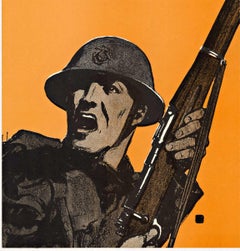
Original WWI James Montgomery Flagg Poster — “Tell That to the Marines!” (1918) — Rare Vintage Patriotic Artwork—archival linen backing and ready to frame. The poster edge was trimmed to 38.5 x 27.5 inches. Without the trim, the poster would grade as excellent (grade A), but with the trim, it is listed as B+. This is a rare and original World War I propaganda poster created by renowned American artist James Montgomery Flagg, famous for the iconic “I Want YOU for U.S. Army” Uncle Sam poster...

Category

American Realist 1910s Prints and Multiples

Materials

Lithograph

1919 original poster by Sem - Fête de la victoire 14 Juillet 1919

1919 original poster by Sem - Fête de la victoire 14 Juillet 1919

By SEM

Located in PARIS, FR

This stirring 1919 original poster by the famed French caricaturist Sem (Georges Goursat) captures the spirit of national unity and jubilation in post-war France. Created to commemor...

Category

1910s Prints and Multiples

Materials

Paper, Lithograph

Standing Female Nude

Standing Female Nude

By Frederick Carl Frieseke

Located in Fairlawn, OH

Standing Female Nude Drypoint, c. 1910 Unsigned Estate authentication on verso (see photo) Estate authentication verso by Frances Frieseke Kilmer (Mrs. Kenton Kilmer, 1914-1998) (see photo) Probably depicts the artist's wife, the artist's favorite model Extremely rare original drypoint by Frieseke Printed with selective inking to highlight the figure Condition: excellent Image/Plate size: 10 x 6 5/8 inches Frame size: 19 1/4 x 15 3/4 inches Provenance: Estate of the Artist By descent to his daughter Frances Hirschl & Adler Gallery, Stock No. APG 1106.3D-B (see photo) Biography Frederick Carl Frieseke was born on April 7, 1874, in Owosso, Michigan. After studying for a short while at the Art Institute of Chicago and the Art Students League in New York, Frieseke left for France in 1898, and almost all of his career was spent as an expatriate, with ties to the United States maintained through his New York dealer, William MacBeth, and by occasional visits to America. Following the pattern of innumerable young Americans, he enrolled at the Academie Julian where he studied with Benjamin Constant (1845-1902) and Jean-Paul Laurens (1838-1921). He appears to have had at least brief contact with and to have been influenced by James McNeill Whistler, who had recently opened his Academie Carmen in Paris. By 1900 Frieseke was spending summers in the town of Giverny, made famous by the residence of Monet and subsequently by other artists, among them many Americans. In 1906, the year after his marriage to Sarah O'Bryan, he leased a house once occupied by the American Impressionist Theodore Robinson. Although the property was adjacent to Monet's, Frieseke had only limited contact with the French master. Instead he apparently found Pierre Auguste Renoir the most influential of all the Impressionists. Frieseke's Giverny house and garden, as settings for a series of female models, provided nearly all of his subject matter for the next thirty years, although in 1930 he made a series of watercolors of Florida scenes remembered from his childhood and painted some Swiss landscapes. After World War I, the artist and his family settled in Normandy. Frieseke's career falls roughly into three stages. In the first, figures most clearly show his academic training and draughtsmanship. Gradually these evolve into the most common images of the next decade, comprised of loosely-applied blotches of bright color. The vast majority of these show their subjects in the garden, standing among the flowers, taking tea, or just basking in the sun. Others include models in colorful, light-filled interiors. In Frieseke's latest paintings, the figures very often appear indoors, their forms are given greater solidity, and the brushwork is less broken. At the height of his career, in the 1910s and early 1920s, Frieseke was perhaps the most popular of all living American artists. He received numerous awards and medals and saw his work purchased by private collectors and major museums. Decades after the initial introduction of Impressionism by Monet and his contemporaries, Frieseke assumed this style for his work, choosing to ignore the newer artistic movements of the early twentieth century. Nevertheless, his paintings were acclaimed in both the United States and in Europe. In 1904 he won a silver medal at the St. Louis Universal Exposition and a gold medal at Munich. He was elected a member of the Société National des Beaux Arts in 1908 and the National Academy of Design in 1912. Seventeen of his canvases were featured at the Venice Biennale in 1909 and he won the Grand Prize at the Panama-Pacific International Exposition in 1915. He was commissioned to execute several murals, including one for the New York store of John Wanamaker, one of his most loyal patrons. He died on August 28, 1939, at his home in Normandy, in the town of Le Mesnil sur Blangy. In the decades following his death, however, after artistic tastes had changed considerably, his work was nearly forgotten until it received renewed attention as interest in American Impressionism grew in the 1960s Courtesy National Gallery of Art, Washington Etchings by Frederick Carl Frieseke include The Balcony and Standing Female Nude. Frieseke was an American Impressionist painter who was popular in the 1910s and 1920s. Etchings by Frederick Carl Frieseke: The Balcony: An etching by Frieseke from 1904 Standing Female Nude Other paintings by Frederick Carl Frieseke: The Garden Parasol...

Category

American Impressionist 1910s Prints and Multiples

Materials

Drypoint

Erotic Scene - Héliogravure by Micheal Von Zichy - 1911

Erotic Scene - Héliogravure by Micheal Von Zichy - 1911

Located in Roma, IT

Erotic scene is an original Héliogravure artwork on ivory-colored paper, realized by Micheal Von Zichy in 1911. Printed in only 300 copies, Leipzig; Privatdruck, from the Catalogue ...

Category

Modern 1910s Prints and Multiples

Materials

Paper, Engraving

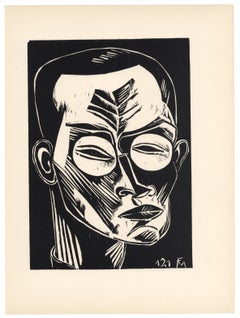
original woodcut

original woodcut

Located in Henderson, NV

Medium: original woodcut. This impression on wove paper was printed in 1919 for Das Kestnerbuch, an important collection of original prints published during the height of the German ...

Category

Expressionist 1910s Prints and Multiples

Materials

Woodcut

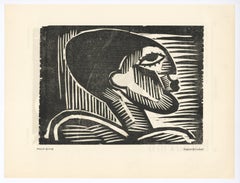
Männlicher Kopf von vorn, nach rechts gewandt (Male Head Facing Right)

Männlicher Kopf von vorn, nach rechts gewandt (Male Head Facing Right)

By Karl Schmidt-Rottluff

Located in Saint Augustine, FL

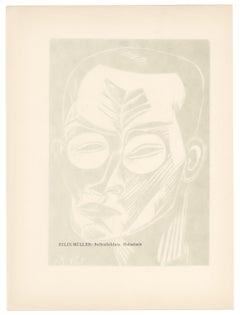
Artist: Karl Schmidt-Rottluff (German, 1884-1976) Title: "Männlicher Kopf von vorn, nach rechts gewandt (Male Head Facing Right)" Portfolio: Das Spiel Christa vom Schmerz der Schönhe...

Category

Expressionist 1910s Prints and Multiples

Materials

Woodcut, Engraving

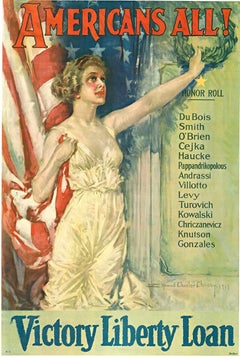
Original Fight or Buy Bonds, Third Liberty Loan, Large Format vintage poster

Original Fight or Buy Bonds, Third Liberty Loan, Large Format vintage poster

By Howard Chandler Christy

Located in Spokane, WA

Original. FIGHT OR BUY BONDS. THIRD LIBERTY LOAN. Linen backed. Lithograph. World War 1 authentic vintage poster. ARTIST: Howard Chandler Christy. Linen-backed, larger size format for this poster. Ready to frame. Despite minor edge wear touch-up from linen backing, this poster presents very well and is in above-average condition. You can be confident in the quality of this piece. One of the most famous and powerful WW1 propaganda images, this flag-waving Ms. Liberty (aka Columbia) poster is unusual in that it urged both recruitment and bond sales. The US had just entered the war when this poster appeared and it is one of the earliest examples of myriad illustrations that were used to motivate both troops and the American public. It's designer, Howard Chandler Christy, was at the height of his fame. He earned his spurs as a wartime artist when he accompanied US troops to Cuba in 1898, an experience that stood him in good stead when he was called on to create his famed series of patriotic WW1 posters...

Category

American Realist 1910s Prints and Multiples

Materials

Lithograph

New York Bouquet
New York Bouquet

New York Bouquet

By Childe Hassam

Located in Fairlawn, OH

New York Bouquet Lithograph, 1917 Edition: 93 Signed with the artist's cipher in pencil lower right (see photo) This lithograph is inspired by Hassam's oil painting of the same title...

Category

American Impressionist 1910s Prints and Multiples

Materials

Lithograph

Erotic Scene - Héliogravure by Micheal Von Zichy - 1911

Erotic Scene - Héliogravure by Micheal Von Zichy - 1911

Located in Roma, IT

Erotic scene is an original Héliogravure artwork on ivory-colored paper, realized by Micheal Von Zichy in 1911. Printed in only 300 copies, Leipzig; Privatdruck, from the Catalogue "Liebe" (Dear), Text in German on the plate, The drawing created unusually bold erotic subjects through deft strokes. Good conditions. Mihály Zichy...

Category

Modern 1910s Prints and Multiples

Materials

Paper, Engraving

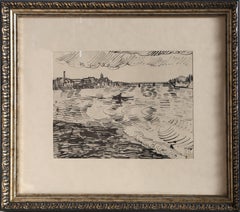
The Rhone River, Post-Impressionist Lithograph after Vincent van Gogh

The Rhone River, Post-Impressionist Lithograph after Vincent van Gogh

By (After) Vincent van Gogh

Located in Long Island City, NY

A lithograph from the "Vincent Van Gogh" portfolio with text by Oskar Hagen published by Marees-Gesellschaft in Munich 1919. The portfolio consisted of 15 lithographic reproductions of drawings and watercolors. The artwork is accompanied by a copy of the colophon. Artist: Vincent van Gogh (After) Title: The Rhone River...

Category

Post-Impressionist 1910s Prints and Multiples

Materials

Lithograph

Erotic Scene - Héliogravure by Micheal Von Zichy - 1911

Erotic Scene - Héliogravure by Micheal Von Zichy - 1911

Located in Roma, IT

Erotic scene is an original Héliogravure artwork on ivory-colored paper, realized by Micheal Von Zichy in 1911. Printed in only 300 copies, Leipzig; Privatdruck, from the Catalogue ...

Category

Modern 1910s Prints and Multiples

Materials

Paper, Engraving

Erotic Scene - Héliogravure by Micheal Von Zichy - 1911

Erotic Scene - Héliogravure by Micheal Von Zichy - 1911

Located in Roma, IT

Erotic scene is an original Héliogravure artwork on ivory-colored paper, realized by Micheal Von Zichy in 1911. Printed in only 300 copies, Leipzig; Privatdruck, from the Catalogue "Liebe" (Dear), Text in German on the plate, The drawing created unusually bold erotic subjects through deft strokes. Good conditions. Mihály Zichy...

Category

Modern 1910s Prints and Multiples

Materials

Paper, Engraving

The Serpent, Impressionist Woodcut by Raoul Dufy

The Serpent, Impressionist Woodcut by Raoul Dufy

By Raoul Dufy

Located in Long Island City, NY

Raoul Dufy, French (1877 - 1953) - The Serpent, Year: c. 1911, Medium: Woodcut on laid paper, Image Size: 8 x 7.5 inches, Size: 11.25 x 8.75 in. (28.58 x 22.23 cm), Description: Fr...

Category

Impressionist 1910s Prints and Multiples

Materials

Woodcut

Erotic Scene - Héliogravure by Micheal Von Zichy - 1911

Erotic Scene - Héliogravure by Micheal Von Zichy - 1911

Located in Roma, IT

Erotic scene is an original Héliogravure artwork on ivory-colored paper, realized by Micheal Von Zichy in 1911. Printed in only 300 copies, Leipzig; Privatdruck, from the Catalogue ...

Category

Modern 1910s Prints and Multiples

Materials

Paper, Engraving

"Lago Maggiore" original lithograph

"Lago Maggiore" original lithograph

Located in Henderson, NV

Medium: original lithograph. Catalogue reference: Jentsch 91. This impression on wove paper was printed in 1919 for Das Kestnerbuch, an important collection of original prints publis...

Category

Expressionist 1910s Prints and Multiples

Materials

Lithograph

"Three Mountaintops Emerging From Fog" Copper Plate Heliogravure

"Three Mountaintops Emerging From Fog" Copper Plate Heliogravure

By Ferdinand Hodler & R. Piper & Co.

Located in Palm Beach, FL

2018 marks the centenary anniversary of Ferdinand Hodler’s death. In that 100 years time, the art world’s esteem of this important artist has proved fickle. It has shifted from extolling his artistic merits during his lifetime to showing something of a feigned disdain- more reflective of the world political order than a true change of heart for Hodler’s work. After years of Hodler being all but a footnote in the annals of art history and generally ignored, finally, the pendulum has righted itself once again. Recent retrospective exhibitions in Europe and the United States have indicated not only a joyful rediscovery of Hodler’s art but a firm conviction that his work and world view hold particular relevance today. DAS WERK FERDINAND HODLERS is not only a collection of printed work reflecting the best of all of his painted work created up to 1914 just before the outbreak of World War I, the portfolio itself is an encapsulation of Hodler’s ethos, Parallelisme. Hodler developed his philosophy of Parallelisme as a unifying approach to art which strips away detail in search of harmony. By means of abstraction, symmetry and repetition, Hodler sought ways to depict Nature’s essence and her fundamental, universal order. He believed these universal laws governing the natural, observable world extend to the spiritual realm. Symbolist in nature with Romantic undertones, his works are equally portraits of these universal concepts and feelings governing all life as they are a visual portrait in the formal sense. Whether his subject is a solitary tree, a moment in battle, mortal fear, despair, the awe inspired by a vast mountain range, a tender moment or even the collective conviction in a belief, Hodler unveils this guiding principle of Parallelisme. Several aspects of Hodler’s portfolio reinforce his tenets of Parallelisme. The Table of Contents clearly preferences a harmonious design over detail. The two columns, consisting of twenty lines each, list the images by order of appearance using their German titles. The abbreviated titles are somewhat cryptic in that they obscure the identities of the sitters. Like the image Hodler presents, they are distillations of the sitter without any extraneous details. This shortening was also done in an effort to maintain a harmonious symmetry of the Table of Contents, themselves, and keep titles to a one-line limit. The twenty-fourth title: “Bildnis des Schweizerischen Gesandten C.” was so long, even with abbreviation, that it required two lines; so, for the sake of maintaining symmetry, the fortieth title: “Bauernmadchen” was omitted from the list. This explains why the images are not numbered. Hodler’s reasoning is not purely esoteric. Symmetry and pattern reach beyond mere formal design principles. Finding sameness and imposing it over disorder goes to the root of Hodler’s identity and his art. A Swiss native, Hodler was bi-lingual and spoke German and French. Each printed image, even number forty, have titles in both of Hodler’s languages. Certainly, there was a market for Hodler’s work among francophones and this inclusion may have been a polite gesture to that end; however, this is the only place in the portfolio which includes French. With German titles at the lower left of each image, Hodler’s name at bottom center and corresponding French titles at the lower right of each image, there is a harmony and symmetry woven into all aspects of the portfolio. This holds true for the page design, as it applies to each printed image and as it describes the Swiss artist himself. Seen in this light, Hodler’s portfolio of printed work is the epitome of Hodler’s Parallelisme. DAS WERK FERDINAND HODLERS is also one of the most significant documents to best tell the story of how Hodler, from Switzerland, became caught between political cross-hairs and how the changing tides of nations directly impacted the artist during his lifetime as well as the accessibility of his art for generations to come. The Munich-based publisher of the portfolio, R. Piper & Co., Verlag, plays a crucial role in this story. Publishing on a wide range of subjects from philosophy and world religion to music, literature and the visual arts; the publisher’s breadth of inquiry within any one genre was equal in scope. Their marketing strategy to publish multiple works on Hodler offers great insight as to what a hot commodity Hodler was at that time. R.Piper & Co.’s Almanach, which they published in 1914 in commemoration of their first ten years in business, clearly illustrates the rapid succession- strategically calculated for achieving the deepest and broadest impact - in which they released three works on Hodler to hit the market by the close of 1914. DAS WERK FERDINAND HODLERS was their premier publication. It preceded C.A. Loosli’s Die Zeichnungen Ferdinand Hodlers, a print portfolio after 50 drawings by Hodler which was released in Autumn of 1914 at the mid-level price-point of 75-150 Marks; and a third less expensive collection of prints after original works by Hodler, which had not been included in either of the first two portfolios, was released at the end of that year entitled Ferdinand Hodler by Dr. Ewald Bender. The title and timing of DAS WERK FERDINAND HODLERS' debut leaves little doubt as to the connection it has with another avant-garde portfolio of art prints, Das Werk Gustav Klimts, released in 5 installments from 1908 -1914 by Galerie Miethke in Vienna. Hodler, himself, was involved in Klimt’s ground-breaking project. As the owner of Klimt’s 1901 painting, “Judith with the Head of Holifernes” which appears as the ninth collotype print in the second installment of Das Werk Gustav Klimts, Hodler was obliged to grant access of the painting to the art printers in Vienna for them to create the collotype sometime before 1908. Hodler had been previously invited in 1904 to take part in what would be the last exhibition of the Vienna Secession before Klimt and others associated with Galerie Miethke broke away. In an interview that same year, Hodler indicated that he respected and was impressed by Klimt. Hodler’s esteem for Klimt went beyond the art itself; he emulated Klimt’s method aimed at increasing his market reach and appeal to a wider audience by creating a print portfolio of his painted work. By 1914, Hodler and his publisher had the benefit of hindsight to learn from Klimt’s Das Werk publication. Responding to the sluggish sales of Klimt’s expensive endeavor, Hodler’s publisher devised the same diversified 1-2-3 strategy for selling Hodler’s Das Werk portfolio as they did with regards to all three works on Hodler they published that year. For their premium tier of DAS WERKS FERDINAND HODLERS, R. Piper & Co. issued an exclusive Museum quality edition of 15 examples on which Hodler signed each page. At a cost of 600 Marks, this was generally on par with Klimt’s asking price of 600 Kronen for his Das Werk portfolio. A middle-tiered Preferred edition of 30, costing somewhat less and with Hodler’s signature only on the Title Page, was also available. The General edition, targeting the largest audience with its much more affordable price of 150 Marks, is distinguishable by its smaller size. Rather than use the subscription format Miethke had chosen for Klimt’s portfolios which proved to have had its challenges, R. Piper & Co. employed a different strategy. In addition to instantly gratifying the buyer with all 40 of the prints comprising DAS WERK FERDINAND HODLERS and the choice among three price points, they advertised in German journals a fourth possibility of ordering single prints from them directly. These printed images are easily discernible from the three complete folio editions. The paper size of the single purchased images is of the larger format like the Museum and Preferred editions, measuring 65 h x 50 w cm; however, the paper itself is the same copper print paper used in the General edition and then mounted on poster board. The publishing house positioned itself to be a direct retailer of Hodler’s art. They astutely recognized the potential for profitability and the importance, therefore, of having proprietary control over his graphic works. R. Piper & Co. owned the exclusive printing rights to Hodler’s best work found in their three publications dating from 1914. That same year, a competing publication out of Weimar entitled Ferdinand Hodler: Ein Deutungsversuch von Hans...

Category

Symbolist 1910s Prints and Multiples

Materials

Paper
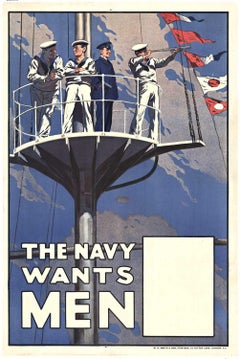
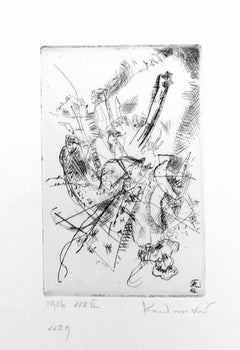
Etching 1916 Number II
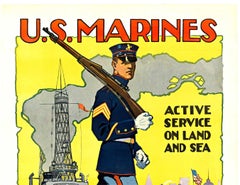

Etching 1916 Number II
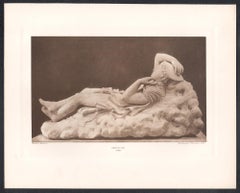
By Wassily Kandinsky

Located in New York, NY

Wassily Kandinsky (1866-1944), Etching 1916 Number II, drypoint, signed in pencil lower right, titled, numbered (No. 9) and dated lower left [also with initials and date in the plate lower right]. Reference: Roethel 154, only state, edition of 10. In excellent condition (the barest handling fold at sheet edge), printed on a heavy ivory wove paper, the full sheet with full margins, 4 7/8 x 3 1/4, the sheet 17 1/2 x 13 inches, archival mount with window mat. A fine fresh impression of this great rarity, printed in a dark brown ink. Kandinsky created this drypoint (erroneously named Etching 1916) in early 1916 while staying with Gabriel Munter in Stockholm during the winter of 1915-16. This is from the second series of drypoints he made; the first was in the year 1913-14. Provenance: Kornfeld Auction, Bern, June 2007. The tiny size of this edition (10) makes this print a great rarity within the Kandinsky’s printed...
Category

Abstract 1910s Prints and Multiples

Materials

Drypoint