In a black-and-white photo from the mid-20th century, Alexandre Noll stands at his worktable in shirtsleeves, sporting a thick mustache below affable eyes and thinning dark hair. Wood chips are piled on the worktable in front of him. Two freshly carved pitchers rest nearby, their contours carrying memories of the trees they emerged from.
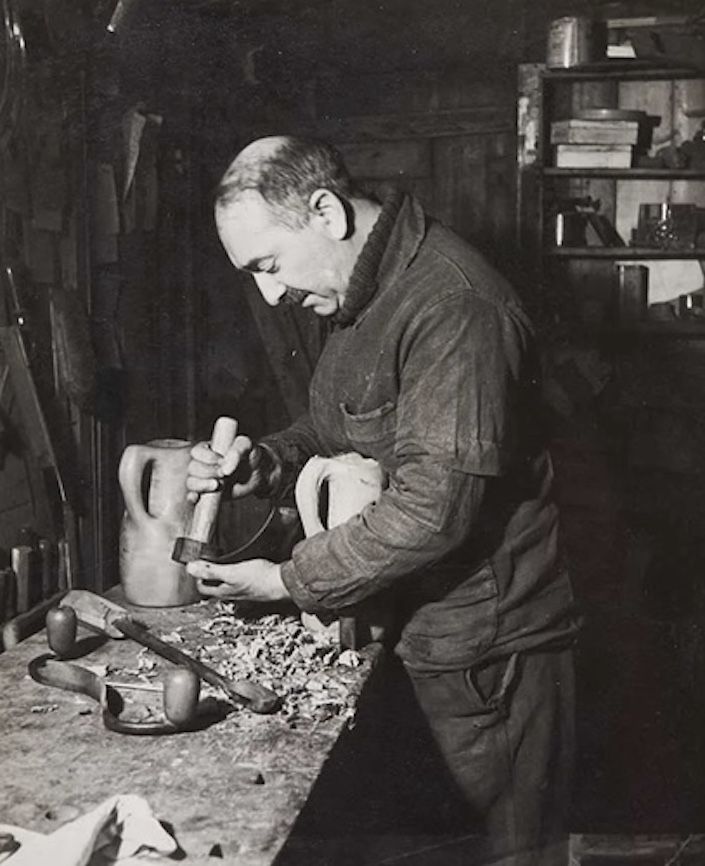
It’s easy to imagine him returning to chiseling after the photographer left. “I like to think of him working quietly, over decades, developing a relationship with the wood and its own nature as the generative principle,” says Jennifer-Navva Milliken, executive director and chief curator of Philadelphia’s Museum for Art in Wood.
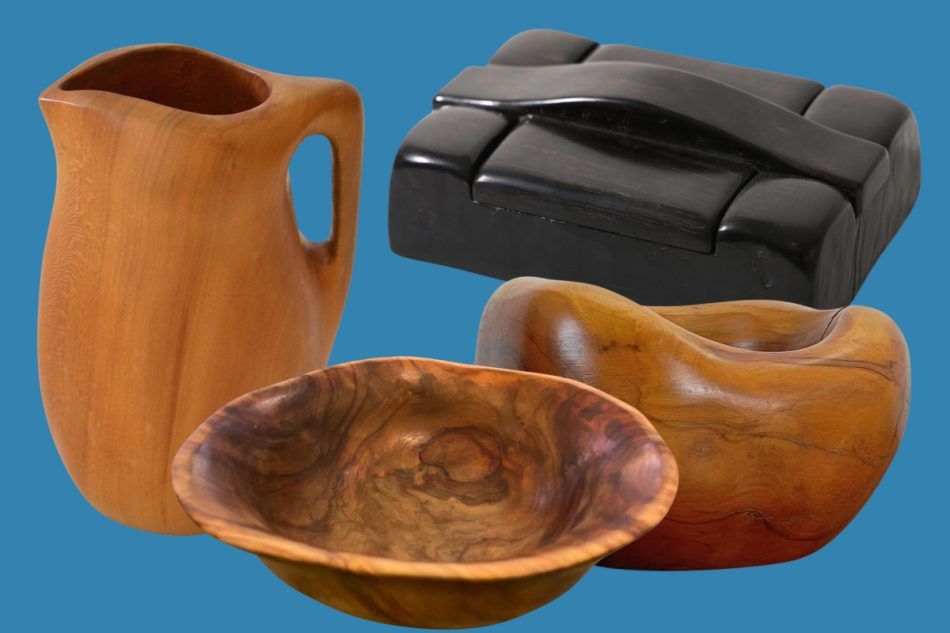
Today, that relationship continues to resonate with collectors. Noll’s carved boxes, plates, trays, bowls, vessels, chairs and sculptures circulate primarily through collectible-design dealers and private collections, prized for their rarity almost as much as for their exquisitely hewn silhouettes.
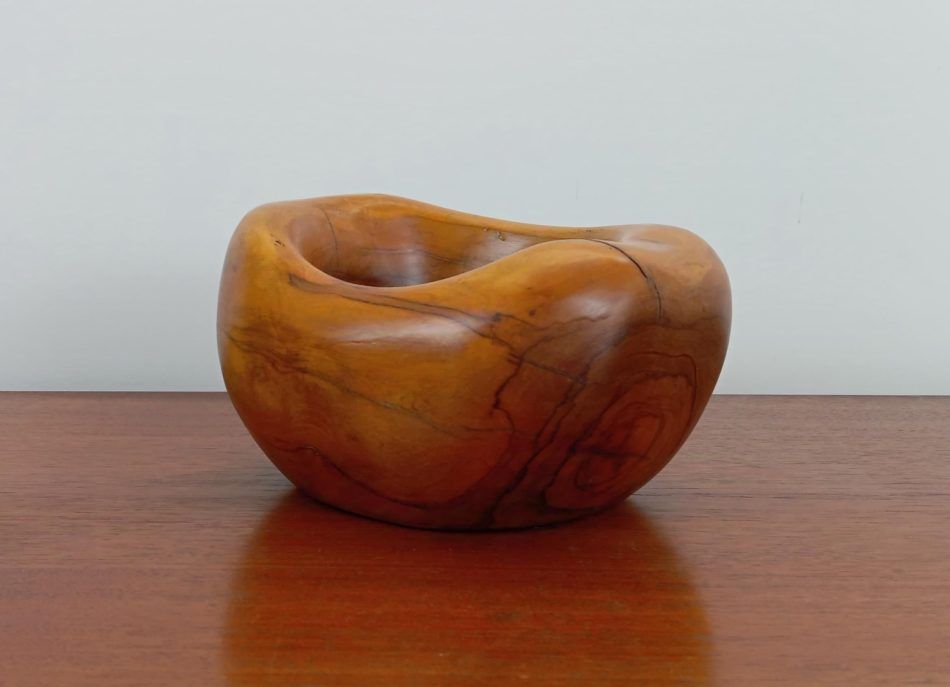
“All the forms are so complete in their own right, always true functional objects yet at the same time fully realized works of sculpture,” says Hugues Magen, founder of Magen H Gallery, in New York. “He is the only one in this arena who was able to elevate the functional object into an objet d’art.”
Born in 1890 in Reims, France, Noll trained as a cabinetmaker and furniture restorer, learning to read grain and density before he developed his own visual vocabulary emphasizing the natural curves of hardwoods like ebony, rosewood, mahogany and walnut.
By the 1920s, he had begun carving objects from single hunks of wood, working directly on salvaged blocks, without doing preparatory drawings. Over time, these experiments evolved into the compact creations that would define his career.
Noll exhibited regularly in Paris, including the Salon des Artistes Décorateurs, showing his wares alongside architects and furniture makers rather than the avant-garde sculptors who dominated modernist narratives.
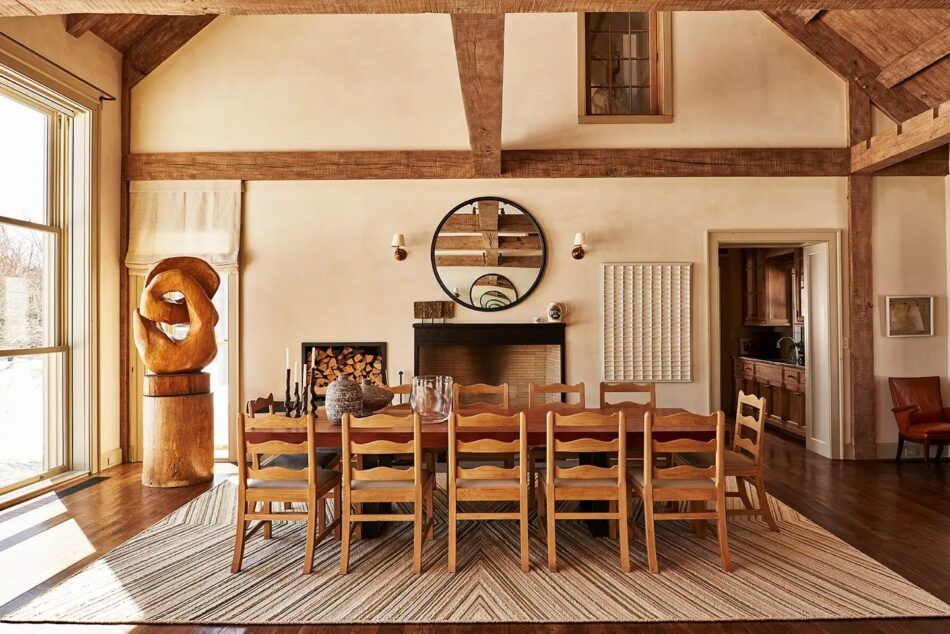
That context shaped how his works were (and still are) regarded, more often encountered in high-end interiors and design collections than in art museums, even as Noll’s ambitions extended beyond utility.
Central to his practice was a refusal to attach fragments of wood to one another. “I am struck by Noll’s idea that wood is ‘wounded’ by processes of joinery and cold fasteners like nails and hinges,” Milliken says.
Instead, he favored carving from single blocks, allowing the unique properties of each to determine the outcome. This approach aligned him with such contemporaries as Henry Moore and Constantin Brancusi in their respect for material integrity, although his reasoning was distinct.
“Brancusi gave wood a passport into fine art but on modernism’s terms, as a vehicle for abstraction,” Milliken says. Noll’s focus was on “the wood as a living material,” she continues. “We can see this in his attentiveness to the singular qualities of it, and it’s interesting to envision this awareness instilling empathy and deepening his relationship with it.”
Many of Noll’s most recognizable pieces are household objects that remain usable even as they verge on abstraction.
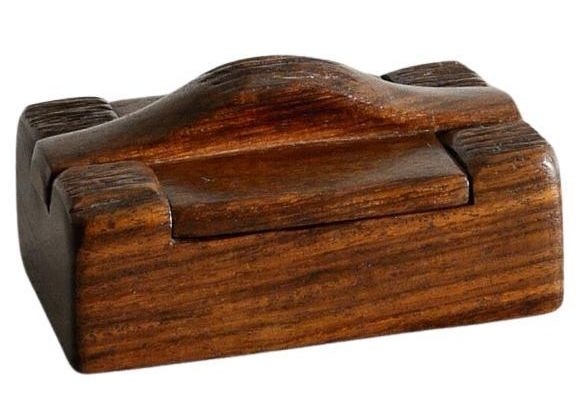
A lidded elm-wood box from the 1950s, offered by Galerie North in Stockholm, demonstrates the balance he achieved. “This box is a classic design by Noll and one of the types of works he is best known for,” says Fredrik Karlsson, Galerie North’s founder. “They were made in several types of wood, but to me, this lighter-colored wood has a nice warmth and a natural patina.”
Collectors often treat such pieces as pure sculpture, even though they retain their original utility. “Bowls, boxes, et cetera, by Noll definitely have a function and work perfectly fine that way,” Karlsson says. “I think furniture or decorative pieces should be used as they were intended to be.”
Milliken agrees: “They were made to contain, to be touched or sat upon. To experience them in a restrictive context is to perform precisely the extraction from lived experience that his philosophy resisted.”
The tension between object and artwork is hardly new. “Humans have been ornamenting and ritualizing spaces and functional objects such as vessels since they learned how to use their hands to make a mark,” she says.
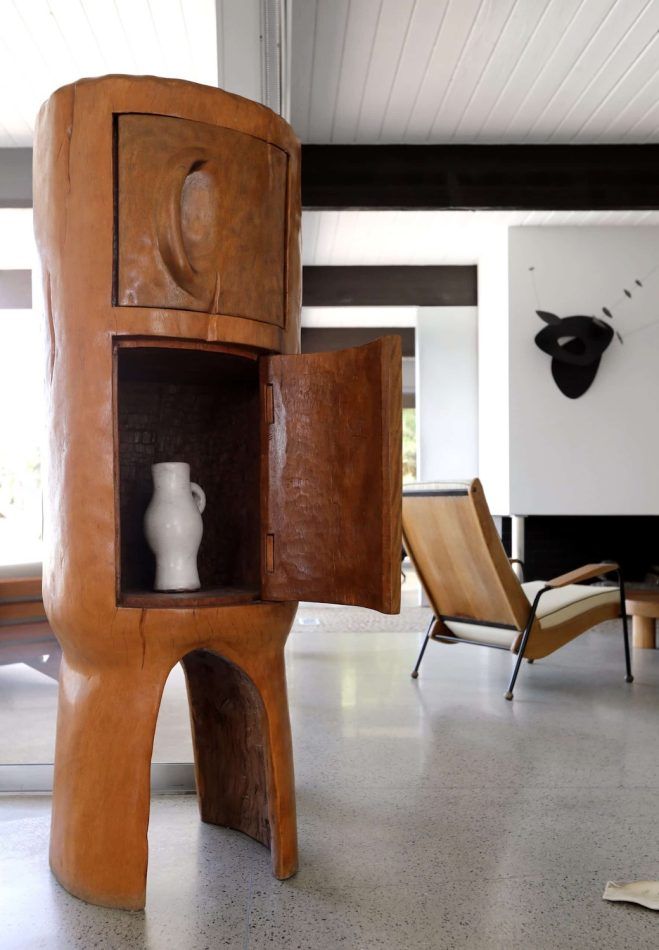
What made Noll unusual was the moment in which he pursued that idea. Working in mid-century Europe, he focused on beauty “at the peak of anti-ornamentation” in design, Milliken says, adding that at the same time, he operated “outside the modernist heroics” and “wasn’t part of the Parisian avant-garde art scene.”
His sensitivity to irregularities in his material places him within millennia-long wood-carving traditions. “Folk artists emphasized and often anthropomorphized the naturally occurring features of wood in their work — a knot became an eye, a split or groin became two legs,” the curator notes.
Later in the 20th century, wood-loving artists and designers in the United States and Britain — including Bob Stocksdale, Ed Moulthrop, Mel Lindquist, Wendell Castle and Thaddeus Mosley — would center similar approaches in their own work.
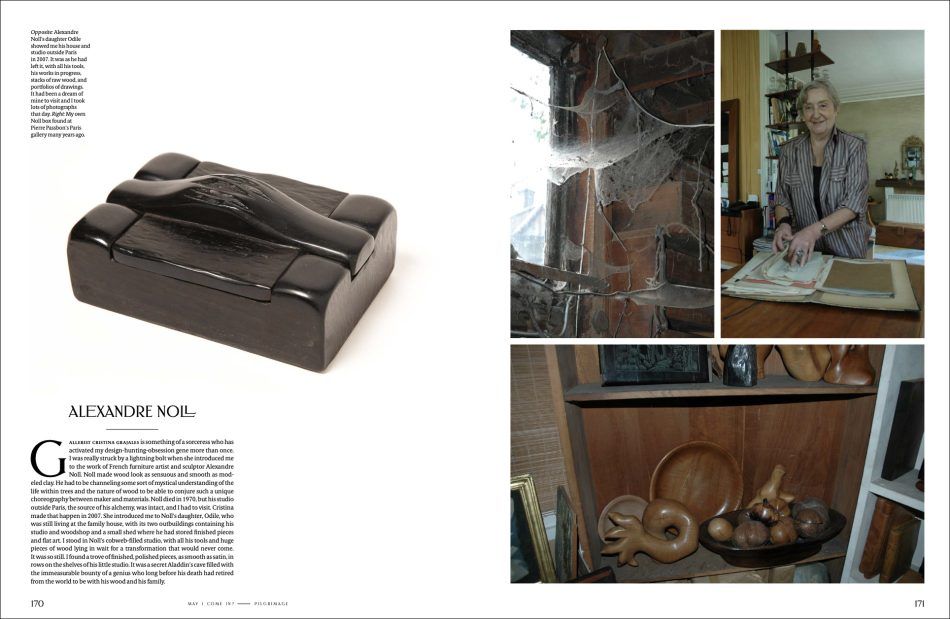
Among collectors of fine design, Noll’s reputation is secure. “To me, Alexandre Noll is one of a few iconic and very collectible high-end classic designers from the French mid-century era,” Karlsson says. “I personally have always been drawn to wooden handcraft, and I think his works are very impressive and beautiful.”
The works’ appeal lies not just in their craftsmanship but in their presence as well. As Magen puts it, “The sculptures all have a wonderful organic quality, a quiet beauty that you never get bored of looking at.”