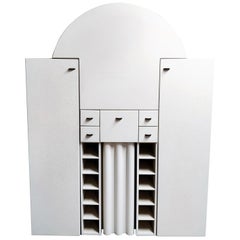
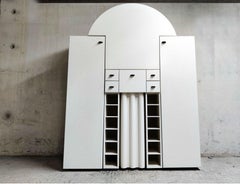
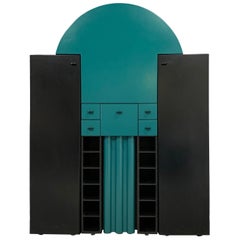
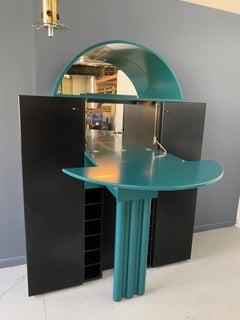
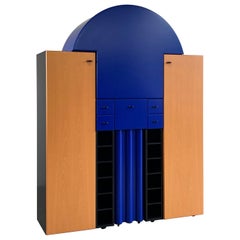
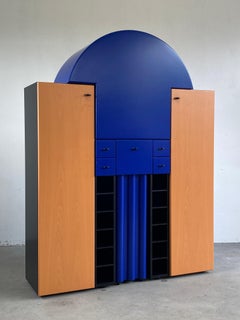
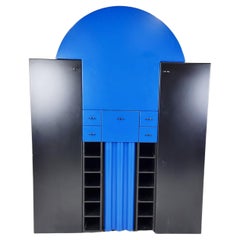
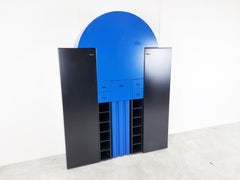
During the 1930s, a company called Interlübke was established by brothers Leo and Hans Lübke to produce affordable bedroom furniture such as dressers, beds and other items for homeowners in the founders' native Germany. While the brand has changed and expanded its offerings over the years, it is still committed to producing well-made handcrafted furnishings for the home.
Cor is Latin for heart, and COR furniture exemplifies the qualities at the heart of exceptional design: practicality, comfort and style. The company's sofas, lounge chairs and coffee tables capture the essence of the best of mid-century modernism. Simple silhouettes, quality materials and function-first designs ensure that vintage COR furniture is still in high demand with collectors all over the world.
COR was founded in Rheda-Wiedenbrück, Germany, in 1954 by Leo Lübke — in the name of his son, Helmut — and the Prince of Bentheim-Tecklenburg, a northern German county. Nearly a couple of decades prior, in 1937, a manufacturer of bedroom furniture called Interlübke was established by Leo and his brother Hans. The latter’s son Horst, who was managing partner from 1972, retired during the 1990s and his son Helmut Lübke joined Interlübke and shifted the brand’s focus toward modular furniture systems. During the 1980s, the Prince of Bentheim-Tecklenburg left COR and the Lübke family became its sole owner. In 2006, COR-Interlübke retail locations opened their doors.
COR, which was primarily focused on upholstered furniture from its earliest days, made its mark in 1959 with a sleek modular seating system consisting of five parts called Quinta, which was created by designer Michael Bayer (the first creative director at Interlübke). The upholstered line boasted clean, angular contours and appealed to the day's ever-broadening flexible interior design sensibilities. The same thinking is applied at Interlübke, where designers busied themselves during the 1960s with developing storage furniture that could be endlessly expanded upon. At COR, the Quinta remained in production until 1978. The success of the Quinta was followed by the 1964 Conseta system, which featured a sofa and other pieces of seating designed by Friedrich Wilhelm Möller.
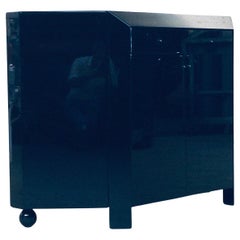
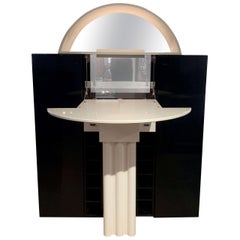
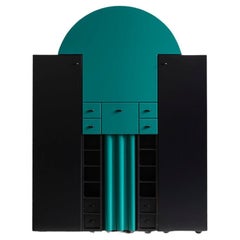
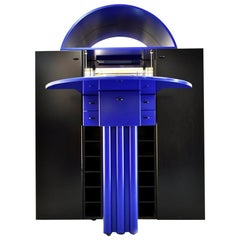
The following decades saw more successful collaborations at the Lübke family-run brands with designers like Peter Maly — who designed Memphis-style cabinets for Interlübke and postmodern seating in Pop art colors for COR — and Luigi Colani. The latter, a German industrial designer born Lutz Colani, created a range of gorgeous organically shaped Space Age seating for BASF and Fritz Hansen, serveware for Rosenthal and worked on automobile designs for Fiat. Colani designed the popular Orbis line for COR during the 1970s.
In 2000, the Arthe sofa by Wulf Schneider was awarded the prestigious Red Dot Award from the North Rhine-Westphalia Design Centre.
COR is still owned and operated by the Lübke family’s parent company Gebrüder Lübke GmbH & Co. KG and continues to produce furniture at the Rheda-Wiedenbrück factory, sourcing leather from southern Germany and upholstery from Italy. COR partnered with Jehs+Laub, a renowned Stuttgart-based studio, in 2010. In 2022, Interlübke was sold to Domovari, a manufacturer of bathroom accessories and interiors.
Find a collection of Interlübke furniture on 1stDibs.
The name “dry bar” can be a bit of a misnomer. After all, the last thing you would want a bar to do is run dry. In this case, the “dry” descriptor in your antique or vintage dry bar doesn’t refer to a lack of drinks. Instead, it serves to differentiate dry-bar furniture from wet-bar installations. The latter is typically a permanent fixture in a home, requiring plumbing to support a built-in sink.
In short, a dry bar is a piece of furniture or tabletop area that you’ve built into your space for mixing cocktails and storing everything needed —bottles, barware and other accessories — for the intoxicating in-home bar you’ve designed.
Some dry bars were built with minimalism in mind. Those crafted by designers associated with mid-century modernism or Scandinvanian modern, for example, likely looked to these as practical furnishings to serve as a cabinet or case piece. But there have been decorative and even outwardly sculptural interpretations by Art Deco furniture makers and those working in the Hollywood Regency style over the years.
No matter what kind of antique, new or vintage dry bar fits your space, these versatile furnishings can definitely elevate your home bar area as well as your hosting. We’ll toast to that!
Find your dry bar as well as all the barware you need on 1stDibs.