Early 1900s Art

to
284
949
481
301
190
163
Overall Width
to
Overall Height
to
7,521
21,471
164,786
237,279
2,312
4,636
6,409
5,832
15,303
20,958
26,317
19,194
14,169
5,358
320
283
113
99
10
9
5
5
4
4
1
1,060
856
45
1,183
671
428
361
345
200
116
104
100
97
92
85
85
81
80
78
77
74
74
64
927
651
535
389
373
100
45
27
24
17
883
286
1,075
1,001
Period: Early 1900s
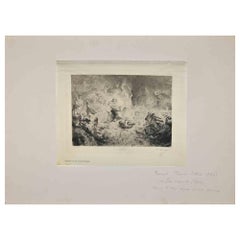
'Nymph with a Centaur', French School, Academic, Greek Mythological Grisaille

'Nymph with a Centaur', French School, Academic, Greek Mythological Grisaille

Located in Santa Cruz, CA

'Nymph with a Centaur' by T.M. French School, Academic, Framed Greek Mythological Grisaille --- An exceptionally fine, brush and wash, mythological figural study showing a centaur i...

Category

Academic Early 1900s Art
Materials

Paper, Watercolor, Illustration Board

“On the Seine, Paris”

“On the Seine, Paris”

Located in Southampton, NY

Original aquatint engraving of working river barges on the Seine in Paris, France. A horse drawn cart is seen loading or unloading product. Circa 1900. ...

Category

Academic Early 1900s Art
Materials

Paper, Mezzotint

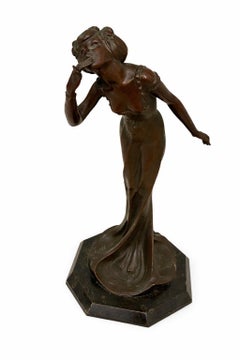
19th Century French Bronze Figure Of A Singer

19th Century French Bronze Figure Of A Singer

Located in Lake Worth Beach, FL

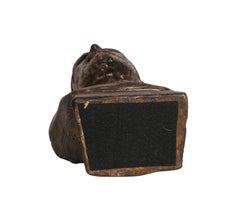
19th Century French Bronze Figure Of A Singer blowing a kiss. Art Nouveau style, signed with initials PF and titled illegible. Nice original old patina and details, Marble base.

Category

Early 1900s Art
Materials

Marble, Bronze

Landscapes with Characters in Pair

Landscapes with Characters in Pair

Located in Saint-Ouen, FR

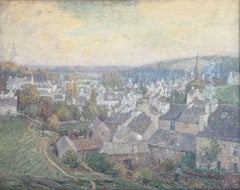
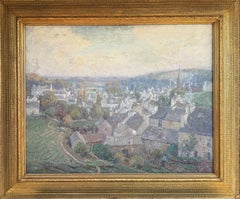
RIVES Antony (19th Century) Landscapes with characters in pair Two Oils on wood panels signed lowright and left Annotation on the back : " Banks of the Aude River near Carcassonne in August 1904" Stamp from Senelier, famous hardware dealer settled in Paris Framed by Gault (Paris) DIm wood panel (each) : 24 X 33 cm Dim frame : 38 X 47 cm RIVES Antony (19th Century) French 19th Century born in Carcassonne Painter of Landscape Antony Rives was a pupil of Jean Jalabert and Adolphe Yvon...

Category

Post-Impressionist Early 1900s Art
Materials

Oil

L'Avant-Foyer de l'Opera /// French Impressionist Etching Figurative Lady Man

L'Avant-Foyer de l'Opera /// French Impressionist Etching Figurative Lady Man

By Tony Minartz

Located in Saint Augustine, FL

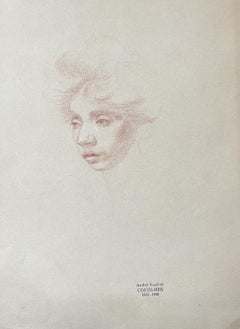
Artist: Tony Minartz (French, 1873-1944) Title: "L'Avant-Foyer de l'Opera" Portfolio: Revue de l'Art Ancien & Moderne *Issued unsigned Year: 1903 Medium: Original Etching on cream laid paper Limited edition: Unknown Printer: Unknown Publisher: Revue de l'Art Ancien & Moderne, Paris, France Framing: Recently framed in a traditional gold and black moulding with 100% cotton rag matting Framed size: 18.63" x 16.38" Sheet size: 12" x 9" Image size: 9" x 7.25" Condition: In excellent condition Notes: Printed in one color: bistre. This review was founded in 1897 in the continuity of the review Les Beaux-Arts published between 1861 and 1865; Jules Comte, the founder, entitled his first issue Les Beaux-Arts - Revue nouvelle then changed the title to La Revue de l'art ancien et moderne. Jules Comte directed the review until his death in 1912. Raymond Woog took over , who was provisional director until the start of the war in July 1914. In 1919, André Dezarrois took over this review and was its director until December 1937, date of last issue (published in January 1938). In the meantime, it publishes the Bulletin of ancient and modern art, which has gained a certain notoriety in the community. Biography: Tony Minartz, pseudonym of Antoine Guillaume, born 8 April 1873 to Cannes and died in that city on 13 December 1944 Is a painter, draftsman , illustrator and engraver French. Painter autodidact , Tony Minartz starts to become known in 1896 by exhibiting paintings at the Salon of the National Society of Fine Arts , and then decorates the Pompadour theater of painted panels for fashion shows " Grand Guignol ", directed by L. Darthenay. In 1903, Henri Béraldi , with whom he worked, praised him in The Journal of ancient and modern art, writing that "it was thirty years ago," and he has received advice from Paul Renouard to be formed the technique of etching ; Béraldi adds that his favorite subjects are "Paris at night Paris at night, always." Minartz also gives them some high-remarkable in The Journal of ancient and modern art until 1910: balls, cafe concerts, Parisian in their most beautiful dresses, but also music-halls, music halls, restaurants, large and small theaters, are the preferred settings of his compositions. Its fertile period seems to end in 1914. In addition to the National Salon, Minartz exhibited in Paris at the gallery Bartholomew (1903), the Independent Living (1905, 1906) and the gallery Devambez (1909) and received the Academic Palms . He occasionally collaborates with periodic illustrated as The Almanac Sports (Ollendorff, 1899), or satirical as Gil Blas...

Category

Impressionist Early 1900s Art
Materials

Etching, Laid Paper, Intaglio

Art Nouveau Turtle Sculpture, Plâtre and Estopa, Italy

Art Nouveau Turtle Sculpture, Plâtre and Estopa, Italy

Located in Valladolid, ES

Gorgeous and amazing Turtle Sculpture, Plâtre and Estopa, pps. S.XX - Italy Amazing sculpture that, with great naturalism, represents a turtle. It is a piece of easy location, both...

Category

Art Nouveau Early 1900s Art
Materials

Plaster

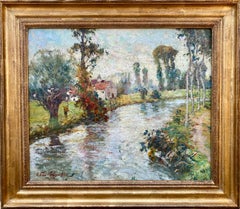
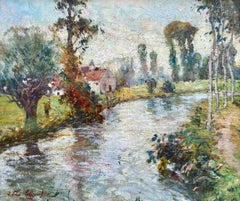
Henry Wallace Methven "Impressionist Landscape" Water, Trees Summer Reflection

Henry Wallace Methven "Impressionist Landscape" Water, Trees Summer Reflection

Located in Detroit, MI

Impressionist Landscape" is an exquisitely peaceful late summer scene along the banks of a quiet river. The dappling yellow and green leaves and the spots of blue sky give the perfect impressionistic feel to the scene. Impressionism was a style or movement in painting originating in France in the 1860s, characterized by a concern with depicting the visual impression of the moment, especially in terms of the shifting effect of light and color. Methven captured this impression perfectly. It is as fresh today as when it was painted in 1902 so much so that you can almost hear the rustle of the leaves and see the shifting light. The gold gilt frame is original to the piece. Without the frame the piece measures 20 h x 16 w. It is signed by the artist. Methven was born in Philadelphia, Pennsylvania. In the 1930's he moved to Chicago, Illinois, where he painted with other area Chicago artists and showed at The Art Institute of Chicago. He spent his summers in Benton Harbor, Michigan, along Lake Michigan. He is known for his landscapes and water scenes. Michigan has numerous rivers, creeks and small lakes and Methven would have had a wealth of scenes to draw upon for his numerous oil paintings. He studied under Henry Fenton Spread who taught at the School of the Art Institute of Chicago and later founded Spread's Art Academy. In 1902, this academy became the Chicago Academy of Fine Arts. Spread was named the first president of the Chicago Society of Artists in 1889. Known primarily as a portraitist, Spread also painted landscape and genre scenes. Although a skilled artist, he did not exhibit widely; his primary legacy being fostering a love of art in Chicago. Fellow artist (and former student of Spread), Ralph Clarkson, the noted Chicago society portrait painter, stated that Spread' s "fine and advice formed the careers of the men who were not only to achieve prominence as artists, but to occupy leading places as art teachers". Harry Wallace Methven...

Category

Impressionist Early 1900s Art
Materials

Canvas, Oil

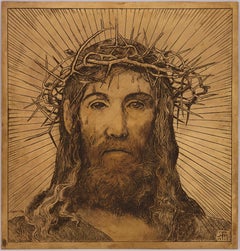
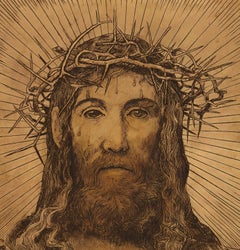
Christ with Crown of Thorns / - Seeing gaze -

Christ with Crown of Thorns / - Seeing gaze -

Located in Berlin, DE

Hans Thoma (1839 Bernau - 1924 Karlsruhe), Christ with Crown of Thorns, 1902. Brass relief plate in niello technique with raised sections, 38 cm x 40 cm. Monogrammed and dated “hTh 1...

Category

Realist Early 1900s Art
Materials

Brass

Mother & Children - Impressionist Figurative Oil by Jean-Francois Raffaelli

Mother & Children - Impressionist Figurative Oil by Jean-Francois Raffaelli

By Jean-Francois Raffaelli

Located in Marlow, Buckinghamshire

Signed oil on canvas figures in landscape by French impressionist painter Jean-Francois Raffaelli. The work depicts two young girls with their mother in a landscape overlooking boats...

Category

Impressionist Early 1900s Art
Materials

Oil, Canvas

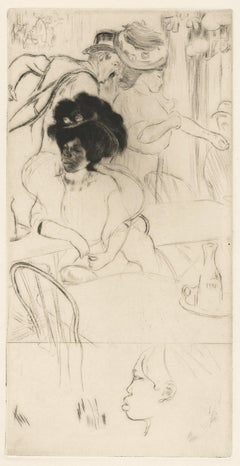
La Negresse (The Negress)

La Negresse (The Negress)

By Louis Legrand

Located in Fairlawn, OH

La Negresse (The Negress) Etching & drypoint, 1909 Unsigned (as issued in the portfolio) From the album "Les Bars" (8 plates plus cover illustration) Editi...

Category

Art Nouveau Early 1900s Art
Materials

Etching

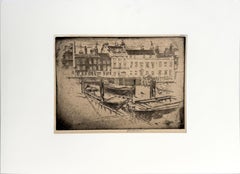
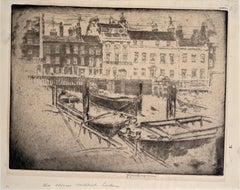
Old Houses, Milbank Grosvenor Road London 1906

Old Houses, Milbank Grosvenor Road London 1906

By Joseph Pennell

Located in Soquel, CA

Old Houses, Milbank Grosvenor Road London 1906 This an etching of Grosvenor Road Old Houses, done in 1906 by American printmaker and Whistler biographer Joseph Pennell (American, 18...

Category

American Impressionist Early 1900s Art
Materials

Handmade Paper, Etching

The Return from Fishing - Oil Paint by Giovan Battista Filosa - 1908

The Return from Fishing - Oil Paint by Giovan Battista Filosa - 1908

Located in Roma, IT

The Return from Fishing (Original Title: Il Ritorno dalla Pesca), is an original oil painting realized by Giovan Battista Filosa in 1908. Some fishermen seen from behind, in the blue light of the sky, with the vesuvius in the background, are the protagonists of the painting in "Il ritorno dalla pesca" by Giovan Battista Filosa (Castellamare di Stabia 1850 - Naples 1935) student of the famous Neapolitan painter...

Category

Modern Early 1900s Art
Materials

Canvas, Oil

"Portrait of the Black Ball Clipper Montezuma"

"Portrait of the Black Ball Clipper Montezuma"

By William Minshall Birchall

Located in Southampton, NY

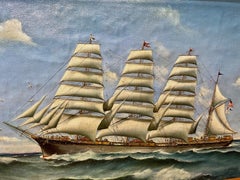
Watercolor on paper by William Minshall Birchall of the black ball clipper ship, the Montezuma. Titled and signed W. M. Birchall lower left in pencil. Findlay Gallery label verso. 0riginal frame and mat with normal wear due to age. The American packet ship...

Category

Academic Early 1900s Art
Materials

Paper, Watercolor

Aglaé - Original Etching by Gustave Joseph Biot - 1900

Aglaé - Original Etching by Gustave Joseph Biot - 1900

Located in Roma, IT

Aglaé is an original etching realized by Gustave Joseph Biot d'aprés Cabanel (1900). The artwork is in good conditions except for worn and yellowed paper on the margins. Mounted on...

Category

Modern Early 1900s Art
Materials

Etching

Dentol Lithograph Print, Modern Style, Circa 1906, Unframed, Italy

Dentol Lithograph Print, Modern Style, Circa 1906, Unframed, Italy

By Adolfo Hohenstein

Located in Roma, IT

Dentol is a rare colored lithograph, printed by G. Ricordi and C. Milano, Milan in 1906 in occasion of the "La Figlia di Iorio" theatrical spectacle, text by Gabriele D'Annunzio and music by Alberto Franchetti. A very beautiful vintage and advertising poster, in excellent condition except for a minor rip on the right margin at the bottom. This defect does not affect the image. This original poster representing a woman red dressed in a golden wheat field, has the dignity of an object of art, carries the signature on plate on the lower right margin of Adolfo de Karolis...

Category

Modern Early 1900s Art
Materials

Lithograph

Les Tuileries by Georges Manzana Pissarro - Oil Painting, Cityscape, France

Les Tuileries by Georges Manzana Pissarro - Oil Painting, Cityscape, France

By Georges Henri Manzana Pissarro

Located in London, GB

Les Tuileries by Georges Manzana Pissarro (1871-1961) Oil on canvas 38 x 55 cm (15 x 21 ⁵/₈ inches) Signed with estate stamp lower left, Manzana Pissarro Executed circa 1900 This wo...

Category

Post-Impressionist Early 1900s Art
Materials

Canvas, Oil

A L'Ombre (In Shadow)

A L'Ombre (In Shadow)

By Louis Legrand

Located in Fairlawn, OH

A L'Ombre (In Shadow) Etching & drypoint, 1905 Signed with the red stamp of the publisher Pellet (see photo) Edition: 50 on velin paper, signed and numbered Publisher: Gustav Pellet, Paris (his red stamp lower right, recto; Lugt 1193) Condition: Excellent Image/Plate size: 5-7/8 x 8-5/8" (14.8 x 21.8 cm.) Sheet size: 11 5/8 x 17 1/8" Reference: IFF 119 Exteens 229 Arwas 256 v/V Louis Auguste Mathieu Legrand (29 September 1863 – 1951) was a French artist, known especially for his aquatint engravings, which were sometimes erotic. He was awarded the Légion d'honneur for his work in 1906. Life Legrand was born in the city of Dijon in the east of France. He worked as a bank clerk before deciding to study art part-time at Dijon's Ecole des Beaux-Arts. He won the Devosge prize at the school in 1883.[2] In 1884 Legrand studied engraving under the Belgian printmaker Félicien Rops. Legrand's artworks include etchings, graphic art and paintings. His paintings featured Parisian social life. Many were of prostitutes, dancers and bar scenes, which featured a sense of eroticism. According to the Hope Gallery, "Louis Legrand is simply one of France's finest early twentieth century masters of etching." His black and white etchings especially provide a sense of decadence; they have been compared to those of Henri de Toulouse-Lautrec, though his drawings of the Moulin Rouge, the can-can dance and the young women of Montmartre preceded Toulouse-Lautrec's paintings of similar scenes. He made over three hundred prints of the night life of Paris. They demonstrate "his remarkable powers of observation and are executed with great skill, delicacy, and an ironic sense of humor that pervades them all." Two of his satirical artworks caused him to be tried for obscenity. The first, "Prostitution" was a symbolic drawing which depicted a naked girl being grasped by a dark monster which had the face of an old woman and claws on its hands; the second, "Naturalism", showed the French novelist Émile Zola minutely studying the thighs of a woman with a magnifying glass. Defended by his friend the lawyer Eugène Rodrigues-Henriques (1853–1928), he was found not guilty in the lower court, but was convicted in the appeal court and then given a short prison sentence for refusing to pay his fine. Legrand was made famous by his colour illustrations for Gil Blas magazine's coverage of the can-can, with text by Rodrigues (who wrote under the pseudonym Erastene Ramiro). It was a tremendous success, with the exceptional quantity of 60,000 copies of the magazine being printed and instantly sold out in 1891. In 1892, at the instigation of the publishing house Dentu, Legrand made a set of etchings of his Gil Blas illustrations. The etchings were published in a book, Le Cours de Danse Fin de Siecle (The End of the Century Dance Classes). Legrand took a holiday in Brittany, which inspired him to engrave a set of fourteen lithographs of simple country life called Au Cap de la Chevre (On Goat Promontory). It was published by Gustave Pellet who became a close friend of Legrand's. Pellet eventually published a total of 300 etchings by Legrand, who was his first artist; he also published Toulouse-Lautrec and Félicien Rops among others. He did not only work in graphics; he exhibited paintings at the Paris salon of the Société Nationale des Beaux-Arts starting in 1902. In 1906 he was made a chevalier of the Légion d'honneur. Legrand died in obscurity in 1951. A retrospective exhibition was held at the Félicien Rops museum in Namur, Belgium in 2006 to celebrate his graphic art. The art collector Victor Arwas published a catalogue raisonné for the occasion. Books illustrated de Maupassant, Guy: Cinq Contes Parisiens, 1905. Poe, Edgar Alan: Quinze Histoires d'Edgar Poe...
Category

Art Nouveau Early 1900s Art

Materials

Etching

Buste de jeune femme avec un chat - Symbolist Portrait Oil by Guirand de Scevola

Buste de jeune femme avec un chat - Symbolist Portrait Oil by Guirand de Scevola

Located in Marlow, Buckinghamshire

Signed and dated oil on canvas portrait by French symbolist painter Lucien Victor Guirand De Scevola. The work depicts a brunette woman in an embellished off the shoulder white dress hand holding a sleepy ginger cat in one arm. Signature: Signed and dated 1905 lower right Dimensions: Framed: 35"x31" Unframed: 26"x22" Provenance: The collection of Barbara Taylor Bradford O.B.E. Lucien Victor Guirand de Scevola Biography View full artist profile Guirand de Scévola was a student of Cormon at the École des Beaux-Arts in Paris. He exhibited at the Salon des Artistes Français in Paris. He then became a committee member of the Société Nationale des Beaux-Arts in Paris, where he also exhibited. He became an officer of the Légion d'Honneur in 1914. Making rigorous accuracy his main concern, he had a brilliant career as a society portrait artist. As such, his works became widely known. He painted portraits of a variety of subjects, including the Duke of Massa, Henri Farman, the Duchess of Uzès and the Duchess of Brissac. Museum and Gallery Holdings: Mulhouse: Woman with a Veil...

Category

Symbolist Early 1900s Art

Materials

Canvas, Oil

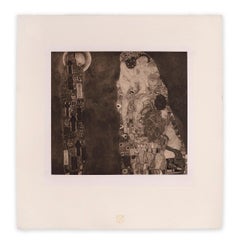
"Seated Woman Semi-nude" by Gustav Klimt - Original Print from Courtesans Folio

"Seated Woman Semi-nude" by Gustav Klimt - Original Print from Courtesans Folio

By Gustav Klimt

Located in Palm Beach, FL

Plate #2 from Gustav Klimt's 1907 "Dialogues of the Courtesans" portfolio, consisting of 15 collotypes on cream japon paper. The drawings in this folio are said to be studies for Klimt's well-known Water Serpents paintings...

Category

Vienna Secession Early 1900s Art

Materials

Paper

L'Angellus
L'Angellus

L'Angellus

By Alfredo Müller

Located in Fairlawn, OH

L'Angellus Etching, engraving and acquatint on Arches paper, 1902 Signed lower right by the artist (see photo) This is a first state impression printed in a brown/black ink, one of ...

Category

Art Nouveau Early 1900s Art

Materials

Etching

Flowers
Flowers

Alphonse MuchaFlowers, circa 1900

$25,386Sale Price|20% Off

Flowers

By Alphonse Mucha

Located in PARIS, FR

Alphonse MUCHA (1860-1939) "Flowers" Variante 2 Rare original lithograph Each flower, carnation, iris, lily and rose, is signed at the lower part of the plate "Mucha". This lithogra...

Category

Art Nouveau Early 1900s Art

Materials

Handmade Paper

Changing Leaves
Changing Leaves

Joseph VargaChanging Leaves, 1900

$1,800Sale Price|25% Off

Changing Leaves

By Joseph Varga

Located in Buffalo, NY

A beautiful antique impressionist painting by American artist Joseph Varga

Category

American Impressionist Early 1900s Art

Materials

Canvas, Oil

Farmhouse in Buchberg by Gustav Klimt, Das Werk lifetime collotype, 1908-1912

Farmhouse in Buchberg by Gustav Klimt, Das Werk lifetime collotype, 1908-1912

By Gustav Klimt

Located in Chicago, IL

Original collotype created from Gustav Klimt’s Farmhouse in Buchberg (Upper Austrian Farmhouse), painted in 1911. Published and edited by Verlag H.O. Miethke and printed by k.k. Hof- und Staatsdruckerei, Vienna, in an edition of 300. Between 1908 and 1914, H.O. Miethke published Das Werk Gustav Klimts...

Category

Vienna Secession Early 1900s Art

Materials

Paper

Miss Taylor
Miss Taylor

Miss Taylor

By Paul César Helleu

Located in Fairlawn, OH

Miss Taylor Drypoint, c. 1900 Signed in pencil lower left (see photo) Small edition, about 10 Very rich impression, full of burr Condition: Excellent Image size: 21-1/4 x 13-1/4" She...

Category

Art Nouveau Early 1900s Art

Materials

Drypoint

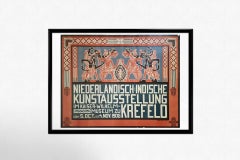
1906 original poster Niederlandisch Indische Kunstausstellung Krefeld

1906 original poster Niederlandisch Indische Kunstausstellung Krefeld

By Jan Thorn Prikker

Located in PARIS, FR

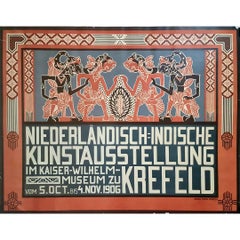
The 1906 original exhibition poster by Thorn Prikker Johann promotes the "Niederländisch-Indische Kunstausstellung" (Dutch East Indies Art Exhibition) held in Krefeld at the Kaiser W...

Category

Art Nouveau Early 1900s Art

Materials

Paper, Lithograph

"Daffodils in Ceramic Pitcher"

"Daffodils in Ceramic Pitcher"

Located in Southampton, NY

Here for your consideration is a beautiful watercolor still life on heavy paper by the German artist, E. Riehle. Signed and dated lower right, 1903. In good condition with it's orig...

Category

Academic Early 1900s Art
Materials

Paper, Watercolor

Mythological Composition - Etching by Fernand Cormon - 1902

Mythological Composition - Etching by Fernand Cormon - 1902

By Fernand Cormon

Located in Roma, IT

Mythological Composition is an Original Etching realized by Fernand Cormon (1854-1924) in 1902. Good condition, included a cardboard passpartout (45x63 cm). Hand signed by the artist on the lower right corner. Printed by M. Albert Hornung. Fernand Cormon (24 December 1845 – 20 March 1924) was a French painter born in Paris. He became a pupil of Alexandre Cabanel, Eugène Fromentin...

Category

Art Nouveau Early 1900s Art
Materials

Etching

Figures in the Forest

Figures in the Forest

Located in Sheffield, MA

Carl Carlsen Danish, 1855-1917 Figures in the Forest Oil on canvas Signed and dated ‘Carl Carlsen 1900’ lower right 24 ½ by 30 ½ in. w/frame 31 by 36 i...

Category

Impressionist Early 1900s Art
Materials

Oil

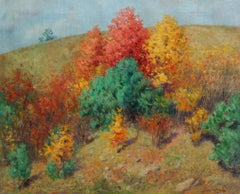
"Fall Landscape"

"Fall Landscape"

By John Francis Murphy

Located in Lambertville, NJ

Jim’s of Lambertville is proud to offer this artwork by: John Francis Murphy (1853 - 1921) John Francis Murphy is increasingly recognized today as one of the leading American Tonal...

Category

Tonalist Early 1900s Art
Materials

Canvas, Oil

Berenice
Berenice

Berenice

By Louis Valtat

Located in Fairlawn, OH

Berenice Color woodcut, 1900-1910 Signed with the artist's red ink stamp (see photo) Edition: 50 (46/50) Signed with the artist's red ink initials stamp, Lugt 1771, Sup. Condition: E...

Category

French School Early 1900s Art
Materials

Woodcut

Hawk Moths, English antique natural history Lepidoptera chromolithograph print

Hawk Moths, English antique natural history Lepidoptera chromolithograph print

Located in Melbourne, Victoria

English hawk moth chromolithograph, circa 1900. Plate number top right. From an English series of illustrations of butterflies and moths. Butterflies / moths are numbered and there i...

Category

Art Nouveau Early 1900s Art
Materials

Lithograph

Autumn Landscape in Sunlight - Indian Summer -

Autumn Landscape in Sunlight - Indian Summer -

Located in Berlin, DE

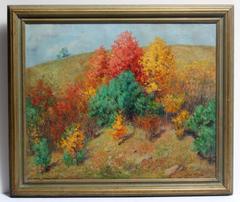
Frederick Vezin (1859 Torresdale Philadelphia - 1933 Düsseldorf), Autumn Landscape in the Sunlight, oil on canvas, mounted on cardboard, 32 x 41 cm (inside measurement), 44 x 51 cm (frame), signed and dates lower right "F. Vezin. [19]05". - Cardboard slightly curved, small inconspicuous retouch at the centre of the upper edge of the picture. About the artwork Although the painting appears to be a sketch, Frederick Vezin considered it to be a finished work of art, as evidenced by his signature on the lower right. And it is precisely this sketchy quality that leads to an understanding of the painting, which was certainly created in the landscape itself: the natural phenomena were to be depicted artistically at the moment of their observation. This is not done by meticulously sketching nature, but - and here Vezin follows the teaching of French Impressionism - by illustrating nature in its visual fullness. The artist's eye is, as it were, immersed in the visuality of nature, which is made visible by his hand. The painting is therefore not a reflection of the landscape, but its artistic intensification. This intensification also includes the fact that the foreground of the painting - corresponding to the field of vision - eludes a detail-oriented close-up view. Instead, the spatula-like application of paint, the vertical structure of which corresponds to the structure of the floral growth, has the effect of making nature tangible in its colourful substance. At the same time, the foreground, which remains indeterminate in its concrete objectivity, creates an atmospheric space that connects with the actual protagonist of the picture, the group of trees, which flares up in shades of red and brown. Here, too, the leaves are more speckled than clearly outlined. It is precisely this 'sketchiness' that opens up a visual experience that makes the landscape accessible in its visual fullness, thus revealing its essence. In addition to this abundance, the landscape is presented as a structure of order in that the composition of the picture makes the composition of the landscape visible. For example, the group of trees forms a distinct dark green shadow, which is repeated in the shadows cast by the trees behind it. A patterned diagonal axis is created in the picture, which is composed in this way by the landscape itself. Strictly speaking, this is a cultivated landscape: a fence at the bottom and a low stone wall at the top, running from left to right, are two elements that also have a strong compositional effect. And on the top of the hill, a stone house is embedded in the landscape as the brightest surface in the picture. Nature and culture here form a harmonious synthesis, giving the painting an Arcadian touch. In order to give the landscape as much space as possible, the horizon line is raised, but the design of the sky is also crucial. The clouds, combined with the shapes of the trees, create a bright blue sky. To the European eye, such a sky is reminiscent of a summer landscape. Accordingly, within the seasonal cycle, the blue sky is reserved for summer, and French Impressionism is also primarily an ode to summer. In Vezin's painting, however, the brilliant blue sky stands above an autumnal landscape, some of the trees even defoliated. It can therefore be assumed that the painting was made not in Europe but in the United States, and that it illustrates the proverbial Indian summer, making Frederick Vezin a pioneer of American landscape painting. About the artist Frederick Vezin was the son of a French immigrant to the United States and a German-born mother. This predestined him to promote artistic exchange between the old and new worlds. Having spent part of his schooling in Germany, in 1876, at the age of 20, he enrolled at the Düsseldorf Academy of Art, where he studied with Peter Janssen the Elder, Eduard von Gebhardt and Wilhelm Sohn, among others. He graduated in 1883, settled in Munich and returned to Düsseldorf in 1895, where he lived until his death in 1933. A native of the United States, he travelled to the country frequently and became a popular portrait and society painter. His artistic talent, however, was most evident in his landscape paintings. Trained in French Impressionism, he developed a virtuoso use of colour and a free brushwork that remained tied to the landscape motif, opening up the landscape itself in a new way. Frederick Vezin turned his attention primarily to the landscape of his homeland, becoming a pioneer of modern American landscape...

Category

Impressionist Early 1900s Art
Materials

Oil, Cardboard